

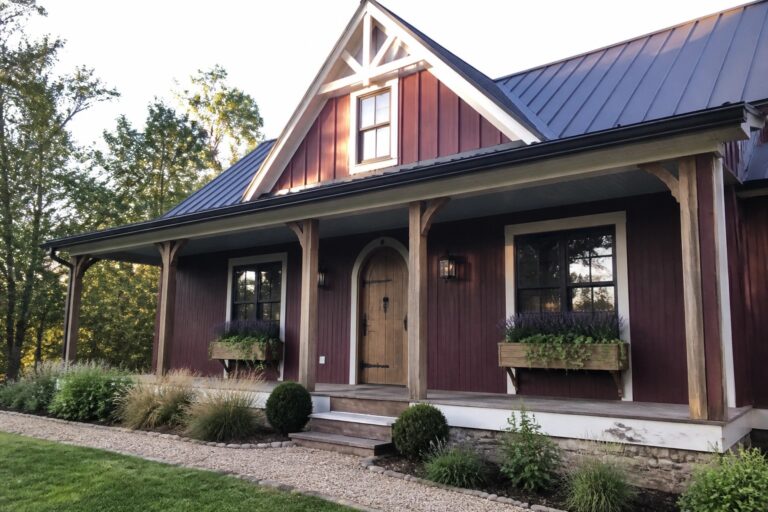
The way a farmhouse exterior reads from the street often comes down to how the siding color plays against the trim details and that balance shows up right away when you approach the house.
Burgundy brings a grounded warmth that feels right for rural settings while the white board and batten adds that sharp definition along the walls.
Some of these hold up better than others once you see them in person.
I keep thinking about how the entry placement and roof overhangs change the whole balance when the colors are this bold because those choices affect curb appeal more than people expect.
A couple of the material choices shown here are worth testing on a smaller scale first before committing to a full repaint.
Burgundy Siding With White Board And Batten
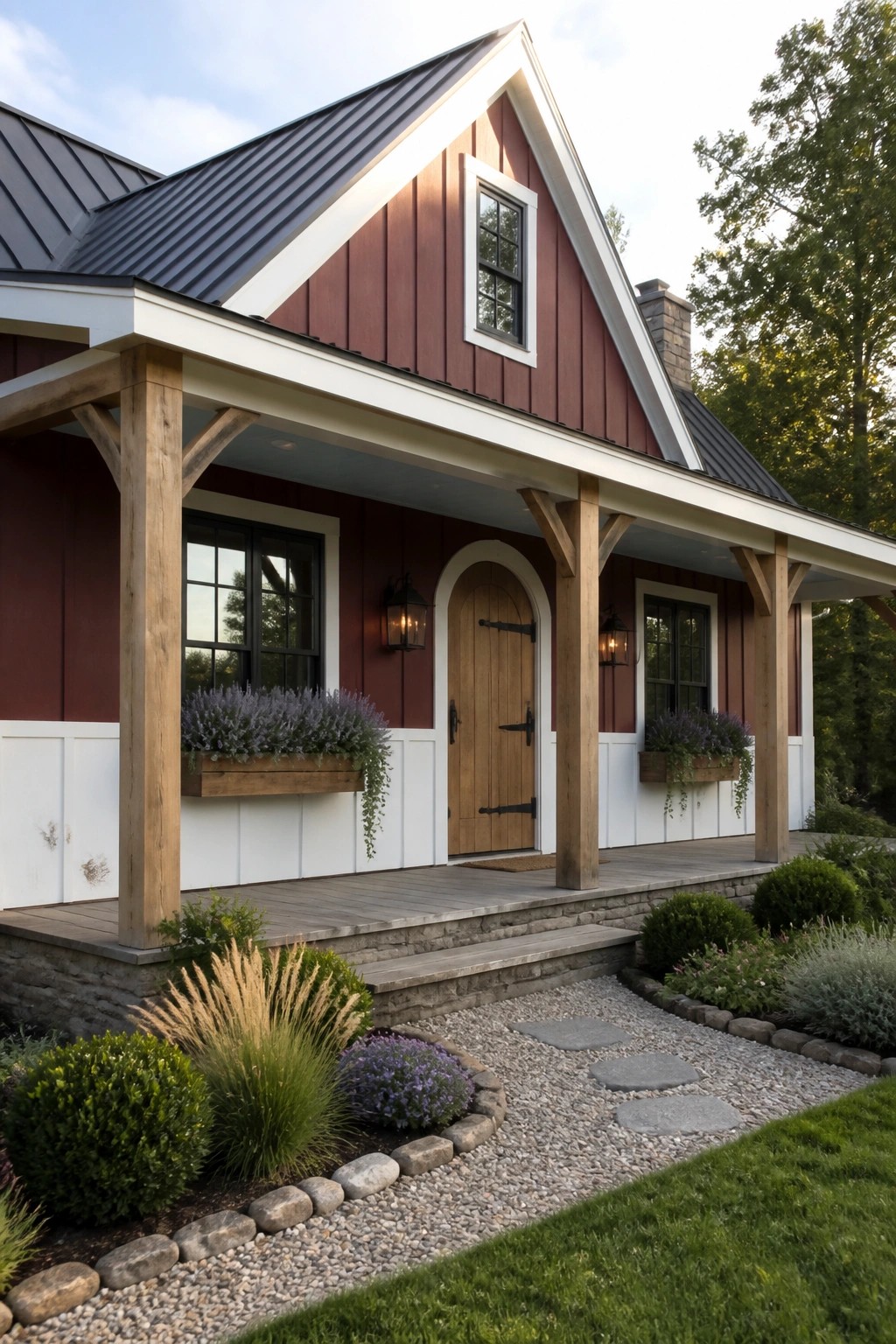
The deep burgundy color on the upper walls stands out nicely against the white board and batten below. This split keeps the house from looking too dark while still giving it that strong rustic feel many people want in a farmhouse.
It works best on homes that already have a covered porch or simple roof overhangs. The white lower section helps reflect light near the entry and makes the whole front feel a bit brighter and more balanced.
Mixing White Board And Batten With Dark Wood Siding
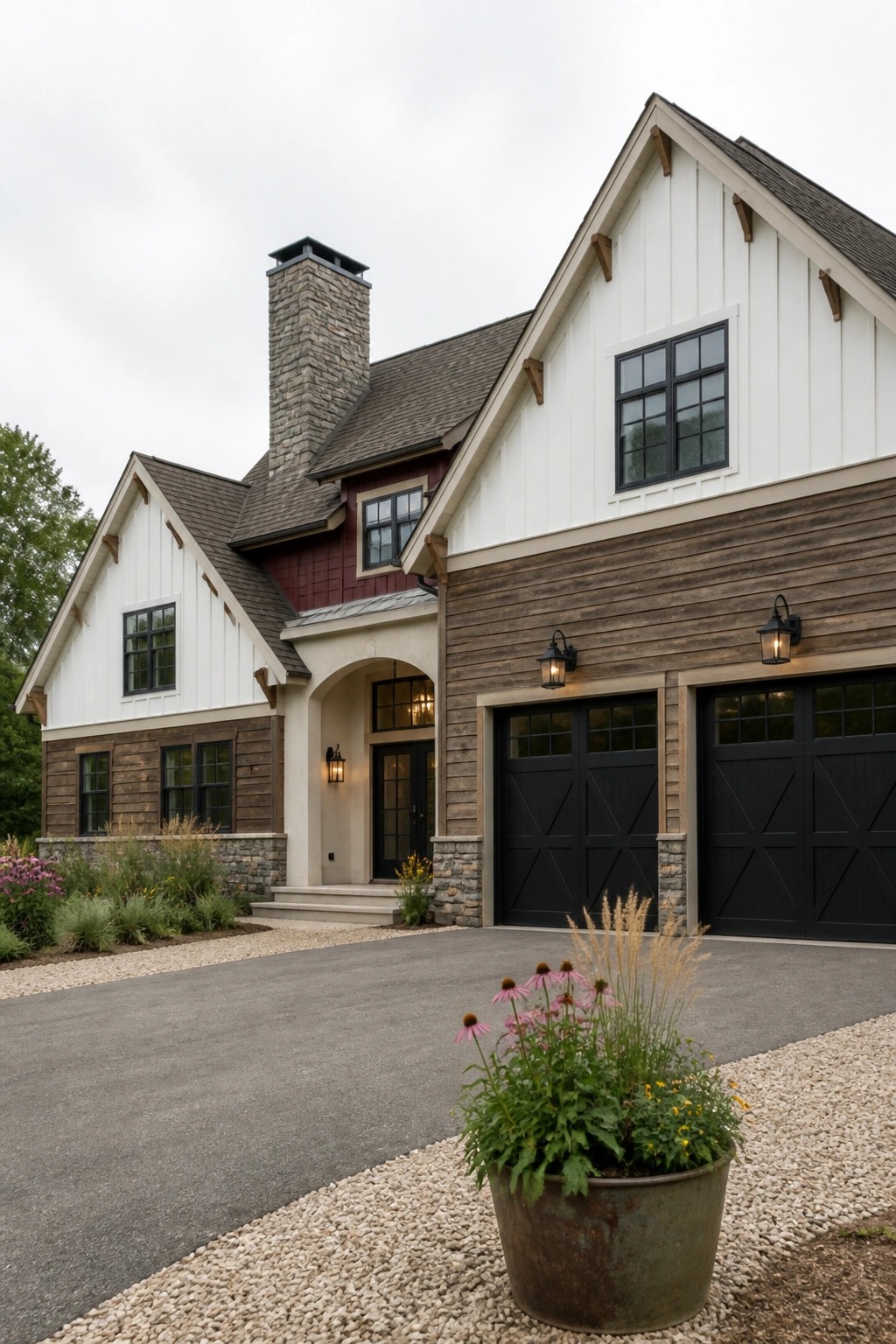
White board and batten stands out best when it is used on the upper gables and set against darker wood siding below. The contrast keeps the house from looking flat and gives the rooflines more definition without adding extra trim or decoration.
This mix works well on farmhouses that already have stone bases or burgundy accents. Keep the white sections limited to the peaks and let the lower siding carry more of the rustic tone so the whole exterior stays balanced.
White Trim On Deep Burgundy Siding
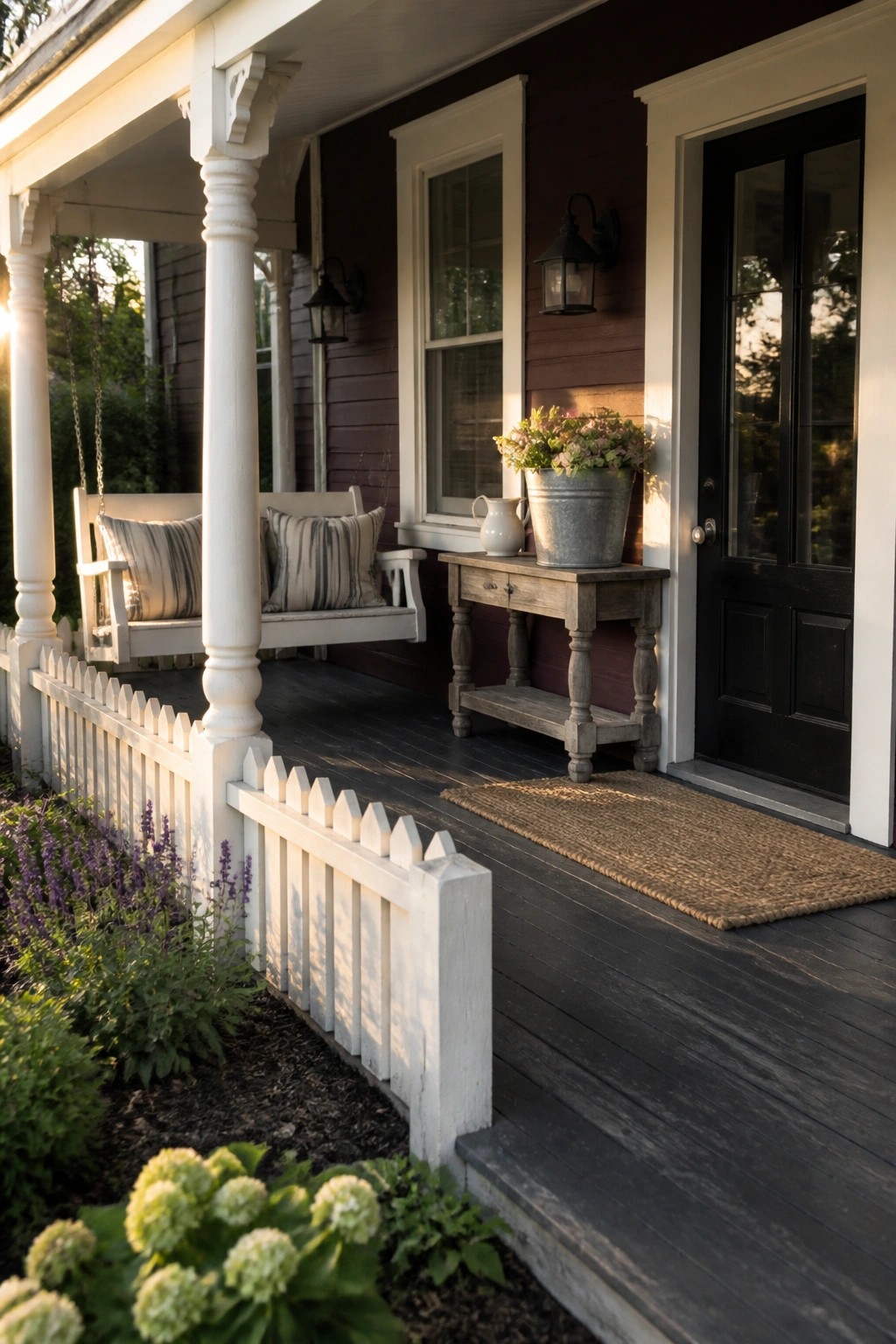
Deep burgundy siding can feel a little heavy on its own, especially on a larger wall. White trim changes that by outlining the windows, porch posts, and railings so the color stays rich without turning dark.
This approach works best on simple farmhouse shapes where the trim can run along the edges and corners. Keep the white bright and the siding a true deep tone so the contrast stays clear even from the street.
White Board-and-Batten on Burgundy Siding
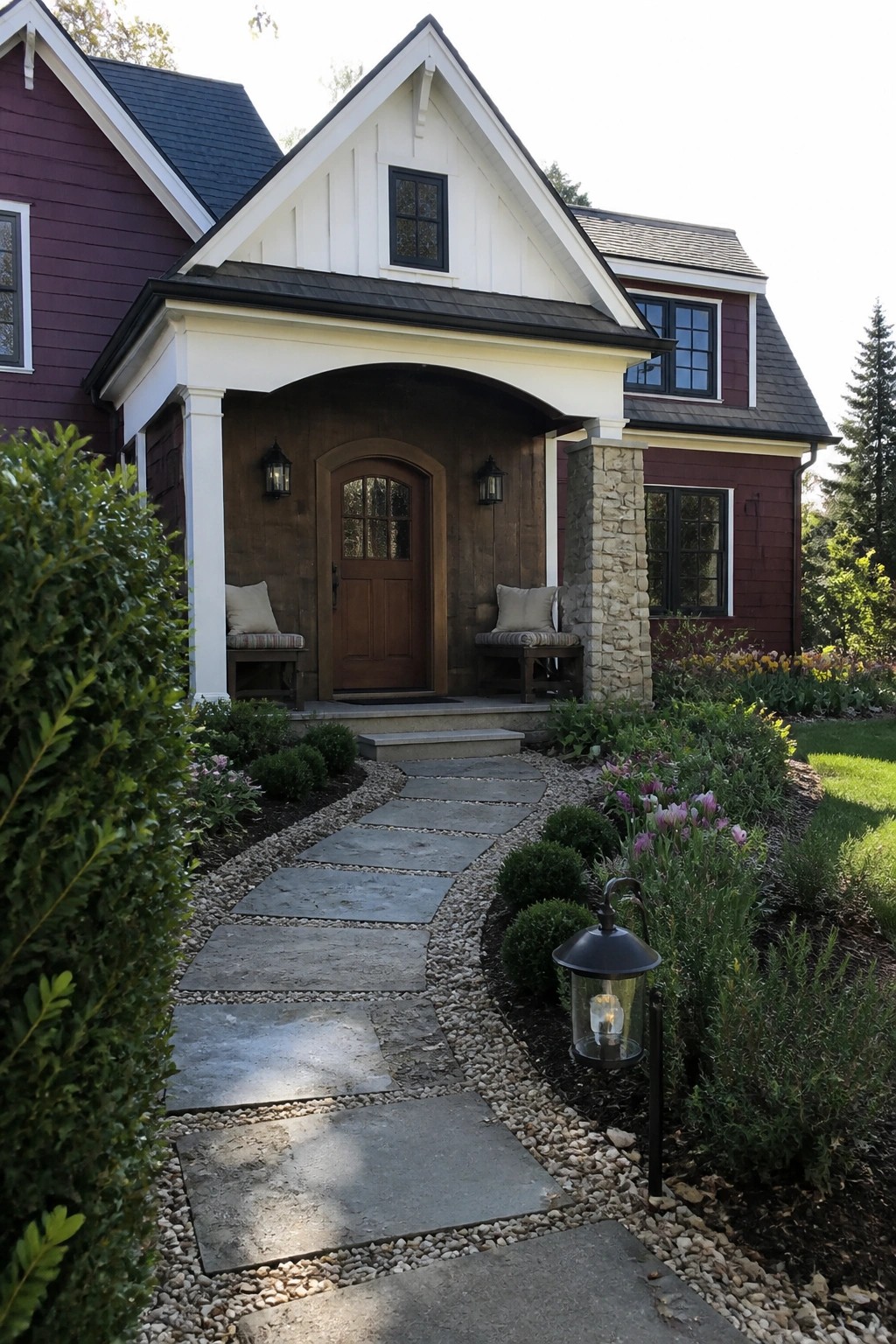
White board-and-batten in the gable and porch ceiling gives a burgundy house a sharper look. The contrast keeps the deep color from feeling heavy and helps the entry stand out right away.
This works well on farmhouses that already have a simple roofline. Keep the trim sections narrow and let the wood door and any stone base carry the rustic side of the design.
White Trim On Burgundy Farmhouse Exteriors
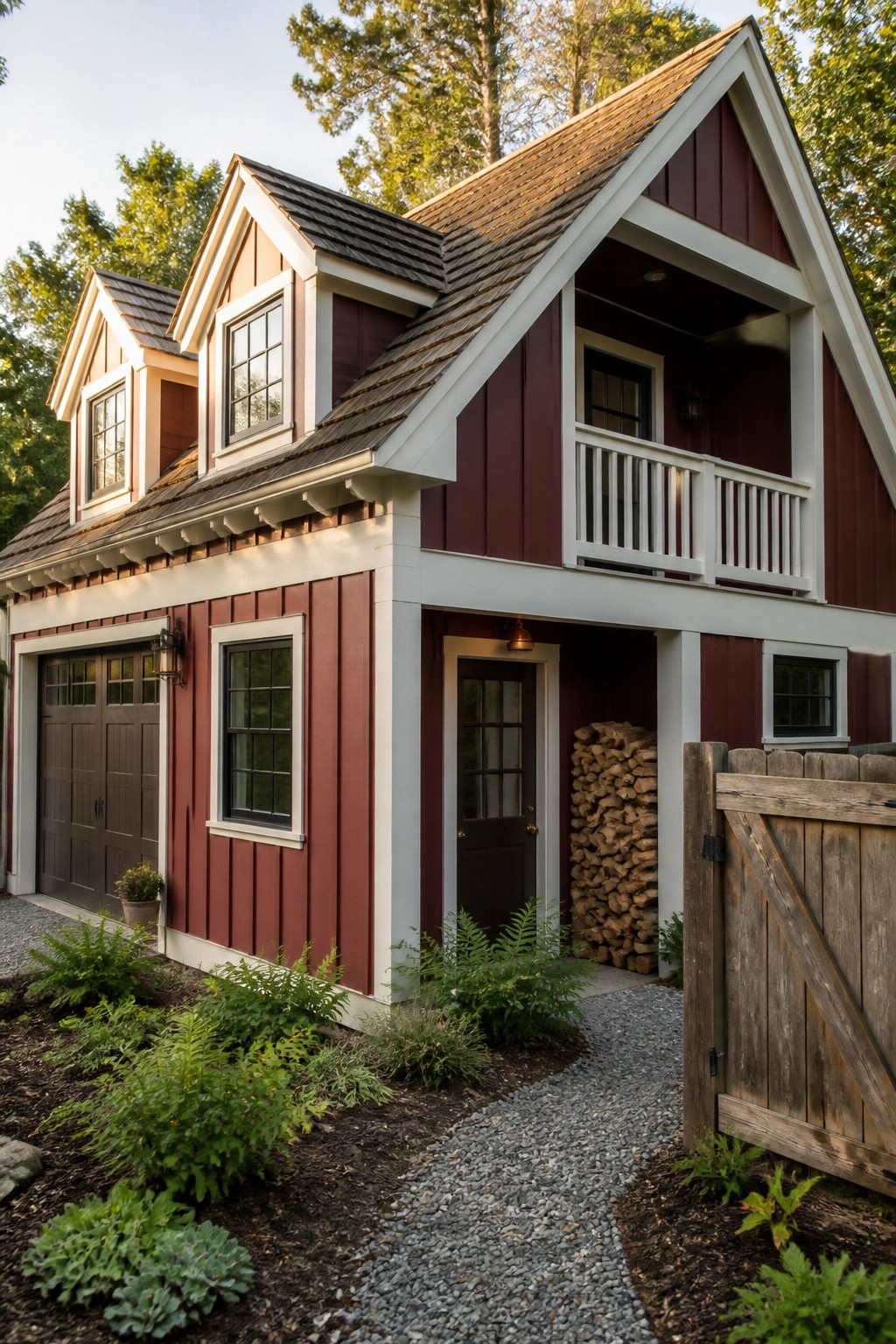
White board and batten stands out especially well against deep burgundy siding. The contrast keeps the house from looking flat and gives the whole exterior a cleaner, more finished shape even when the roofline is simple.
This works best on homes that already have a strong gable or two, since the white lines help break up the color without adding extra trim everywhere. It suits properties where you want the siding to feel bold but still tied to a classic farmhouse look. Keep the white bright rather than cream so the details stay sharp over time.
Adding a Pergola to Extend the Patio
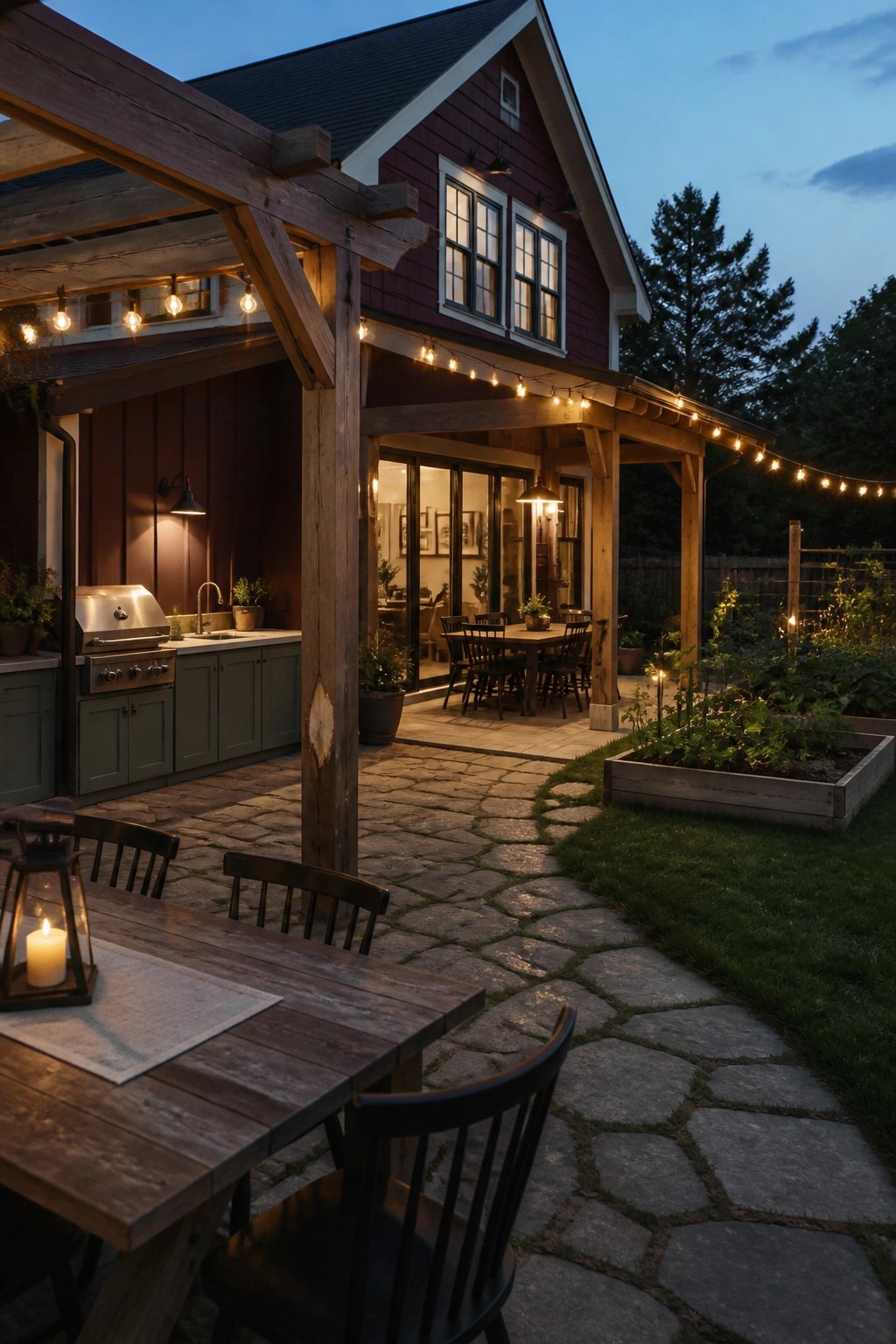
A pergola gives the patio a clear sense of structure while still keeping the space open to the air. It turns an open slab into a usable room for meals and gatherings, especially when paired with simple string lights that make the area comfortable after dark.
This setup works best on homes with easy access from the kitchen or main living areas. Keep the posts and beams in a natural wood tone so they match older farmhouse siding, and leave room for a few potted plants along the edge so the garden feels like part of the same space.
Burgundy Siding With White Board And Batten
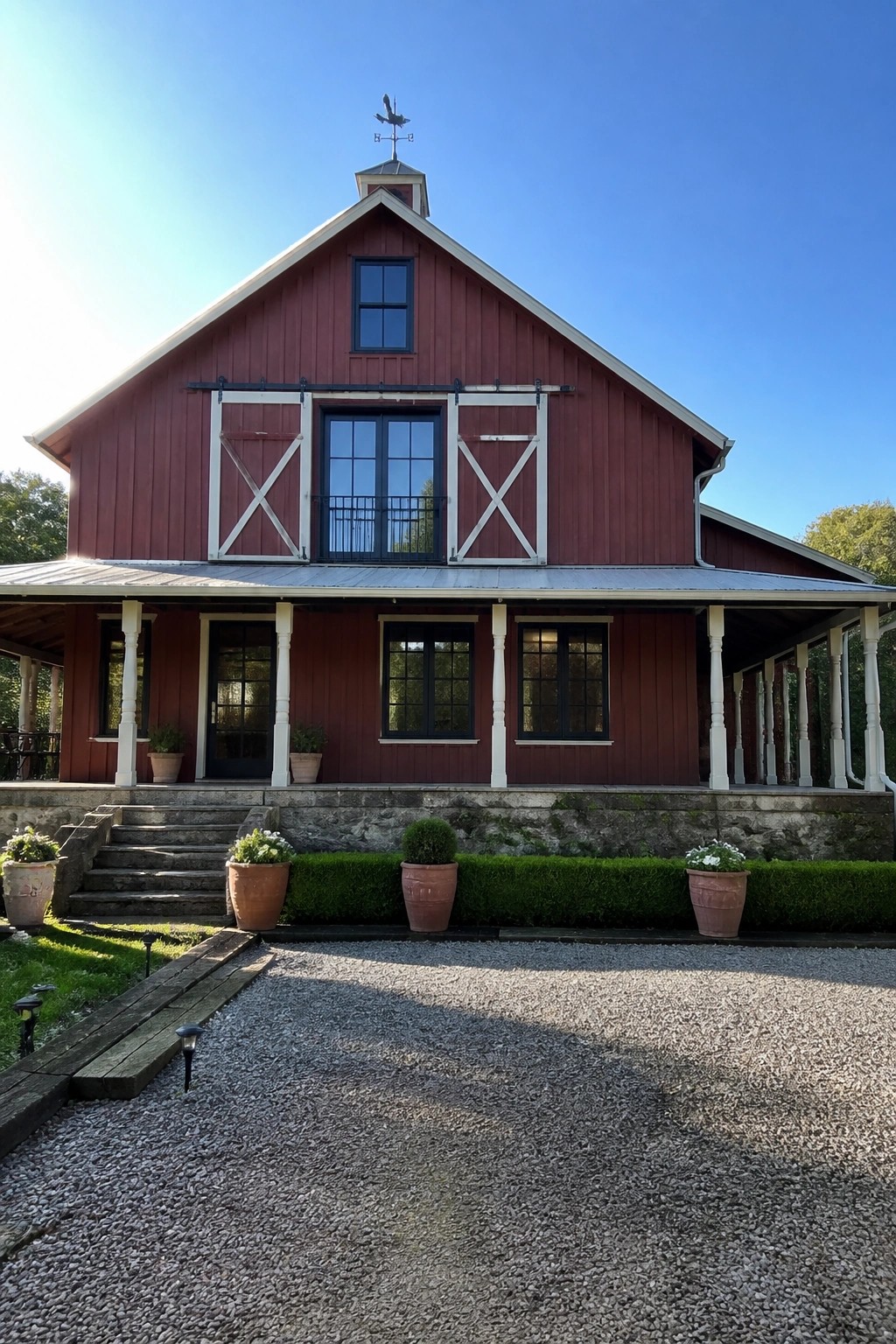
A deep burgundy shade gives a farmhouse real presence on the outside. It reads as classic rather than bold, especially when the siding stays simple and the white details do the work of breaking up the color.
This combination works well on homes with a straightforward roofline and a front porch. Keep the white board and batten focused on larger doors or windows so the contrast stays clean instead of busy.
Built-In Entry Benches
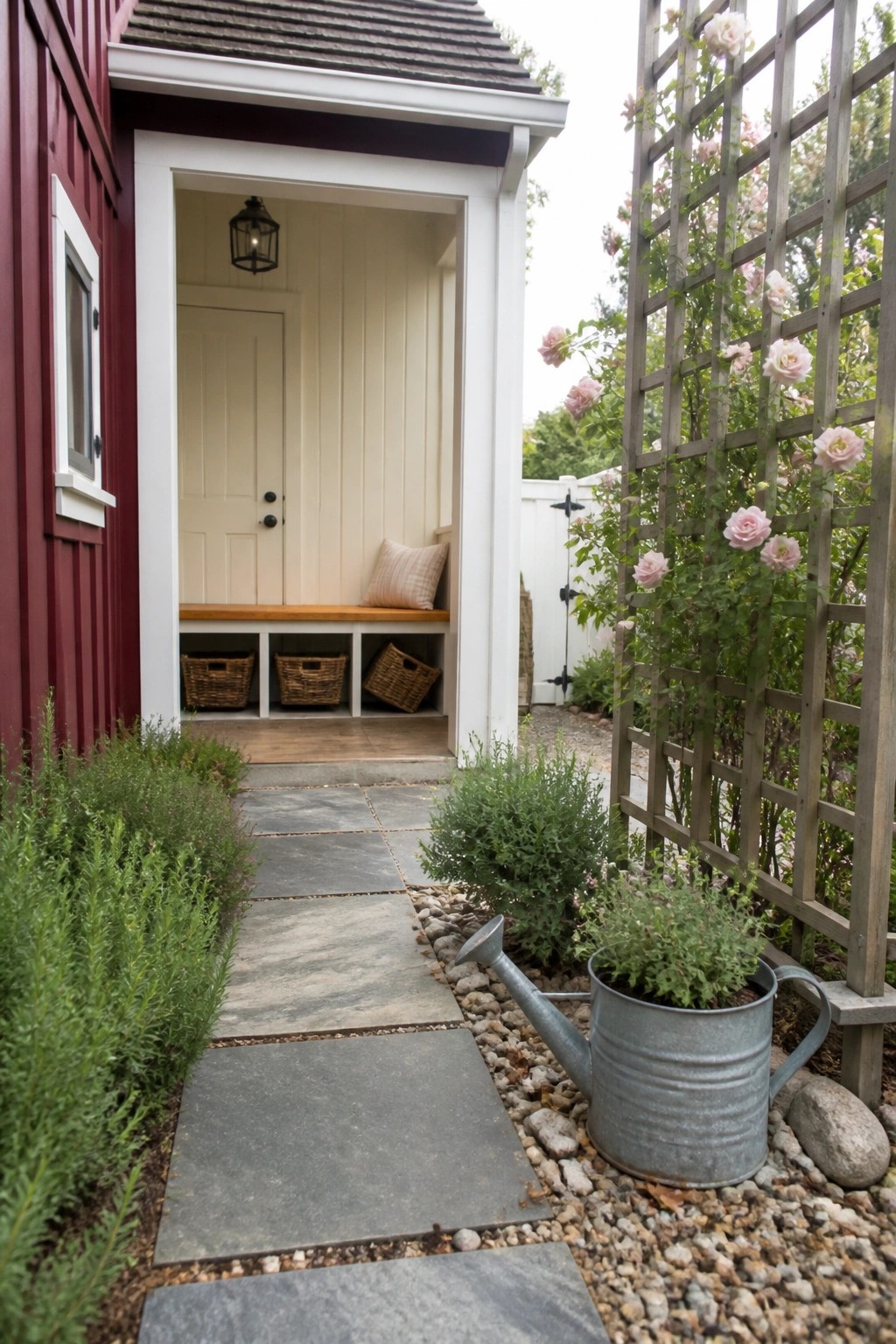
A recessed entry with a bench right by the door adds a spot to sit without crowding the walkway or needing extra furniture. It gives the front a settled look while making small daily tasks easier.
This setup works well on homes with a simple facade and enough wall depth to carve out the space. Keep the bench low and add open storage below so it stays practical without feeling cluttered.
White Trim On Burgundy Siding
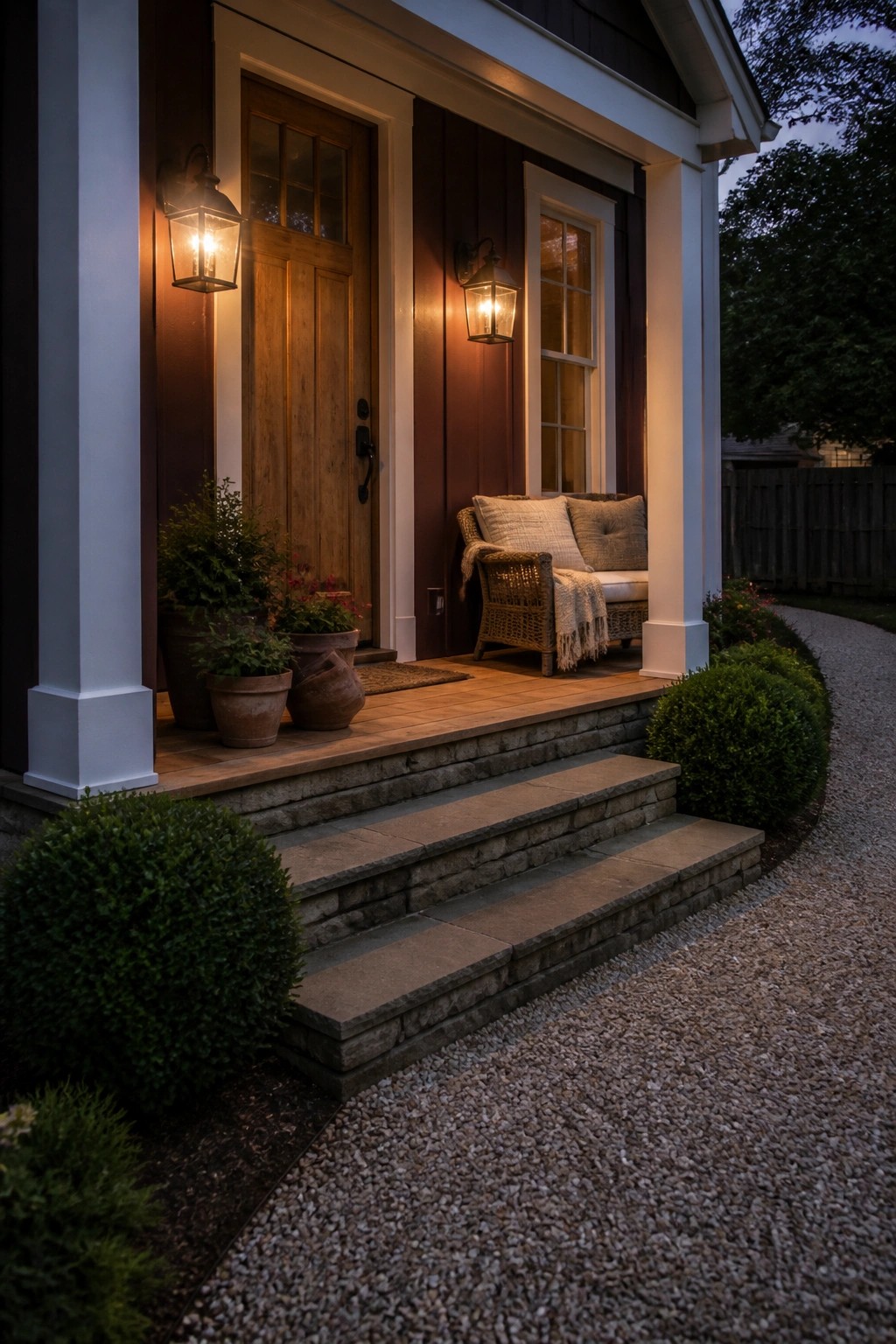
White trim stands out nicely against deep burgundy siding and gives the whole front a cleaner shape. The columns and door frame pick up the light from the lanterns and keep the darker color from feeling heavy. It is a simple way to get that classic farmhouse look without adding extra trim work.
This approach works well on homes that already have a strong roofline and a small porch. Keep the white bright so it catches the eye from the street, and make sure the siding color stays deep rather than faded. It suits most single-story or one-and-a-half story farmhouses with gravel paths or stone steps leading up to the door.
Burgundy Siding With White Board And Batten
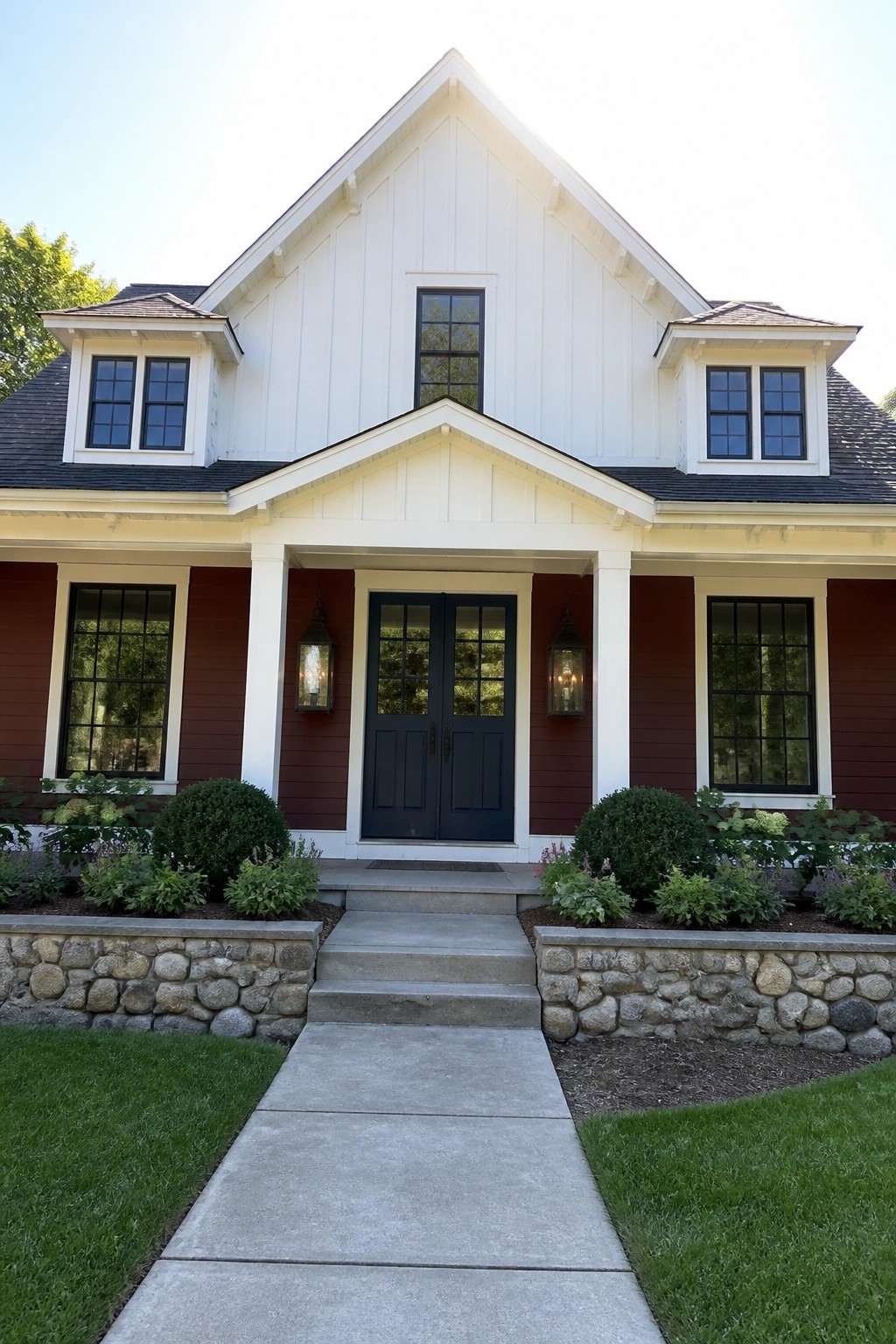
The deep red lower walls paired with white board and batten on the gable give the house a clear, simple shape. The contrast keeps the roofline sharp and makes the whole front feel balanced without extra trim.
This works best on homes that already have a steep gable or centered entry. Use dark doors and windows so the white stands out, and keep the lower siding solid so the upper section reads as a separate layer.
White Trim on Burgundy Siding
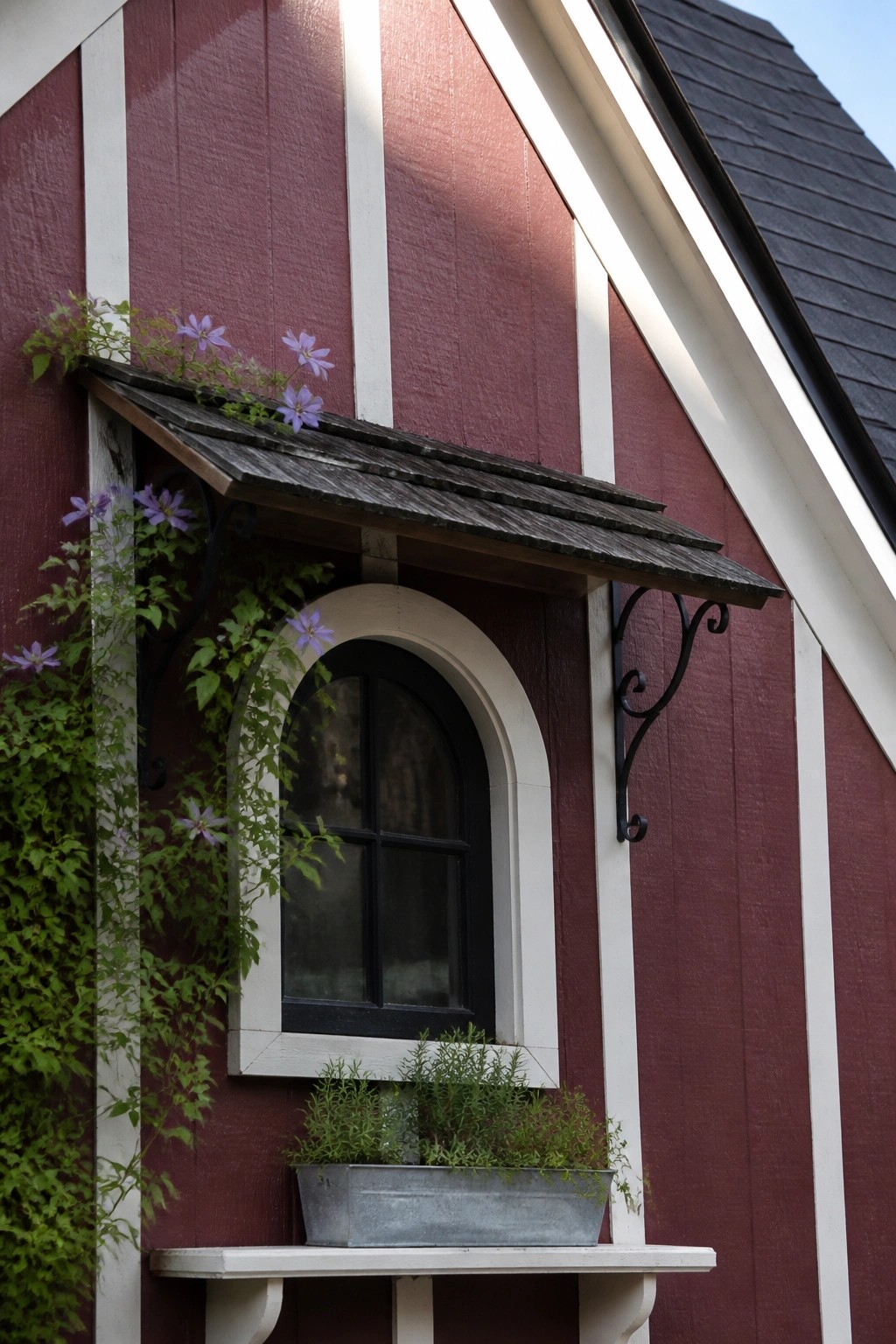
White trim makes the windows pop on this deep burgundy exterior. The clean lines of the board and batten stand out without competing with the bold color, and the effect feels simple rather than busy.
This approach works best on smaller or medium farmhouses where the siding color is already strong. Keep the trim crisp and the windows straightforward so the contrast stays clear instead of turning fussy.
Stone Fireplaces For Covered Outdoor Areas
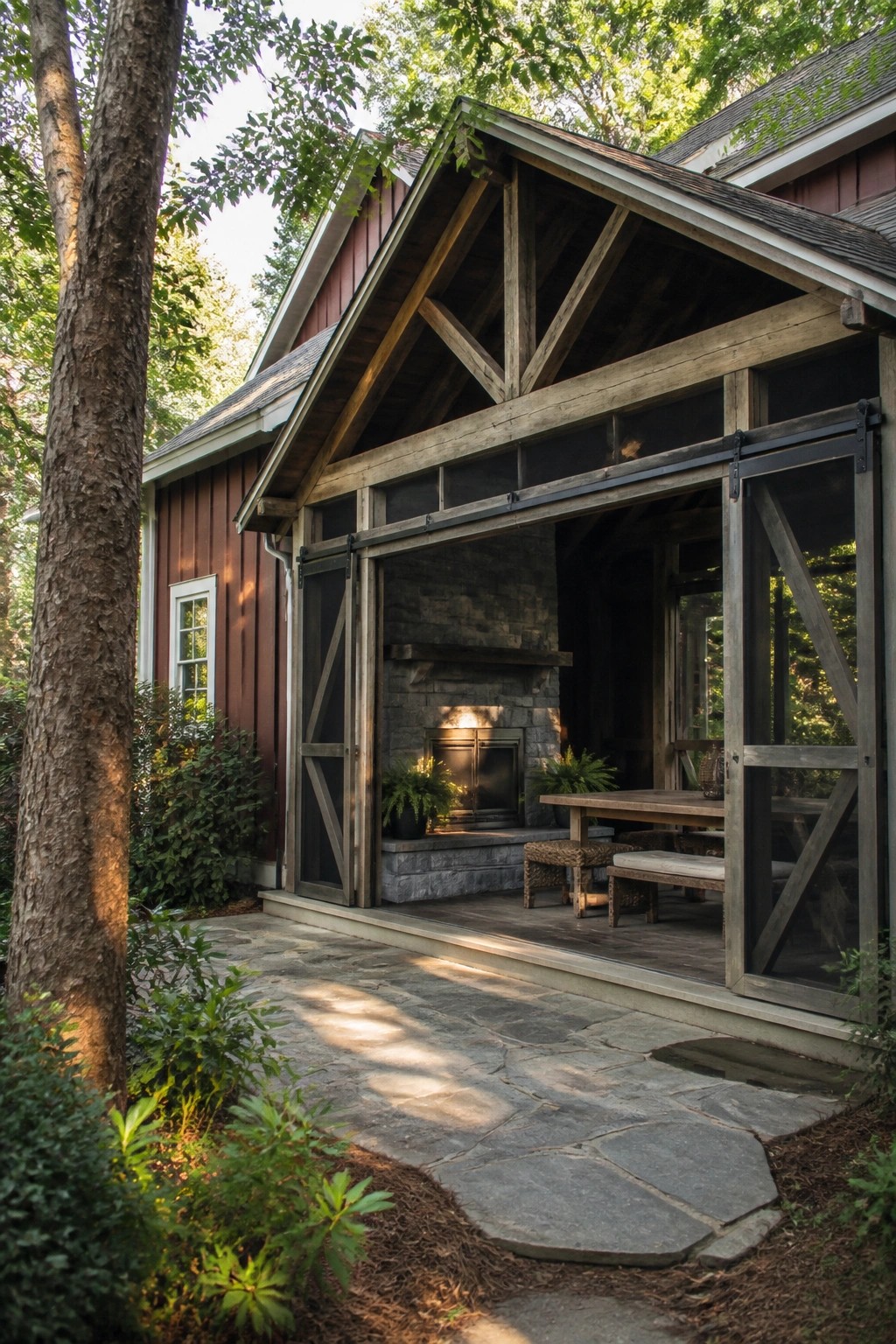
A stone fireplace set into the back wall of a covered porch gives the space a real focal point and makes it comfortable even when the weather cools off. The rustic wood framing around the opening helps tie the whole thing to the house without making the addition feel separate or tacked on.
This setup works best on homes with a similar roofline extension so the fireplace stays protected. It suits older farmhouses or newer builds that want that same relaxed look, especially when the surrounding siding stays simple and the doors can open wide on mild days.
Built-In Benches With Open Storage
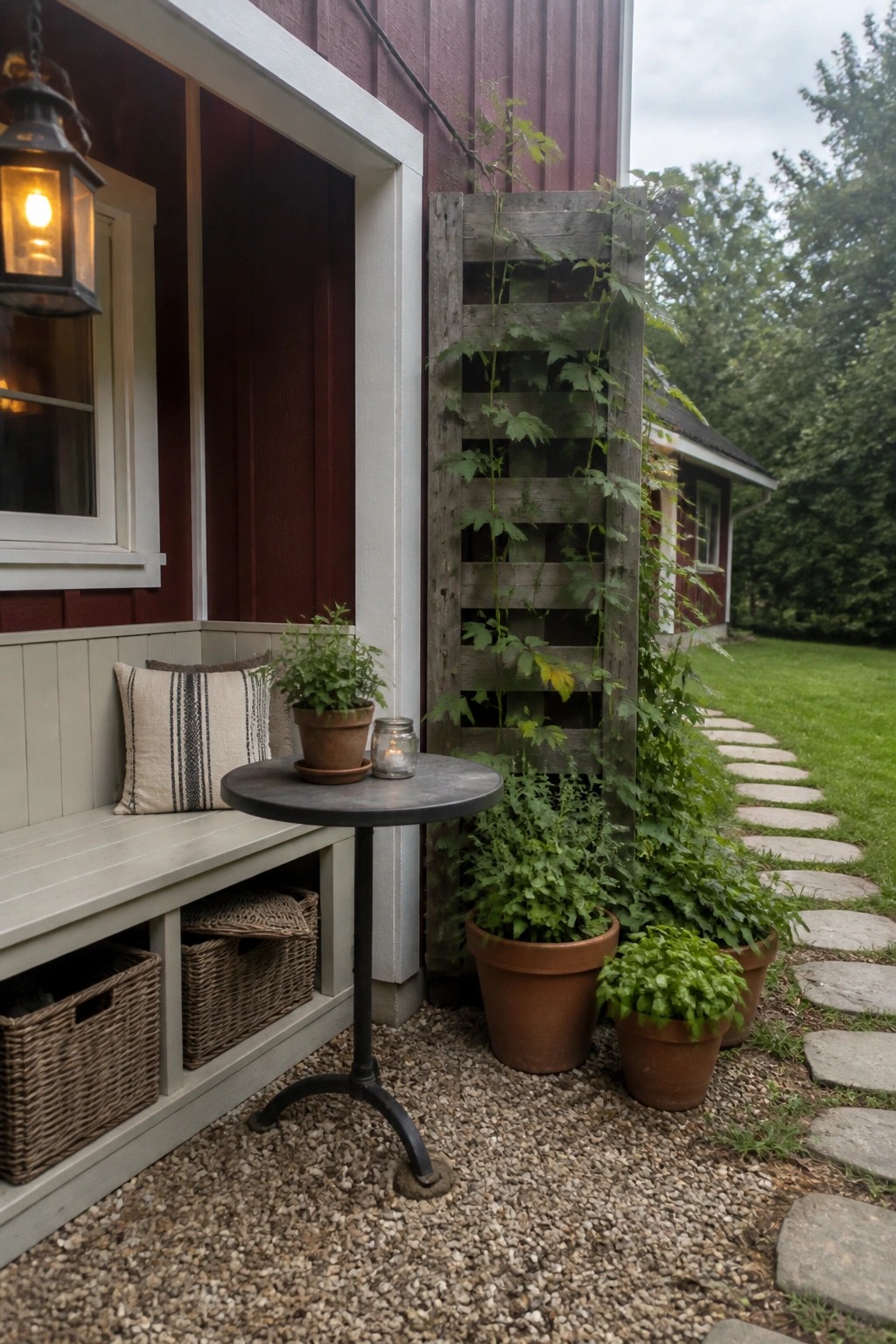
A built-in bench right by the door gives you a place to sit while pulling off boots or setting down packages. The open cubbies underneath keep baskets handy for gloves, tools, or whatever you need without adding extra furniture that might crowd the space.
This setup works well on smaller farmhouses or homes with limited porch depth. Keep the bench simple, match the trim color, and use sturdy baskets so the whole thing stays practical through the seasons.
A Deep Burgundy Door On White Siding
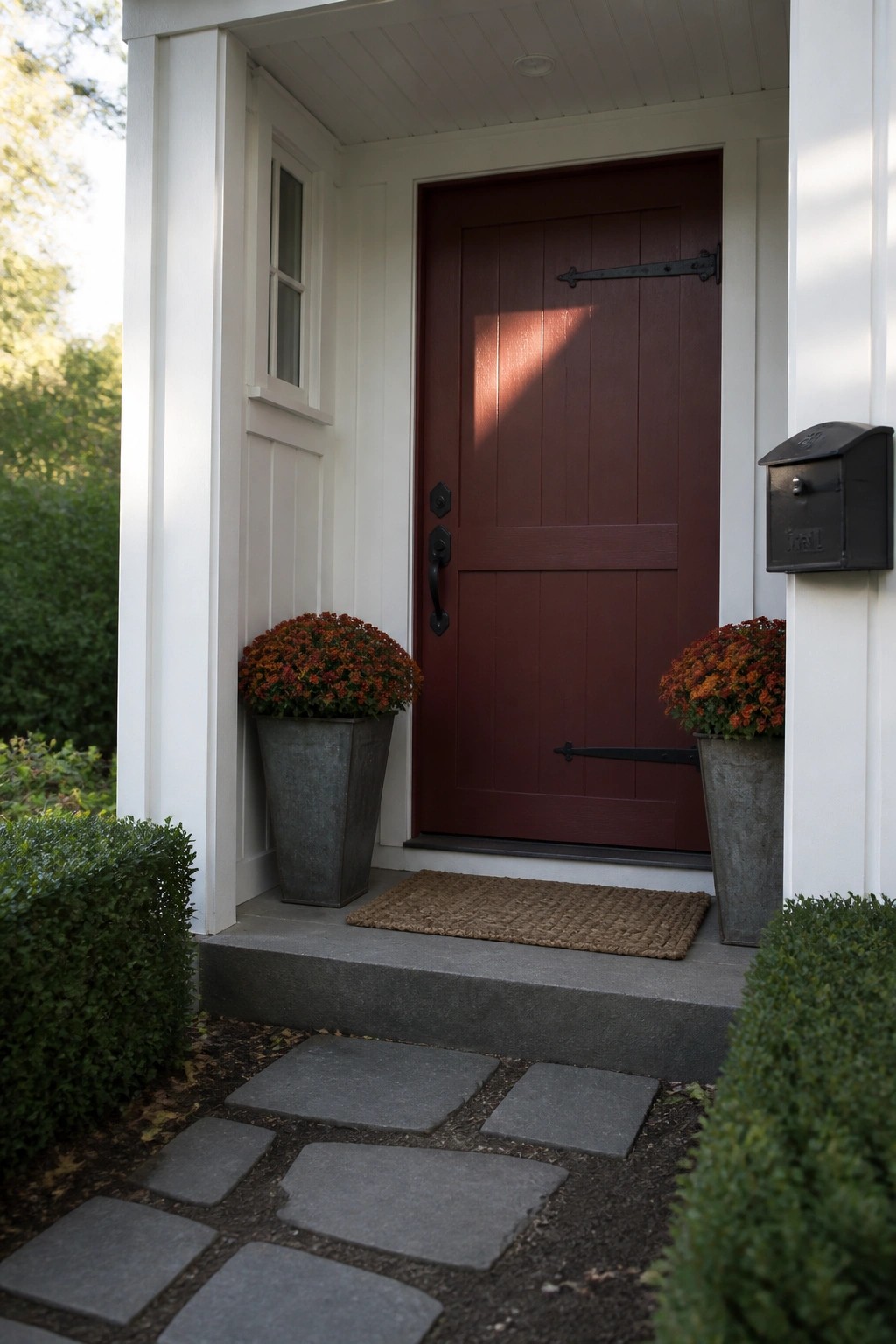
A deep burgundy door gives white board and batten a clear focal point without extra trim or ornament. The color feels grounded and works especially well on simple farmhouses where the siding stays plain.
It suits homes that already have white painted exteriors and need one strong accent to define the entry. Dark hardware helps the look stay rustic rather than too polished.
Burgundy Siding With White Board And Batten
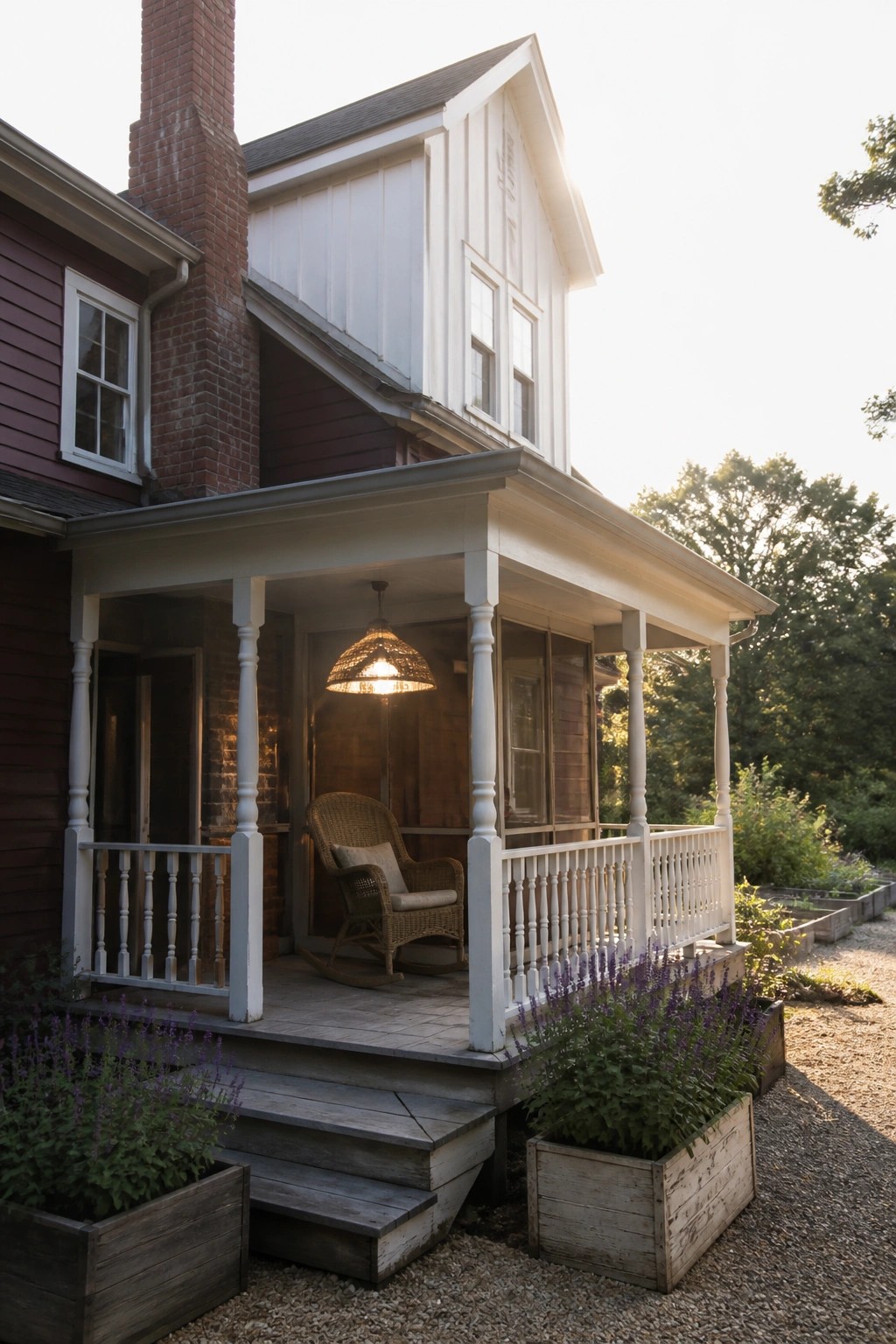
Deep burgundy siding looks sharper when you add white board and batten on the gables and upper sections. The contrast keeps the house from feeling too heavy while still showing off the rustic color.
This works best on farmhouses that already have simple rooflines and porches. Use the white details sparingly so they highlight the shape of the house rather than covering every wall.
Burgundy Siding With White Trim
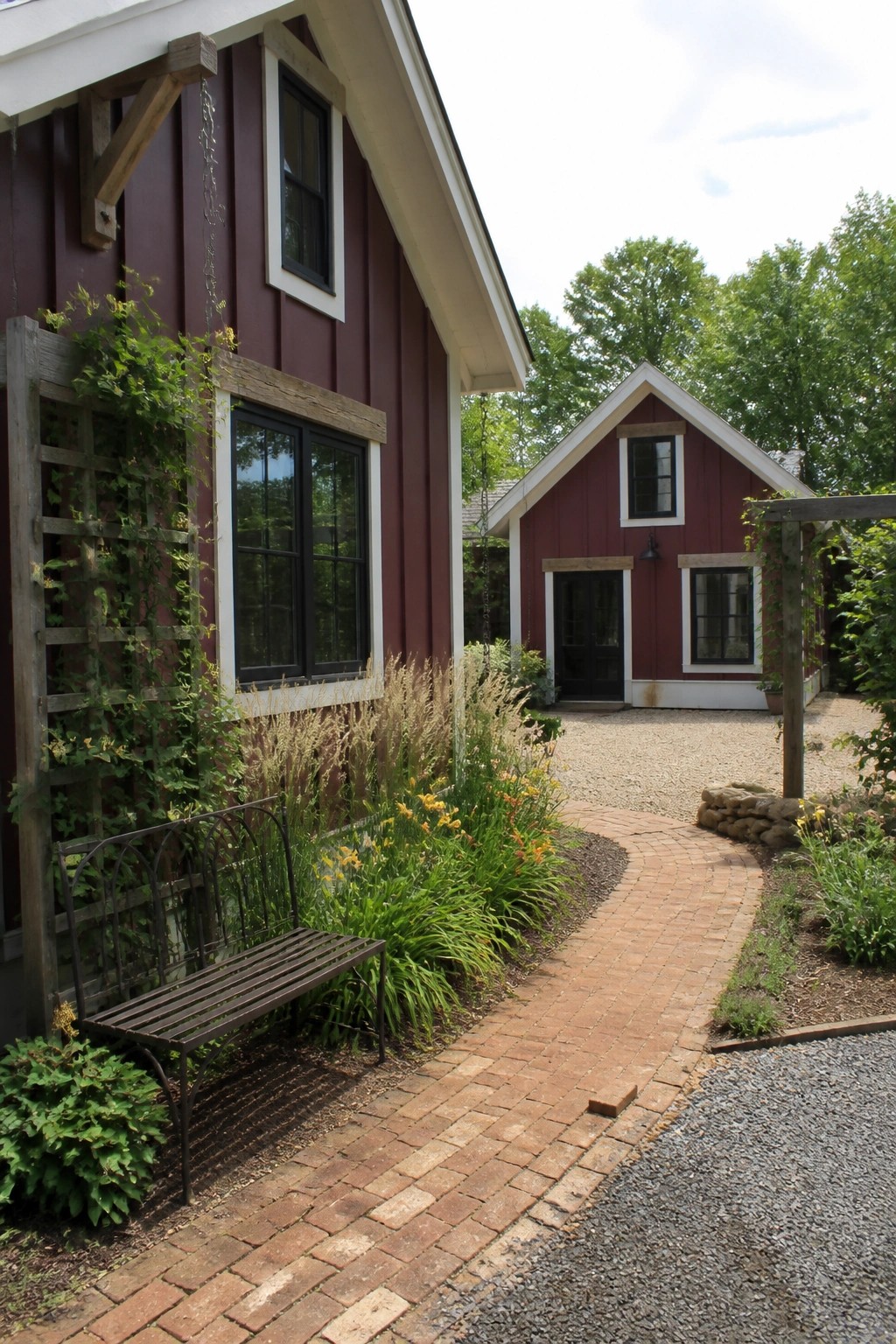
A deep burgundy shade on the main walls gives the house a solid, grounded feel that still reads as farmhouse. The white trim and board and batten sections keep the color from turning heavy and help the shape of the building stay clear.
This color works best on homes with simple rooflines and enough surrounding greenery to soften the red. Keep the white bright and use it on the trim and any vertical boards so the contrast stays sharp through the seasons.
Covering the Outdoor Kitchen Area
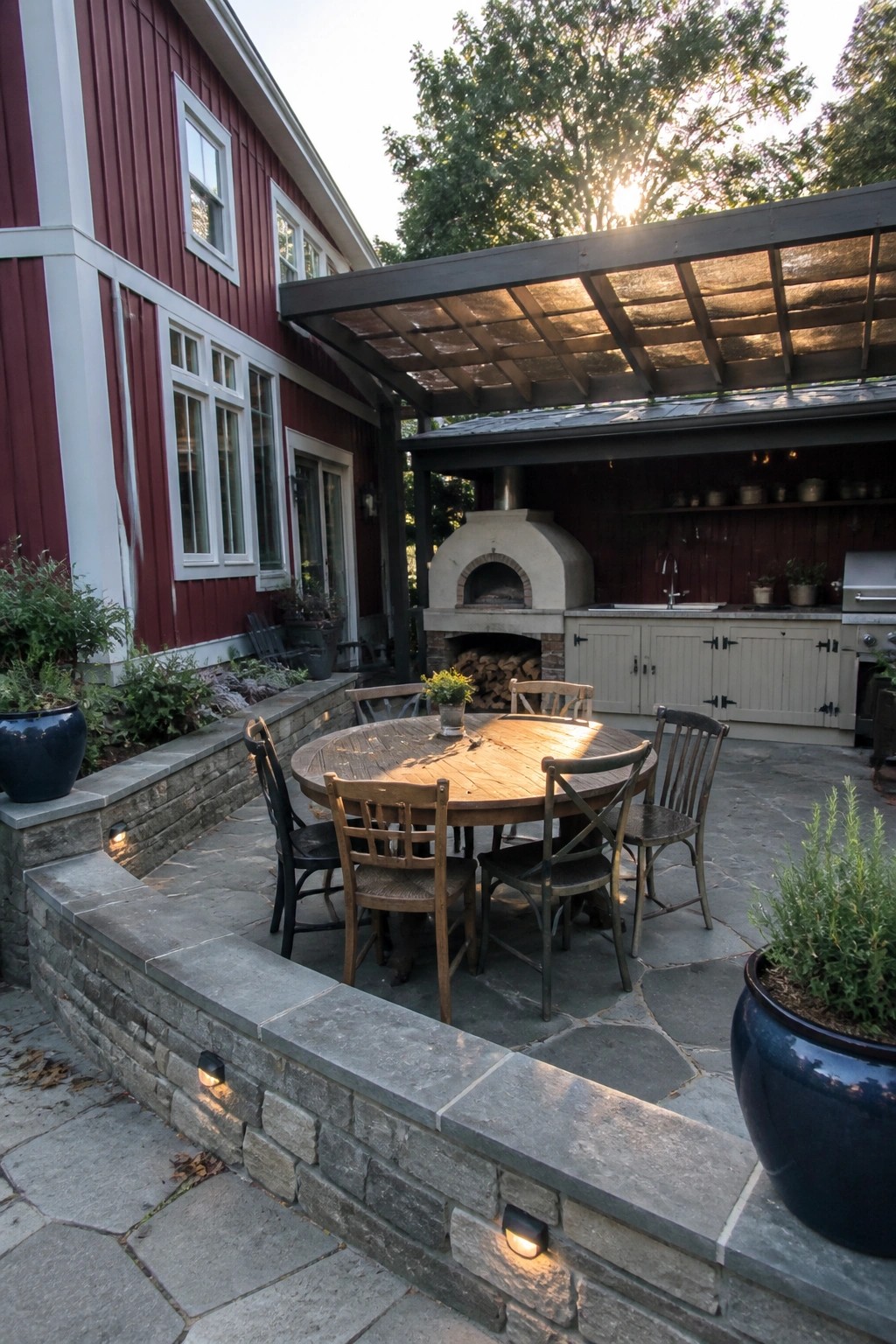
A covered structure over the outdoor kitchen and dining space keeps the area usable even when the weather shifts. It turns what could be a sunny patio into a spot that works for meals in different seasons without needing to move everything inside.
This setup works best on homes with some wall space along the back or side where you can tuck the cover close to the house. Keep the roof simple and match the trim color so it blends with the existing siding instead of standing out as a separate addition.
Stone Bases Under Timber Posts
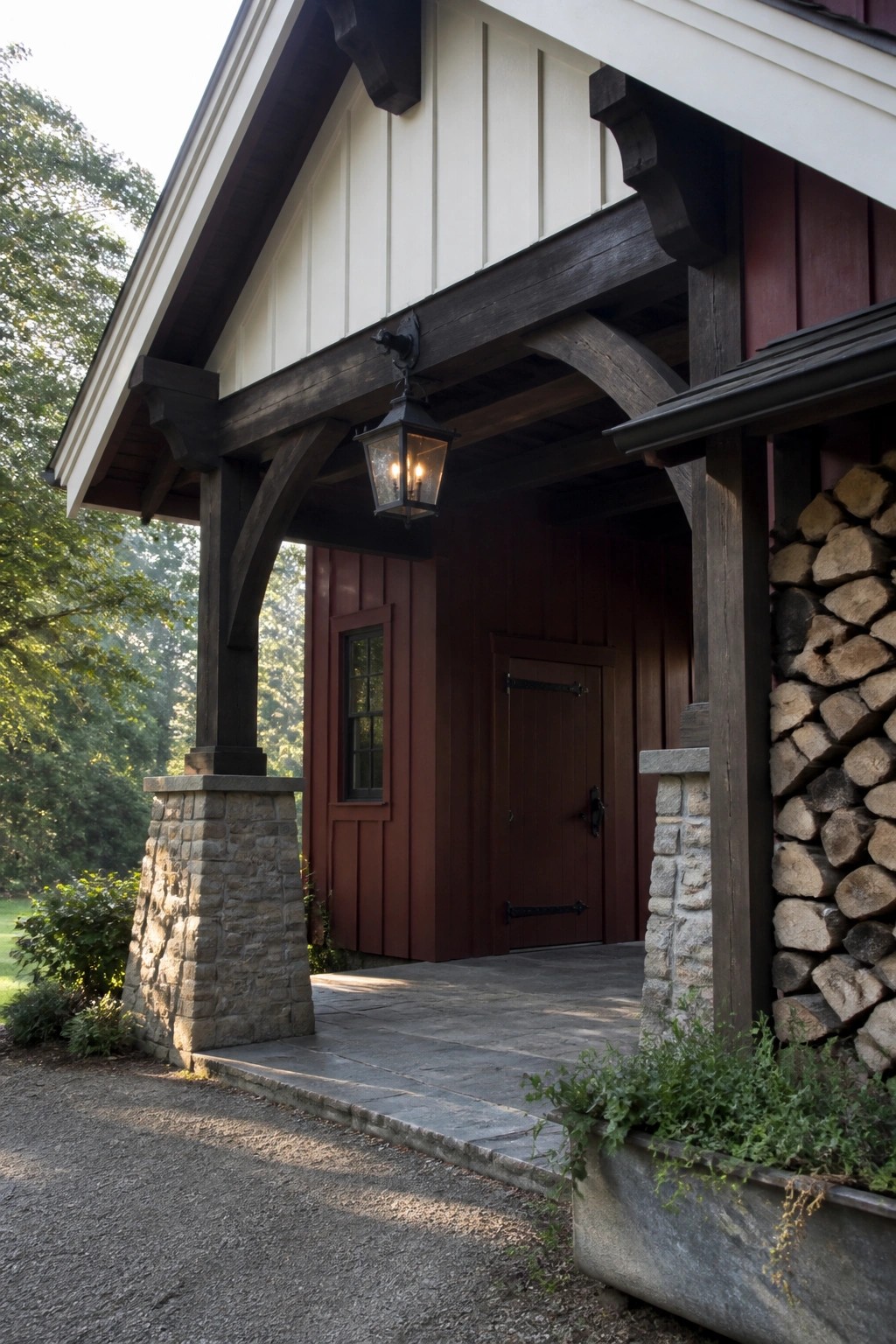
Stone bases under heavy timber posts give a porch real weight and help the whole entry feel settled into the ground. On a burgundy farmhouse the light stone breaks up the dark wood and keeps the structure from looking too tall or top-heavy.
This detail works best on homes with simple gable roofs and board-and-batten siding. Keep the stone rough and the posts thick so the porch reads as part of the house instead of something added on later.
Burgundy Siding with White Board-and-Batten
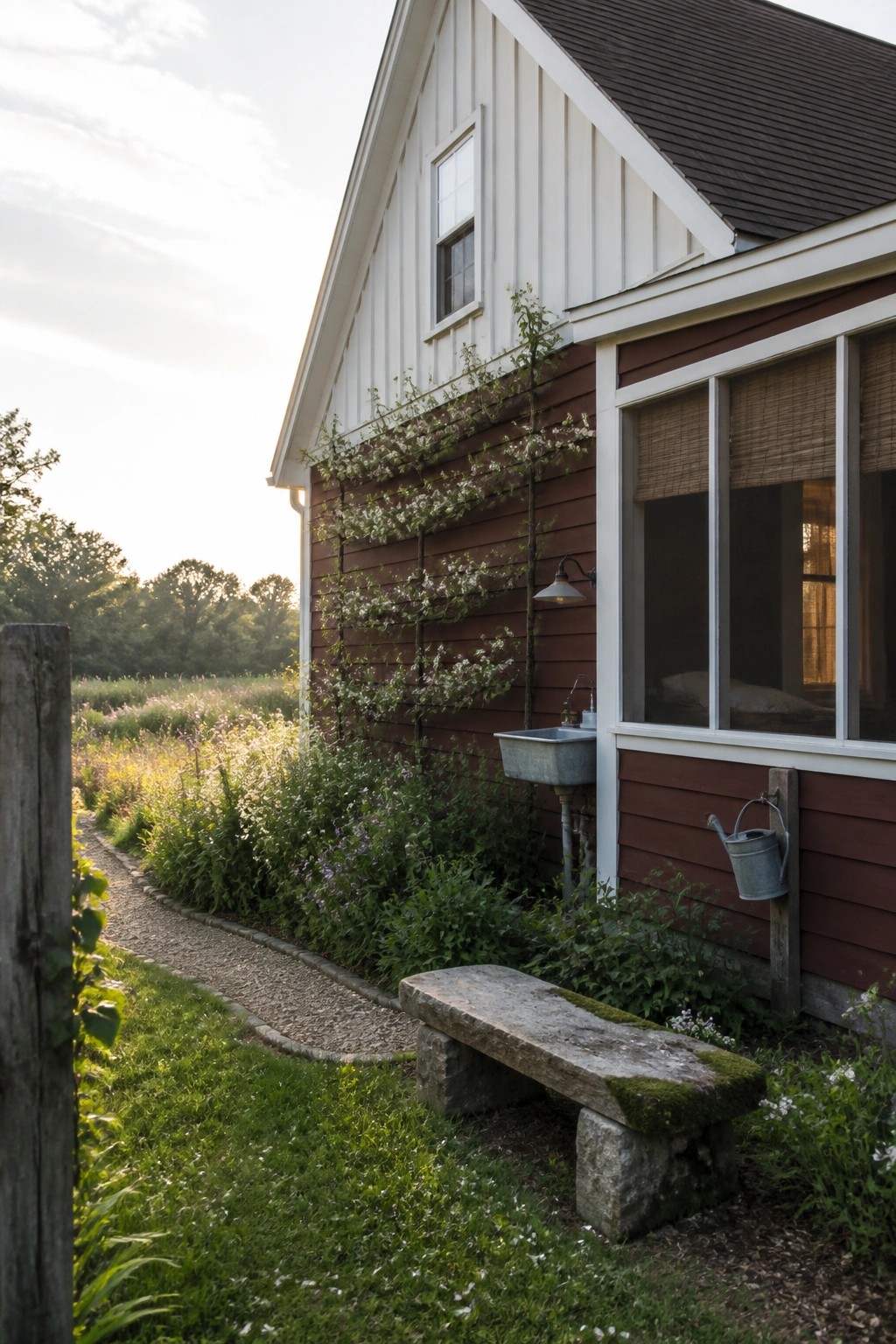
Deep burgundy on the lower siding gives this house a solid, earthy base while the white board-and-batten above keeps it light. The contrast works because it stays simple and lets the shape of the house show through without extra trim or patterns.
This approach suits older farmhouses or new builds that want a traditional look without feeling stark. It pairs best with climbing plants or a garden path right up against the wall so the color does not sit alone.
White Board And Batten On Burgundy Siding
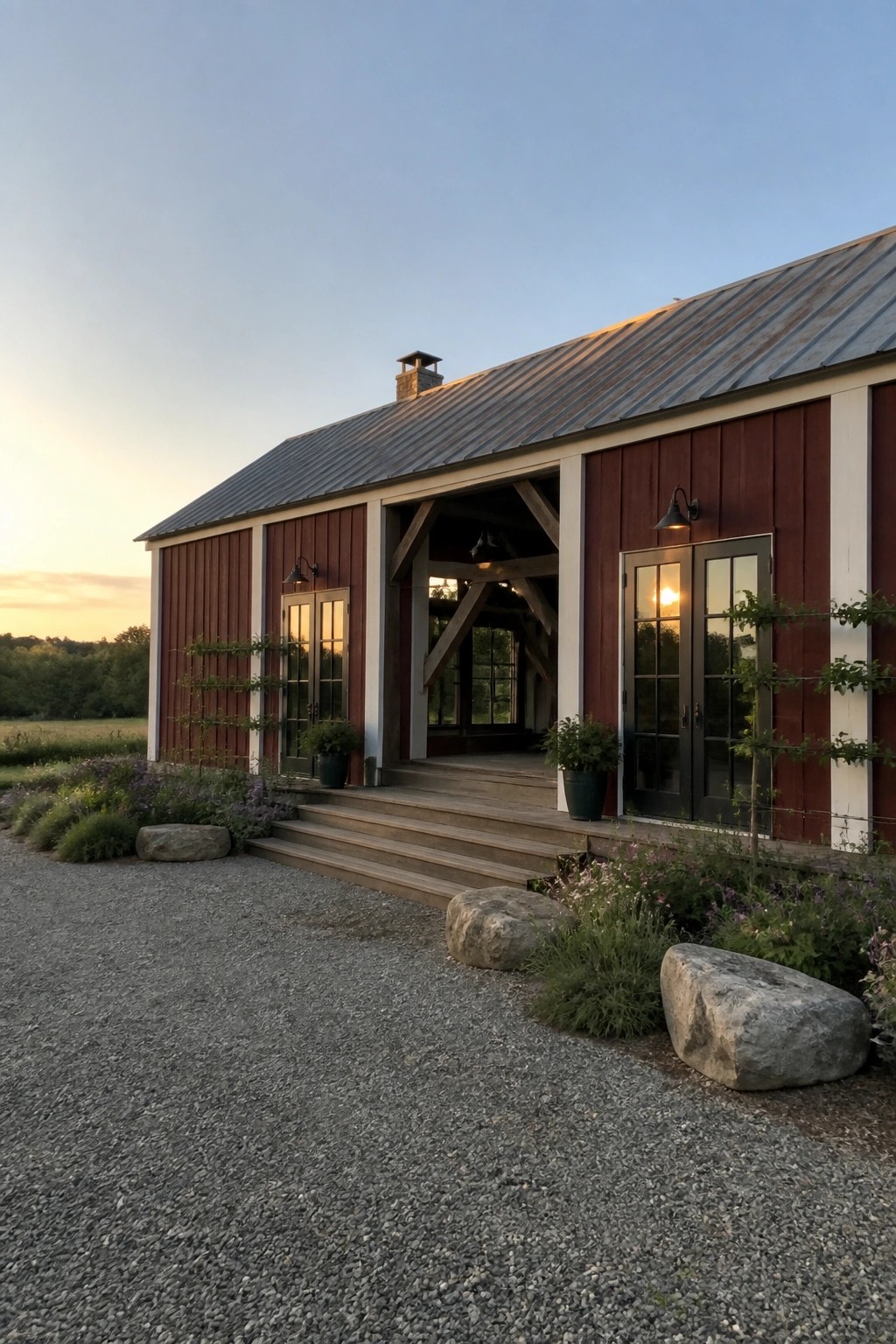
White board and batten trim gives burgundy siding a sharper, more finished look without making it feel formal. The vertical lines break up the solid color and help the house read as a classic farmhouse even when the red is this deep.
This works best on homes with simple rooflines and larger wall areas. Keep the trim bright and the siding color consistent so the contrast stays clean rather than busy.
Frequently Asked Questions
Q: How do I keep the white from yellowing over time?
A: Clean the boards twice a year with mild soap and water. This simple step stops most discoloration before it starts.
Q: Can I mix burgundy with a metal roof on my farmhouse?
A: Yes it pairs well. A dark gray roof balances the rich burgundy without overpowering it.
Q: What if I want this style but my budget is tight?
A: Focus on the front facade first. Add the board and batten there and paint the rest to match.
