

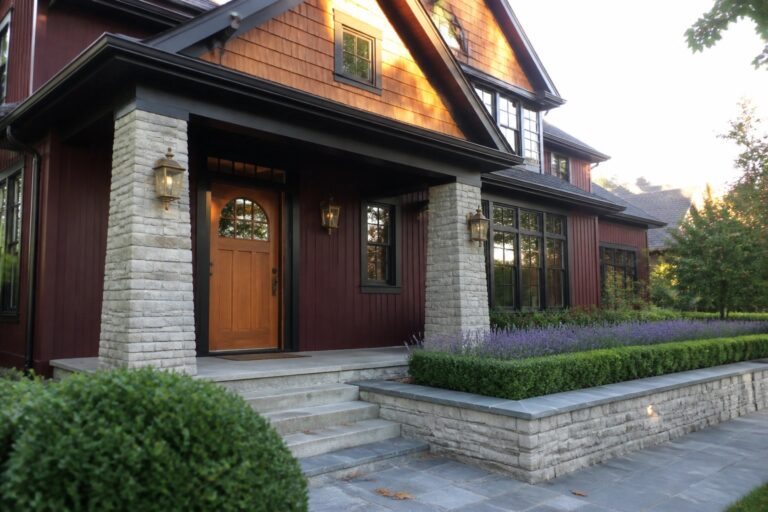
I’ve noticed that maroon exteriors gain a lot of their presence from the way soft gray stone is placed along the base and around openings.
The right balance keeps the color from feeling too dark while still giving the facade some weight from the street.
Some pairings hold up better once you see them in different light.
I keep coming back to how the stone edges meet the siding because that detail often decides whether the whole look feels finished or just applied.
A couple of these examples make me want to test similar stone runs on a smaller section first before committing to a full front.
Maroon Siding With Gray Stone Bases
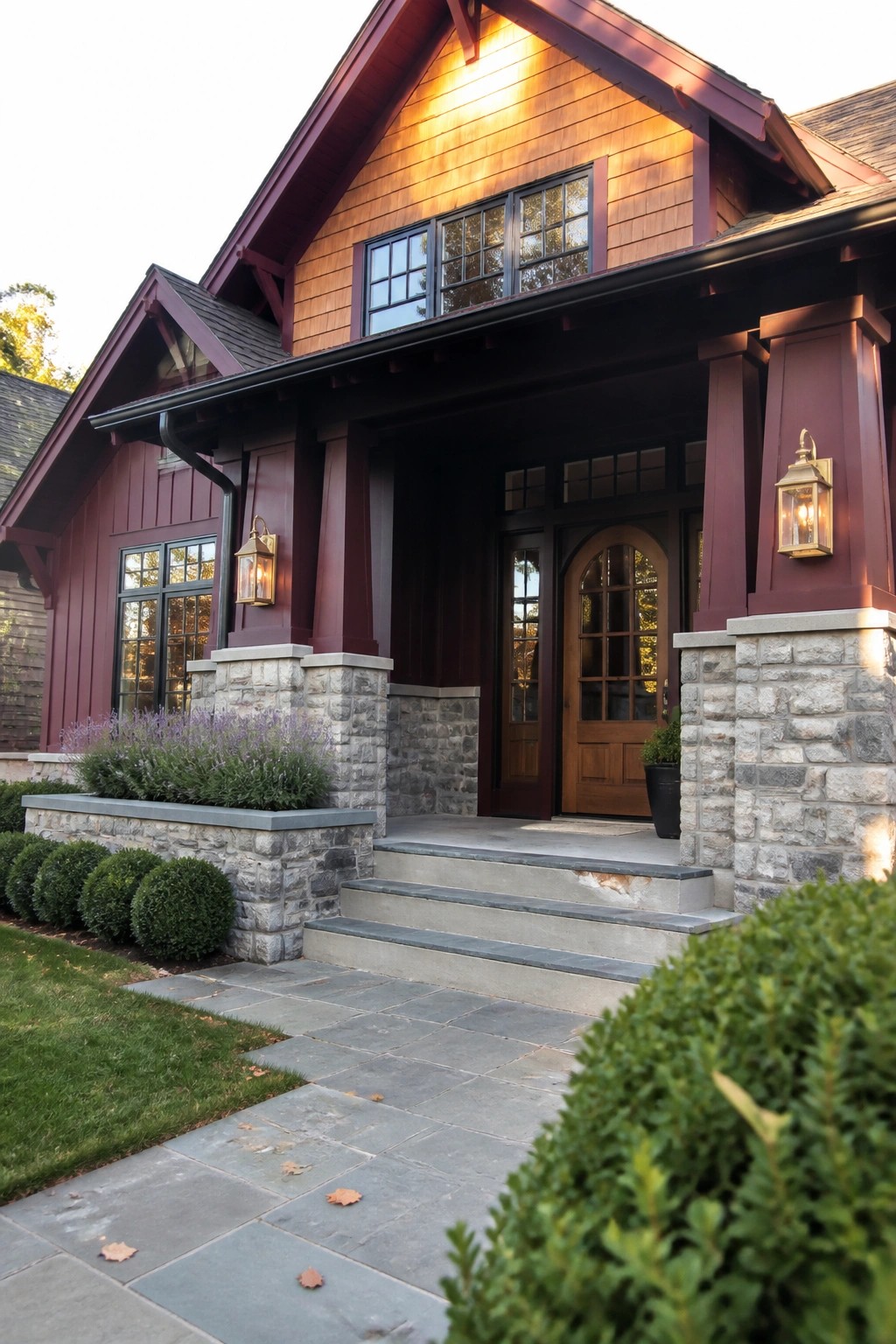
Maroon siding can feel heavy on its own, but adding soft gray stone at the base and on the pillars keeps the color from overpowering the house. The stone gives the exterior a solid, settled look that works especially well on homes with deeper paint colors.
This approach suits traditional or craftsman-style houses where you want the color to stand out without looking too stark. Keep the stone in a muted tone so it balances the maroon rather than competing with it, and use it mainly on the lower sections and entry columns.
Stone Columns on Maroon Facades
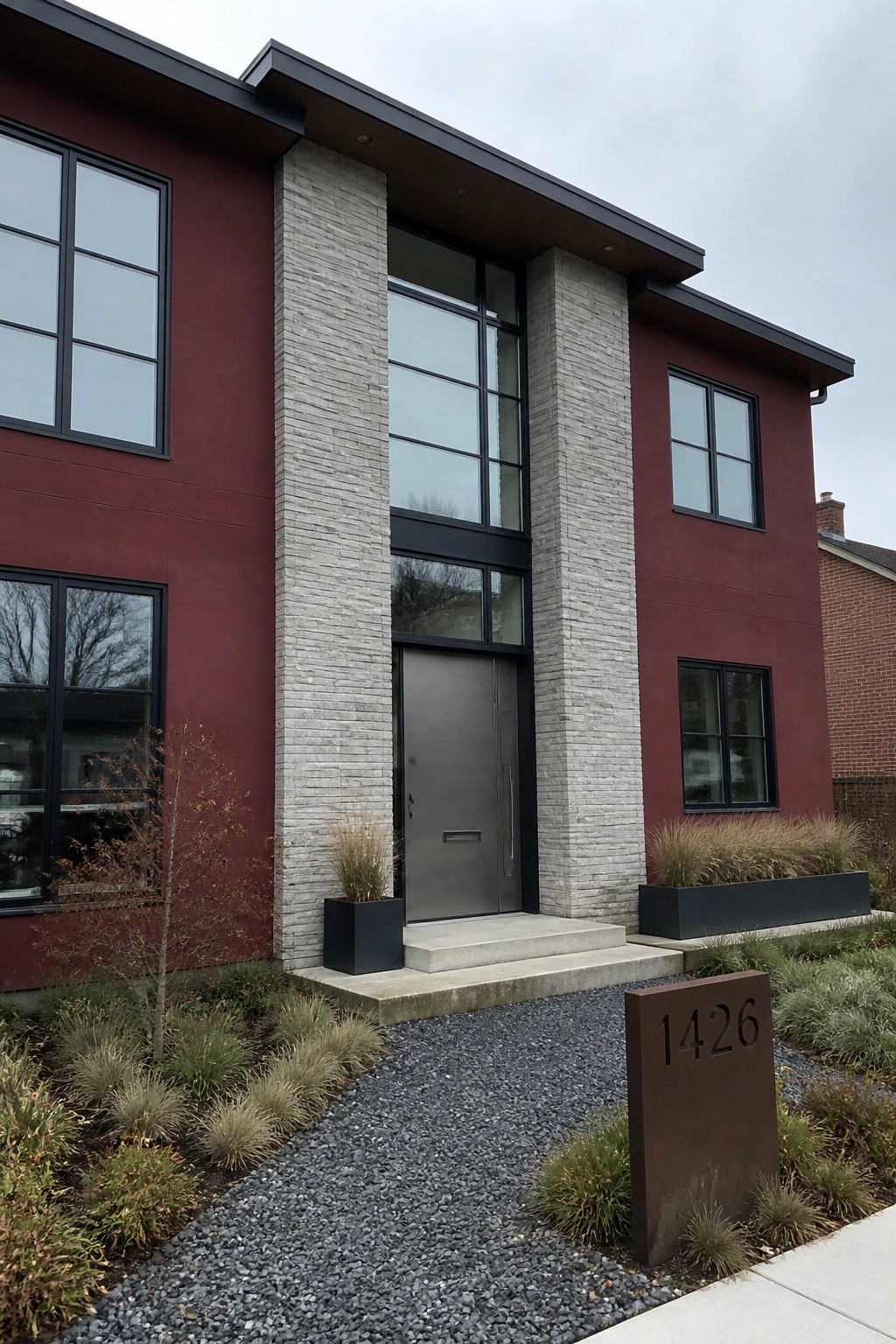
Tall gray stone columns can give a maroon house a cleaner, more structured look without adding extra trim or detail. They break up the solid color and create a natural focal point around the door, which helps the whole front feel balanced rather than flat.
This approach works best on two-story homes where the stone can run the full height of the entry. Keep the stone in a light, textured finish so it stands out against the deeper siding, and limit it to the main vertical elements instead of spreading it across the whole facade.
Pairing Maroon Siding With Gray Stone
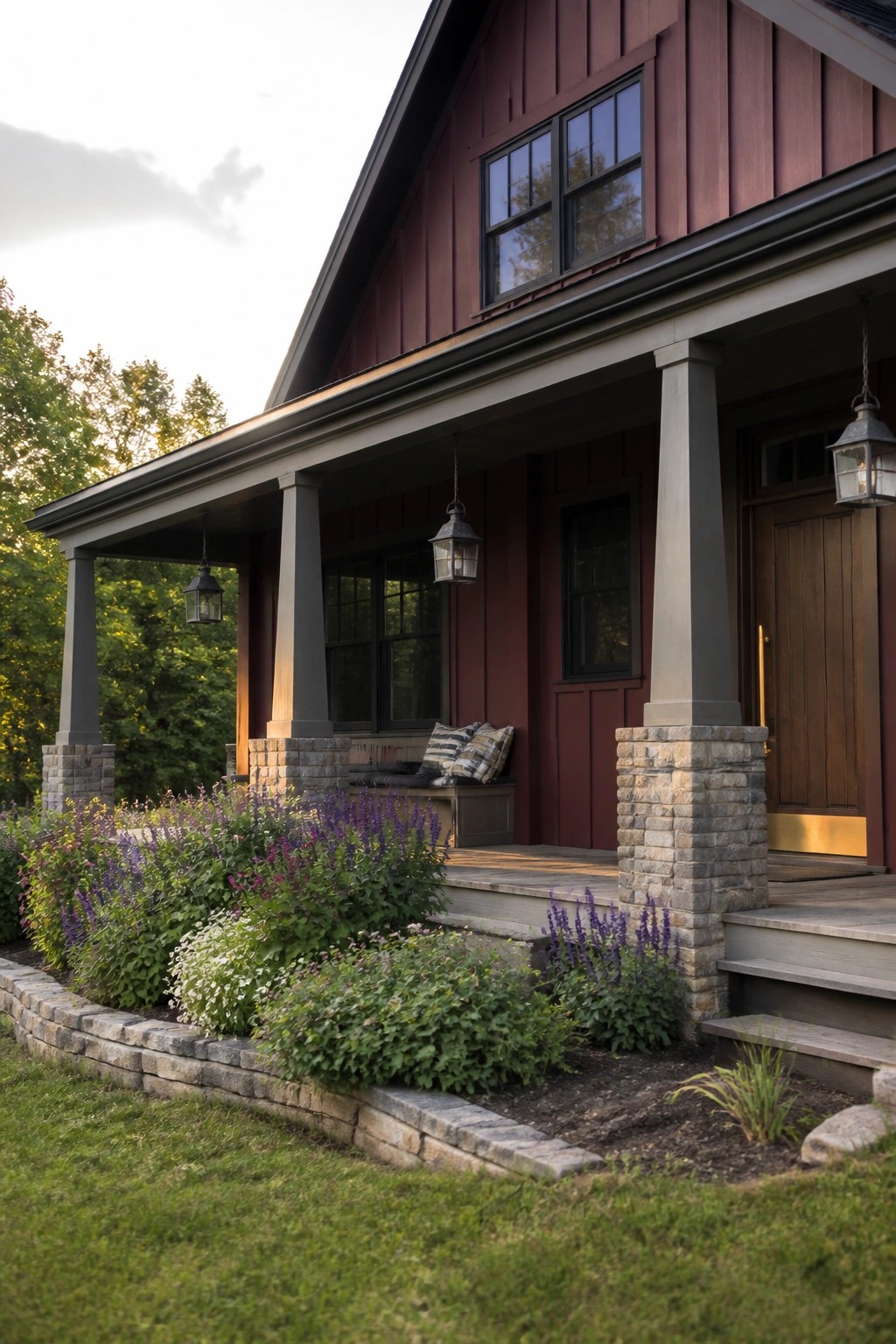
Maroon siding stands out on its own, but it gains balance when paired with soft gray stone on the base and columns. The stone adds weight and texture that keeps the color from feeling too bold or flat across a whole facade.
This combination works best on homes with a porch or covered entry where the stone can frame the main door area. It suits traditional and farmhouse styles that already lean on natural materials, and it holds up well in most climates since both the siding and stone age gracefully together.
Stone Framing on Brick Facades
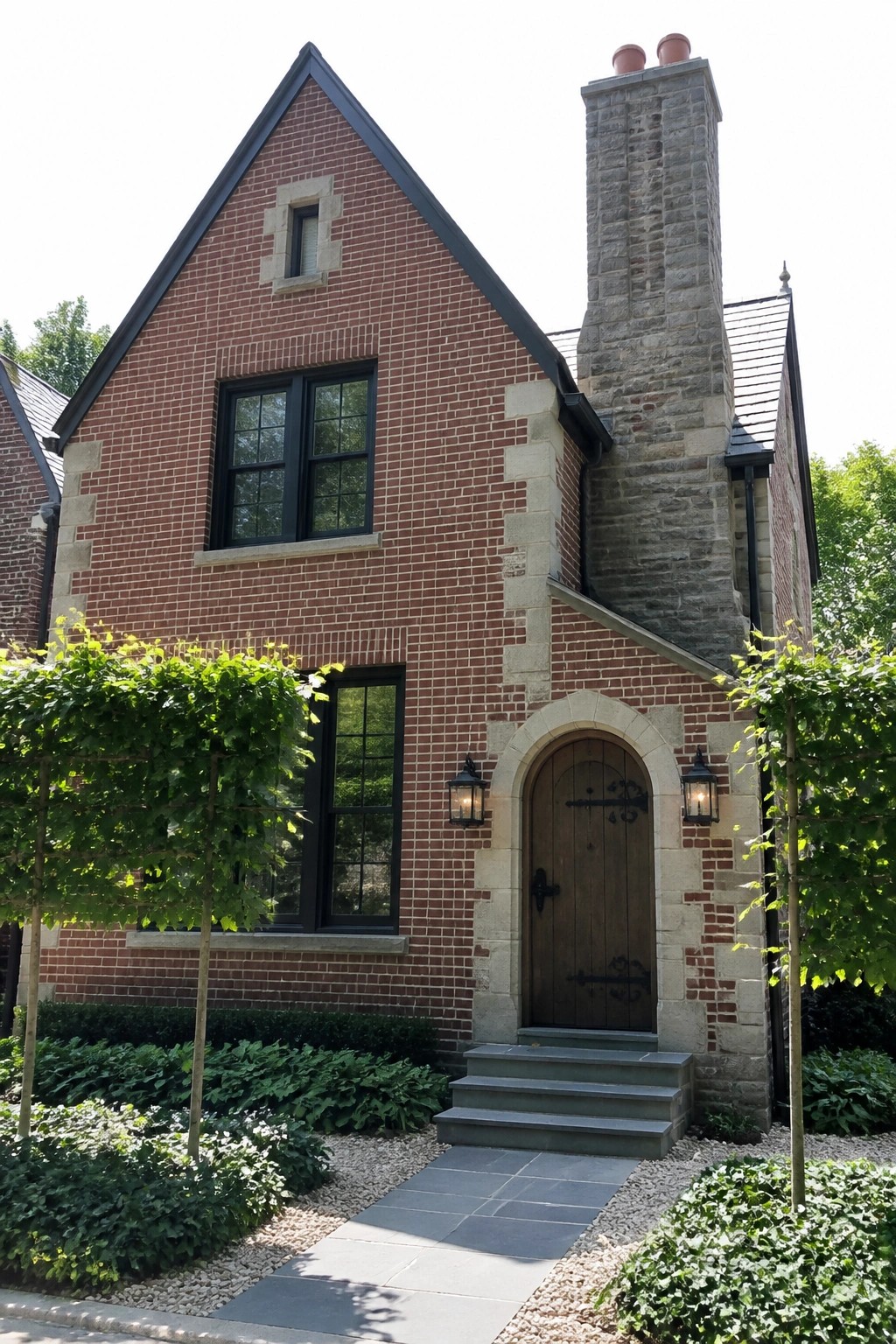
Many brick homes look more finished when soft gray stone is used to outline the main door and a few windows. The contrast draws attention to those spots and breaks up the solid wall without needing extra trim or color changes.
This works best on houses with simple rooflines where the brick can stay the main surface. Limit the stone to the entry arch and chimney area so it does not compete with the overall shape of the house.
Maroon Siding With Gray Stone
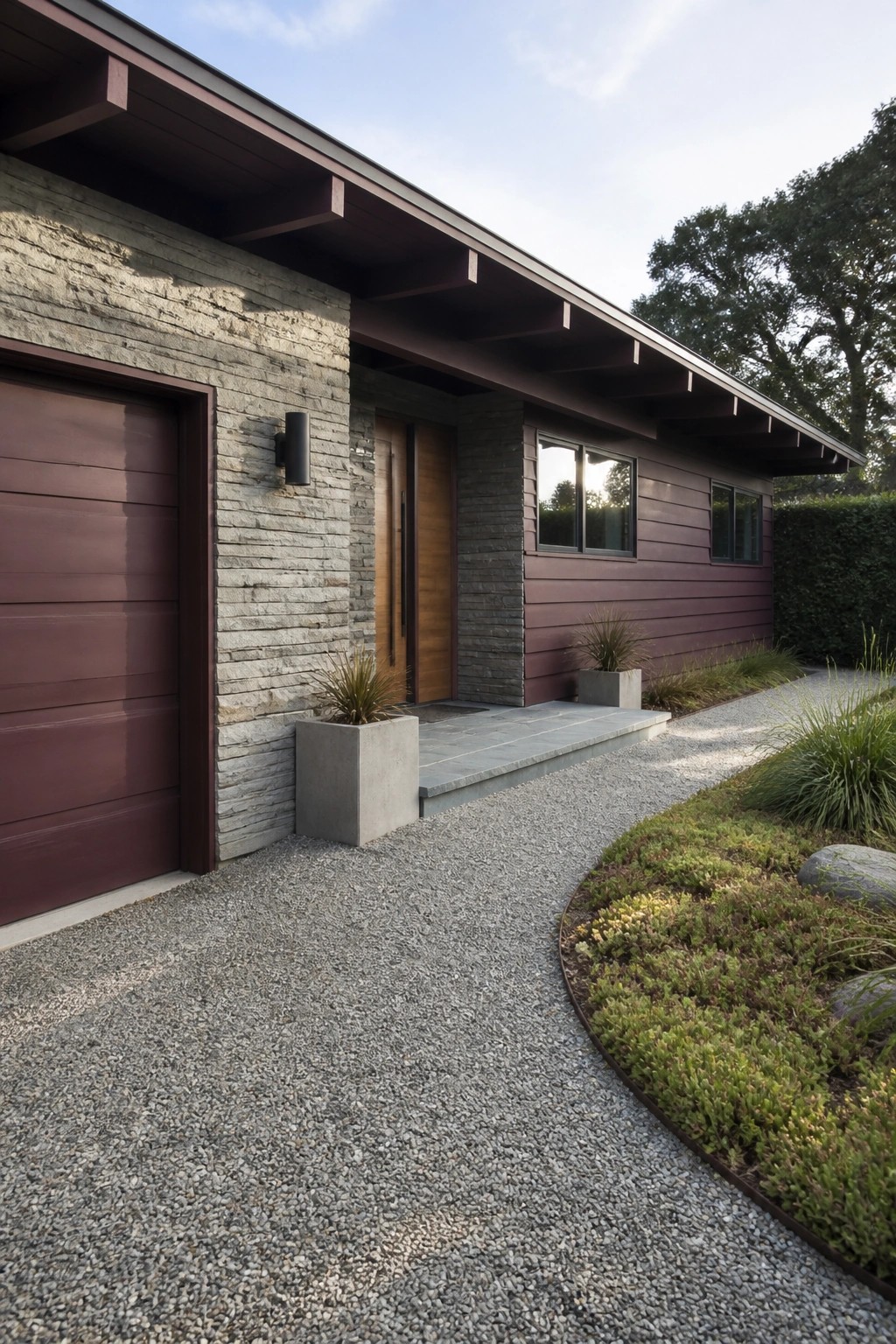
Many people choose deep maroon siding because it holds up well and gives a house a solid look. Adding gray stone next to it keeps the color from feeling too heavy and gives the entry and garage areas more weight without extra trim or decoration.
This mix works best on homes that already have strong horizontal lines. Keep the stone in vertical blocks around doors and windows so it breaks the siding into smaller sections. Avoid spreading the stone too thin across the whole front or the contrast starts to fade.
Maroon Siding With Gray Stone Details
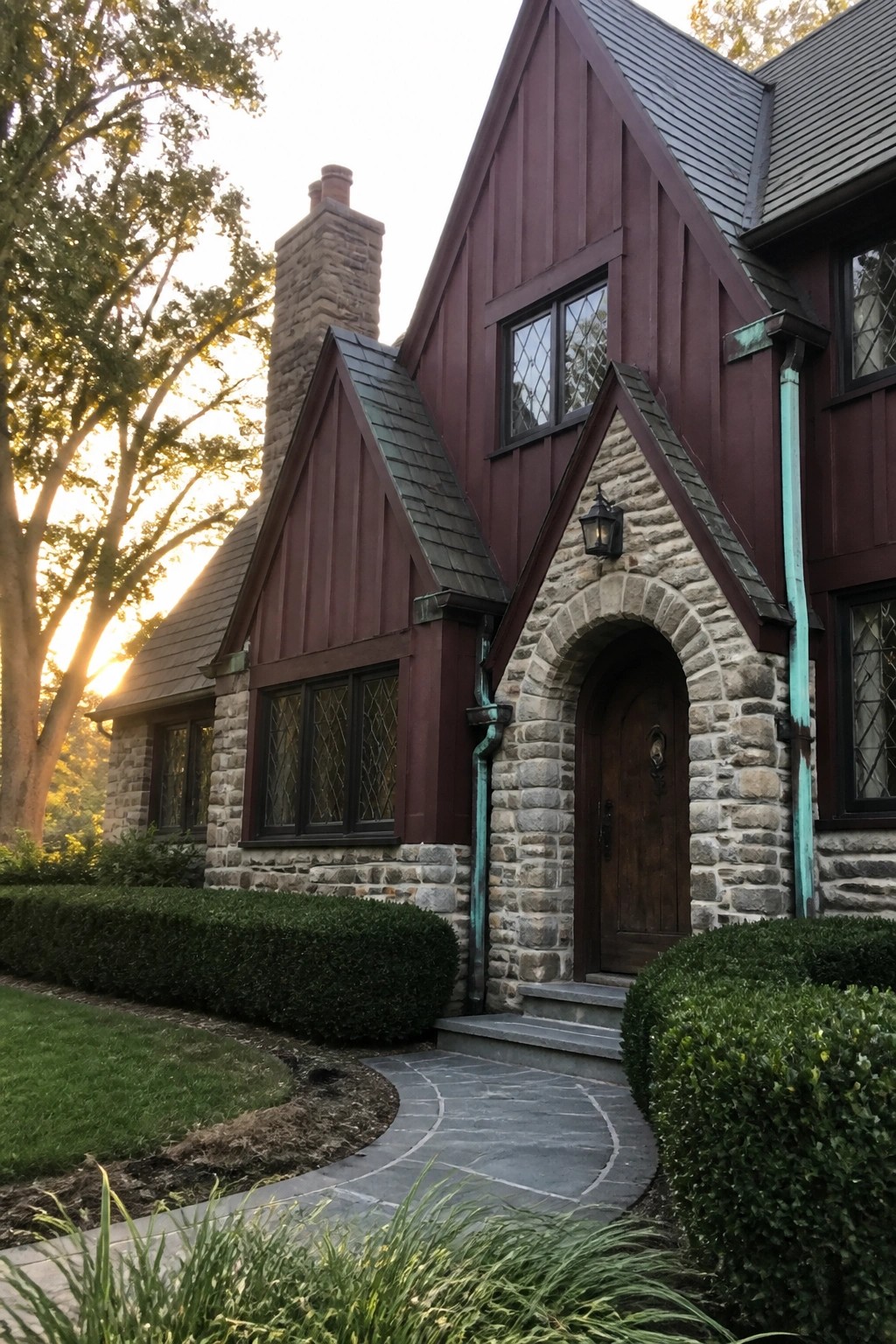
A deep maroon siding stands out more when it meets soft gray stone on the lower walls and around the entry. The stone breaks up the color and keeps the whole front from feeling too heavy or flat.
This works best on homes with traditional rooflines and multiple gables. Keep the stone to the base and key spots like the doorway so the maroon stays the main color without overwhelming the house.
Stone Patios That Balance Maroon Siding
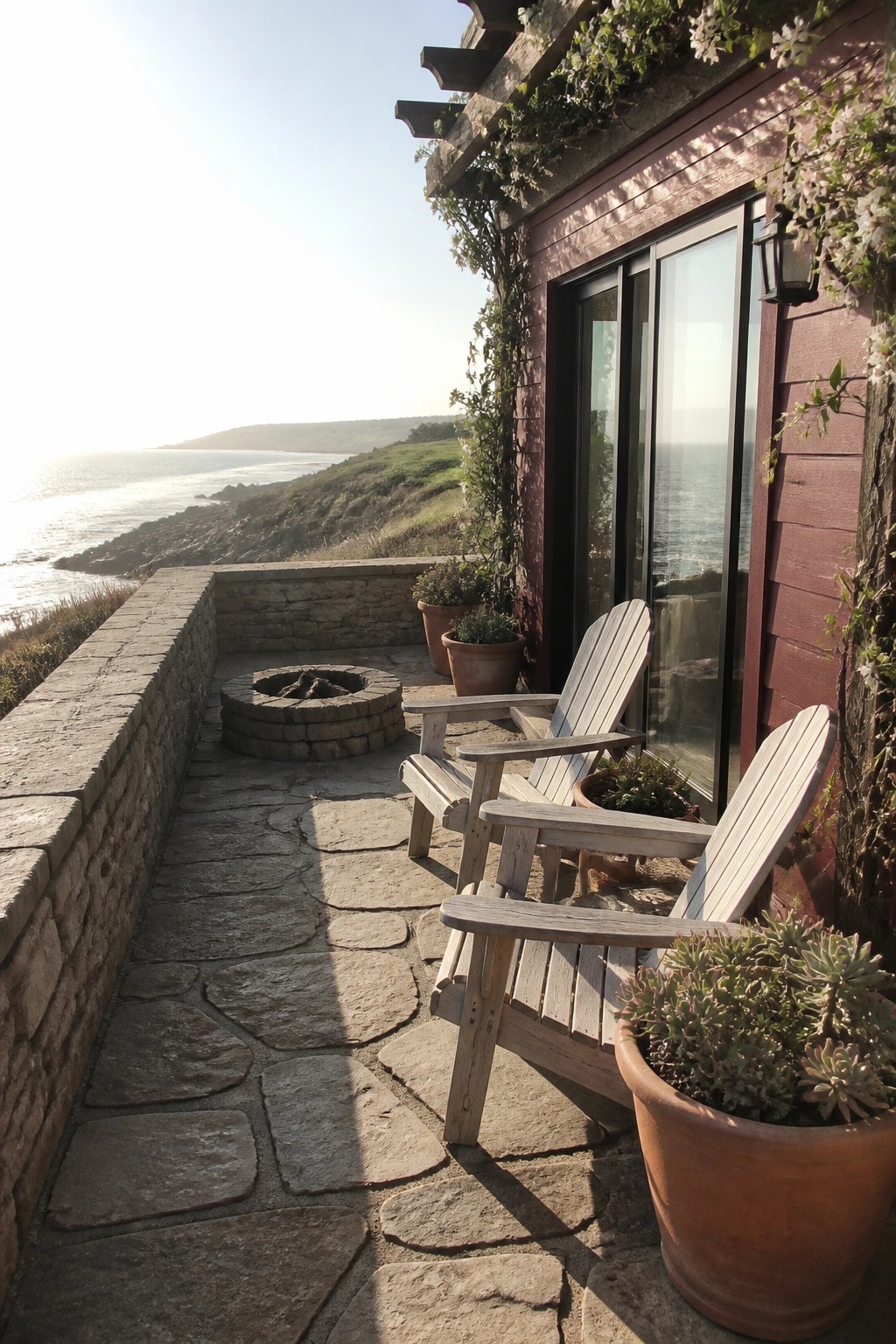
A gray stone patio gives the maroon house a grounded base without competing with the color. The flat pavers create a simple floor that feels solid and easy to keep clean, and they keep the whole side of the house from looking too heavy.
This setup works best on homes that already have a strong wall color and need an outdoor spot that still feels connected to the building. Keep the stone in a single neutral tone and let the seating stay low so the view stays open.
Gray Stone Steps Against Maroon Brick
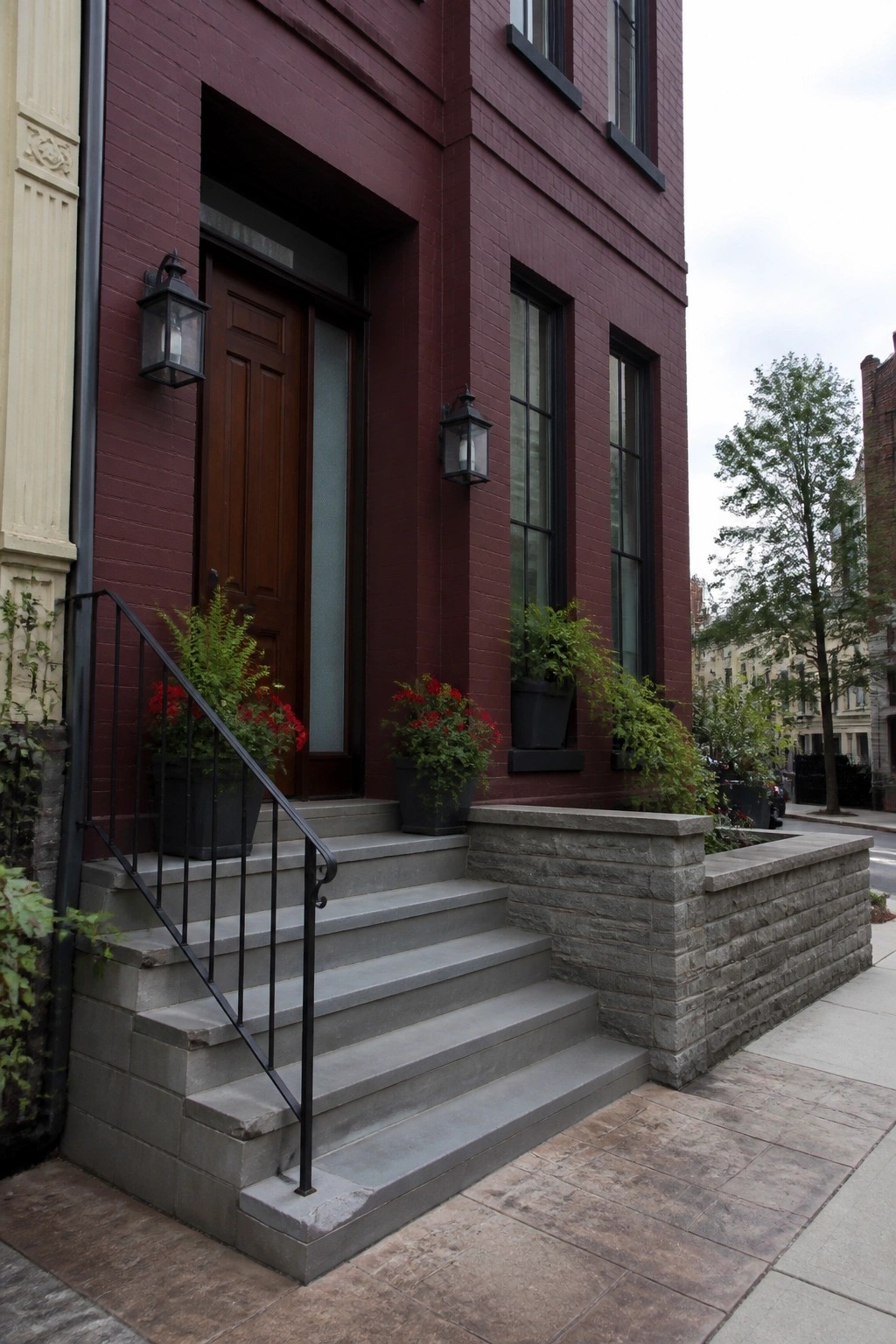
Gray stone steps and a matching base give a maroon brick house a steadier look at street level. The softer tone breaks up the strong color without fighting it, and it keeps the whole front from feeling too heavy or closed in.
This approach works best on homes with a simple brick facade and a clear entry point. Keep the stone fairly light in color and limit other materials so the contrast stays sharp but still easy to live with.
Arched Stone Entries
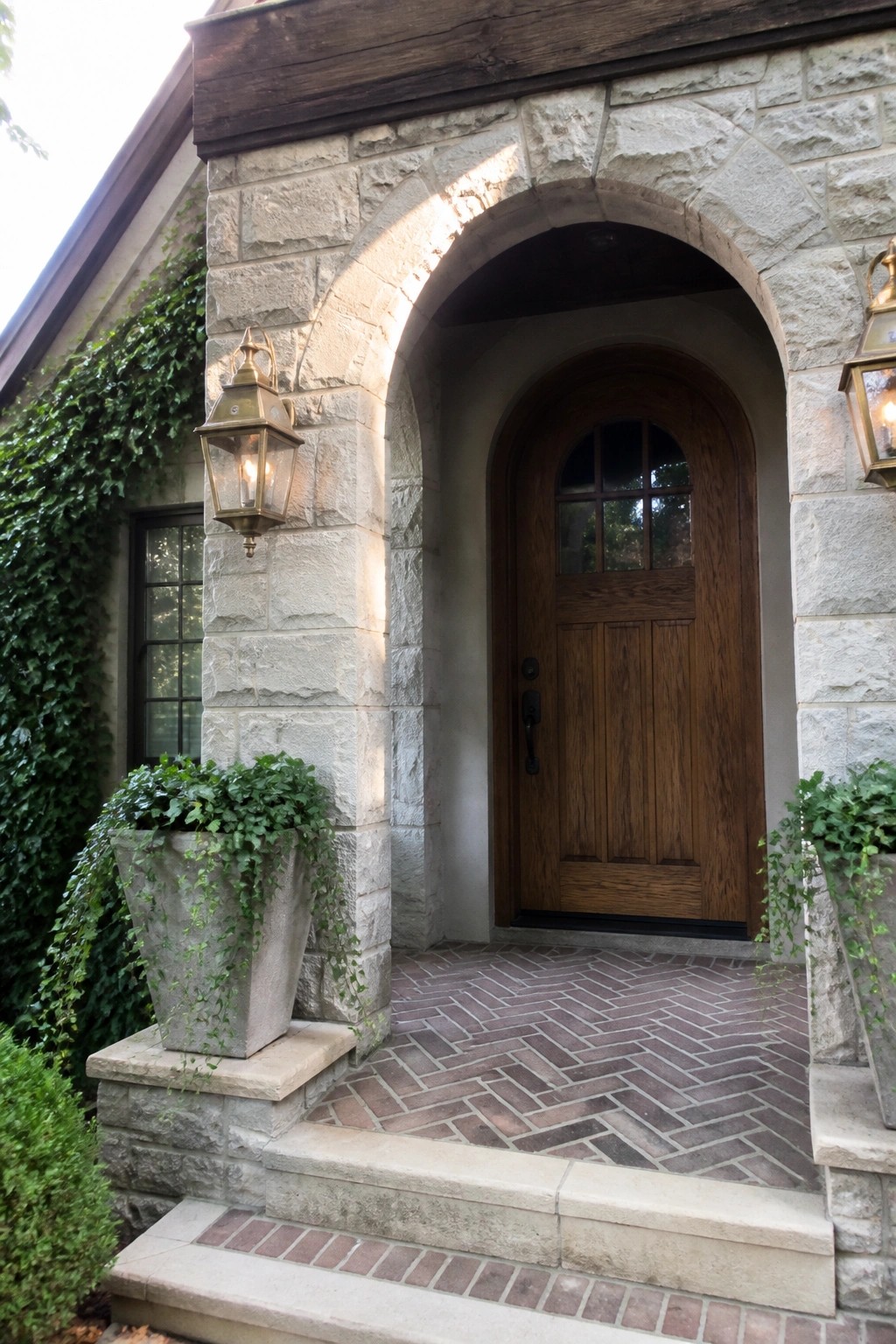
An arched stone entry gives a house a clean focal point that feels both solid and welcoming. The curve softens the look of the gray stone while the dark wood door inside the arch adds contrast without extra trim.
This detail works best on homes where the stone is the main wall material. Keep the arch fairly simple, match the curve to the door shape, and let the material change carry the interest.
Gray Stone With Maroon Siding
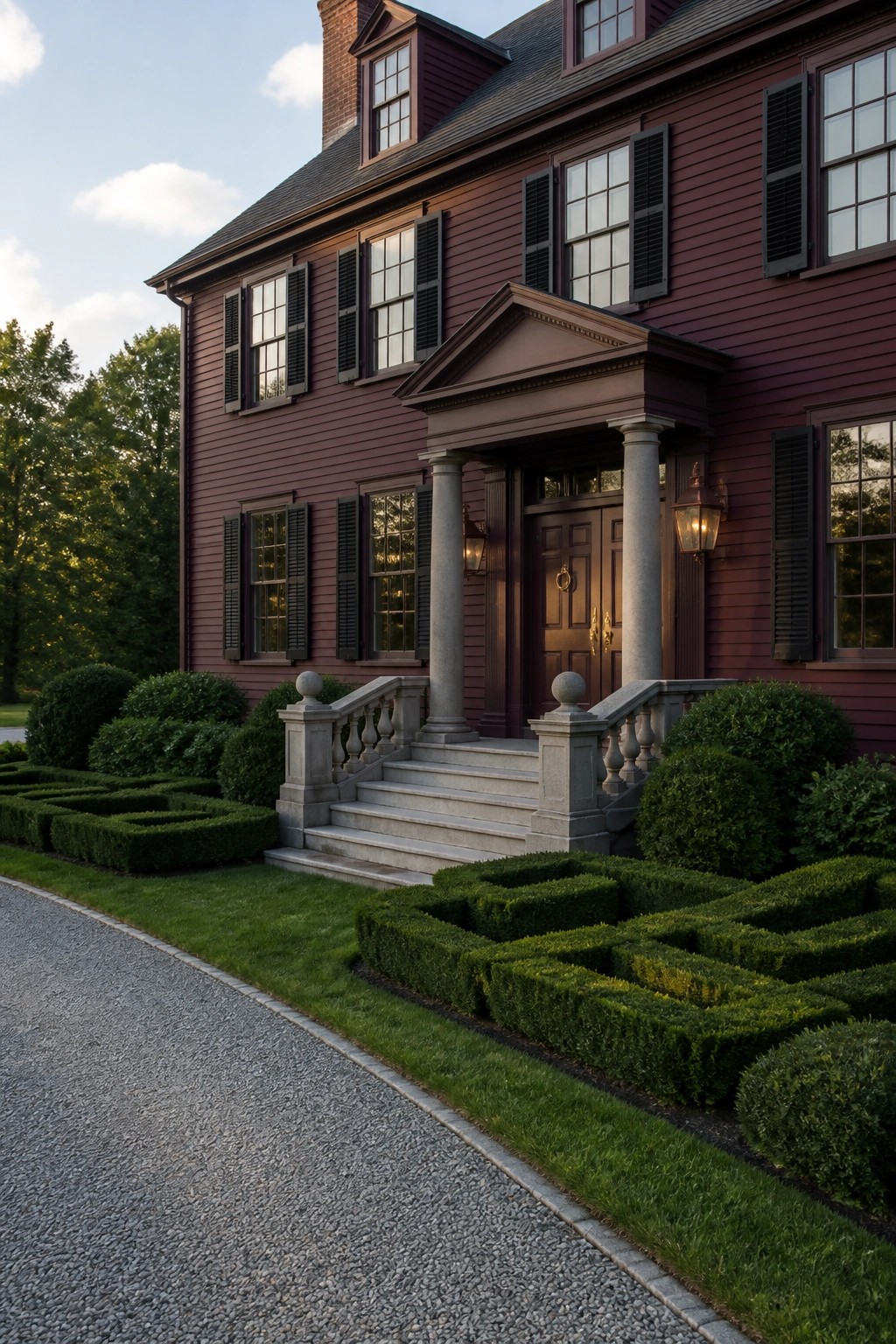
Maroon siding can look heavy on its own, but adding soft gray stone at the entry changes that. Stone columns, steps, and railings give the color something solid to rest against and keep the whole front from feeling flat.
This works best on homes with a straightforward shape and a clear front door. Use the stone mainly around the steps and porch so it supports the maroon instead of competing with it. Too much stone can pull attention away from the siding color.
Stone Bases That Support Maroon Siding
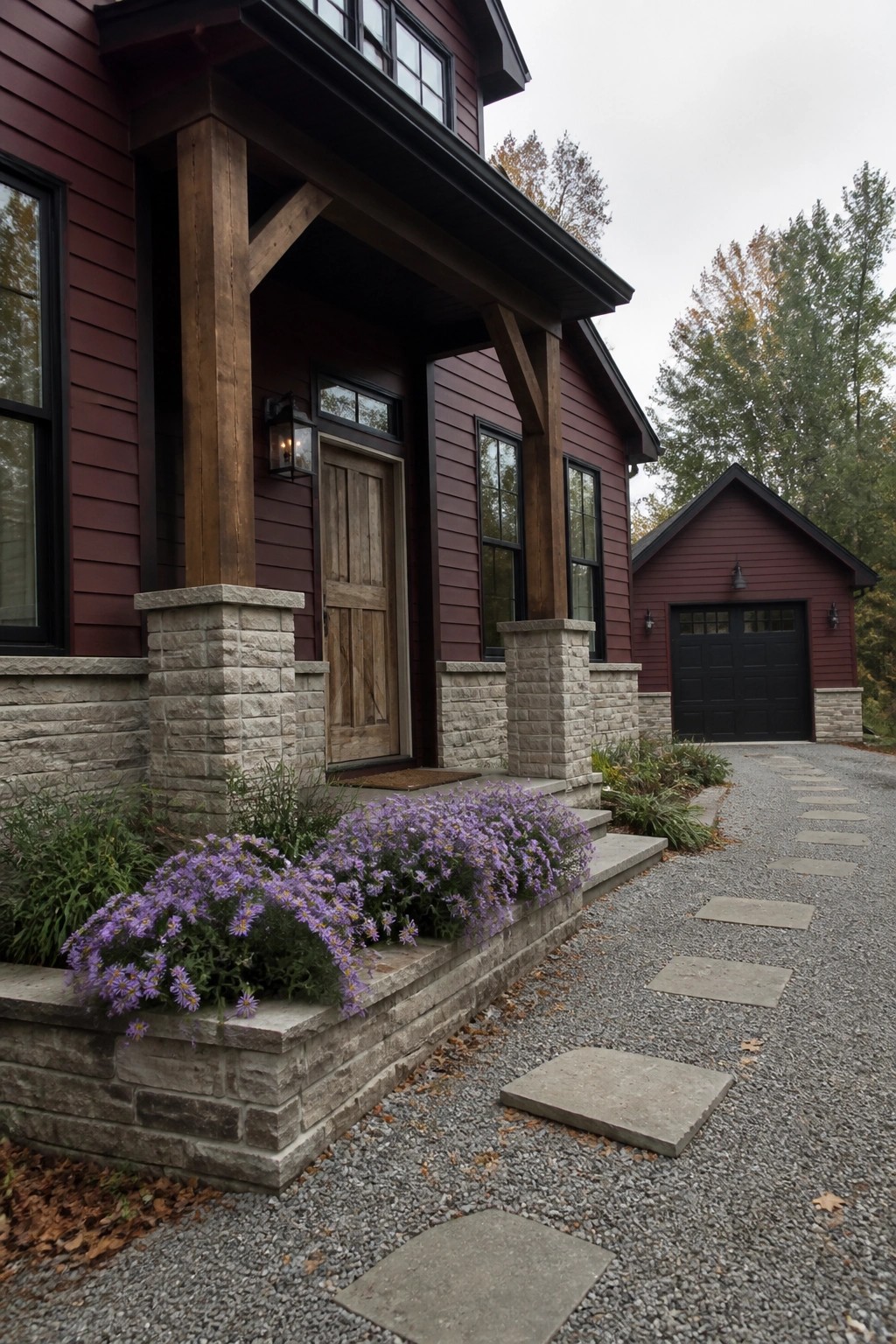
Gray stone works well as a base for deep maroon siding because it gives the house a solid, grounded look without competing with the color. The stone pillars and foundation here keep the front from feeling too heavy while still adding texture and weight where it matters most.
This approach suits homes with a clear front porch or entry area. It works best when the stone stays limited to the lower sections and support points rather than spreading across the whole facade.
Maroon Siding With Gray Stone
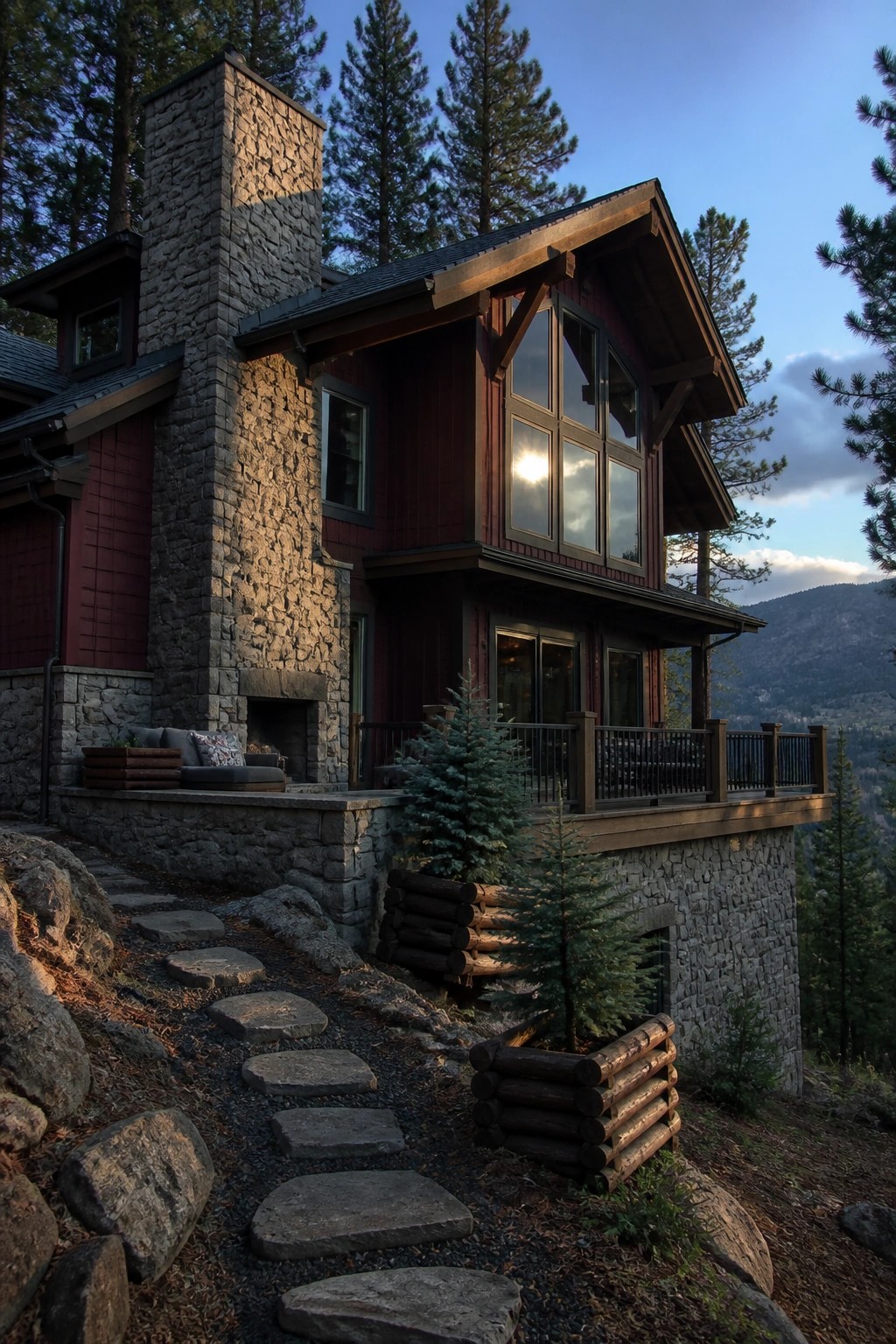
Maroon siding can feel heavy on its own, but adding soft gray stone on the chimney and lower walls keeps the color grounded. The stone breaks up the red tone and gives the house a steadier look without making it too dark or flat.
This mix works well on homes with simple rooflines and plenty of windows. Use the stone mainly on vertical elements like chimneys or the base rather than spreading it everywhere, and keep the stone color light so the maroon stays the main feature.
Gray Stone Bases With Maroon Siding
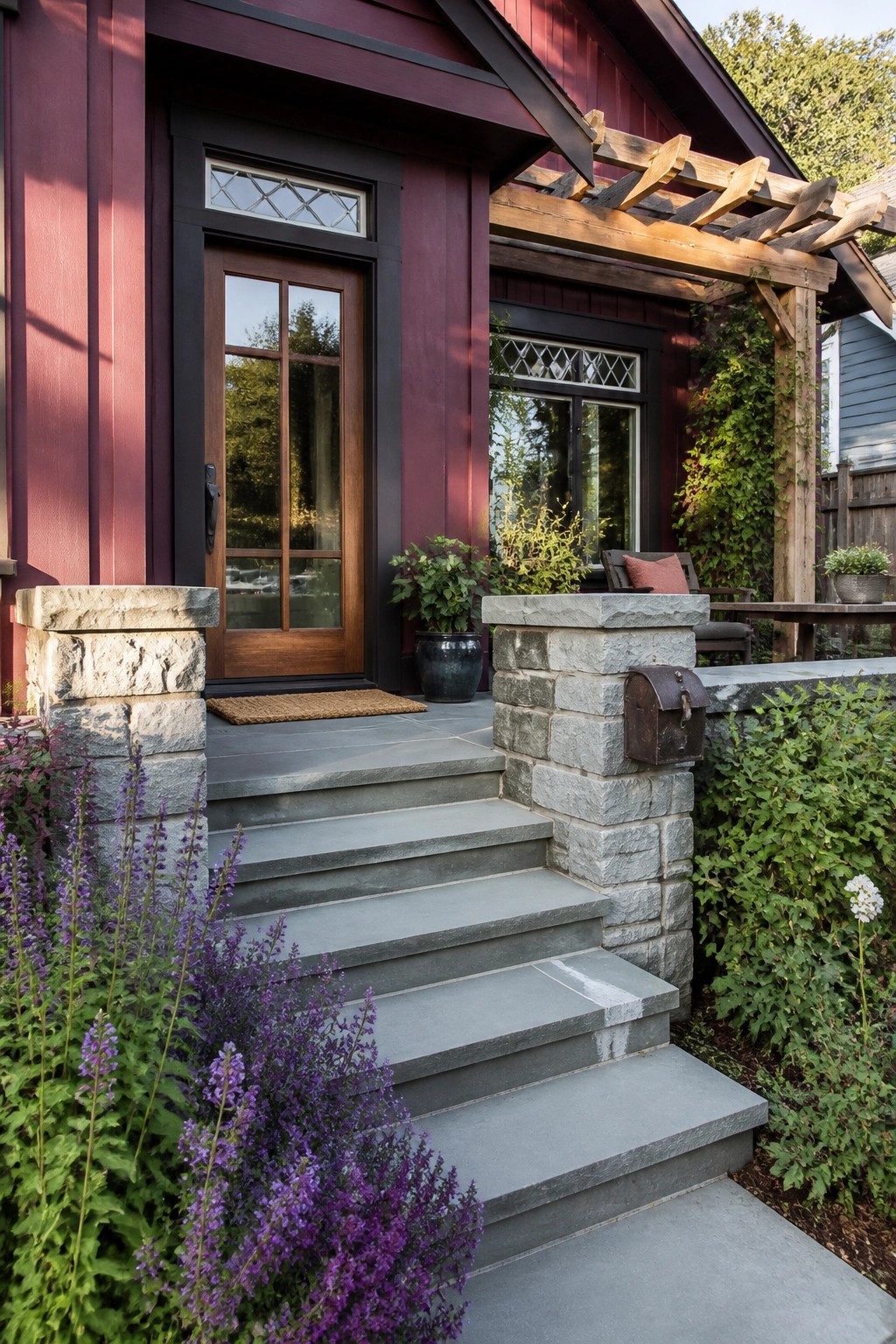
Gray stone gives maroon siding a solid place to land. The steps and low pillars here keep the bold color from looking flat or top-heavy, and the mix feels settled rather than trying too hard.
This works best on homes with a clear entry sequence and some dark trim. Use the stone on the steps and any low walls first, then let the siding carry the rest of the color. It pairs cleanly with wood pergolas or simple plantings and avoids the need for extra decoration.
Using Gray Stone to Frame a Maroon Entry
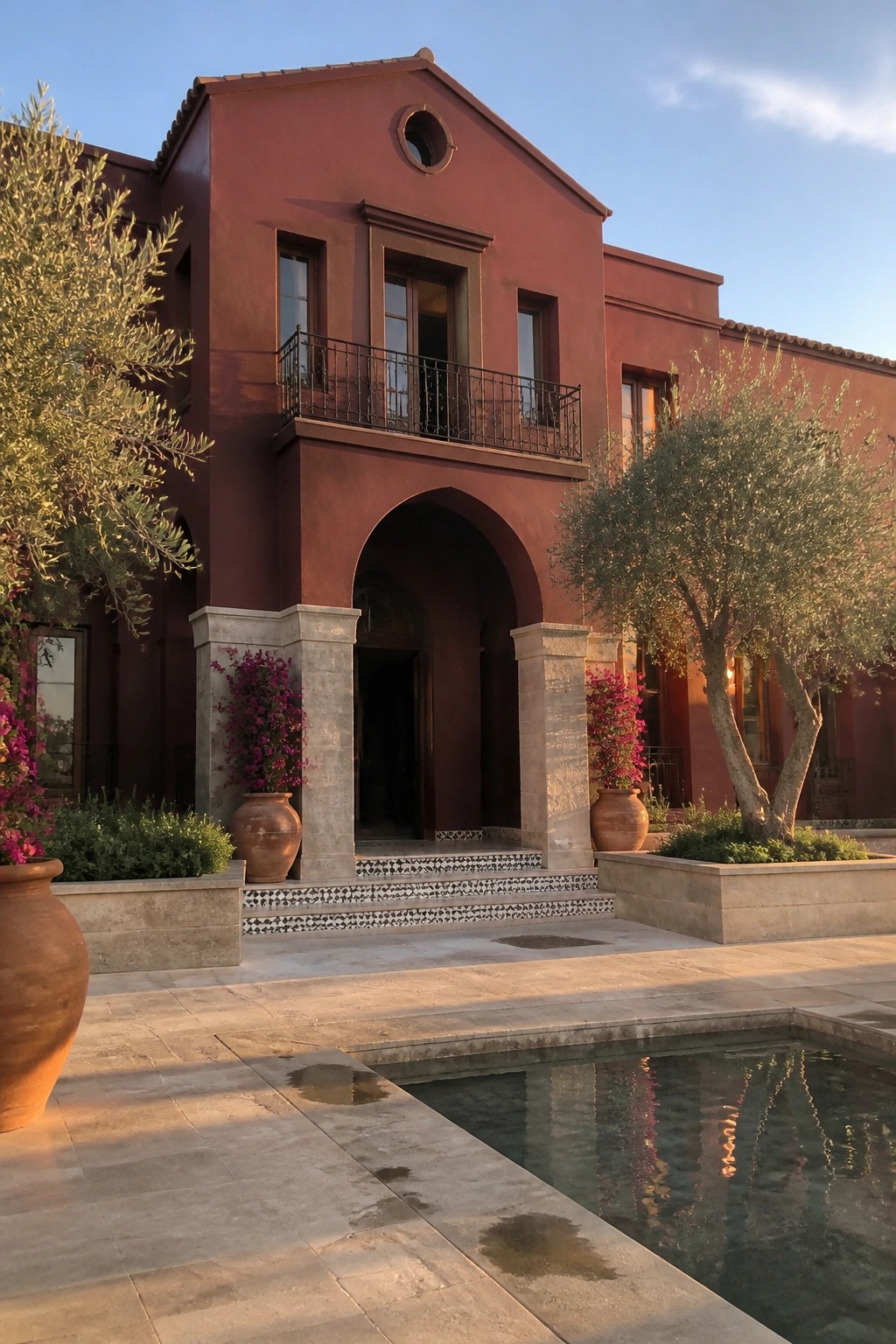
Pairing a deep maroon exterior with soft gray stone around the entry gives the house a clean, finished look. The stone columns and arch trim break up the strong wall color and make the doorway feel more substantial without adding extra decoration.
This approach works best on homes with simple shapes and arched openings. It suits warmer climates where the stone can echo natural materials already in the landscape, and it keeps the maroon from feeling too heavy on the facade.
Pairing Maroon Brick With Gray Stone Steps
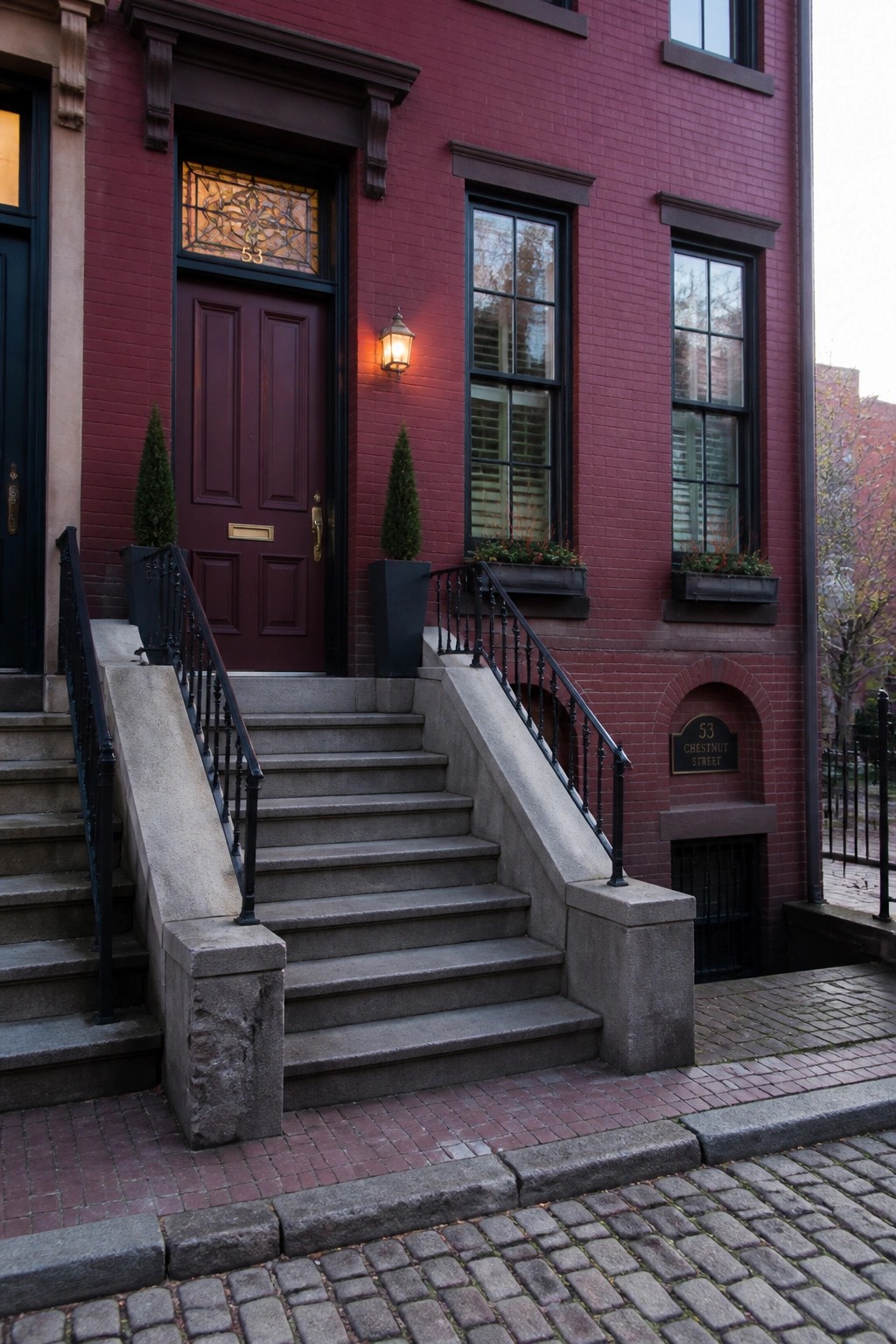
A deep maroon brick facade can feel a bit strong on its own, so adding soft gray stone at the base and on the steps helps balance it out. The stone gives the entry a grounded look and keeps the color from overwhelming the whole front of the house.
This works best on older row homes or townhouses where the entry is the main focal point. Use the stone on the stairs and lower foundation only, and keep the gray in a muted tone so it blends rather than stands out.
Gray Stone Accents on a Maroon Facade
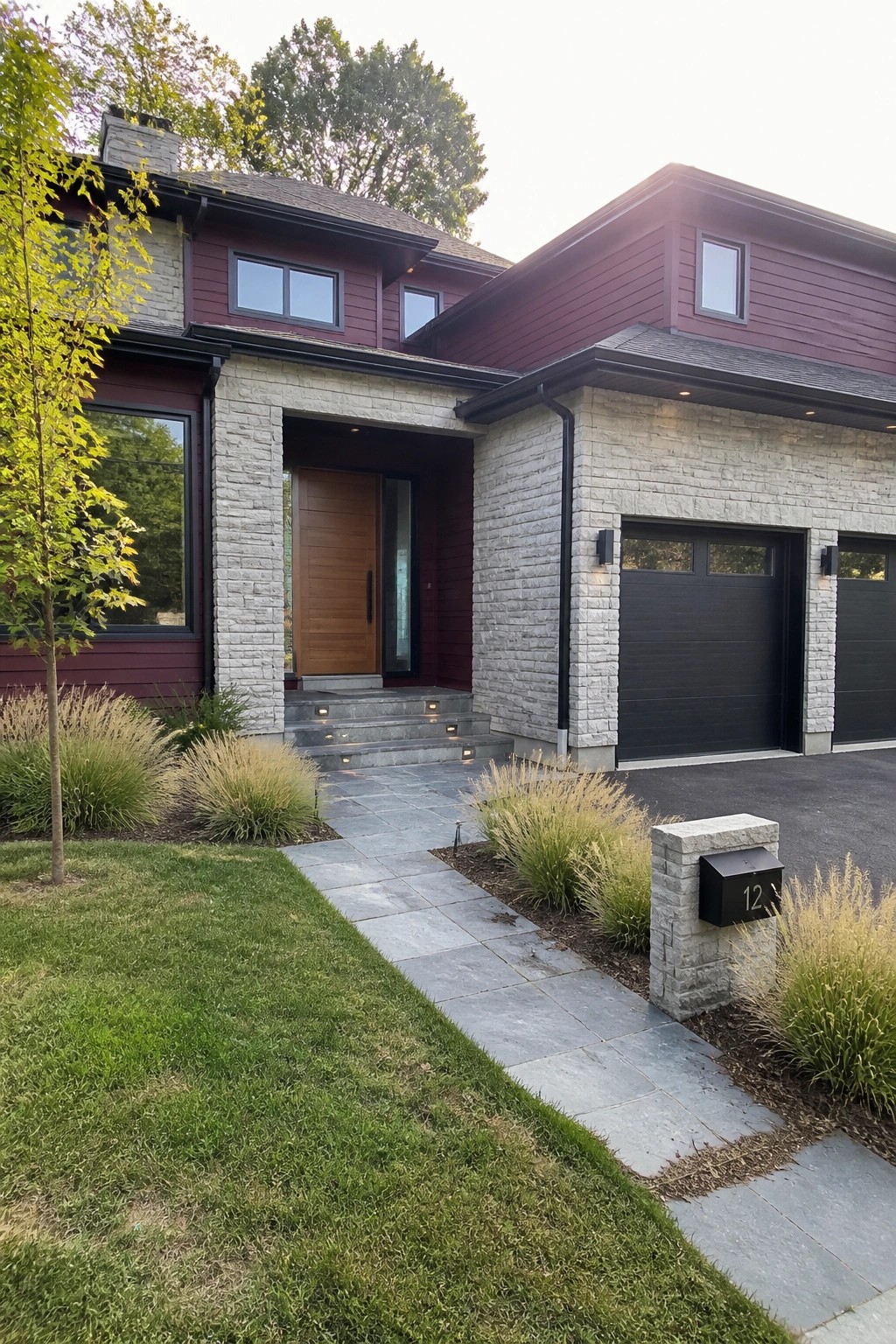
The gray stone wrapped around the front door and garage openings gives the deep maroon siding a cleaner break and stops the color from feeling too heavy across the whole front. It adds texture right where the eye lands first without needing extra trim or color changes.
This mix works best on homes with simple rooflines and larger wall areas, where the stone can frame the main openings and keep the look balanced. Use it when the siding color is bold so the stone softens the mass and makes the entry feel more intentional.
Stone Details for Outdoor Cooking Areas
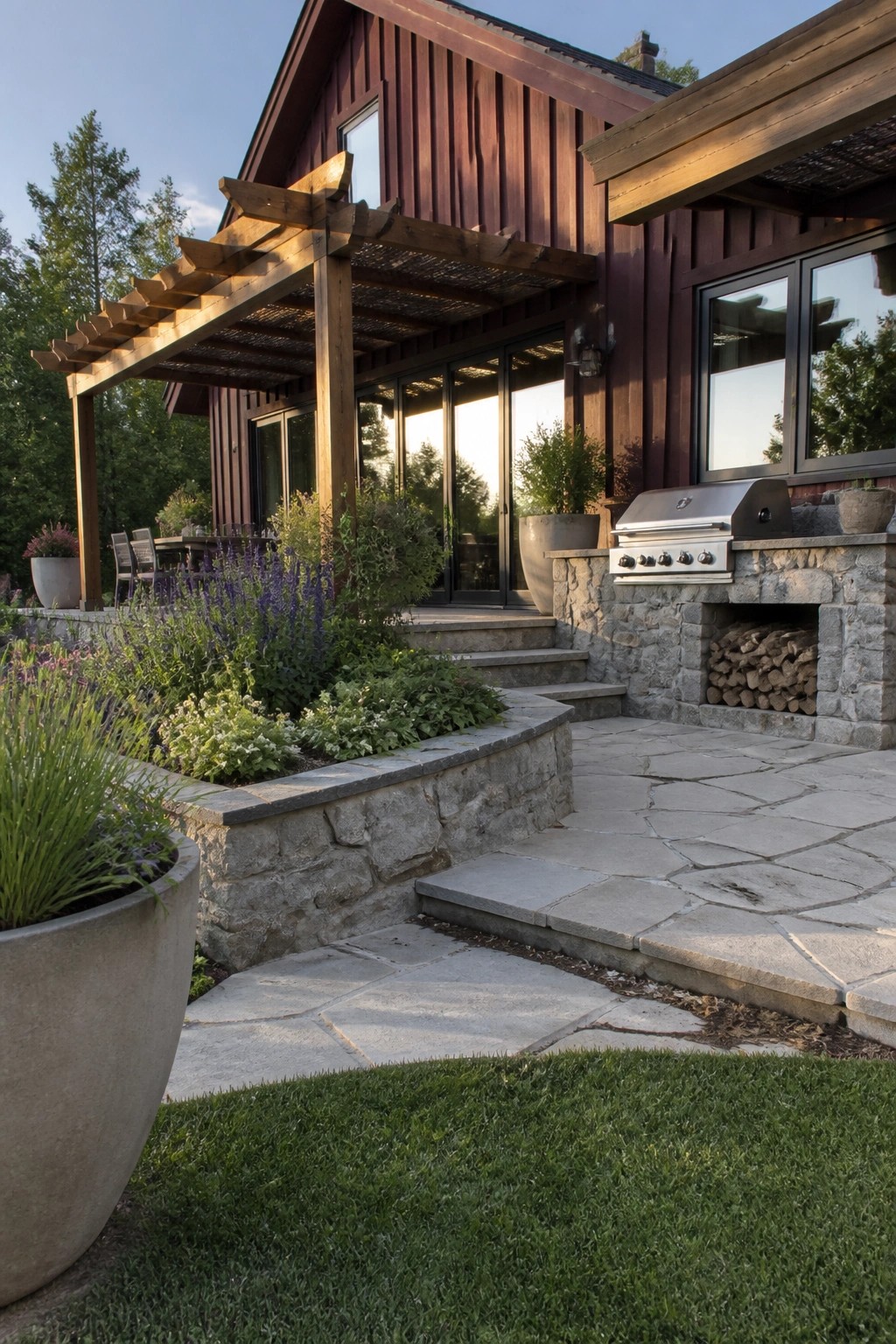
Gray stone works especially well when it wraps around an outdoor grill right against a maroon house. The material feels sturdy and blends with the siding without competing for attention. It also creates a natural spot for stacking firewood and keeping the cooking zone tidy.
This approach suits homes where the backyard gets regular use. Keep the stone simple and let the grill itself stay the main feature. Watch the scale so the stone base does not overpower the patio or clash with nearby plantings.
Gray Stone With Maroon Siding
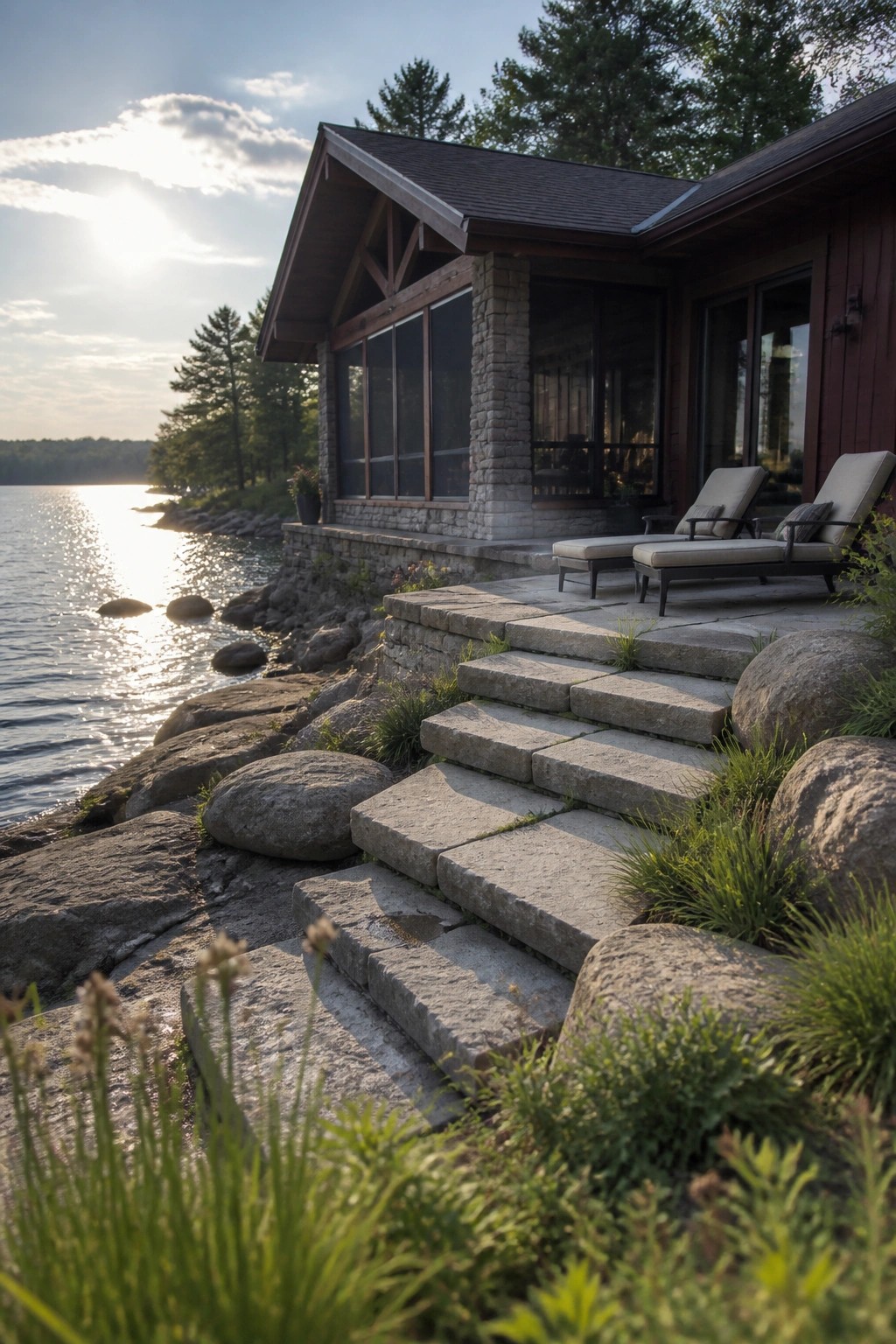
Maroon siding can look a bit flat on its own, but adding soft gray stone at the base changes that. The stone gives the darker color something solid to sit on and keeps the whole exterior from feeling heavy.
This mix works best on houses with a lower foundation or walkout level. Use the stone in larger, irregular pieces so it feels natural rather than too formal, then let the maroon run across the upper walls.
Centering a Fountain in an Outdoor Courtyard
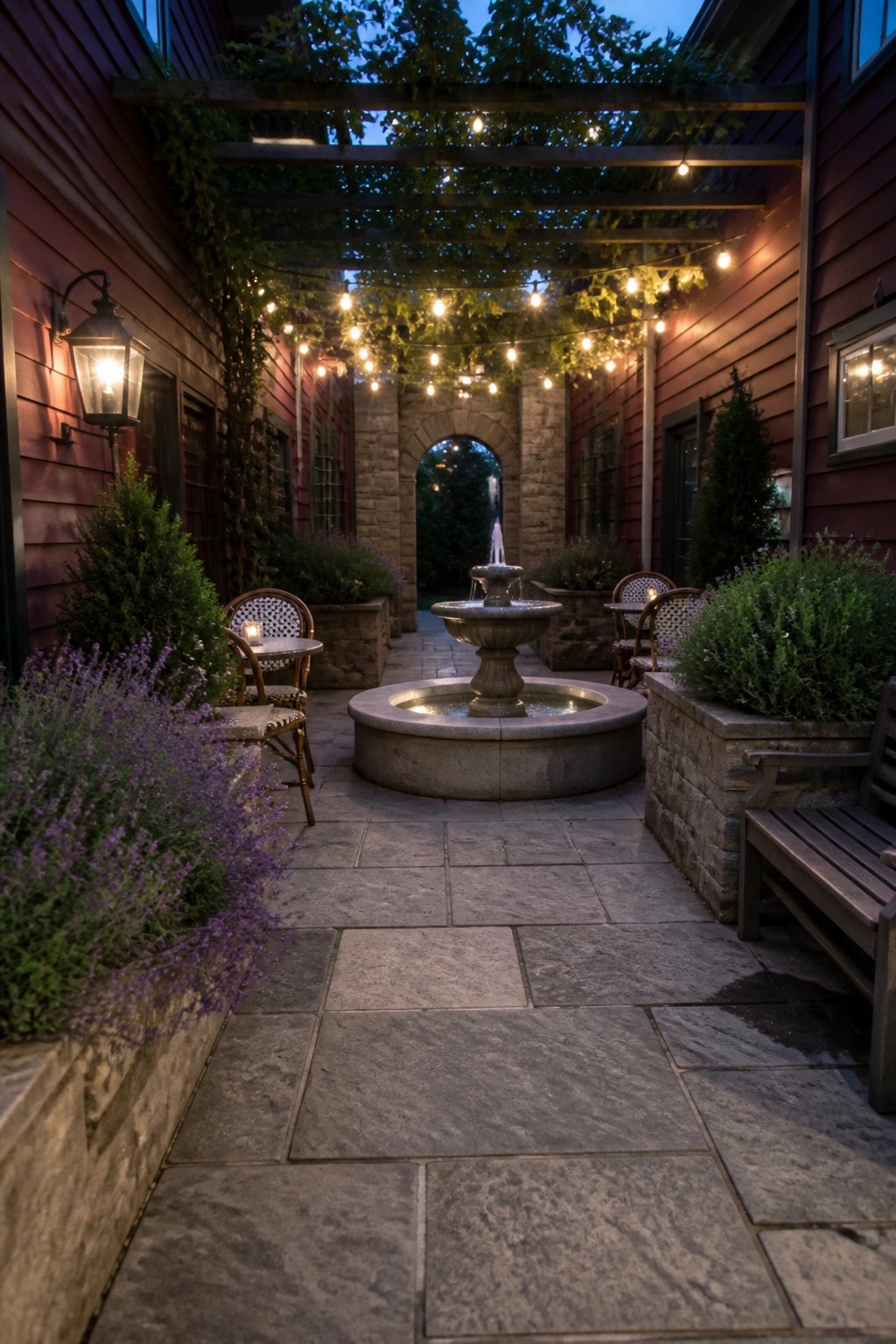
A stone fountain placed right in the middle of a courtyard gives the whole space a clear focus. It breaks up the flat paving and adds a quiet point of interest that works with the surrounding seating without needing a lot of extra decoration.
This approach works best on homes with deeper exterior colors like maroon because the gray stone keeps the look grounded. Keep the fountain scaled to the patio size so the chairs and planters still have room to feel comfortable around it.
Gray Stone Bases For Maroon House Exteriors
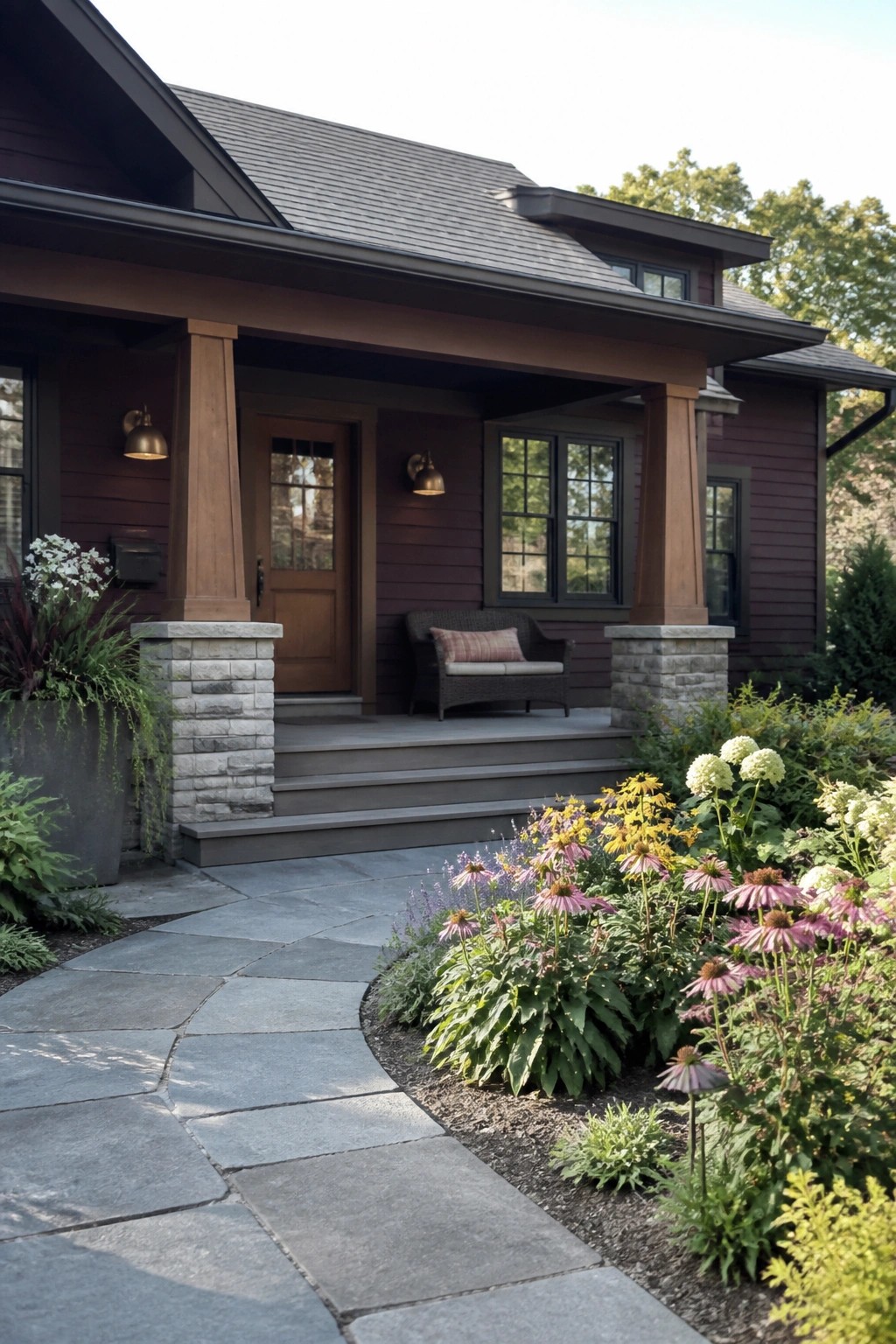
Deep maroon siding can look a little flat on its own, especially on larger homes. Adding soft gray stone at the foundation and on porch supports gives the color something to sit against and keeps the whole front from feeling too dark or heavy.
This works best on homes with simple rooflines and wood trim. Use the stone in measured spots like column bases or a low wall rather than covering large areas, and match the gray to any roof or window tones already in place so the materials feel connected.
Maroon Siding With Gray Stone Bases
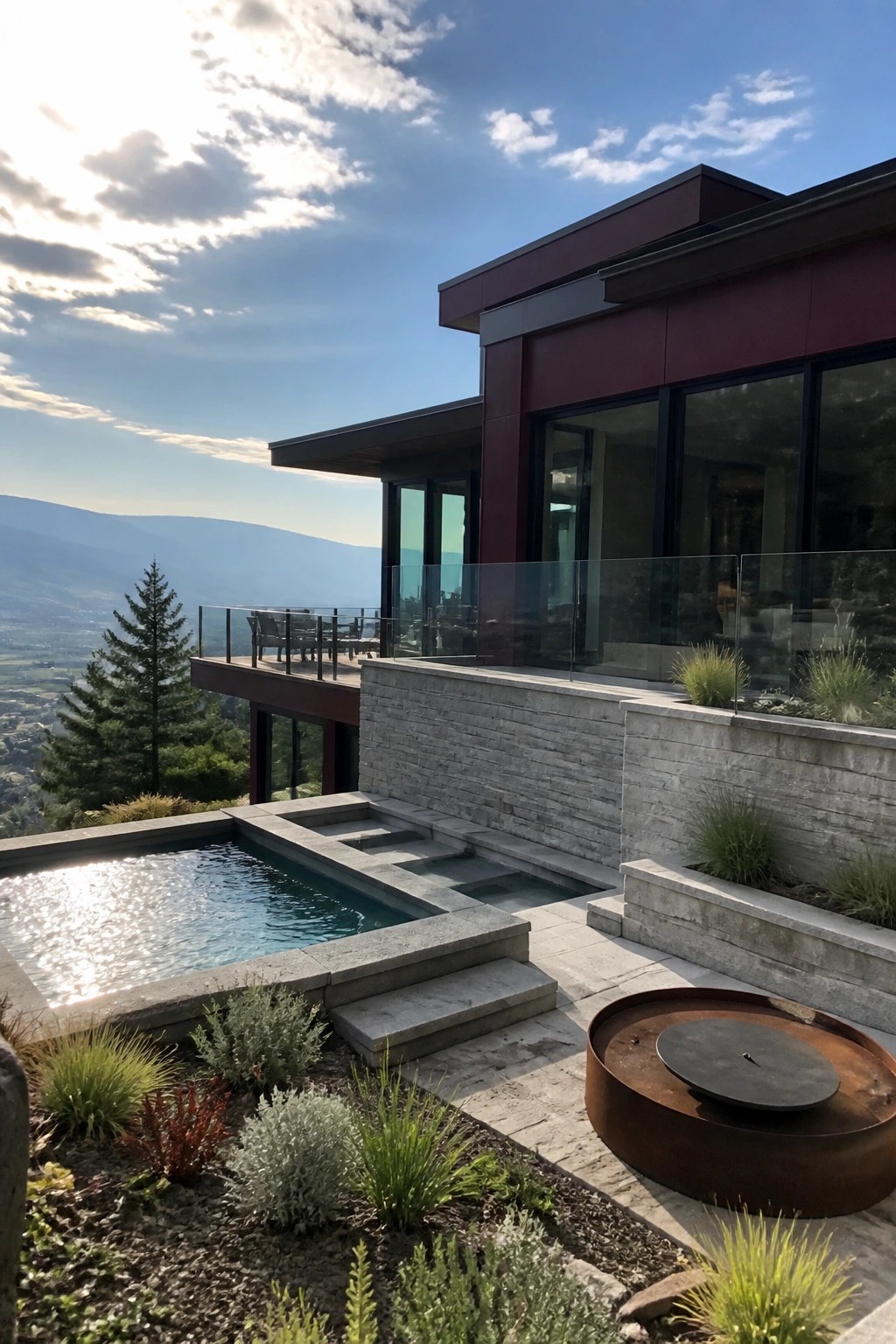
A deep maroon exterior gains a lot from a base of soft gray stone. The stone keeps the color grounded and stops the house from feeling too heavy or flat against the landscape.
This approach works best on homes that sit above grade or on sloped sites. Use the stone on lower walls and retaining areas, then carry the maroon across the main body so the two materials balance each other without extra trim or detail.
Gray Stone Frames The Entry On Maroon Siding
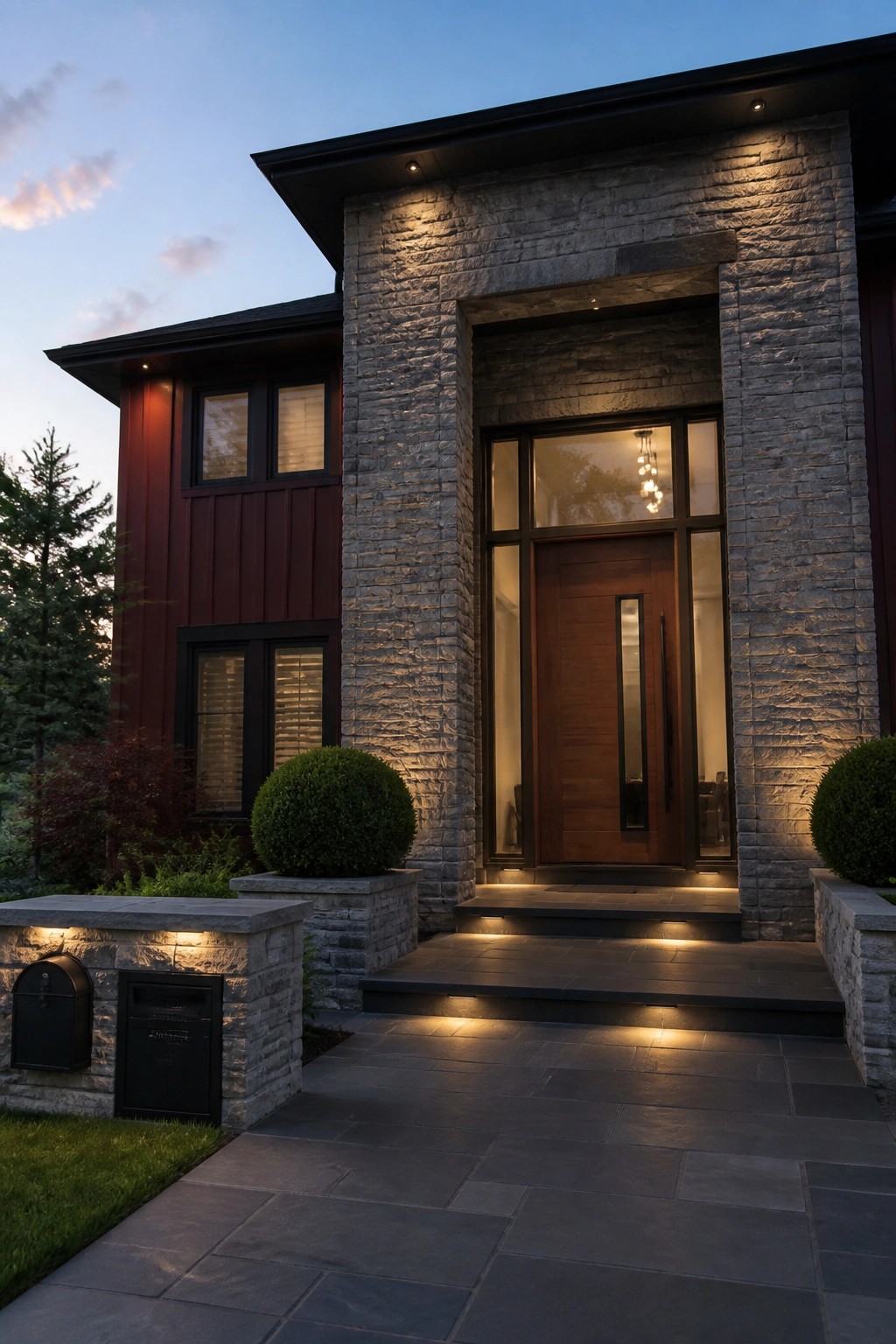
Gray stone gives a maroon house a clear focal point at the door. It breaks up the color without softening it too much and makes the entrance feel more solid. The contrast also helps the stone catch light after dark.
This works best on houses with straightforward lines and not too many other materials. Limit the stone to the entry columns and maybe a low wall so the maroon siding stays the main color. Adding too much stone can weigh the whole front down.
Gray Stone Bases With Maroon Siding
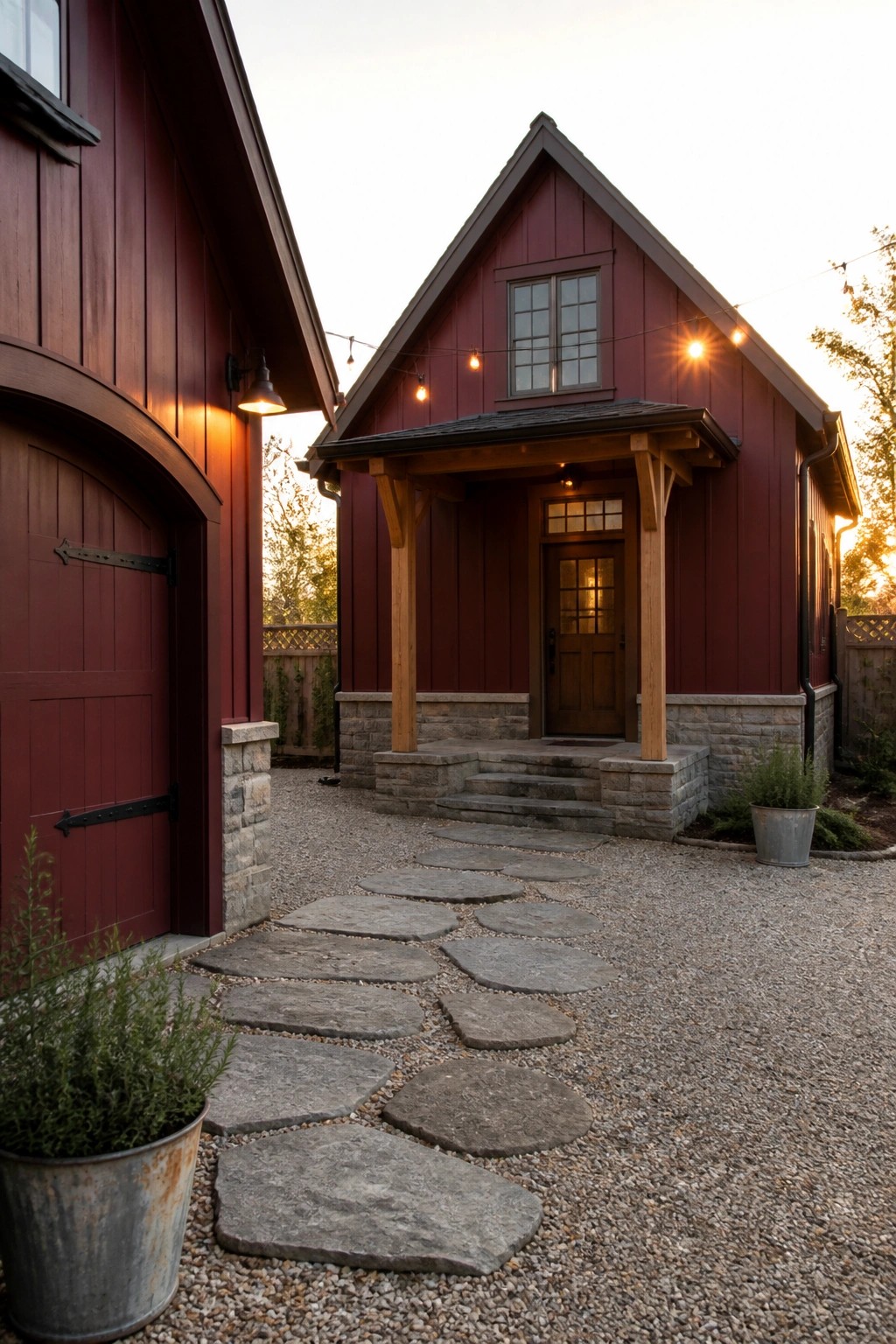
Gray stone works well as a base under deep maroon siding because it gives the color a grounded feel without competing with it. The stone adds weight at the bottom and keeps the maroon from looking too heavy or flat across the whole wall.
This approach suits homes with simple entries and gravel or stone paths. It works best on houses that already have some wood trim or posts, since the natural tones help tie everything together. Avoid using too much stone higher up or it can start to feel busy.
Frequently Asked Questions
Q: What shade of maroon holds up best next to soft gray stone?
A: Pick a deeper maroon with warm undertones rather than a bright or cool one. It keeps the gray stone from looking flat and helps the whole exterior feel balanced through the seasons.
Q: How much stone should I use if I want the maroon to stay the main color?
A: Limit the stone to the foundation and maybe one accent wall. This lets the maroon siding cover most of the house while the gray still adds texture and weight at the base.
Q: Will dark maroon make the house feel hotter in summer?
A: It can absorb more sun than lighter shades, so add wide eaves or a covered porch to shade the walls. That simple step cuts down on heat buildup without changing the look you want.
