

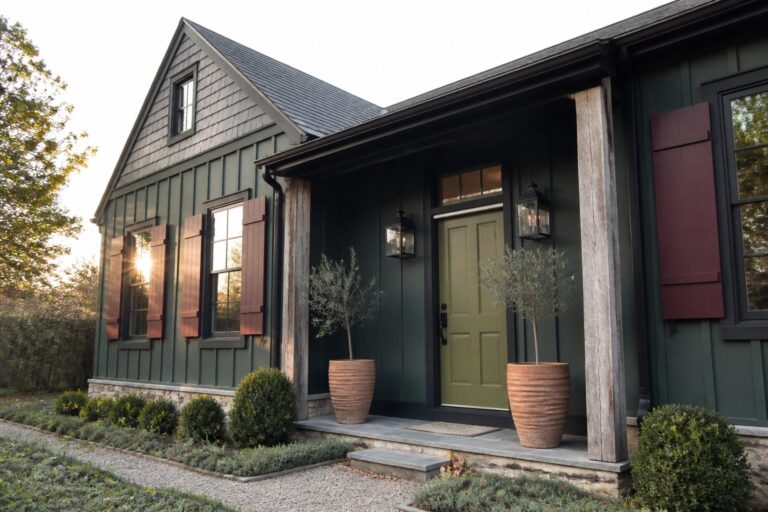
I’ve found that green and maroon on an exterior often need careful balancing so the facade doesn’t feel heavy from the street.
Olive accents can pull those tones together when placed around windows or along trim where they catch the light differently throughout the day.
Some houses look balanced in photos but lose that harmony once you see how the colors meet at the roofline or around the front door.
I usually test a few sample boards on the actual siding before committing because the shift in natural light changes everything.
Paying attention to how the materials age under those deeper shades helps avoid choices that fade unevenly over a few seasons.
Maroon Shutters On Deep Green Siding
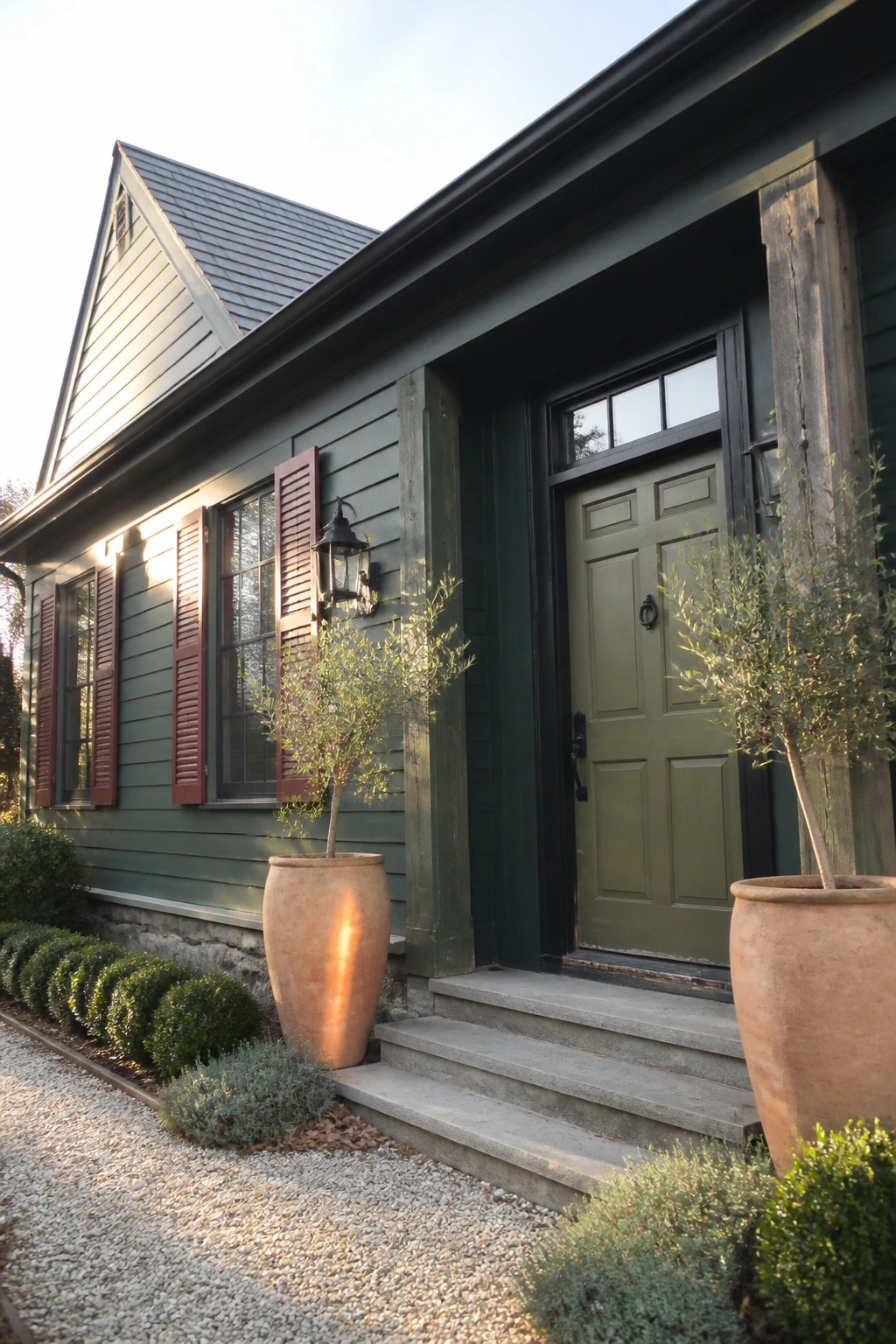
Maroon shutters bring just enough contrast to deep green siding without making the whole house feel busy. The color sits nicely against the green and gives the windows a clear frame that still reads calm overall.
This approach suits smaller homes or cottages with straightforward shapes. Use an olive door to keep the palette connected and avoid letting the maroon take over.
Maroon And Olive Accents On Brick Homes
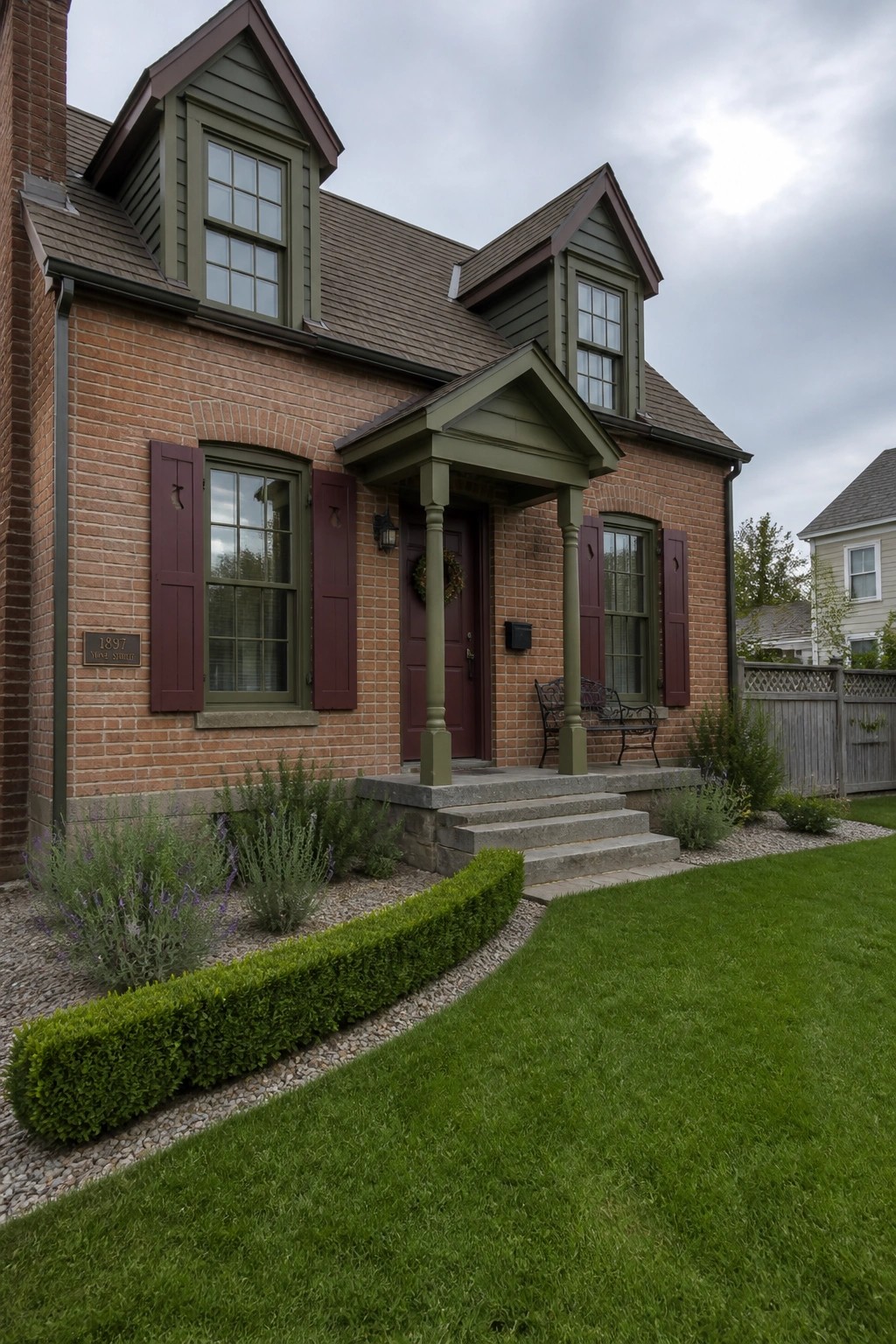
Brick homes often look too plain without the right trim colors. Maroon shutters and doors paired with olive green posts and window frames give the facade a grounded, balanced feel that still stands out. The contrast keeps the brick from looking flat while the olive softens the stronger red tones.
This approach works best on older brick houses that already have some traditional details. Keep the olive on the larger trim pieces like porch posts and eaves, then use maroon on the shutters and door so the colors stay in proportion. Too much of either shade can tip the look heavy, so test the pair on a small section first.
Maroon Doors On Neutral Facades
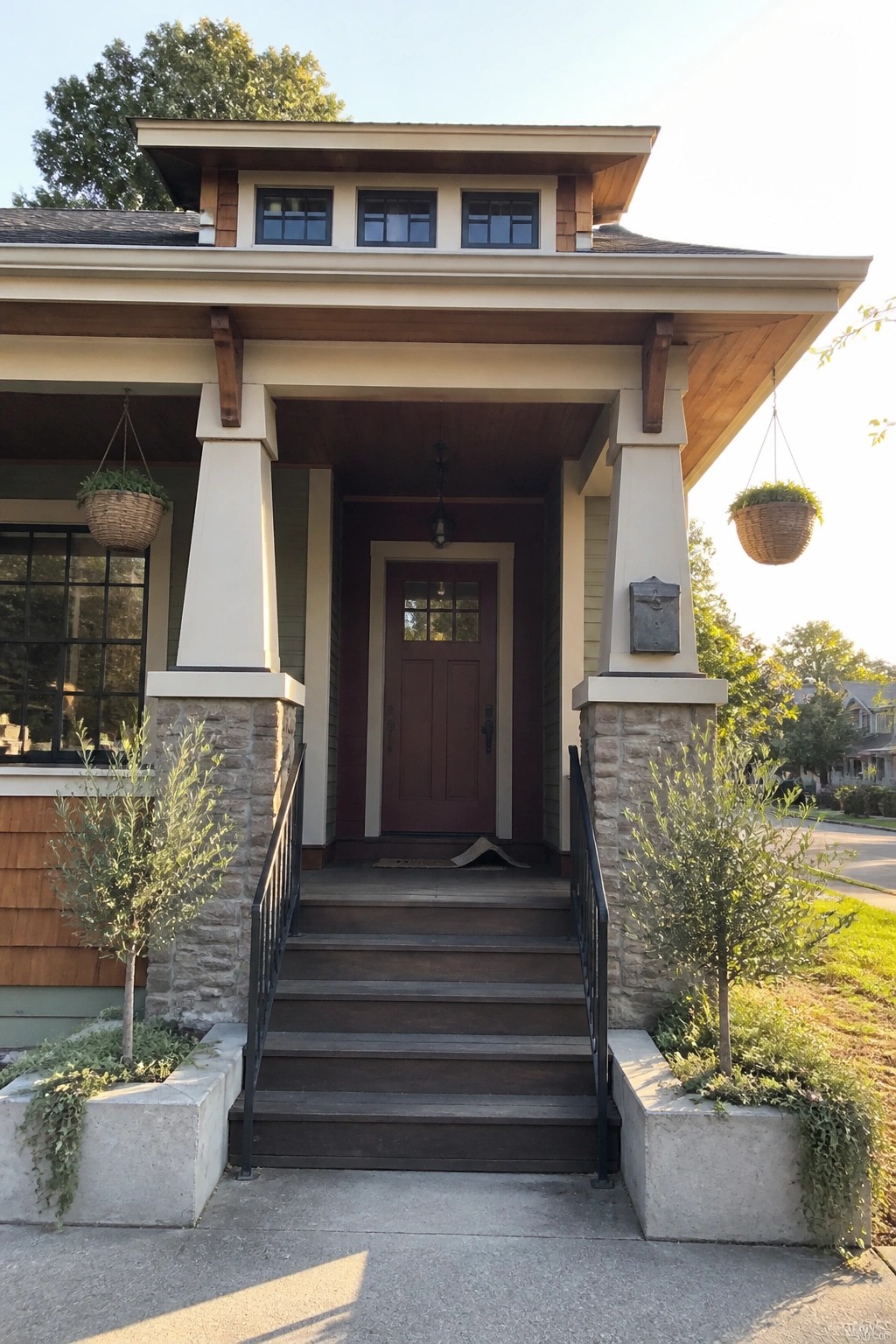
A deep maroon door gives a house a clear center point without extra trim or ornament. The color stands out against light siding and wood beams, and it pairs naturally with olive plants placed near the entry.
This approach suits homes with straightforward shapes and a mix of stone and wood. Keep the surrounding planting simple so the door remains the main accent rather than competing with too many other details.
Olive Green Siding With Maroon Accents
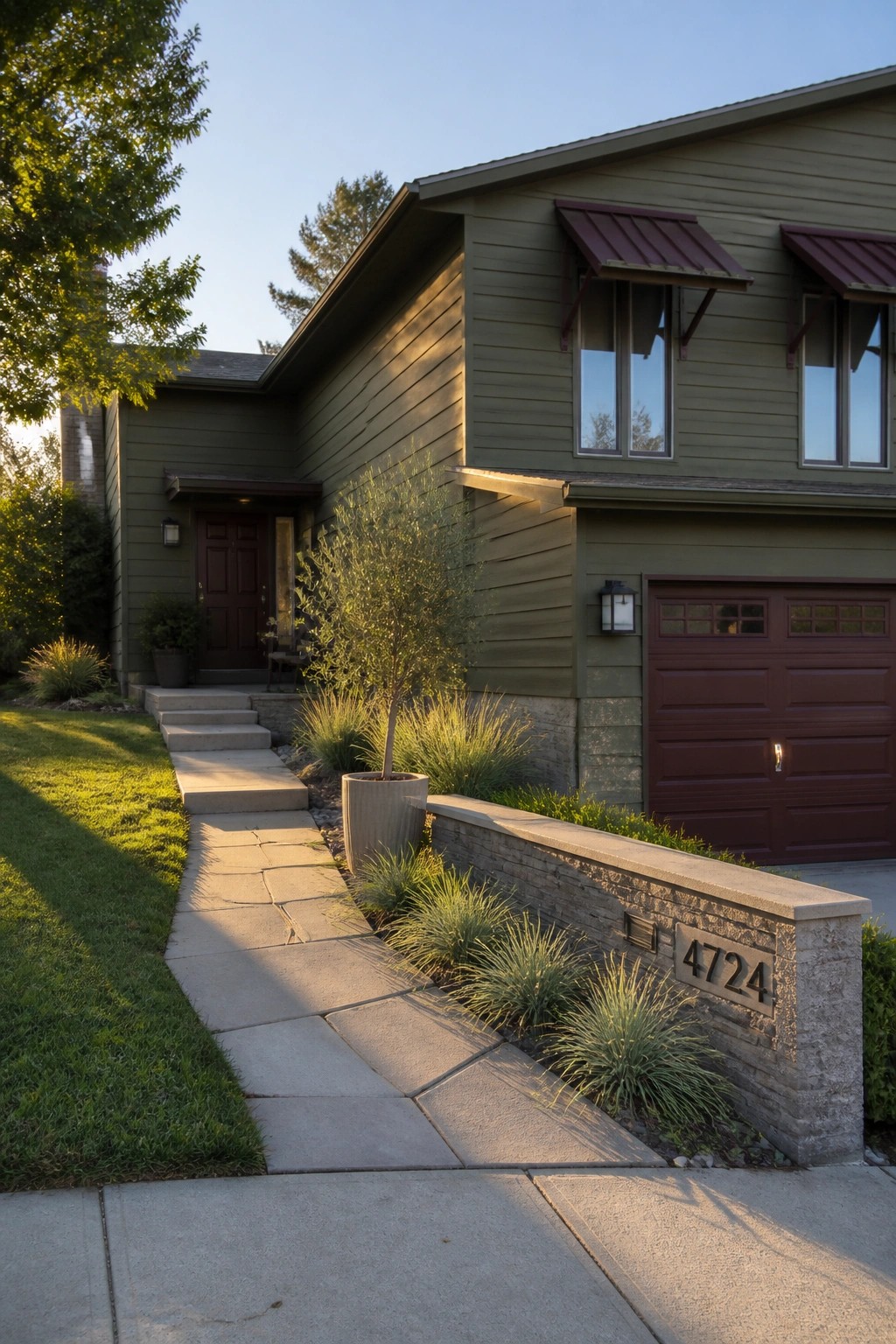
Olive green works well as a main house color because it sits between gray and brown on the spectrum. It gives the walls some depth without looking too bright or too dull in most light. Adding maroon on the awnings and garage door keeps the whole front from feeling flat and gives it a little weight at the top and bottom.
This combination suits houses that already have stone or concrete bases. The green blends with nearby trees while the maroon keeps the trim from disappearing. Try it on a two-story home with simple window shapes so the colors stay the focus rather than competing with lots of trim details.
Maroon Brick with Green Door Entries
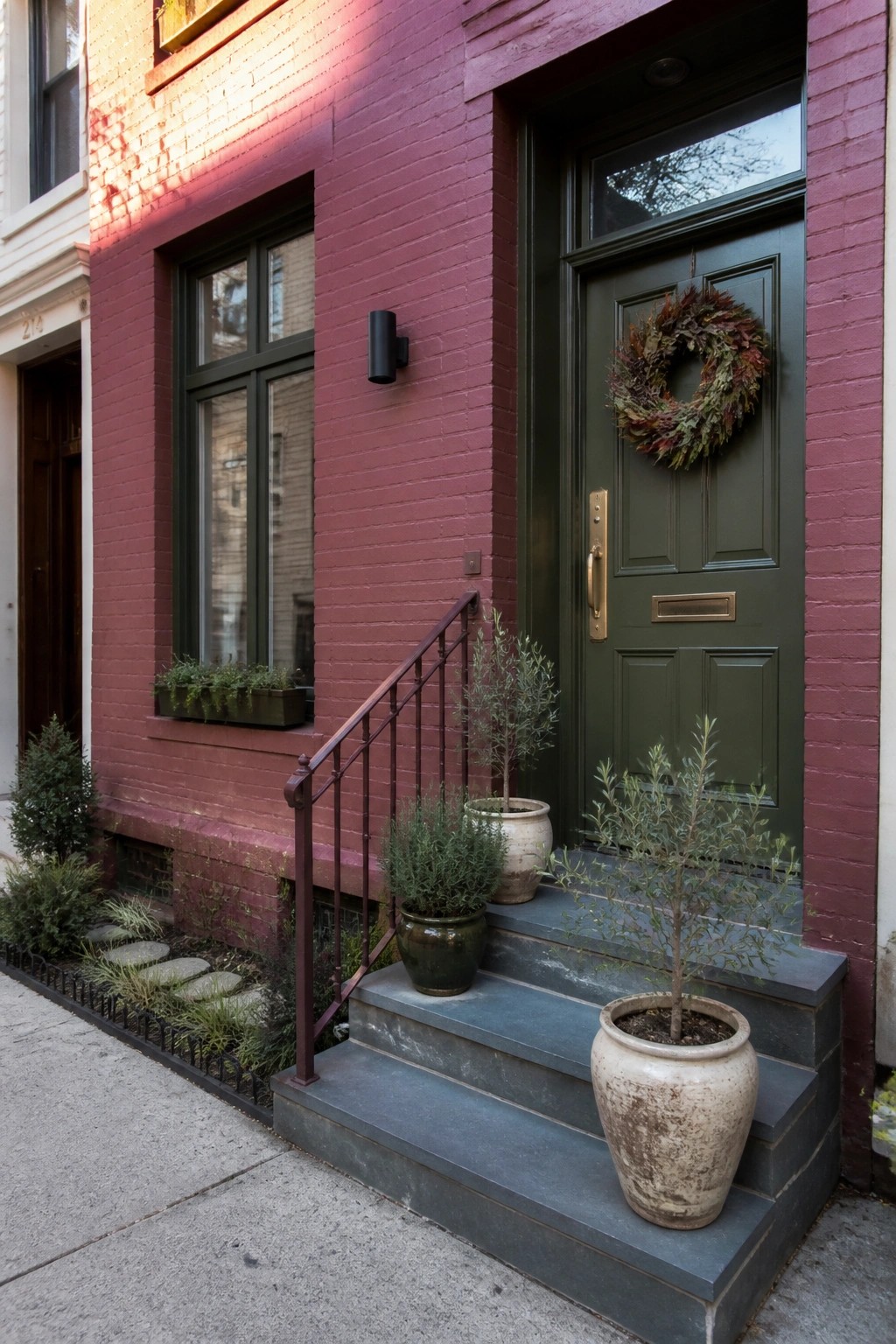
A deep maroon painted brick makes a strong base for the front of a house, especially when paired with a dark green door. The contrast feels rich but still grounded, and it works without needing lots of extra trim or details.
This approach suits older brick homes or row houses where you want to refresh the look while keeping the texture. Add a few pots in olive tones near the steps to bring in some softness and tie the colors together naturally.
Green Siding With Maroon Gable Accents
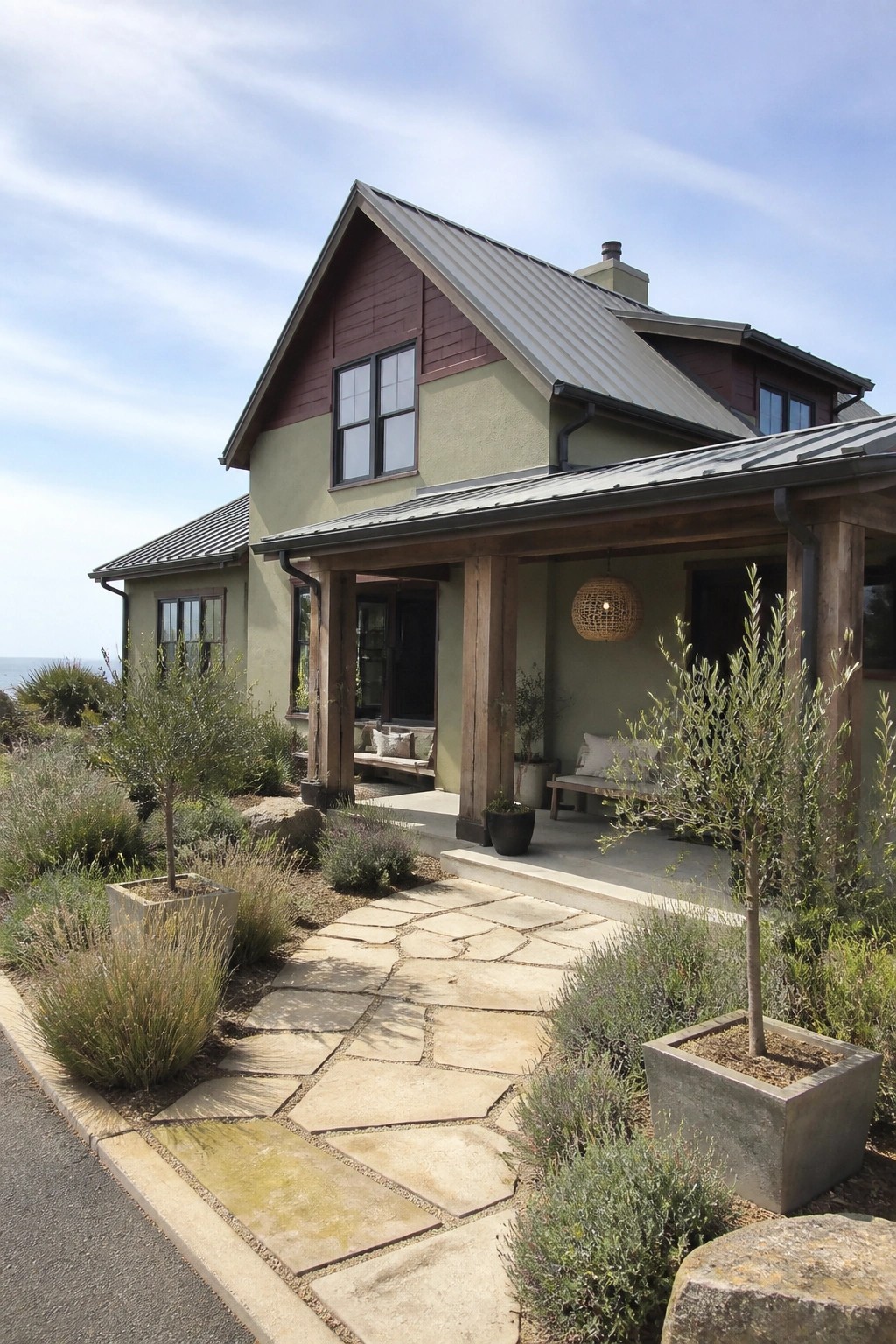
A muted green base paired with a deep maroon gable gives the front a clear focal point without needing extra trim or ornament. The wood posts and beams on the porch help bridge the two colors so nothing feels too sharp.
This approach works best on homes with simple rooflines where one strong accent can stand out. Keep the rest of the palette quiet, like a metal roof and stone path, and let the olive trees in pots add a soft layer at ground level.
A Maroon Door On An Olive Green Exterior
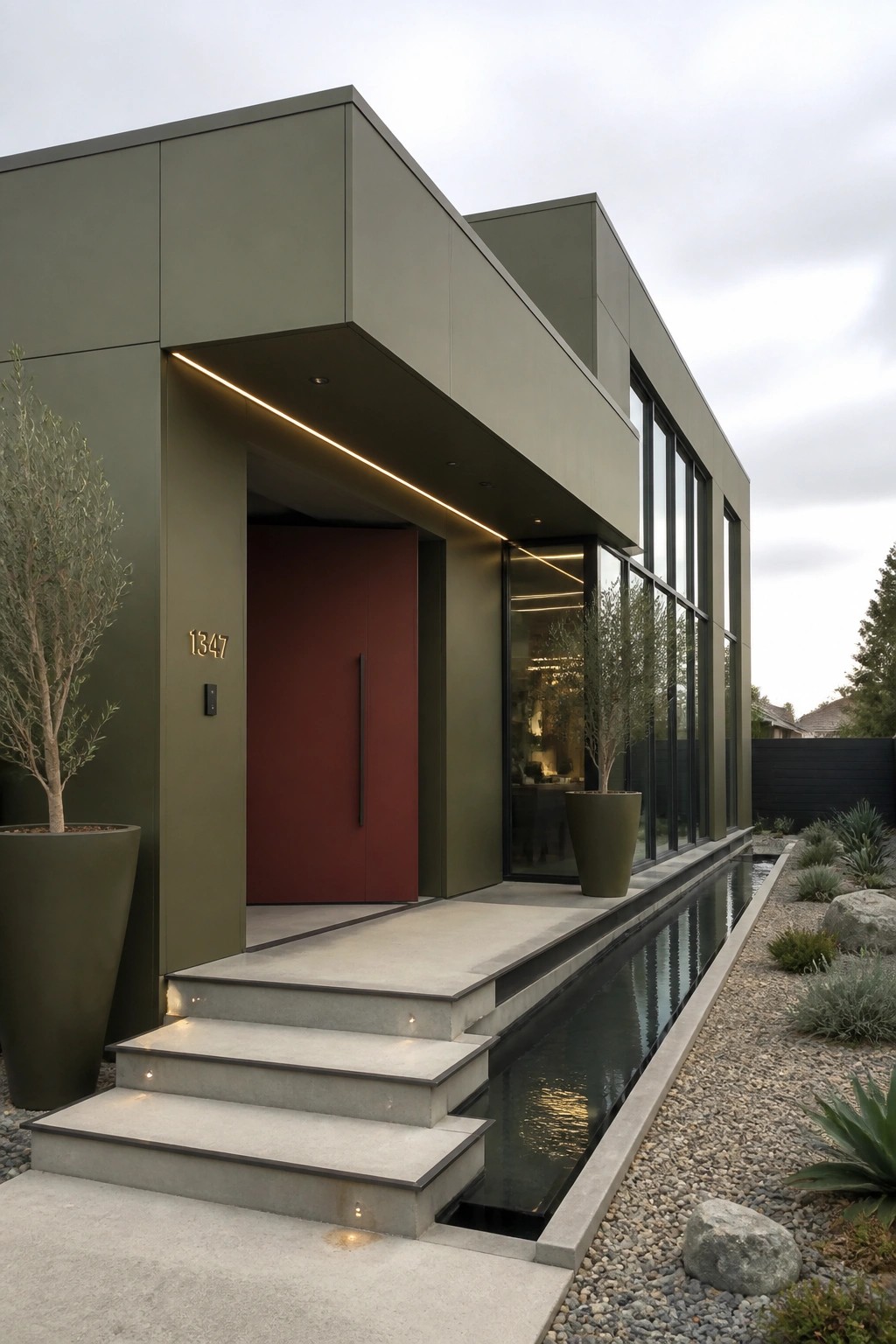
A deep maroon door gives an olive green house a clear focal point right at the entry. The color contrast feels direct and simple, especially when the rest of the facade stays quiet and flat.
This approach suits modern homes with clean lines and minimal trim. Keep other accents limited so the door carries the contrast without competing elements.
Green And Maroon On The Exterior
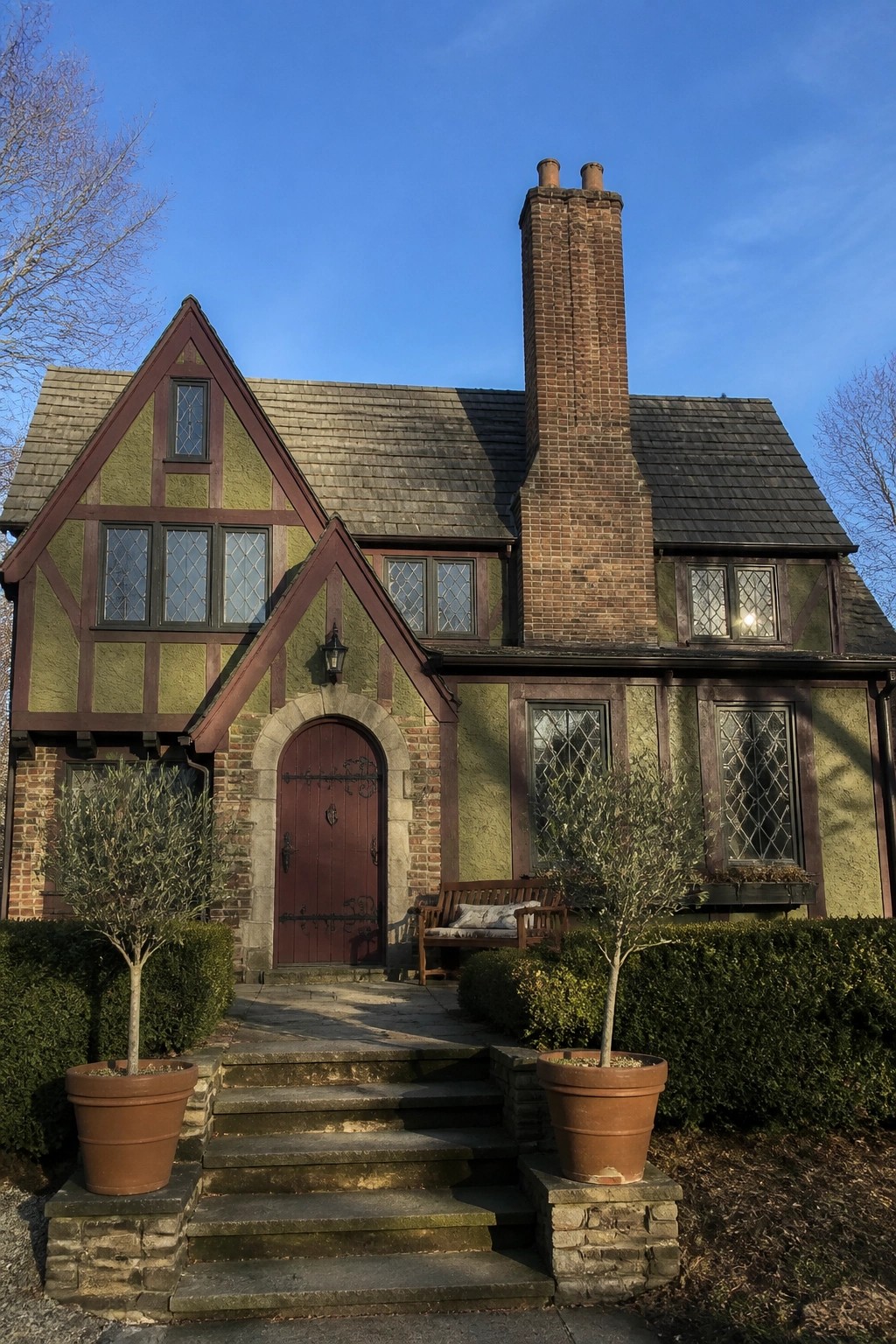
Green siding paired with maroon trim gives a house a settled, traditional look that still feels fresh. The dark woodwork outlines the shape of the house without overpowering the softer green walls, and the result stays balanced even on a larger facade.
This color mix works best on homes with some architectural detail like half timbering. Use it when you want a classic feel without going full red brick or all white. A few simple olive trees in pots are enough to tie the planting into the same palette.
Olive Green Siding With Maroon Shutters
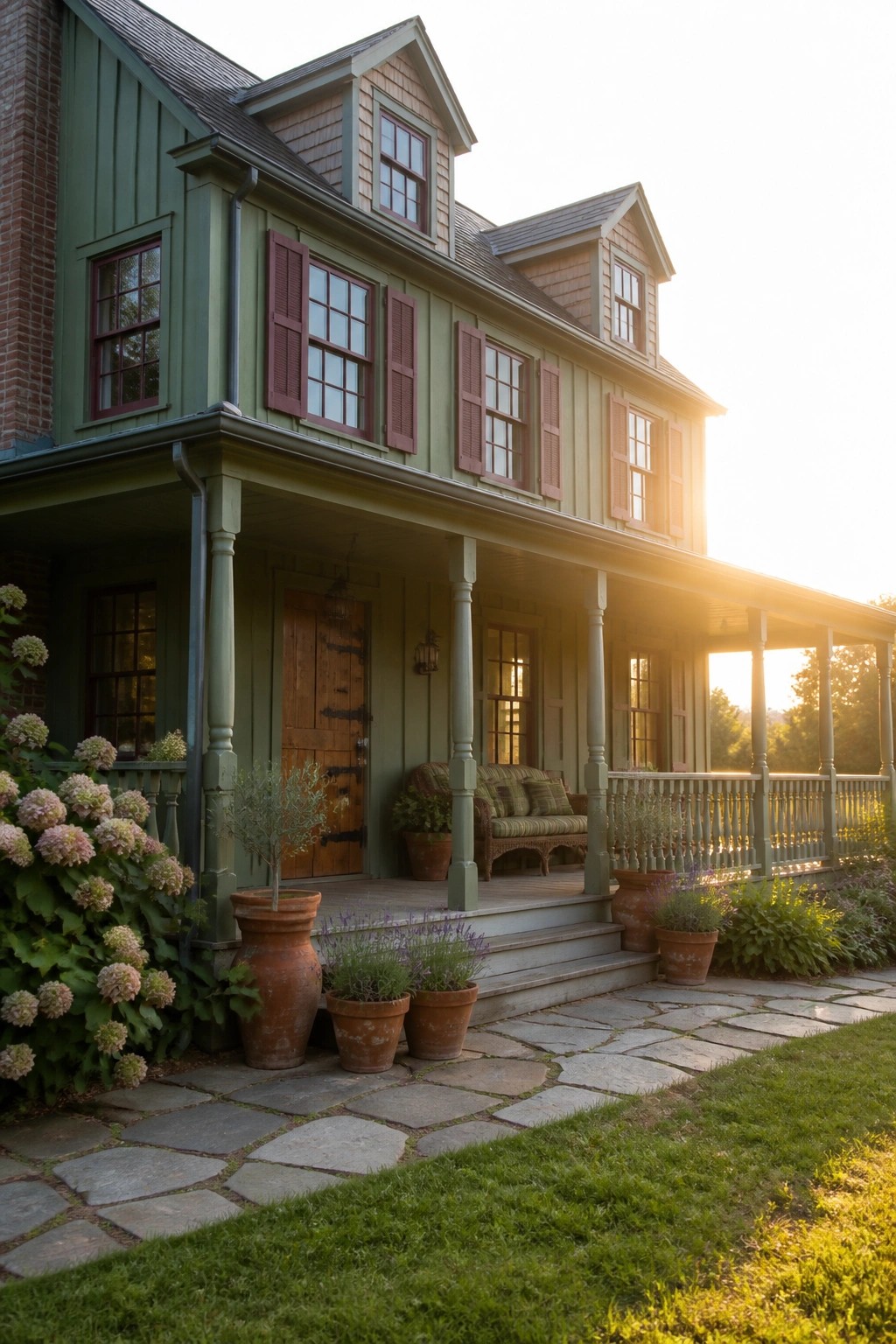
Olive green siding pairs naturally with maroon shutters on many homes. The two tones balance each other without fighting for attention, and the result feels settled rather than bold.
This color mix works best on houses that already have some architectural detail like a porch or gabled roof. Keep the trim and other accents simple so the green and maroon stay the main focus.
Olive Green Siding With Maroon Windows
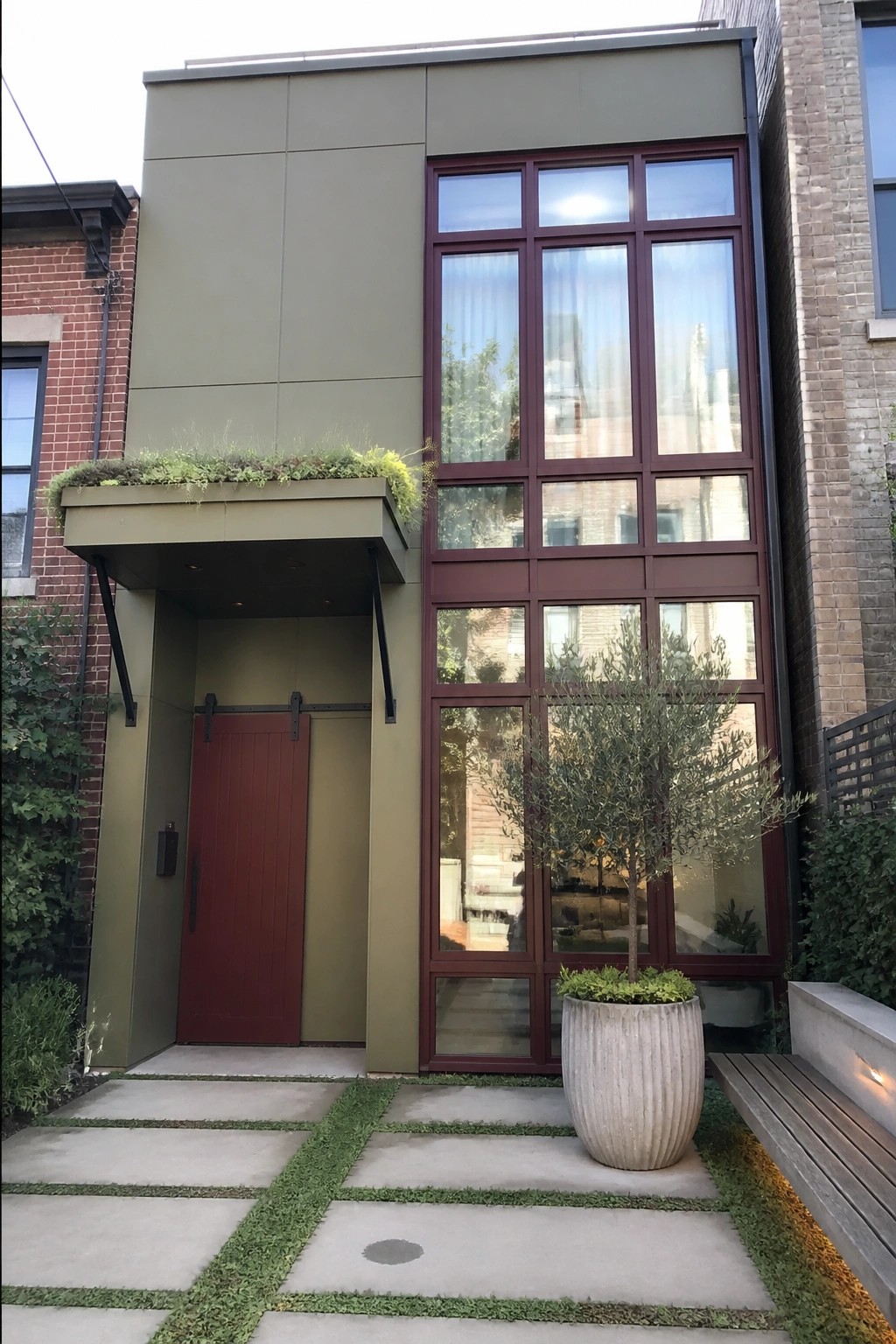
Olive green works well on house exteriors when it covers most of the wall area and pairs with a deeper maroon on the windows and door. The muted tone keeps the front from feeling too stark while the maroon gives the openings a clear frame that stands out in daylight.
This color mix suits newer builds or updated facades that need some warmth without extra trim or ornament. Use a matte finish on the green and keep the maroon rich rather than bright so the two tones stay even across the whole elevation.
Olive Green Around the Entry
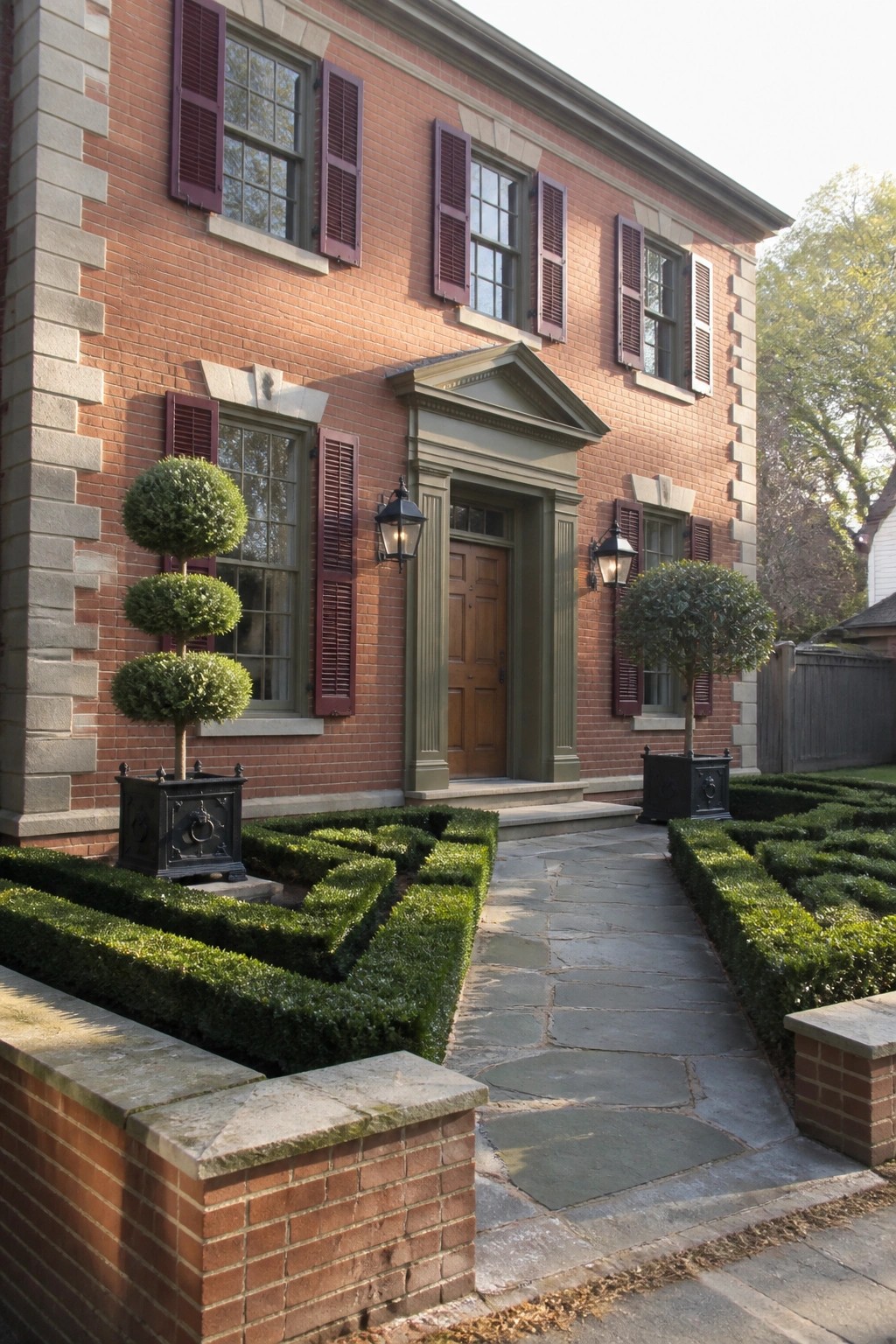
Olive green works well as a trim color on brick homes that already use maroon shutters. It softens the strong red of the brick without competing with the darker maroon, and it gives the front door a clear, finished look. The color sits nicely between the warm brick and the cooler green planting, so the whole front feels pulled together rather than busy.
This approach suits older or traditional brick houses that need a little contrast at the door. Keep the olive muted rather than bright, and use it mainly on the surround, columns, or pediment so it stays as an accent instead of taking over the facade. It also leaves room for simple evergreen planting to finish the look without extra color.
Olive Trees in Terracotta Pots
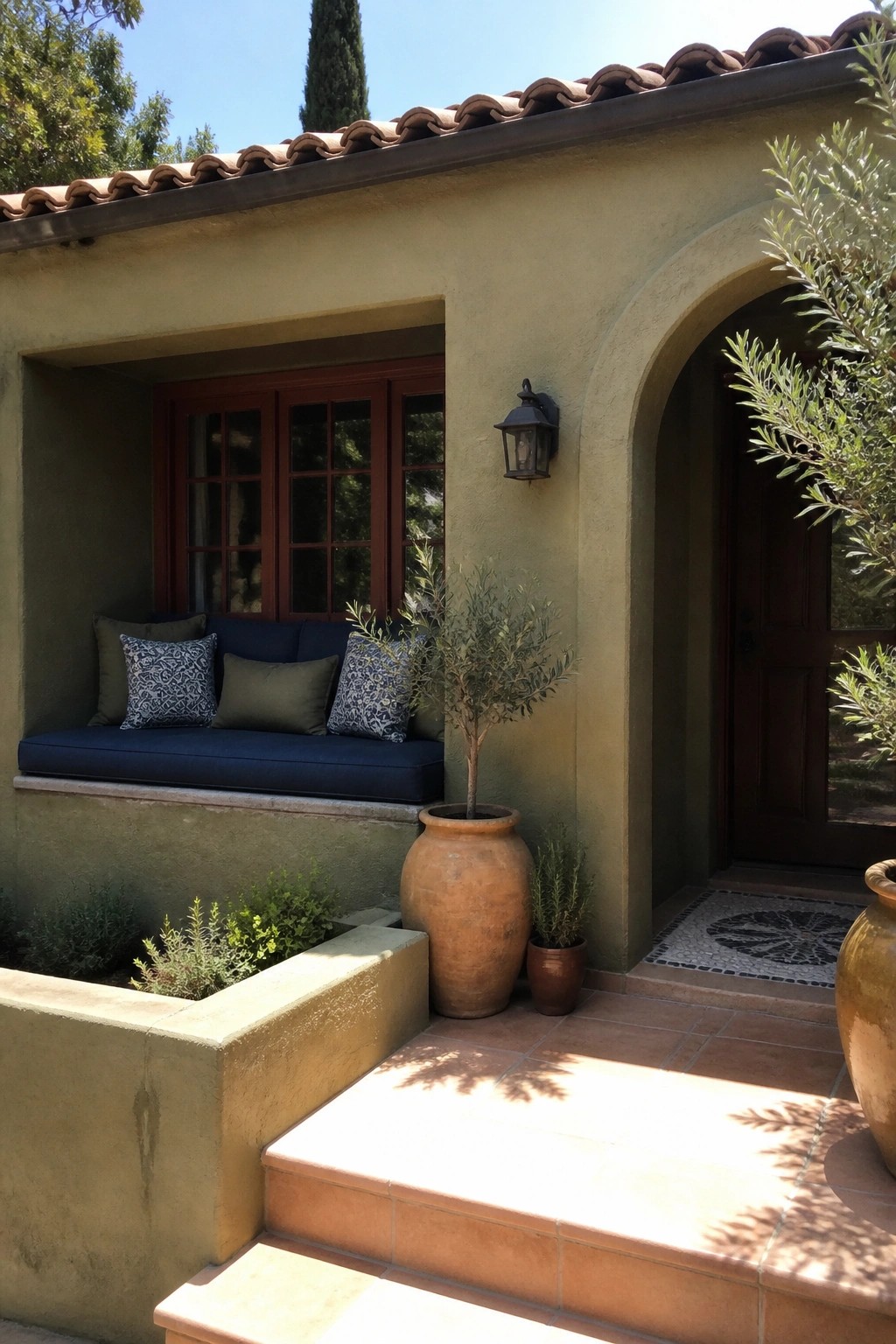
Green stucco houses often need a few natural touches to keep the color from feeling flat. Placing olive trees in big terracotta pots right by the door gives that balance without adding more paint or trim. The silvery leaves pick up the green on the walls while the clay pots bring in a warm tone that works with maroon or brown accents.
This works best on simple stucco homes with Mediterranean details. Set the pots at the base of steps or beside an entry arch so they frame the door without blocking the path. One or two trees are usually enough. Too many can crowd the space and start to look messy.
Olive Green with Maroon Accents
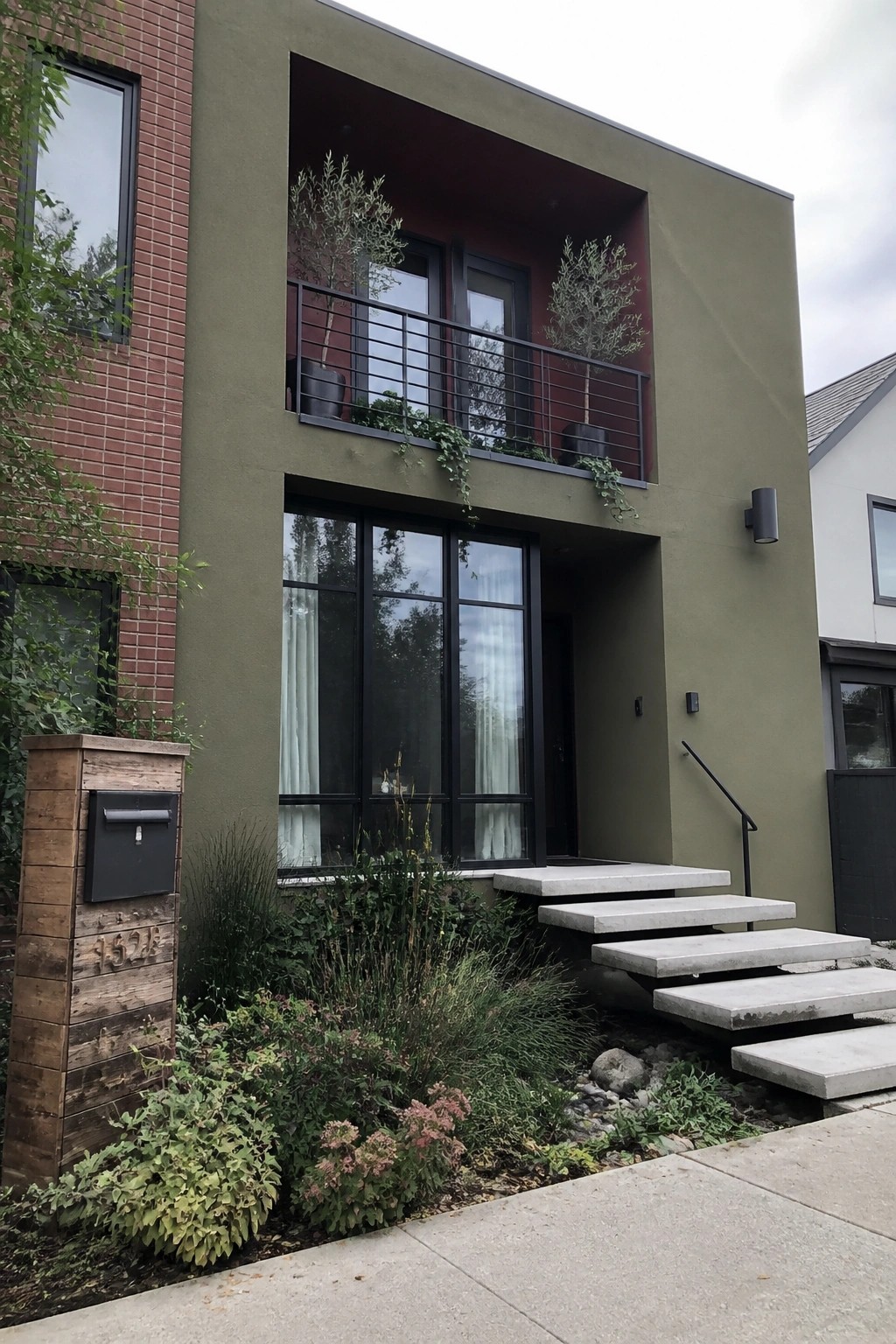
Olive green makes a strong base color for a house exterior because it sits between gray and brown without leaning too far in either direction. When paired with maroon in a recessed area like a balcony or entry, the green stays calm while the deeper tone adds just enough contrast to keep the facade from feeling flat.
This works best on simple modern shapes where the two colors can play off each other without extra trim or ornament. Keep the windows and railings dark so the green and maroon stay the main focus, and use the maroon only where it can sit back from the main wall plane.
Maroon Accents With Olive Green Siding
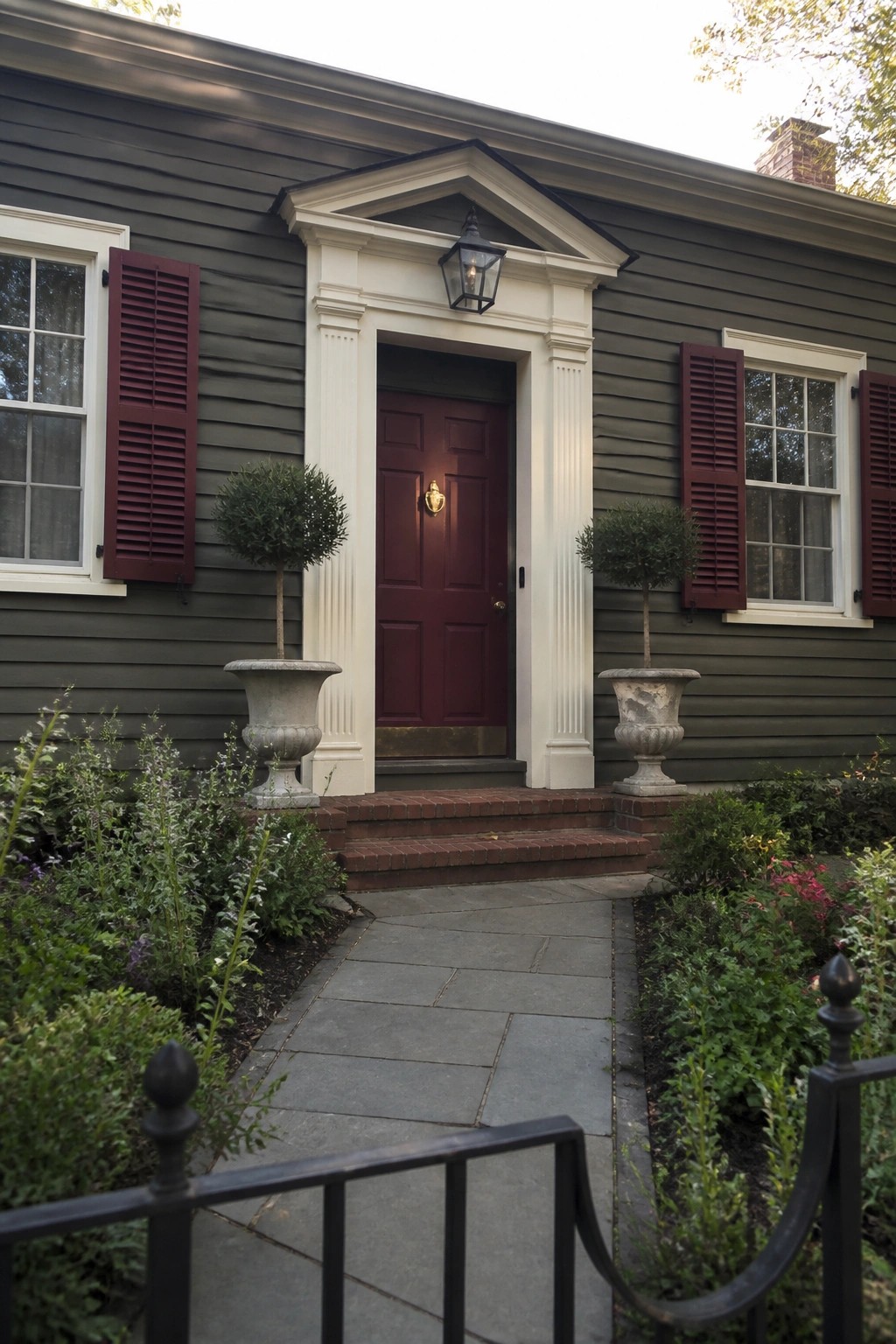
A maroon door and shutters create a clear contrast against olive green siding. The combination keeps the front simple while still giving the entry a defined look that holds up from the street.
This approach suits homes with straightforward trim and a classic shape. Keep the rest of the palette quiet so the two colors can carry the balance without extra layers.
Green Siding With Maroon Window Frames
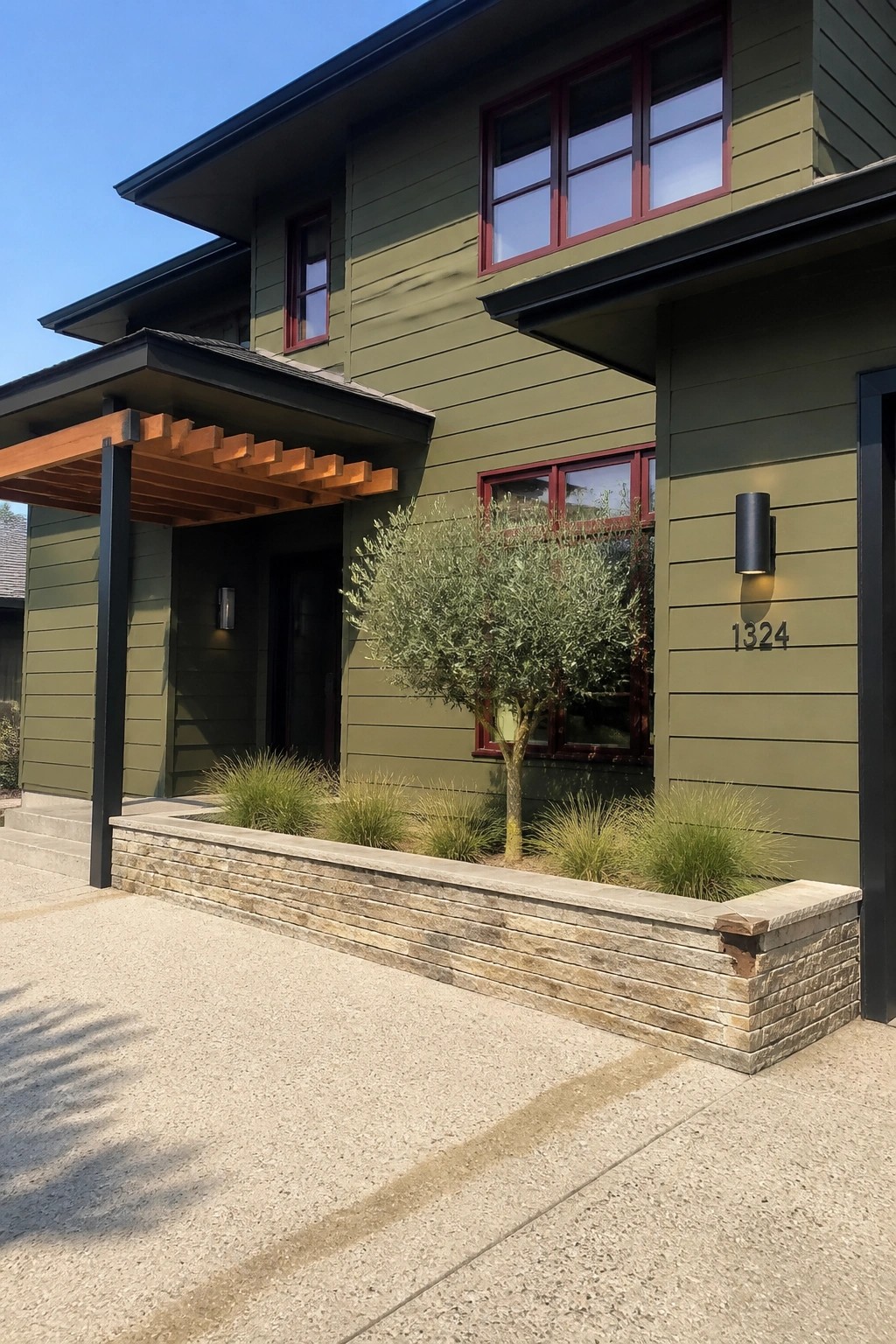
A deep green on the siding gives the house a steady look that pairs easily with maroon window frames. The two colors sit well together without one overpowering the other.
This works best on homes that already have clean lines and some natural planting out front. An olive tree placed near the windows helps connect the green and maroon even more.
Maroon Shutters with Olive Trees
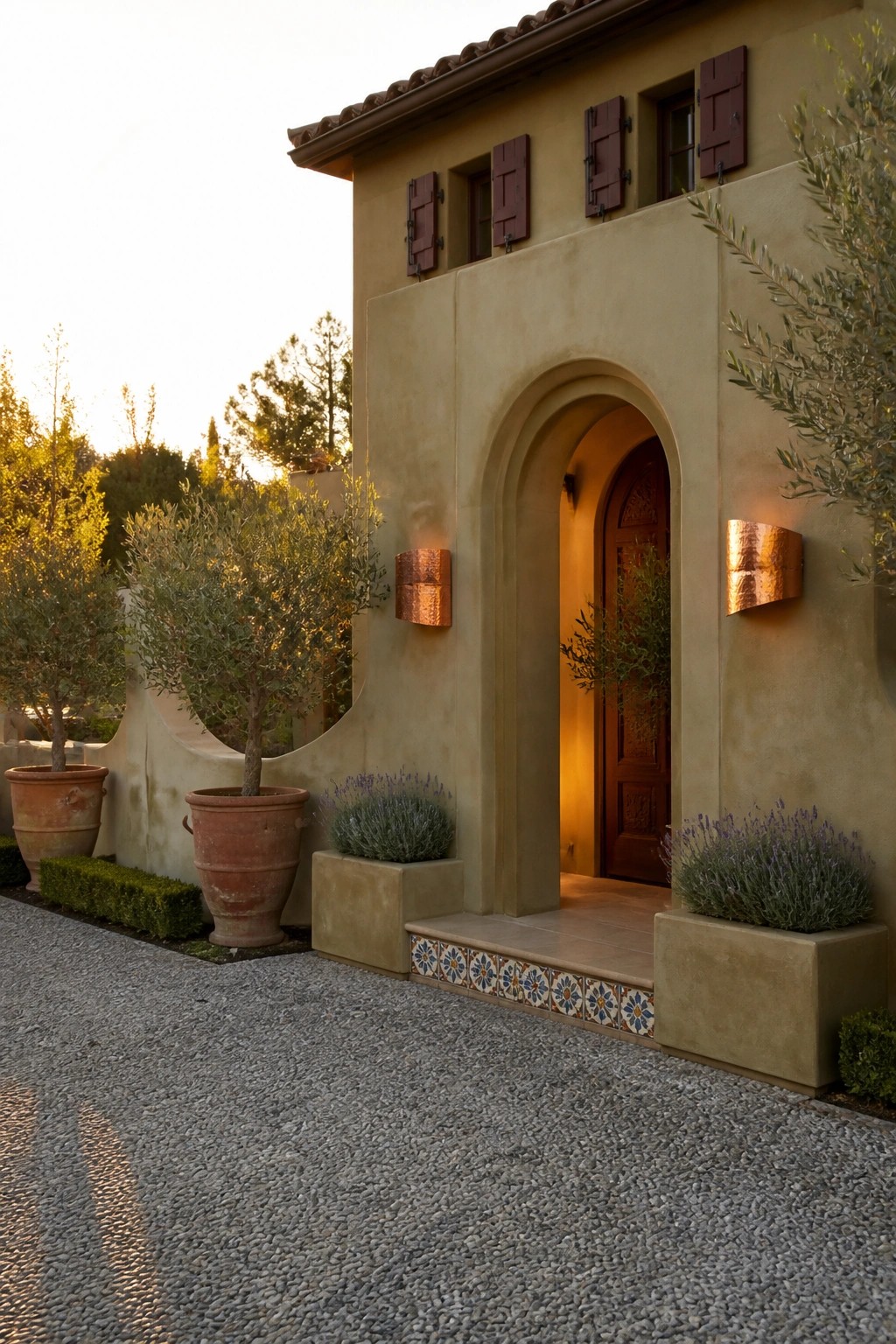
Maroon shutters stand out against warm stucco in a way that feels solid rather than busy. When olive trees sit close by in simple pots, the green leaves soften the darker tone and keep the whole front from looking too heavy.
This approach works best on homes with a Mediterranean or Spanish influence. Keep the trees at a similar scale to the windows so the color balance stays even, and let the gravel or path lead the eye straight to the door.
Frequently Asked Questions
Q: How do I stop the maroon from overpowering the green on my front porch? A: Use the olive on the railings to break up the darker tones. This pulls the eye toward the accents instead. A single coat on those spots makes a big difference.
Q: What happens if the olive looks too similar to my existing trim color? A: Swap in a slightly brighter olive for the door. It stands out just enough against the green walls. Keep the rest of the accents minimal after that.
Q: Can these colors work on a house with brick details? A: Paint the brick maroon. Add olive on the sashes to tie it in.
