

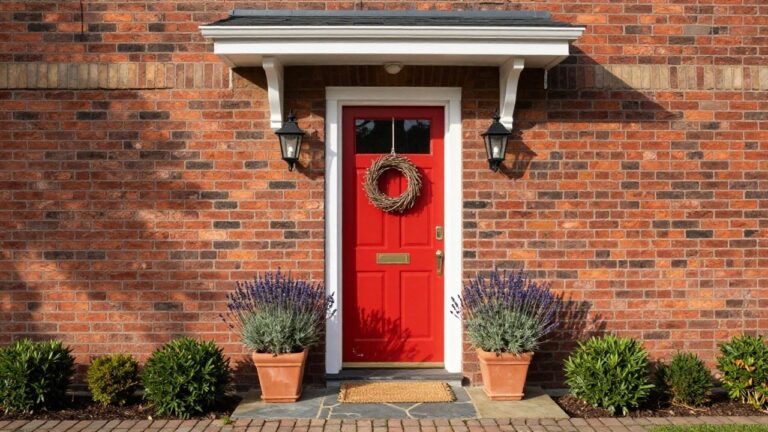
When you drive up to any house, the front door color grabs attention first and sets the tone for the whole facade.
I tried a few bold shades on ours one summer, only to realize the winners were ones that echoed our siding without fighting the roofline.
Colors that harmonize with the entry materials and walkway make the approach feel grounded and lived-in, not like a stage set.
A muted teal worked wonders on a neighbor’s plain ranch style entry.
Yours might benefit from testing something similar out front.
Red Front Doors on Brick Houses
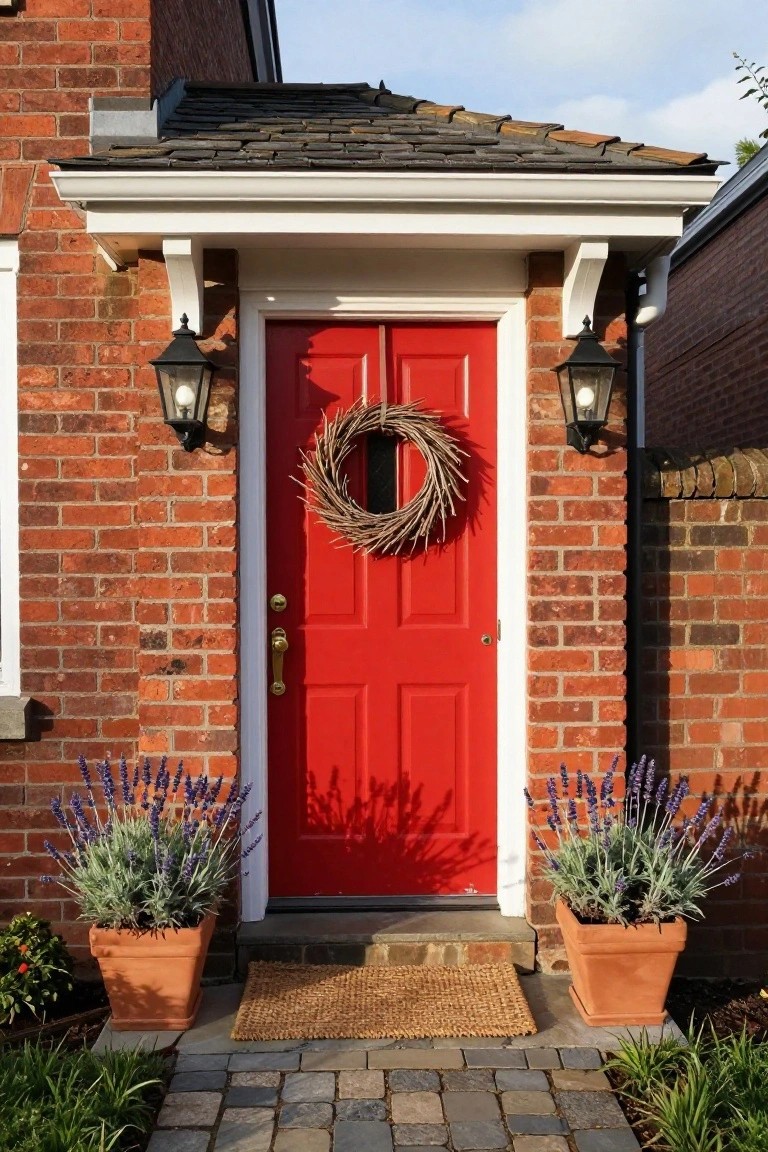
Brick homes have that sturdy, no-nonsense look. A red front door changes things up right away. It pulls your eye to the entry and makes the whole place feel more alive. Here the color stands out sharp against the warm brick tones. Simple touches like lanterns and a wreath keep it from getting too busy.
This idea fits older homes or anything with traditional brickwork. Go for a glossy red paint that takes weather well. Add potted lavender on each side if you want some green. Skip it on super modern houses though. The contrast might fight the clean lines.
Recommended Products

Suitable for interior/exterior metal or wood surfaces such as doors and shutters

Ready to use, pre-mixed door and trim paint offers a fresh new look on interior or exterior metal, wood and fiberglass

Perfect Match: Restore your Red Bottom Soles effortlessly with Angelus Walk on Red Paint Restorer, ensuring your footwear looks as good as new. Perfect match to the popular red sole color.
Navy Blue Front Door
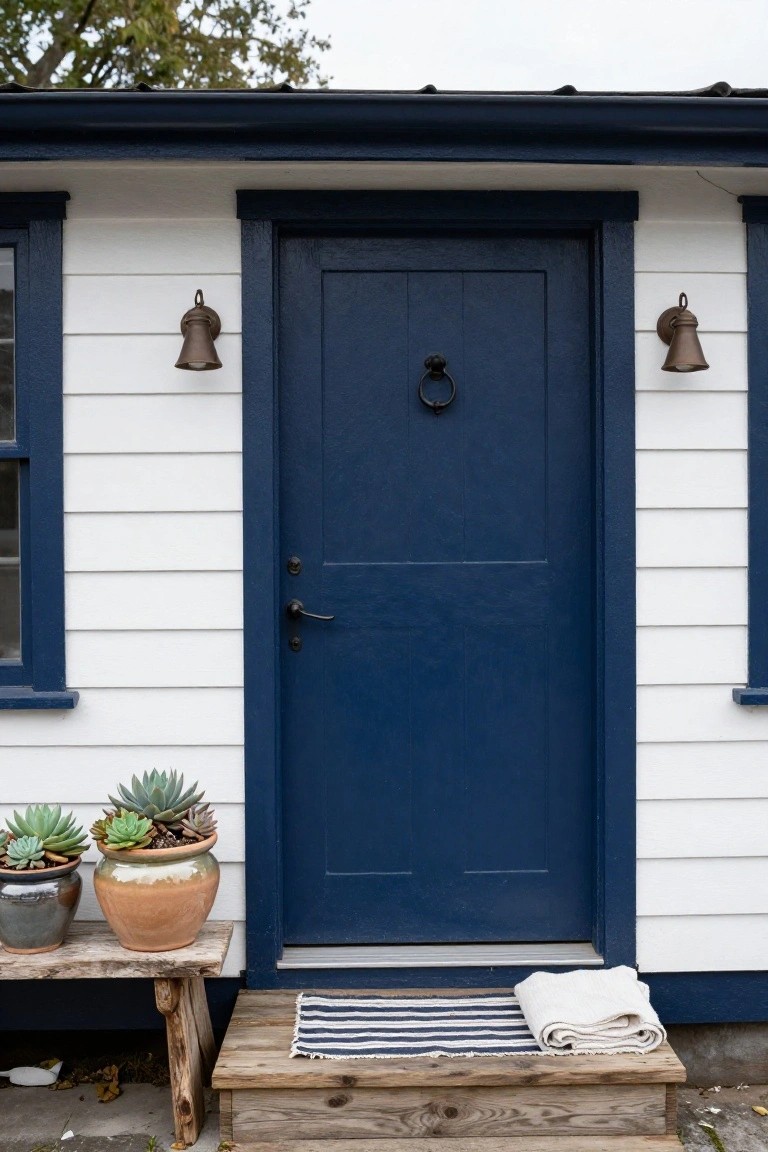
A navy blue front door stands out nicely against a white clapboard house. The deep color gives the entry a solid, classic feel without going overboard. It draws attention to the door itself and makes the whole facade look sharper and more put together.
This look fits older homes or coastal styles best. Paint your door in a quality navy shade, then add simple touches like potted succulents nearby or lanterns for evening light. Skip busy trim around it. Keeps things clean and welcoming.
Mint Green Front Door
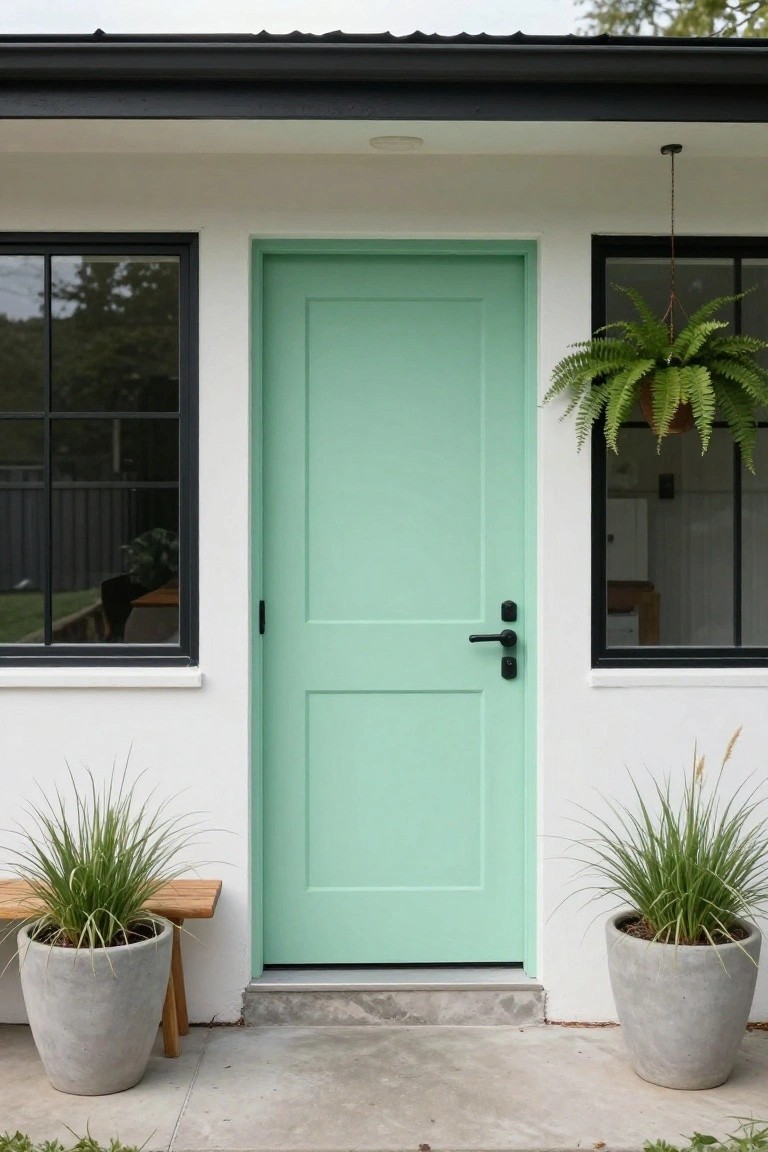
A mint green front door gives this white house a light, welcoming pop of color. It contrasts nicely with the black window frames and plain walls, making the entry feel friendly right away. The soft shade keeps things calm instead of loud.
This works best on clean, modern homes or ones with a coastal feel. Pair it with simple plants in gray pots like the grasses here, and maybe a hanging fern. Pick a muted green so it blends over time with some pots and natural touches.
Dark Gray Front Door on Wood Siding
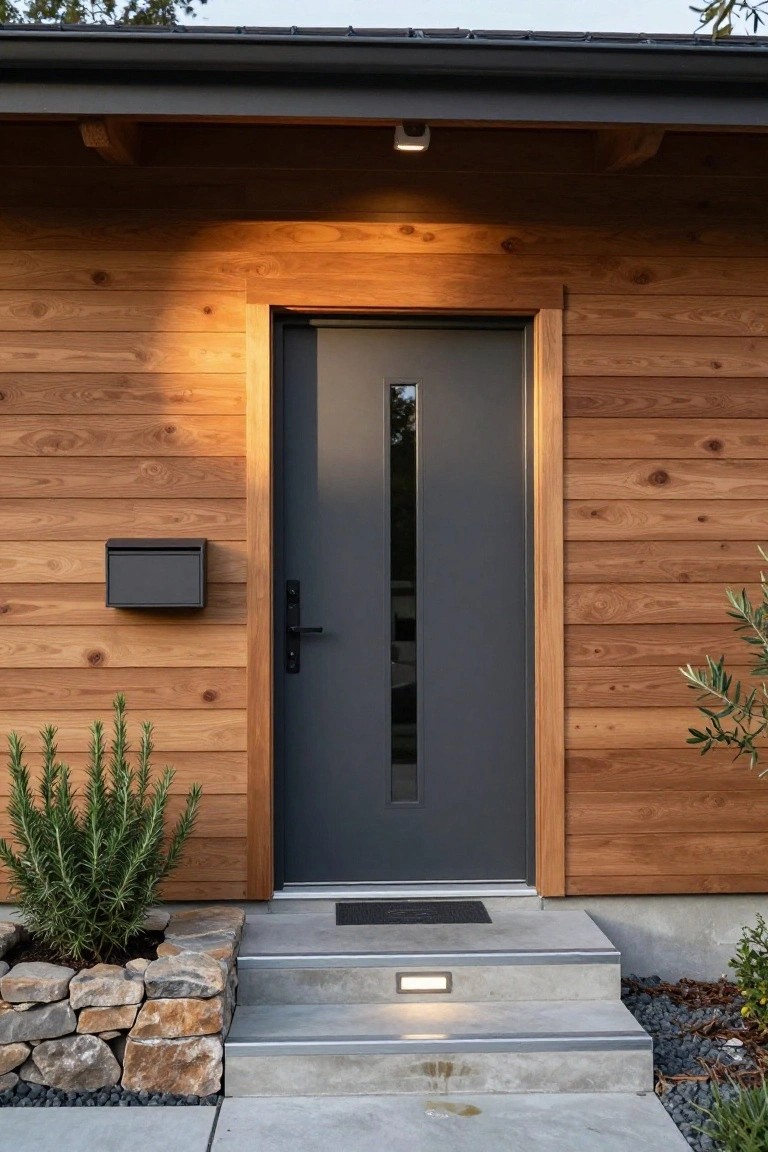
A dark gray front door looks sharp against warm wood siding like this. The cool tone of the door pulls focus right to the entry without overwhelming the natural wood grains. That slim vertical window lets in a bit of light too. It keeps things modern but grounded.
This setup fits homes with timber accents, like cabins or craftsman styles. Go for matte gray to avoid glare. Pair it with simple steps and low plants at the base so the door stays the star. Skip bright trim that fights the wood.
Recommended Products

【Strong Adhesive, Saves Money】Weather stripping door seal prevent heat and cold from escaping, save your heating and cooling bills. block noise, super adhesive, durable, not easy to degumming, easy to install

[Package Content] Made of high quality 100% polyester fabric and sold as one piece of panel. This room darkening blackout window curtains are available in 5 colors that suitable for French door, patio, living room, kitchen and home office.

🌬️ Block Out Cold Drafts: Crafted from windproof Oxford fabric and 180G thick cotton padding, this insulated door curtain effectively keeps cold air, rain, and wind out. Perfect for winter—stay warm indoors while cutting down on heating bills.
Soft Turquoise Front Door
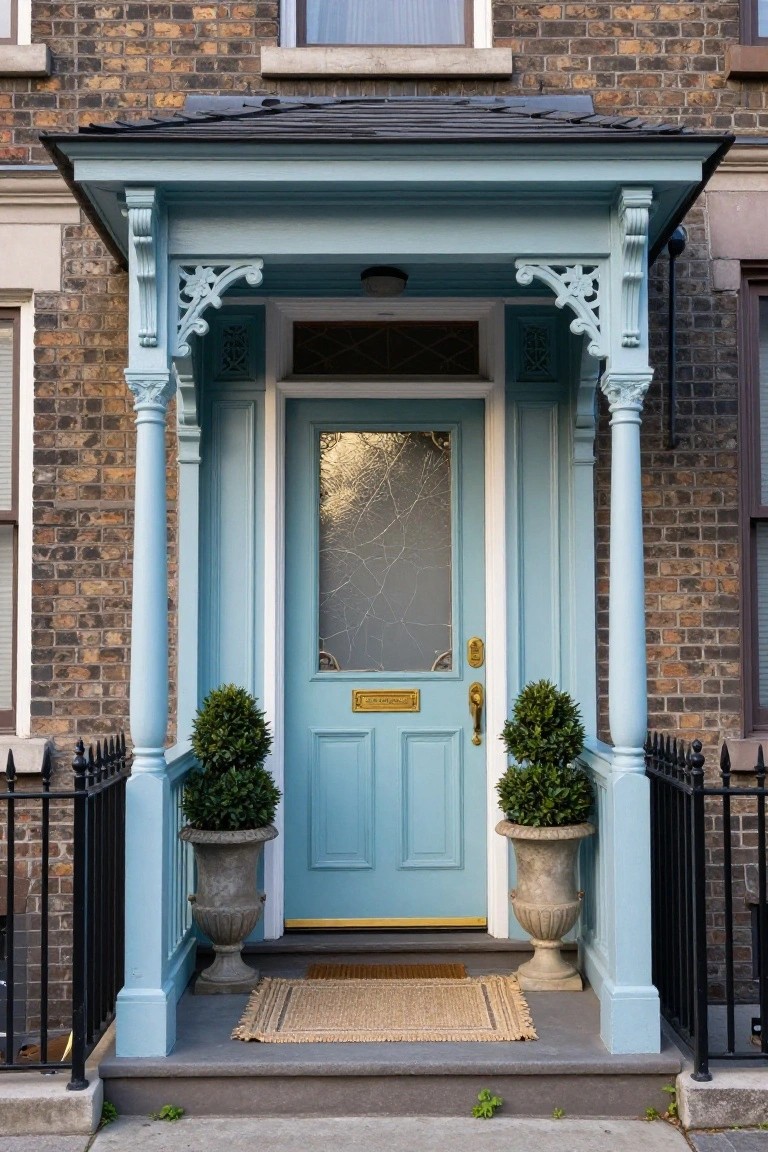
A soft turquoise front door like this one gives a traditional brick house a fresh lift. It stands out nicely against the warm brick without overwhelming the look. The color feels calm and beachy, but it works year round. Brass hardware and those boxwood topiaries in urns keep things classic around it.
This shade suits older homes with porches or simple facades. Paint your door this color if you want curb appeal that doesn’t shout. Just make sure the trim stays white or neutral so the door gets the attention. It pairs well with black railings too.
Wooden Front Door on Terracotta Walls
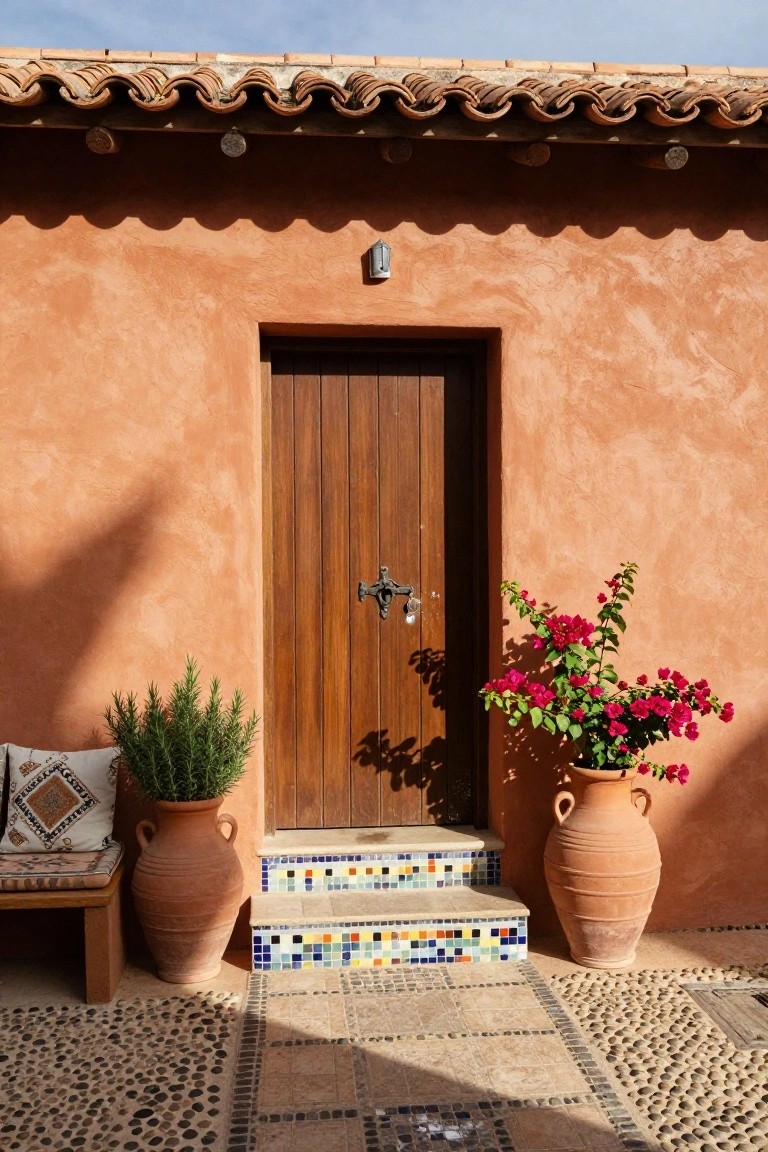
A wooden front door in a warm brown tone looks right at home against terracotta stucco walls. The natural wood grain picks up the earthy warmth from the orange-pink plaster without overpowering it. That combo gives the entry a cozy, lived-in feel that says welcome before you even turn the knob.
This setup works best on Southwestern or Mediterranean style homes where the walls already lean rustic. Stain the door a shade darker than the walls for more contrast, or go lighter if you want subtle flow. Add potted rosemary or bougainvillea nearby to tie it all together. Skip it on super modern facades though. It can feel too folksy there.
Recommended Products

Comfortable Area Rug: This 2x3 rug, crafted from sturdy polyester materials, offers an incredibly soft feel underfoot. It effectively absorbs moisture and shoe dust, ensuring your living room remains clean and dry. Perfect for daily use in high-traffic areas, this rug is designed to enhance comfort while maintaining a stylish appearance

EFFECTIVE ON ALL WOOD SURFACES and QUICK DRYING: Furniture Clinic Wood Stain is a fast drying and highly concentrated wood stain making it effective on all indoor and outdoor wood surfaces. Our wood stain provides excellent coverage and ensures even color penetration. It's water based, environmentally friendly, and dries to a natural matte finish in only 10 minutes.

EFFECTIVE ON ALL WOOD SURFACES and QUICK DRYING: Furniture Clinic Wood Stain is a fast drying and highly concentrated wood stain making it effective on all indoor and outdoor wood surfaces. Our wood stain provides excellent coverage and ensures even color penetration. It's water based, environmentally friendly, and dries to a natural matte finish in only 10 minutes.
Pink Front Door Color
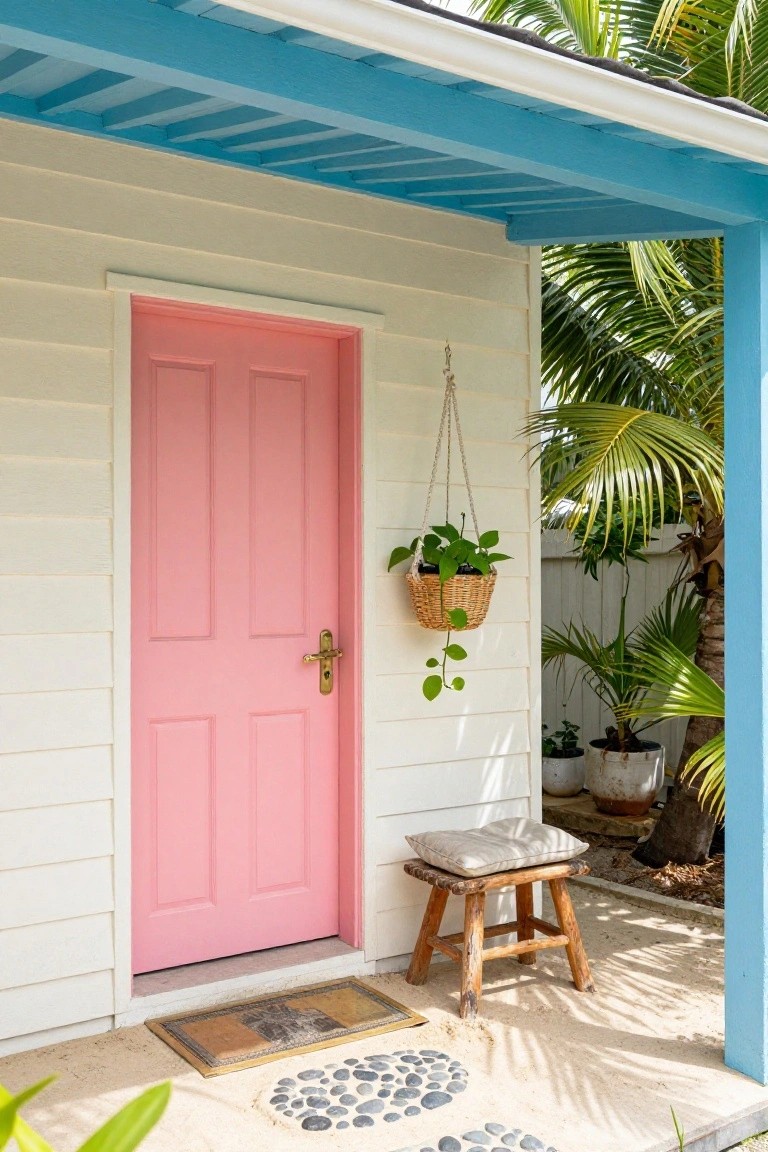
A pink front door like this one turns a plain white house into something cheerful right away. The color pops without overwhelming the simple siding and blue porch roof. It fits that tropical spot perfectly, with palms and a hanging plant nearby adding to the vibe.
This works best on coastal or casual homes where you want easy curb appeal. Pick a pink that’s not too pale, and keep the rest neutral so the door does the talking. Just test the shade in sunlight first… it can look different outside.
Deep Green Front Door
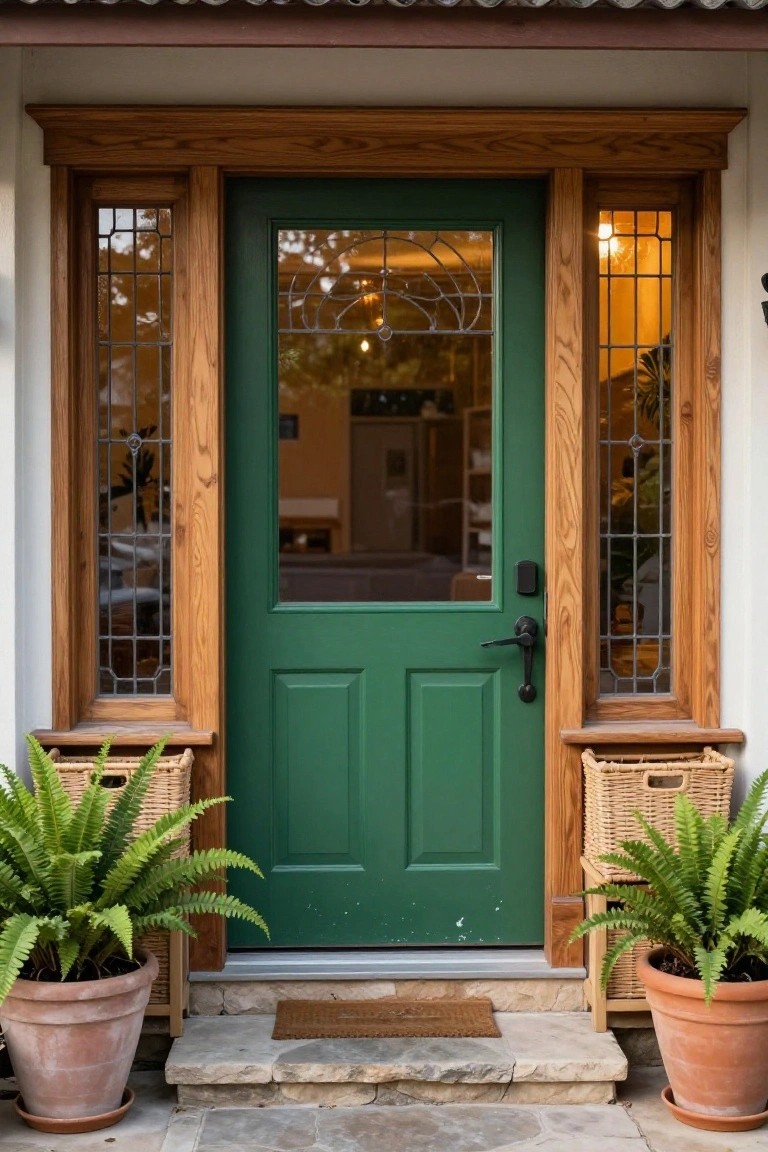
Deep green on a front door brings a fresh pop to classic entries. It contrasts well with warm wood trim and sidelights, making the whole facade feel more alive and welcoming. Folks notice it right away, but it stays grounded.
This shade suits older homes or ones with Craftsman details. Go for it on paneled doors with simple hardware. Add ferns in pots nearby for extra life. Pick a durable exterior paint though. Weather can wear on it fast.
Black Front Door on Light Walls
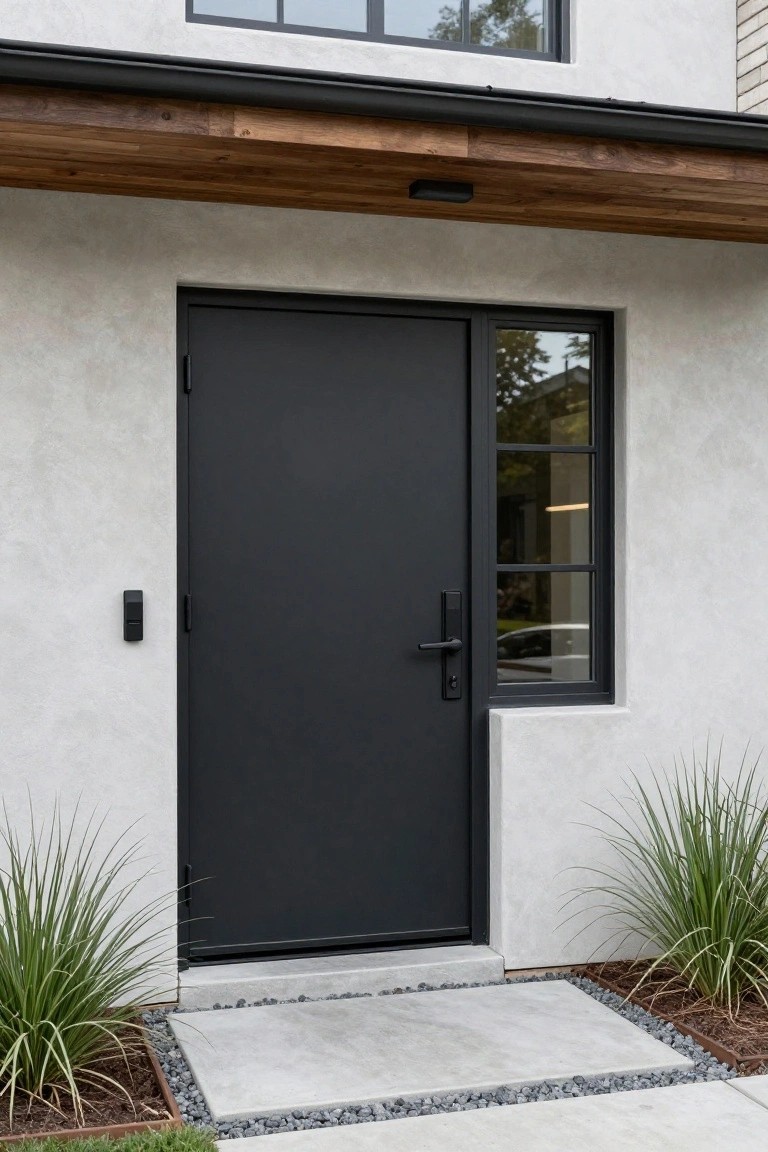
A black front door stands out nicely against pale stucco walls. It adds a modern touch to the entry without overwhelming the house. The dark color pulls focus right to the door. And with black window frames nearby it ties everything together simply.
This look fits homes with clean lines or a bit of midcentury style. Use matte black paint for a sleek finish. Keep hardware straightforward like a simple lever. Add low plants on the sides to frame it. Just make sure the door seals well since black can show heat in sunny spots.
Navy Blue Front Door
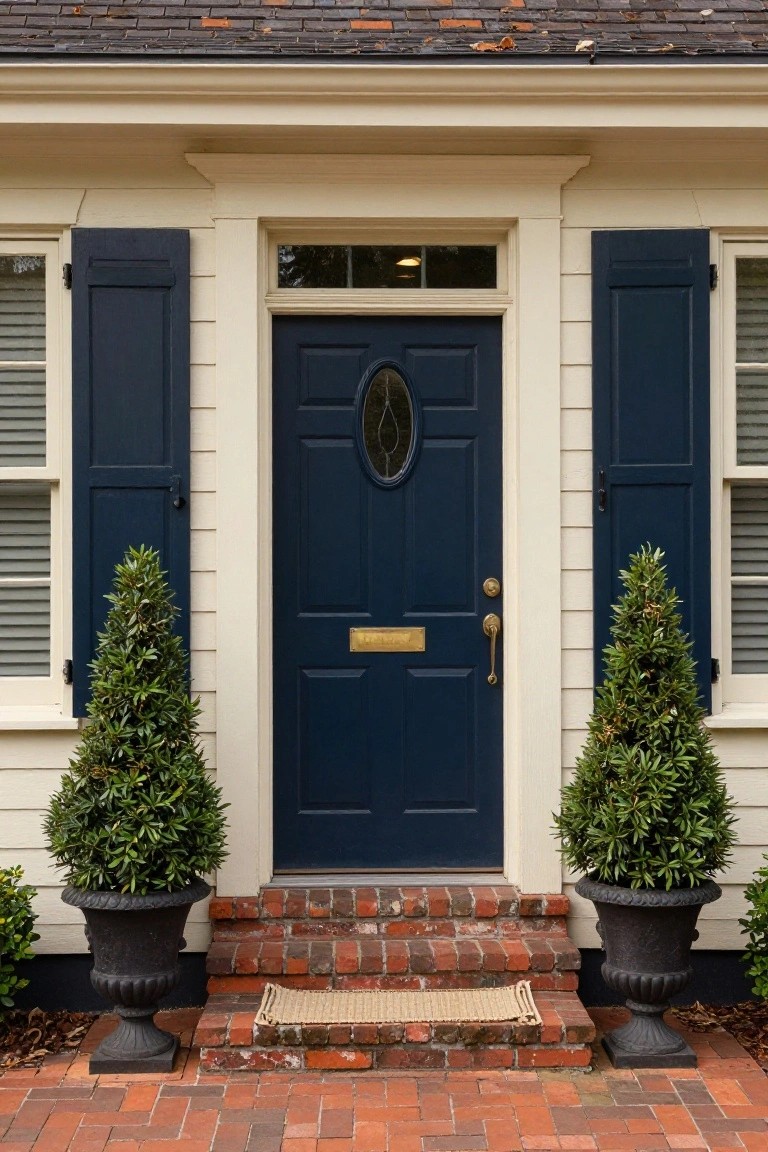
A navy blue front door stands out nicely against a light-colored house like this creamy siding. It pulls the eye right to the entry without overwhelming the whole facade. The matching navy shutters tie it together, and those gold accents on the hardware keep things classic.
This color works best on older-style homes, think colonial or craftsman. Pair it with simple plant pots at the sides for balance. Just make sure the trim stays crisp white to let the door do its thing. Avoid it on super-modern places unless you want some contrast.
Green Front Door on White House
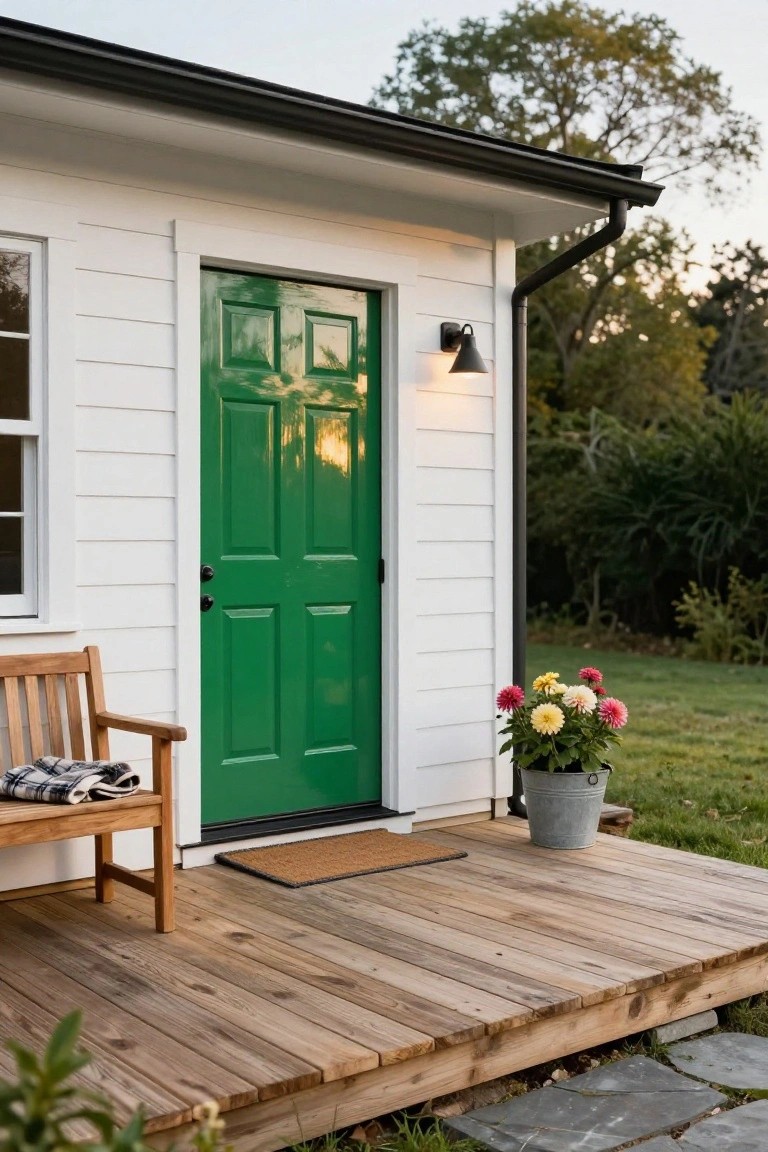
A glossy green door like this one makes a simple white clapboard house feel more alive right at the entry. The bold color pulls your eye to the front without changing the clean lines of the siding. It adds a bit of cheer that says welcome home.
This look fits older homes or farmhouses best, especially if you keep the rest neutral. Add a bench nearby and a few potted flowers to settle it in. Watch for greens that lean too yellow… they can fight nearby plants.
Navy Blue Front Doors
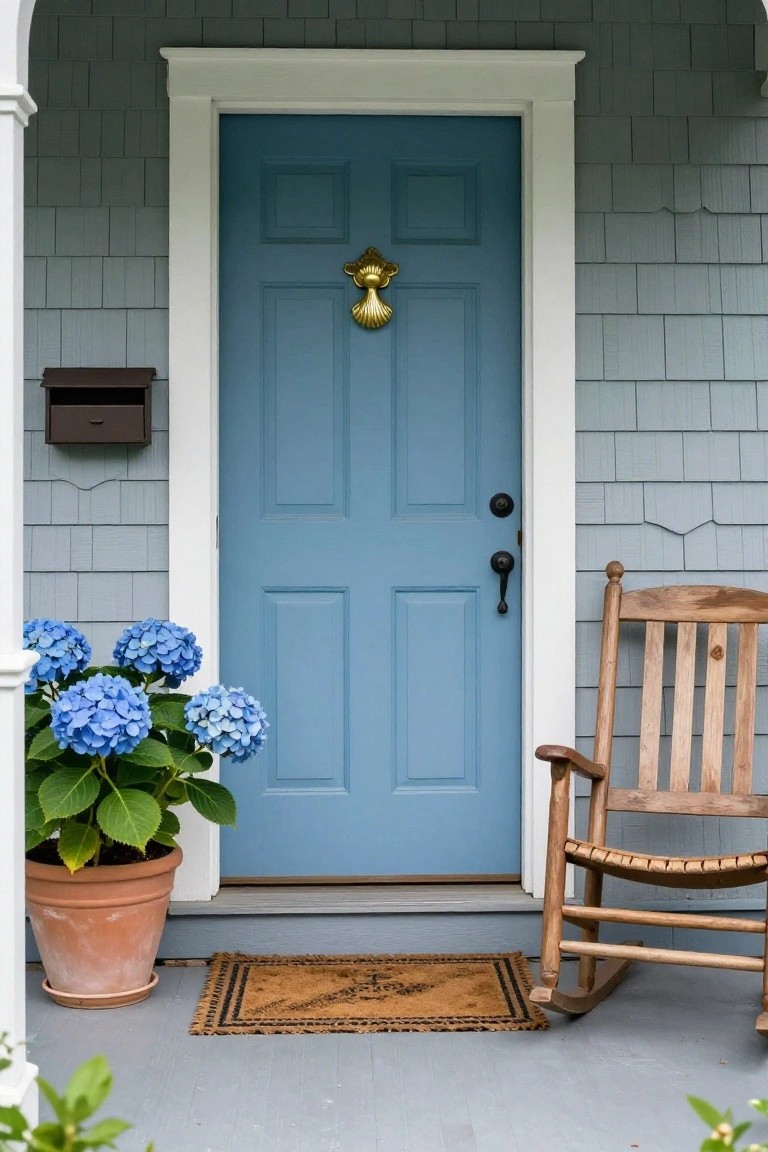
A navy blue front door brings a fresh pop of color to a simple house exterior. It stands out against gray shingle siding and white trim, drawing the eye right to the entry. That blue hue feels calm yet bold. It’s a good way to add personality without changing much else.
Try this on coastal cottages or older homes with neutral walls. The color pairs well with plants like hydrangeas nearby. Go for brass hardware to warm it up a bit. It might feel too strong on a super modern place though.
Bright Yellow Front Doors
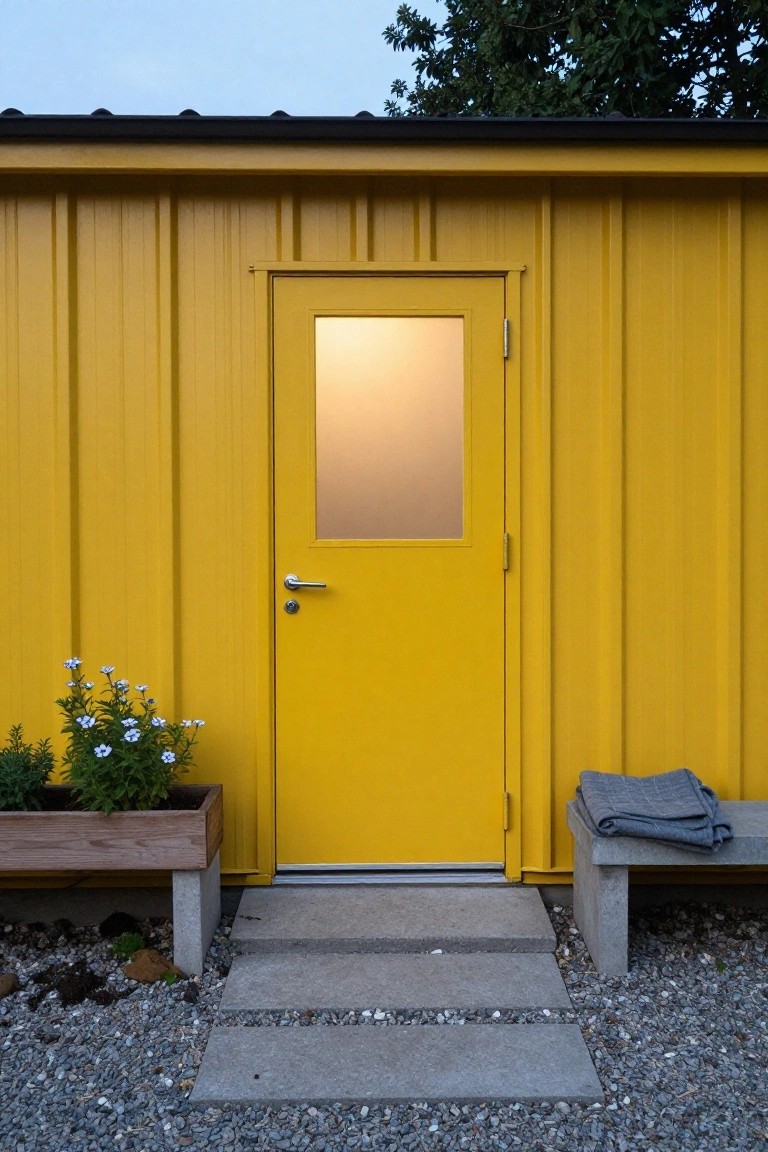
Yellow front doors grab your eye right away, especially on plain metal buildings like this corrugated shed. The bold color matches the walls perfectly, turning a basic entry into something cheerful and noticeable without much effort. A bit of frosted glass in the door adds privacy too.
This works best on modern sheds, garages, or small backyard structures where you want low-key curb appeal. Stick to gravel paths and simple potted plants nearby… keeps maintenance easy. Avoid busier homes though. It can feel too loud next to traditional brick or wood siding.
Deep Burgundy Front Doors
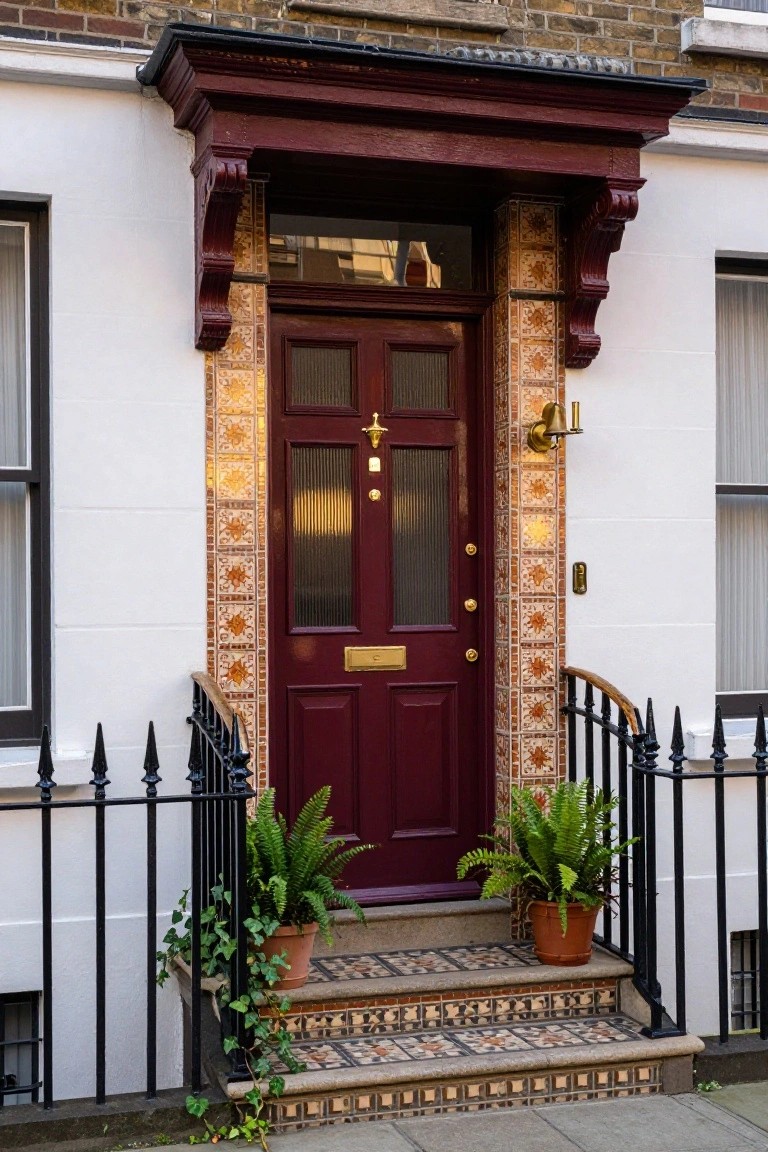
A deep burgundy front door like this one brings a touch of old-world charm to any street-facing entry. The rich color stands out nicely against plain white walls without overwhelming the look. Paired with simple brass hardware and those subtle tile details around the frame, it feels elegant but not fussy.
This shade works best on traditional or Victorian-style homes, especially where you want some warmth up front. Go for it if your house has stucco or brick elements. Just keep the surrounding trim neutral, and add a couple pots of green plants on the steps to soften things a bit. Avoid it on super modern facades though. It can look too heavy there.
Navy Blue Front Door
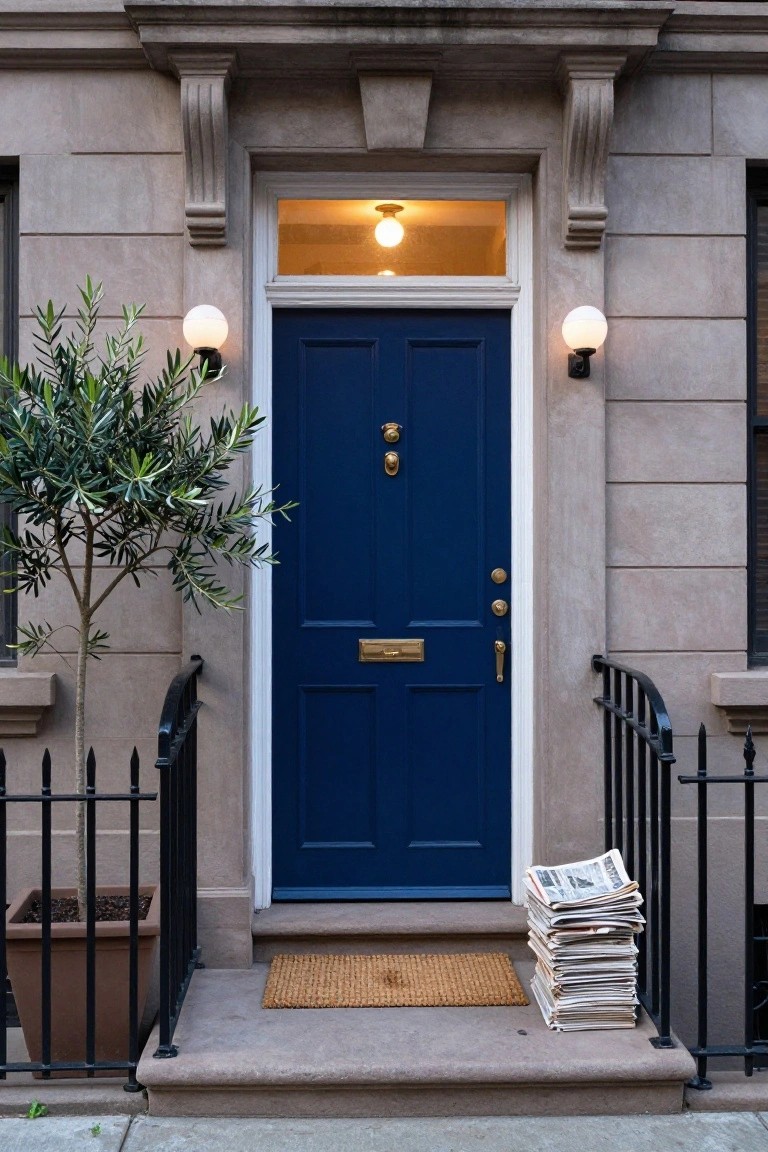
A navy blue front door like this one brings a strong pop of color to a plain stone facade. It keeps things classic but adds real interest right at the entry. That deep shade works because it contrasts nicely with beige stone and white trim. The gold knocker pulls it together without much fuss.
This color suits older row houses or townhomes best. It holds up well in city settings where you want curb appeal that lasts. Go for a semigloss finish to make cleaning easy, and pair it with simple side plants. Lighter shades might wash out… stick to true navy.
Bright Orange Front Door
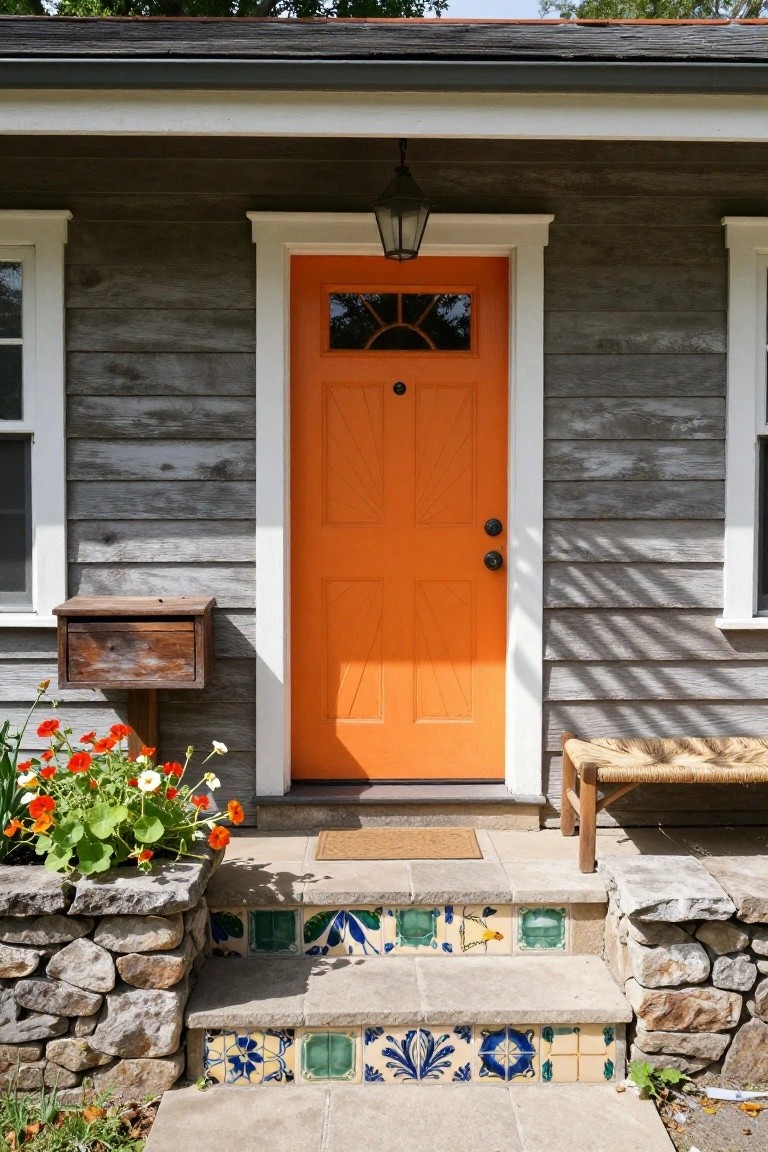
A bright orange front door like this one grabs your eye right away on a house with weathered gray siding. That contrast makes the entry feel more welcoming without much effort. The color brings some life to the simple rustic look, and it pairs nicely with the lantern light and a few pots of flowers nearby.
This works best on older cottages or farmhouses where the siding has that aged character. Keep the rest neutral so the door does the heavy lifting for curb appeal. Just make sure the orange shade fits your neighborhood, not too wild if rules are strict.
Soft Gray Front Doors
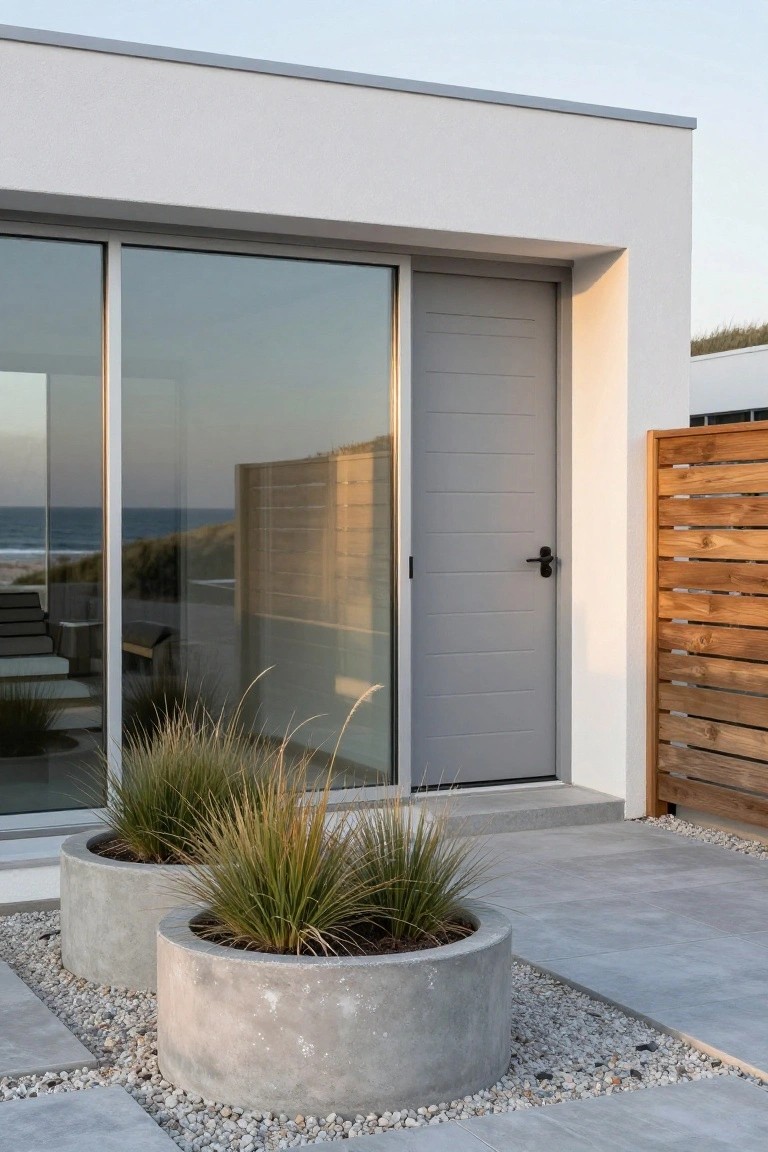
A soft gray front door fits right into a modern white exterior. It adds just enough contrast without pulling focus from the clean lines or big glass sliders nearby. That subtle tone keeps the look fresh and understated, perfect for coastal spots where you want calm over bold.
Try this on sleek new builds or updated beach houses. It pairs easy with concrete pavers and simple grasses in pots. Lighter grays work best in full sun… darker ones might feel heavy up close.
Green Front Doors on Stone Houses
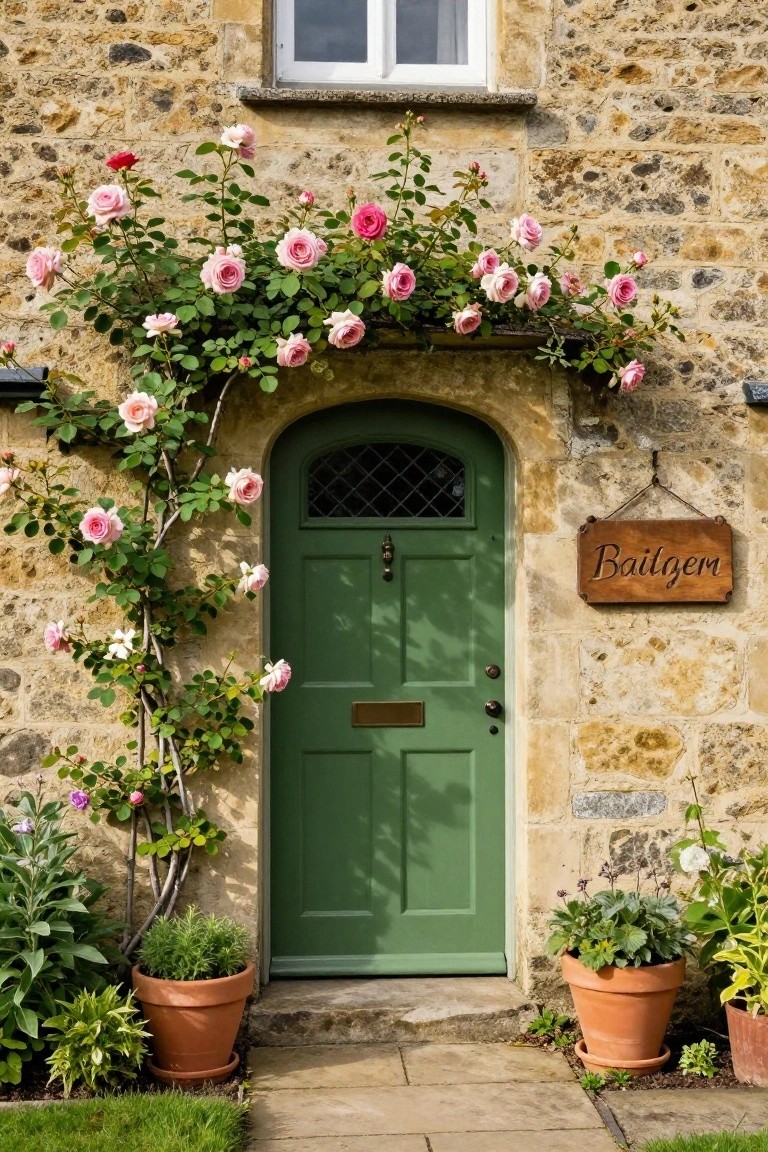
A deep green door like this one fits right into a stone cottage exterior. It picks up on the natural tones around it without overpowering the rough stone walls. Those climbing roses draped over the entry just soften everything up a bit. It’s a look that feels settled and welcoming from the street.
This color works best on older homes or country places where you want some tradition without going too bold. Try it on a house with neutral stone or brick. Keep plants around the base to tie it in, but watch that the green doesn’t clash if your trim is too bright. Simple pots on either side help ground it.
Mint Green Front Door
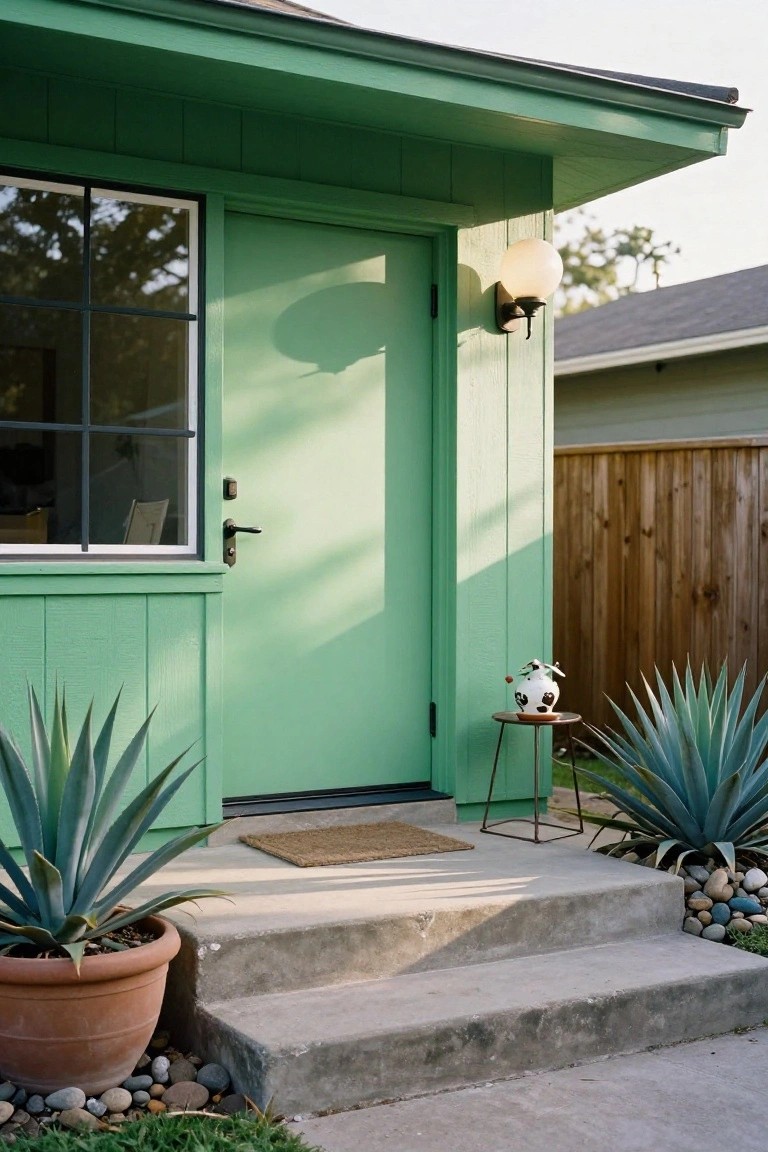
A mint green front door like this one brings a soft, fresh pop to the house exterior. It blends right into the matching green siding, keeping things cohesive but not boring. That gentle shade feels approachable and ties into the natural plants around the entry without overpowering them.
This color works best on ranch-style or simple cottage homes where you want easy curb appeal. Paint your door to match the trim or house body for unity, then add potted agaves or a few rocks at the base. Skip it if your place has bold accents already… it shines on calmer setups.
Frequently Asked Questions
Q: My house is tan siding. What door colors actually work without looking weird?
A: Go for a deep teal or charcoal gray. They warm up the tan nicely and add some personality. Black hardware ties it all together.
Q: Black doors look cool, but will they hold up in full sun?
A: They soak up heat and might fade or warp faster out there. Pick a semi-gloss finish with UV protection instead. Test a small patch first to see how it ages.
Q: How do I try out a color before painting the whole door?
A: Grab sample pots from the paint store. Brush them on cardboard and prop it against your door for a few days. Walk by at different times… you’ll know quick if it fits.
Q: What if I want to switch colors next year?
A: Sand off the old paint lightly before the new coat. Fresh primer helps it stick without peeling later.
