

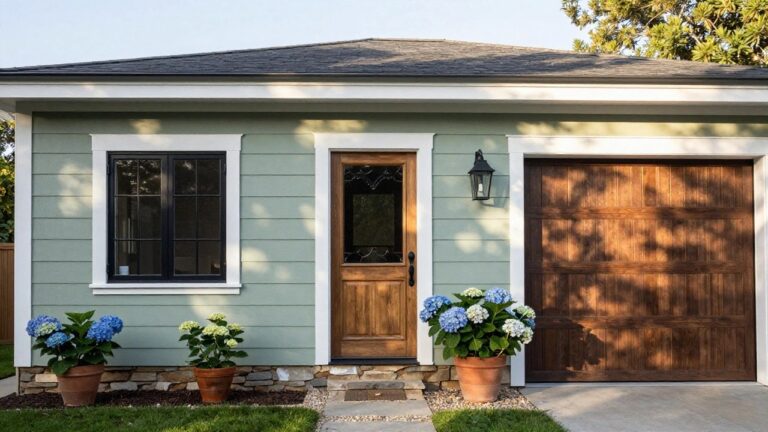
I’ve noticed sage green really pulls a house together from the street when it tempers the facade’s harder lines like brick or siding. It softens rooflines and makes entries feel more approachable without overpowering the overall shape. One exterior I walked past last summer paired it with natural wood accents, and the way it shifted in afternoon light made the whole front yard breathe easier. Drivers tend to clock the color balance first, especially how it holds up against neighboring roofs or driveways. A few of these pairings stand out as ones I’d sketch onto photos of my own place to see what clicks.
Sage Green Board and Batten Siding
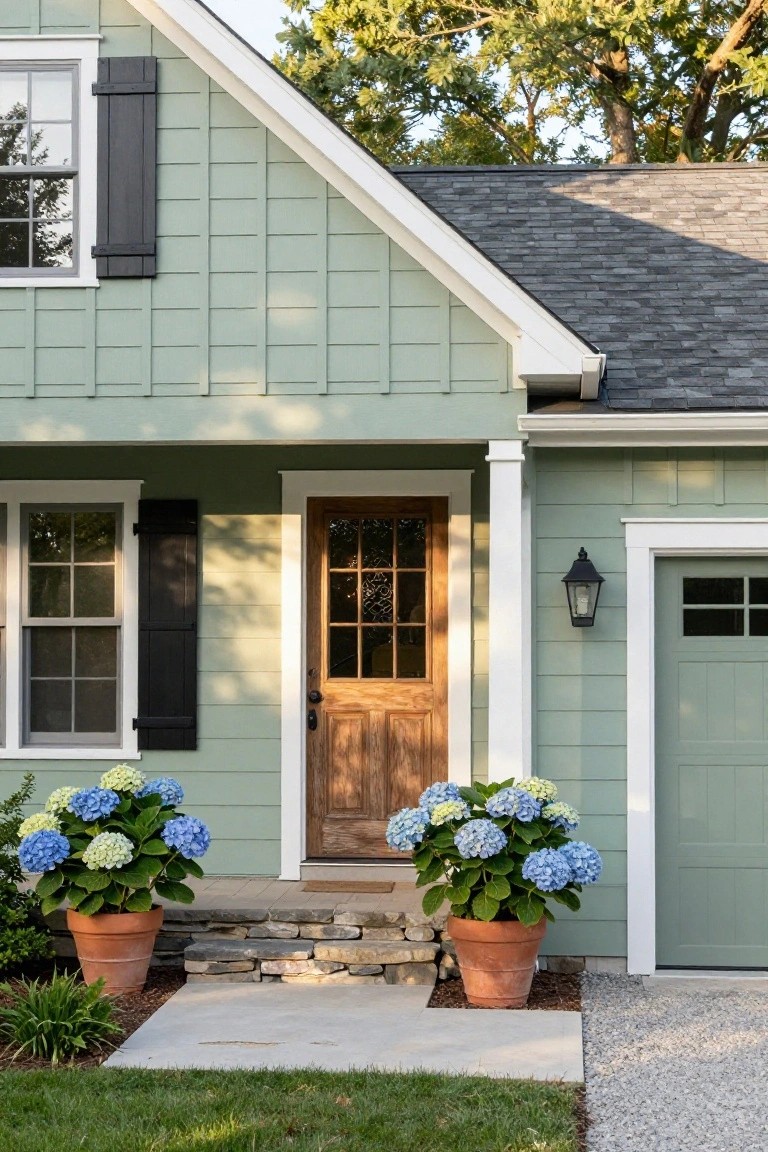
Sage green board and batten siding gives a house that fresh cottage feel without going overboard. It works well on homes with simple shapes like this one, where the vertical lines add some height and interest to the facade. Paired with black shutters and a warm wooden door, the color stays calm and pulls the whole front together nicely. Folks like it because it blends right into garden settings, especially with trees and shrubs nearby.
You can pull this off on ranch styles or small two-stories, as long as the trim stays crisp white. Stick to matte finishes to avoid glare, and add potted hydrangeas by the steps for that extra pop of blue. Just watch the roof…dark shakes keep it grounded, but lighter ones might wash out.
Sage Green Cottage Exterior
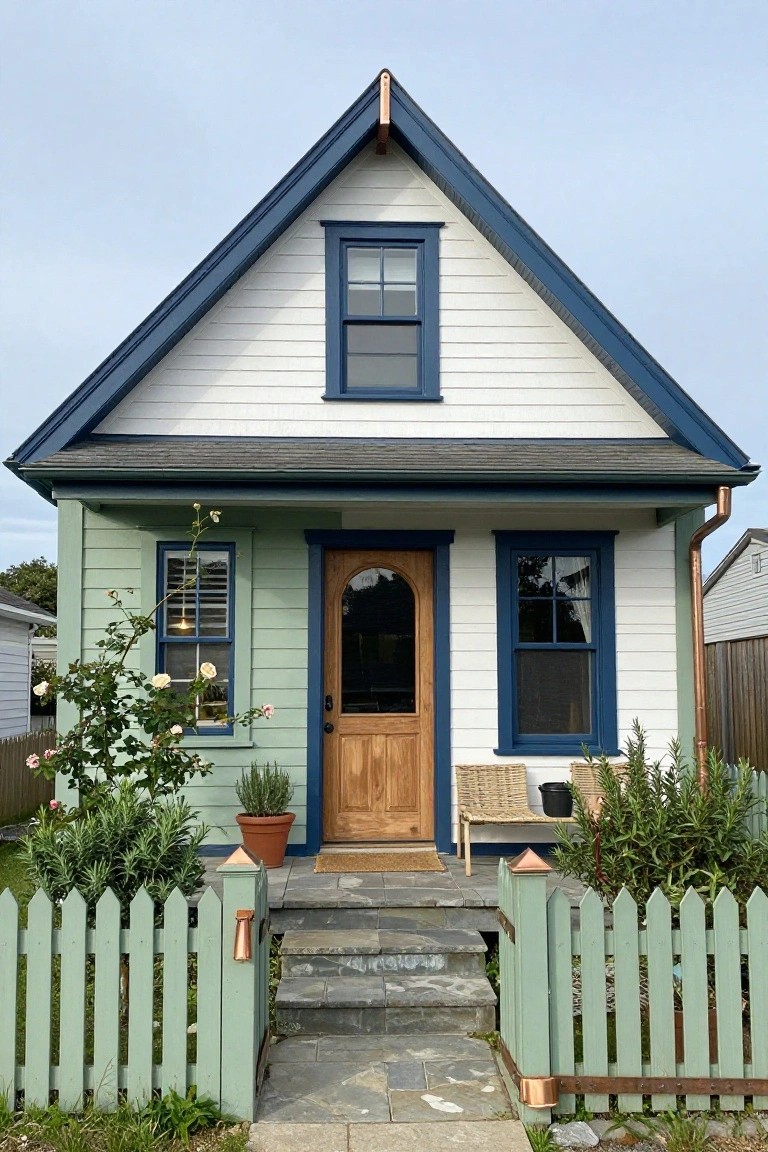
This little house pulls off sage green in a smart way on the lower siding. It sits against crisp white shiplap up top and navy trim around the windows and door. That mix keeps things fresh and cottage-like without going overboard. The soft green feels right at home with the wooden arched door and simple plantings nearby.
You can try this on bungalows or small homes where you want curb appeal that stays easygoing. It suits spots with some garden or coastal vibes best. Just make sure your trim stays sharp so the green doesn’t blend in too much. A matching picket fence ties it all together nicely.
Sage Green Siding with Wood Accents
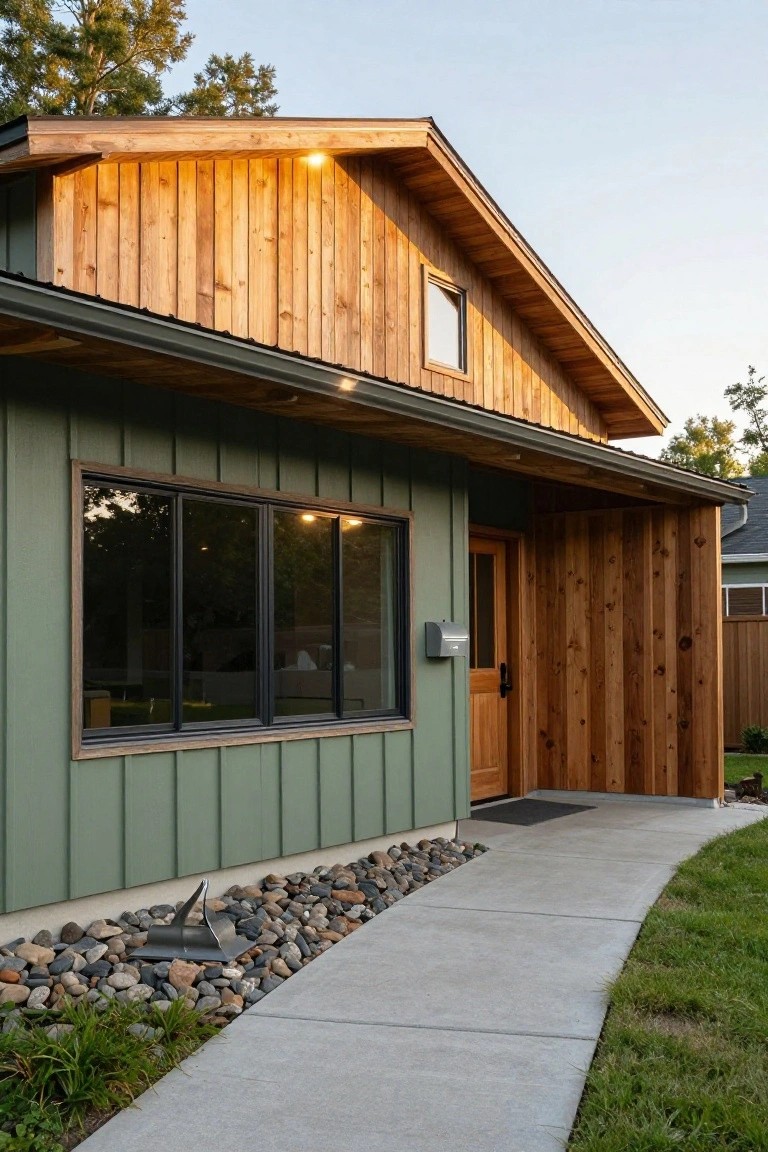
This setup takes sage green siding on the lower part of the house and adds natural wood cladding up on the gable and around the entry porch. The green gives a soft, earthy base that feels fresh without being too bold. Then the wood brings in those warm tones that make everything look settled and real, like the house grew right there among the trees.
It works best on homes with a bit of slope or cabin style, where you want curb appeal that nods to nature. Go for cedar or similar wood that’s not stained too dark, so it contrasts nicely with the sage without fighting it. Keep the landscaping simple, like river rock beds along the path, to let the colors do their thing. Just watch the proportions, the wood shouldn’t overwhelm the green.
Sage Green Shingles on Garden Sheds
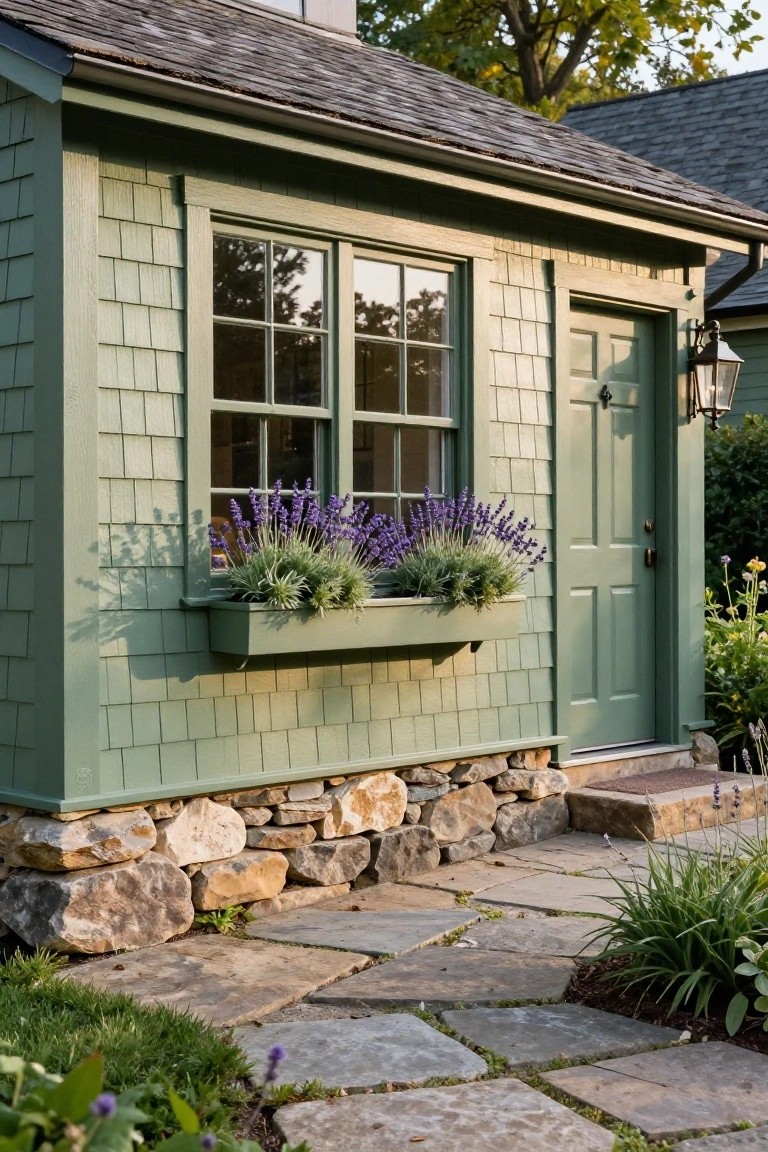
Sage green shingles work so well on small outbuildings like this garden shed. The soft color picks up the natural tones around it without overpowering the yard. That window box full of lavender ties right in, making the whole thing feel like part of the garden.
You can pull this off on any backyard shed or playhouse, especially if your main house has some traditional lines. Go for cedar shingles painted in a muted sage, then add stone at the base for stability. It keeps things low-key… just watch that the green isn’t too bright or it’ll clash with bold landscaping.
Sage Green on a Symmetrical Facade
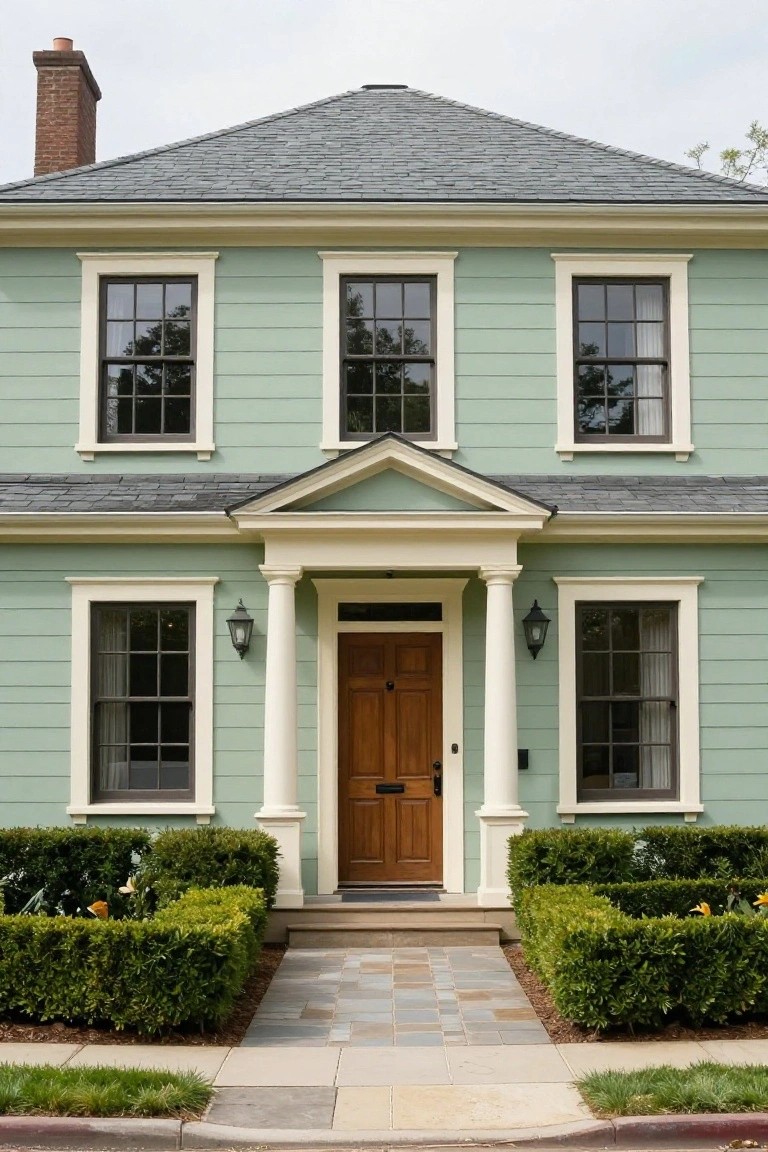
Sage green siding works well on this kind of balanced two-story house. The muted green keeps things calm and ties right into nature, while white trim outlines the windows and porch columns cleanly. Dark frames on the windows and door add just enough punch without overdoing it.
This setup suits older-style homes with straight lines, like colonials in a neighborhood setting. Paint the body in a soft sage shade, stick to bright white for trim, and plant low boxwoods along the front path to frame the entry. It stays fresh year-round and doesn’t fade fast in the sun.
Sage Green House with Wood Entry Door
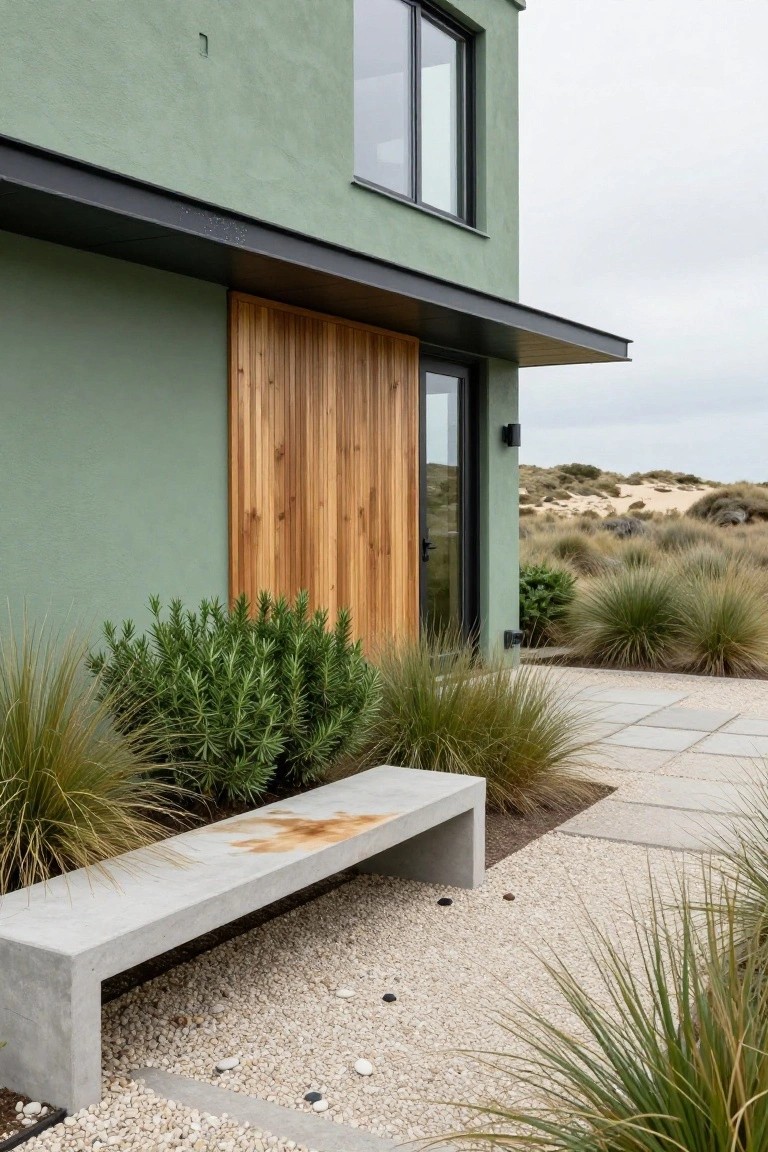
A sage green exterior like this one looks sharp and modern against a natural backdrop. The key move here is that tall door covered in vertical wooden slats. It pulls in some warmth right where you need it most, at the entry. Without it, the green might feel a bit cold on its own.
This setup fits homes near dunes or open land, where you want the house to blend without disappearing. Stick a plain concrete bench nearby like the one shown, and it becomes a spot to sit. Keep plantings simple with grasses so the colors stay calm. Works on mid-sized houses too, just scale the wood to match.
Sage Green Stucco Facade
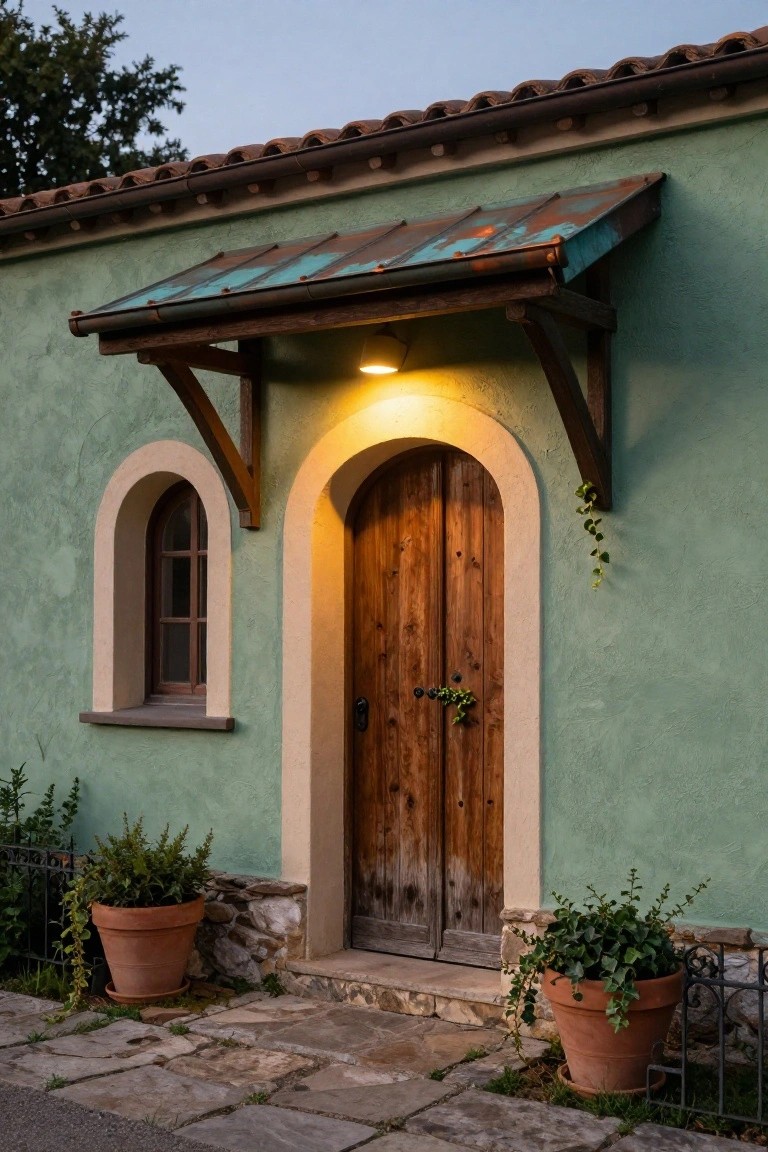
Sage green paint on stucco walls like this brings out a soft, earthy look that feels right at home in warmer spots. The color settles into the texture without overpowering it. Pair it with a simple wooden door, and you get that welcoming entry without much fuss. Here, the arched shape and warm wood tones pull focus just enough.
This setup works best on ranch-style or adobe-inspired houses where you want subtle curb appeal. Go for a slightly weathered door to match the green’s calm vibe. Add a couple pots of greenery nearby, and it ties in naturally. Skip it on super modern builds, though. The green shines more on textured walls.
Sage Green Vertical Siding for Modern Outbuildings
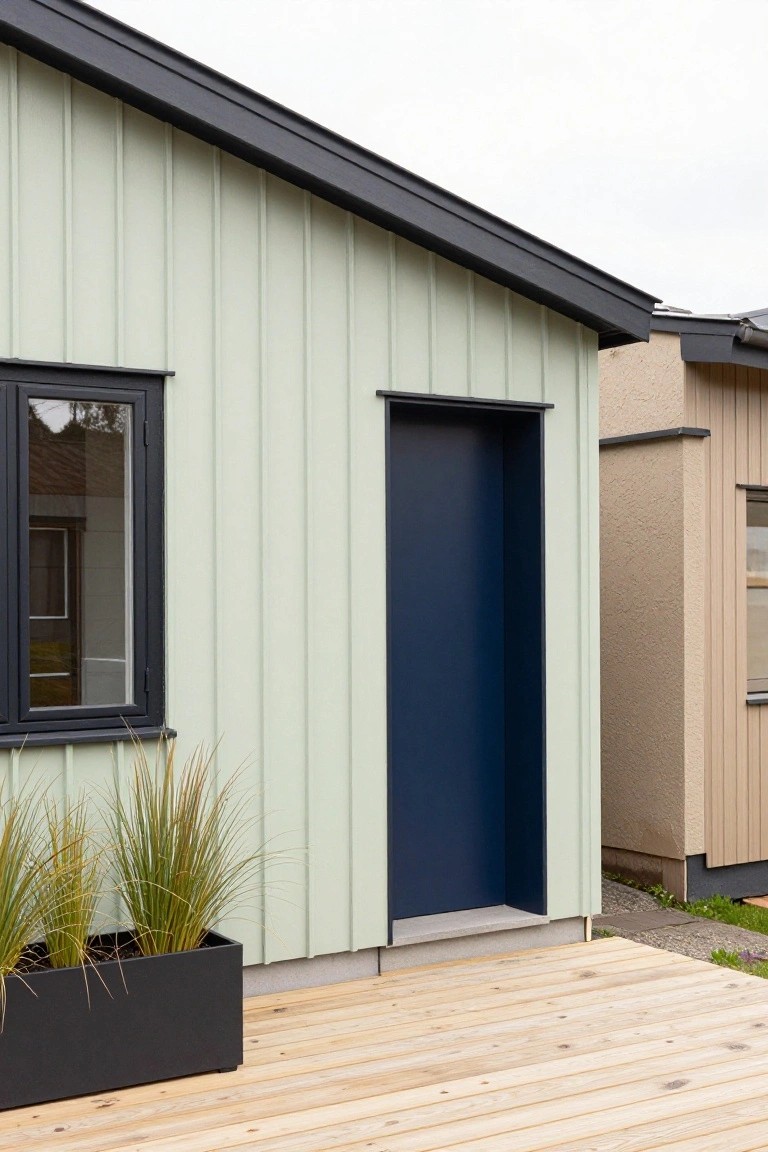
Sage green vertical siding works well on smaller structures like this guest house or shed. The pale tone keeps things calm and ties into the outdoors without overpowering the space. That navy blue door right by the entry pulls some focus without clashing, and the black window frame echoes the roofline for a pulled-together look.
You can pull this off on backyard buildings or even as an accent on a bigger home. It suits wooded spots or rainy climates where you want low-key color that ages nicely. Just keep accents simple, like dark doors or wood decks, and add grasses in planters for a bit of height. Avoid busier patterns that fight the clean lines.
Sage Green Stucco with Arched Wooden Door
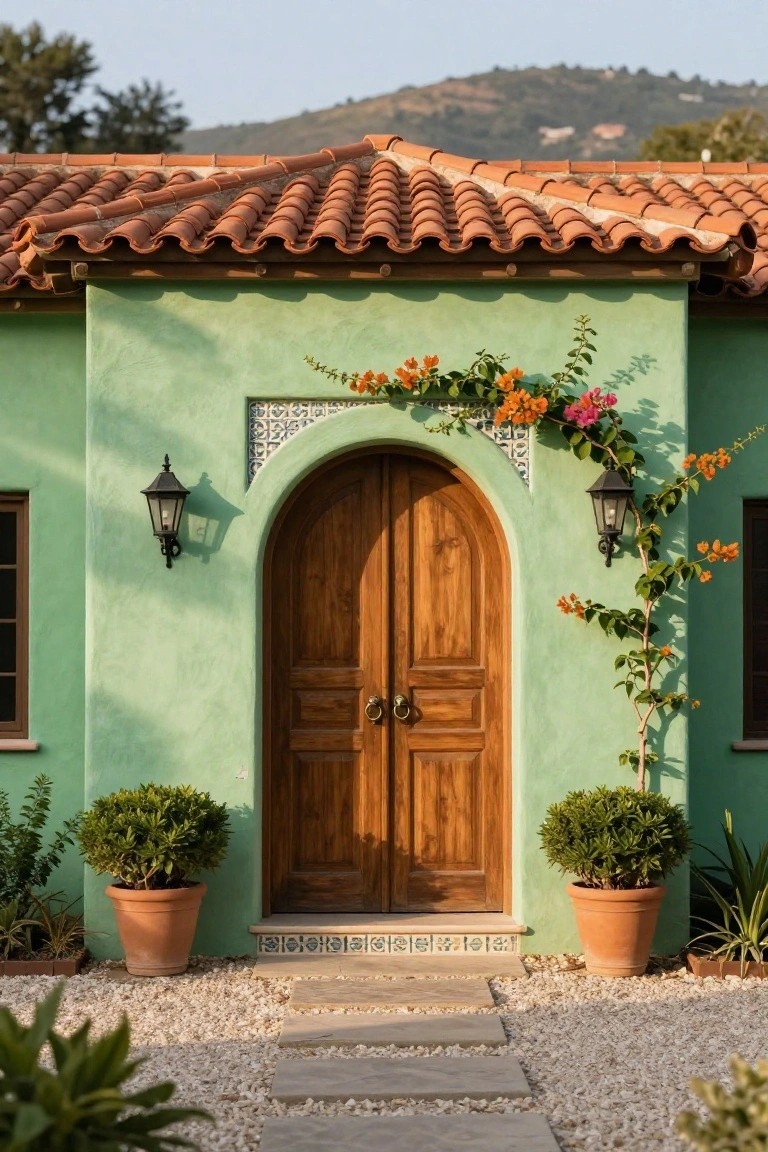
A soft sage green stucco wall makes this house exterior feel calm and grounded. The big arched wooden double door pulls everything together as the main focal point. Terracotta roof tiles overhead warm up the green just right. It’s a simple combo that gives off easy Mediterranean vibes without trying too hard.
Try this on ranch-style homes or low-slung bungalows where you want curb appeal that lasts. The green hides dirt well in sunny spots. Add climbing bougainvillea around the entry for color pops through the seasons. Skip bold trim colors. Let the door hardware and lanterns do the accent work.
Sage Green Exterior on a Boxy Modern Home
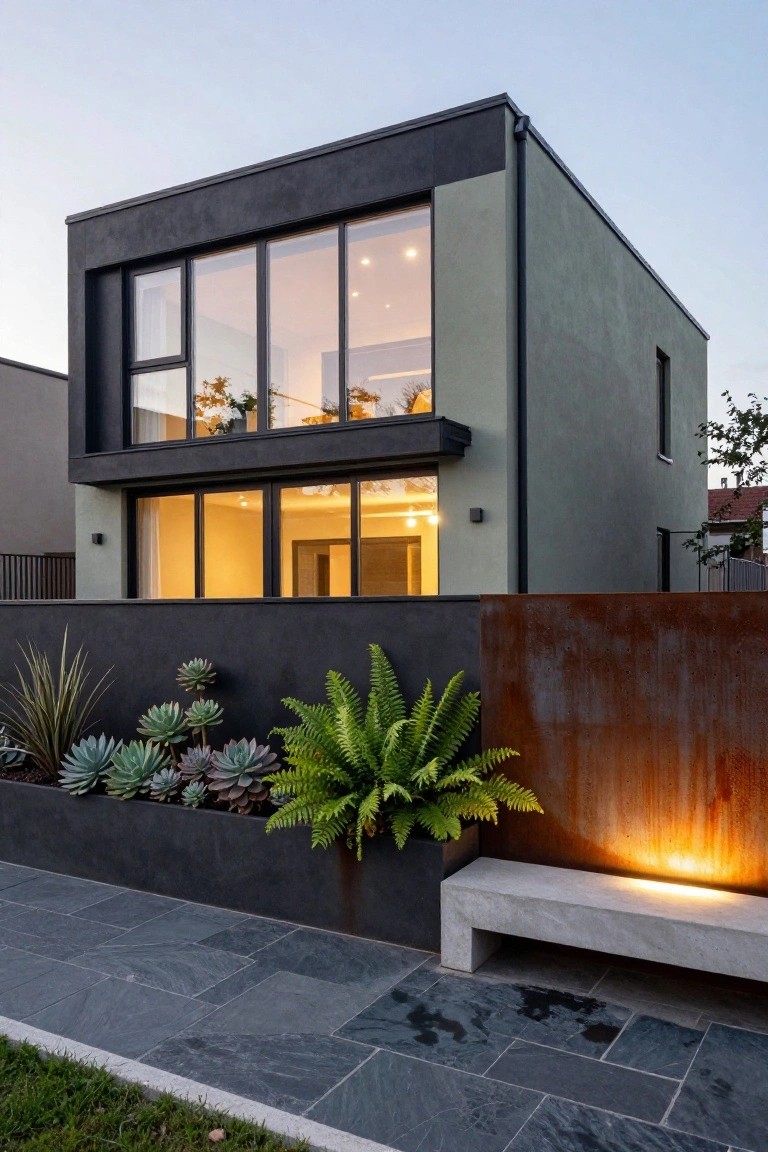
This house takes a simple box shape and paints the main walls in a soft sage green. It pairs that with black cladding up front and around the big windows. The green feels calm and ties into the plants nearby, while the black keeps everything crisp and modern. No fuss, just clean lines that stand out at dusk.
Try this on a new build or remodel where you want low-key color that blends with nature. It suits urban lots with some yard space. Go for matte finishes on both colors to avoid glare, and keep landscaping straightforward with natives like agaves… keeps maintenance easy.
Sage Green Half-Timbered Facade
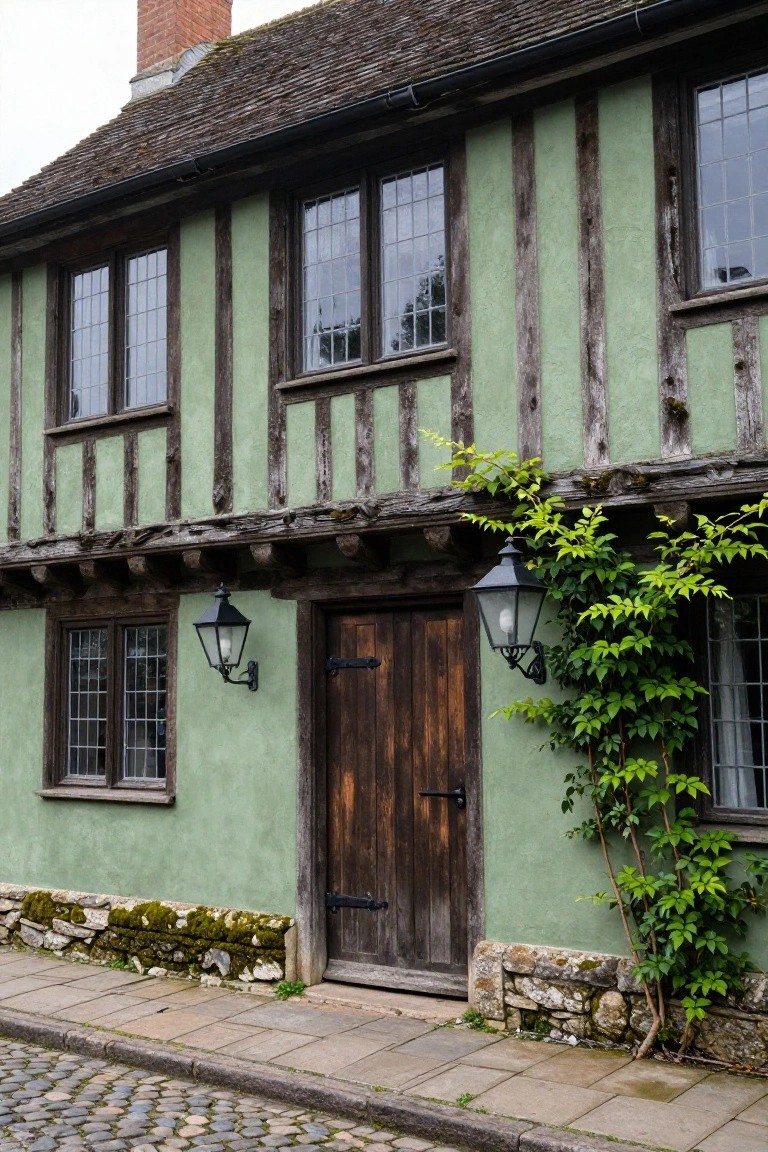
A sage green exterior really shines on half-timbered houses like this one. The soft green plaster fills in between those sturdy dark beams, keeping the old English cottage charm without feeling too heavy. Black lanterns by the door and a bit of ivy add just enough detail to make it welcoming.
This color works best on homes with some historic style, like Tudors or farmhouses. Paint the infill sage green, leave the timbers natural or stained dark. It suits shady spots or cooler climates where the green won’t fade fast. Skip it on super modern builds, though. It needs that architectural backbone to look right.
Sage Green Siding on a Farmhouse Style Home
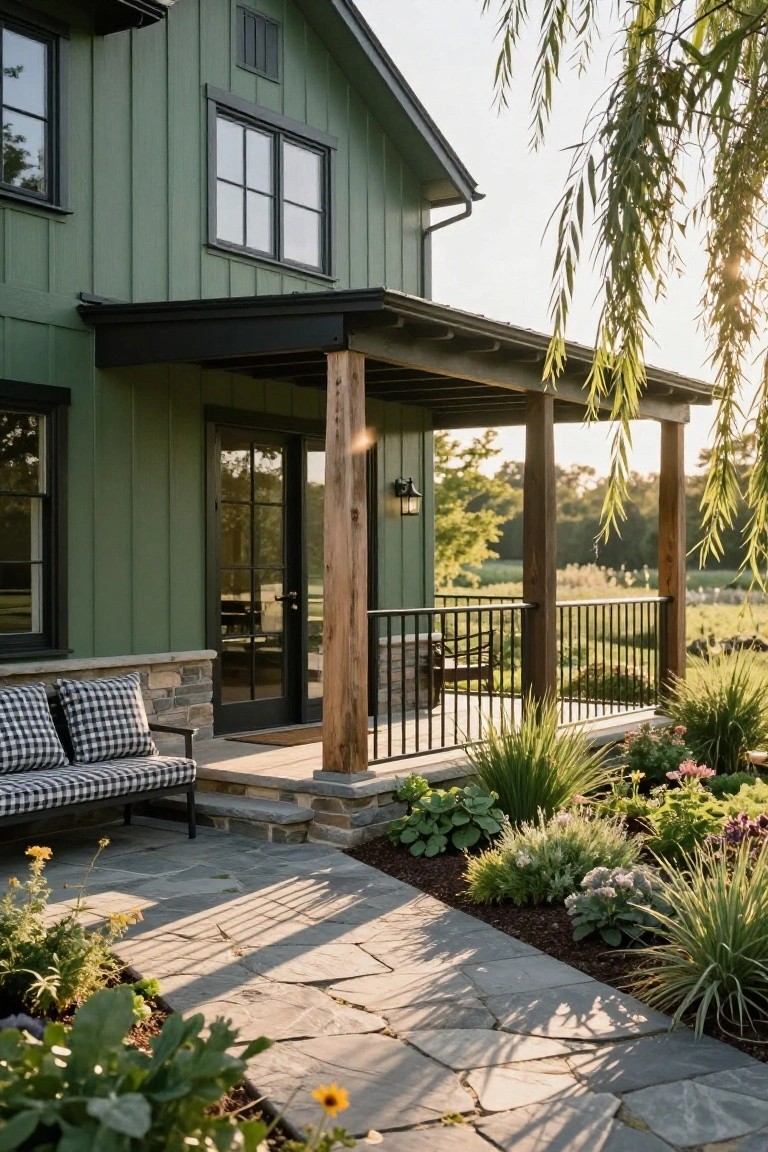
Sage green siding gives this farmhouse a calm, earthy feel that pulls right from the surrounding fields and trees. The vertical boards catch the light nicely, and black frames around the windows and doors add some crisp contrast without overpowering the soft color. It’s a look that feels settled in, like the house has always been there.
This works best on homes with simple rooflines and porches, especially if you have some woods or open land nearby. Go for a muted sage to keep it versatile year round. Pair it with natural wood posts or stone bases for balance, but skip bold colors elsewhere to let the green stay the star. On a smaller house, it can make things feel bigger and more connected to the yard.
Pale Sage Green Townhouse Facade
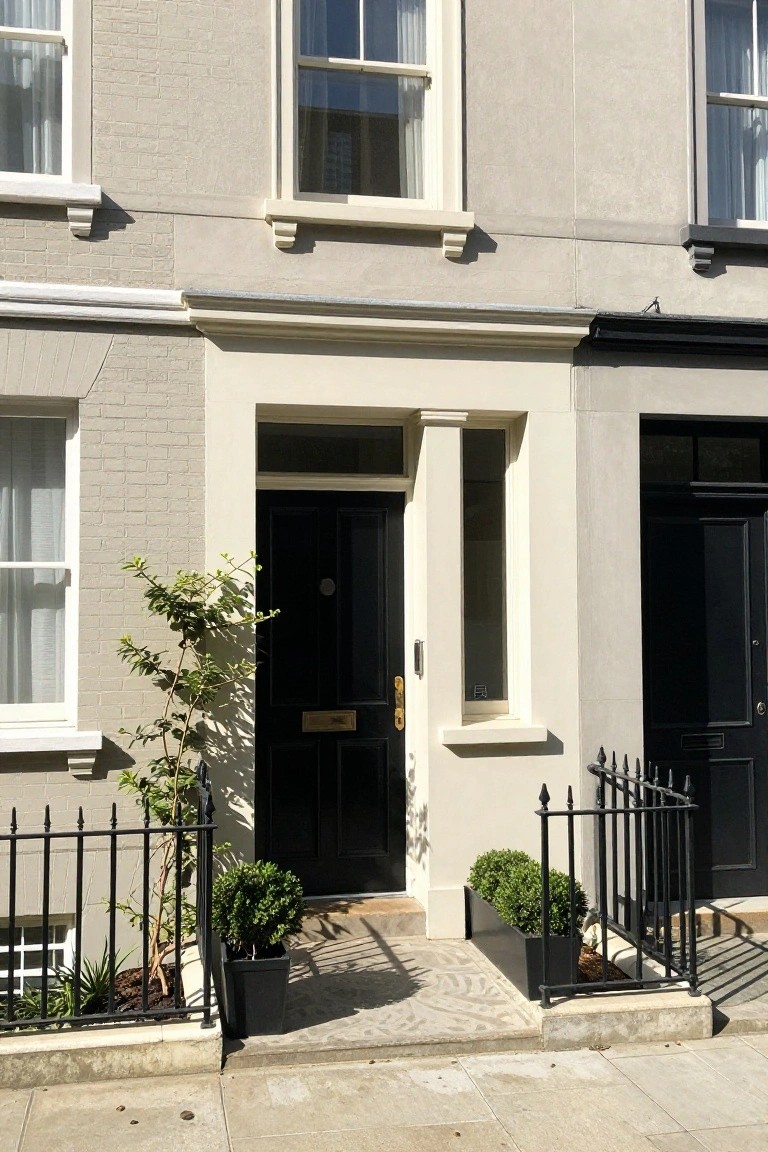
A pale sage green works nicely on this kind of terraced house. It covers the stucco upper parts and sits easy over the brick base below. That black front door pulls it together. Adds a bit of contrast without going overboard. The white window frames keep things crisp.
Try this on older row houses in the city or quiet streets. Pair the green with black doors or iron railings around the steps. Toss in a couple boxwood pots by the entry. It suits homes that need a gentle update. Not too bold for neighbors.
Sage Green Shingle Siding on a Cozy Bungalow
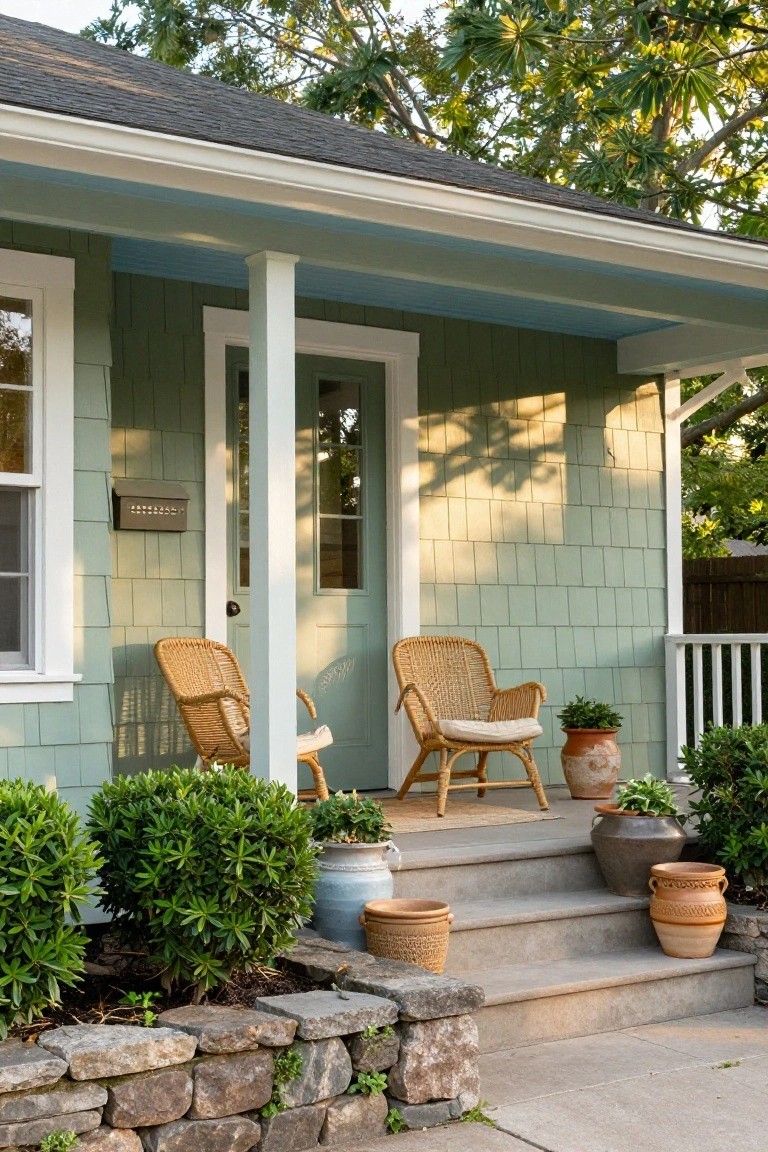
Sage green paint on shingle siding gives a house this soft, earthy feel that pulls in the surrounding trees and shrubs without trying too hard. The textured shakes catch the light just right, adding some subtle depth to the color, and pairing it with crisp white trim keeps everything looking clean and fresh. On this bungalow, it makes the front porch feel like a natural extension of the yard.
This works best on older homes like Craftsman bungalows or cottages where you want curb appeal that’s welcoming but low-key. Go for a muted sage tone to avoid anything too bold, and add simple porch seating with wicker chairs plus a few terracotta pots for that lived-in touch. Skip glossy finishes here, matte paint holds up better outdoors.
Sage Green Cottage with Red Door Pop
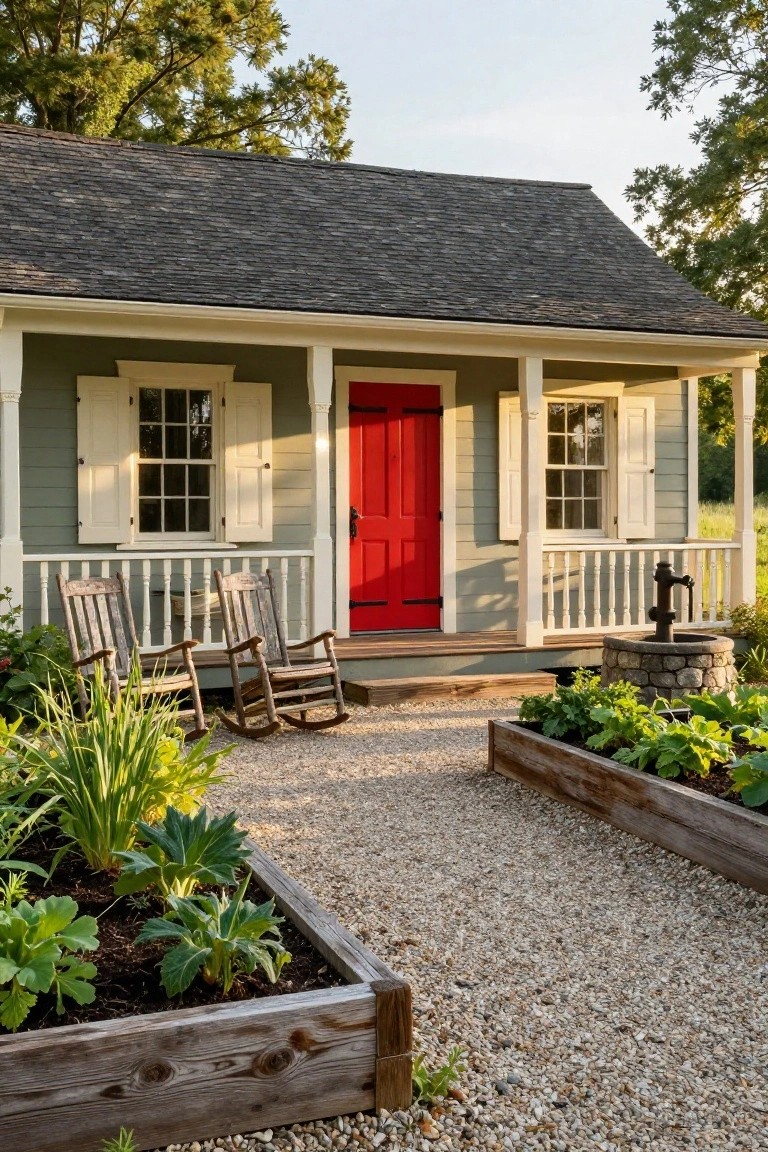
Sage green siding works really well on a small cottage like this. It gives the house a soft, natural feel that blends right into the yard without overpowering things. The white shutters and porch columns keep everything crisp and clean. Then that bright red door pulls your eye straight to the entry. It’s a simple way to add some personality without going overboard.
You can pull this off on older farmhouses or backyard guest houses. Just make sure the green is a muted shade to avoid clashing with plants nearby. Add a gravel path and a couple of those old rocking chairs on the porch. It makes the front feel lived-in and welcoming right away.
Sage Green Walls with Wooden Door
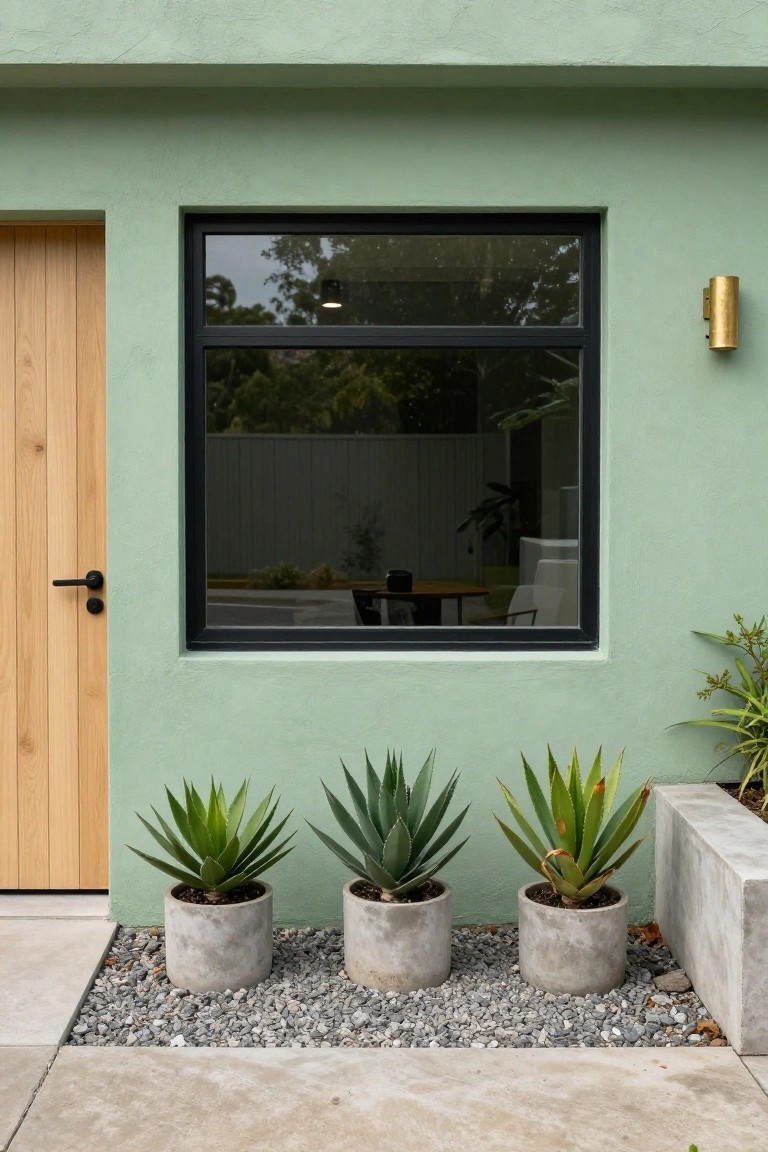
A soft sage green on the stucco walls gives this house a calm, modern feel right from the street. Pair it with a natural wood door like this one, and you get a nice warm contrast that pulls the eye to the entry without trying too hard. The black window frame nearby keeps things sharp.
This look suits homes in warmer climates or anywhere you want low-key curb appeal. Use it on a side entry or garage area if the front is busier. Just plant a few tough succulents like agaves in plain pots out front. They hold up well and echo the green tones.
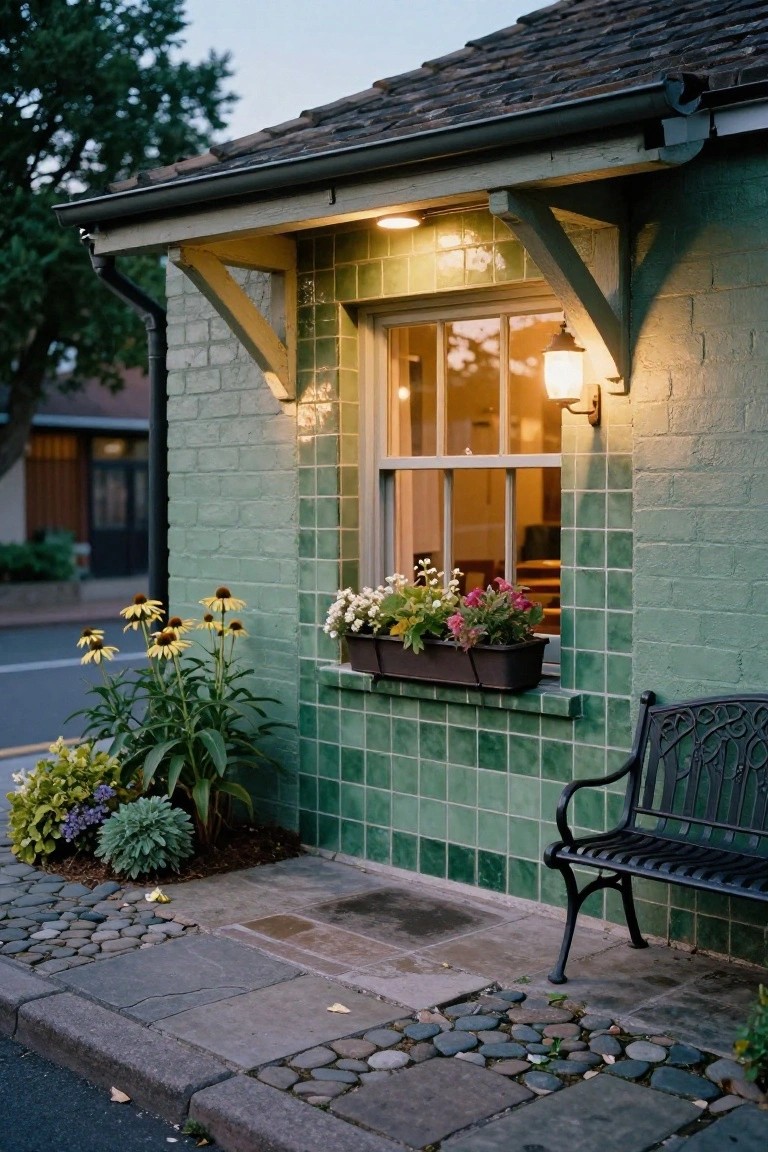
Sage Green Siding on Backyard Studios
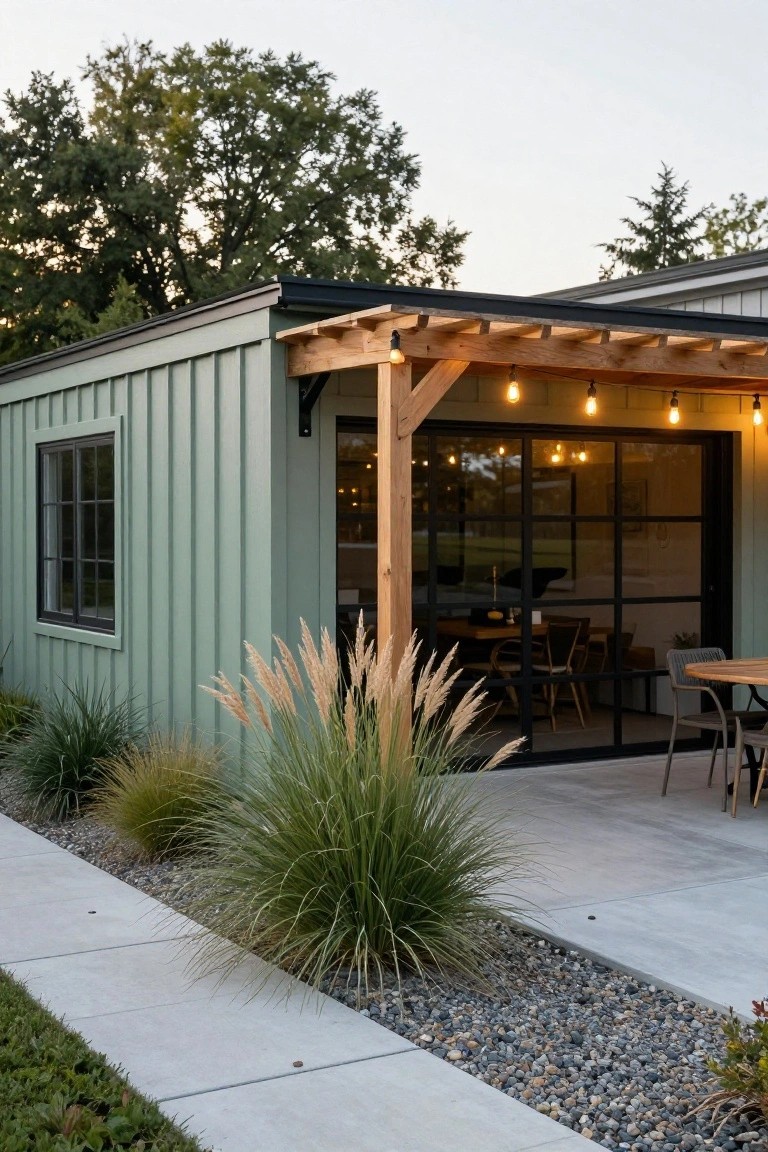
A soft sage green paint job like this turns a plain backyard studio into something that feels right at home in the garden. The vertical clapboard siding picks up on the color without shouting, and it plays nice with the natural wood pergola stretching out over the patio. It’s a look that stays calm even as the sun sets.
This works best on smaller structures like guest houses or home offices where you want the building to blend rather than stand out. Pair it with black window frames and simple landscaping, and it suits modern farmhouses or casual country spots. Just keep the trim crisp to avoid a muddy feel.
Sage Green Garden Shed Exterior
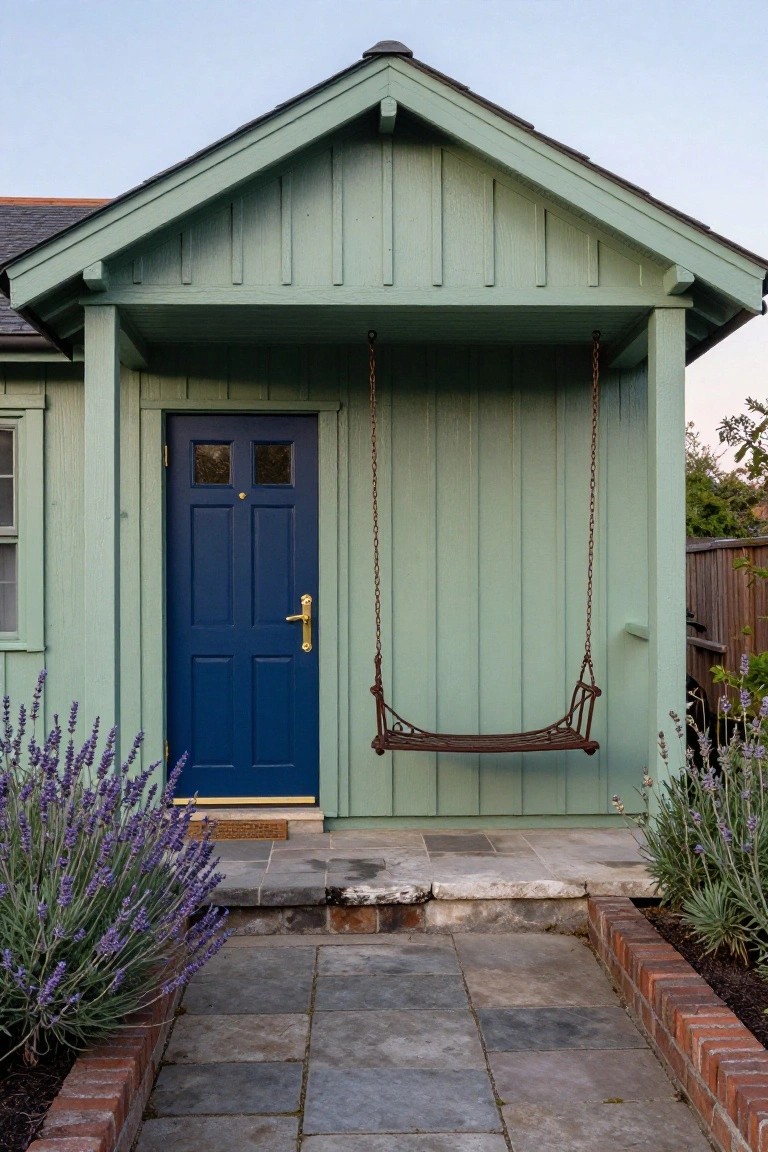
Sage green paint on vertical siding gives this little garden shed a soft, natural look that blends right into the yard. The color feels calm and understated, especially against the lavender bushes nearby. That deep navy blue door adds just the right punch without overpowering things. It’s a simple way to make a backyard building feel like part of the garden instead of an add-on.
This setup works best on smaller structures like sheds, studios, or guest houses where you want low-key charm. Pair the sage green with a darker door color for contrast, and add a porch swing if space allows. It suits cottage-style homes or rural spots, but watch the trim paint to keep it from fading into the background too much.
Sage Green Stucco with Walnut Planters
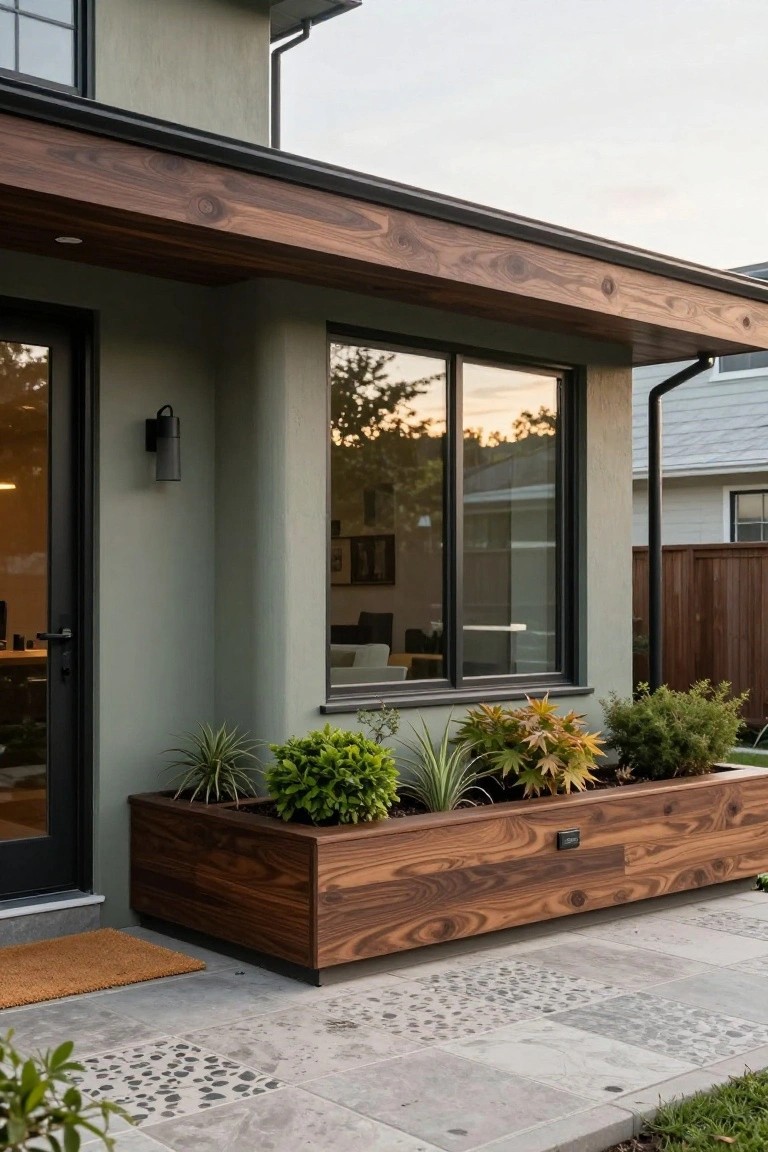
A sage green stucco wall looks calm and modern on its own. But add a big walnut wood planter box right by the entry door like this, and it brings real warmth. The wood’s deep grain picks up the green tones without clashing, and it frames the plants nicely too.
This setup works great for homes with clean lines or a bit of craftsman feel. Put the planter along a side entry or patio edge where it gets some sun for tough plants like agave. Skip it if your yard floods often, since wood needs protection there.
Frequently Asked Questions
Q: Does sage green work on a ranch house?
A: Sage green flatters low-profile ranch homes by blending them into the landscape. It adds subtle depth without overwhelming the simple lines.
Q: What trim color pairs best with sage green siding?
A: Creamy white trim keeps the look soft and grounded. Black trim adds crisp contrast if you want more edge.
Q: Will sage green fade fast in full sun?
A: Choose a high-quality exterior paint with UV protection. Freshen it up every five years or so.
Q: How do I test sage green before committing to the whole house?
A: Grab large sample boards from your paint store. Prop them against different sides at various times of day… you’ll spot the perfect match quick.
