

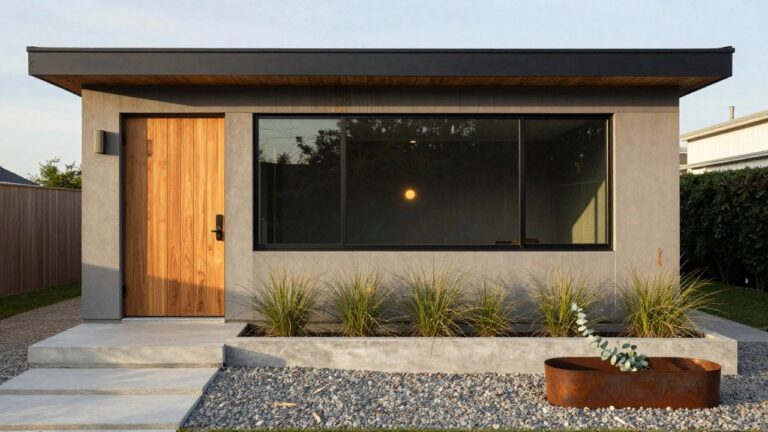
I’ve noticed that a well-chosen gray exterior can make a house feel grounded in its neighborhood without stealing the show from the architecture. Grays work best when they complement the facade materials, like softening sharp rooflines on a colonial or adding quiet depth to vinyl siding on a ranch. The front entry often tells the real story, where a slightly warmer gray pulls people in rather than pushing them away with cool undertones. One thing I keep coming back to is how some grays shift beautifully under overcast skies, while others wash out completely. These shades give practical starting points that hold their own year-round.
Gray Exterior with Warm Wood Door
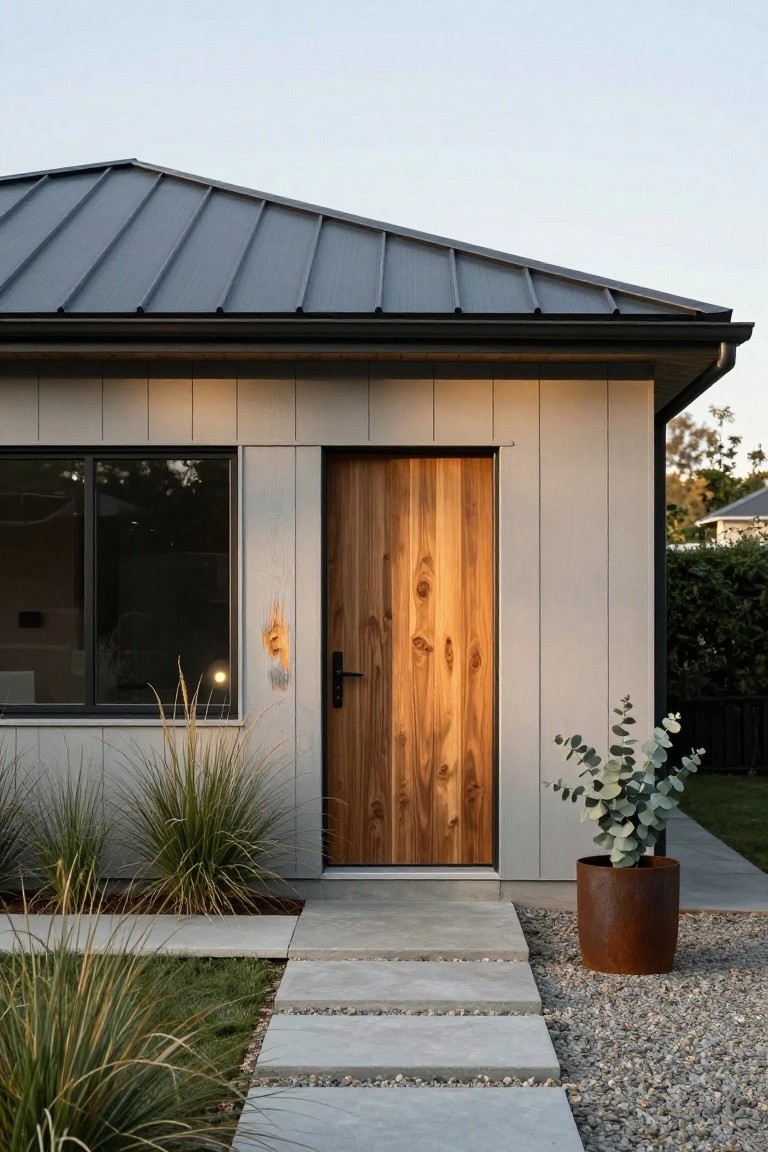
A light gray siding like this sets a clean, modern base for the house. What pulls it together is that natural wood door right at the entry. Full of knots and grain, it adds real warmth against the cool gray boards. Keeps things simple but welcoming, especially with the slim window nearby letting in some light.
This look fits newer homes or updates to older ones in warmer climates. Go for a door in teak or kwila with just oil finish, no stain. Pair it with pale gray vertical siding, not too charcoal. Avoid busy hardware…stick to matte black. Great for curb appeal on a budget.
Recommended Products

Provides interior or exterior one-step protection for dense woods such as teak, rosewood and mahogany

Apply periodically to refresh your dense woods and help protect them from UV rays

Indoor and outdoor furniture cleaner protects, restores, and gently cleans away built-up surface grime and residue; use on your teak outdoor furniture and other fine wood furniture to prevent drying, warping, splitting, as well as fading and discoloration
Gray Shingle Siding for Classic Curb Appeal
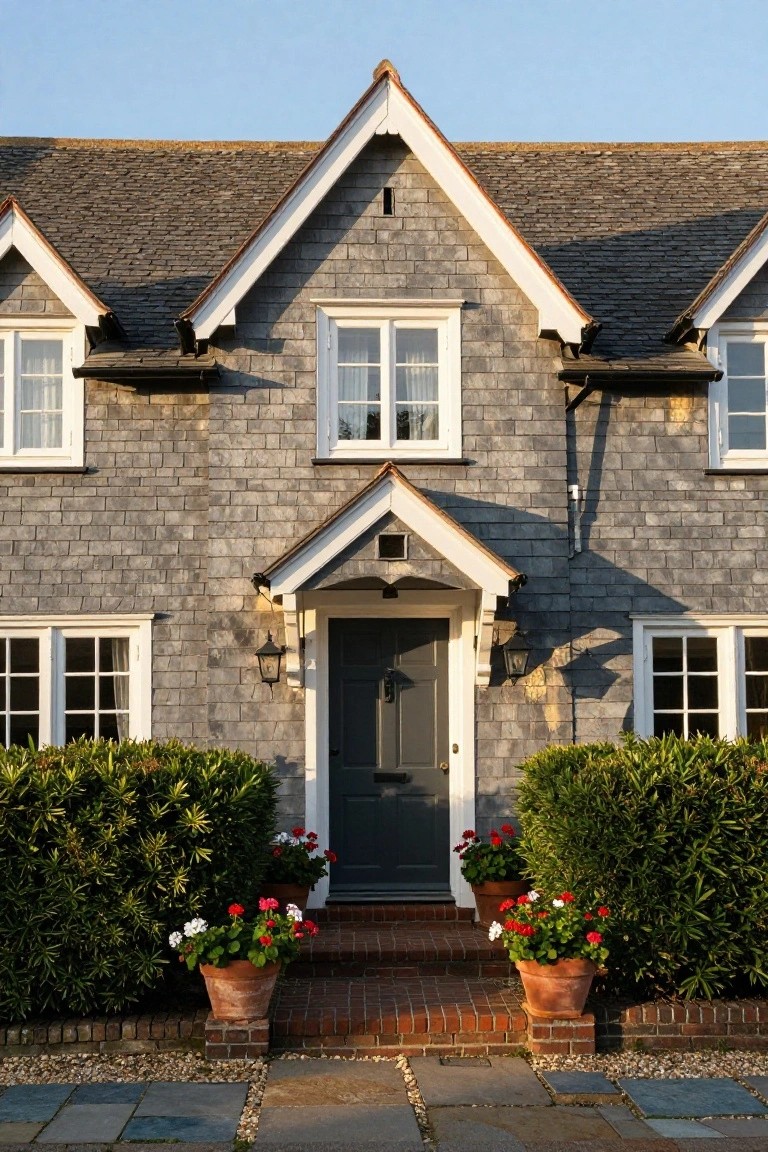
Gray shingle siding gives a house that settled-in look right away. You see it a lot on coastal homes or older places in New England. The weathered gray blends with the shakes so the whole front feels calm and not too showy. White trim around the windows and roofline keeps things crisp. And that dark door pulls your eye straight to the entry without trying too hard.
This works best on traditional two-story homes with gables. Pair it with simple plantings like boxwoods and a few pots of red geraniums for some color pop. It suits spots with trees or near water, where the gray picks up on natural tones. Just make sure the shingles are cedar or something that ages well… otherwise it might look off after a few years.
Recommended Products

Patented PanelThermometer for precise installation True Texture finish

Resquared & Rebutted (R&R) for precise fit and professional alignment

Premium Grade A Extra Clear Eastern White Cedar
Gray Shingle Siding for Beach Cottages
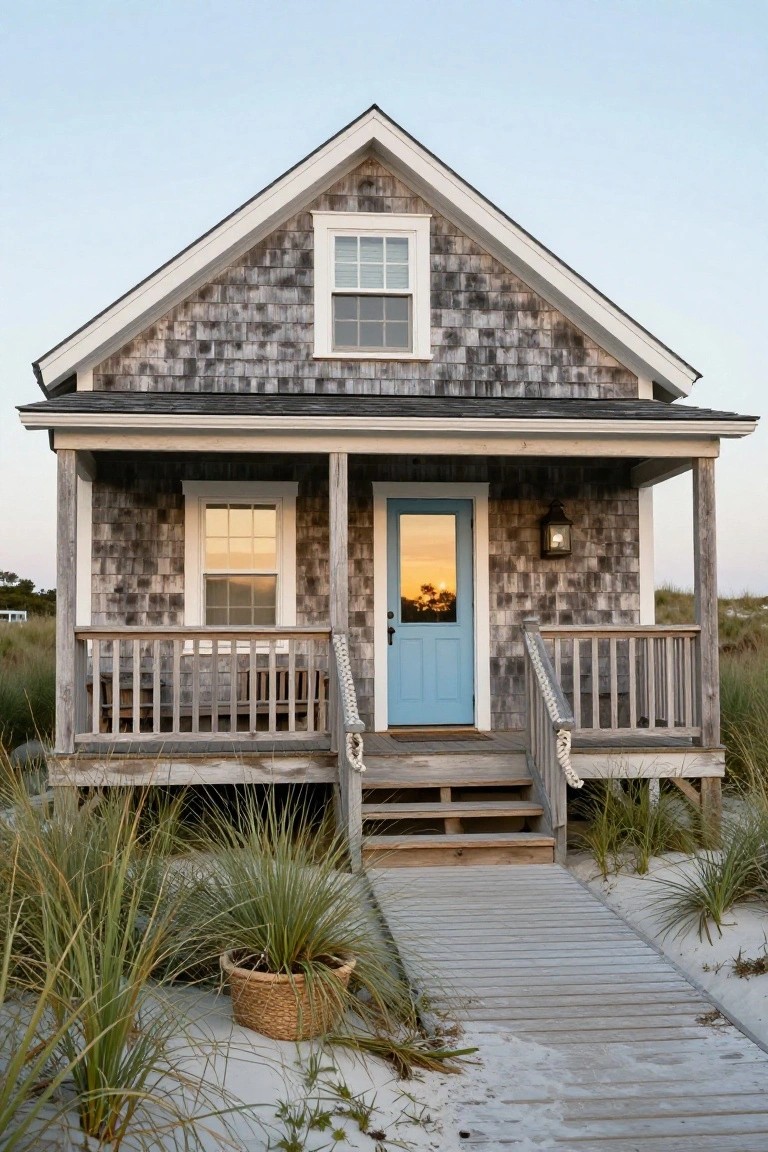
Gray shingle siding takes on a natural weathered tone over time, giving homes that easy coastal feel. You see it here on this little house, blending right into the sand and sea grass without much effort. It’s a solid choice because it handles salt air and wind better than paint, and that soft gray keeps things calm instead of showy.
Try it on smaller vacation spots or seaside bungalows where upkeep stays simple. Add a pop like that blue door to guide folks right to the entry. Just make sure the shingles are cedar or something that grays nicely on its own. Avoid busier areas if you don’t want the patina to build too slow.
Two-Tone Gray Facade Design
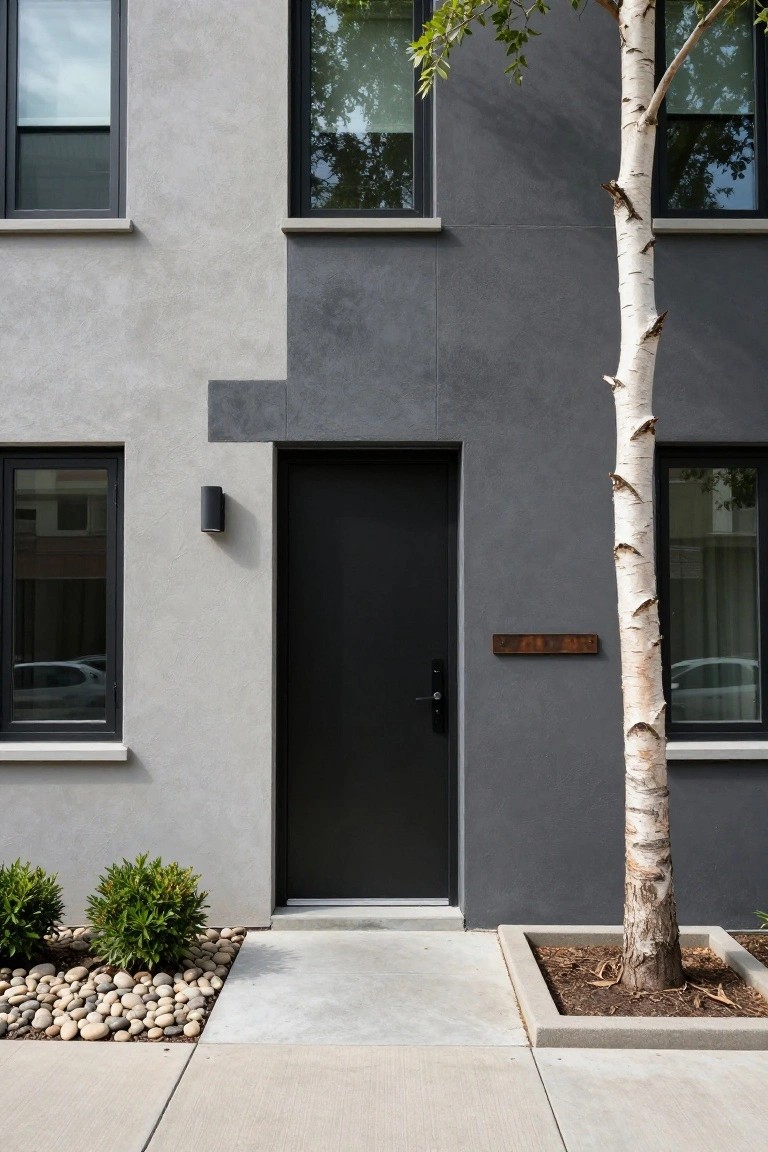
Gray exteriors don’t have to be flat. This home uses a light stucco base next to darker gray panels. That simple split adds shape and depth right at the front. A black door fits right in and keeps things clean.
It suits modern houses or townhomes in the city. Paint one section lighter for sun-facing walls, darker for shade. Pair with black windows and trim. Skip busy landscaping so the grays stand out.
Gray Exterior with Blue Front Door
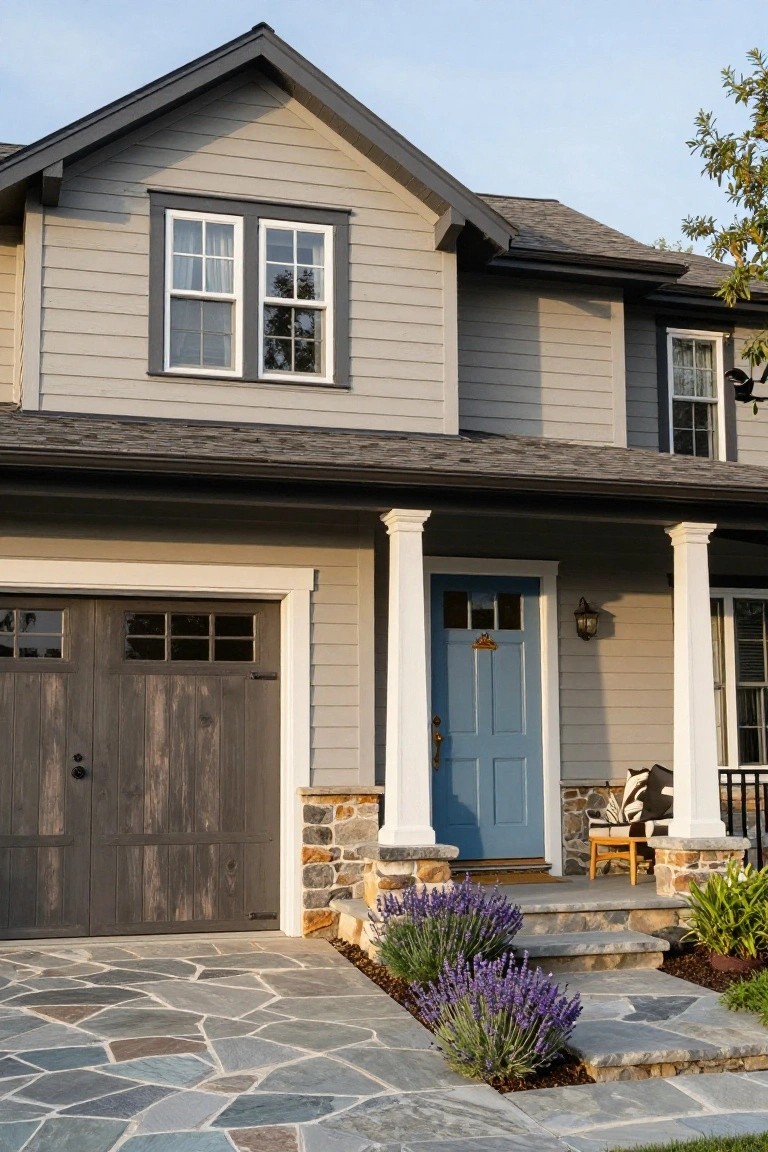
A neutral gray siding like this one sets a calm base for the house. Then that bright blue door pulls everything together right at the entry. It adds a welcoming touch without overwhelming the look. The dark garage door nearby keeps things balanced, and a bit of stone around the base ties in nicely.
This setup works great on homes with clean lines or traditional porches. Go for it if your house faces south or gets good light, so the blue really pops. Just match the door hardware to the gray tones to avoid clashing. It’s simple to try on most gray shades.
Gray Brick with Black Door
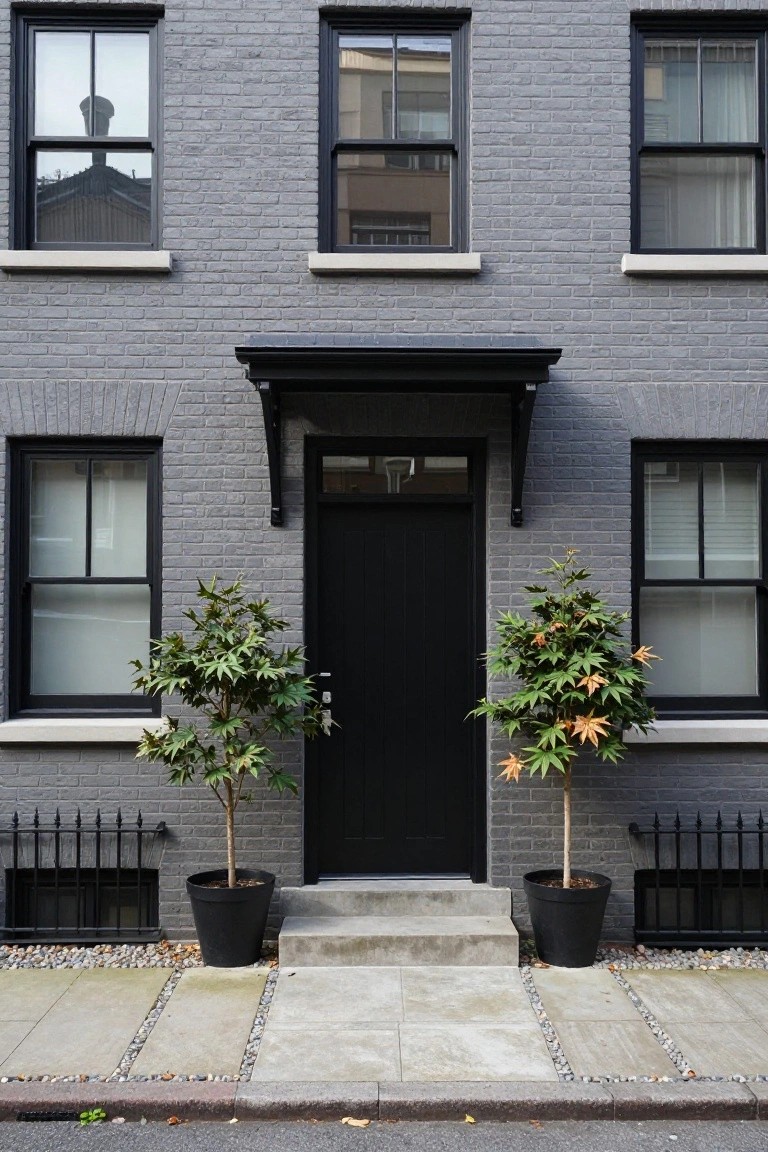
Gray brick walls set a subtle base for this front exterior. The black door and window frames pull it together with sharp contrast. It keeps things modern but not cold. A couple potted trees frame the steps without overdoing it.
Try this on townhouses or older homes getting a refresh. The gray hides dirt well in city spots. Stick to matte black paint on the door to avoid shine. Pairs nice with simple stone steps.
Rustic Gray Stone Cabin Exterior
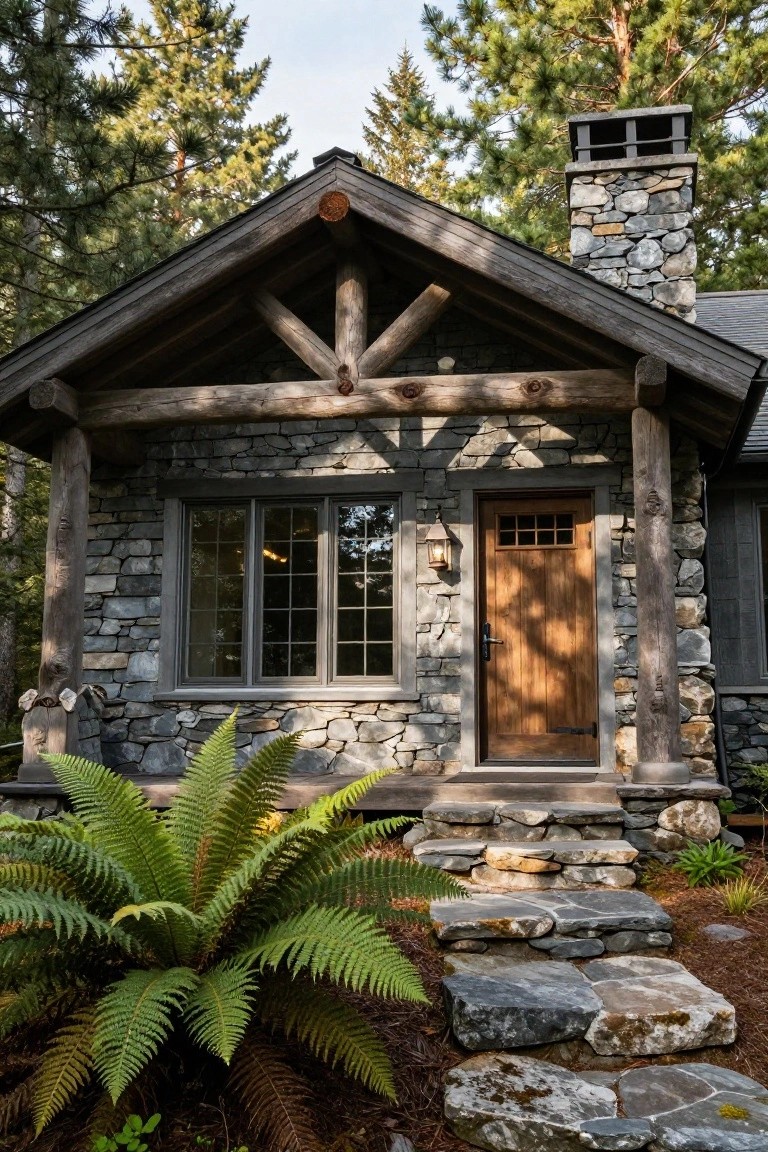
Gray stone like this makes a small cabin look right at home in the woods. The rough, varied stones in soft grays cover the walls and chimney, while thick log beams and posts add that sturdy timber touch. It feels solid and timeless, without any fuss.
This works great for vacation homes or spots tucked into trees. Use local stone if you can, and keep accents like the wooden door simple. Stone steps leading up help tie it together. Just watch the scale, it suits compact builds best.
Light Gray Siding with Navy Blue Shutters
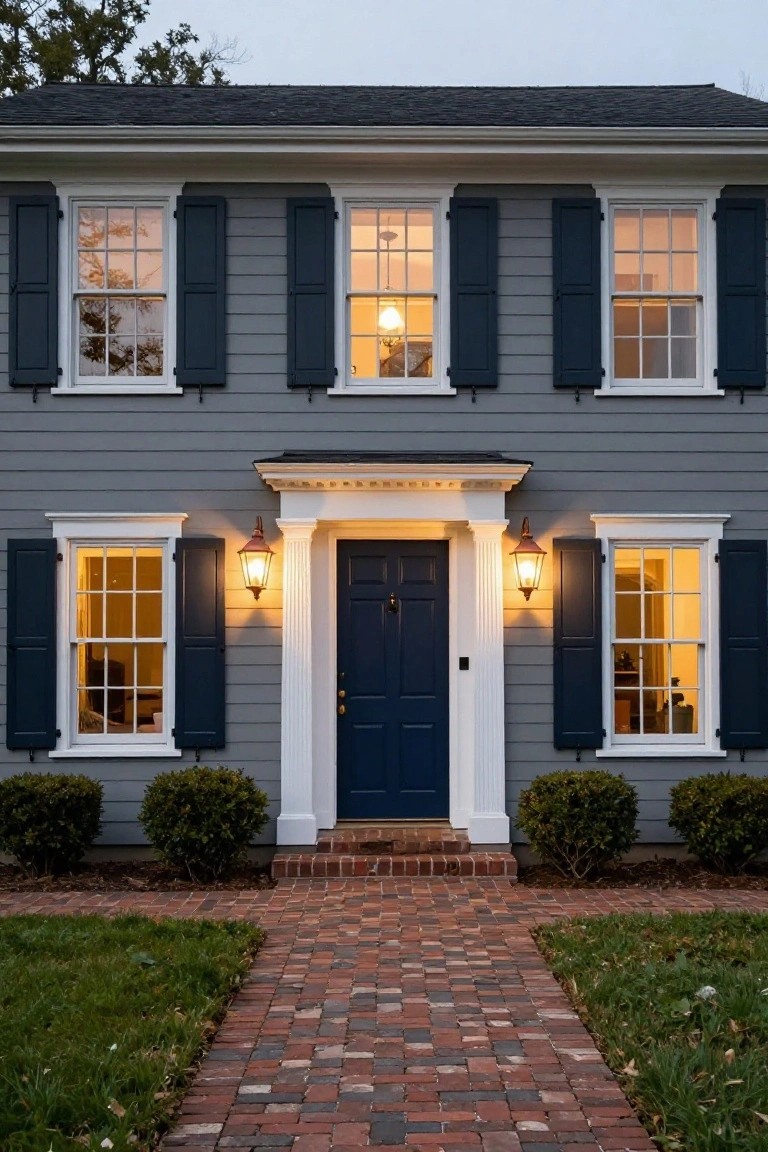
A soft light gray on the siding gives this house a quiet, steady look that doesn’t shout. Navy blue shutters on those tall windows and the front door pull everything together nicely. The white trim around the edges keeps it crisp, and lanterns on either side of the door add a welcoming glow come evening.
This setup suits older colonials or any traditional-style home in a regular neighborhood. Stick to matching navy on shutters and door, then let brick steps or a simple path lead right up to it. Watch the shade of gray, though. Too dark and it loses that open feel.
Soft Gray Stucco Beach House
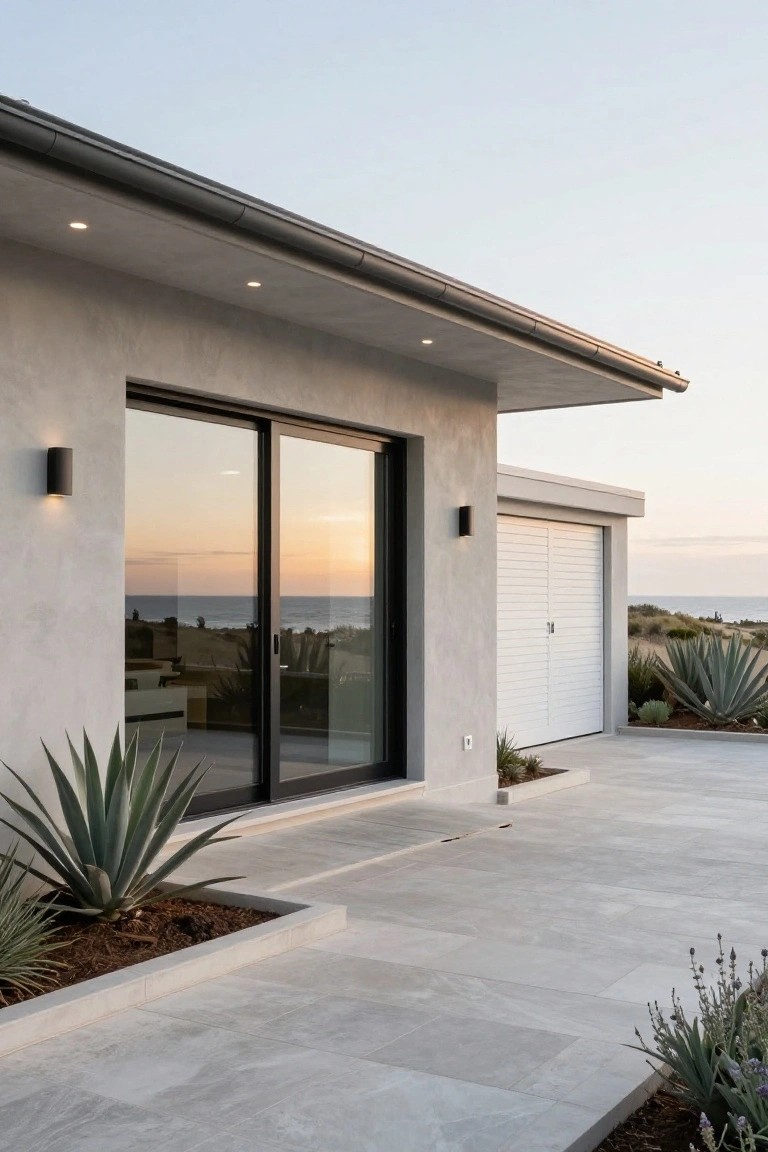
A light gray stucco finish gives this beach house a quiet fit with its sandy surroundings. The texture adds just enough interest without pulling focus from the big ocean views through those black sliding doors. It keeps the whole side of the house feeling calm and pulled together.
Try this on coastal homes where you want modern lines but nothing too stark. The soft gray works on walls around patios or garages. Pair it with black trim and a few agaves at the base for easy upkeep. Steer clear of busy accents. It shines in spots with natural light changes through the day.
Gray Shingle Siding with Stone Porch Bases
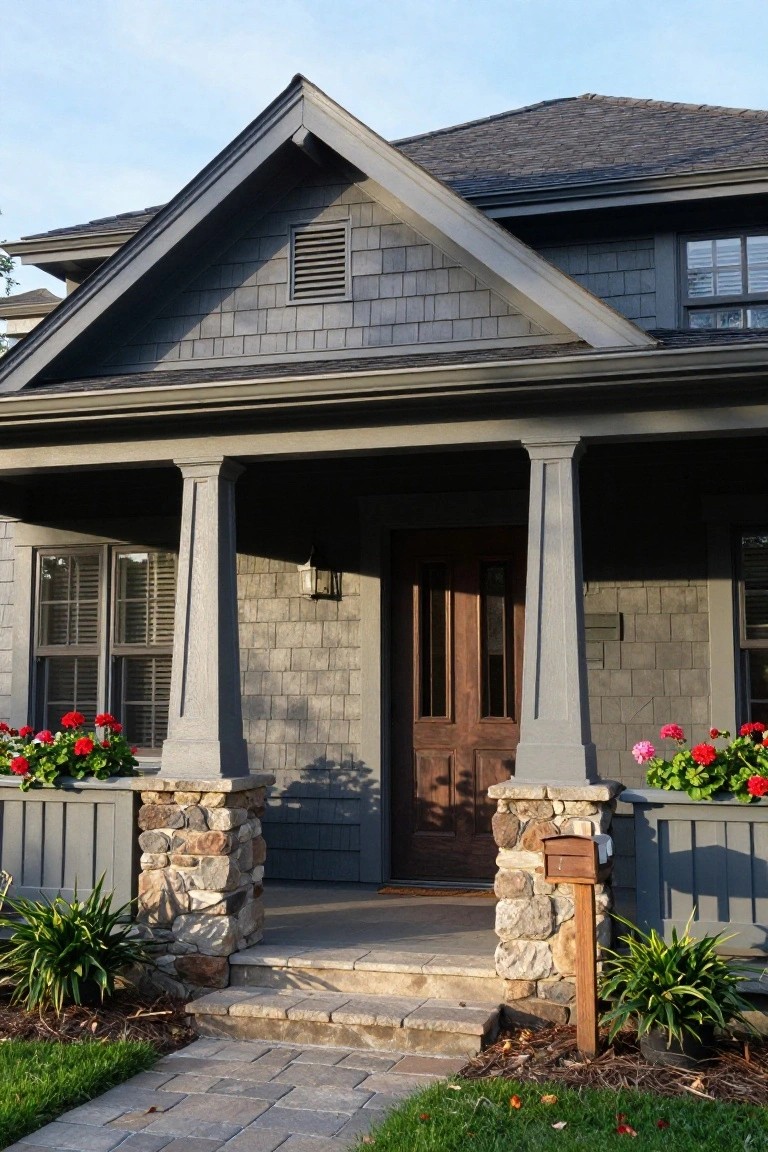
Gray shingle siding in a deep, moody tone gives this house a textured look that feels both classic and low-key. The stone bases on the porch pillars add a solid, natural touch without overpowering the gray. It pulls the whole front together nicely, especially with the wood door warming things up a bit.
This setup works great on Craftsman-style homes or anywhere you want curb appeal that doesn’t shout. Pair it with simple planting boxes like the geraniums here, and keep the stone rugged to match wooded lots or rainy climates. Skip glossy finishes, though. Rough textures hold up better over time.
Gray Stucco Facade with Wood Entry Cladding
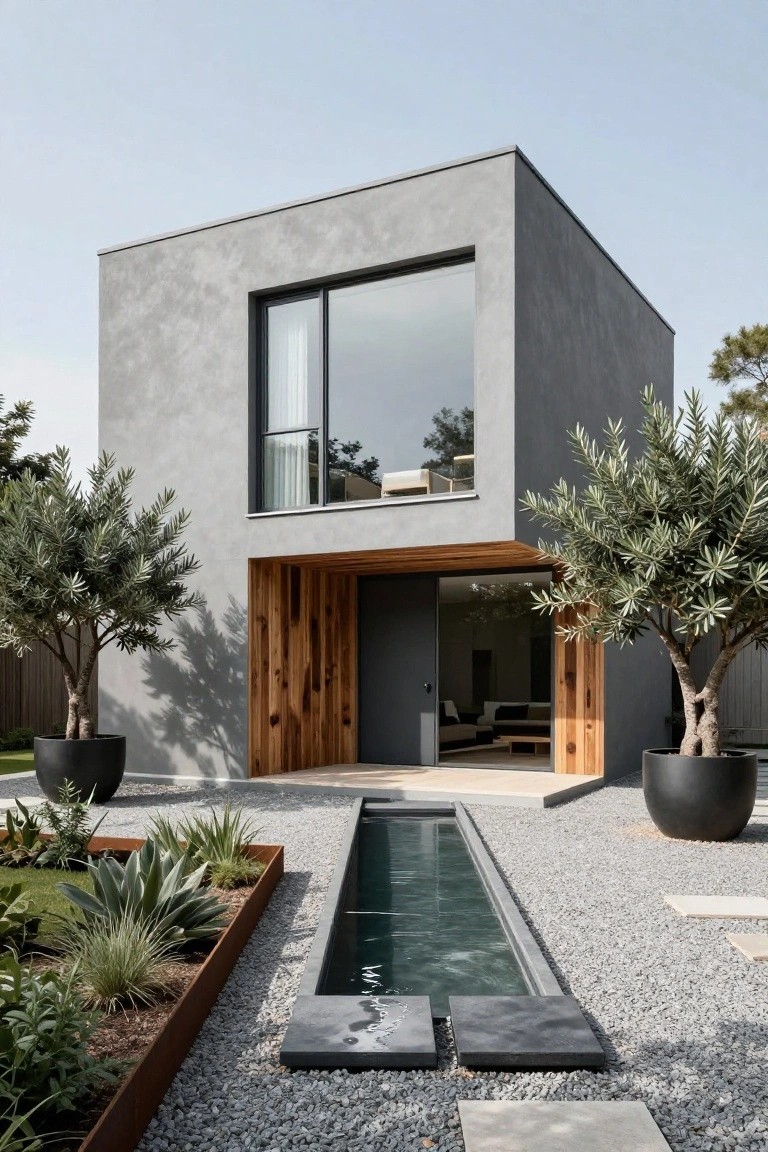
A soft, textured gray stucco covers this simple boxy house, giving it a calm, modern look that fades into the background. The wood panels around the entry add just enough warmth without overpowering the gray. It works because the gray feels solid and low-key, while the wood draws your eye right to the door.
This setup fits homes in sunny spots with gravel yards or simple plantings like olive trees. Use a matte gray plaster on flat walls, then clad the entry area in cedar or similar wood. Keep the wood limited to avoid busyness, and it suits smaller modern builds best.
Dark Gray Brick with Climbing Ivy
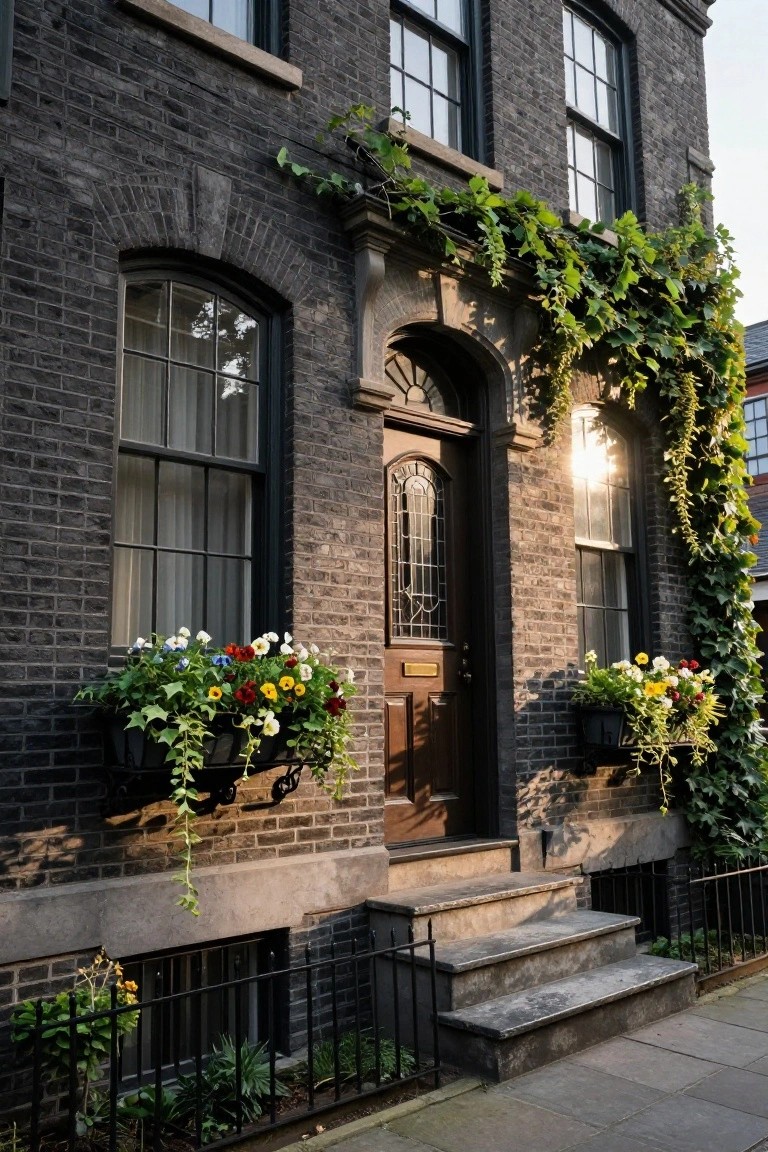
Dark gray brick gives a house a solid, classic look that feels sturdy without being too heavy. What makes it even better here is the climbing ivy that grows right up the side, softening those straight brick lines. It adds a bit of green life and makes the whole facade feel more welcoming, especially around the arched entry and windows. The ivy peeks out just right, not overwhelming the brick but tying it to the garden below.
This works great on townhouses or row homes in city spots where you want low-key curb appeal. Plant ivy near the base so it naturally climbs arches or corners, and pair it with flower boxes for pops of color. Keep an eye on trimming it back so it doesn’t cover windows or doors. It’s forgiving for beginners since ivy grows easy, but pick a type that suits your climate to avoid surprises.
Gray Siding with Black Door
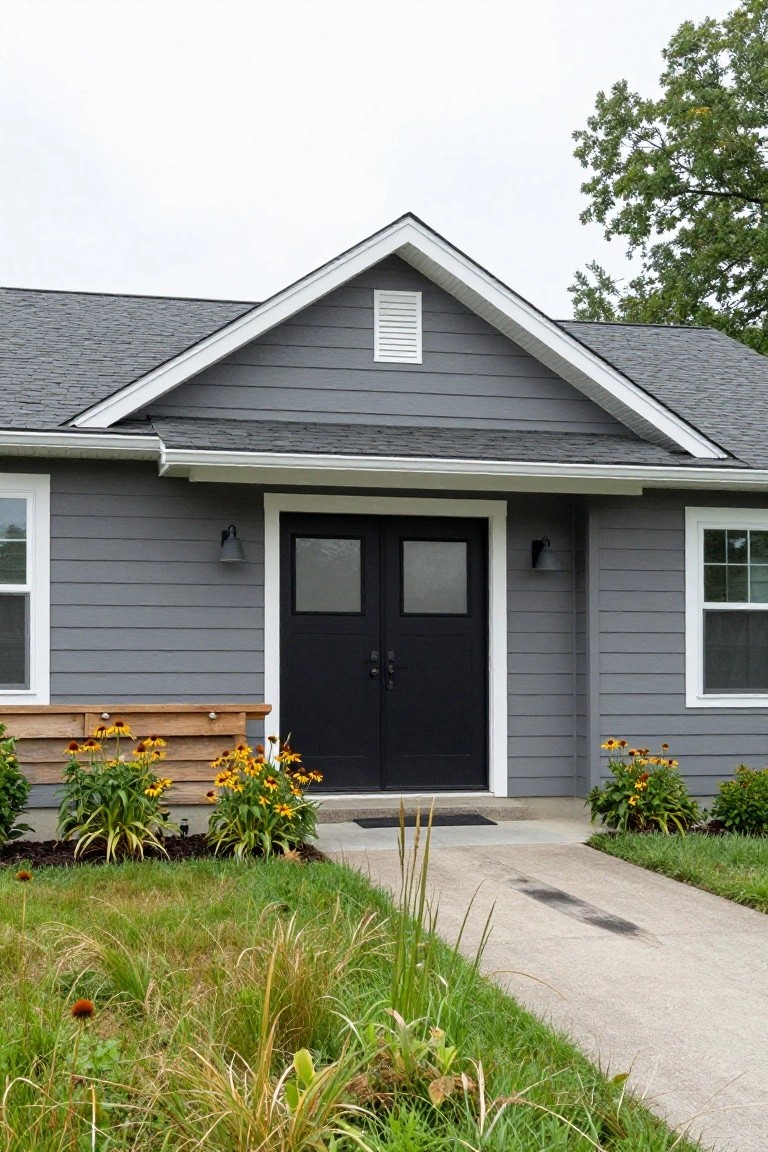
A medium gray siding like this one keeps things calm and easy on the eyes. That black front door pulls focus to the entry without much fuss. White trim sharpens it up, and a simple bench nearby makes it feel lived-in right away.
This setup fits ranch houses or small cottages best. Plant some hardy flowers along the front path for color that lasts. Stick to lighter grays if your yard gets a lot of shade. Darker ones can feel heavy.
Rustic Gray Stone Facade
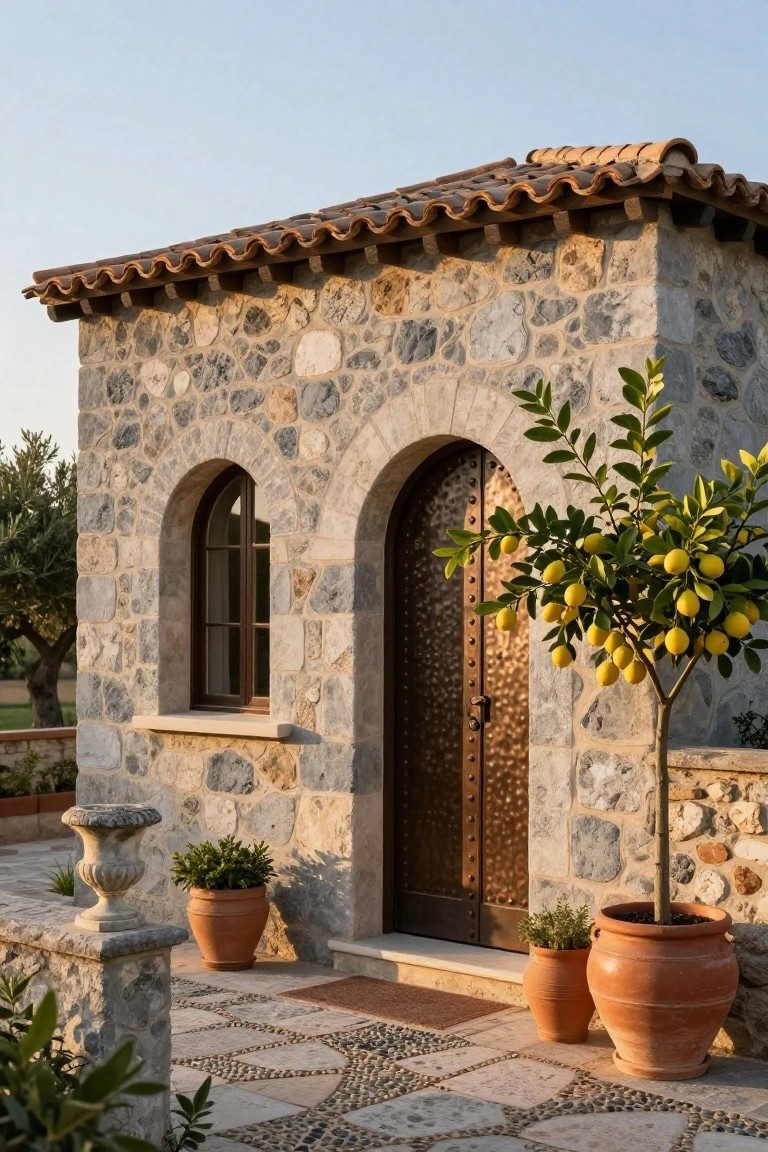
Gray stone like this gives your house a solid, lived-in feel without going too dark or modern. The rough texture pulls in light during the day, making the walls shift from cool blue-grays in shadow to warmer tones up close. Paired with a simple terracotta roof, it keeps things grounded and easy on the eyes. Folks like it because it looks expensive but ages well over time.
Try this on smaller structures first, like a garage or guest cottage, where the stone really shows off. It works best in rural spots or warmer climates that nod to old Mediterranean homes. Just source local stone if you can, to match the surroundings, and seal it lightly to fend off weather. Skip it on big flat walls, though, it needs some shape like arches to shine.
Warm Wood Accents on Gray Siding
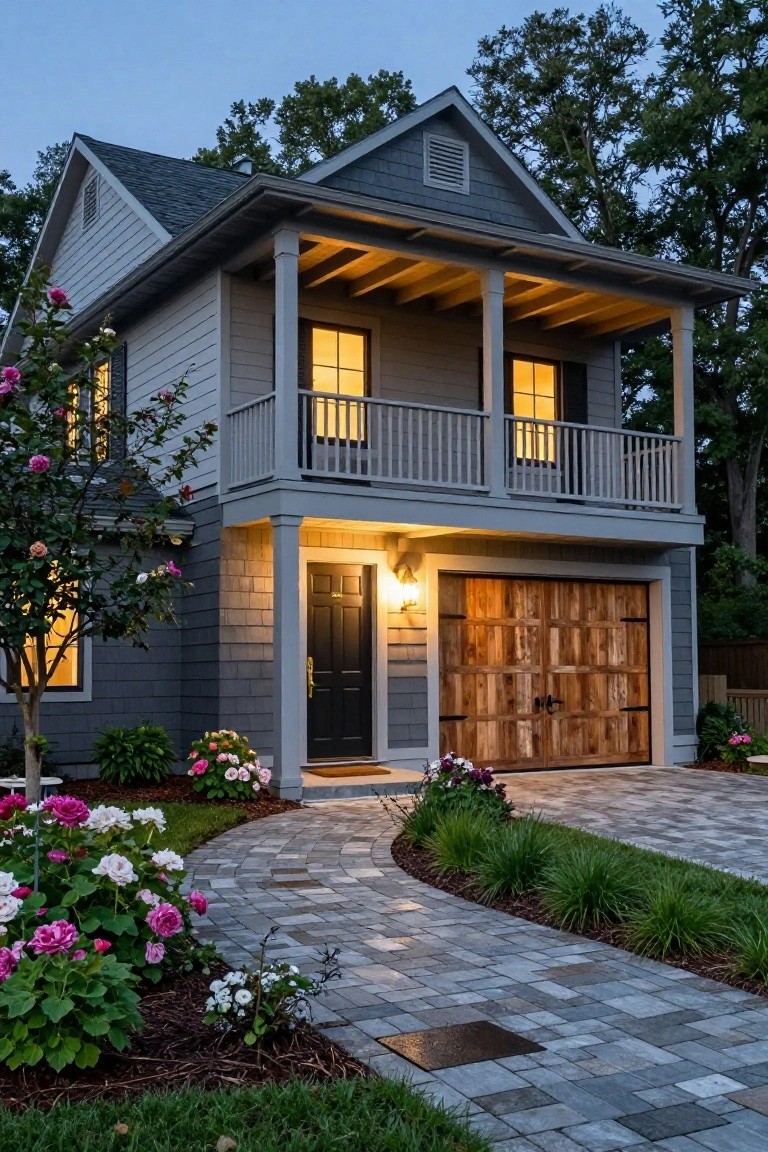
Gray siding gives a house a clean, modern look that doesn’t show dirt easily. But it can come off a little cold on its own. That’s where wood accents step in, like the rustic garage door and porch beams here. They add real warmth without overpowering the gray. It’s a simple way to make the front feel more lived-in.
Try this on homes with some traditional lines, like craftsman bungalows or anything in a wooded neighborhood. Pick medium-toned wood, nothing too red. Seal it well so it ages nicely alongside the siding. Keeps the upkeep low too.
Gray Corrugated Metal Siding
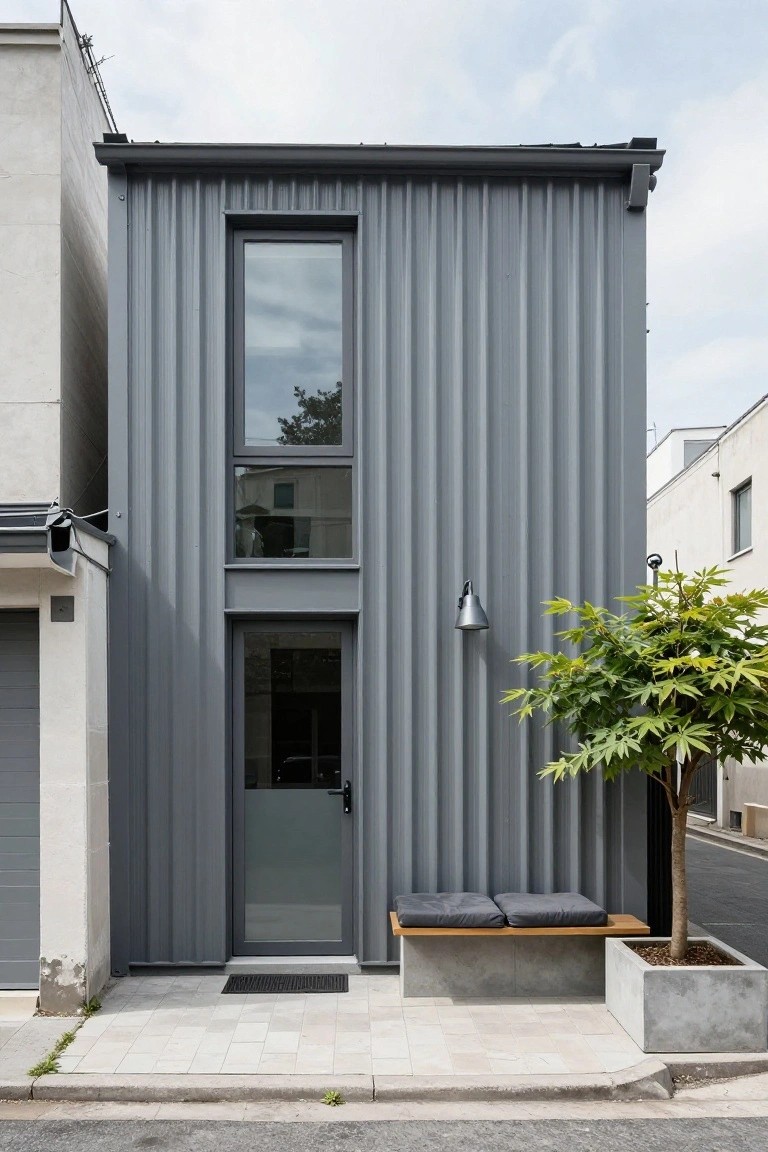
Corrugated metal siding in a cool gray wraps this narrow house from top to bottom. The ridges catch the light just right, adding texture without fuss. It feels industrial yet calm, perfect for a tight urban spot where you want strength and style.
Use it on row houses or skinny builds like this one. Keep windows slim and the entry plain, maybe add a bench out front for scale. It holds up to weather fine and pairs with concrete paths or plain neighbors. Just avoid glossy finishes… matte gray stays real.
Gray Shingle Siding with White Trim
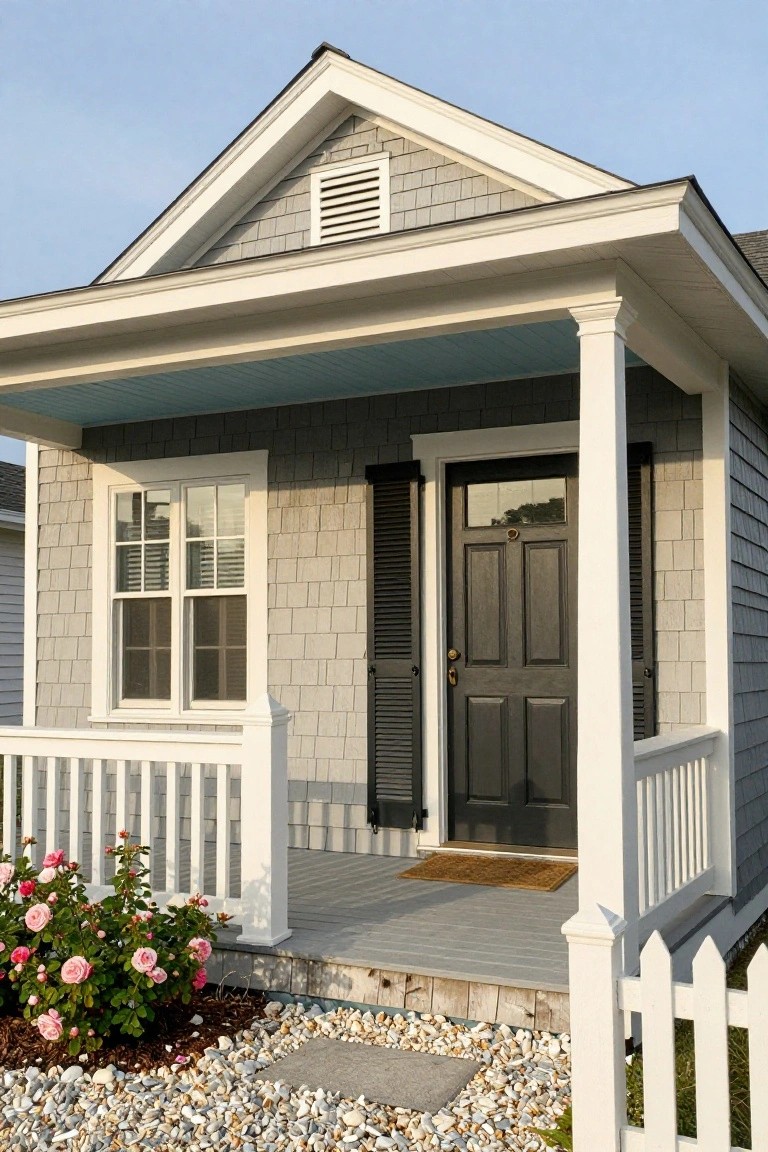
Gray shingle siding like this gives a house that easy, lived-in cottage look. It’s not too dark or light, just right for blending into a neighborhood without standing out too much. The white trim on the porch posts and windows keeps things clean and bright, especially against a dark front door.
This setup suits smaller homes or ones near the water. Use it where you want low upkeep siding that handles weather well. Add a few plants near the entry, nothing fancy… it pulls the whole front together without much effort.
Dark Gray Tudor Facade
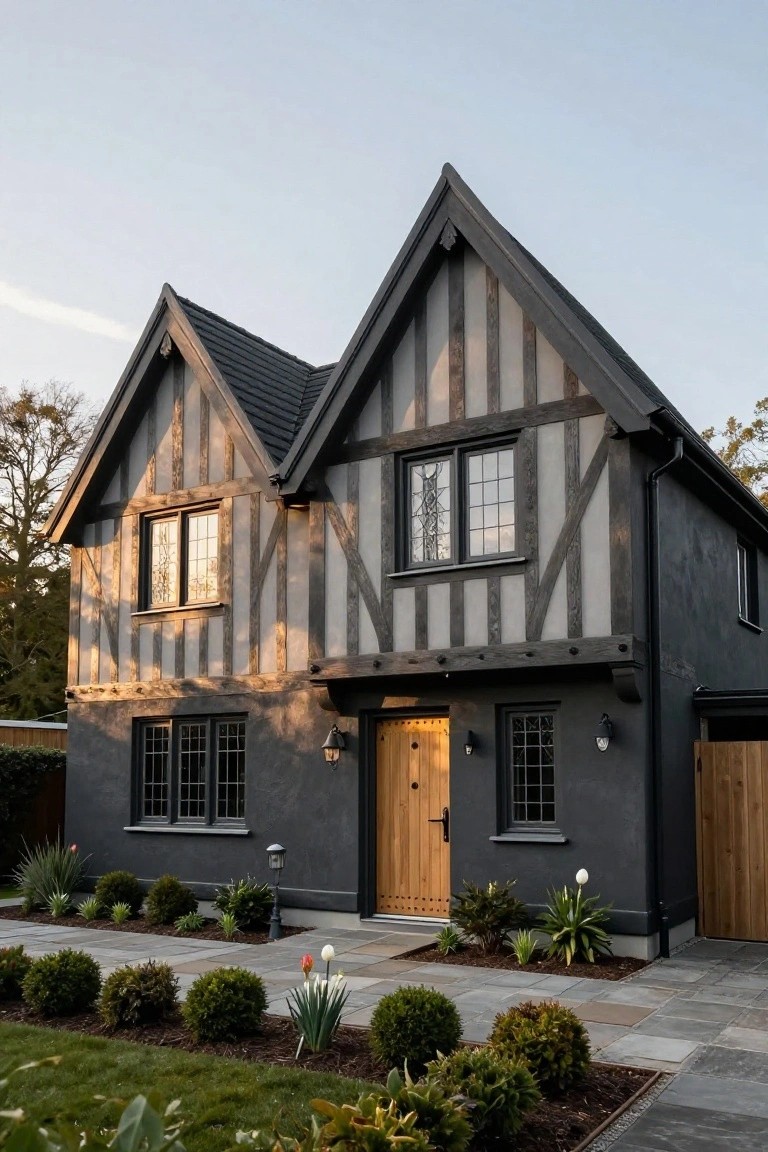
A dark gray exterior like this gives a classic Tudor house a fresh, moody edge. The charcoal paint on the stucco pairs with light timber beams that pop against it, keeping the half-timbered look without feeling too old-fashioned. Black-framed windows and a wooden door add clean lines that tie it all together nicely.
This setup works great on two-story homes in suburban spots where you want curb appeal without bright colors. Paint the walls a deep gray, then whitewash the beams for contrast. It suits craftsman or traditional styles best, but keep the trim crisp to avoid a rundown vibe.
Charcoal Gray Textured Exterior
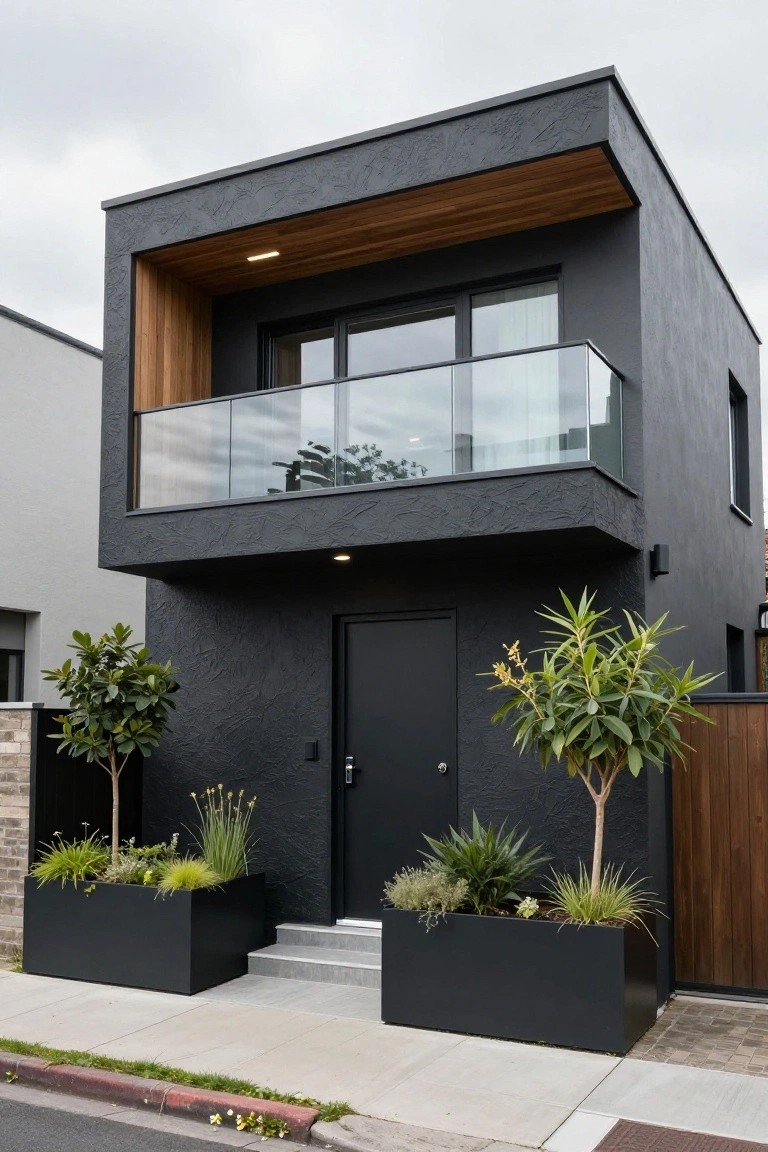
A deep charcoal gray render with a subtle texture covers this modern house facade. It makes the simple boxy shape stand out more than a flat paint would. The rough surface catches light in spots, adding interest up close. Wood cladding on one side keeps it from feeling too heavy.
This look suits newer homes or updates to older ones wanting a bold street presence. Use it on main walls, then mix in glass windows and a few wood touches for balance. Black planters out front tie right in. Just skip it if your house has lots of curves or fussy details. It needs clean lines to shine.
Soft Gray Render on Cottage Homes
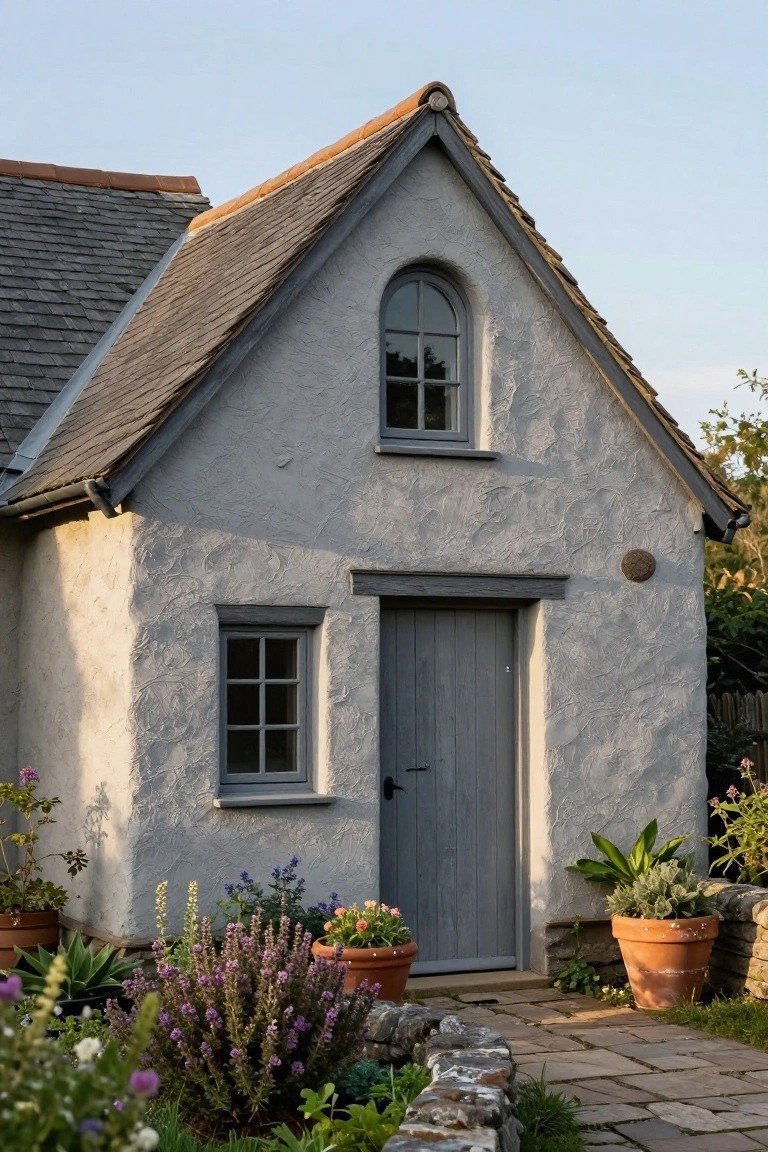
A soft gray render like this gives small cottages a gentle, lived-in feel that blends right into the landscape. It’s not stark white or harsh modern gray. Instead, the textured surface catches the light in a subtle way, making the house look cozy and timeless. Pair it with a slate roof and simple wood details, and you get curb appeal without trying too hard.
This works best on older-style homes or new builds aiming for that English countryside vibe. Use it on gabled roofs and keep windows and doors in matching muted tones. Skip bold colors around the base. It suits rural spots or suburban gardens where you want the house to settle in quietly. Just make sure the render is breathable to avoid moisture issues down the line.
Frequently Asked Questions
Q: Which gray hides dirt and grime the best on a house exterior?
A: Go for a medium gray with warm undertones. It masks dust and pollen way better than stark cool grays that show every speck. Lighter shades might look fresh at first but turn dingy fast in rainy areas.
Q: How do I match my gray siding with existing red brick?
A: Pick a gray that leans blue to complement the warmth in red brick. Test samples in morning and afternoon light right on your house. That contrast pops without clashing.
Q: Will a dark gray make my small house look even smaller?
A:
Nope. Dark grays actually add depth and make edges recede, which can trick the eye into seeing more size. Pair it with white trim to open things up.
Q: What’s a quick way to test these grays before painting the whole house?
A: Grab large paint samples from the store and slap them on poster board. Hang them at different spots around your home over a few days. You’ll see how light shifts the color.
