

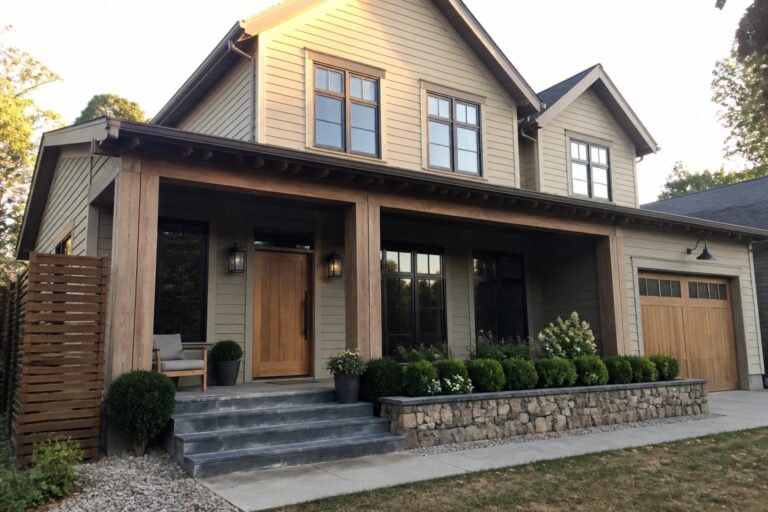
I’ve found that beige exteriors tend to look their best when the wood tones feel intentional rather than added on later.
Bronze fixtures can add just enough contrast to keep the whole look from fading into the background once the house sits in full sun.
I once watched a simple facade transform after swapping out mismatched hardware and it changed how the house read from the road.
Testing how these elements sit together under real sunlight usually reveals whether the choices will hold up through changing seasons.
Some homes make this balance look easier than it actually is.
Beige Siding With Natural Wood Accents
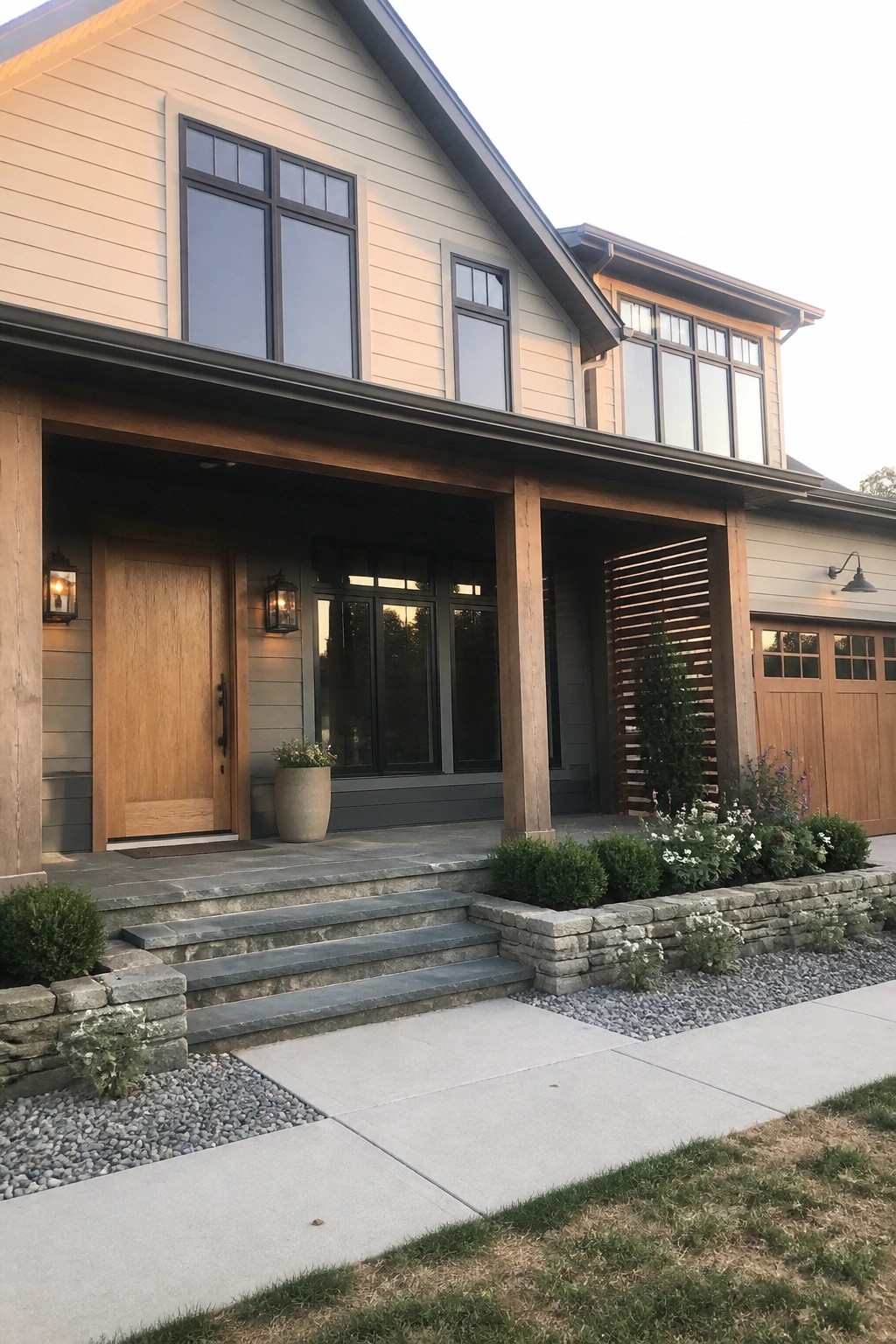
Warm beige siding stays quiet on its own, so wood elements can carry more weight on the facade. The contrast between the flat color and the grain of the wood gives the house a settled look instead of a flat one.
This works best on homes with a clear porch structure or visible beams. Match the wood tones across the door, beams, and garage, then add bronze or dark metal lights to tie everything together. Avoid scattering too many different wood finishes or the balance starts to feel busy.
Wood Accents at the Entryway
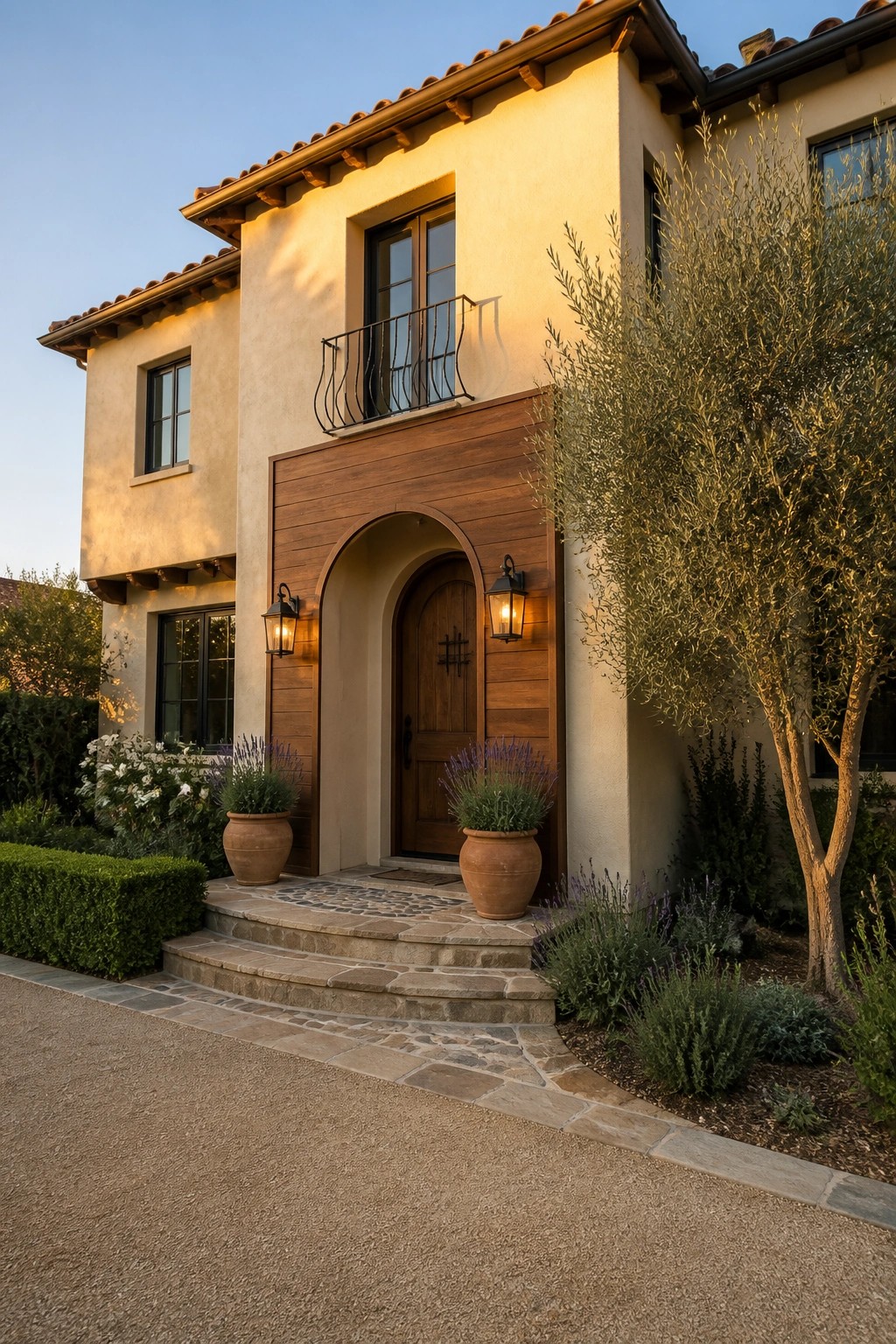
Many beige houses gain a warmer look when wood is added around the front door. The material brings in texture and breaks up the flat wall surface in a simple way.
This approach works best on homes with an arched opening. Use a medium wood tone and keep the surrounding walls plain so the entry stays the main focus.
Mixing Wood Accents into Beige Exteriors
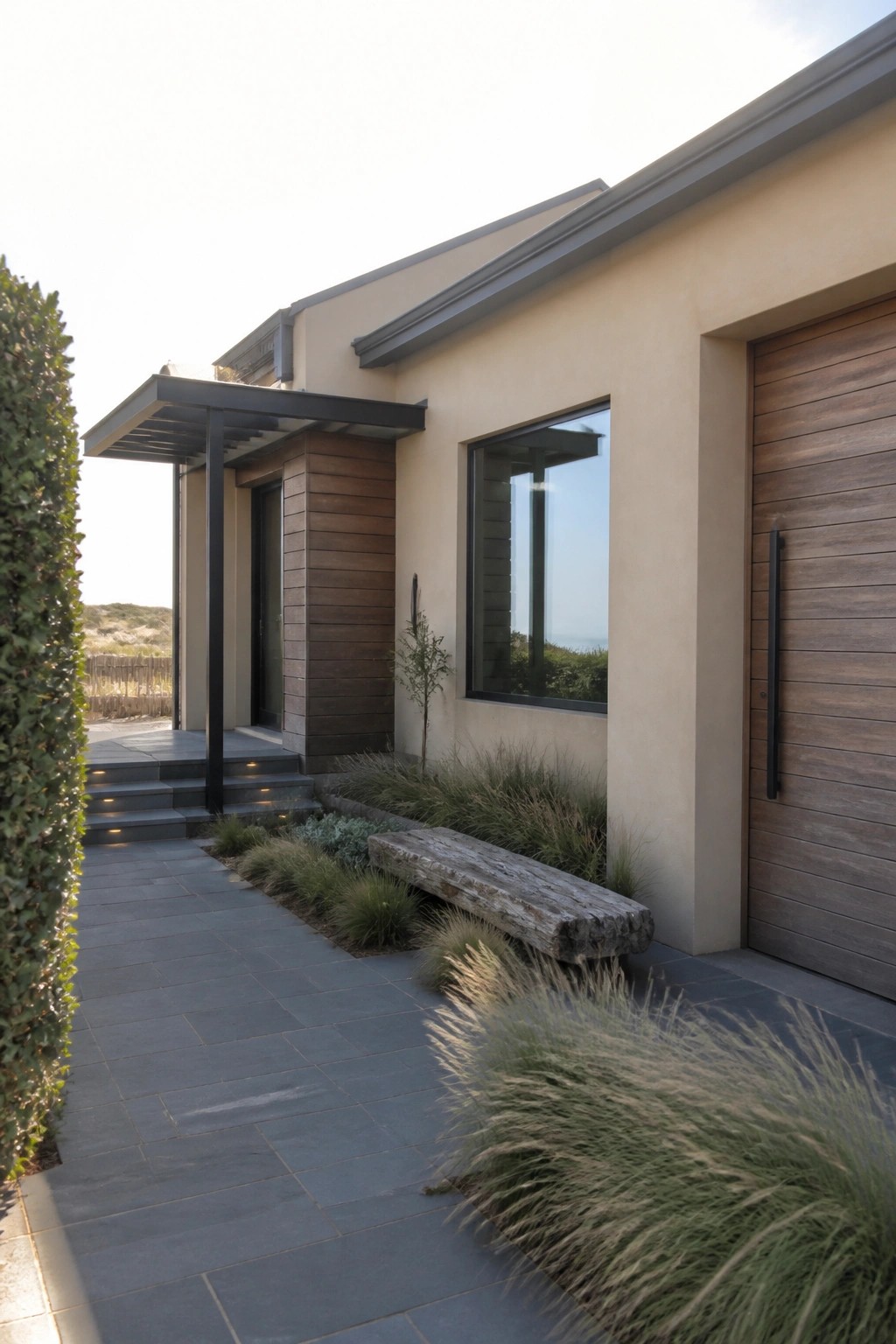
Warm beige walls work well as a base because they let wood accents add texture without making the front feel busy. The wood brings in some natural warmth that pairs easily with the soft wall color.
This works best on simpler modern or transitional homes where you want a bit of contrast. Keep the wood in focused spots like the entry surround or garage door so it stays balanced and does not compete with the rest of the facade.
Wood Accents on Beige Stone Exteriors
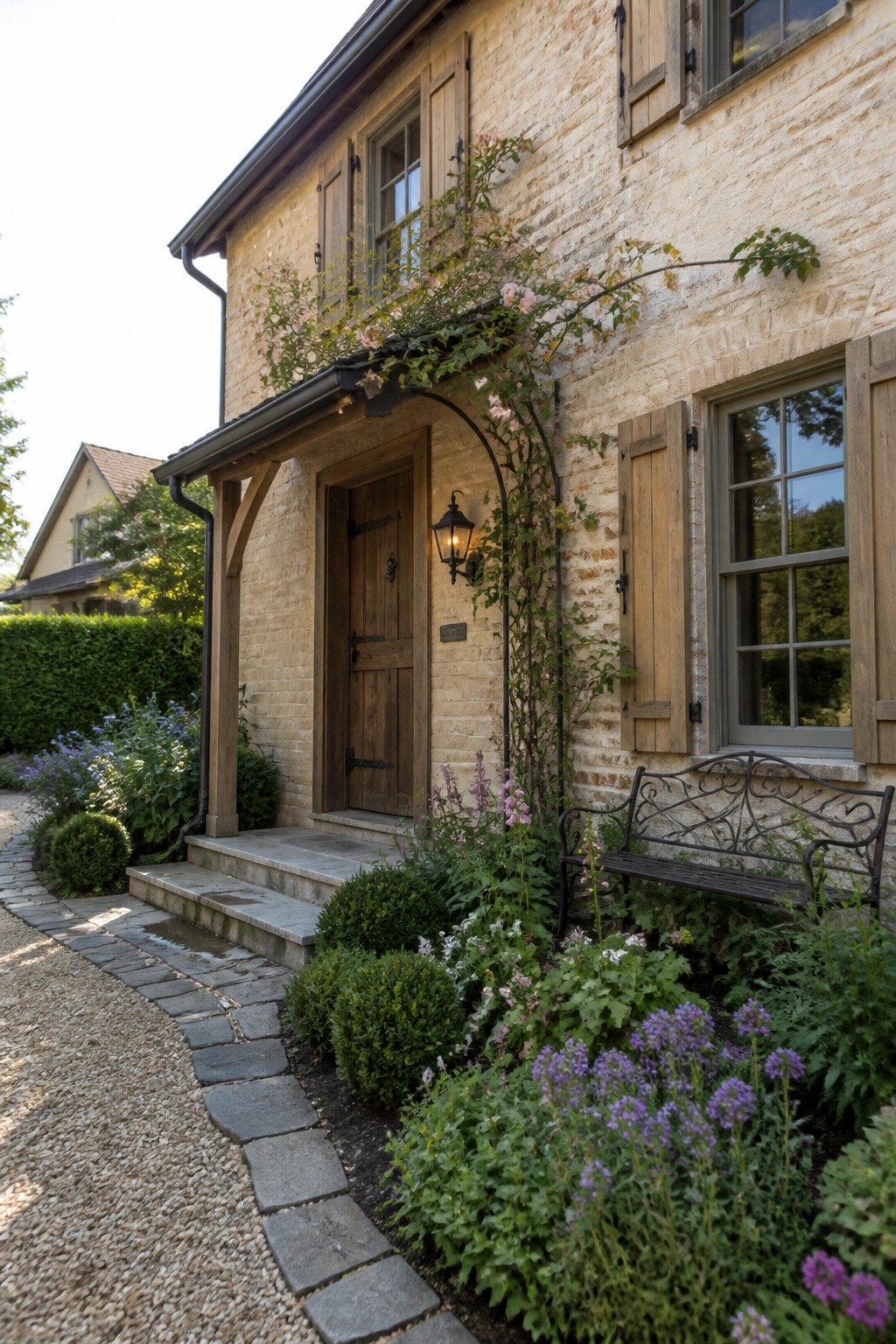
Wood accents give a stone house a warmer, more settled look. The door and shutters here show how a few wood pieces can break up the flat surface of the stone without needing a lot of extra trim or detail.
This approach works best on homes that already have a simple shape. Keep the wood in its natural tone and add just one or two bronze fixtures near the door so the contrast stays clean. It suits older cottages or newer builds that want a bit of traditional character.
Wood Accents On Warm Beige Exteriors
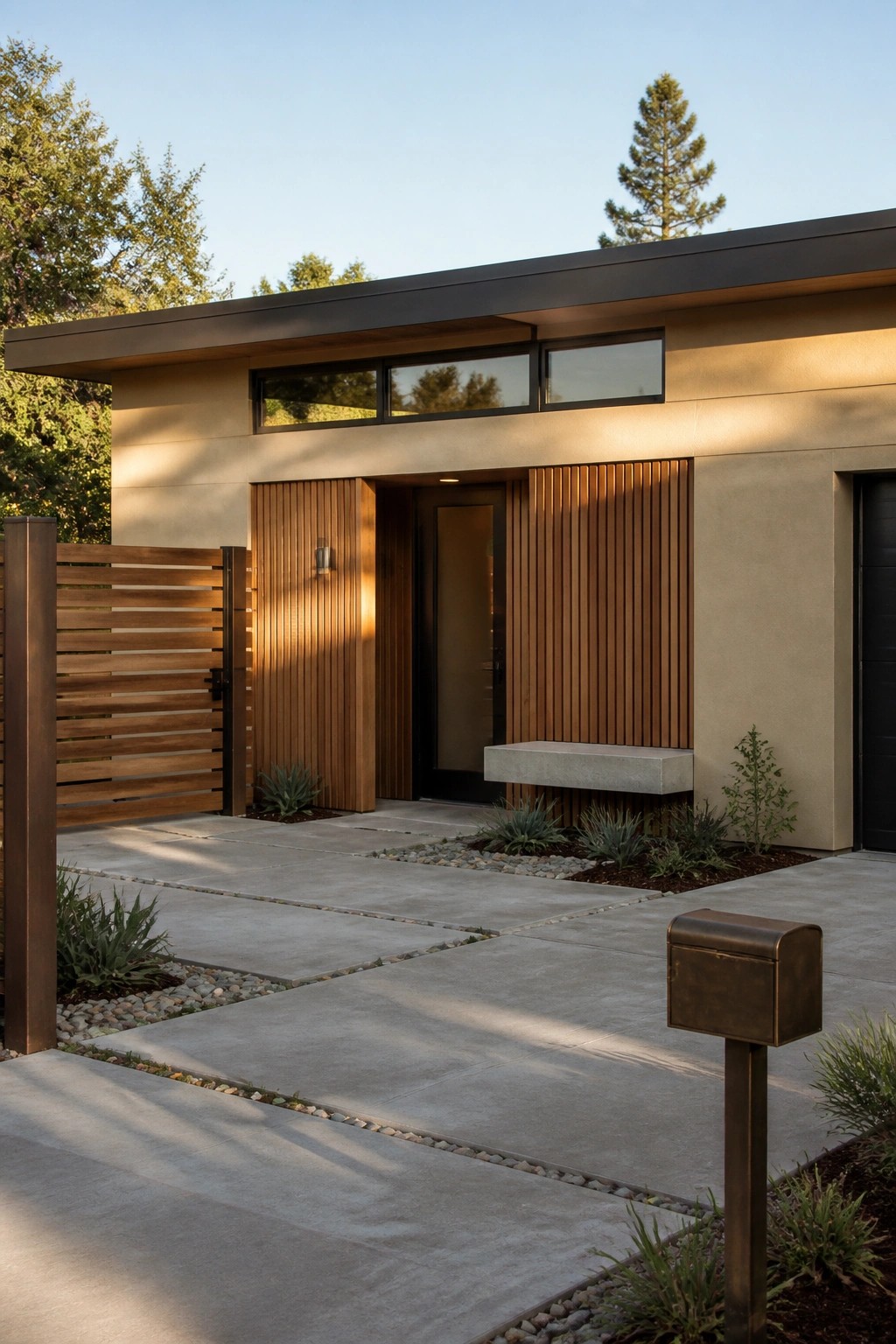
Many beige homes look better when vertical wood panels are added around the entry. The wood brings texture and a bit of warmth that keeps the beige from feeling too flat or plain.
This works well on houses with clean rooflines and simple stucco walls. Match the wood tone to any other wood elements on the property and use bronze or dark metal fixtures to pull the colors together.
Stone Bases Under Wood Columns
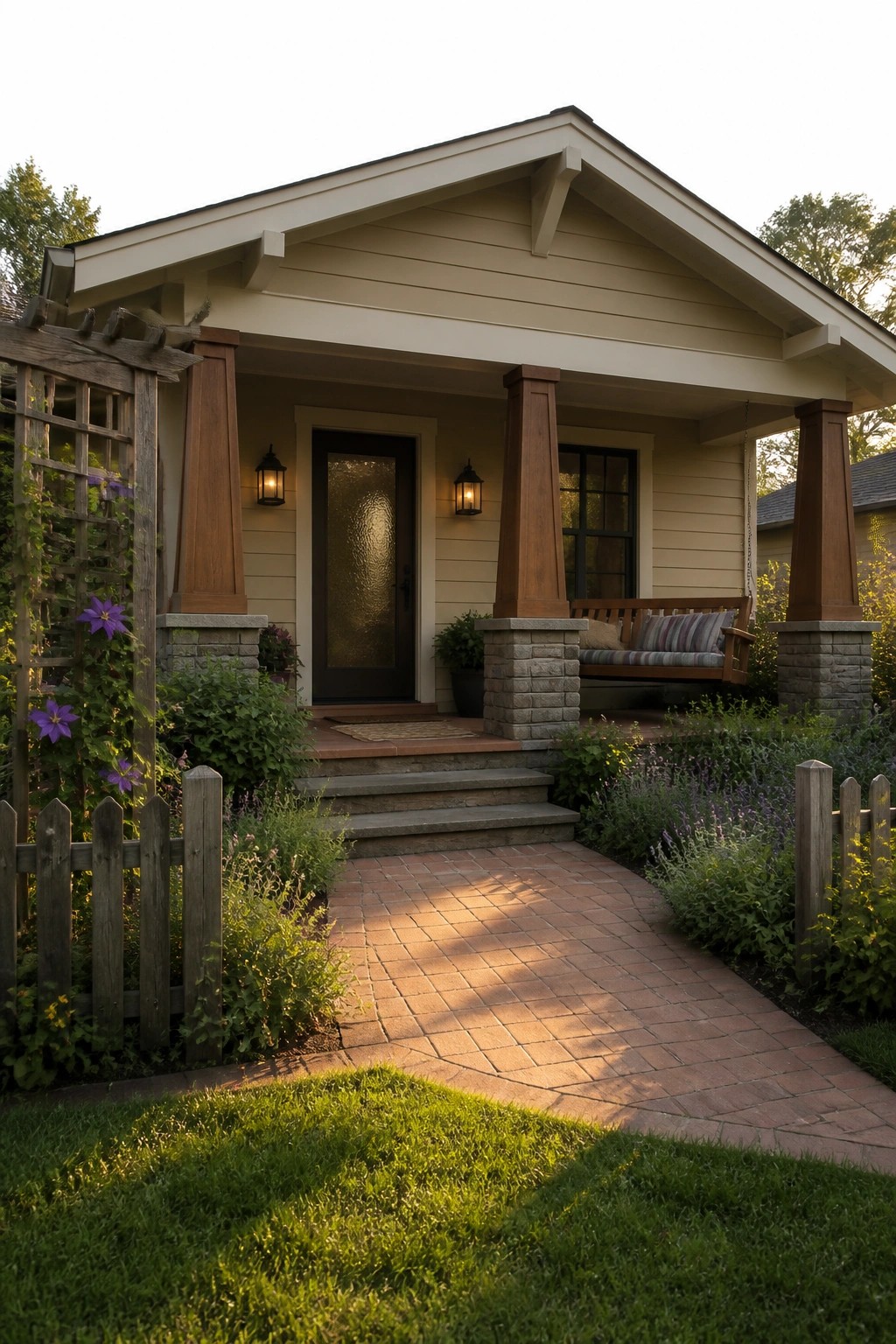
Stone bases under wood columns give the porch a solid, grounded feel that pairs well with warm beige siding. The contrast keeps the wood from looking too light or floating, and it adds just enough texture without complicating the overall look.
This approach works best on homes with a simple gable or modest roofline. Keep the stone natural or lightly textured, and match the wood tone to any other accents like shutters or trim so the materials read as a set rather than separate pieces.
Beige Siding Works Well With Wood Doors
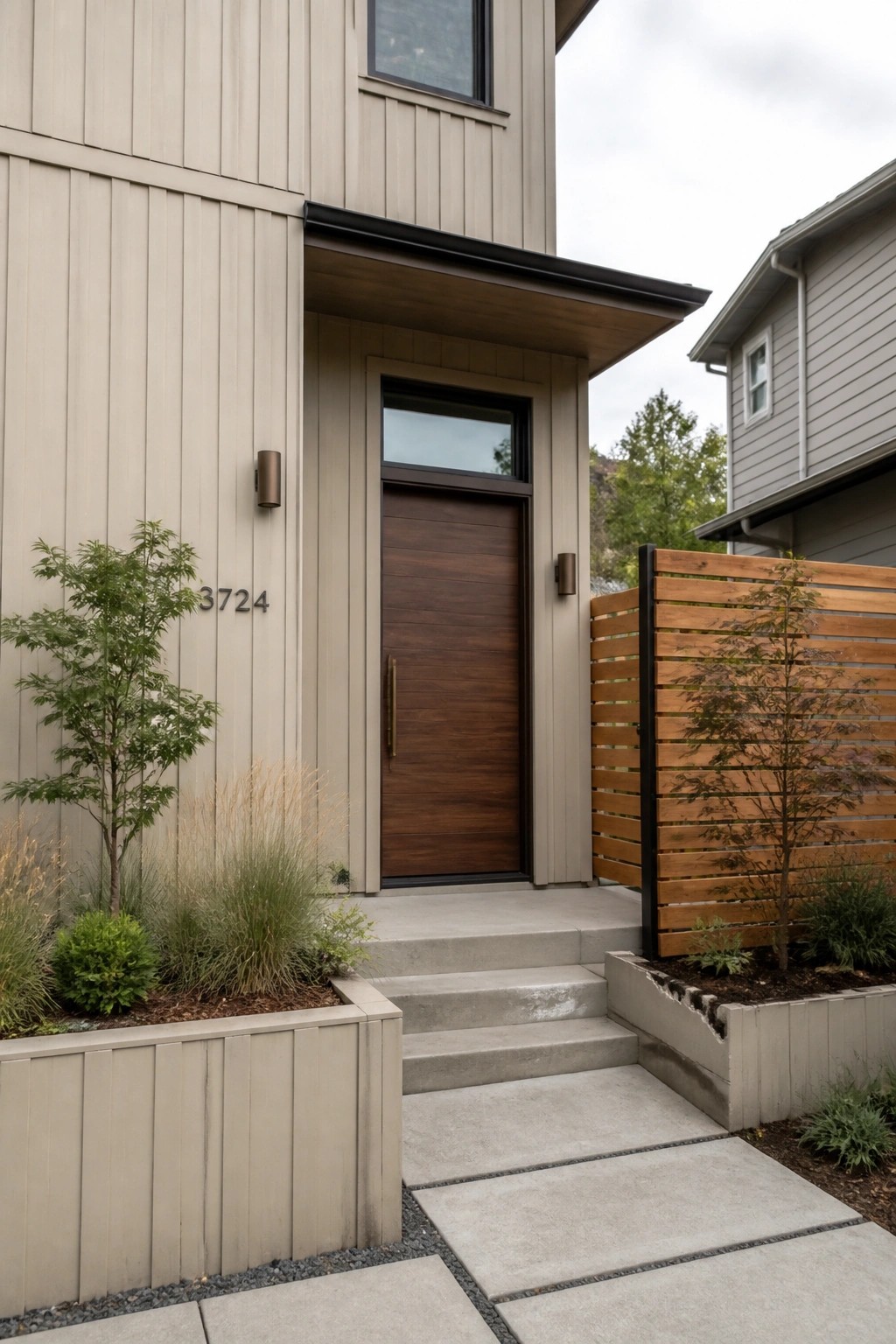
A simple beige exterior gains a lot from a dark wood door and matching bronze fixtures. The contrast keeps the house from feeling flat while still looking calm and put together.
This approach suits homes with vertical siding and straightforward shapes. Stick to one strong wood tone on the door and any nearby fencing, then repeat the bronze on the lights so the details feel intentional rather than scattered.
Classical Columns At The Entry
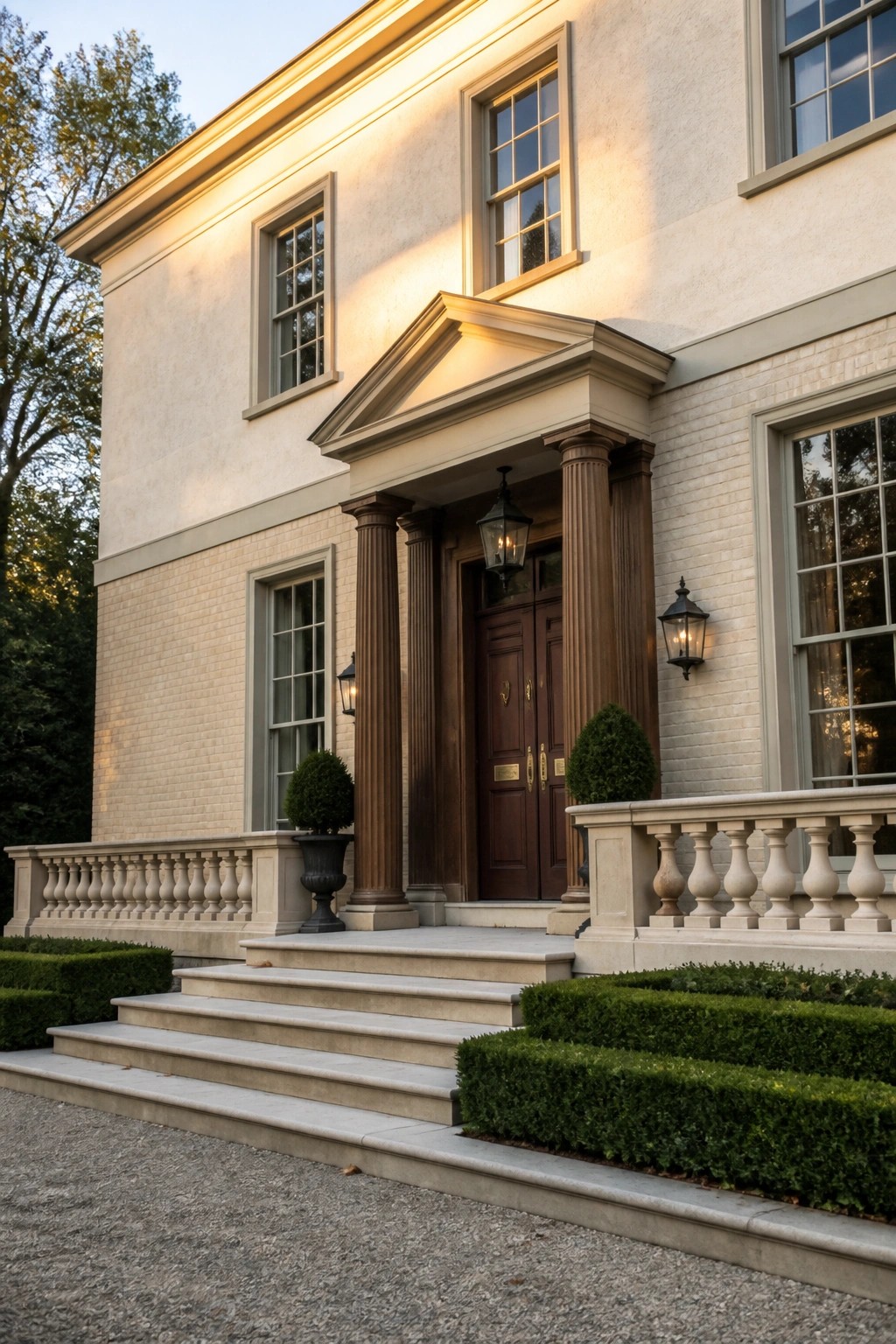
A simple set of columns with a pediment above the door gives a beige house a clear focal point. It frames the wood doors nicely and lets the bronze fixtures stand out without extra decoration.
This approach works best on traditional or transitional homes where you want the entrance to feel solid and welcoming. Keep the columns in a warm tone that matches the wood, and place the lights at eye level so they highlight the doors at night.
Wood Accents Around the Entry
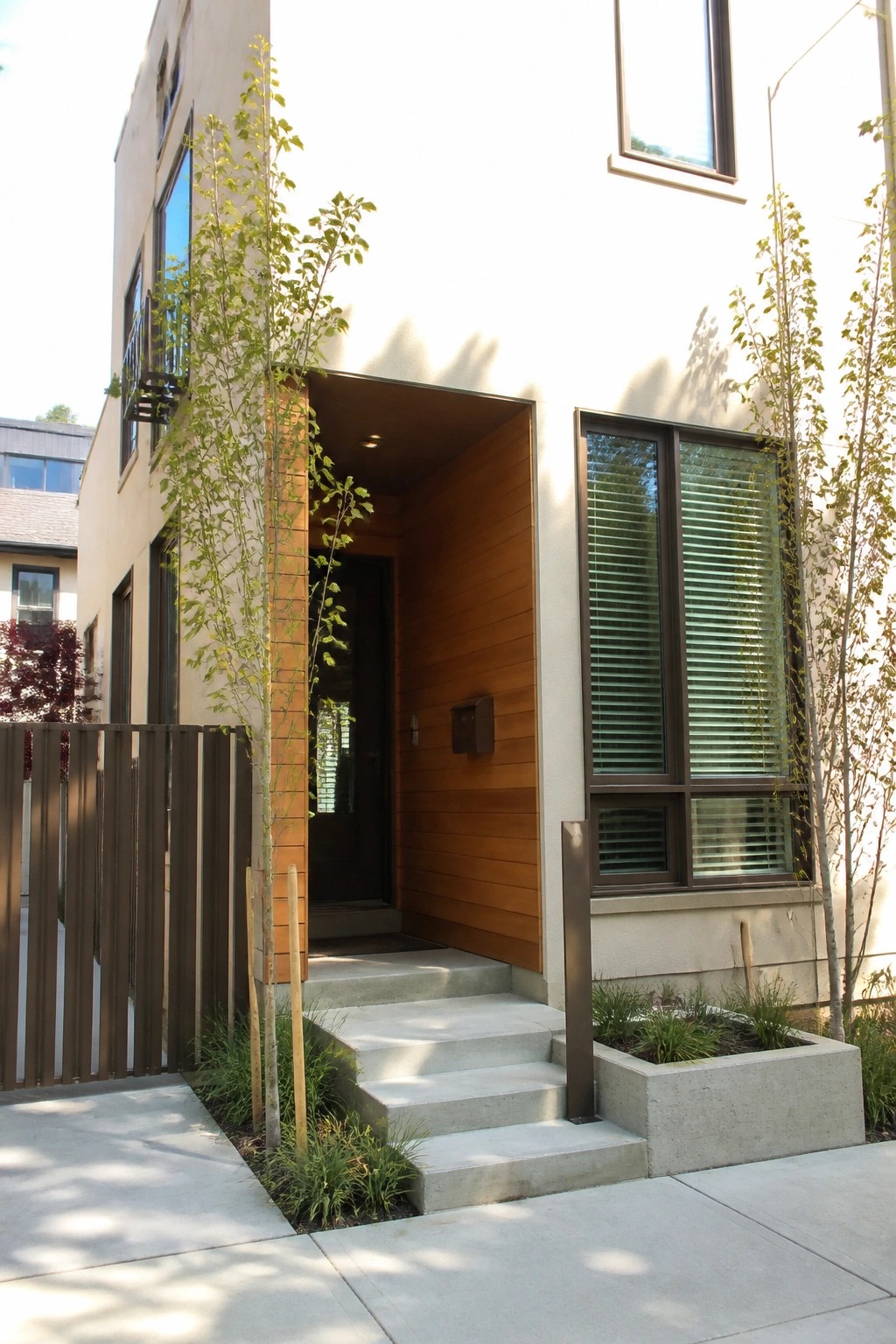
Many beige homes gain a lot from wood placed right at the front door. The material adds texture and warmth without overpowering the soft wall color, and it helps the entry feel more defined.
This approach suits modern houses where the wood can sit flush beside the door in simple horizontal boards. It pairs easily with bronze fixtures and dark window frames, but it works best when the wood tone stays natural rather than too dark or overly finished.
Extending the Home with a Stone Fireplace Patio
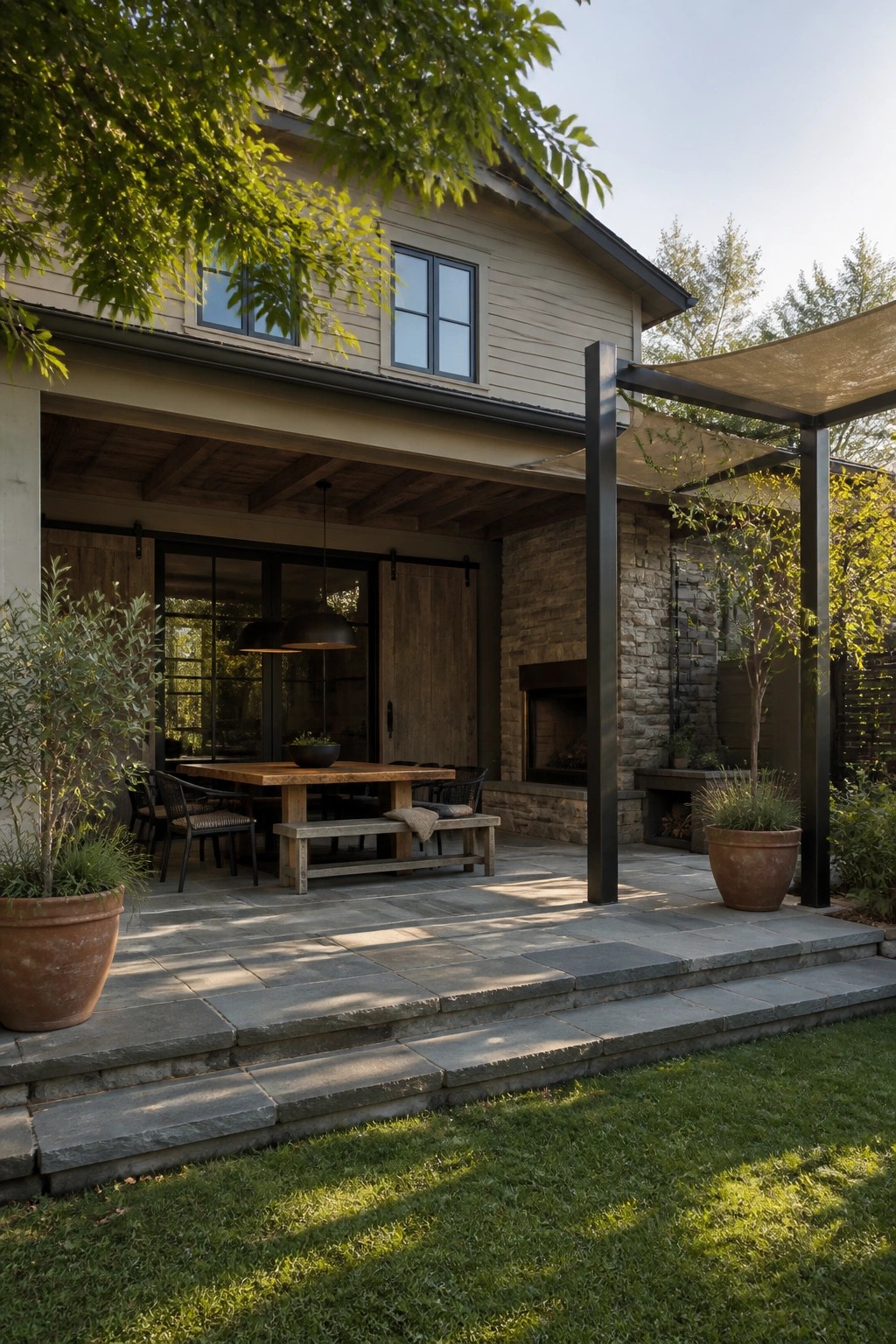
One idea worth copying is placing a stone fireplace right on the patio so the outdoor space feels like a true extension of the house. The fireplace anchors the seating and dining area and makes the whole zone usable even when the weather cools off a bit.
This works best on homes that already have wood siding or trim. Match the stone to any existing masonry details and keep the furniture in simple wood tones. Avoid crowding the area with too many pieces so the fireplace and open floor stay the main features.
Heavy Timber Framing Around Beige Exteriors
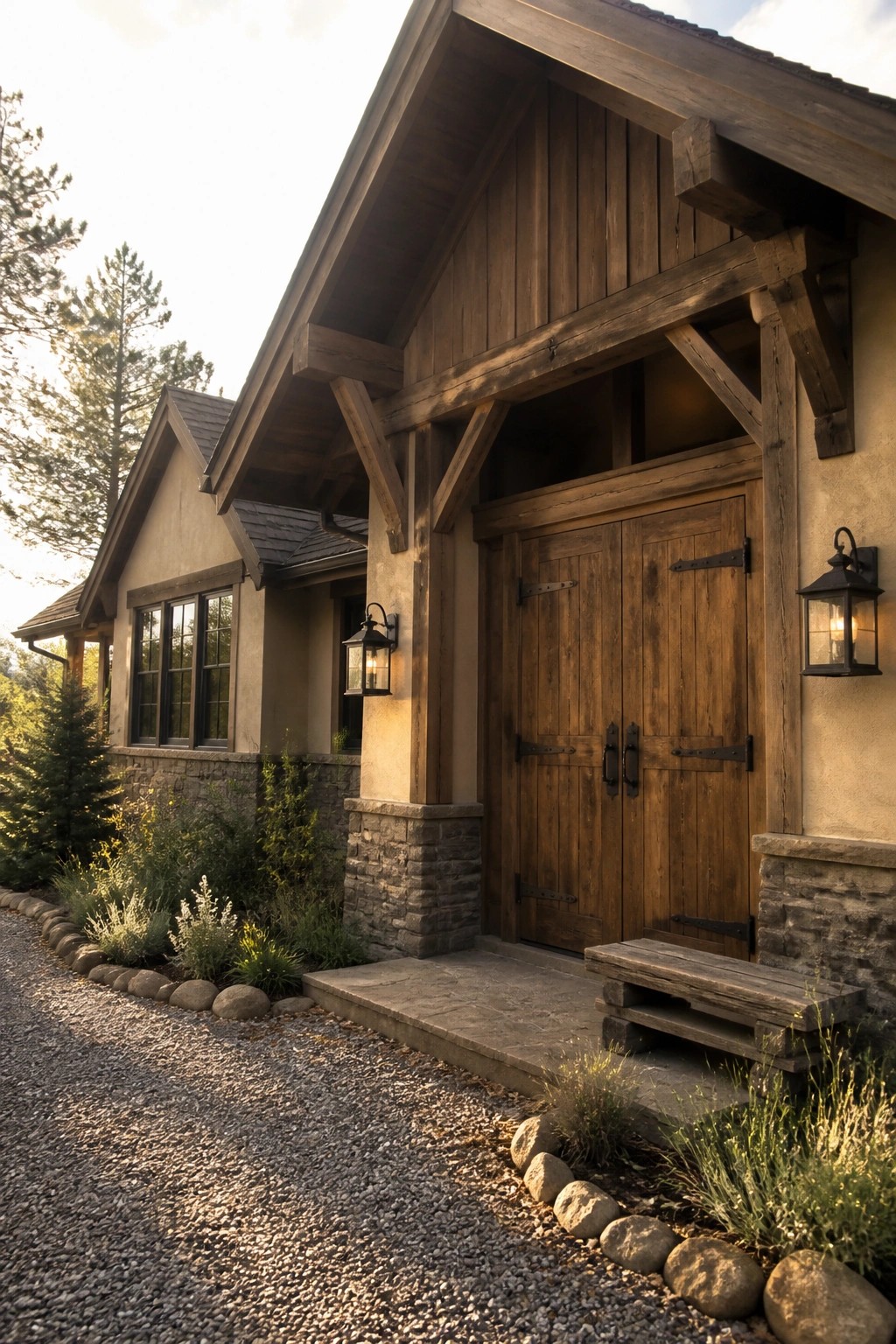
Heavy timber beams around an entry give a beige house real presence. They break up the flat wall color and make the entrance feel solid and intentional instead of just painted on. The wood also picks up nicely against the warm tone without needing extra color.
This approach works best on homes that already lean a bit rustic or craftsman. Keep the rest of the facade simple, use bronze or dark metal hardware on the doors, and add a couple of matching lanterns. Too many competing details will fight with the beams.
Built-In Seating Along the Front Wall
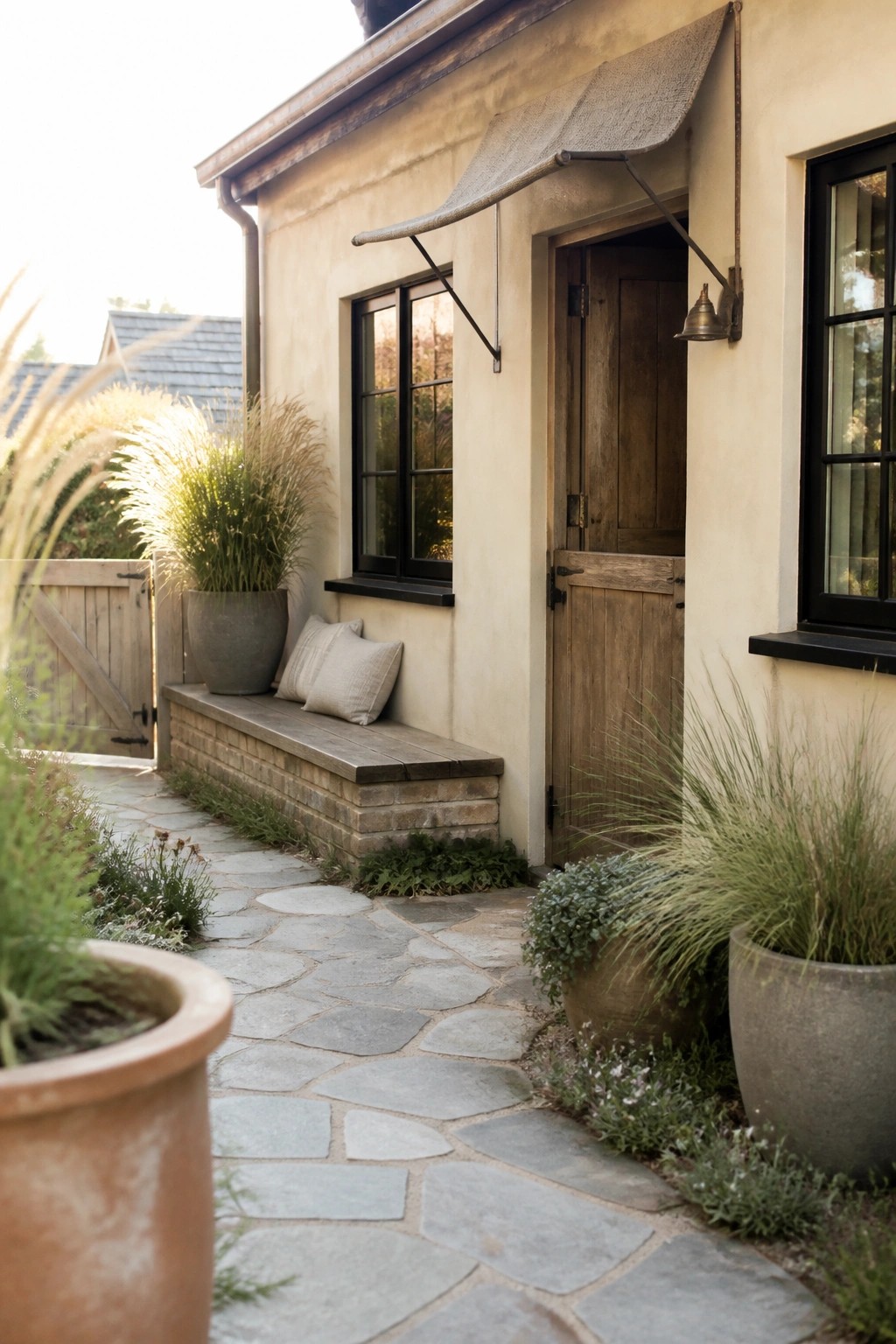
A built-in bench next to the door turns an otherwise plain stretch of wall into something useful. It gives the entry a settled look without needing extra furniture or big changes to the structure.
This approach works best on smaller homes or cottages where the front feels a little bare. Keep the bench low and simple so it lines up with the window and does not compete with the wood door or bronze light.
Vertical Wood To Frame The Entry
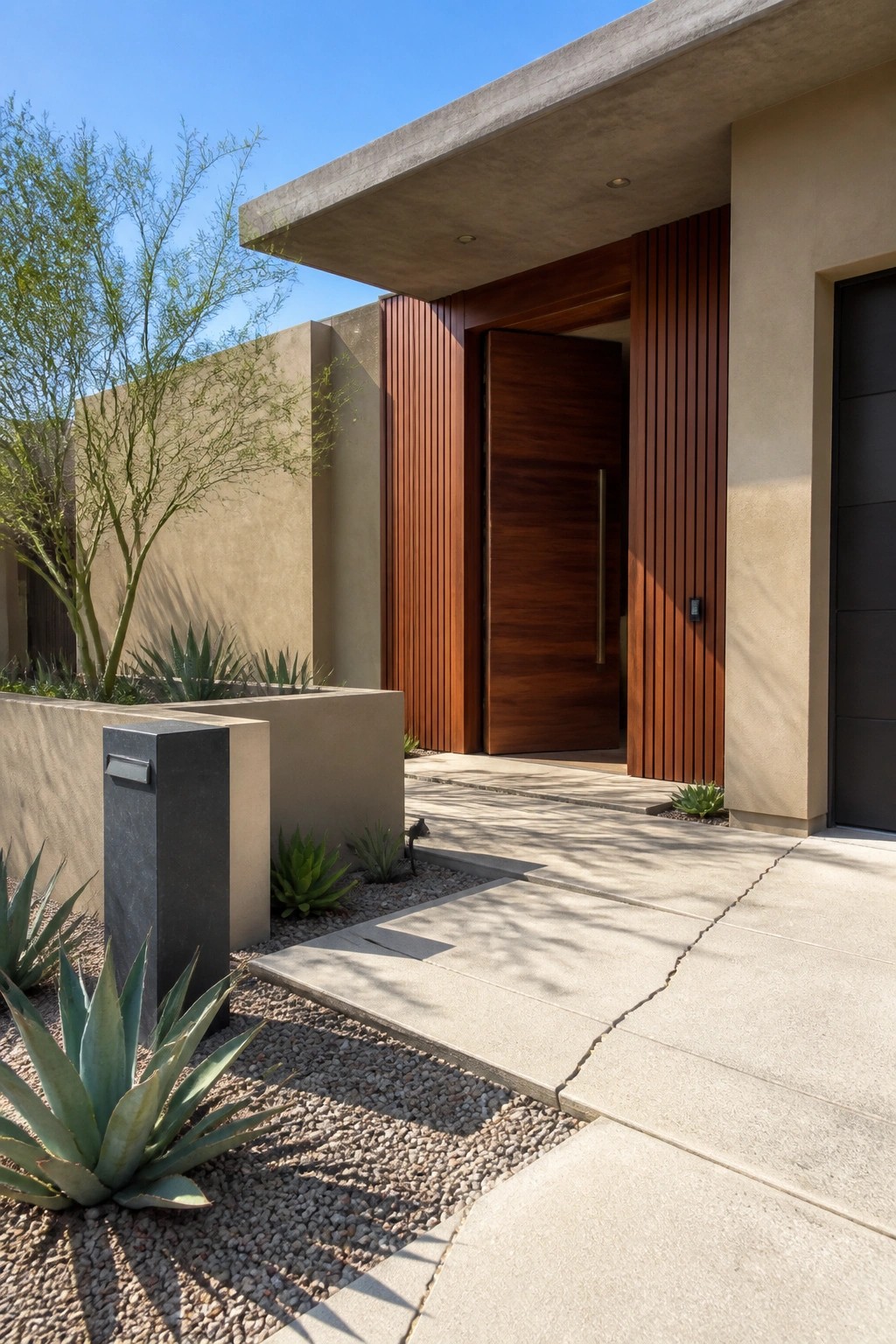
Many beige houses can look a little flat at the front until you add a strong vertical element right at the door. The wood slats here give the entry a clear focal point without needing extra color or ornament. They also bring in that warm tone that pairs naturally with the stucco and any bronze hardware.
This move works best on homes with simple rooflines and clean walls. Keep the wood tone rich but not too dark, and let the slats run floor to ceiling so the door feels anchored. It suits both modern and slightly traditional builds as long as the rest of the facade stays calm.
Warm Beige With Wood Details
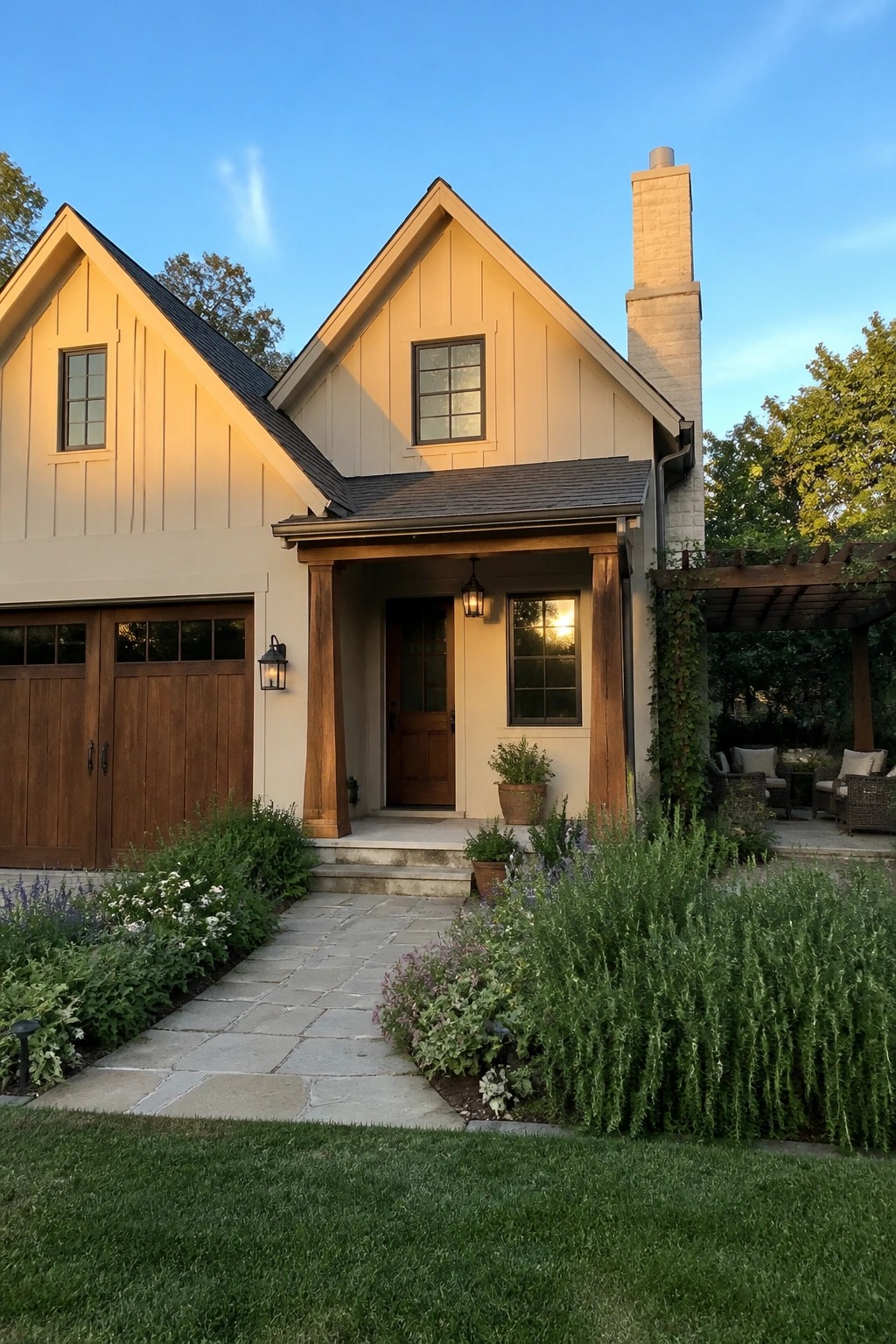
Warm beige siding gives a house a calm base that lets wood accents feel natural instead of forced. The color sits nicely between too light and too dark, so the wood grain on columns, doors, and garage fronts reads clearly without extra contrast work.
This look suits homes with simple rooflines and a few strong wood pieces rather than lots of trim. Use it when you want the entry and garage to connect visually, and keep any metal fixtures in a darker finish so they do not fight the wood tones.
Metal Canopy Over the Entry
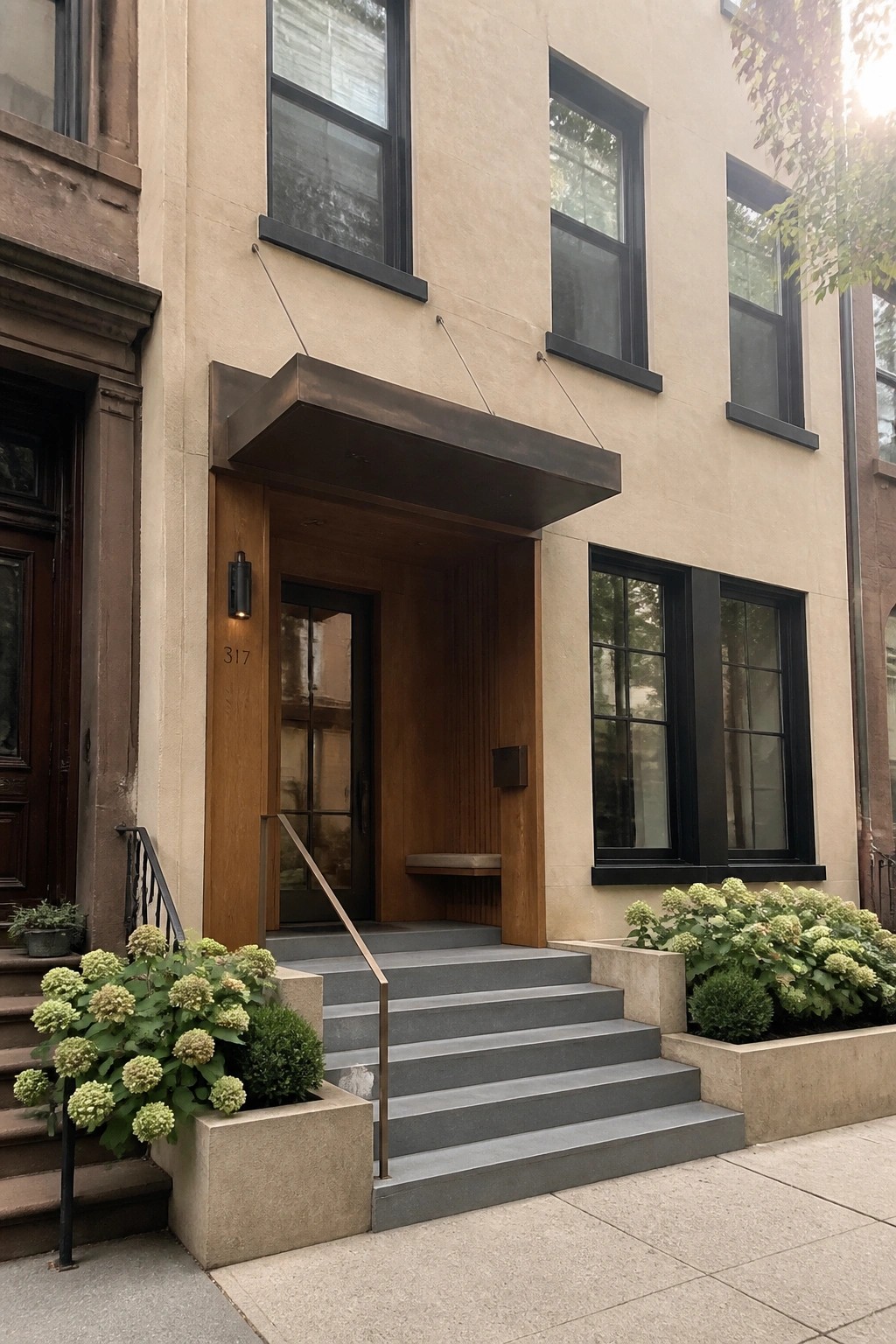
A metal canopy above the front door gives the entry more presence on a simple facade. It creates a defined spot for the door while adding a bit of shelter, and the darker tone stands out nicely against the warm beige walls.
This works best on homes with wood doors or trim already in place. Keep the shape straightforward so the canopy feels like part of the original structure instead of something added later.
Wood Decking That Extends the House Tone
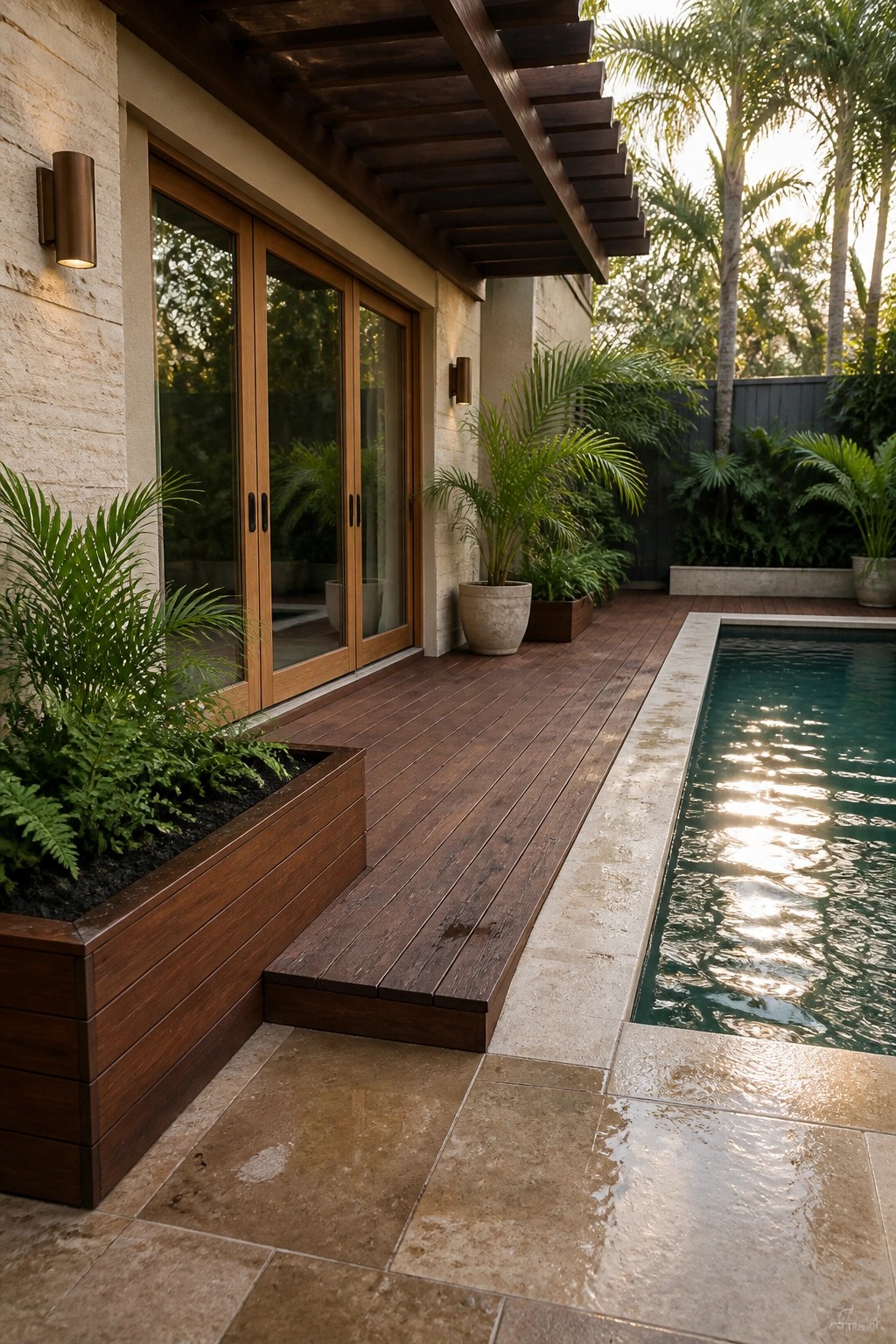
Wood decking works well here because it picks up the same warm feel as the stone walls and bronze lights without trying too hard. The dark planks create a simple bridge between the house and the pool edge, and the built-in planters keep the whole area feeling connected rather than added on later.
This setup suits homes in warmer areas where you want the outdoor space to feel like part of the main structure. Keep the wood tone consistent with any interior accents, and check that the deck height steps down cleanly so the pool does not feel cut off from the rest of the yard.
Stone Piers Under A Wood Porch Roof
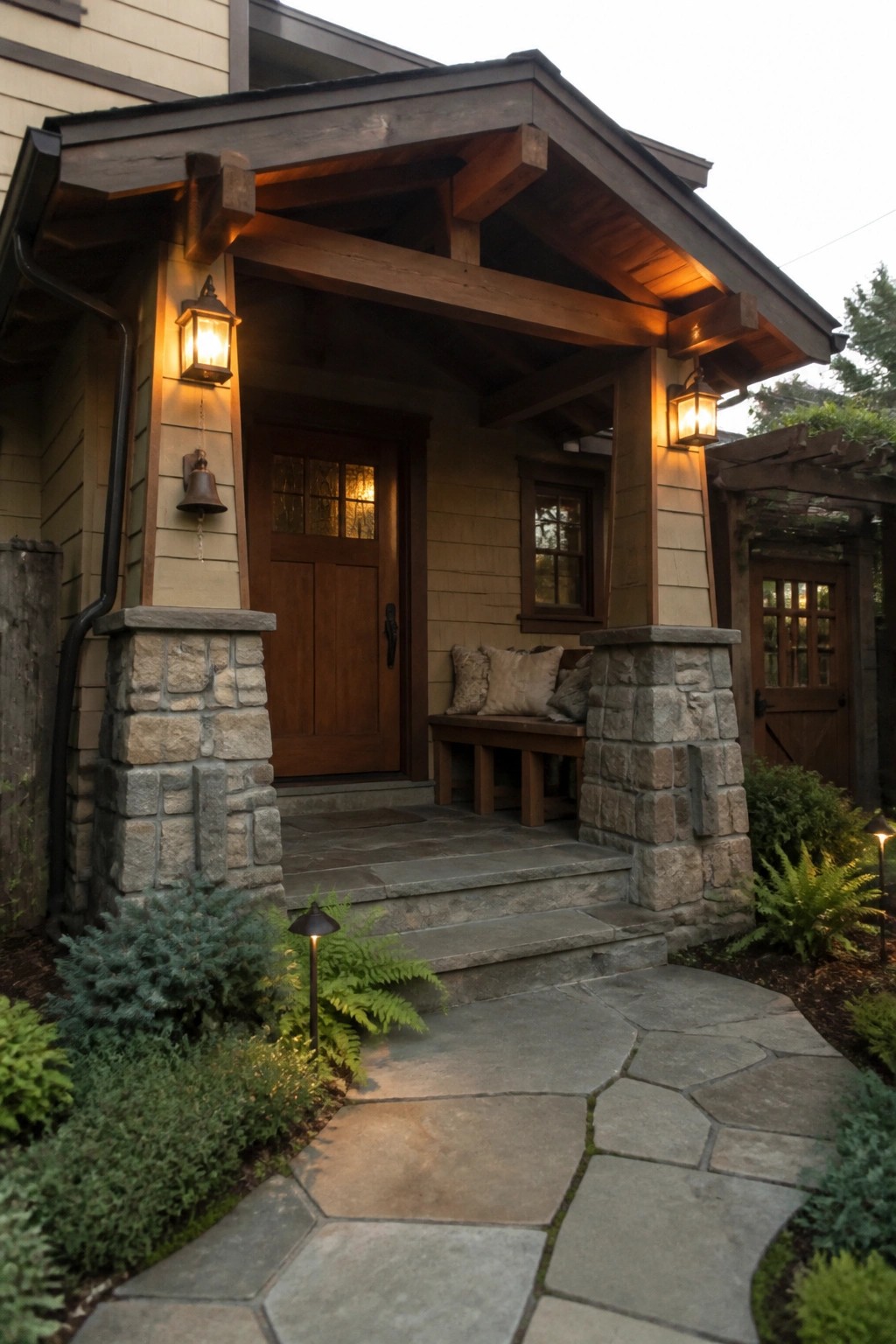
Stone piers give a solid base to a covered entry and help tie wood accents into a beige exterior. They add weight at ground level without making the whole facade feel heavy, and the wood overhead keeps the look warm rather than stark.
This works best on homes with a craftsman or traditional lean where the entry needs some shelter. Keep the piers fairly low and let the wood beams carry the visual load. Too much stone can crowd the siding, so balance is key.
Beige Exteriors with Wood Siding
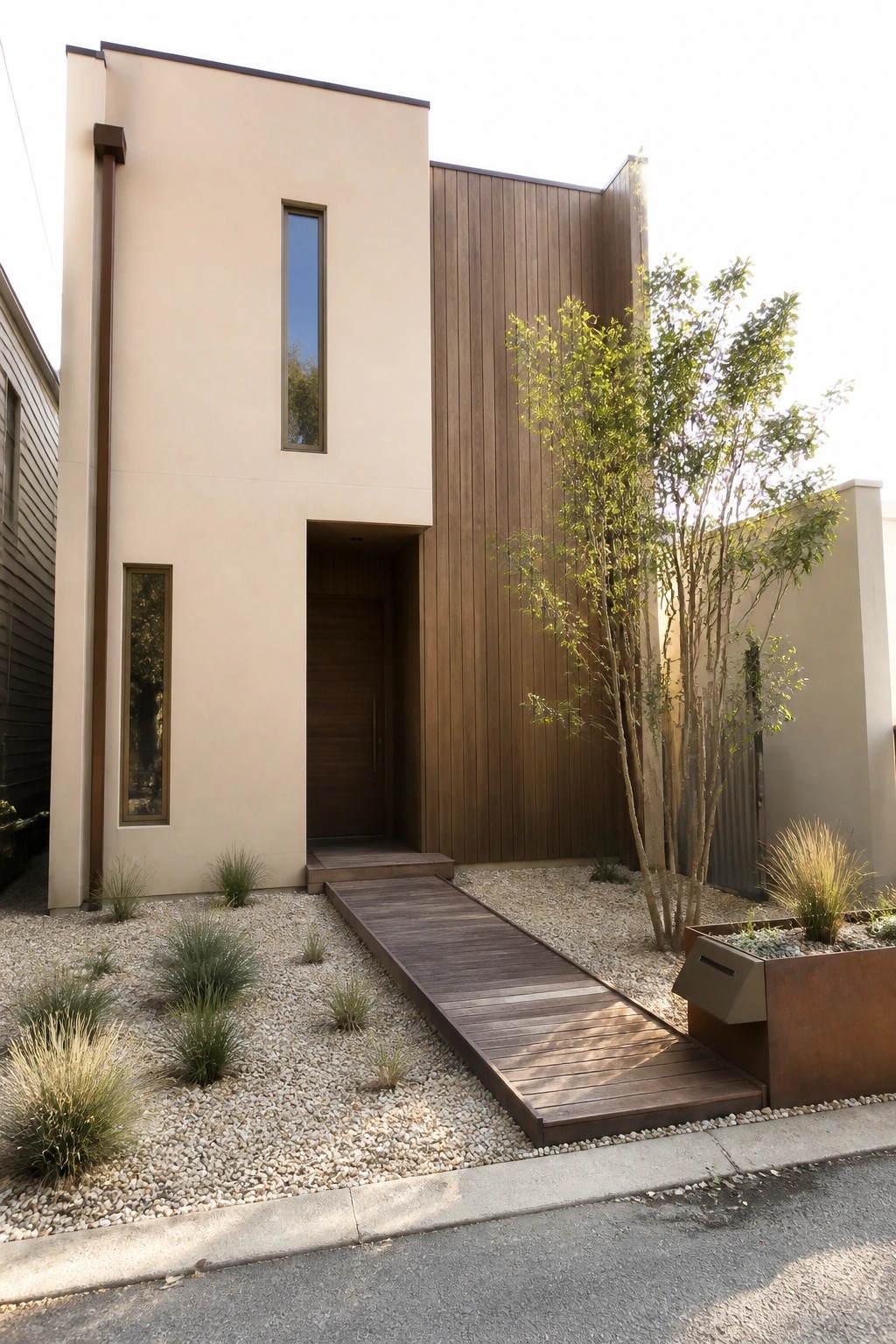
Warm beige walls paired with sections of vertical wood siding give a house a clean look without feeling cold. The wood breaks up the flat surface and adds natural texture that works especially well around the entry.
This mix suits modern homes that want some softness while staying simple. Keep the wood limited to one or two areas so it does not overwhelm the beige, and match the tone of the wood to any bronze or dark metal details you already plan to use.
Beige Siding With Wood Accents at the Entry
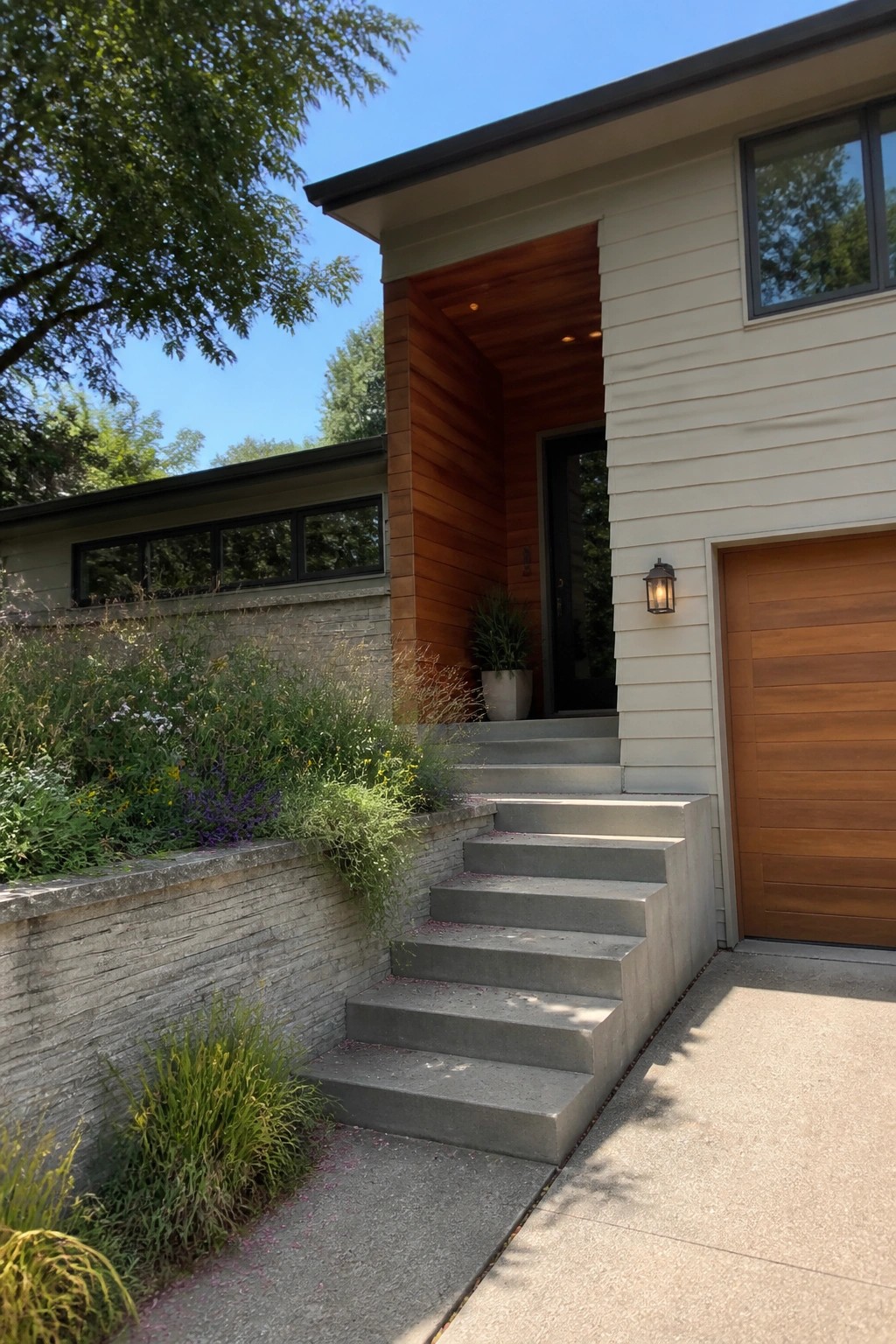
Many beige houses gain warmth when wood is added right around the front door and garage. The contrast keeps the siding from feeling flat while still letting the lighter color stay dominant on the main walls.
This approach suits homes with simple rooflines and few other details. Match the wood tone on the entry overhang to the garage door so the accents read as one choice instead of separate additions.
Wood Accents with Bronze Fixtures
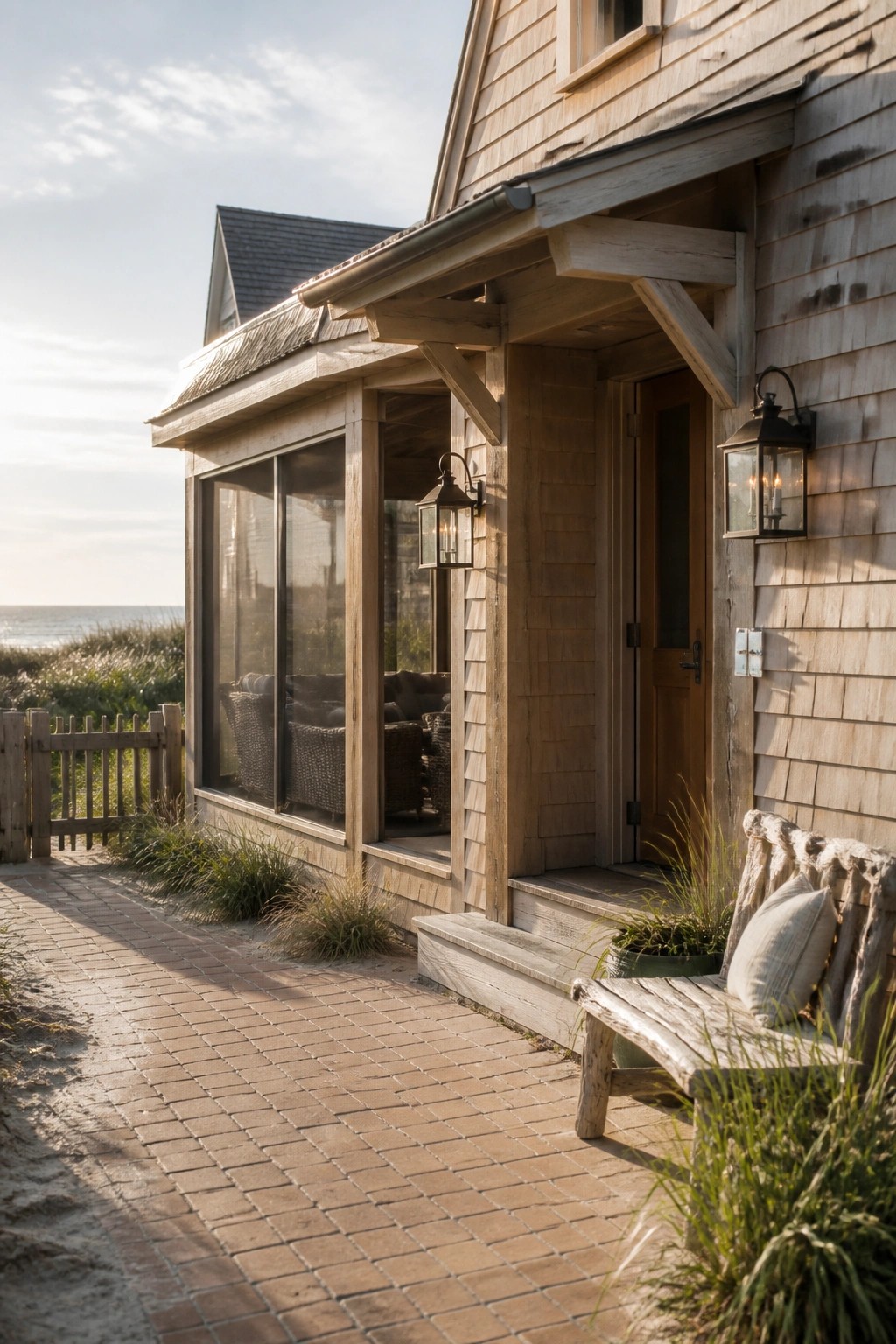
Wood siding and trim bring a natural warmth to a house exterior that painted surfaces often lack. When paired with bronze or dark metal fixtures like lanterns, the contrast keeps the look grounded instead of overly rustic. This mix works especially well on shingled homes where the wood already has some age and texture.
It suits homes near the coast or in wooded settings where you want the exterior to feel relaxed but still finished. Keep the metal simple and the wood tones close to beige or light gray so the fixtures stand out without fighting the siding.
Wood Doors That Warm Up Beige Exteriors
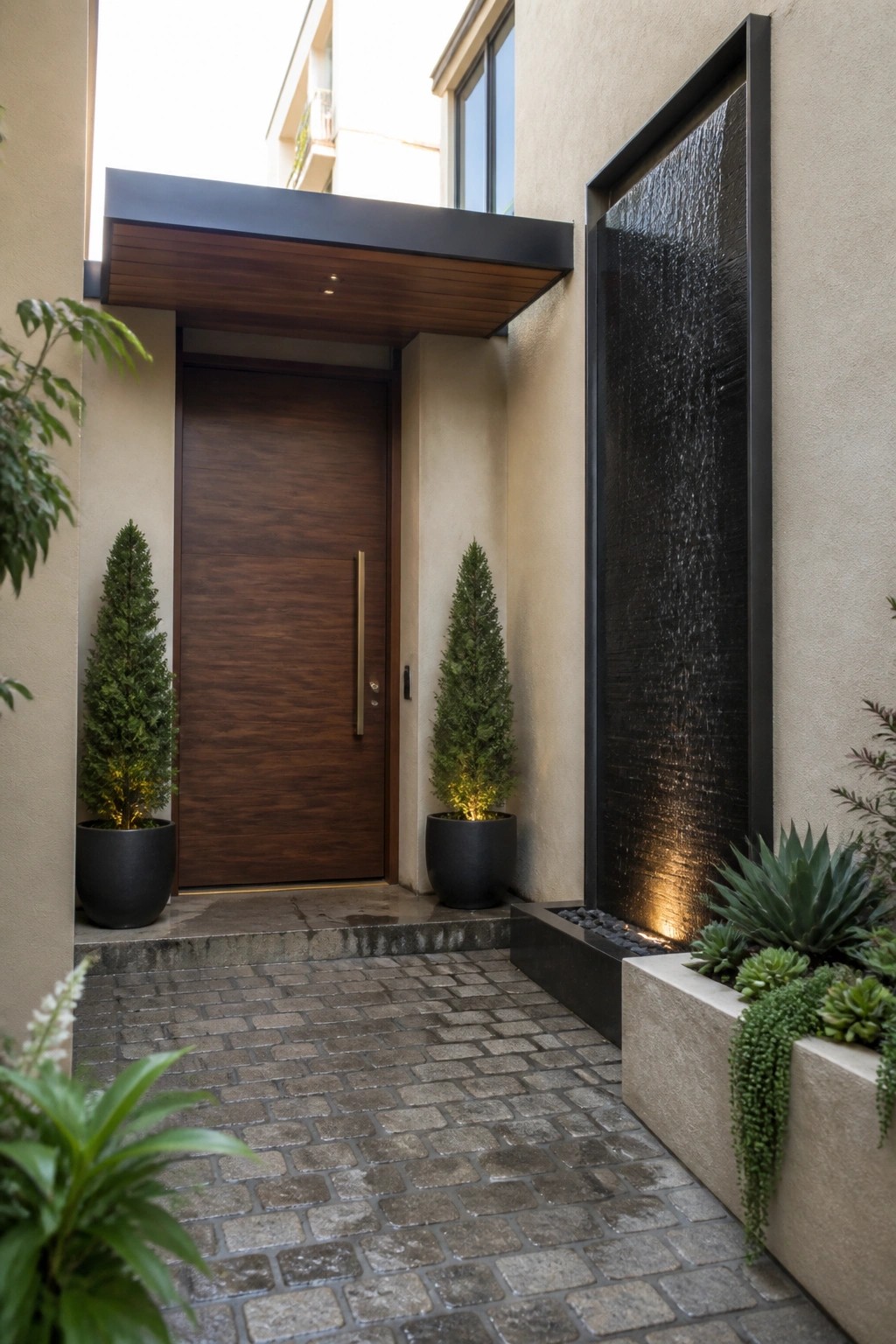
A dark wood front door gives a beige house exterior a clear focal point without needing much else. The natural grain and deeper tone stand out nicely against the light stucco, and the bronze handle adds a quiet contrast that feels intentional rather than added on later. This approach keeps the overall look simple while still making the entry feel welcoming.
It works especially well on homes with clean lines and modest overhangs, where the wood can carry the warmth on its own. Just keep the surrounding planting low and contained so the door stays the main feature.
Warm Beige Works With Wood Shutters
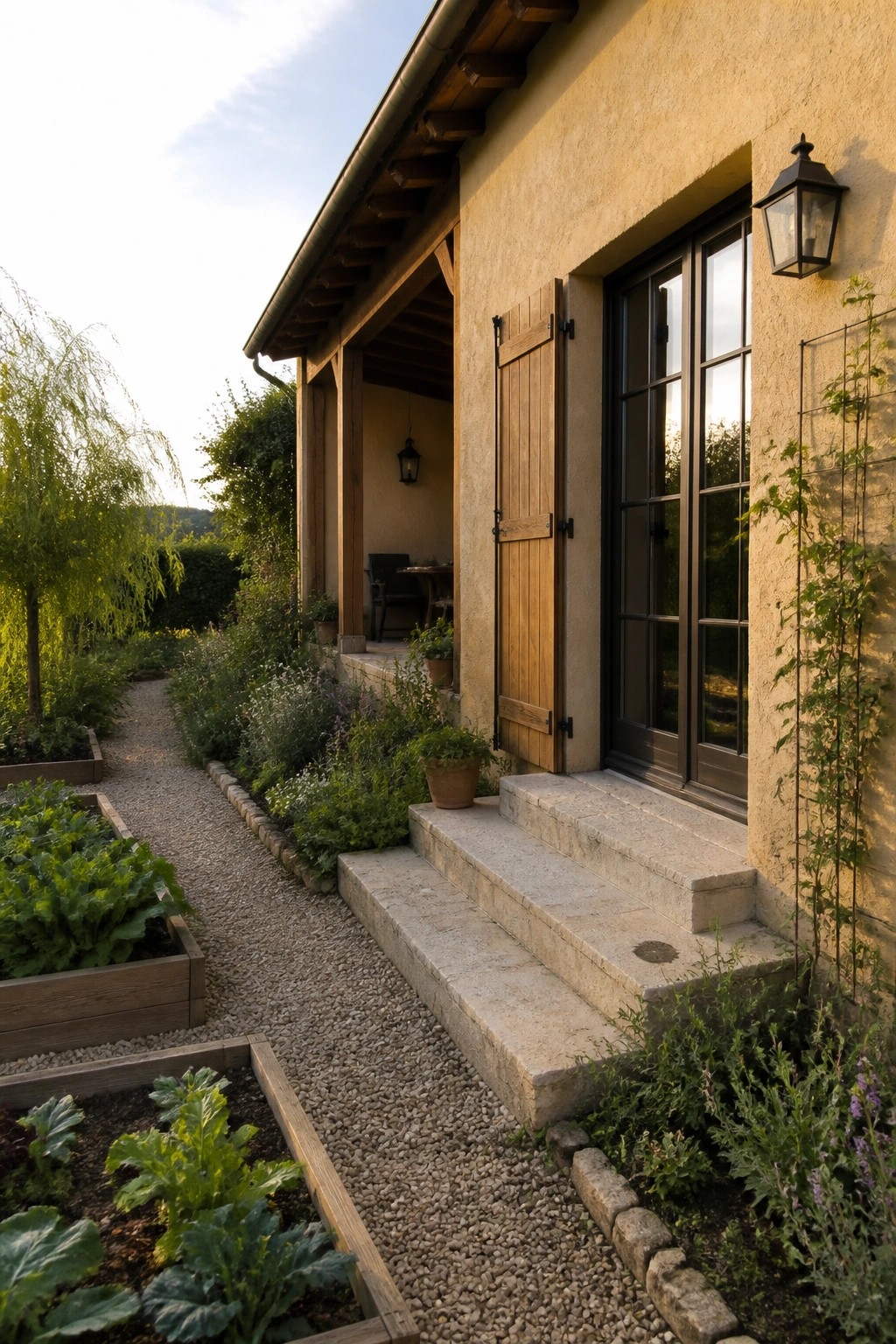
Warm beige stucco gives wood accents room to stand out without fighting for attention. The soft tone keeps the overall look calm while the shutters add warmth and texture right where it matters most, around the windows and doors. Dark metal fixtures then provide just enough contrast to keep the facade from feeling flat.
This combination suits homes with straightforward shapes and modest trim. Use natural wood tones on the shutters and match the fixtures to a similar bronze or aged finish. It works especially well in settings where the house sits close to garden beds and paths, since the beige lets the greenery feel like part of the same palette.
Frequently Asked Questions
Q: How do I choose a beige that still feels warm next to my dark wood siding?
A: Look for beige with a touch of golden undertone so it does not wash out beside the wood. Test a large sample board right on the wall during different times of day. The right shade will make the wood grain stand out instead of compete.
Q: Should I stain the wood accents or paint them to match the bronze fixtures?
A: Leave the wood natural or use a light stain that shows the grain. Bronze already brings enough contrast, so painted wood can feel too busy. One stained beam or shutter set is usually plenty.
Q: Will the beige still look good if I add more bronze lights around the porch?
A: Yes, just keep the lights to a few spots like the door and steps. Too many can make the beige feel flat at night. Place them low so the wood tones stay visible without harsh shadows.
