

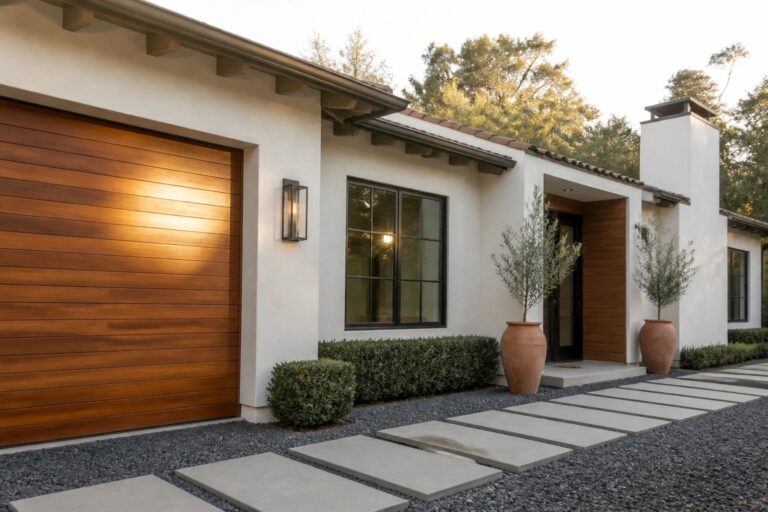
I’ve noticed that exterior colors only settle into place once you see them against the actual roof pitch and siding texture on a real house.
When I drive through neighborhoods I often catch myself wondering why some white and charcoal combos feel crisp in photos but end up looking flat once the sun moves across the facade.
Materials change everything.
Adding wood tones to taupe seems to soften the sharp edges of modern entries better than paint alone, especially around the front door and window trim.
I usually test a couple of these pairings on a small section of siding first so I can watch how they shift with the light before committing to the whole front.
White Stucco With Warm Wood Accents
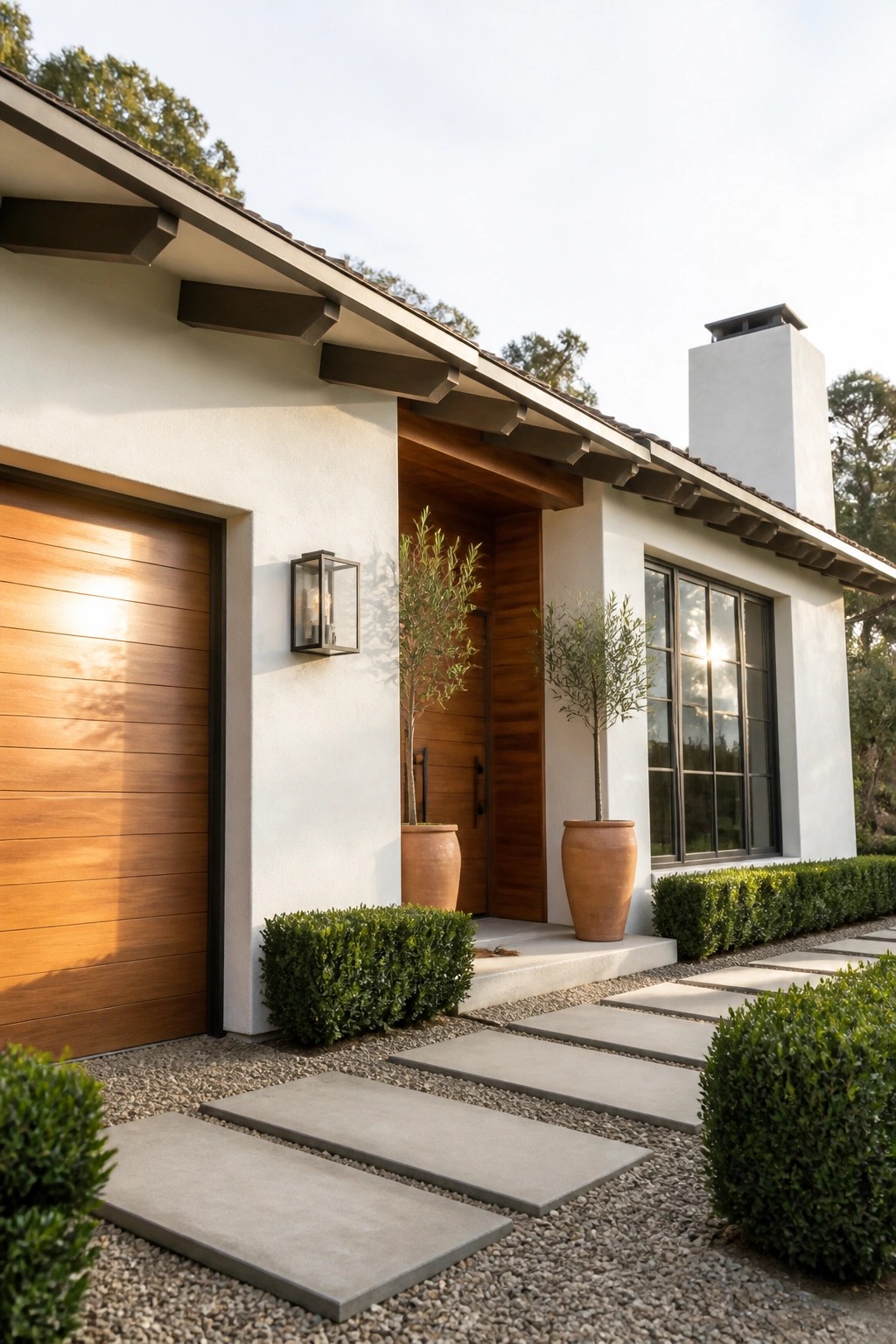
White stucco paired with wood siding and trim gives a house a clean look that still feels grounded. The contrast keeps things simple without going flat, and the wood adds just enough warmth to stop the white from feeling cold.
This approach works well on single-story homes where the roofline is fairly low. It suits neighborhoods that want modern without looking stark, though the wood needs a finish that holds up to weather.
Charcoal Siding with Wood Tones
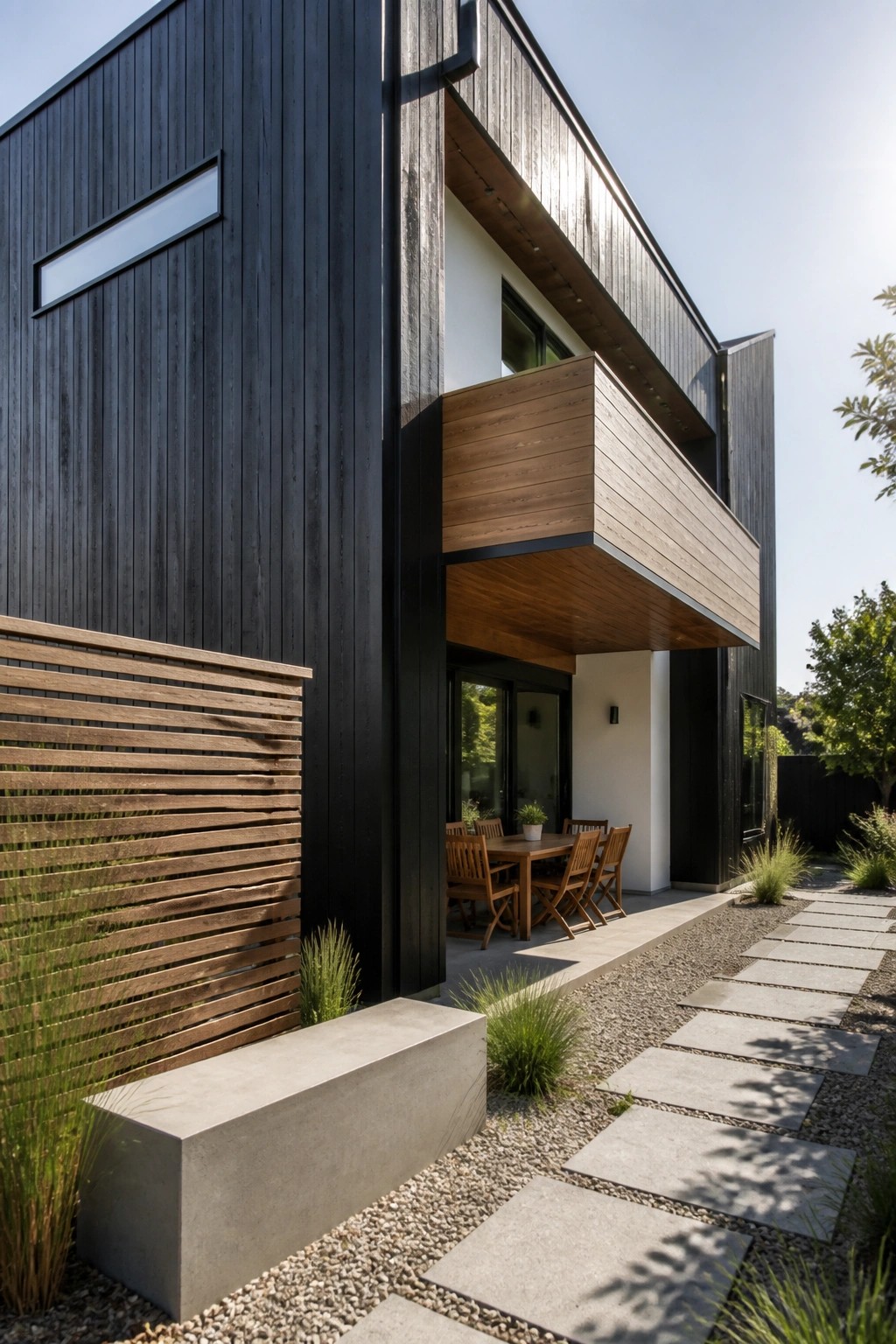
Dark siding gives a house a solid, modern base that holds up well over time. Adding wood tones on key spots like overhangs and balconies keeps the look from feeling too cold while still staying simple and clean.
This approach works best on homes with straightforward shapes where the wood can act as a warm counterpoint. Use it on the main body in charcoal and reserve the wood for structural elements that get some sun. It helps the house blend into a natural setting without extra decoration.
Taupe Siding With White Trim

A soft taupe on the main siding gives the house a calm presence that works well near the coast. The white trim around the windows and door keeps the whole thing from feeling heavy or dull.
This color choice suits homes with straightforward shapes and natural wood details. It holds up in bright sun and blends into sandy surroundings without needing constant upkeep.
White Siding With Charcoal Roofing And Wood Accents
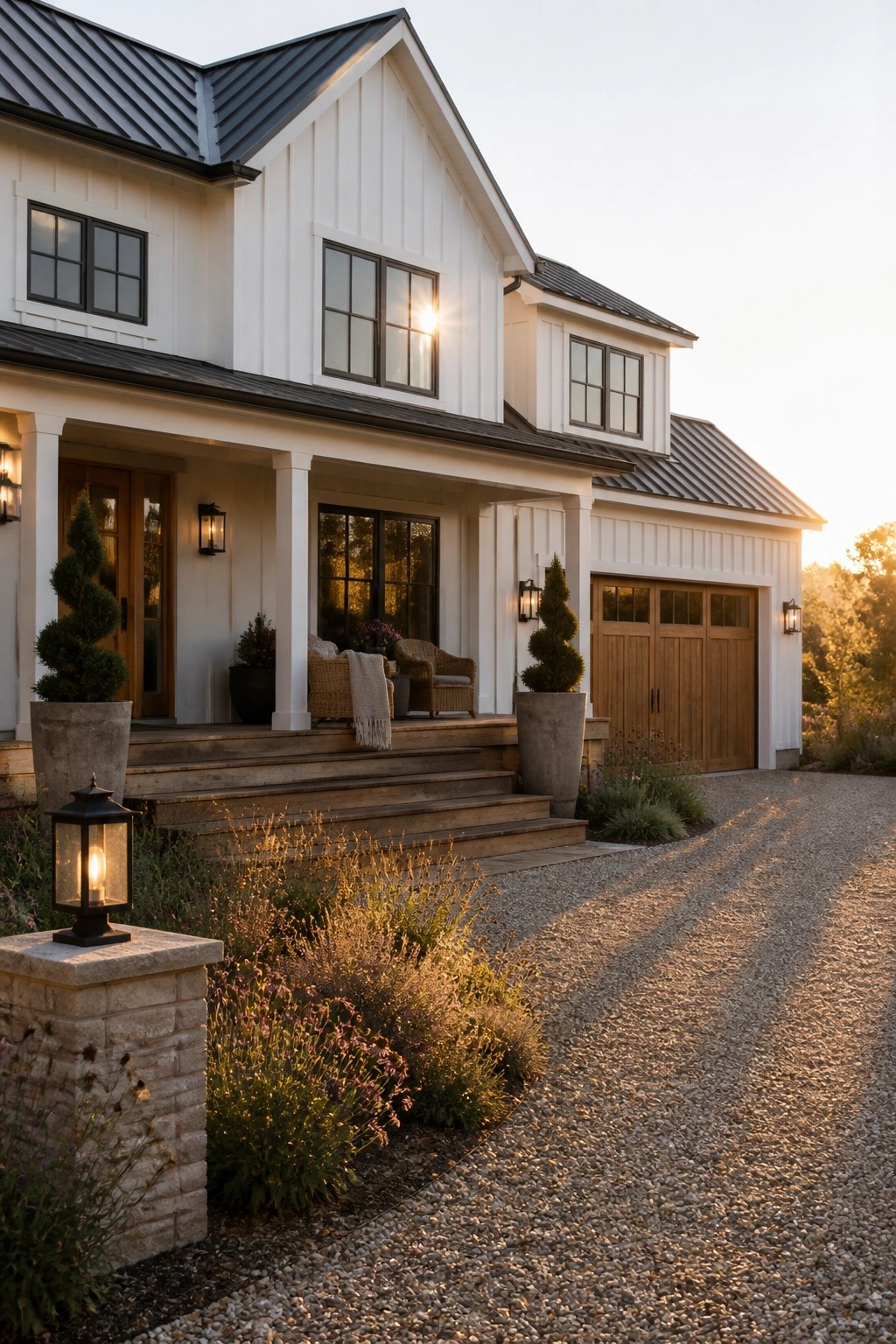
White siding gives a house a clean starting point that feels bright and open. Pairing it with a dark charcoal roof adds weight on top and keeps the look from drifting too soft or cottage-like.
This mix works best on homes with straightforward shapes and a few wood details to warm things up. The wood tones on doors or garage fronts add just enough contrast without needing extra colors or trim work.
Charcoal With Wood Accents
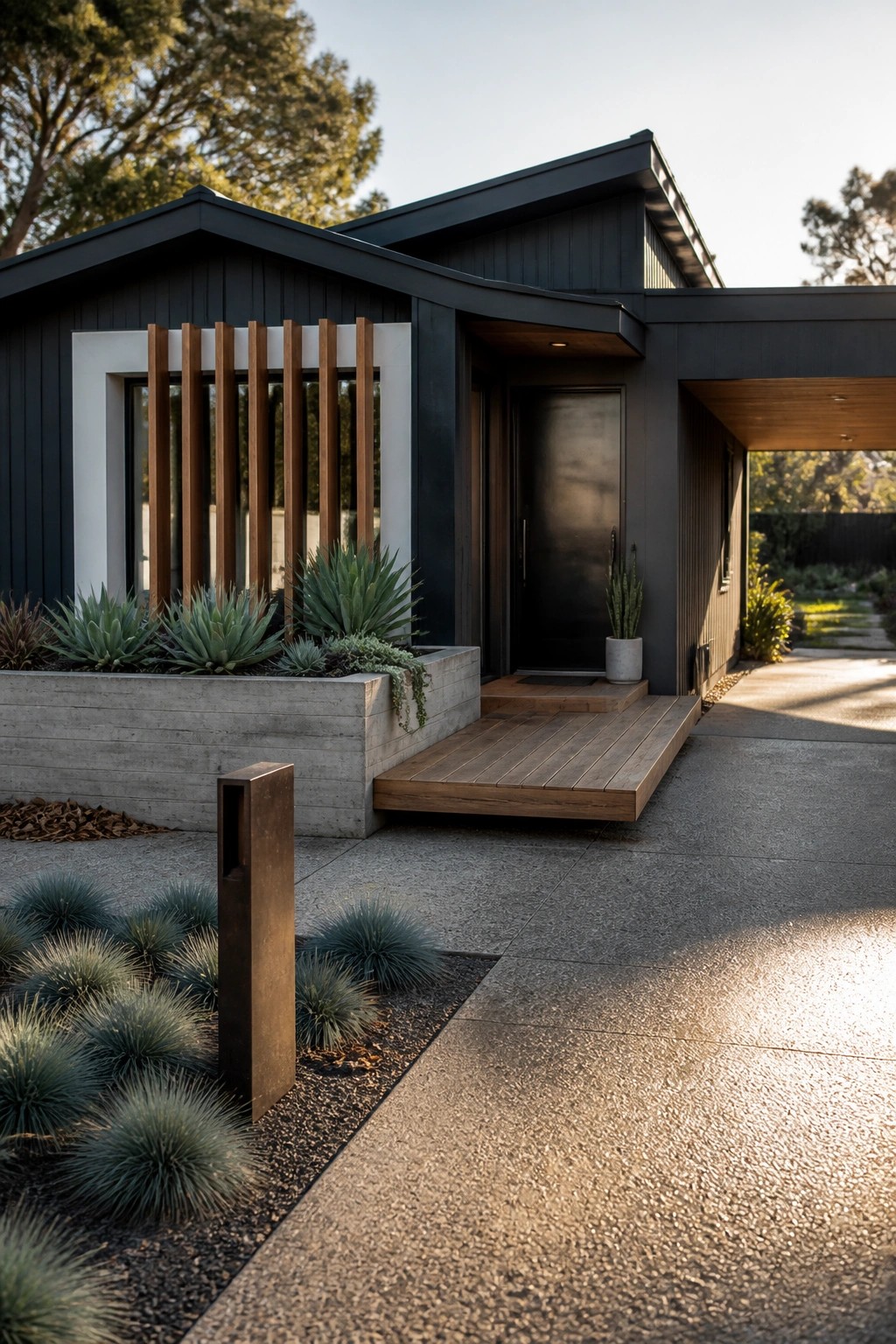
Many modern homes look better when they stick to a simple mix of dark siding and natural wood. The dark base keeps things grounded while the wood adds just enough warmth without making the whole house feel busy or overly styled. This approach works especially well on smaller homes or those with clean lines.
It suits houses in suburban or wooded settings where you want the exterior to blend in rather than stand out. Keep the wood tones consistent and limit how much you use so the dark color stays the main feature. Avoid adding too many other materials or it can start to feel cluttered.
Extending the House With a Matching Wood Deck
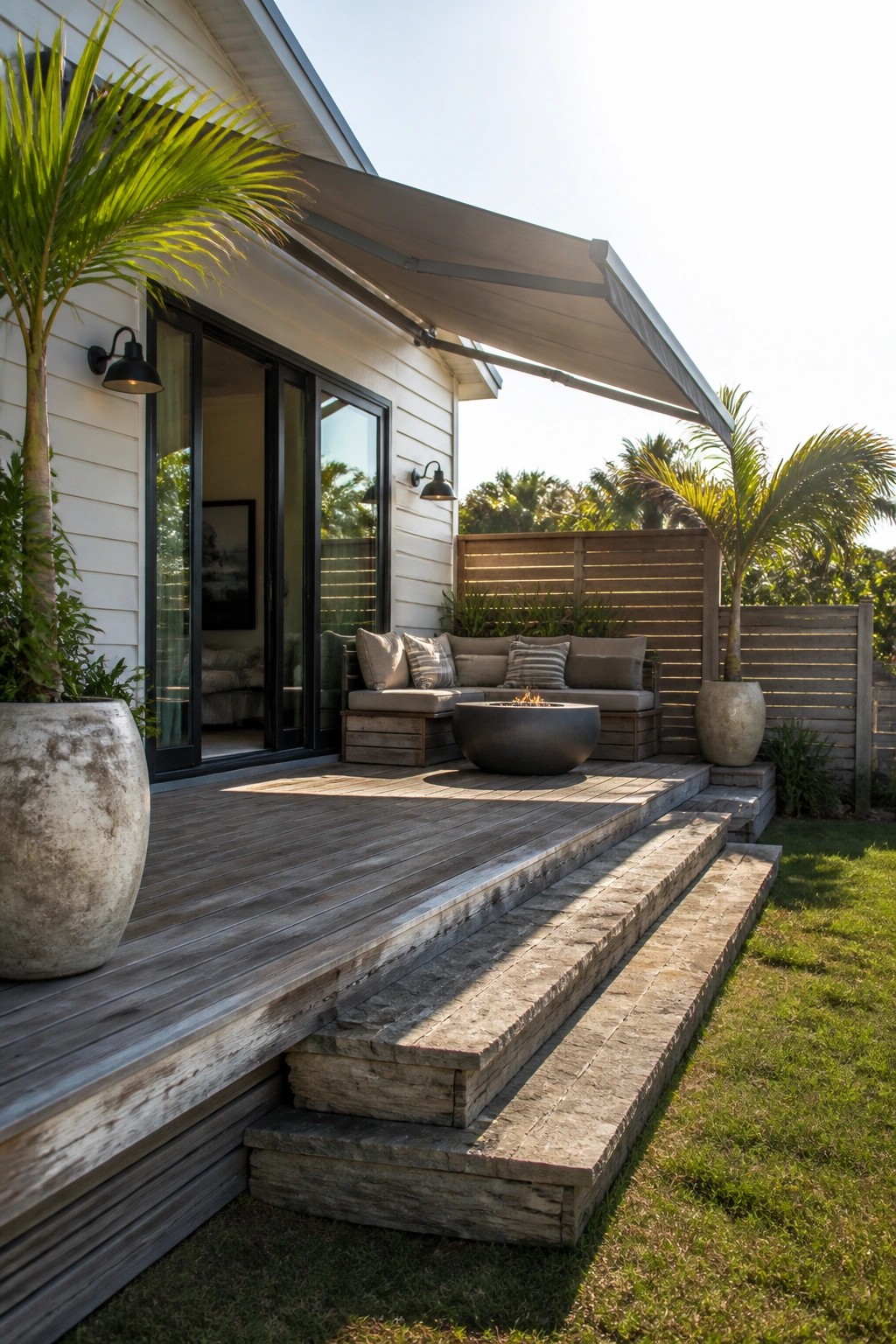
A deck built in the same wood tones as nearby fences or accents helps the outdoor space feel connected to the house. It avoids that separate, tacked-on look and works especially well when the house itself stays simple in white or light siding.
This setup suits homes that want a calm backyard area for regular use. Keep the furnishings in taupe or charcoal, add a fire pit in the middle, and use a shade structure overhead so the space stays comfortable without extra colors or clutter.
Adding Wood Accents to White Exteriors
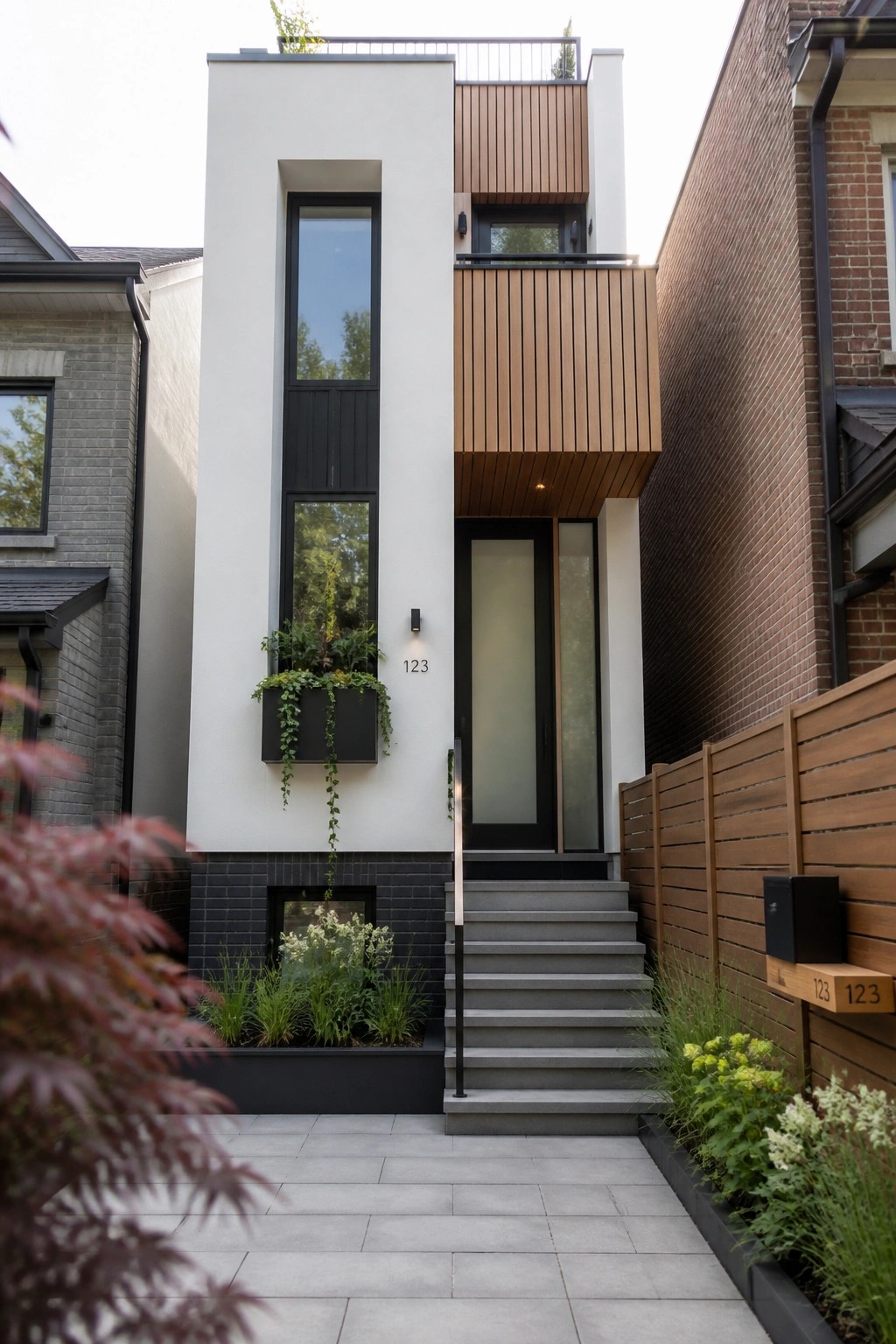
White walls give a house a clean, open look but can sometimes feel flat on their own. Introducing wood panels or slats in a natural tone adds warmth and breaks up the surface without making the whole exterior feel busy.
This approach works well on narrow homes where you need some texture to add interest. Use the wood on smaller sections like a balcony or upper feature wall, and keep the rest of the facade simple so the contrast stays balanced.
Taupe Siding With Wood Accents
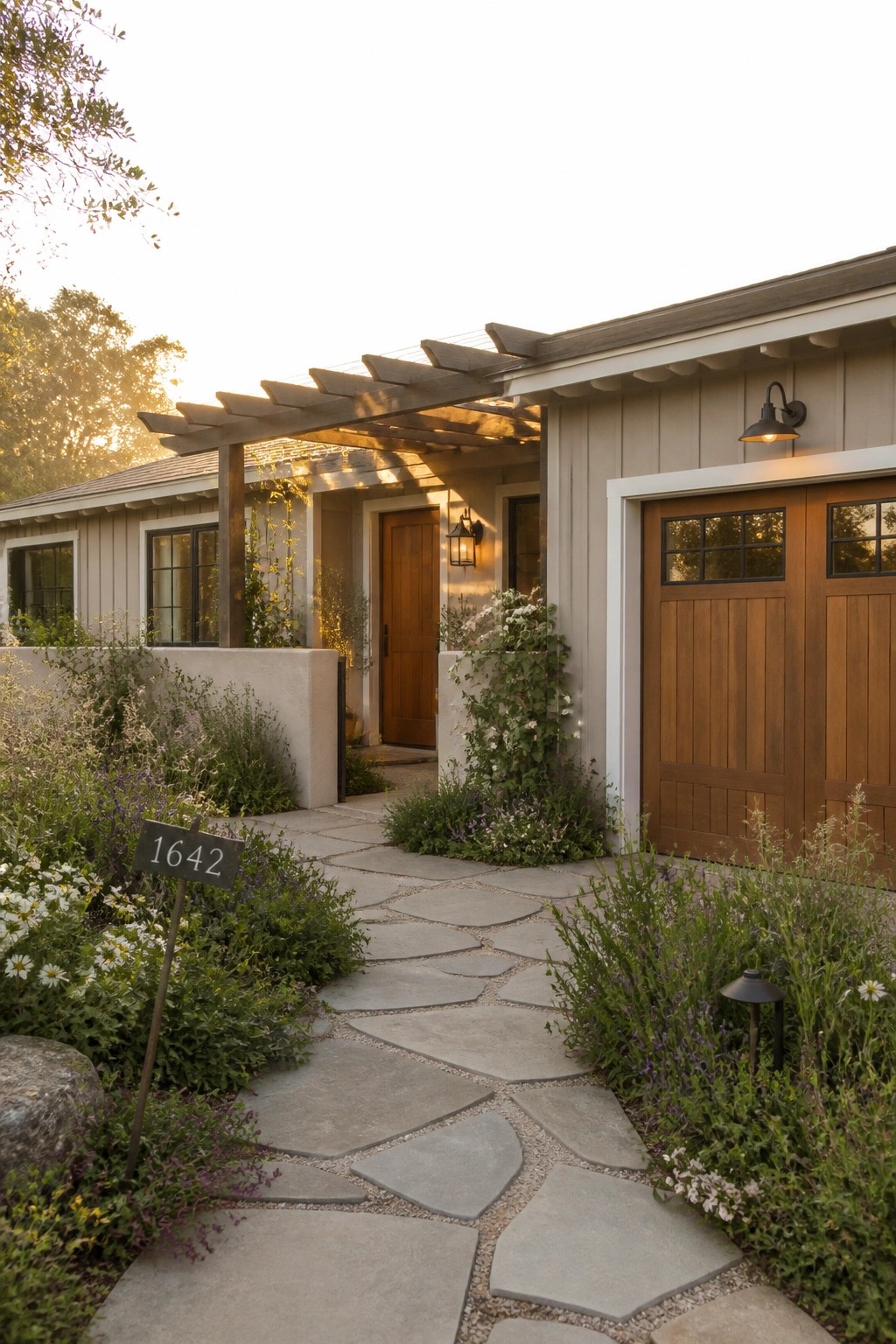
Taupe siding looks better when it has wood tones next to it. The brown doors and garage panels bring some warmth to the neutral color and keep the house from feeling flat or too plain.
This works well on homes that already have a simple shape. Use the wood on the main doors and trim, then keep the siding in a matte finish so the two materials play off each other without competing.
White Walls With Wood Tone Details
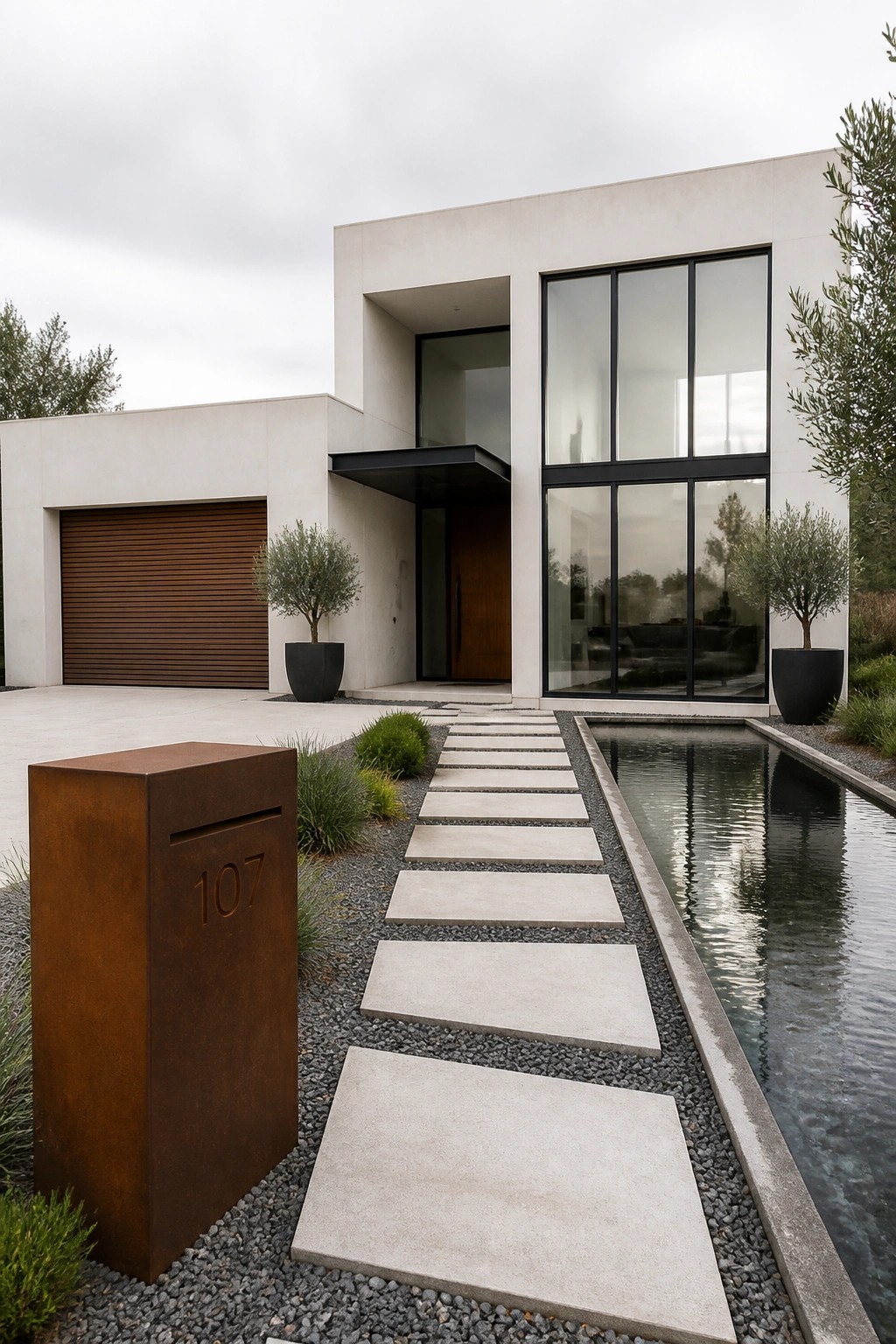
A white exterior creates a clean base that lets other materials stand out without competing. Wood tones on the garage door and front door add just enough warmth to keep the house from feeling stark.
This approach suits modern homes with simple shapes. It works best when the wood is kept to key spots like doors and accents rather than spread across the whole facade.
White Brick With Charcoal And Wood Accents
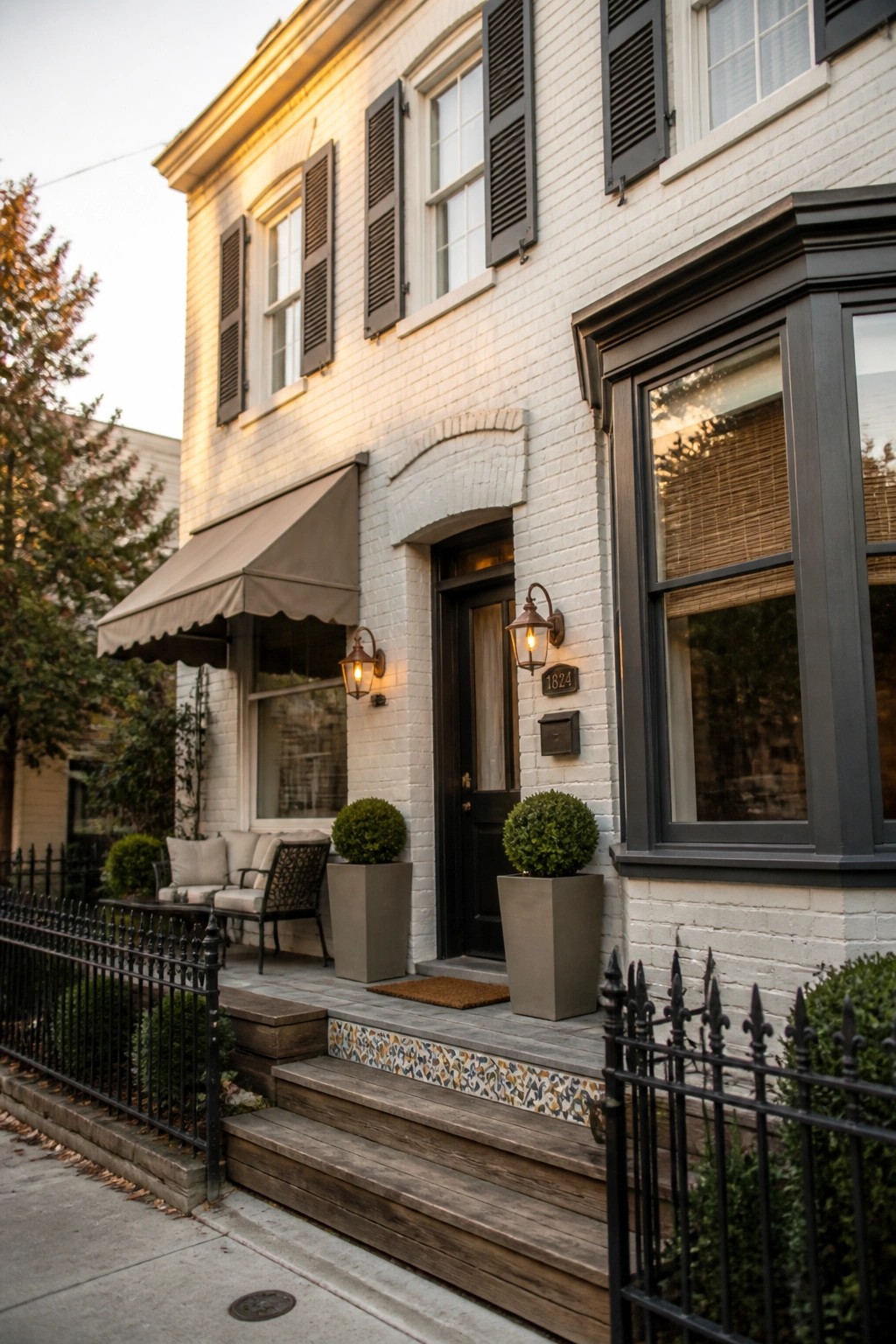
White brick holds up well as a base color because it stays bright without looking stark. Adding charcoal on the shutters, windows, and door gives the facade clear lines and keeps the whole look grounded. The wood steps add just enough warmth so the scheme does not feel too cold or flat.
This approach suits both older brick homes and newer builds that need a simple refresh. Keep the trim finishes matte and let the wood show its natural tone rather than painting it to match the darker details.
White with Natural Wood Tones
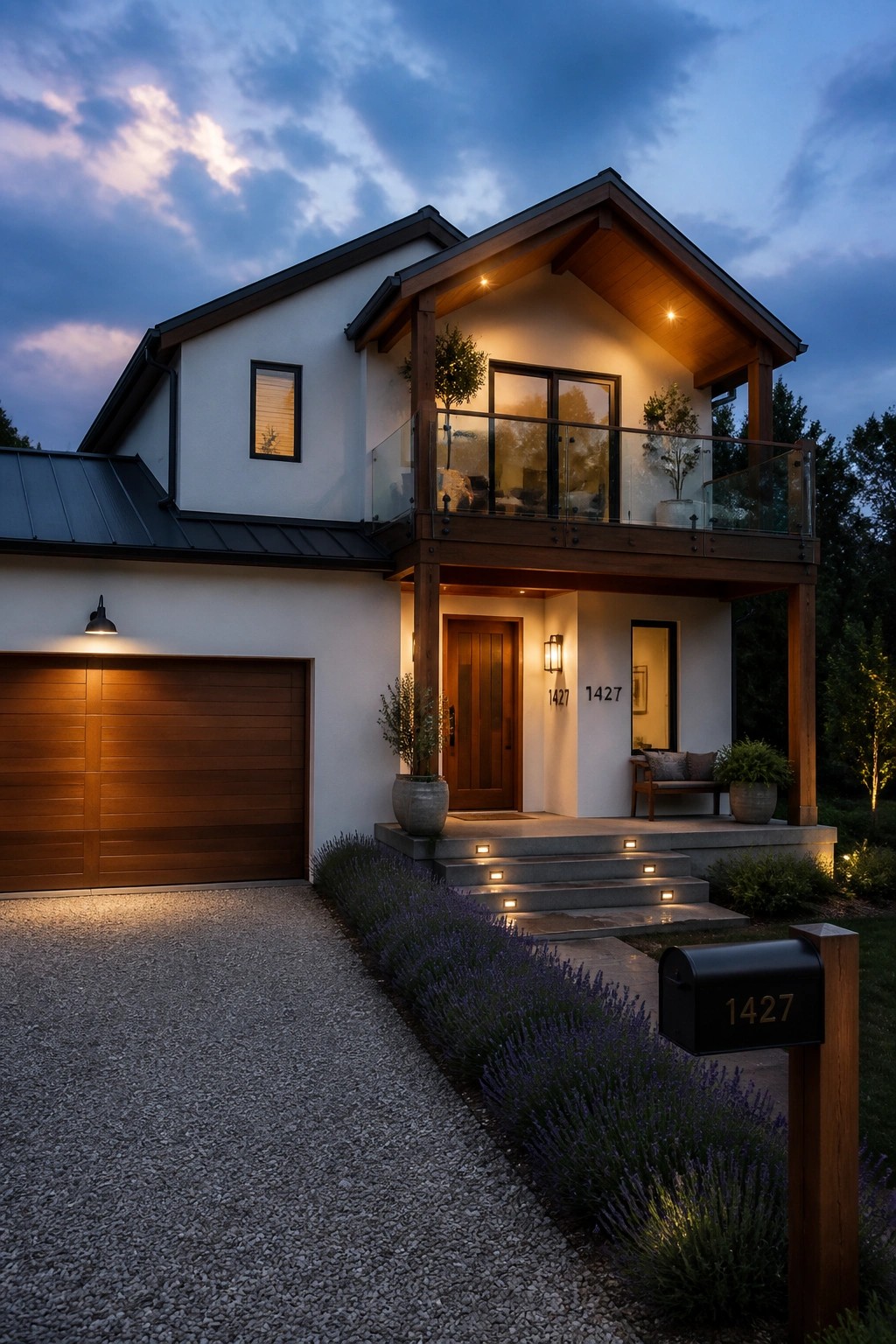
White walls paired with wood accents create a clean modern look that still feels warm and approachable. The light base keeps the house bright, while the wood brings in texture and depth that prevents the exterior from feeling too stark or cold.
This approach works well on homes with simple rooflines and mixed materials. Keep the wood tones consistent across doors, beams, and trim so the whole facade reads as one thoughtful scheme rather than scattered pieces.
Mixing Charcoal Wood With Stone On The Exterior
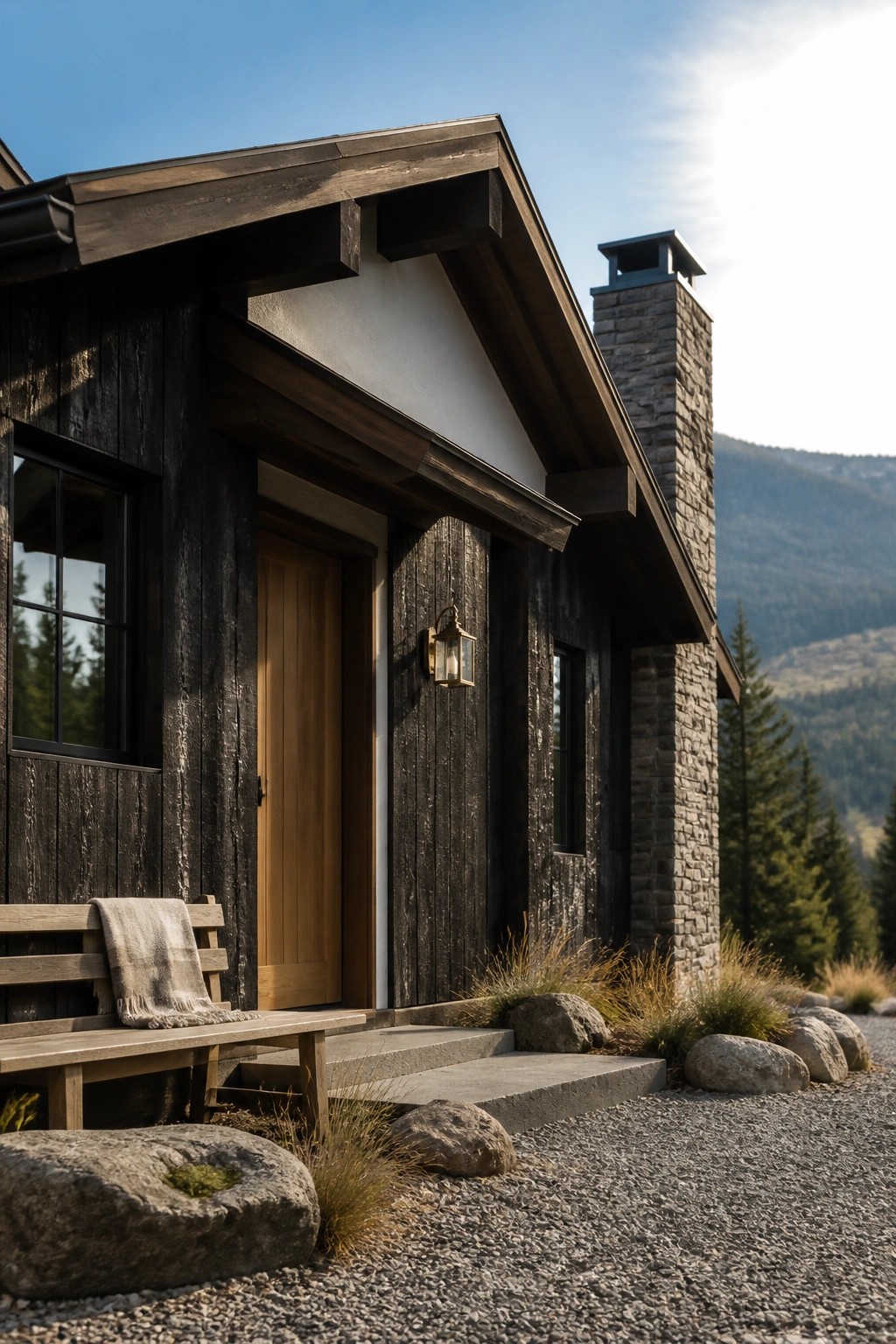
Many homes gain a steady, grounded look when dark wood siding is paired with stone. The charcoal tone on the boards keeps the house from feeling too light or scattered, while the stone chimney adds weight and texture that holds up over time.
This mix suits houses set against trees or hills, where the dark siding blends into the landscape but still reads as intentional. Use a lighter wood tone on the door and trim to keep the entry welcoming instead of heavy.
Wood Tones With Charcoal And White
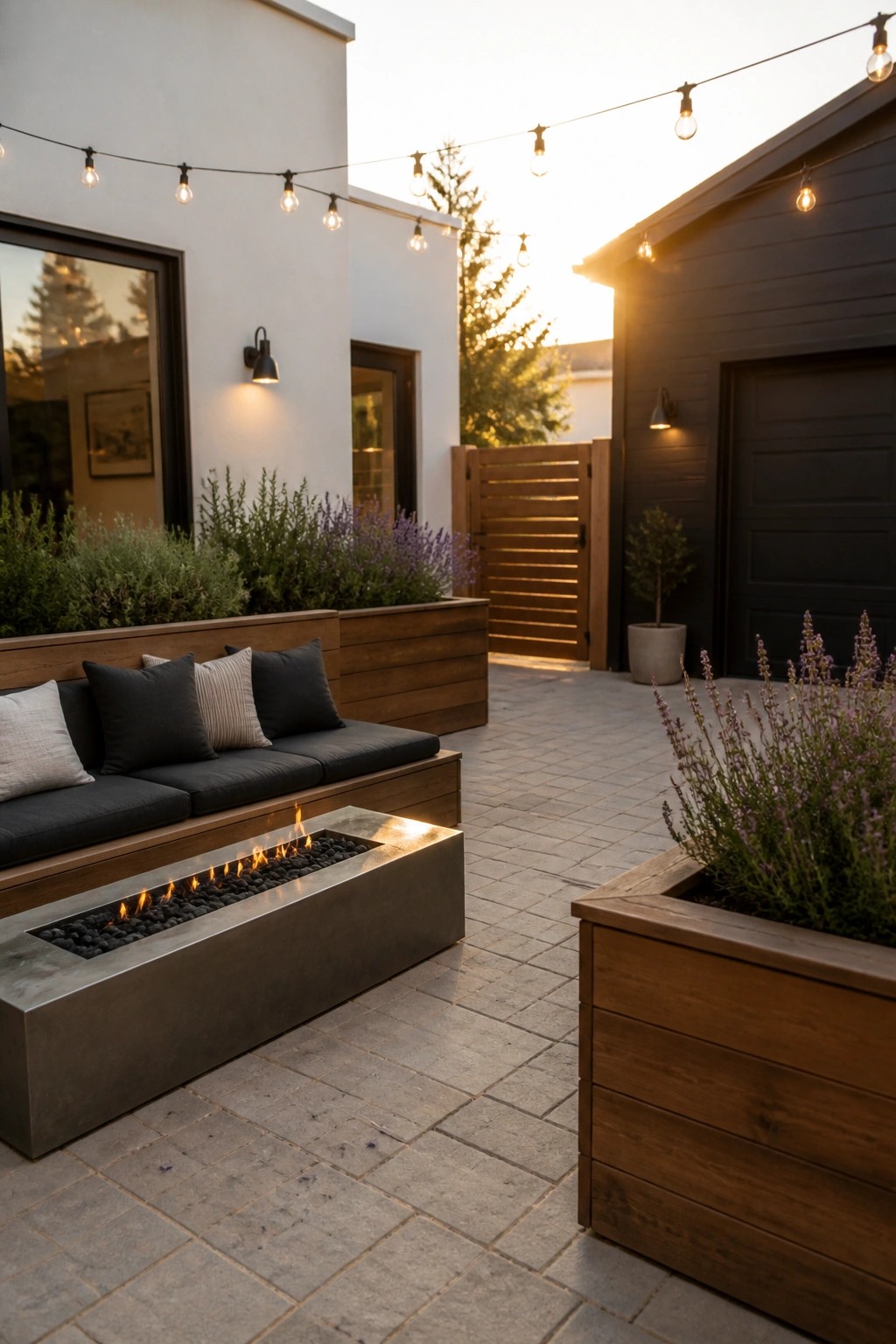
Wood tones work well when they sit next to both white walls and darker siding. They bring a bit of warmth without breaking the clean lines of a modern setup. In this kind of space the wood shows up in the bench and planters, which helps the whole area feel grounded.
Try the same mix on a patio or side yard where you already have white and charcoal on the house. Keep the wood fairly natural so it reads as a simple connector rather than another color to manage. It suits homes that want a modern look without going all the way to cold or stark.
Mixing White Charcoal And Wood Tones On The Exterior
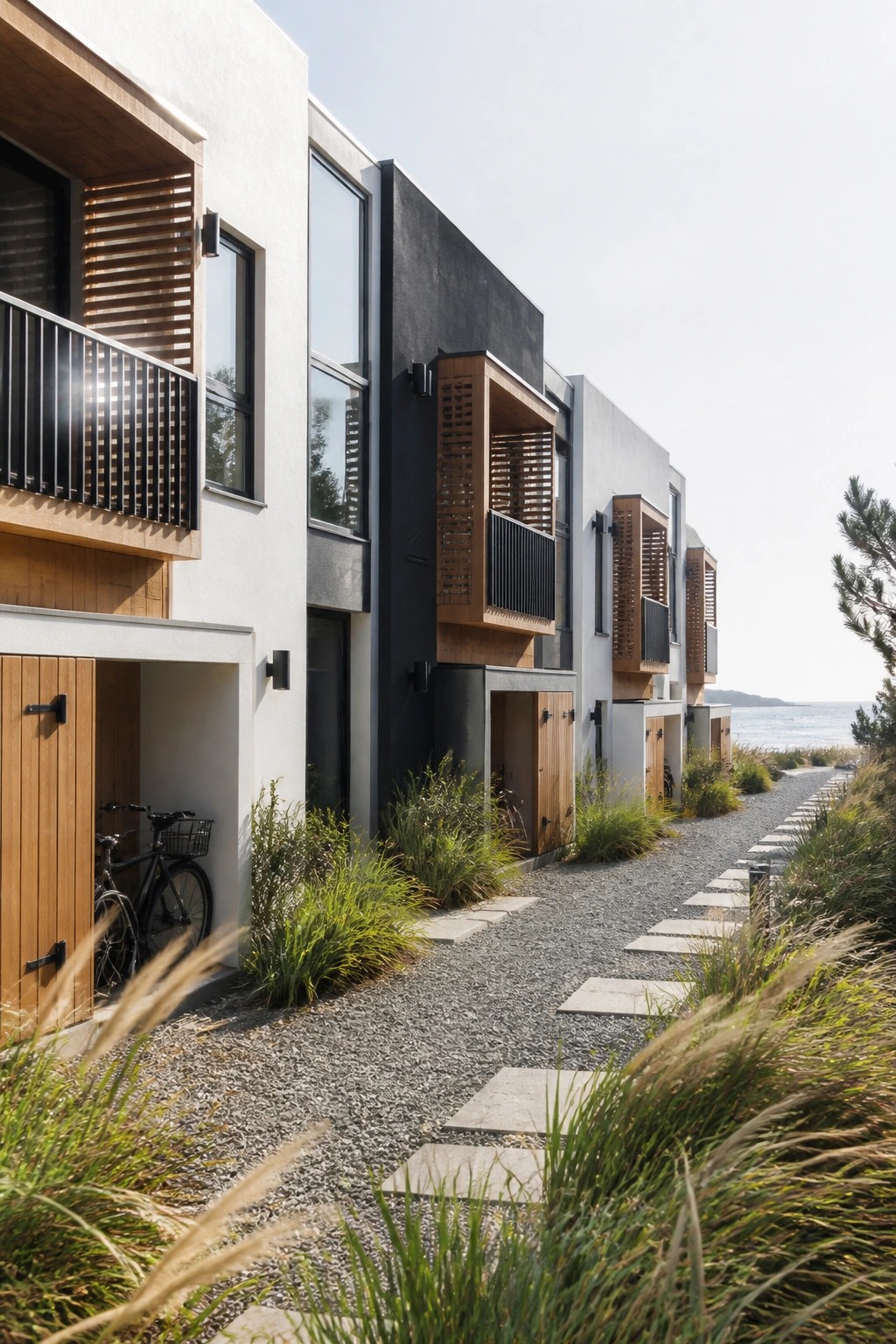
Many homes look better when white walls are broken up with darker sections and wood details. The contrast keeps the overall look clean while the wood adds just enough warmth so the house does not feel cold or flat.
This works especially well on homes with simple shapes and straight lines. Use it on new builds or updates where you want the color scheme to stay current without needing constant changes.
Repeating House Colors Outdoors
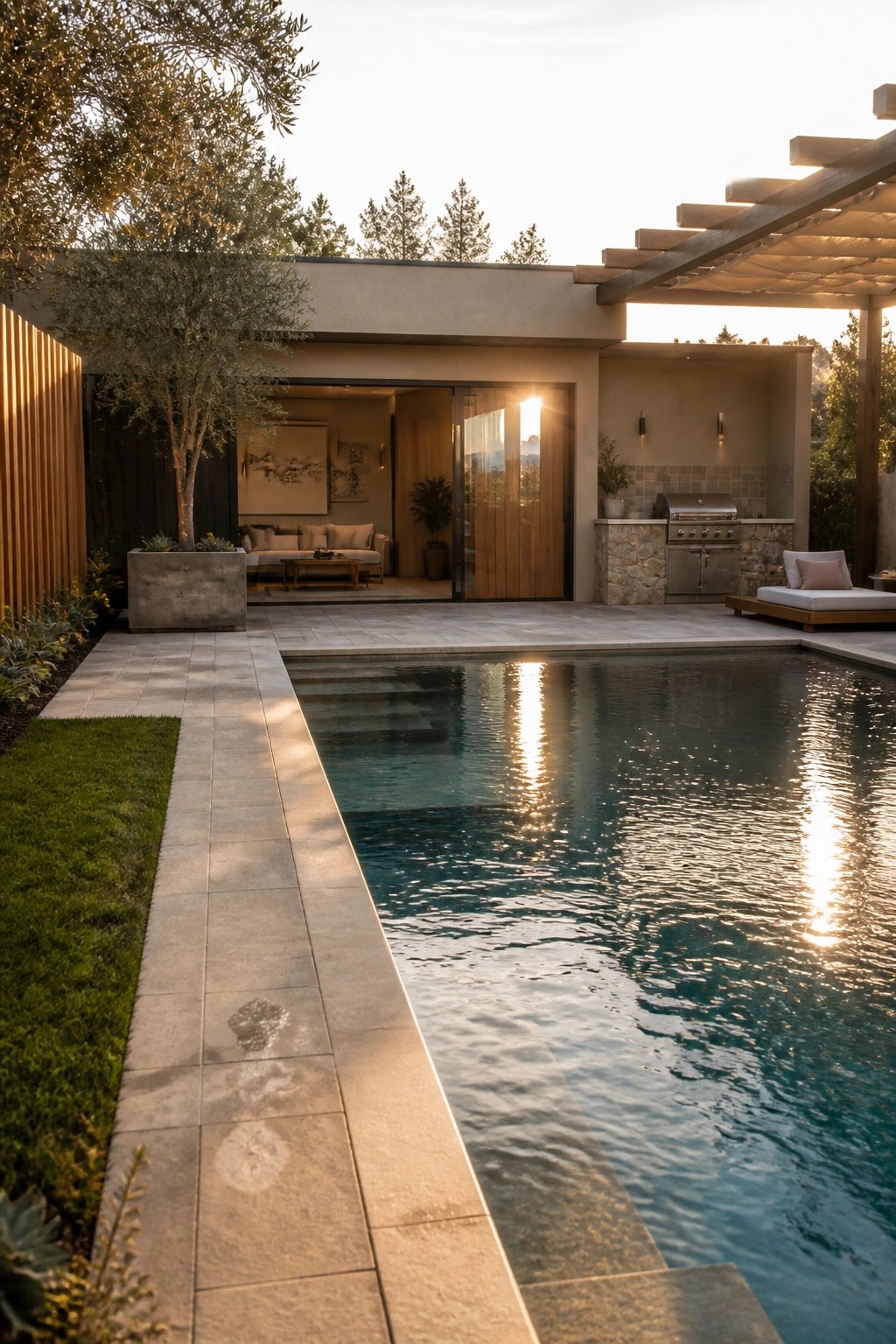
Many homes feel more settled when the same neutrals used on the main walls show up again on the outdoor kitchen and pergola. The taupe stucco and warm wood tones create a quiet link between the house and the pool area without adding extra colors.
This works best on single-story modern homes where the patio sits right against the living spaces. Keep the stone and metal accents minimal so the wood and wall colors stay the main connection.
Mixing Wood Tones with Charcoal and White
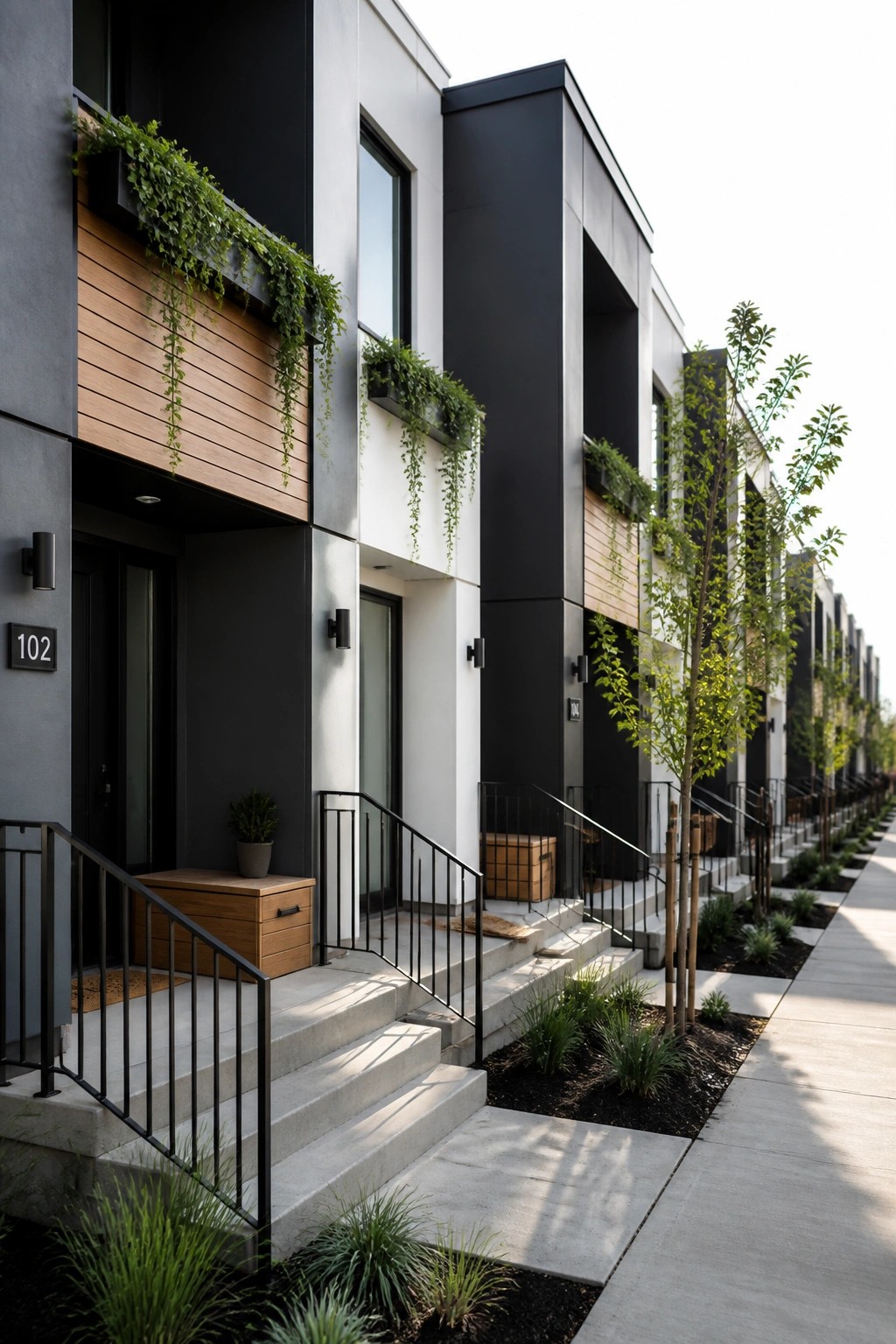
Many newer homes use this exact mix of charcoal siding, crisp white sections, and warm wood panels to keep the look modern but not cold. The wood breaks up the darker and lighter blocks so the facade feels balanced rather than flat.
This works especially well on attached homes or townhouse rows where each unit needs its own identity. Limit the wood to one or two spots per facade, such as a second-story accent or entry surround, and let the charcoal and white do most of the work.
Wood Accents Against White Walls
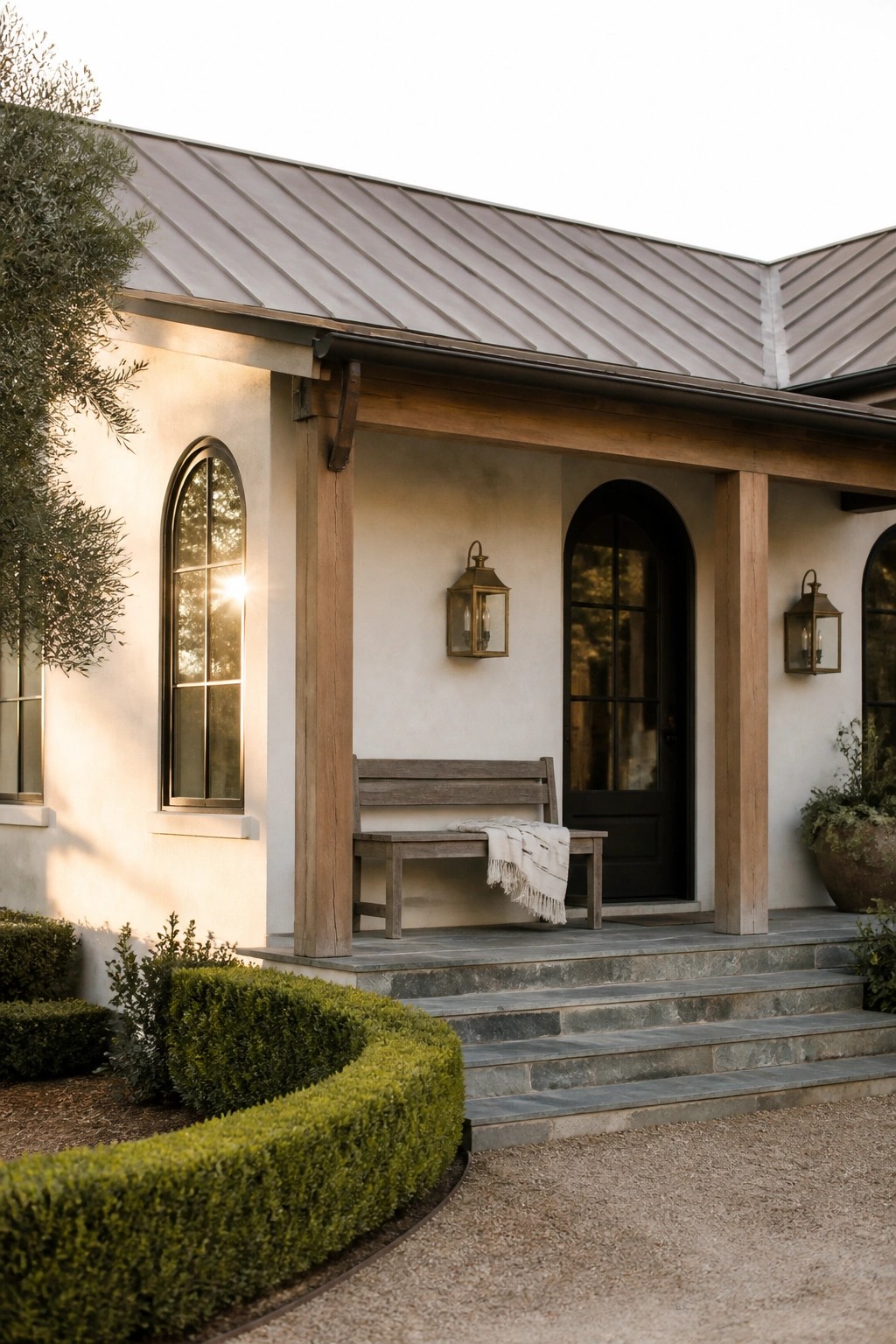
Many houses gain a quiet warmth when wood is used in small doses against a white exterior. The natural tone of the wood softens the clean look without adding clutter or extra color.
This approach works best on homes with simple rooflines and a few strong structural lines. Keep the roof and main trim in a soft gray or charcoal so the wood reads as an accent rather than another competing color.
Charcoal Siding With Wood Accents
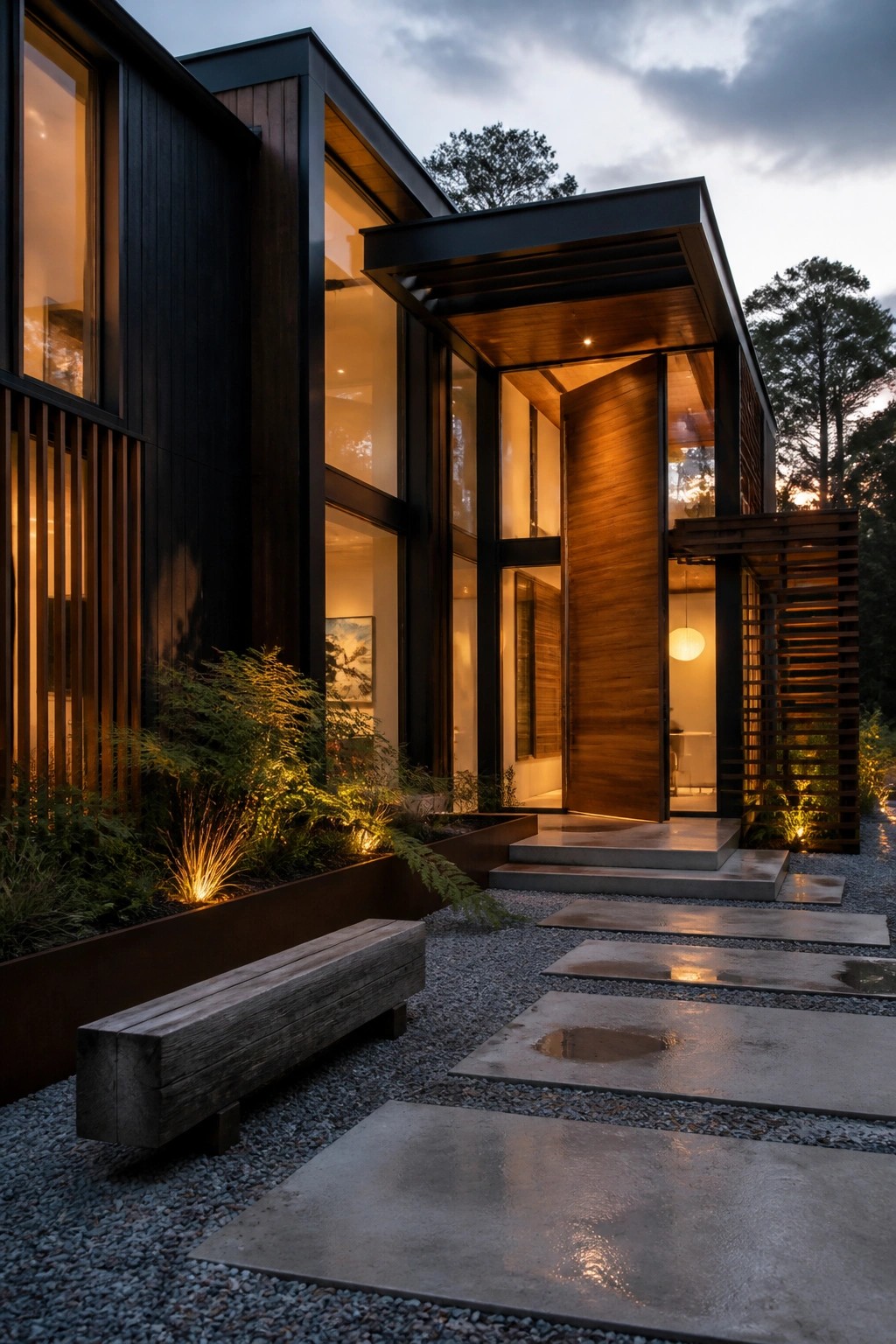
A dark charcoal finish on the main walls gives a house a solid, modern shape. Adding wood on doors, overhangs, or panels keeps the look from feeling too stark and brings in some natural warmth.
This mix works best on homes with plenty of glass or open entries. Keep the wood tone mid to warm so it shows up against the dark siding, and use simple lighting to highlight the wood at night.
Wood Tones On The Porch Structure
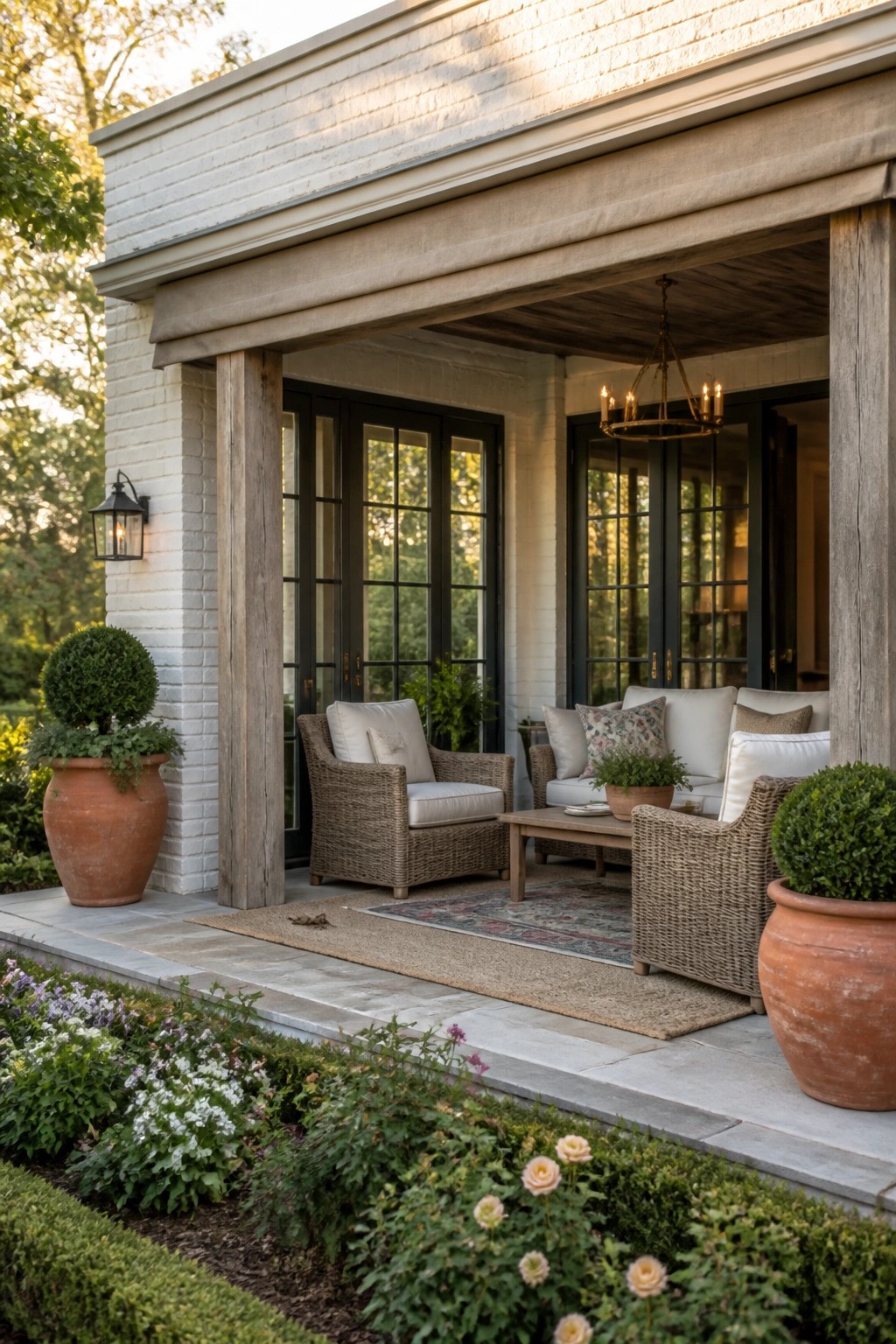
Wood tones on the porch posts and beams give a white brick exterior some warmth without changing the overall color scheme. The natural wood works well with the black doors and keeps the space from feeling too stark. Many people like this mix because it feels simple and holds up over time.
This approach suits homes that already have white siding or brick and want a bit more depth on the exterior. Keep the wood finish fairly natural so it reads as part of the architecture rather than an added decoration. Avoid staining it too dark or too light, since either can throw off the balance with the other tones.
Taupe Siding With Charcoal And Wood Tones
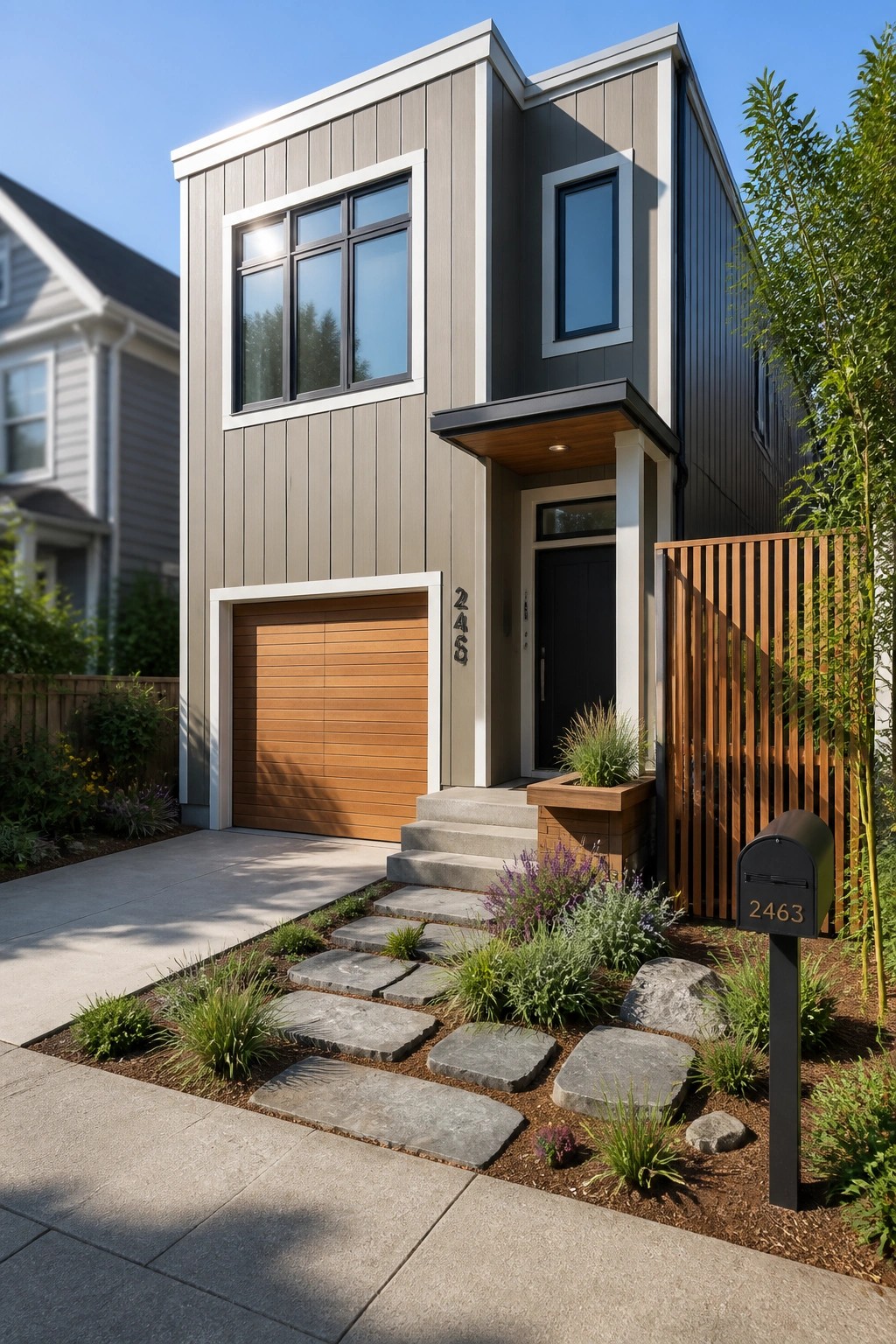
This combination keeps a modern house from feeling too cold while still looking clean. The taupe siding acts as a soft middle ground, the charcoal adds depth on the right side of the facade, and the wood garage door brings in just enough warmth. It works especially well on narrow lots where you need the house to feel grounded rather than stark.
Try this palette on homes with simple rooflines and mixed siding. Keep the trim light so the darker sections do not close in the space. The result stays timeless even if the architecture itself is fairly plain.
White Walls With Charcoal And Wood Accents
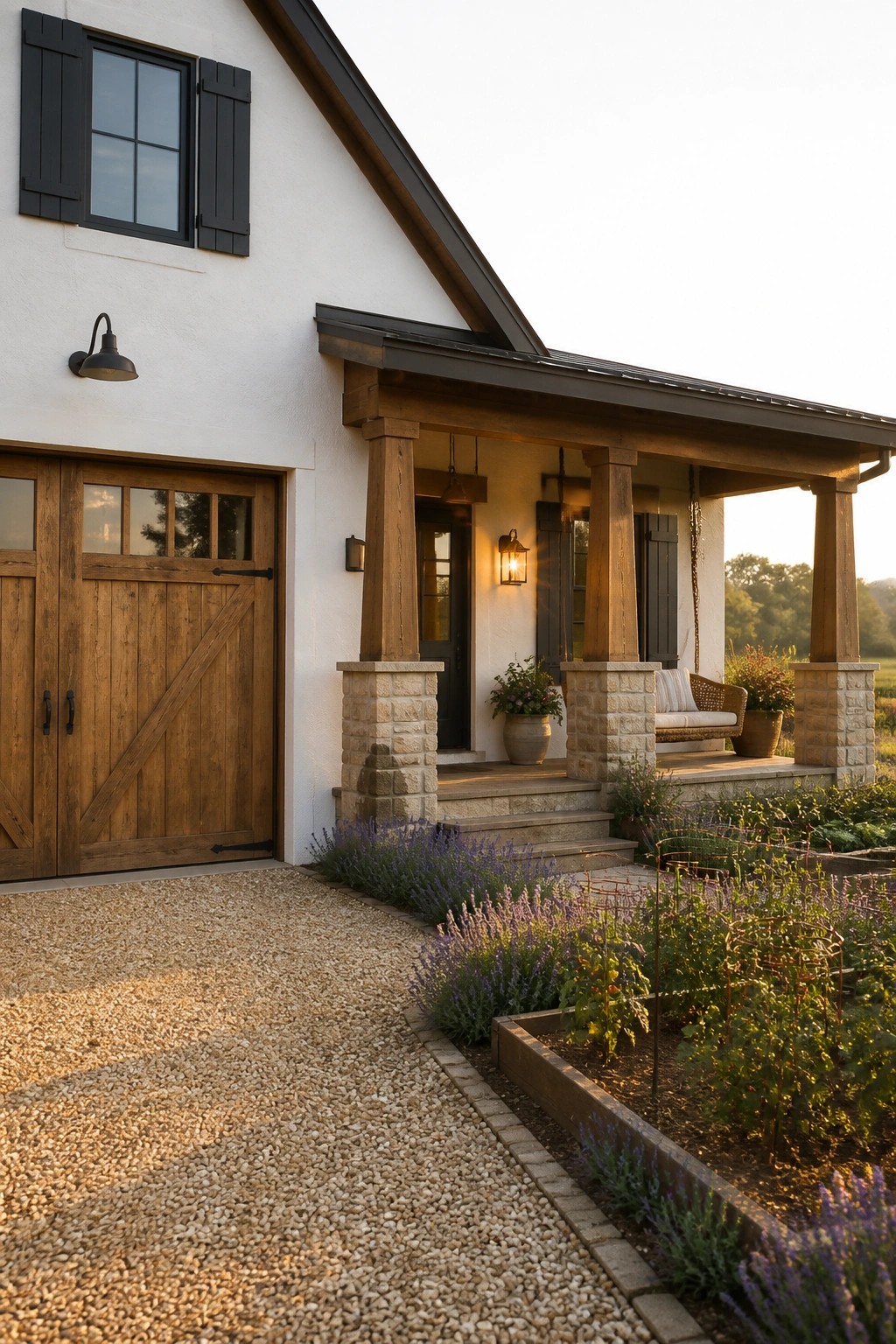
A white exterior stays looking clean when the trim and accents shift to charcoal and wood. The dark shutters and door give the house definition, while the wood garage door keeps the whole thing from feeling too stark.
This works best on homes that already have a simple shape and a few different materials. Keep the main walls bright white, then add the darker and wood tones only on the doors, shutters, and any visible trim. It suits farmhouses and modern cottages alike and avoids the need for a lot of extra color.
White Walls With Warm Wood Tones
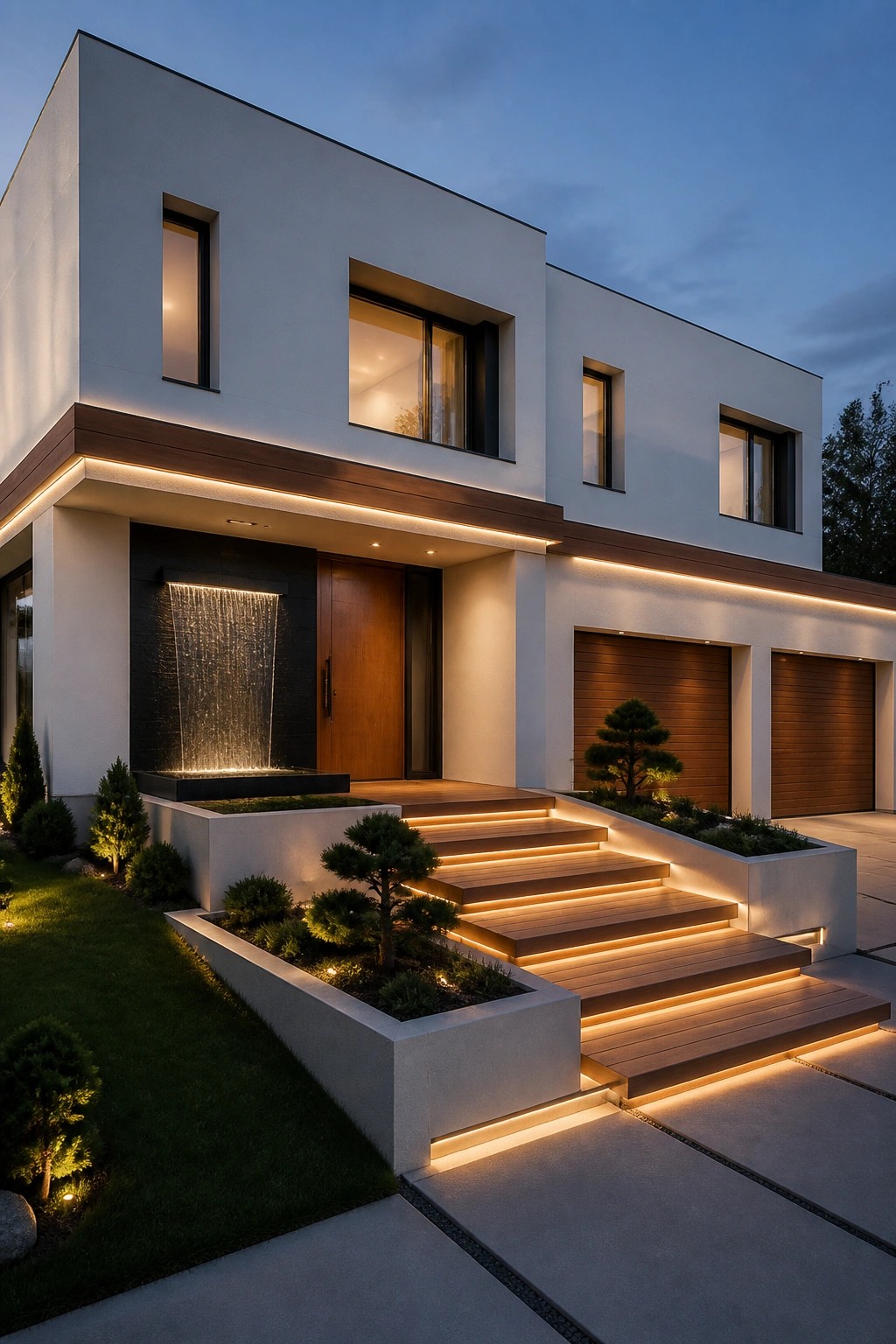
White works well as the main color on a modern house when you add wood tones to keep the look from feeling too cold. The wood brings in some warmth and helps break up the flat surfaces without adding clutter. It suits homes that want a clean shape but still need to feel grounded.
This mix works best on houses with simple lines where the wood can run in horizontal bands or show up on doors and trim. Keep the wood in a mid-tone range so it does not fight with the white. Darker accents can go in small spots like around windows or on feature walls.
Wood Tones on White Exteriors
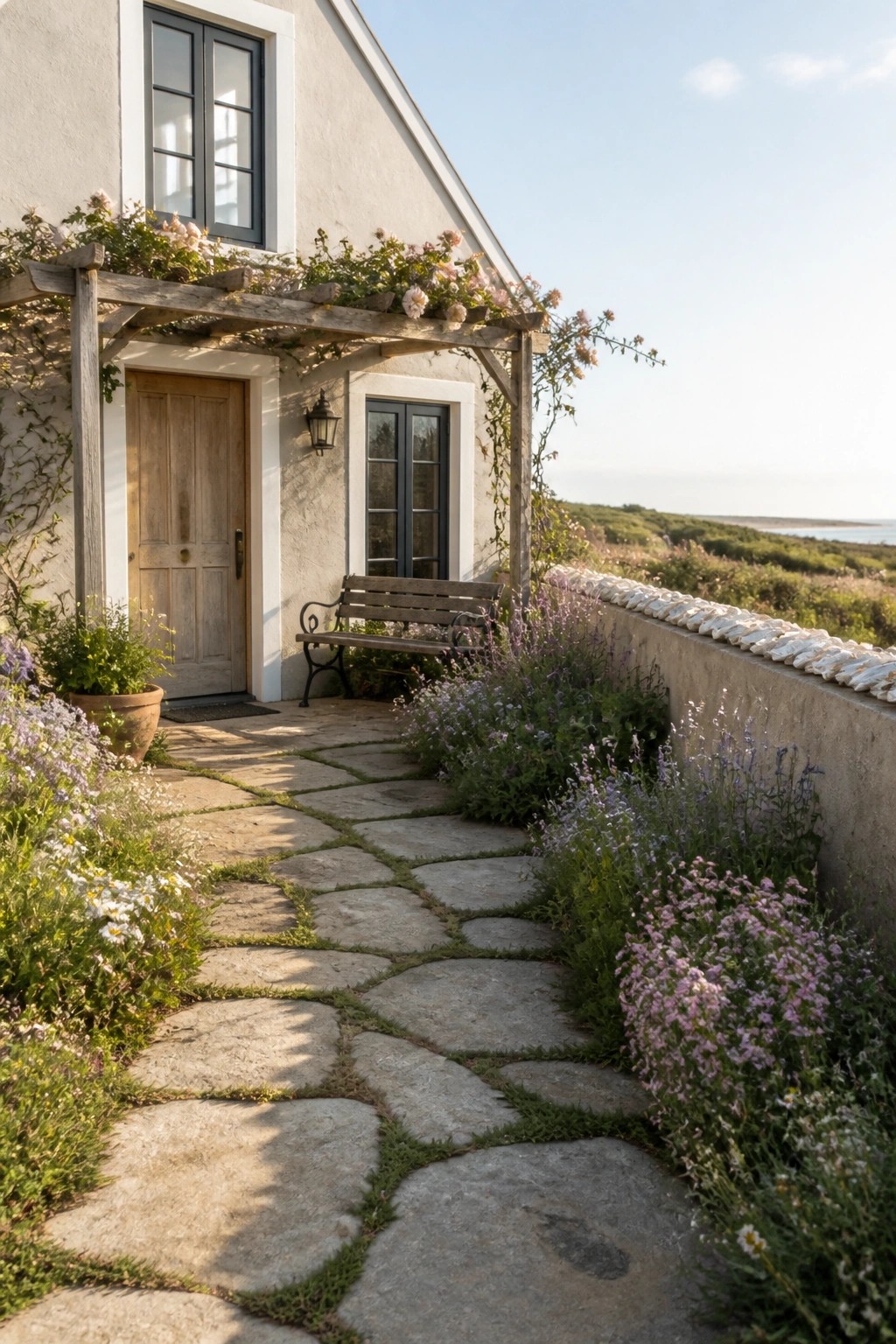
Wood tones bring a natural warmth to a white exterior that feels steady and easy to live with. The door and pergola here show how a simple wood finish can soften the look while still keeping the clean lines of the house.
This approach works best on homes with straightforward shapes and not too many competing materials. Pair the wood with dark window frames so the tones stay balanced and the entry stays the main focus.
Warming Up Outdoor Areas With Wood Tones
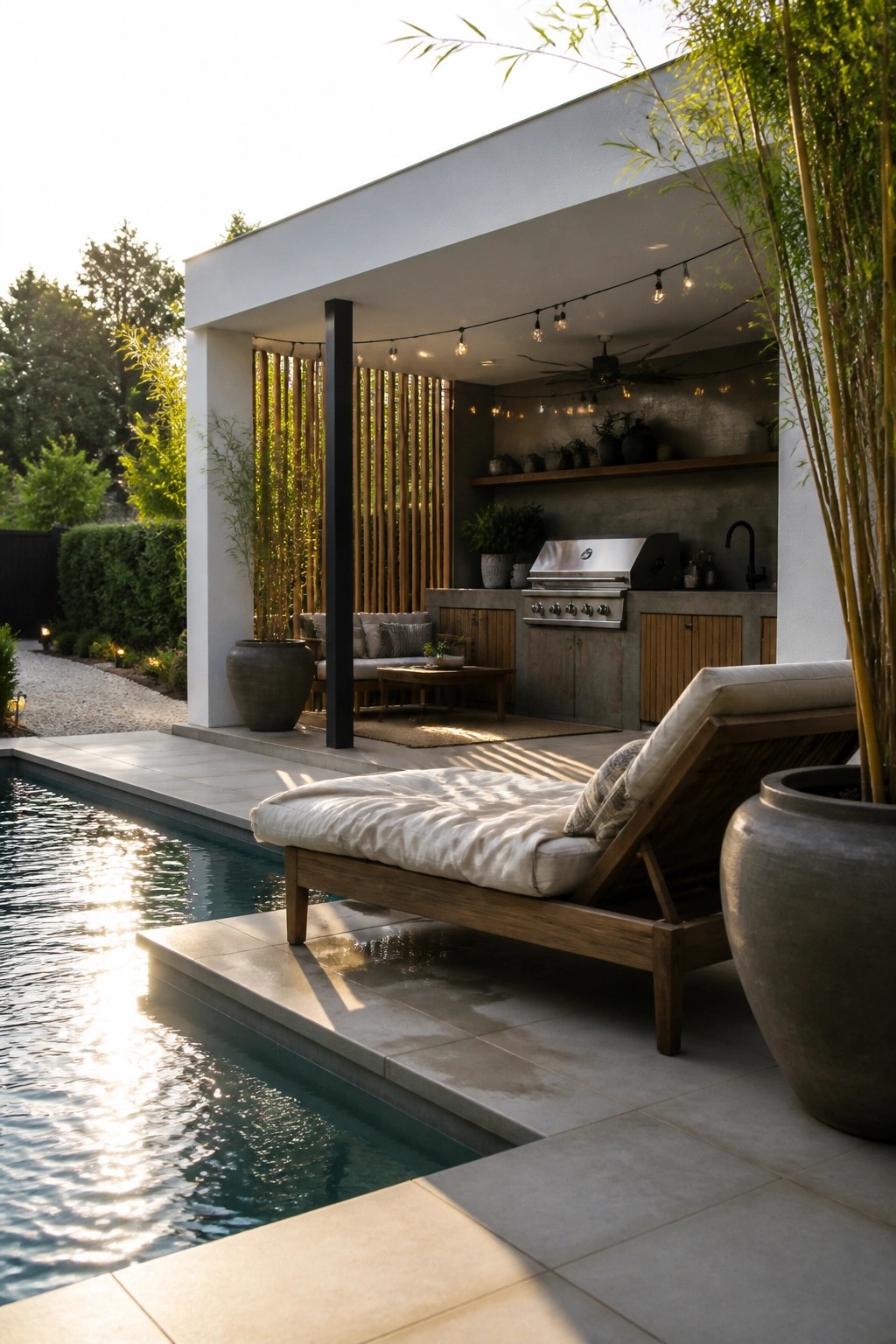
Wood tones bring a natural balance to modern outdoor spaces that might otherwise feel too stark. In this setup the wood cabinetry and screen work with the white structure and concrete surfaces to keep everything grounded and easy to live with. The result is a space that reads as contemporary without looking cold.
This approach works well on patios and pool decks where you want the area to feel connected to the surrounding landscape. Keep the wood finishes simple and let them contrast with white walls or concrete counters. Just watch that the wood you choose can handle weather so the look holds up over time.
Frequently Asked Questions
Q: How do I decide between taupe and charcoal for my front door?
A: Taupe gives a softer welcome that blends with wood tones around it. Charcoal makes a bolder statement that pops against white siding. Pick based on how much contrast you want with the rest of the house.
Q: Will these color schemes work if my roof is a different shade?
A: They pair easily with most roof colors since they stay neutral. Stick close to the wood tones in your scheme to tie everything together.
Q: My yard has lots of trees. Should I avoid certain tones here?
A: Wood tones blend into the trees and lose impact. White lifts the whole look instead.
