

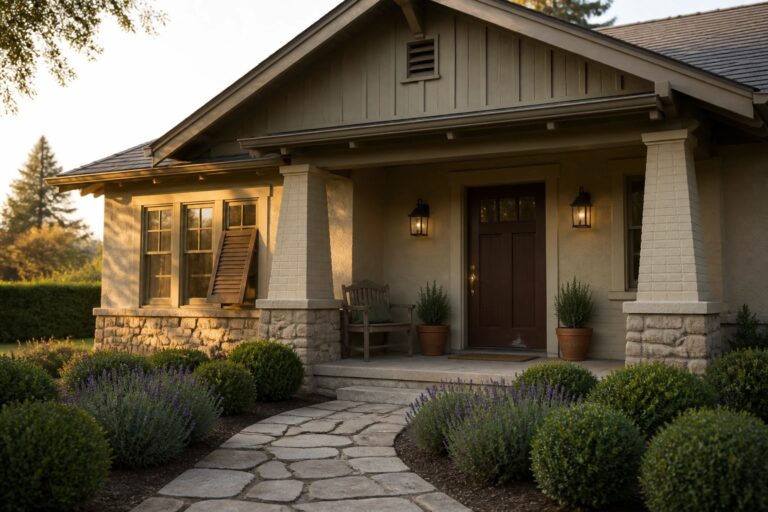
I have noticed that neutral colors shift once they cover an entire facade and meet the real texture of siding or stone.
Materials interact with light in ways that samples rarely capture, especially around the entry and along the roofline.
Testing on site changes the outcome.
Homes often look more grounded when the color sits back a little instead of pushing forward against the stone.
I usually hold a few options up to the existing surfaces at different times of day to see how they settle before making a final call.
Warm Taupe on Mixed Exteriors
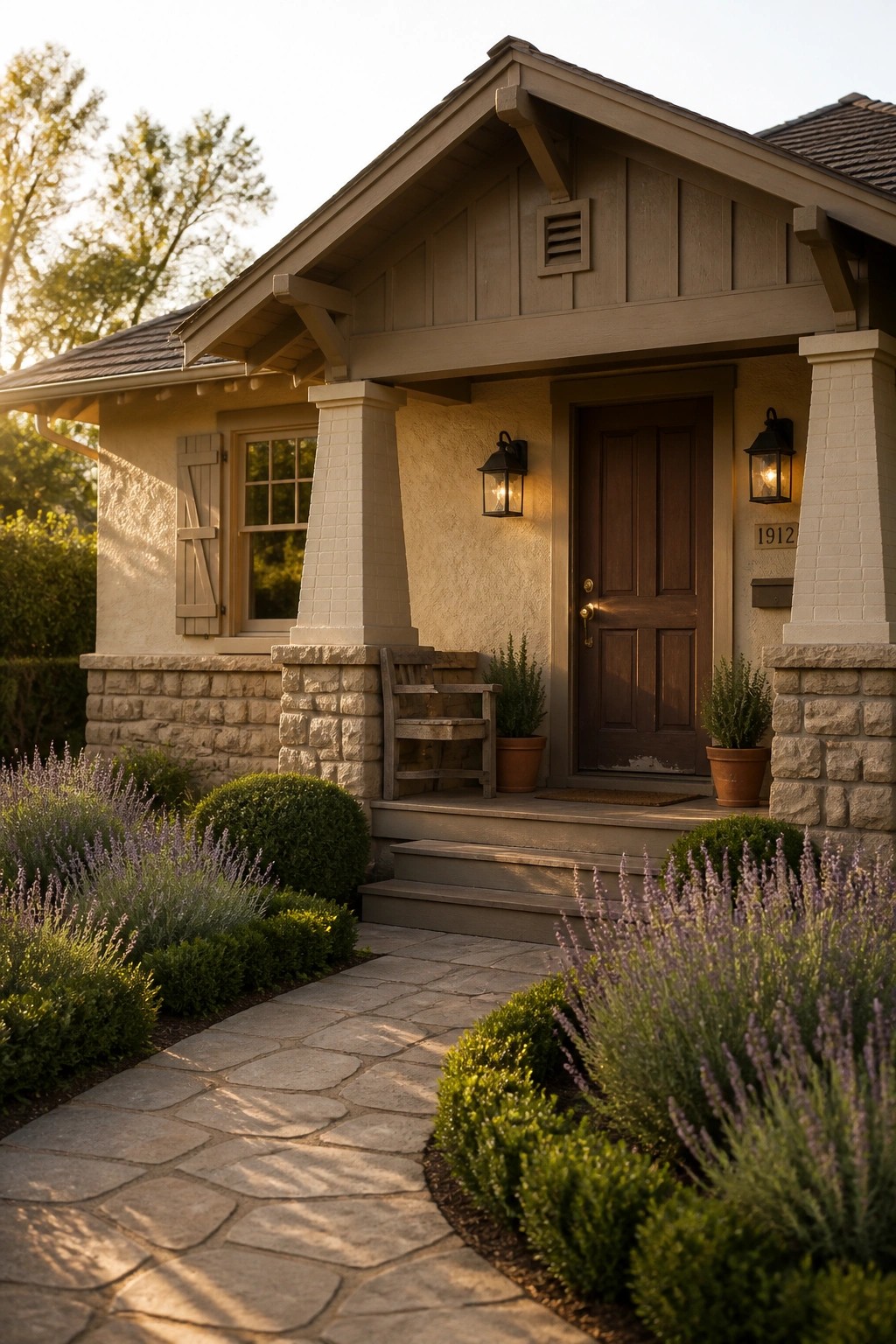
A warm taupe works especially well when a house has both stucco and a stone base. It softens the look of the stone without fighting it and keeps the whole front from feeling too flat or cold. The color also gives the siding a bit of depth that reads as cozy rather than stark.
This shade suits homes that already have natural materials like stone or wood trim. It pairs best with darker doors and simple landscaping so the color stays the main focus. Avoid using it on houses that get very little sun, since the warmth comes through more clearly in good light.
Warm Neutral Tones On Mixed Exterior Materials
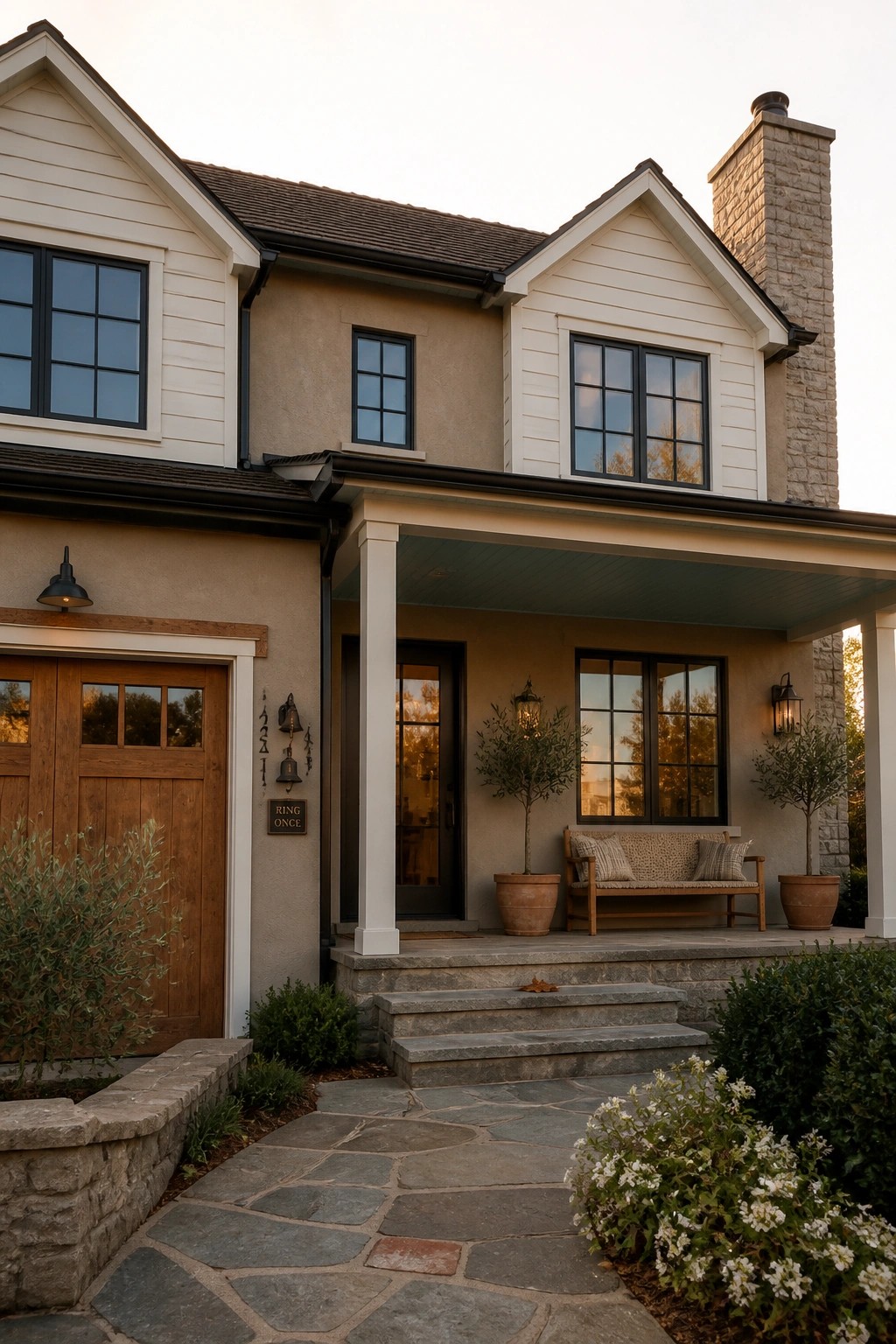
A warm neutral palette works well when stucco and siding sit side by side on the same house. The soft beige on the main walls and the lighter siding above it keep the look calm without turning flat. Stone details then add just enough contrast so the whole front feels grounded rather than washed out.
This approach suits homes that already have more than one material on the facade. Keep the neutrals in the same temperature range and let the stone act as the accent rather than trying to match it exactly. It tends to photograph well in different light and ages more gracefully than cooler grays.
Warm Neutral Stucco for a Softer Exterior
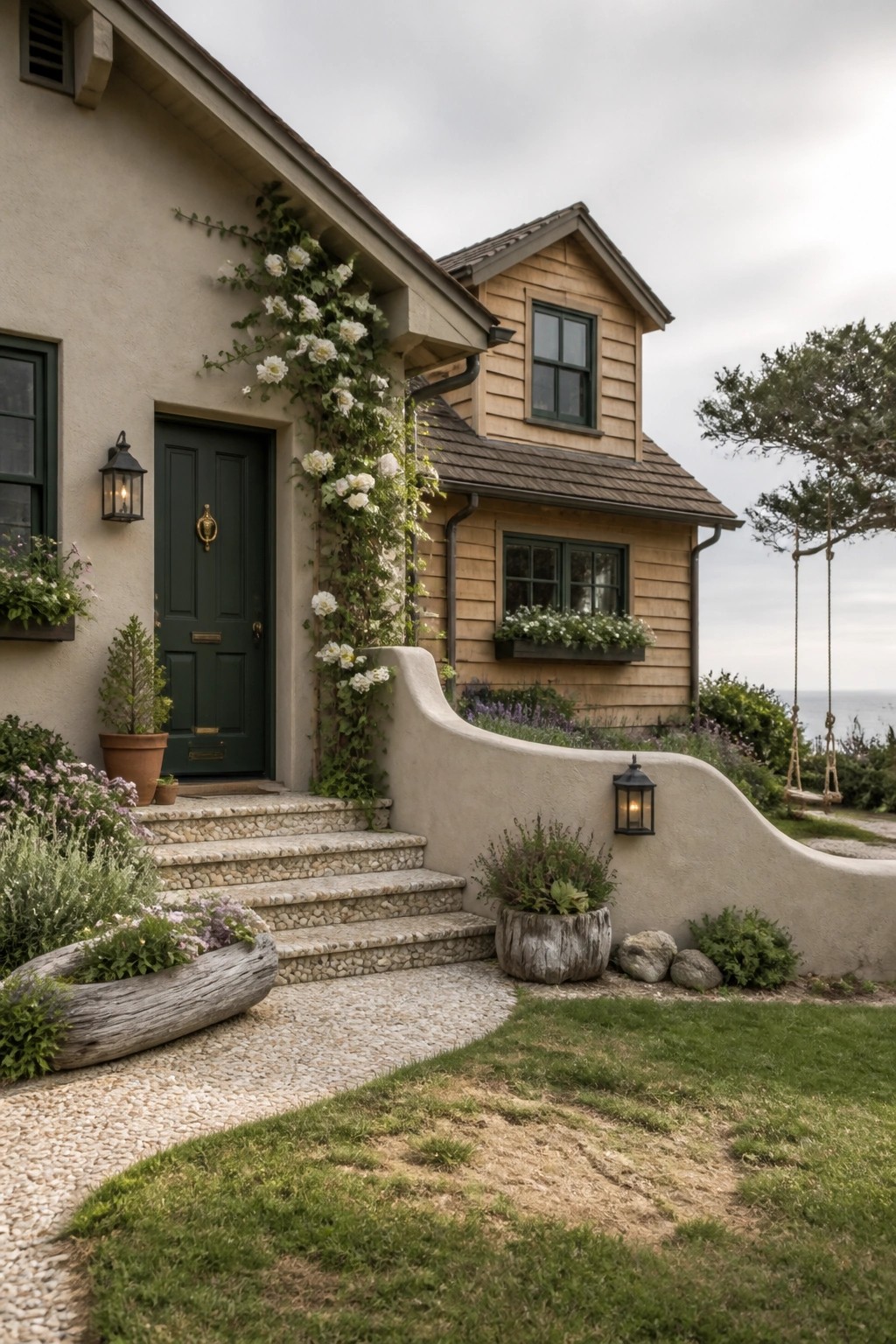
A soft warm neutral on stucco helps the house feel less stark and more settled. It blends the main walls into the surroundings instead of making them stand out as cold or flat.
This color choice suits homes with wood siding or stone accents already in place. It works especially well on simpler shapes where you want the texture of the stucco itself to add interest without extra contrast.
Warm Wood Garage Doors On Neutral Stucco
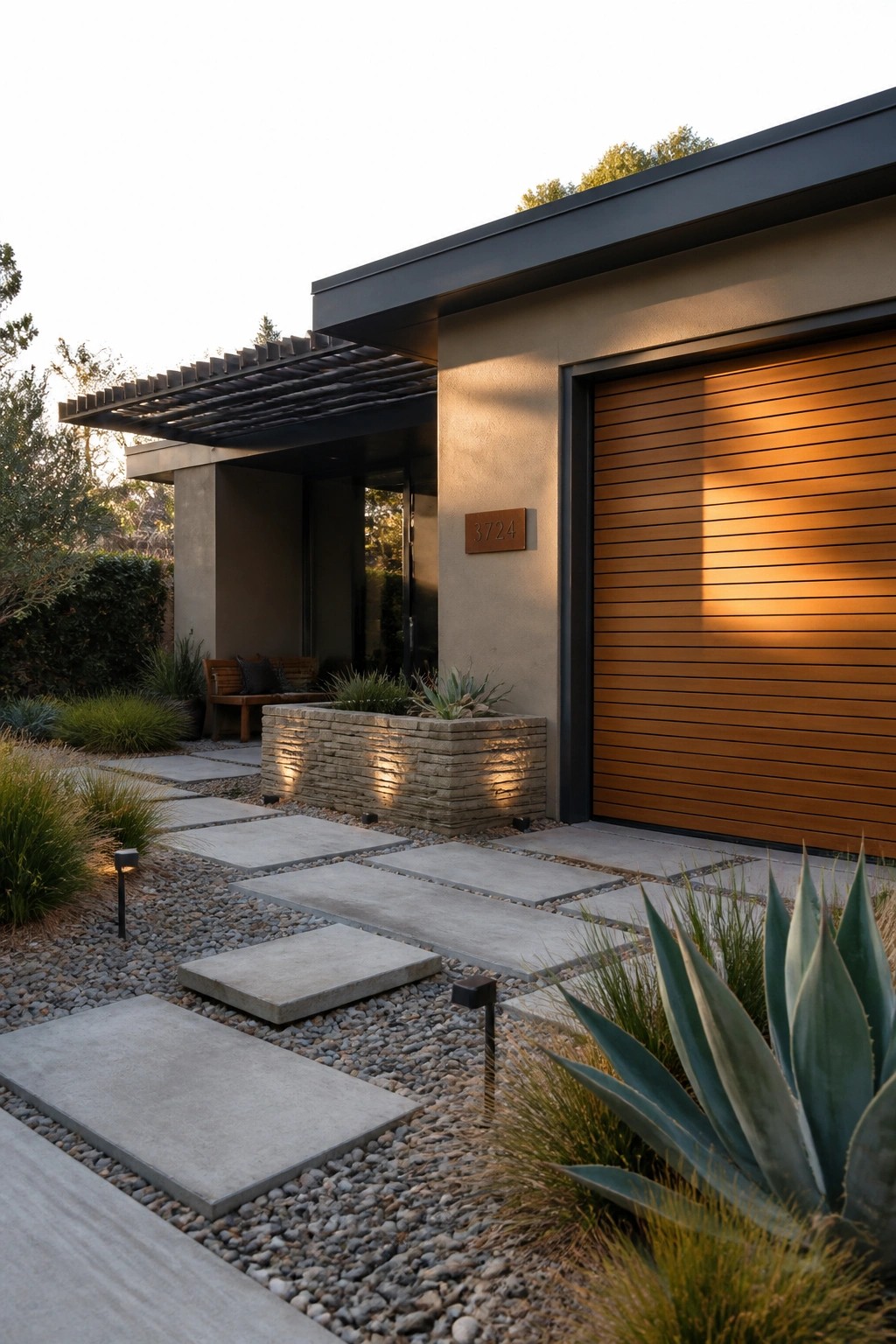
Many homes look better when the garage door gets a warmer wood tone instead of matching the stucco exactly. The wood brings a natural color that softens the flat surface of the walls and keeps the whole front from feeling too plain or stark.
This works best on houses with simple stucco finishes in soft beige or taupe shades. Keep the wood tone golden or honey rather than gray so it actually adds the warmth the stucco needs.
Mixing Neutral Materials on the Facade
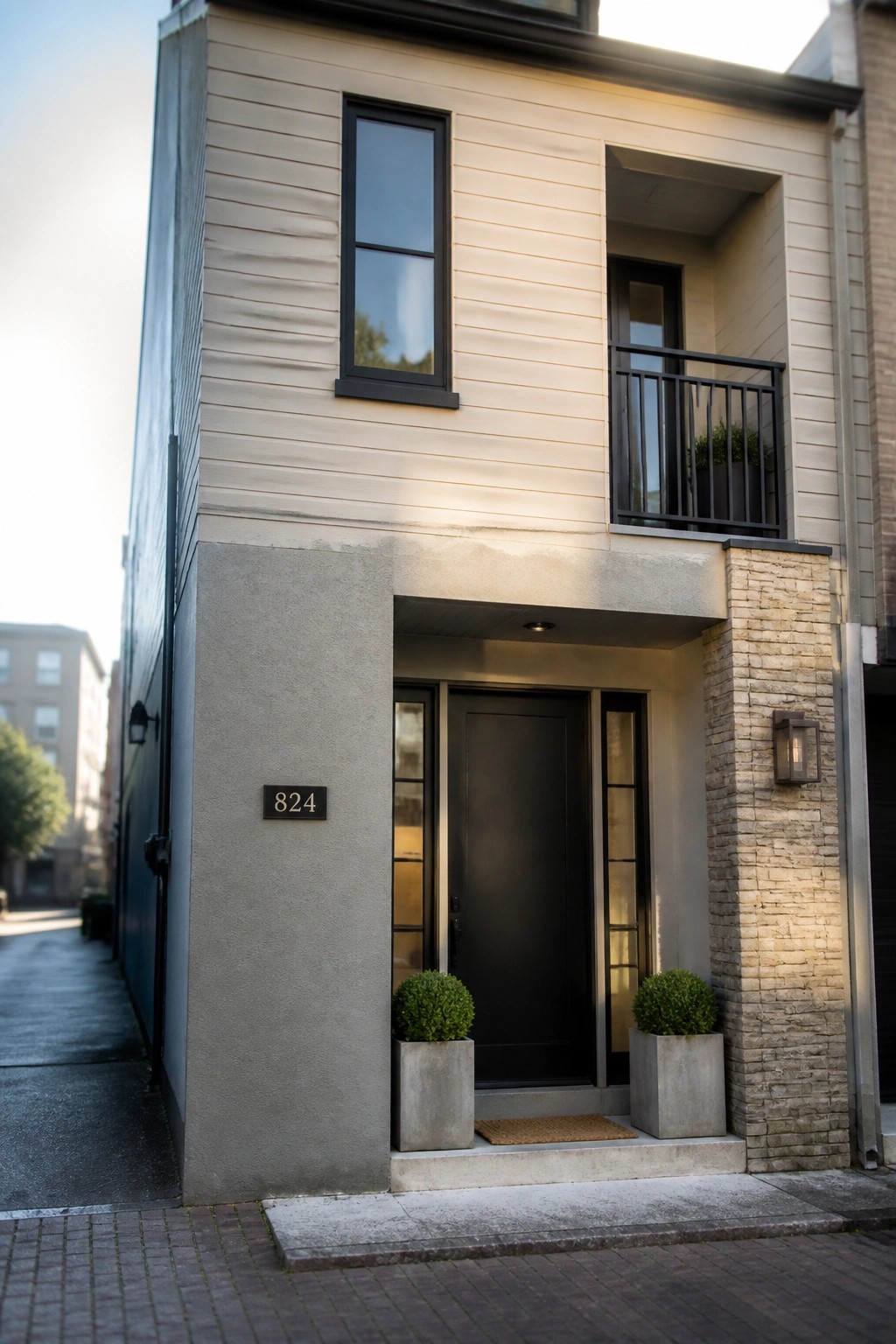
Many houses gain a warmer look when they combine different neutral finishes instead of sticking to just one. The light siding across the upper level works with the gray stucco base and the stone column to keep the whole front feeling balanced and simple.
This mix suits homes that already have varied surfaces or are getting a refresh. Choose tones that stay close in warmth so the textures can do the work without the colors competing.
Warm Neutral Stucco With Dark Wood Accents
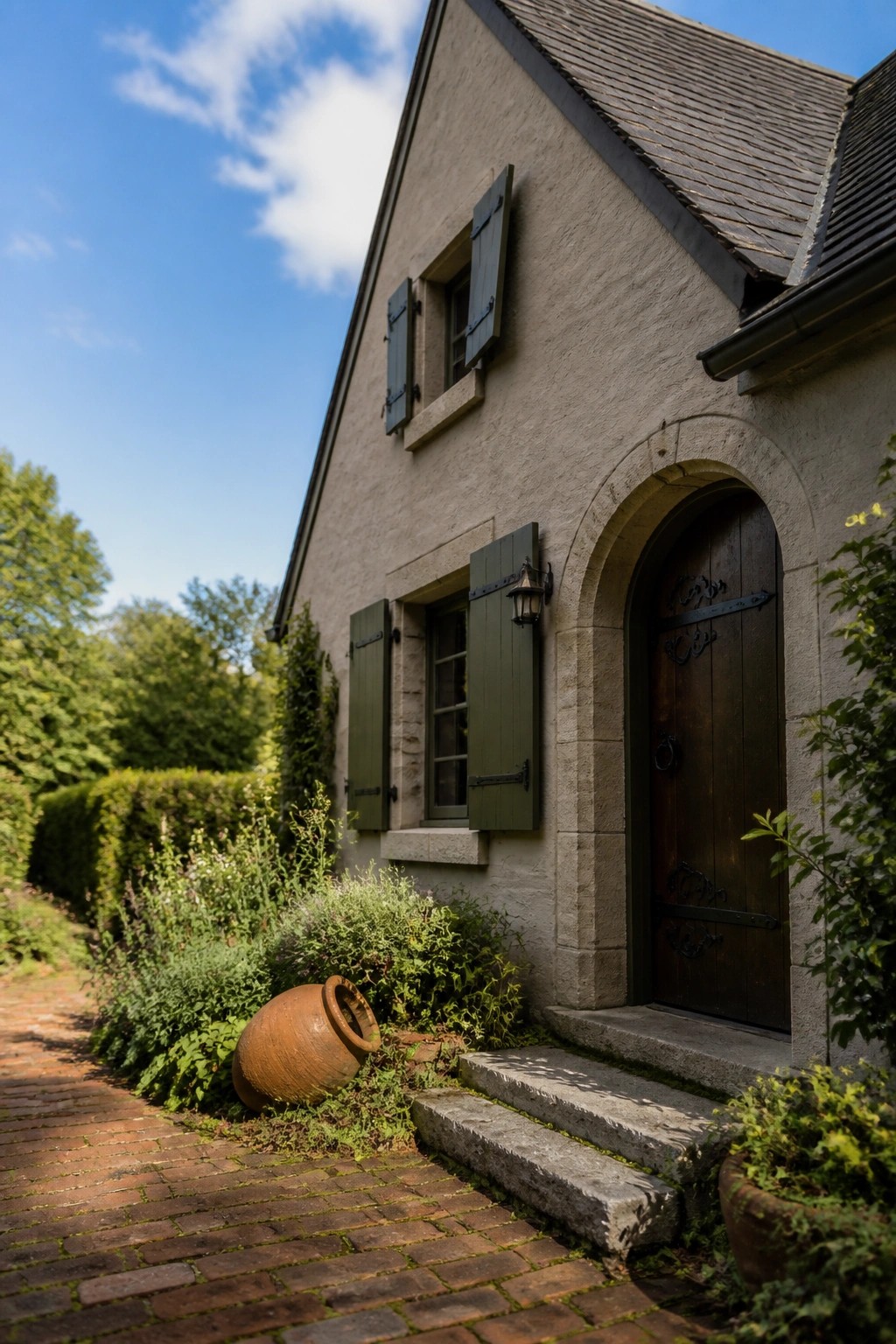
A soft beige stucco can feel much more welcoming when it is paired with a deep wood tone on the door and trim. The contrast keeps the color from looking flat while still letting the house read as calm and simple.
This approach suits smaller homes or cottages that already have some stone or brick nearby. Stick with a natural wood finish instead of painting it, and let the stucco stay in the warmer half of the neutral range so the whole exterior feels settled rather than stark.
Soft Neutral Siding That Warms the Facade
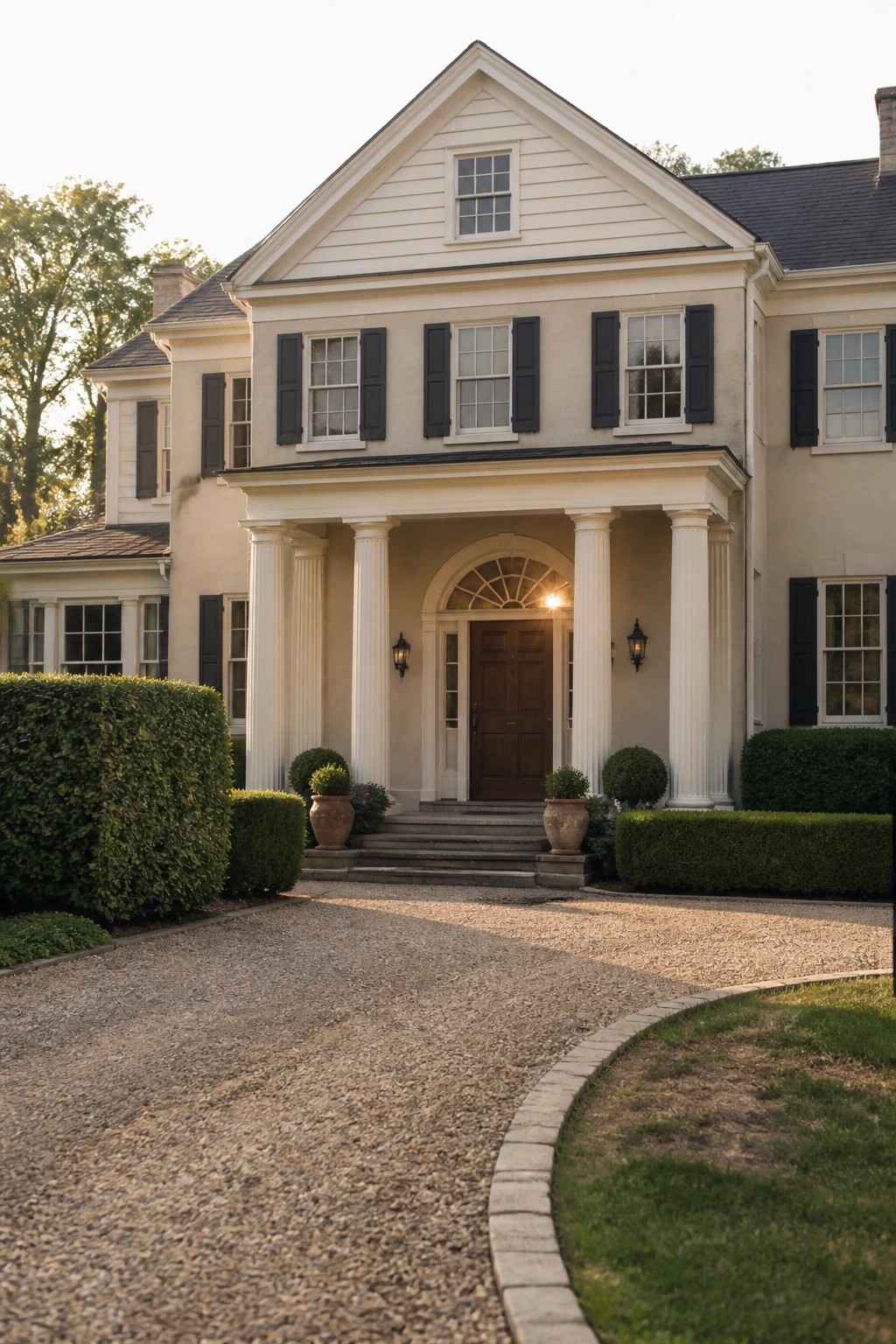
A light warm neutral on siding often makes the whole house feel more inviting. It softens sharp lines and pairs well with white trim and columns without looking too stark or cold.
This approach works best on homes with traditional details like shutters and a centered entry. Keep the color slightly creamy rather than cool gray so it stays cozy in different lighting.
Warm Neutral Stucco On The Exterior
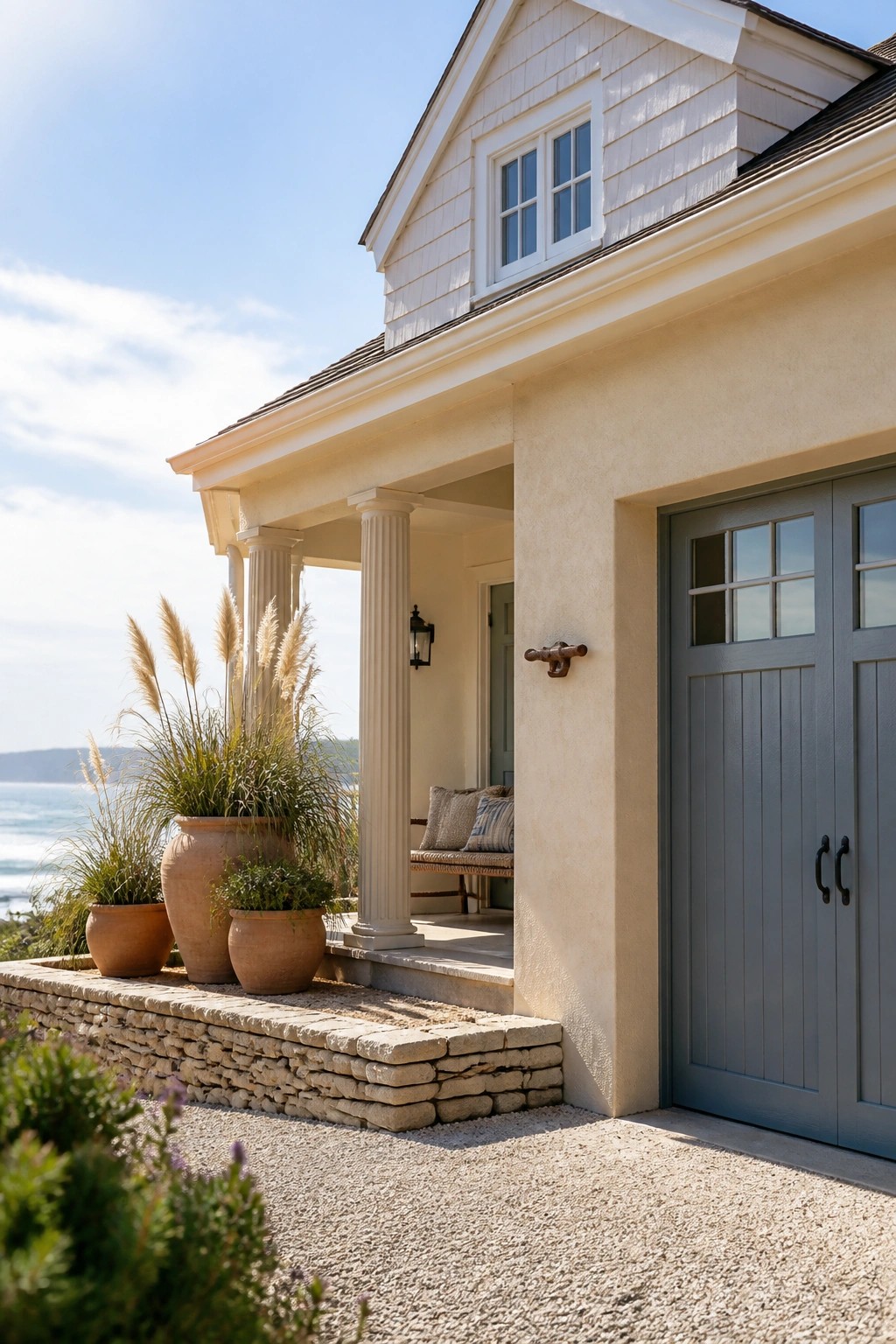
A soft warm neutral works well on stucco because it keeps the surface from feeling flat or cold. The light beige tone here gives the house a settled look that still reads clean.
This color works best on homes with simple trim and a few stronger accents like the door. It suits coastal houses or any place where you want the exterior to feel calm rather than stark. Keep the trim light and let one or two elements pull a little darker for balance.
Warm Neutrals That Blend With Stone And Wood
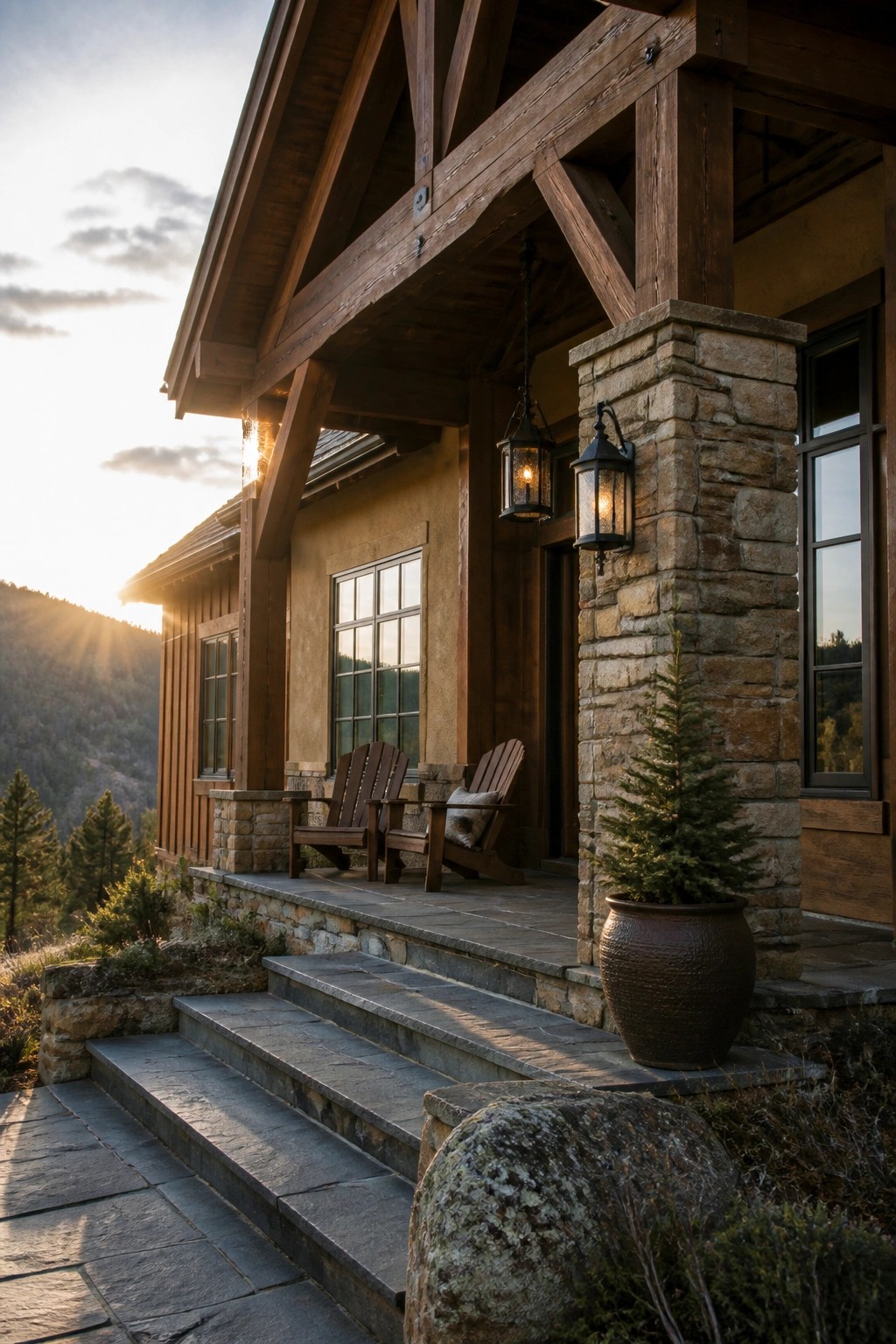
A soft warm neutral on stucco and siding helps tie together rough stone and heavy timber without making the house feel too heavy. The color sits back just enough to let the natural materials stand out while still giving the whole exterior a settled look.
This works best on homes that already have mixed textures like stone columns or wood beams. Test the paint on a small section first, since the same neutral can shift next to different types of stone depending on the time of day.
Warm Neutral Stucco on the Main Walls

A soft warm neutral on stucco helps the house feel settled and approachable rather than stark. It works especially well when the rest of the exterior stays fairly simple.
This color choice suits homes with dark wood accents or clean lines. It keeps the overall look calm while still showing enough contrast to avoid a flat appearance.
Warm Neutral Stucco for Stone Exteriors
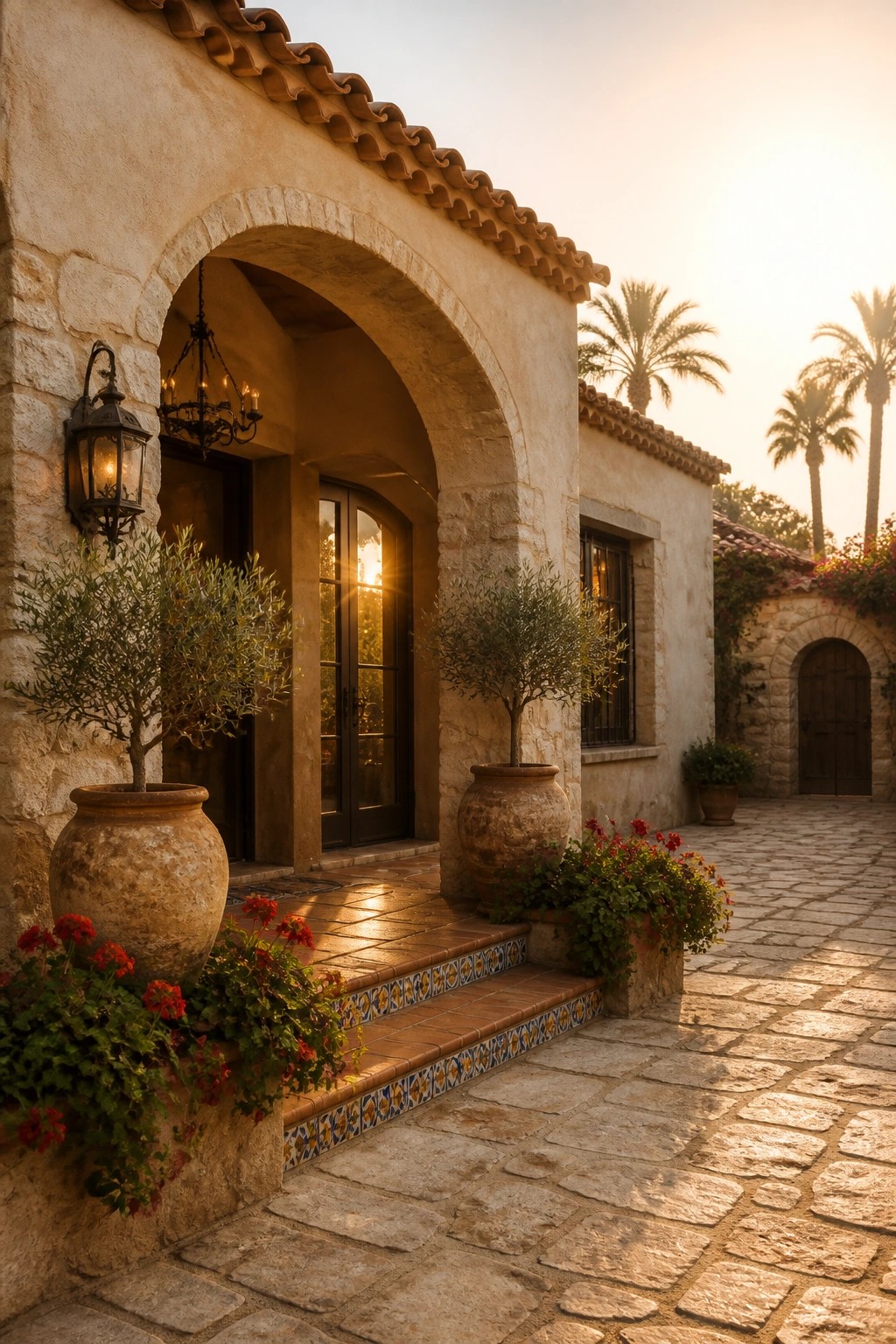
A light warm beige stucco pairs well with stone because it softens the heavier look of the masonry without losing any character. The color picks up sunlight gently and keeps the whole front from feeling too stark or cold, especially when the stone is used around arches and trim.
This approach works best on homes with Mediterranean or traditional details where you want the stone to stand out but still feel part of a single, calm surface. Stick with tones that lean slightly golden or sandy rather than gray, and test the color on a small patch first since stucco can shift once it is fully dry and in full sun.
Warm Neutral Stucco With Wood Accents
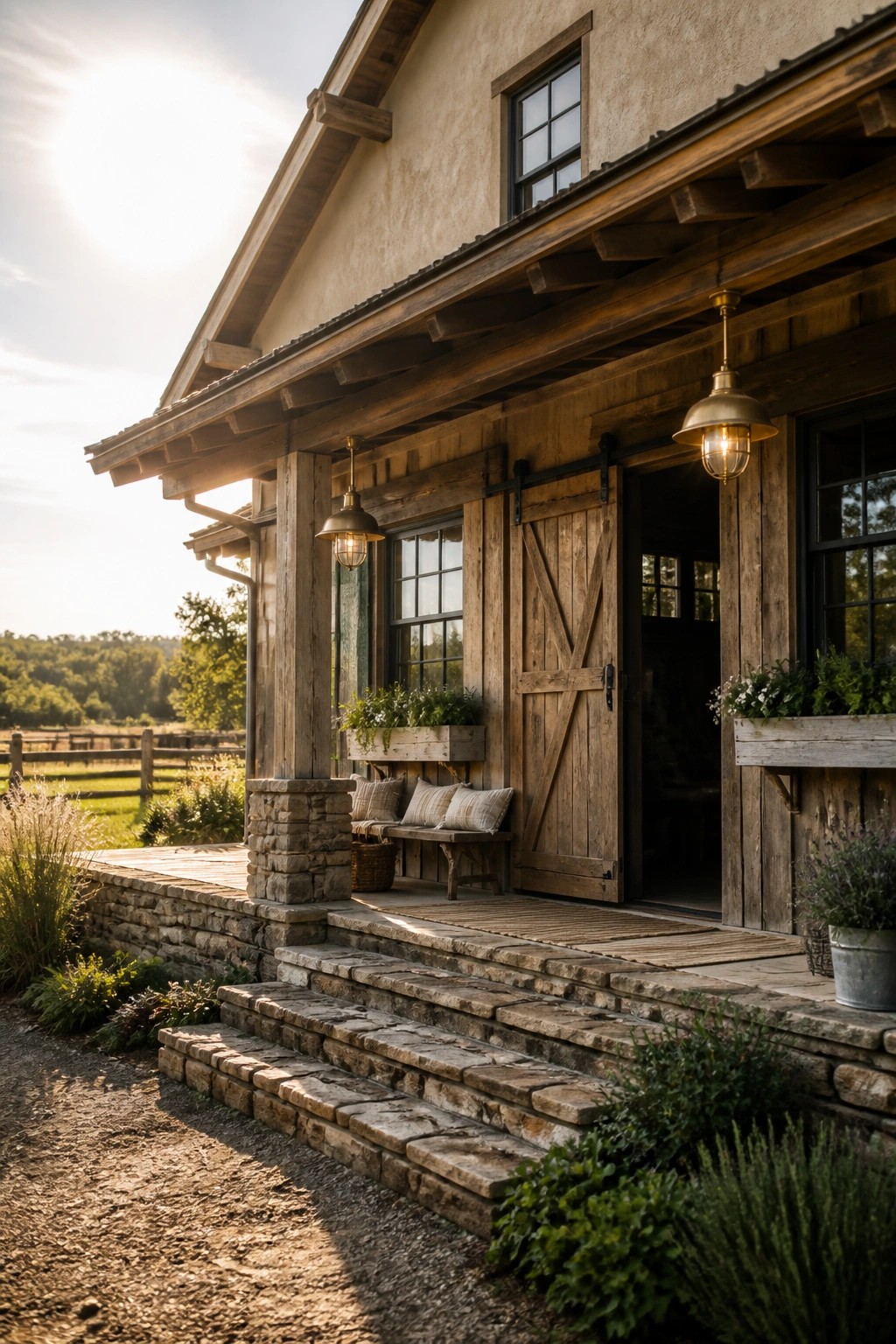
A soft beige stucco works well on the main walls because it keeps the exterior from looking too stark while still feeling bright enough in different seasons. The wood beams and trim add a natural layer that helps the color read warmer overall.
This combination suits homes with simple rooflines and some stone at the base. Keep the wood in a medium weathered tone rather than a dark stain so the stucco stays the main focus without competing.
Neutral Siding Colors That Work With Stone
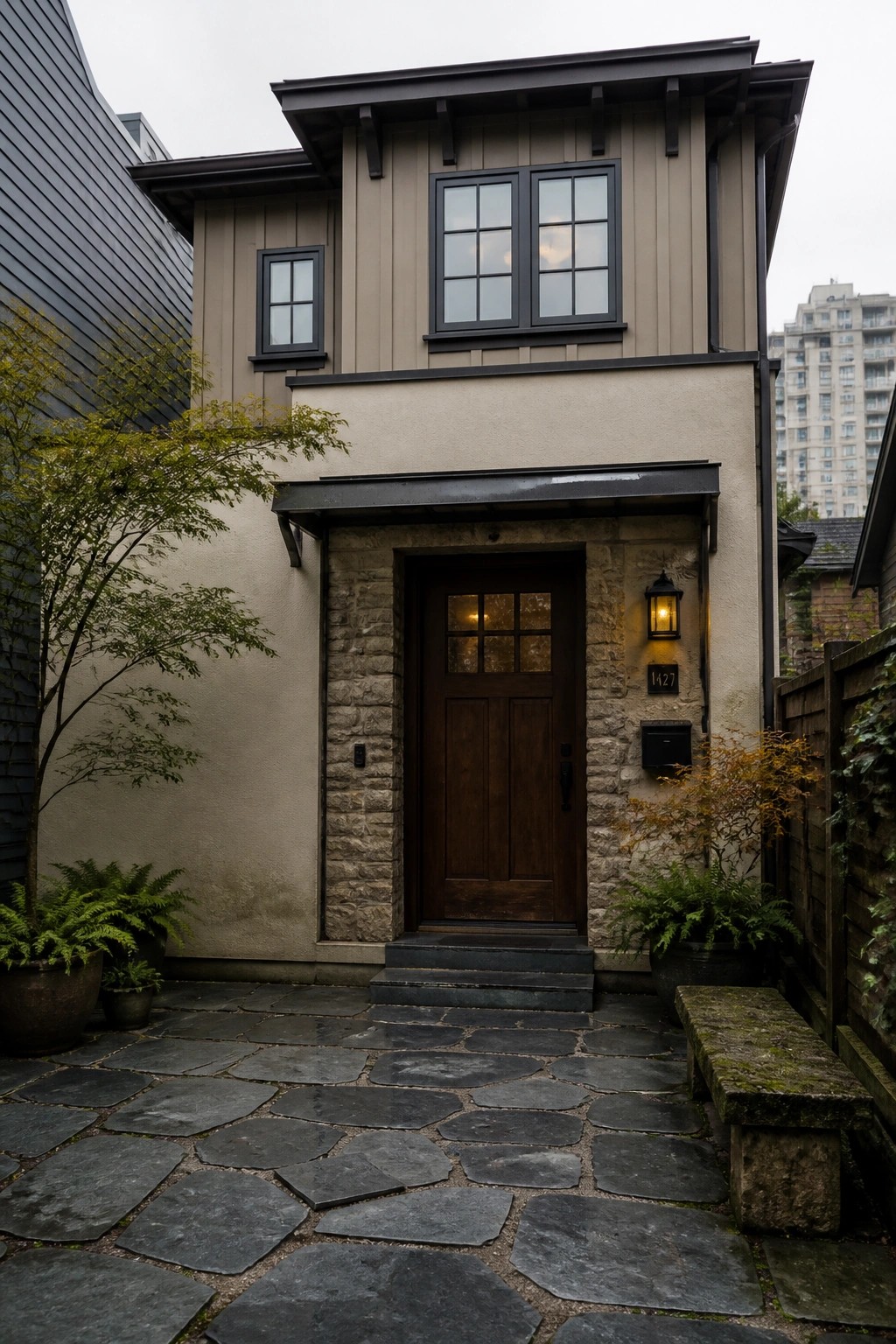
A soft neutral on the siding can help stone look less heavy and more connected to the rest of the house. The color here sits between gray and beige, which keeps the stone from standing out too sharply while still giving the entry a grounded feel.
This approach works best on homes that mix materials and need one color to hold everything together. Stick with a muted tone rather than anything too cool or too yellow, and test it against the actual stone in different lights before committing.
Warm Neutrals On Stucco And Stone
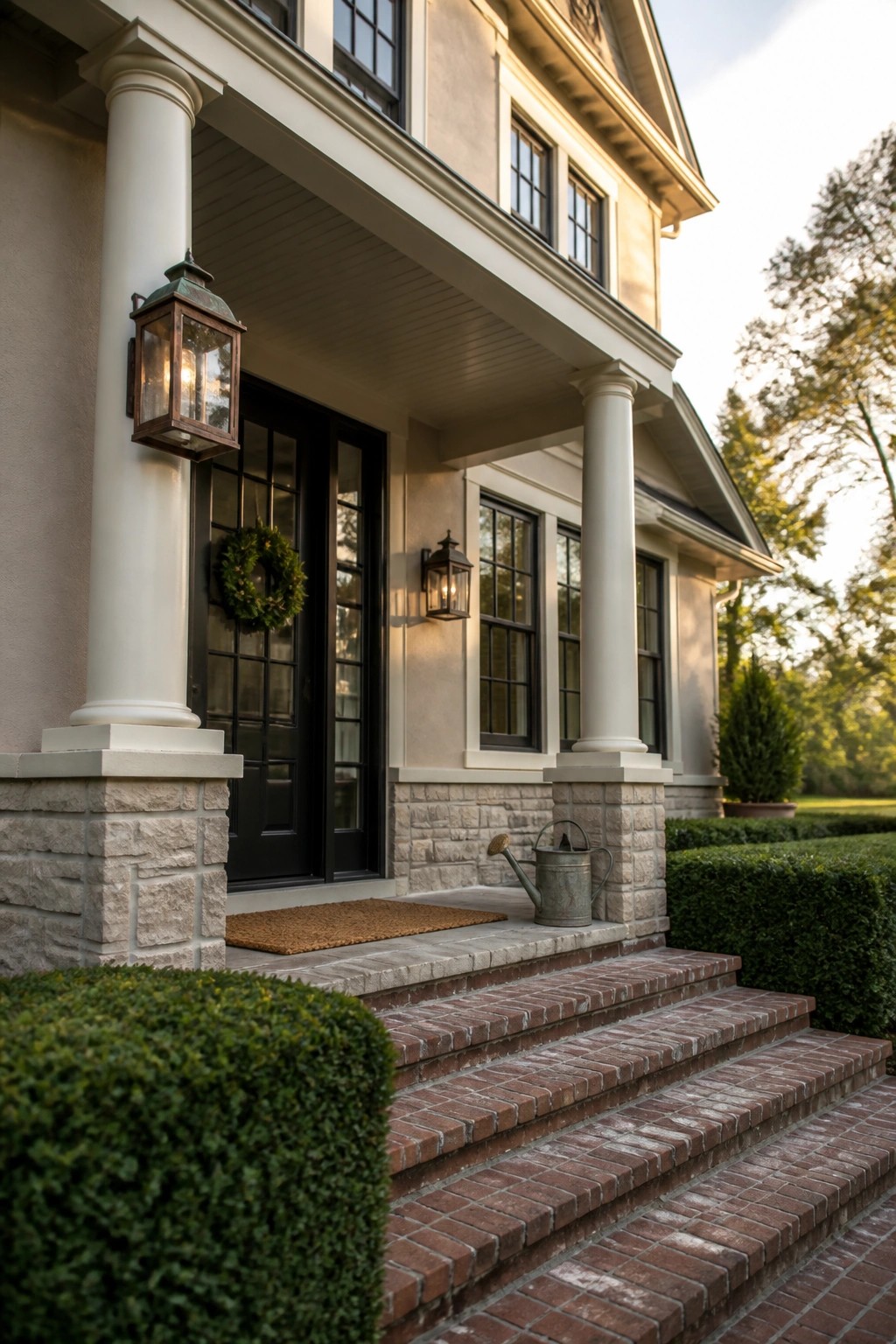
A soft beige on the main walls paired with a stone base gives the house a settled look without feeling heavy. The color choice keeps the facade bright while the stone adds texture that prevents it from looking flat.
This approach suits homes with simple trim and traditional details. Use the same warm tone across siding and stucco, then let the stone run only partway up so the lighter color can do most of the work.
Warm Neutral Stucco With Stone
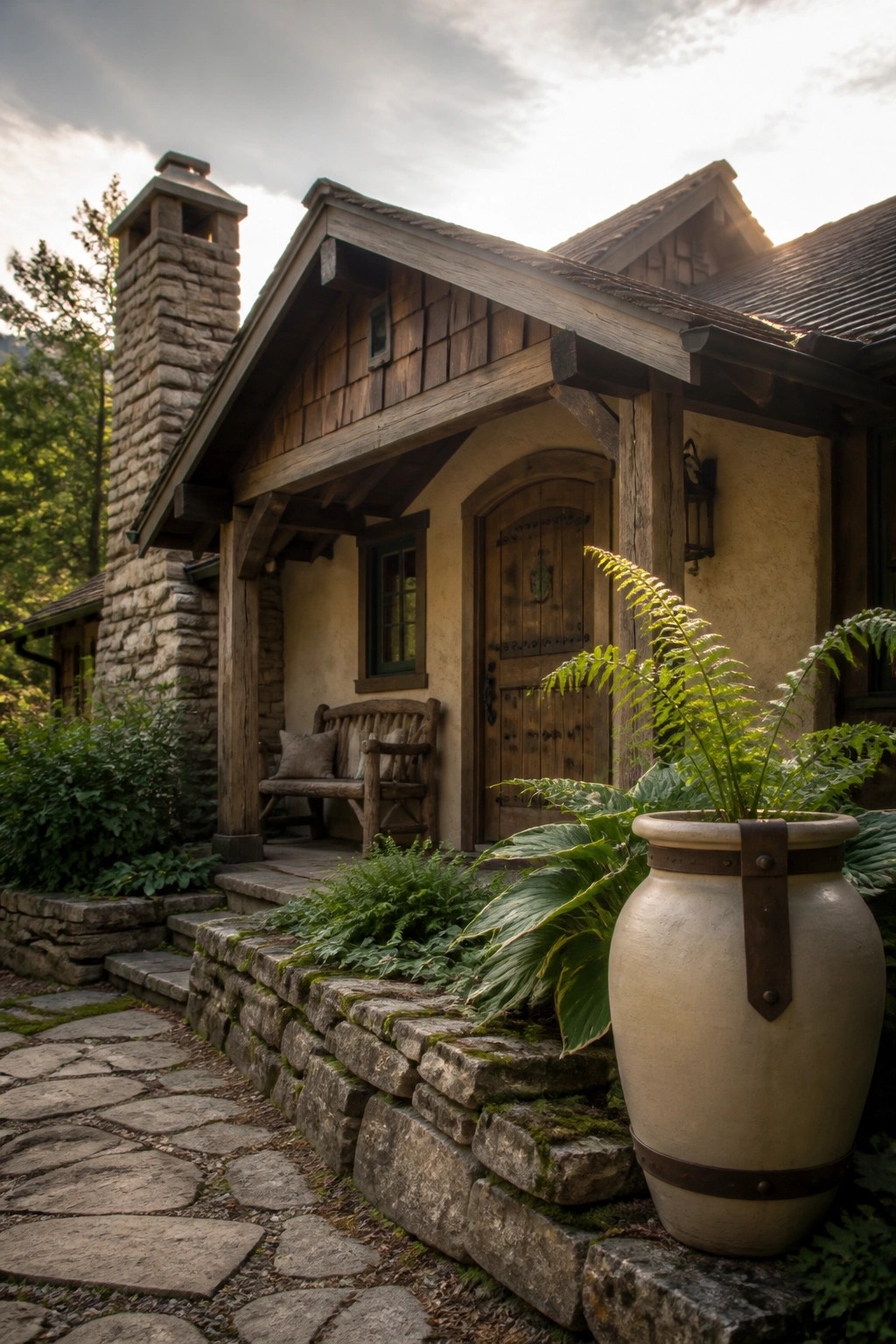
A light warm neutral on stucco helps stone feel less heavy and more part of the whole house. The color sits back just enough to let the stone chimney and wood trim take the lead while still keeping the exterior from looking cold or flat.
This works best on homes that already have several materials. Keep the neutral simple and slightly creamy rather than pure gray. It suits cottages and traditional builds where you want the stone to read as an accent instead of the main surface.
Warm Wood Tones With Neutral Stucco
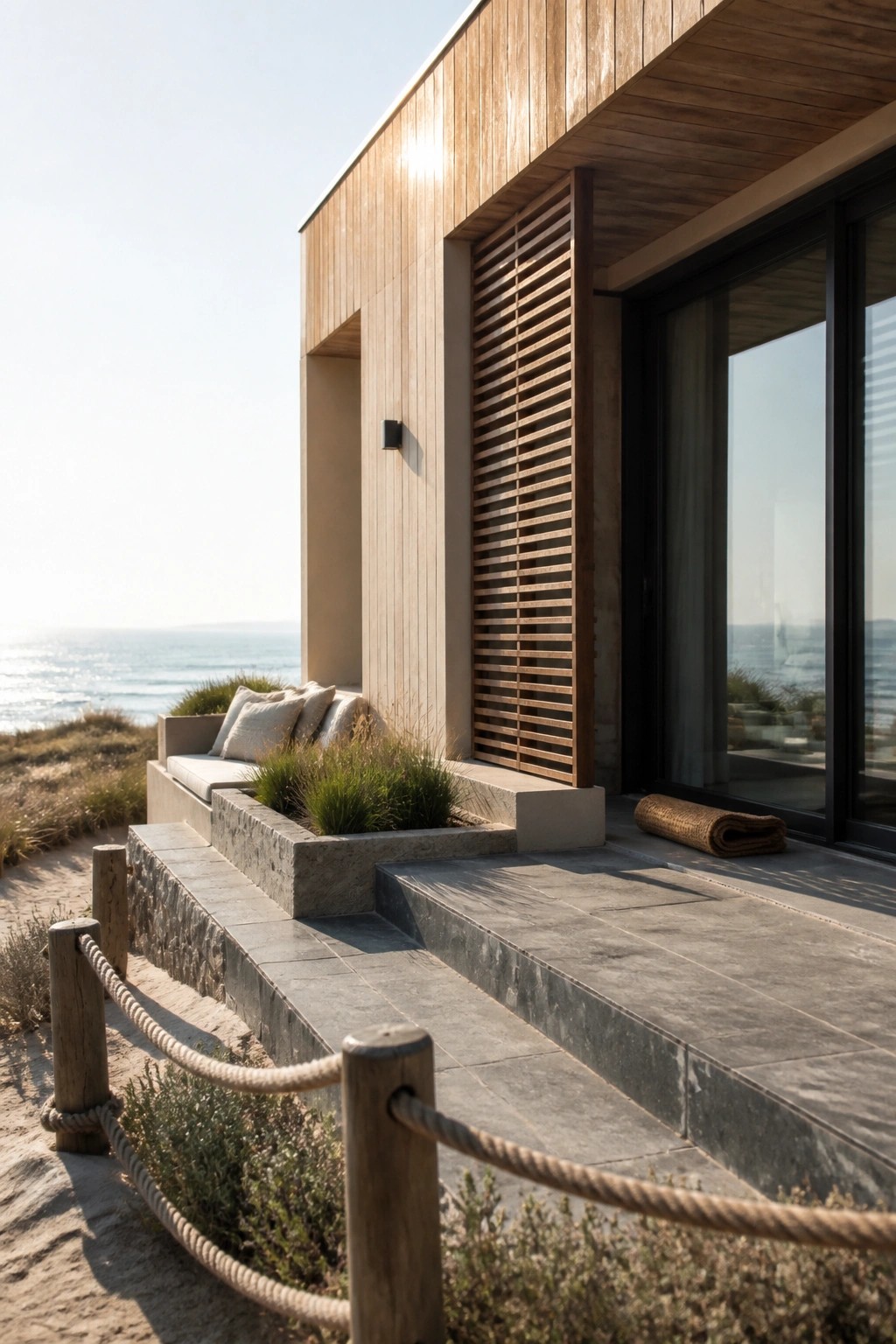
Many homes use a soft neutral base on the exterior but still feel a little flat. Adding a section of warm wood siding gives the surface depth and a natural softness that reads as inviting rather than stark. The contrast works especially well when the wood is kept light and the stucco stays in the beige or greige range.
This approach suits coastal homes or any house where you want the exterior to feel relaxed. Keep the wood in a horizontal layout so it does not compete with the stucco, and let it wrap just one or two key walls instead of the whole house. The result stays simple and ages gracefully.
Warm Neutral Stucco for Everyday Charm
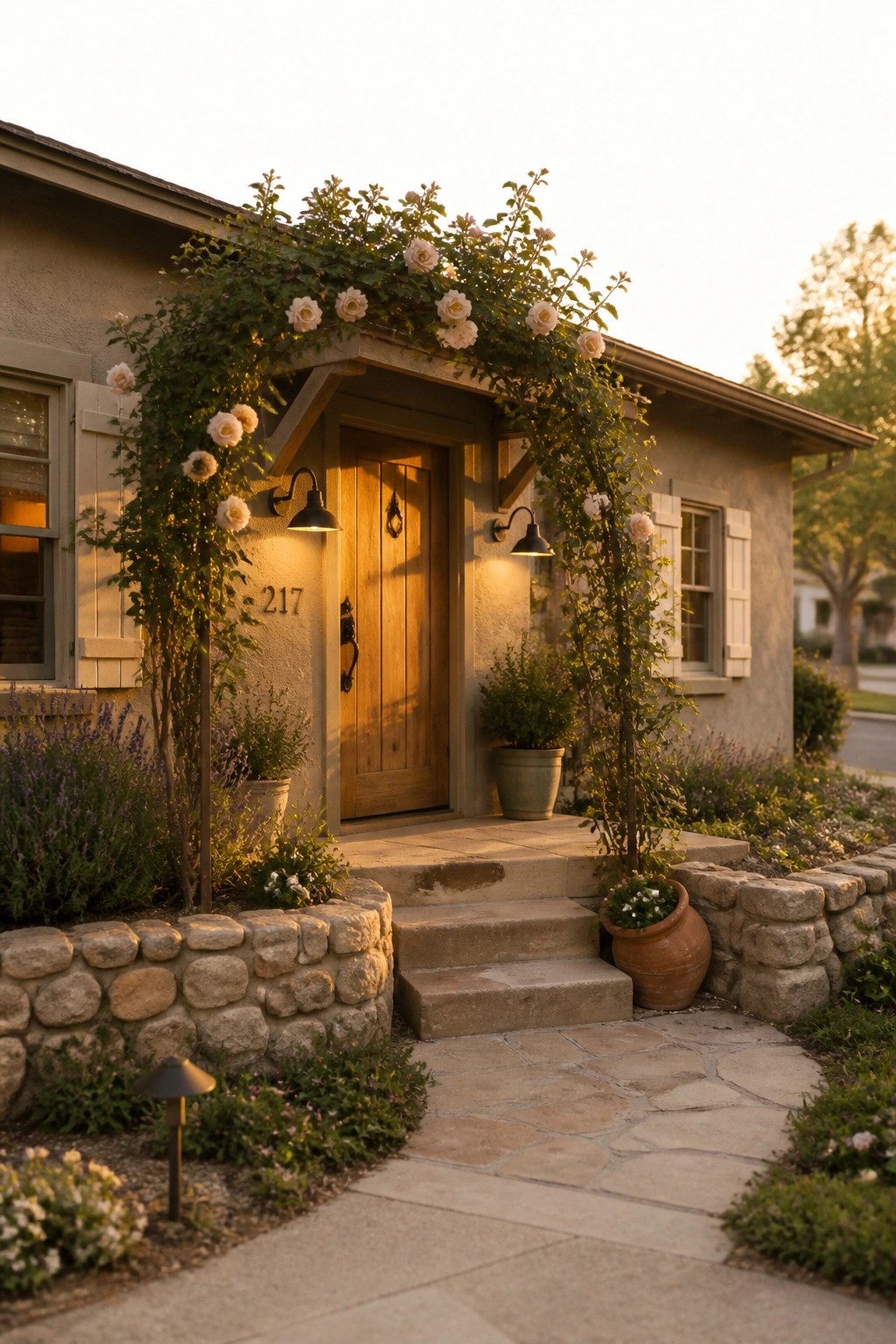
A warm neutral stucco color gives a house a soft, settled look that feels welcoming from the street. It avoids the cool gray tones that can make exteriors seem flat and instead brings out a gentle glow, especially when paired with natural wood and stone.
This finish works best on simpler homes where you want the texture of the stucco to show through. It pairs easily with wood doors and trim without competing for attention, and it tends to look better as it weathers.
Frequently Asked Questions
Q: Which neutral feels coziest on stucco when the house sits in shade most of the day? A: Pick a soft greige with warm undertones. It catches what little light comes through and stops the walls from looking flat or dull. One coat usually brings enough depth without extra layers.
Q: My siding has a dark roof overhead. Which color from the list keeps the whole place from feeling heavy? A: A light warm taupe works well here. It lifts the walls just enough to balance the roof while still reading as neutral and inviting from the street.
Q: How do I test a color on stone without committing to the full job? A: Paint two or three sample boards and lean them against the stone at different times of day. Walk around the yard to check how each one shifts next to the natural texture.
Q: Will a creamy neutral on the lower siding show mud splashes after rain? A: These warmer shades hide everyday dirt better than cool grays do. A quick rinse with the hose every few weeks keeps them looking clean without much effort.
