

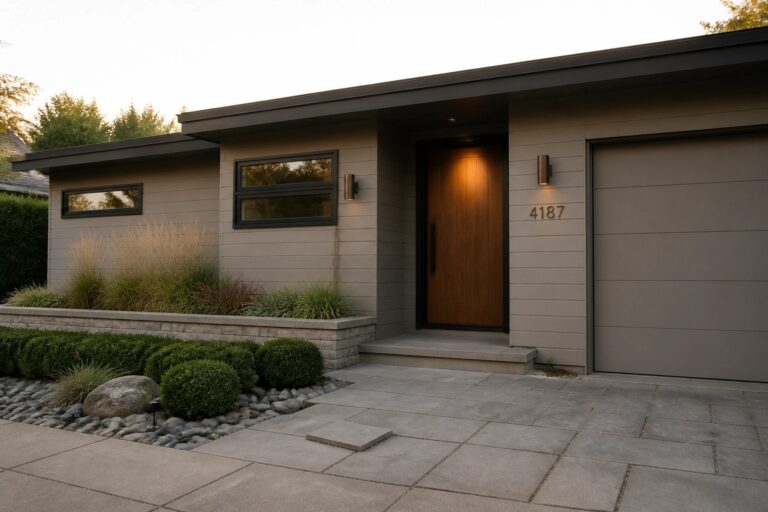
I’ve spent more time than I’d like standing out front and noticing how quickly certain colors start to look tired once dust and sun hit them for real.
The right exterior shade can keep a facade from showing every mark while still working with the roofline and entry details that already exist.
Some shades just work better.
I keep coming back to tones that seem to blend minor wear into the overall look instead of highlighting it right away.
Testing one or two on a side wall first has helped me see how they actually age before committing to the whole house.
Muted Gray Siding For Low Maintenance Facades
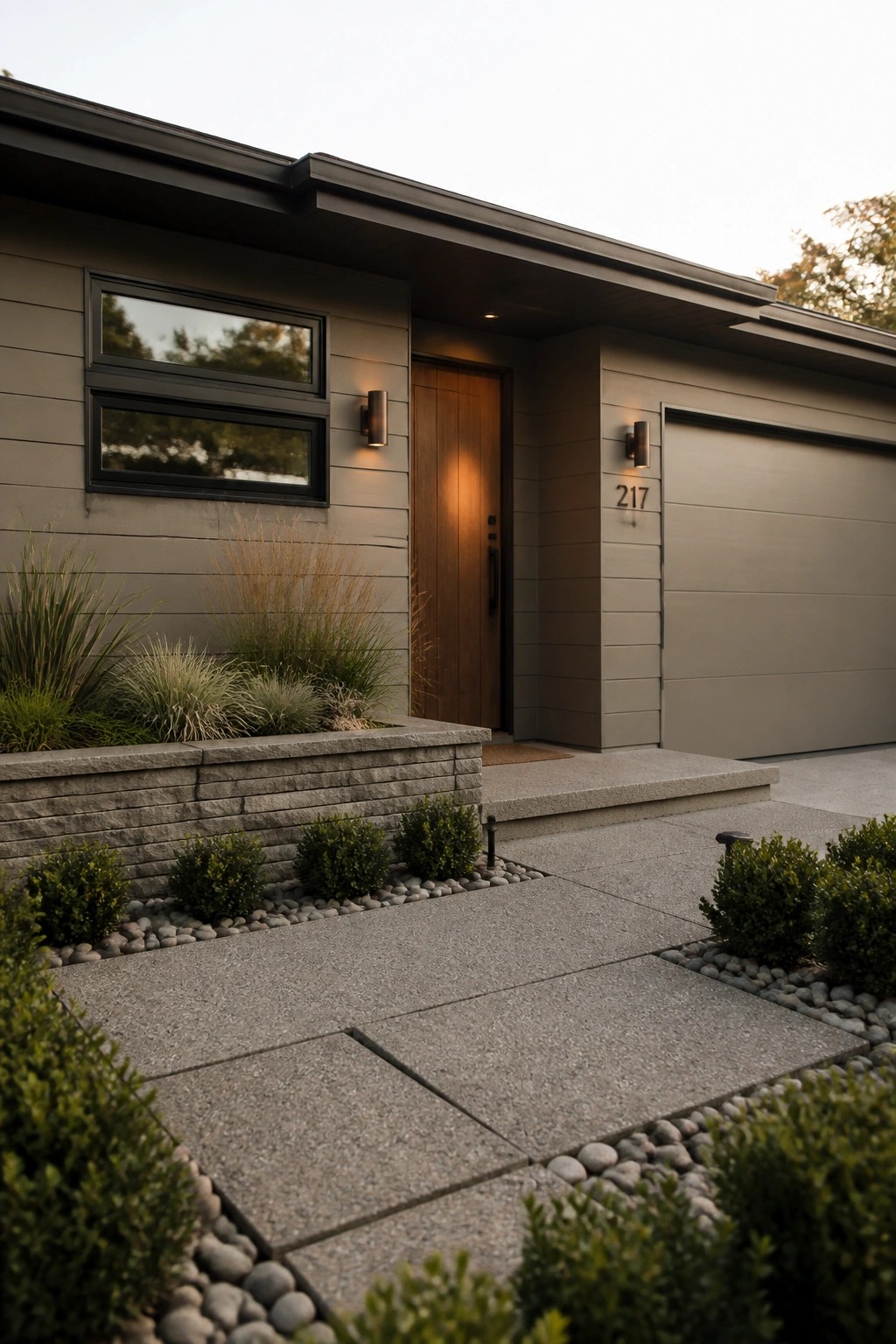
A soft gray on the main siding helps modern homes stay looking clean without constant washing. It blends dust and minor marks into the surface instead of highlighting them the way lighter or darker shades often do.
This color works best on houses with simple lines and few trim details. Pair it with dark window frames and a wood door to add contrast while keeping the overall upkeep low.
Dark Charcoal Exteriors That Hide Everyday Wear
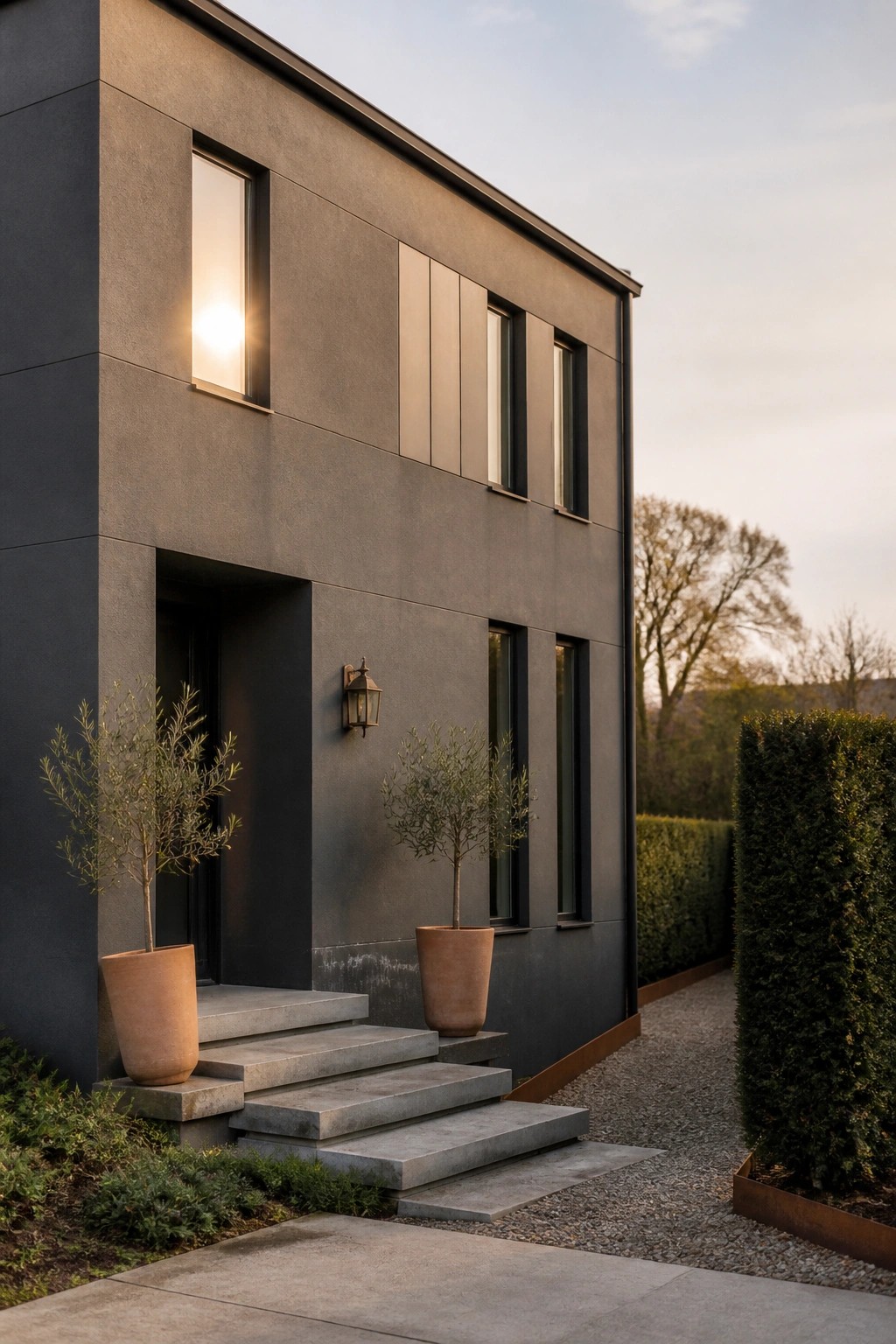
A dark charcoal color on the outside walls helps a house stay looking clean longer. It masks dust, pollen, and small marks that show up fast on lighter shades, which means less frequent washing or repainting.
This approach works best on modern homes with simple shapes and few trim details. Pair it with matching window frames and concrete steps to keep the whole exterior low maintenance without losing visual interest.
Dark Gray Siding for Low Maintenance Exteriors
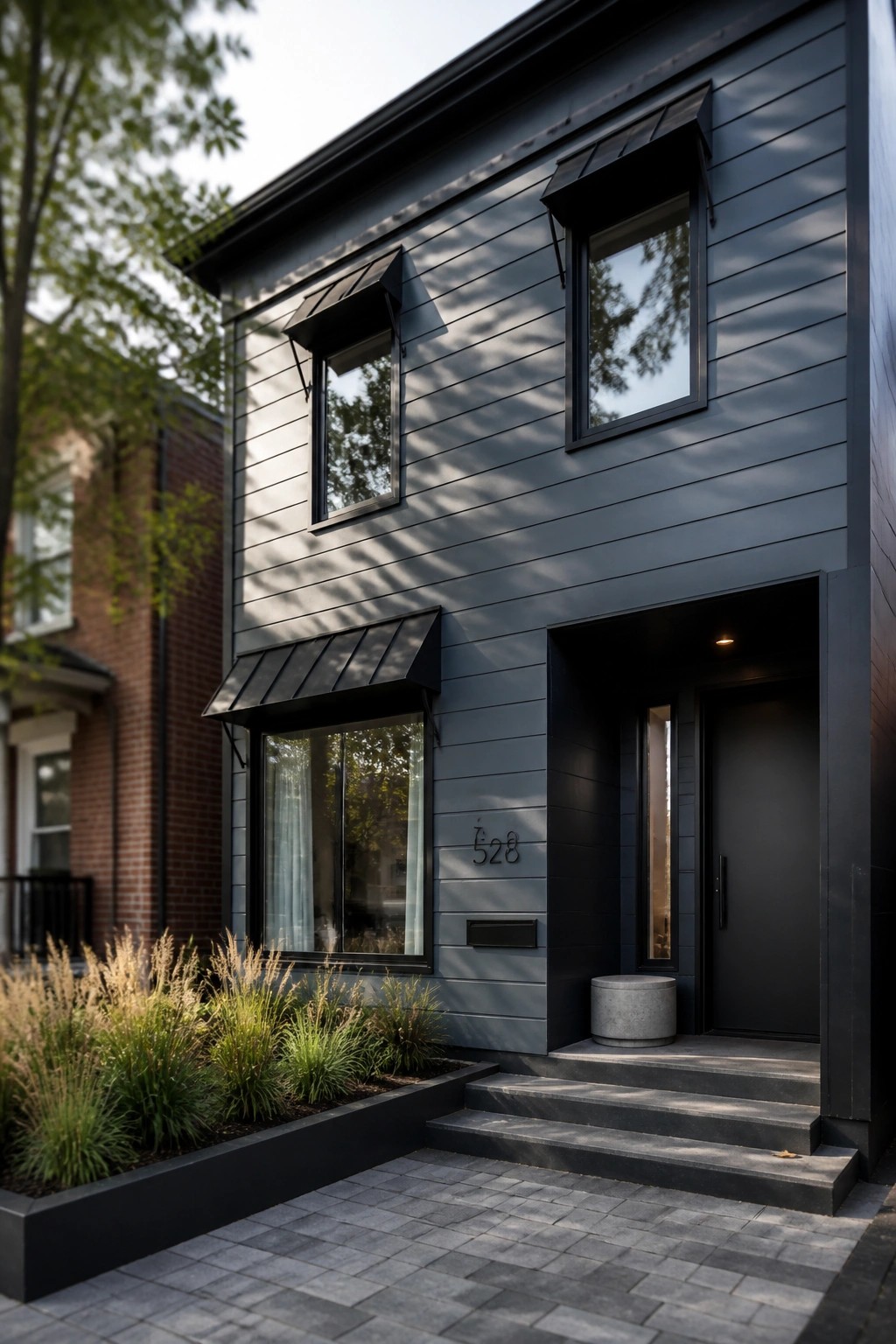
A deep gray like this one keeps the house looking cleaner between washes. It hides everyday dust, pollen, and light scuffs better than lighter colors, which is useful on homes that face the street or get regular foot traffic.
This color works especially well on modern houses with simple shapes and dark trim. It holds up in most climates without showing fading quickly, though it can feel heavy on very small homes or those with lots of shade.
Warm Neutral Colors for Low Maintenance Exteriors
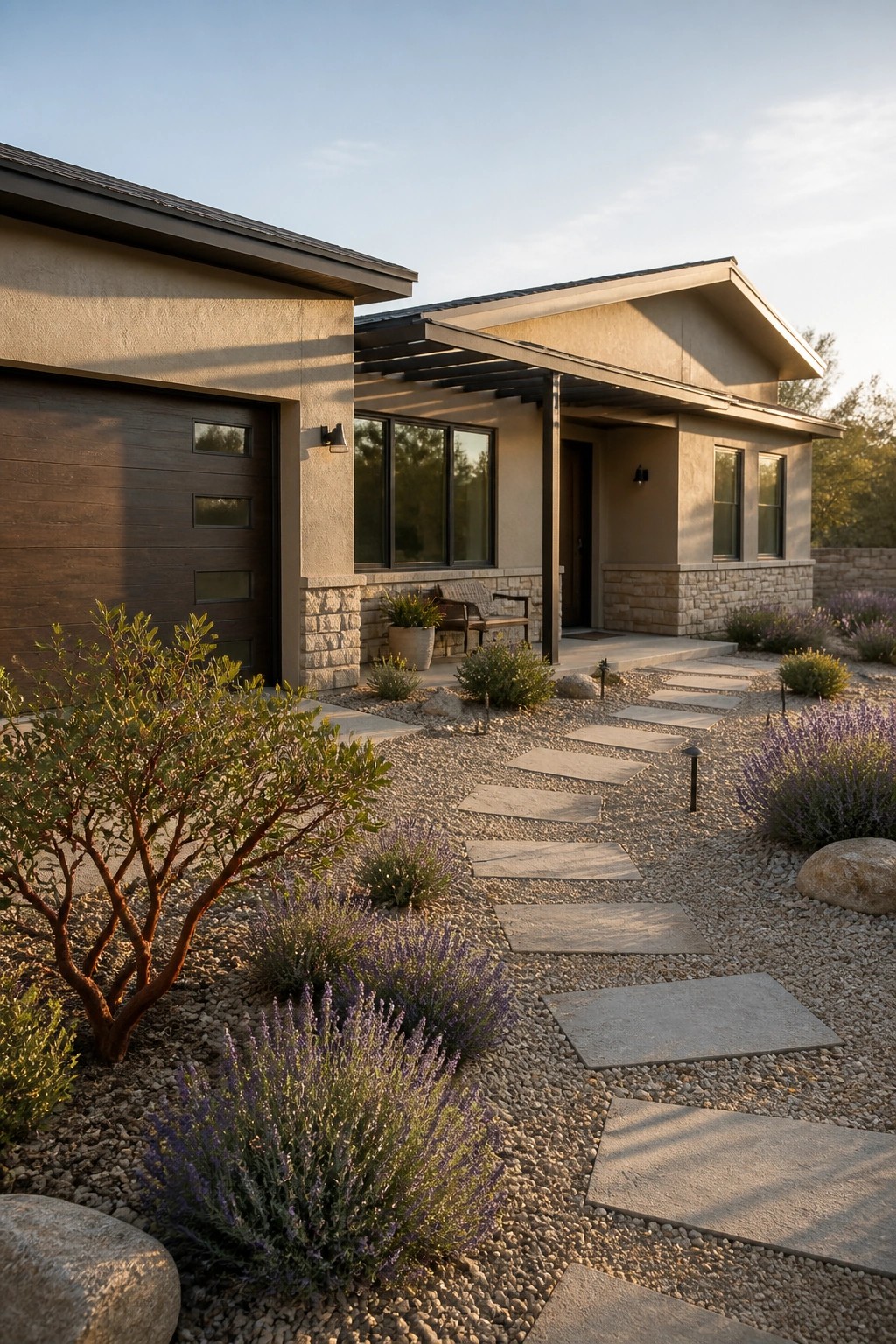
Warm neutral tones like soft beige and light taupe work well on modern house exteriors because they blend with dust and minor fading instead of showing every mark. The stone base adds texture without needing much upkeep, and the overall palette stays looking steady even after sun exposure or regular weather.
These shades suit single-story homes with simple rooflines and gravel landscaping. Stick to matte finishes on stucco and pair them with darker accents on doors or trim so the color stays practical without feeling too stark.
Dark Charcoal Exteriors Hide Everyday Wear
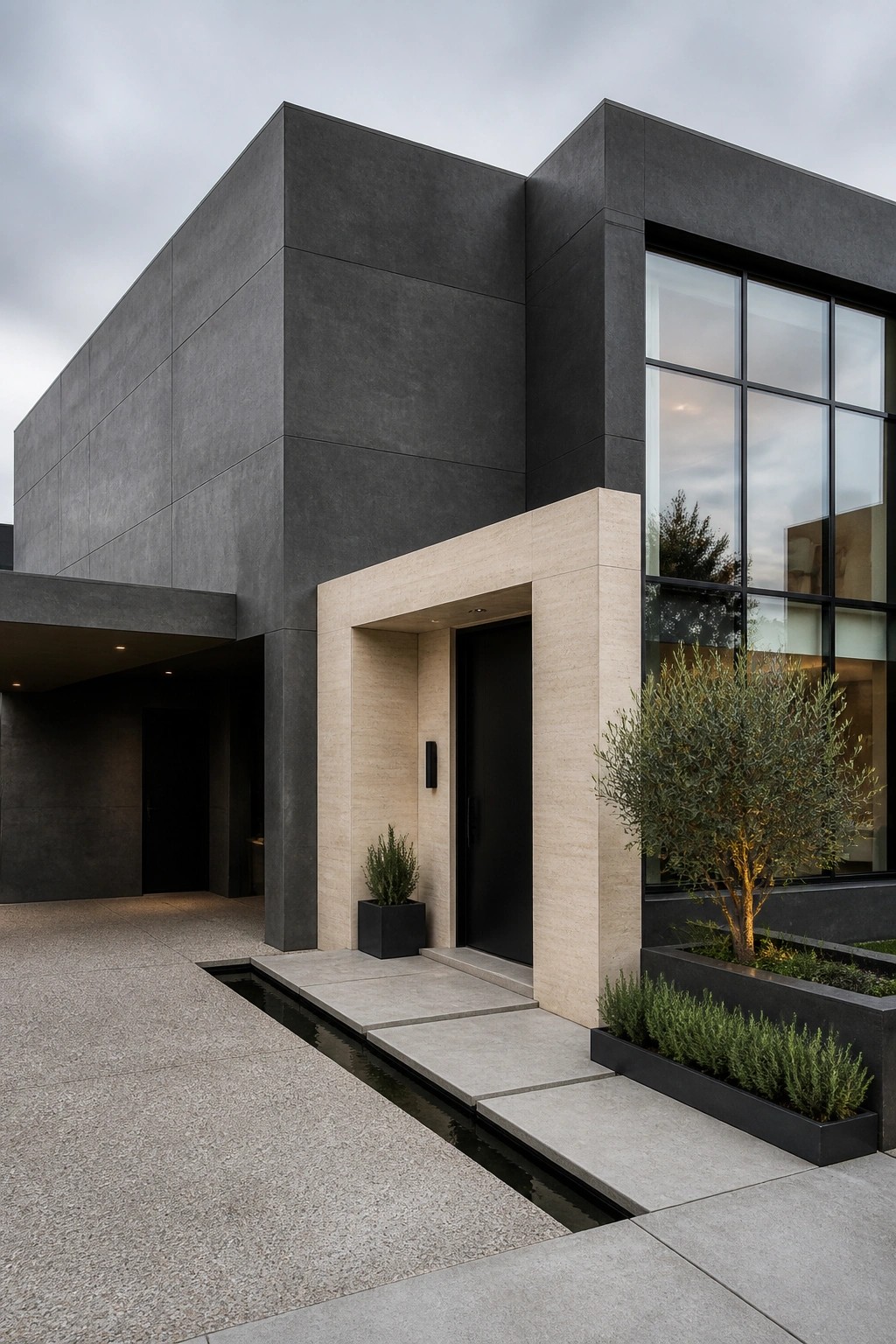
A deep charcoal finish on the main walls makes a modern house look cleaner for longer. Dust, water spots, and small marks do not show up the way they do on lighter colors.
This approach works well on homes that already use contrast, such as light stone around the entry. It suits simple, boxy designs and reduces how often the exterior needs attention.
Muted Green Siding Stays Cleaner Looking
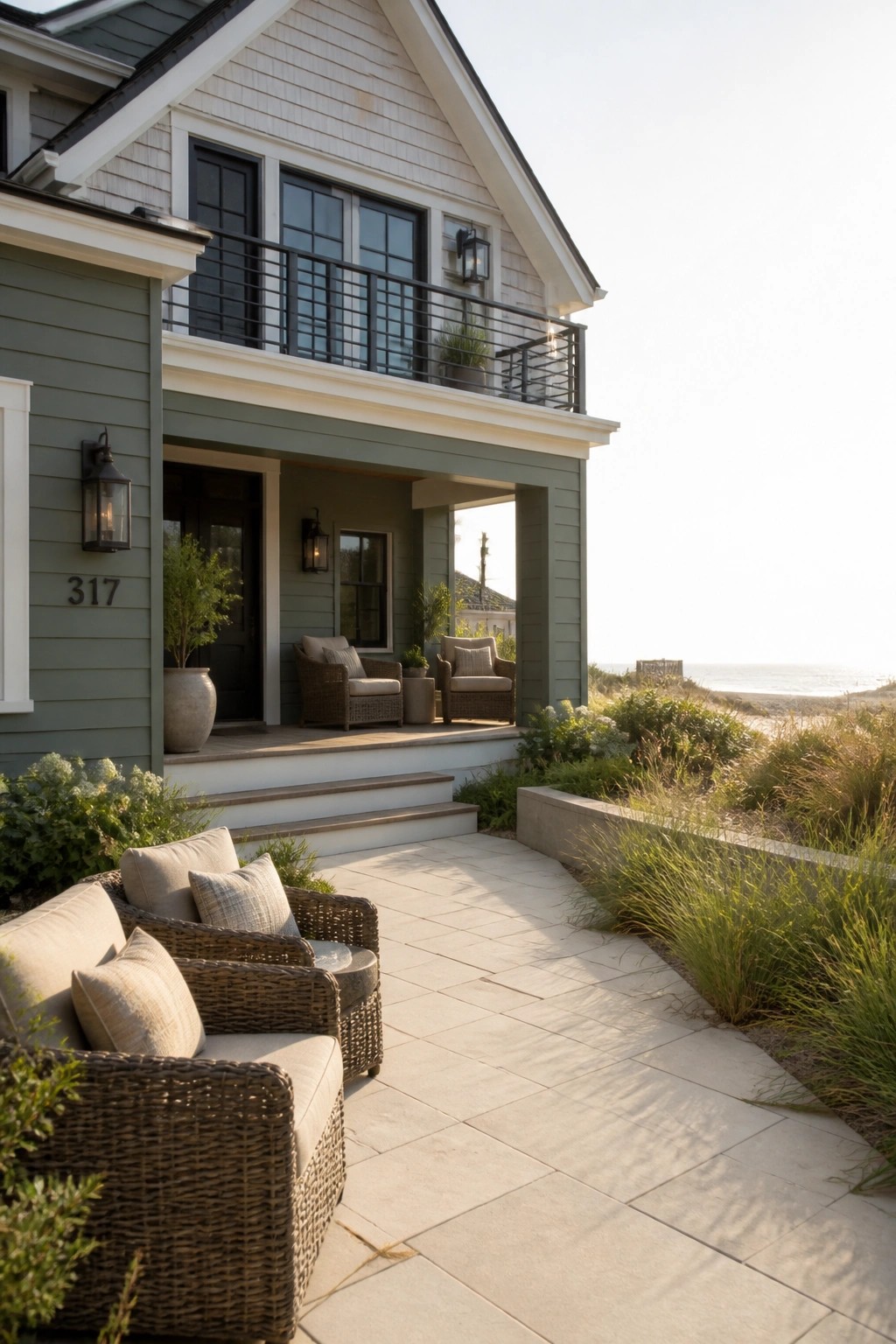
A soft green on the house exterior gives a calm look that does not call attention to dust or small marks. The color sits well against grass and sky, so everyday wear stays less obvious than it would on white or very dark paint.
This works best on homes with simple trim and dark window frames. Keep the palette to two or three tones and skip busy details if you want the low-maintenance benefit to last.
Dark Neutral Siding That Stays Looking Cleaner

A deep muted color on the main siding can make a big difference in how often an exterior needs attention. Dirt, pollen, and small scuffs blend in more easily, so the house does not show every bit of daily use the way lighter shades often do.
This approach works best on straightforward modern homes where the shape of the building already carries the design. Keep the trim and accents simple so the color does the quiet work without extra contrast that might highlight wear later.
Dark Charcoal Exteriors That Hide Wear
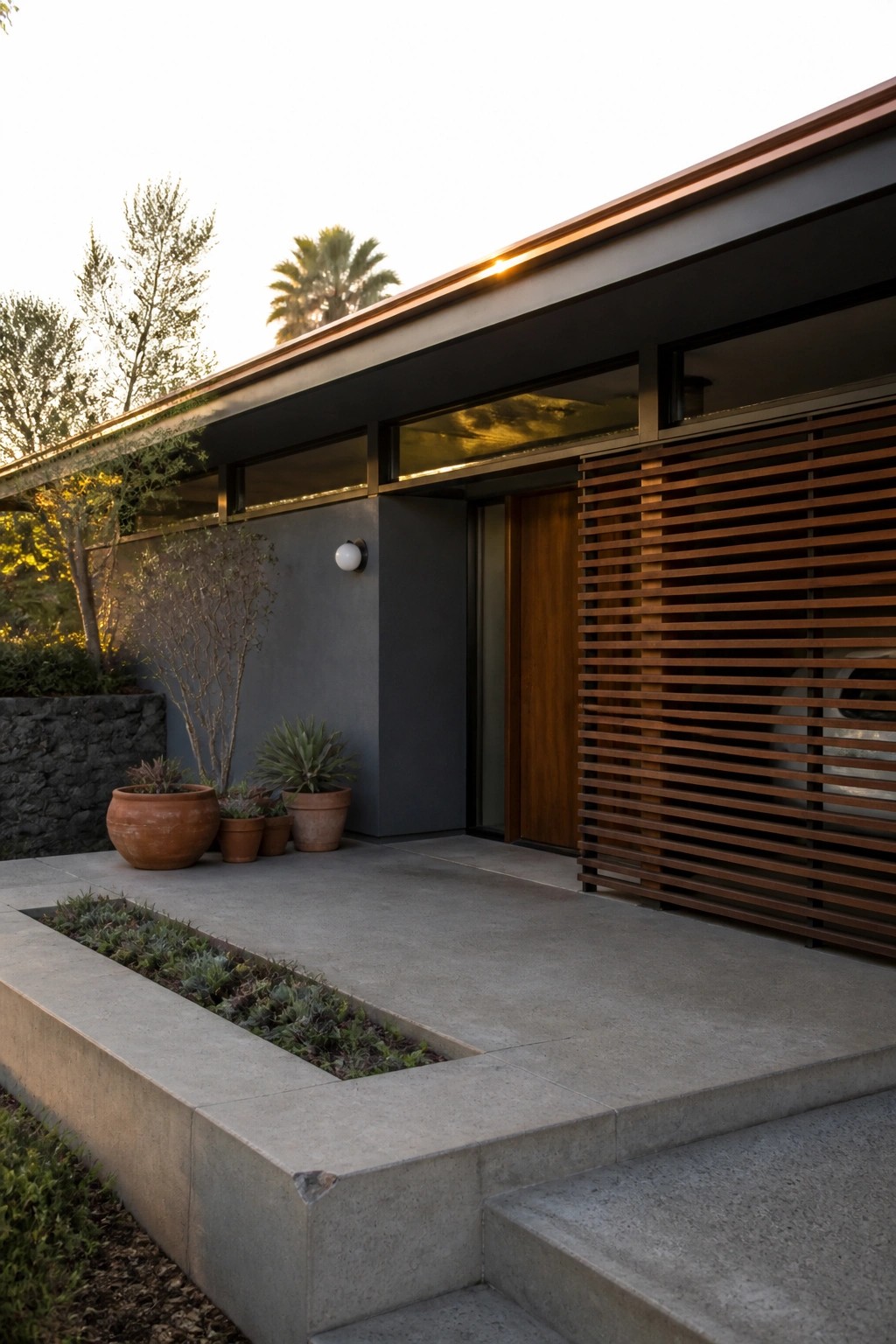
A deep charcoal color on the main walls gives a modern house a clean look that lasts. It does a good job of hiding dust, pollen, and small scuffs that show up fast on lighter shades. The matte finish also helps reduce the appearance of fading from sun exposure.
This works best on homes with simple lines and a mix of wood or metal accents. It suits dry or sunny areas where lighter paint tends to show dirt quickly. Just keep the color consistent across large surfaces and avoid high gloss if you want the low maintenance benefit to hold up over time.
Muted Wall Colors for Low Upkeep
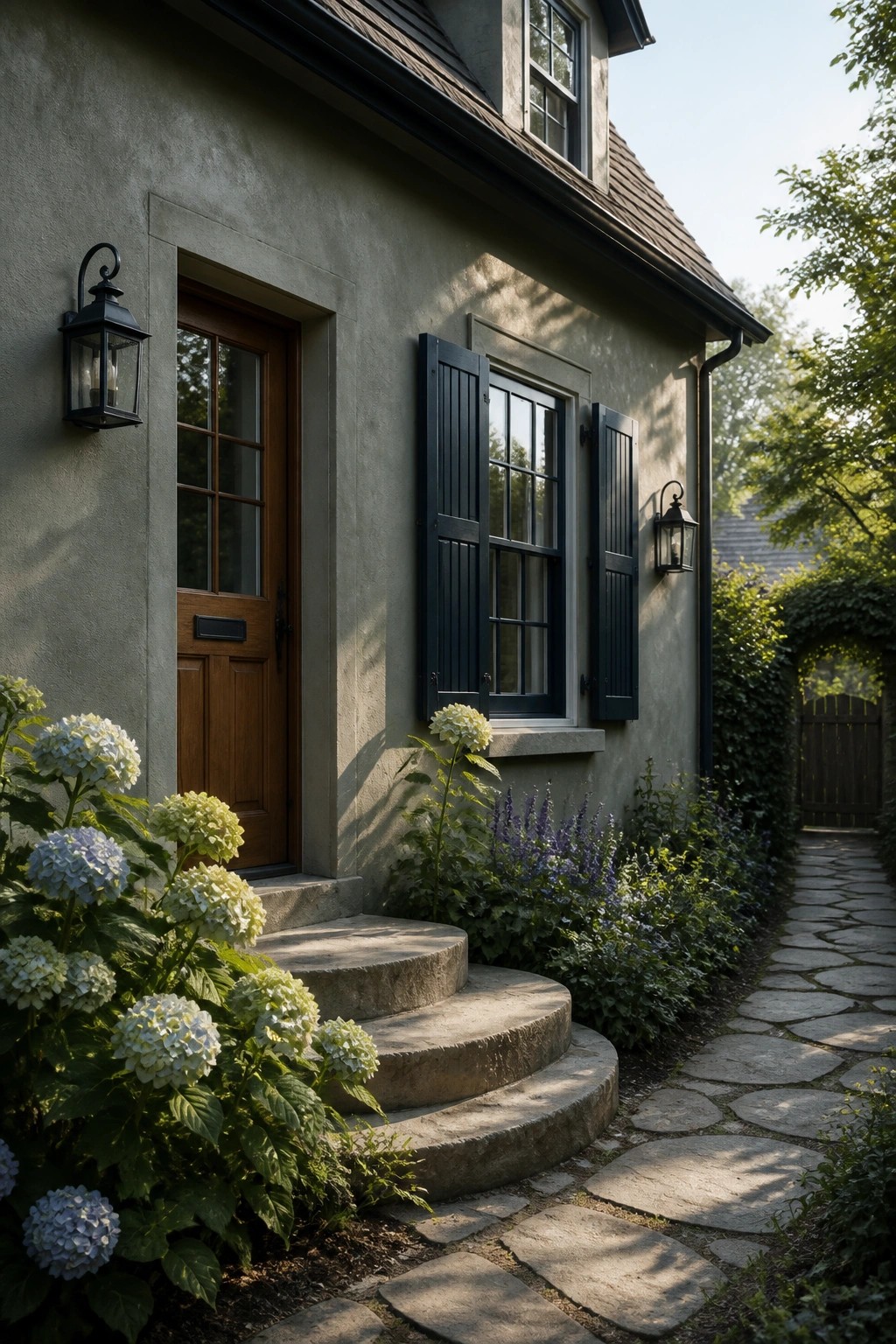
A soft muted tone on the main walls makes the house look cleaner between washes. This color sits between green and gray, so it blends with plants and shadows instead of standing out against every mark.
It works well on homes with simple trim and darker accents like shutters. Stick to one main wall color and let the roof and details carry contrast. This approach suits older homes or any place where you want the facade to age quietly without constant touch ups.
Warm Terracotta Exteriors That Handle Daily Wear
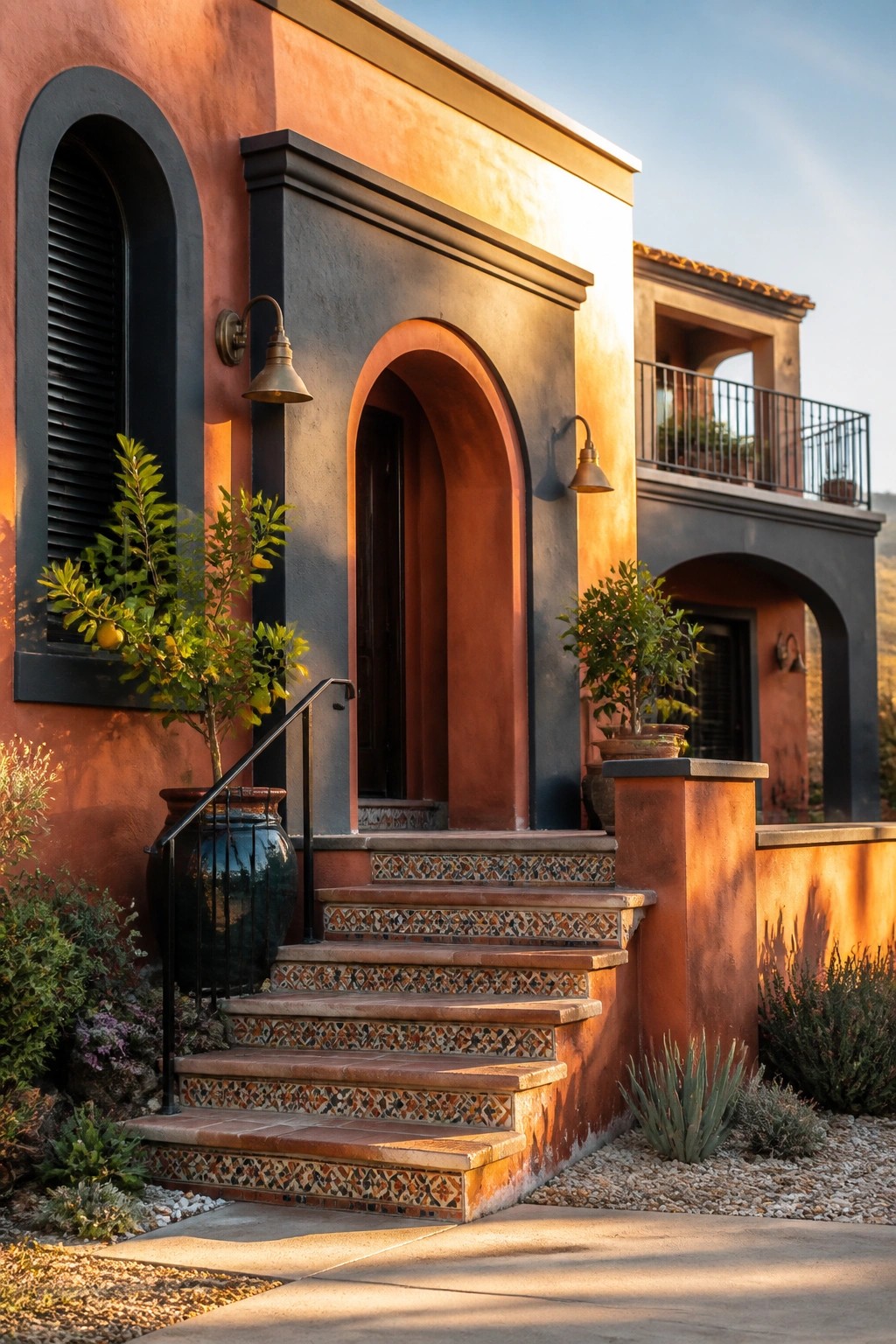
These muted orange stucco walls give a house a grounded look while hiding the dust and small scuffs that show up on lighter colors. The tone sits somewhere between peach and clay, so it does not demand constant touch-ups when the weather shifts or when people come and go.
It works best on homes with simple shapes and a bit of texture in the finish. Pair it with darker trim and tile accents so the color stays the main feature without needing extra upkeep.
Deep Blue Modern Exteriors
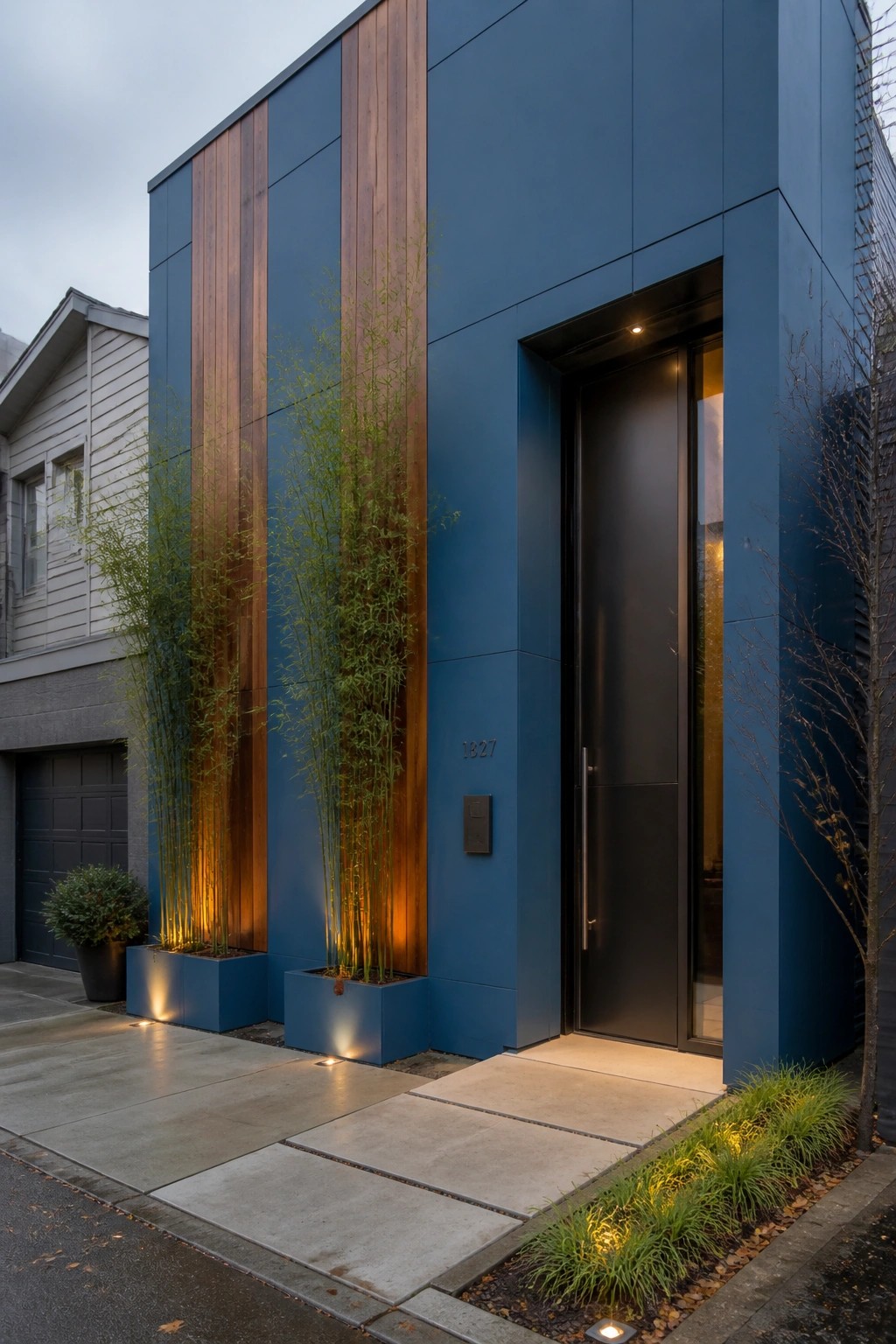
A deep blue exterior color like this one holds up well because it hides dust, minor scuffs, and gradual fading better than lighter shades. The saturated tone keeps the house looking fresh longer without extra cleaning or touch-ups.
This approach works best on homes with clean lines and some wood or dark metal accents. It suits newer builds or updated facades where you want color without high maintenance demands.
Warm Neutral Exteriors That Hide Dirt
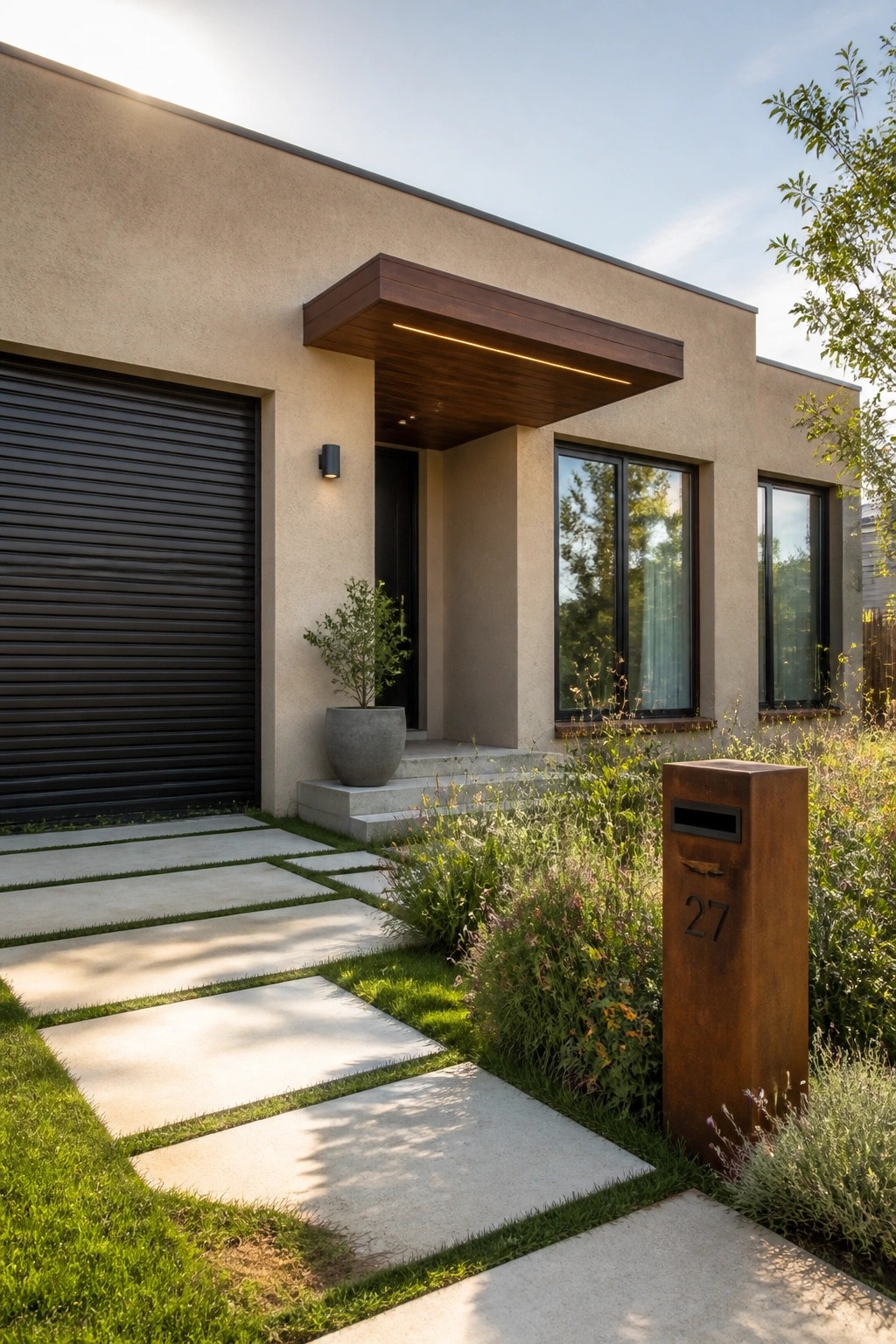
A soft beige or taupe on the main walls helps a modern house stay looking clean longer. The muted tone blends in light dust and small scuffs so they do not stand out the way white or very dark colors would.
This approach works best on textured surfaces like stucco in areas with dry weather or windblown grit. Pair it with dark trim and simple wood accents to keep the look sharp without extra upkeep.
Dark Gray Siding Holds Up Better Day To Day
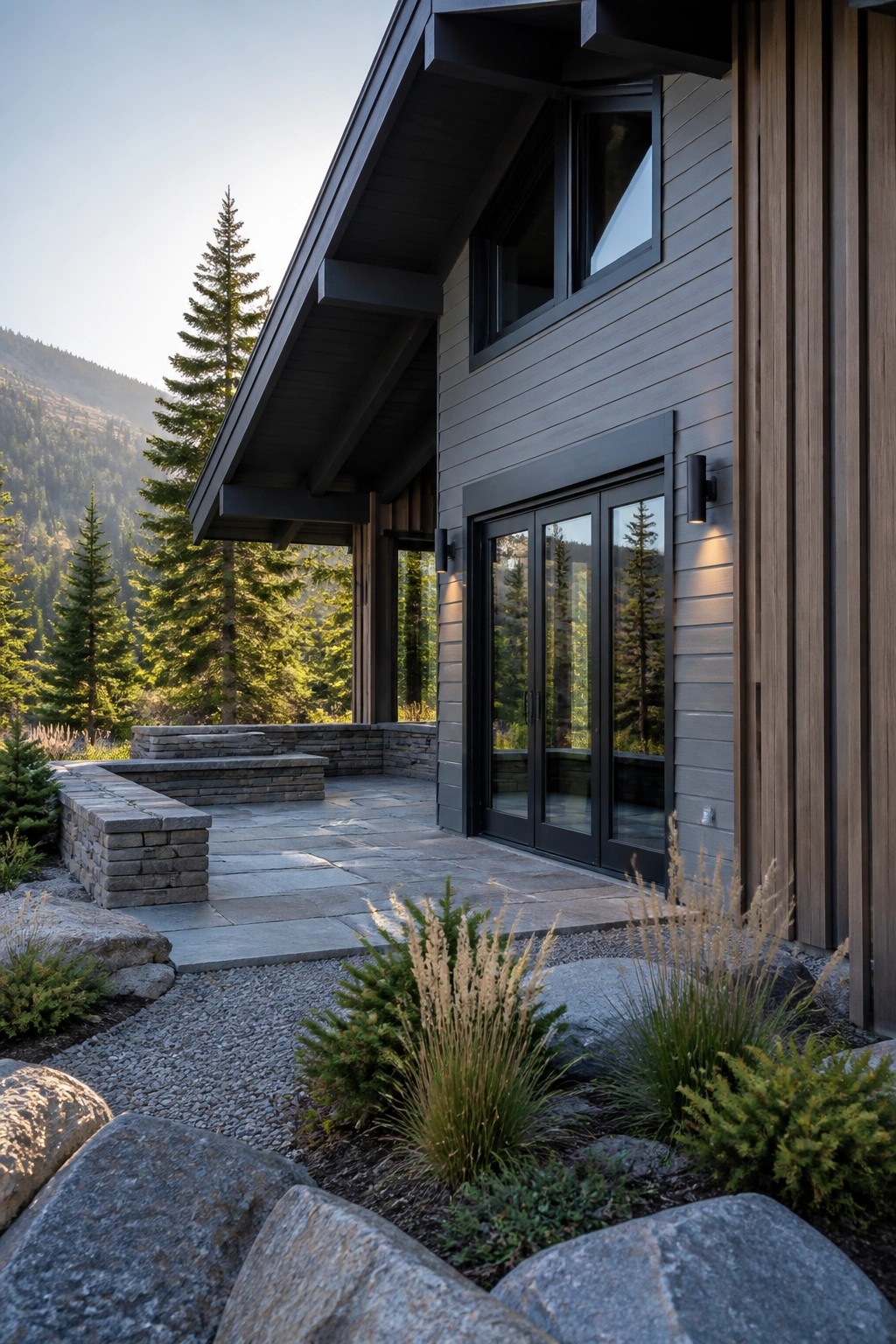
Many modern homes go with a deep gray on the exterior because it masks dust, pollen, and small scuffs that show up fast on lighter colors. The tone stays steady even after a season of wind and rain, which cuts down on how often you need to clean or repaint.
This works best on houses that mix siding with wood accents or stone details. It suits homes in open settings where the exterior gets more exposure, and it pairs well with simple black window frames that do not compete with the main color.
Warm Earthy Stucco That Hides Everyday Wear
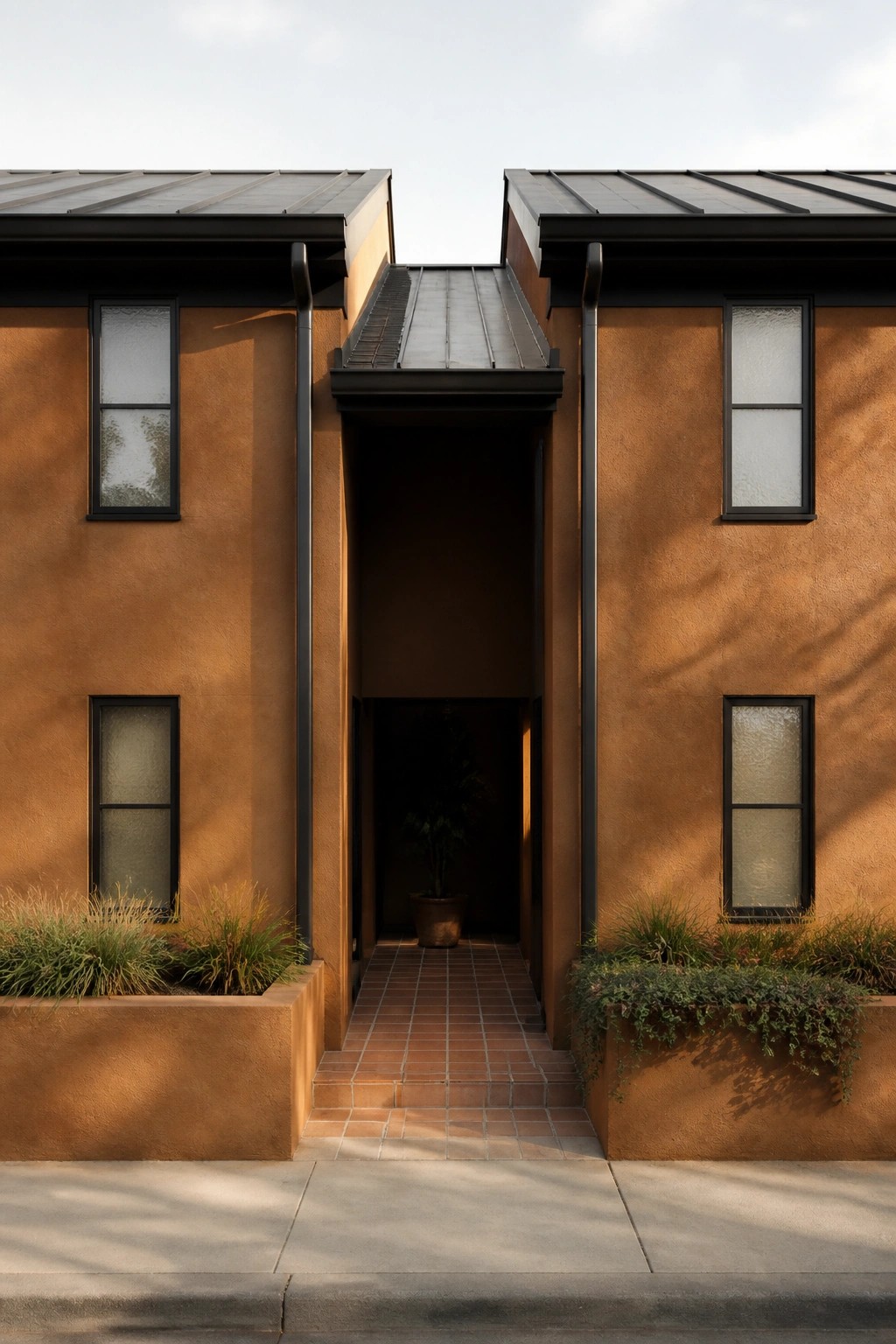
A muted terracotta tone on stucco walls gives a house a settled look without showing every bit of dust or sun fade. The color sits between orange and brown, so it blends with the ground and plants around it rather than standing out as something that needs constant cleaning.
This works best on simple modern homes that use dark window frames and roofing for contrast. It suits dry or sunny climates especially well, since the warmth of the shade keeps small marks from becoming obvious over time.
Dark Gray Exteriors Hide Everyday Wear
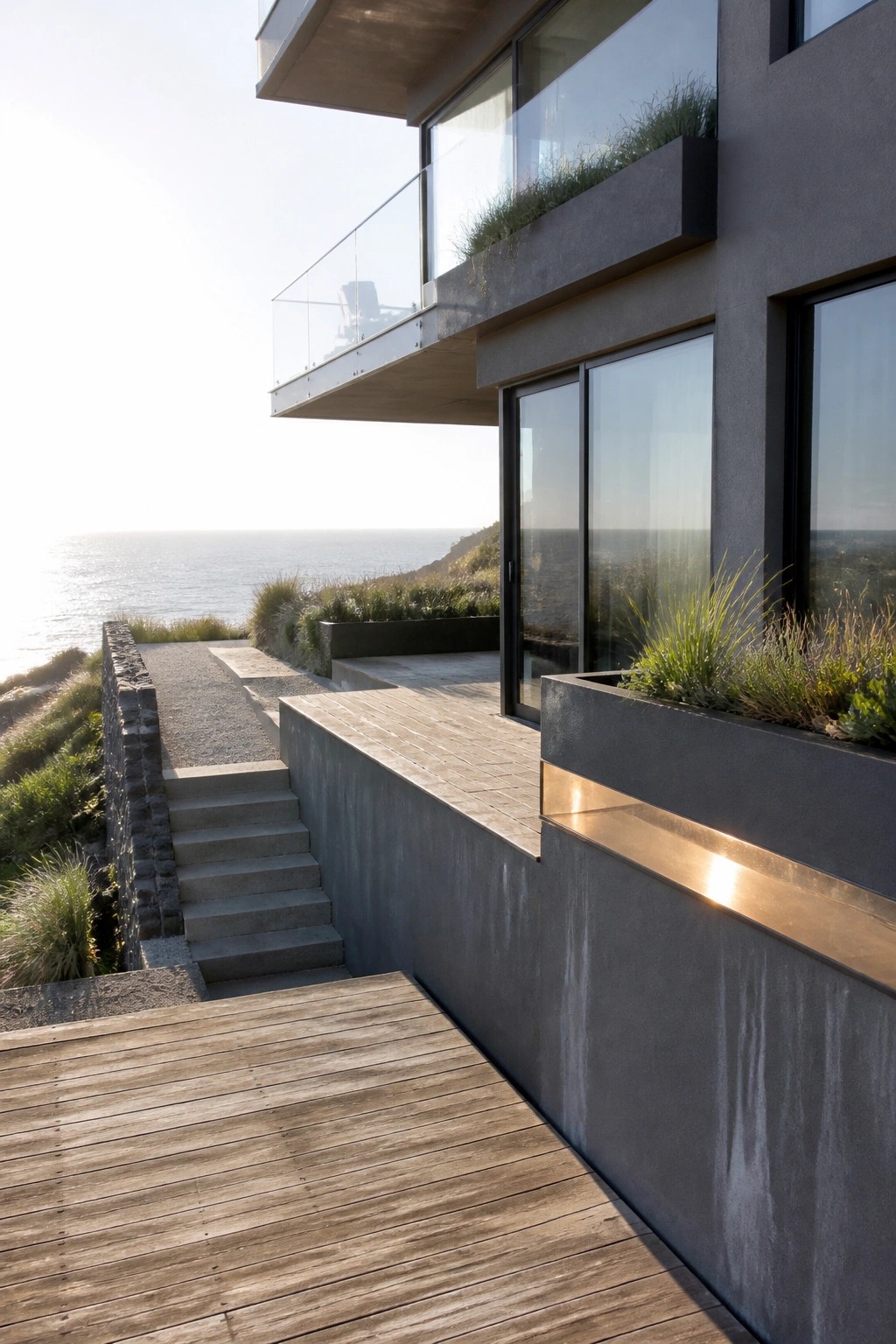
A dark gray finish on exterior walls helps keep the house looking cleaner between washes. It masks dust, water spots, and small scuffs that show up quickly on lighter surfaces.
This color works best on simple modern forms with few trim details. It pairs well with wood decks and concrete planters while holding up in sunny or coastal spots where fading happens faster on brighter shades.
Muted Green for House Exteriors
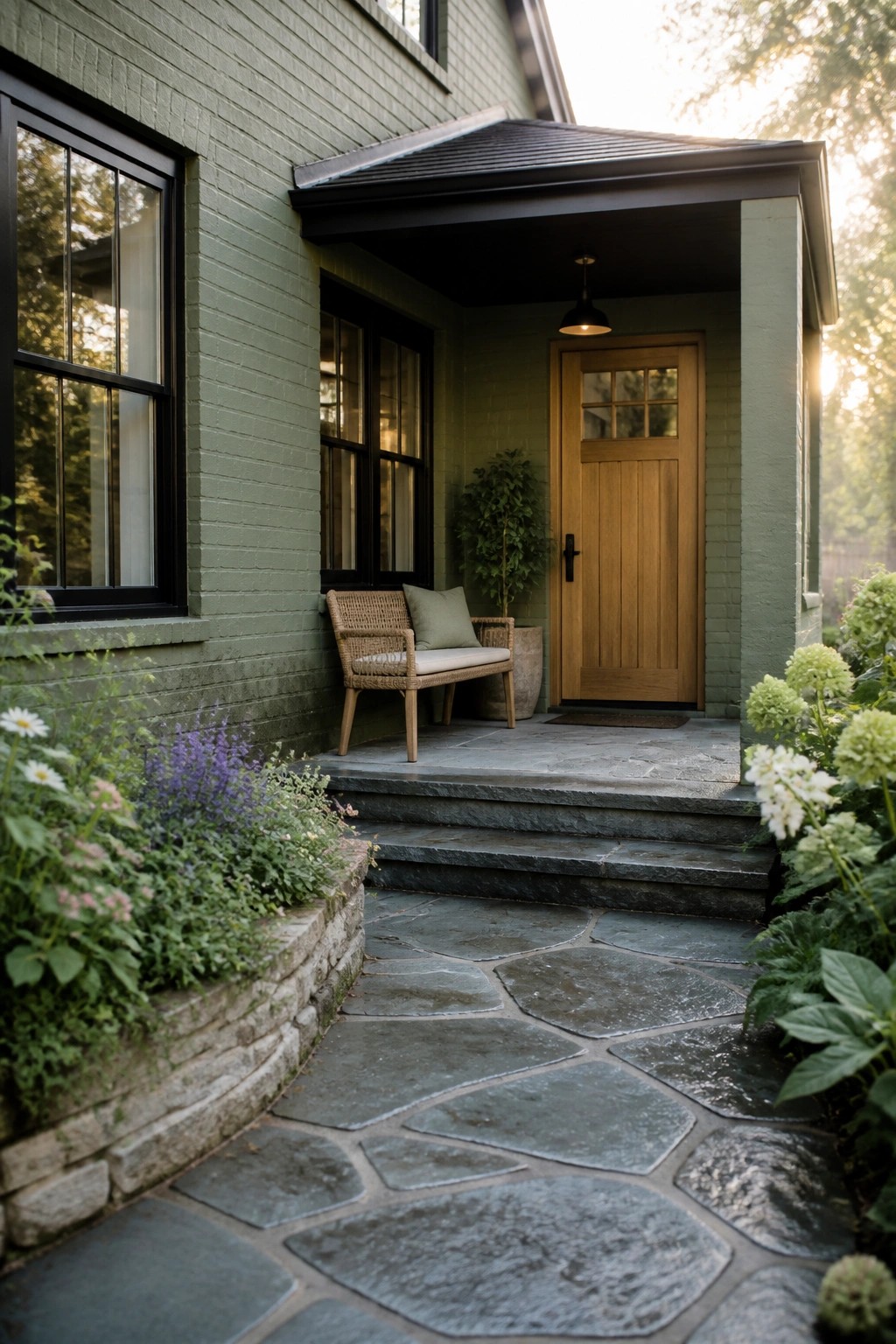
A soft green like this holds up well because it sits between light and dark tones. It does not show dust or small scuffs the way white or pale gray would, and it fades more evenly when exposed to sun.
This shade works best on homes with wood or stone details nearby. Keep the trim simple and dark so the color stays grounded. Test a larger sample first since greens can shift more than expected once they are on the full wall.
Dark Gray Brick For Low Maintenance Exteriors
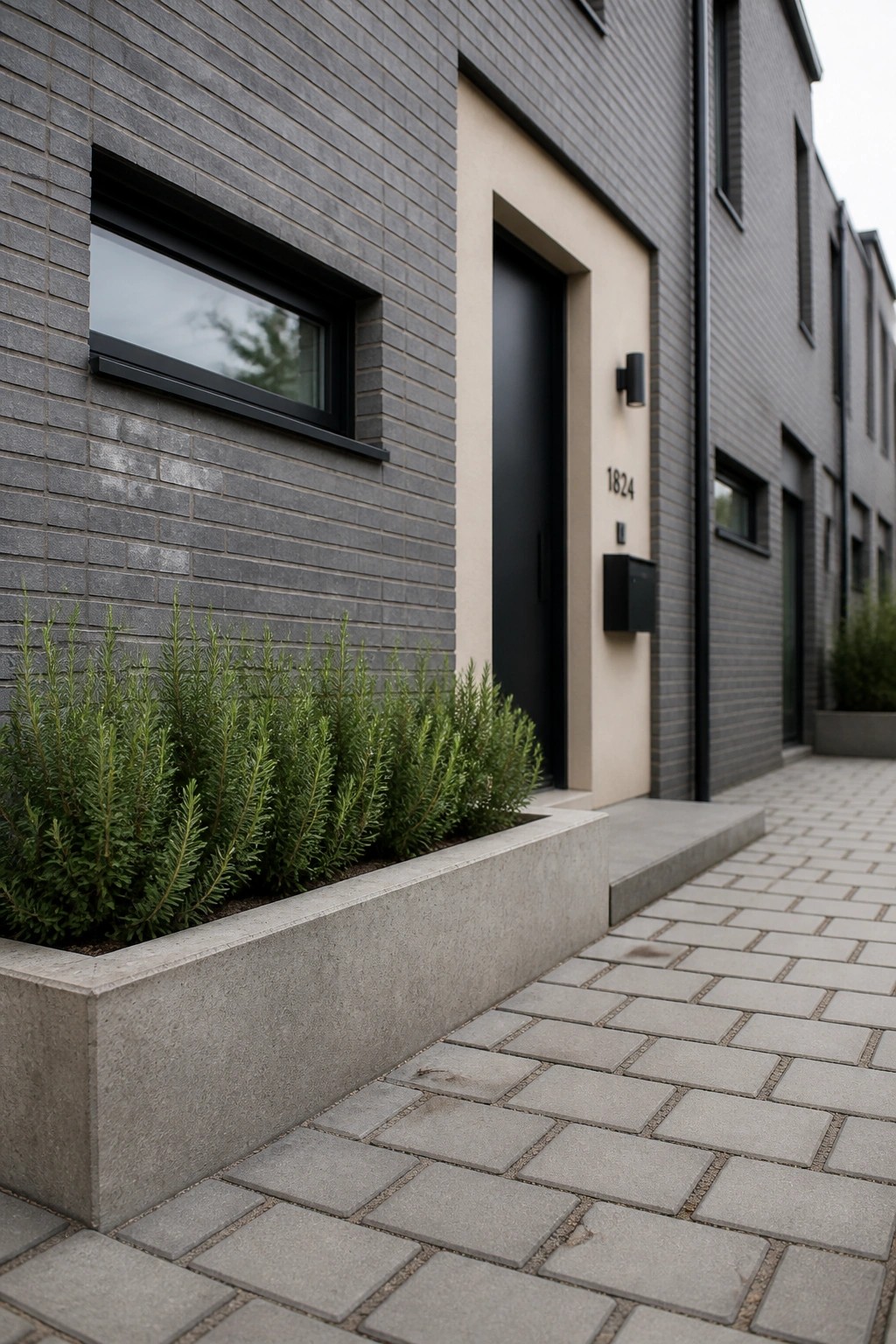
Dark gray brick holds up well on the outside of a house because it masks dust, water spots, and small scuffs that show up fast on lighter colors. The tone stays even as the surface ages, which cuts down on how often you need to clean or touch up the facade.
This color works best on modern homes that already lean toward simple lines and few details. Keep the entry area in a lighter neutral if you want some contrast, but stick with matte finishes so the whole surface continues to hide everyday wear.
Warm Neutrals with Dark Accents
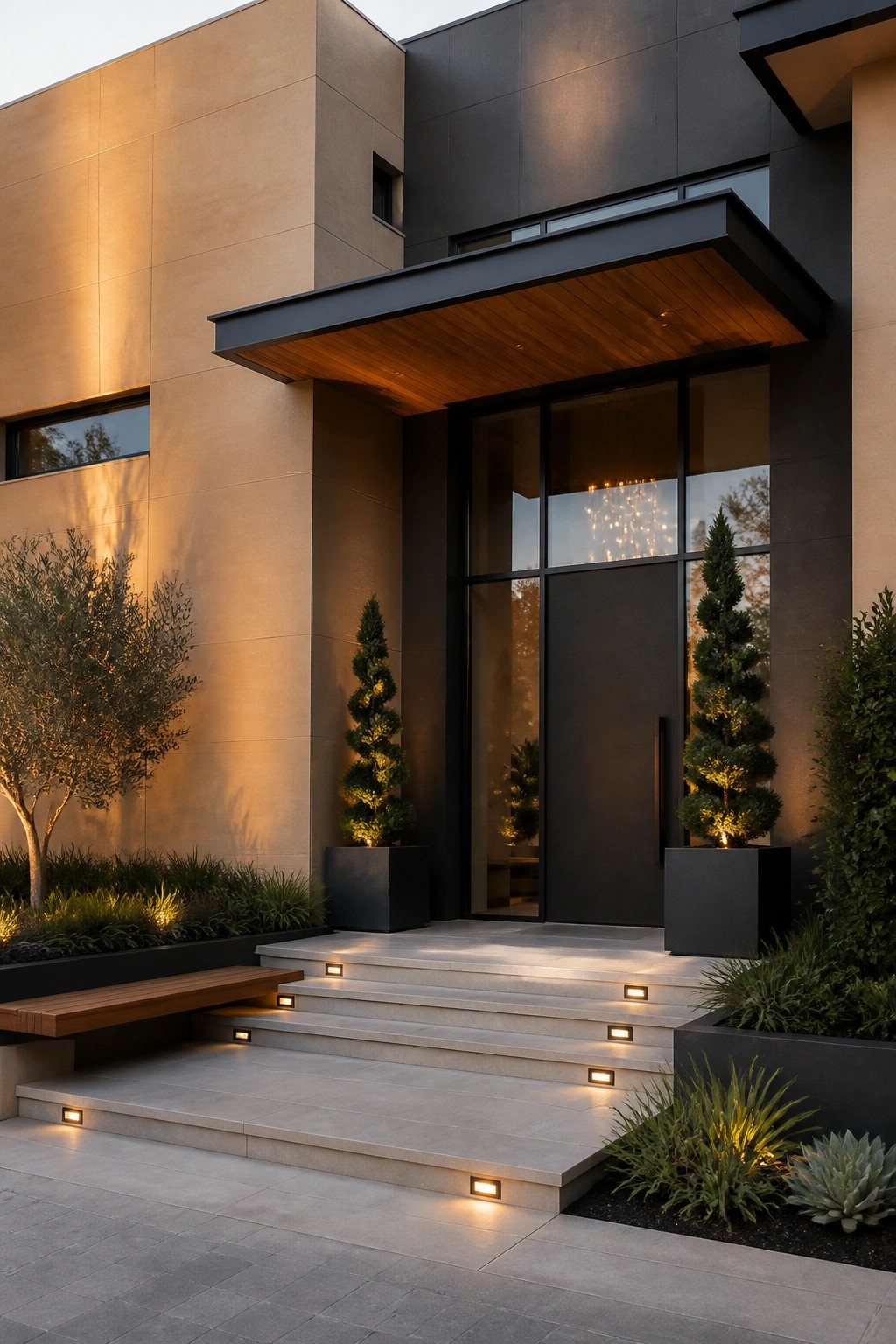
A warm beige tone on the main walls paired with deep charcoal or black around the entry gives a modern house a clean look without constant upkeep. These shades tend to hide dust, water spots, and small scuffs better than lighter or brighter colors, and they hold up well to sun exposure over time.
This approach works best on homes with simple, flat surfaces and strong architectural lines. Keep the darker color limited to doors, trim, and overhangs so the overall effect stays balanced rather than heavy.
Warm Neutral Colors on the Exterior

Many homes use a soft beige or taupe on the main walls because these shades hide dust and light wear better than brighter colors. The darker trim helps define the shape without drawing attention to every mark or smudge that builds up over time.
This color direction works well on houses with clean lines and wood accents. It suits most climates and needs less frequent touch-ups than stark white or very light paint.
Frequently Asked Questions
Q: Will these colors still hide dust if my house sits near a dirt road?
A: Darker modern shades like charcoal or olive absorb the fine particles better than crisp whites or lights. You will notice less obvious buildup between cleanings since the dirt does not create stark spots.
Q: Can I paint just the front and leave the sides as is?
A: The whole exterior needs the same color for the hiding effect to work evenly. Partial updates often leave obvious lines where dust and sun hit differently.
Q: What if my area gets heavy rain and mildew?
A: Pick colors with a slight warm undertone since they resist green growth better than cool grays. Clean the surface once a year with a mild wash to keep the low-maintenance promise intact.
