

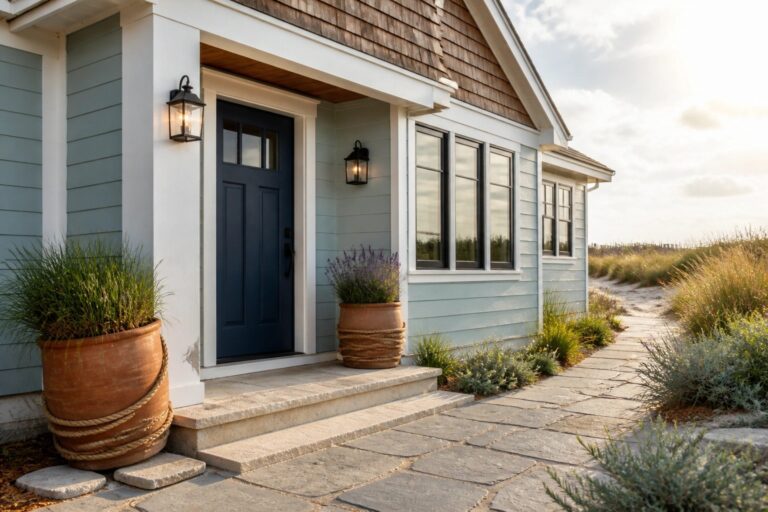
I have noticed that choosing exterior colors involves more than picking a shade from a fan deck because the way it plays against the roofline and entry really determines the curb appeal.
Many houses look promising on a screen but then fall flat once the paint goes up due to how shadows and surrounding landscaping change everything.
Testing a few options on the actual walls has always helped me see which combinations feel balanced rather than trying to imagine it all at once.
Small trim changes matter too.
I tend to favor colors that let the architecture stand out instead of overwhelming it with trends that fade quickly.
Soft Blue Siding With Dark Door
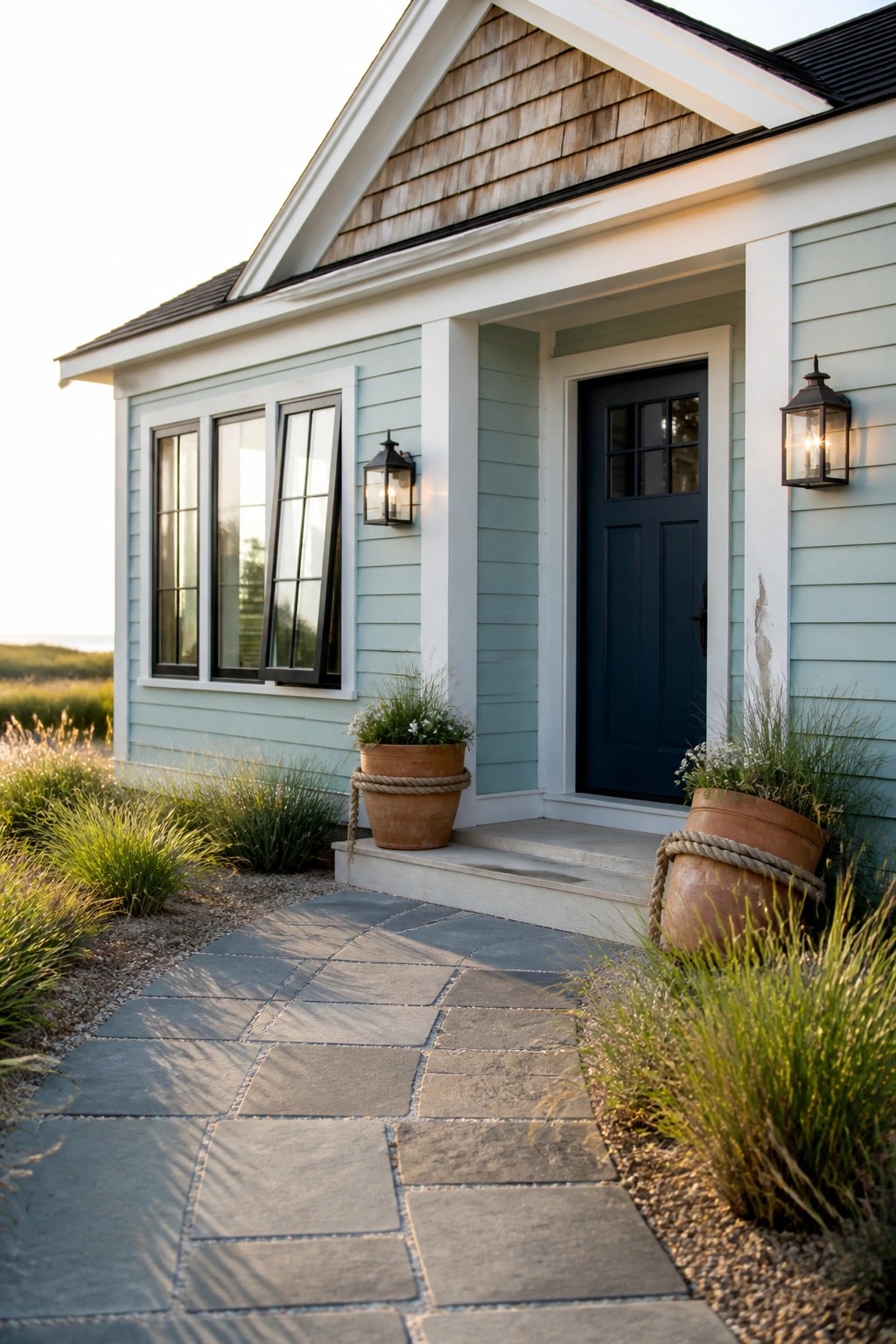
A pale blue on the siding keeps the whole house feeling light and relaxed. The white trim sharpens the edges so the color does not wash out, and the dark door gives it just enough weight to feel grounded.
This works best on simpler homes that need a quick refresh rather than a full overhaul. Keep the trim bright white and let the door carry the contrast so the look stays clean instead of busy.
Soft Gray Siding With White Trim
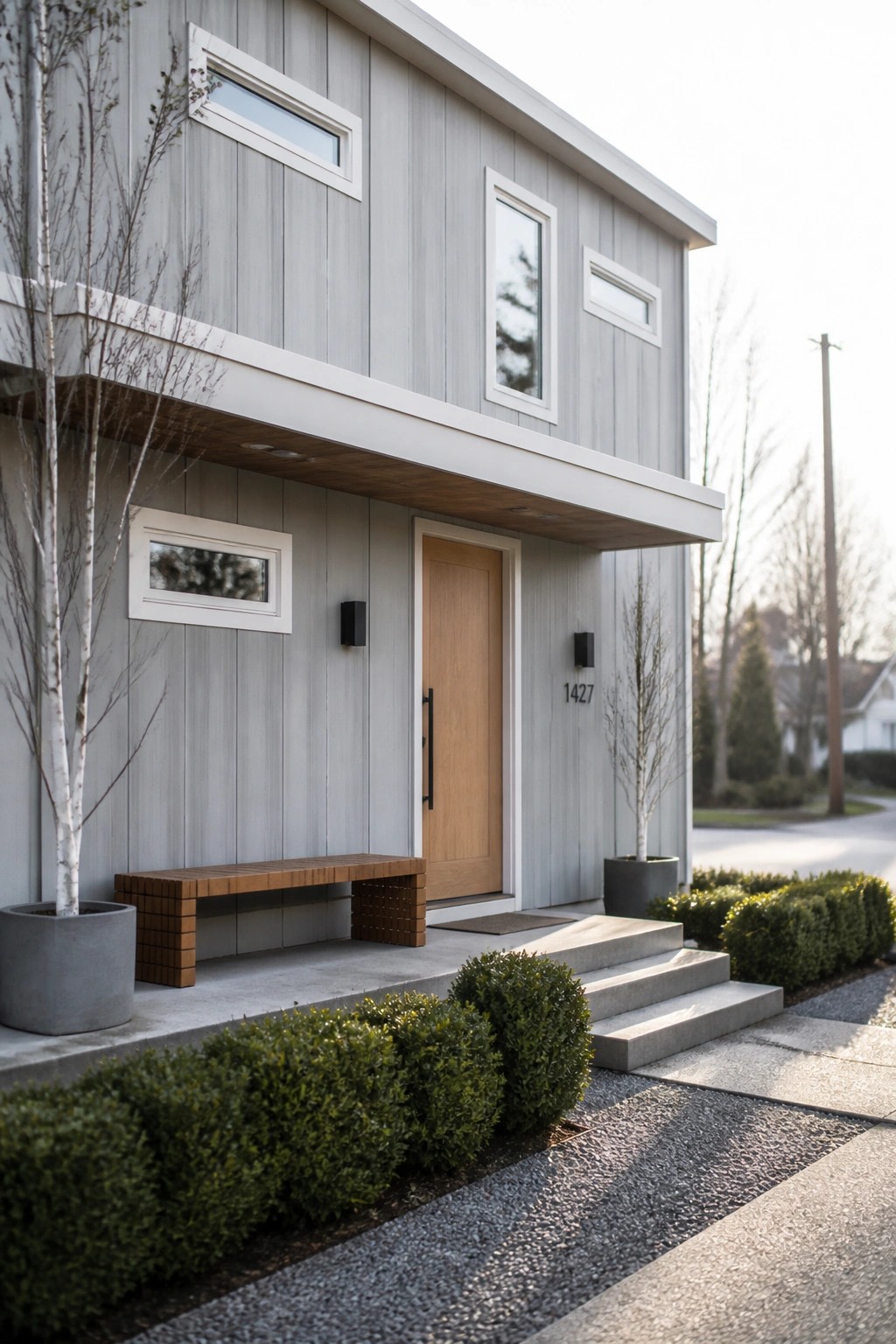
A muted gray works well on modern exteriors because it stays calm while still looking fresh. It gives the house a simple backdrop that does not fight with the lines or windows.
Use this color on homes that already have clean shapes. Pair it with bright white trim to sharpen the edges and let any wood accents like a door or overhang read warmer. It works on most suburban streets and tends to age evenly.
Black Trim on Light Siding

Black trim gives a light house exterior a sharper, more finished look without changing the main color. It outlines windows, doors, and porch details so the whole front feels pulled together instead of plain.
This works best on homes that already have simple trim and a front porch or entry that can handle a little contrast. Keep the black matte or satin so it stays calm next to the siding rather than shiny or heavy.
Deep Navy Siding With Simple Wood Accents
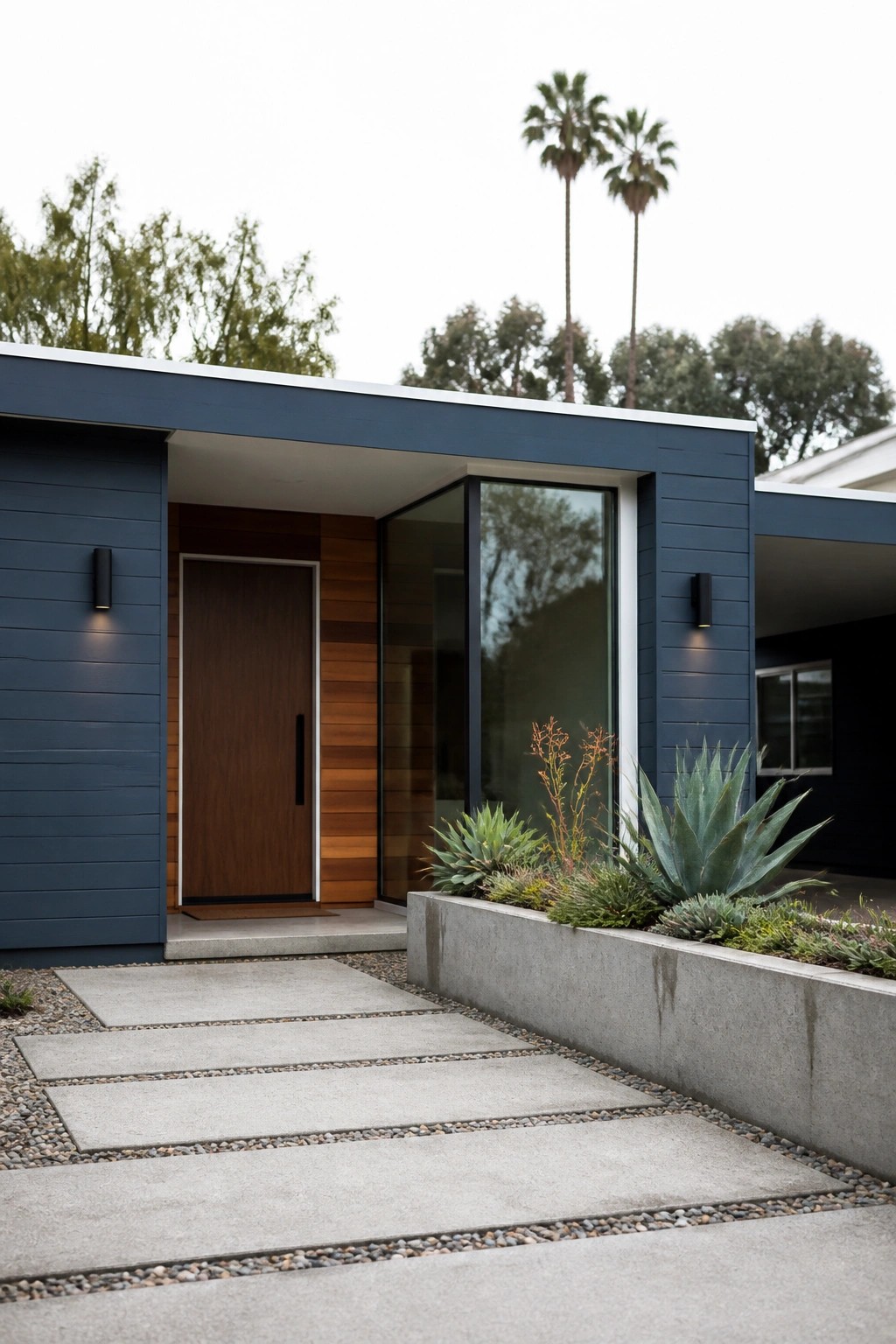
A deep navy works well as a main exterior color because it gives the house a strong shape without needing lots of extra detail. The color holds up nicely against bright skies and pairs easily with lighter trim on the roofline.
It suits homes with clean lines and flat roofs. Keep the wood accents warm and limited to the entry area so the blue stays the focus. This approach works on both new builds and older homes that need a quick refresh without major changes.
Dark Trim Against Light Walls
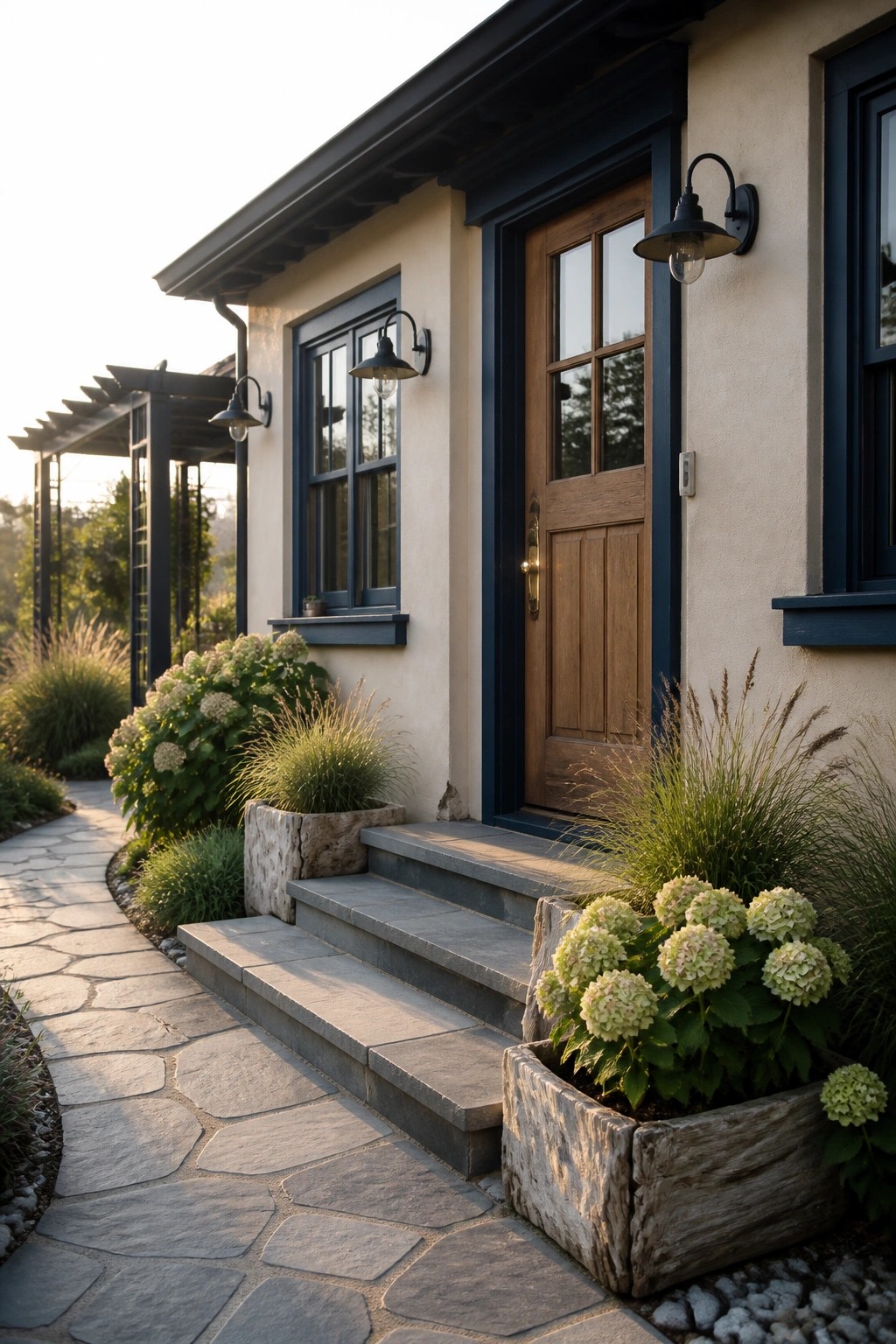
Many homes get a quick refresh when the walls stay light and the trim goes dark. The contrast sharpens the windows and door without needing new siding or major changes.
This works best on simple stucco or painted exteriors where the trim can be updated in a weekend. Stick with deep navy or charcoal on the window and door frames, and keep the main color a warm off-white or soft beige so the whole front stays bright.
Dark Trim Against White Walls
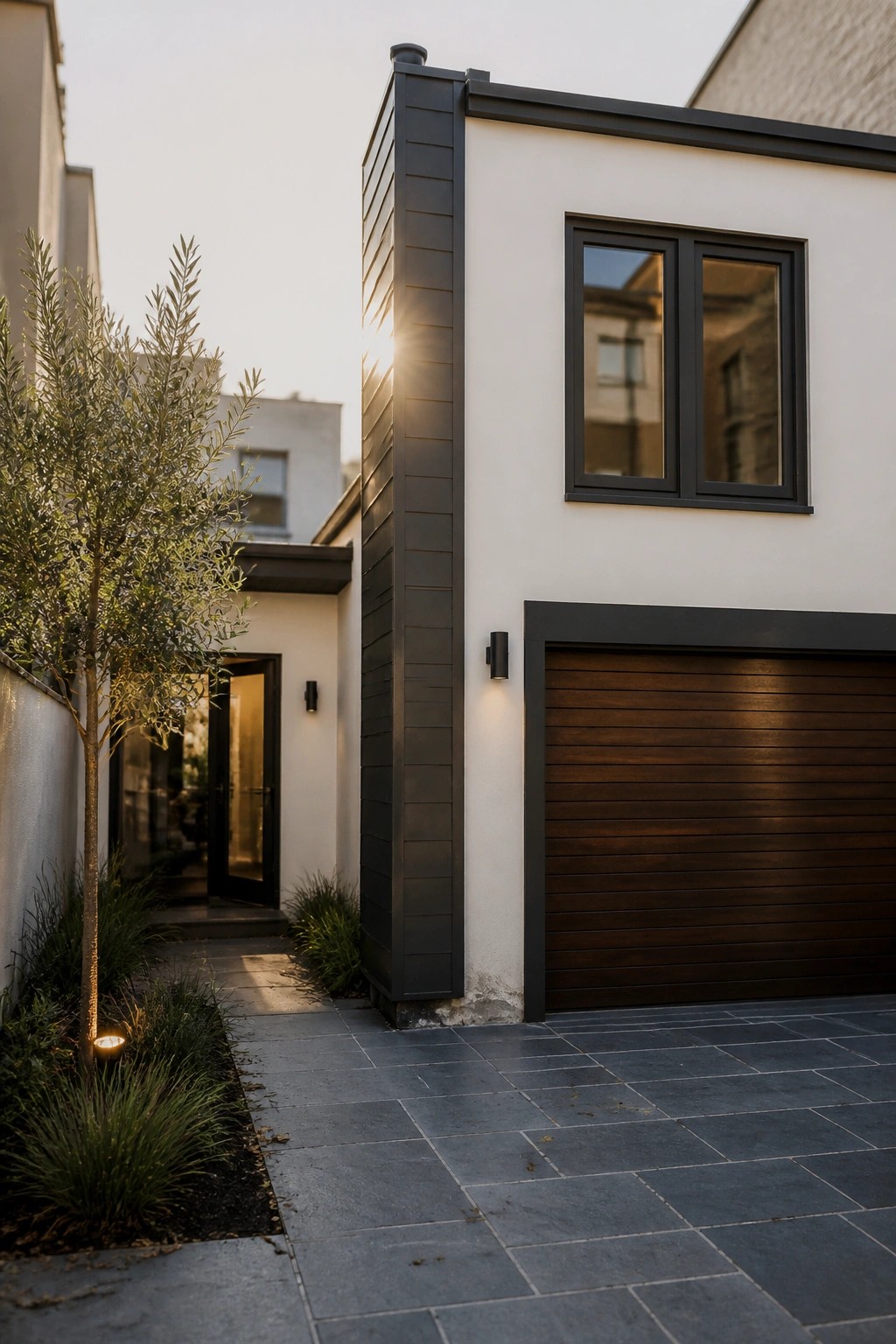
Many homes look sharper when dark trim outlines the windows and doors on a light exterior. The contrast keeps the look clean and modern without making the house feel heavy.
This works best on simple shapes where the trim can highlight the structure. It also pairs well with wood tones on doors or accents, and it stays easy to update later if needed.
Sage Green With White Trim
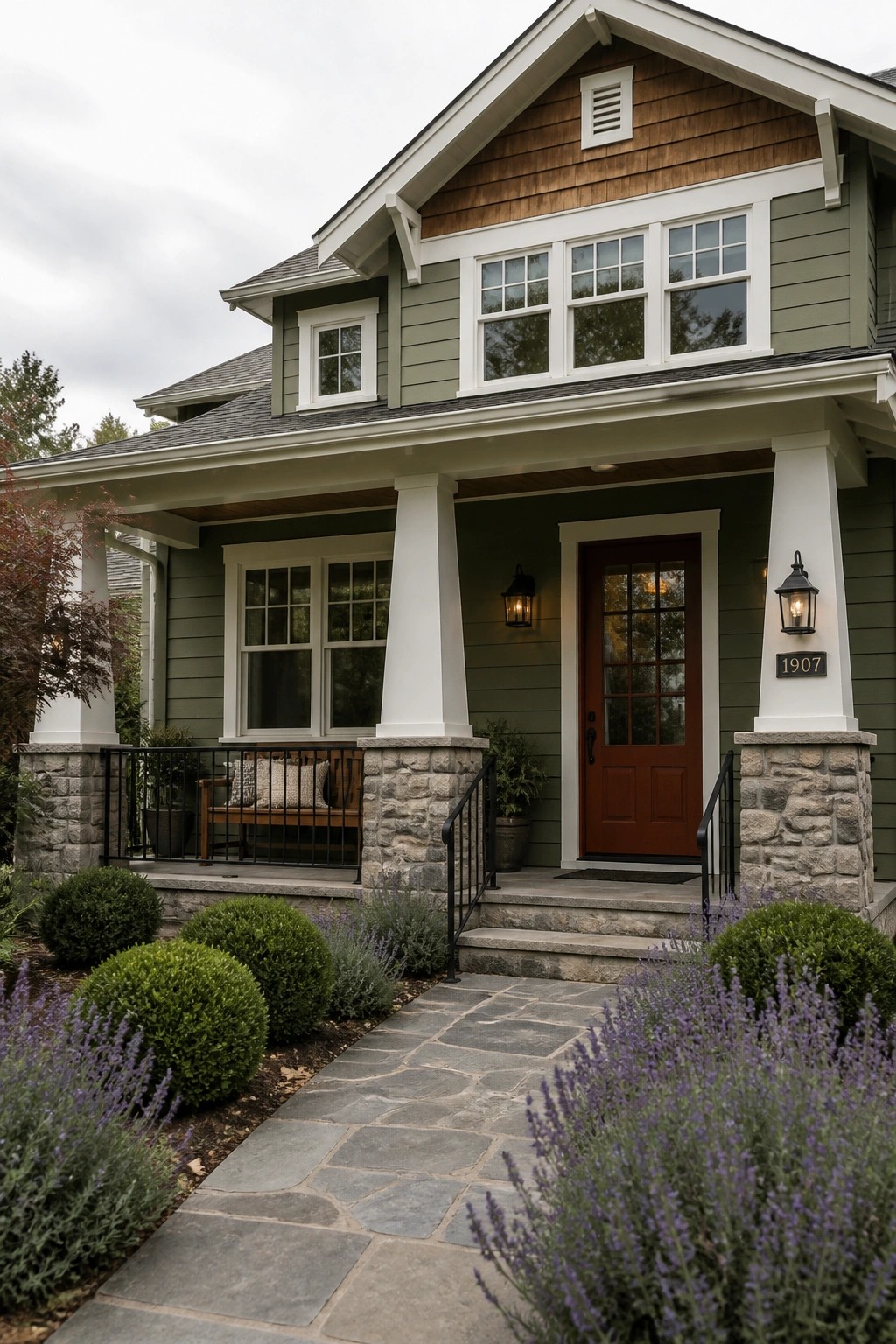
A soft sage green on the main siding gives this house a calm, updated look without feeling too bold. The white trim sharpens the edges and makes the windows stand out, which helps the whole front feel cleaner and more put together.
This approach works best on homes that already have straightforward trim and a simple roofline. Keep the siding color muted, paint the trim white, and add one warmer accent like a wood gable or a red door if you want a bit more contrast. It suits older houses that need a refresh without major changes to the structure.
Dark Exteriors With Warm Wood Details
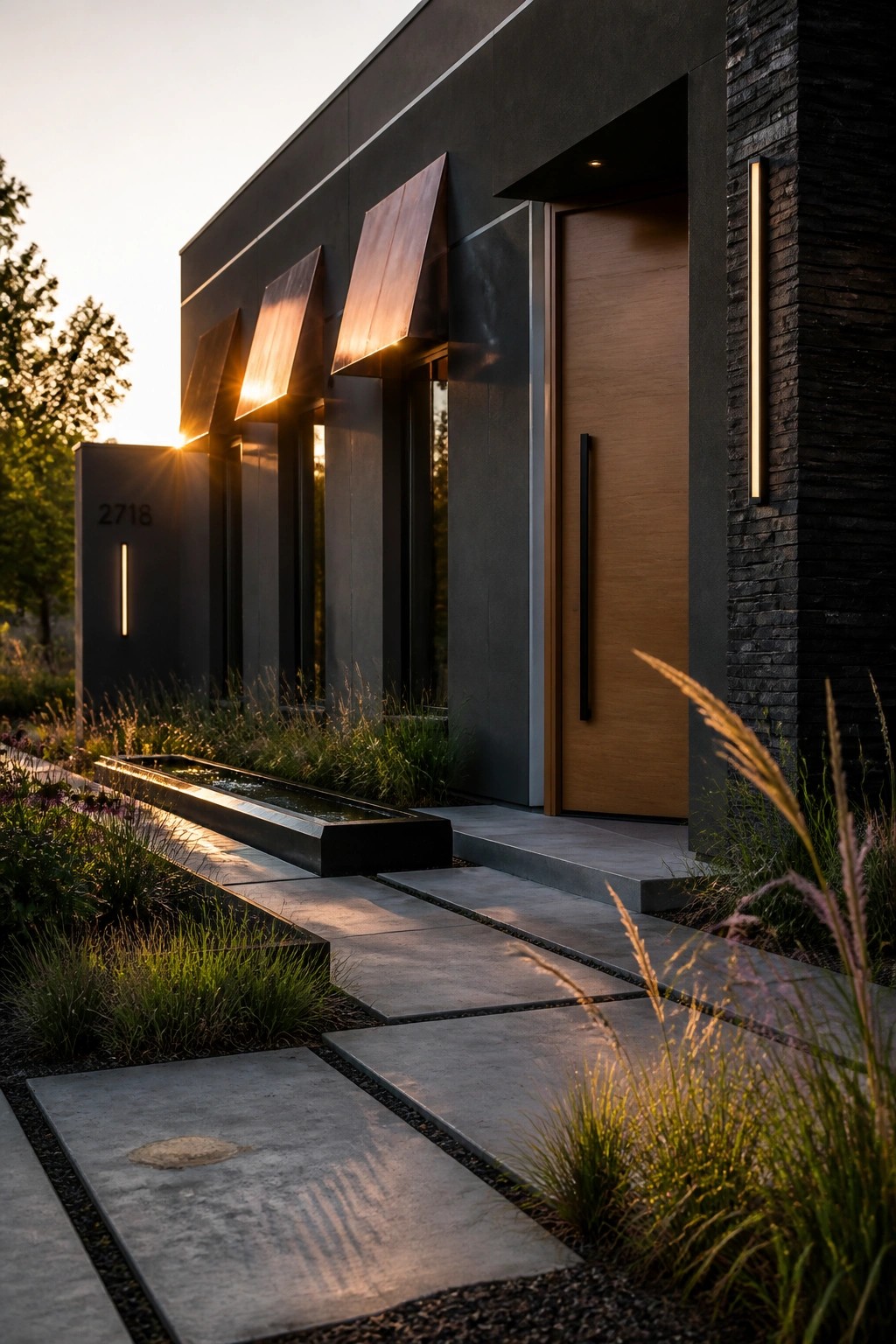
A deep dark color on the main walls gives a house a clean, modern shape that stands out on the street. The contrast with lighter or warmer materials keeps it from looking flat or heavy.
This works best on homes with simple lines where you can add wood or metal around the door and windows. Keep the trim minimal so the dark color does most of the work.
Warm Neutrals For Clean Curb Appeal
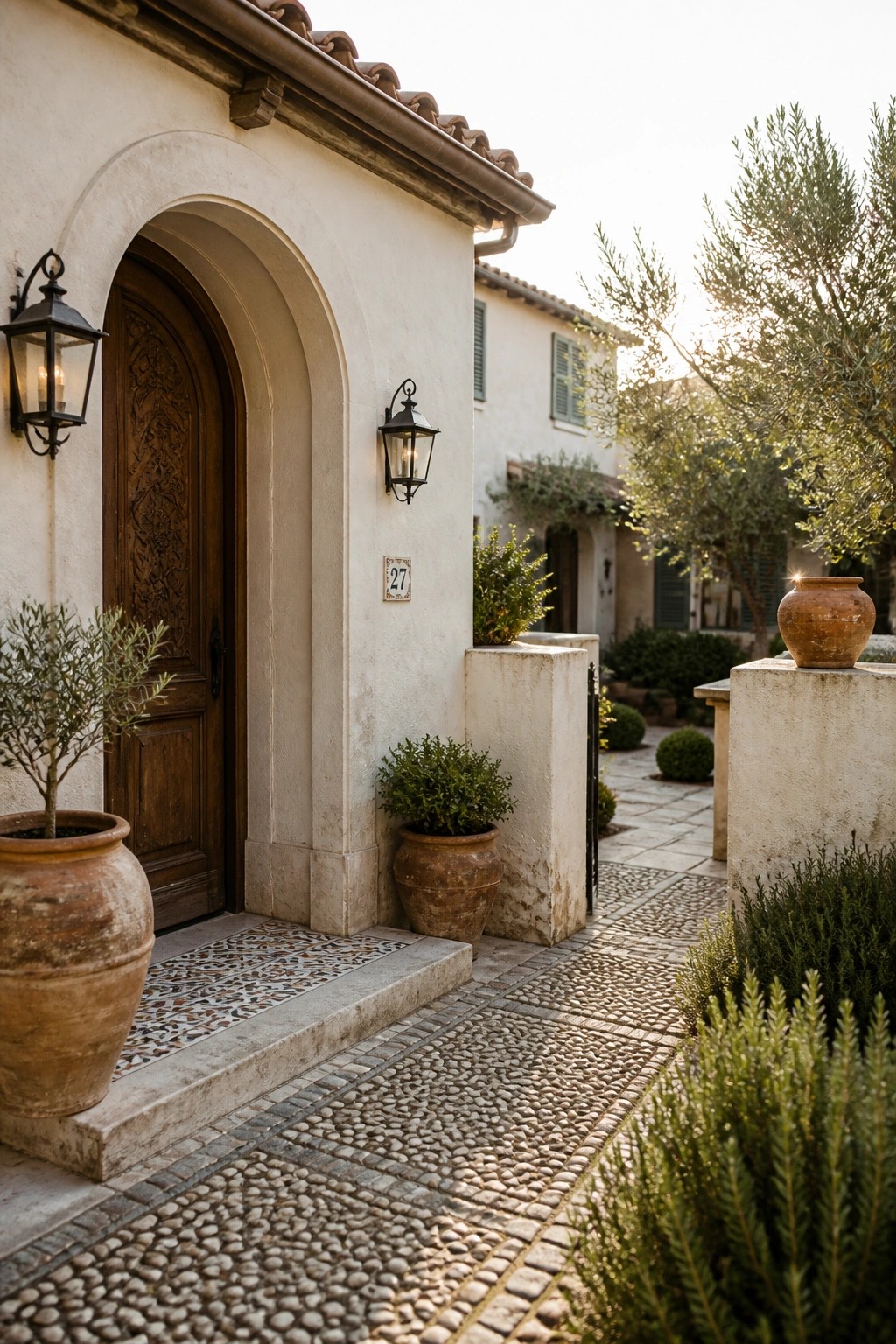
A soft warm neutral on the main walls gives the house a calm base that still feels fresh. It works because the color lets the wood door and stone details show up clearly instead of fighting for attention.
This approach suits homes with simple trim and classic shapes. Keep the trim and accents in a darker shade, then add a couple of lanterns or pots to finish the entry without extra color.
Light Blue Siding With Black Accents
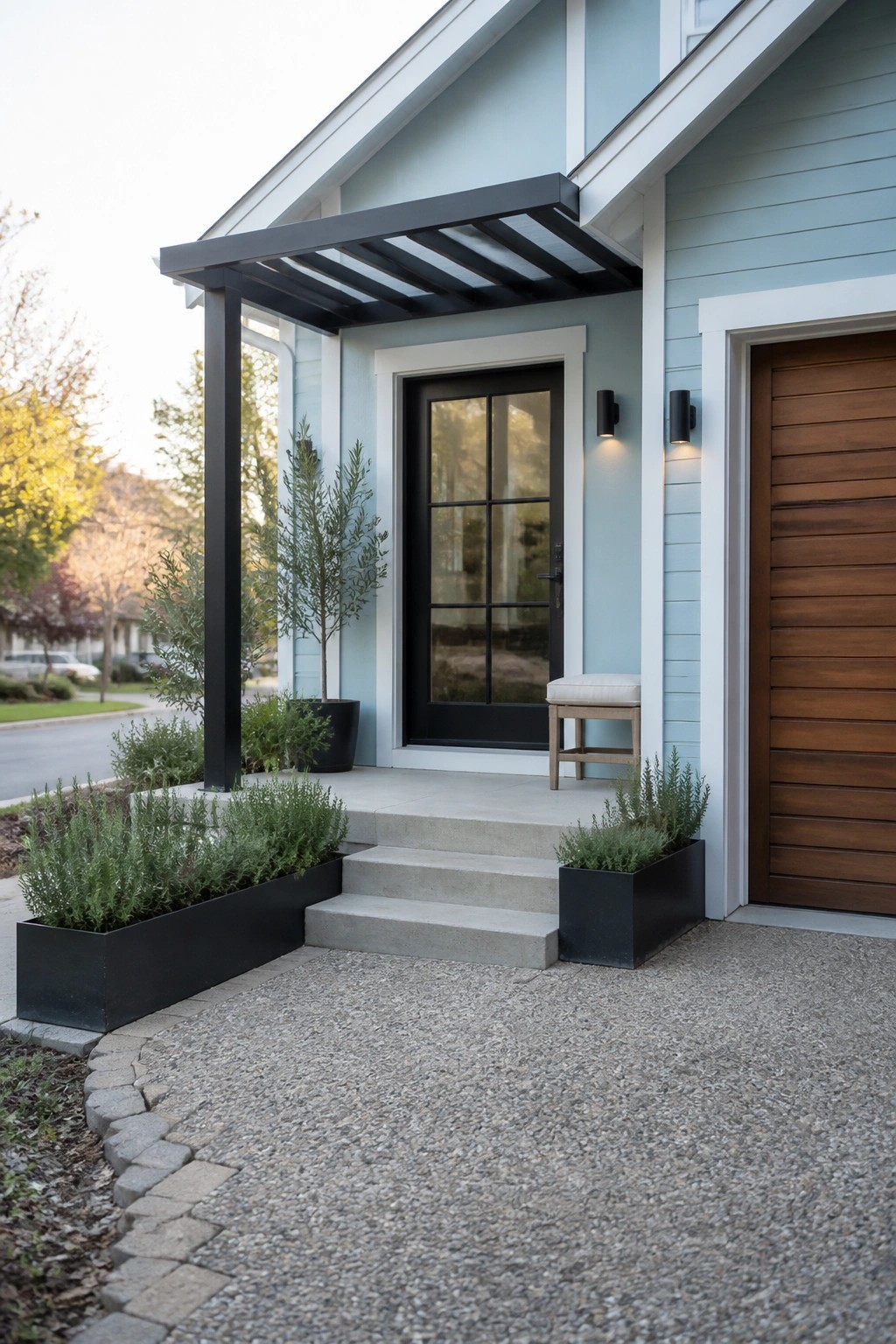
A soft blue-gray siding color can give a house a calm, updated look without much effort. It stands out nicely against white trim and lets the simple lines of the house show through.
This color works best on homes with clean shapes where you want the paint to do most of the work. Adding black to the door and any roof overhangs keeps the palette feeling modern and balanced.
Soft Gray With White Trim

A soft gray exterior paired with white trim gives a house a clean updated look. The contrast keeps things simple while still feeling fresh, and it works without needing a full repaint or new siding.
This color mix suits many home styles and ages. Keep the door light so the whole front stays bright, and watch how the trim lines up with windows and corners to avoid a busy feel.
Yellow With Green Trim For Clean Contrast
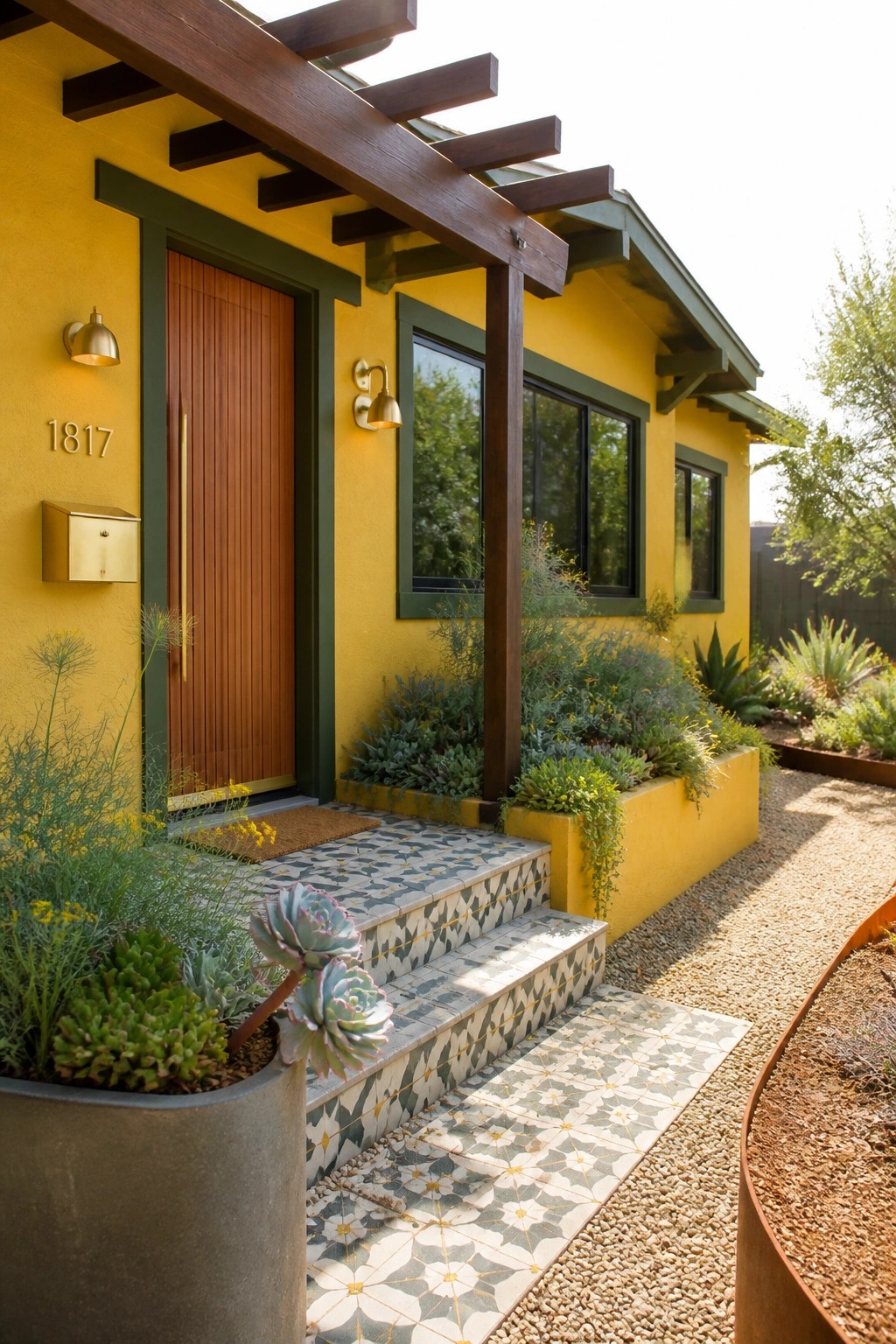
A bright yellow house paired with deep green trim gives the whole exterior a fresh, simple look that still feels modern. The color choice stands out because it adds warmth while the darker trim keeps the lines sharp and defined.
This approach works especially well on smaller homes or bungalows with straightforward shapes. It is easy to update later if you just repaint the trim, and the combination holds up nicely against most landscapes without needing extra accents.
Light Neutral Walls With Dark Trim
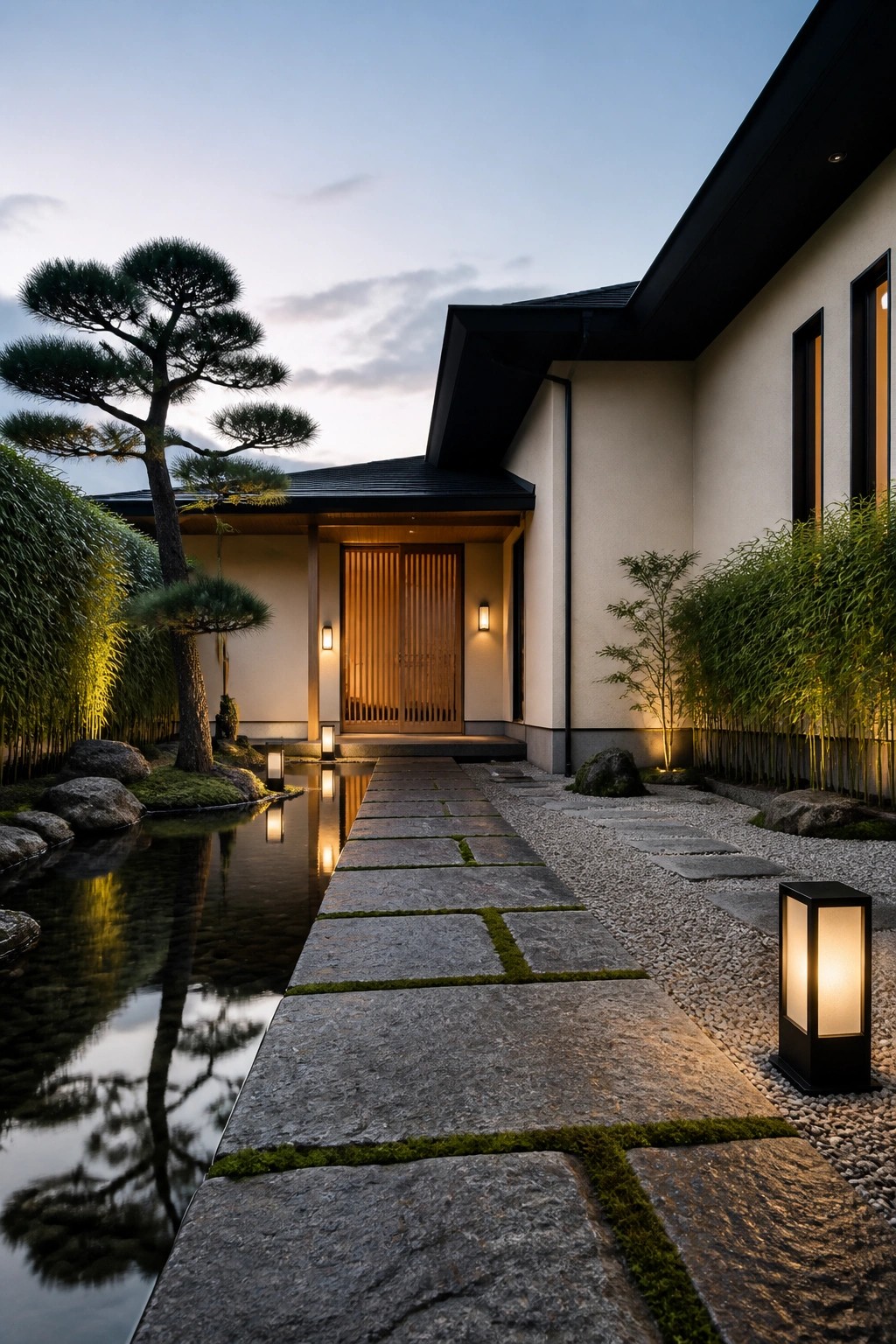
A soft light neutral on the house walls gives the exterior a clean, open feel that works well with simple modern lines. The dark roof and trim add just enough contrast to keep everything sharp without overpowering the space.
This color direction suits homes with straightforward shapes and minimal detail. It pairs nicely with natural materials like wood or stone near the entry and works best when the trim is kept consistent in a deep tone.
Soft Neutral Siding With Stone Bases

A soft neutral color on the house exterior works well when the goal is clean curb appeal without a lot of fuss. It lets the stone details stand out and keeps the overall look simple and balanced. Many homes benefit from this approach because the color stays calm while the materials add interest.
This works best on houses that already have some stone or brick at the base. Keep the trim and door in a darker shade so the neutral siding does not wash out. Avoid bright accents or too many colors if you want the same quiet result.
Soft Gray Siding With Concrete Details
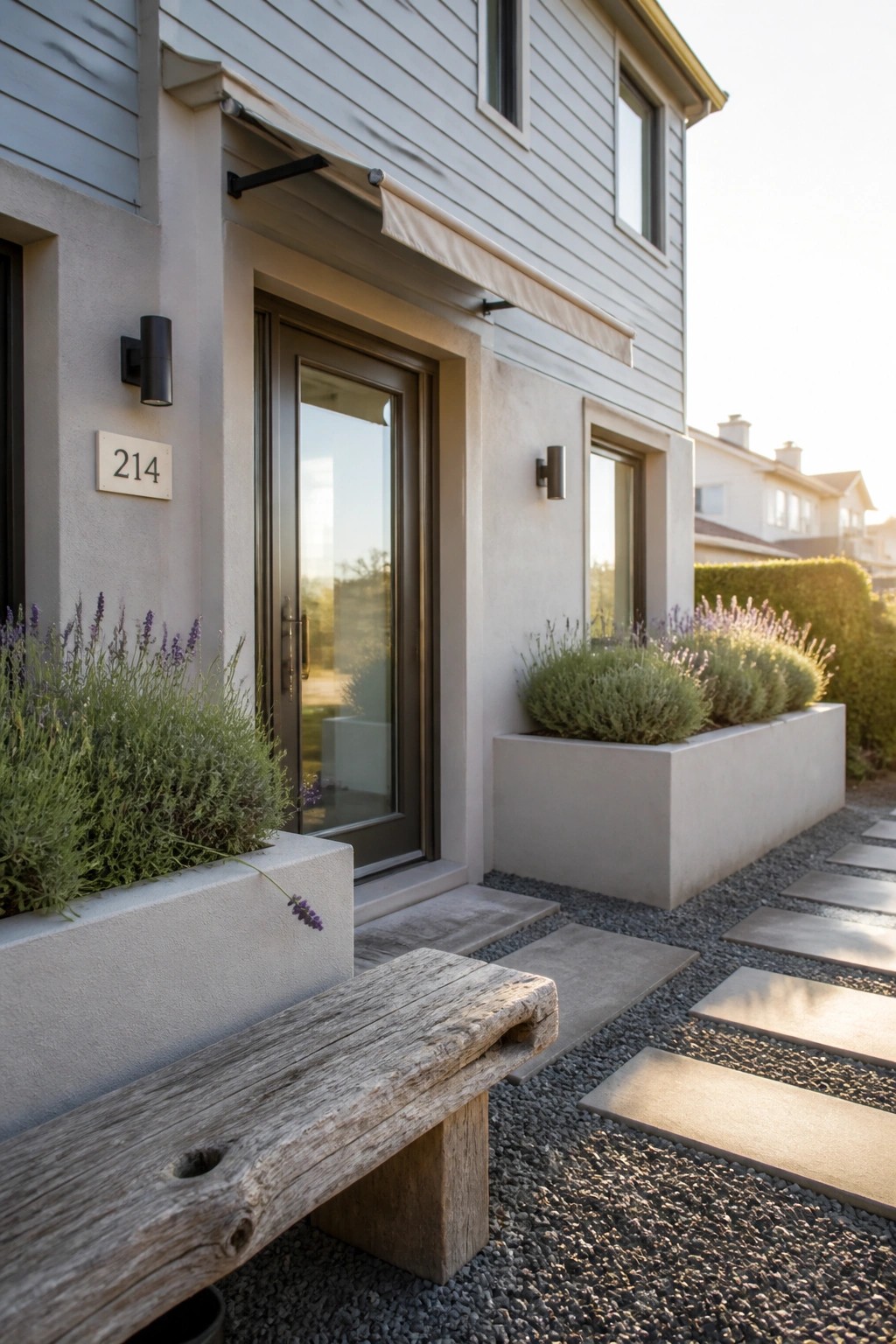
A soft gray siding gives the front of a house a calm, updated look that still feels simple. It works especially well when paired with concrete around the entry and door frame, since the neutral tone lets those materials stand out without adding extra color.
This approach suits homes that already have clean lines and a mix of textures. It keeps the focus on the shape of the house and the planting rather than competing with bright paint. Just make sure the gray you pick has a slight blue or green undertone so it does not read too flat in daylight.
Contrast Dark Walls With A Warm Metal Door
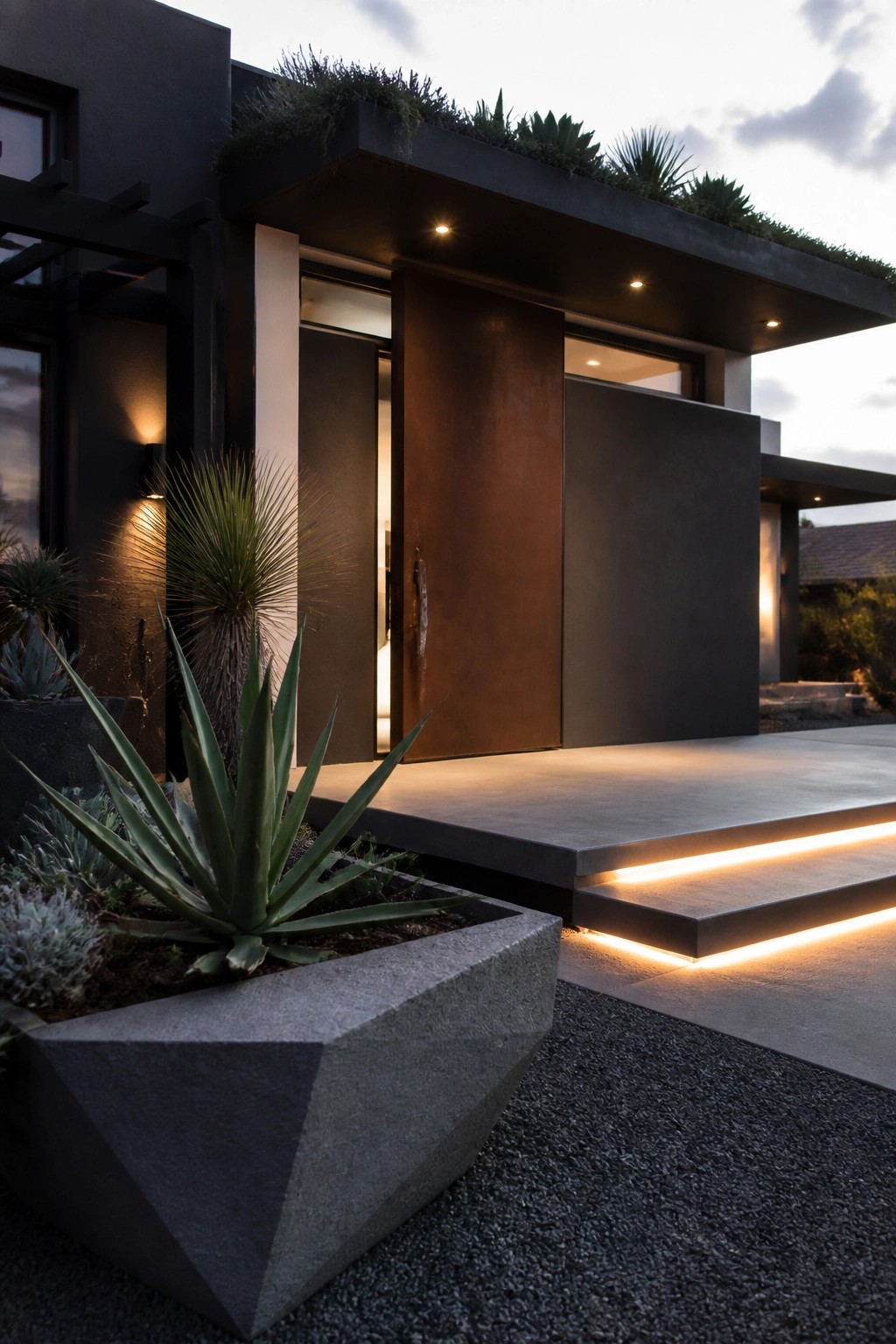
A dark exterior can feel flat without something to break it up. A single warm metal door does that job well. It adds just enough contrast to make the whole front feel more interesting without needing lots of extra color or trim.
This works best on modern homes with simple shapes and clean lines. Keep the rest of the palette quiet so the door stands out. Make sure the metal has some texture or variation so it catches the light at different times of day.
Dark Siding With White Trim

A dark exterior color paired with white trim gives a house clean lines and a fresh look without needing major changes. The contrast makes the windows and details stand out more clearly.
This works especially well on homes with simple trim already in place. Keep the door color bold so the entry feels intentional rather than lost against the darker walls.
Soft Green Siding with White Trim

A soft green on the siding gives a house a calm look that still feels current. It works especially well when the trim stays bright white, since the contrast keeps everything looking clean and simple. Many older homes benefit from this shift because it freshens the facade without needing major changes.
This approach suits homes with traditional shapes and smaller porches. Stick with a natural wood door to add warmth, and keep other accents minimal so the color stays the focus. It tends to photograph well in different lights and holds up nicely in most neighborhoods.
Wood Siding With White And Black Trim
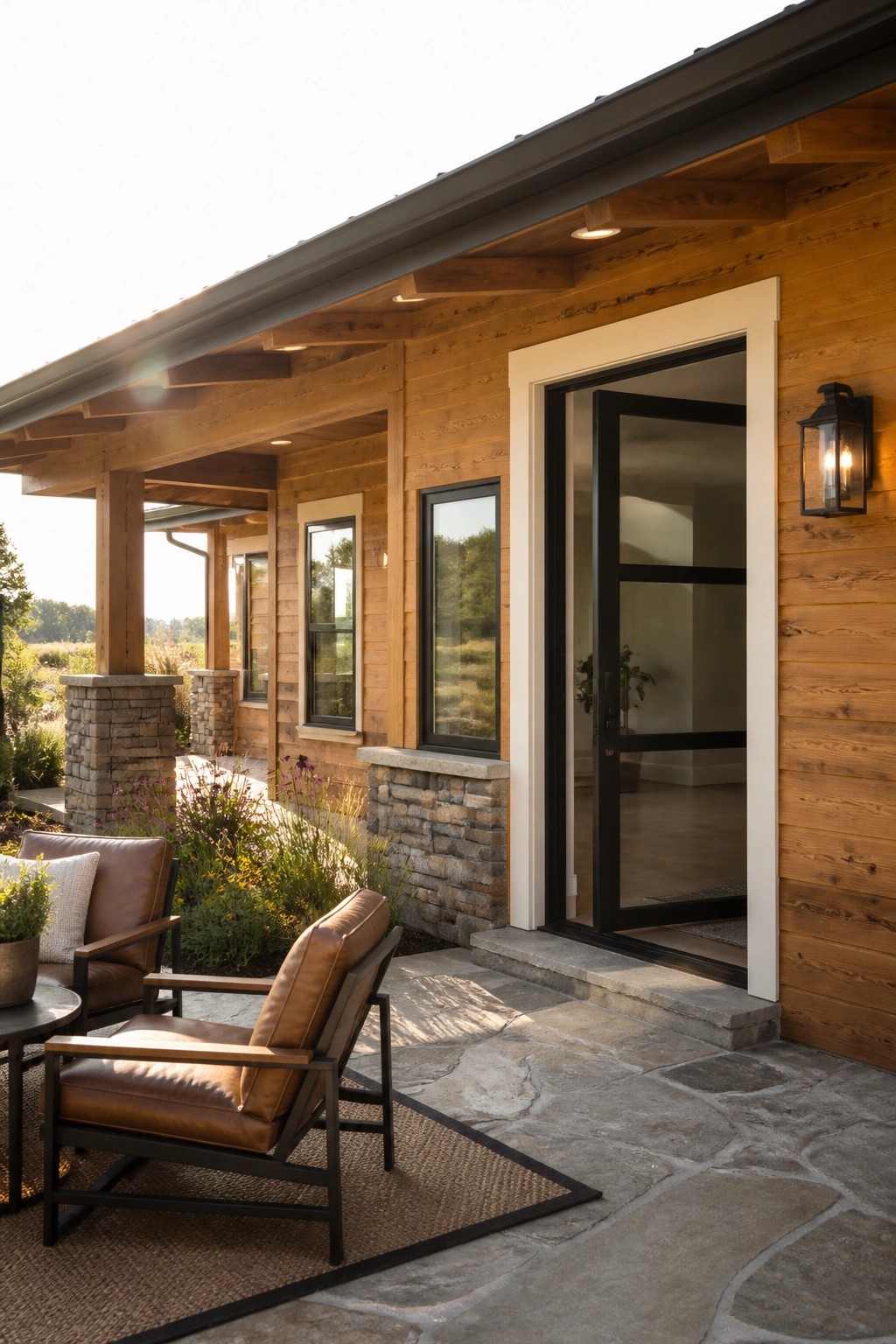
Many homes gain a clean look when warm wood siding is paired with white trim and black window frames. The contrast keeps the exterior from feeling too heavy while still showing off the natural grain of the wood. It works especially well on single story homes or those with simple rooflines.
This approach suits houses that already have wood siding or are planning a refresh. Keep the wood tone on the warmer side and use true black for the frames rather than dark brown. White trim around openings helps the whole thing read as updated without needing a full color change.
Terracotta Paint For A Modern Facade

A warm terracotta shade gives a house presence without needing lots of trim or detail work. It feels current but still grounded, especially when the rest of the house stays simple.
This color works well on homes with flat rooflines or minimal ornament. Keep the windows, door, and any overhangs dark so the walls read as one solid block. It suits neighborhoods where most houses lean gray or beige.
Bold Door Color Against Soft Siding
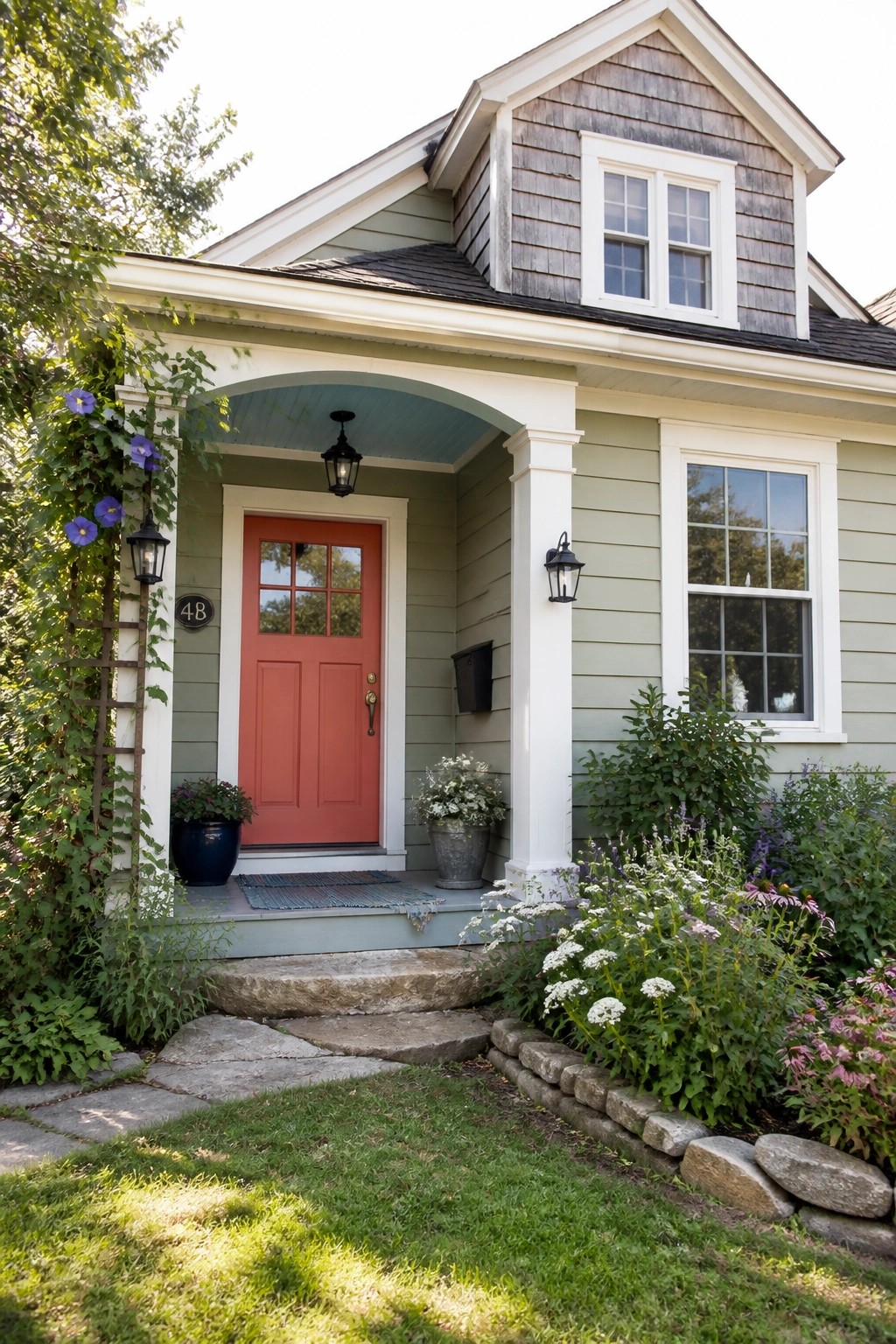
A bright door color stands out nicely against softer siding tones. It gives the entry a clear focal point and makes the house feel more welcoming without any major changes to the rest of the exterior.
This approach works best on homes with simple trim and a straightforward porch. Pick a color that contrasts enough with the siding and nearby plants so the door remains the main point of interest.
Navy Blue Siding With Wood Entry Accents
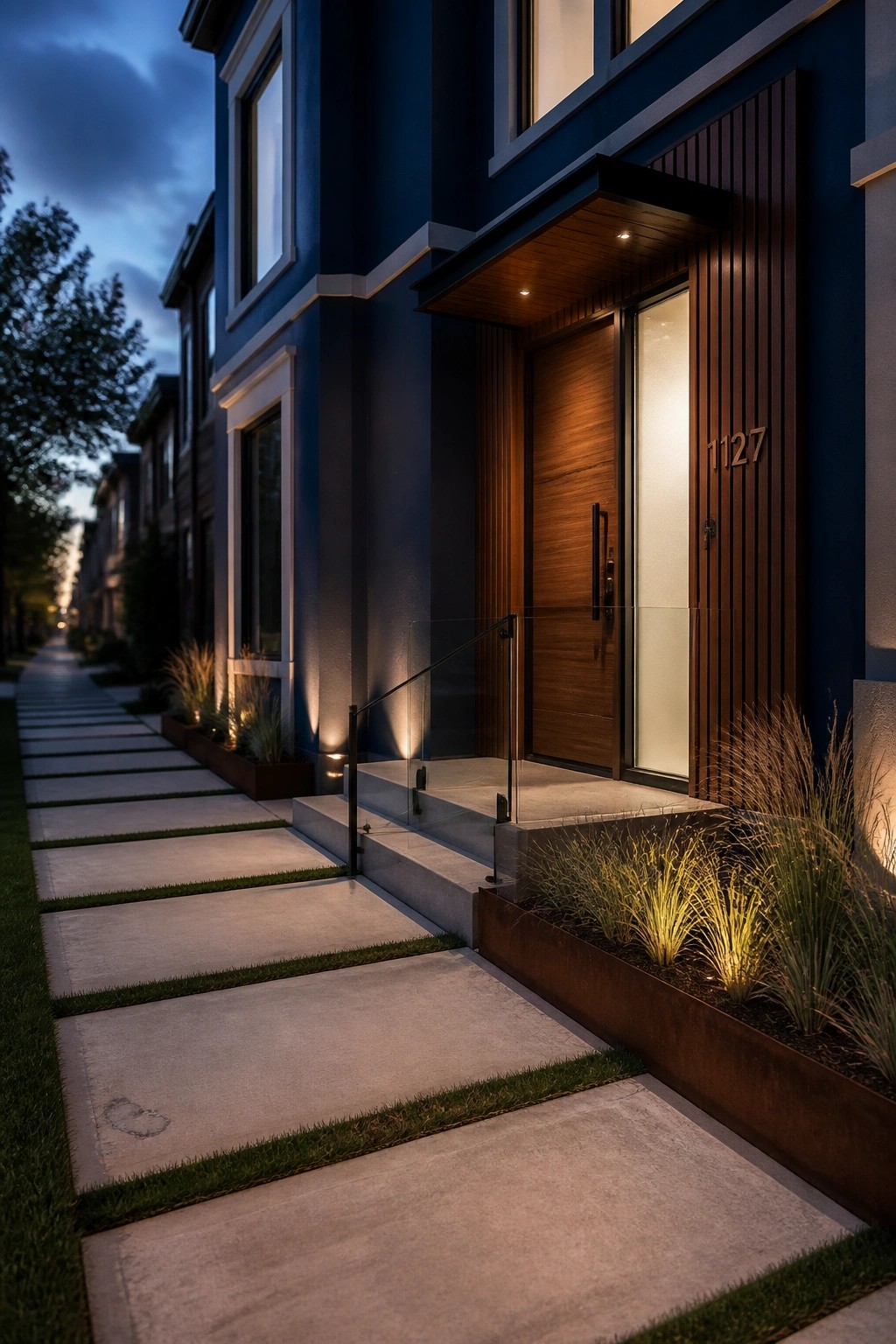
A deep navy blue works well on modern homes because it gives the facade a solid, updated look without extra trim layers. The color holds up nicely against different lighting and pairs easily with simple white or gray window frames.
This approach suits newer builds or homes getting a quick refresh. Use wood only at the entry, like a door surround or paneling, to keep the contrast focused and avoid a busy overall appearance.
Frequently Asked Questions
Q: Should I test the colors outside before painting the whole house? A: Grab a few sample pots and paint large patches on different walls. Look at them morning and afternoon since light changes how the shade reads. This step saves you from a color that feels off once it covers everything.
Q: Can I just paint the trim to get that updated look? A: Yes, fresh trim often makes the biggest difference without a full repaint. Choose a clean white or soft contrast that works with your main color. Focus on the edges around windows and doors first.
Q: Will a bold modern color still suit my older home style? A: It can highlight the original details instead of hiding them. Pick a shade that echoes any brick or stone already on the house. The result feels current but keeps the character intact.
