

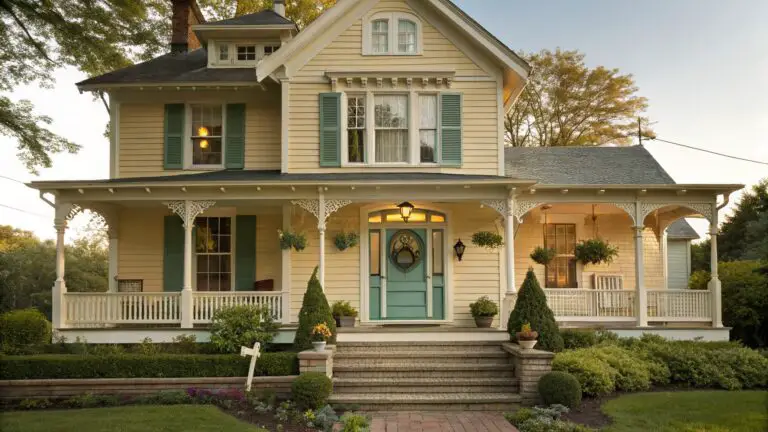
I’ve found that yellow on a house exterior works best when it warms up the facade without clashing against the roofline or siding materials. In my neighborhood, the homes that stand out pull the color into trim and accents that echo the stone or brick base, creating a pull from the street. Curb appeal hits different when the scheme balances bold yellow with grounded neutrals around doors and windows. Some setups fail by letting yellow dominate everything, but others layer it thoughtfully so the house reads clean and welcoming even on overcast days. These ideas make me think twice about adapting one for a front entry that gets full sun.
Pale Yellow Siding with Teal Door
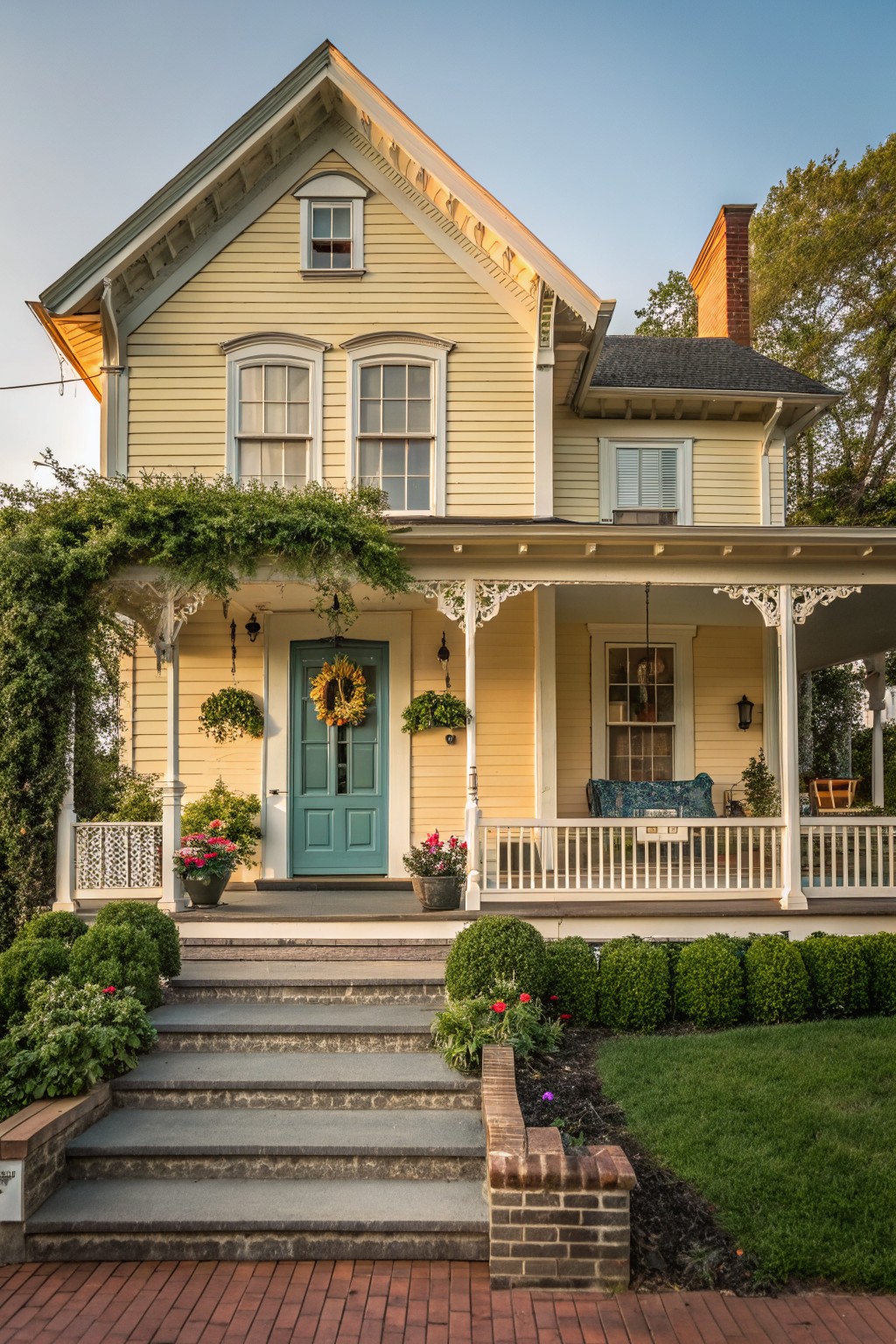
A soft pale yellow on the siding gives this house a gentle glow, especially as the light fades. That teal door pulls your eye right to the entry. It adds just enough color kick without overpowering the sunny base. White trim keeps everything crisp around the porch and windows.
Try this on a two-story older home, like a Victorian or Craftsman style. The yellow works best in mild climates where it won’t fade fast. Stick to plants and simple pots nearby. Skip busy details. It makes the front steps feel like an easy welcome.
Pale Yellow Siding with Green Shutters
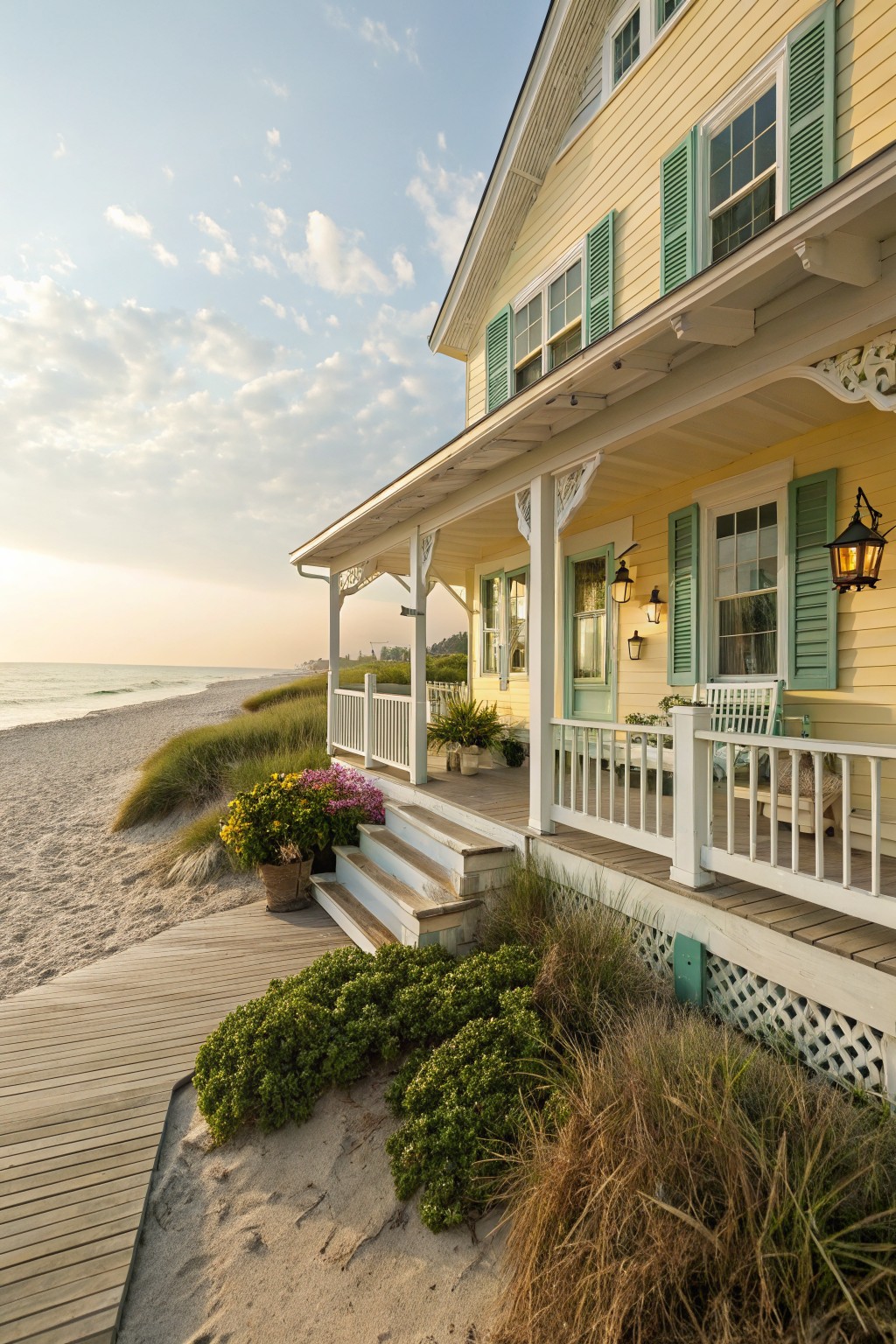
This setup uses a soft butter yellow on the siding, then adds mint green shutters and white porch trim. It keeps the yellow from feeling too bright. The green picks up on nearby plants and ocean tones. That makes the whole house fit right into a beach setting without clashing.
Try this on older cottages or lowcountry homes near water. The pale shade works best in full sun. Pair it with plain white railings and simple lanterns. Just avoid darker greens. They can make the yellow look washed out.
Pale Yellow Siding on a Modern Farmhouse
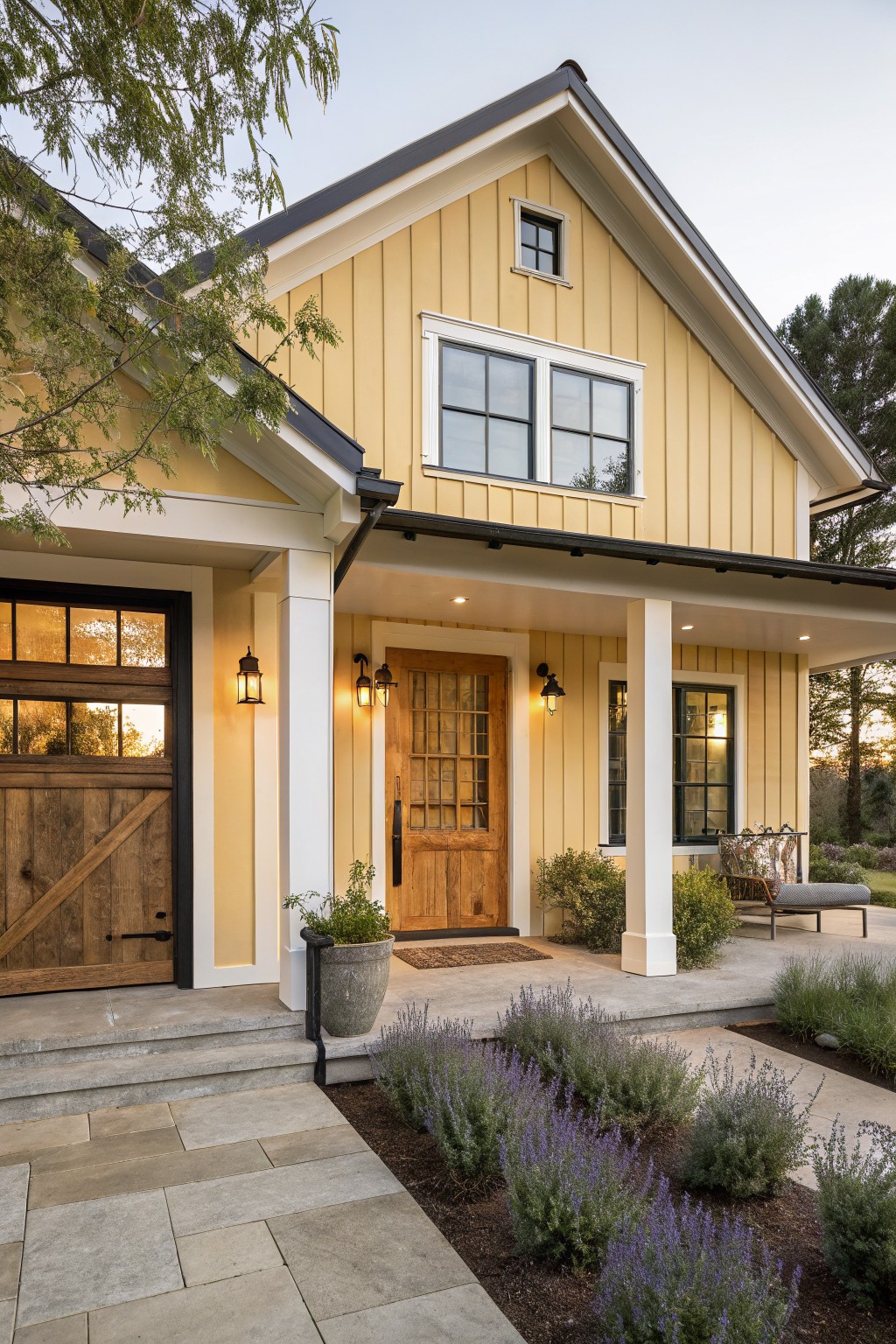
This setup takes a pale butter-yellow siding and lets it cover the whole facade in board-and-batten style. It gives the house a sunny, approachable feel right from the street. White trim outlines the porch posts and windows nicely, while the dark roofline and black accents keep things from looking too sweet.
Try this on ranch or two-story homes with simple roof shapes. The wood garage door and front entry pull in some natural warmth that yellow needs. Plant low lavender or grasses along the walk to tie it to the yard. It suits milder climates where bold colors fade fast.
Soft Yellow Stucco Facade
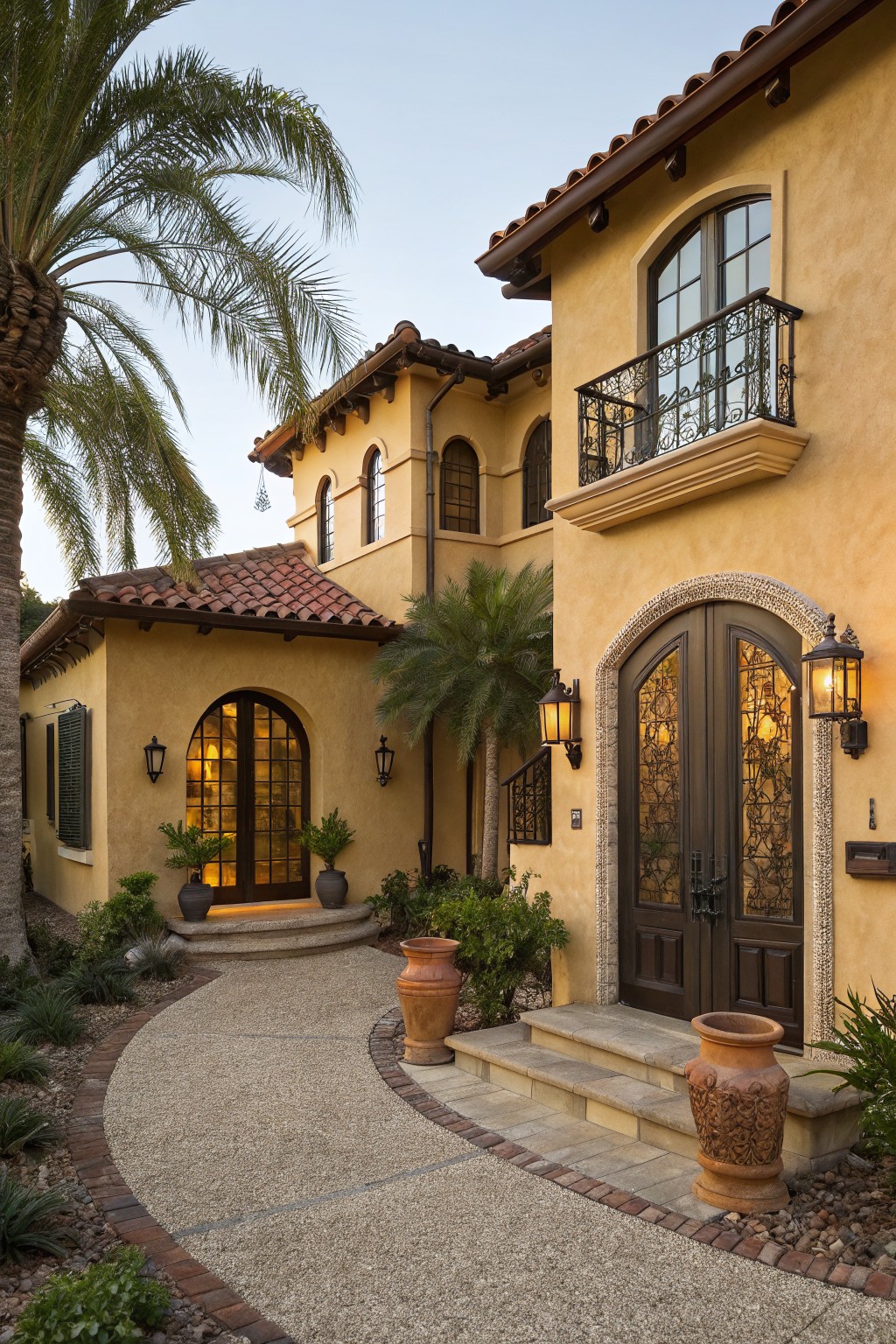
A soft yellow stucco like this one gives a house a sunny, lived-in feel that fits right into warmer spots. It plays well against a terracotta tile roof, keeping things earthy and not too stark. Those big arched doors pull you right up to the front, making the whole entry look welcoming instead of boxy.
This setup suits ranch-style or Mediterranean homes where you want easy curb appeal. Go for a shade that’s more ochre than bright lemon, especially if you’ve got palms or stone paths nearby. It holds up in sunny areas, but test a sample first to see how it shifts with light.
Recommended Products

Weather and corrosion resistant coating protects exterior/interior surfaces like wood, metal, concrete, masonry and more

Weather and corrosion resistant coating protects exterior/interior surfaces like wood, metal, concrete, masonry and more
Fast-drying, interior/exterior acrylic latex line marking traffic paint that can be applied with a brush, roller, hand or automatic line markers.
Sunny Yellow with Mint Green Trim
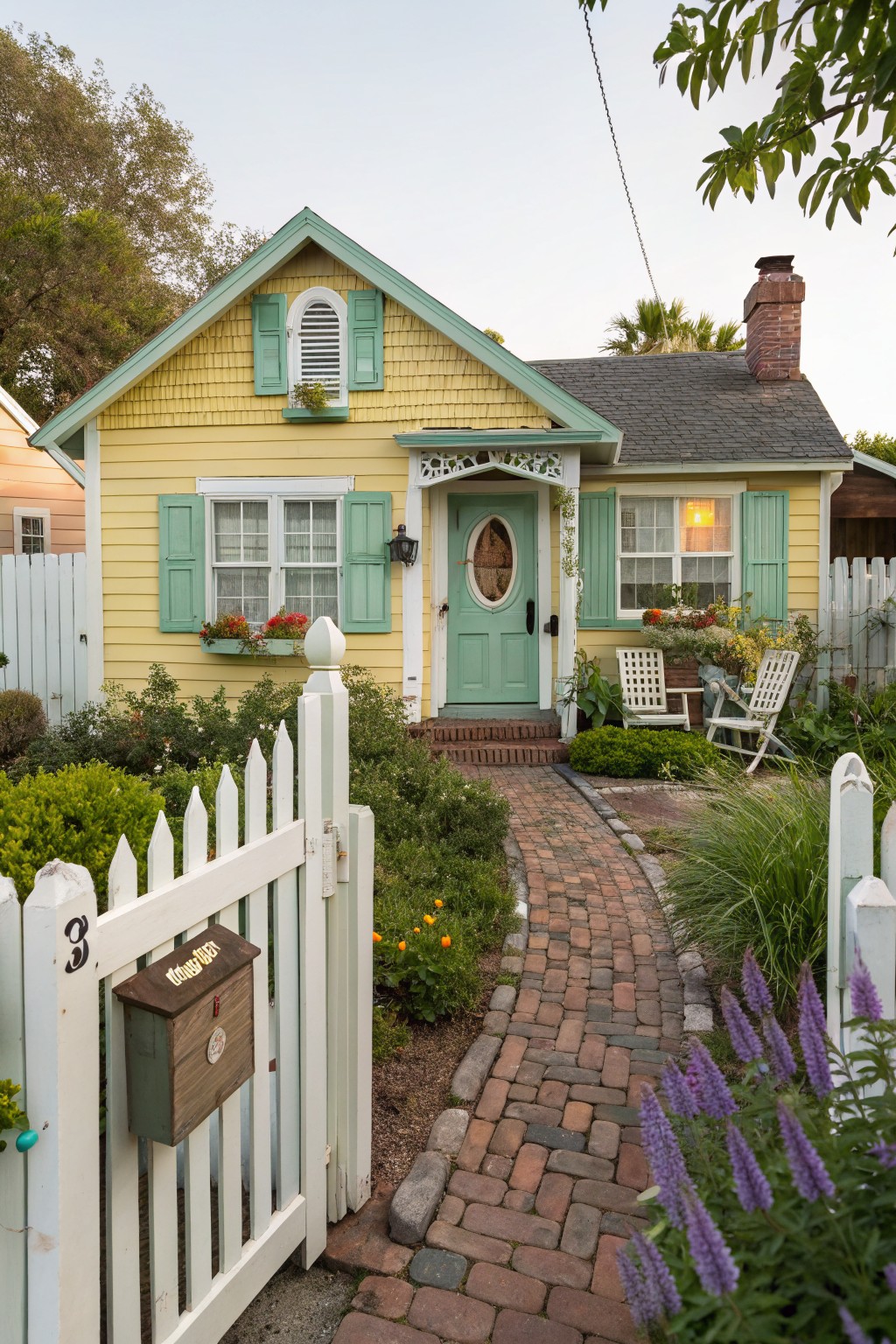
A buttery yellow siding like this gives a house a cheerful lift without going overboard. The mint green shutters and that oval door pull it together nicely. They add a cool touch that freshens up the yellow. White trim and the picket fence keep everything crisp and cottage-like.
This combo suits smaller homes or bungalows, especially in sunny spots. Use it where you want curb appeal that feels easygoing. Stick to soft greens and avoid anything too bright. A brick path leading in helps tie it to the yard.
Warm Yellow Craftsman with Stone Base
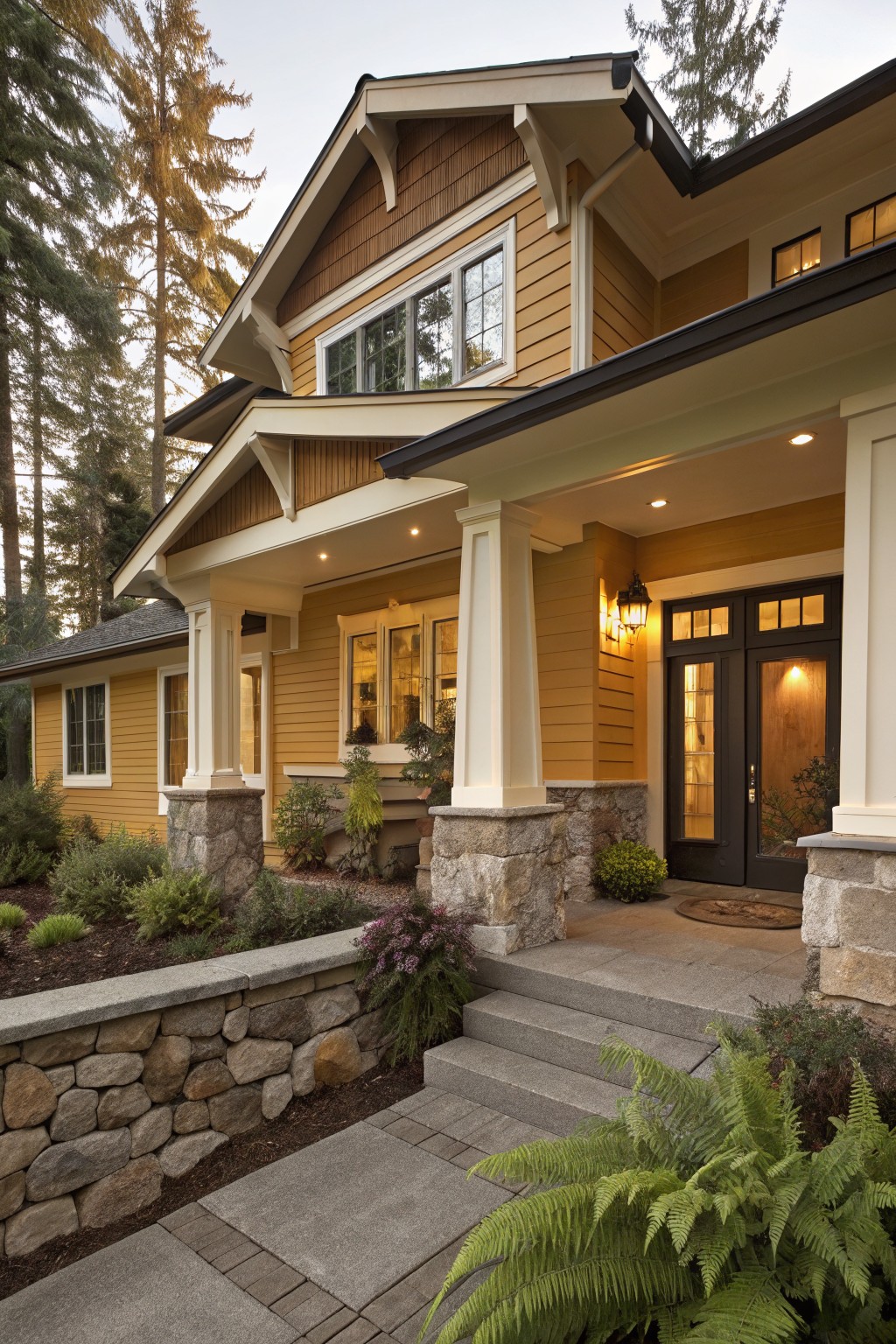
A warm yellow siding like this one gives a house real curb appeal without going overboard. Paired with a rugged stone base and porch columns, it feels solid and tied to the land. Those natural stone pieces at the bottom balance out the sunny color up top. In a wooded spot like this, it just fits right in.
This setup works best on Craftsman-style homes or anything with a bit of overhang and gables. Pick a yellow that’s not too pale, something with a touch of gold, and match the stone to local rocks for that seamless look. Skip it if your yard’s all formal. Keeps things easygoing… and welcoming.
Pale Yellow Shingles Meet Navy Door
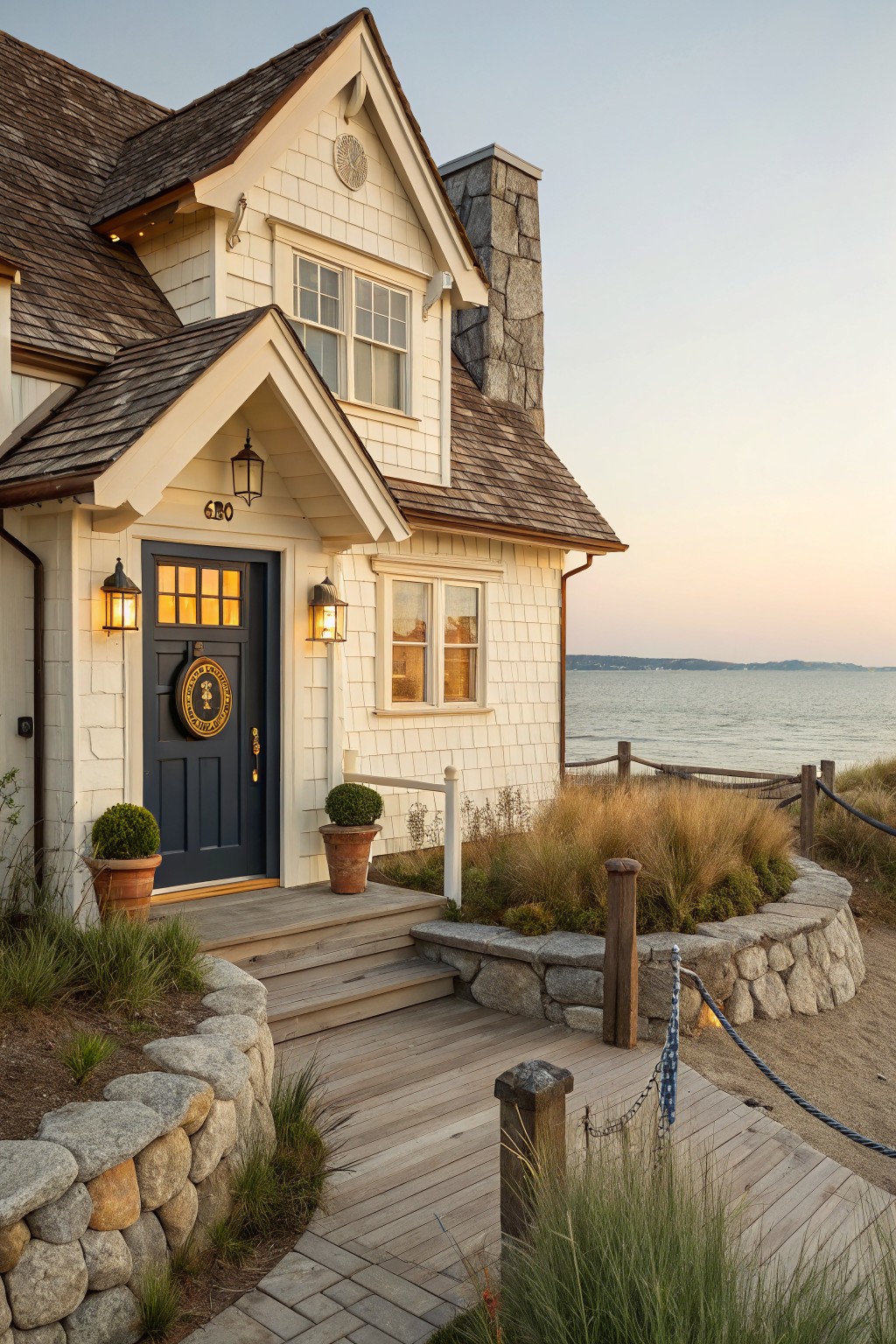
A soft pale yellow on the shingles keeps things light and beachy. Then that deep navy door pulls your eye right to the entry. Stone accents on the chimney and walls add some weight without overwhelming. Lanterns on either side light it up nicely at dusk.
This look suits coastal cottages or simple homes near water. Go for it if you want curb appeal that feels balanced year round. Just keep landscaping low key so the colors stay the focus. Steer clear on super modern builds.
Yellow Shingle Facade with Wooden Arch Entry
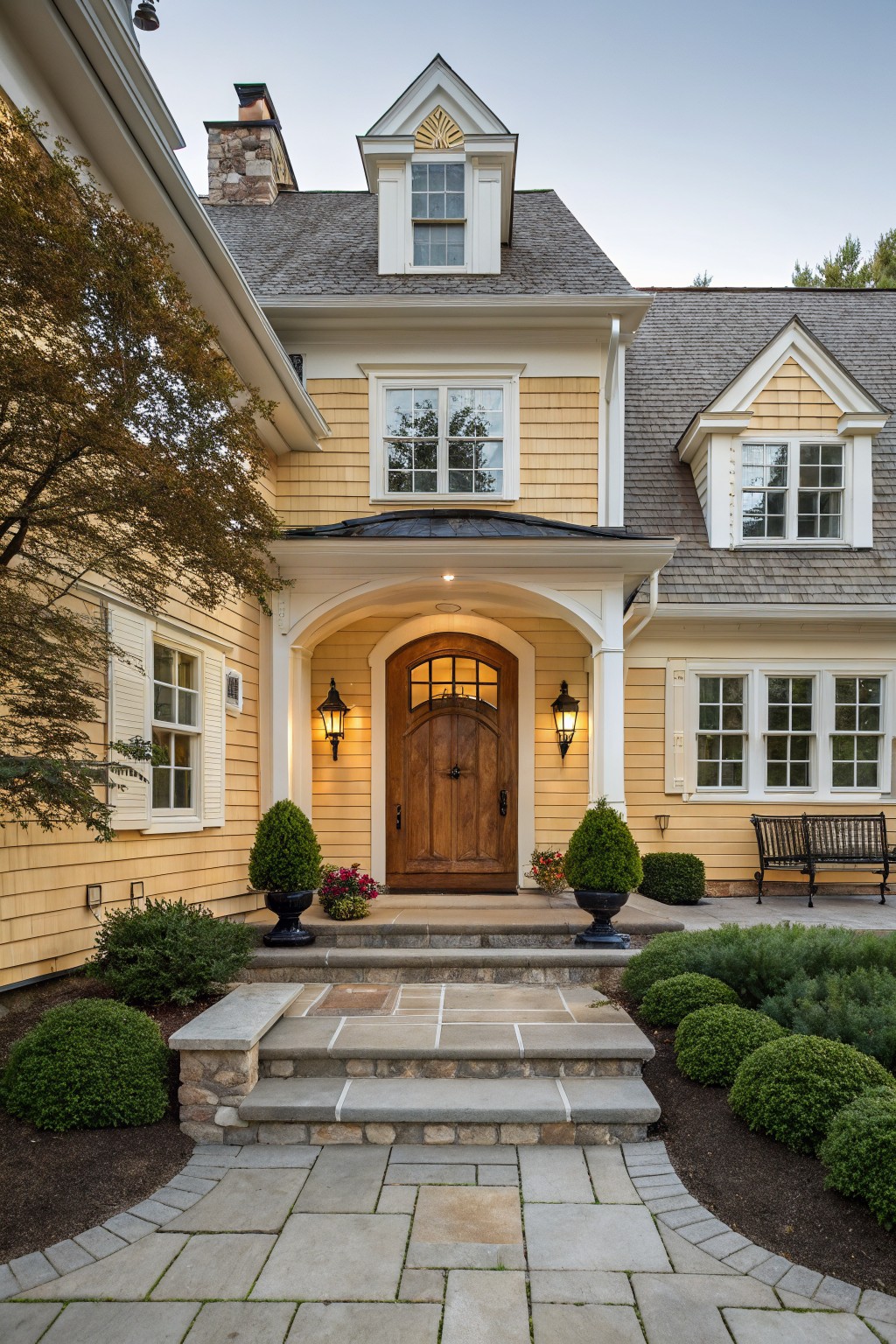
Soft yellow shingles give this house a gentle, classic look that feels right at home in a neighborhood setting. The color isn’t too bright. It picks up the warm tones from nearby trees and stone without overwhelming the front yard. Paired with white trim and that big arched wooden door, it pulls the eye right to the entrance. The lanterns on either side add a touch of evening glow too.
This setup works best on two-story homes with some roofline interest. Use it where you want curb appeal that says traditional but not stuffy. Go for a dark-stained oak door to contrast the yellow siding. Stone steps like these tie it to the ground nicely. Just keep plantings low around the entry so the door stays the star.
Modern Yellow Corner Exterior
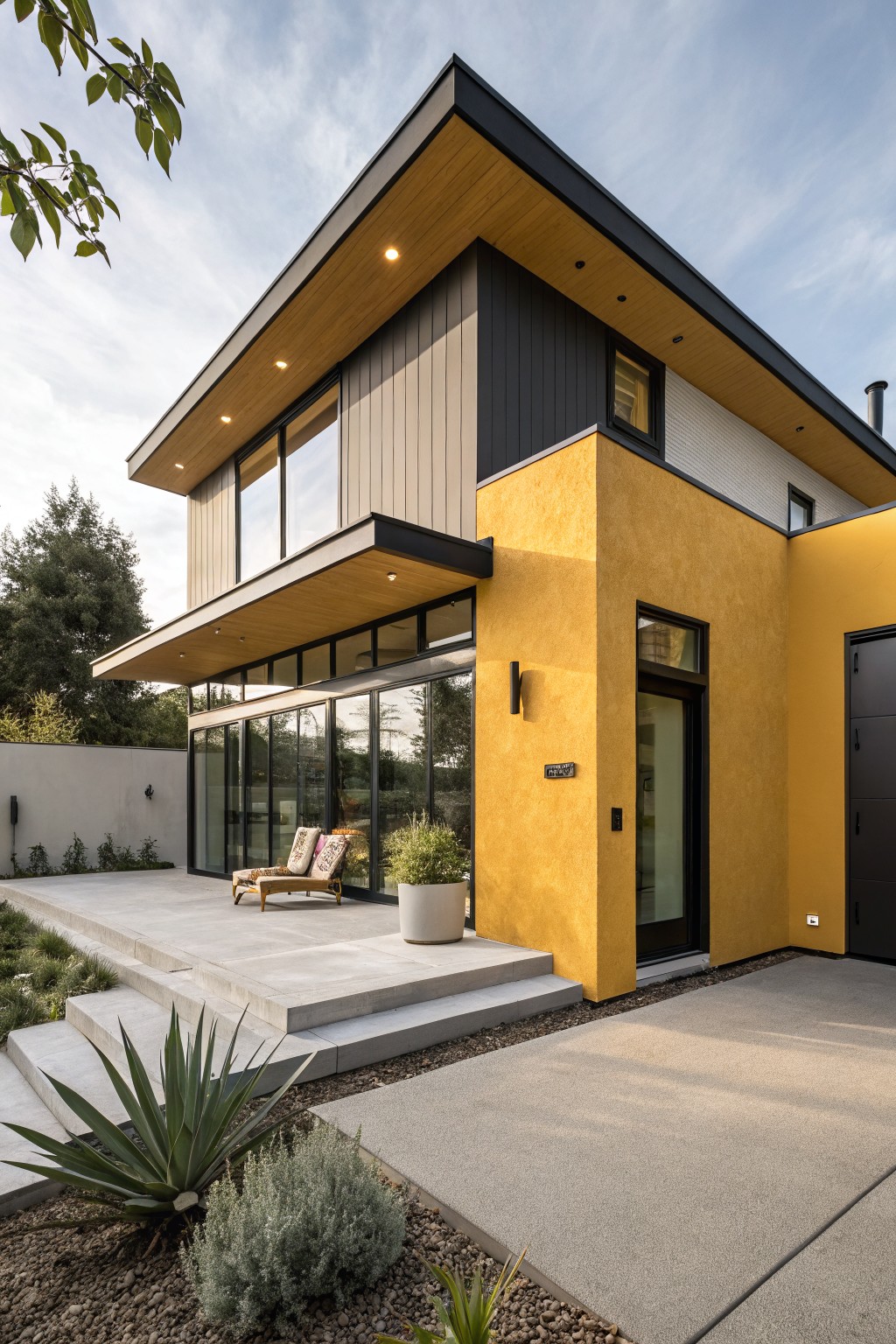
A sunny yellow stucco wall wraps around this house corner, hitting just the right note against the light wood cladding overhead and darker siding nearby. The yellow pops on a clear day but stays grounded thanks to those wood tones and black window frames. It gives the whole facade a fresh, welcoming lift without going overboard.
This setup works best on contemporary homes with clean lines, especially where you want to highlight the entry or garage side. Paint or stucco the yellow on one prominent wall only, then layer in natural wood elements for balance. Skip it on super traditional styles… it shines more in casual modern spots with some landscaping nearby.
Pale Yellow Siding with Green Shutters
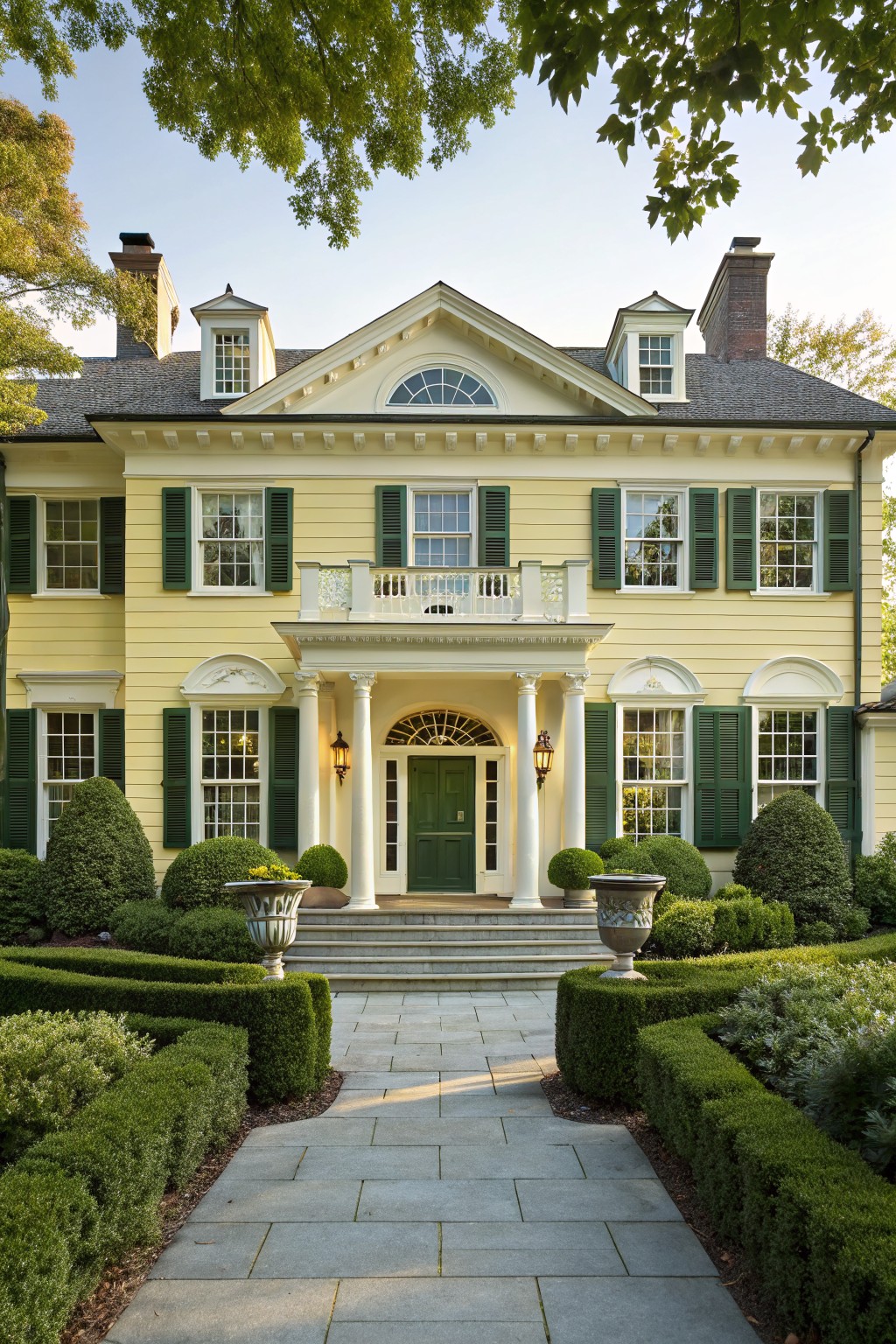
A pale yellow like this on the house siding keeps things light and cheerful. The deep green shutters pull it together nicely. They add some weight without overwhelming the softer yellow tone. White trim around the windows and entry sharpens everything up. It’s a look that stays classic over time.
Try this on older homes with good bone structure, like colonials or Georgian styles. Boxwoods and stone paths in front help frame it right. Lighter yellows work best in sunny spots. Steer clear of muddy greens; pick a true hunter shade to keep the contrast crisp.
Sunny Yellow Siding with Black Frames
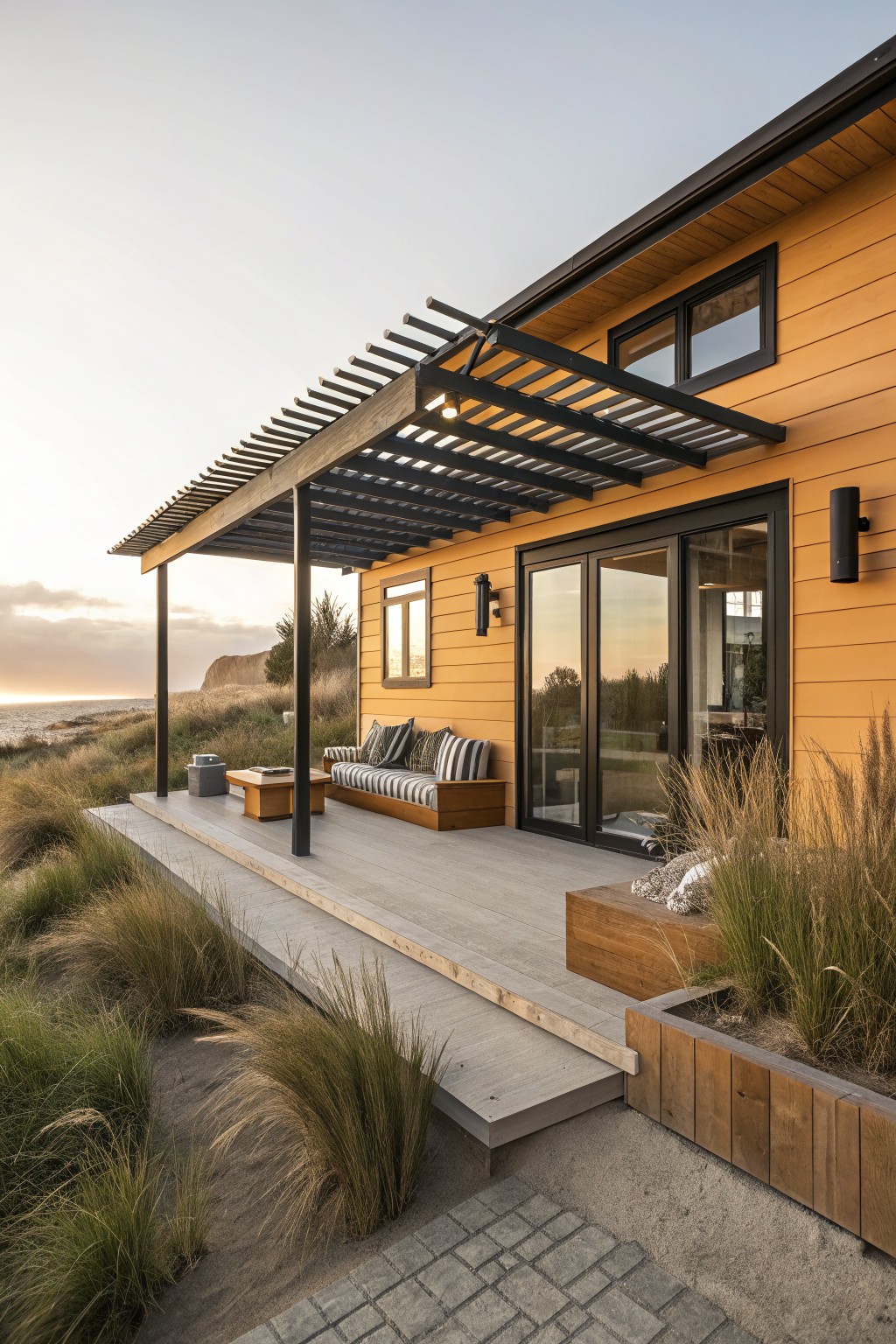
A warm yellow siding like this gives a house a cheerful pop right away. It stands out against the natural beach tones without overwhelming things. The black frames on the windows and sliding doors add a clean, modern edge that keeps the yellow from feeling too soft. That pergola overhead ties it together, offering shade while letting light filter through the slats.
This setup works best on coastal homes or spots with lots of sun. Pick a muted yellow to avoid clashing with greenery, and use black metal for durability near the water. It suits low-slung modern designs, but watch the scale, the frames need to be bold enough to balance the color.
Charming Arched Entry Door
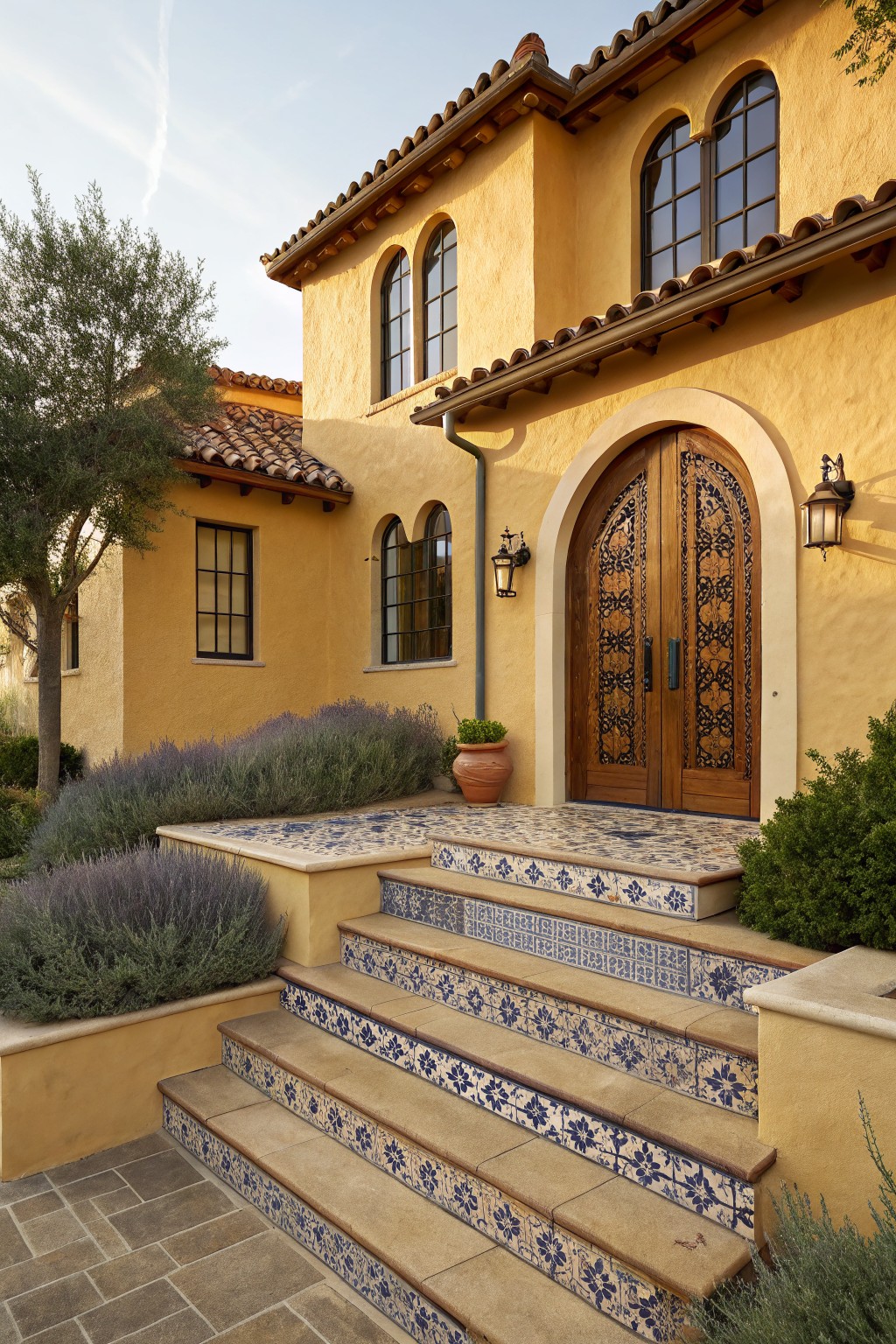
A carved wooden arched door like this one turns a simple yellow stucco house into something special right at the front. The warm ochre walls play off the rich wood tones nicely, and those blue patterned tiles on the steps add a pop of cool color without overwhelming the look. It’s a straightforward way to make your entry feel grand yet grounded.
This setup works best on sunny homes with a nod to Spanish or Mediterranean style. Keep the door detailed but not too busy, and use the tiles just on the risers for balance. Pair it with low plants like lavender along the edges. It suits warmer climates where yellow shines, but watch the scale, the arch needs room to breathe.
Soft Yellow Stucco with Dark Beams
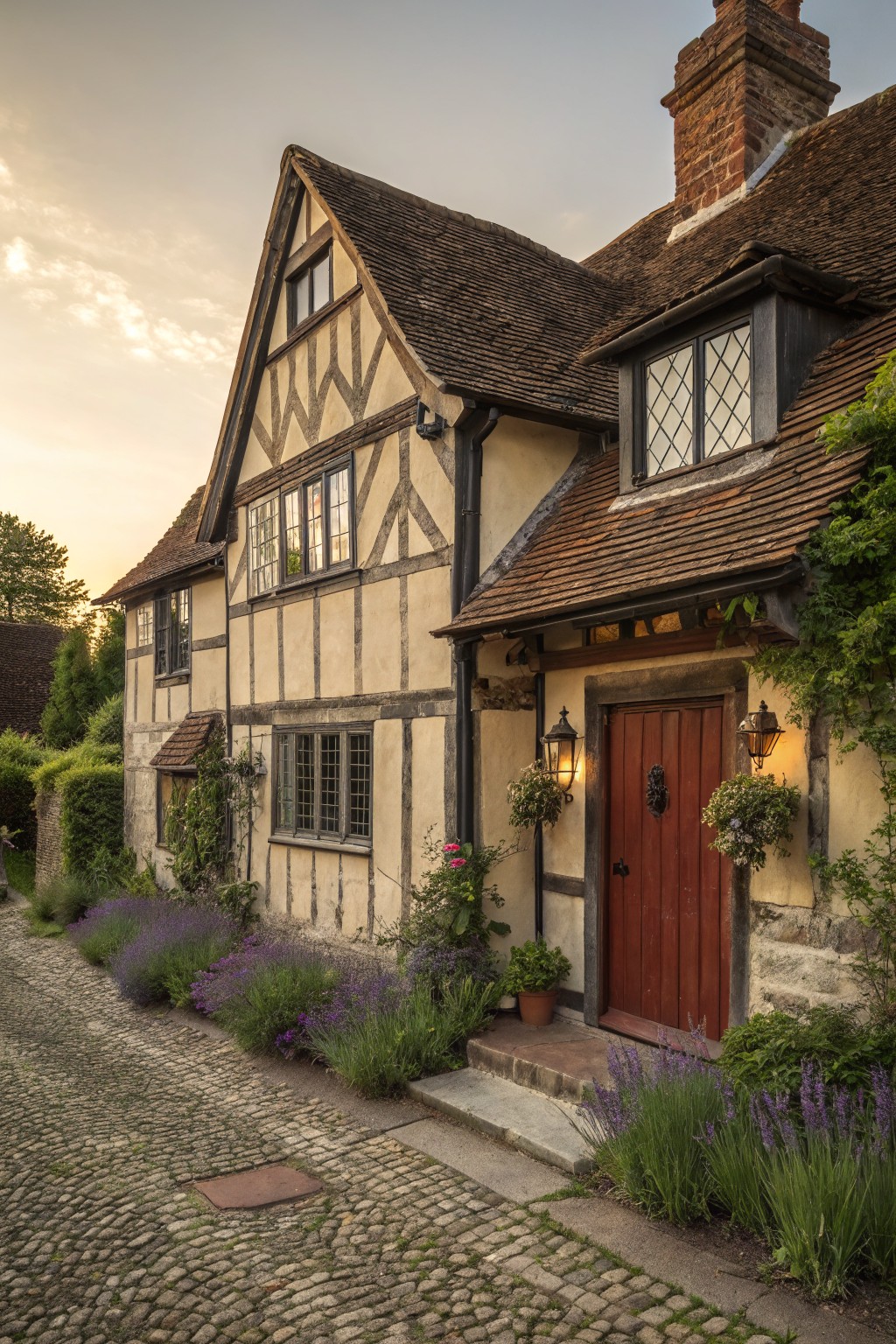
A pale yellow stucco pairs nicely with dark timber beams in this half-timbered style. The light walls keep the house feeling open and sunny. Those black beams add structure without making it heavy. A red door pulls it together at the front.
This scheme suits older cottages or homes wanting some English country character. It holds up well in soft evening light. Add lanterns by the door and low plants along the path to make the entry feel settled. Skip it on super modern houses though.
Balancing Bright Yellow with Black Trim
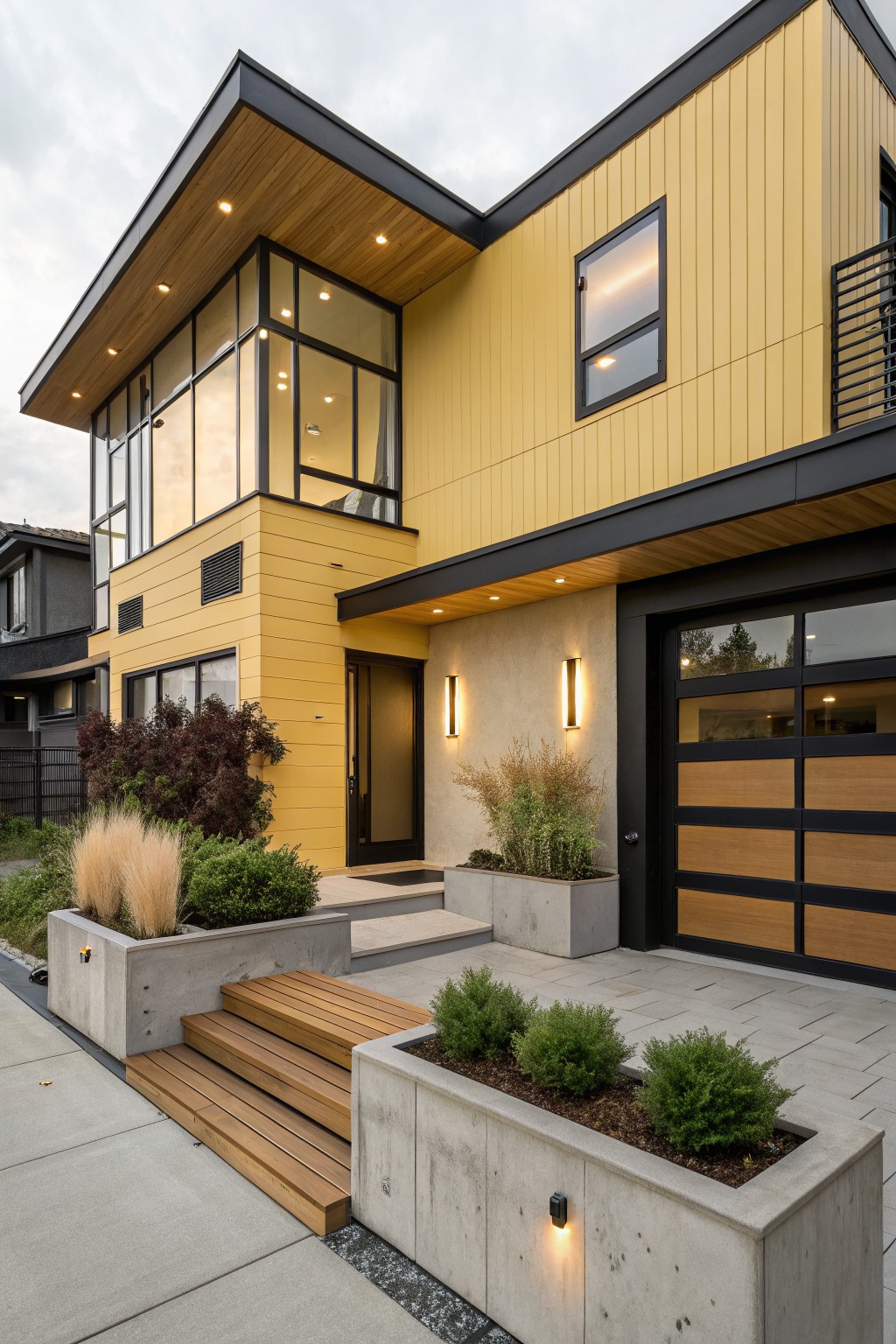
Bright yellow siding like this gives a house real pop without going overboard. The black metal accents on the windows, garage door, and roofline keep everything crisp and modern. They stop the yellow from feeling too playful, while wood steps up to the entry add a bit of warmth that pulls it all together nicely.
This setup works best on contemporary homes in milder climates where the yellow won’t fade fast. Pair it with simple concrete planters and low shrubs around the front, and skip busy details. Just make sure your black trim is matte to avoid glare, and it stays balanced year-round.
Pale Yellow Stucco with a Seafoam Green Door
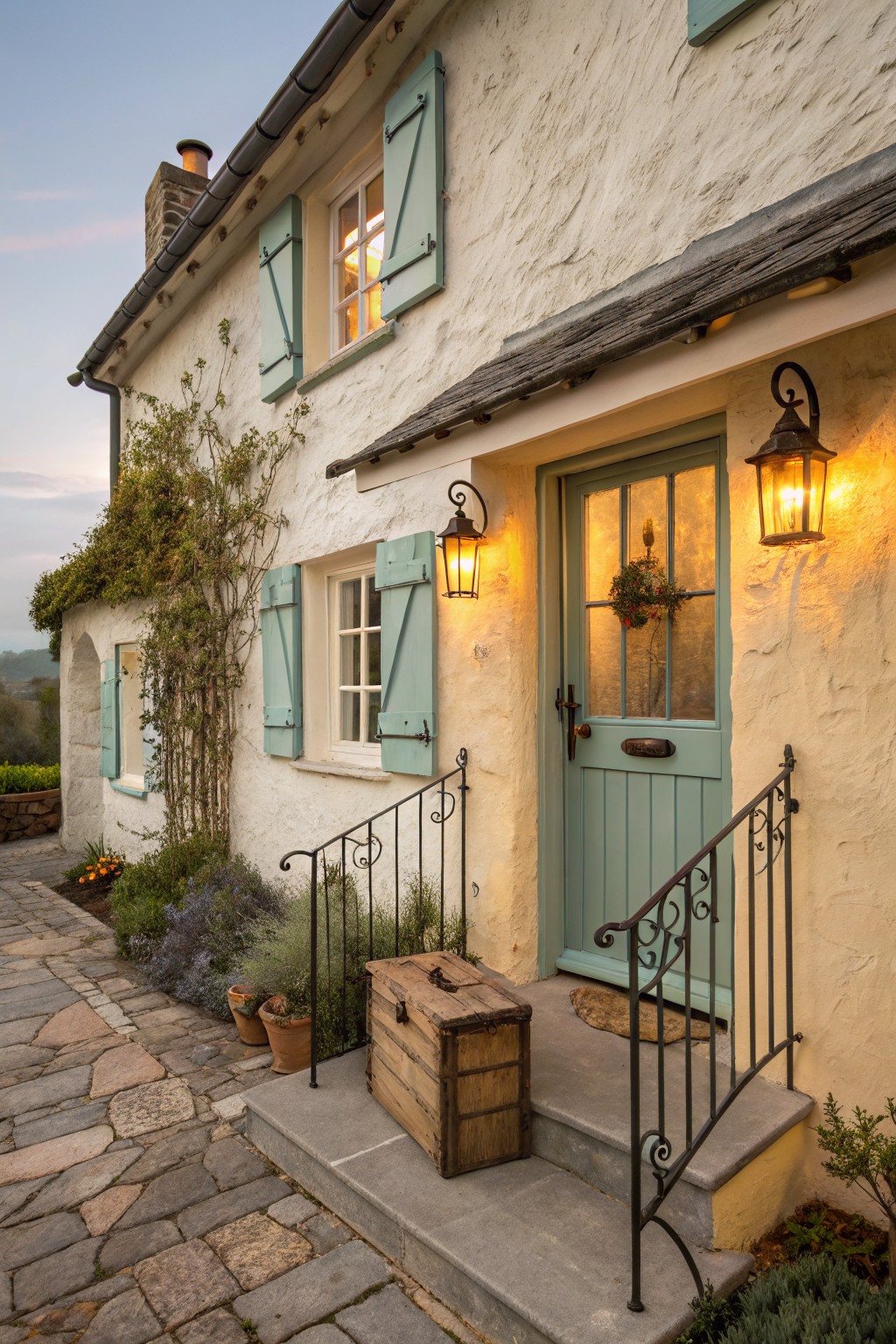
A soft pale yellow stucco gives this cottage a gentle glow, especially in the late afternoon light. Pairing it with a seafoam green door keeps things fresh without overwhelming the simple facade. The shutters in the same green tie it together, and those lanterns add just enough evening warmth to make the entry feel right at home.
This color combo suits older homes or ones with a countryside vibe, where you want curb appeal that’s easygoing. Go for stucco or plaster walls if your climate is mild, and pick a door color a few shades cooler than the walls. Watch the scale, though. A bold green works best on smaller entries like this one.
Sunny Yellow Siding with Black Frames
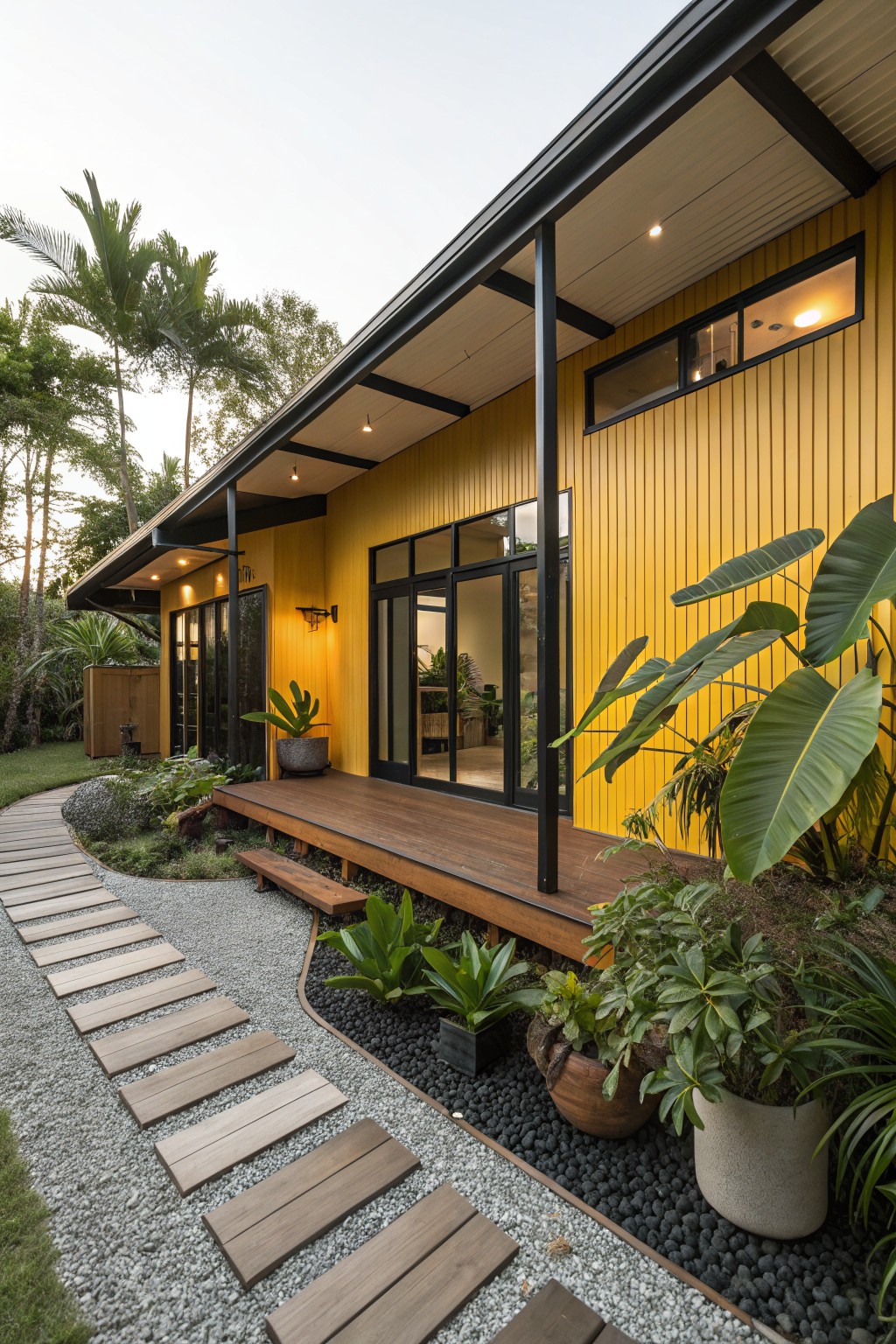
This setup uses bright yellow vertical siding on the house walls, paired with sharp black metal frames around the big glass doors and windows. The yellow gives the place a happy, welcoming feel right away, especially next to all that green from the palms and plants. Black keeps it from getting too soft. And the wood deck below ties in some natural warmth without stealing the show.
It works best on a low-slung modern house in a warm spot, like somewhere tropical. Go for the yellow on bigger wall areas, keep black just for trim and posts. Add a wood deck or path if you can. Watch the sun though… yellow can fade if it’s cheap paint. Pick good quality and it holds up fine.
Frequently Asked Questions
Q: How do I test a yellow scheme before painting the whole house?
A: Grab large paint samples from your local store and slap them up on different sides of the house. Walk around at different times of day to see how the light hits them. This quick step saves you from regrets later.
Q: Will yellow wash out in a shady yard?
A: Go for warmer yellows with golden undertones. They glow even without full sun. Pair with crisp white trim to brighten things up.
Q: What door color pops against yellow siding?
A: Pick a deep navy blue. It grounds the sunny yellow without overwhelming it. And navy works year-round.
Q: Does yellow siding show every speck of dirt?
A: Lighter yellows hide pollen and dust better than you think. Rinse with a garden hose every few months. Fresh coats keep it vibrant.
