

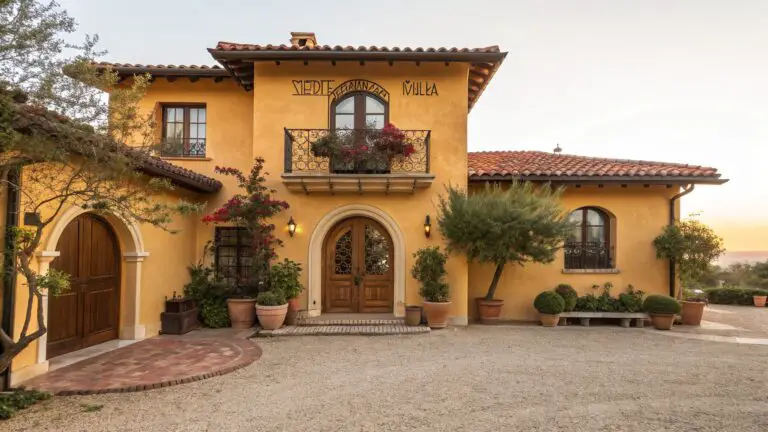
I’ve noticed how a warm earth tone like yellow ochre can anchor a house’s facade against changing skies and seasons. It adds depth that plain neutrals often miss, especially when paired with textured siding or stone accents. Last summer, I tested it on our front porch posts, and it made the whole entry feel steadier without overwhelming the roofline. From the street, eyes hit the windows and doors first, so these ideas focus on blending ochre there to boost curb appeal naturally. A couple stand out as easy wins for real-life tweaks.
Ochre Stucco Facade with Arched Entry
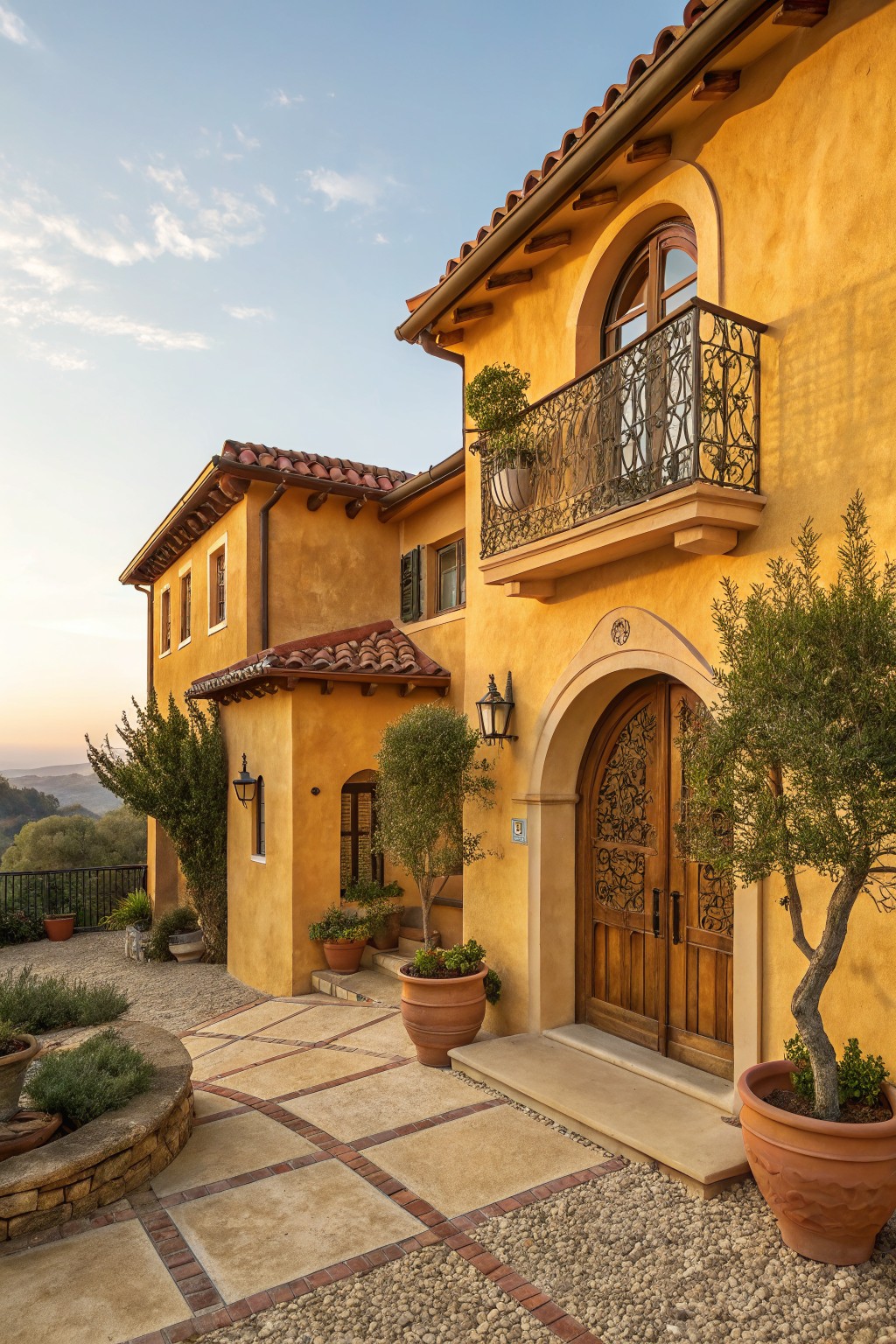
A smooth yellow ochre stucco finish on the walls sets up this house nicely. The tall arched wooden door pulls your eye right to the front, with its carved details and iron accents. That warm color picks up the sunset tones around it, making the whole entry feel settled and lived-in.
This look fits homes with a bit of Spanish or Italian style, especially on a slope where the arch adds height. Add matching lanterns and a few olive trees in pots nearby to tie it together. Keep the stucco sealed so it holds up over time.
Ochre Cedar Cladding on Modern Facades
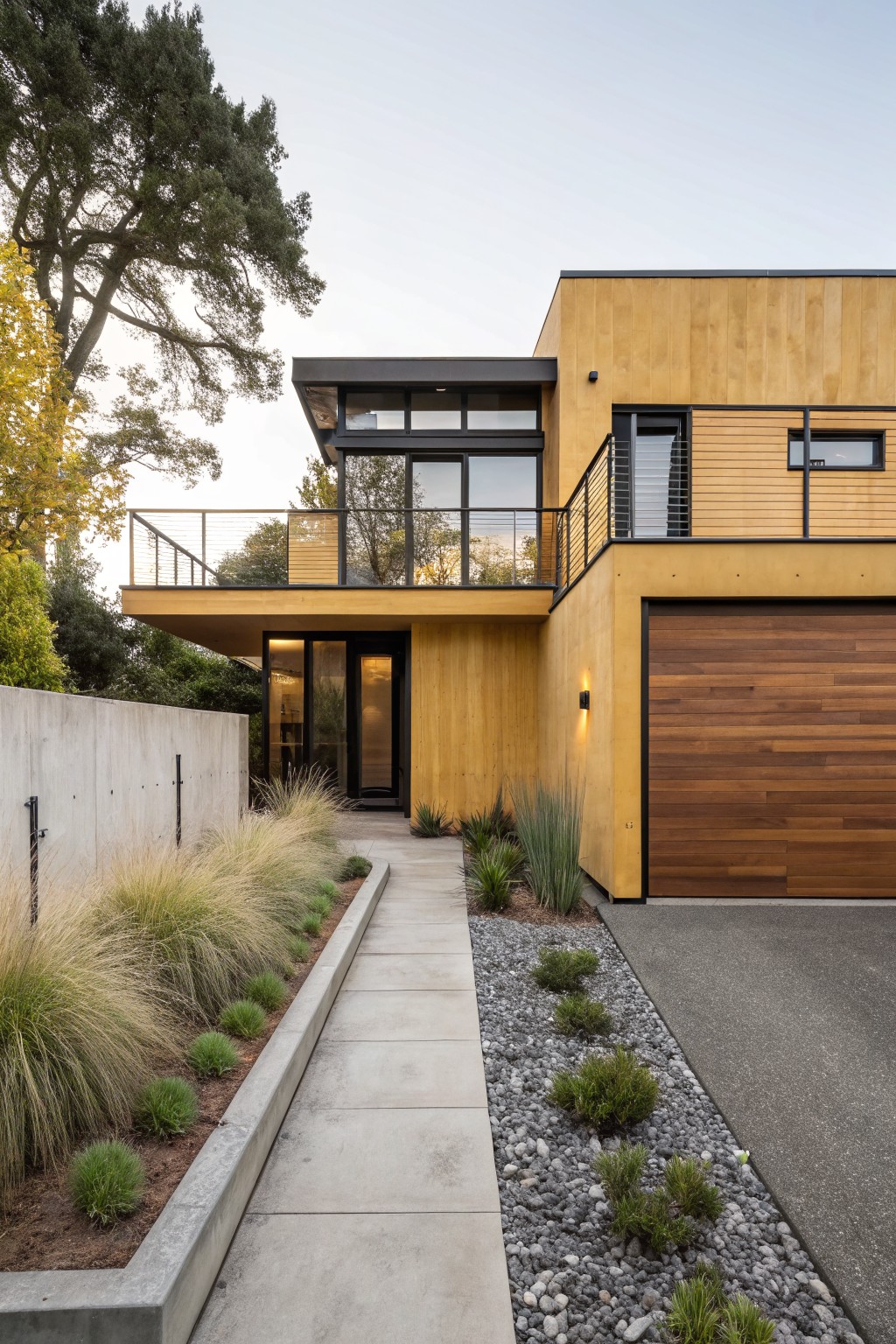
This approach wraps a boxy contemporary house in vertical yellow ochre cedar panels. The warm tone brings depth to the flat planes and makes the structure feel less stark. Paired with a dark-trimmed balcony and wood garage door, it ties everything together without much fuss.
It suits homes in natural settings, like near pines or with some slope. Use it on the main body while keeping accents simpler, such as concrete edging or gravel paths. Just watch the sun exposure, since cedar can fade if not sealed right.
Ochre Stone Cottage Facade
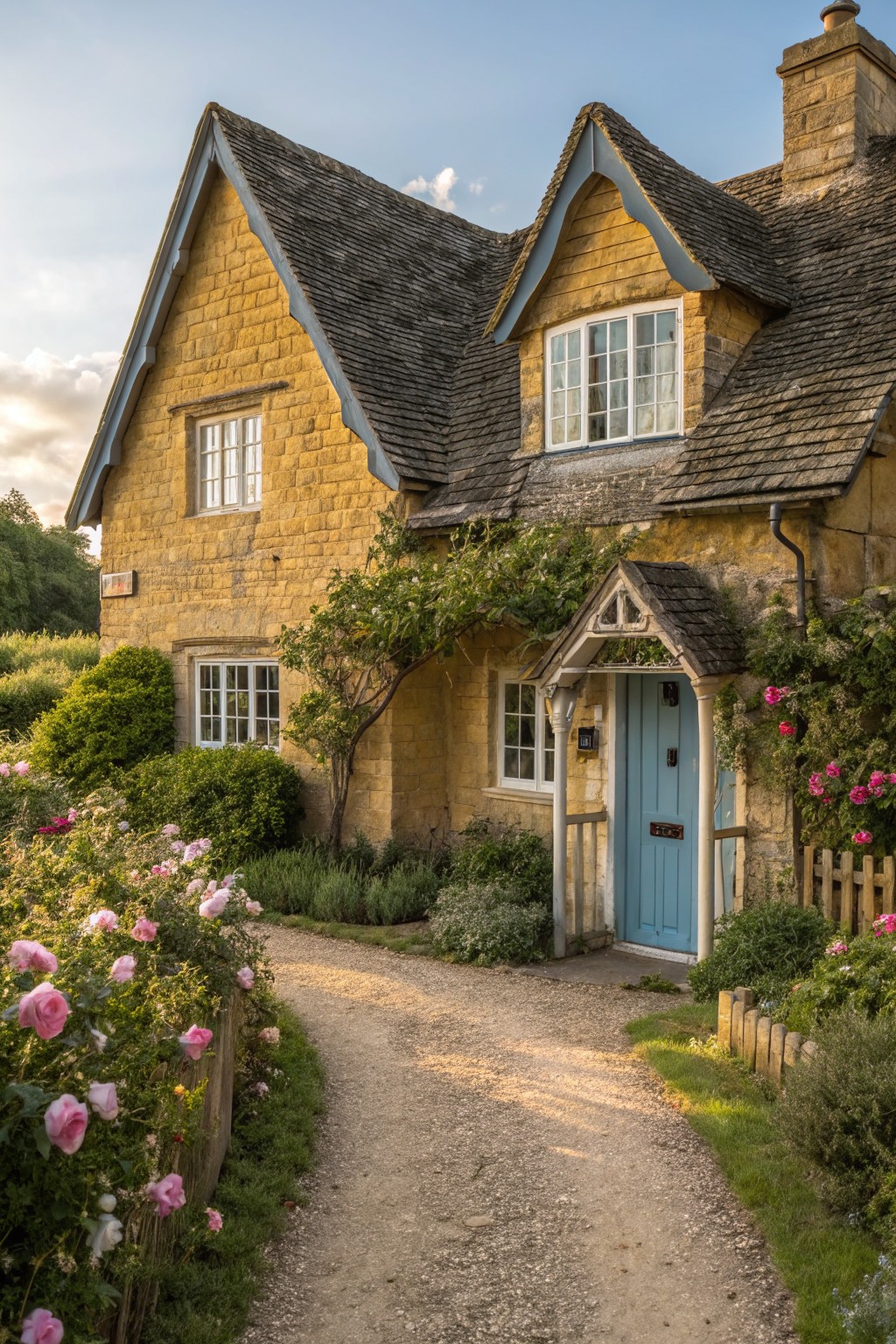
Yellow ochre stone gives this cottage a solid, warm look that feels right at home in the countryside. The color has enough variation in tone to catch the light and show some texture on the walls, making the whole front stand out without trying too hard. It’s that natural depth people notice right away.
You can pull this off on traditional homes or even updates to older houses. Keep windows simple and add a bold door color like blue for contrast. Surround it with roses or shrubs along the path, but don’t overplant. Works best where you want cozy over flashy.
Ochre Brick Base on Modern Houses
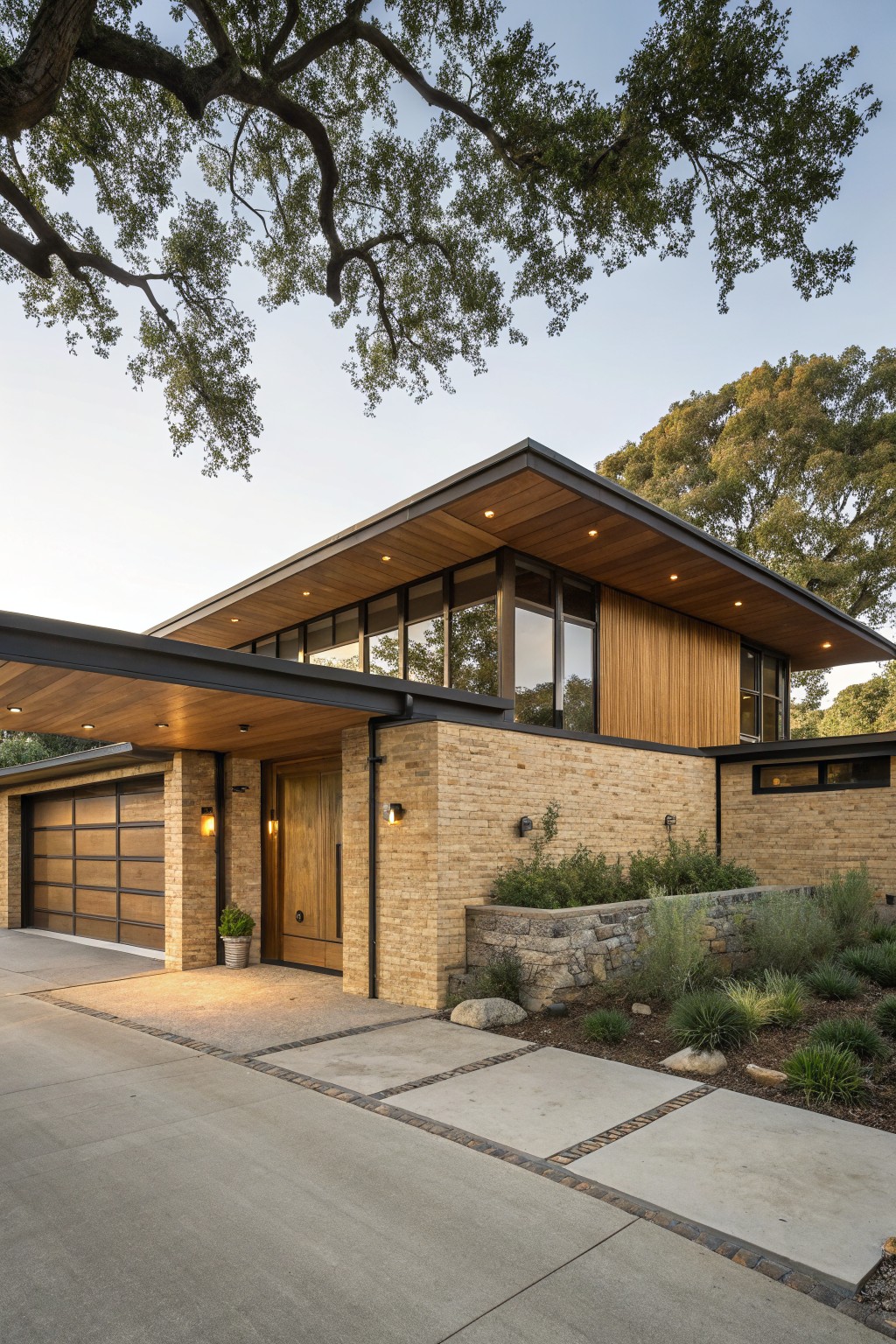
One straightforward way to warm up a sleek modern house is with ochre brick along the bottom. Here it’s used on the garage doors and entry area, giving a solid feel right at ground level. The yellow tones in the brick pick up nicely on the wood siding above, without overwhelming the clean lines. It just settles the house into the site.
This works best on homes with flat roofs or simple shapes, especially where you want some texture down low. Pair it with cedar or similar wood cladding up top, and keep metal accents dark. Skip it on super small houses, though. The brick needs a bit of scale to show off.
Lantern-Lit Arched Entry on Ochre Walls
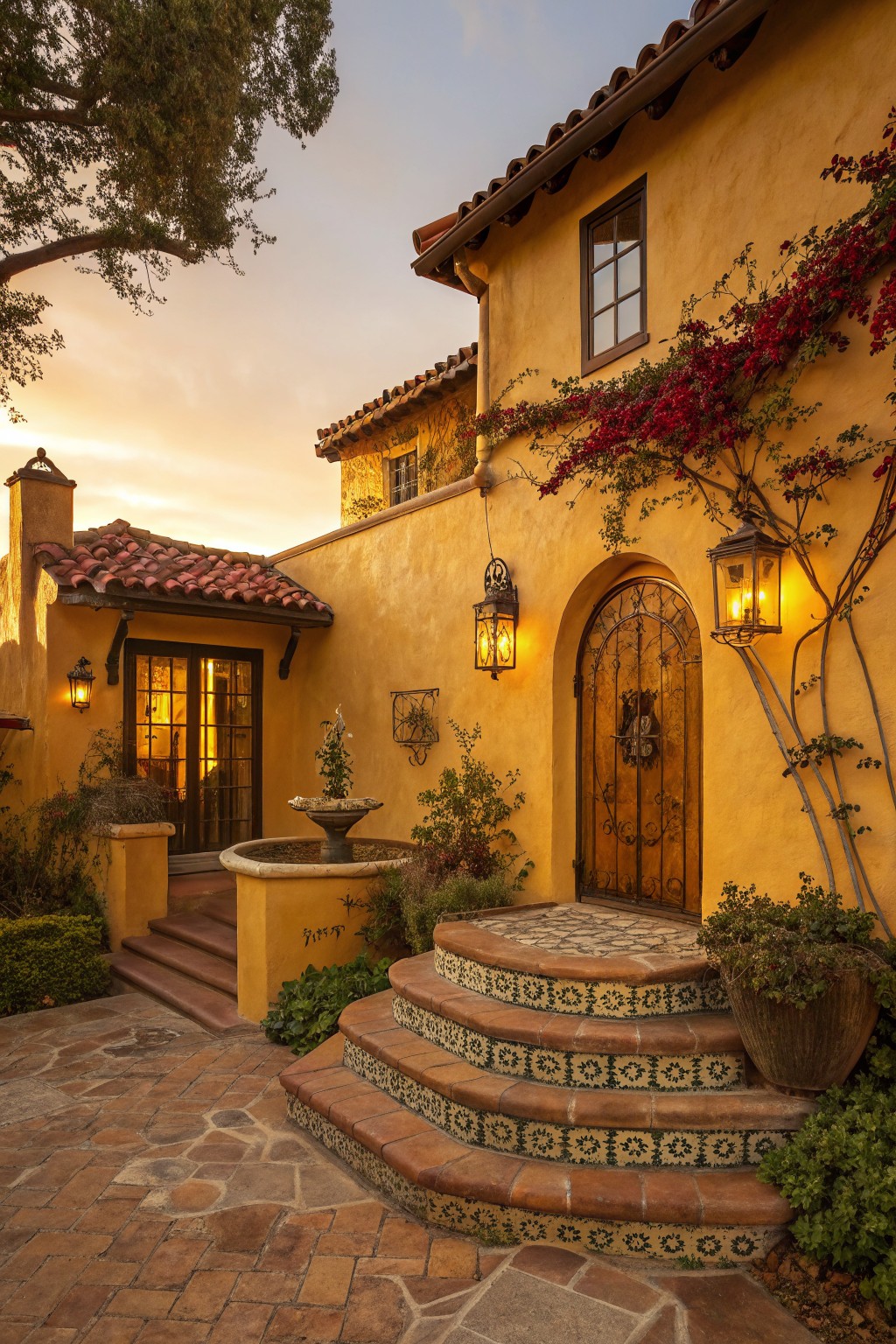
A warm yellow ochre stucco wall sets off this arched wooden door nicely. The wrought iron gate adds a bit of rustic detail, and those hanging lanterns give it a soft glow right at dusk. Climbing bougainvillea softens everything up, making the whole entry feel more welcoming without trying too hard.
This setup works best on homes with a Spanish or Mediterranean vibe, where terracotta tiles on the steps tie right into the roof. Scale the lanterns to your door height so they don’t overwhelm. It’s practical too, since the vines and lights help the entry stand out even after dark. Just keep the plants trimmed back from the door hardware.
Vertical Ochre Wood Siding on a Boxy Modern Home
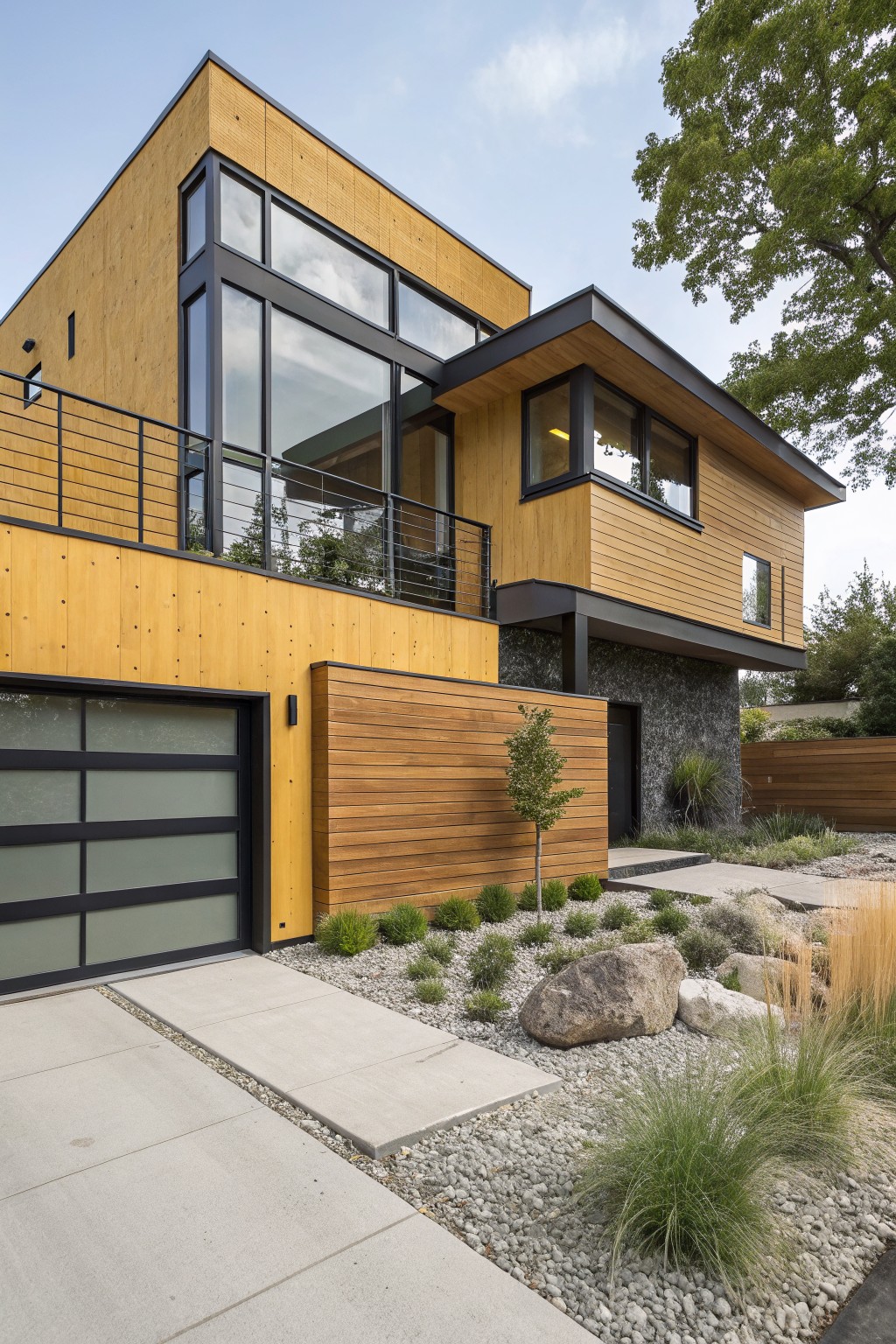
Vertical wood siding in a rich ochre tone covers this contemporary house, warming up the sharp angles and big glass windows. The yellow-brown panels look like cedar that’s taken on a natural glow, pulling the eye away from the plain box shape toward something more grounded and alive. Paired with black frames and a stone base, it keeps things simple but adds real depth right at the street.
You can pull this off on homes with flat roofs or strong geometric lines, especially if the site has trees nearby. Stick to low-maintenance gravel and rocks out front to let the siding do the talking. Just make sure the wood is treated for weather, or it’ll fade too fast in wet climates.
Ochre Stone Facade with Climbing Wisteria
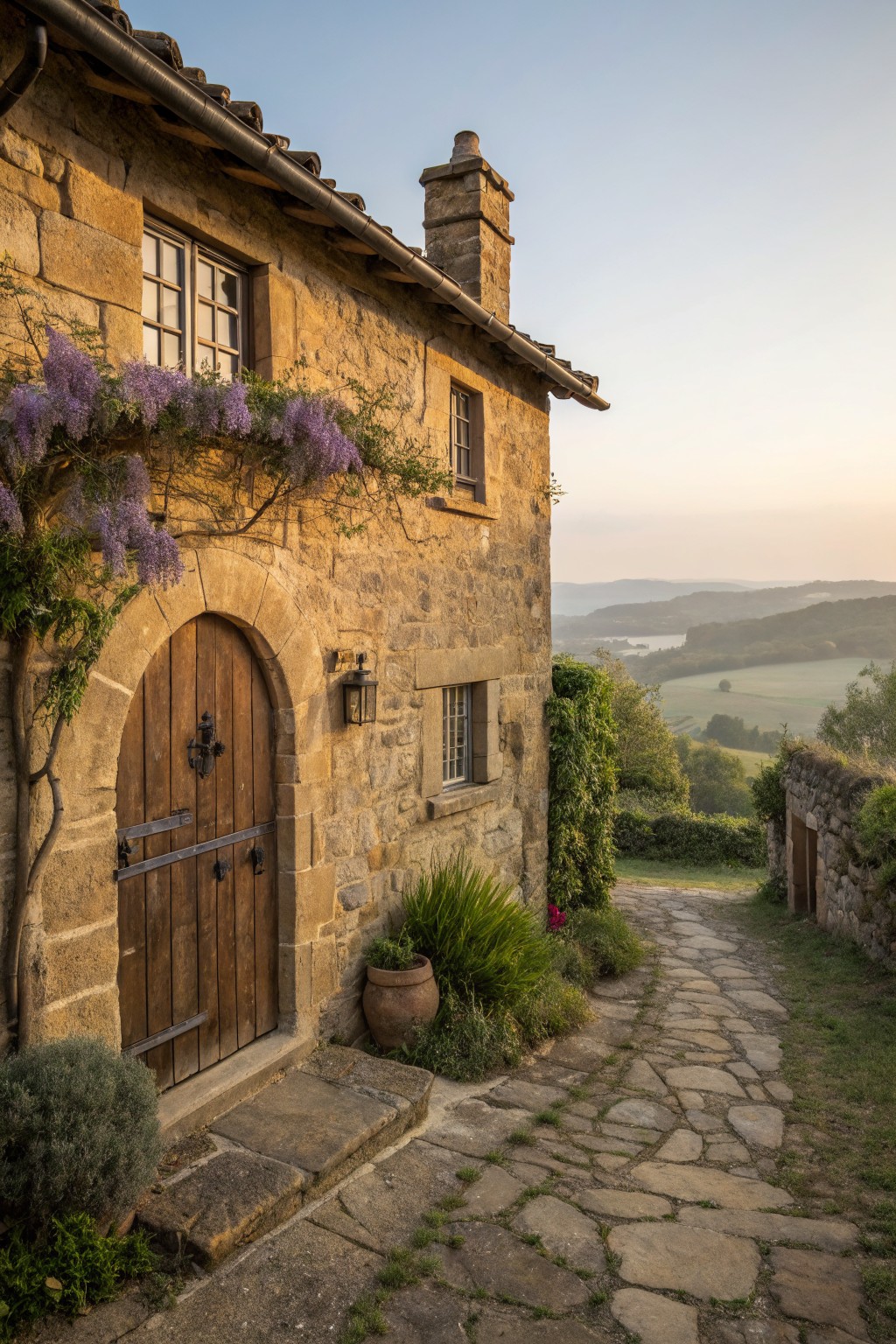
Warm ochre stone like this gives a house real depth and character. It’s that natural yellow tone in the walls that catches the light just right, making the place look lived-in and solid. Then the wisteria climbs over one side, with its purple blooms hanging down. It softens things up without hiding the stone.
This setup fits older cottages or farmhouses best, especially where you have some slope or view. Plant the vines near corners or arches so they frame the door. Keep them trimmed back from windows. Not great for super modern builds… but perfect if you want that cozy countryside feel.
Classic Colonial in Yellow Ochre
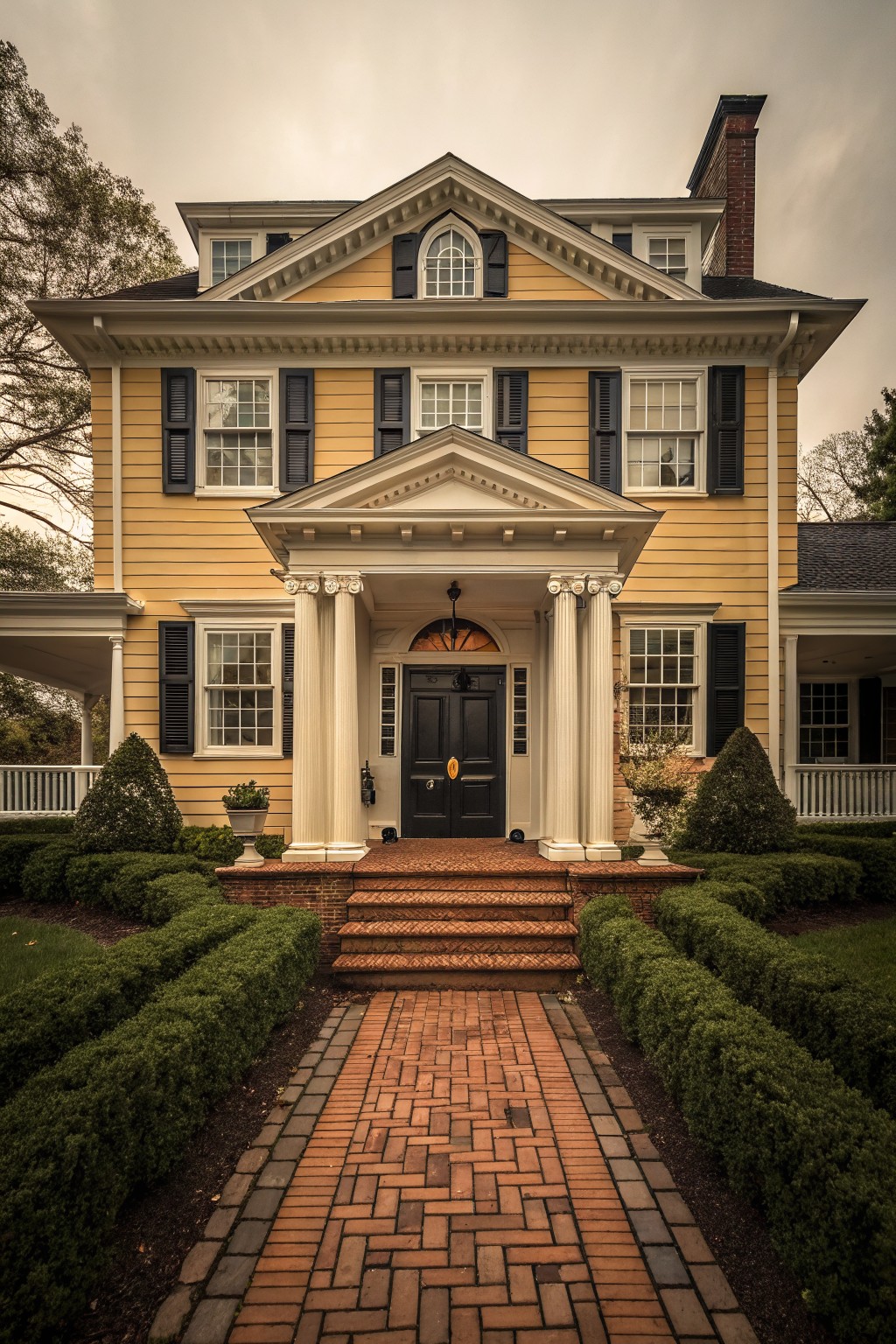
A traditional two-story colonial looks right at home painted in yellow ochre. The warm shade settles nicely over the siding, playing off white trim around the windows and that standout columned porch. Black shutters pull it together without overdoing things.
This setup suits older homes or ones with good symmetry. Go for ochre on the main body, crisp white on columns and porch details, dark shutters on key windows. It holds up in tree-lined spots… just test the color in different light first.
Warm Wood Siding on a Modern House
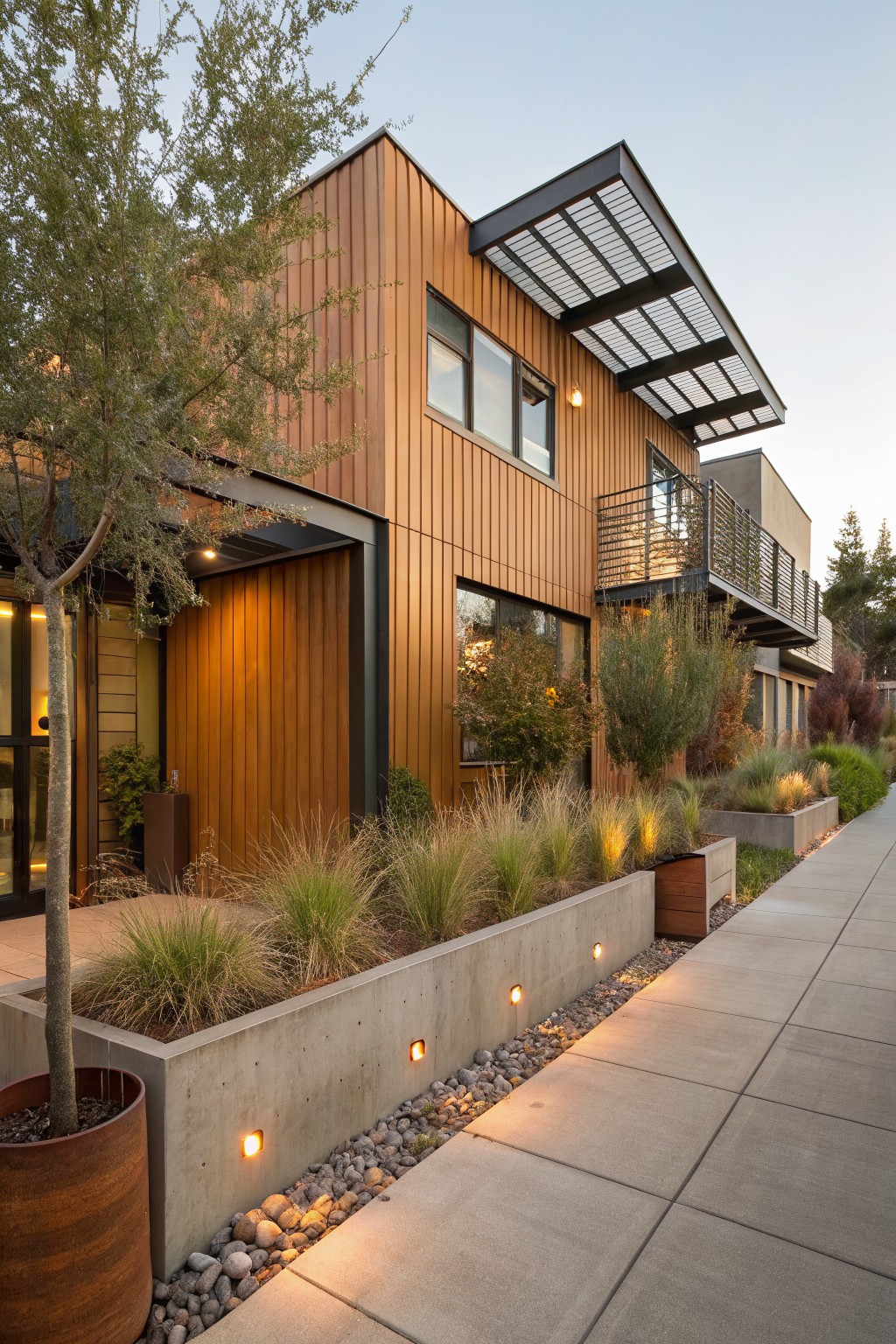
One simple way to warm up a sleek modern home is with vertical wood siding in a rich ochre tone. This look uses cedar-like panels that catch the light just right, making the facade feel less stark without losing that clean contemporary edge. Paired here with dark metal accents and a simple entry overhang, it gives the house a grounded, lived-in quality right from the street.
You can pull this off on homes with flat roofs or bold geometries, especially in milder climates where wood holds up well. Just seal it properly to fend off weather, and balance it with concrete elements along the base or path to keep things from getting too rustic. Works great for adding curb appeal without much fuss.
Yellow Ochre Shingles on a Waterfront Cabin
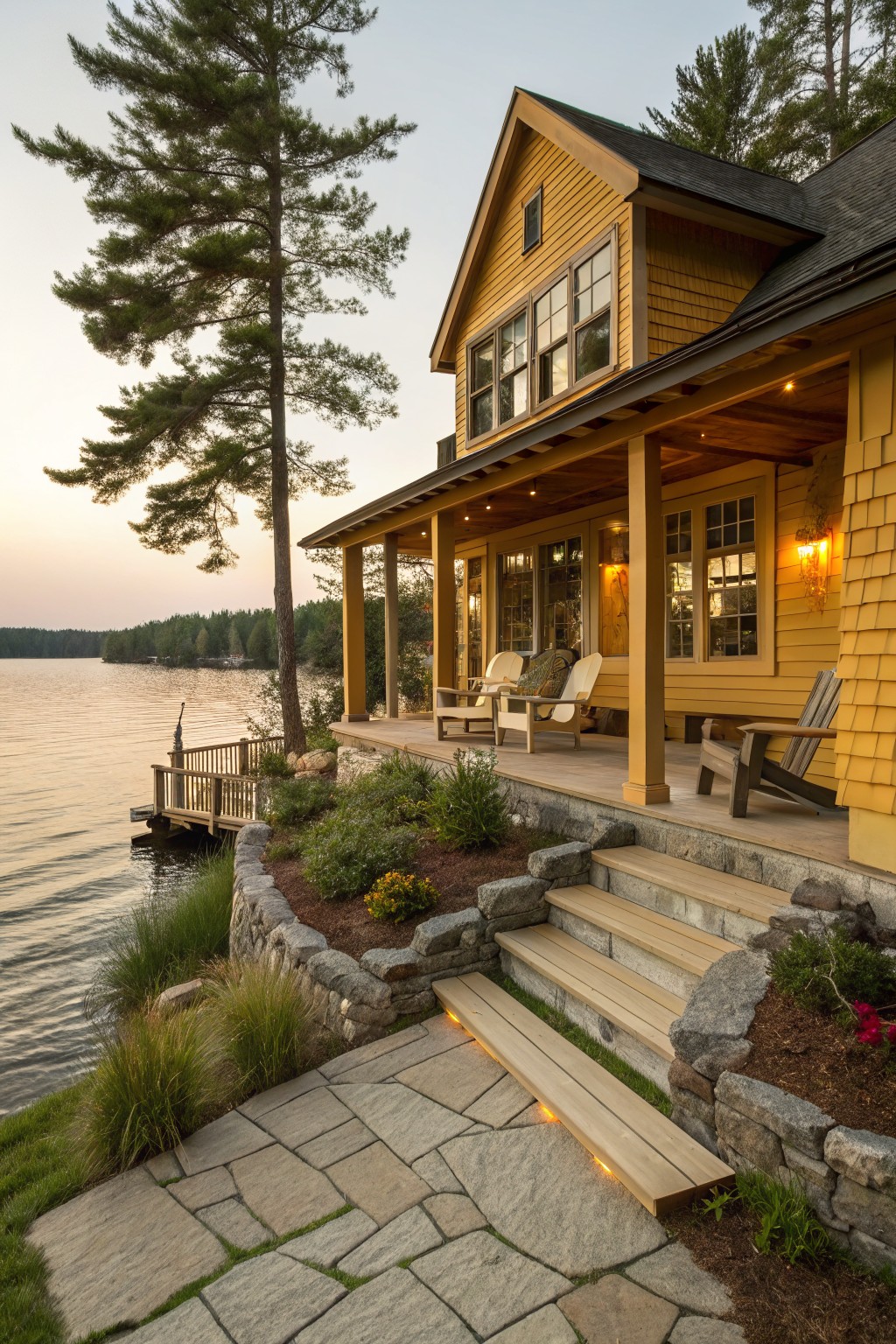
A house like this shows how yellow ochre paint on shingle siding brings real warmth to a cabin by the lake. The color picks up the golden light at sunset and ties right into the pine trees and stone around it. It makes the place feel settled in, not flashy. That textured shingle surface holds the paint in a way that gives some depth without extra work.
This look fits older-style homes in wooded spots or near water. Paint fresh cedar or pine shingles in a rich ochre tone, then add wood porch posts and flagstone steps to keep things natural. Skip it on super modern builds, though. It works best where you want cozy over crisp.
Ochre Walled Courtyard Pool
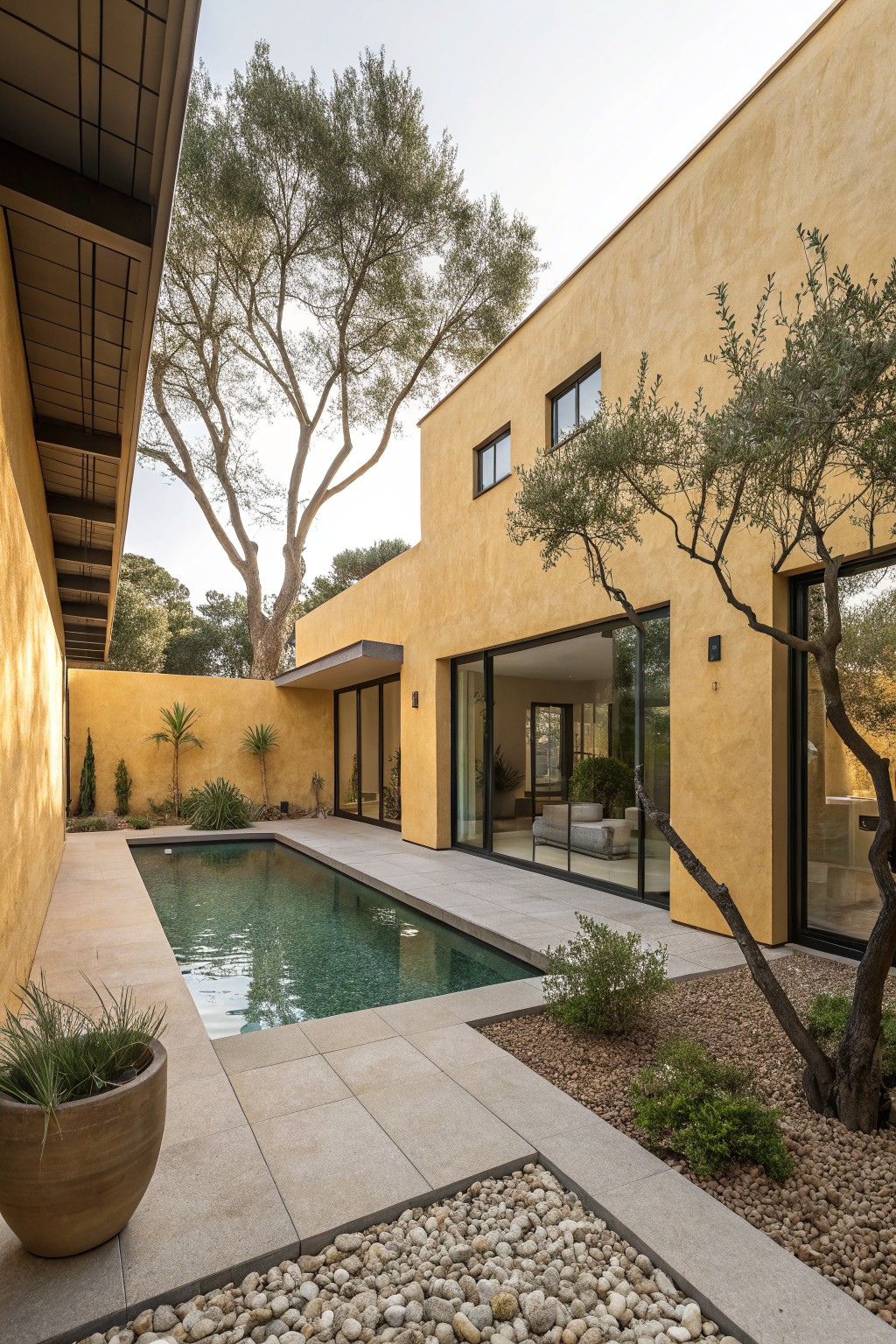
A narrow lap pool tucked along one wall makes great use of a courtyard spot. The ochre stucco walls wrap right around it, keeping things private and sunny. Olive trees and simple gravel beds fill in without crowding, and the pool water picks up that nice green tint against the warm yellow tones.
This kind of setup fits homes with limited yard space, especially in warm climates where you want outdoor swimming close to the house. Line the pool with dark tiles for contrast, and add stone pavers around the edges. It pulls the modern house design outside nicely, but keep plants low-key so the walls stay the focus.
Ochre Stone Cottages with Teal Doors
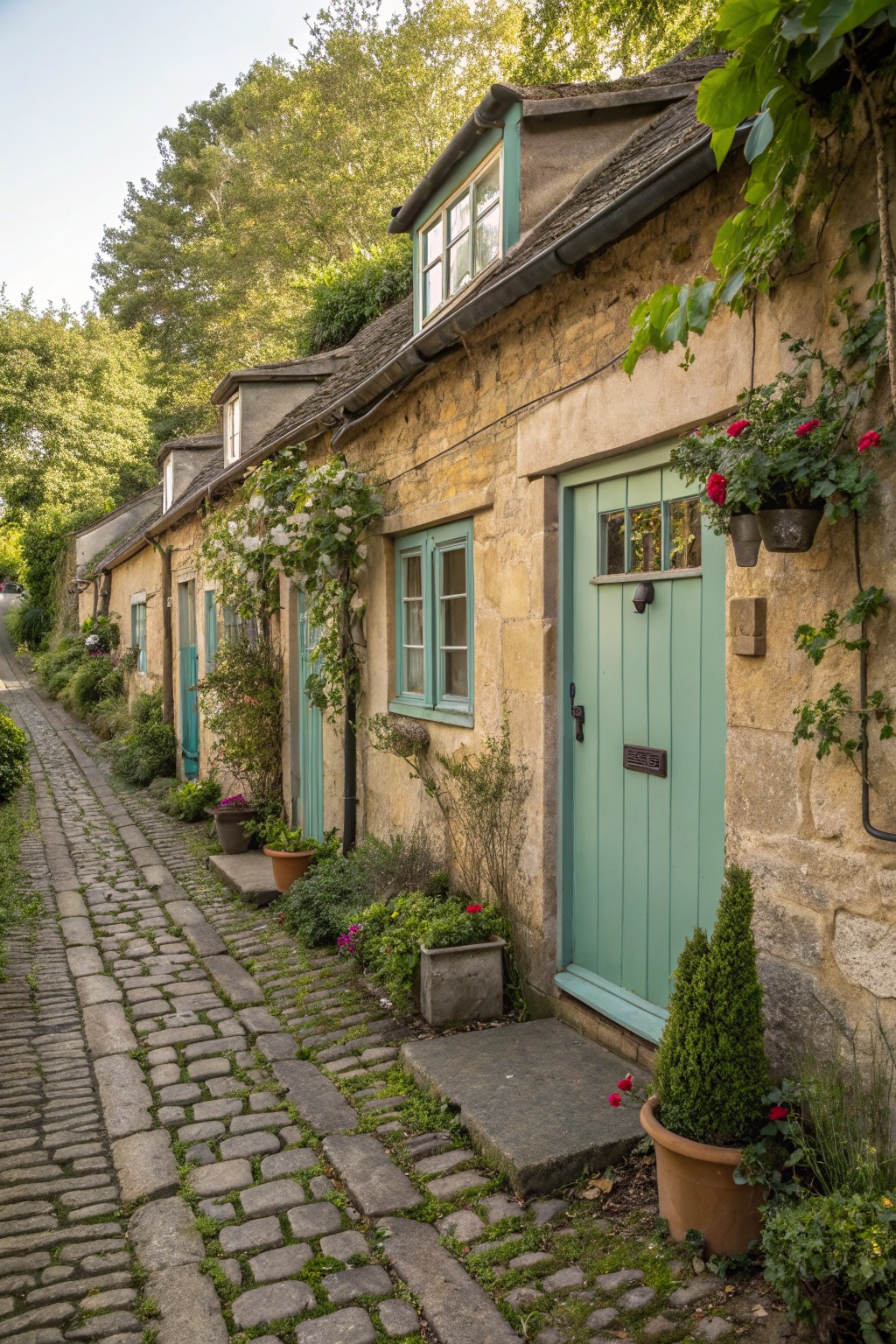
Those warm yellow ochre stone walls on these cottages get a nice lift from the teal front doors. The soft green shade picks up the foliage around without clashing, and it makes the entry feel more welcoming right away. You see it a lot in English villages, where the stone has that aged, honeyed look.
Paint a teal door on your own ochre or beige stone house if you want simple curb appeal. It suits older homes or ones with a rustic feel, especially along a path or walkway. Just keep the hardware simple, like a brass knocker, and add a plant or two nearby to tie it in.
Ochre Walls Build a Courtyard Haven
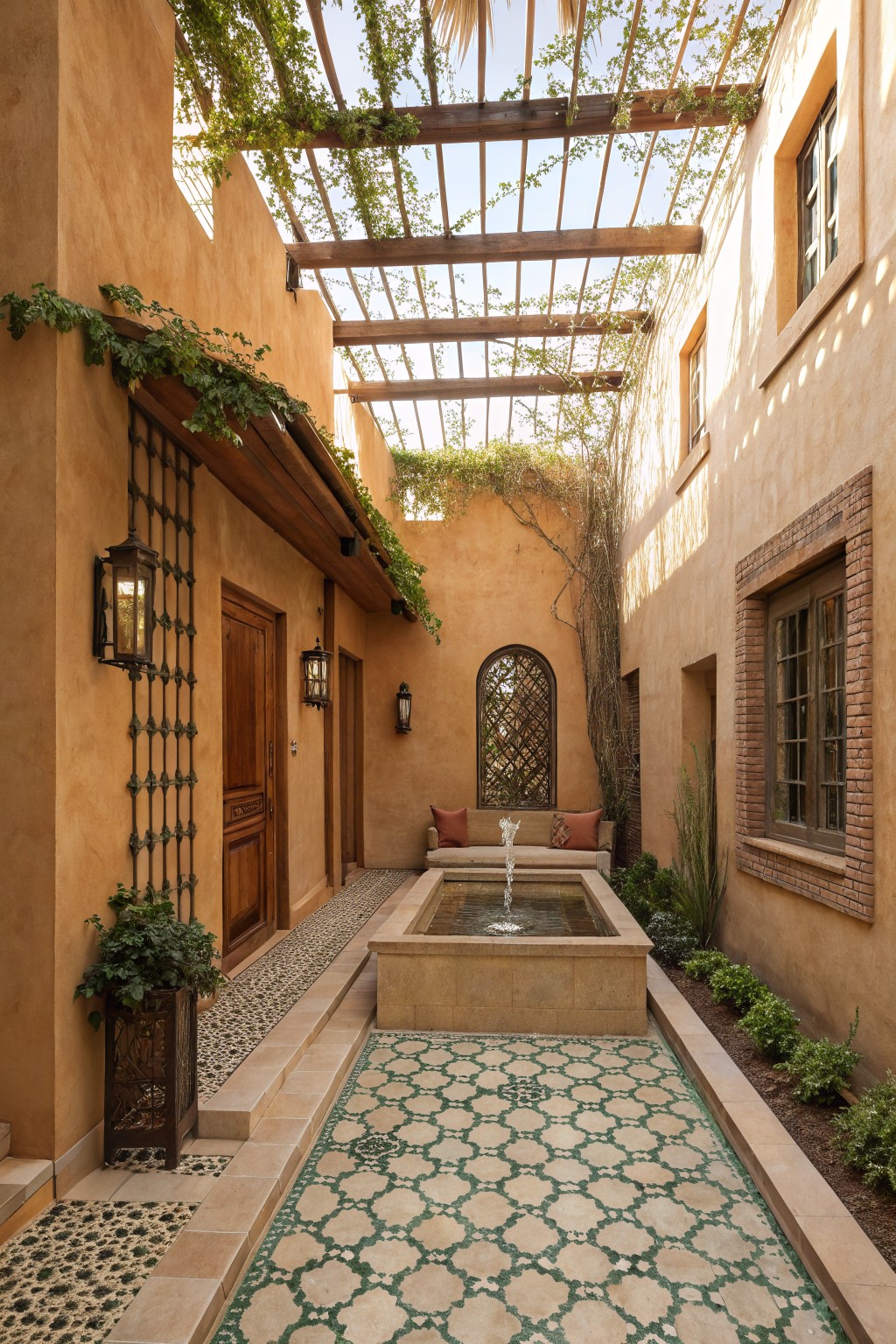
Ochre walls like these give an outdoor courtyard real warmth and a sense of enclosure. The soft yellow tone picks up the sun nicely, making the space feel protected yet open under that vine-draped pergola. It turns a simple patio into something more restful, especially with the central fountain adding a quiet trickle.
This setup works best in warmer climates or homes with a Mediterranean or desert vibe. Paint or stucco your walls in ochre, then add a pergola for shade and some climbing plants. Keep the center clear for a fountain or seating, and use patterned tiles on the floor to tie it together. It suits smaller yards where you want privacy without closing everything in.
Ochre Stucco Paired with Stone Base
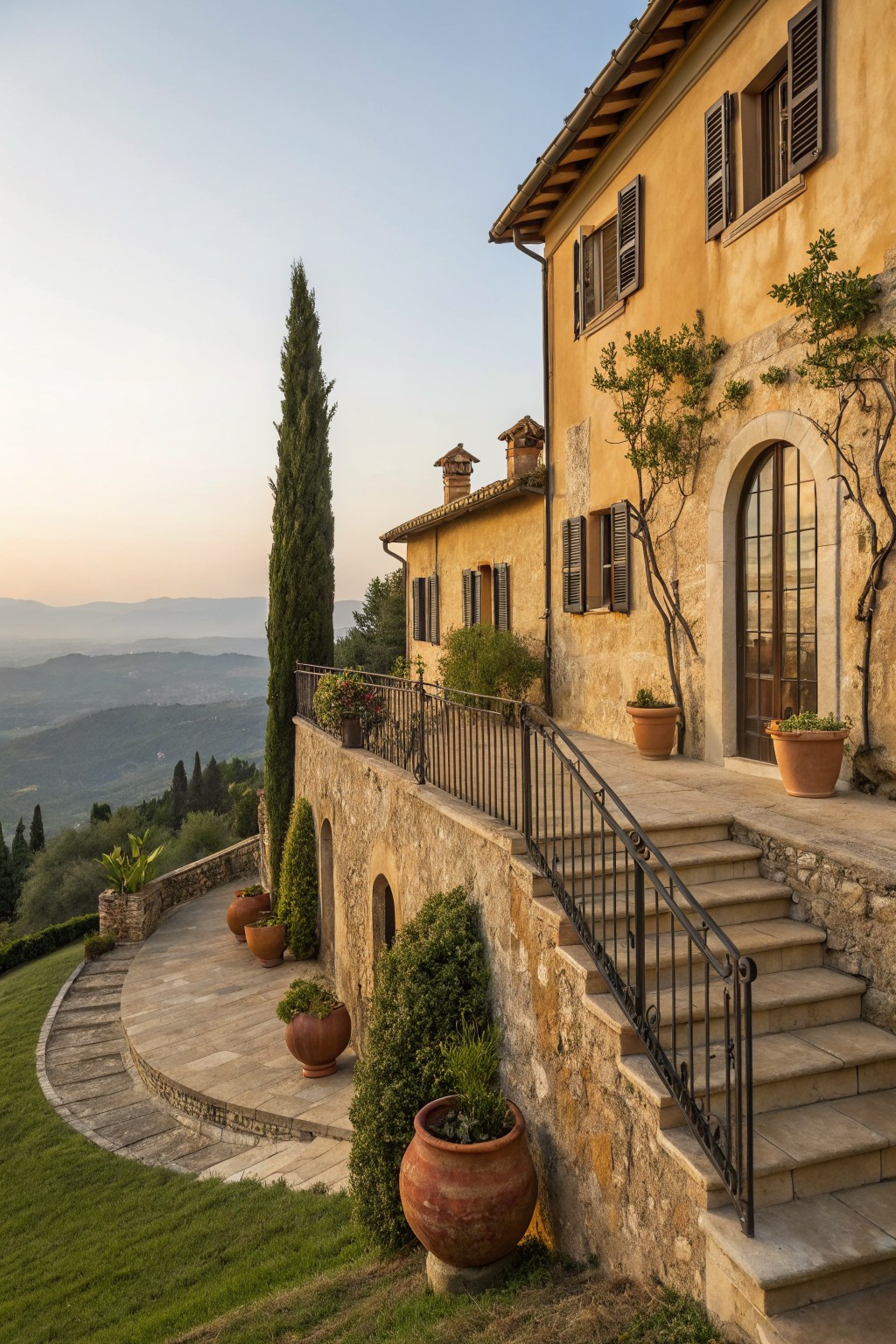
A yellow ochre stucco finish over a rugged stone base gives this house real staying power. The lower stone pulls from the earth around it, while the ochre upper walls catch the light just right. You get that classic Tuscan look without trying too hard. Add a few tall cypresses nearby, and it feels right at home on a hill.
This combo works best on sloped sites where you need terraces anyway. Match the stone to what’s local, then plaster and paint the rest ochre for warmth. Keep pots simple, like those big terracotta ones by the arched door. Skip it on flat ground, though. It shines where levels play into the design.
Wood Slats on Ochre Stucco Facades
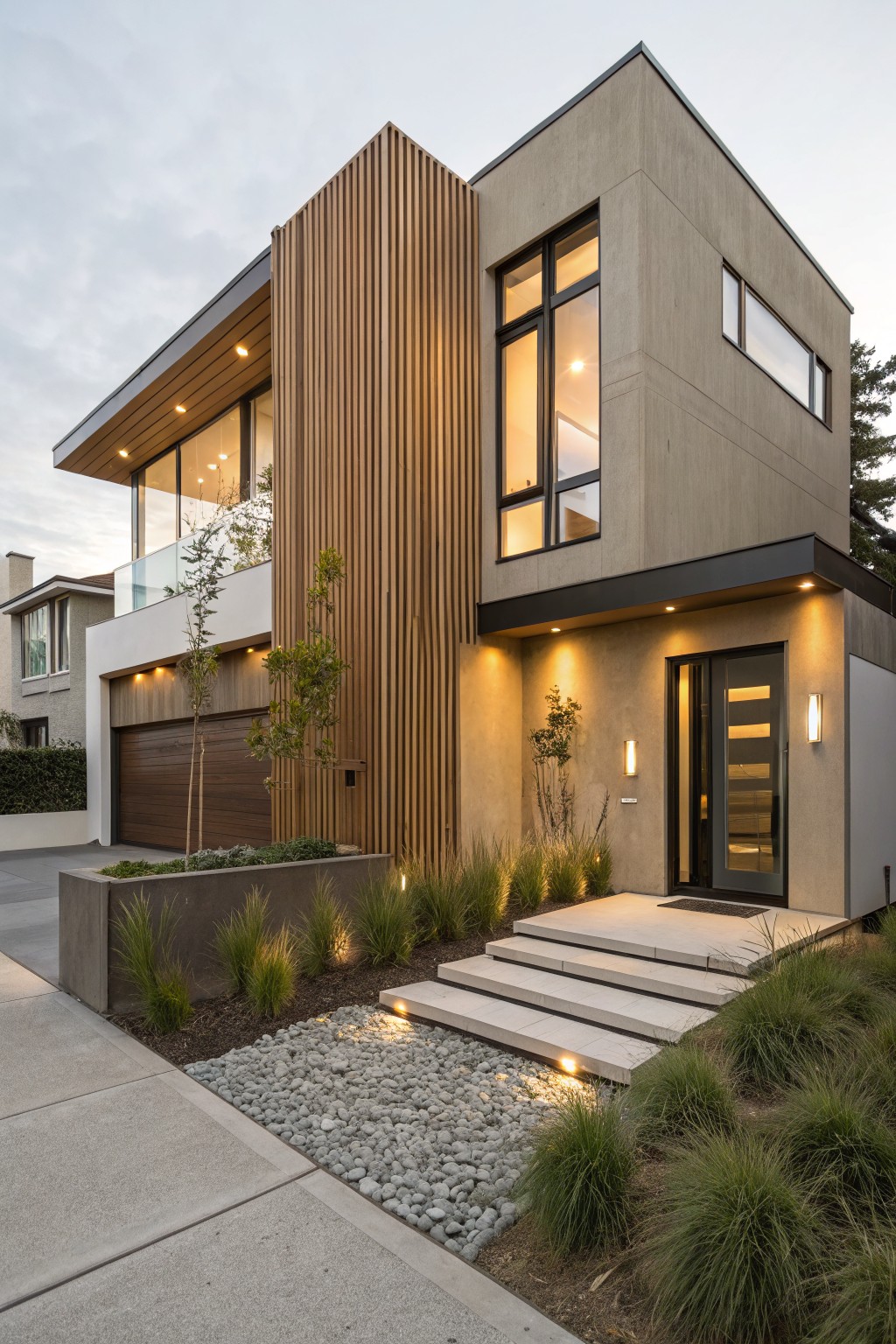
Vertical wood slats running up one corner of this ochre stucco house give the whole front a nice layered look. The warm wood tone picks up the subtle yellow in the stucco just right, making the modern boxy shape feel less stark. It’s a simple way to break up flat walls.
You can pull this off on newer homes or updates to older ones with clean lines. Stick the slats around entries or garage edges, maybe three to four feet wide. Keep the wood natural or lightly stained to match the ochre base… it suits sloped lots with some landscaping nearby.
Warm Ochre Stone Cottage Facade
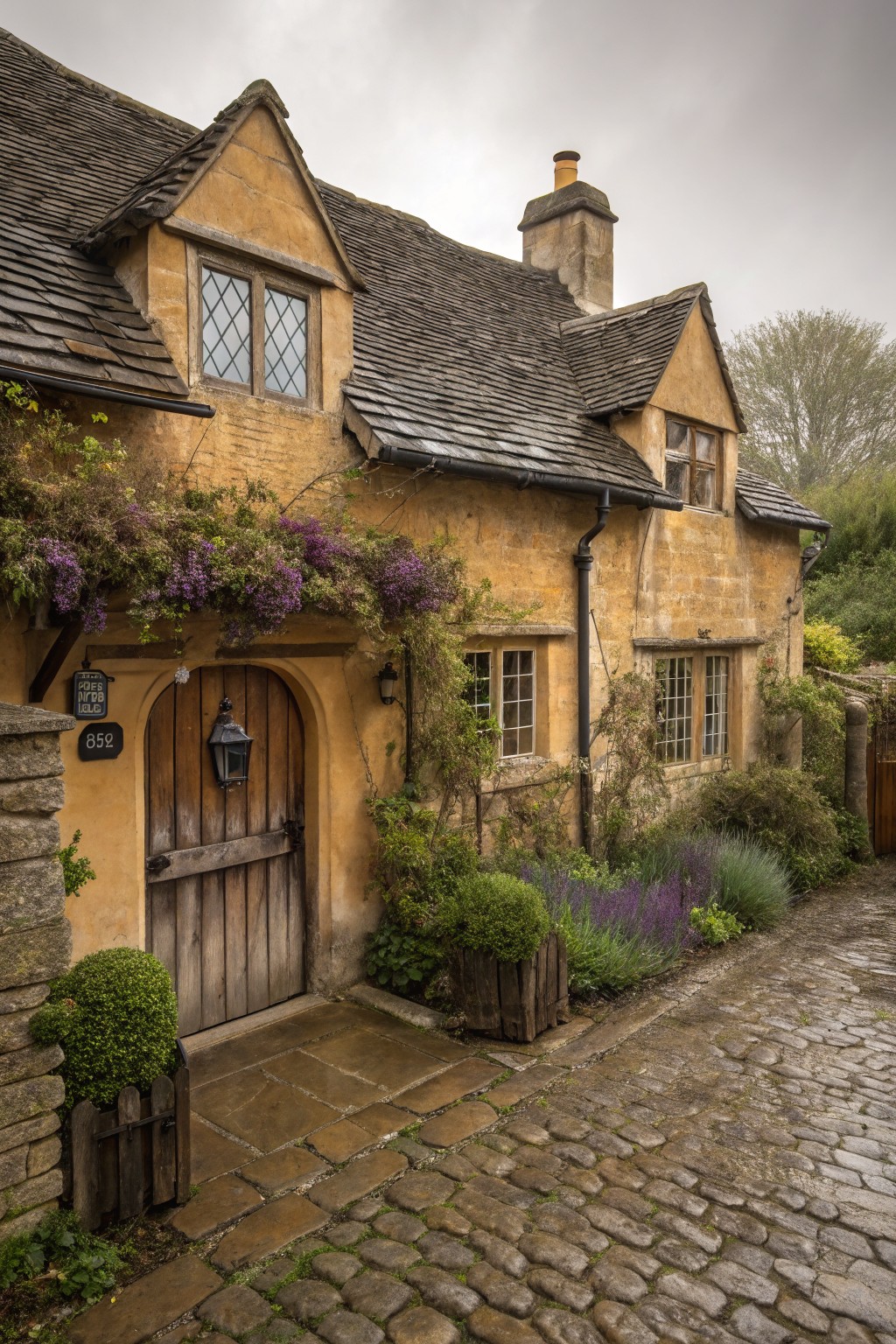
Ochre stone walls like these give a house that deep, earthy warmth that pulls you right in on a gray day. The yellow tones in the stone mix well with the climbing purple flowers draping over the entry. It keeps things feeling lived-in and not too stark.
This look suits older homes or ones you want to give a countryside feel. Paint or render your walls in a similar ochre shade if stone is out of reach. Add vining plants around the door… just keep them trimmed so they don’t hide the architecture. Works best where you have some natural stone paths nearby.
Warm Timber Cladding Adds Natural Depth
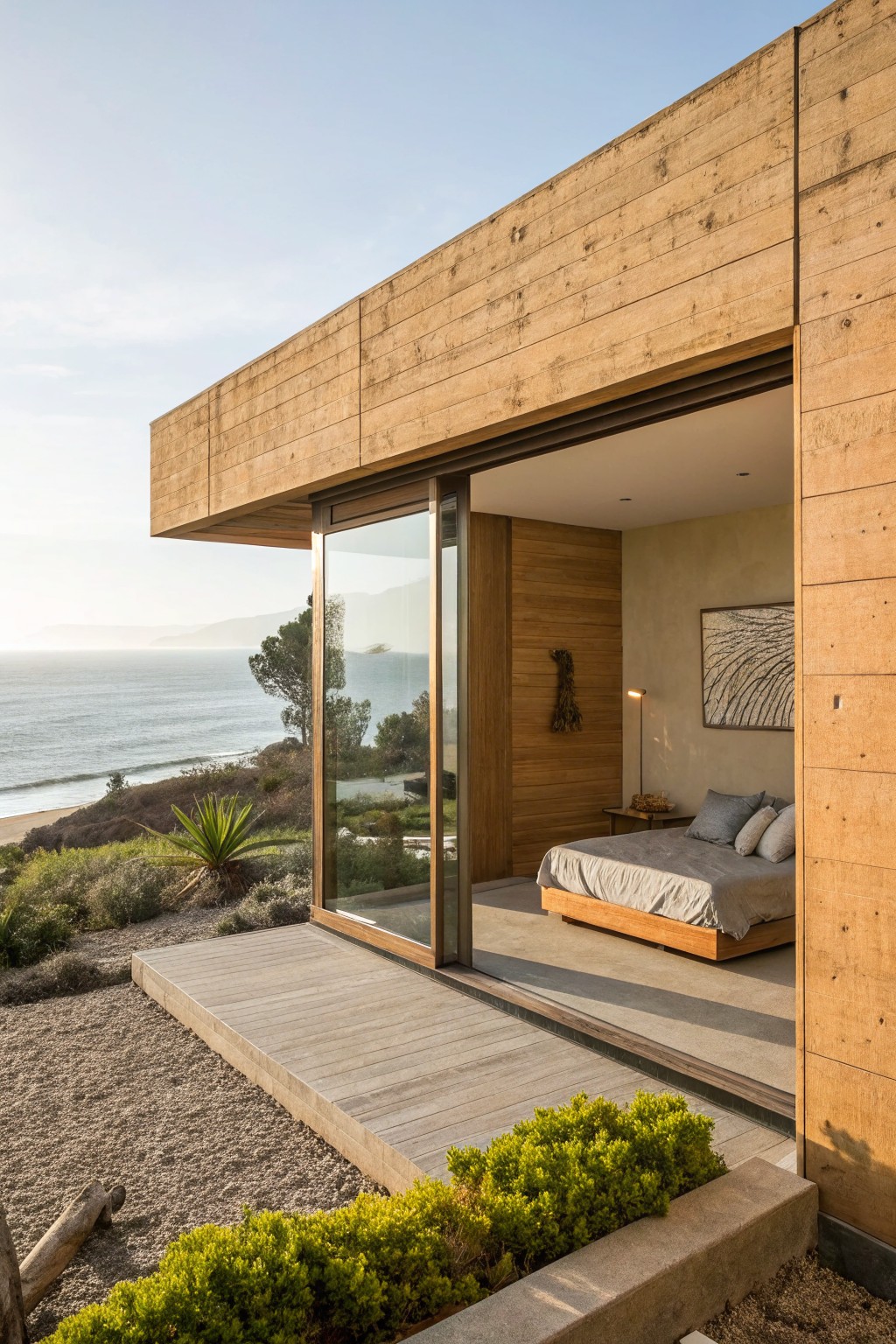
Warm timber cladding like this gives a house exterior real texture and life. The horizontal planks in that rich, earthy tone stand out against the sky and sea, making the whole facade feel grounded and inviting. It picks up on natural surroundings without trying too hard.
This works best on coastal homes or spots with big views, where you want the outside to flow right into indoor spaces. Use rough-sawn cedar or similar on corners and walls, then match the deck material to tie it all together. Just seal it well to handle weather.
String Lights Over the Backyard Patio
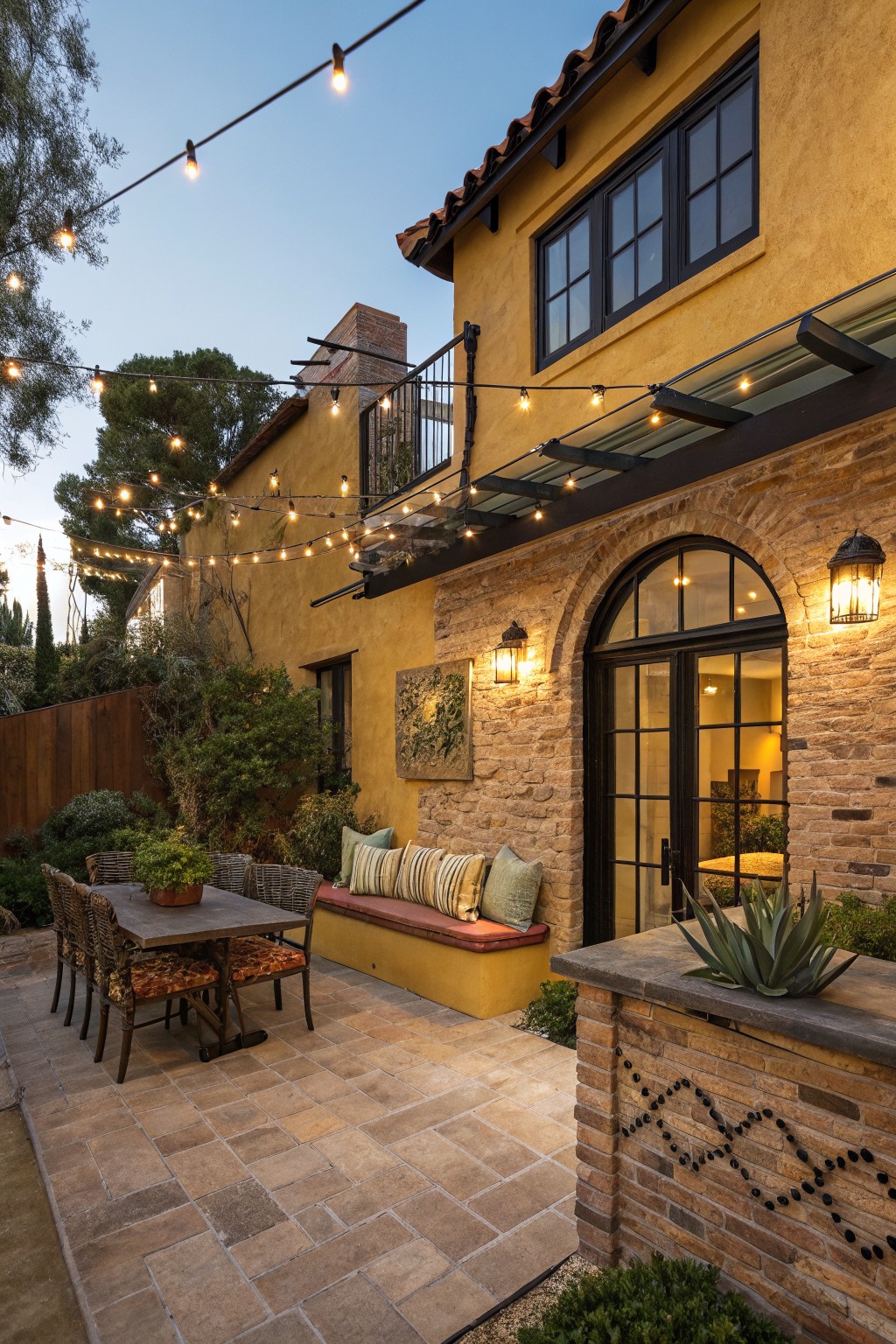
One easy way to make an outdoor spot feel ready for evenings is hanging string lights overhead. Here, they’re draped from the house eaves across to nearby trees, casting a soft glow over the whole patio area. The warm light plays right off the yellow ochre walls, turning a simple seating setup into something you actually want to use after dark. No fancy fixtures needed. Just bulbs that give off that friendly light.
This works best on covered patios or spots with some structure to attach the wires. It’s perfect for homes with ochre or earth-tone exteriors, like Spanish-style places. String them low enough to feel enclosed but high enough not to bump heads. Go for weatherproof LED ones so they last. Skip it if your yard gets crazy windy.
Frequently Asked Questions
Q: How do I test yellow ochre on my house before painting the whole thing?
A: Paint big sample boards at least two feet square with a couple shades. Hang them on different sides of your house and watch how they look from the street at various times of day. You’ll catch the true warmth that way.
Q: What trim colors make yellow ochre exteriors shine?
A: Pair it with deep charcoal gray or navy trim to add punch and depth. Those shades hug the ochre without overpowering it. Skip stark white; go creamy instead.
Q: Does yellow ochre fade fast in sunny spots?
A: Choose premium exterior paint loaded with UV blockers. The earthy base stays rich longer than brighter yellows do.
Q: Can yellow ochre work on a mid-century modern house?
A: Paint it on and watch flat panels pop with cozy depth. Stone or wood accents ground it perfectly…
