

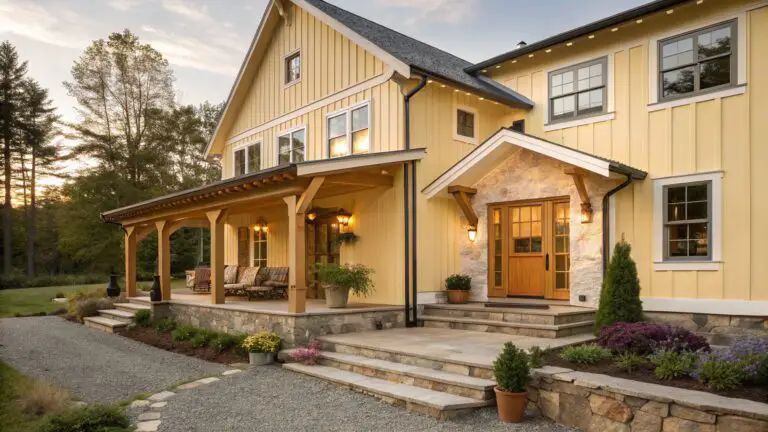
I’ve noticed how a warm yellow exterior instantly lifts curb appeal, especially when wood accents add that grounded, natural texture to the facade.
The combo plays well with different rooflines and entry details, making the house read as approachable from down the street.
One house near me uses cedar trim on yellow siding, and it holds up nicely through seasons, which got me thinking about swapping out our faded paint.
These ideas balance bold color with wood’s warmth so the overall look stays fresh without feeling forced.
A few stand out for real-life tweaks.
Warm Yellow Siding with Wood Porch
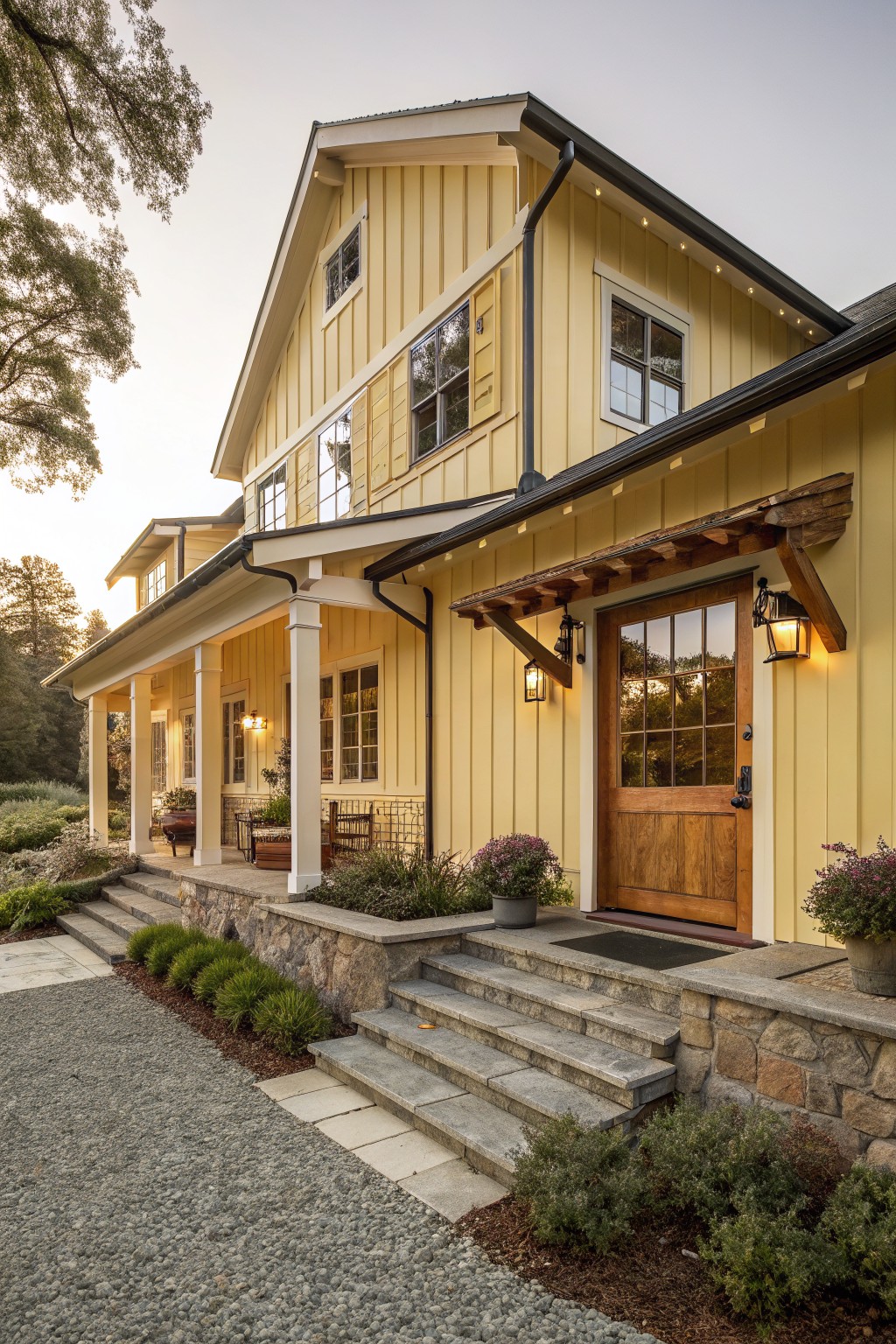
A soft yellow board-and-batten siding gives this house a gentle glow, especially at sunset. The wood porch pulls it together, with beefy columns and a heavy timber door that look like they’ve been there forever. It’s a simple way to mix color and texture for that natural, lived-in vibe.
Try this on a two-story home with some land around it. Let the wood weather to gray over time, it only gets better. Stone steps at the entry keep things sturdy. Skip bold trim colors, stick to the basics so the yellow stays the star.
Warm Yellow Shingles Meet Rustic Wood Entry
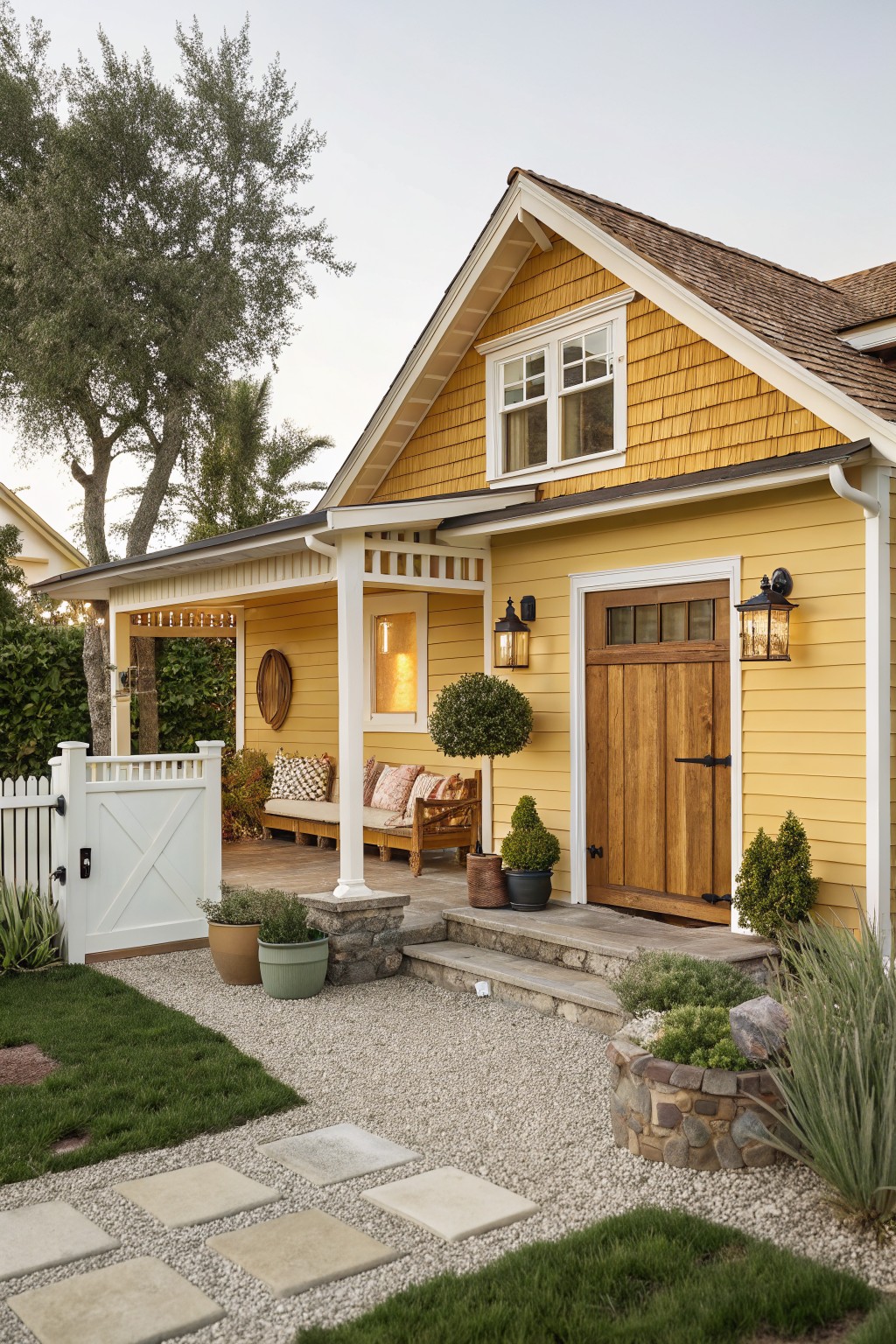
A soft buttery yellow on shingle siding gives this Craftsman house a sunny, lived-in feel that pulls you right up to the front. The dark wood door with its simple paneling stands out against the yellow without clashing, and the porch posts echo that wood for a natural flow. It’s a straightforward way to mix color and texture for curb appeal.
Try this on a bungalow or cottage where you want warmth that lasts through seasons. It suits milder climates best, with gravel paths and a few pots keeping things low fuss around the entry. Just make sure the wood finish matches your door hardware to avoid a mismatched look.
Warm Sandstone Base with Vertical Wood Siding
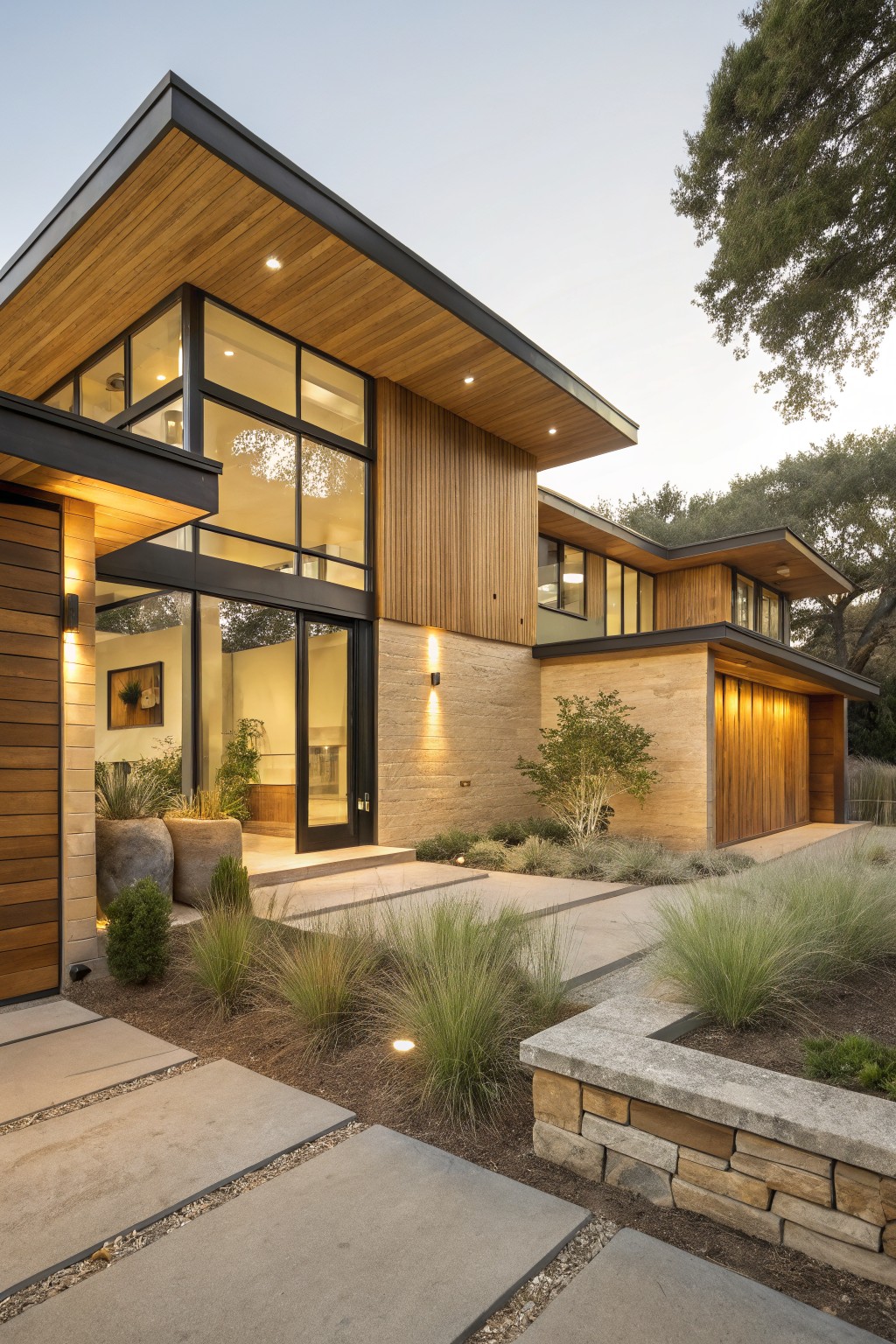
Warm sandstone forms the sturdy base here, paired with vertical cedar siding that runs up the taller walls. Those wood panels add texture and a bit of rustic warmth to what could otherwise feel too sleek. Large glass windows fit right in, letting the inside connect to the outdoors without losing that grounded look.
This setup works best on modern homes in sunny spots, like California hillsides. Use local stone to keep costs down and match the landscape. Skip busy details around the entry, just a simple path and low plants. One thing, make sure the wood gets a good sealant against weather.
Yellow Shingle Siding with Arched Entry
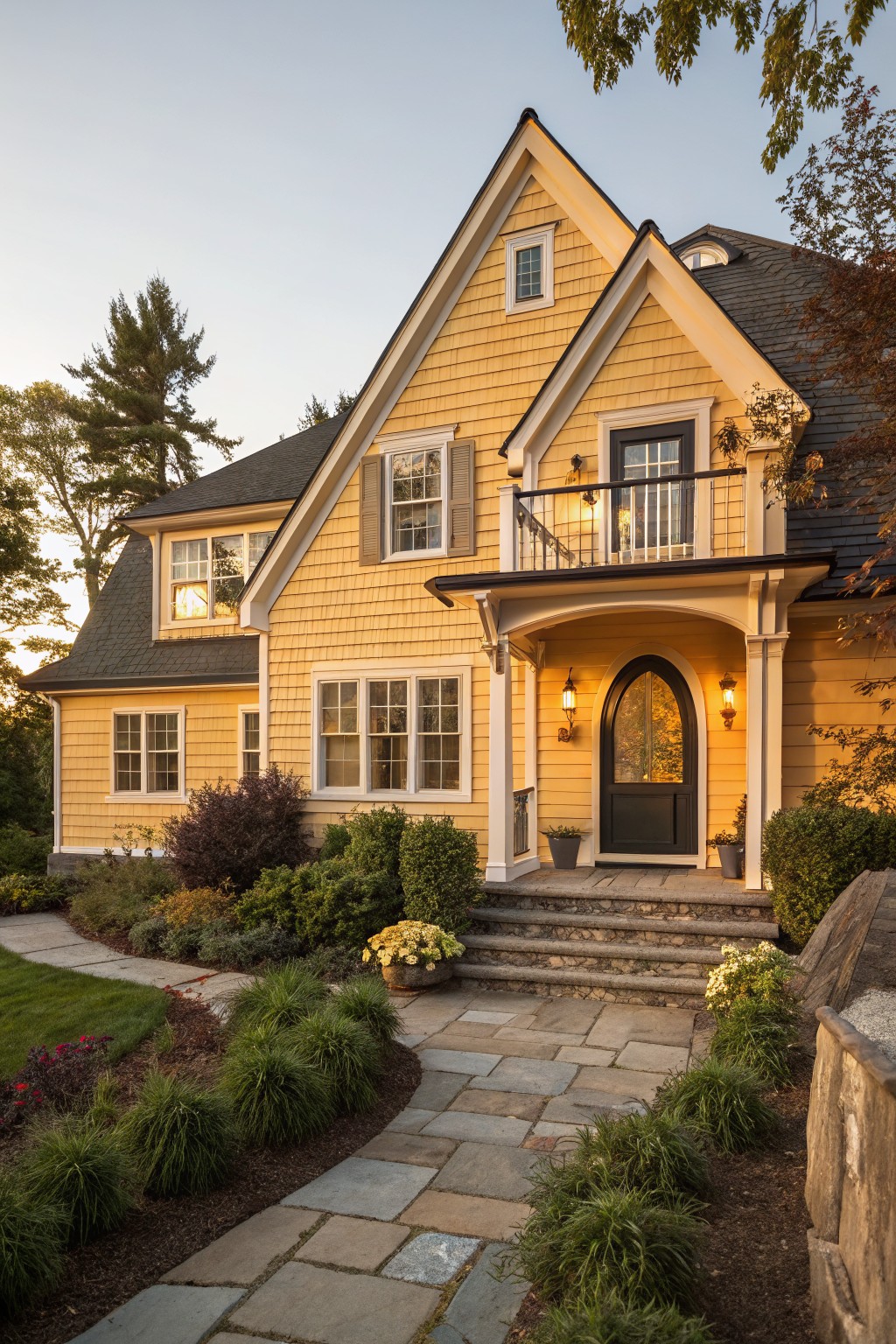
Warm yellow shingles like these wrap the house in a soft glow that feels right at home in a wooded spot. The dark wood trim around the windows and that arched entry door pull it all together. It keeps things looking natural and settled, not too showy.
Try this on a two-story colonial or cape style house where you want curb appeal that lasts through seasons. Stone steps leading up help with the transition from yard to door. Just make sure the yellow shade picks up some tree tones nearby so it blends instead of jumps out.
Warm Yellow Facade with Wood Entry Details
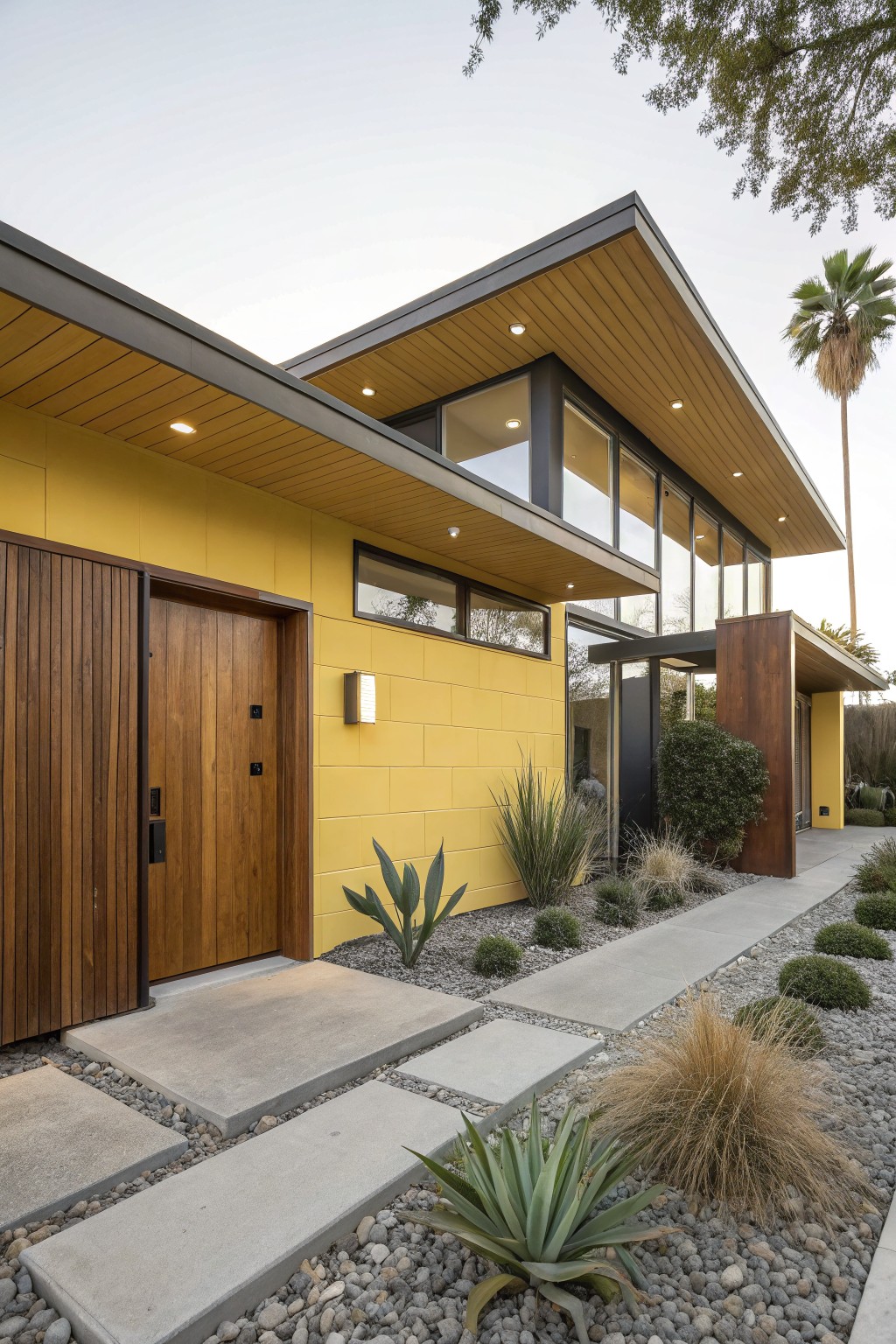
A warm yellow covers the stucco walls here, setting off the vertical wood slats around the front door and the plank ceiling overhead. That wood brings in some natural texture right where people notice it most, at the entry. It keeps the look modern without feeling stark, and the yellow gives off a sunny feel even on cloudy days.
This setup works well on ranch-style or contemporary homes in sunny spots like the Southwest. Use darker woods like walnut or cedar to stand up to the weather, and add a simple path with gravel and succulents to tie it together. Just make sure the yellow paint handles fading from full sun… test a sample first.
Arched Entry with Wrought Iron Gate
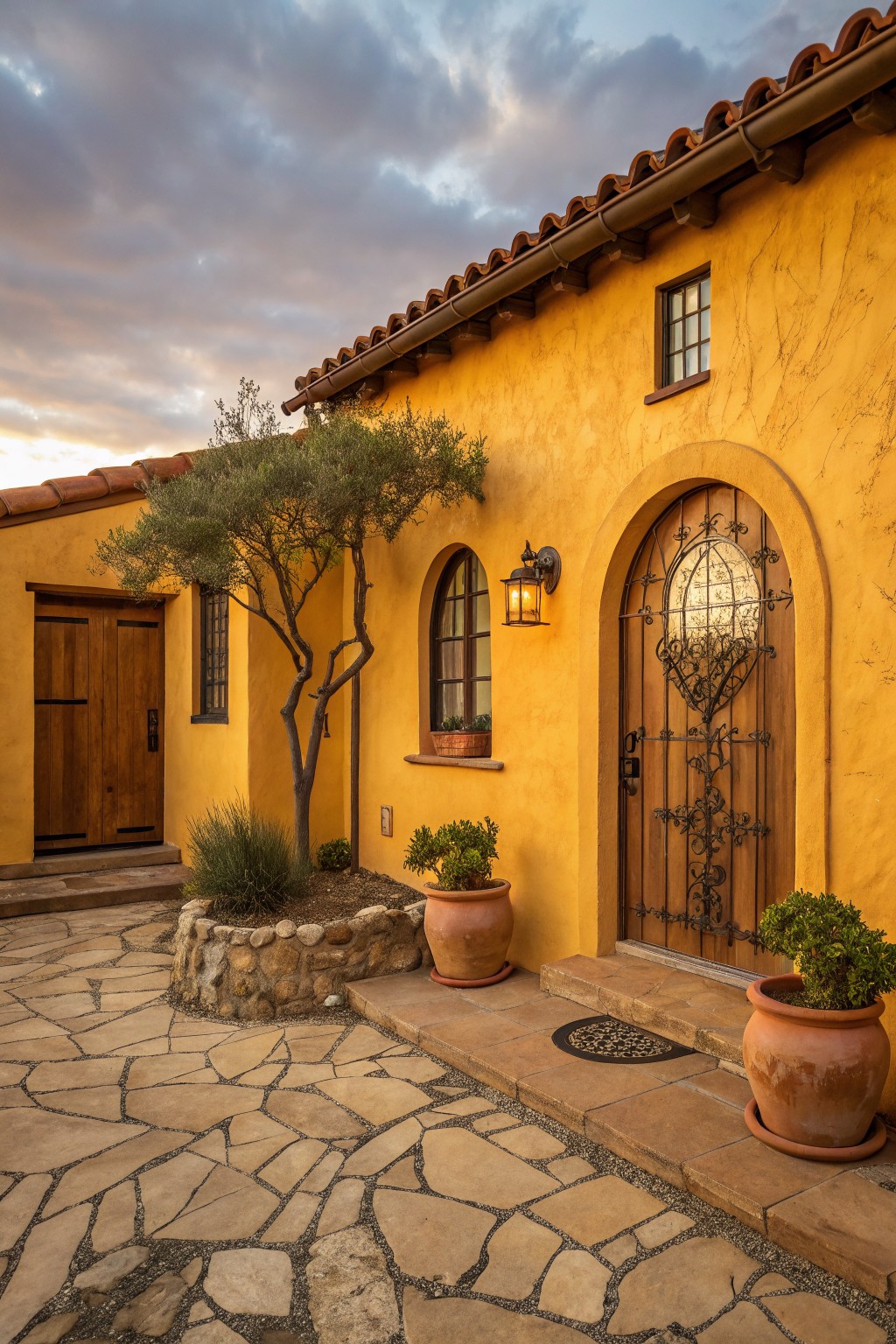
A warm yellow stucco wall sets off this arched entry perfectly. The wrought iron gate adds a bit of pattern and strength without overpowering the soft yellow color. Behind the gate sits a solid wood door that ties in natural wood accents nicely.
This setup suits homes in dry climates or Southwestern styles where you want some old-world charm up front. Keep pots with simple greenery around the steps to make it feel lived-in. Just make sure the iron gets a coat now and then to avoid rust.
Warm Yellow Siding in a Forest Setting
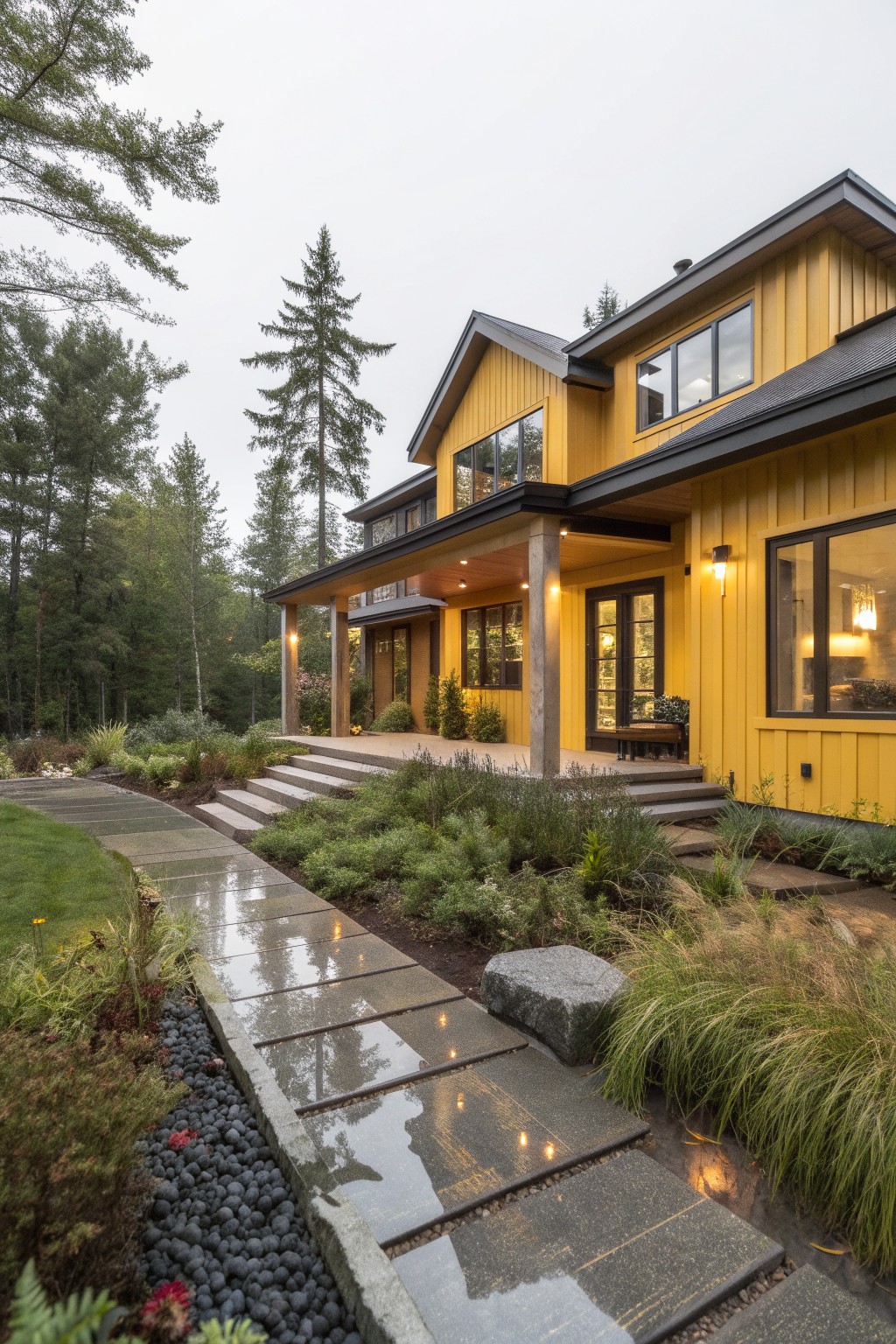
A warm yellow siding like this one turns heads when your house sits among tall evergreens. It picks up the soft light in the woods and makes the place feel alive without overpowering the trees. Here the dark trim around the windows and the rough wood posts on the porch keep things grounded and add that cabin feel folks love.
This look works best on sloped sites or wooded properties where bold color helps the house peek through the greenery. Go for clapboard siding in a muted yellow tone, then mix in black metal roof and natural wood for the entry area. It suits modern farmhouses or cabins, but watch the sun exposure, yellow can fade if it’s too bright all day.
Warm Yellow Siding with Wood Balconies
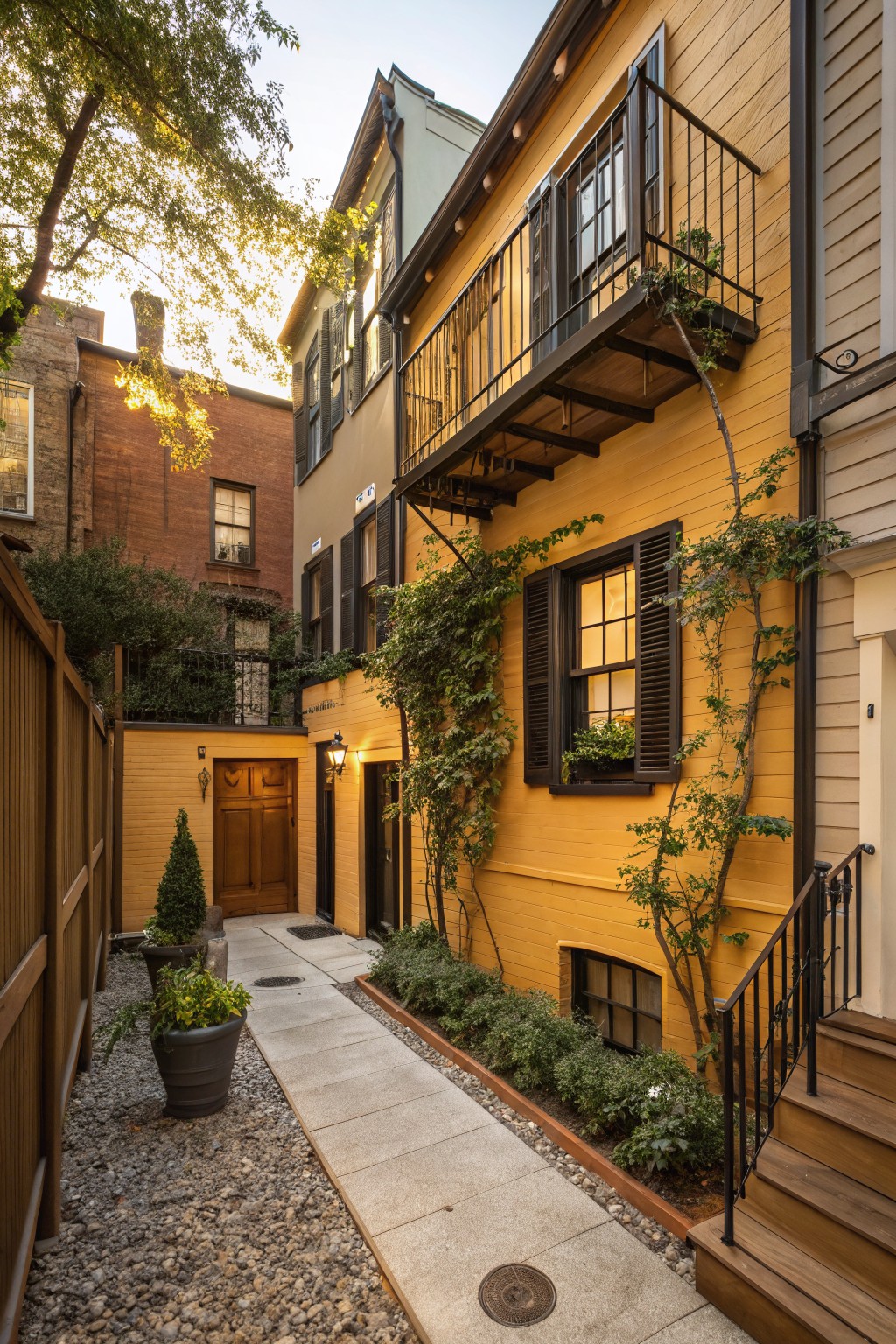
Warm yellow clapboard siding gives this house a sunny glow that feels right at home in a tight urban spot. The wood balconies and dark shutters pull it together without overdoing things. Vines climbing up the side add that natural touch that keeps it from looking too plain.
You can pull off this look on row houses or narrow lots where side entries matter. Pair the yellow with simple wood trim and let plants grow in. It suits older neighborhoods best. Just keep the yellow from going too bright, or it might clash with neighbors.
Wood Porch Framing on Yellow Siding
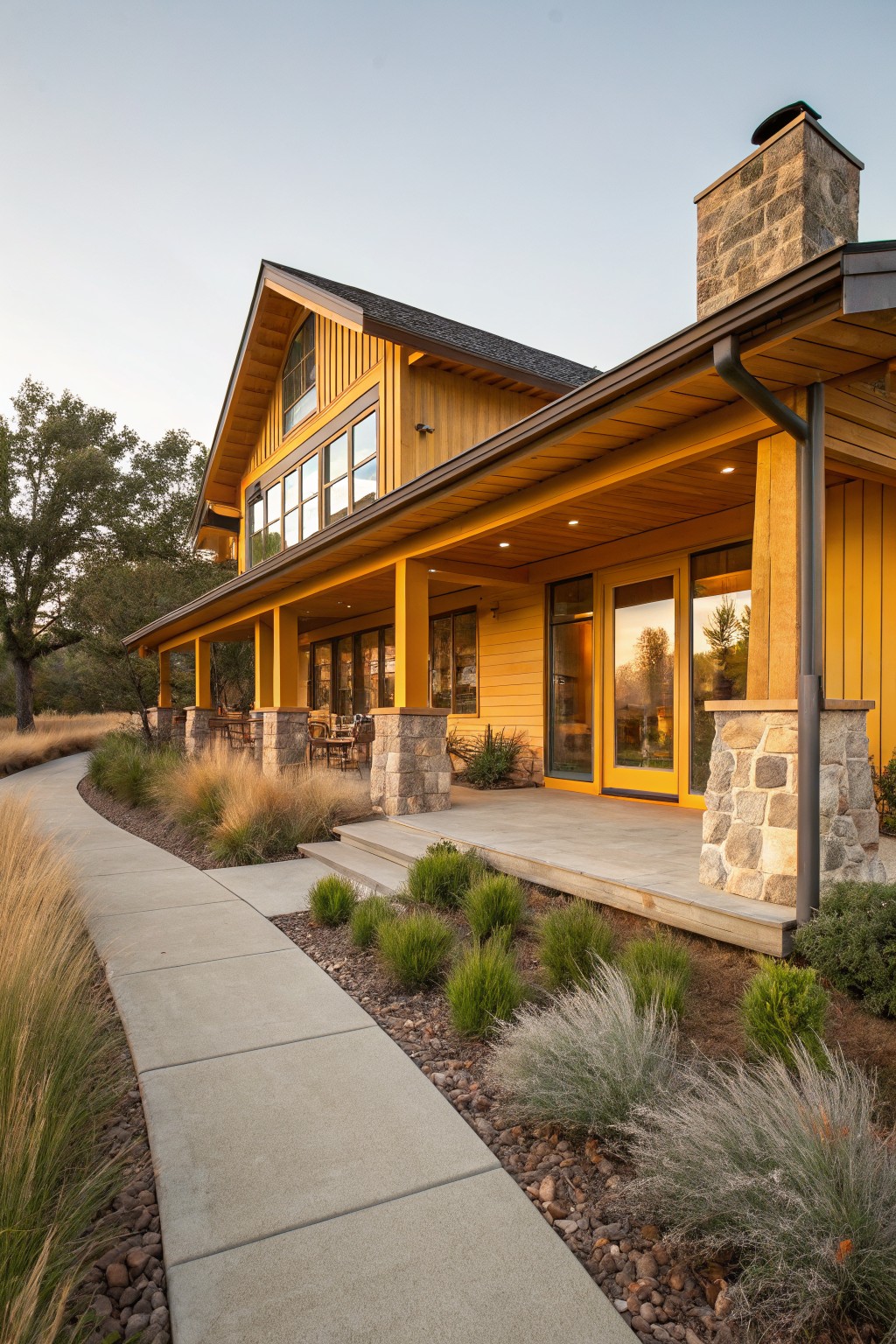
A wood porch like this one frames the warm yellow siding just right. The exposed beams overhead pull your eye along the front, and the yellow boards keep things light against the trees nearby. Stone at the post bases adds a solid base without much fuss.
This look fits cabins or ranch homes in dry, open country. Go for rough-sawn wood on the porch to match the siding grain. Skip it on tight urban lots, the porch needs room to breathe for real use.
Warm Yellow A-Frame Cabin Exterior
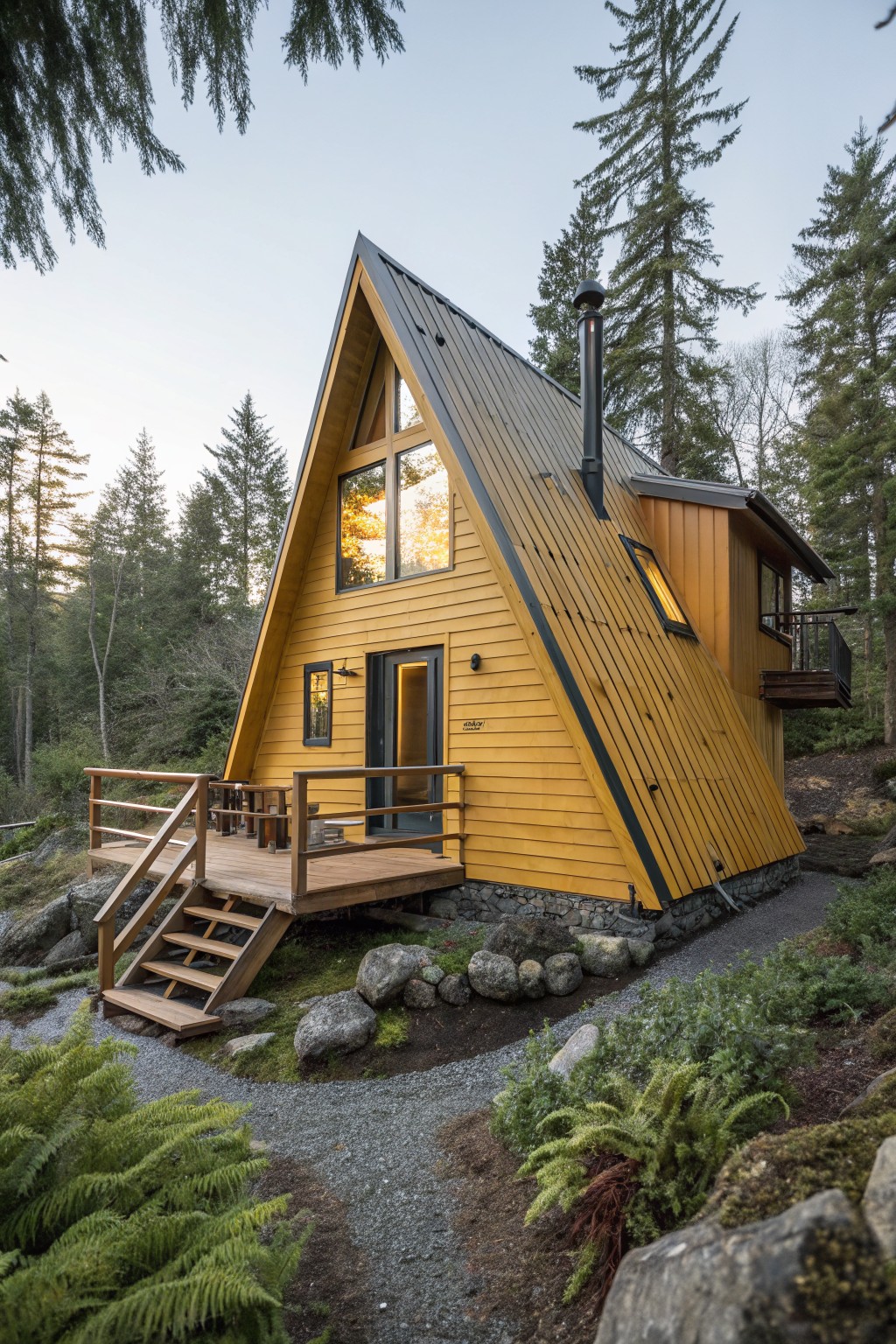
A simple A-frame cabin like this one gets a lot from its warm yellow siding. The color picks up the late sun glow through the trees and makes the house feel right at home in the woods. Black metal roofing adds a clean edge up top, while wood steps and deck keep things natural and easy to step into.
This look works best on sloped sites with evergreens nearby, where the yellow draws your eye without clashing. Go for clapboard siding in a muted yellow tone, and use darker trim around windows and doors. It suits vacation homes or small family cabins. Watch the roof pitch though. Too shallow and it loses that classic shape.
Warm Yellow Shingles with Wood Garage Doors
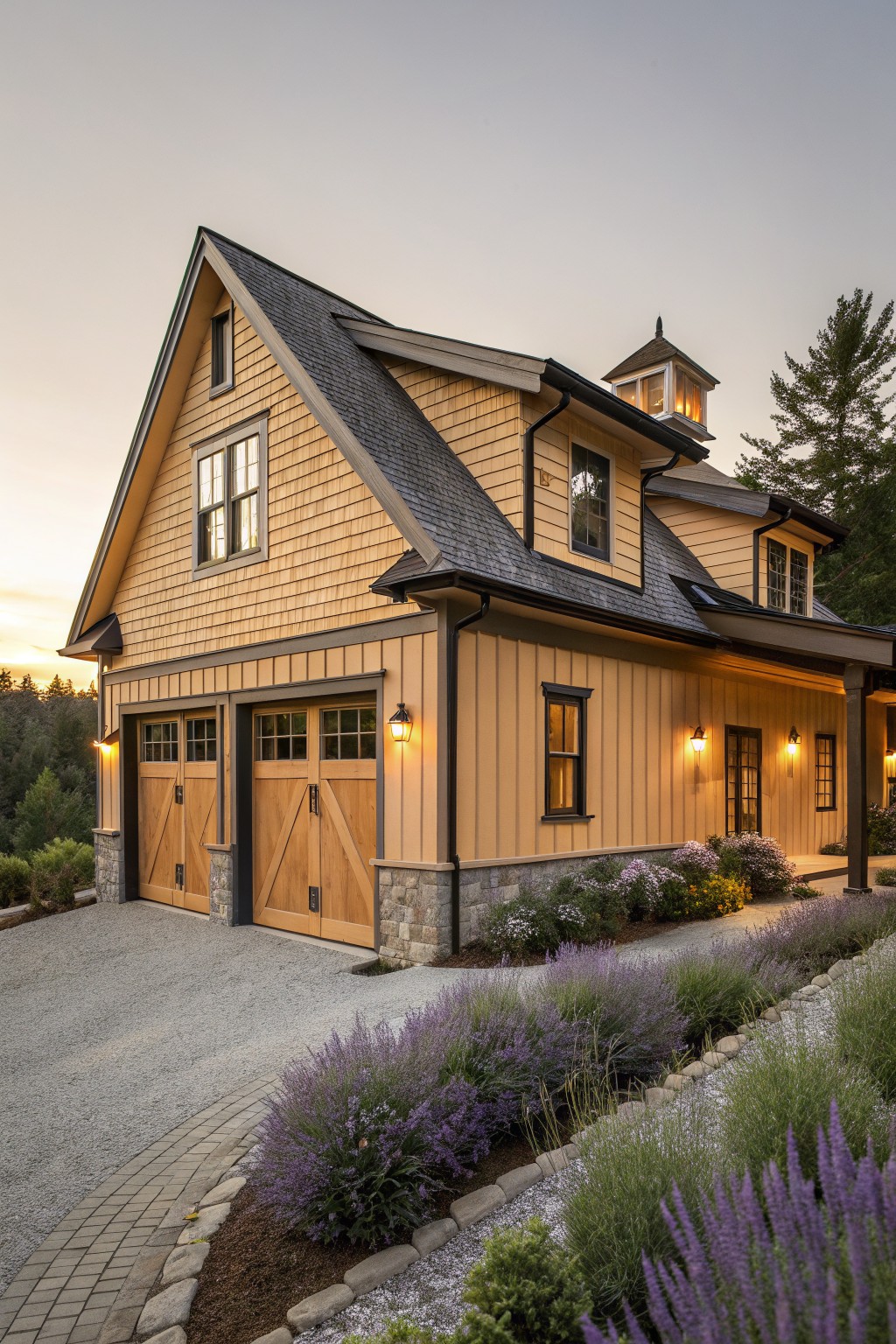
This setup takes warm yellow cedar shingles across the garage and side walls, then adds sturdy wooden doors right in the middle. The yellow has a soft, aged look that pulls in the surrounding trees without screaming for attention. Those oak-style doors bring real texture too. It all feels settled and natural.
Try it on homes with a view or wooded lots where you want the house to nestle in. Stone at the base keeps things sturdy, like here. It fits shingle-style or cabin builds best. Seal the wood each year or it fades fast.
Warm Yellow Board and Batten Siding
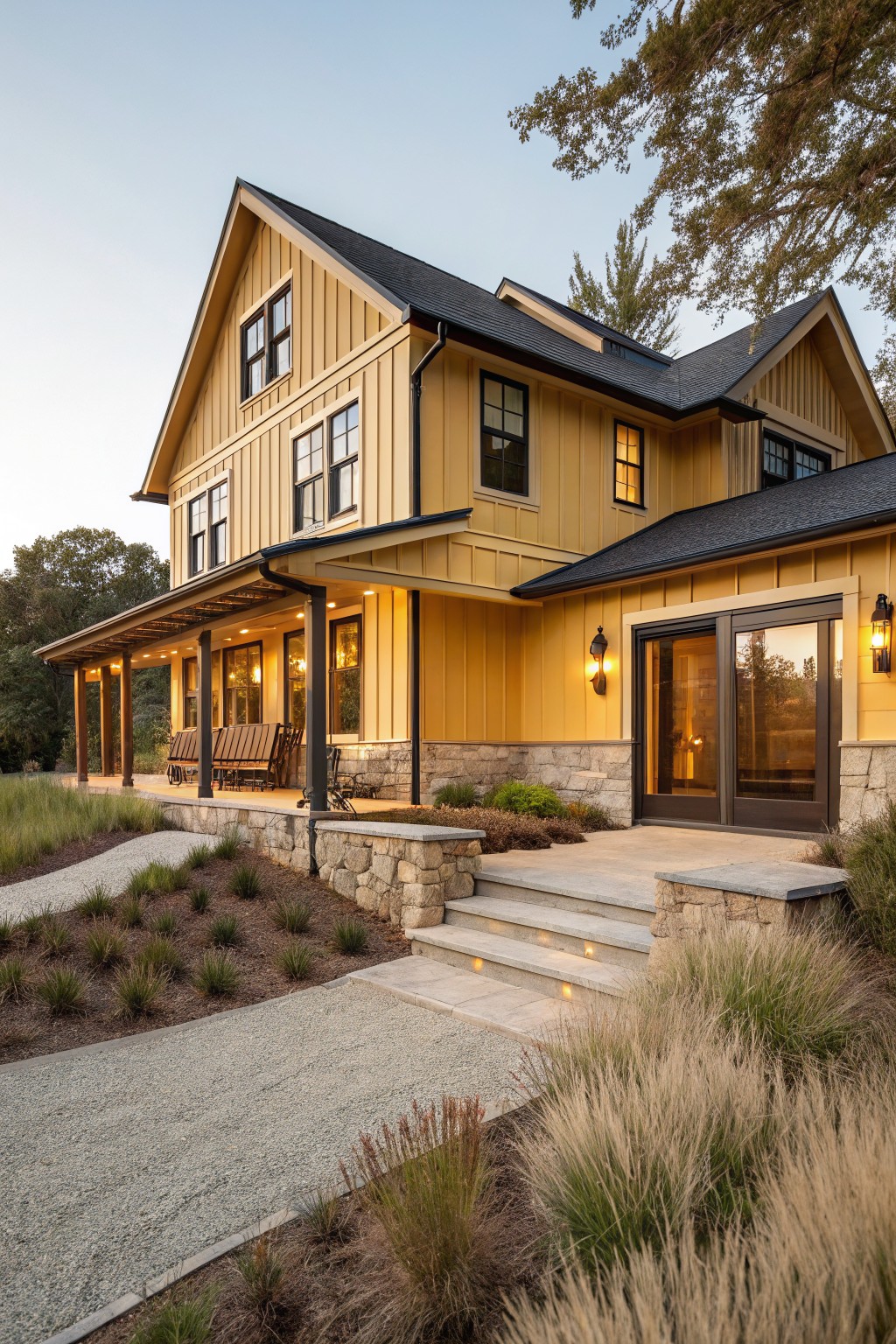
This house uses a soft yellow board-and-batten siding that gives it a friendly, natural feel right from the street. The vertical lines in the siding add some height without making things feel too boxy, and they pair nicely with the dark roof overhead. It’s the kind of color that picks up on fall leaves or sunset light, keeping the look grounded in the outdoors.
You can pull this off on a ranch or two-story home where you want curb appeal without bright whites or grays. Stick to earthy accents like stone at the base and simple porch posts to keep it from getting too busy. Just make sure the yellow has enough warmth, or it might look flat in shady spots.
Wood Pergola Frames Porch Entry
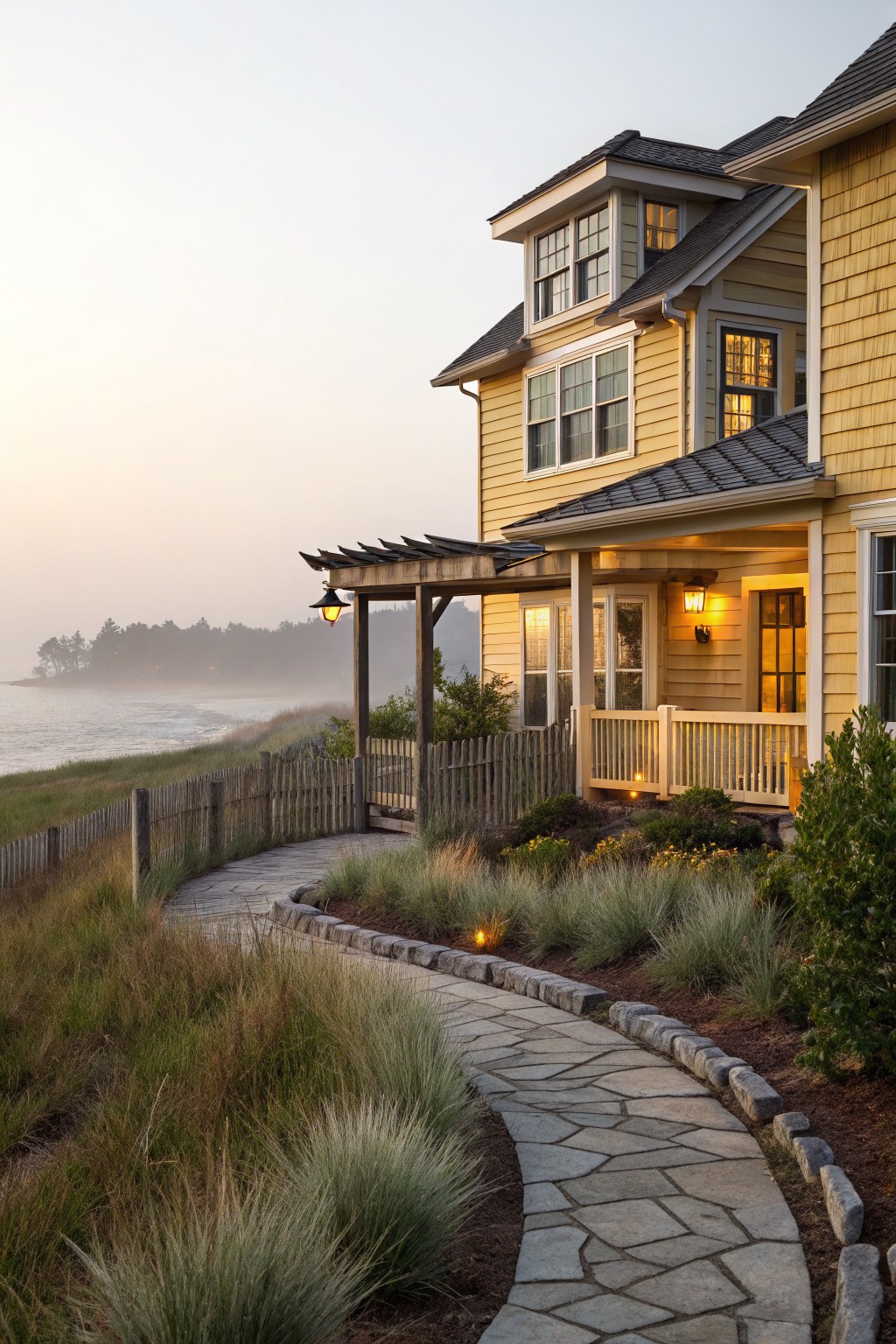
A wood pergola like this one sits right over the front porch on a warm yellow house. It gives the entry a natural frame that pulls your eye right in, especially with the soft glow from hanging lanterns at dusk. The rough wood plays off the yellow siding without overpowering it. That mix keeps things feeling casual and tied to the outdoors, perfect for spots near water or woods.
You can add one like this to most any porch setup, as long as it’s raised a bit off the ground. Go for weathered cedar or reclaimed timber to match the beachy vibe. It works best on homes with light siding colors. Just make sure the posts are sturdy against wind. Keeps the space open yet defined.
Warm Yellow Cedar Siding on Modern Box Houses
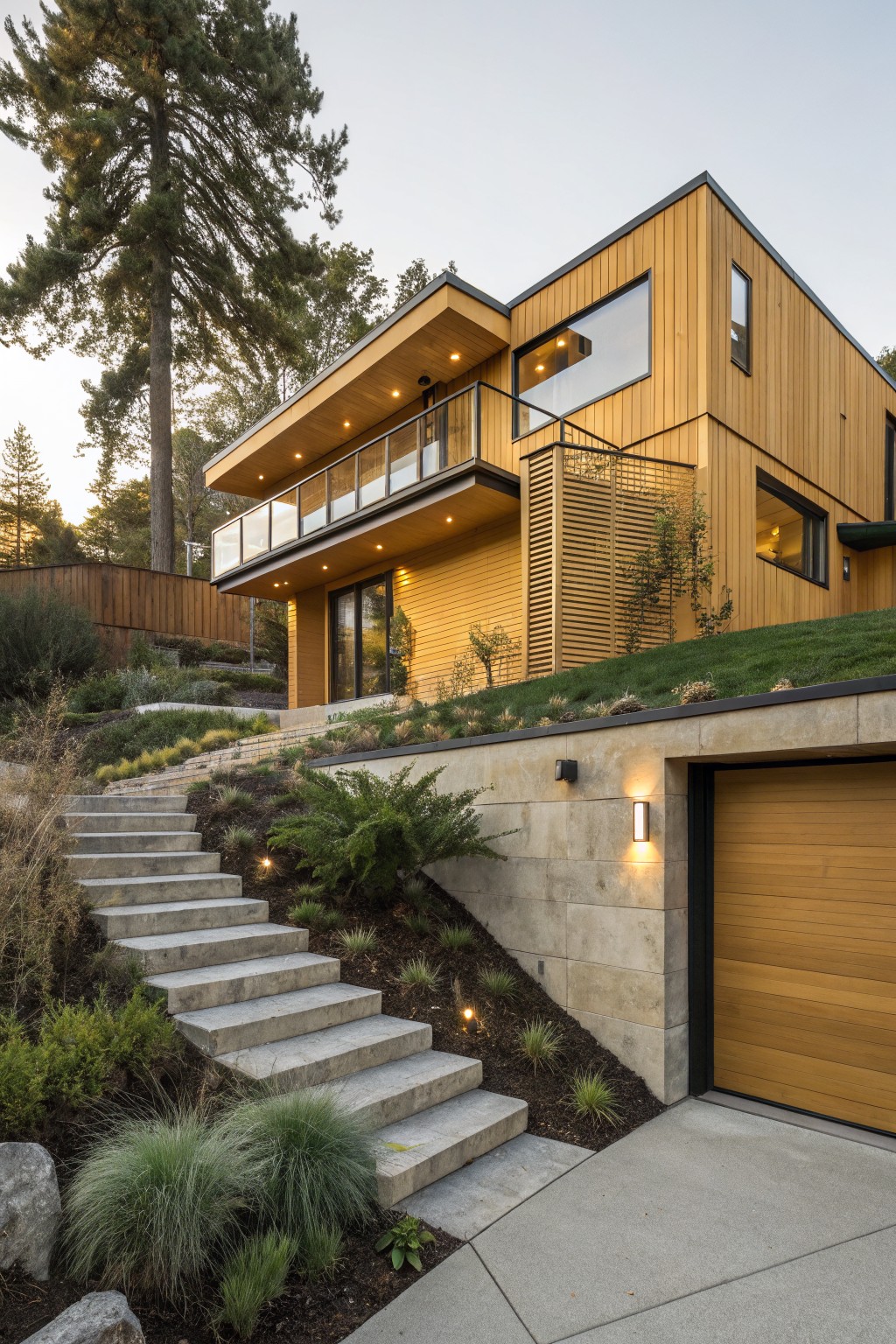
Warm yellow cedar siding wraps this boxy modern home nicely. It pulls in the golden light from the trees around it and keeps the look from feeling too cold or boxy. Black window frames and railings add some sharp contrast without overdoing it.
Try this on a sloped site where you have stairs leading up to the door. The wood ties right into the landscape, and a matching garage door down below keeps things simple. It suits wooded spots best, especially if you want that natural feel on a clean design.
Warm Yellow Siding on a Barn House
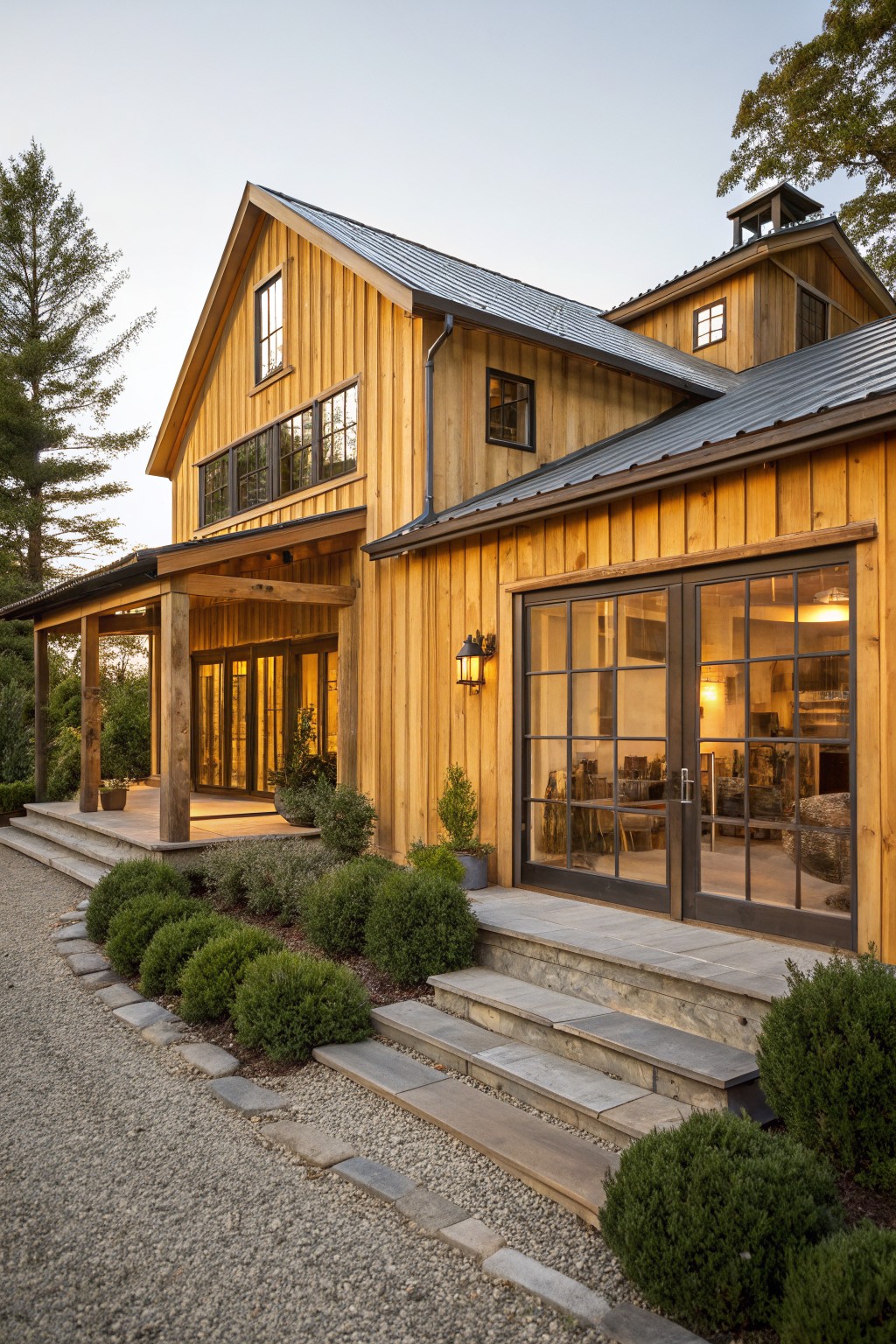
Warm yellow vertical siding wraps this barn-style house in a natural glow that feels right at home in the woods. The board-and-batten boards run straight up, giving the facade clean lines and a bit of shadow play. Large glass doors on the porch side pull in light and make the entry welcoming without much fuss.
Try this on a two-story home with a simple gable roof, especially if you’re staining cedar planks to that soft yellow. It suits wooded spots or rural edges where you want cozy curb appeal that ages well. Just pair it with a darker metal roof to keep things from washing out, and add boxwoods at the base for low upkeep.
Warm Vertical Wood Siding for Natural Facades
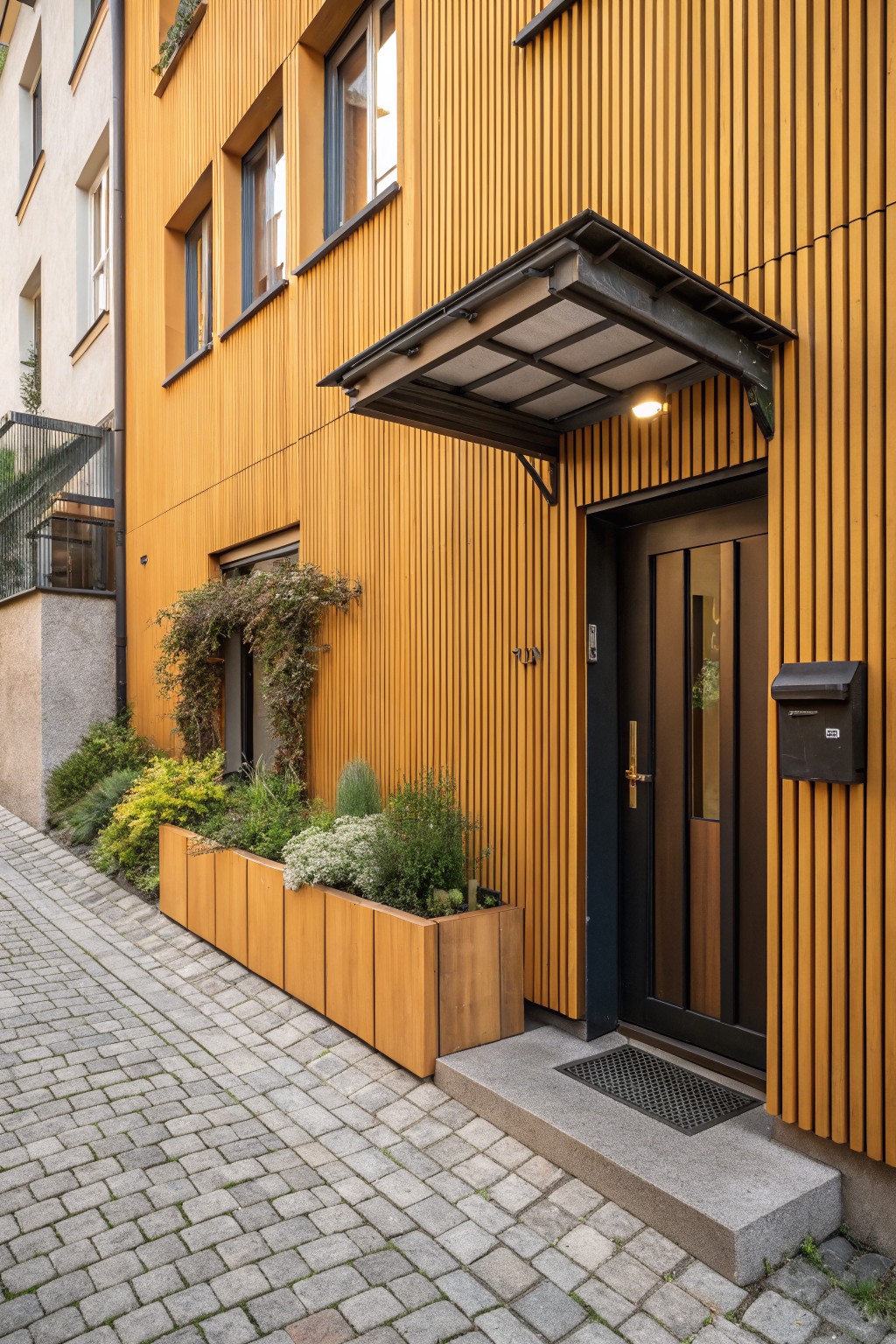
Warm vertical wood siding like this turns a simple house front into something that feels alive and welcoming. The soft yellow tones catch the light just right, making the place look settled into its spot without trying too hard. Paired with a dark modern door, it keeps things fresh while the wood texture adds that natural pull.
This works best on townhouses or row homes where you want curb appeal without big changes. Go for cedar or similar that weathers well, and keep plantings low around the base to let the siding shine. Watch the maintenance though… it needs oiling now and then to hold the color.
Yellow House with Wood Porch Posts
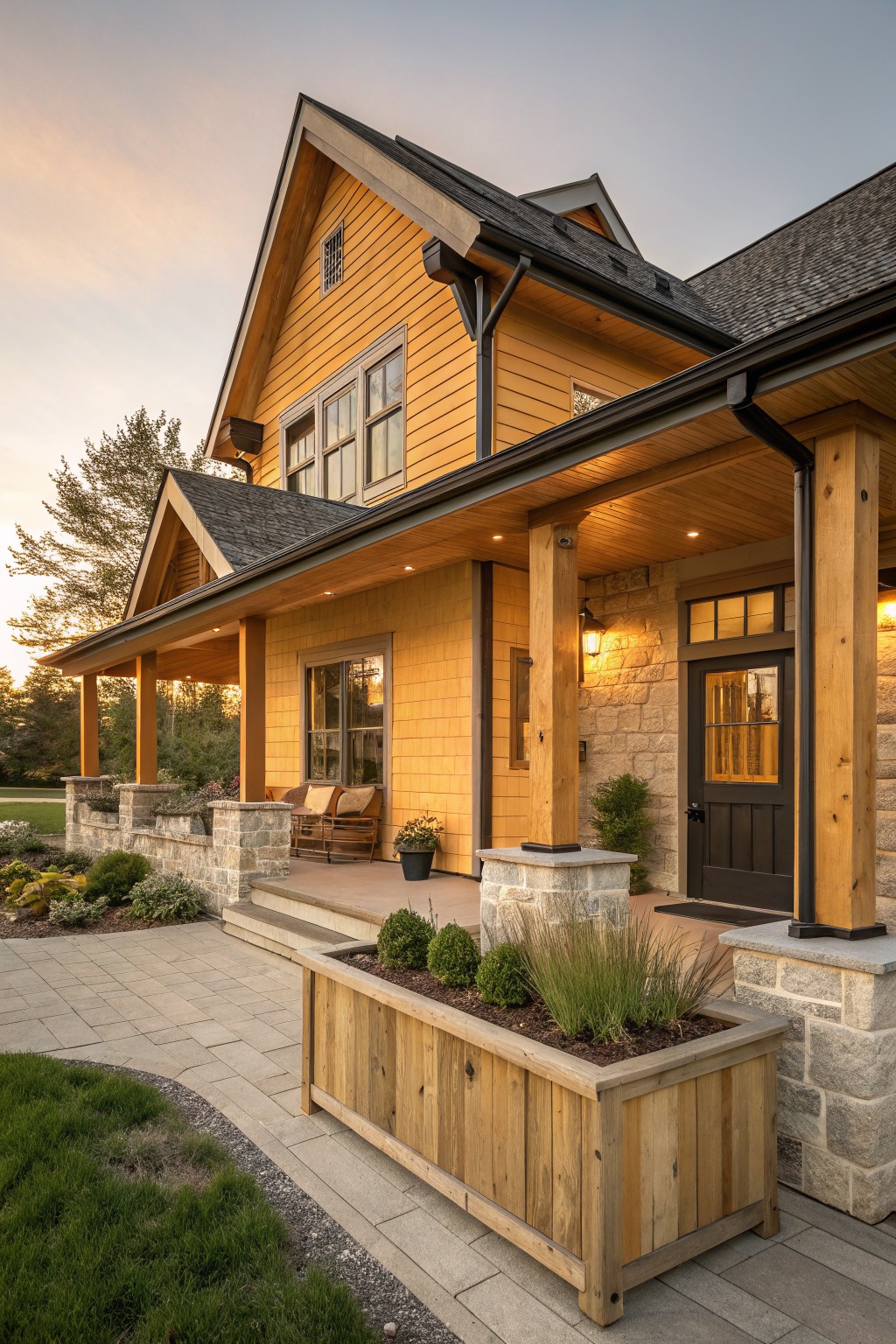
A warm yellow siding like this one gives the house a sunny, approachable feel right from the street. The thick wood posts on the porch pull it together, adding that natural touch without overpowering the color. Stone at the base keeps things grounded, especially with the dark roof overhead.
This setup works best on homes with some land around them, maybe in a rural spot or wooded neighborhood. Go for rough-sawn timber on the posts so they age into a nice patina. It suits craftsman or cabin styles, but watch the scale, the porch needs room to breathe.
Yellow House with Wood Porch Canopy
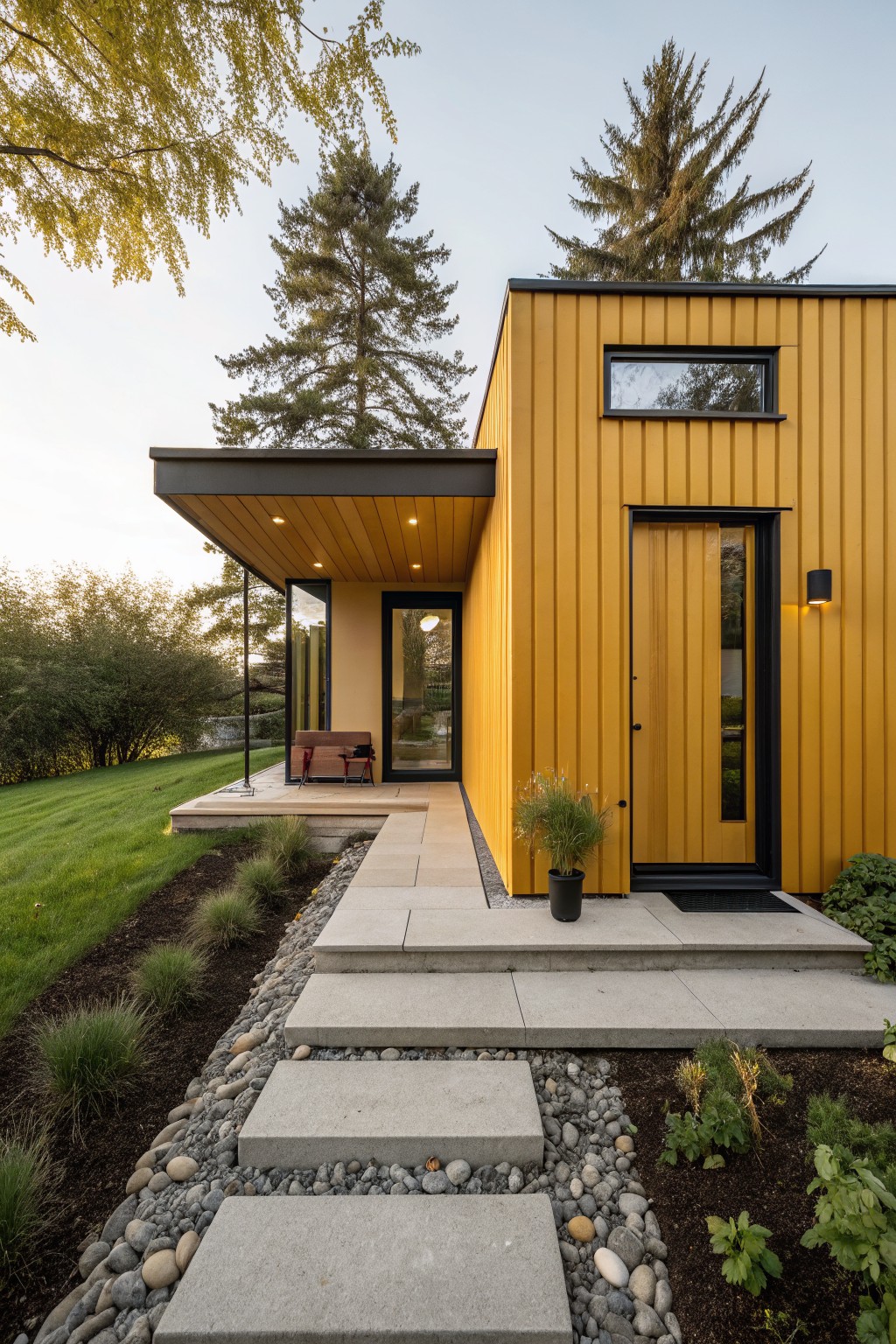
A warm yellow siding covers this compact house, paired with a simple wood canopy that stretches over the entry door. The dark frames around the door and window keep things sharp, while the wood brings in that natural feel right at the front. It makes the place look welcoming without trying too hard.
This setup fits smaller homes or backyard studios in leafy spots. Stick to clean lines and one strong color like this yellow to avoid busyness. Add concrete steps and gravel edging if you want low upkeep around the base. Just watch the sun exposure, yellow can fade if not sealed right.
Exposed Timber Porch on Warm Yellow Exterior
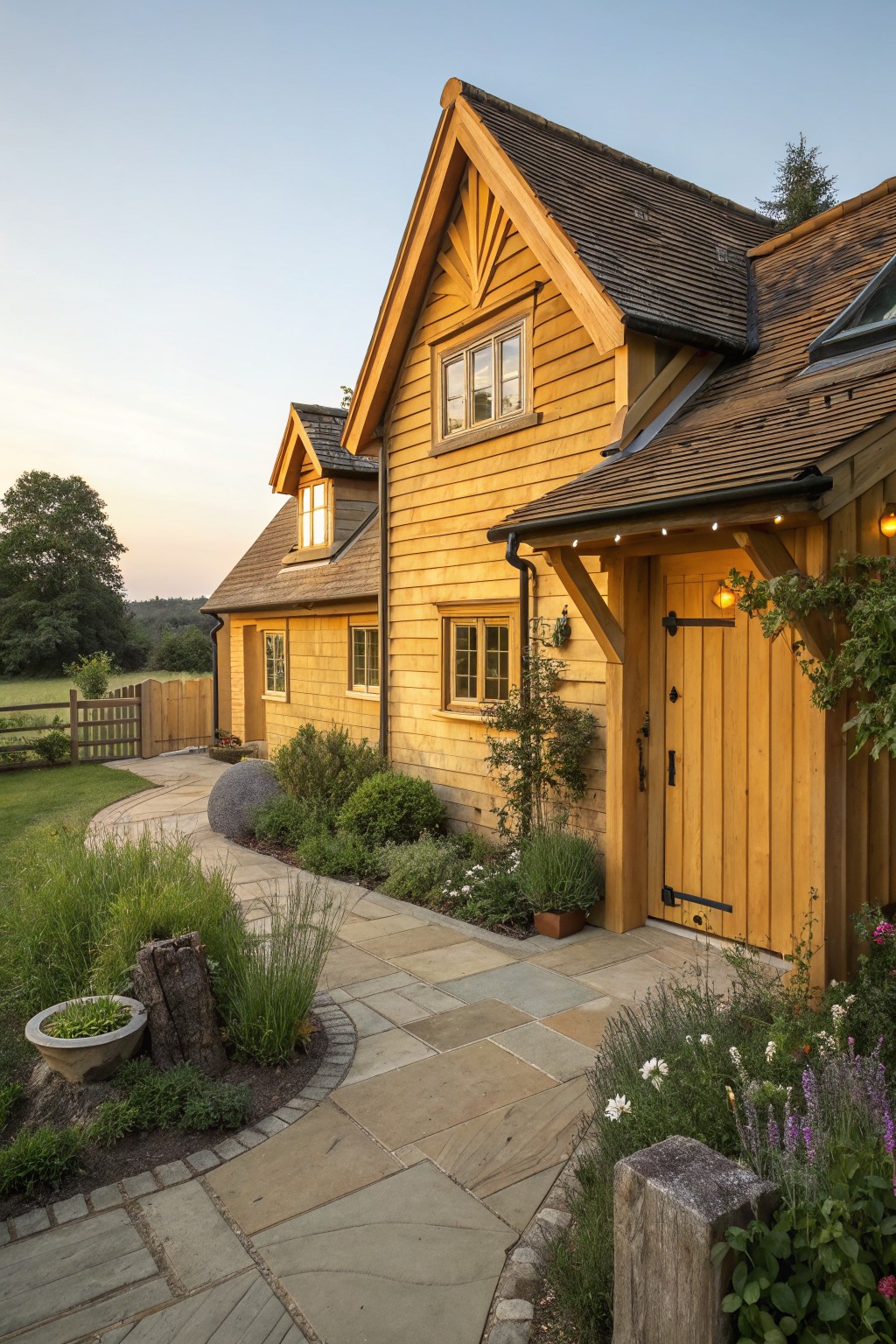
A timber porch like this one frames the entry nicely on a house clad in warm yellow wood siding. The dark wood beams stand out against the lighter yellow planks, giving the whole front a sturdy, natural feel. It pulls the eye right to the door without overpowering the simple lines of the house.
This setup works best on homes in rural or wooded spots where you want that cottage charm. Use oak or cedar for the timbers to match the siding, and keep the porch shallow so it doesn’t crowd the path. Skip fancy trim. Just let the wood do its thing for easy curb appeal that lasts.
Frequently Asked Questions
Q: How do I choose a yellow shade that won’t fade fast or look garish?
A: Pick ochre or mustard tones with earthy undertones.
They hold color better outdoors and blend smoothly with wood.
Swatch them against your actual siding at different times of day.
Q: What woods go best with warm yellow siding?
A: Cedar picks up golden notes that echo the yellow perfectly.
Pine works too if you stain it lightly for warmth.
Skip super dark woods, they fight the sunny vibe.
Q: How do I add wood accents without a big renovation?
A: Bolt on cedar shutters or plank a porch railing.
These spots pop right away.
And they tie the whole look together fast.
Q: How often do I need to maintain those wood details?
A: Brush on a fresh coat of oil-based sealer every two years.
Wipe down dust yearly to spot trouble early.
Your accents stay crisp that way.
