

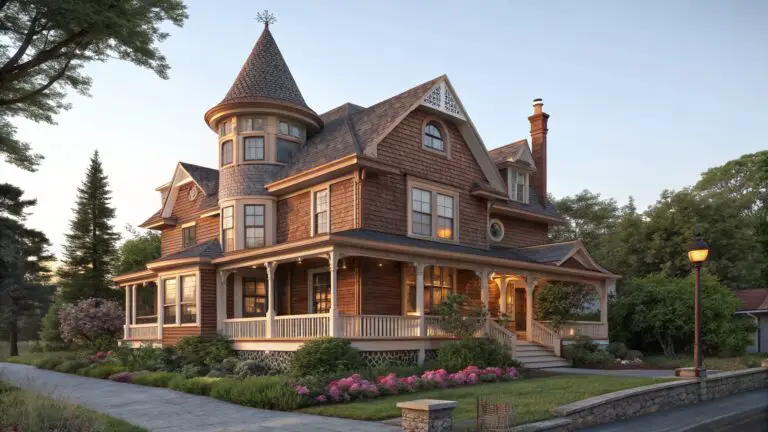
I always pause when I spot a brown Victorian house on my street because the color tempers those steep gables and intricate brackets into something approachable yet grand. From the curb, the facade’s success often hinges on how the brown shade echoes the roof tiles while letting entry details stand out just enough to draw you in. I’ve walked up to a few where mismatched trim dulled the whole look, but others glow because they layer subtle textures like wood grain siding with matte finishes. These approaches remind me that vintage charm works best when materials weather naturally, blending the house into its block without fading into blandness. A couple here changed how I think about porch posts.
Shingled Turret Towers
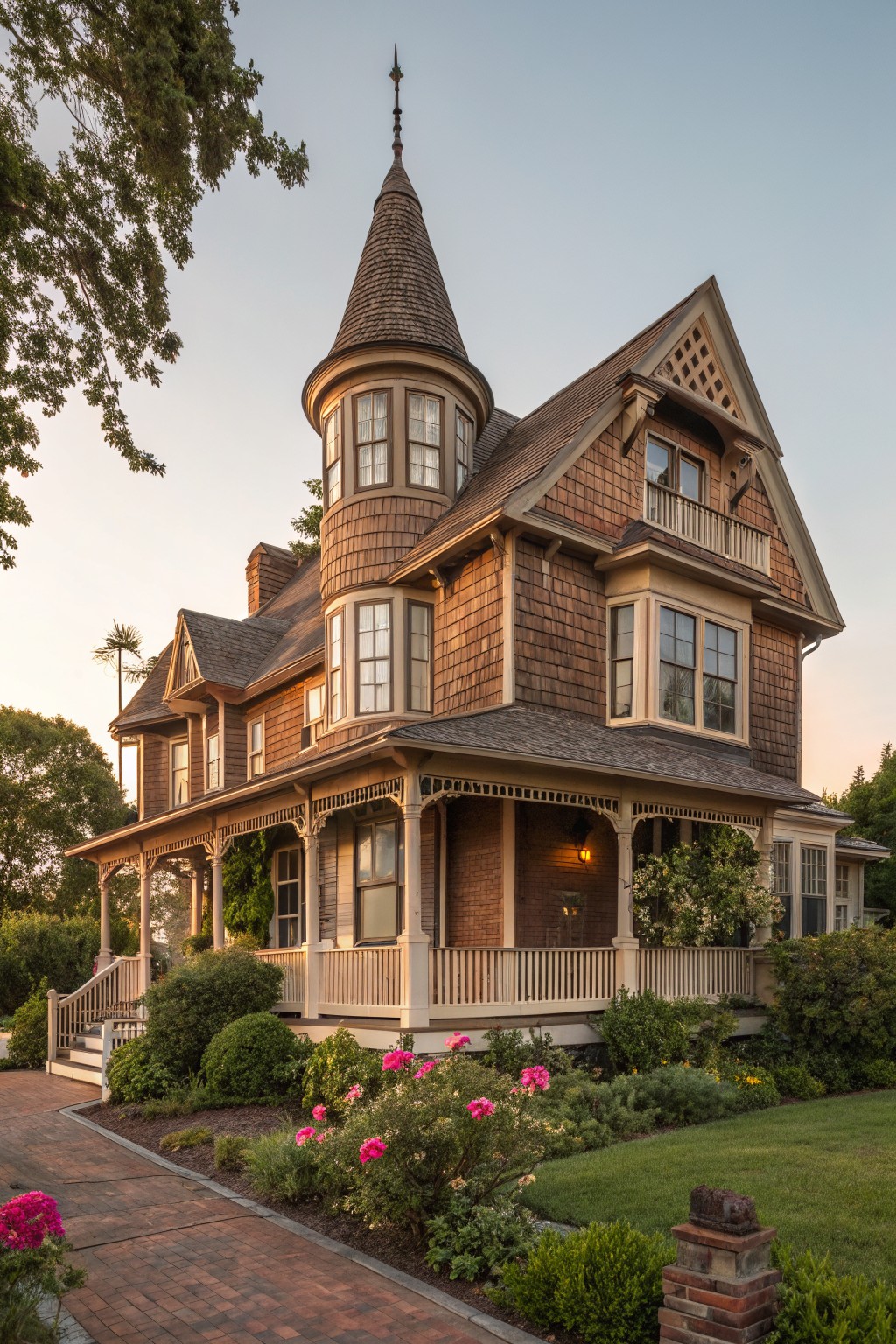
A shingled turret like this one gives a Victorian house that classic storybook feel. The round shape with its conical roof and layered fish-scale shingles draws the eye right up, making the whole facade more interesting without overwhelming the design. It’s a simple way to add height and personality to what might otherwise be a plain corner.
These work best on homes with some porch or balcony space below to balance things out. Pair it with earth-tone shingles to keep the look grounded and cozy. Skip it if your lot is too small, though. The turret needs room to breathe.
Timber-Framed Bay Windows Add Vintage Charm
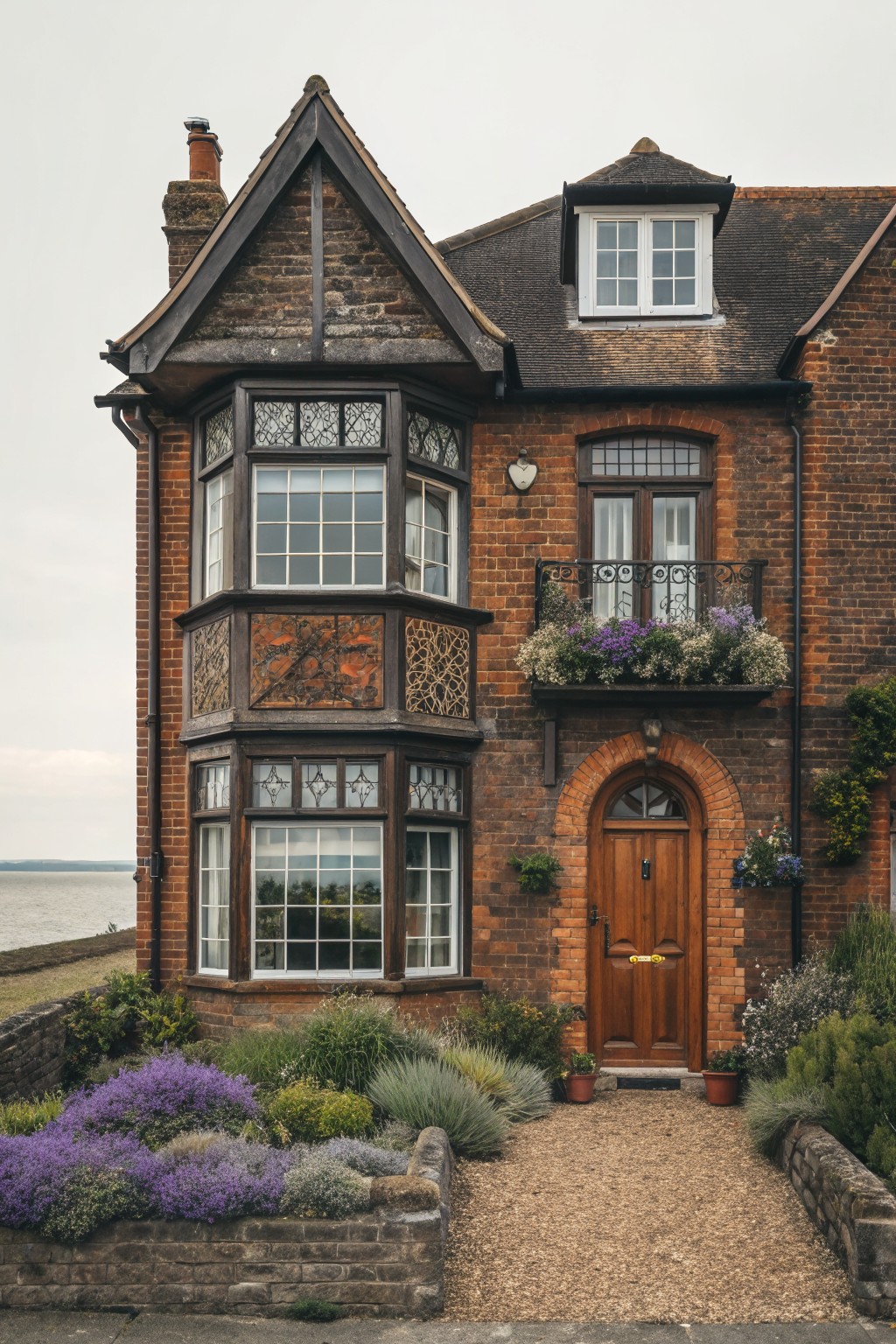
One look at this brown brick Victorian house and you see how those dark timber frames around the bay windows really bring out the old-world feel. The half-timbering isn’t just stuck on. It wraps the protruding windows nicely, with carved panels that catch your eye without overdoing it. Paired with the red-brown bricks, it gives the whole front a cozy, lived-in look that says classic England.
You can pull this off on most older homes or even new builds aiming for that vintage touch. Stick to darker woods or stains against warmer bricks, and keep the scale right, maybe two stories high with a balcony like here. It works best where you want curb appeal without much upkeep. Just make sure the timber is protected from weather, or it’ll fade fast.
Wraparound Porch on a Brown Victorian
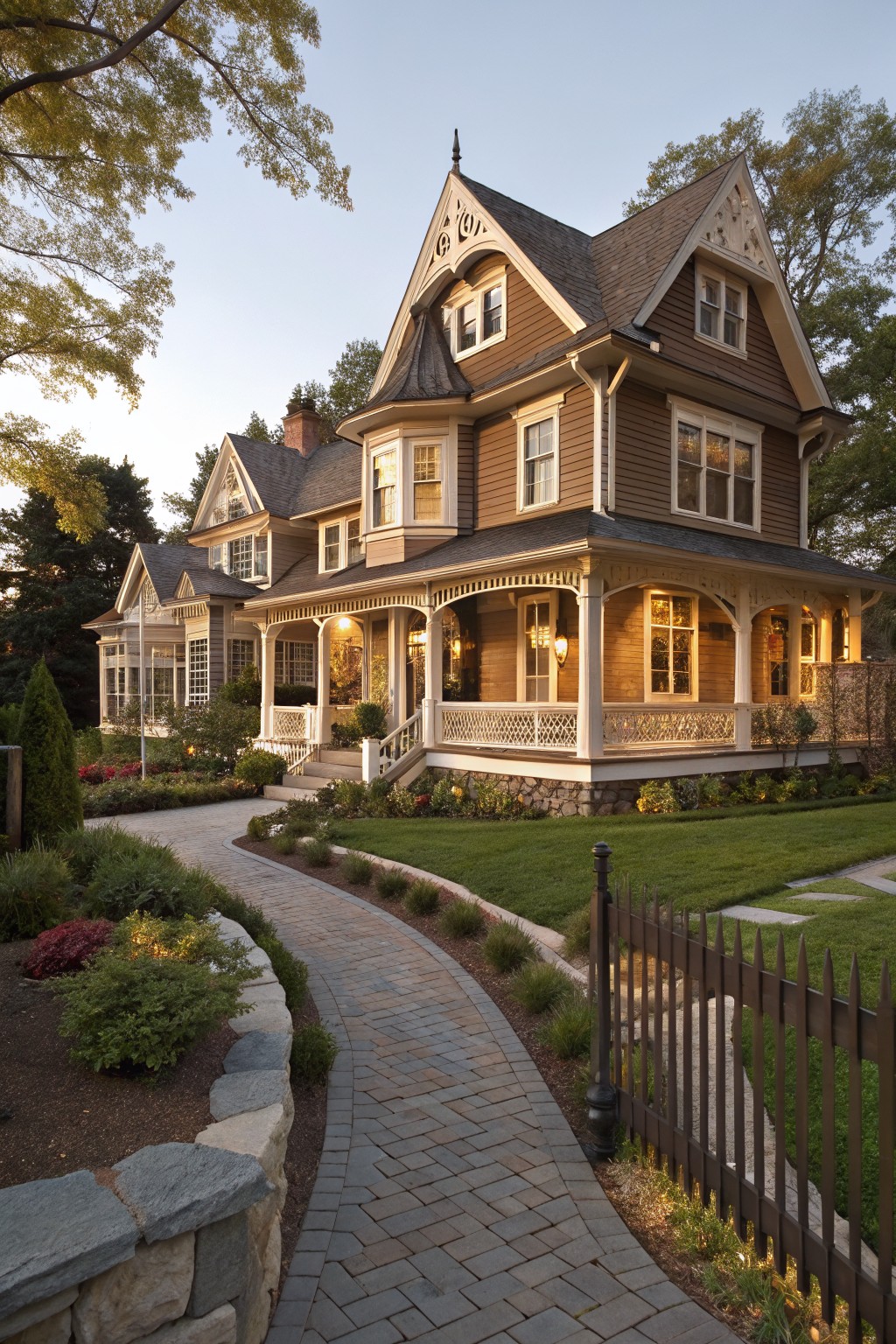
A wraparound porch like this one takes a brown Victorian house and makes it feel more open and welcoming from the street. The porch follows the corner of the home, with simple white posts and brackets that pick up on the house’s gabled rooflines. It pulls the eye right to the front door without overwhelming the siding.
This setup works best on corner lots or larger yards where you have room for the porch to extend. Paint the railings and trim white against darker brown shingles to keep the vintage look clean. Add hanging lanterns along the edges for soft evening light, and it turns the porch into a spot folks actually use.
Recommended Products

EXOTIC CANDLE LANTERN - Infuse your home with Provencal touches and vintage appeal with this elegant candleholder. These decorative lanterns can be used with candles to create a romantic ambiance. Instantly light up the night with charming illuminated lanterns. Set the scene for cozy gatherings or grand celebrations with their warm, welcoming glow. Each lantern comes with a 14.8’’ chain with hooks on both ends for easy hanging.

Lantern Decor: The combination of large and small lanterns is more layered and creates an exquisite atmosphere corner. Our lanterns (no Glass) are also equipped with two flameless candles.

Elegant Modern Farmhouse Aesthetic: These Large black metal lanterns showcase a refined black metal silhouette with clean lines, blending contemporary and rustic charm. The open-frame design of the candle lanterns creates captivating light play, ideal for enhancing living rooms, patios, or entryways. With no glass panels, the black lantern candle holder allows the light to shine through freely, adding a warm, natural glow to the ambiance.
Deep Brown Siding on a Victorian Facade
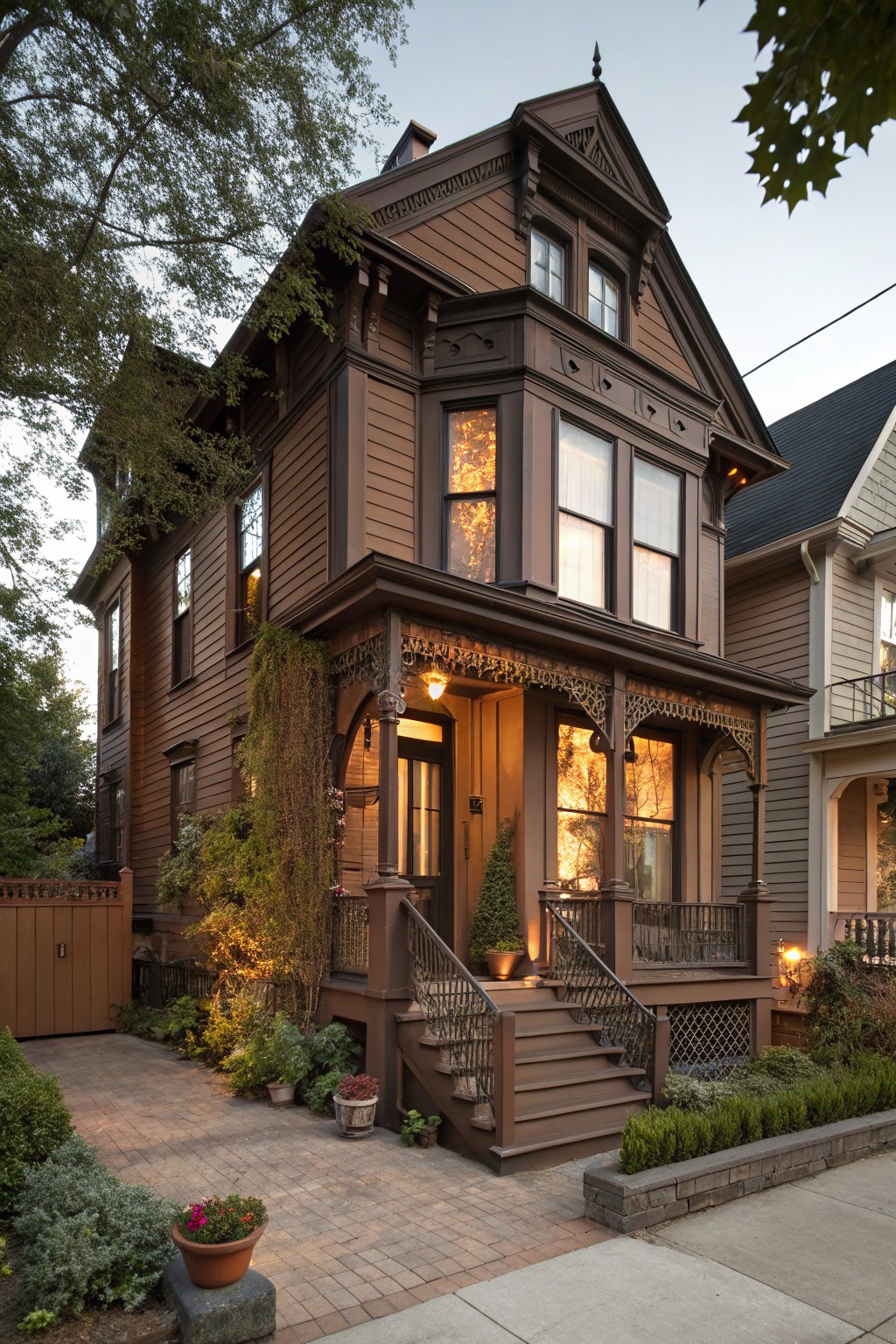
A deep brown siding like this one turns a classic Victorian house into something warm and timeless. The color picks up on the wood details, from the gingerbread brackets to the tall windows, without overwhelming them. It feels right at home in a neighborhood with other older houses, especially as evening light hits and makes everything glow softly.
You can pull this off on homes from the late 1800s or early remodels that keep the original shape. Just make sure the trim stays lighter, maybe a soft cream, to keep things crisp. Avoid it on super modern spots, though. It suits tree-lined streets best.
Ivy on Brick for Vintage Victorian Charm
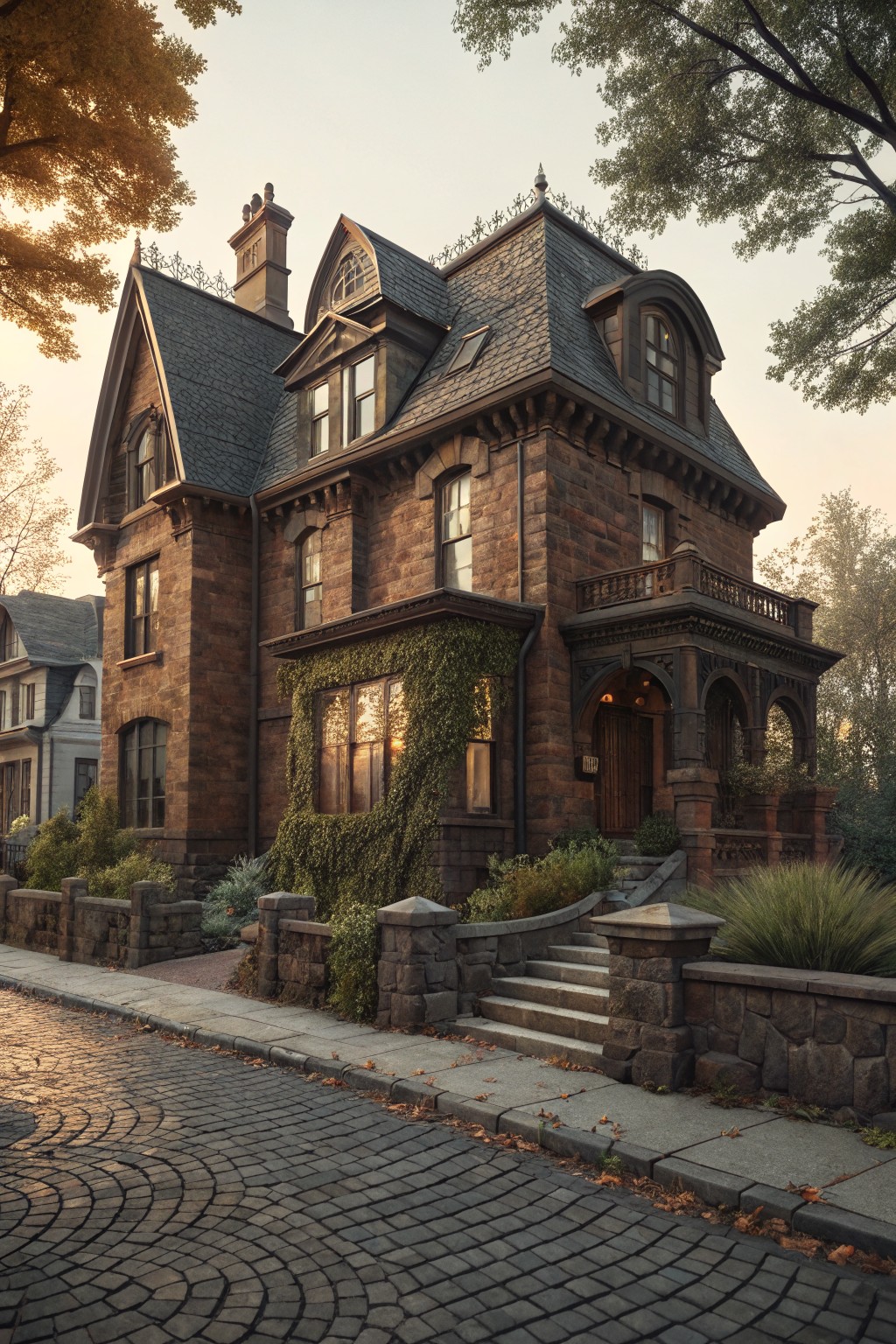
One simple way to give a brown brick Victorian house that lived-in, timeless feel is letting ivy climb parts of the facade. It softens the rugged brick texture without hiding the architecture. In this setup, the ivy hugs the bay windows and porch edges, catching the light just right and adding a touch of green that pulls the whole front together.
You can try this on homes with solid brick walls facing south or east, where ivy gets enough sun but not too much scorch. Keep it trimmed back from gutters and windows to avoid issues, and pick a hardy variety like English ivy. It works best on older-style houses like this one, making the entry feel more welcoming year-round.
Victorian Porch Swing Setup
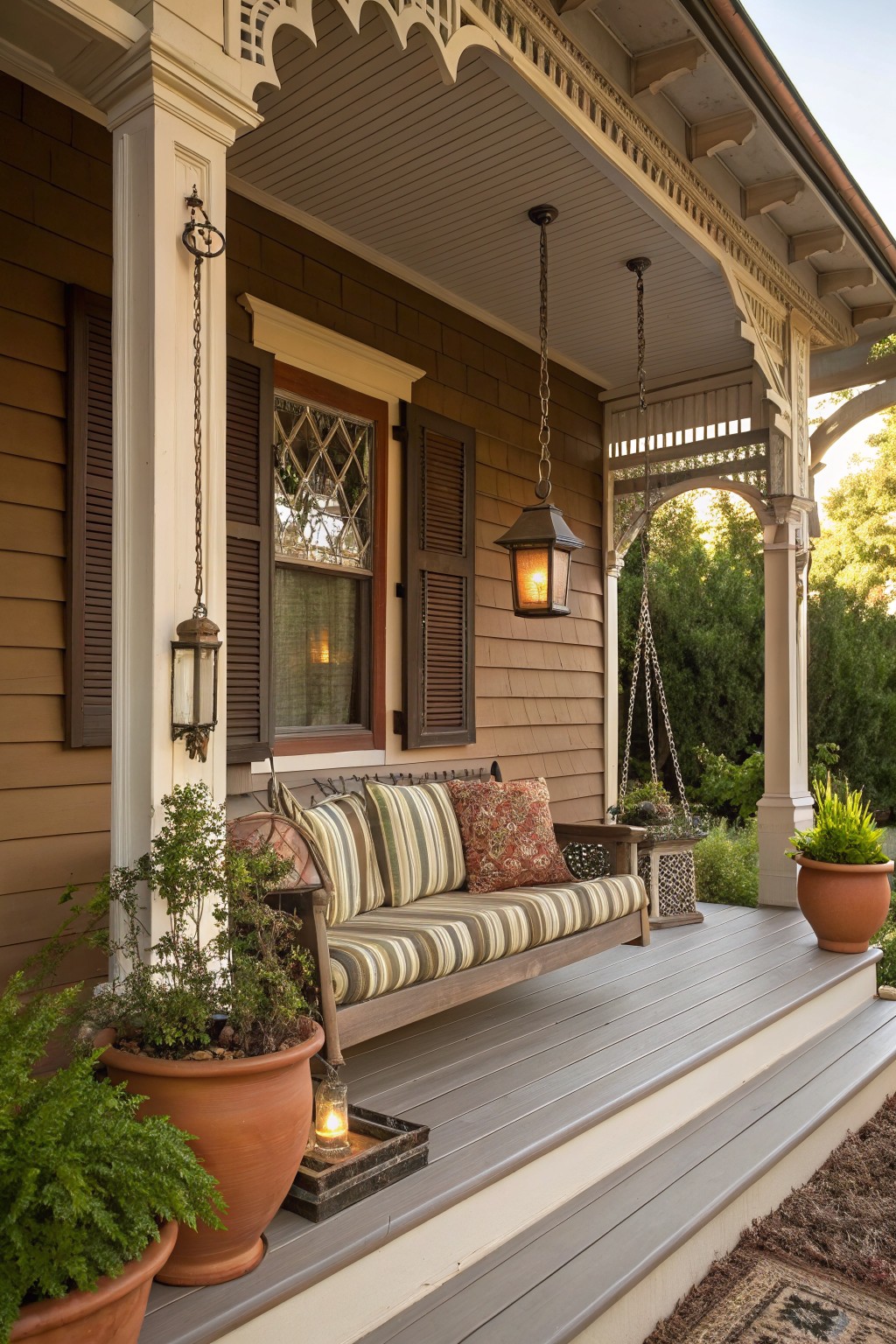
A hanging porch swing like this one turns a simple front porch into a spot for real relaxation. The wide wooden seat with its striped cushions and a couple of throw pillows invites you to sit back, maybe with a book or some iced tea. Pots of greenery tucked around the base and lanterns nearby keep things feeling lived-in and tied to the house’s brown shingle look. It’s that easy vintage touch many older homes need.
Put one on a covered porch at least six feet wide so it swings freely. Use chains strong enough for two people, and pick cushions in stripes or solids that weather well. This works best on Victorian or Craftsman houses… adds charm without much fuss. Just watch the chains don’t tangle plants below.
Brown Shingled Octagonal Turret
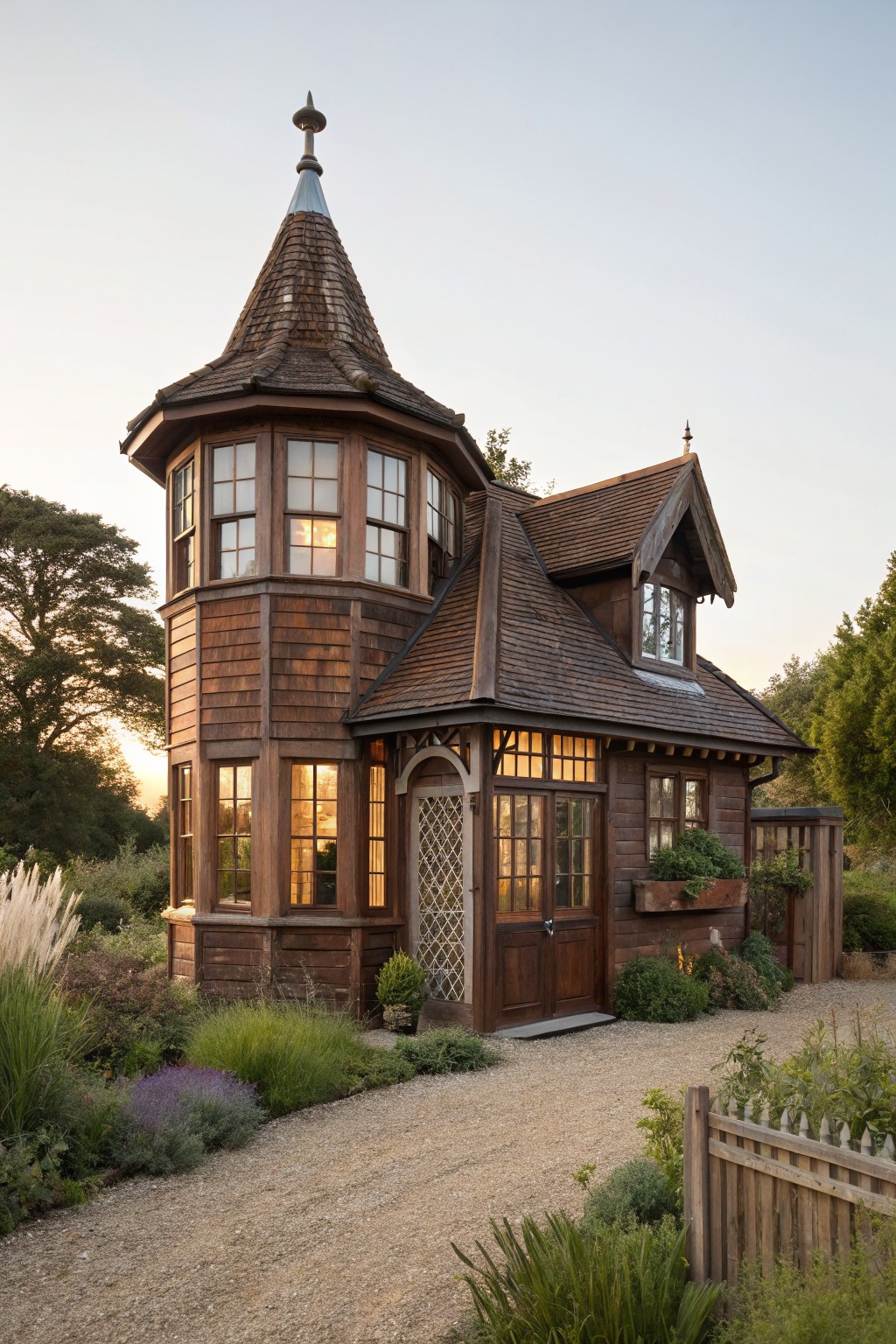
A small octagonal turret wrapped in dark brown wood shingles gives this garden house its standout Victorian whimsy. The steep conical roof topped with a finial, plus those multi-paned windows catching the evening light, make the whole thing feel like a cozy storybook retreat. It’s all about that playful shape pulling your eye up while the shingles add texture without fuss.
Try this on a backyard pavilion or entry accent where you want vintage charm on a compact scale. It suits cottage-style homes or rural spots with trees and paths nearby. Keep the shingles varied in tone for depth, but skip it on larger houses unless you balance it with simpler lines elsewhere.
Shingle Siding on Sloped Victorian Homes
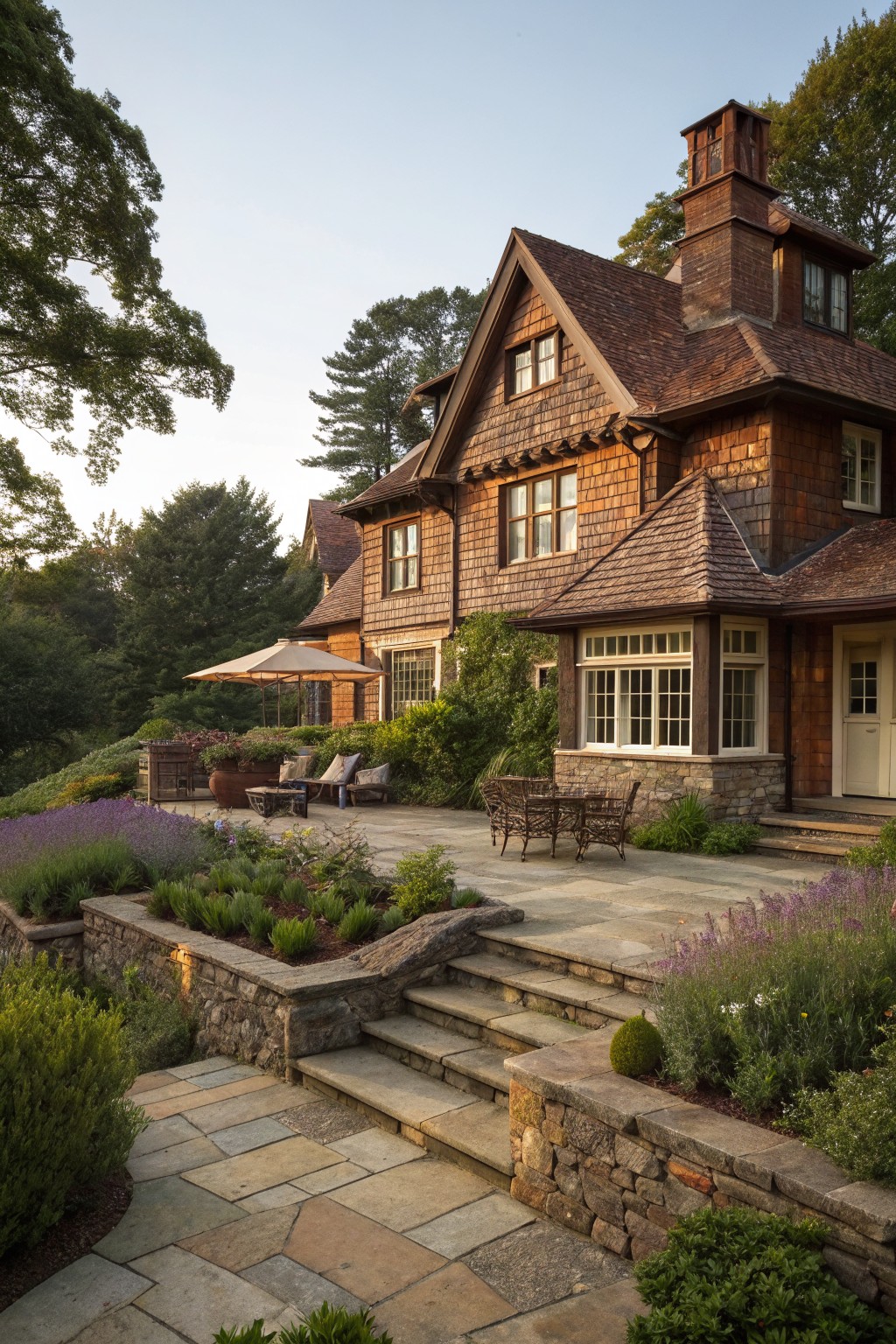
Shingle siding like this gives a Victorian house real vintage texture without trying too hard. The warm brown shakes cover the walls and roofs, catching light in a way that makes the place look settled in and welcoming. Those steep pitches and the little tower up top add just enough play to keep the facade from feeling boxy.
On a hillside lot, this setup shines. Stone walls and steps pull the house down into the landscape, and a simple patio off the side makes it easy to enjoy the view. It suits wooded spots best, where the brown tones echo the trees. Skip stark modern plantings, though. Stick to softer greens and lavenders to match.
Detailed Shingling on Brown Victorian Gables
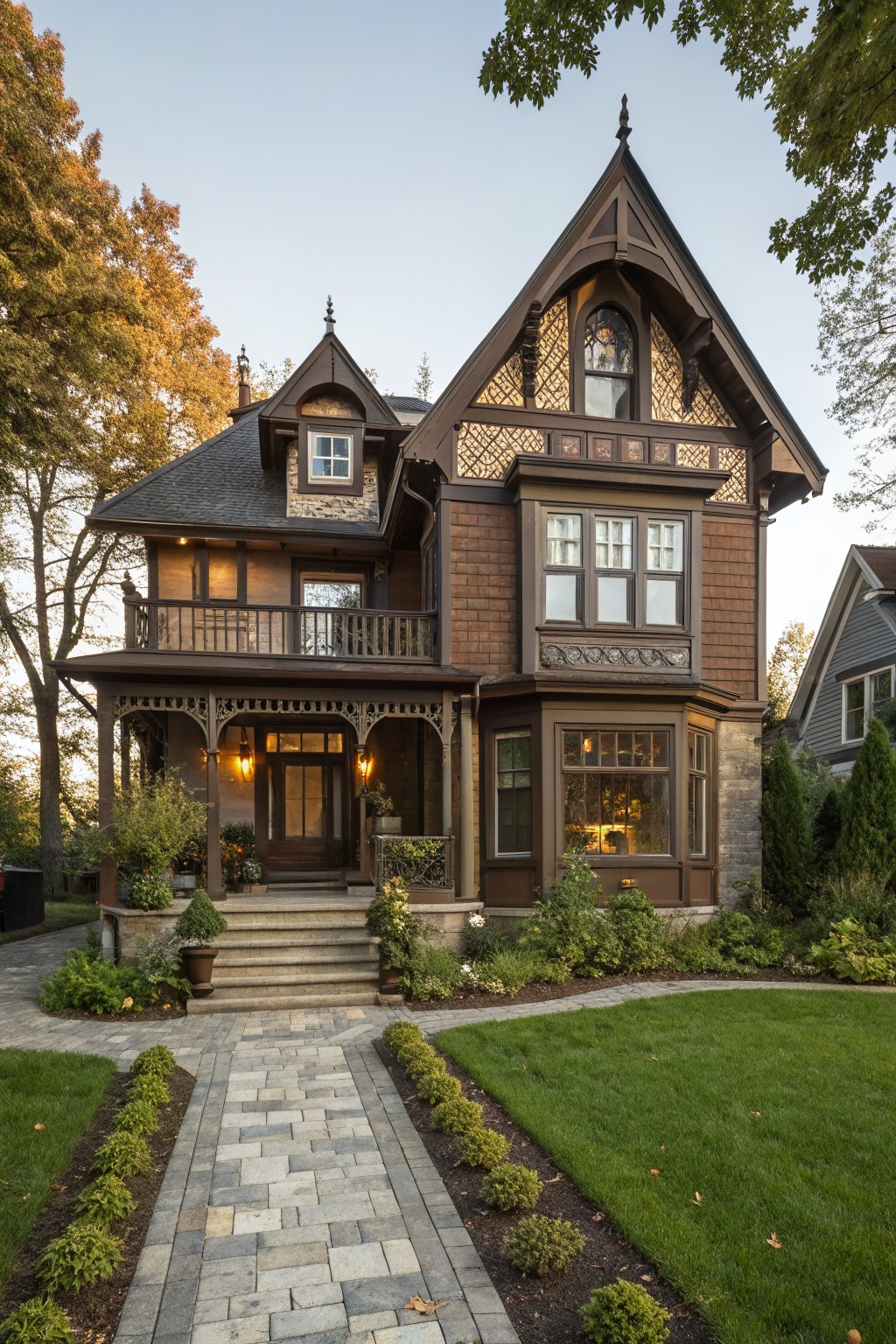
Patterned shingles like these fish-scale and diamond ones give a brown Victorian house real vintage texture. They cover the gables and upper walls, breaking up the big rooflines and adding that handcrafted feel from older times. Notice the carved trim along the edges too. It keeps the look busy but not fussy, especially in earthy brown stains that blend with trees.
This works great on two-story homes with steep roofs, where you want curb appeal without a full remodel. Pair the shingles with stone at the base and a simple porch for balance. Skip it on super modern lots, though. It shines in neighborhoods with mature trees, tying the house right into the yard.
Wraparound Porch on a Brown Shingle Victorian
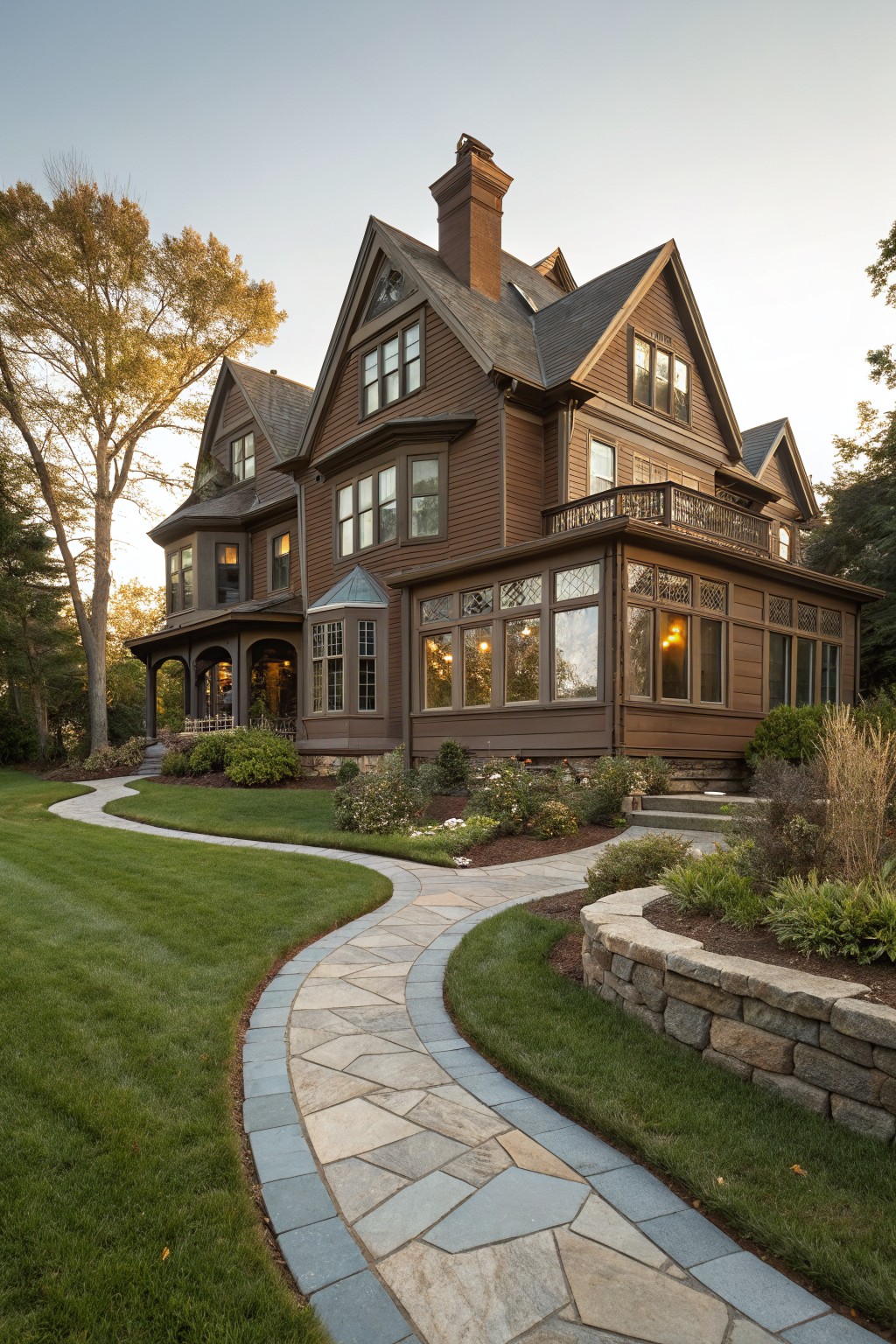
A wraparound porch like this one wraps right around the corner of the house, giving it that classic Victorian feel without overwhelming the main structure. The brown shingle siding ties everything together, and those tall windows with subtle stained glass let in light while keeping the vintage look. It makes the house feel more open and lived-in, especially at dusk when the warm glow from inside shows through.
This setup works best on larger homes with some yard space around the side or back. You could add it to update an older Victorian or even mimic the style on a craftsman by keeping the porch low-profile and using similar wood tones. Just make sure the roofline matches your gables to avoid a mismatched add-on look.
Ornate Wooden Entry Door
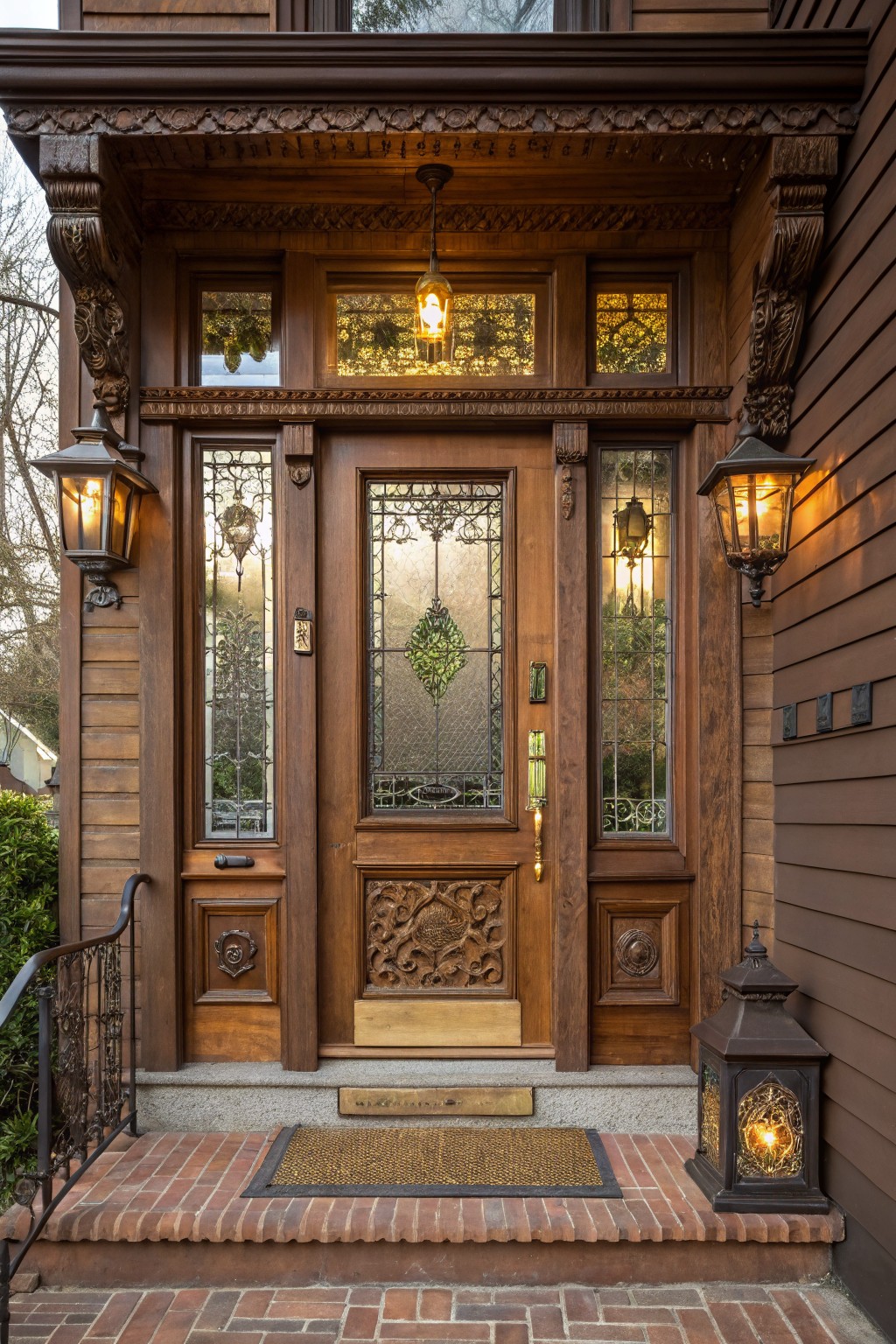
A carved wooden front door like this brings real vintage charm to a brown Victorian house. The deep relief patterns on the panels and the stained glass sidelights catch the light just right, making the entry feel special and timeless. Paired with lanterns on each side, it turns a simple doorway into the house’s main focal point.
This style suits older homes or craftsman updates where you want curb appeal without modern flash. Go for solid wood or fiberglass that mimics it, and add matching hardware. Keep the steps clean and the surrounding siding in a warm brown tone to let the door stand out… watch for too much detail if your house is smaller.
Recommended Products

PREMIUM DESIGN: Features an elegant Victorian-style carved wood door design with intricate fleur-de-lis patterns and ornate decorative elements in rich brown tones

PREMIUM SELF-ADHESIVE VINYL: High-quality peel-and-stick film requires no glue or tools. Removes cleanly without sticky residue or surface damage—safe for flat painted interior door surfaces.
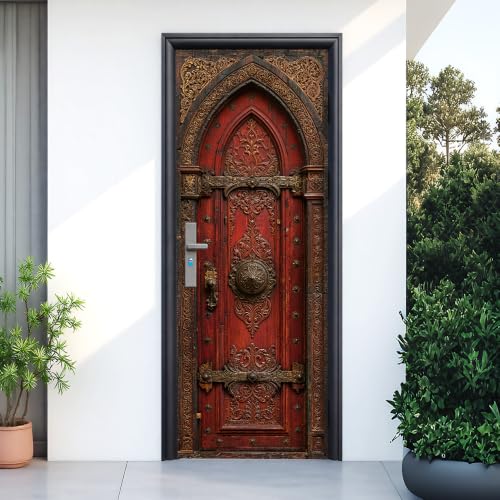
DRAMATIC GOTHIC RED WOOD: Ornate arched carving and rich red-wood grain turn a plain door into a medieval entryway, bringing vintage architectural drama to bedrooms, hallways and studies.
Victorian Brick with Gingerbread Porch Trim
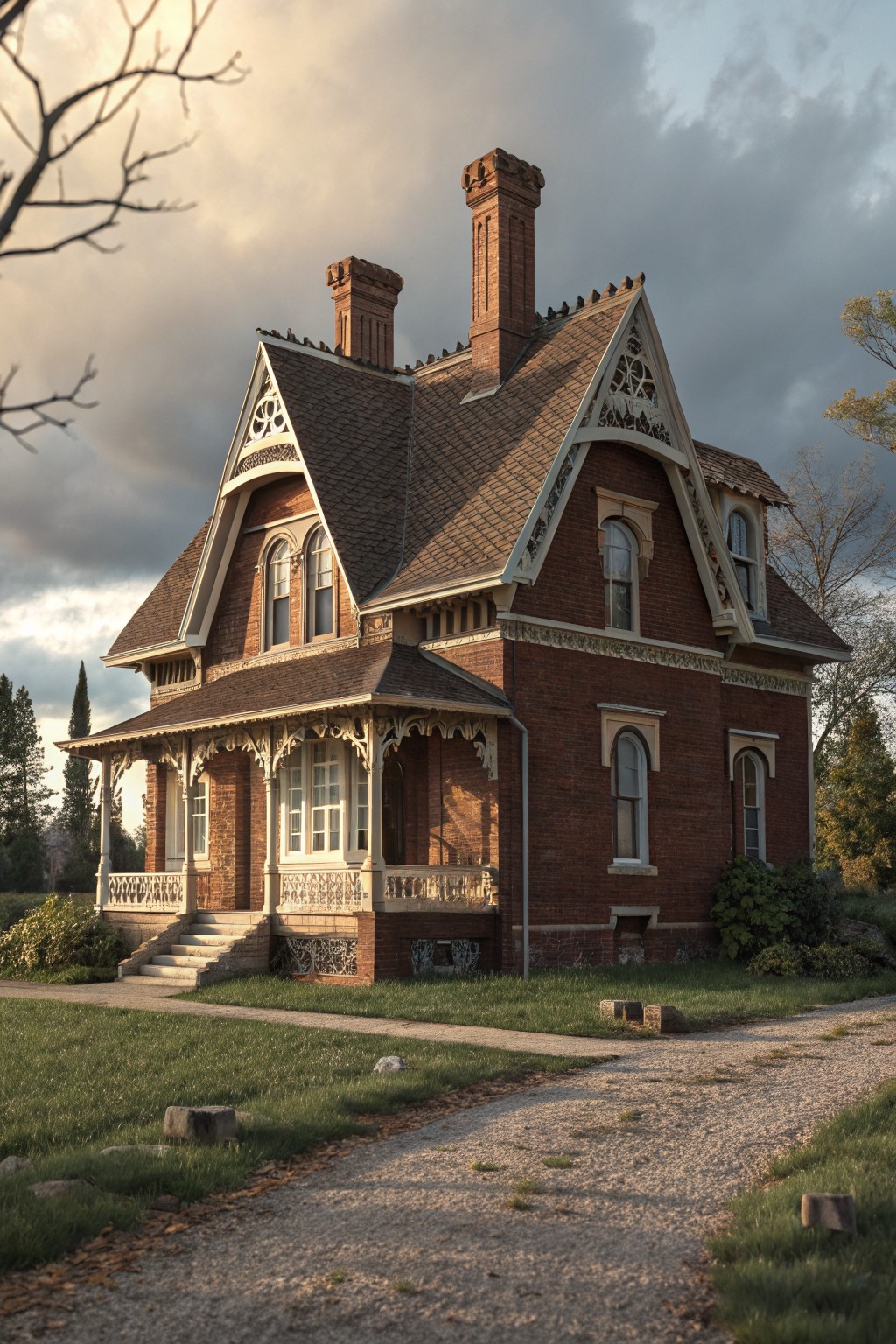
A solid red brick exterior like this one gets its charm from the white gingerbread trim on the porch and gables. Those lacy cutouts along the roofline and railings break up the brick nicely. They nod to the house’s Victorian roots without making things too busy.
You can pull this off on a two-story home with a front-facing gable. Stick to earthy brick tones and keep the trim painted fresh white. It fits older neighborhoods or spots with a bit of yard. Just make sure the porch wraps at least partway around for that welcoming feel.
Warm Brown Victorians with Black Iron Stairs

Warm brown paint on a Victorian house brings out all the old details like bay windows and carved trim. Here, the soft earthy tone covers the siding while black paint hits the edges and porch columns. It gives a cozy, lived-in look that fits right into foggy neighborhoods. The black iron railings on those steep front stairs add strength without overwhelming the softer brown.
Try this on homes with lots of gingerbread trim or turrets. It suits sloped city lots where stairs are a must. Keep landscaping simple with boxwood hedges along the fences so the house stays the focus. Avoid brighter colors nearby or it can clash.
Corner Turret Adds Victorian Whimsy
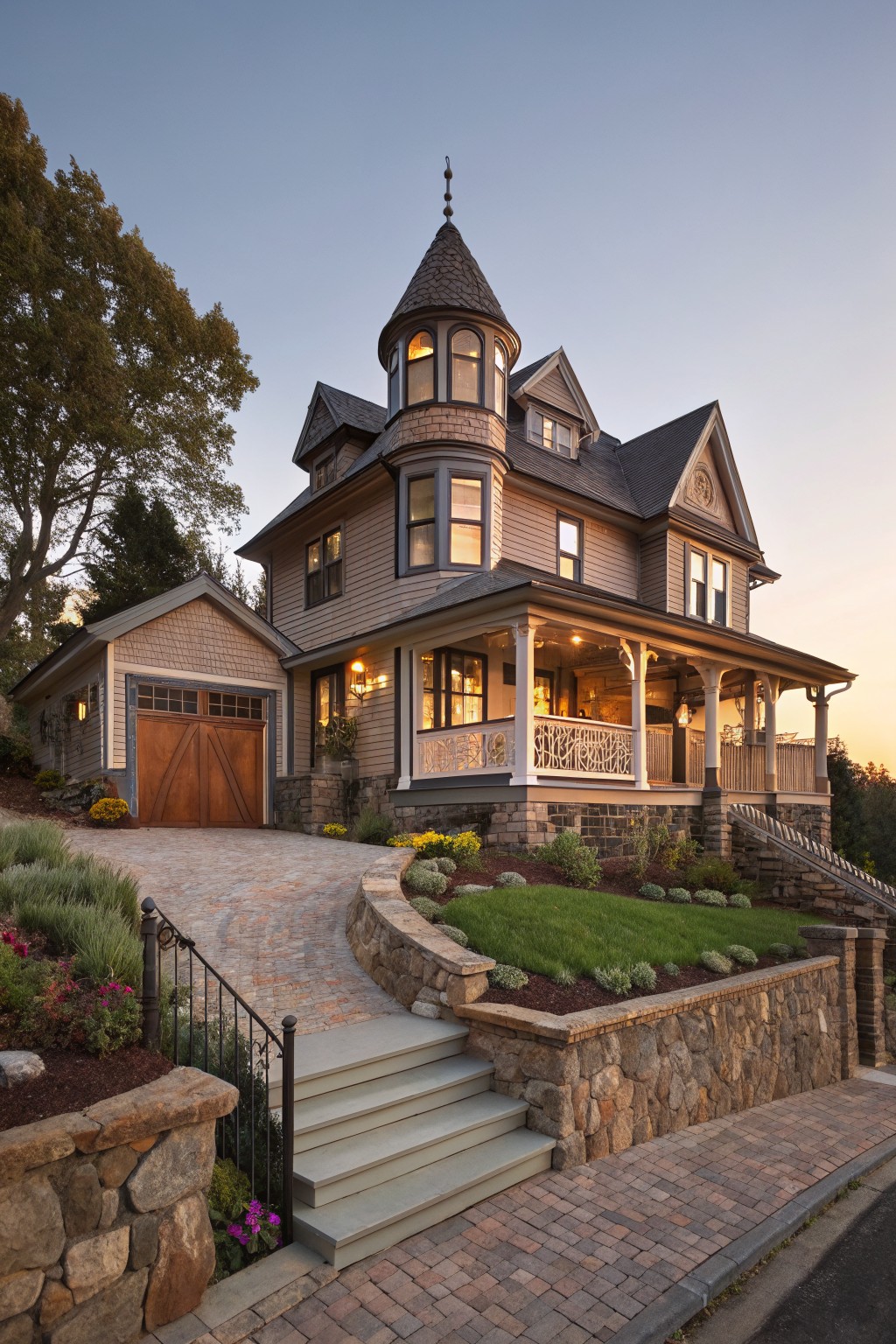
A corner turret like this one gives a Victorian house that storybook touch people love. It pulls the eye up with its conical roof and those rounded windows glowing at dusk. Paired with brown shingle siding, it keeps the look warm and textured without feeling too busy.
This detail shines on sloped lots where the house sits high. It works best with stone bases below to tie everything to the ground. Skip it if your site is flat, unless you want to build up anyway. Just match the siding color to blend the turret right in.
Ornate Wraparound Porch
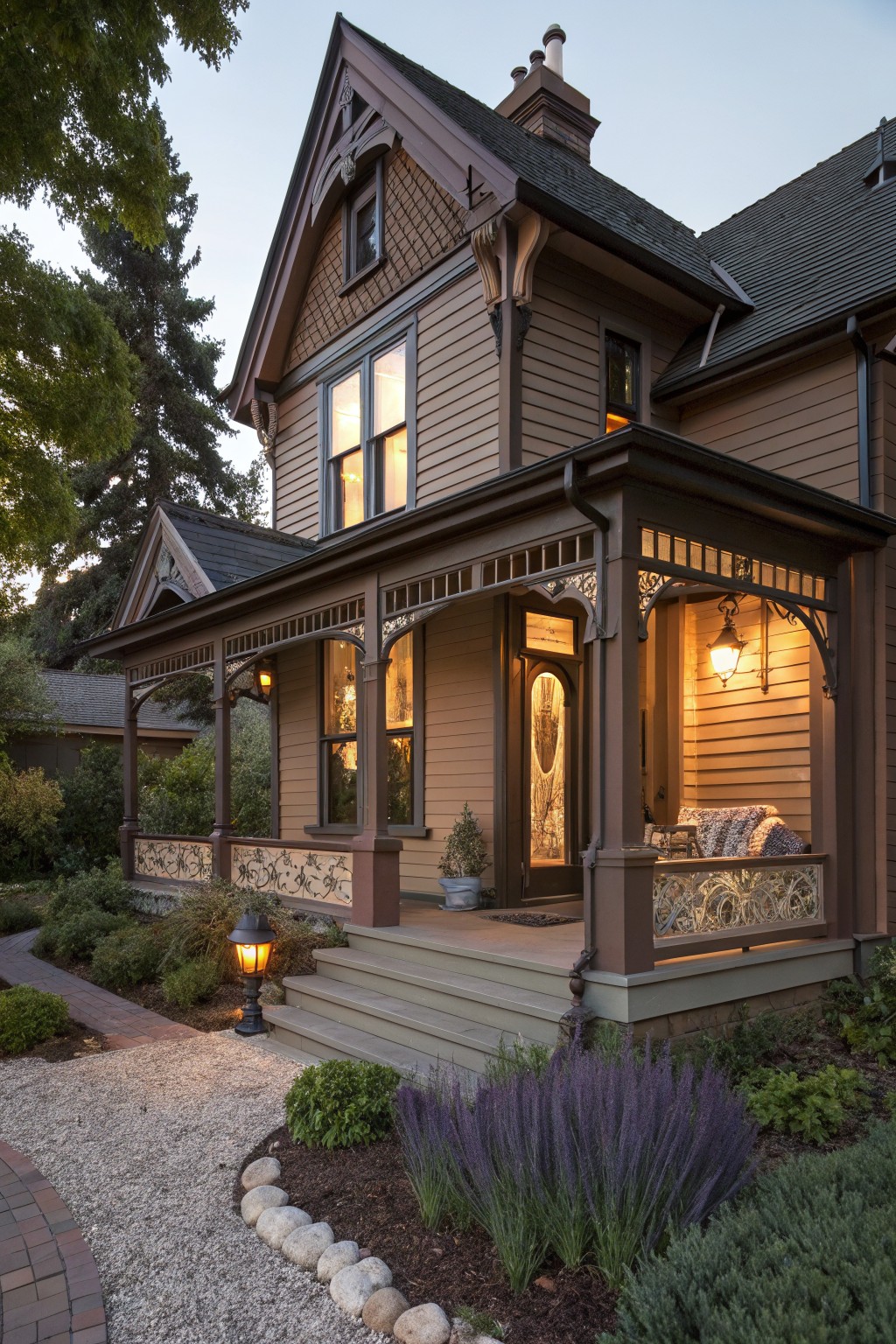
A wraparound porch like this one pulls a brown Victorian house right into its vintage roots. The carved brackets and spindled balustrade give it that gingerbread look folks love, while lanterns cast a soft glow over the entry. It makes the whole front feel lived-in and welcoming without trying too hard.
This setup shines on homes with good rooflines and some elevation. Add similar detailing to your porch posts and railings if you’re updating an older place. Pair it with simple steps and low plants at the base… keeps the focus on the architecture. Works fine in milder climates where wood holds up.
Ivy Over Wrought-Iron Balconies
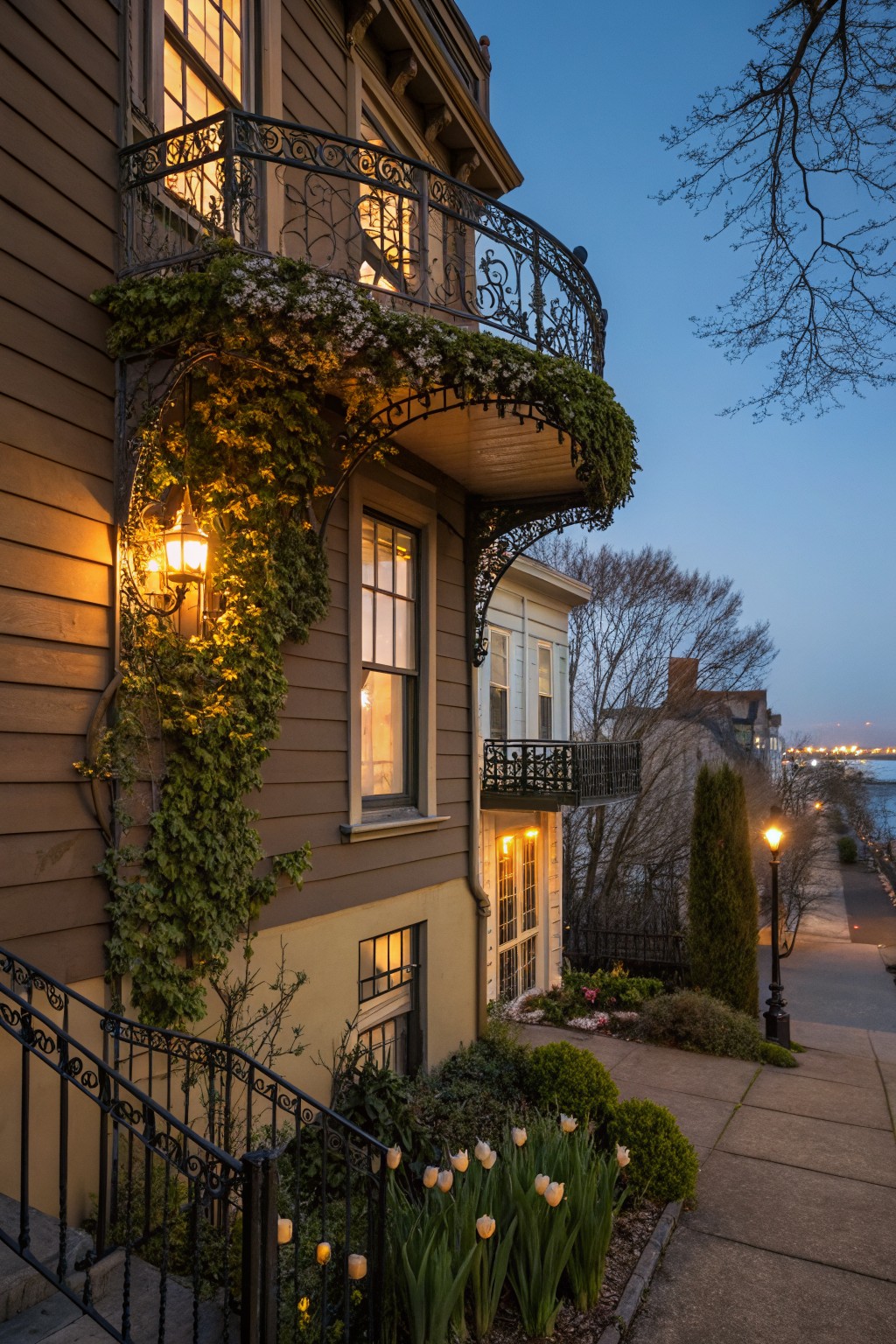
One simple way to give a brown Victorian exterior that lived-in vintage look is letting ivy climb right over the wrought-iron balcony railings. It softens those sharp black metal curves without hiding them, and at dusk with the lanterns lit up yellow against the green leaves, the whole upper level feels cozy and welcoming. Folks notice it right away from the street.
Try this on homes set on a hill or with a few steps up to the door, where the balcony pulls eyes upward. The ivy grows fast in partial shade spots like this, stays green year-round in mild climates, and pairs well with spring bulbs down below. Just trim it back once a year so it does not crowd the windows.
Brown Brick Victorian with Corner Turret
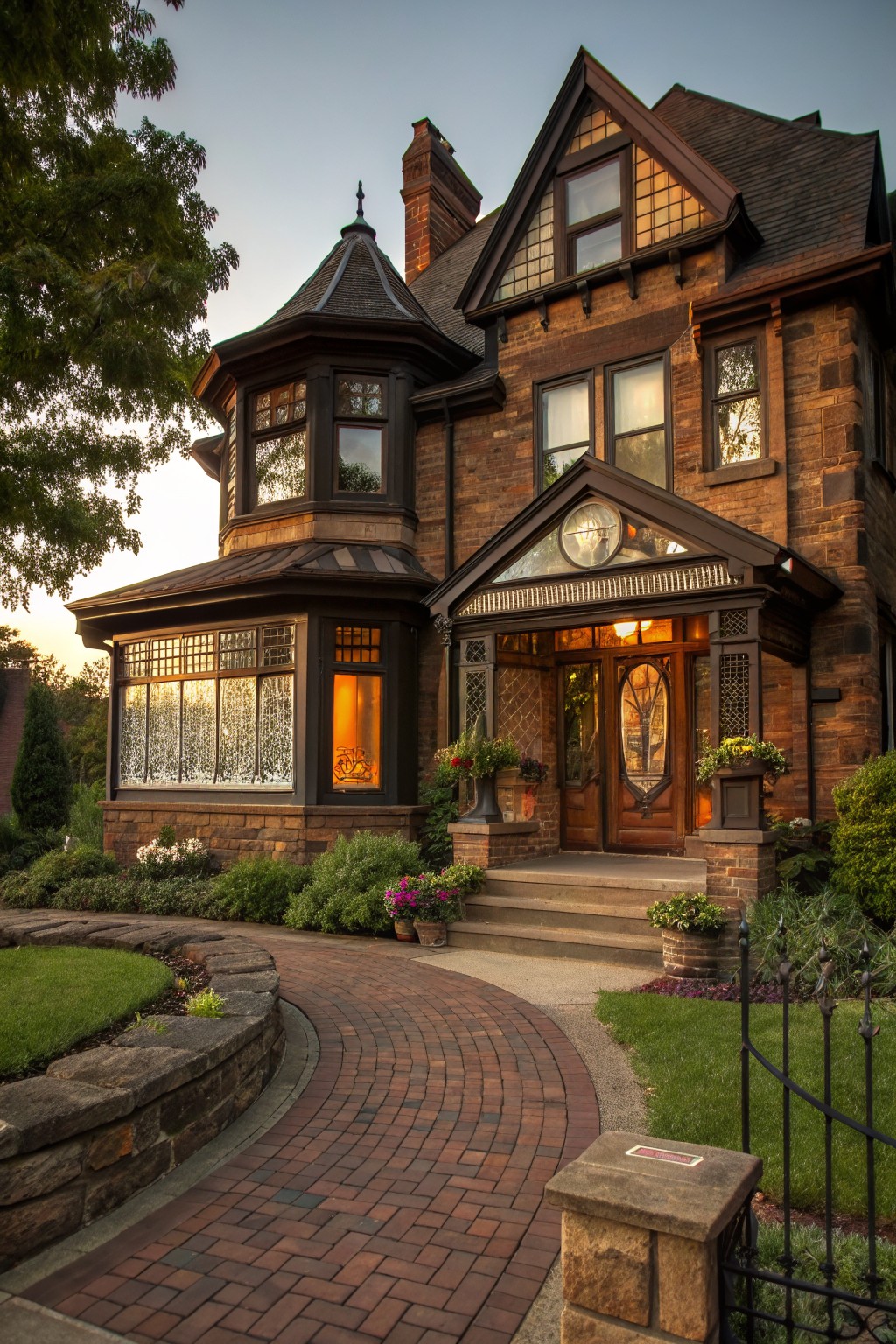
A corner turret like this one turns a solid brown brick house into something with real presence. Those sloped roofs and tall leaded windows give it height and detail without much fuss. It pulls together the whole front and nods to older Victorian styles.
Turrets fit best on two-story homes already using brick or stone. They add character to flat facades facing the street. Keep the scale right for your lot… and use matching materials so it feels like it belongs.
Victorian Turret Adds Vintage Height
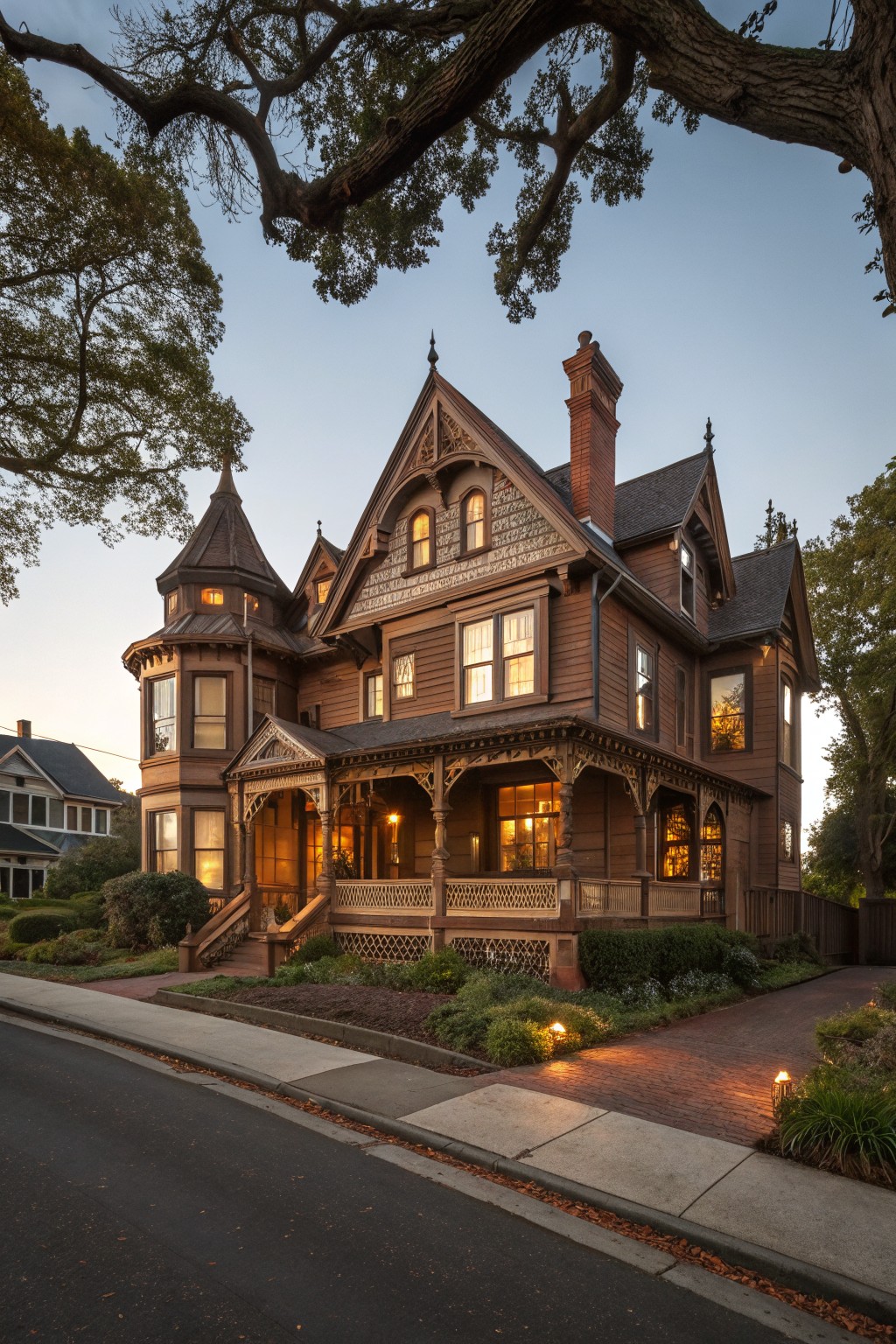
A turret like this one gives a Victorian house that signature tall, whimsical look. It’s topped with a conical roof and wrapped in the same brown shingles as the rest of the facade, blending right in while standing out. The intricate wood trim around the base ties it to the porch below, making the whole front feel like one cohesive story from another era.
You can pull this off on homes with enough yard space for the drama to shine, especially in neighborhoods with mature trees overhead. Stick to earthy browns on shingles and siding to keep it grounded, and add low garden lights along the walk to highlight it at night. Just make sure the foundation is solid, since turrets add weight up top.
Vintage Fountains as Garden Focal Points
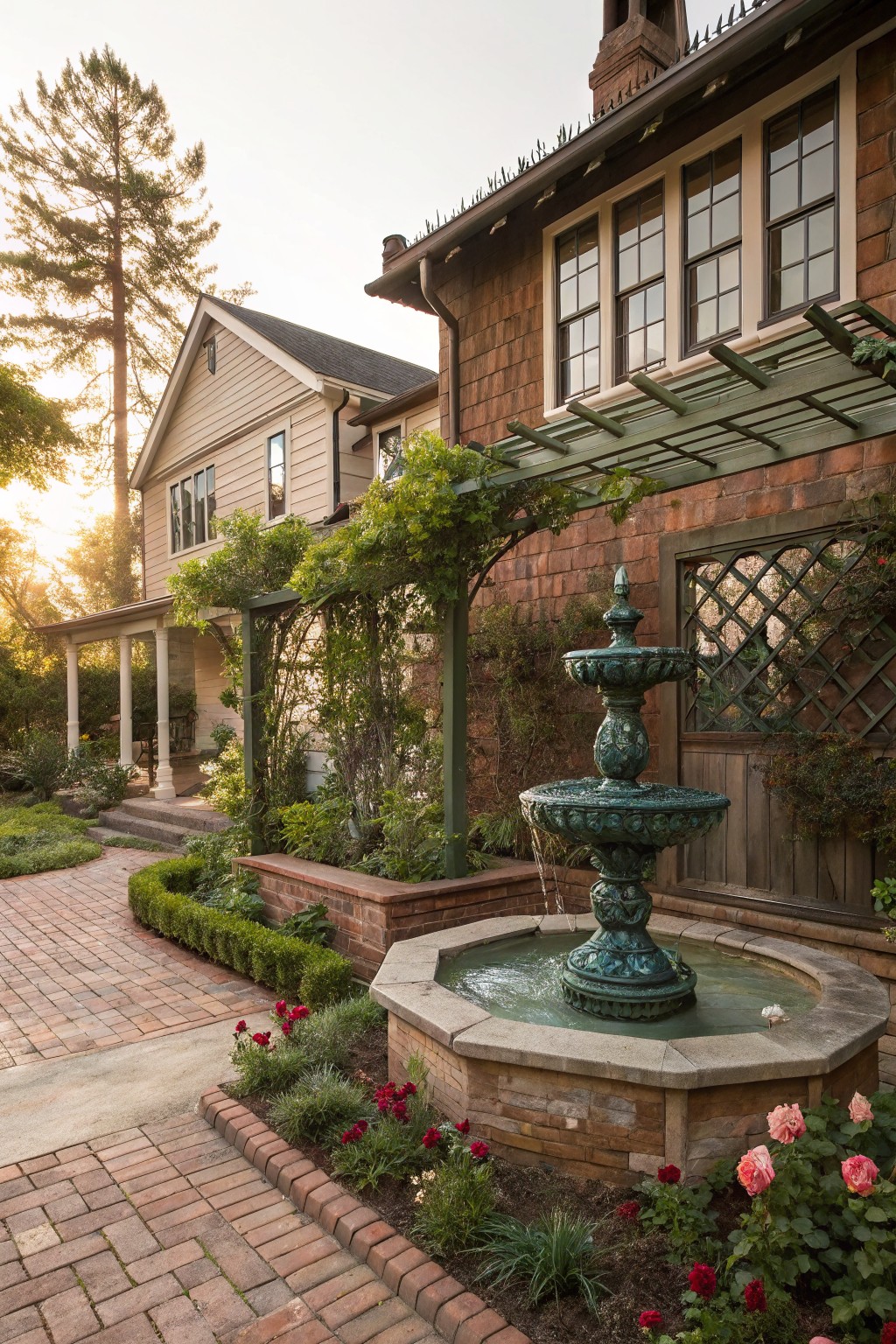
A tiered fountain like this one sits right in the middle of a side garden, pulling your eye with its soft water sound and that aged green patina. It fits perfectly against brick walls and adds this old European feel to a brown Victorian exterior without trying too hard. The shape and details echo the house’s vintage lines, making the whole yard feel put together.
Put one in a courtyard or along a path where it can be seen from the house. It works best on smaller lots with some walls or fences for enclosure, and pair it with simple boxwoods and roses to keep things neat. Just make sure the plumbing is solid. Skip super modern ones. They clash here.
Frequently Asked Questions
Q: How do I pick a brown shade that really captures that vintage charm?
A: Look for earthy tones with warm undertones, like chestnut or mahogany.
They age gracefully just like the originals.
Q: What trim colors pair best with brown siding on a Victorian?
A: Cream or soft ivory makes the architectural details stand out beautifully. Paint the brackets the same shade for subtle contrast that draws the eye up.
Q: Can I update the porch without losing the old-school elegance?
A: Swap sagging railings for sturdy spindle ones in matte black. Add hanging ferns in vintage pots… instant warmth.
Q: How do I keep the exterior looking fresh year after year?
A: Hose down mold spots with a mild bleach mix each spring. And touch up scuffs right away before they spread.
