

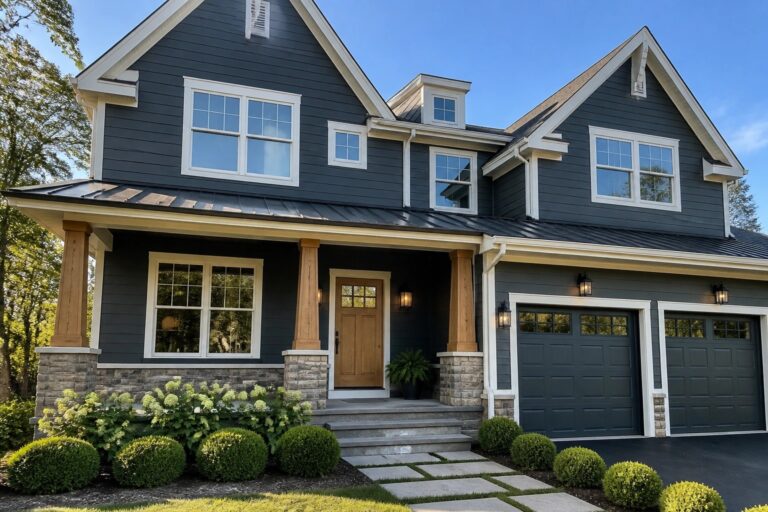
I often spend time watching how a dark color shifts as the light moves across a two-story facade during the afternoon.
The way it meets the roofline and any surrounding landscaping can either enhance the depth or wash it out entirely.
I always test a sample on the actual house before making a final choice because small swatches hide too many surprises with exterior paints.
A color that seems bold in the store might lose its intensity once it faces real weather and shadows.
I test first.
Dark Gray Siding With Warm Wood Accents
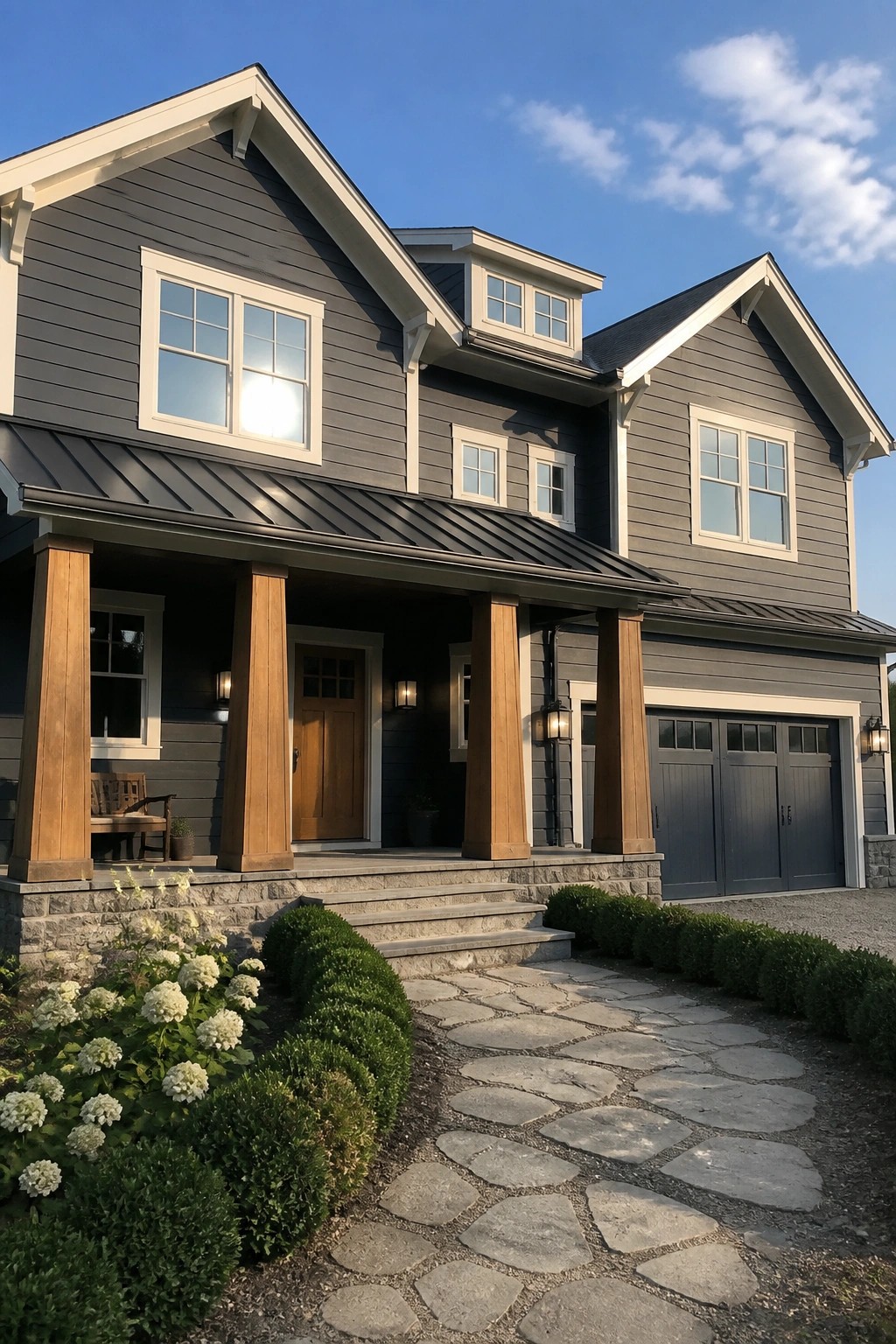
This deep charcoal gray works well on large two-story homes because it gives the house a solid, grounded look without feeling heavy. The color sits between black and gray, so it reads as dramatic but still natural on the siding. It pairs nicely with the warm wood columns and stone base shown here, which keeps the overall exterior from turning too cold or flat.
The shade has a slight cool undertone that shows up more in bright daylight, so it helps the house stand out against greenery and sky. It works best on homes with similar warm wood trim or stone details. Good matches include Sherwin Williams Iron Ore, Benjamin Moore Kendall Charcoal, Behr Black Fox, or Farrow & Ball Railings.
Deep Navy Blue With Classic White Trim
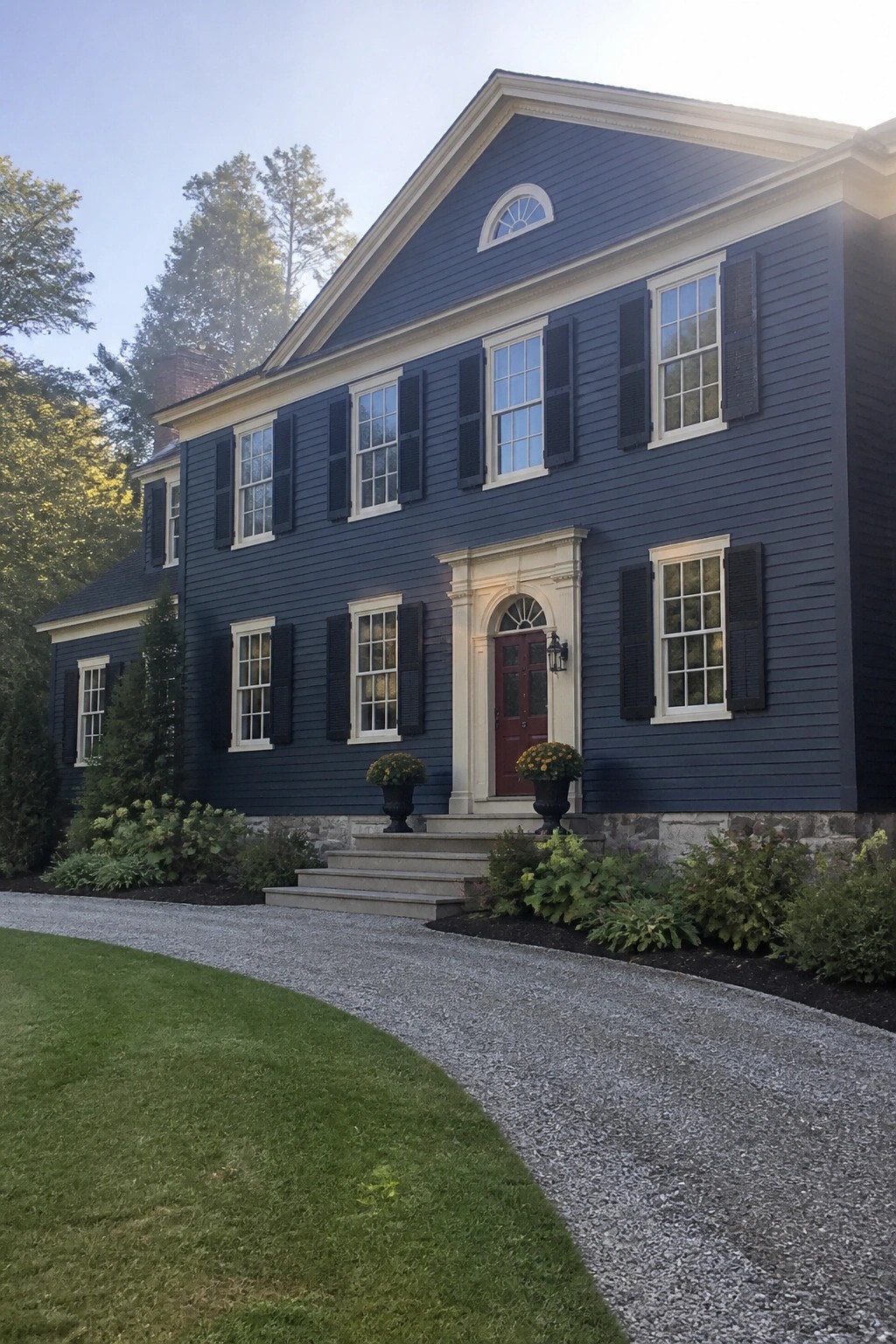
This deep navy blue gives a strong, clean look on a large two-story home. It reads as a true dark blue rather than black, and it stands out nicely against the white trim without feeling too heavy. Many people like this color because it feels traditional yet bold enough to make the whole house look updated.
The shade has cool undertones, so it stays crisp in bright light and pairs well with stone foundations or red brick accents. Sherwin Williams Naval and Benjamin Moore Hale Navy come close, along with Behr Midnight Blue if you want something slightly softer. It works best on homes with plenty of white trim to keep the contrast sharp.
Dark Green Siding Against Warm Brick
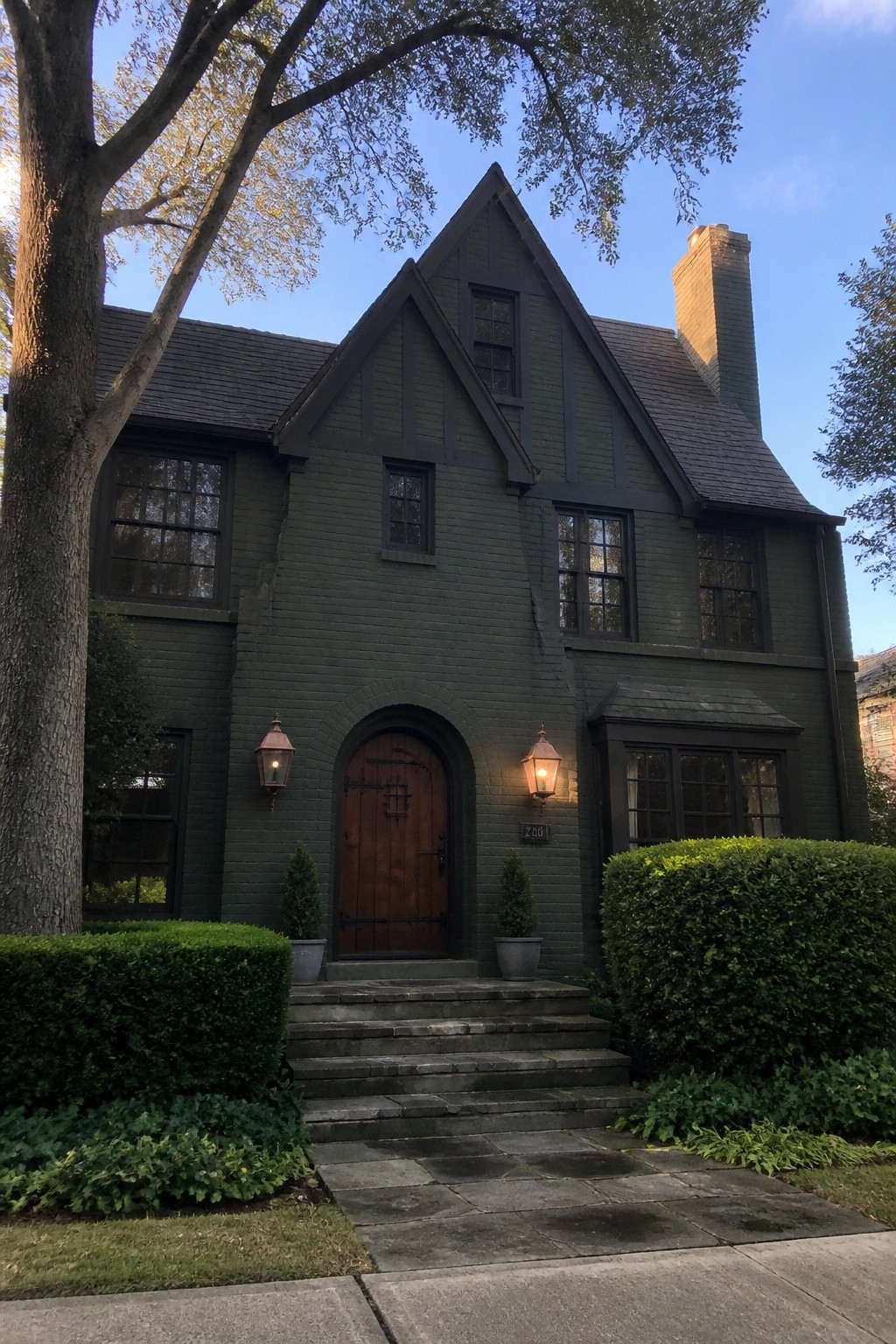
This deep blackened green on the siding makes a bold choice for large two-story homes. It reads as a dark forest green with cool undertones that gives the whole house a grounded, dramatic feel without going full black.
It works well on bigger exteriors because the depth keeps it from looking flat in daylight. Pair it with warm wood doors or red brick accents like the ones shown here, and consider charcoal roofing to balance the look. Similar shades include Sherwin Williams Forestwood, Benjamin Moore Black Forest Green, or Farrow & Ball Green Smoke.
Deep Blue Gray Siding Against Stone
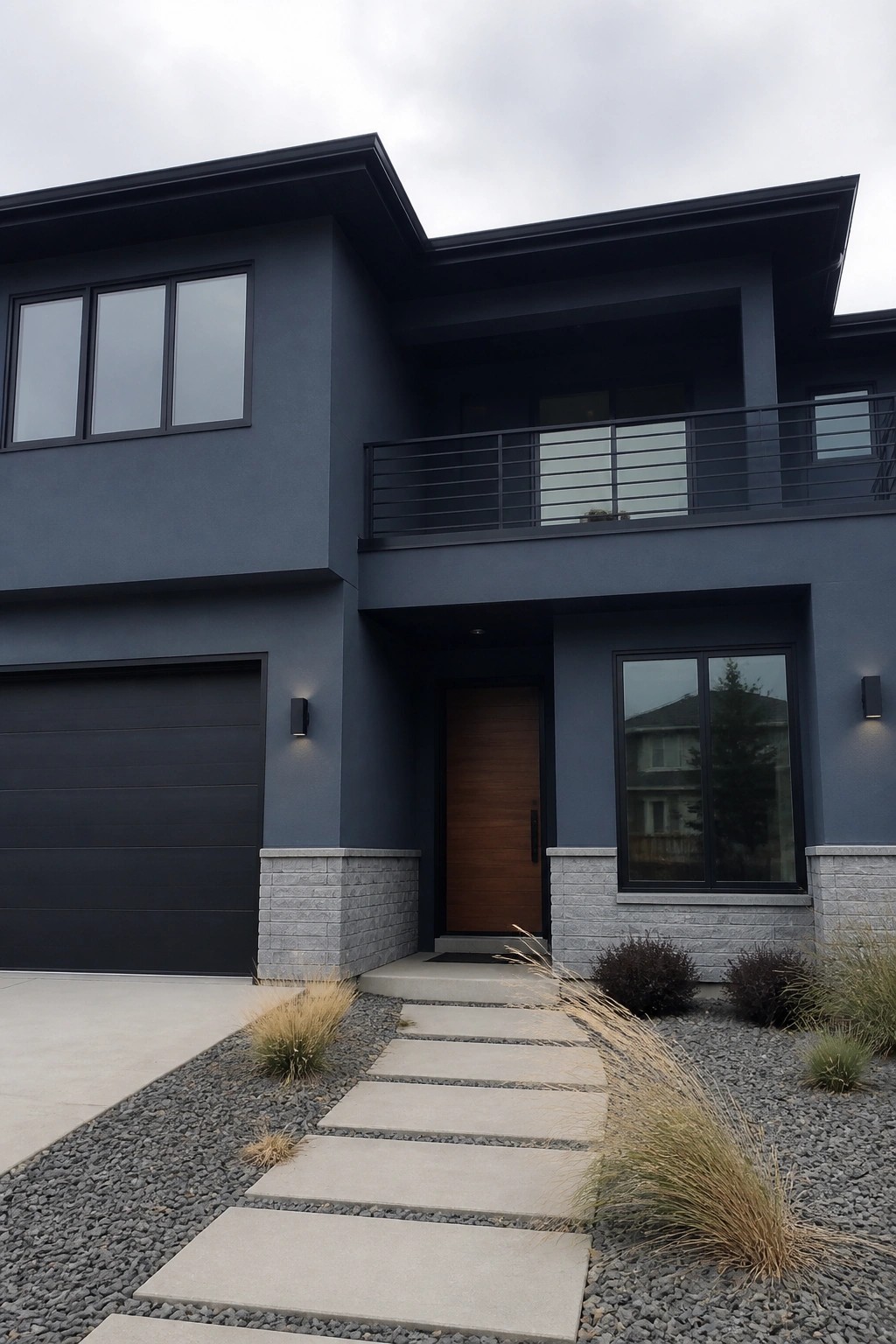
This deep blue gray gives a large two story home a solid, modern look without going full black. It sits right in that dramatic dark range the article is after and feels a bit softer than pure charcoal while still reading bold from the street.
The color has a cool undertone that pairs cleanly with the gray stone base and black windows. It works best on homes with simple lines and can handle a warm wood door to stop the whole thing from feeling flat or too stark.
Dark Gray Siding Against Natural Stone
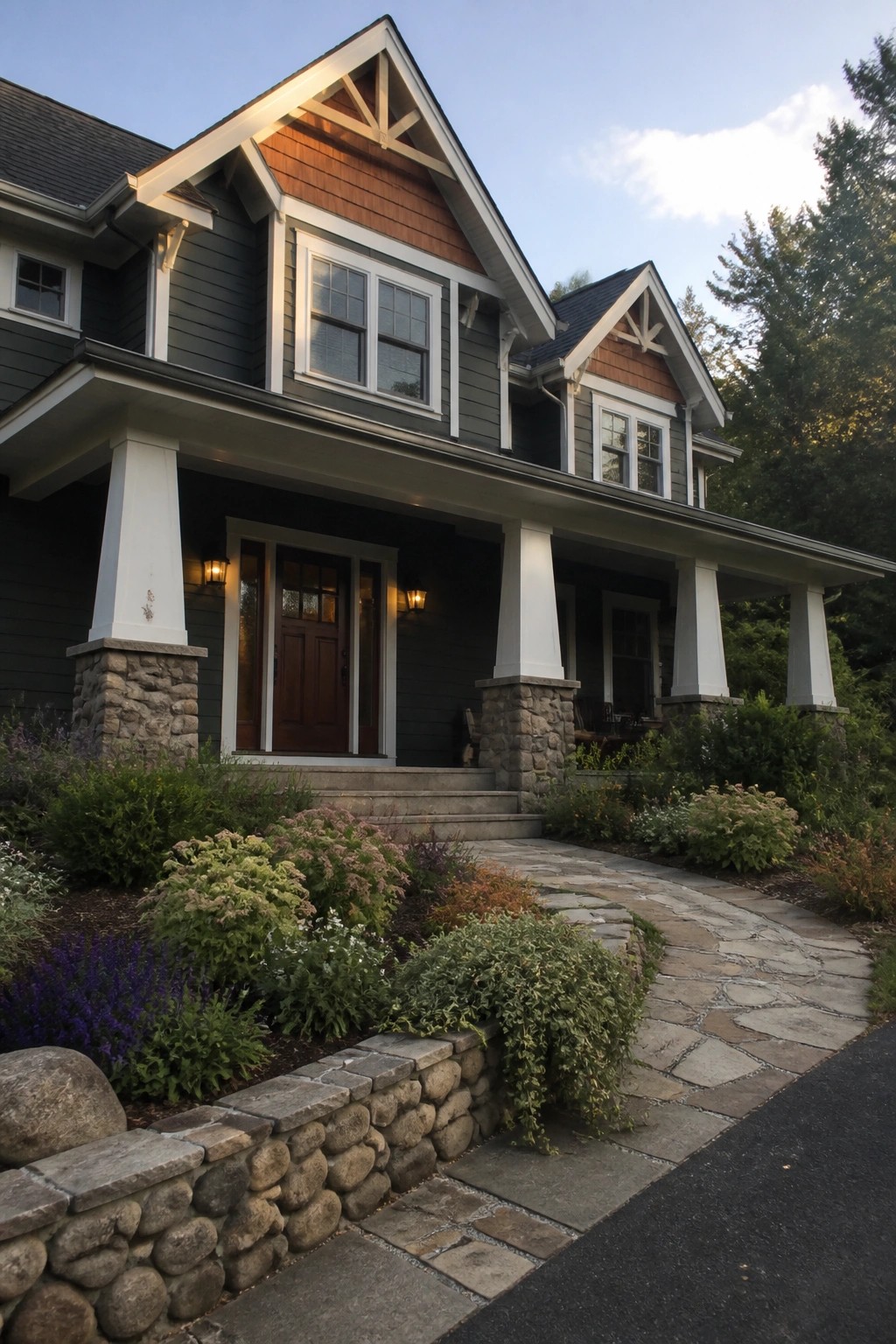
This deep charcoal gray works well on large two-story homes because it feels solid without looking flat. It reads as a cool, slightly blue-leaning gray that stays dark even in bright light. Many people like this shade because it gives the house presence while still letting the trim and roof stand out.
It pairs nicely with the light stone on the porch columns and the warm cedar accents above the windows. Colors like Sherwin Williams Iron Ore, Benjamin Moore Kendall Charcoal, or Behr Black Fox come close to this look. Just watch how it shifts if your house gets a lot of direct sun.
Deep Navy Blue Against White Trim
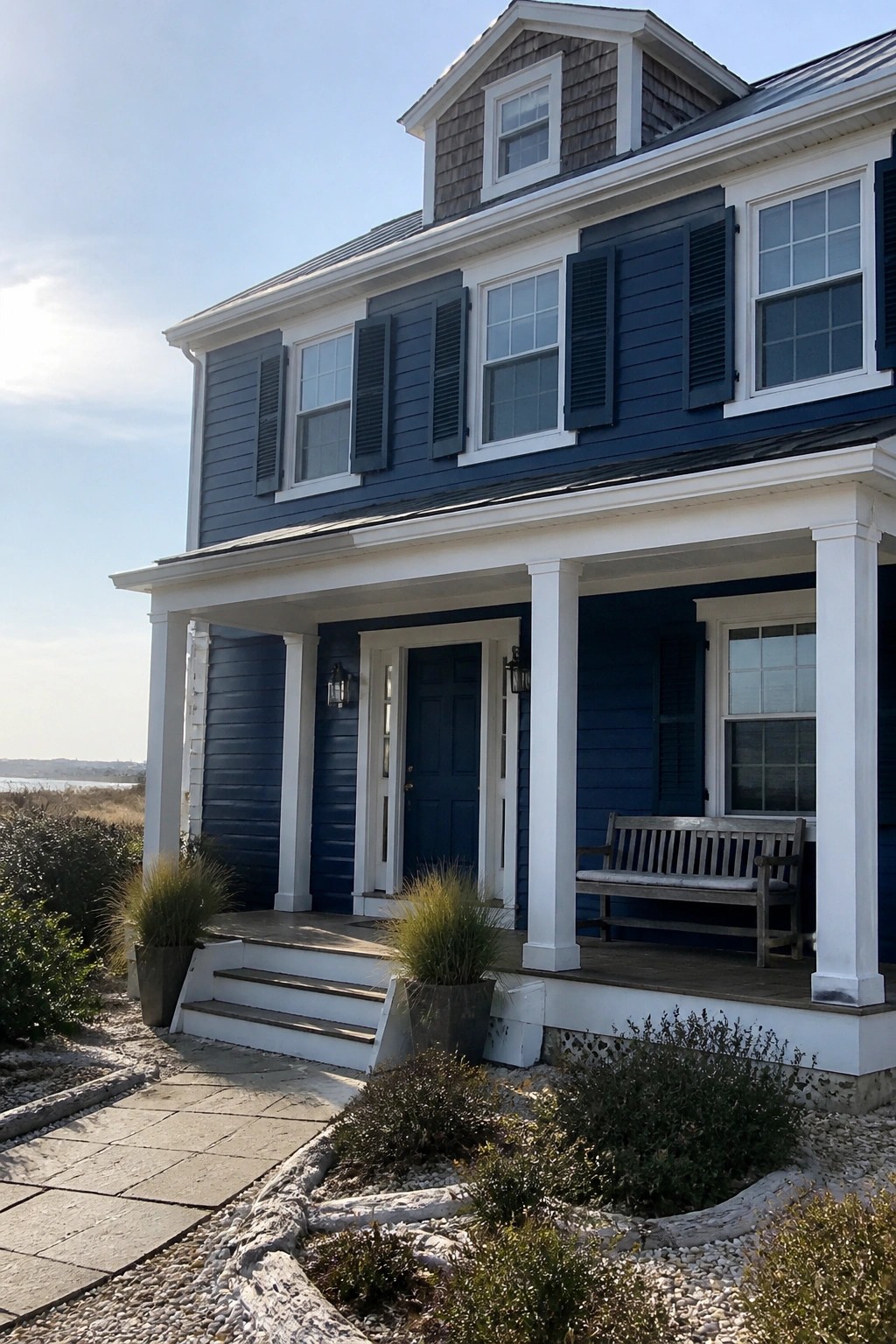
This deep navy blue works well on large two-story homes because it gives the whole house a solid, grounded look without feeling heavy. It reads as a true cool blue with just enough depth to stand out against the bright sky and light surroundings.
The color pairs best with white trim and simple wood details like the porch bench here. It holds up nicely in full sun and gives a clean traditional feel that suits coastal or open settings. Try something close to Sherwin Williams Naval, Benjamin Moore Hale Navy, or Behr Midnight Exterior.
Deep Black Trim Against Red Brick
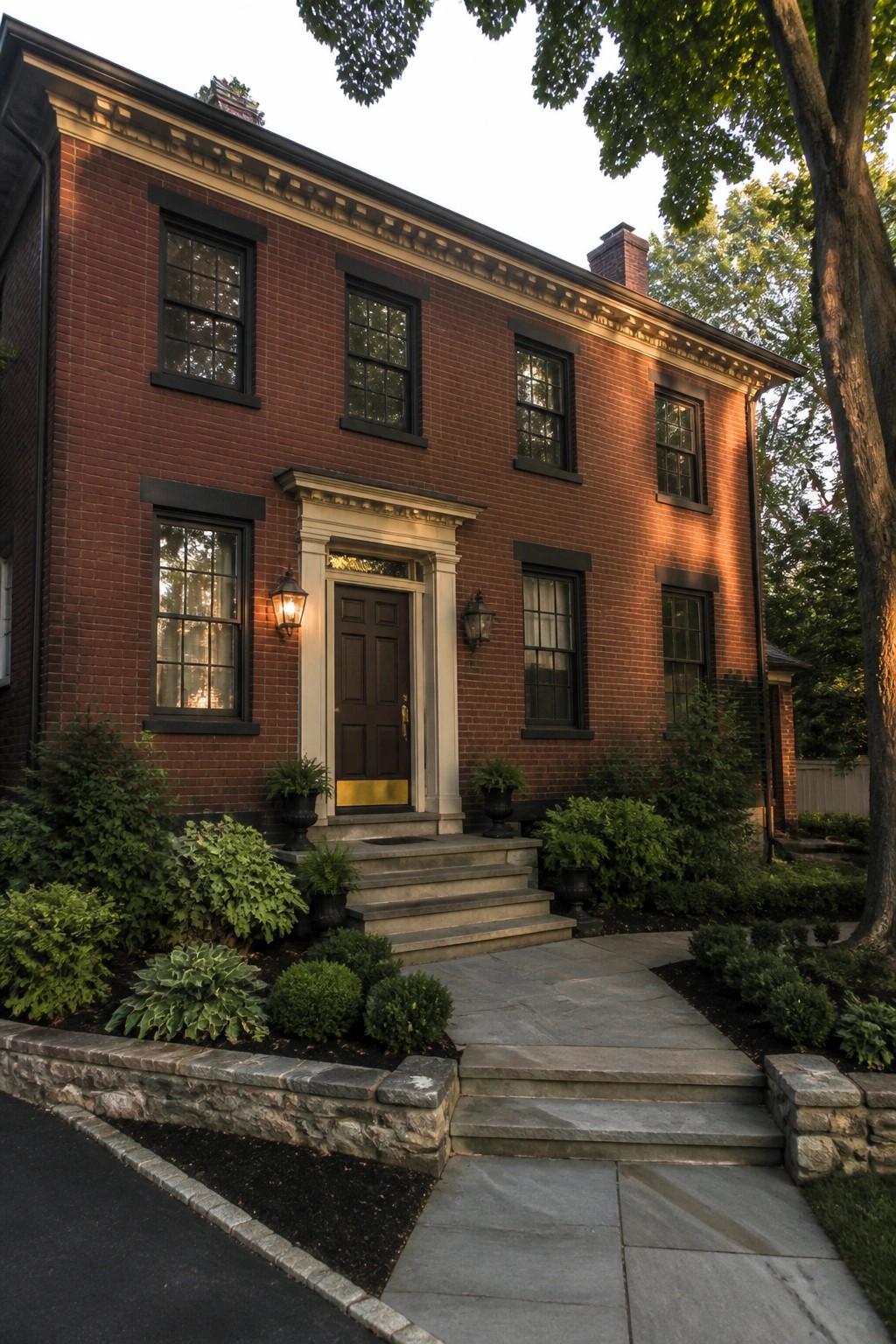
This deep black on the window frames and trim stands out sharply against the red brick of a large two-story home. It gives the house clear definition and keeps the brick from looking flat or too heavy.
The color has almost no undertone, so it stays crisp next to warm brick and stone details. It works best on traditional homes where you want the windows to feel grounded without adding extra color.
Deep Charcoal Gray With Warm Wood Accents
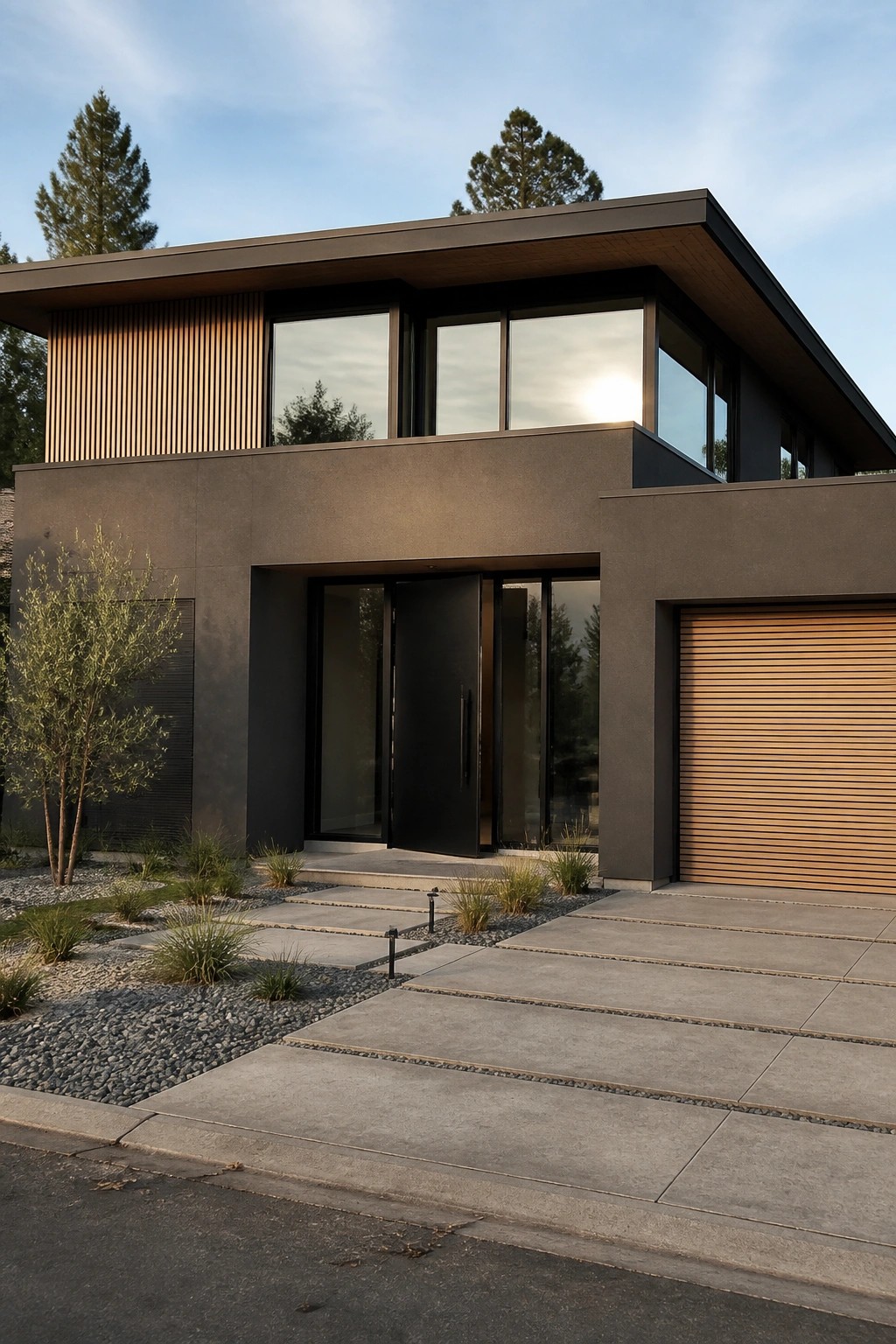
This deep charcoal gray gives a solid, grounded look to a big two-story house. It sits somewhere between gray and warm taupe, so it feels a little softer than straight black while still reading dark and dramatic from the street.
It works well when you keep the trim and windows black and bring in wood tones for contrast, like the vertical slats and garage door on this home. Sherwin Williams Iron Ore or Benjamin Moore Kendall Charcoal would be close matches, and both hold up nicely against natural wood and concrete on larger exteriors.
Deep Charcoal Against Natural Stone
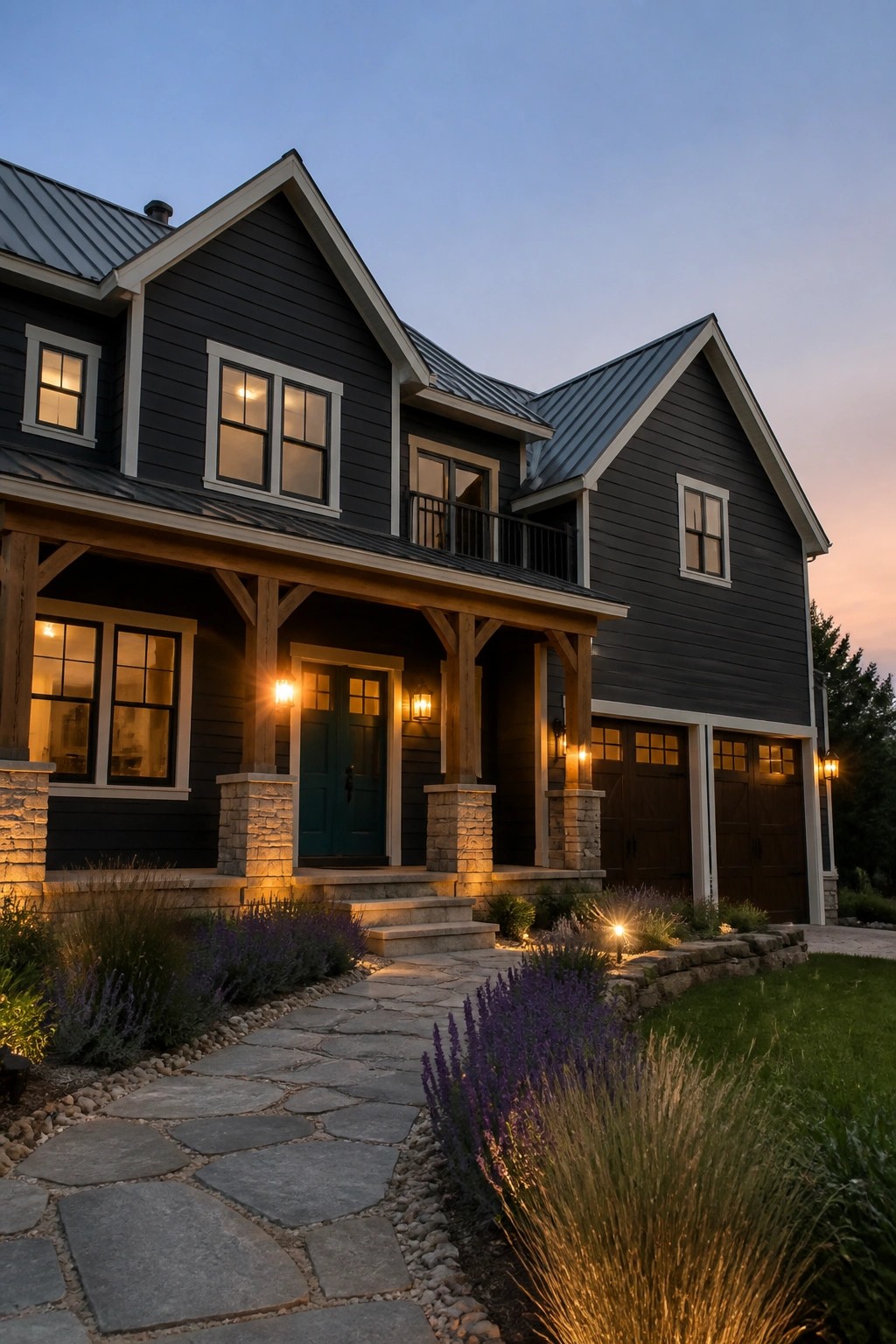
This deep charcoal gray gives a large two-story home real presence without feeling flat. It sits somewhere between black and slate, and the color holds its depth even as the light fades in the evening. Many people like it because it makes the whole house feel grounded and a little more modern while still working with traditional details.
The color has a slight cool lean that pairs well with the warm wood beams and light stone bases shown here. It also looks good with dark garage doors and simple white trim. Try it on homes with similar natural materials, but test a large sample first since the shade can shift depending on the roof color and surrounding landscaping.
Deep Berry Purple Siding With White Trim
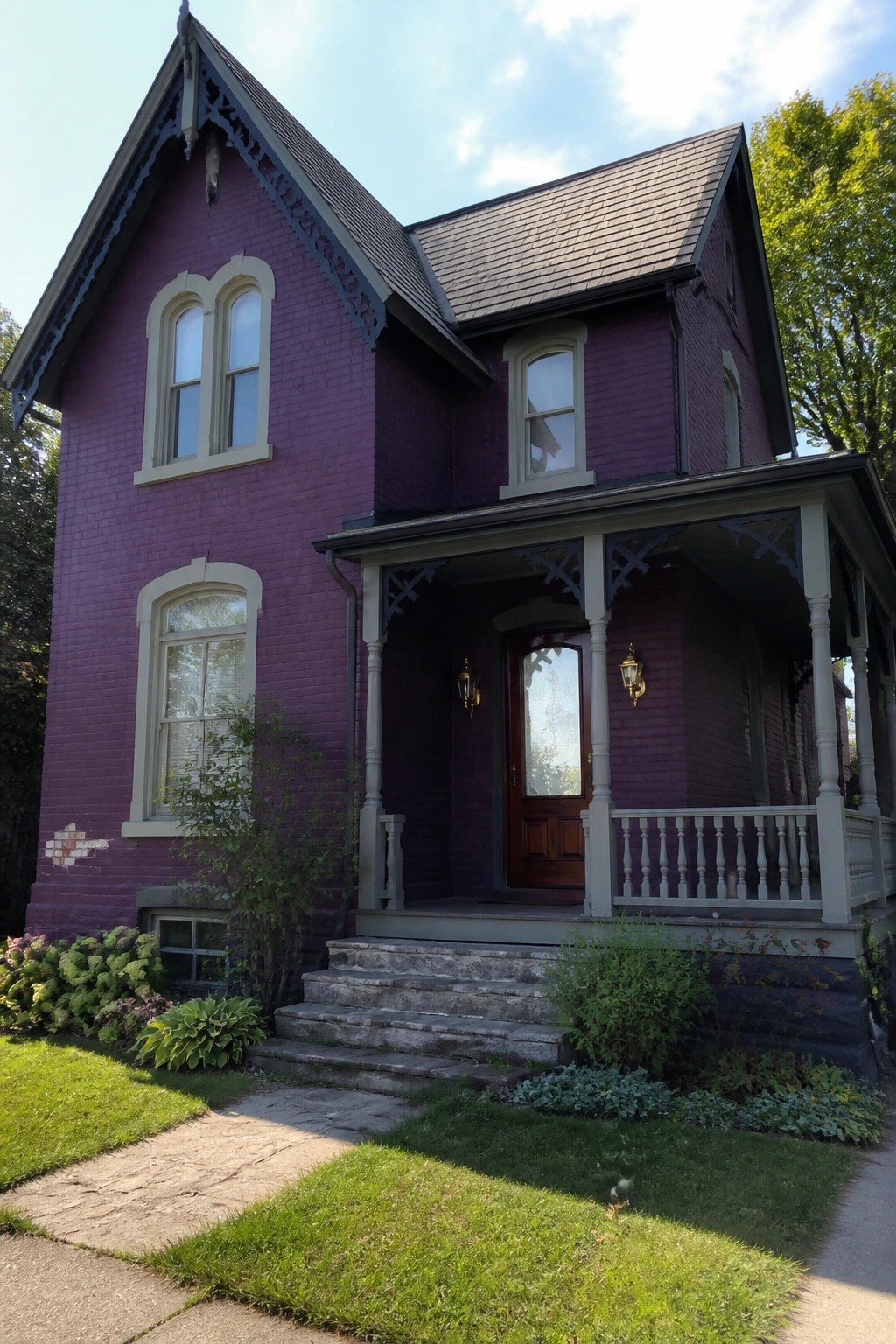
A deep berry purple like this one stands out on the siding of a large two-story home. The color brings a bold, saturated look that feels dramatic without turning too heavy, especially when the house has plenty of surface area to carry it.
It leans slightly warm with a red undertone that holds up well in daylight. Pair it with white or cream trim and a dark roof to keep the whole thing balanced. Colors in this range often sit close to Sherwin Williams Berrylicious or Benjamin Moore Purple Orchid.
Warm Charcoal Stucco With Wood Accents
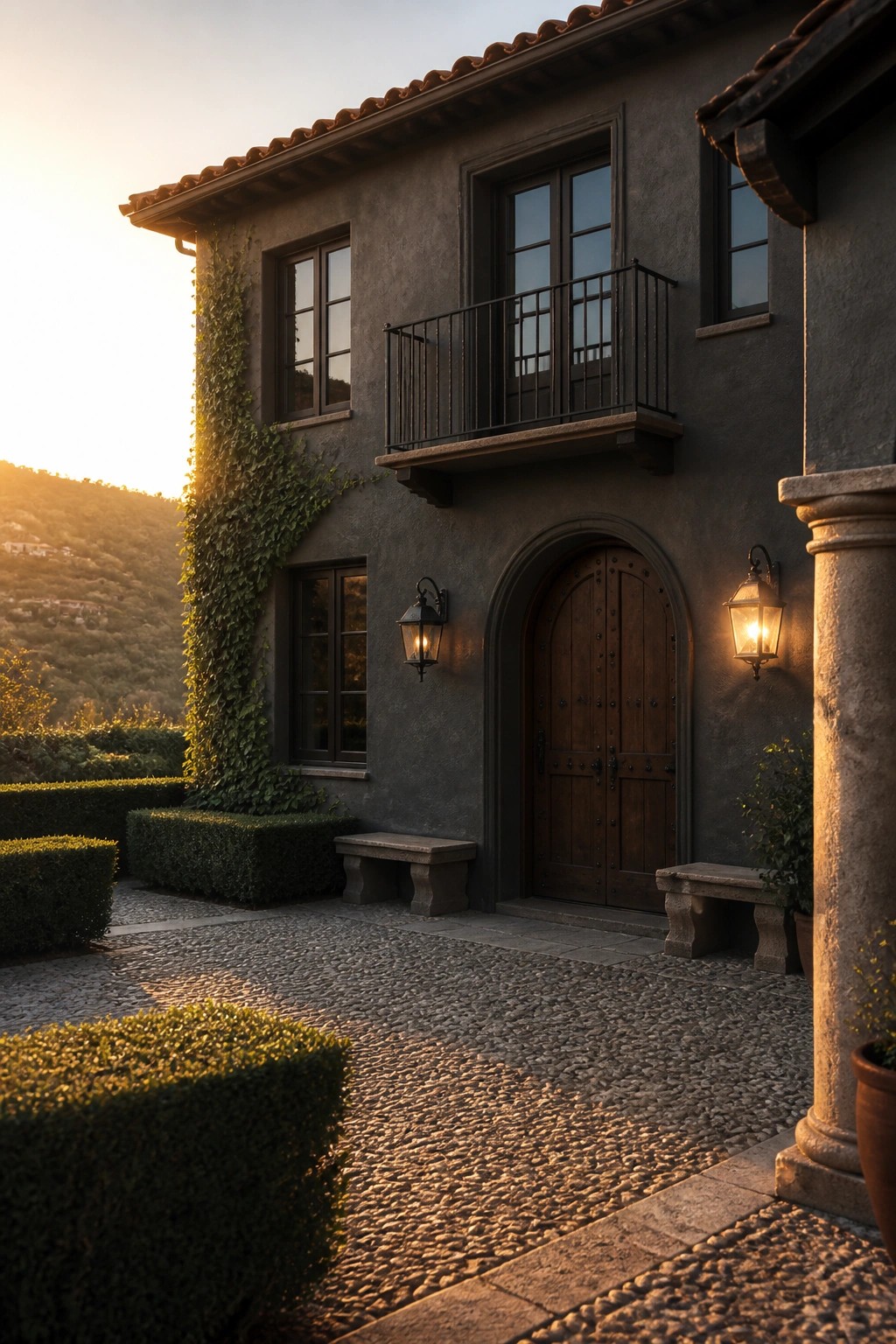
This deep charcoal gray on the stucco walls gives the house a solid, grounded look that still feels warm. The color sits between gray and brown, which helps it pick up the tones from the wood door and terracotta roof without turning cold or flat. It works especially well on larger two-story homes because the depth keeps the scale from feeling overwhelming.
It reads a little softer in warm light and pairs best with natural wood, dark metal, and stone details. Try something close to Sherwin Williams Iron Ore, Benjamin Moore Kendall Charcoal, or Behr Black Fox if you want a similar effect. Just test it on a bigger patch first, since the undertone can shift depending on the roof color next to it.
Deep Black Siding With White Trim
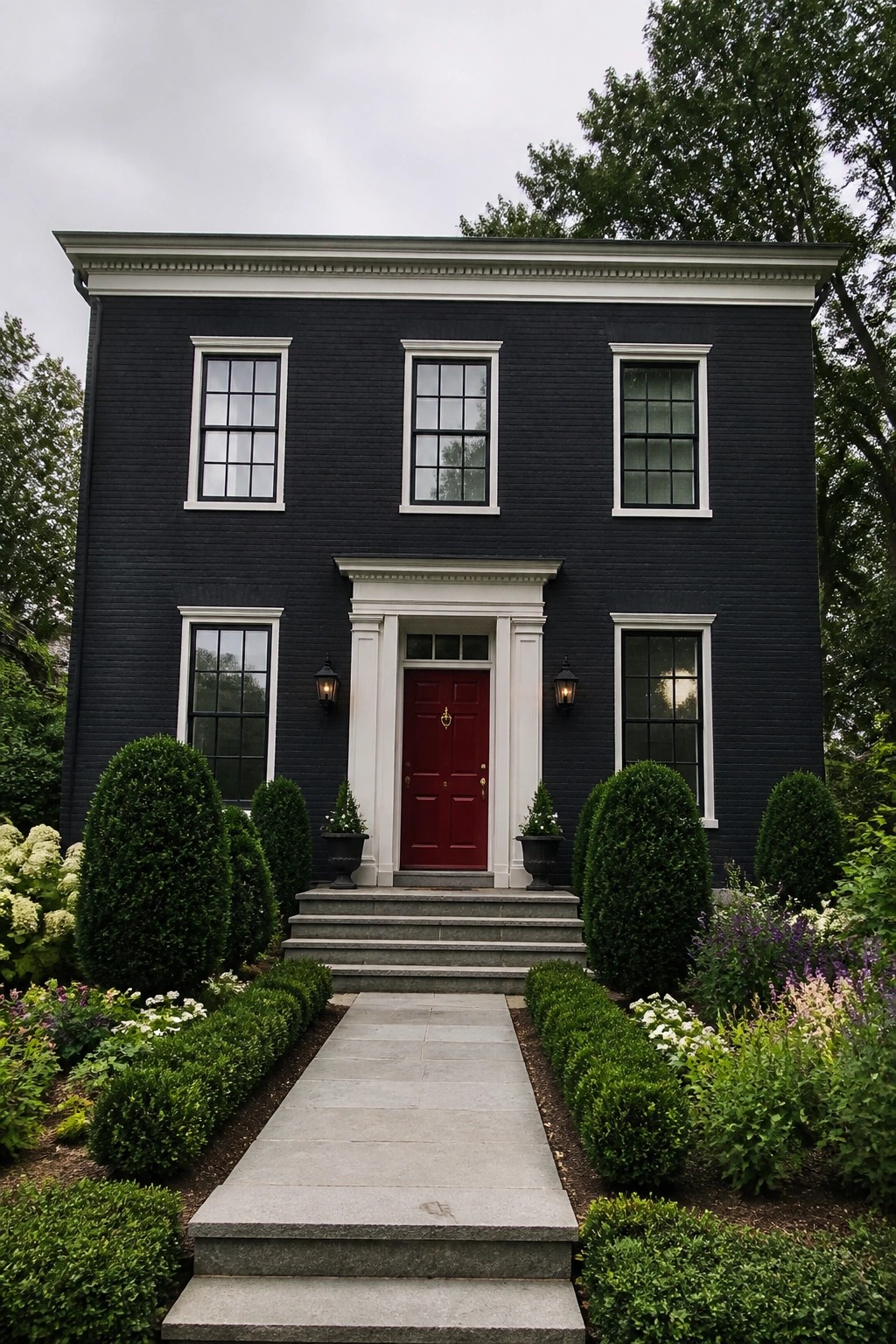
This deep black paint on the siding gives a large two-story home a strong, grounded look. It reads as a true black with very little warmth, which helps it stand out cleanly against lighter details without feeling heavy in daylight.
The color works especially well when paired with white trim and a bright front door. It holds up nicely on bigger surfaces like this, though it can show dust or pollen more than a softer dark would. On homes with simple lines and good natural light, it creates a sharp traditional feel.
Deep Green Siding With White Trim
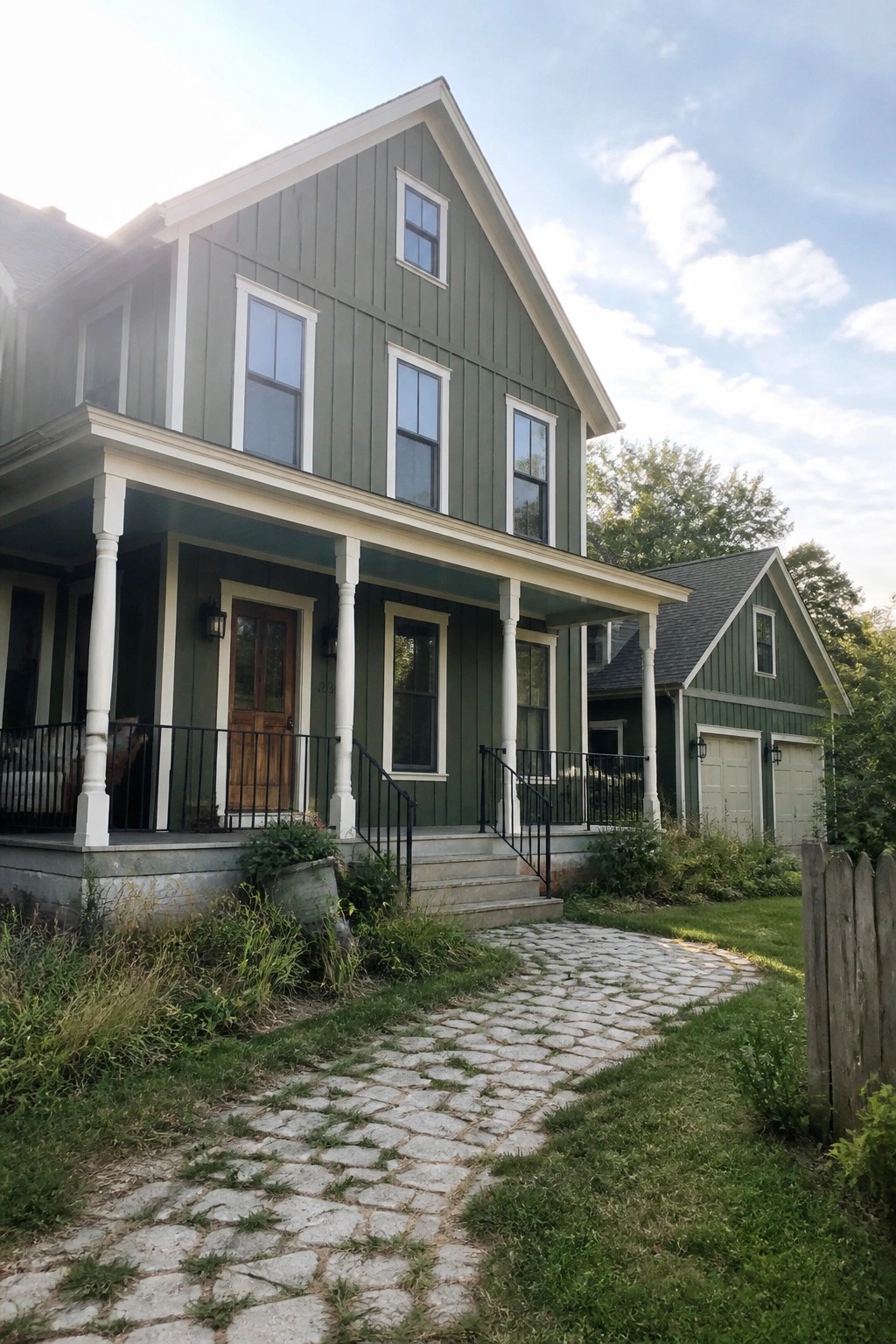
This deep green works well on large two-story homes because it feels solid without turning too heavy. The color sits somewhere between a forest green and a muted olive, and it holds its own against bright daylight while still looking grounded next to the white columns and trim.
It pairs best with crisp white details and light stone foundations, which keep the whole house from feeling too dark. On a home this size the shade needs that contrast, otherwise it can read flat. Similar colors include Sherwin Williams Evergreen Fog, Benjamin Moore Forest Green, Behr Forest Floor, and Farrow & Ball Green Smoke.
Deep Teal Green Siding With White Trim
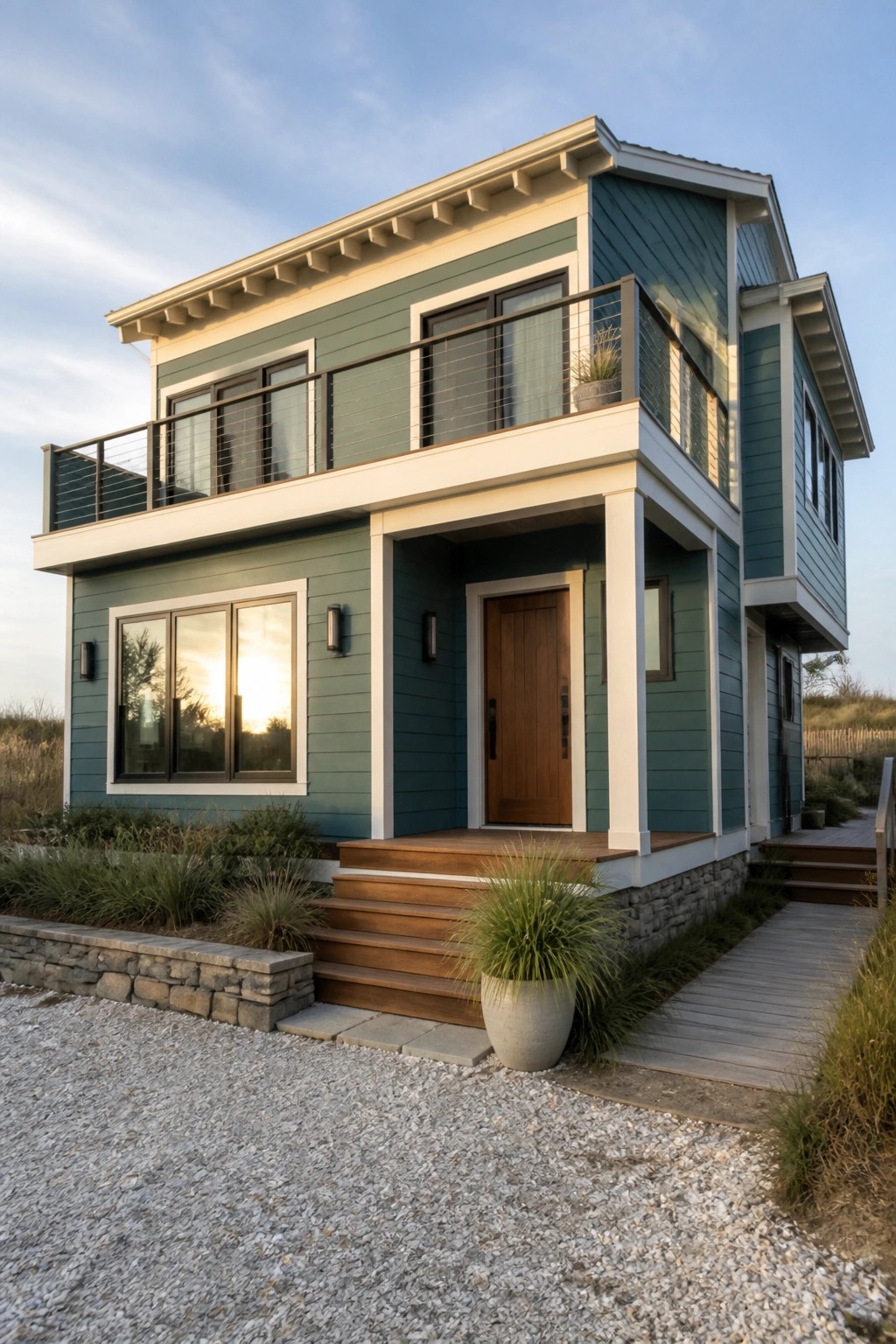
This deep teal green works well on large two-story homes because it feels bold without turning too harsh. The color sits in that blue-green range, giving the siding a cool but grounded look that still reads as dramatic from the street. It pairs naturally with white trim and wood accents, which keep the whole exterior from feeling heavy.
The shade has a slight blue lean that shows up more in bright light. It tends to work best on homes with simple trim details and some natural wood or stone nearby. Try it with charcoal roofing or black windows if you want extra contrast. Popular matches in this range include Sherwin Williams Ivy League, Benjamin Moore Blue Note, Behr Midnight Teal, and Farrow & Ball Inchyra Blue.
Slate Gray Brick With Dark Wood Entry
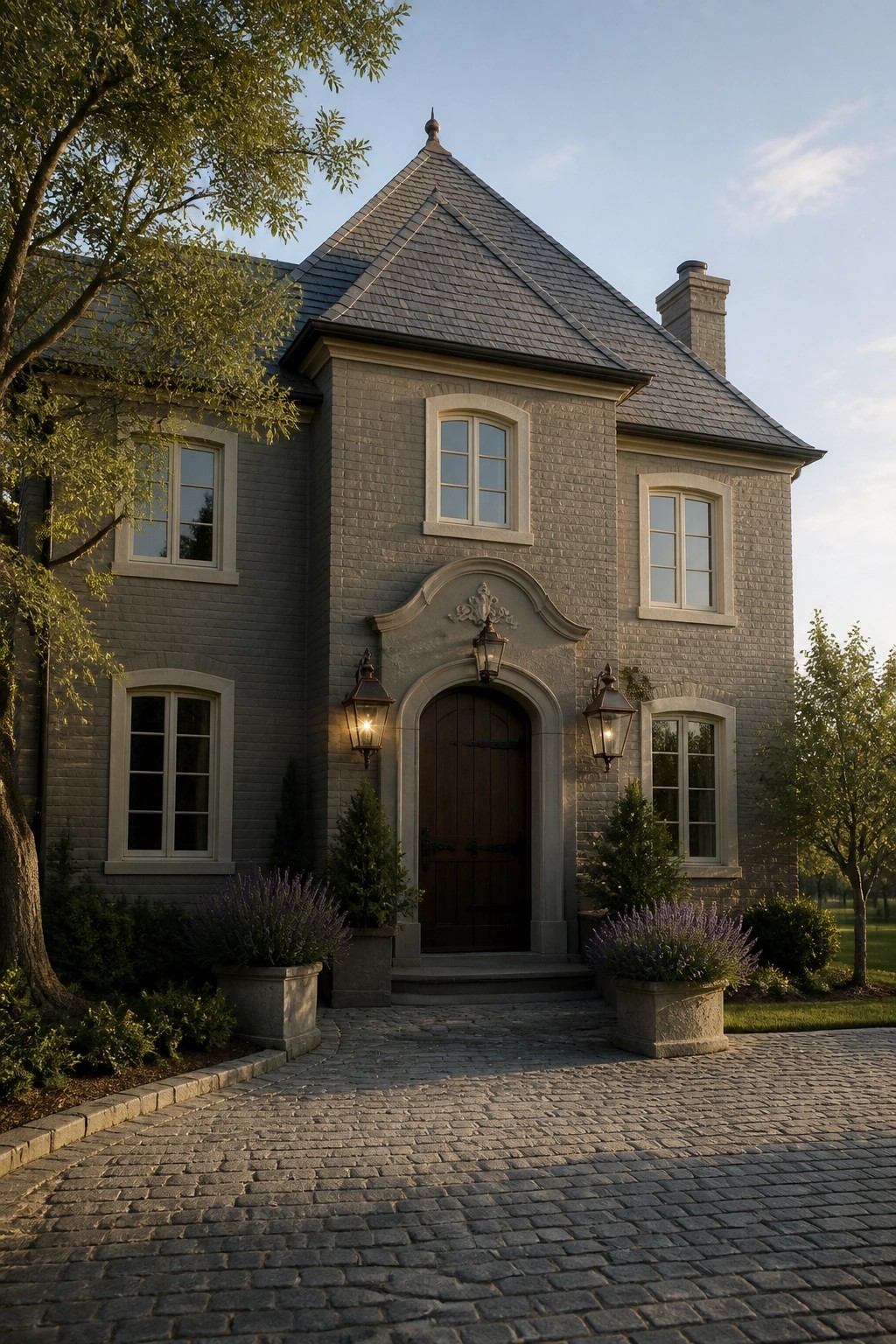
A slate gray brick finish gives this large two-story home a solid, grounded look without feeling heavy. The color sits in a middle range that reads neither too cool nor too warm, which helps it hold up well on bigger exteriors where lighter shades can wash out and darker ones can feel flat.
It pairs cleanly with the dark wood door and stone trim, and the texture of the brick keeps the gray from looking too flat in changing light. On homes like this, the same shade works best when the roof and windows stay in a similar depth so nothing pulls too hard against it.
Deep Navy Siding With Warm Wood Ceilings
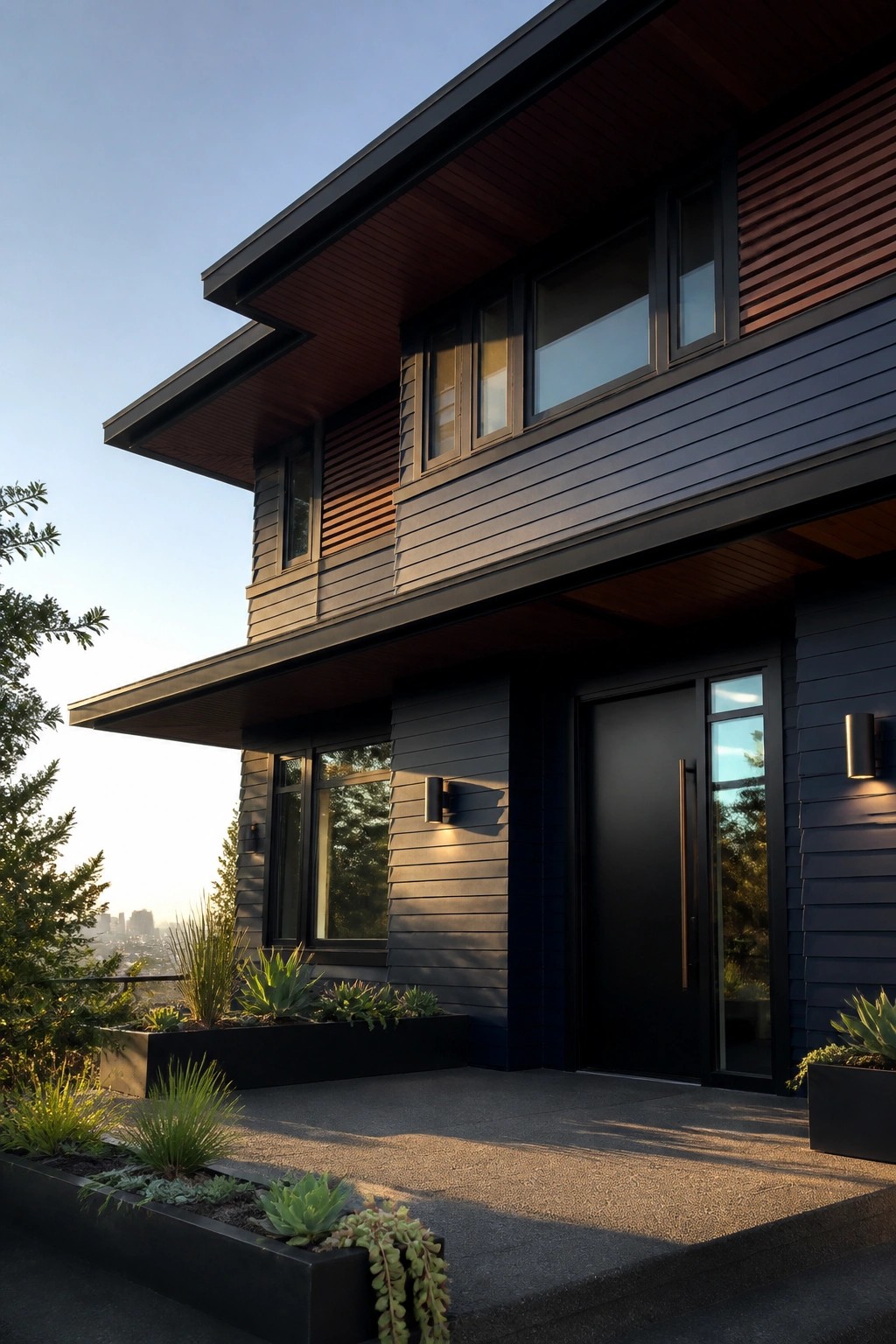
This deep navy color works well on bigger two-story homes because it gives a strong, modern shape without looking heavy. It reads as a cool, near-black blue that still shows some depth in daylight. Many people like it for the way it makes the house feel grounded while keeping a clean look.
It pairs nicely with warm wood ceilings and black windows, which help soften the darkness. Colors like this can lean a bit cooler outside, so they often look best on homes with some natural wood or lighter trim to balance them. Sherwin Williams Naval or Benjamin Moore Hale Navy would be close matches, though the exact shade can shift with the light.
Warm Barn Red Siding Against Stone
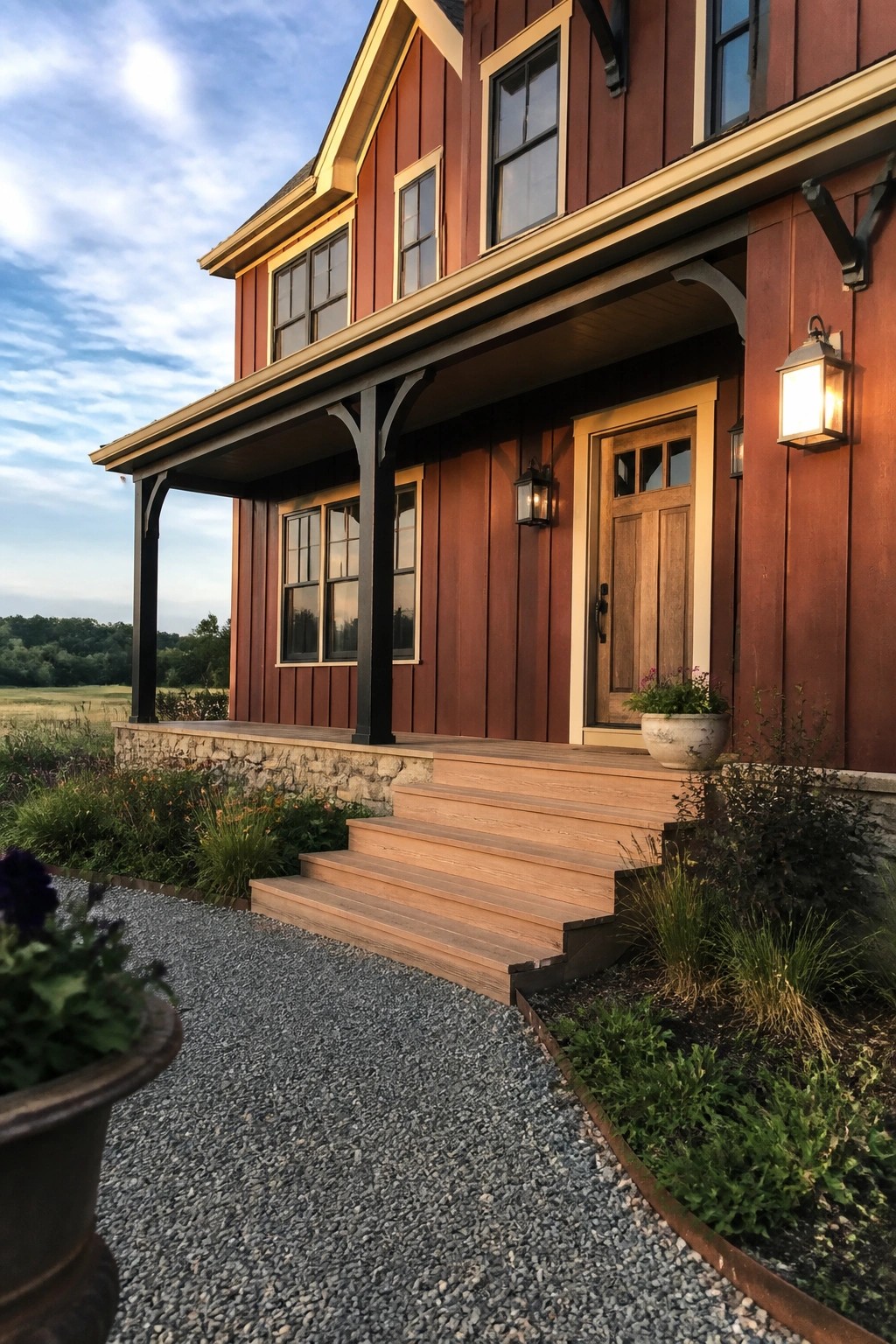
This deep red siding color brings a strong traditional feel to a large two-story home. It reads as a warm barn red that holds its depth even when the light starts to fade.
The tone sits nicely next to natural stone and black trim without looking too heavy. It works best on wood exteriors that have some texture and pairs well with simple landscaping or open settings. Try it if you want something bolder than a neutral but still classic.
Deep Purple Gray Against Stone Trim
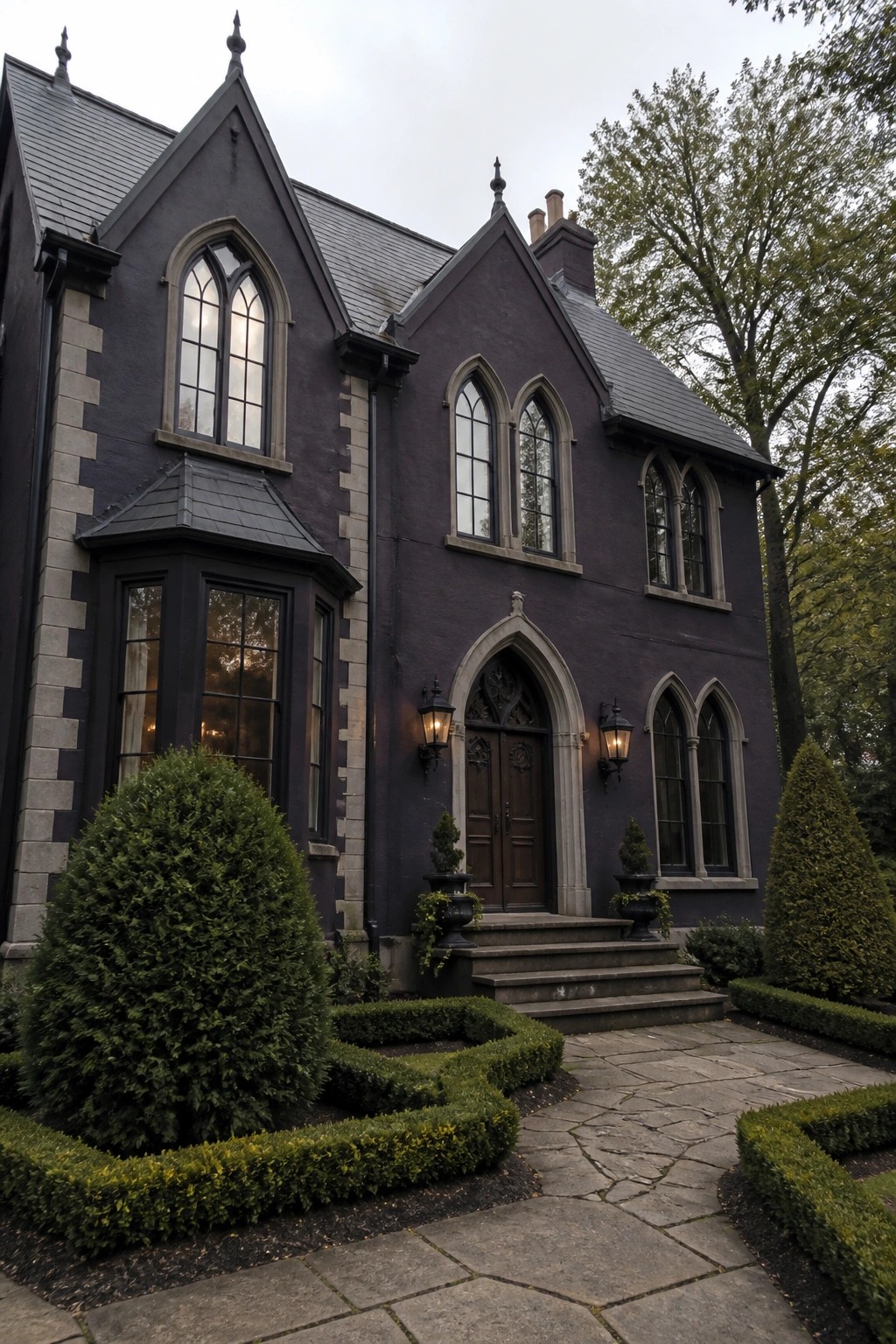
This deep purple gray makes a strong choice for large two-story homes that need something darker than charcoal but still feel a bit different. It sits between black and plum, giving the siding a rich, moody look that stands out without looking flat.
The color leans cool and works best when paired with lighter stone or pale trim to keep it from feeling too heavy. It holds its depth well on big surfaces and pairs nicely with dark windows or roofing for a cohesive traditional exterior.
Dark Greige Siding With Stone Bases
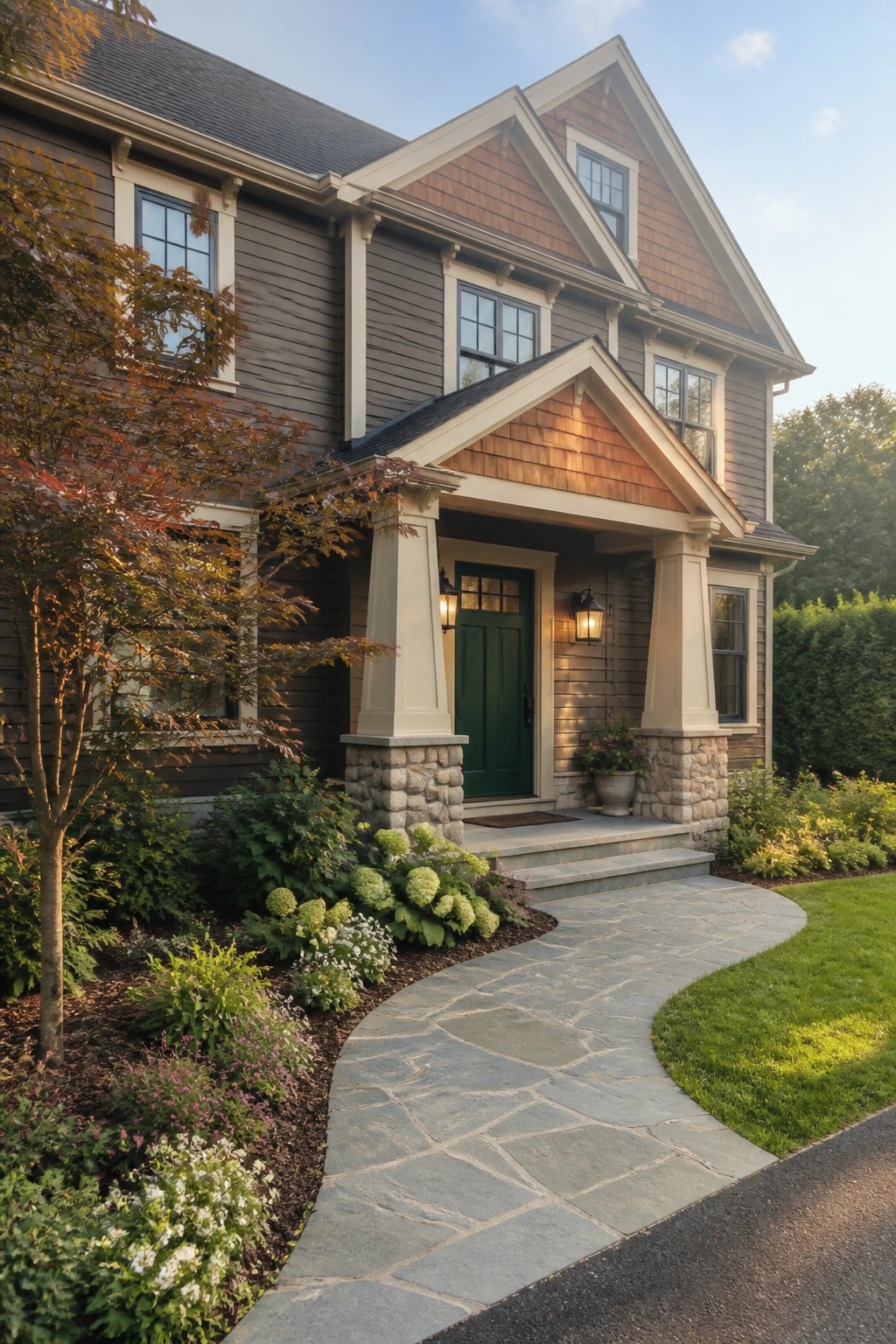
This dark greige siding gives a large two-story home a solid, grounded feel without looking flat or overly stark. It sits between gray and brown, which keeps the color from going too cold while still reading as dramatic from the street.
It pairs nicely with the natural stone at the porch bases and the warmer wood shingles near the roofline. Colors in this range can look a little different depending on the light, so it helps to test a big patch on your own siding first. Try it with warm white trim if you want a softer contrast, or black windows if you prefer something sharper.
Frequently Asked Questions
Q: Will dark paint on my two-story house fade or show wear faster than lighter options? A: Dark shades pick up sun damage and dust more visibly across big wall areas. Clean the siding with a hose and soft brush every six months to stop grime from settling in. A quality exterior paint with built-in UV blockers slows the process without extra layers.
Q: Can I paint just the front of the house dark and leave the sides lighter? A: Use the same deep color all the way around. Mixing tones tends to break up the shape and loses the bold look the article describes.
Q: What trim shade works with these dramatic dark colors without clashing? A: Try a clean off-white or soft gray on the trim and eaves. Brush a test patch on the actual wall first because morning light and evening light shift how the pair reads from the street.
Q: Do dark colors pull in extra heat on a large home? A: They do draw more sunlight so upstairs rooms can feel warmer on clear days. But solid insulation and roof vents usually balance the difference without major changes.
