


I’ve noticed that blue houses grab attention from the street, but their entrances often feel stark unless you layer in the right plants to soften the facade. Those bold hues work best when greenery echoes cool tones or adds texture around the door and steps, making the whole front read more welcoming. A few years back, I tested silver-foliaged options near a neighbor’s blue siding, and it grounded the color while highlighting the roofline beautifully. People tend to zero in on the entry first, so plants that frame it without crowding the path really elevate curb appeal. A handful from this set have stayed on my radar for adapting to different lot sizes.
Potted Topiaries Beside the Front Door
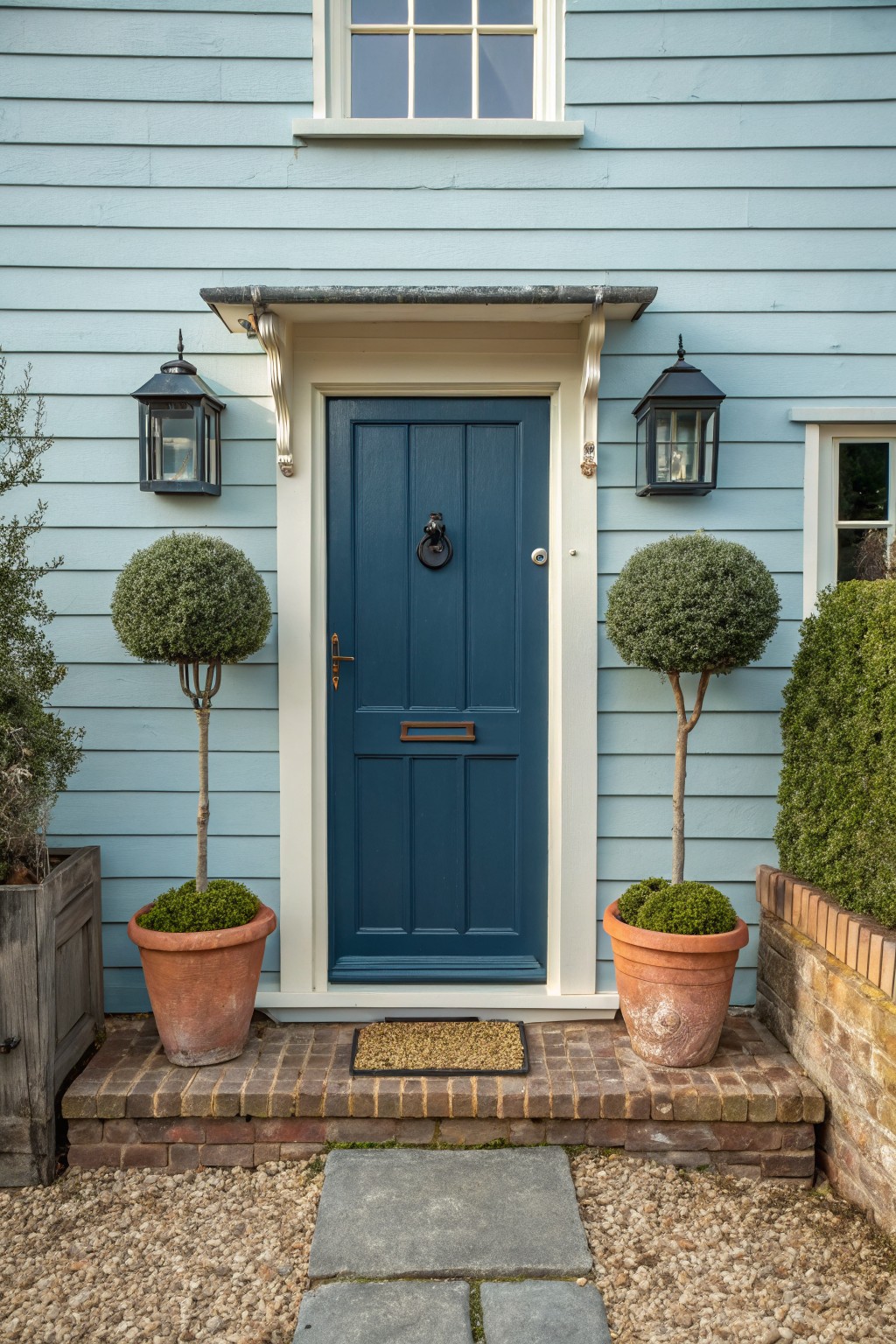
A pair of tall topiary trees in matching terracotta pots sits right next to the door on this light blue house. They give the entry a neat, formal look that fits the classic clapboard siding and navy door. The green shapes repeat the door’s panels in a subtle way, and they stay green all year without much work.
These work best on smaller front steps or porches where you want some height without crowding the space. Go for evergreens like boxwood that hold their shape. Keep the pots simple and earthy so they don’t fight the house color. On a blue exterior like this, they make the door pop more and add that welcoming touch for guests.
Recommended Products

【Realistic Cedar Topiary Design】Bring timeless greenery to your space with VIVATREES artificial cedar trees featuring a natural pyramidal shape and dense layered foliage. Delicate branch details and realistic green leaves create an authentic evergreen look without the maintenance.
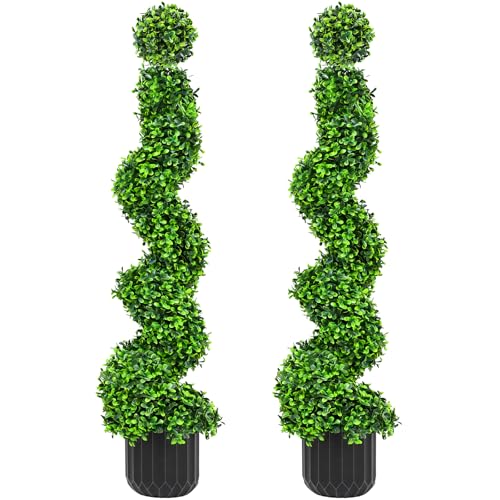
Highly Realistic Spiral Design: The artificial spiral boxwood tree features dense, realistic PE material leaves. Utilizing advanced simulation technology, it perfectly mimics natural boxwood trees in both touch and sight, never fading or withering, and remaining evergreen throughout the year, the striking spiral shape adds an elegant visual texture, each leaf on the tree has a natural color and texture, features a lifelike , closely resembling the texture and appearance of a real boxwood tree

【All-in-One: Square Black Pot + Fillable Water Bag】Crafted from premium PE material, this 5FT artificial cedar tree comes ready in a stylish square black pot—no separate planter needed. Made from eco-friendly PP, the pot is reusable with a drainage hole. Includes fillable water bag for stability. Your outdoor tree for porch stays upright on windy days.
Boxwoods Line the Entry Path
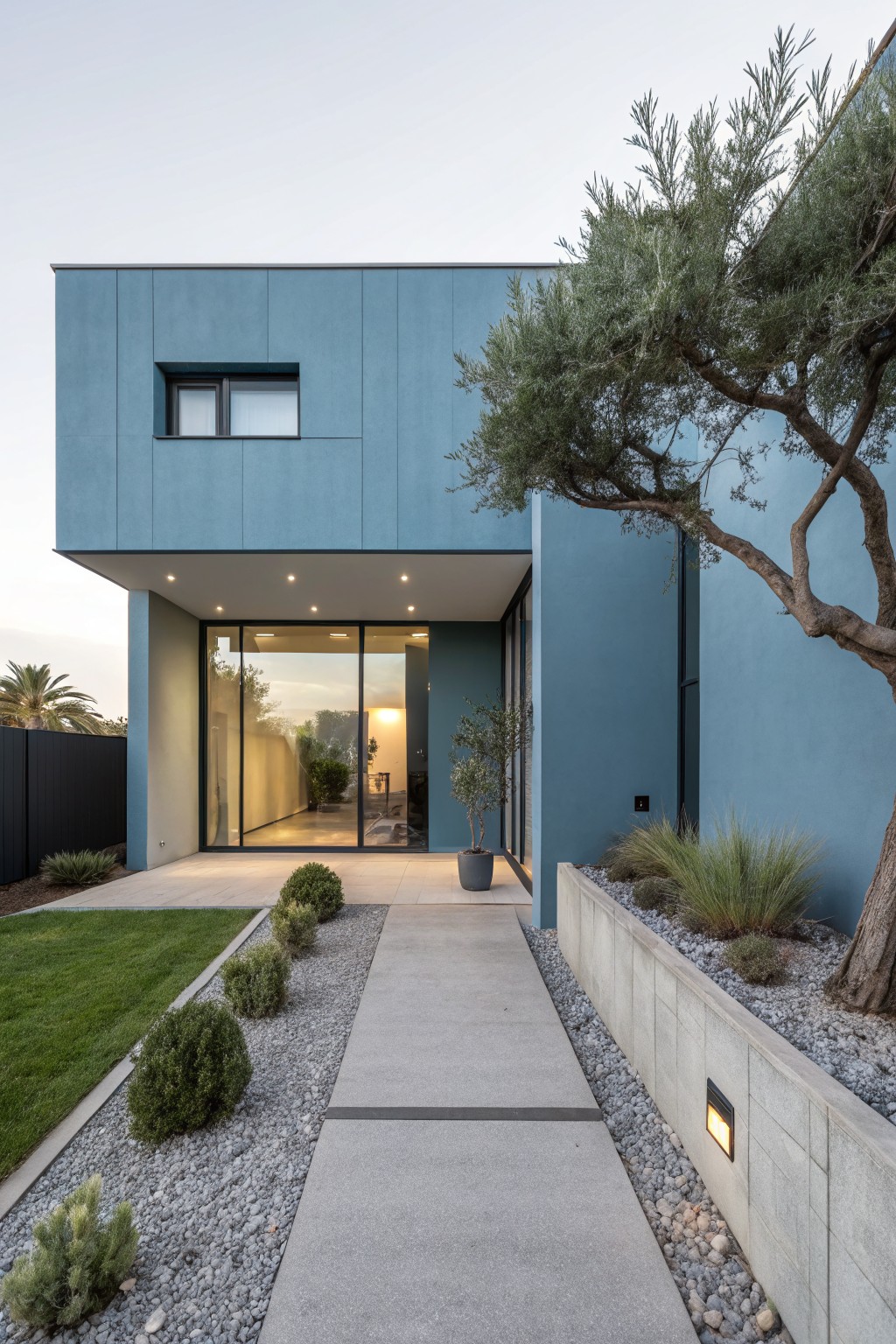
Boxwoods trimmed into neat spheres work great here along the concrete walkway. They create a simple rhythm that guides you straight to the door, adding some structure without much fuss. The deep green stands out clean against the blue siding, and it keeps things looking sharp year-round.
You can pull this off on most front approaches, especially modern homes with bold colors like blue. Space them evenly every few feet, tuck gravel or low grasses alongside for easy upkeep. They handle sun fine and stay compact if you trim a couple times a year. Skip if your spot stays too shady.
Recommended Products

Thrives in USDA Zones 5-9

✅【Artificial Boxwood Ball Tree】Enhance your experience with our meticulously crafted pruning tree featuring an ultra-realistic tree that mimics the beauty of nature, the included heavy-duty ground spikes allow for flexible placement in pots, planters, or porch gardens, perfect for adding timeless elegance to both indoor and

【Topiary Trees Artificial Outdoor】Designed as premium topiary trees artificial outdoor, this UV-resistant boxwood balls delivers structured evergreen beauty for front porch decor, entryway styling, and year-round outdoor artificial boxwood display
Lavender Beds Around Blue Entries
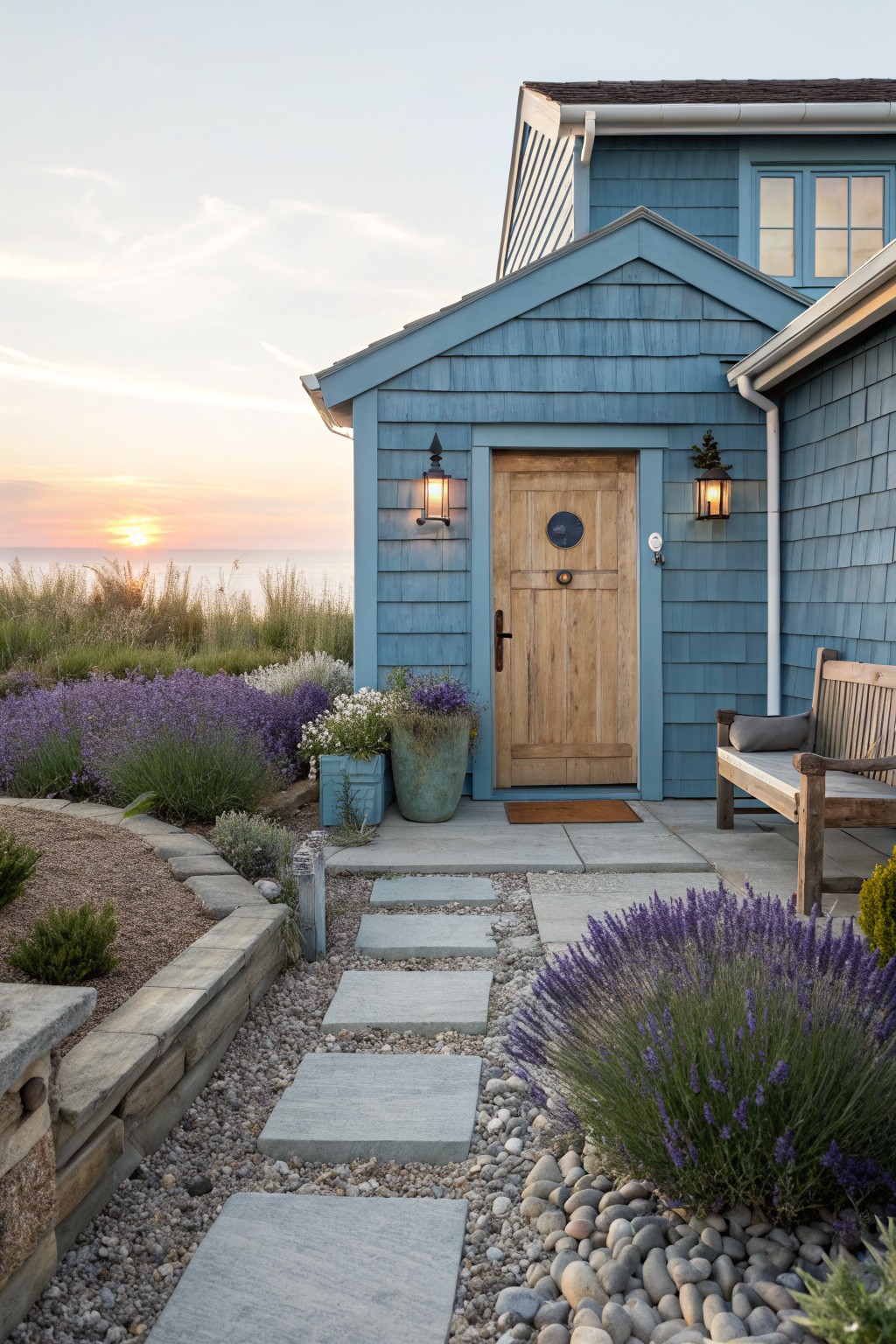
Lavender beds work really well around the front door of a blue house like this one. The purple blooms stand out sharp against the siding, and they guide your eye right along the stone path to the wooden door. It’s a simple planting that feels natural and adds a bit of scent when you walk up.
Try edging the walkway with low lavender clusters on homes with blue or gray tones. It suits coastal spots or sunny yards best, since lavender likes good drainage and not too much water. Keep the beds curved and mixed with some gravel for easy care.
Recommended Products

【2 Pot Set】: Get 2 lavender eucalyptus leaf potted plants at once (both 17 inches wide and tall). Skip the hassle of buying single pots and planting them yourself,achieve double the decorative impact and satisfaction at a better value

【Full and Lifelike】 : This is a large wreath made of purple lavender and green eucalyptus leaves,featuring the word "Welcom" at its center.We used hundreds of lavender and eucalyptus leaves to make the wreath large and full and lifelike
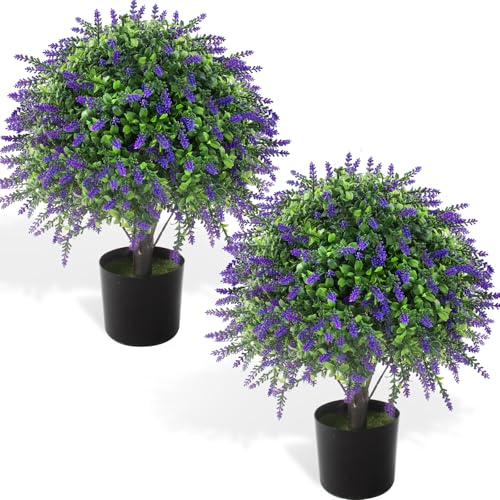
High fidelity design :Exquisite restoration of lavender form, with full and fresh purple flowers and green leaves, creating a natural and realistic visual experience.
Tall Grasses in Linear Planters
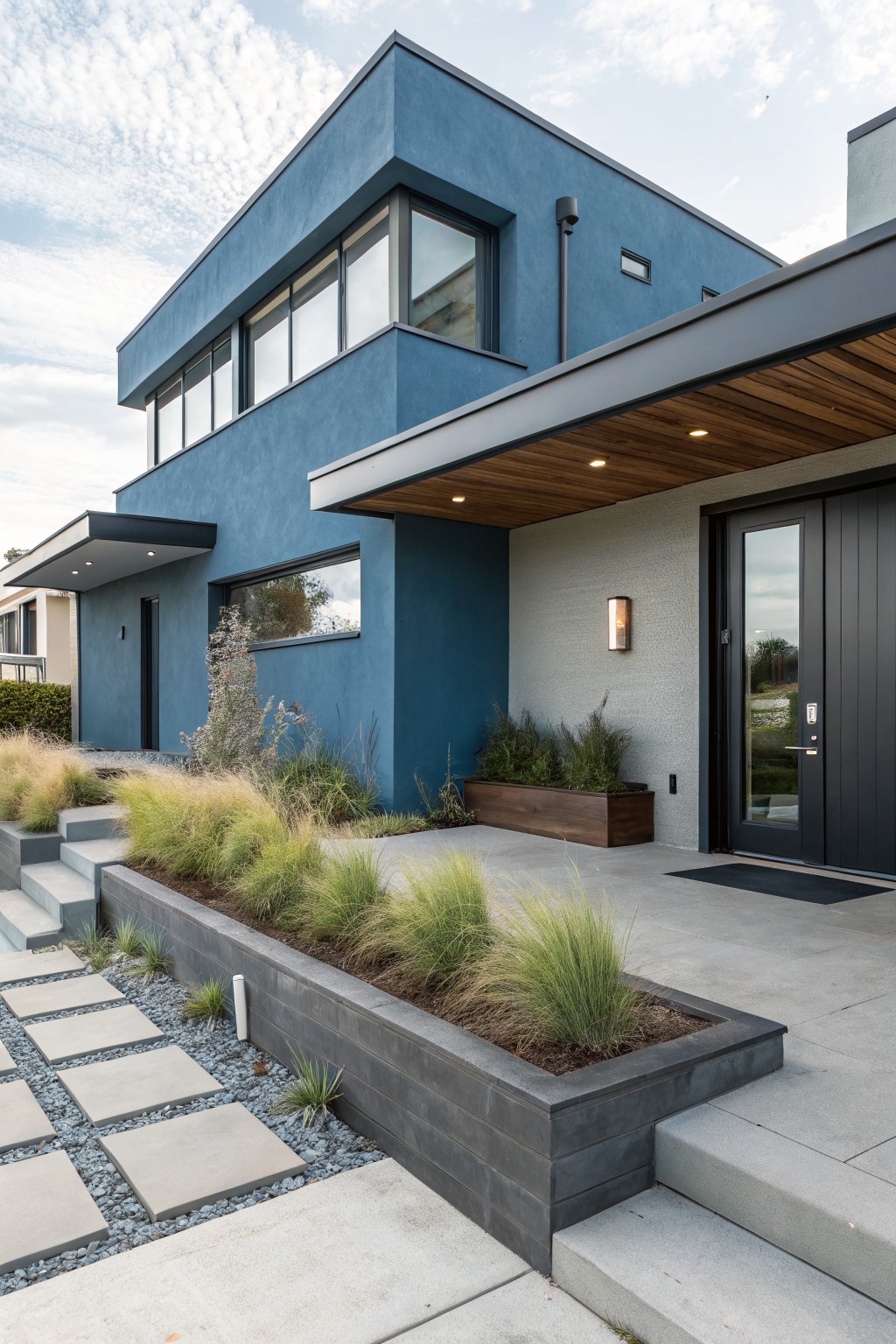
Tall ornamental grasses planted in sleek black raised planters run right along the entry path here. They pick up on the modern feel of this blue house without stealing the show from the architecture. The wispy texture softens things a bit, and the dark planters tie into the black door and accents nicely.
These work best on clean-lined homes where you want some green but not a full garden. Go for low-water grasses like miscanthus or fountain grass, space them evenly in long beds, and they’ll frame your walkway year-round. Skip anything too bushy though, or it might block the door.
Raised Planters with Grasses Beside Entry Steps
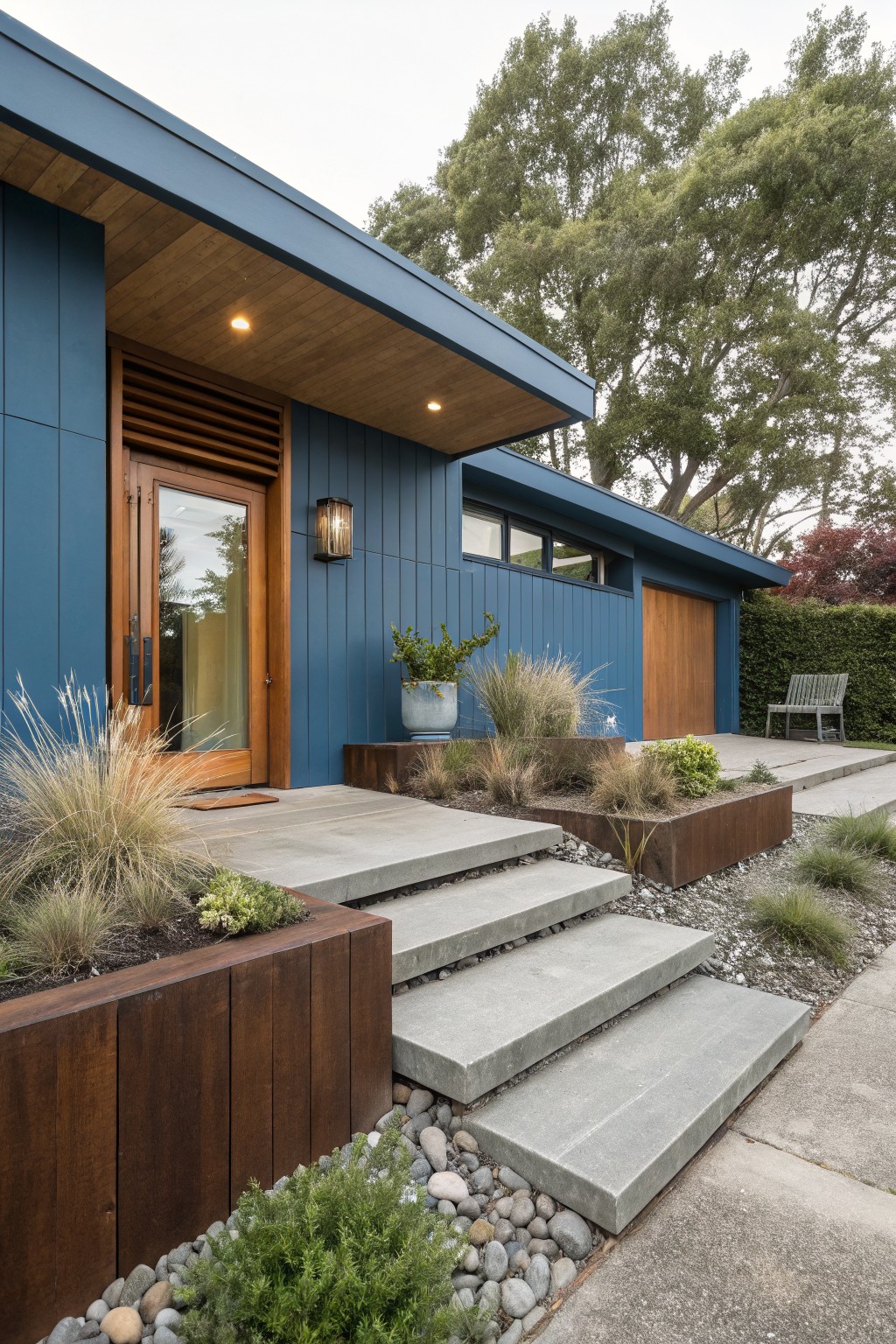
Tall ornamental grasses planted in simple raised wood planters run alongside these concrete steps, leading right up to the front door. The blue house siding gives them a nice pop, with the wood tones echoing the door and overhang. It keeps things neat but adds some movement and texture that makes the walk up feel more welcoming.
This works well on modern homes or anywhere with a bold exterior color like deep blue. Use low-water grasses and a few small shrubs in the beds for easy care. Place them tight to the steps on flat or sloped lots, but skip if your path gets heavy foot traffic.
Agapanthus Flanks the Entry Steps
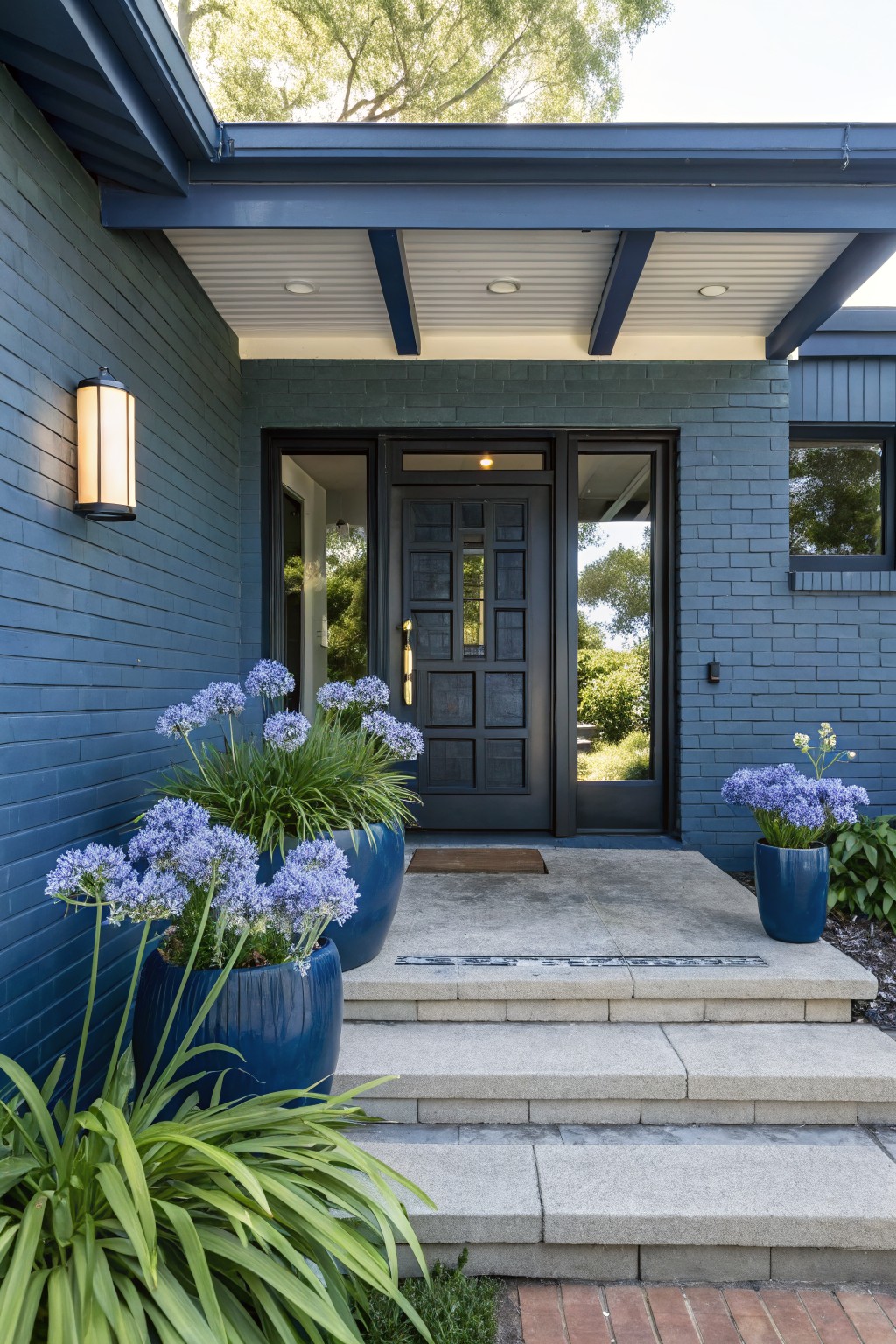
Big blue pots of agapanthus sit right by the front steps on this blue brick house. The flower clusters have that same cool blue tone as the walls, which pulls the look together in a simple way. It makes the dark wood door stand out more, and the whole entrance just feels right without being fussy.
Put these pots on either side of your steps or landing if you have a blue house. They work best on modern or midcentury styles where you want some height but not a full garden bed. Agapanthus holds up in sun, comes back yearly in warmer spots, and those pots keep it neat.
Potted Plants Line the Porch Steps
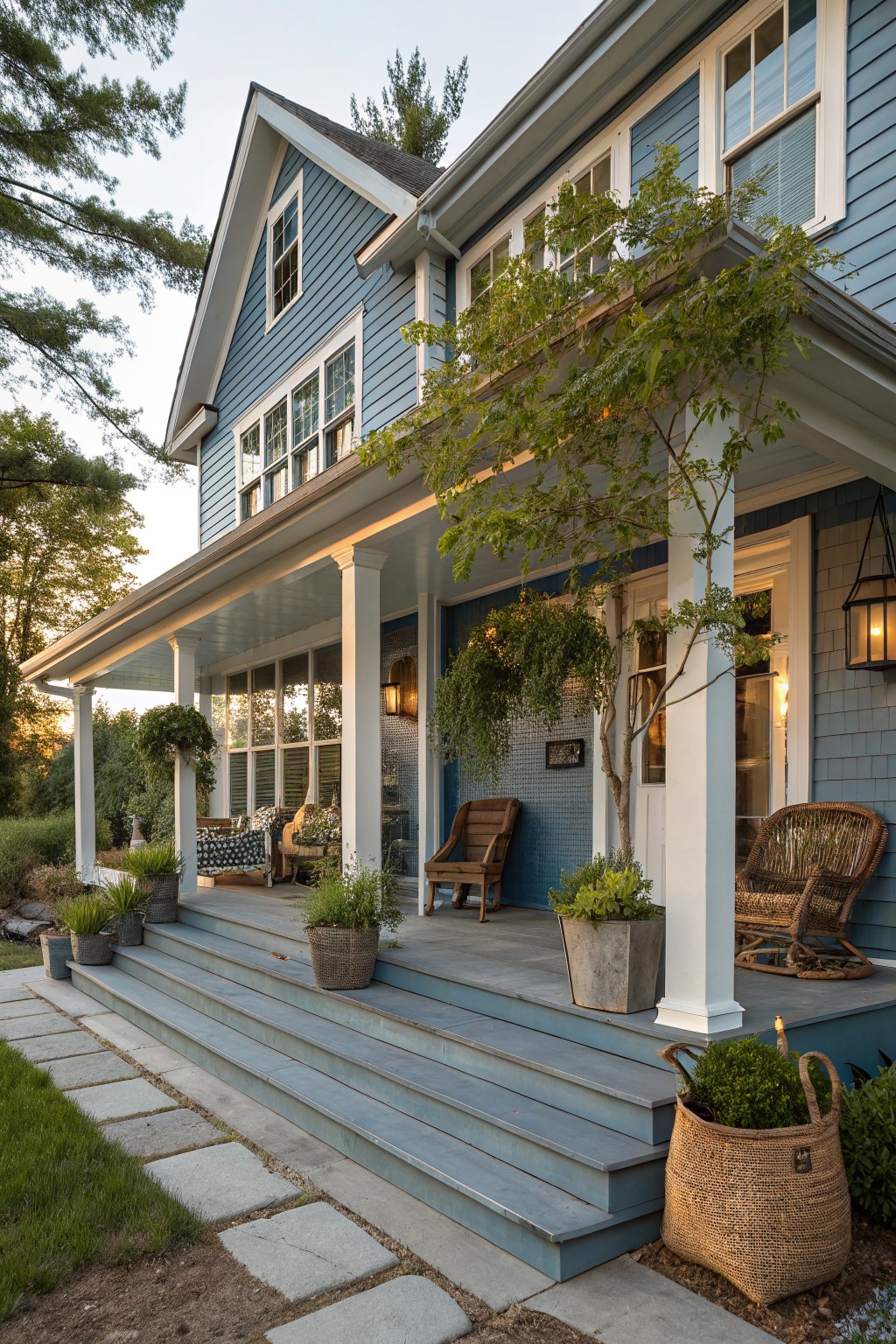
A row of large potted plants along the porch steps draws the eye right up to the door. On this blue house, tall grasses in metal buckets mix with topiary balls in woven baskets. It softens those bold blue steps and siding. The plants add some green life without overwhelming the simple porch setup.
Try this on any front porch headed to a cool-toned house. Go for oversized containers so they hold their own against the architecture. Mix shapes and heights for interest, like trailing ivy near chairs and upright stuff by the rail. It works best on homes with clean lines, keeps things low fuss if you pick easy growers. Just make sure pots drain well so roots stay happy.
Red Maples Pop Against Blue Walls
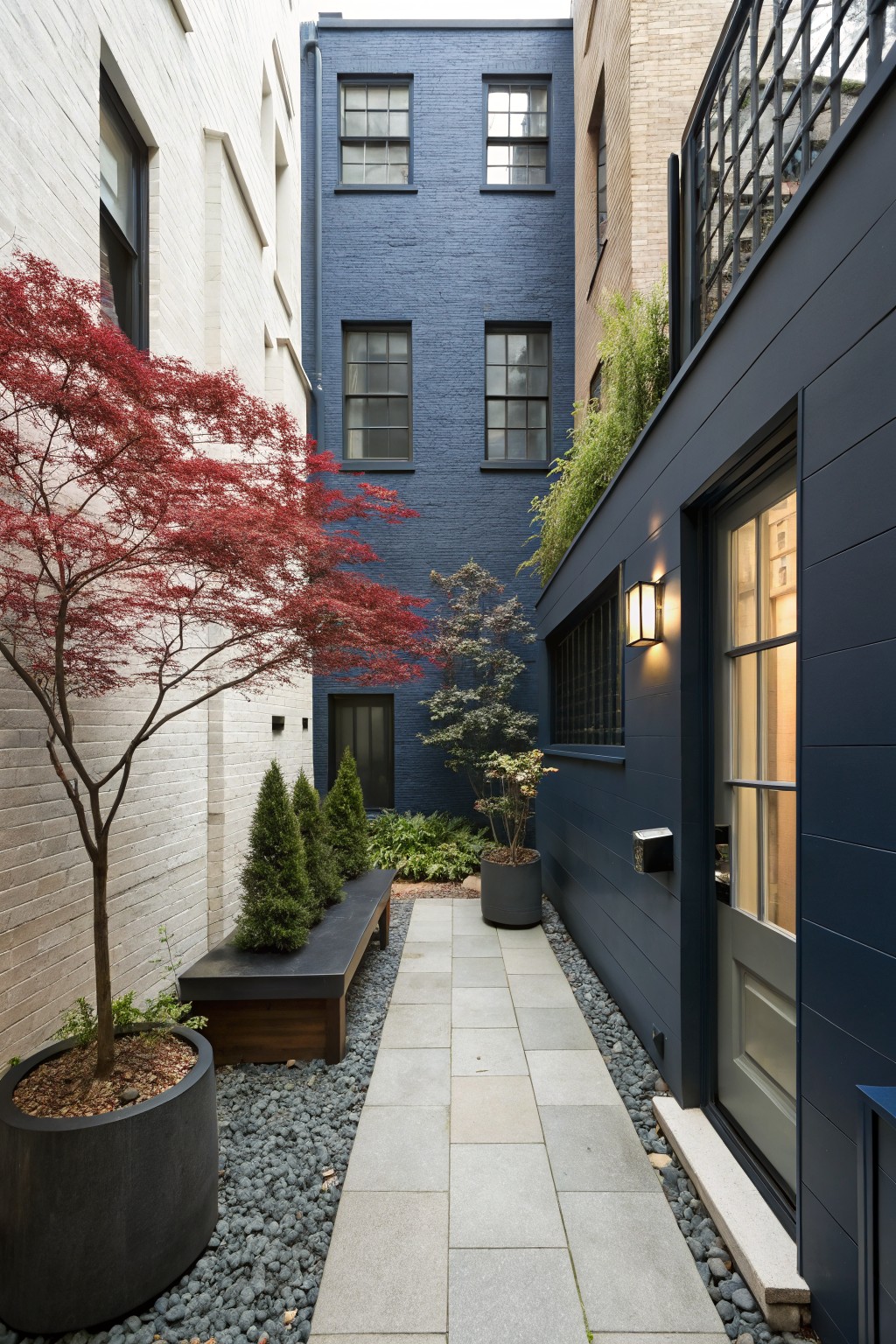
A red Japanese maple planted right next to a navy blue house wall does a nice job drawing your eye along the path to the front door. The bright red leaves stand out sharp against the dark blue bricks, and it fills that narrow space without crowding things. You get some height and color without much fuss, plus the gravel edge and bench keep it simple.
This works great in tight urban spots or side entries where you want to make the door feel more welcoming. Plant one in decent soil near the corner, keep it watered the first year, and pair it with lower greens like those small conifers for balance. It suits cooler climates where the fall color really shines, but trim back if it gets too bushy.
Terracotta Pots Line the Entry
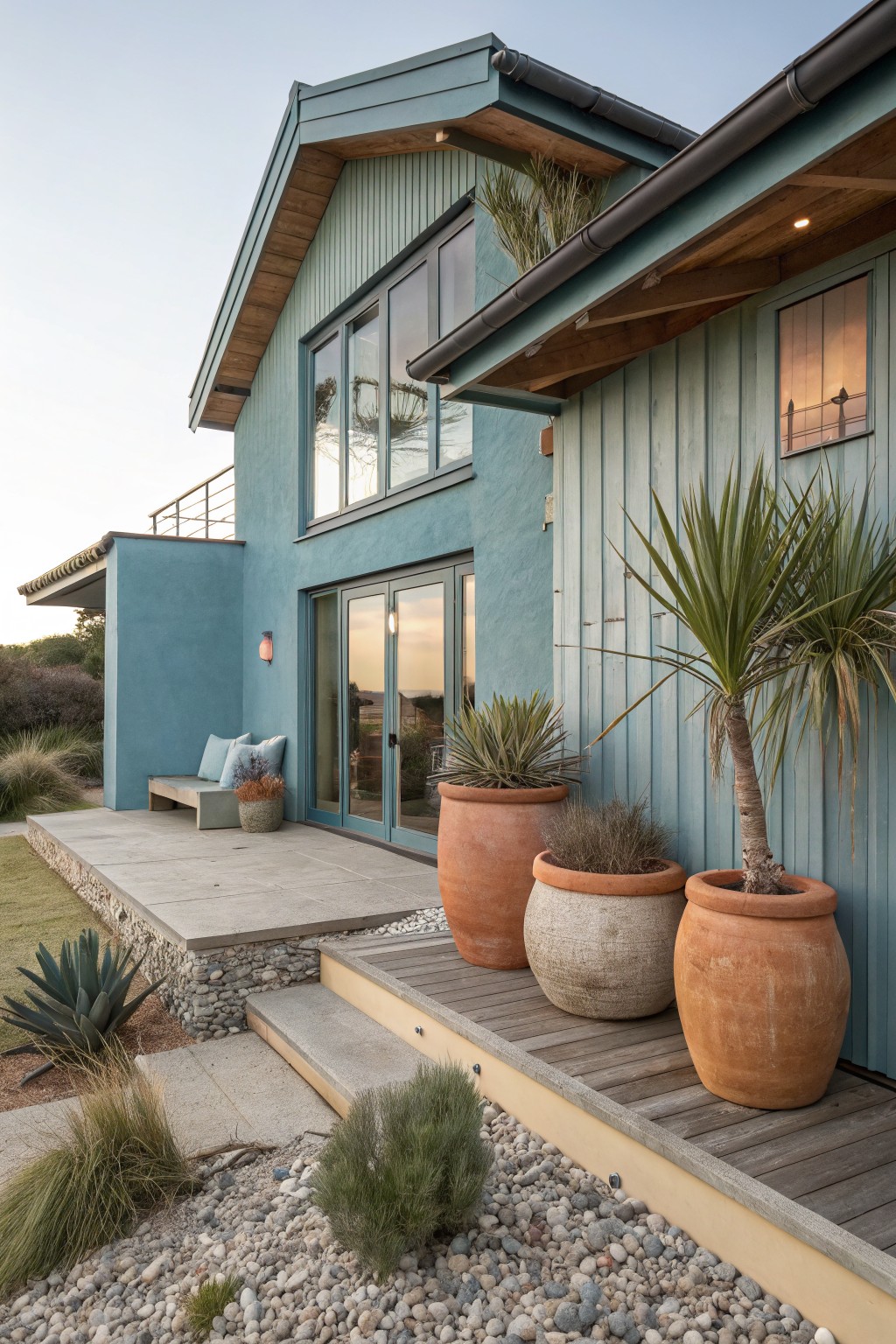
Big terracotta pots packed with yucca and agave sit right by the glass doors on this blue house deck. The earthy orange clay stands out nice against the cool blue siding. It pulls the eye to the entrance without looking busy. These plants have that spiky shape that fits right in with the house’s clean lines.
Try this on a raised deck or steps to your door. It works best in dry spots or coastal yards where succulents thrive with little water. Go for oversized pots so they make an impact. Skip tiny ones. Matches modern blue houses that want some warmth up front.
Tall Cypress Trees at Blue House Entries
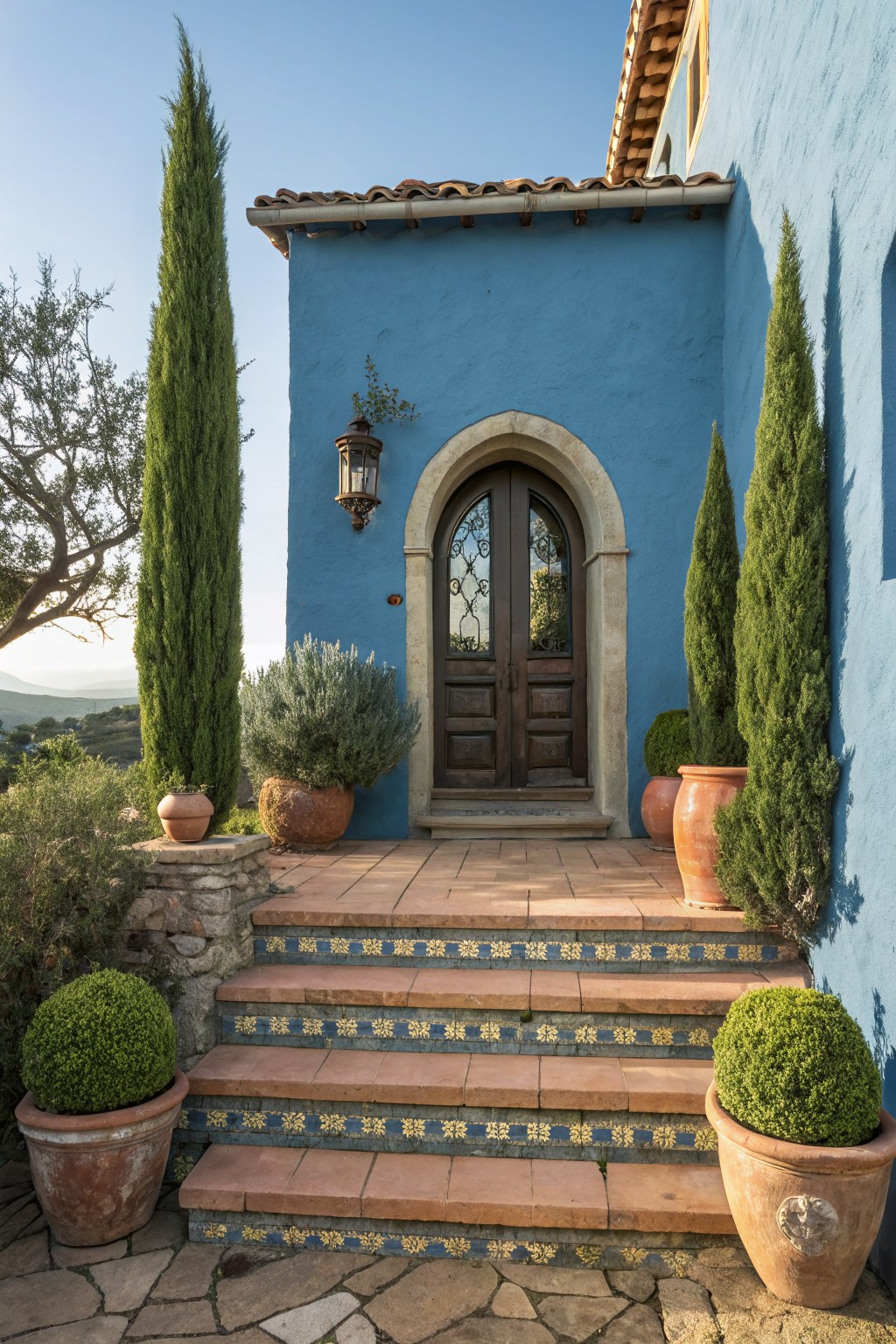
Tall, skinny cypress trees planted right next to the entry make a big impact on this blue house. They shoot up straight and narrow, giving height without crowding the walkway or door. The green needles pop against the blue stucco wall, and they fit right in with the arched door and tiled steps. It’s a simple way to make the front door feel more formal and put together.
You can plant a pair like this at most any entry with room for roots. They do best in warmer spots with good drainage, like Mediterranean style homes or drier yards. Keep them trimmed if you want that neat look, and add terracotta pots nearby for more color at ground level. Just check your space first, since they grow tall over time.
Potted Crape Myrtles on the Porch
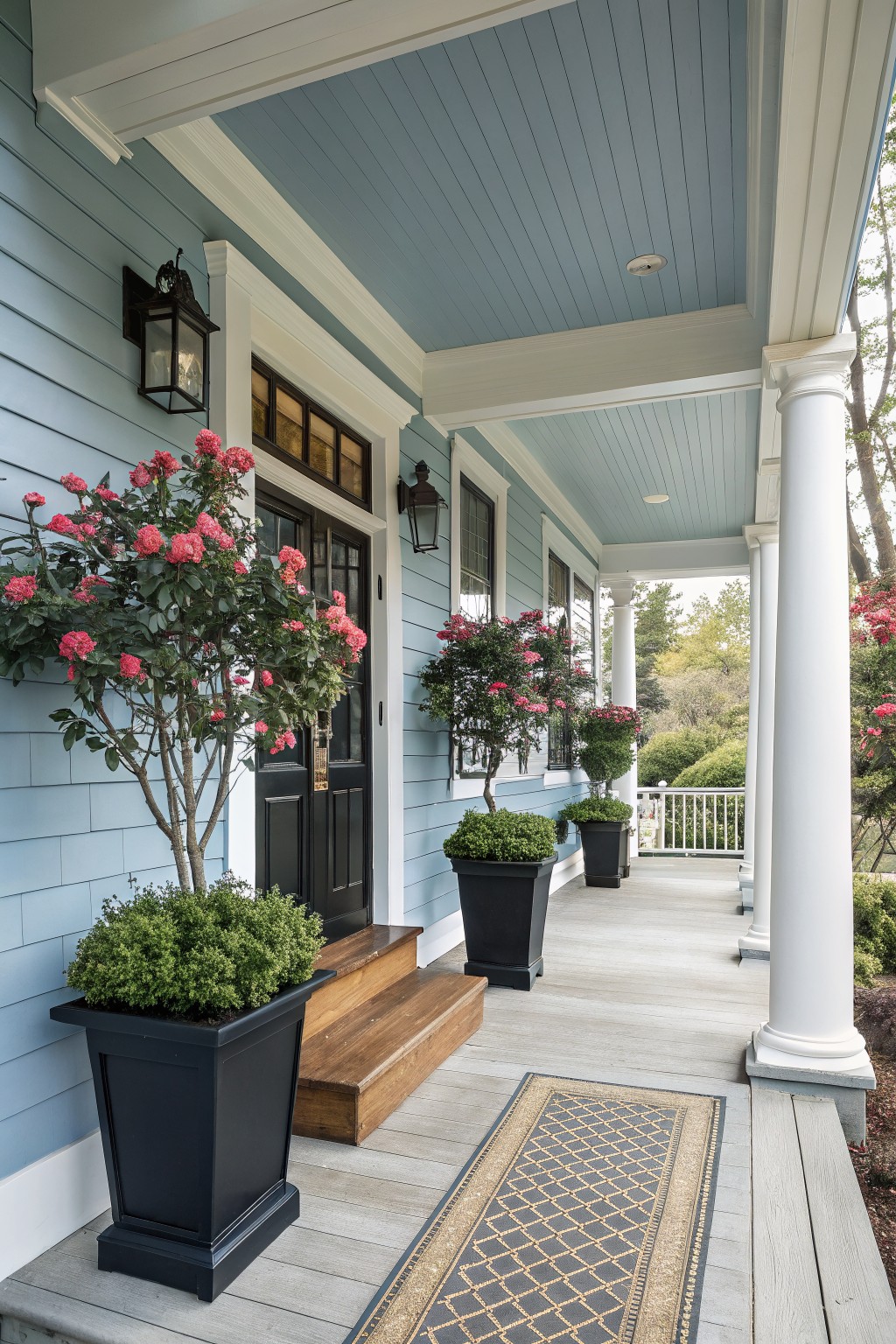
Potted crape myrtles work well at a blue house entrance. The pink flower clusters stand out nicely against the light blue siding and white trim. Shaped into tidy trees, they bring some height right to the porch steps without crowding the space.
Put them in tall black pots on either side of the entry stairs. Dwarf types stay the right size year after year. They suit older style homes with columns and wood floors. Keep the pots simple so the flowers get the notice.
Grasses in a Concrete Driveway Planter
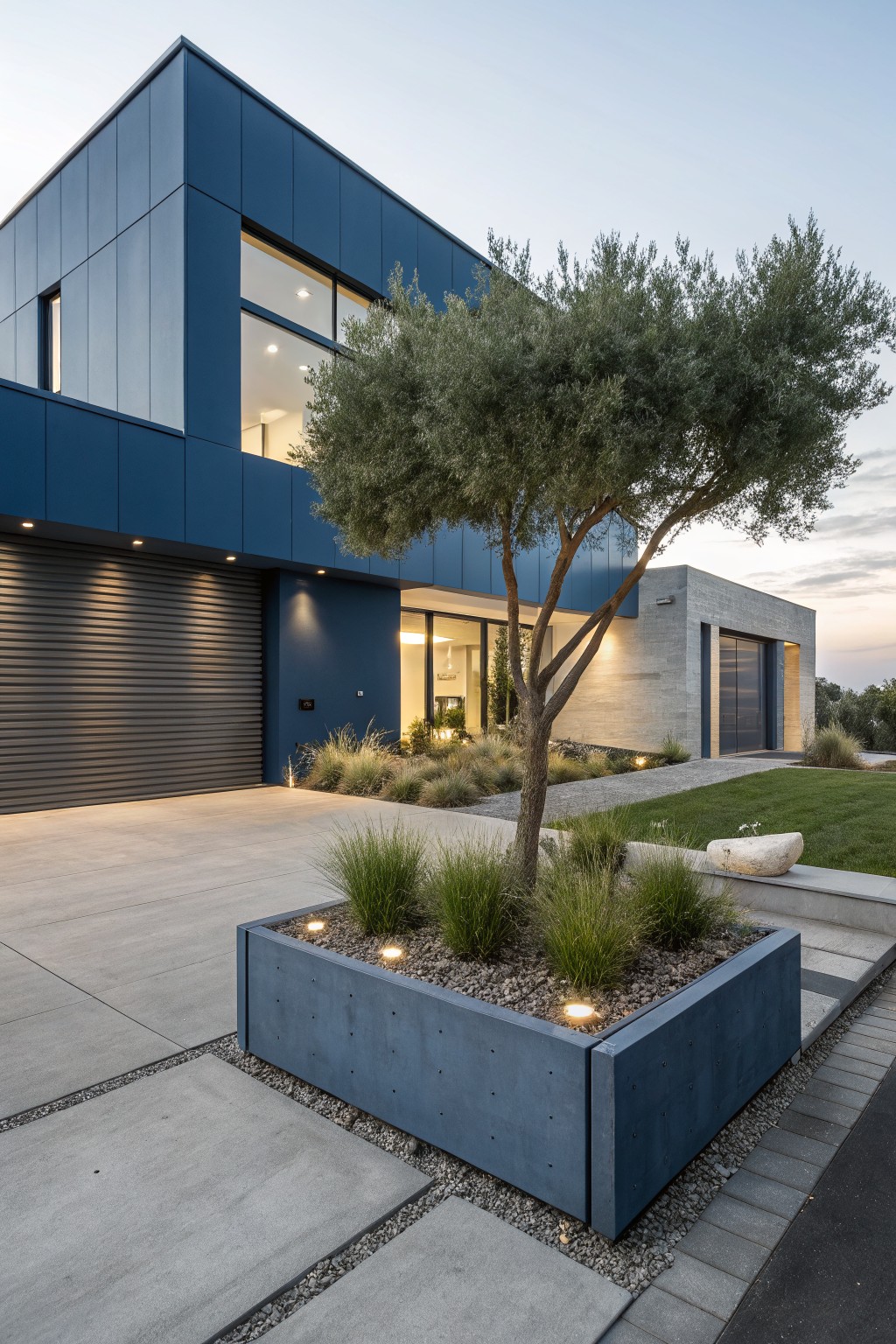
A concrete planter box packed with tall grasses sits right at the edge of the driveway on this blue house. The grasses pick up on the modern lines of the metal siding without competing. They add some life to the entry area and make the whole front feel more settled, especially with the low evening light highlighting them.
This works well for houses with big driveways or open fronts. Go for tough, upright grasses that don’t need much water. Keep the box low and simple in gray concrete to match blue tones. It’s easy to pull off in sunny spots and keeps things low fuss year round.
Draping Pink Climbers Over the Door
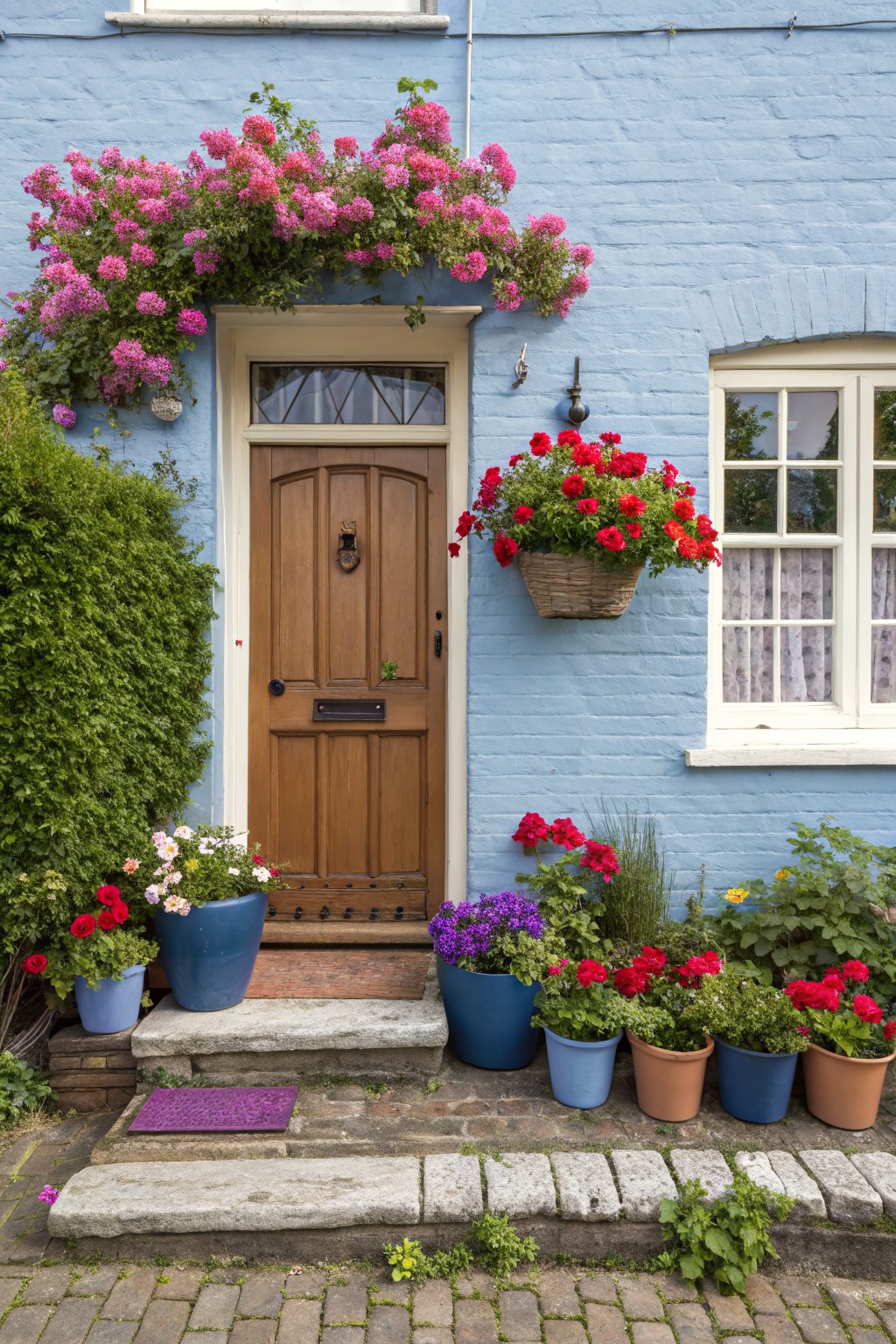
A simple arch of pink climbing flowers makes this blue house entrance feel extra welcoming. The fluffy pink blooms tumble right over the wooden door and mix well with the cool blue brick walls below. It’s a natural way to add height and color without changing the house itself.
Try this on cottage style homes or any blue facade with a bit of space above the door. Plant a vigorous climber like a pink rose or similar in the ground or a large pot nearby, then guide the stems up with ties or wire. It suits front steps like these, and regular trimming keeps it tidy through summer.
Boxwoods and Ornamental Grasses Line the Entry
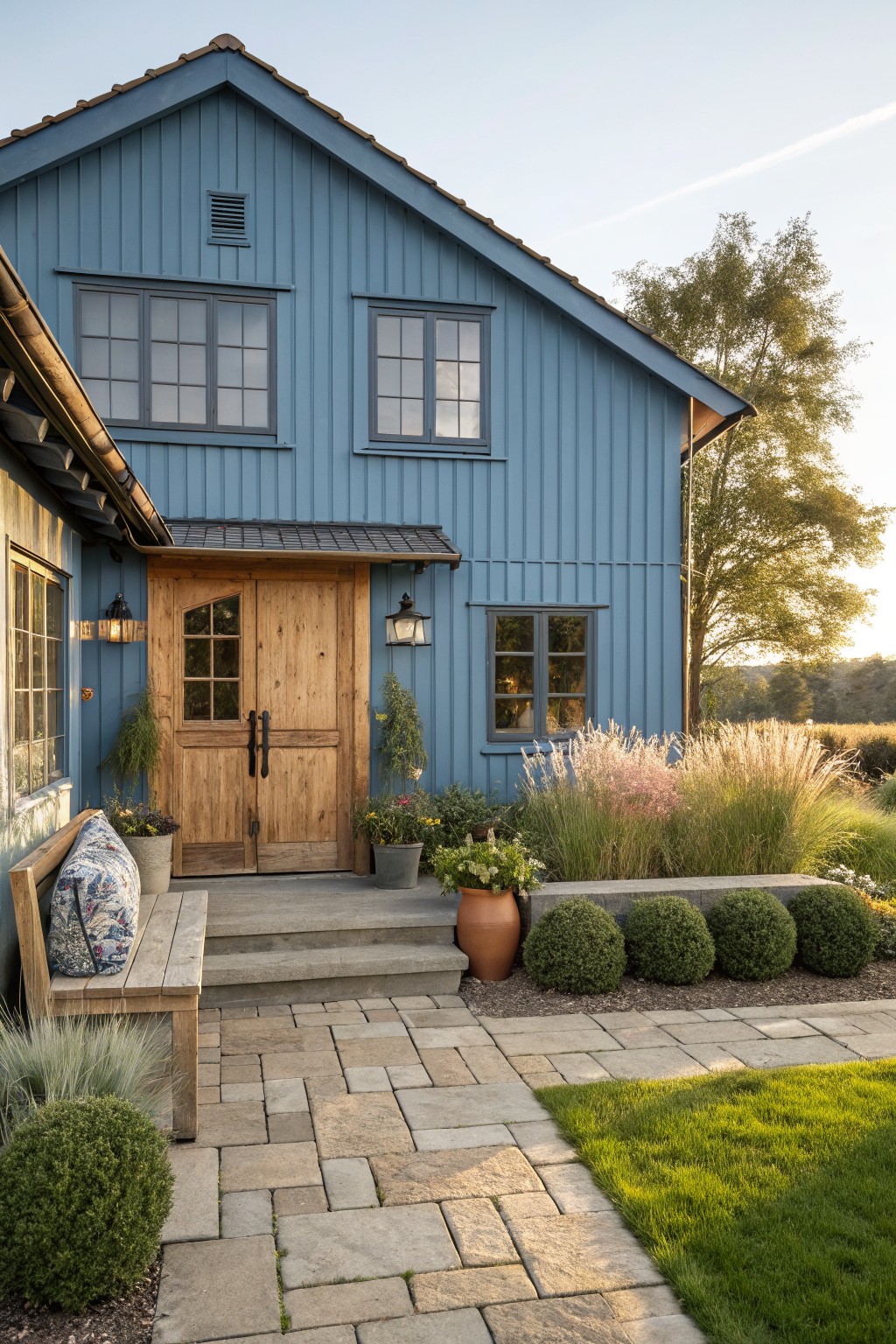
A row of round boxwood shrubs paired with tall ornamental grasses works nicely along the path to a blue house door. The grasses add some sway and height while the boxwoods stay neat and low. On this clapboard siding painted a soft blue it keeps things from looking too stark. The mix brings in texture without much fuss.
Try this setup on homes with clean lines like farmhouses or simple cabins. Plant the grasses a bit back from the path so they frame the walk without crowding. Boxwoods hold their shape year round and grasses come back easy each spring. Skip it if your spot gets too much shade though. Grasses need sun to look full.
Rambling Roses Over the Doorway
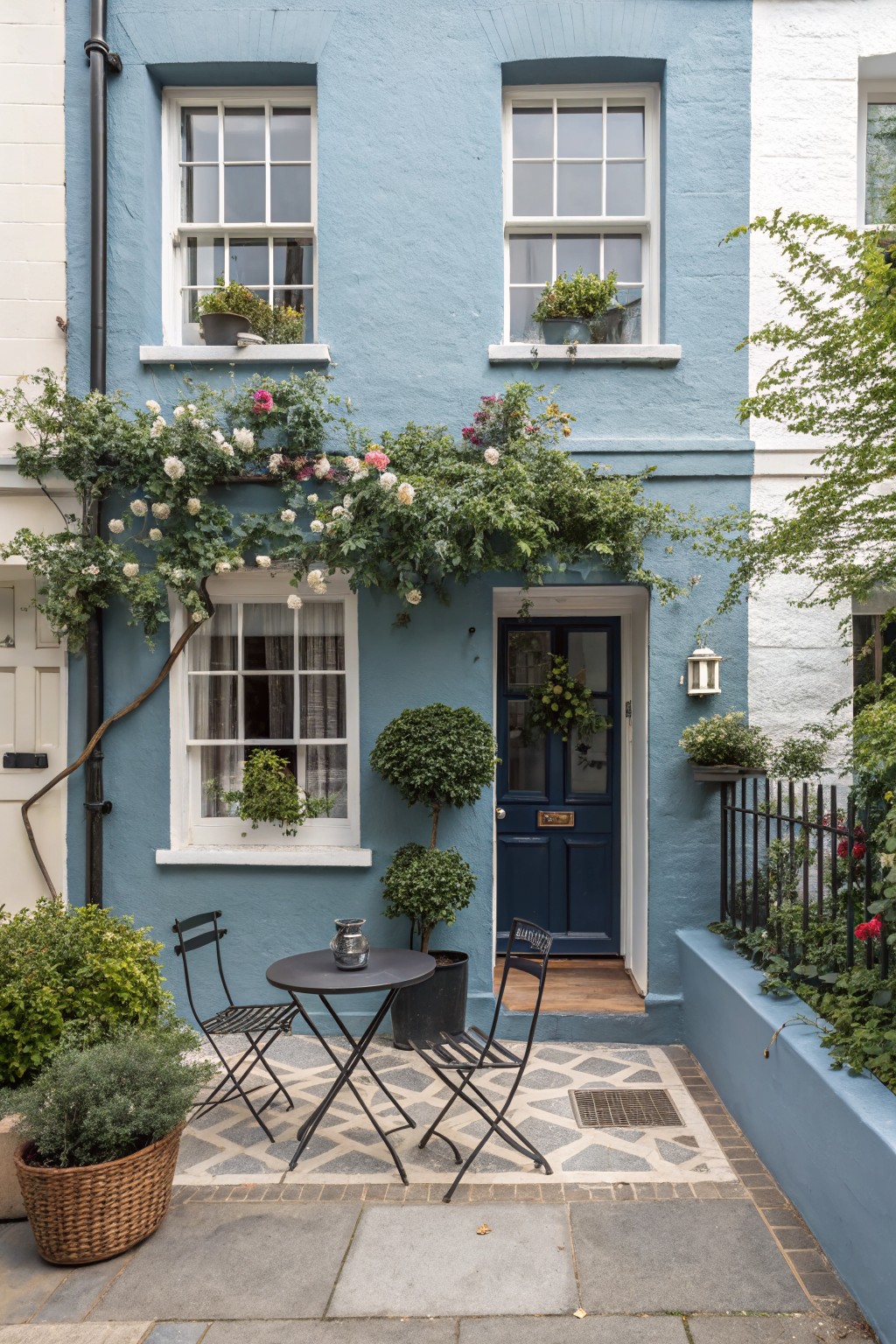
White rambling roses climbing across the top of this blue house doorway add a soft, cottage feel that pulls focus right to the entry. The pale blooms contrast nicely with the cool blue walls and navy door without overwhelming the space. It’s a simple way to make a plain painted facade look more lived-in and welcoming.
These roses work best on smaller front entrances like this terraced house setup, where they can trail over the arch without needing much structure. Plant them near the doorframe in decent sun, and once established they mostly take care of themselves. Pair with a few pots nearby for balance, but skip heavy pruning to keep that natural drape.
Tall Grasses Along the Entry Walk
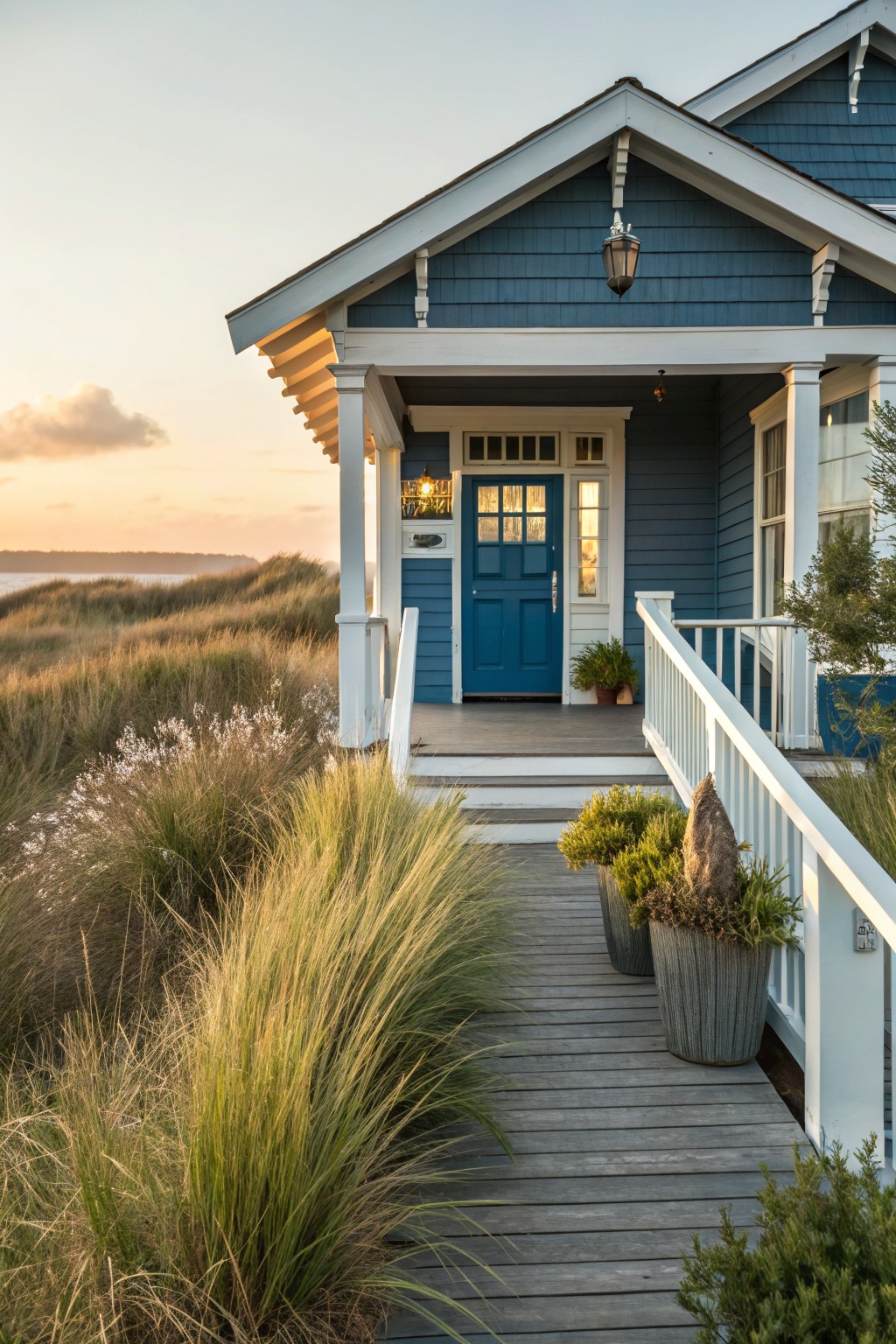
Tall ornamental grasses planted right along the boardwalk path make a simple path to this blue house porch feel more welcoming. The feathery tops catch the light and move with the breeze, softening the look of the clapboard siding and dark wood deck without much upkeep. They fit right in with the coastal setting here, tying the house to the dunes beyond.
Use grasses like these where you have a straight walkway or steps up to the entry. They work best on beach houses or casual cottages with blue or gray exteriors. Keep them in natural clumps on either side, maybe add a couple metal tubs of shrubs by the railing. Just trim back once a year.
Orange Trees Over Blue Entrances
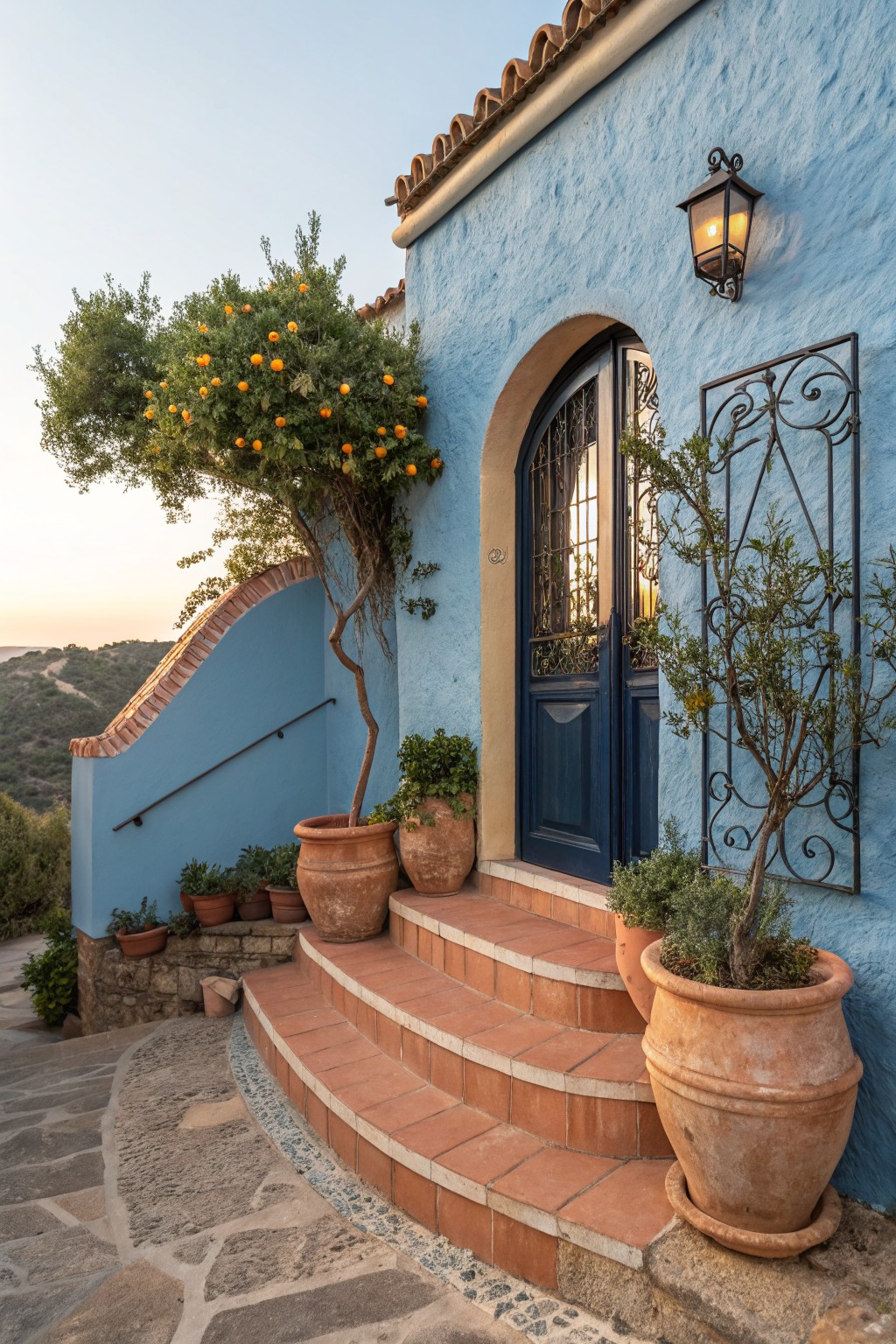
A mature orange tree leaning right over the arched doorway is a simple way to make a blue house entrance feel more alive. The bright oranges stand out sharp against the blue stucco wall, and the green leaves add some natural movement without much fuss. It fits that old Mediterranean look, especially with terracotta pots grouped nearby on the steps.
Try this on homes with south-facing entries that get full sun. The tree can grow big, so give it space and train the branches if needed. It works best where you want low upkeep but still some color year-round… just prune once a year.
Frequently Asked Questions
Q: What if my entrance stays shady all day?
A:
Grab hostas or ferns from the list. They soak up low light and give that lush look without much effort. Just keep the soil moist, not soggy.
Q: Can I plant these right up against the house foundation?
A:
Sure, most handle it fine as long as you improve drainage first. Mix in some compost to prevent root rot. They stay compact and frame the door nicely.
Q: Which ones need the least watering?
A:
Lavender tops that list. It shrugs off dry spells once established. Mulch around it to hold moisture.
Q: Do they survive cold winters?
A:
Many do, like the perennials on the list. Cut them back in fall and cover with mulch. New growth pops in spring.
