

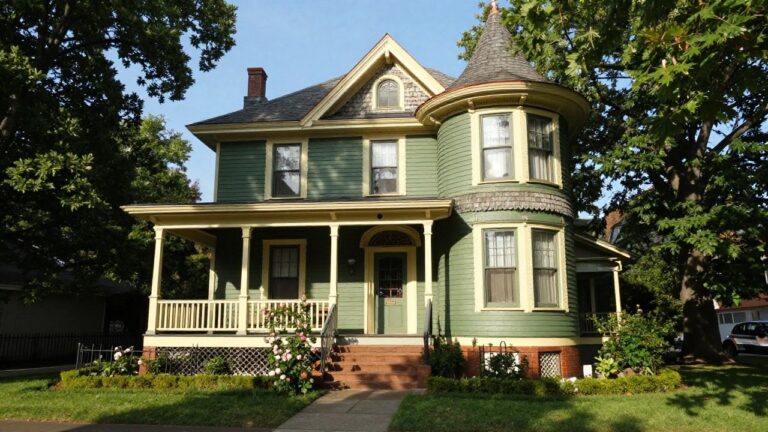
I’ve always admired how a green exterior on a Victorian house anchors its busy details into something that lasts.
The shade matters most because it tempers the steep gables and intricate millwork so they read cleanly from the curb.
White trim against that green sharpens the entry doors and window hoods without stealing the show.
I once dismissed green for feeling too bold on older homes until I saw how it weathers to blend right into mature neighborhoods.
Details like those porch brackets or fresh siding from these could refresh your facade in ways that hold up year after year.
Green Victorian with a Standout Turret
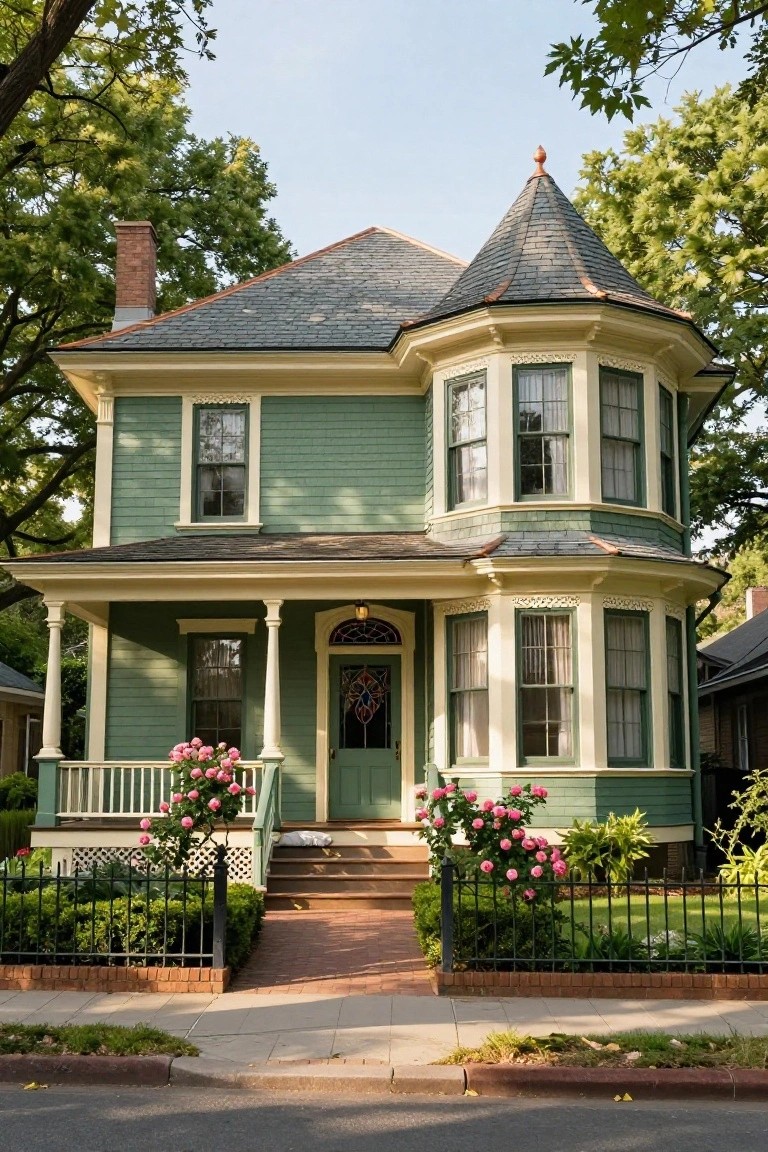
A turret like the one on this house takes a green Victorian exterior to the next level. The octagonal shape topped by a dark slate cone sits right at the corner, pulling your eye up and giving the whole facade that classic Victorian flair. The soft sage green paint keeps it from feeling heavy, and the cream trim sets it off nicely.
Homes with these turrets shine on streets lined with trees, where the green hue ties into the surroundings. If your place has the bones for it, or you’re adding on, go for a similar roofline in slate or copper. Just make sure the base matches your porch scale… it keeps everything balanced.
Wisteria Over the Balcony
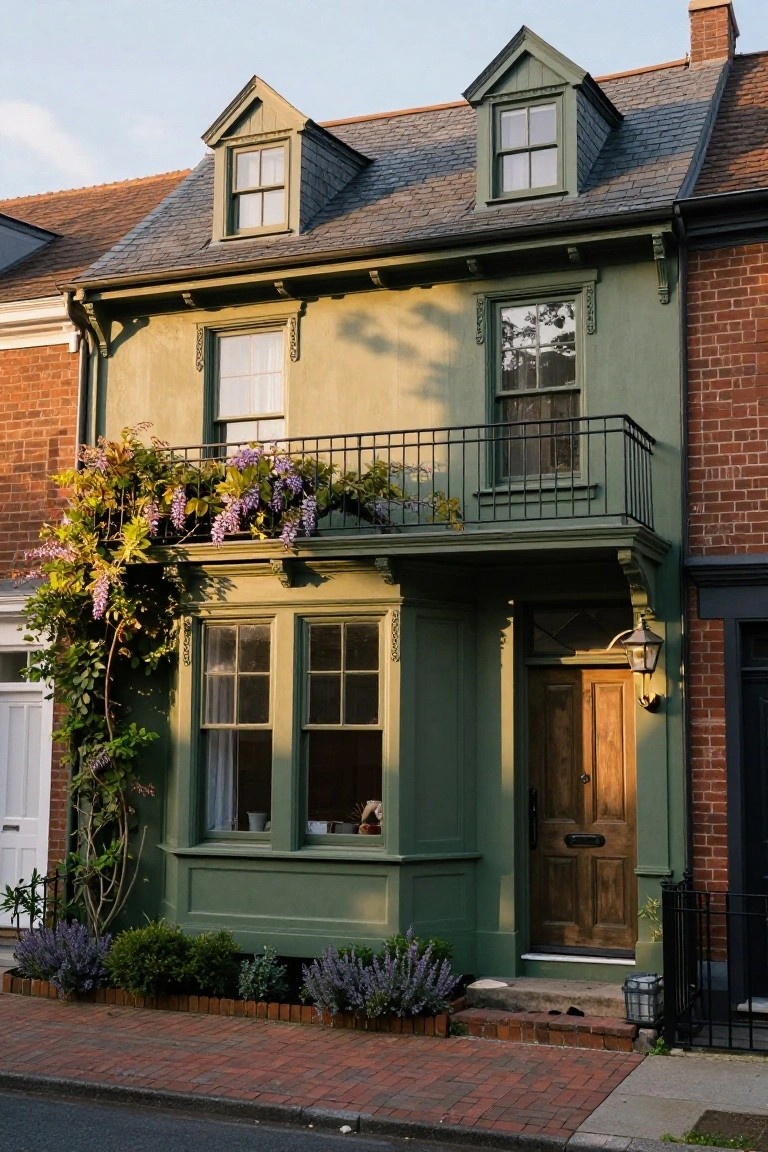
A touch of wisteria climbing over a second-floor balcony like this one brings real charm to a green Victorian exterior. The purple blooms hang down in cascades, softening the green paint and iron railing without overwhelming the house shape. It pulls the eye up to that balcony spot and makes the whole front feel more alive, especially in soft evening light.
This works well on homes with sturdy balconies or railings that can handle the weight. Plant wisteria at the base and train it up over time. It suits milder areas where the vines grow strong but can be managed with yearly pruning. Just keep an eye on the roots so they don’t push at foundations.
Climbing Roses Frame the Entry
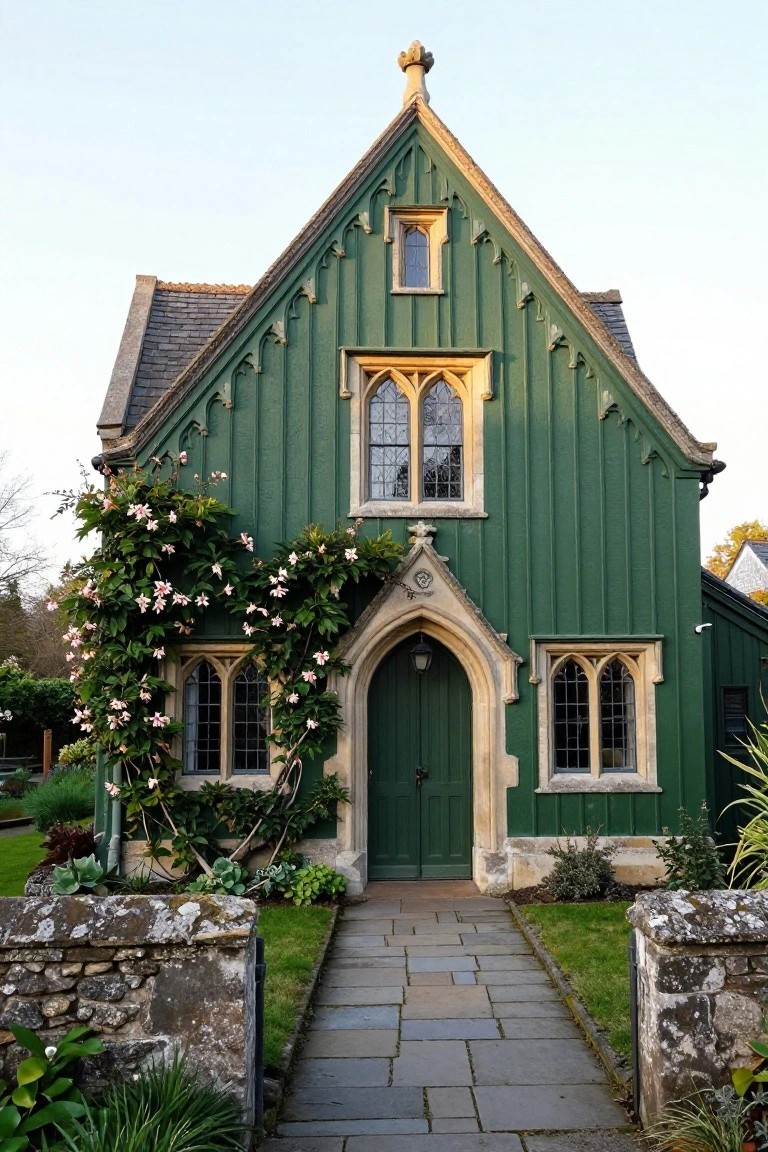
One simple way to make a green Victorian house feel more alive is draping climbing roses over the front door. Here, pink blooms trail along the stone arch, softening the Gothic lines without hiding them. The green siding sets off the flowers nicely, and it pulls your eye right to the entrance. It’s a classic move that adds charm year-round, even when the roses are just leaves.
This works best on older homes with stone details around the door. Plant the roses at the base of the arch or nearby posts so they grow up naturally. Keep them trimmed to avoid overwhelming the path or windows. On a house like this, it ties the architecture to the garden without much upkeep.
Raised Stone Entry Steps
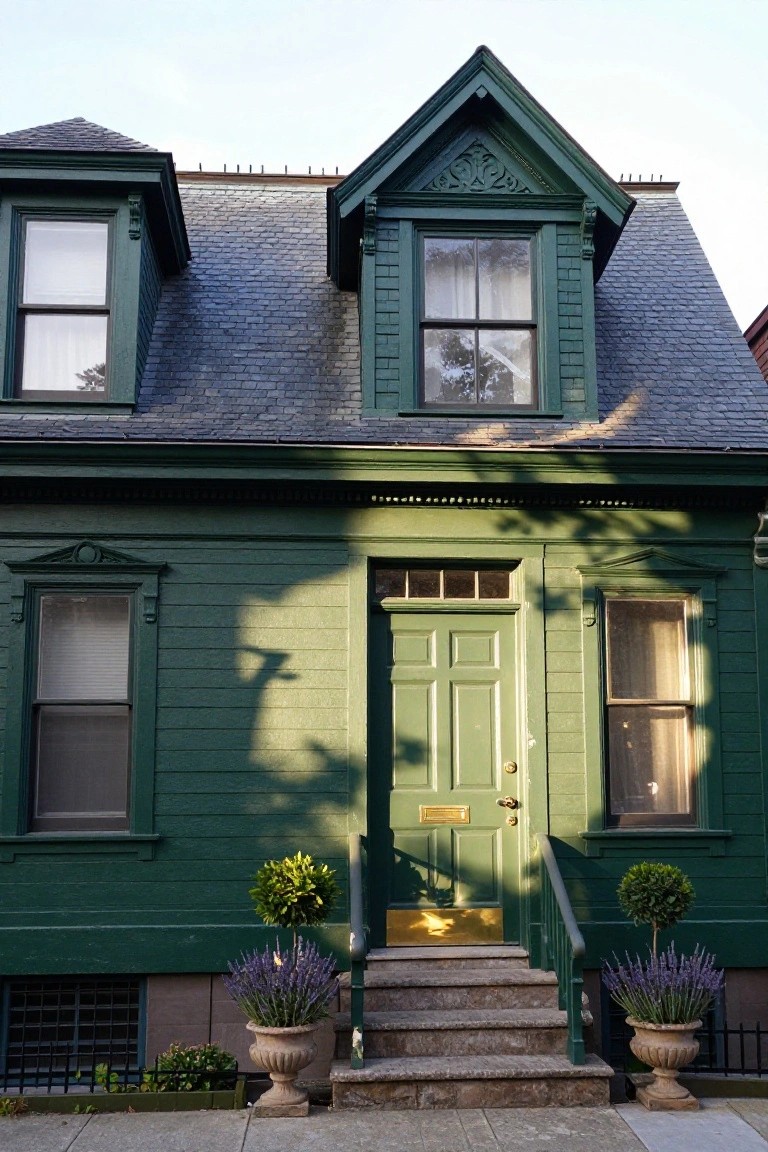
A good Victorian exterior often hinges on a clean entry like this one. Stone steps rise simply to the green door, with a slim railing and those brass details on the knocker and mailbox standing out. Boxwood topiaries and lavender pots frame the bottom, keeping things neat.
These stoops suit rowhouses or tight urban lots where a full porch won’t fit. They draw the eye up and make the door feel important. Go for durable granite or bluestone that weathers well. Add matching-height plants for balance, but skip anything too bushy. Easy upkeep too.
Pale Green Victorian Cottage Exterior
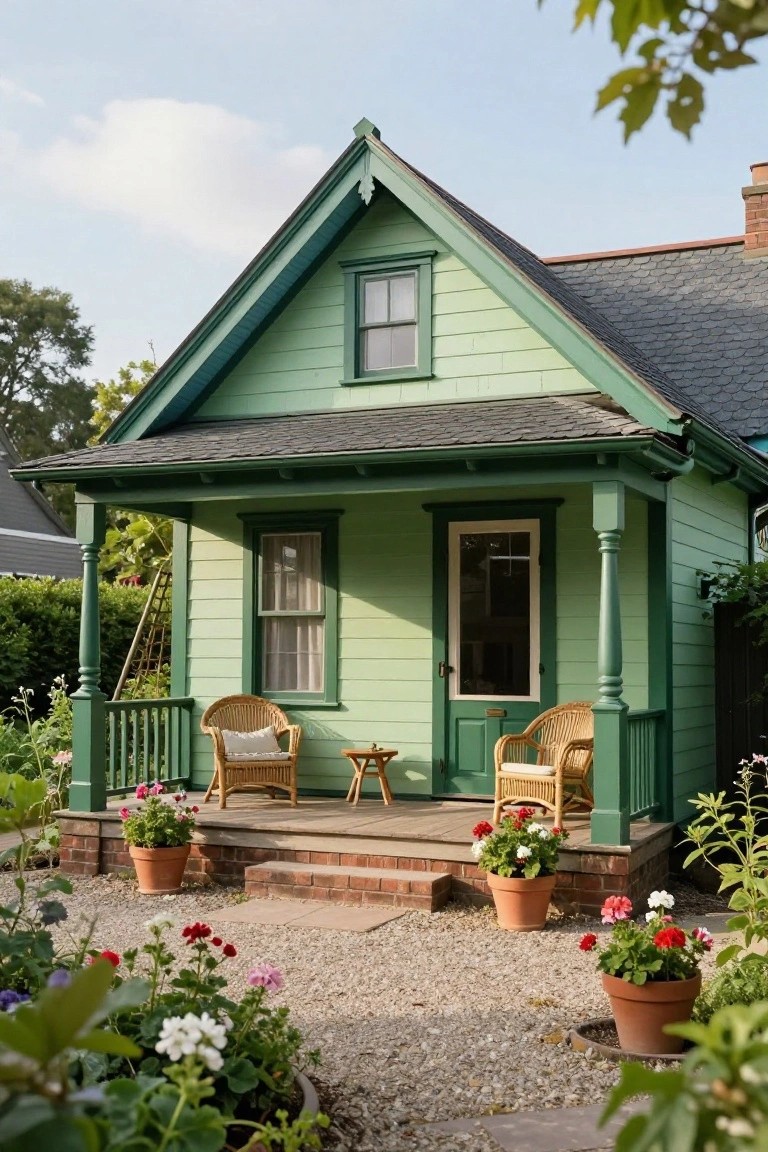
A soft pale green siding like this brings out the best in a small Victorian house. It softens the traditional gables and porch columns, making the whole facade feel approachable and tied to the garden around it. No need for bold shades. This color just settles in nicely.
Use it on compact homes or bungalows where you want that cottage charm without overpowering the street. White trim keeps things crisp, and add wicker chairs on the porch for everyday use. Works best in mild climates… avoids looking too minty in harsh sun.
Turreted Victorian in Olive Green
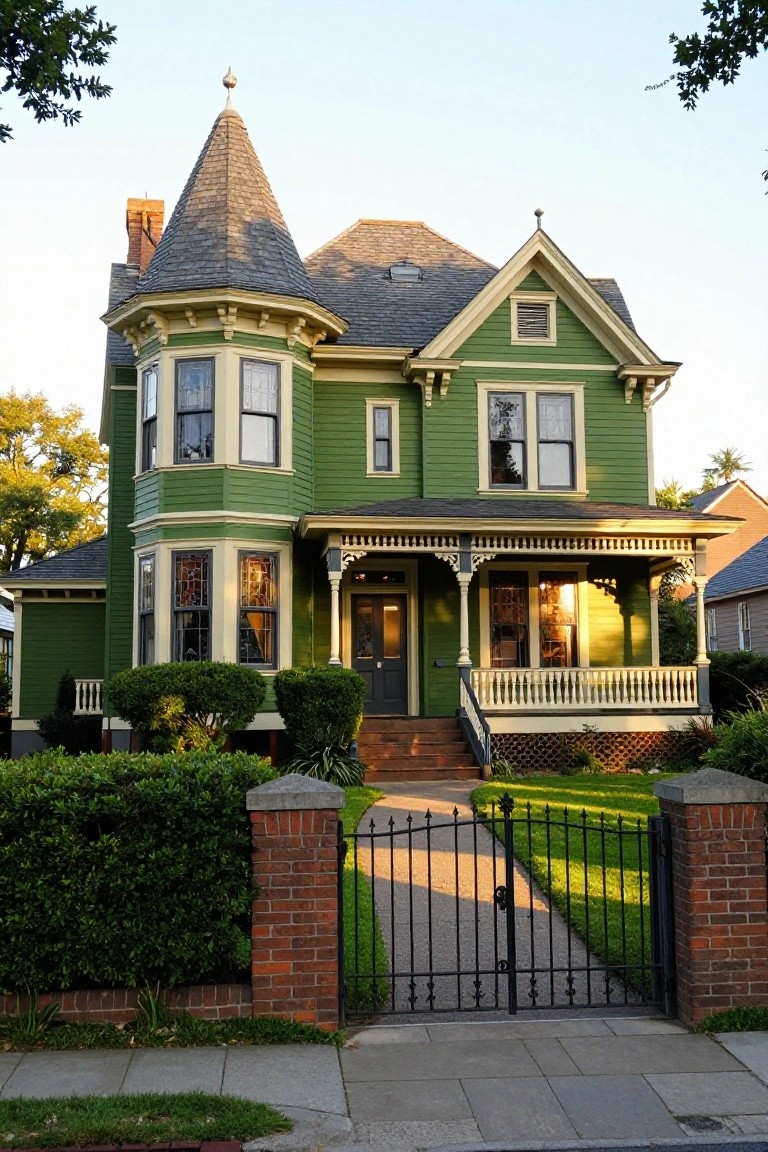
This kind of Victorian house pulls off the turret look nicely with its olive green paint. The color sits well on the steep roofline and all those bay windows without overwhelming the details. Cream trim around the edges keeps things crisp, and that wraparound porch adds a welcoming touch that fits right in.
Try this shade on homes from the late 1800s or early 1900s, especially ones with gingerbread trim. It works best where you want curb appeal that nods to history but stays easy on the eyes. Just match it with simple brick accents out front to ground the whole setup.
Green Shutters on Pale Stucco
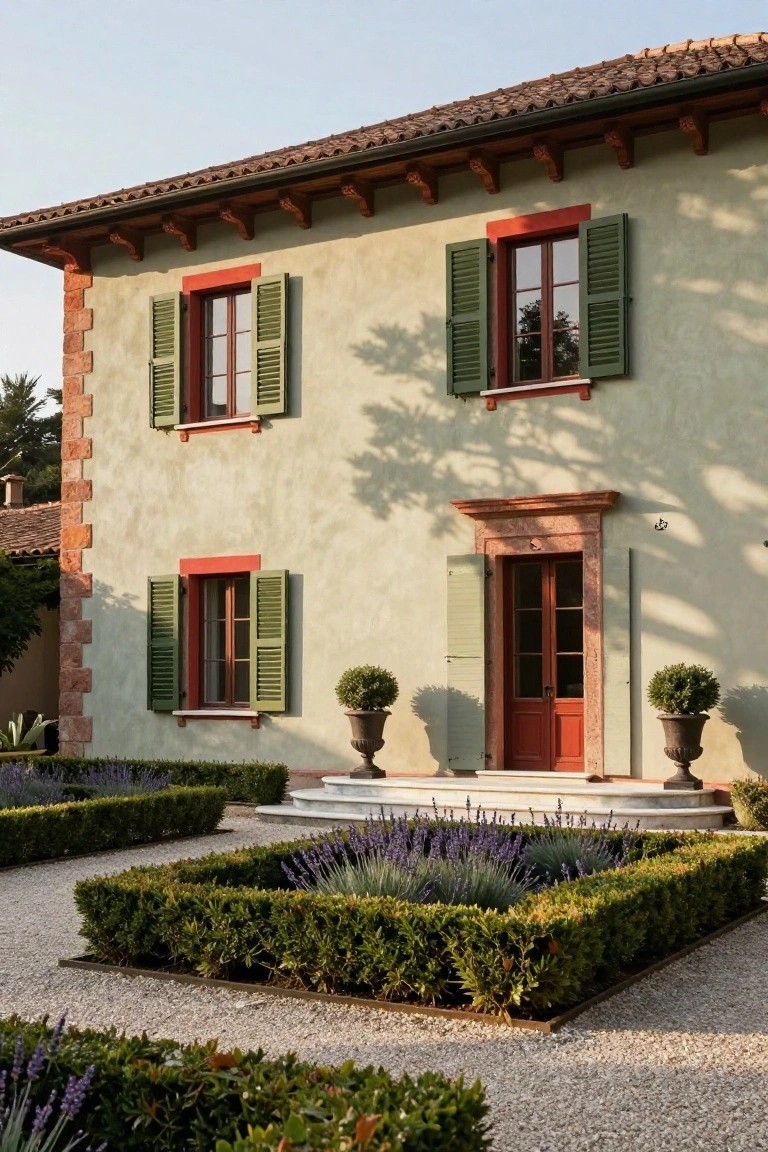
Green shutters work so well on a light stucco house like this one. They frame the windows nicely without overpowering the soft walls. Paired with a red door, they give the whole front a balanced, lived-in feel that looks right at home in older neighborhoods.
You can pull this off on most any house with neutral siding. Just pick shutters that match the window size and hang them close enough to hug the frames. It suits places with some sun, since the green stays sharp year-round. Skip it if your walls are already dark, though.
Soft Green Victorian Cottage Exterior
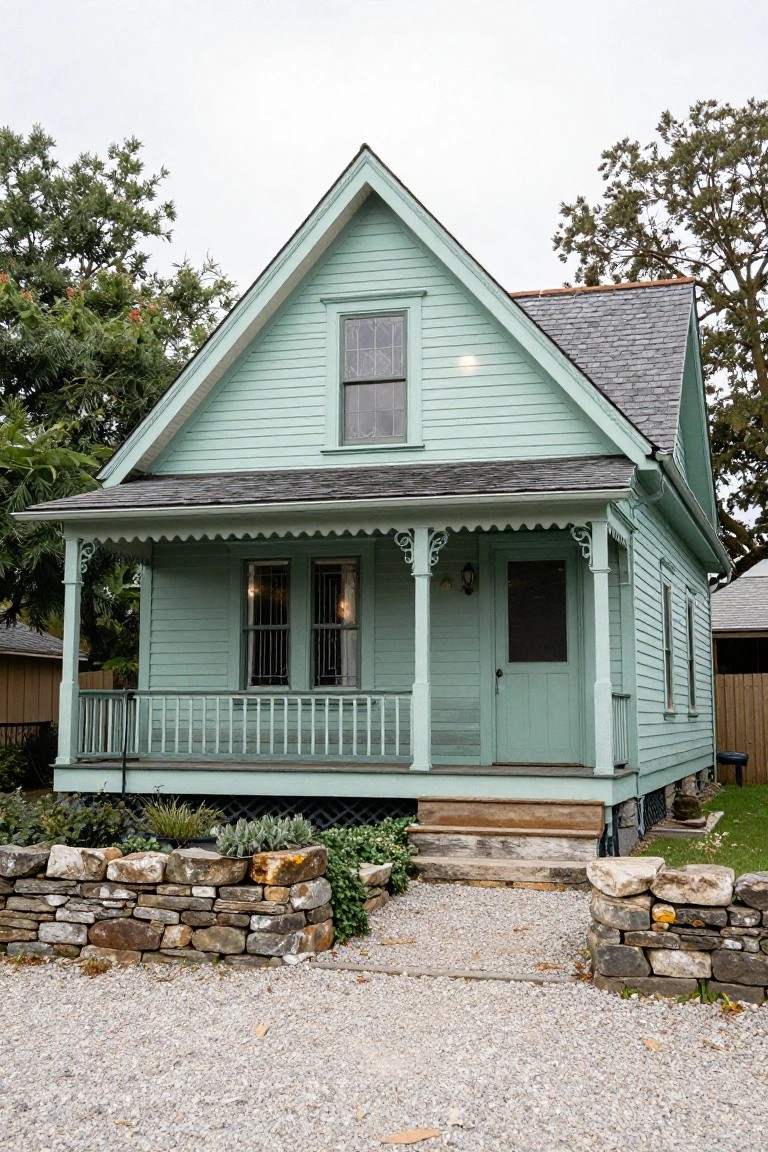
This pale mint green paint gives a classic Victorian cottage a fresh, timeless feel. The color is soft enough not to overwhelm the house’s gingerbread brackets and scalloped porch trim. It lets those details shine without shouting, and it blends nicely with surrounding trees and simple landscaping.
Try this shade on smaller homes like bungalows or cottages where you want curb appeal that lasts. It works best in mild climates. Pair it with gravel paths or stone edging to keep things grounded. Just stick to matte finishes so it doesn’t look too shiny.
Sage Green Stucco Entryway
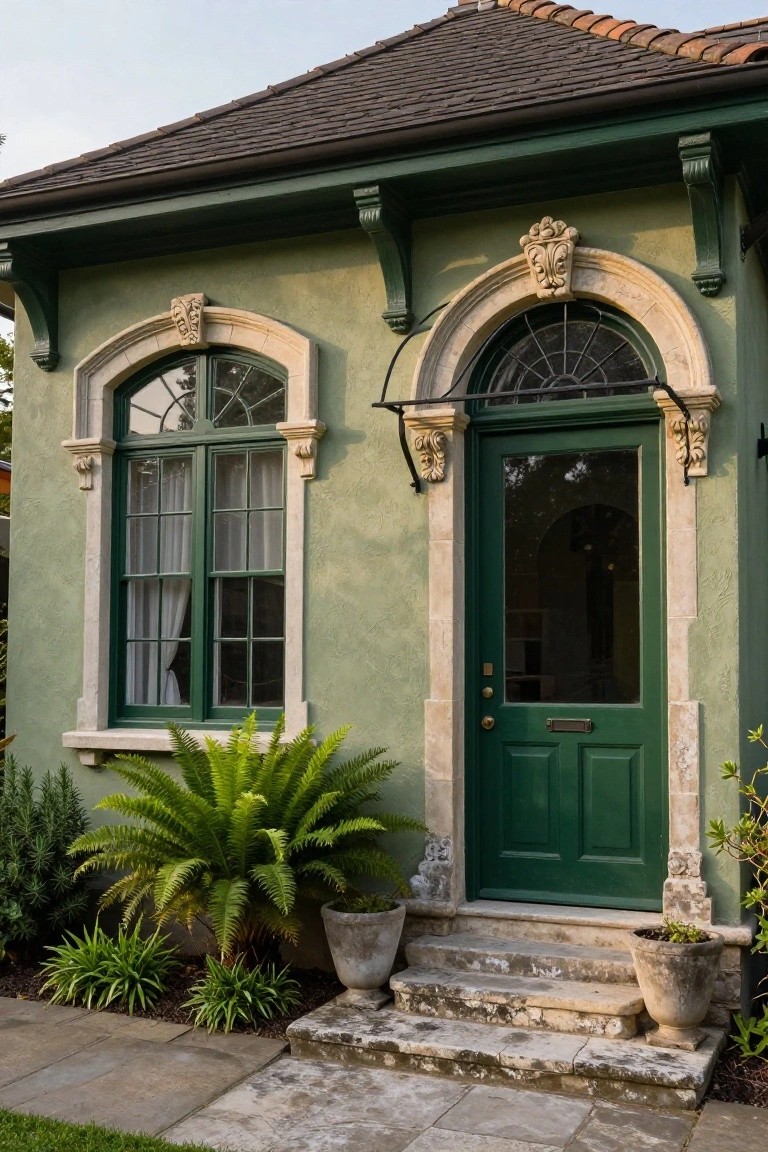
This front entry takes a soft sage green stucco base and builds up with carved stone arches around the door and windows. The deep green door sits right in the center, framed by those brackets and a keystone that give it real character. It’s a quiet way to nod to Victorian roots without going overboard.
Use this look on compact cottages or bungalows facing the street. Flank the steps with potted ferns like here to add green layers. It suits shady spots best, where the colors hold up year-round… just clean the stone trim now and then to keep the contrast sharp.
Deep Green Paint on a Victorian Facade
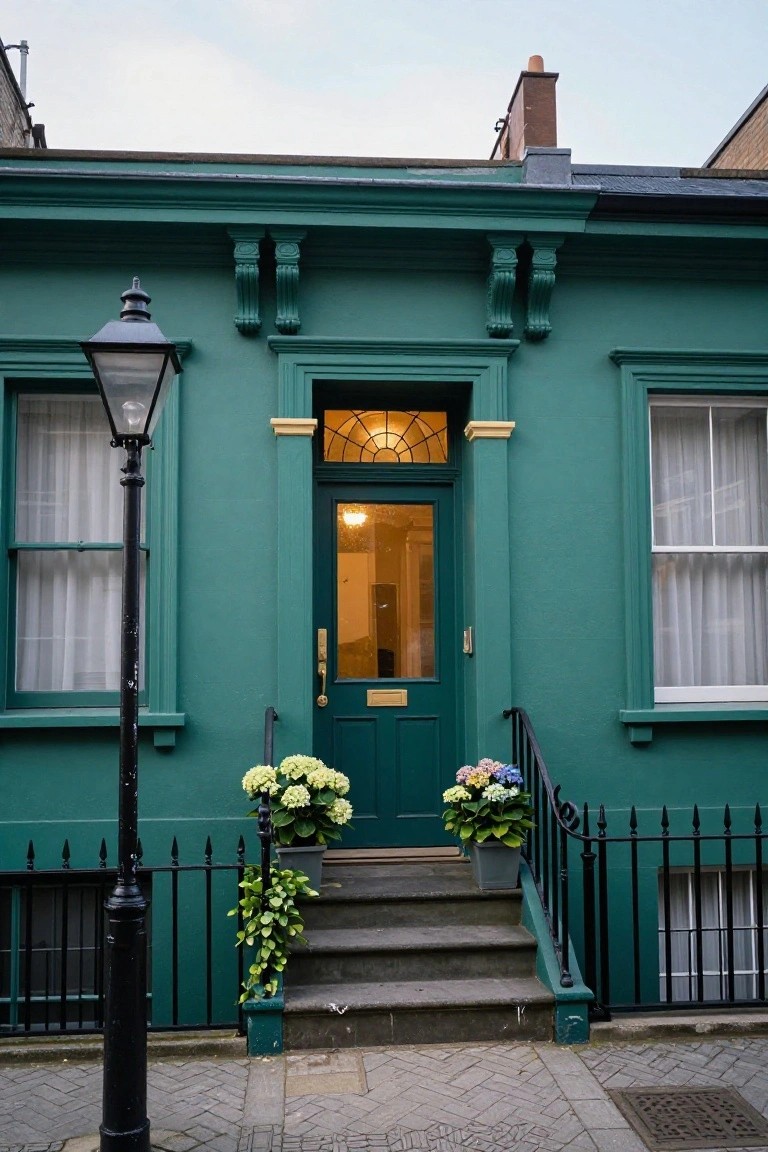
A deep green like this one turns a standard Victorian row house into something that stands out on the street. It covers the walls, door, and trim details evenly, keeping the original brackets and fanlight intact. The color feels rich but not overpowering, especially with cream accents around the windows and entry. Those simple touches make the whole front pull together without much fuss.
Try this on narrower townhouses where you want curb appeal that lasts. Pick a shade with some blue undertone for depth, and paint the door a shade darker to draw eyes right to it. Add a couple pots of white-flowering hydrangeas by the steps like here. It suits older brick neighborhoods well, and green hides everyday wear better than lighter colors.
Half-Timbered Green Facade
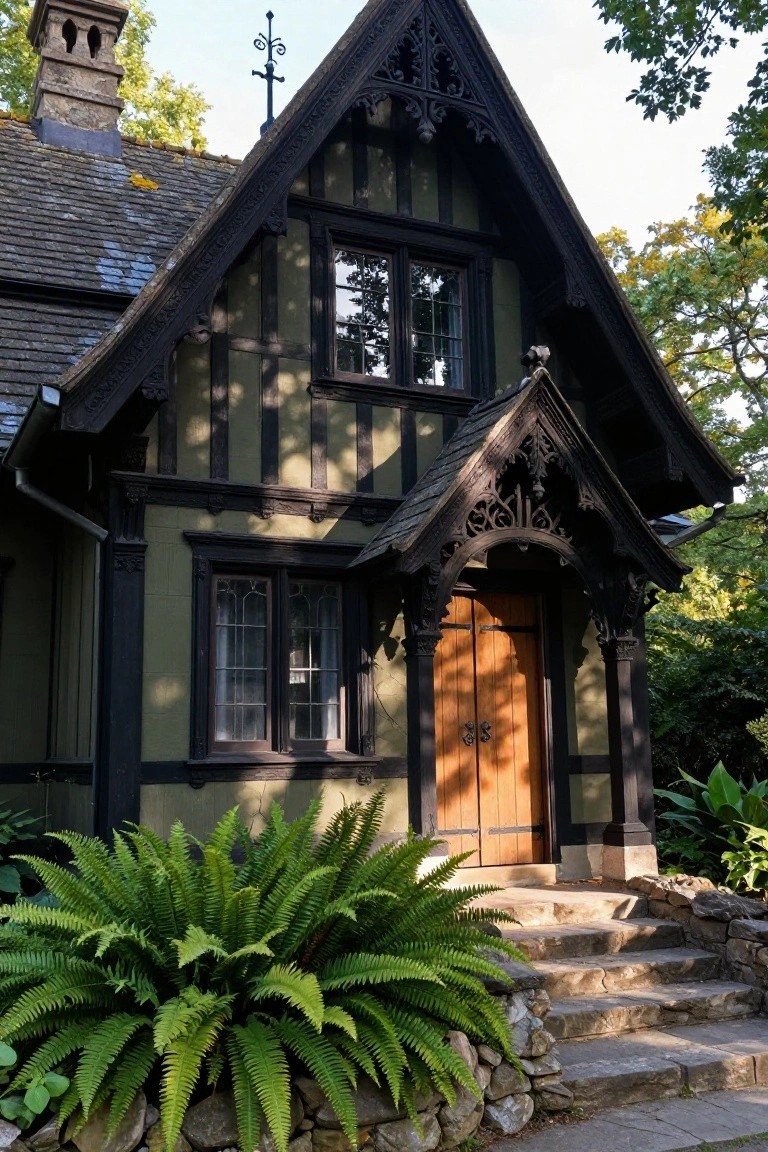
Black timbers over green plaster walls give this Victorian house its standout character. The dark beams follow the roofline and frame the windows just right. That contrast keeps things sharp and timeless. No need for extra color. It pulls the whole front together.
Try this on compact homes with steep roofs. It suits shady spots under trees. Add stone steps and ferns at the base to settle it in. Skip bright trim. That keeps the look steady year round.
Green Cottage with Porch Entry
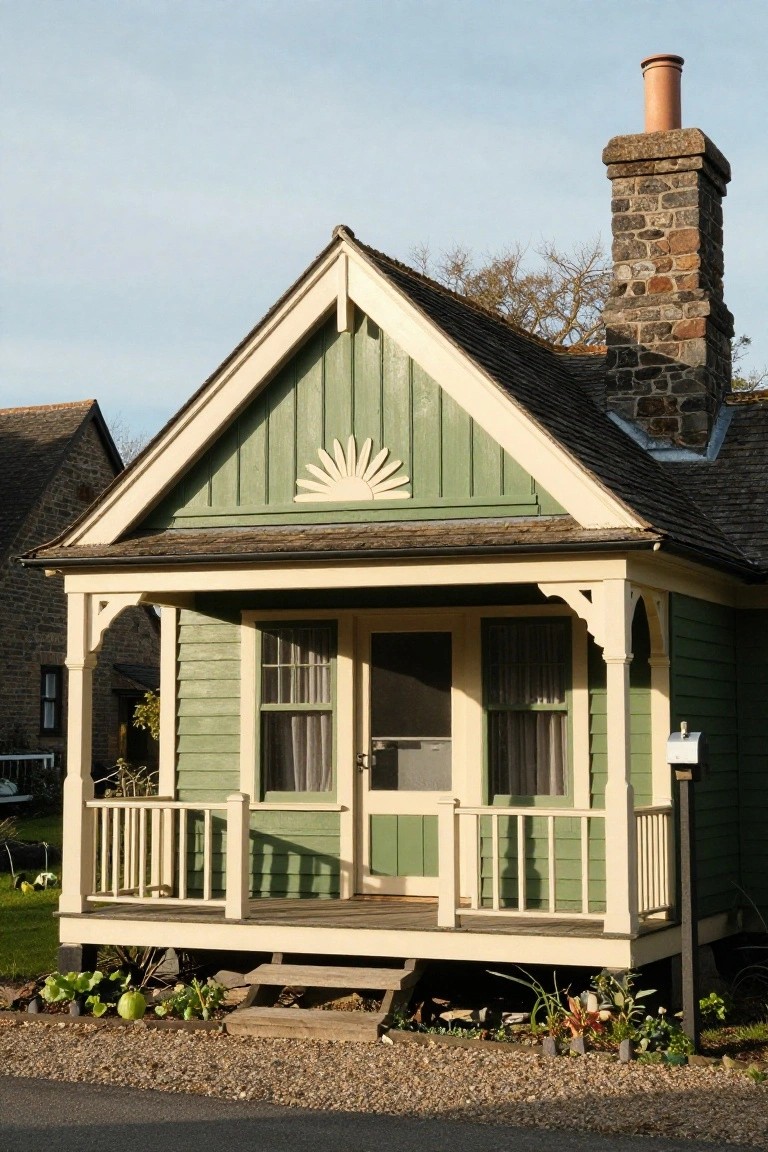
A front porch like this one turns a basic green Victorian cottage into something really homey. The soft green siding sets off the cream trim nicely, and those turned posts give it that old-school charm without overdoing it. It’s the kind of setup that makes you want to sit out there on a quiet afternoon.
This works best on smaller homes with a little setback from the street. Paint your siding in a muted green, keep the porch simple with wood rails, and add steps right to the door. Skip fancy extras if your budget is tight. It suits town lots or rural spots where you want easy curb appeal that lasts.
Victorian Turret in Deep Green
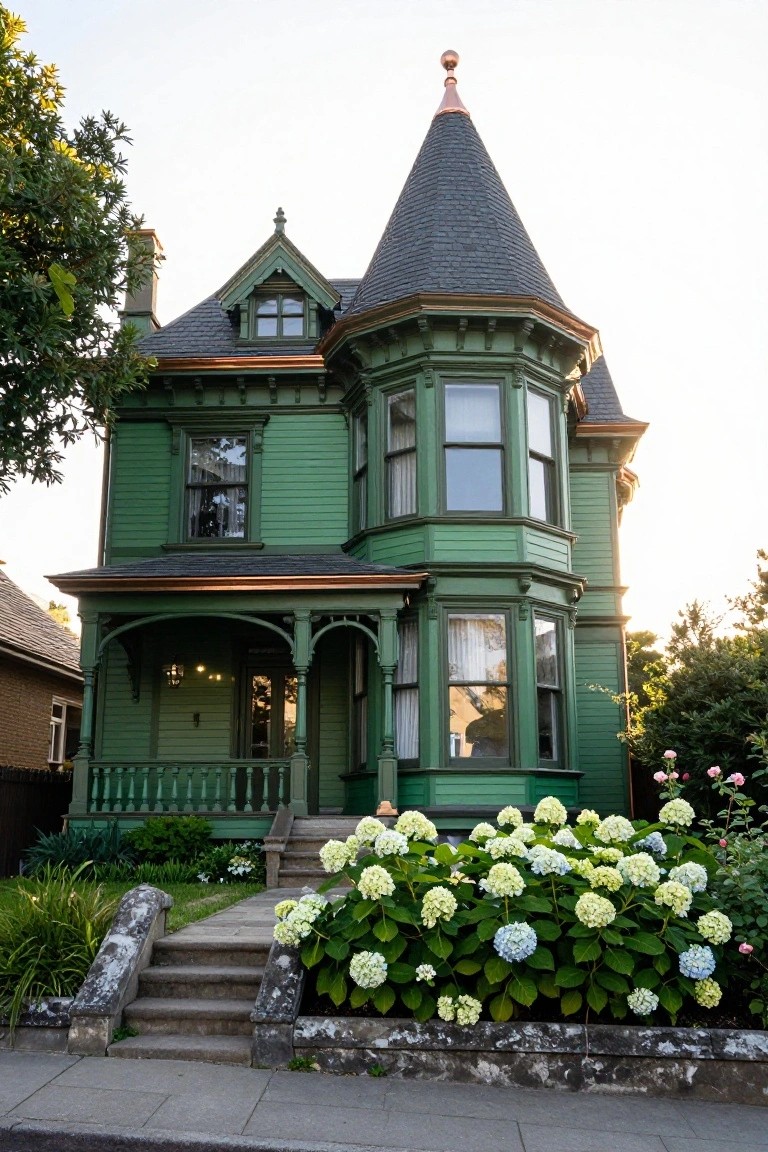
A tall turret like this one gives a Victorian house real character right from the street. Painted deep green with copper accents on the roof and finial, it stands out without trying too hard. That green ties everything together, from the gingerbread trim to the bay windows below.
You see this kind of look in older neighborhoods where homes keep their original charm. If your Victorian has a turret or tower, fresh green paint works best on the whole facade. Pair it with simple landscaping out front… just watch the trim so it stays crisp against the color.
Soft Green Victorian Cottage Front
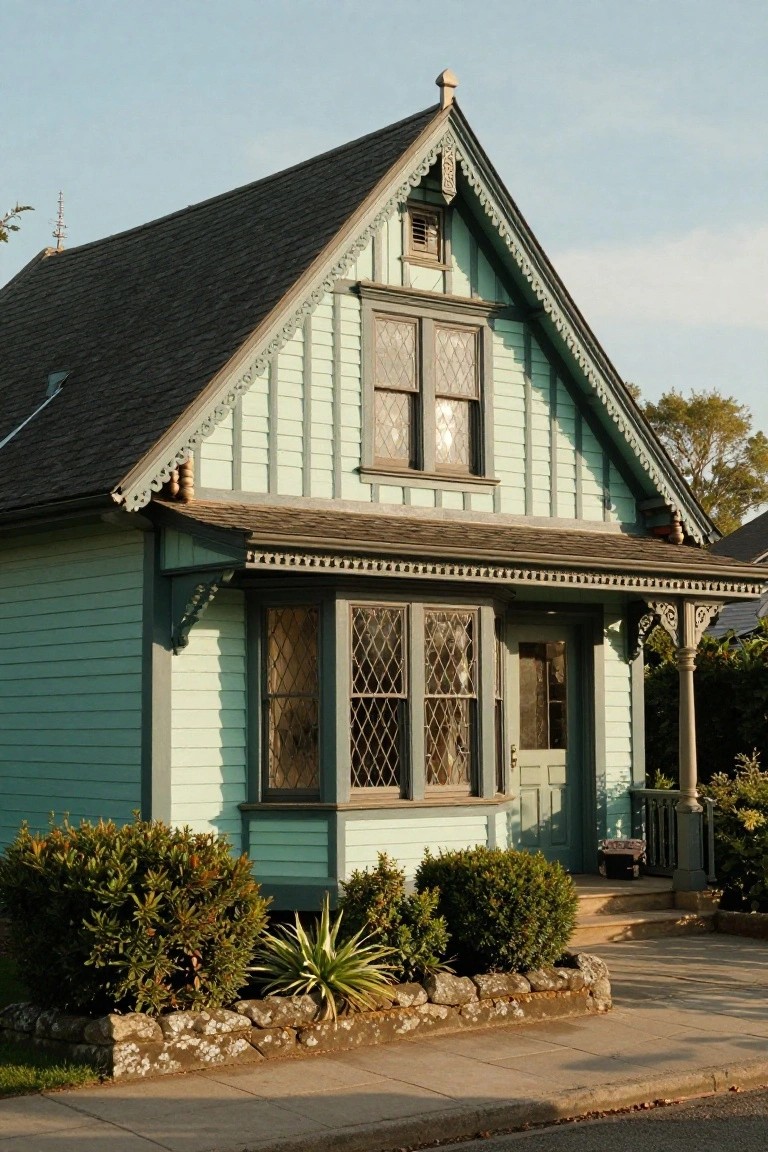
A soft green paint like this one freshens up a classic Victorian without overpowering the house’s details. You can see how it lets the gingerbread trim and leaded windows stand out nicely, especially with that dark roof overhead. It gives the whole facade a calm, lived-in feel that’s easy on the eyes from the street.
This color works best on smaller homes like cottages where you want curb appeal that doesn’t shout. Pair it with crisp white or cream trim around the windows and doors, and keep plantings simple like boxwoods out front. Just make sure your siding is in good shape first, since the green shows every little flaw.
Sage Green Paint on a Victorian Facade
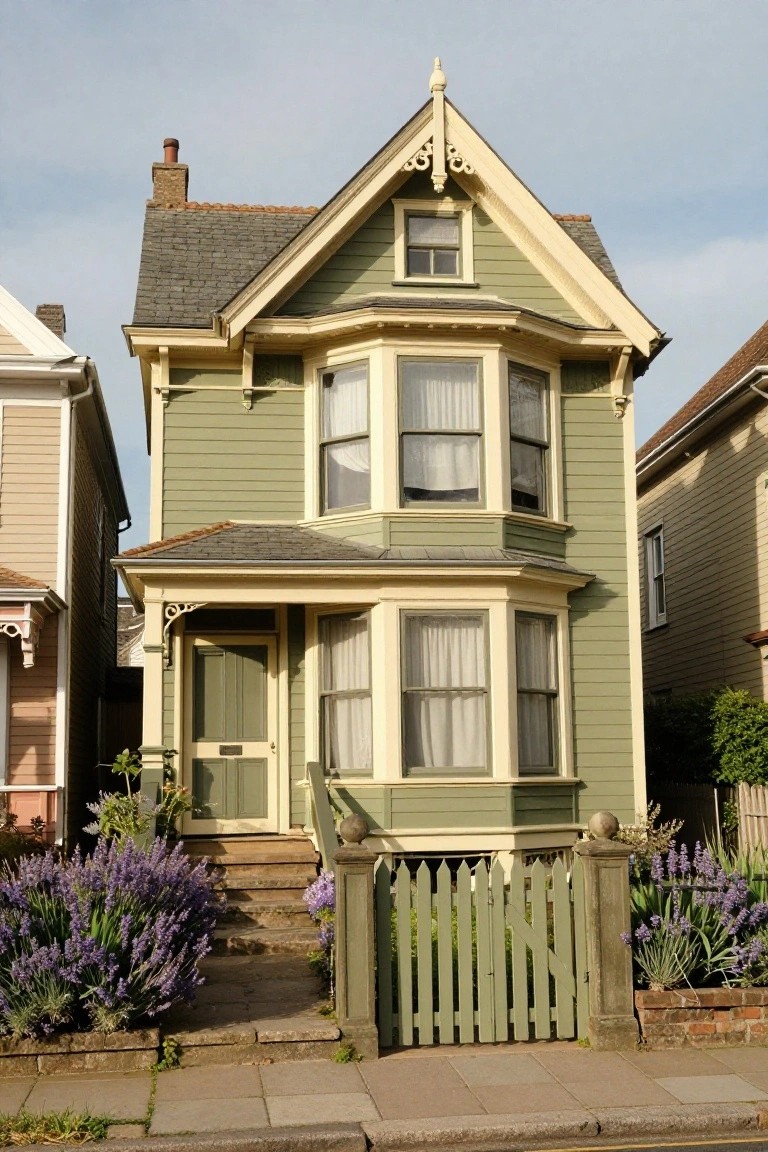
A soft sage green like this one gives a Victorian house a fresh look that still feels rooted in history. It tones down the usual bold colors you see on these homes, letting details like the cream trim around the bay windows and porch stand out without overwhelming the street view. The muted shade plays nice with the gray slate roof too.
Try this paint on a two-story Victorian with lots of angles and trimwork. It suits older neighborhoods where you want curb appeal that blends in rather than shouts. Just stick to off-white or cream accents, and keep plantings simple, like lavender by the fence… nothing too wild.
Classic Green Shingle Victorian Exterior
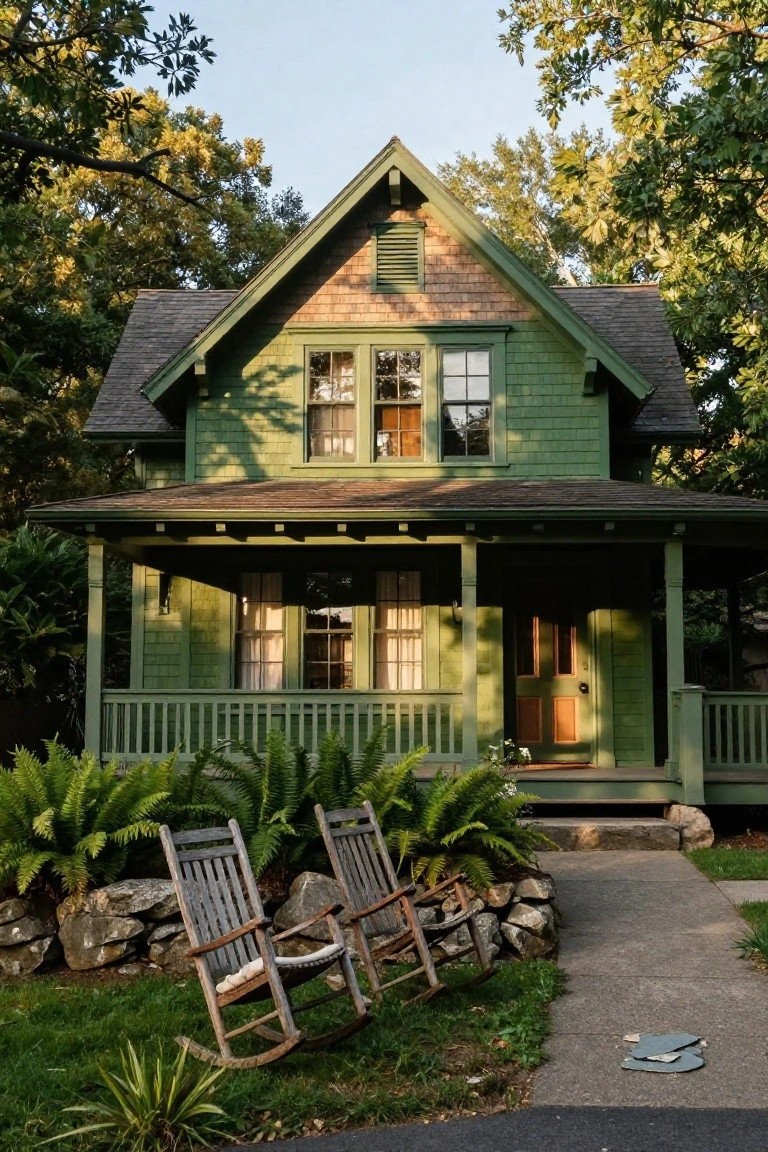
Dark green paint on shingle siding gives this Victorian house a look that’s both sturdy and at home in the woods. The color picks up on the surrounding trees without overpowering the simple rooflines and porch details. Rocking chairs out front just add to that easy, lived-in feel.
Homes like this do well tucked into leafy neighborhoods or rural spots. Stick to natural plantings around the base, like ferns, to keep the green theme going. It hides small flaws in the siding too, and stays looking good year-round.
Pale Green Paint Refreshes Victorian Facades
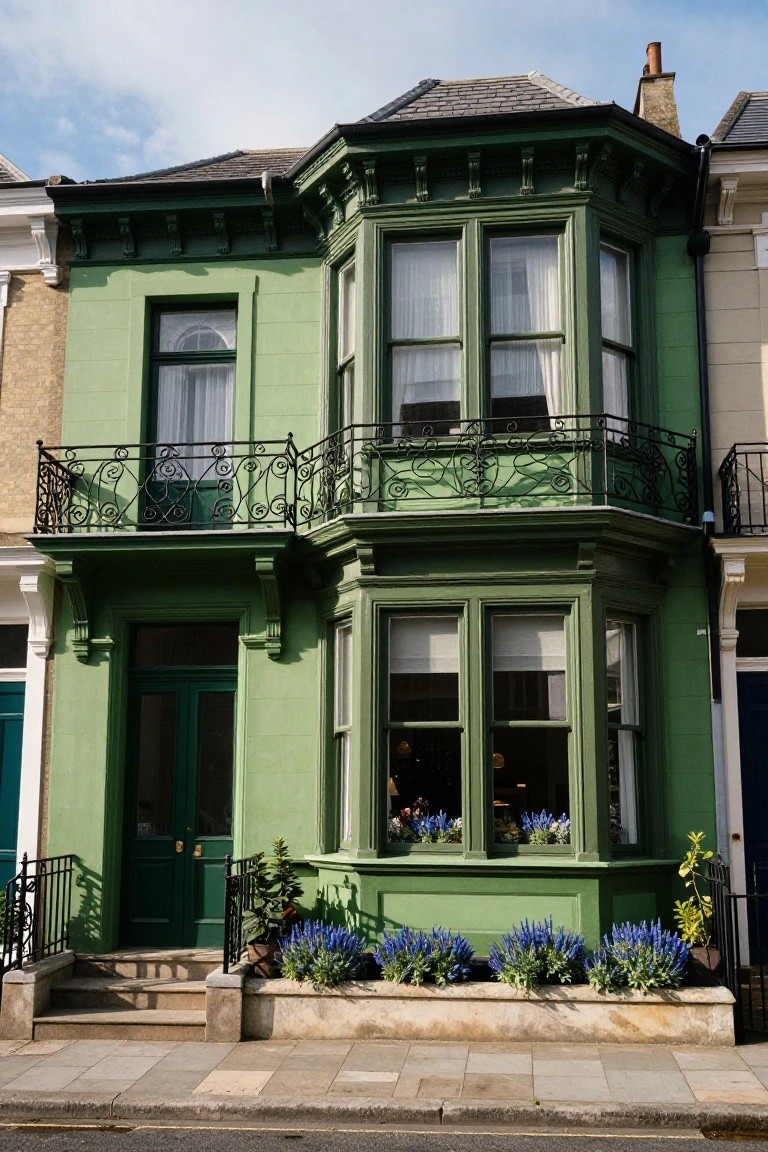
A soft pale green paint like this one brings out the best in Victorian houses without overpowering them. It softens the strong architectural lines, from the bay windows to the ornate balcony railings, and makes the whole facade feel lighter and more approachable. Those lavender plants in the window boxes pick up the green tones nicely, adding a bit of color that ties everything together.
This shade works great on terraced homes or semis where you want curb appeal that lasts. Pair it with crisp white trim around the windows and doors to keep things sharp. It suits urban streets or garden squares best, especially if the neighbors have similar styles. Just test a few samples first, since green can shift in different lights.
Sage Green Clapboard Cottage
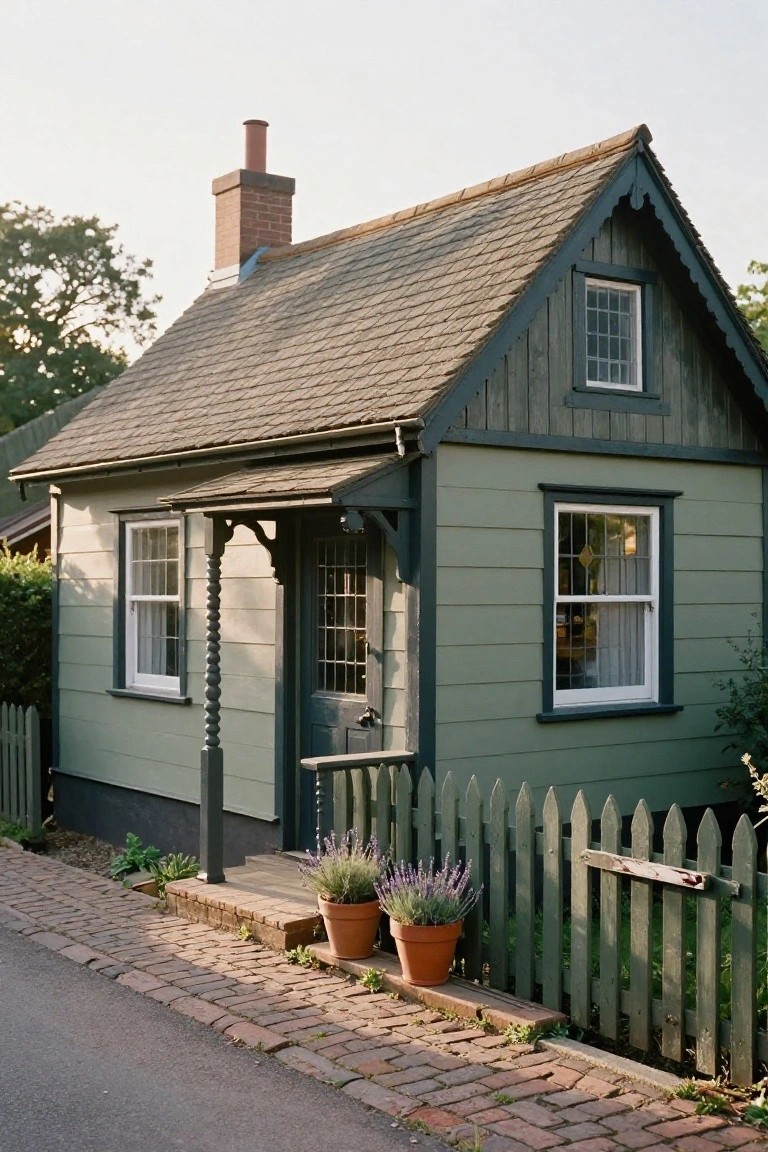
This kind of soft green clapboard siding shows up a lot on older Victorian homes. It gives the house a gentle look that doesn’t shout. The dark trim around the windows and porch pulls it together without being too heavy. You get that classic feel but softer, especially with the pitched roof and brick chimney adding some weight up top.
Try this on a small cottage or row house where you want curb appeal without big changes. It works best in shady spots or with some greenery around, like lavender pots by the steps. Keep the trim glossy black or dark green to make the green pop. Just watch the paint quality. It needs good coverage to hold up in damp weather.
Frequently Asked Questions
Q: Can I paint my not-quite-Victorian house green and still get that timeless vibe?
A: Go for it with a soft sage green. It softens modern lines and echoes nature. Add subtle trim details to bridge the styles.
Q: What’s the easiest way to pick a green shade that won’t date my house?
A: Stand outside at different times of day and snap photos of your house. Find greens in those pics that match nearby plants. That keeps everything harmonious and fresh for years.
Q: How do you make green paint last on gingerbread trim and all?
A: Scrape off loose paint first, then hit it with a solid primer. Choose high-quality exterior paint made for historic homes. Revisit every five years or so.
Q: Does the porch color need to match the house green exactly?
And: No, contrast it lightly with a pale gray or warm beige. This draws the eye to those classic details without overwhelming the green.
