

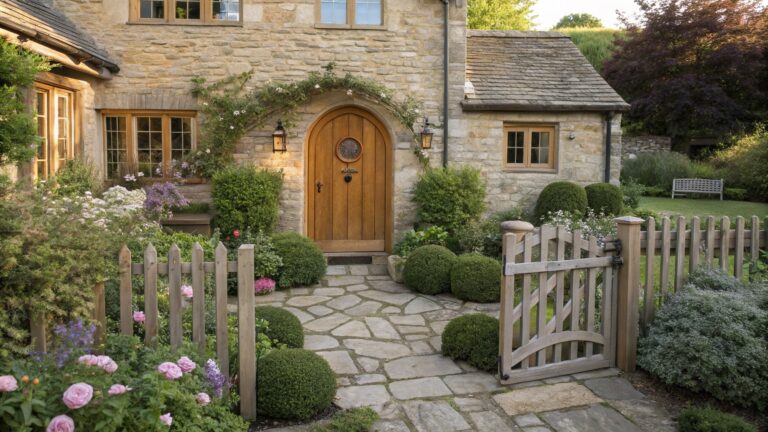
I’ve spent time walking English cottage gardens that pull you in with their green backdrops, where every curve of path and cluster of plants feels just right from the gate.
The layouts that work best use simple hedging and edging to guide your eye and foot without fighting the growth over seasons.
I like how a repeating line of yew or holly along the cottage wall grounds the whole front yard in something steady.
Folks spot that structure first, the way it frames the door and holds steady through rain or dry spells.
A few of these green setups adapt easily if your plot sits snug against neighbors.
Boxwood Edged Stone Paths
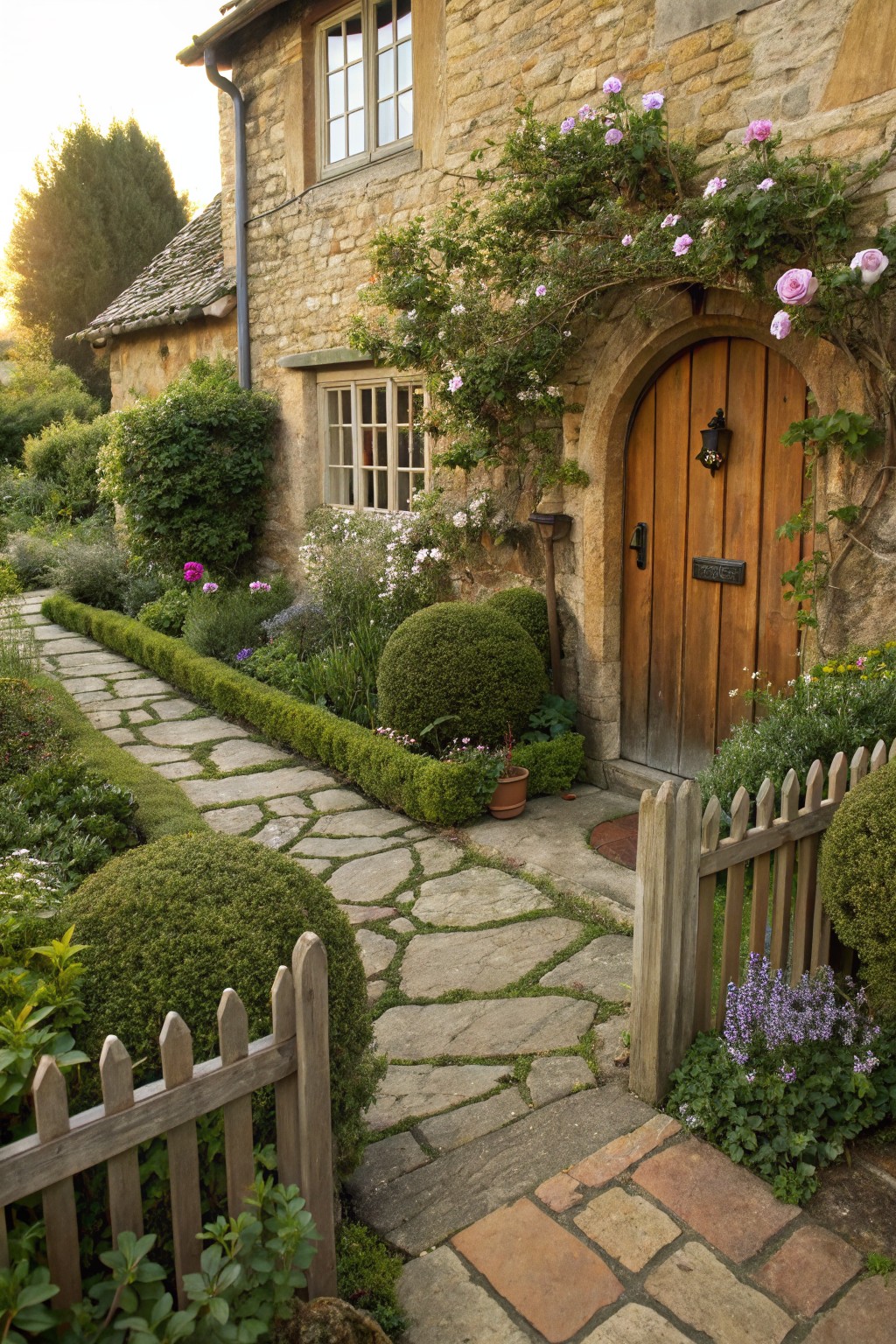
A winding path of irregular stone slabs leads straight to the door here, with neat boxwood hedges clipped into rounds along both sides. It pulls the eye forward and frames the entry just right, mixing structure with that easy cottage garden look. The low borders keep weeds down too, while letting perennials and climbers add color without mess.
This works great for small front yards on stone cottages or older homes. Lay the stones loose over soil for a natural feel, plant slow-growing boxwoods close together for quick hedging. Trim them a couple times a year. Skip it on steep slopes though, paths like this suit flat or gentle approaches best.
Rustic Stone Paths for Cottage Courtyards
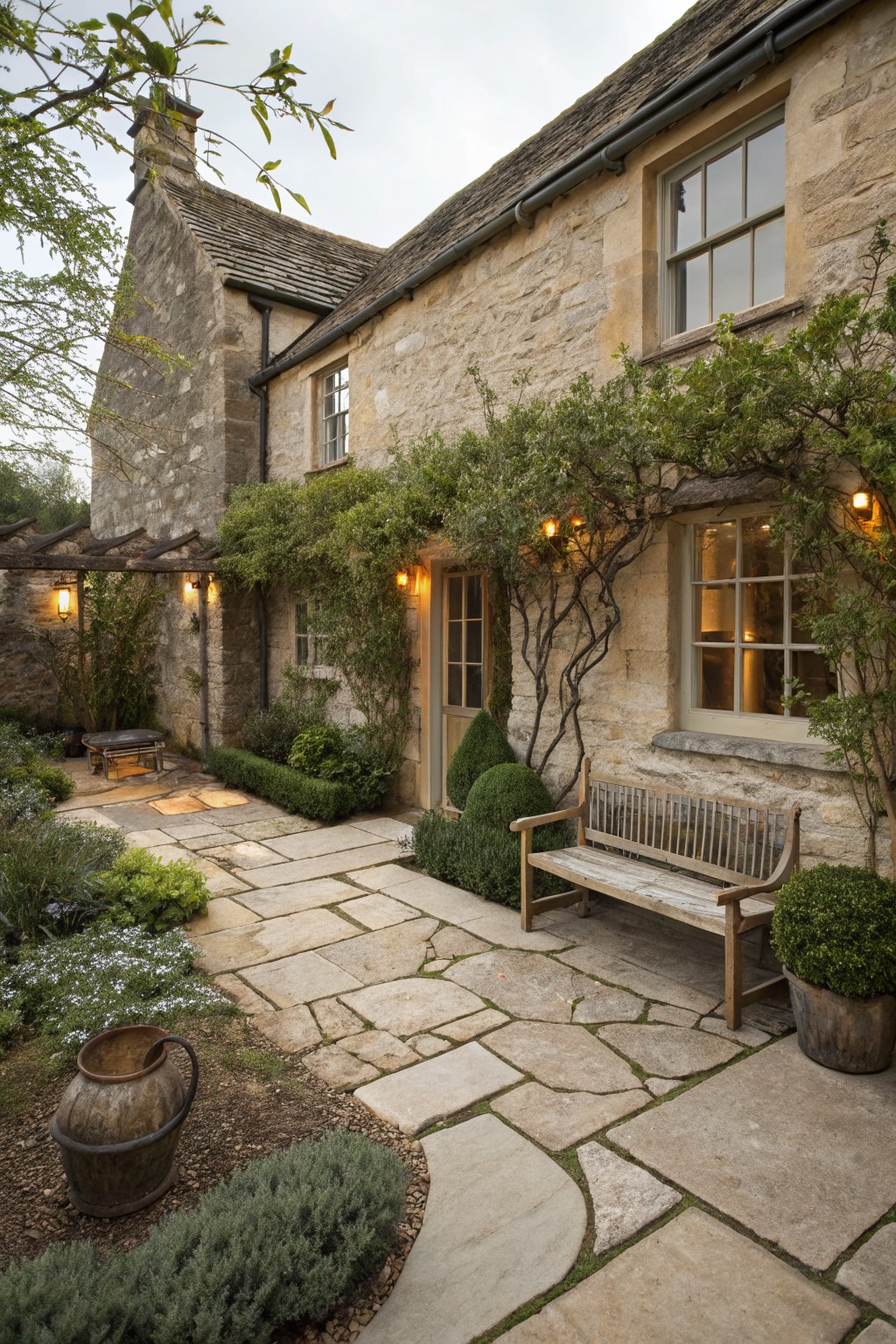
Nothing says English cottage quite like a path made from chunky, uneven stone slabs. They fit right into the yard here, winding from the gate past a bench and some low plants straight to the door. The gaps between slabs fill with moss or gravel, which keeps things looking natural and soft against the hard stone walls. It’s a look that feels old and settled, like it’s always been there.
To pull this off in your own space, hunt for reclaimed local stone, maybe from a quarry nearby. Lay the slabs loose on a gravel base, leaving room for plants to creep in. It works best in small courtyards or side yards where you want foot traffic without a fussy feel. Skip tight edges. Let it breathe… and watch how it pulls the garden together. Just make sure the stones aren’t too slippery when wet.
Terraced Planting Beds on Sloped Yards
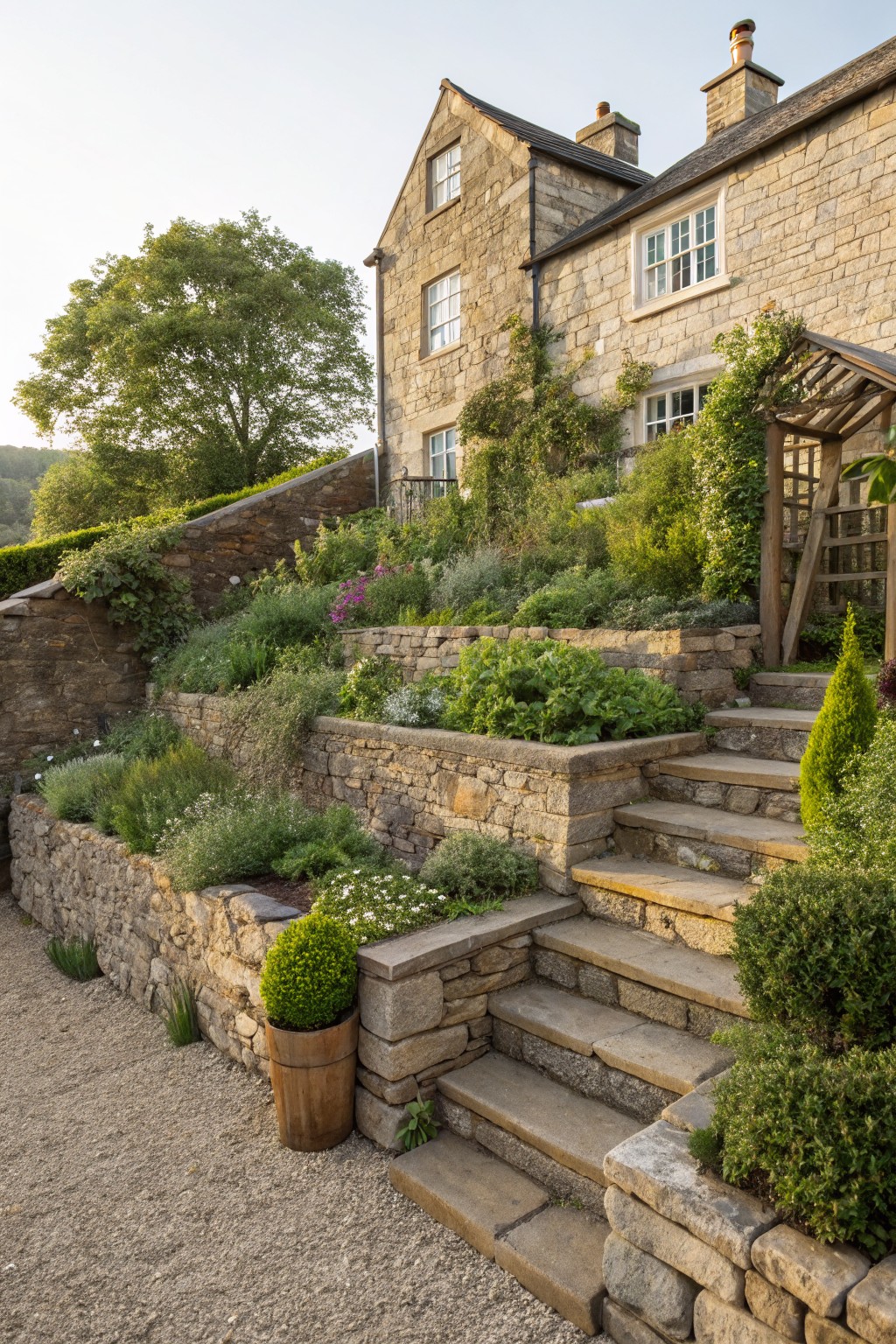
One smart way to handle a hillside next to your cottage is terraced beds built from local stone. These walls hold back soil while letting plants tumble over the edges, like the herbs and perennials doing their thing here. It turns a tricky slope into usable garden space that echoes the house stone, keeping everything tied together without a big flat lawn.
This works best on cottage plots with some drop-off, especially in the English countryside style. Stack the walls dry, no mortar, fill with tough growers like lavender or sedums that don’t mind poor soil. Add wide steps between levels for easy walking up to the door. Just make sure water drains well so roots stay happy.
Stone Stepping Paths Through Grass
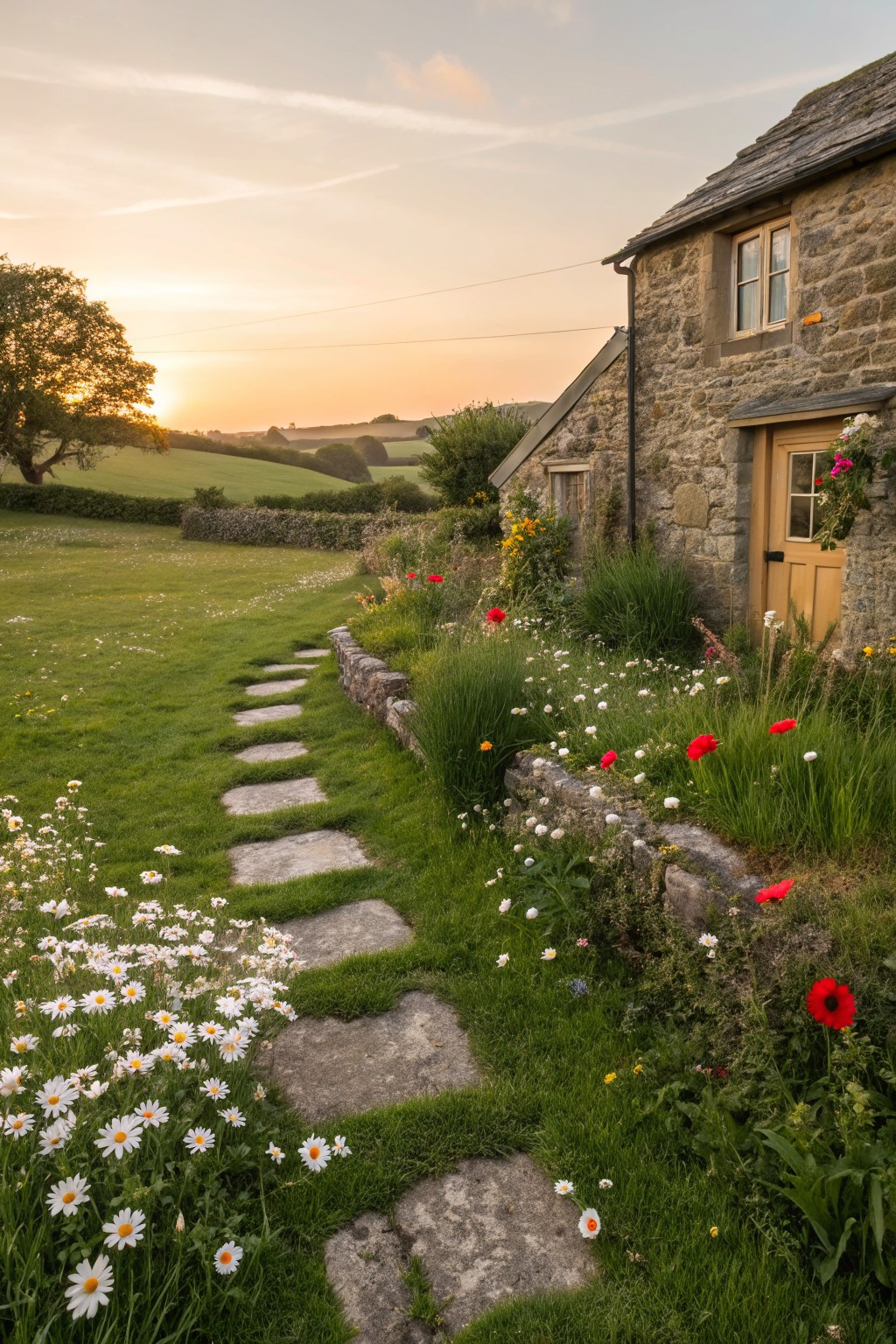
One easy way to guide folks right to your cottage door is with rough stone stepping stones laid into the lawn. Here you see irregular slabs set into thick green grass, with daisies and poppies brushing the edges. It keeps things feeling wild and settled in, like the path has always been there. No harsh lines or gravel mess. Just a soft walk that fits the countryside look.
Try this in smaller front yards where you want low upkeep. Space the stones a boot-length apart so grass fills in between. Plant easy bloomers like those along the wall border for color without much fuss. It works best on level ground near the house, drawing eyes to the entry without overpowering the stone walls.
Raised Beds for Cottage Vegetable Gardens
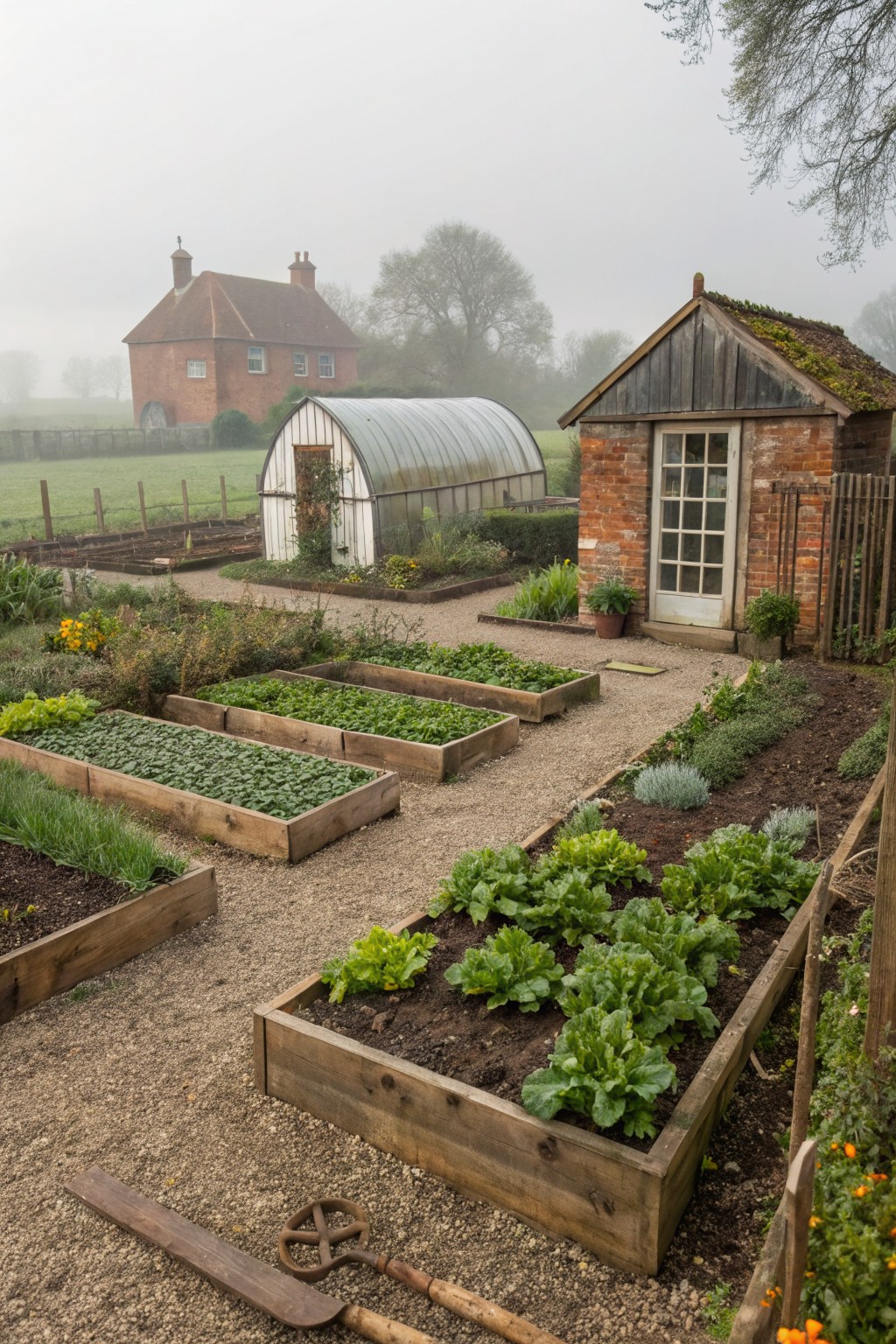
Raised wooden beds give cottage gardens a tidy structure that makes growing your own food straightforward and charming. You fill them with soil and plants like lettuce, pak choi, and herbs, and everything stays neat without sprawling everywhere. Gravel paths between the beds keep things accessible, even on misty mornings, and tie the whole plot together without much fuss.
These work best in smaller backyards near the house, maybe by a potting shed or greenhouse for easy tending. Build them knee-high from rough sawn timber, leave wide enough paths for a wheelbarrow, and you’ll have fresh picks all season. Pick rot-resistant wood… it saves headaches later.
Dining Under a Vine-Covered Pergola
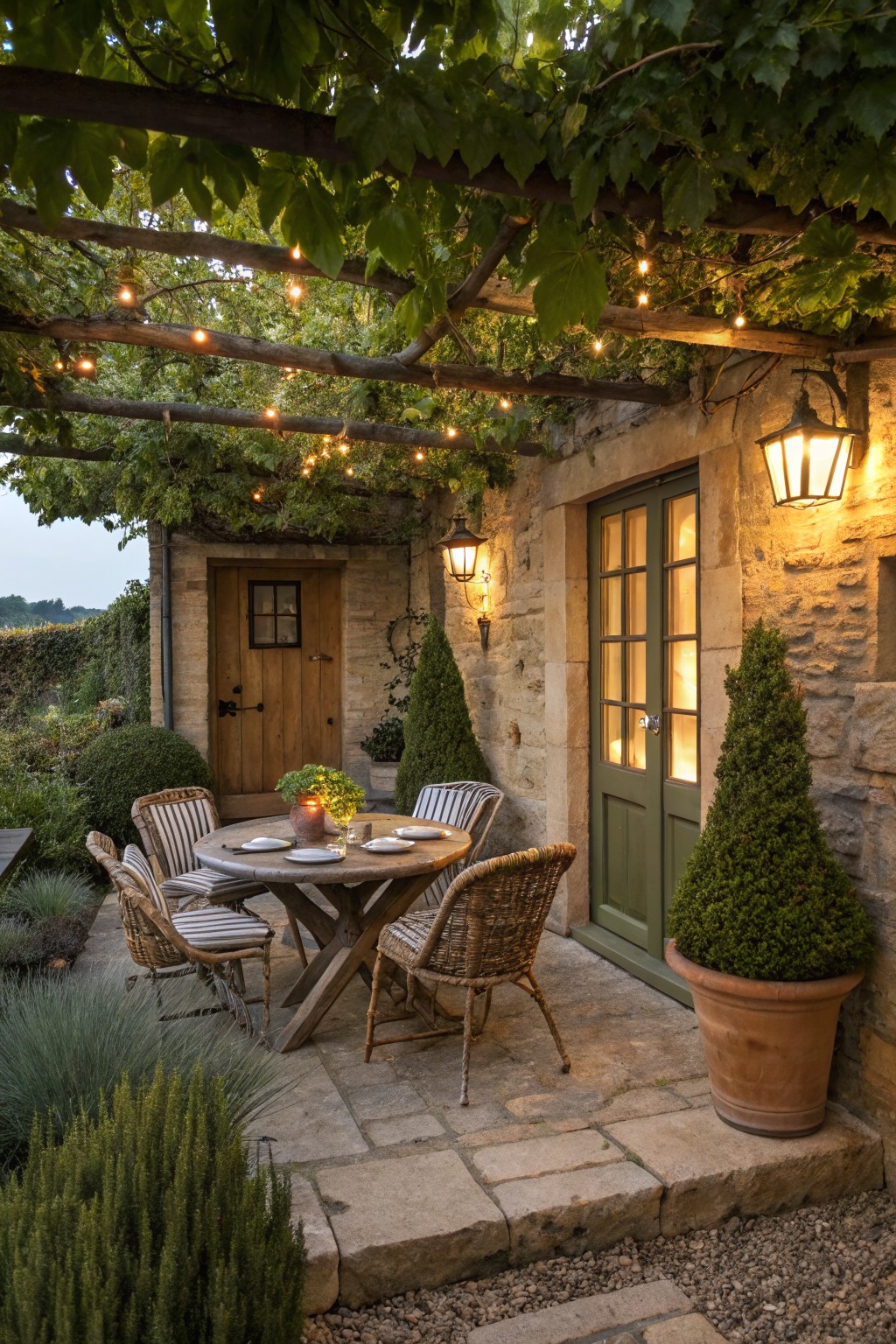
A simple wooden pergola draped in thick green vines makes the best spot for outdoor meals on a cottage patio. The leaves filter the light during the day and create that cozy enclosed feel at night. String lights woven through the beams turn it into something special without much fuss.
Plant grapes or another climbing vine that grows fast, and let it take over the frame over a season or two. Set up a round wooden table with wicker chairs right underneath, close to the house door for easy serving. This works perfect for English cottages with stone walls and a small terrace. Just keep the vines trimmed so they don’t block the lights.
Stone Slab Paths Lined with Ferns
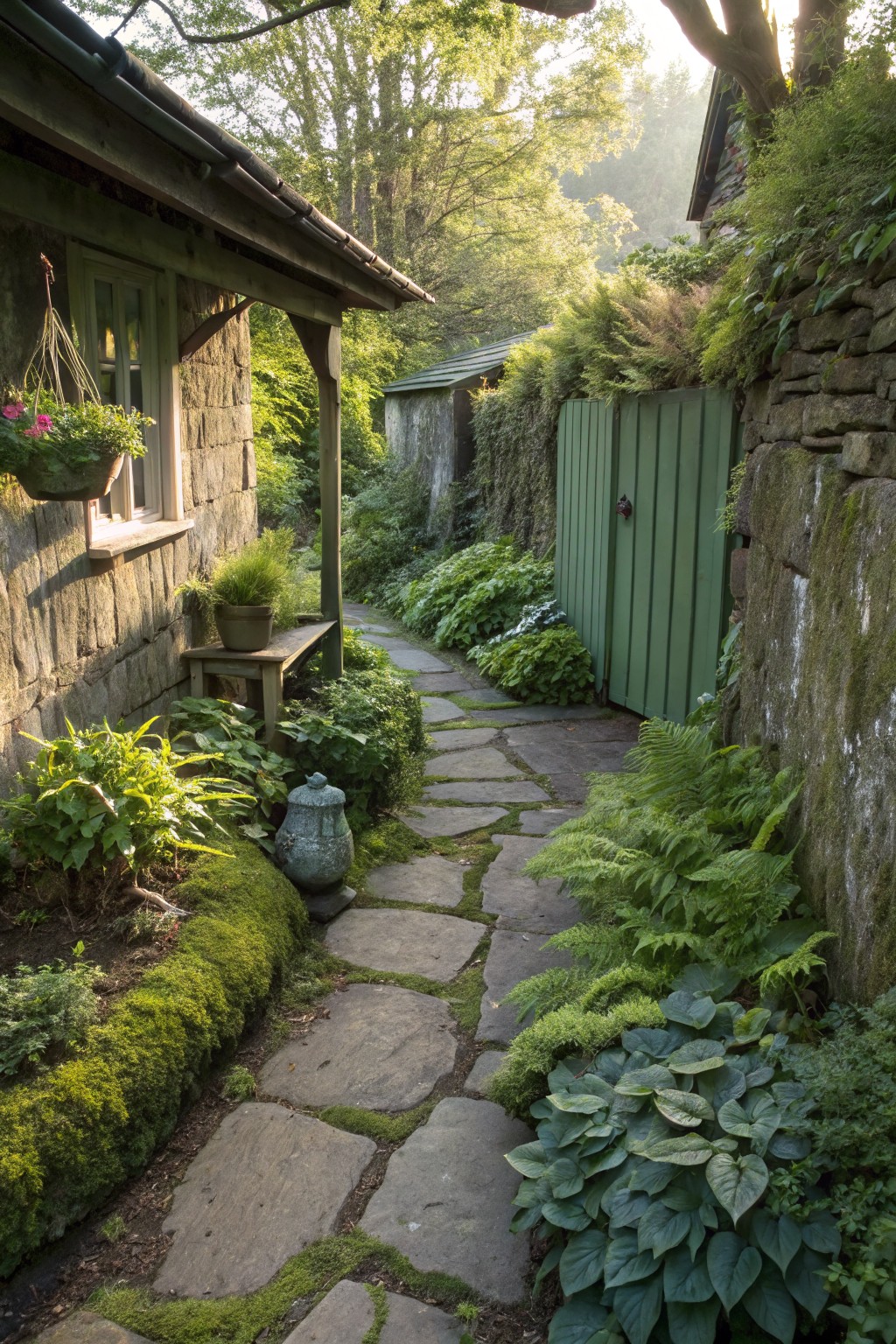
Nothing says English cottage garden like a simple stone slab path winding through thick ferns and foliage. The irregular slabs, often mossy from shade and damp, get edged right up with plants like ferns and hostas that spill over just enough. It turns a plain walkway into something secret and tucked away, pulling you toward a gate or shed without much fuss.
These paths work best in narrow spots along the house, where you want low upkeep but lots of green charm. Lay the stones loose in soil or gravel for easy drainage, then plant shade lovers that fill in quick. Skip straight edges – the wobble keeps it cottage-y, and it suits old stone walls perfectly.
Stepping Stone Paths Around Garden Ponds
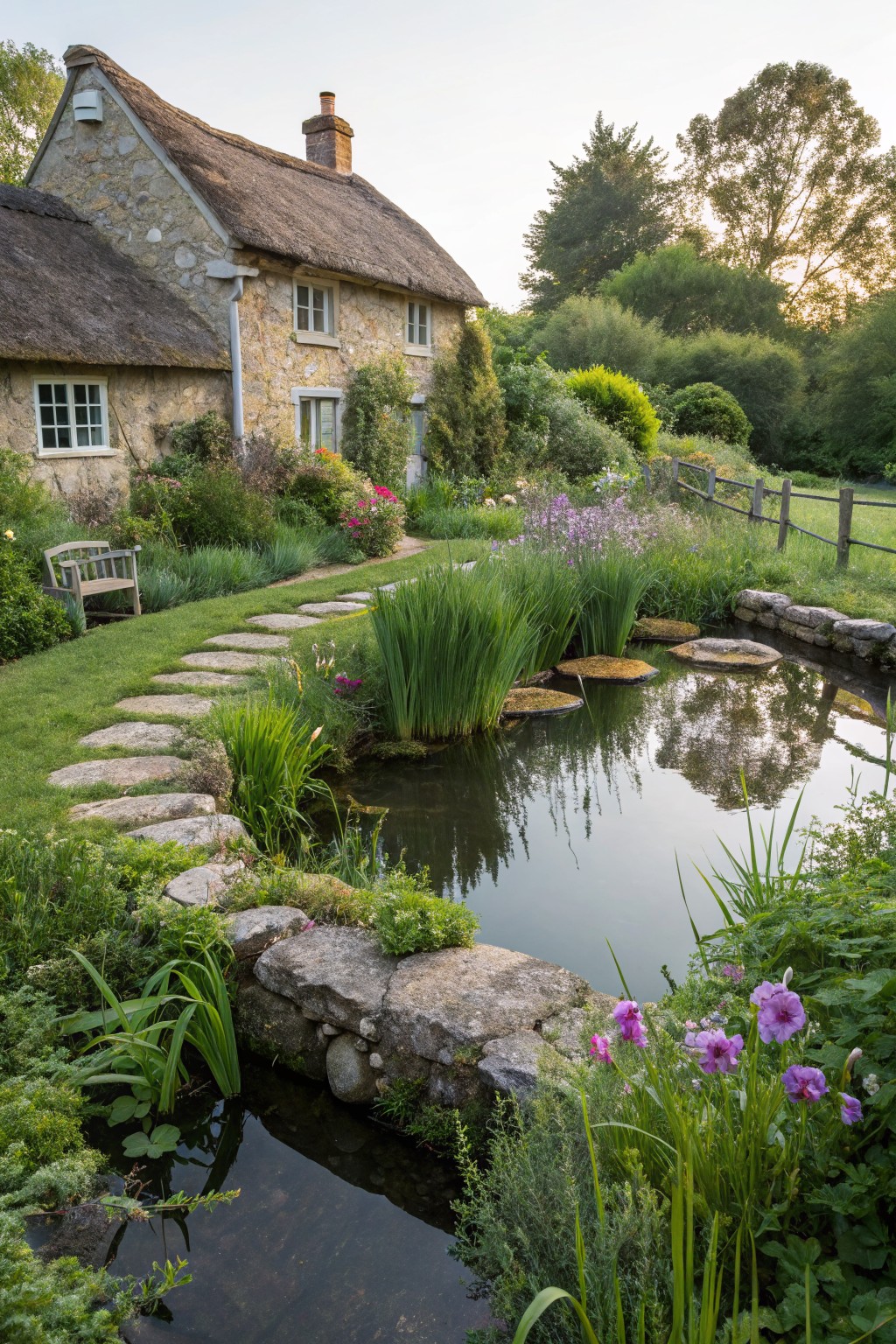
One easy way to guide folks through a cottage garden is with flat stepping stones set right into the lawn and plantings. They wind gently past tall reeds and flowers, leading straight to a quiet pond. This keeps the path feeling natural, not too formal. No straight lines here. It fits right with the soft lines of an English cottage.
Try this where you want a low-key path that doesn’t take over the yard. Use rough local stones for that real look, space them a boot-length apart, and tuck in plants around the edges. It works best in damp spots near water or boggy areas. Just watch the moss buildup on those stones after rain.
Winding Stone Paths Through Flower Borders
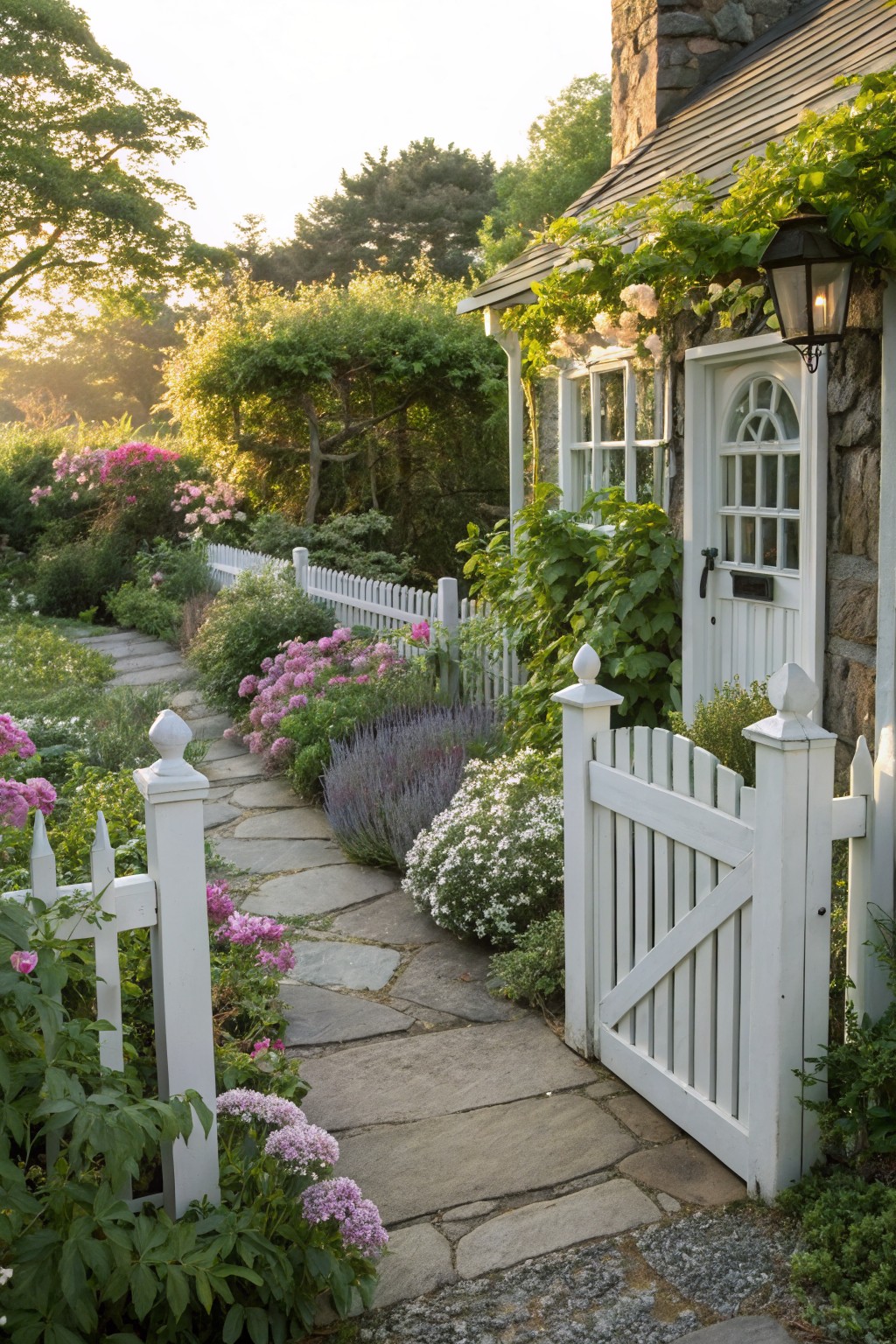
A winding stone path like this one makes a cottage garden feel alive and welcoming. The uneven flagstones curve gently through borders packed with pink peonies, hydrangeas, and lavender. That soft path pulls your eye right to the gate without feeling too rigid. It’s simple but does a lot for charm.
Put one in where you want to guide folks to the door or around the side yard. It suits smaller cottage plots best, especially with low fences and spill-over plants. Keep the stones local if you can. Just watch the weeds in those joints.
Lavender-Lined Garden Paths
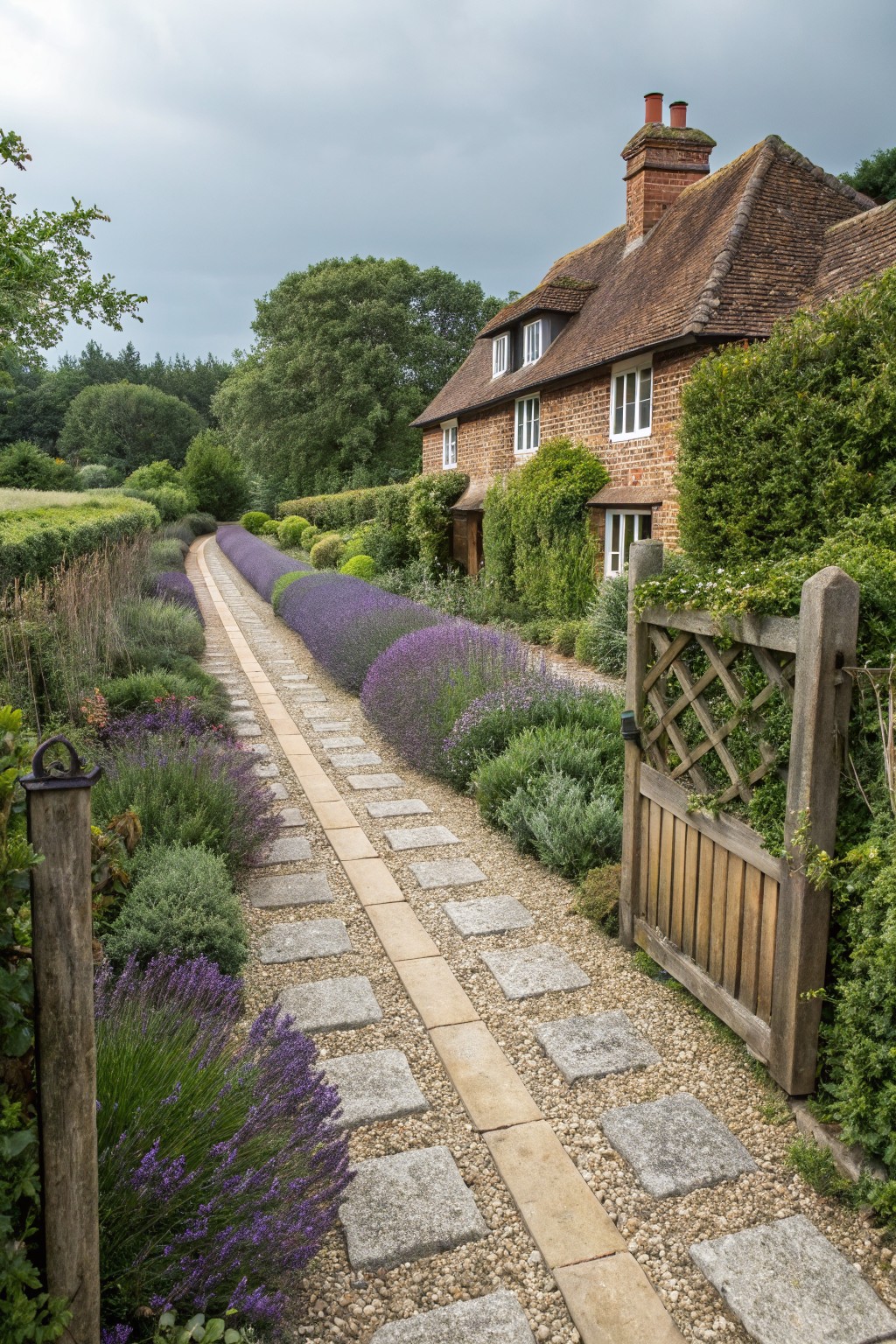
One of the simplest ways to give an English cottage that instant charm is a winding path edged with lavender. You see it here, where low lavender bushes run along both sides of a gravel walk, broken up by stone pavers. It pulls your eye right up to the house without trying too hard. The purple blooms add color through summer, and the scent hits you as you walk. Plus, lavender stays tidy and doesn’t need much fuss.
This works best in front gardens or side approaches where you want a soft lead-in to the door. Plant the lavender in drifts about two feet wide, keeping the path at least three feet across for easy walking. Gravel keeps costs down and lets water drain. Go for a simple wooden gate at the end… it feels right with brick cottages. Skip it if your yard floods, though. Stick to sunny spots since lavender hates wet feet.
Outdoor Kitchen with Built-In Fireplace
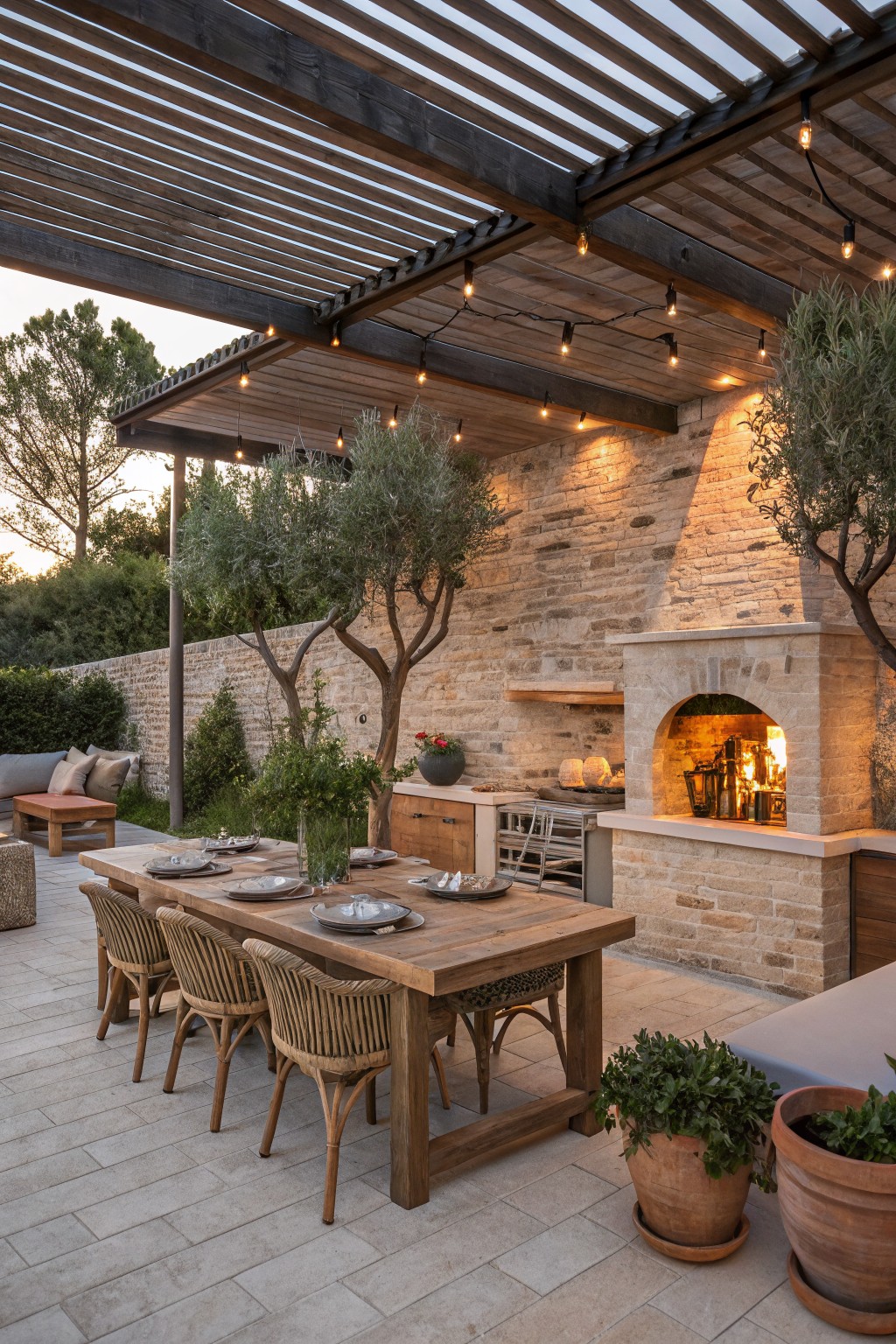
One smart way to make your patio more useful is adding a stone-built outdoor kitchen like this, complete with a wood-burning oven right in the wall. The fire gives off real warmth on cooler nights, and having it next to the dining table keeps cooking and chatting all in one spot. Olive trees nearby add some green without crowding things.
This works best on a cottage terrace where space is limited but you still want to entertain outside. Match the stone to your house walls for a natural tie-in, keep the oven simple, and plant evergreens or climbers around the edges to soften it up. Skip fancy grills if you like that rustic feel… it lasts longer anyway.
Circular Gravel Garden with Fountain
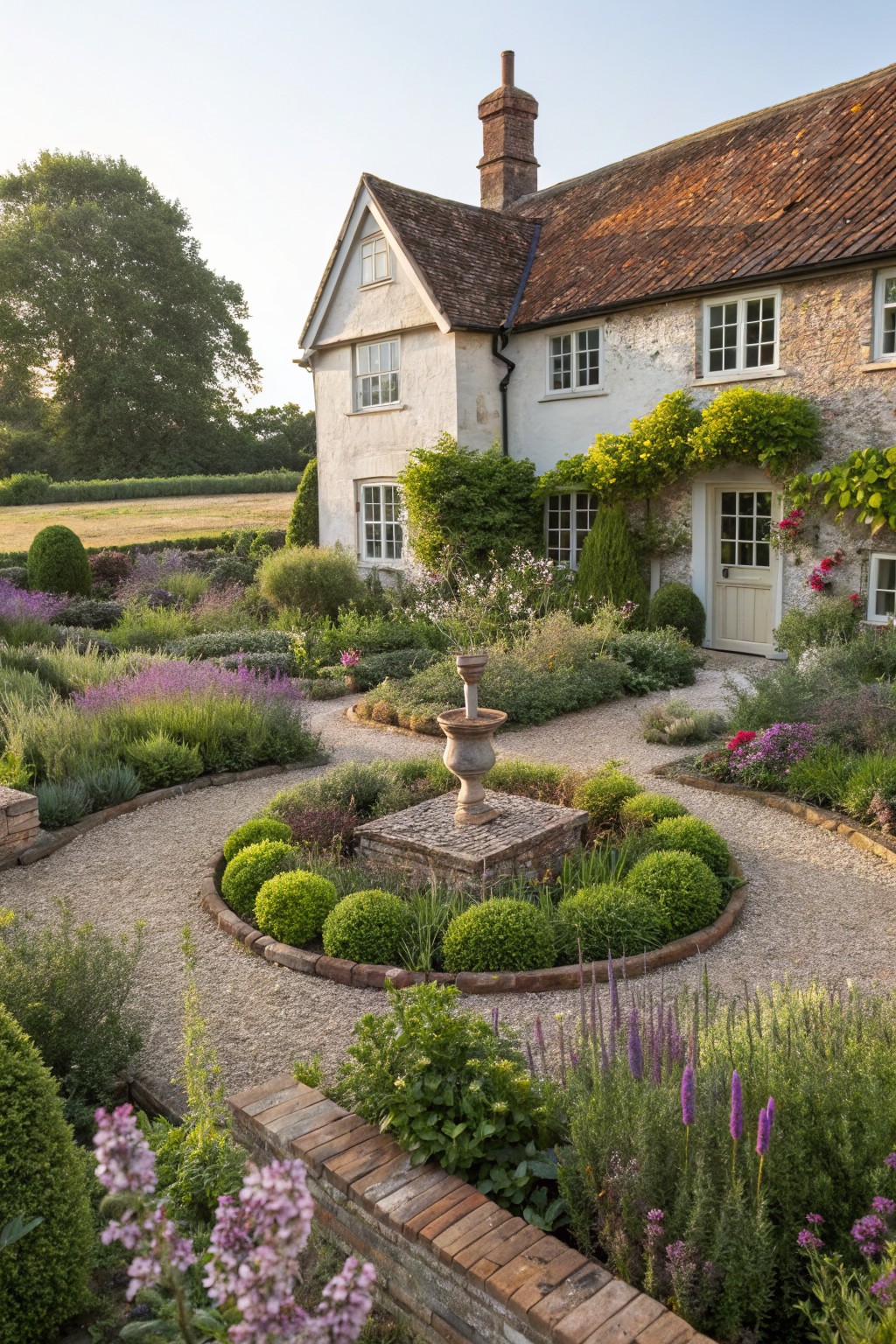
A gravel circle laid out around a simple stone fountain makes a neat focal point right in front of the cottage. Boxwood balls edge it perfectly, while lavender and other soft plants fill in around the outside. This keeps things structured but still feels cottage-like and easygoing. It draws the eye without overpowering the house.
Put one like this near your front path where you pass by every day. It suits small front yards on older homes, especially if you want low upkeep. Stick to gravel for drainage, and pick tough plants that come back year after year. Just watch that the fountain doesn’t get too fancy… keep it plain.
Lush Borders Line a Cottage Path
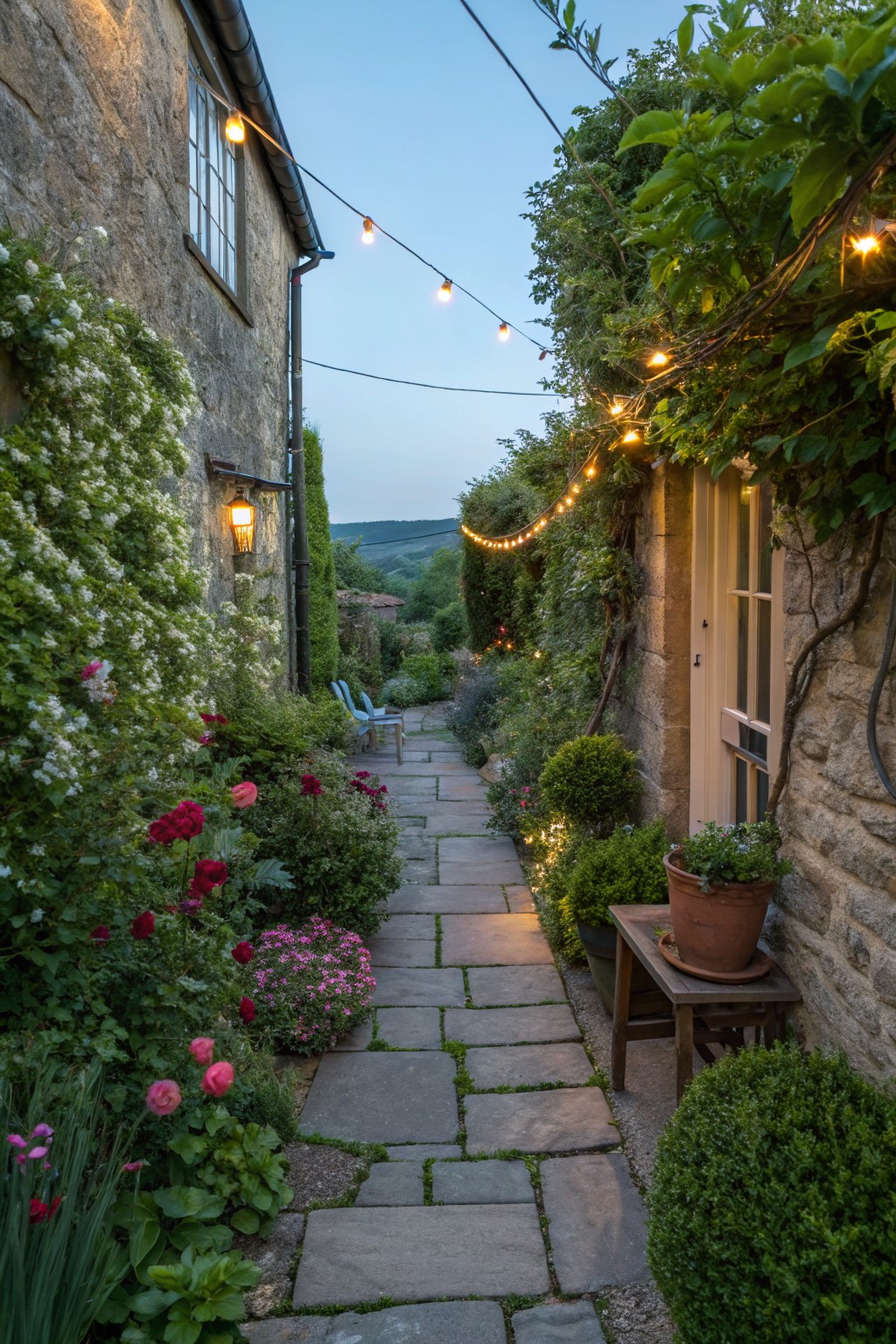
A simple stone path like this one gets all its charm from the thick planting on both sides. Roses and climbers spill over the walls, with perennials and shrubs filling every gap. It turns a plain walkway into something that feels alive and welcoming right away. Those string lights overhead just make it better at dusk.
This works great for narrow spots between buildings or along a side entry. Pick tough plants that handle shade and fill out quick, like geraniums or ivy. Keep the path clear for walking, but let everything else grow a bit wild. It suits old stone cottages perfectly… low fuss, high charm.
Balcony Planters Full of Trailing Flowers
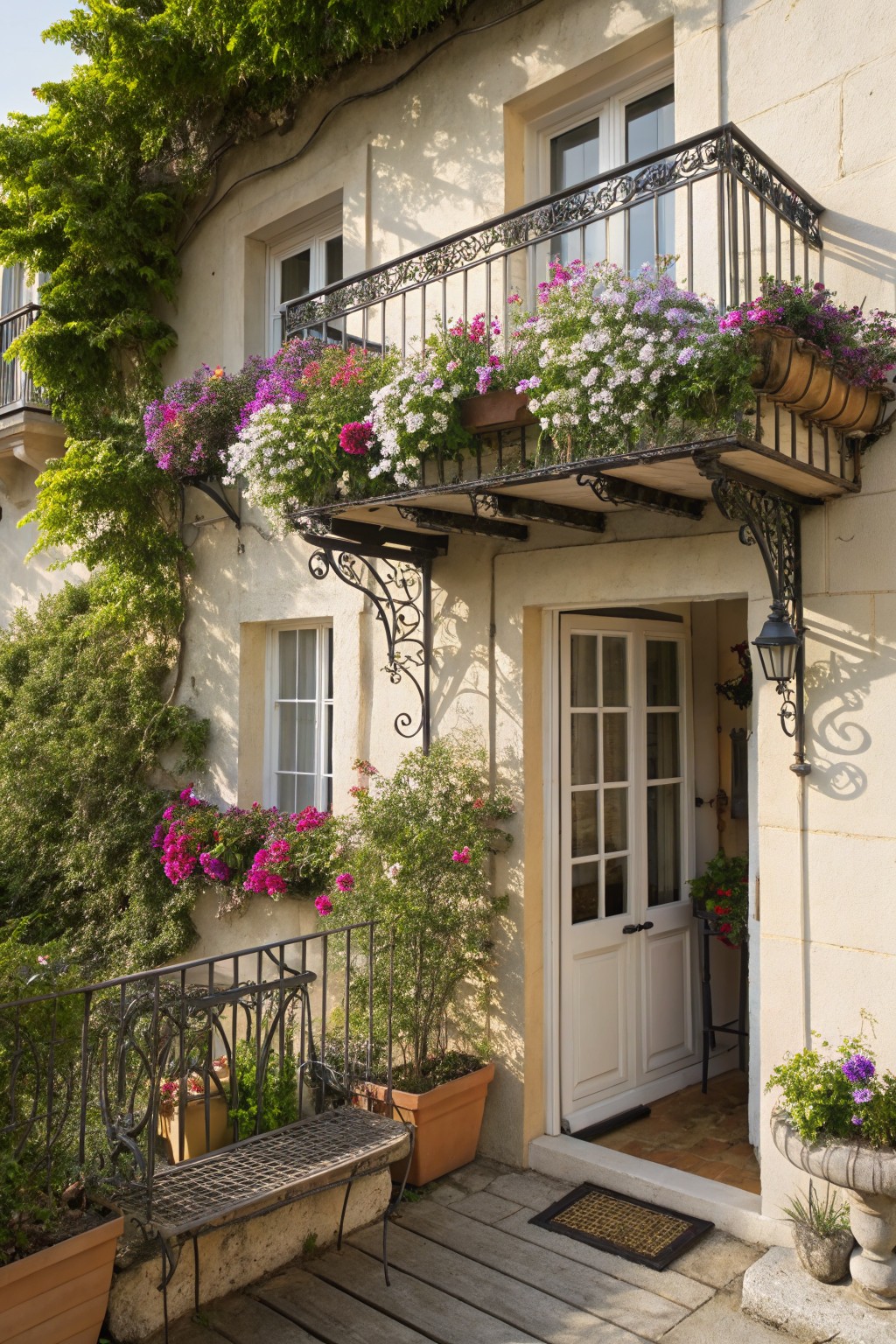
Nothing says cottage charm quite like planters on a balcony stuffed with trailing blooms. Here, pinks and purples tumble over the wrought-iron edge, softening the plain stone walls below. It pulls the whole facade together without much effort. The vines climbing nearby just add to that easy, lived-in feel.
Try this on any older home with a balcony or railing. Go for petunias, lobelia, or million bells that hang down nicely. They suit English-style cottages best, especially where you want color up high. Just water them regularly and trim back as needed… keeps it looking fresh all summer.
Gravel Paths Edged with Boxwood Topiaries
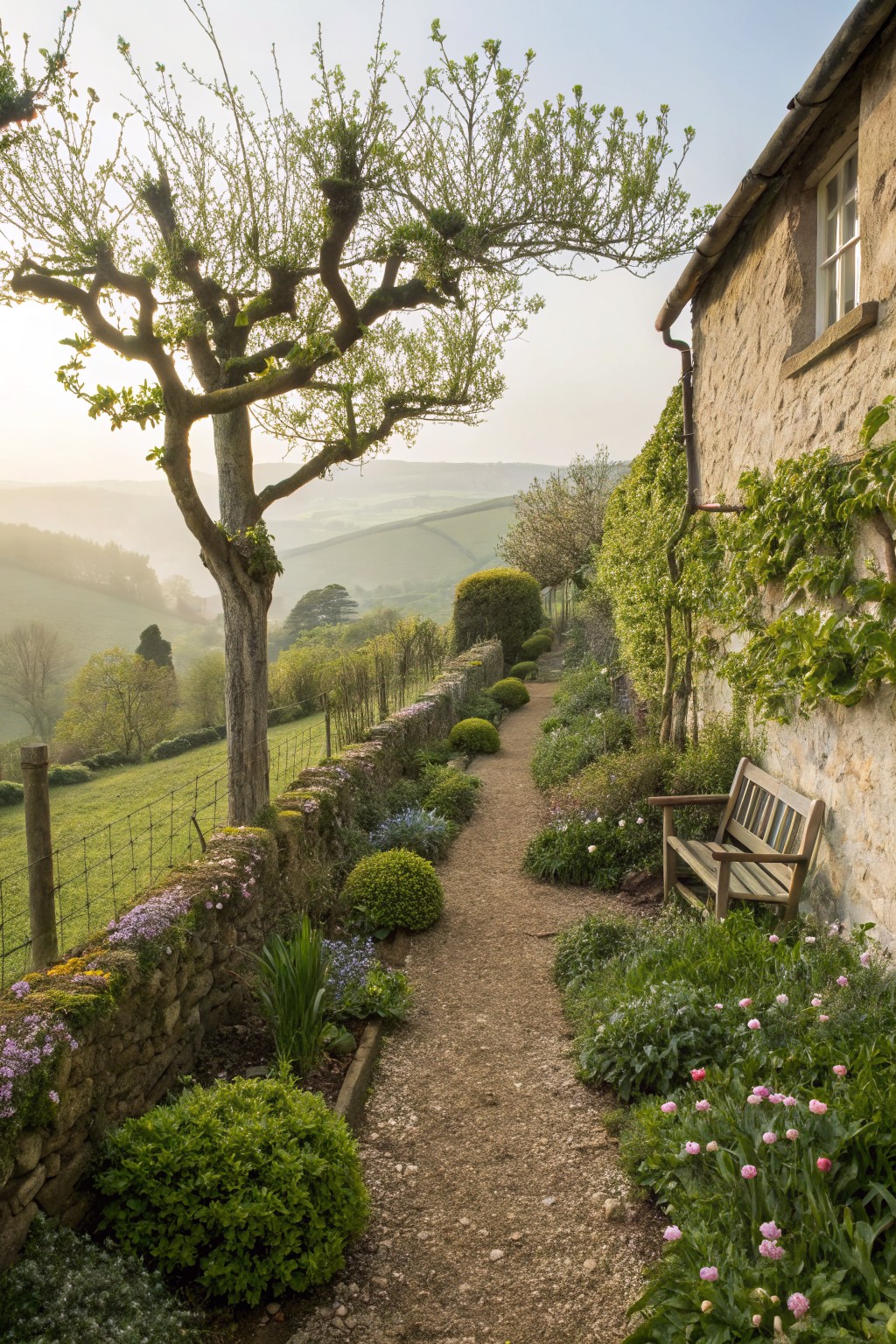
A gravel path like this one runs right along the house wall, edged with neat round boxwoods and patches of pink flowers. It pulls your eye down the walk in a gentle way, making even a skinny strip of yard feel like a proper garden. The topiaries give structure without taking over, and the gravel keeps things easy to walk on.
Try this in tight spots next to your cottage, where you want some order but not a lot of work. Plant low perennials along the edges for color through spring, and trim the boxwoods once a year. It suits old stone houses best, tying the planting right into the architecture.
Terraced Stone Gardens with a Central Fountain
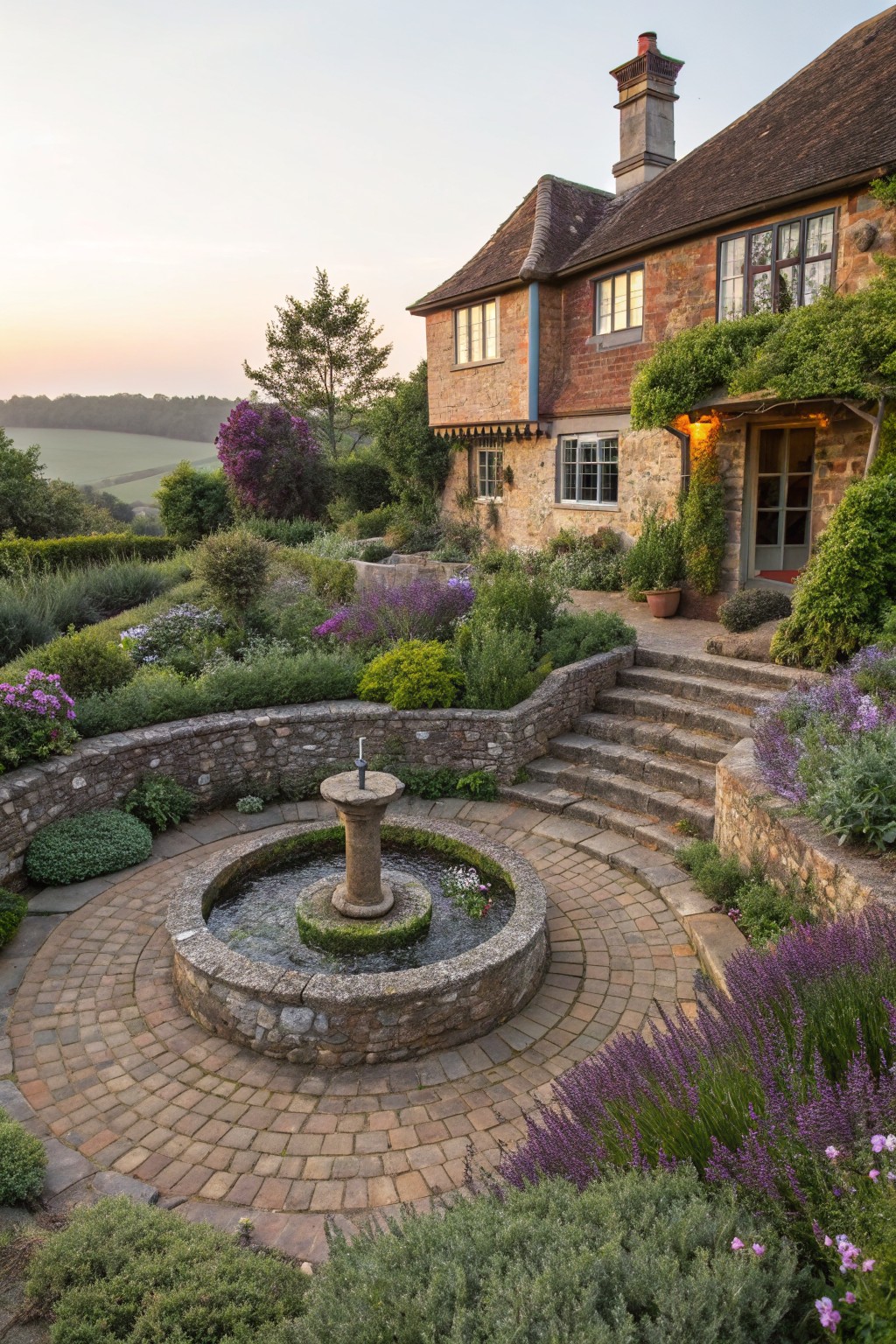
A good way to tame a sloping yard around an old cottage is to terrace it using dry stone walls. Put a simple stone fountain right in the center of a circular paved area at the lowest level. It pulls everything together and gives the garden a heart. Lavender planted along the edges softens the stone and adds that pretty purple touch people love in English gardens.
This setup suits homes on hillsides where you want to connect the yard to the house entry. Build the steps to match the walls so it all flows up naturally. Choose tough plants that hang over the edges without much fuss. Just keep the fountain scale right for the space, or it might feel too busy coming down those steps.
Central Fountain in a Symmetrical Gravel Garden
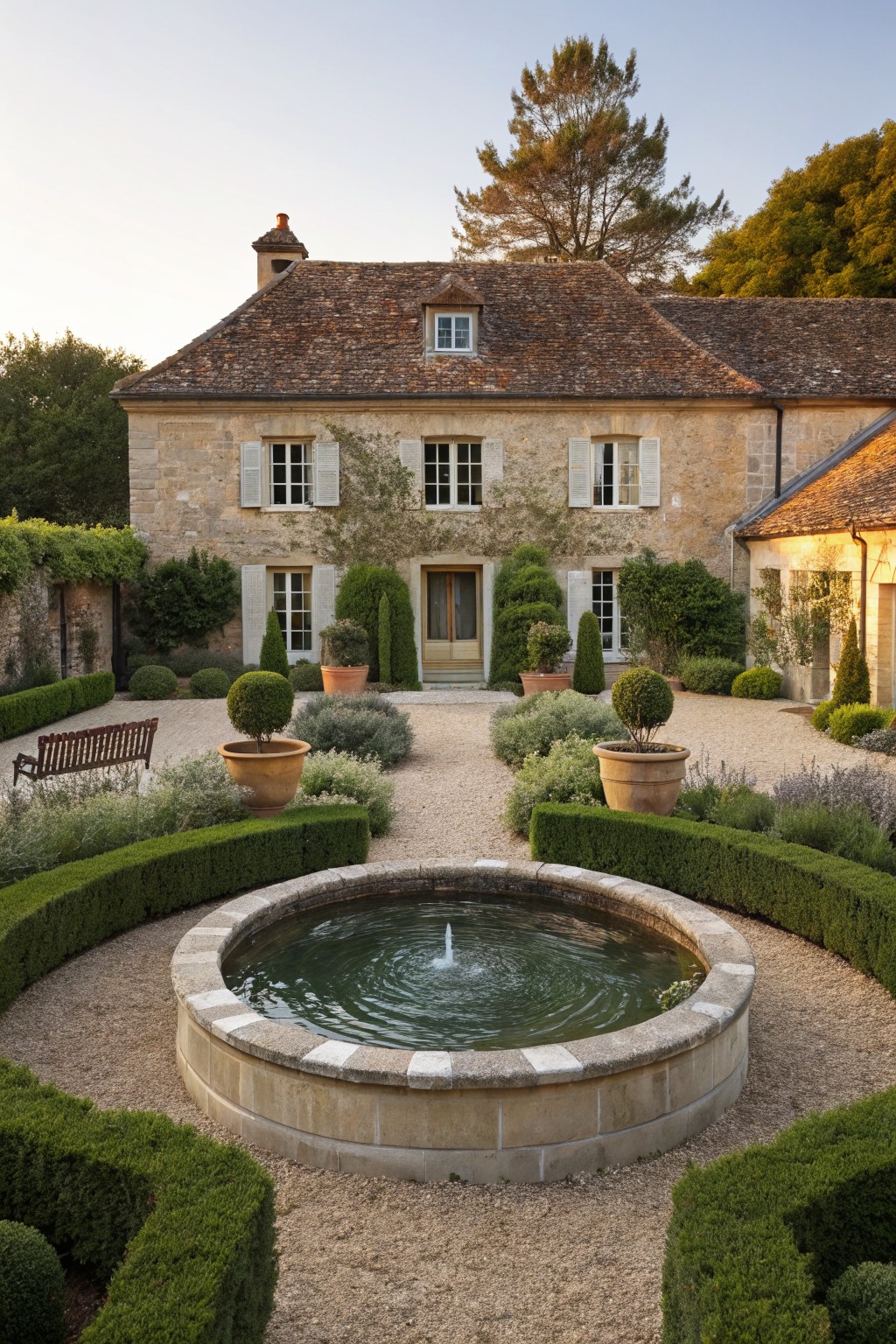
A simple round fountain makes the perfect heart for a front garden like this. Set it in the middle of gravel with boxwood hedges clipped into neat curves and balls around the edge. That setup pulls everything together. It feels formal but easy, and the water adds a quiet sound that welcomes you right up to the door.
This works best in smaller cottage yards where you want low upkeep. Plant tough boxwoods for year-round green, then fill in with lavender or grasses that won’t need much fuss. Gravel drains well and looks clean. Skip it if your spot gets too shady, though. The fountain keeps things lively without taking over.
Simple Courtyard Dining Area
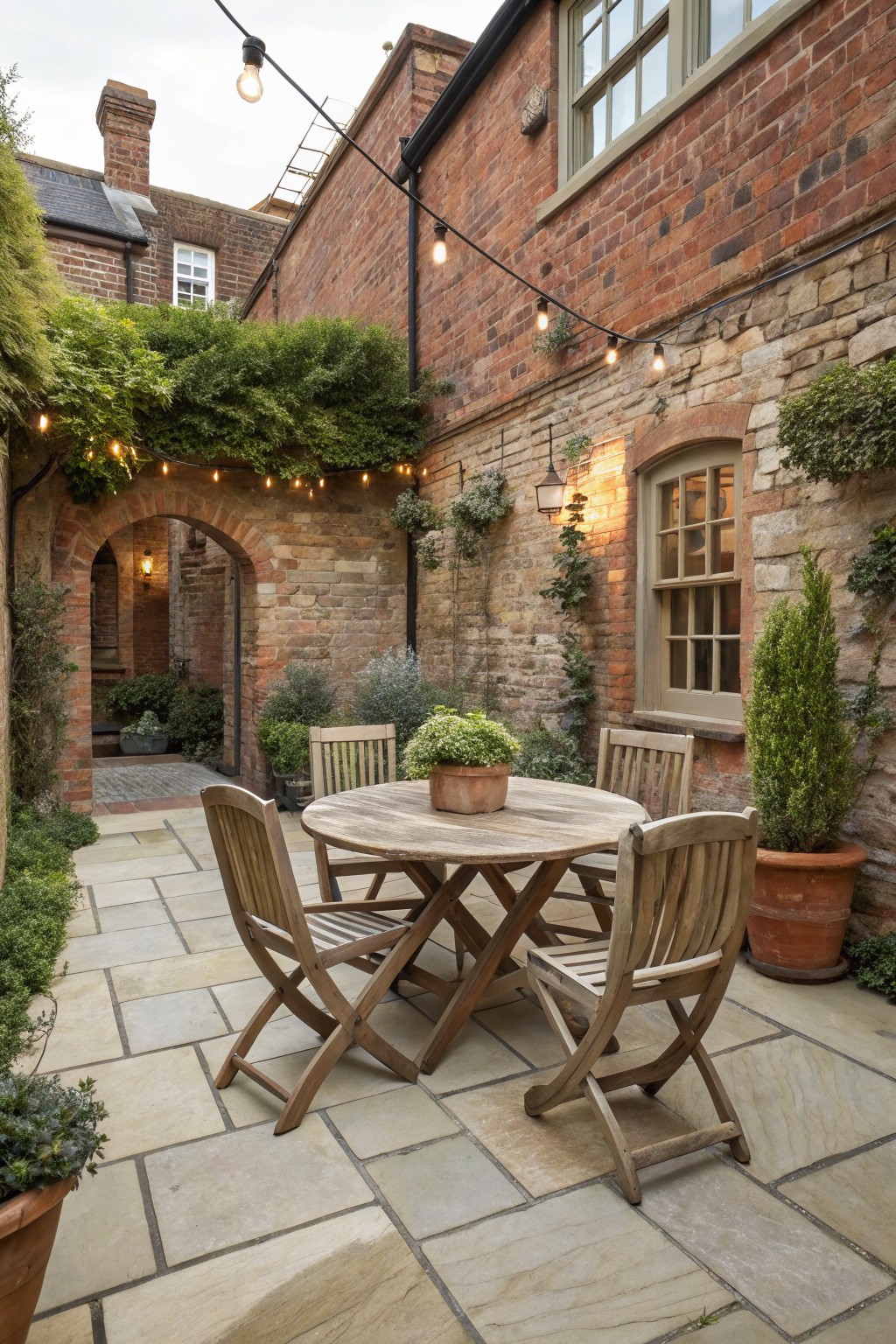
A round wooden table sits in the center of this paved courtyard, with four folding chairs pulled up ready for a meal. The setup feels easy and right at home against the old brick walls, where string lights add a soft glow for later.
This works well in tight spots behind English cottages. Go for weathered wood that stores flat when not in use, pair it with stone pavers, and tuck in a few large pots of greenery. Skip anything fussy. It keeps things practical for quick suppers or chats with friends.
Recommended Products

Textilene & Padded Fabric - Breathable, quick-drying, padded cushion offers exceptional seating comfort and easy maintenance for long-term use.

Acacia Wood - Our outdoor dining set is constructed of solid acacia wood to ensure the chair can hold up to 300 lbs! The surface is coated with high-grade oil paint making the patio table and chairs weather-proof and built to last.

Windproof Design】-- Equipped with 4 windproof buckles in each corner to keep the cover right in place rather than moving and shaking wildly. In order to provide better protection on the windiest days, we also designed 2 adjustable fasteners on both sides of the cover to securely tie up the furniture of various shapes and prevent the cover from being blown away by the wind.
Flower Borders Along Stone Walls
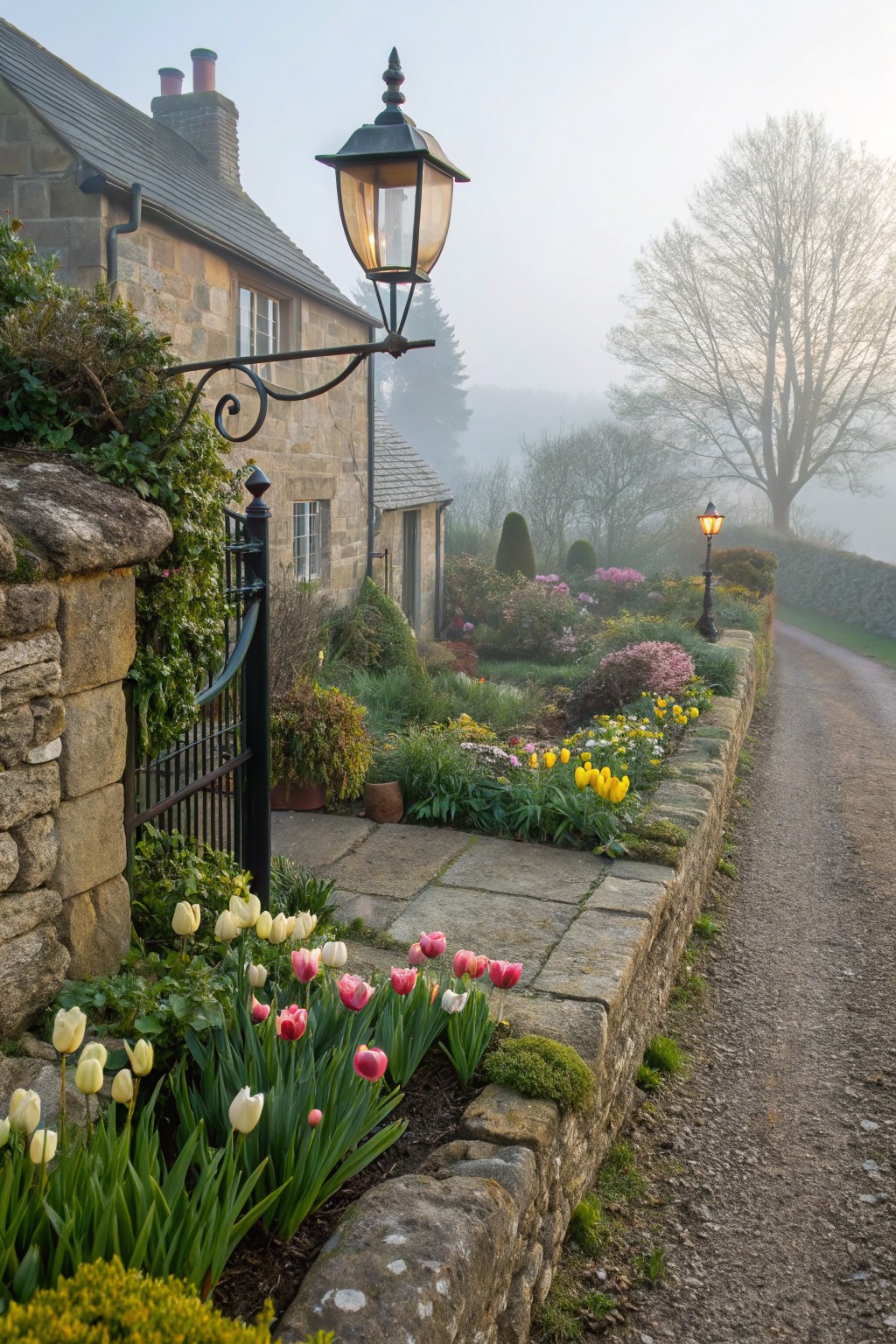
One simple way to give your English cottage that instant charm is planting colorful borders right along the low stone walls. Tulips in white and pink pop against the rough stone, mixed with some greenery and low shrubs. It draws the eye down the path without much effort, and the mist or morning light just makes it feel cozy.
These borders work best in small front gardens where the house meets the yard. Plant bulbs in fall for spring color, keep them about two feet wide, and edge with the wall itself. They suit older stone homes perfectly, but watch for too much shade from tall plants blocking the blooms.
Wooden Garden Bridges Over Streams
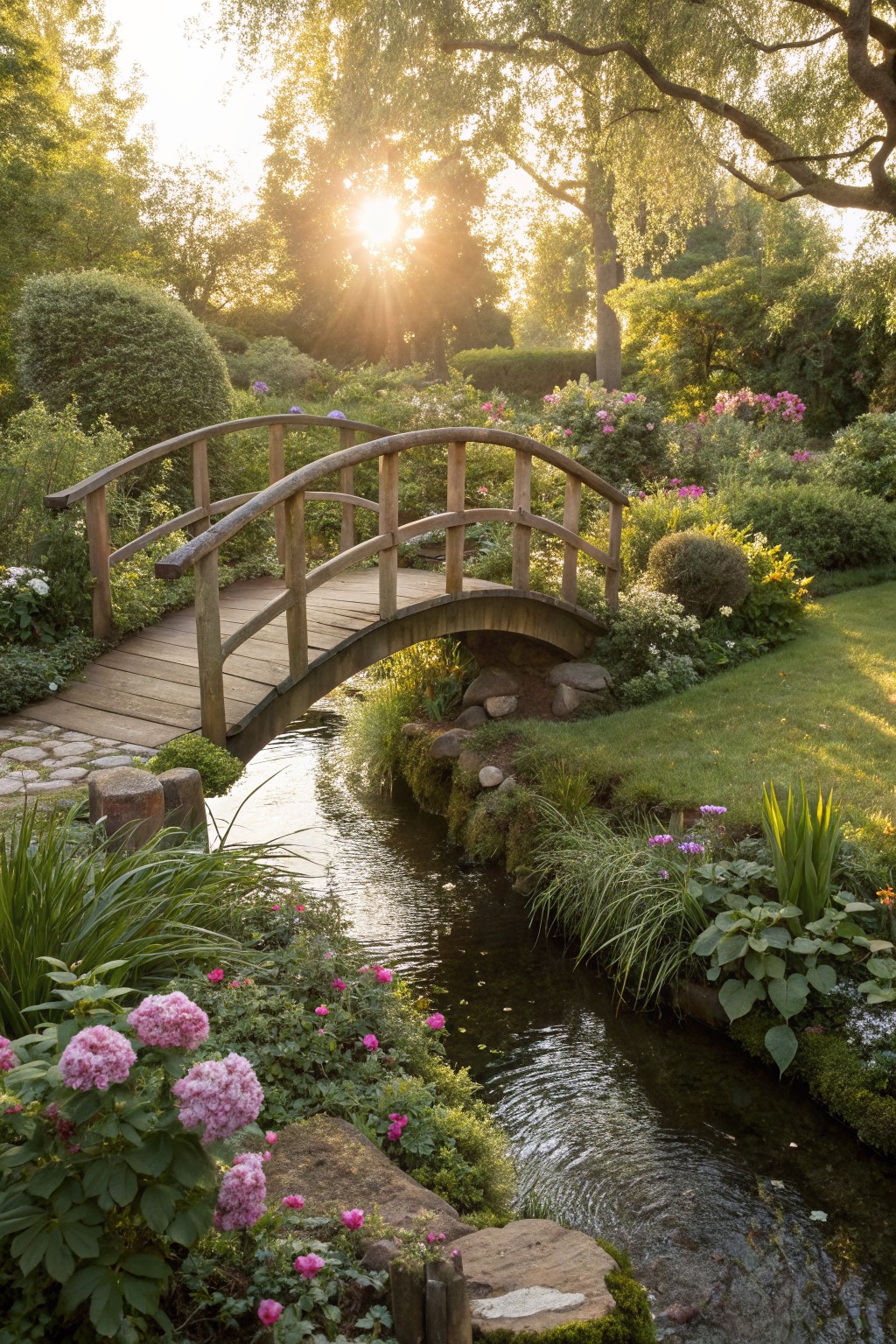
A wooden bridge like this one over a gentle stream brings old-world charm to any cottage garden. It turns a simple water feature into a welcoming path that draws you through the planting beds. With its natural arch and aged timber look, it fits right into lush surroundings without overpowering them. Folks love how it adds a touch of whimsy… especially in those English-style spots.
You can use this idea wherever you have a small stream or even a dry bed you want to suggest water in. It works best in compact gardens where paths need to meander a bit. Go for untreated wood to weather nicely, and keep the scale modest so it doesn’t dominate. Just watch the footing on wet days, and add simple railings if needed.
Frequently Asked Questions
Q: My garden’s pretty small. Can I still pull off these cottage looks?
A: Pick ideas like window boxes overflowing with ivy or a single climbing rose on a trellis. They add instant charm without eating up space. Scale everything down and cluster pots for that cozy feel.
Q: What plants grow best here in the UK without much fuss?
A: Go for hardy natives like foxgloves, lavender, and ferns. They handle our damp weather and poor soil like champs. Plant them in spring, and they’ll spread on their own.
Q: How do I keep weeds out naturally?
A: Mulch thickly with bark or straw right after planting. It smothers weeds and keeps soil moist. Pull any stragglers weekly, and you’ll stay ahead.
Q: …these ideas low-maintenance once they’re going?
A: Most are, yeah. Choose perennials over annuals, and let self-seeders like forget-me-nots fill gaps. A quick trim twice a year keeps them tidy.
