

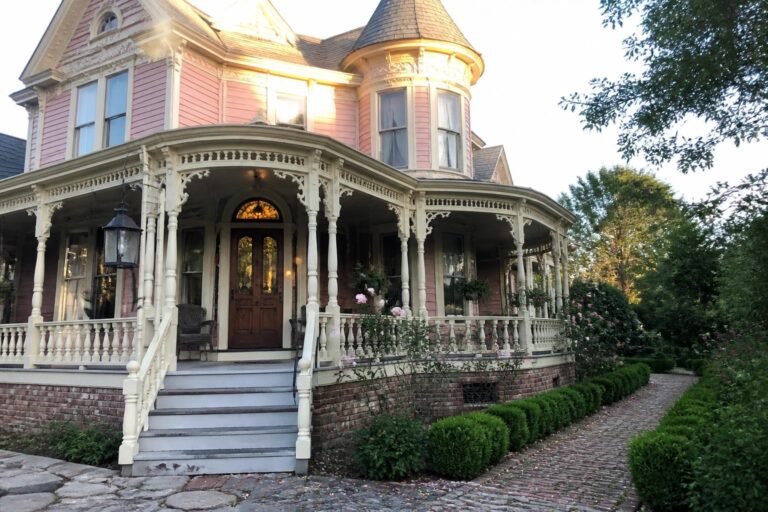
I have always noticed how a soft pink on a Victorian house can warm up the entire block while still letting the original lines show through clearly.
The ornate trim works hardest when it frames the windows and porch without overwhelming the roof pitch or the entry steps that greet you first.
When I pass these homes on foot the carved details often stand out more than the color itself because they cast shadows that shift as the light moves across the facade.
Choosing pink for the main body tends to hold up better if the trim stays light enough to highlight every curve and the surrounding landscaping stays simple so the house does not compete with its own setting.
Small trim adjustments change more than expected.
Ornate Trim Defines a Classic Pink Victorian Look
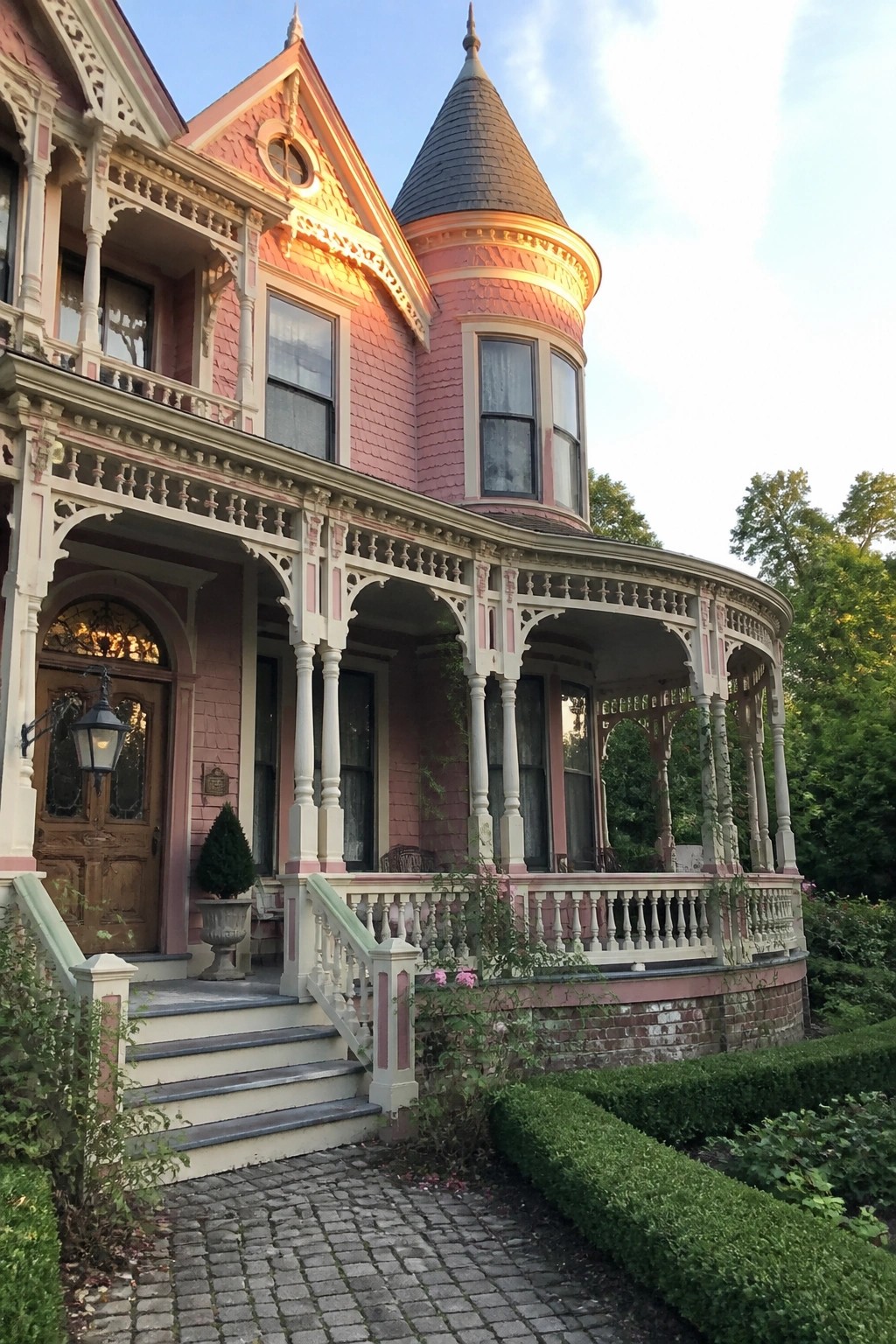
Victorian homes often depend on trim to give the facade shape and presence. Light trim against a pink body makes the windows, porch railings, and rooflines read more clearly.
This works best on houses that already have strong architectural lines like turrets or wraparound porches. Match the trim color to the window frames so the whole exterior feels pulled together rather than busy.
Contrasting Shutters On Pink Exteriors
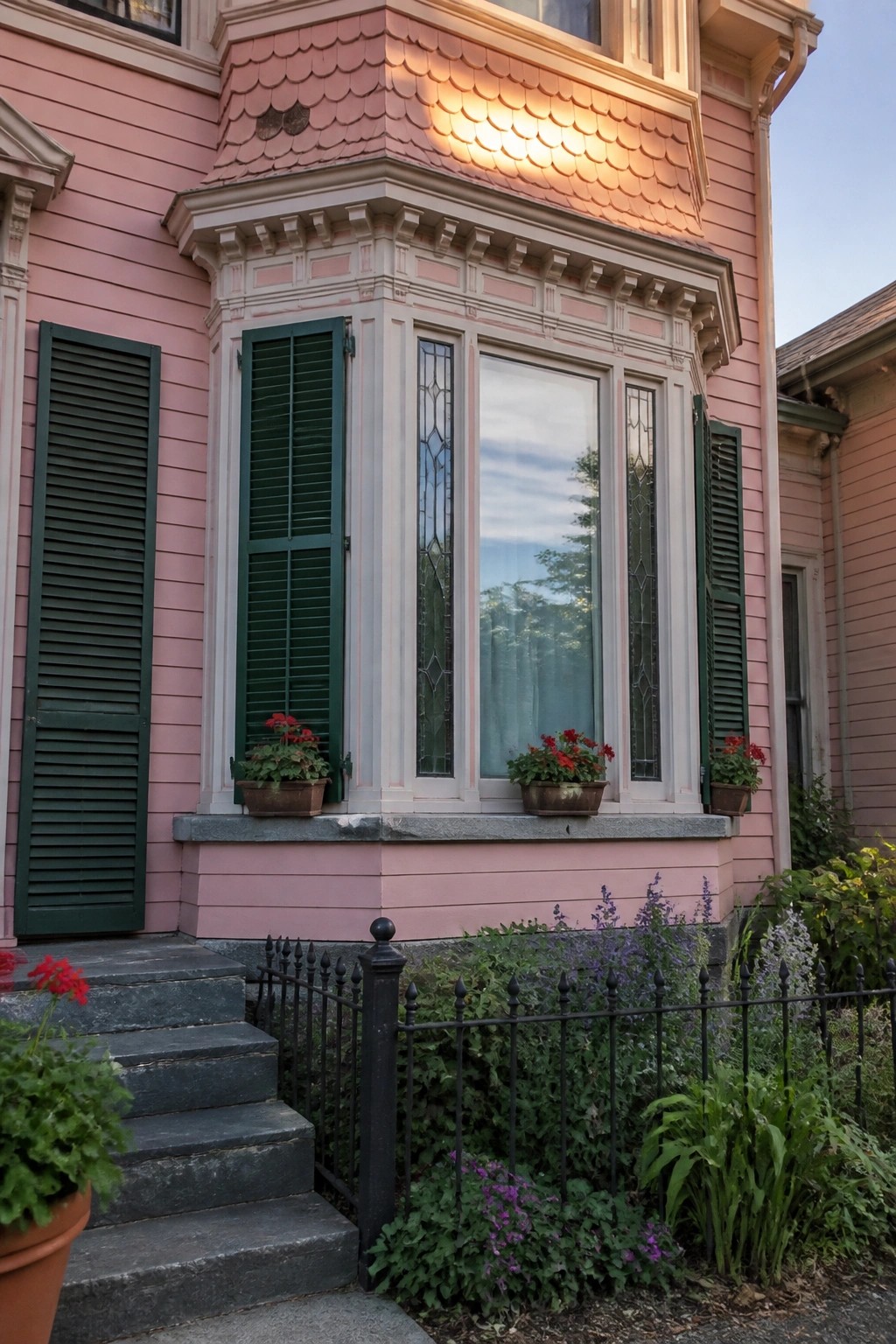
Many Victorian homes painted in soft pink look better when the shutters are a deep color rather than a matching tone. The dark green here gives the windows clear definition and keeps the ornate trim from blending into the siding.
This works especially well on homes with bay windows or heavy molding. Choose a saturated shade for the shutters so the contrast stays strong even in changing light.
Bold Color That Highlights Victorian Trim
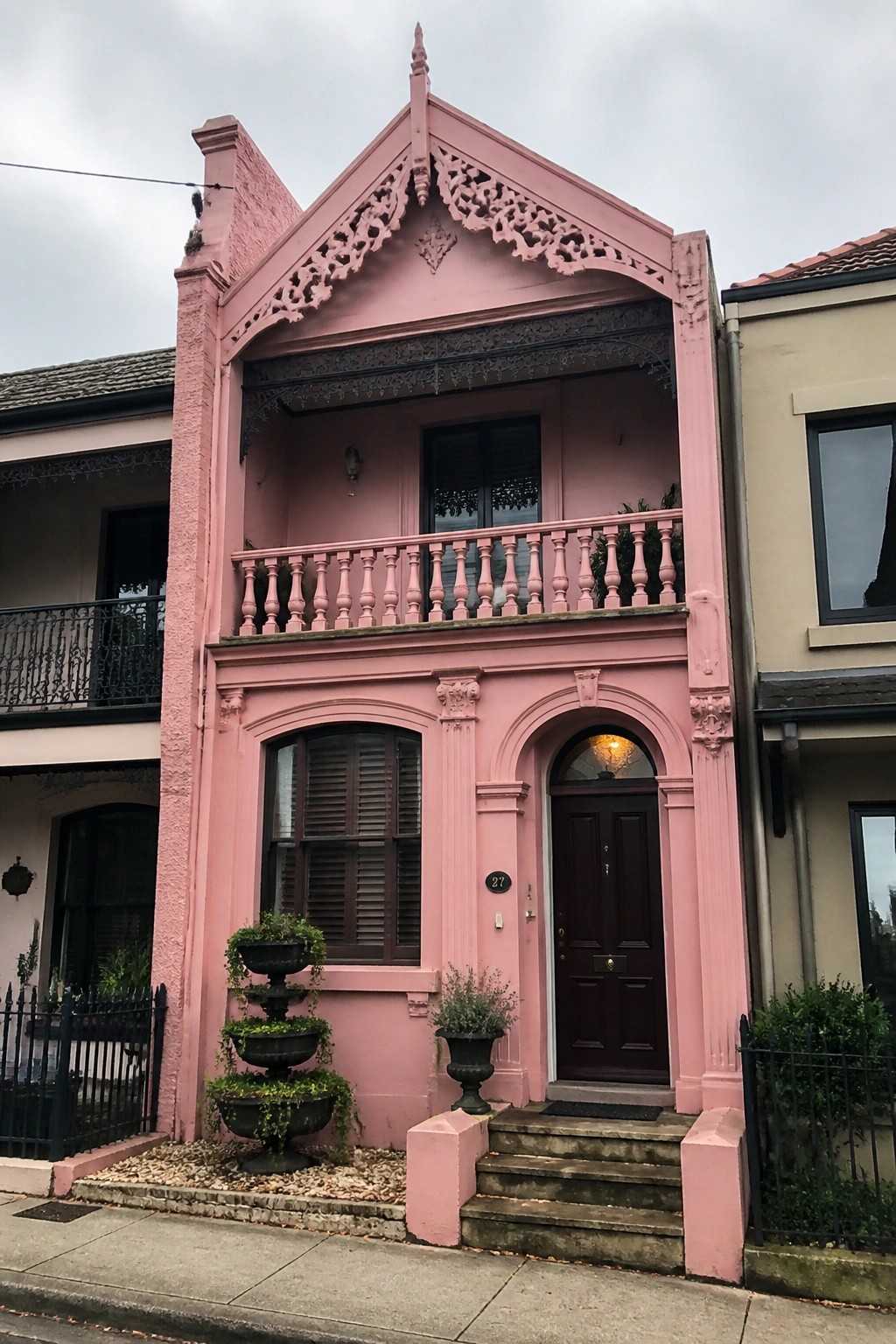
A single strong color across the whole facade can make all the carved details stand out without any extra work. The paint acts like a backdrop so the trim, brackets, and railings read clearly from the street.
This approach suits narrow Victorian houses that already have plenty of ornament. Pick a saturated shade and keep the door and window frames in a contrasting tone so the shape of the entry stays easy to see.
Soft Pink Siding With White Trim
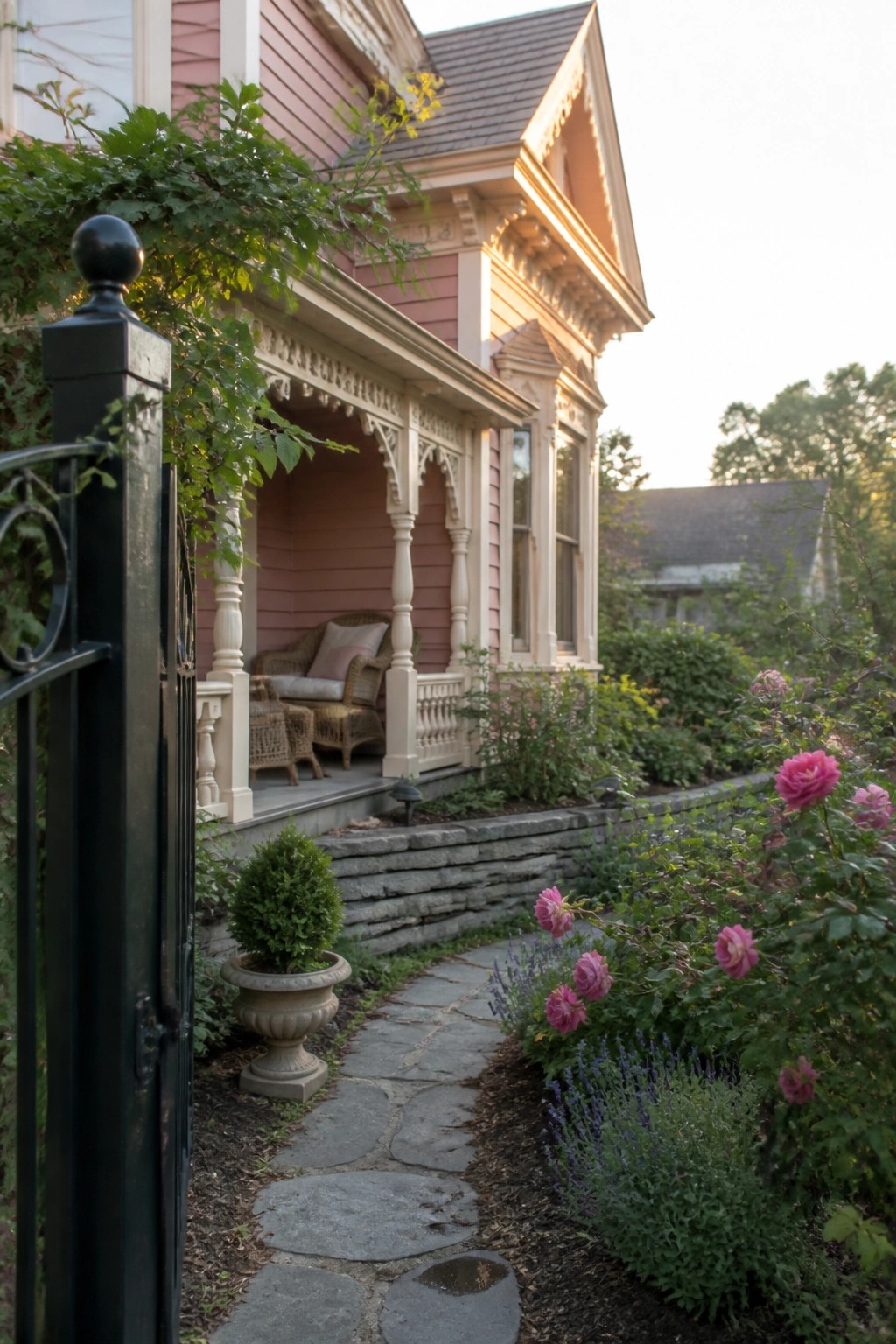
A soft pink works well on Victorian homes because it keeps the house feeling light while still showing off the trim details. The color sits between too bold and too pale, so the white accents around the porch and windows stay the main focus without fighting for attention.
This look suits older houses that already have good woodwork. Use a clean white on the trim to make the brackets and railings pop, then let the garden and path add a bit of color at the base so the pink does not feel flat on its own.
Soft Pink Siding With Light Trim
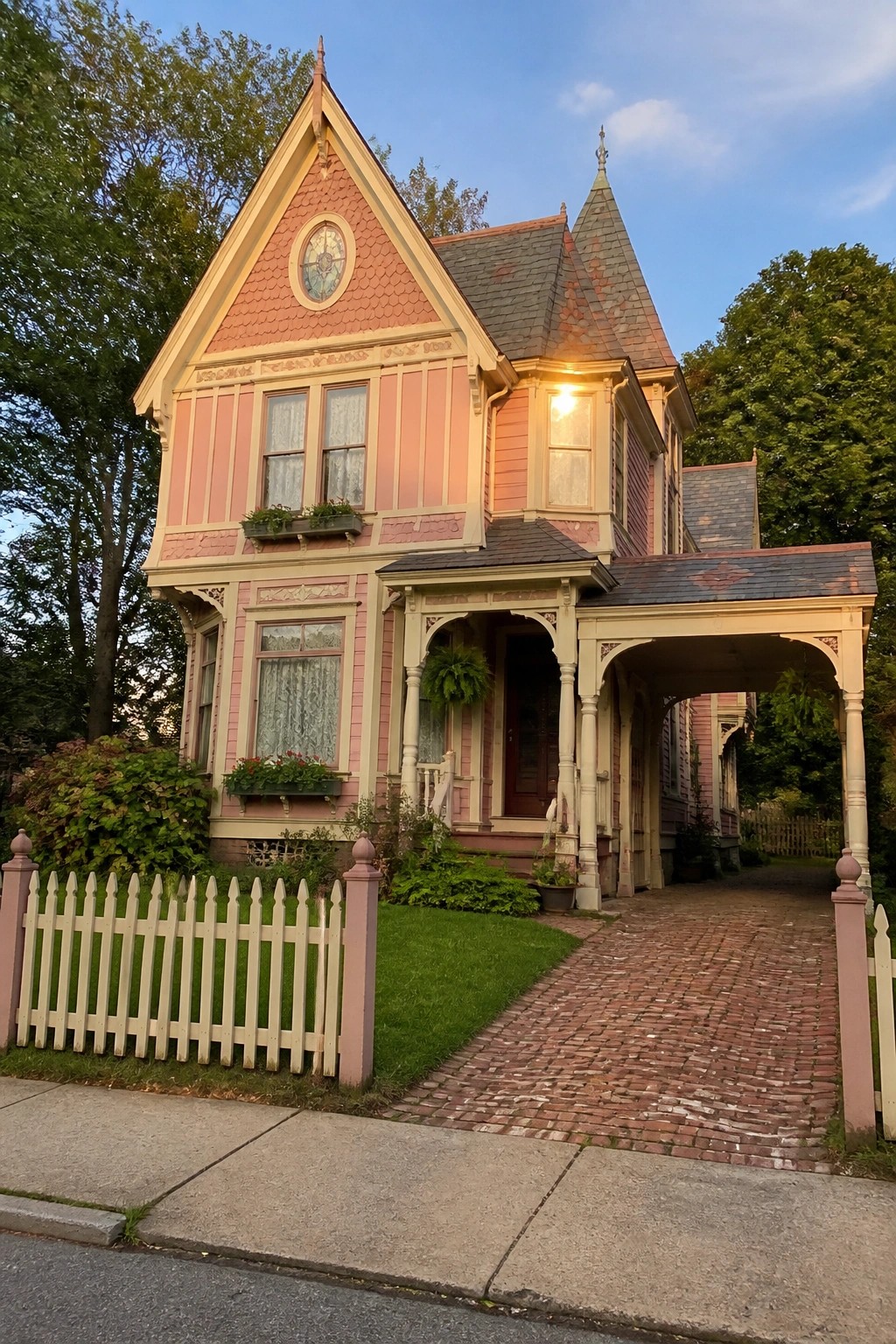
Many Victorian homes gain a friendlier look when the main color stays soft rather than bold. A muted pink keeps the shape and details visible without making the house feel heavy or overly formal.
This approach suits homes that already have strong trim and rooflines. Use it when you want the color to support the architecture instead of competing with it, and keep the trim in a pale shade so the details stay easy to read.
Choose Wicker Seating for a Victorian Porch
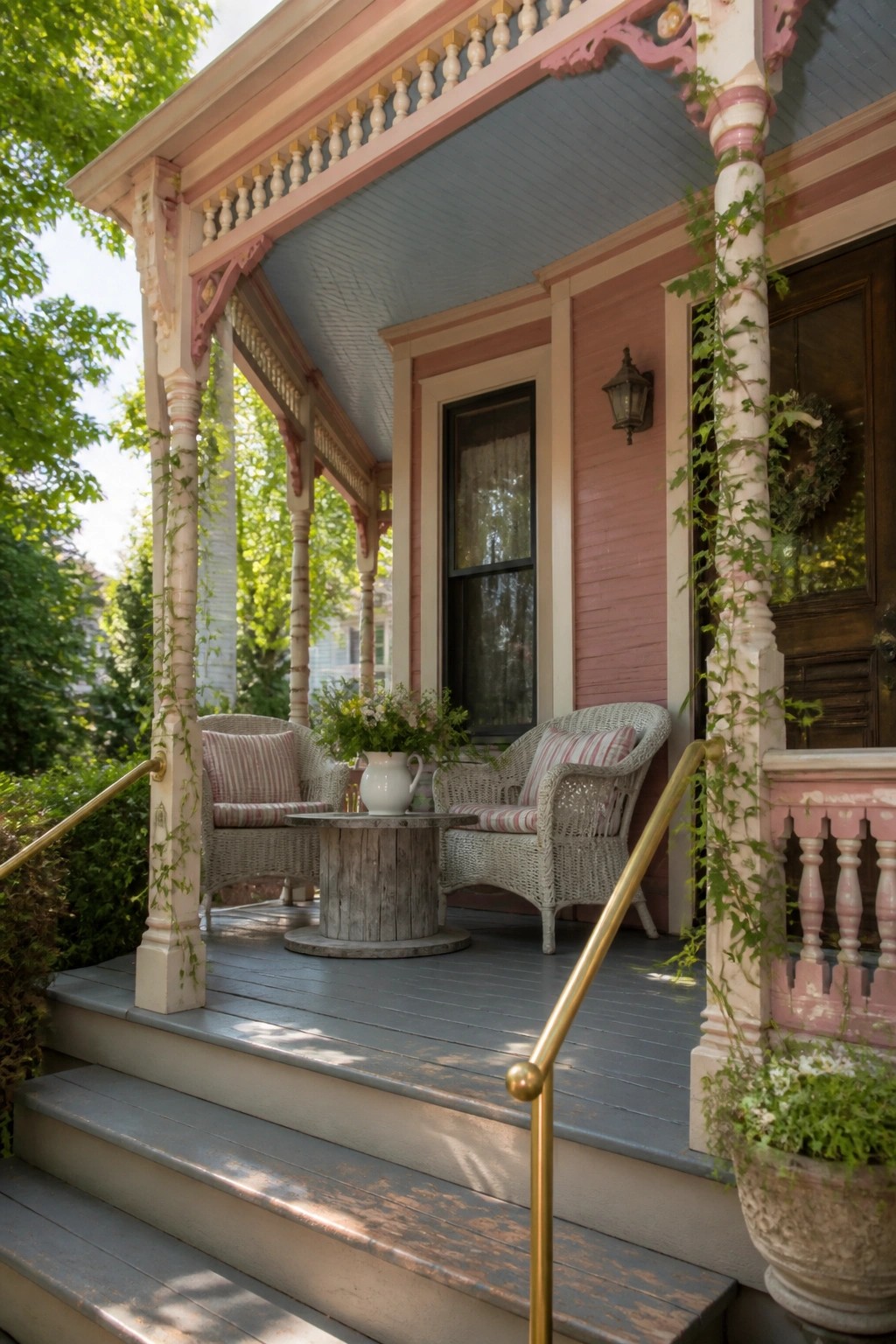
Wicker chairs work well on a porch with ornate trim because they stay light and do not fight the details around them. The open weave lets the house color and woodwork show through instead of blocking it.
They suit older homes that already have plenty of pattern on the outside. Keep cushions simple and the table small so the seating feels like part of the porch rather than something added on later.
Soft Pink With White Trim
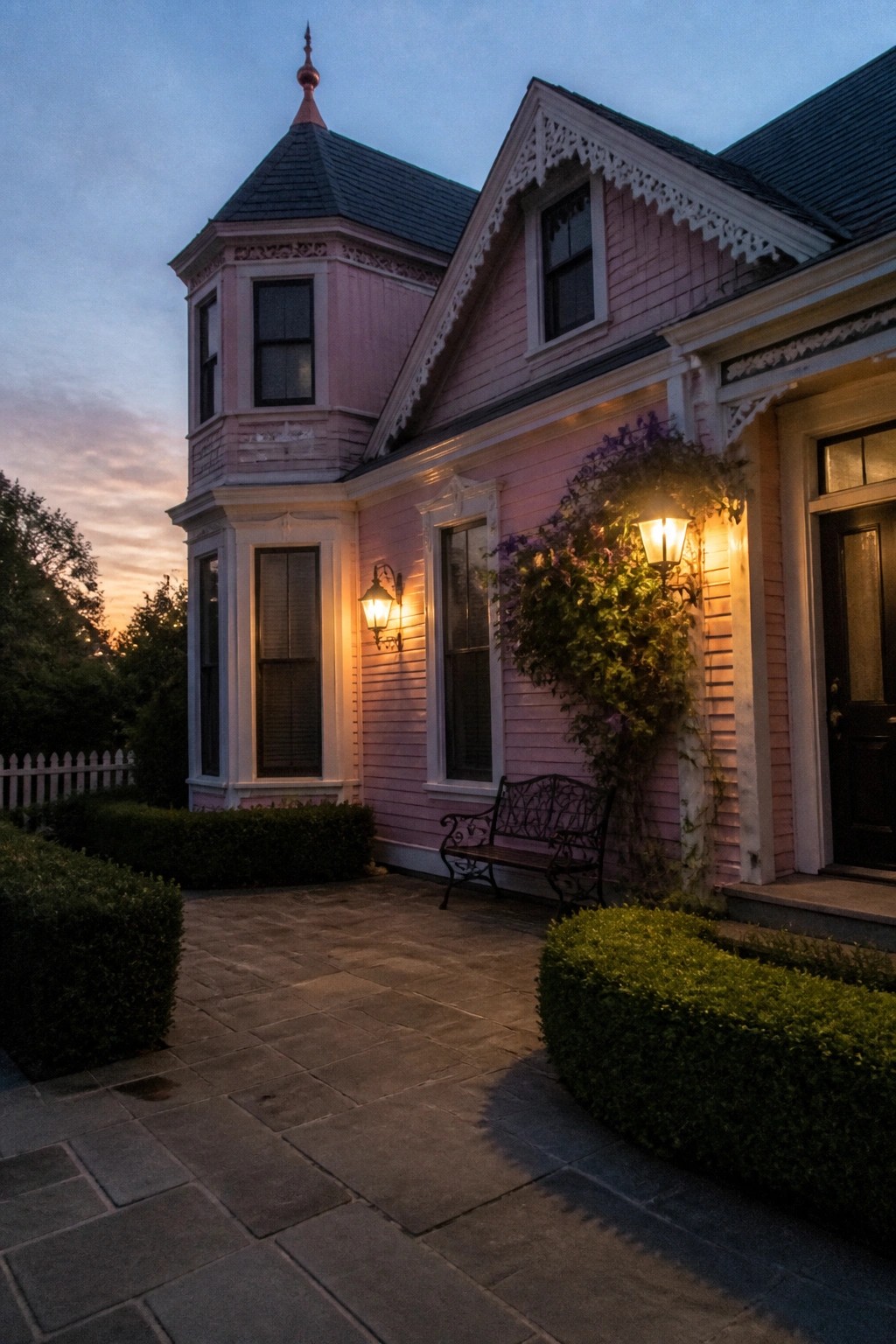
A soft pink exterior pairs well with white trim on Victorian homes because it highlights the ornate details without overpowering them. The color keeps the house feeling approachable while the trim makes the scrollwork and rooflines stand out clearly.
This combination works best on homes that already have strong architectural features. It suits older neighborhoods where the goal is to keep the original character intact rather than compete with it.
A Deep Green Door On Pink Siding
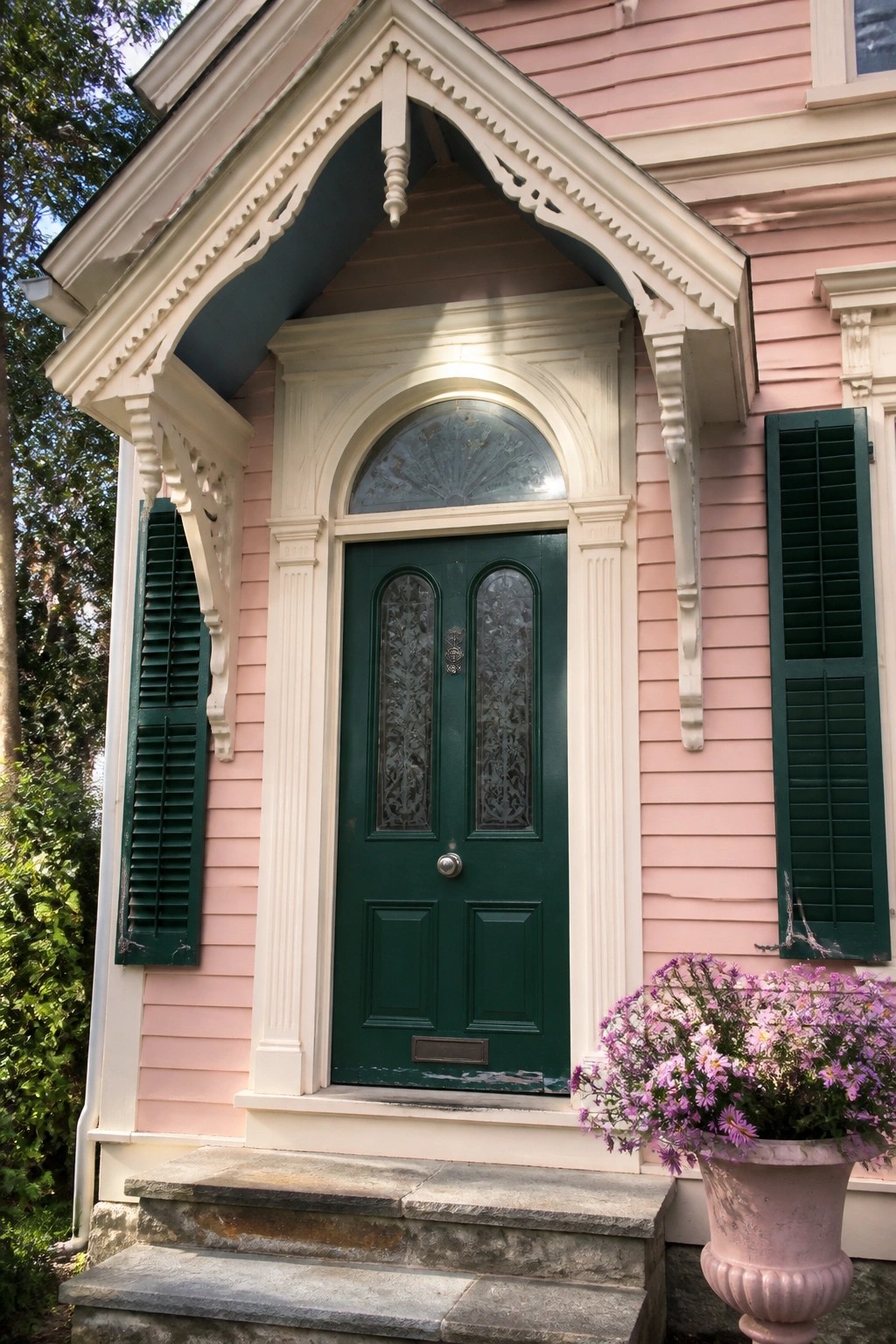
A dark door color can give a pink Victorian house a clear focal point without competing with the trim. The green here sits nicely against the soft siding and lets the white detailing around the arch and columns stand out.
This approach suits homes that already have strong trim work and a centered entry. Keep the door finish matte or lightly aged so it feels at home with older architecture rather than too crisp.
Soft Pink Siding on Victorian Homes
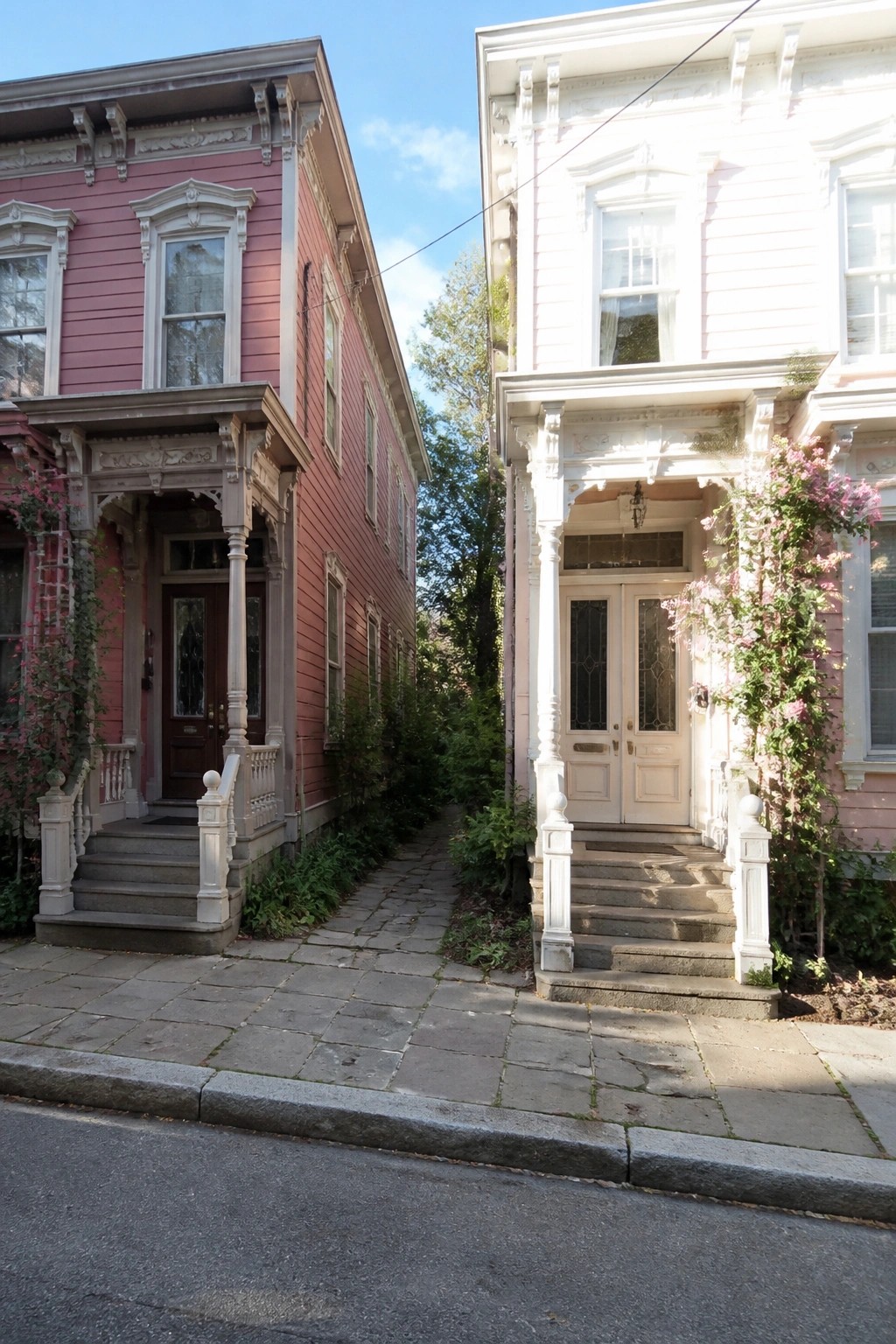
A soft pink works well on older homes because it keeps the look light while still showing off the trim. The color sits nicely against white details and helps the carved wood stand out without needing extra decoration.
This approach suits narrow city lots where the houses sit close together. Test the shade on a small section first, since pink can shift in morning or afternoon light, and stick with a matte or low-sheen finish to hold the historic feel.
Soft Pink Siding On Victorian Homes
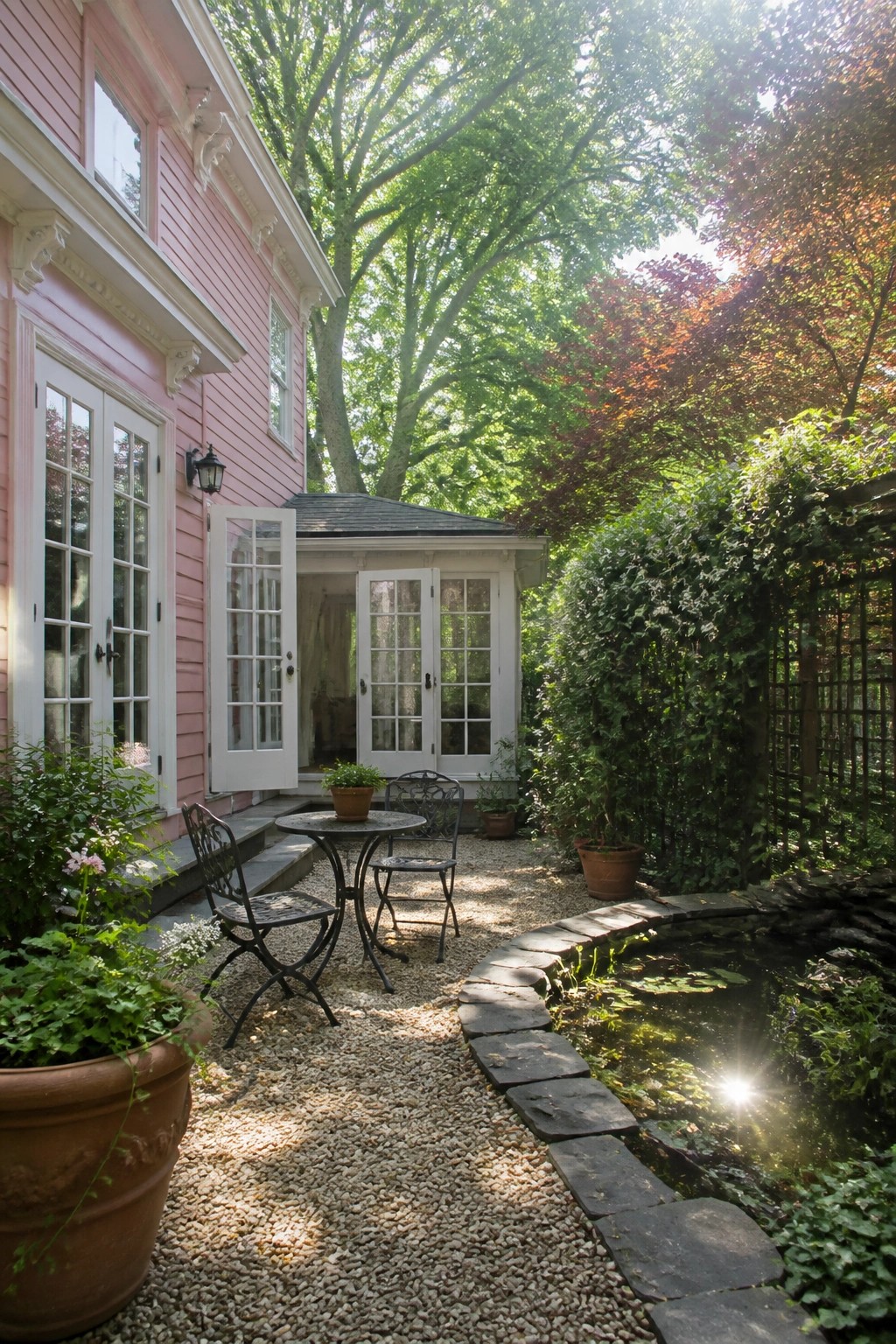
A soft pink exterior can make ornate white trim stand out without feeling too sweet or bold. The color gives the house a gentle presence that works especially well when the trim has plenty of detail to catch the light.
This approach suits older homes with established gardens because the pink blends into the greenery rather than fighting it. Keep the shade on the muted side and test it on a small section first, since strong sunlight can shift how it reads throughout the day.
Let White Trim Define the Pink Siding
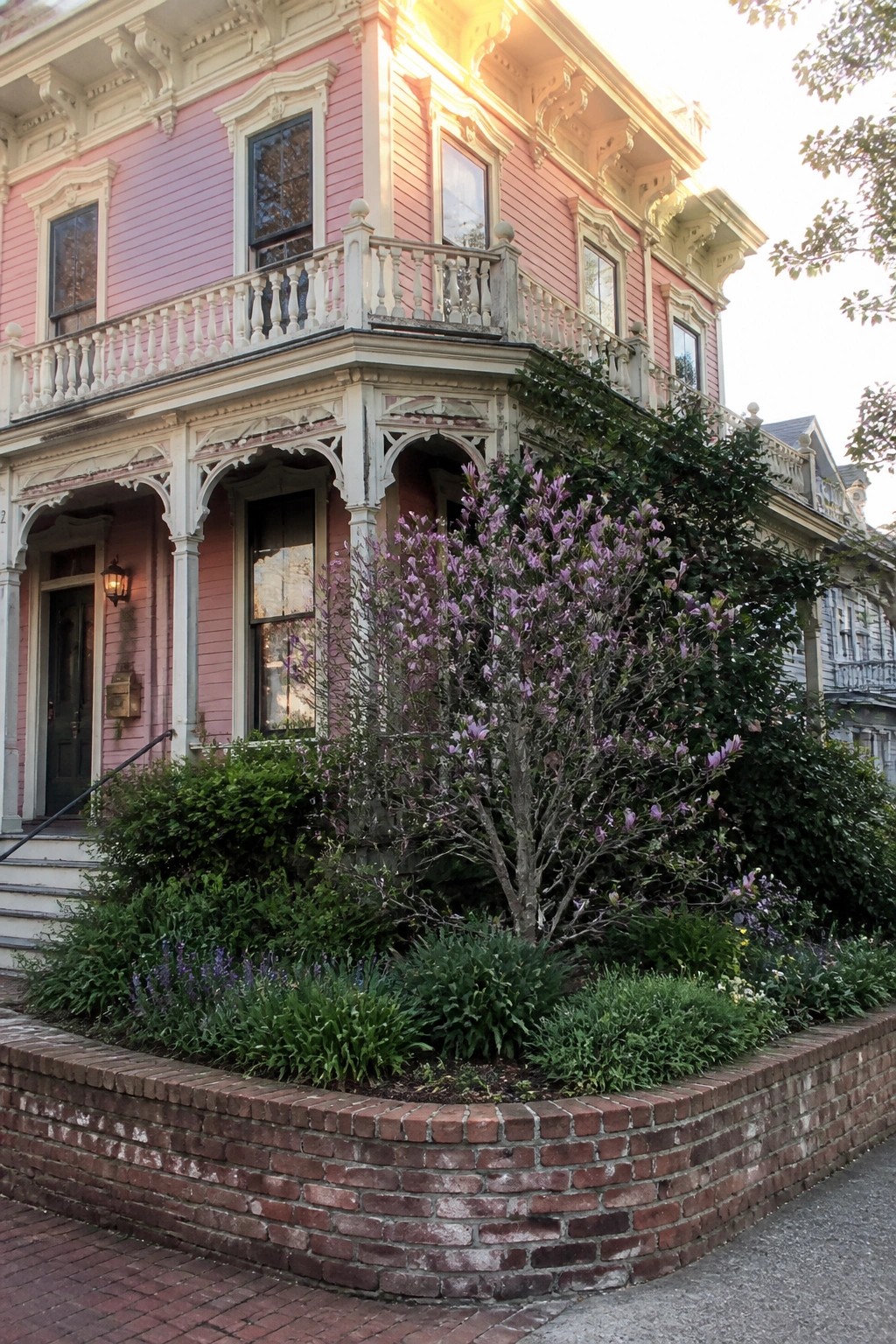
A soft pink on the main body of the house gives Victorian details room to show. The white trim then does the work of outlining every curve, bracket, and window frame without extra color getting in the way.
This choice suits homes that already have strong architectural lines. Stick with one clean white for all the trim and keep any secondary colors to a minimum so the pink stays calm rather than busy.
Using Dark Accents With Pink Exteriors
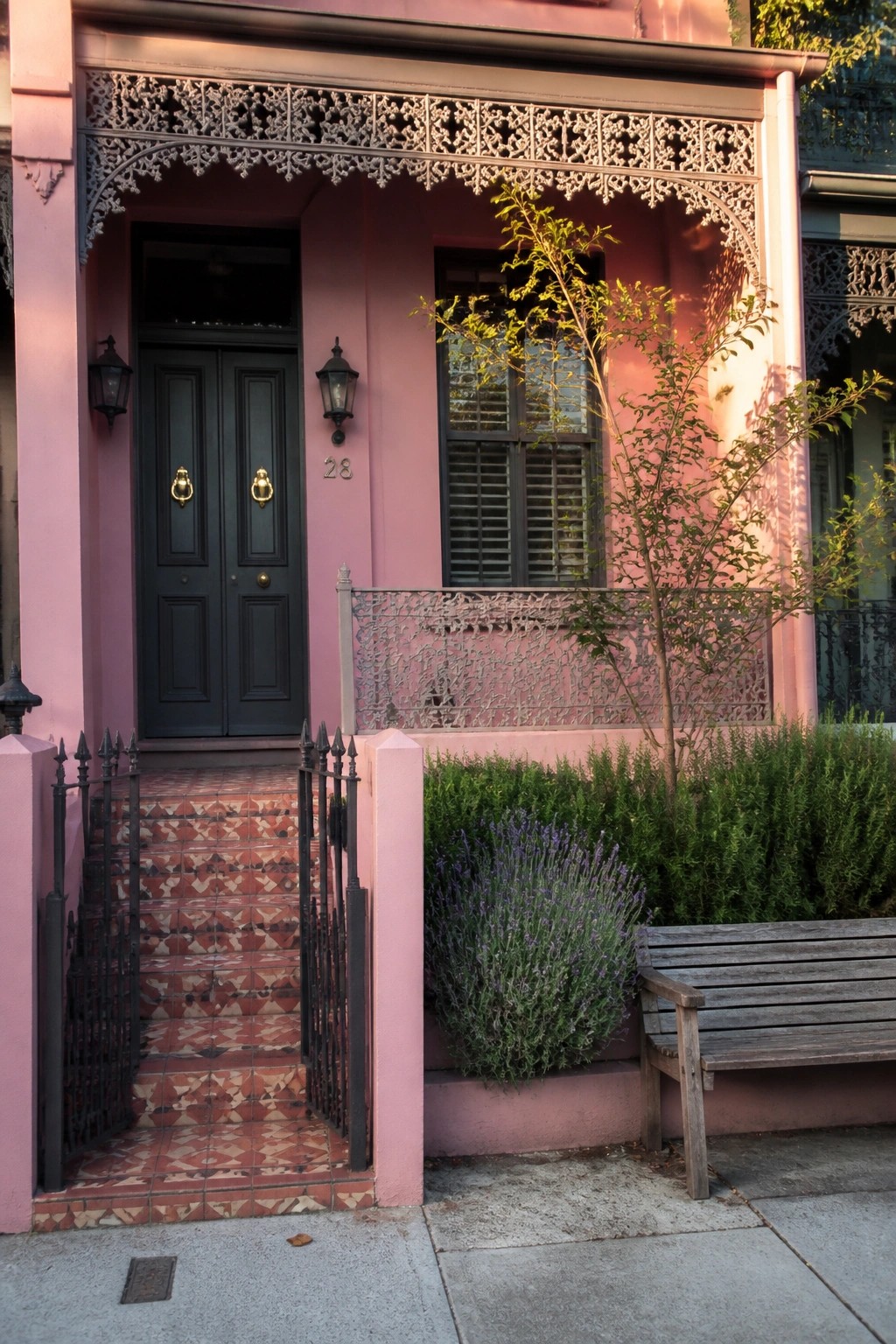
A soft pink Victorian house often needs something stronger to keep the details from fading into the background. Dark doors and hardware do that job well here. They give the eye a clear place to land and make the ornate trim stand out without extra effort.
This approach works best on homes that already have strong architectural lines. Choose a deep color for the door and any metalwork so the pink stays light but still feels grounded. It keeps the whole front simple to maintain while still showing off the original trim.
Soft Pink Exteriors For Victorian Homes
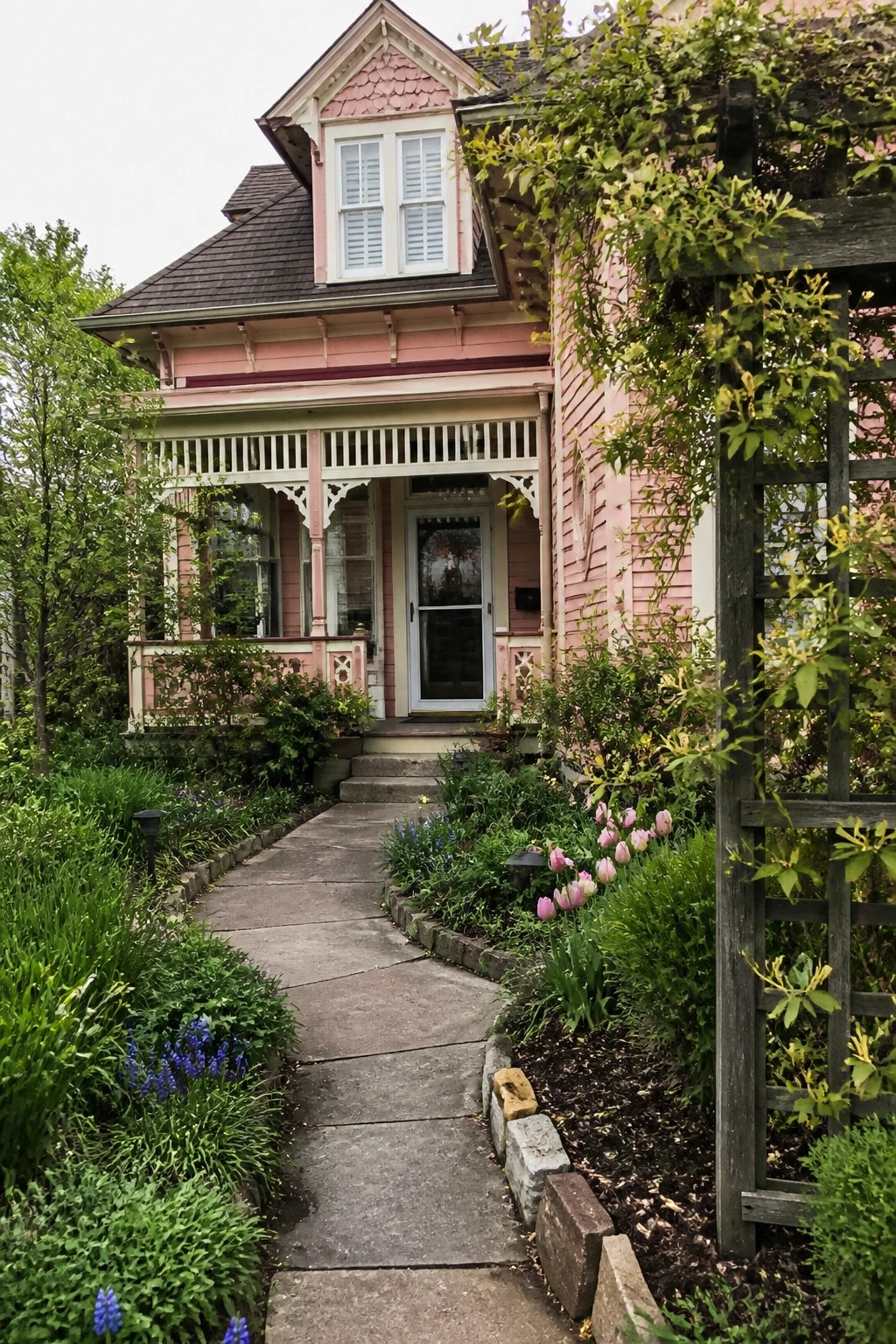
A soft pink shade works well on older Victorian homes because it keeps the ornate trim visible without making the whole house feel heavy. The color sits nicely against white details and lets the roof and porch structure stand out in a simple way.
This approach suits homes that already have detailed trim and a front path that leads straight to the door. It pairs best with green planting along the walkway so the pink does not feel too bold on its own.
Gentle Pink Siding With White Trim
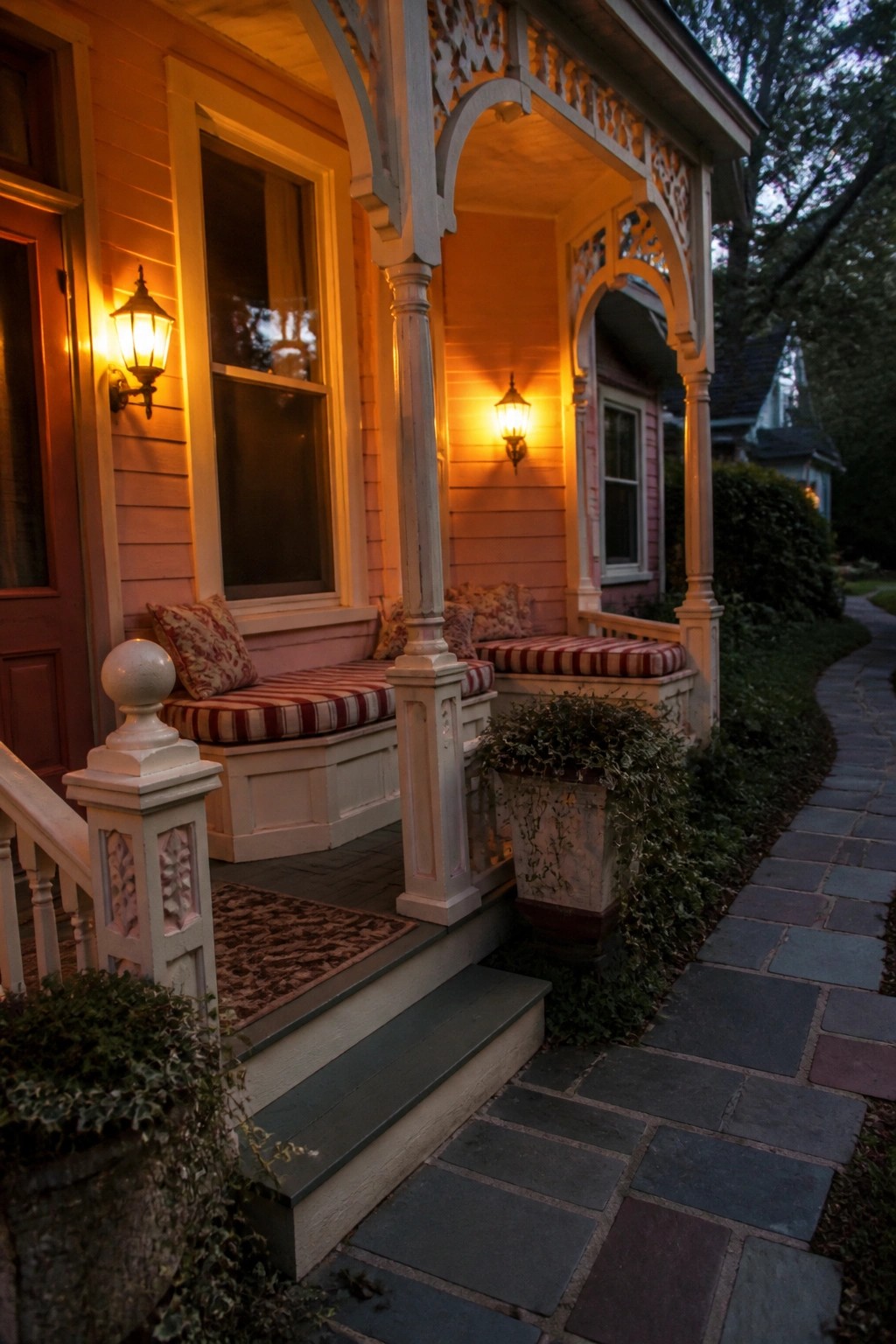
A soft pink exterior works well on Victorian homes because it keeps the look light and friendly while still showing off the architecture. The white trim then stands out clearly against it and makes the carved details easier to notice from the street.
This approach suits older houses that already have plenty of woodwork. It helps if the trim is kept bright and the pink stays on the muted side so the whole house does not feel overwhelming.
Soft Pink Siding For Victorian Exteriors
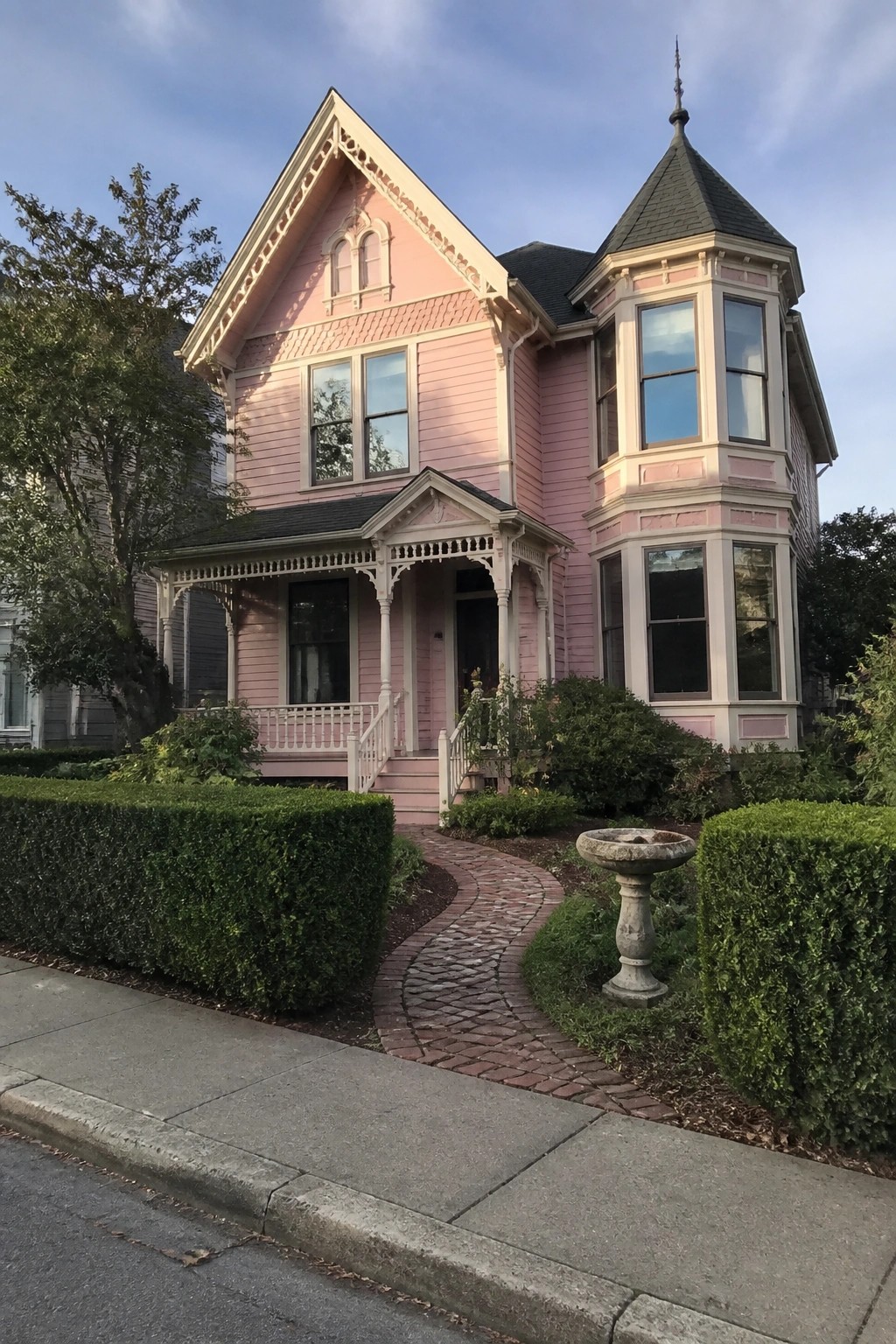
Many older Victorian homes gain a gentle, welcoming look when painted in a soft pink. The color highlights the trim and scrollwork without needing extra decoration or strong contrast.
This works best on houses that already have plenty of detail, where the pink keeps the overall effect light rather than heavy. Use a warm off-white or cream on the trim so the shapes stay clear and the house does not feel too sweet.
Soft Pink Siding on Victorian Homes
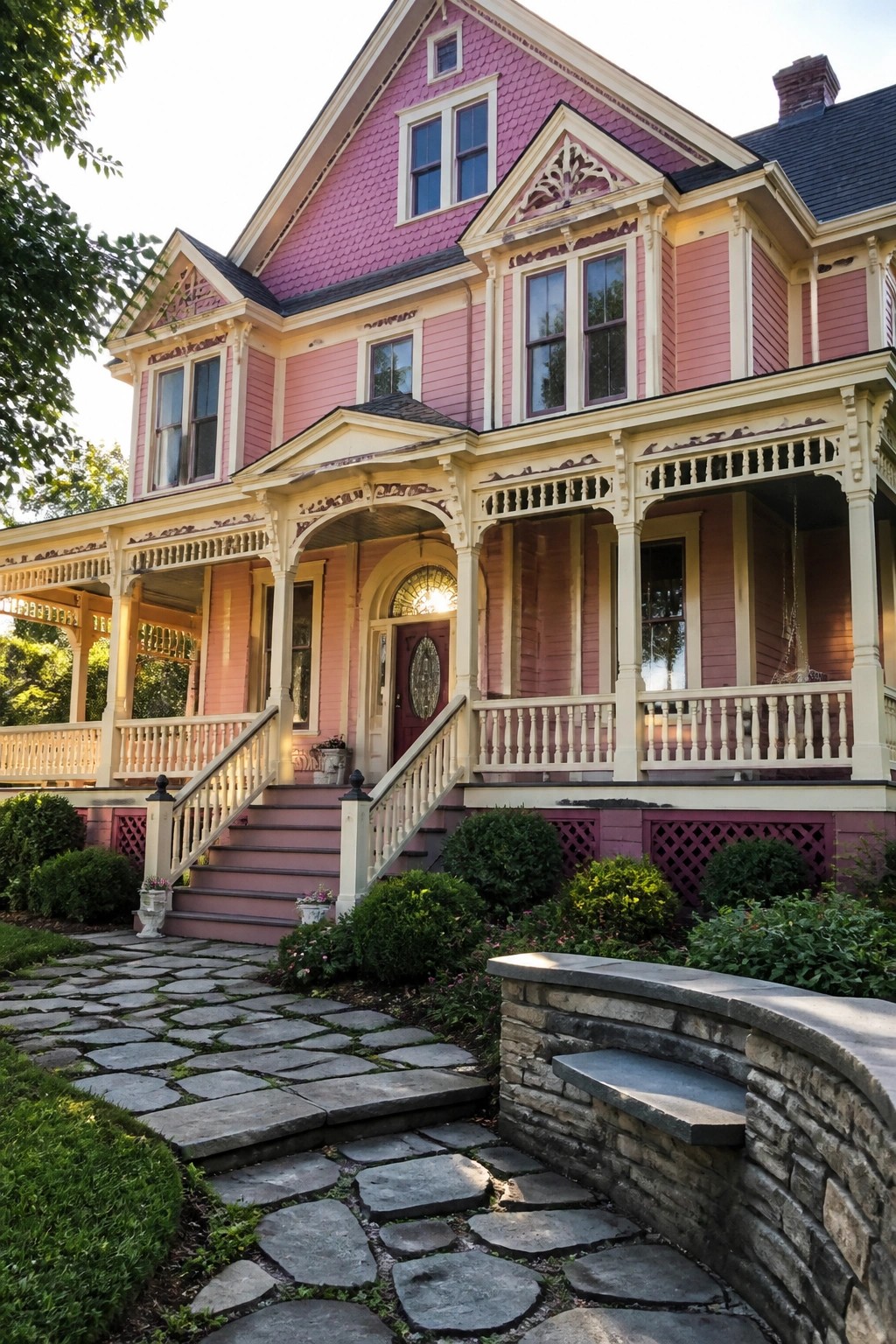
Pink siding can give a Victorian house a friendly look while still showing off its details. The key is picking a shade that feels soft instead of loud so the trim and carvings stay the main focus. Many older homes already have plenty of woodwork, and a gentle pink lets that work show without fighting for attention.
This approach works best on homes that already have strong trim lines and a front porch. Stick to muted tones and test the color on a small section first, since light changes how it reads throughout the day. Too bright and the whole house can start to feel toy-like.
Pink Siding With White Trim On Victorian Homes
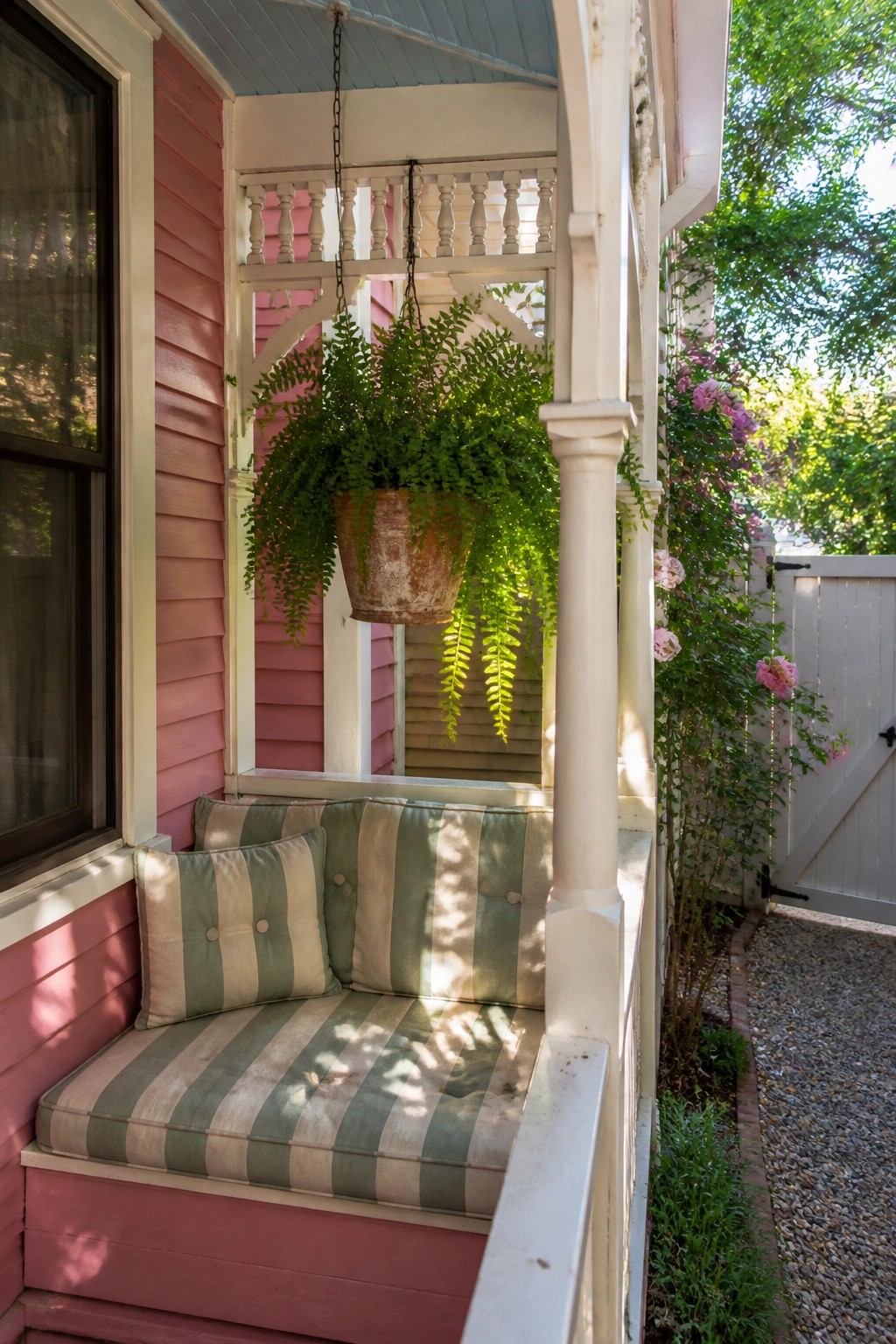
A soft pink exterior pairs well with white trim because it keeps the house feeling light without losing any character. The color highlights the ornate details around windows and posts instead of letting them blend into a darker shade. Many older homes already have the right amount of trim work, so the pink simply makes those lines stand out more clearly.
This approach suits Victorian houses that get good sunlight, since the pink stays gentle rather than overwhelming. Stick to a muted tone rather than a bright one, and make sure the white is a true crisp shade so the contrast stays clean. The same idea works on smaller porches or full facades as long as the trim gets a fresh coat.
Soft Pink On A Victorian Facade
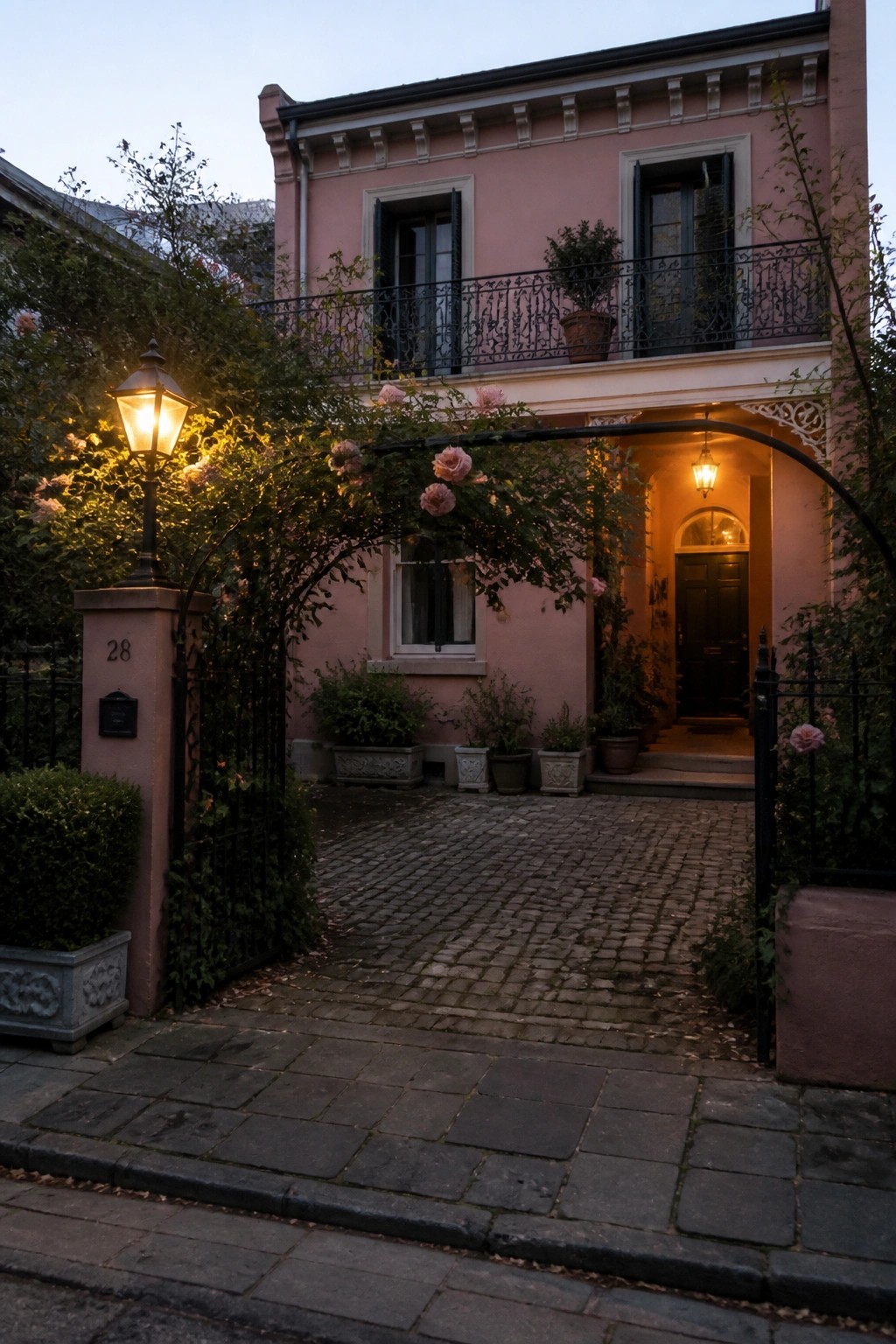
A soft pink works well on older homes because it adds warmth while still letting the shape and details of the house come through. The color feels gentle enough to fit a neighborhood setting yet stands out enough to give the place its own character.
This approach suits Victorian homes with clear trim work and balanced windows. Keep the trim and accents in a contrasting tone so the pink does not wash out the architecture. Test the shade in different lights before committing since it can shift from warm to cool depending on the time of day.
Frequently Asked Questions
Q: How can I test pink colors before committing to the whole house?
A: Paint large sample boards and lean them against the siding for a week. Check them at different times of day to see how light changes the hue. This step saves you from a color you end up hating.
Q: What upkeep does the ornate trim require once painted?
A: Clean it gently with a soft brush every spring. Touch up any chips right away with the same paint. Regular care prevents bigger repairs later.
Q: Can I use pink on just the trim instead of the whole exterior?
A: Try pink just on the trim for a subtler effect. It highlights the ornate work while letting the main color stay neutral.
