

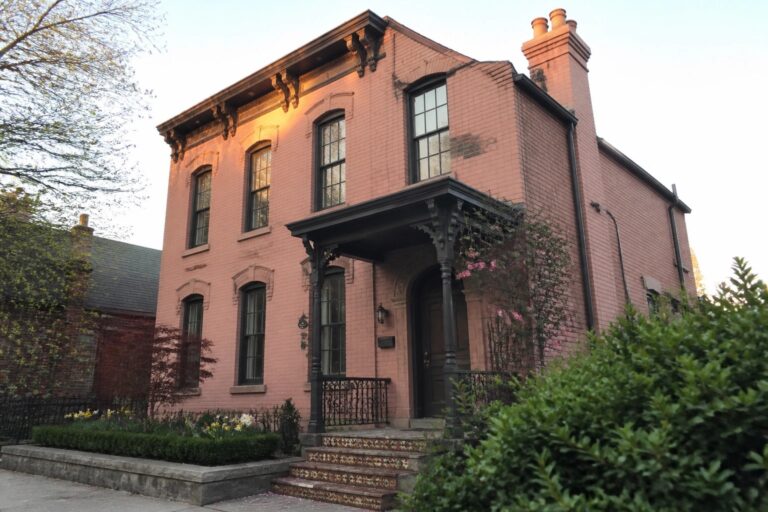
I have always paid attention to how brick exteriors age because the small variations in texture often give a house its personality from the curb.
Pink brick can feel warm and approachable when the surface keeps some roughness instead of being sanded smooth.
Texture helps tie the facade together.
Some updates look fine in drawings but end up clashing with the roofline once they are built.
I would test a few of these surface treatments on my own home before committing to a full change.
Pink Brick That Keeps Its Texture
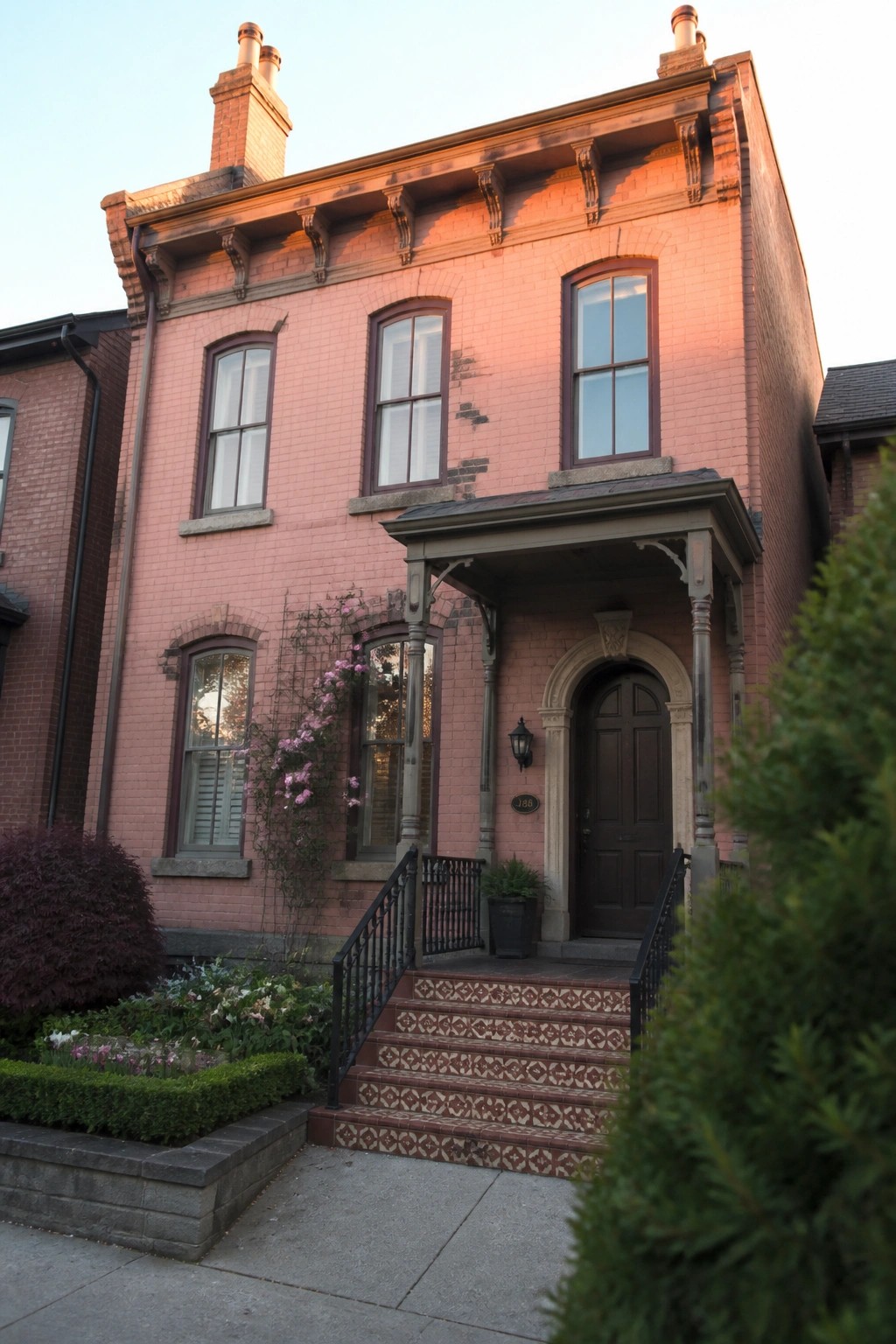
Many older brick homes gain a lot from a soft pink paint that lets the original surface show through. The slight unevenness and age marks stay visible, which helps the house feel rooted in its past rather than brand new.
This works best on homes with strong architectural details like arched openings and decorative brackets. Use a breathable masonry paint so moisture can move through the walls, and test a small area first to check how the color settles on the existing brick.
Soft Pink Brick That Fits Historic Homes
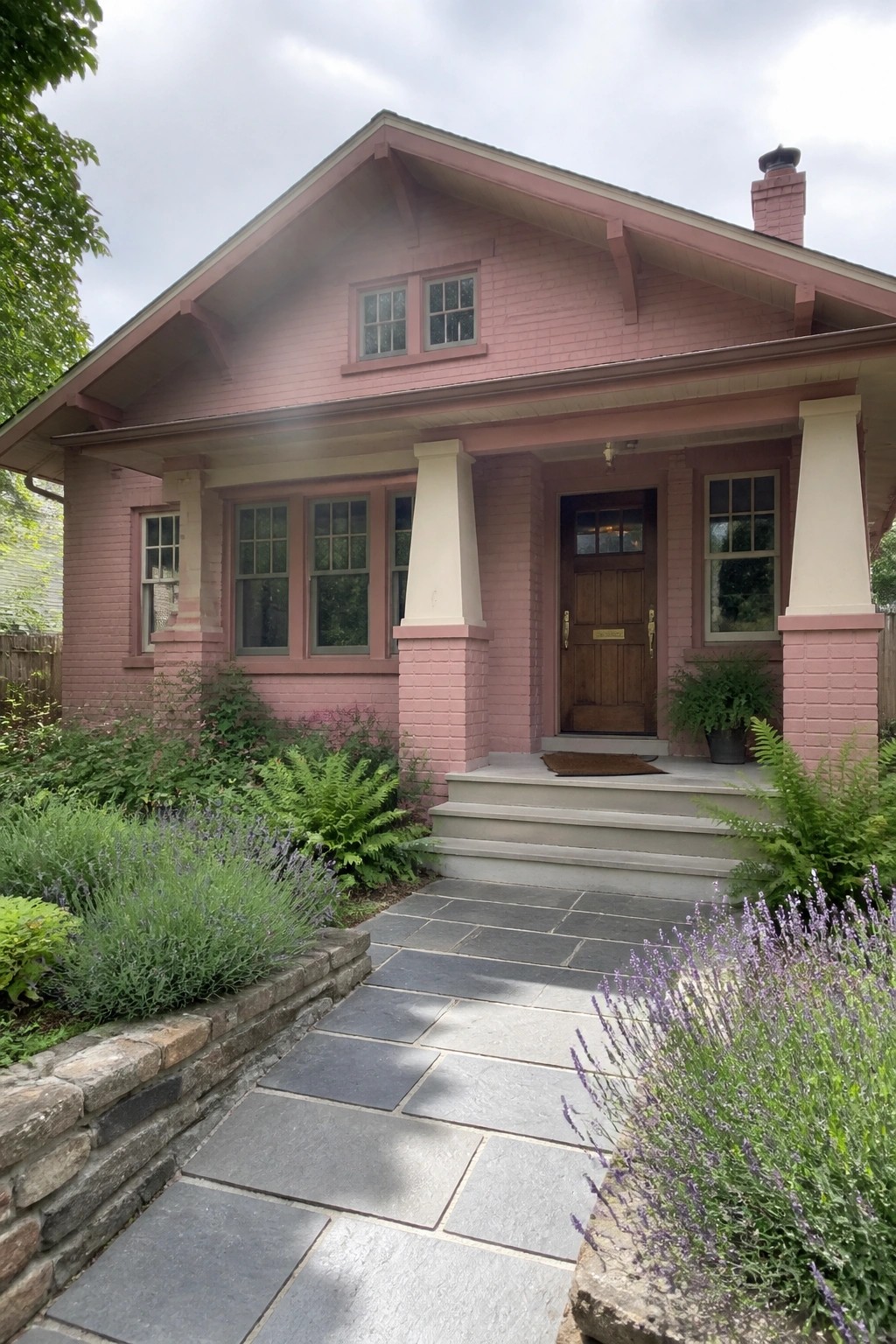
A muted pink brick with visible texture gives an older house a fresh coat of color while still reading as original. The slight variation in tone and the rough surface keep the facade from looking too new or too perfect.
This works best on homes from the early 1900s where you want to refresh the exterior without changing the scale or details. Keep the trim and accents simple so the brick stays the main material rather than competing with added ornament.
Frame The Front Door With A Brick Arch
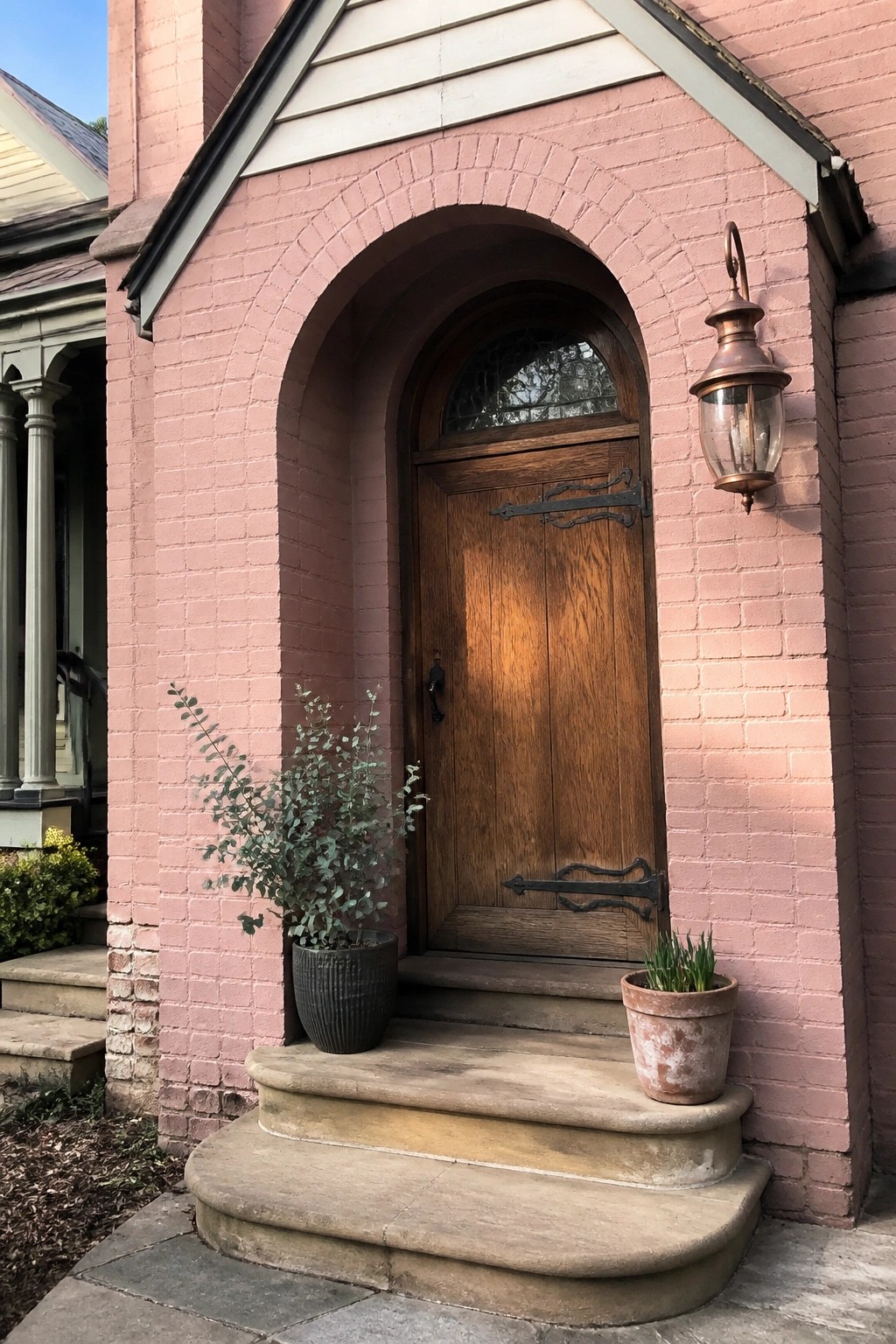
An arched brick surround gives the entry a shape that feels built in from the start. The curve lines up with the texture of the pink brick and keeps the whole front looking like one piece instead of a mix of later additions.
This move works best on older homes where the brick already has some age and variation. Keep the door itself simple in wood and let the arch do the work of making the entry feel finished.
Pink Brick With Classical Detailing
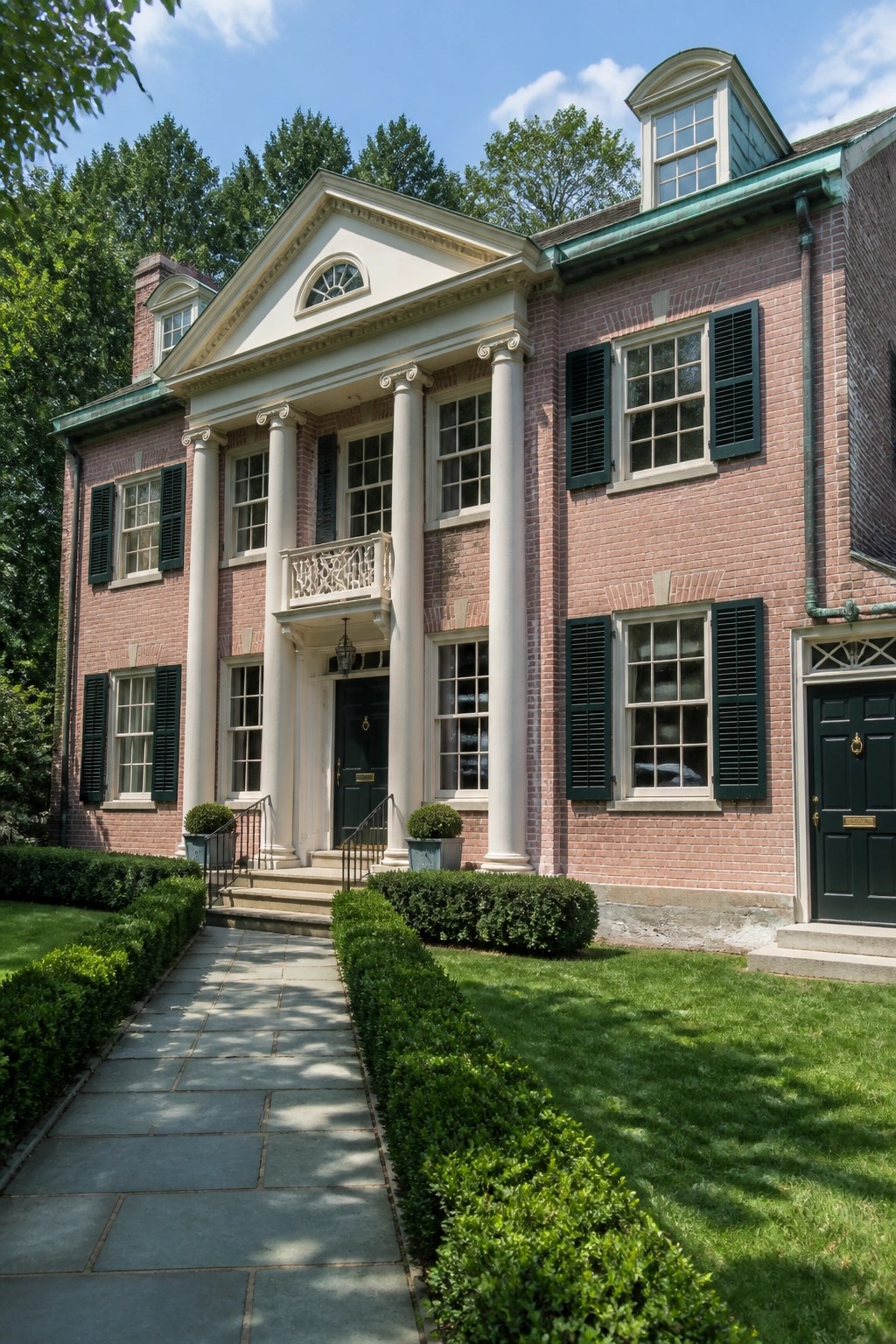
Pink brick gives a house a softer texture while still reading as historic. The color works especially well when paired with white columns and trim, since the contrast keeps the classical details visible without making the facade feel too heavy or formal.
This combination suits older homes that need a refresh but should not lose their original character. It works best on two-story houses with some architectural detail already in place, and it pairs cleanly with dark shutters and simple foundation planting.
Pink Brick That Keeps Historic Character
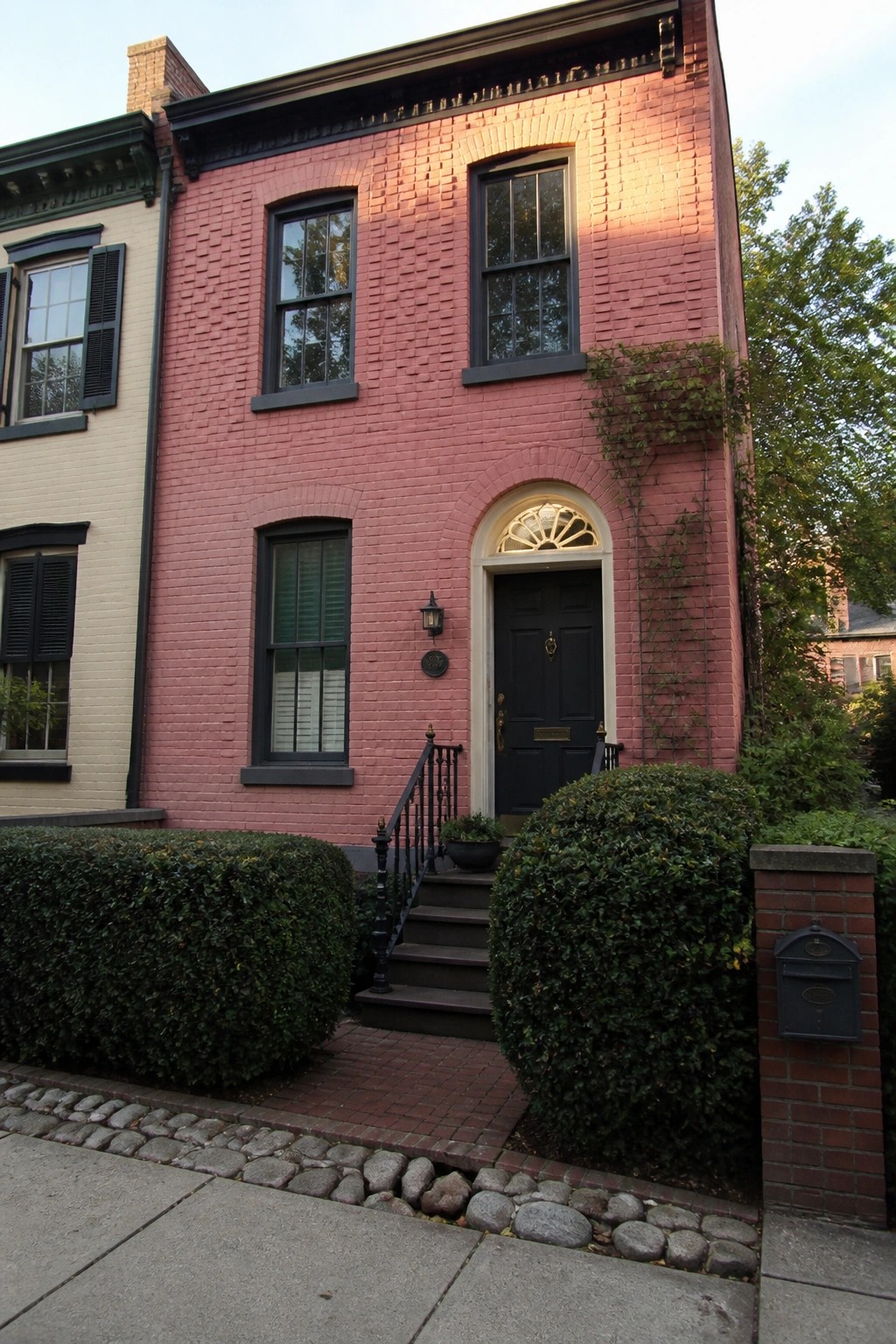
Pink brick with some texture works well on older homes because it gives the facade a soft, lived-in look instead of a stark new appearance. The color sits nicely between red and salmon, so it blends with traditional details instead of fighting them.
This approach suits row houses and small brick homes where the goal is to refresh without changing the original feel. Stick with dark trim and simple entry details so the brick stays the main feature.
Textured Pink Brick With Stone Foundations
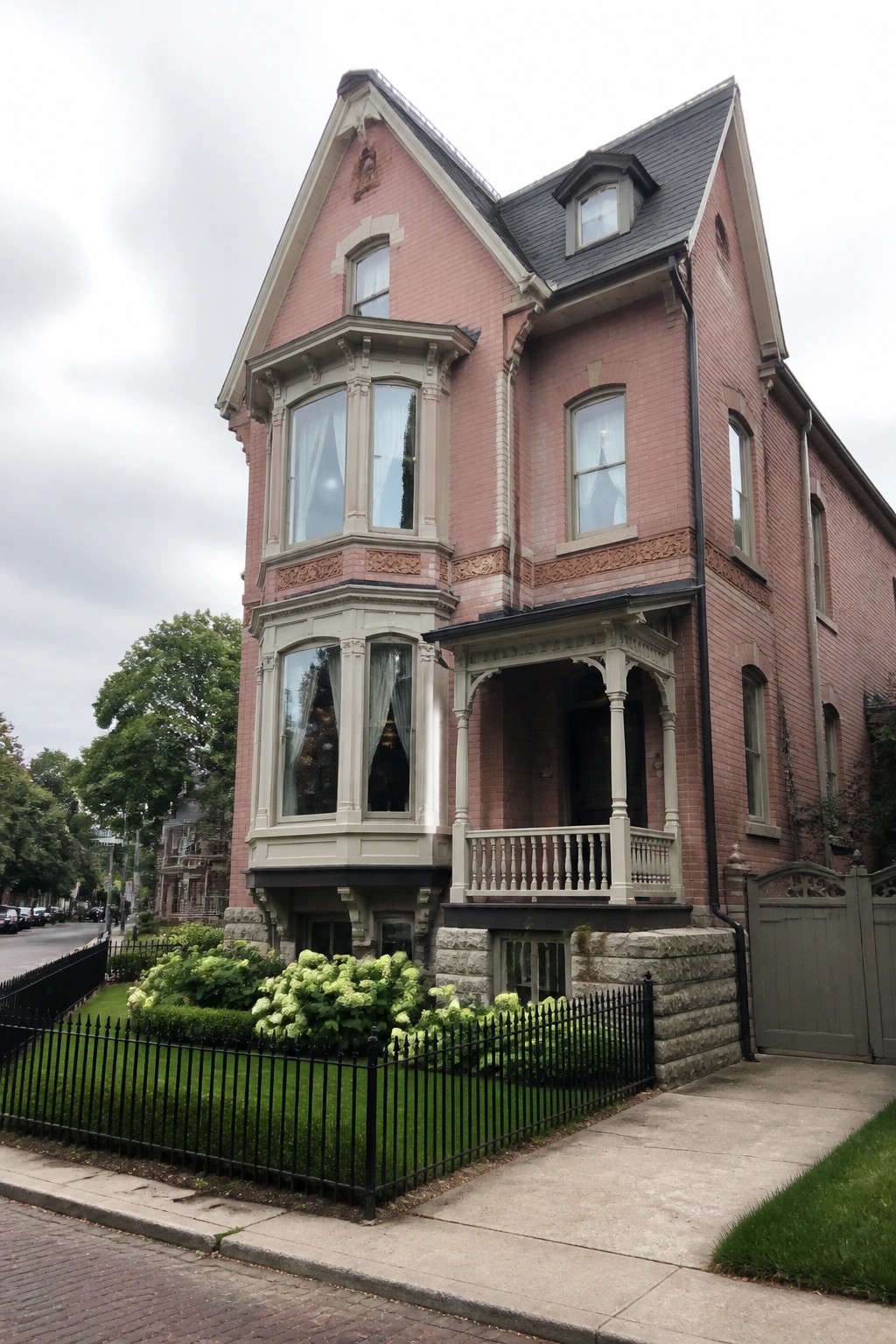
Many older homes keep their character by using textured brick in a soft pink shade. The slight surface variations in the brick add quiet depth and help the house feel rooted rather than freshly built.
Pairing that brick with a low stone foundation strengthens the historic look. The contrast gives the base weight and helps the whole facade read as original rather than updated.
Window Boxes on Historic Brick Homes
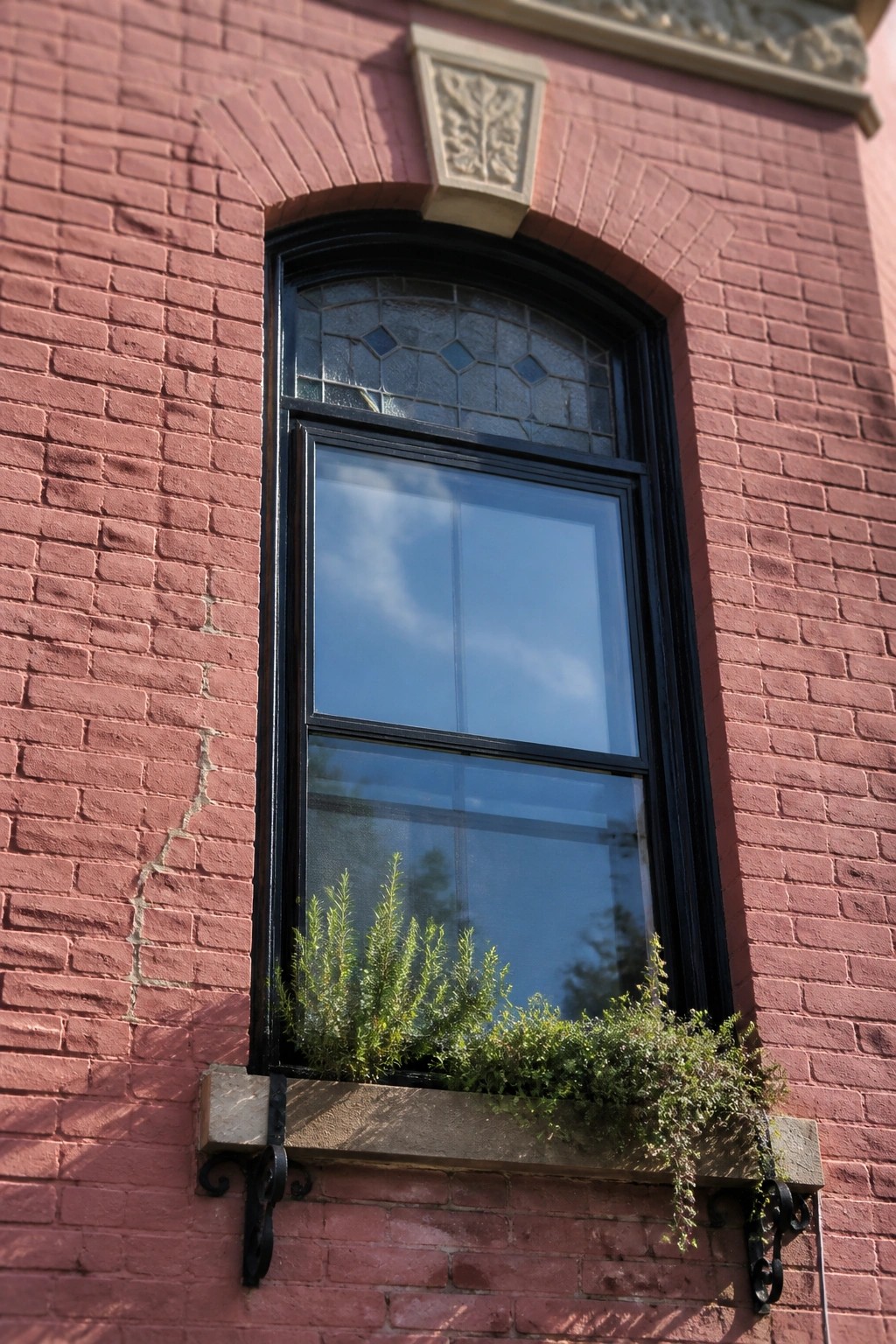
Many older brick homes gain a lot from a simple window box placed right under the main windows. It adds living color and texture while leaving the original brick, arches, and stone details untouched.
This approach works especially well on textured facades where the brick itself is the main feature. Use a low-profile box in a material that matches nearby trim and keep the planting compact so it softens the look without hiding the architecture.
Dark Doors Against Pink Brick
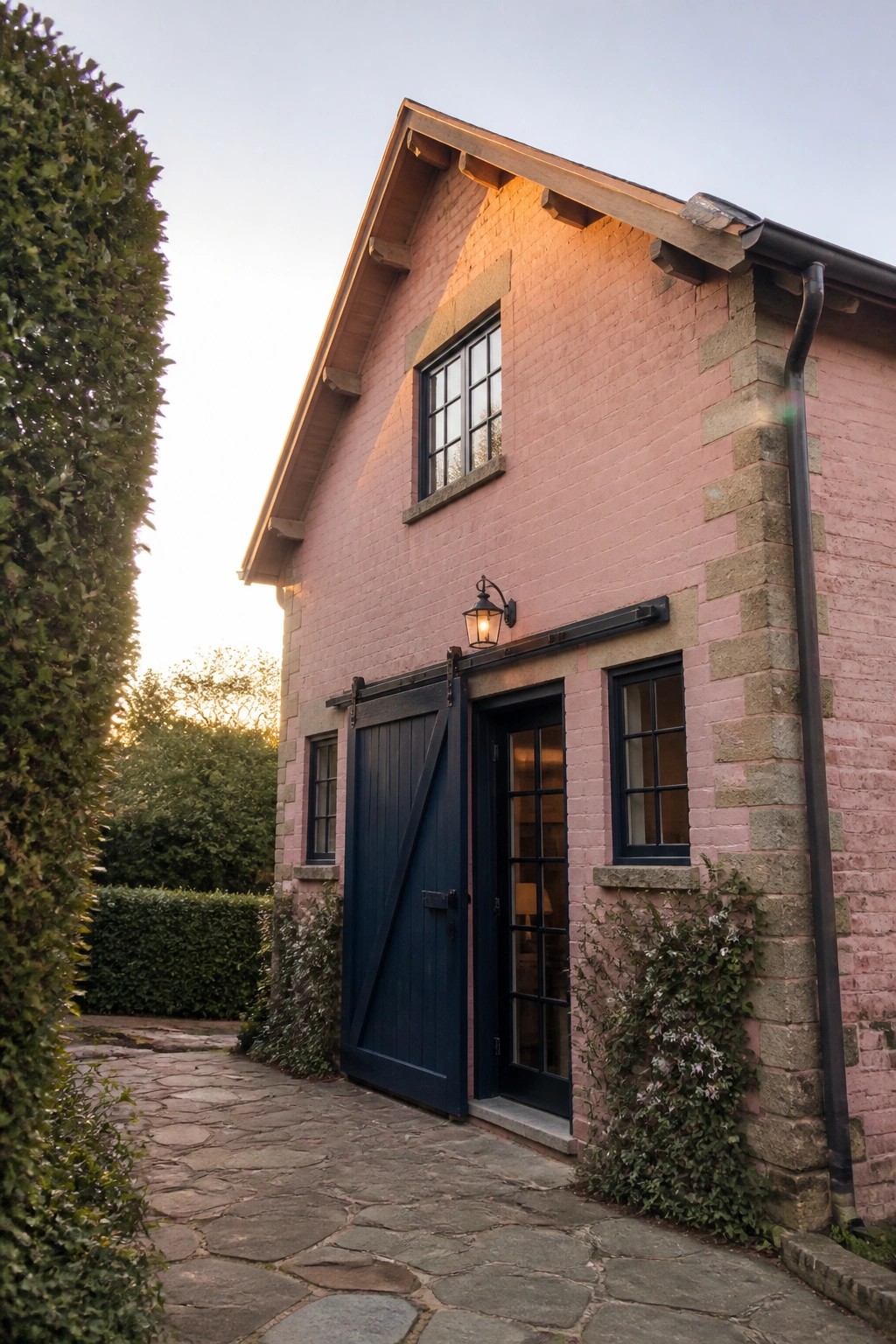
Dark painted doors and windows give pink brick a stronger outline. The contrast keeps the texture of the brick visible while stopping the whole front from looking too pale or flat.
This approach suits older homes where the brick already has character. Use a deep navy or black on the doors and frames, and leave any stone details in their natural tone so the mix still feels grounded.
Pink Brick That Keeps Historic Character
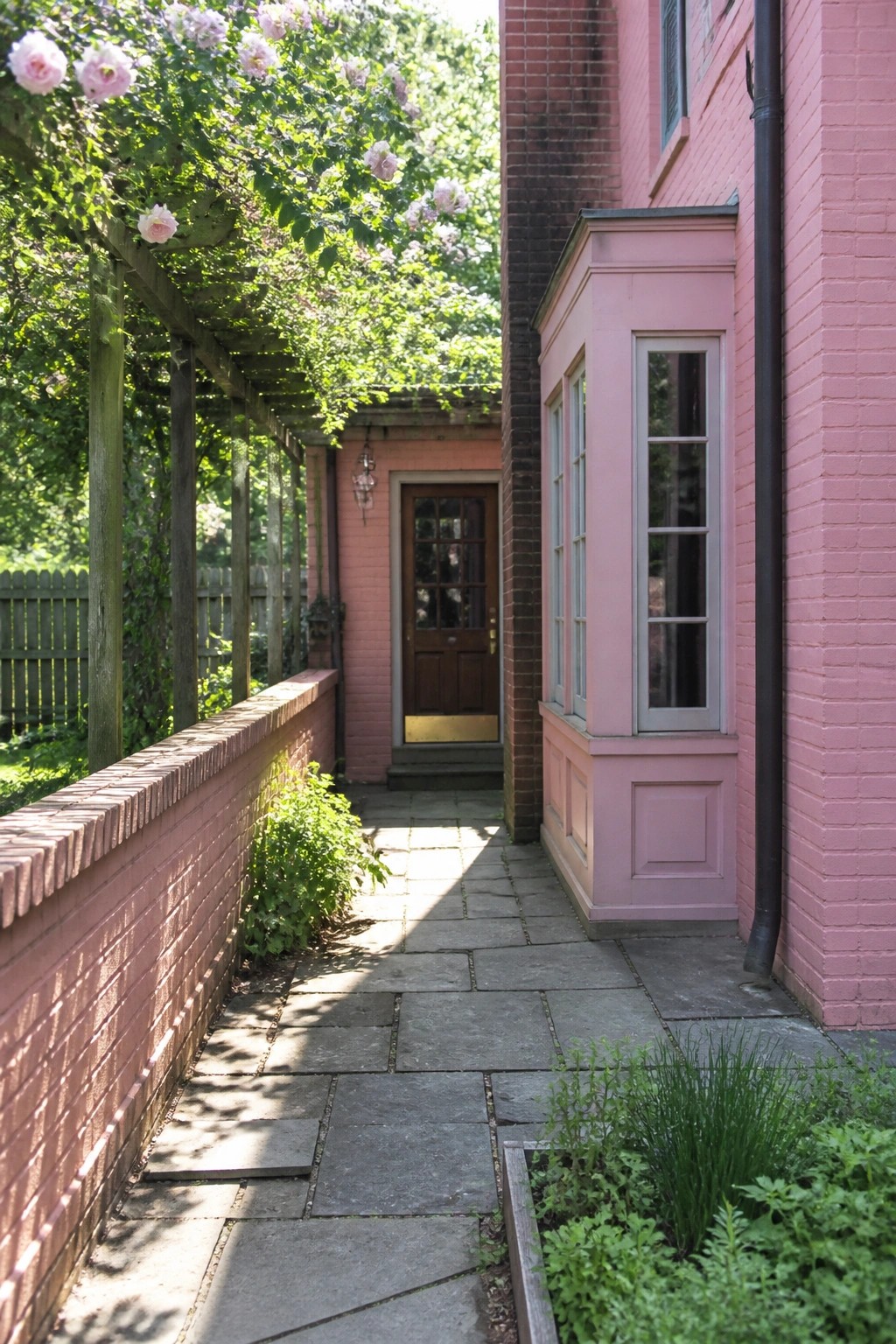
Many older homes gain a lot from keeping the original brick instead of painting over it or replacing it. The soft pink shade here gives the facade a lighter look while the texture of the brick still feels solid and traditional.
This choice works best on houses in established areas where the material already fits the street. Pair it with simple paths and low planting so the brick remains the main feature rather than getting lost in extra color.
Pink Brick Keeps Historic Character Strong
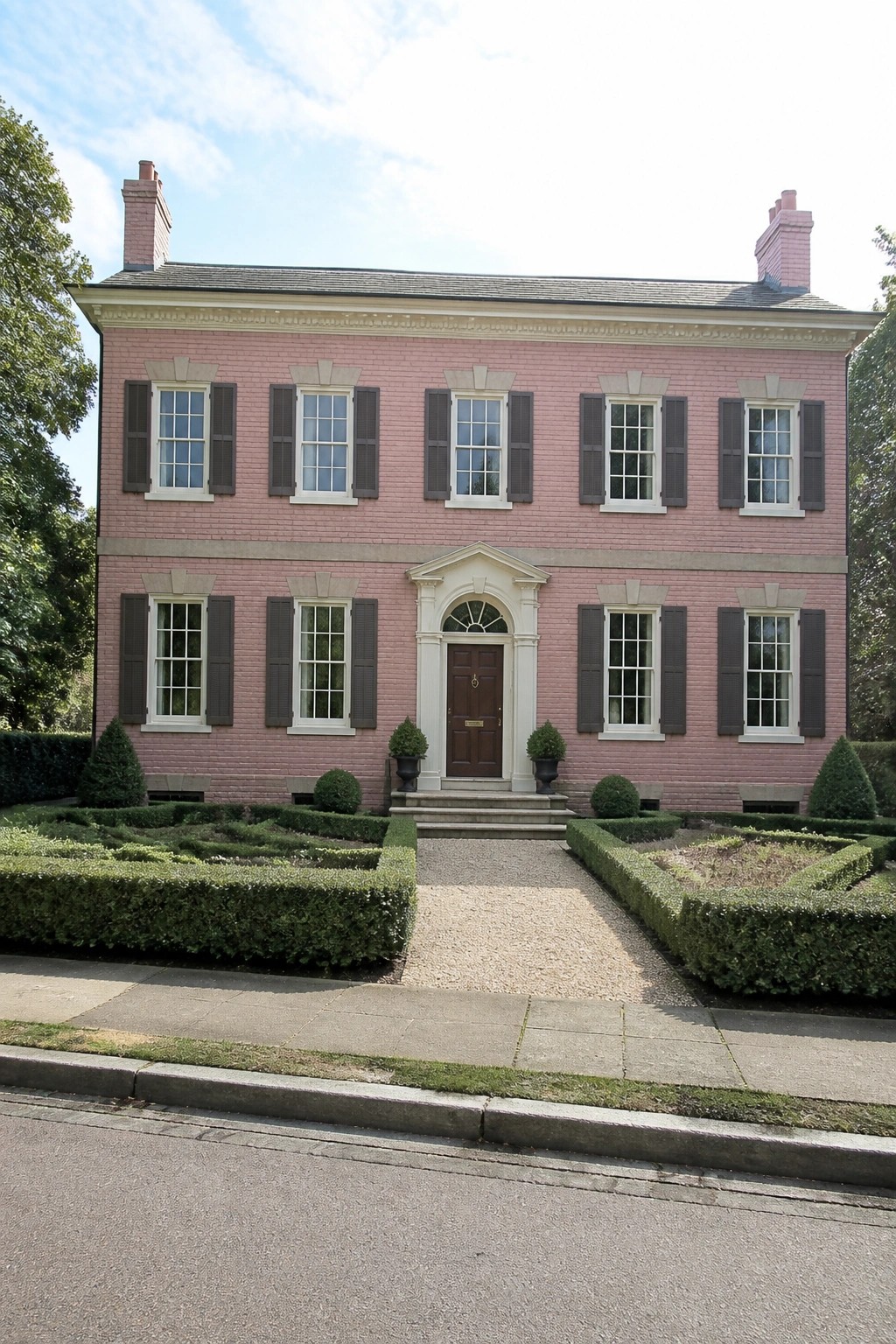
Pink brick works well when you want to soften a traditional house without losing its solid, older look. The slight texture in the brick adds depth and helps the color feel natural rather than painted on. It pairs easily with white trim and dark shutters for balance.
This approach suits older homes that still have their original brick structure. Choose a muted pink tone and keep the mortar lines visible so the surface stays interesting up close. Avoid bright shades that can make the house feel newer than it is.
A Bench Along the Porch
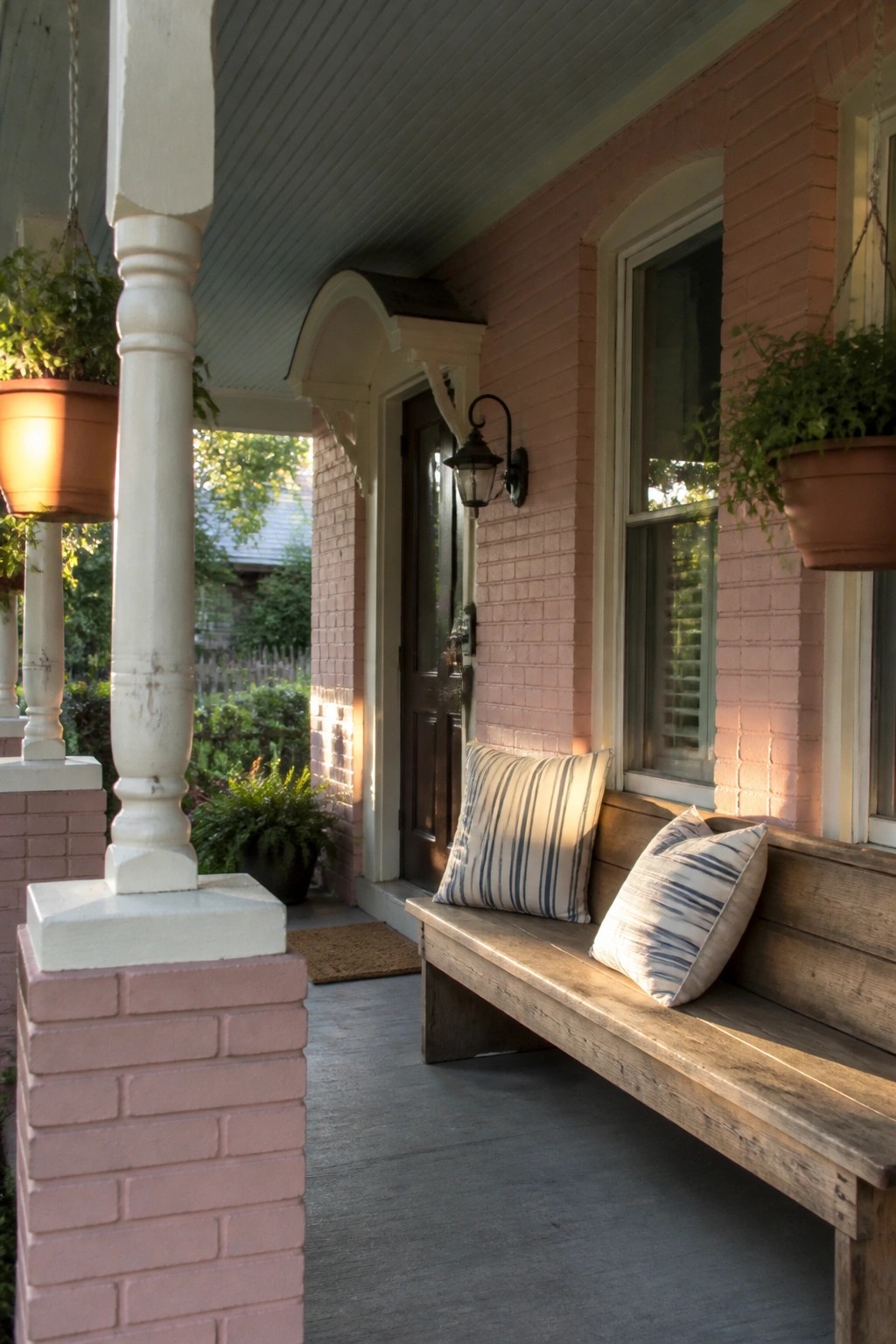
One way to keep an older porch usable is to add just one bench. It gives a spot to sit without filling the space or covering up the brick details that give the house its character.
This works best on homes where the original porch was kept fairly open. Use plain cushions and weathered wood so the bench fits in rather than standing out.
Outdoor Dining Along Brick Walls
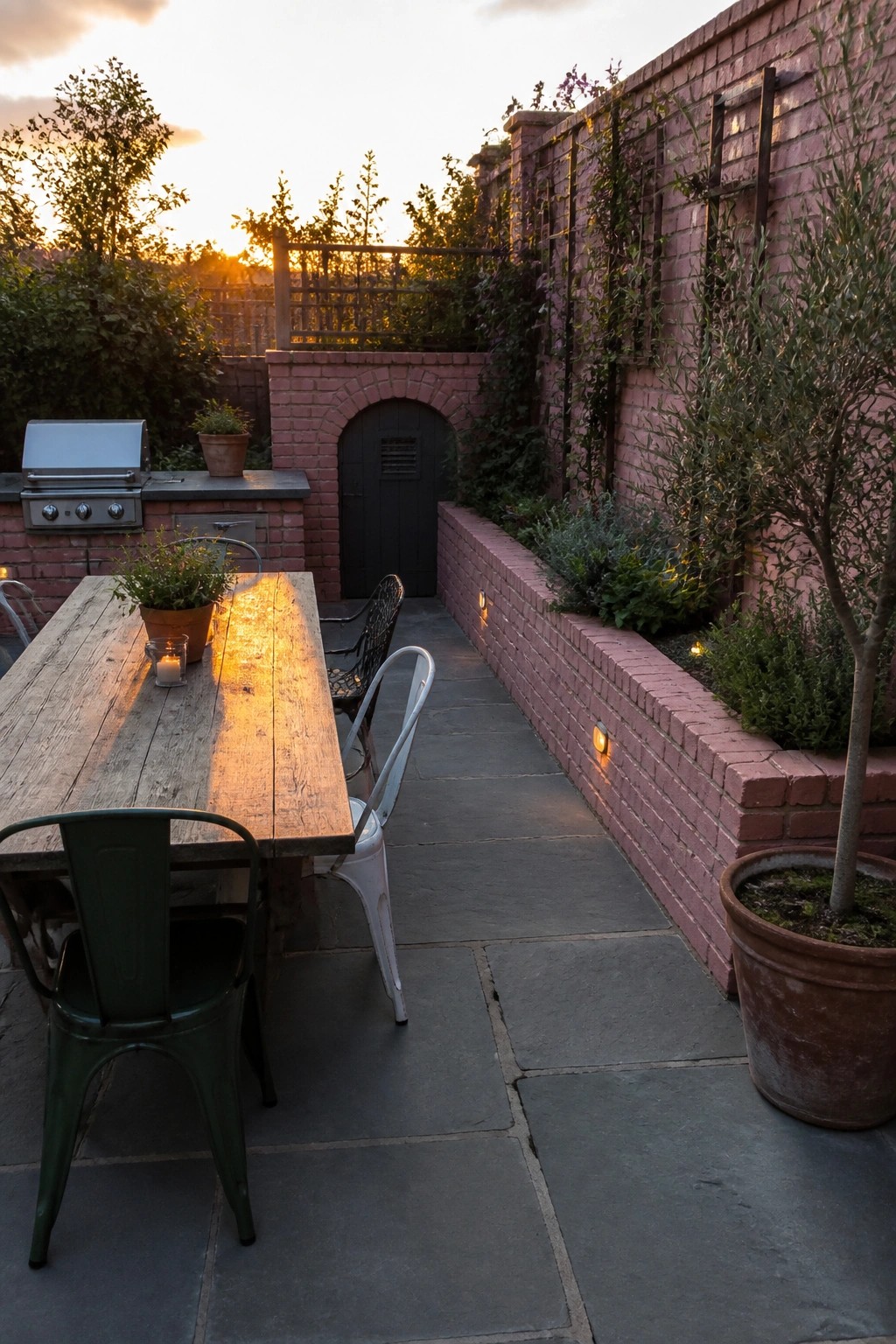
Many older homes already have textured brick walls that can easily turn into the backbone of a good outdoor dining spot. The walls give natural enclosure and a sense of privacy without needing extra fencing or screens. Low lighting tucked into the brickwork keeps the space usable after dark while staying understated.
This approach works best on homes where the original brick is still in decent shape. Keep the seating simple so the wall remains the main feature. Avoid cluttering the area with too many new structures that fight the existing material.
Painting Brick A Soft Pink
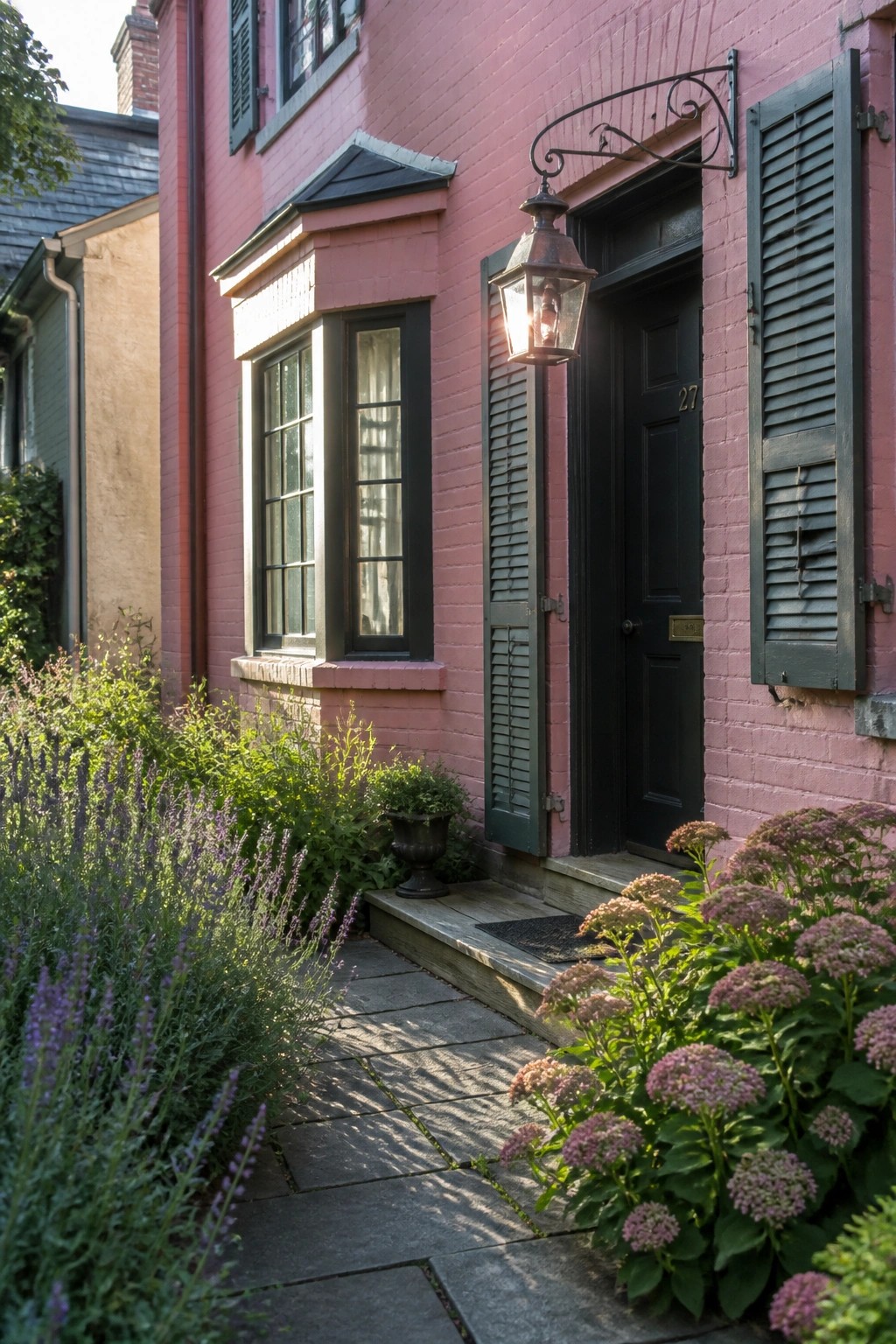
Many older brick homes benefit from a coat of paint when the original color feels flat or dated. A soft pink shade adds personality while still showing the texture of the brick underneath.
This works best on homes with simple traditional details like dark shutters and classic entry lighting. Keep the trim and accents in a deep tone so the pink does not overwhelm the overall look.
Textured Pink Brick That Keeps Historic Character
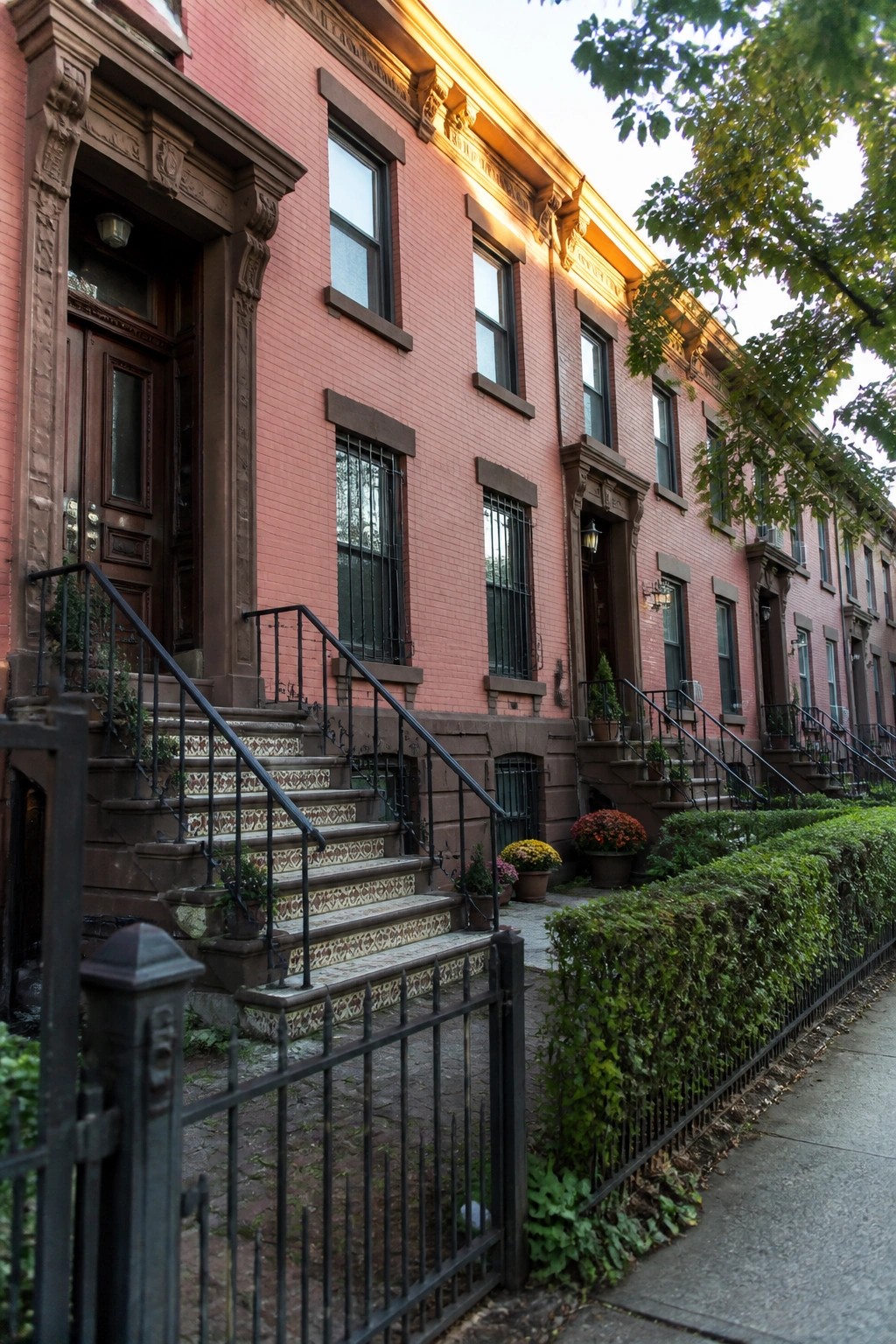
Pink brick with a clear texture gives row houses a solid base that still feels true to their age. The surface shows enough variation to catch light without looking new or forced.
This approach suits neighborhoods where the original brick and stone details are still in place. Match the trim and railings to the darker stone so the color stays balanced and the whole front reads as one older structure.
Timber Framing With Pink Brick
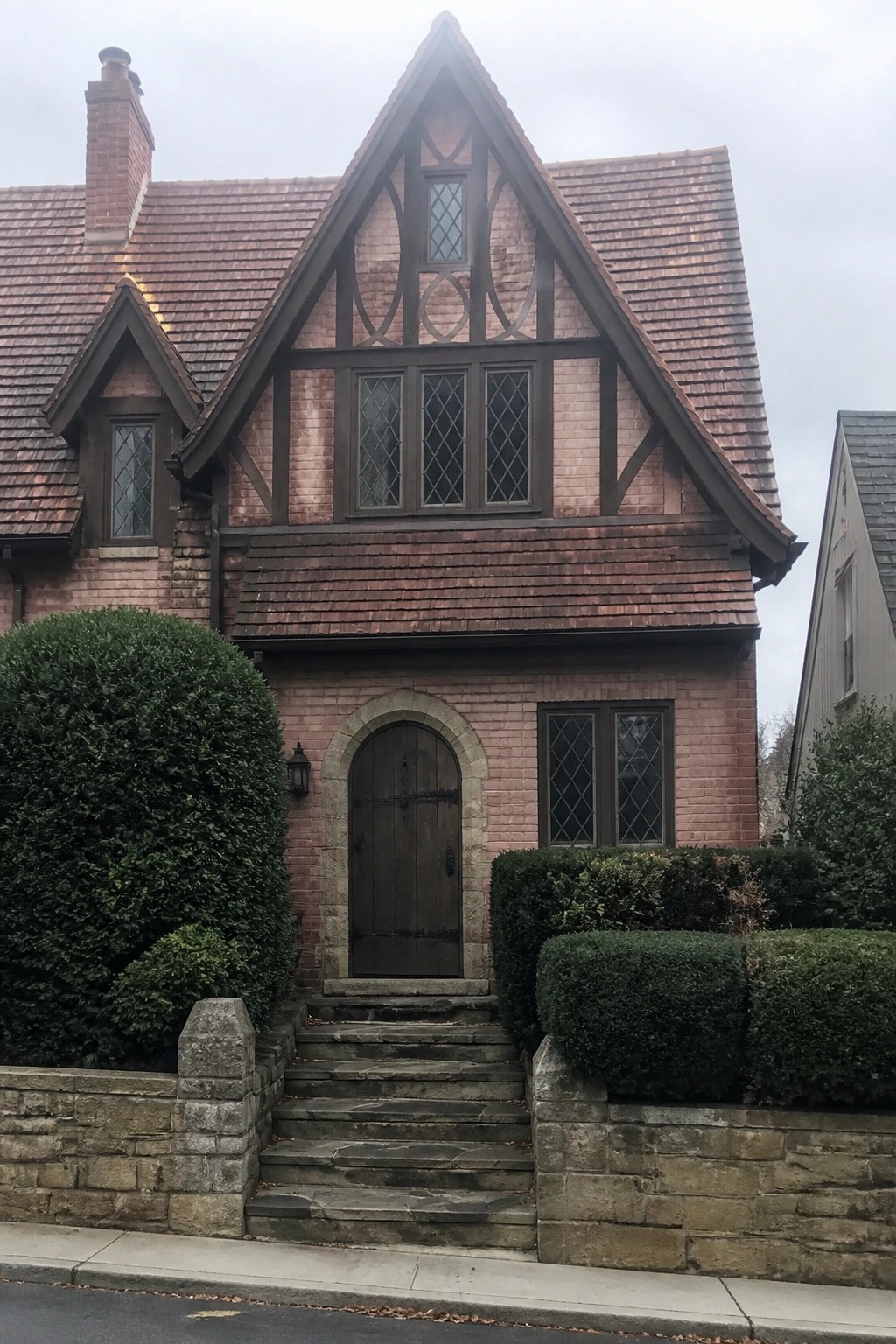
One simple way to hold onto the historic feel of a pink brick house is to keep or add dark timber framing on the gables. The contrast between the textured brick and the wood makes the original style stand out without extra decoration.
This approach suits older homes that already have some Tudor or cottage details. Match the wood tone to existing trim and let the brick show its natural color shifts so the whole front stays balanced and true to its age.
Painting Brick In A Soft Pink Tone
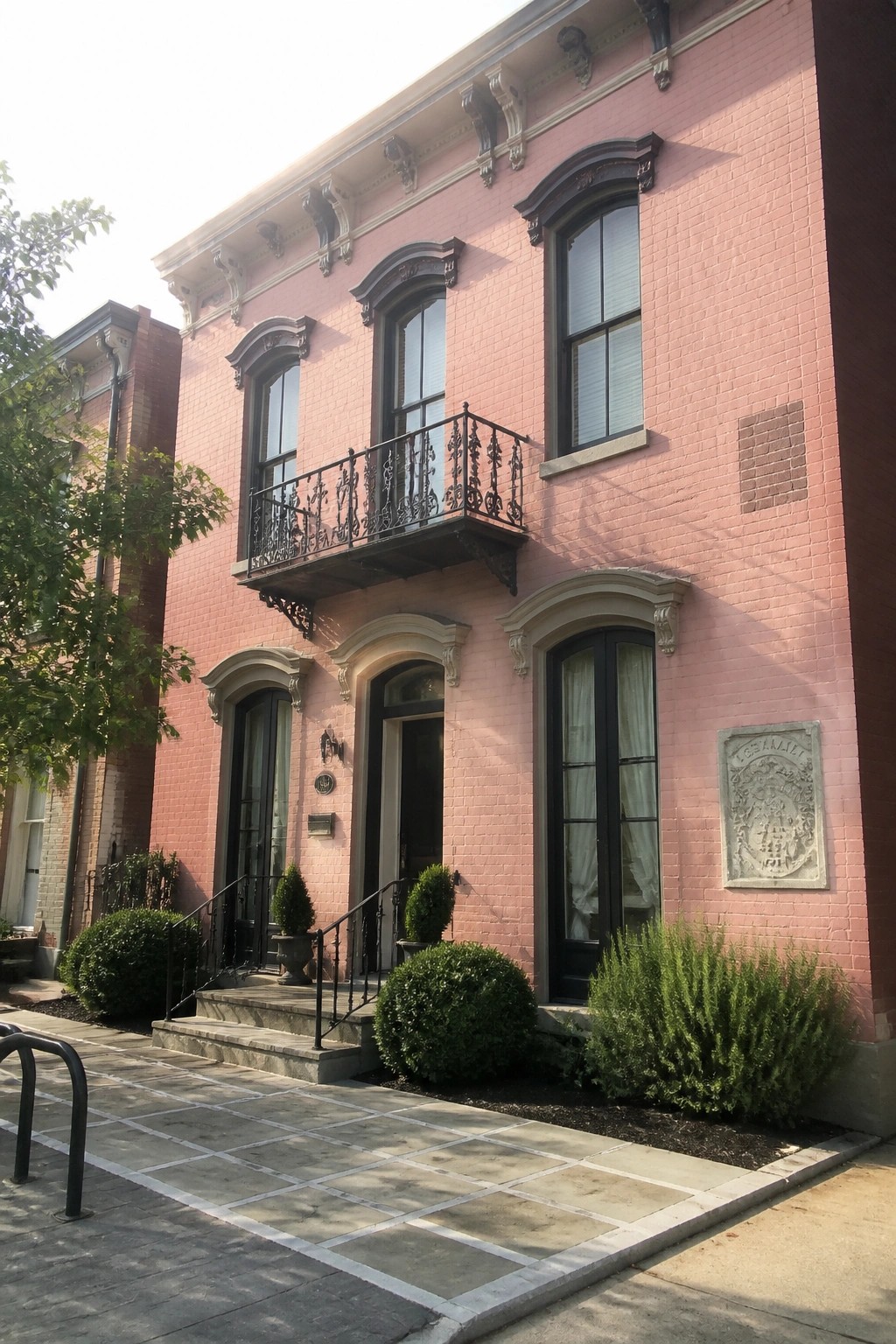
Many older brick homes look fresh again once the surface gets a coat of soft pink paint. The color lightens the whole facade without hiding the original texture or the slight unevenness that comes with age. Dark trim and iron details then stand out more clearly against the new shade.
This approach suits homes that still have their period windows and entry details. Keep the paint breathable so moisture can move through the brick, and test a small patch first to see how the tone settles once it dries.
Match The Brick In Low Planters
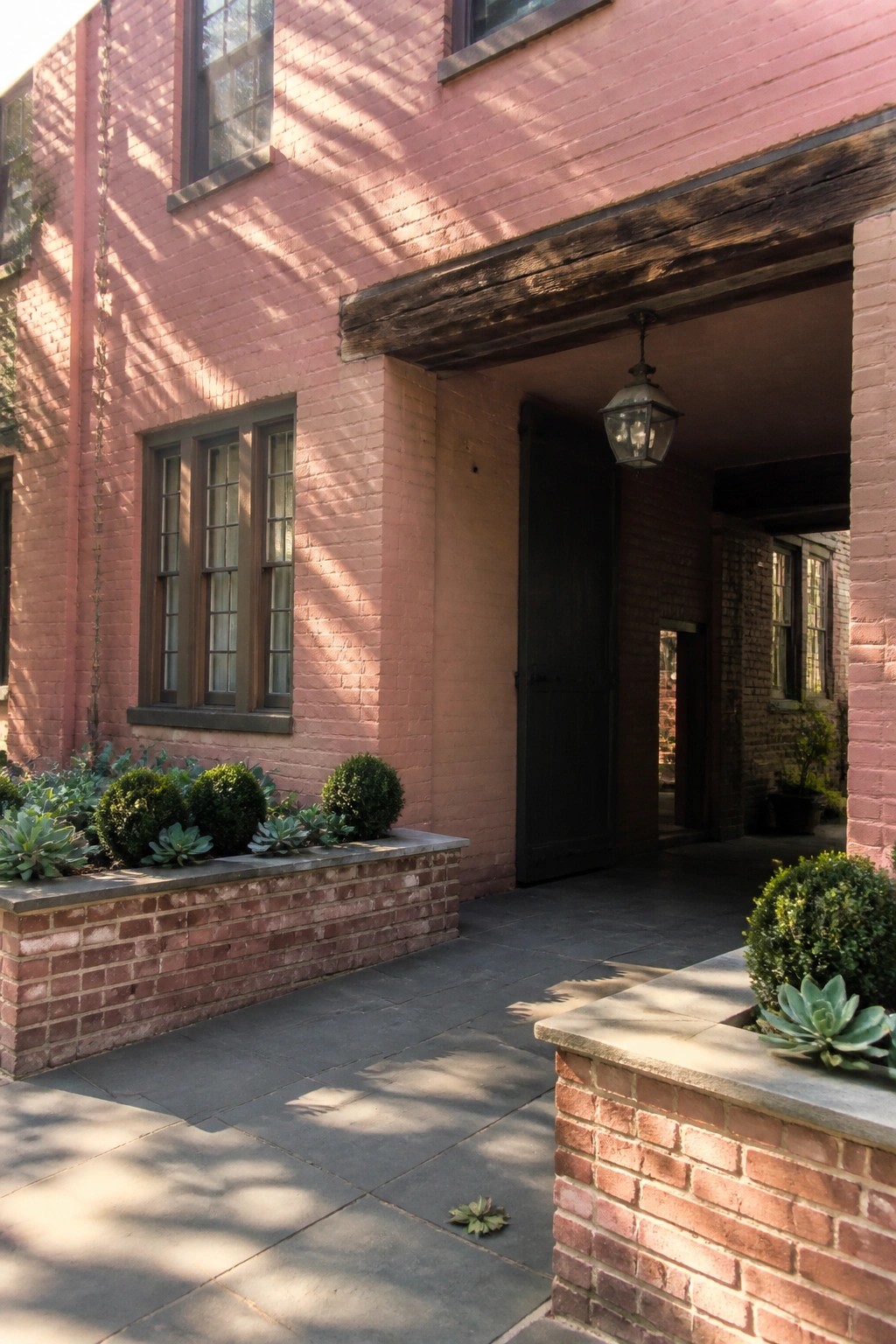
Repeating the house brick in simple raised planters helps an older home keep its texture all the way down to the ground. The low walls sit right against the pink brick facade and use the same material, so the whole front feels like one continuous surface instead of a house with added landscaping.
This approach suits homes that already show a lot of brick and need a quiet way to frame the entry. Keep the planters short, use the same mortar color, and plant them with low shrubs or succulents so they do not compete with the walls.
Textured Pink Brick Facades
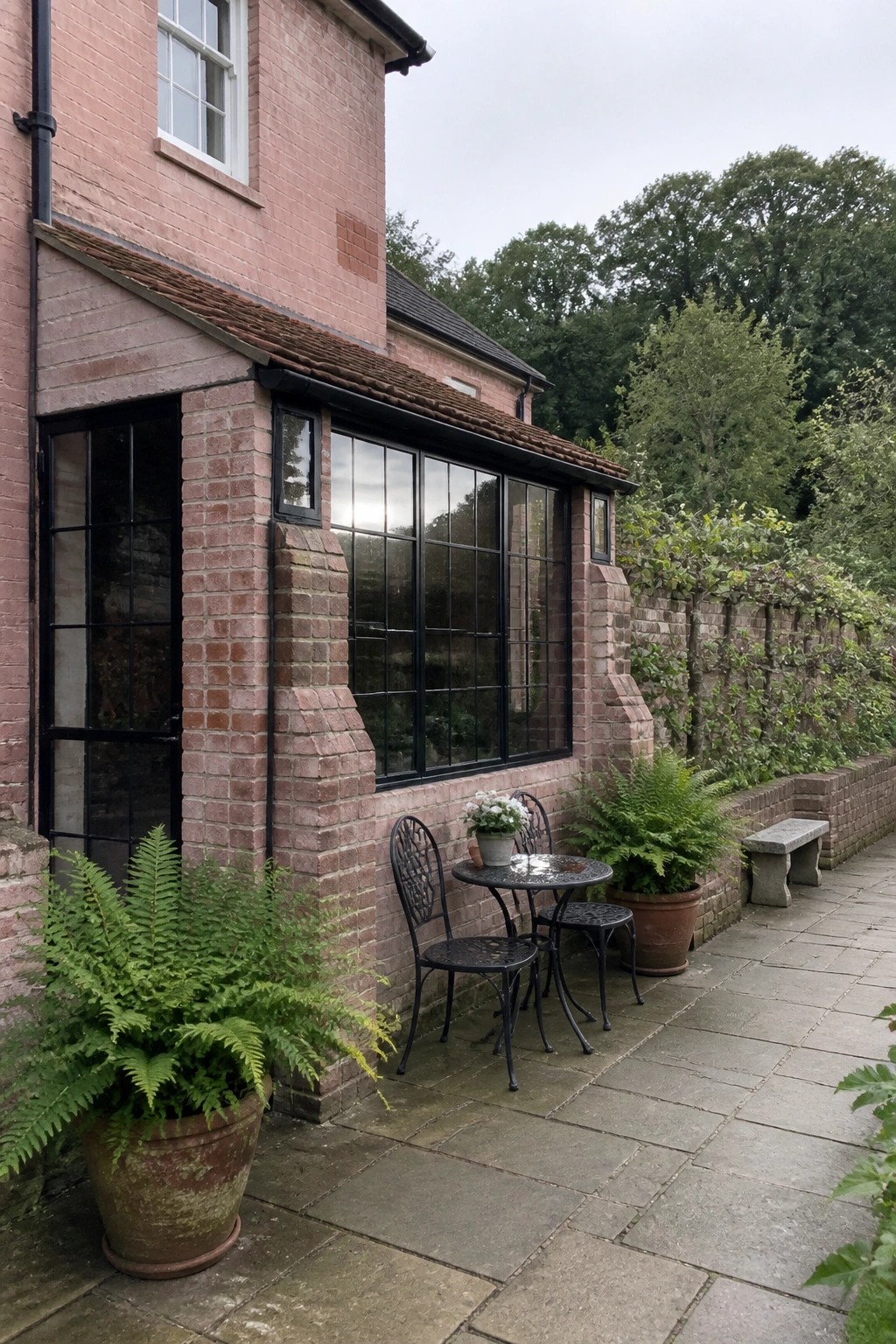
Pink brick with visible texture works well on older homes because it adds depth without needing extra trim or ornament. The surface catches light in a way that flat brick does not, and it helps the building feel rooted in its original period.
This approach suits houses that already have simple lines and larger window openings. Keep the mortar in a matching tone and pair the brick with dark frames so the texture remains the main feature. Avoid painting over it later, since that removes the very quality that gives the exterior its character.
Climbing Vines for Brick House Exteriors
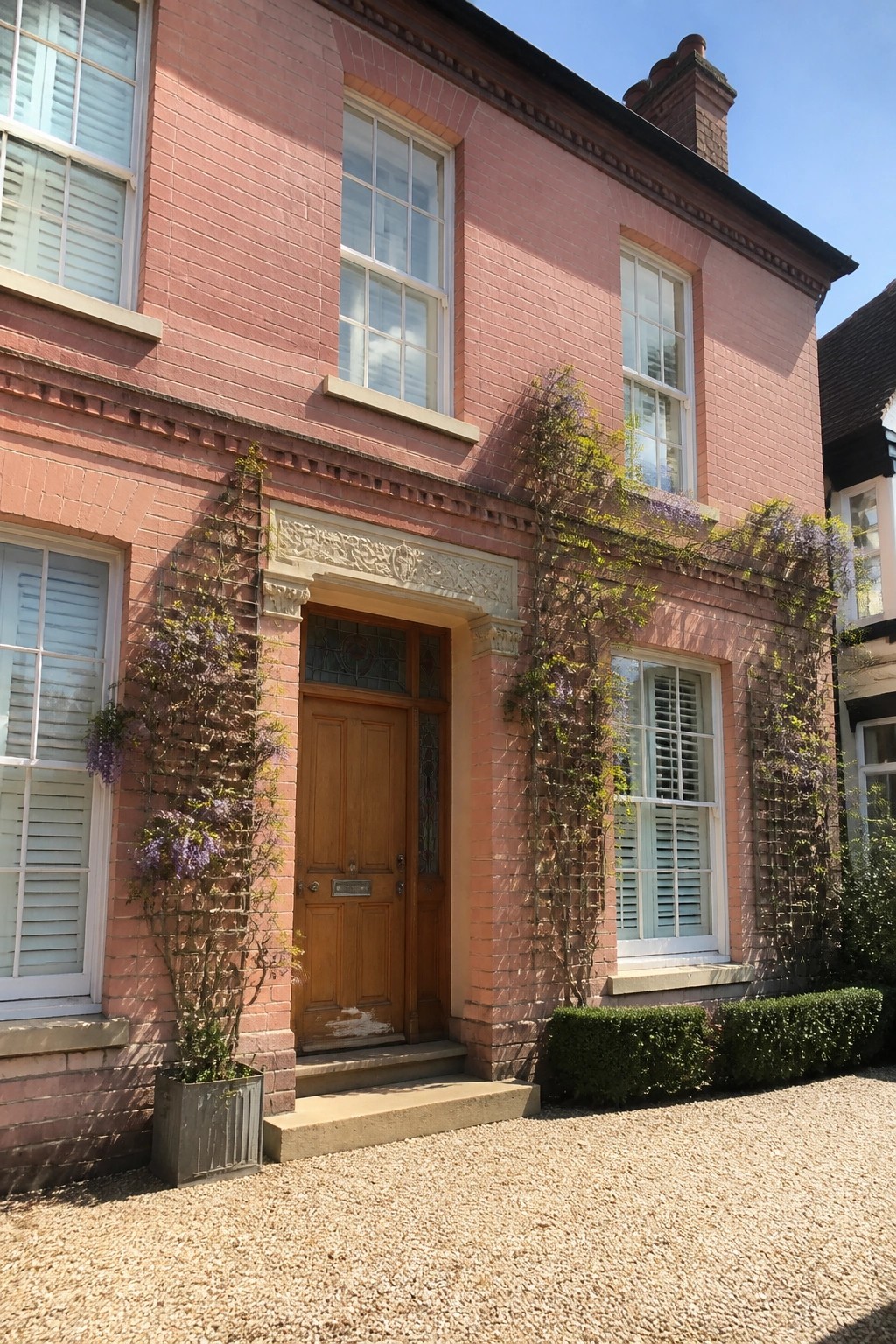
Climbing vines add a layer of texture that works well with pink brick. They bring movement and softness while the brick stays visible and the original lines of the house remain clear.
This approach suits older homes that already have some character in the facade. Keep the vines on trellises or wires so they do not sit directly on the brick, and choose spots like doorways or corners where the growth can frame without overwhelming the wall.
Exposed Brick Creates A Natural Backdrop For Seating
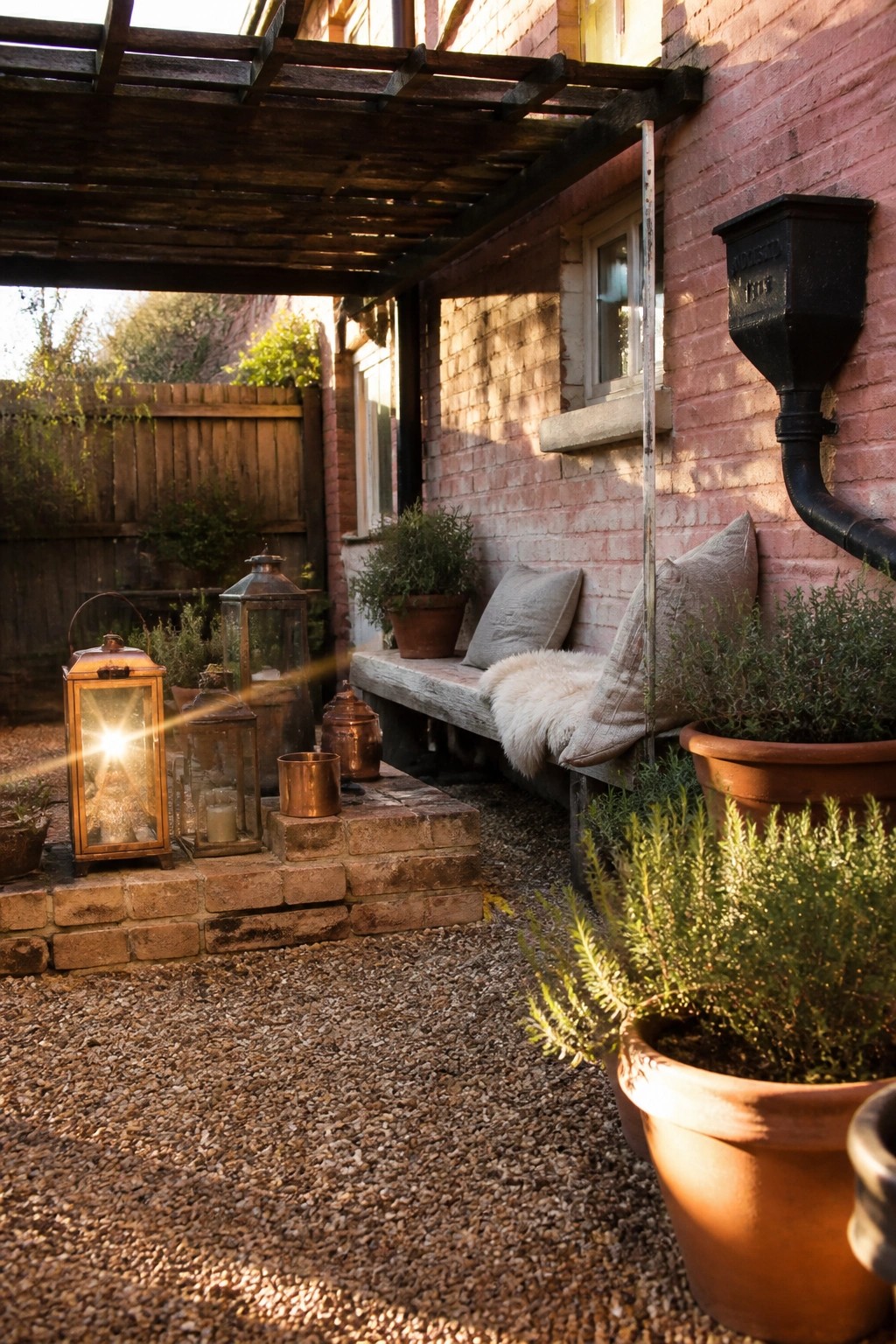
A pink brick wall like this one gives an outdoor spot instant character without much extra work. The texture shows through and the color warms up the whole area, especially when the light hits it in the late afternoon. It keeps the space feeling tied to the house instead of like a separate add-on.
This works best on older homes where you want to keep the original brick visible. Place a simple bench or a couple of chairs right against the wall and add a few large pots nearby. The brick does most of the visual work, so you can keep the rest of the setup fairly plain and still have it feel finished.
Painted Brick That Keeps The Old House Feel
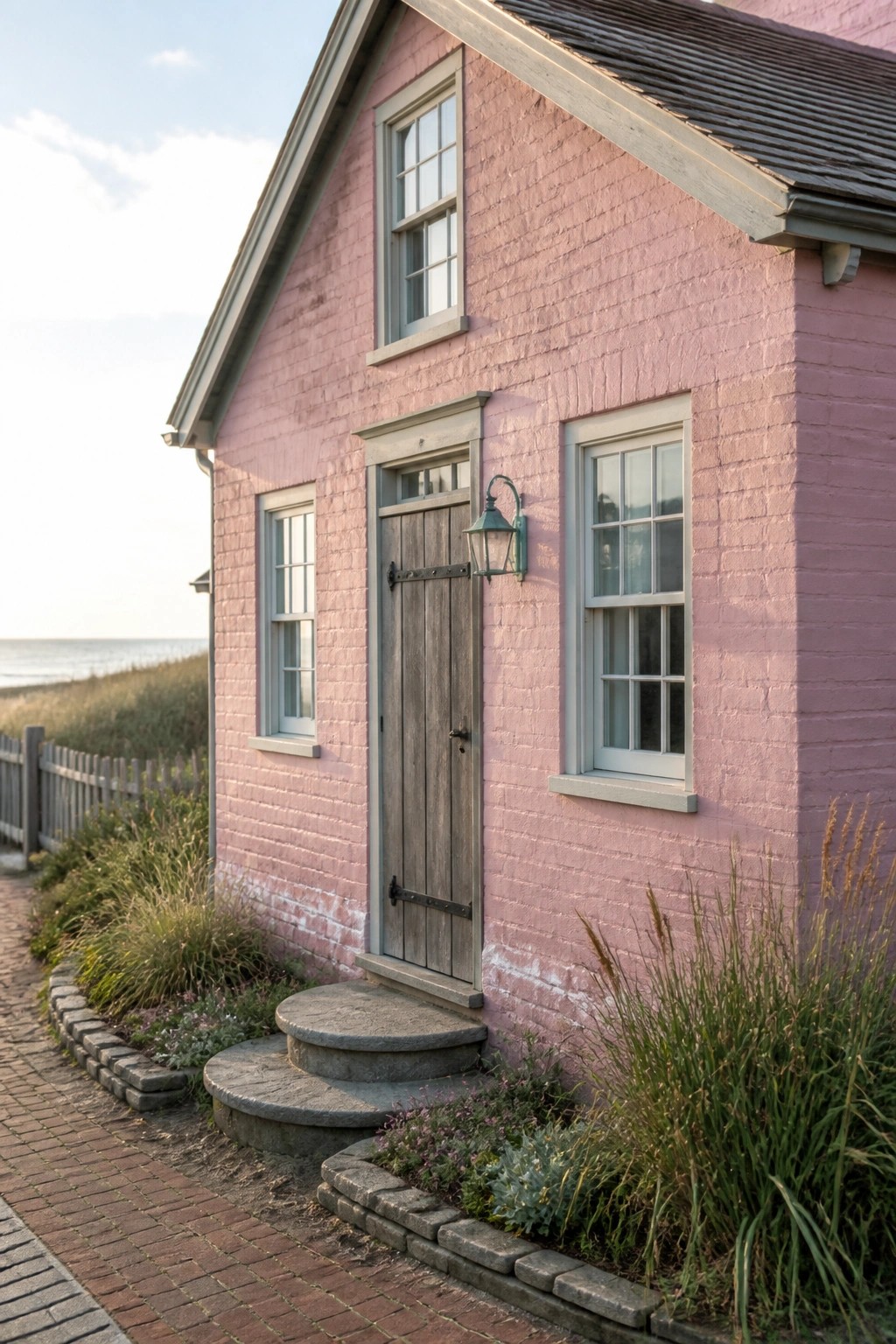
Painting brick in a soft pink shade can refresh an older home without hiding its age and texture. The color adds a gentle update while the original brick lines and slight wear still show through. This approach works especially well on smaller cottages or homes near the water where you want some color but still need the structure to feel rooted in place.
Use a breathable masonry paint so moisture can move through the walls. Keep the trim, door, and steps in simple natural tones so the brick stays the main feature. This works best on homes that already have good brick texture and a straightforward shape.
Arched Entries on Pink Brick Homes
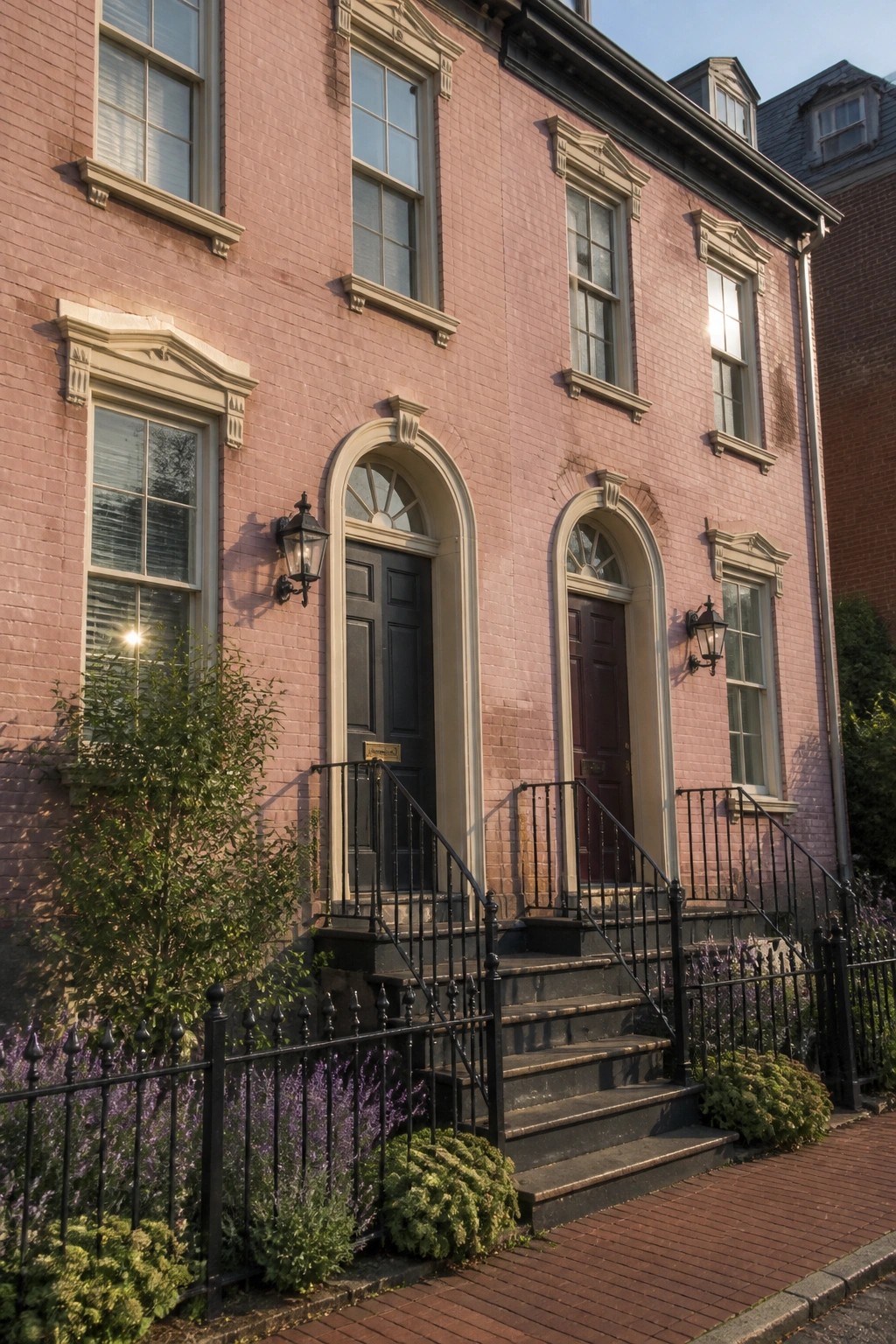
Arched brick openings around the doors give this pink facade a clear historic feel. The curves break up the flat wall surface and keep the original character intact even when the doors get updated.
This approach works best on older row homes or narrow lots where you want the entries to stand out. Stick with deep door colors and simple iron railings so the arches remain the main detail.
Frequently Asked Questions
Q: How do I find pink bricks that match an old house without looking brand new? A: Check salvage yards first for reclaimed stock that already carries some age and texture. Hold samples right against the existing walls in daylight to spot the closest fit. This approach keeps the color and surface feel consistent across the whole exterior.
Q: What happens if weeds start growing in the textured mortar joints? A: Pull them by hand during damp weather so the roots come out clean. Avoid any scraping tools that could gouge the pink brick faces. Regular attention stops the growth before it loosens the historic mortar.
Q: Can I add a small side porch and still keep the original brick character? A: Set the new foundation back a few inches from the main wall so the brick remains untouched. Use the same pink tones and joint patterns on any visible base sections. The addition then sits beside the old work instead of competing with it.
