

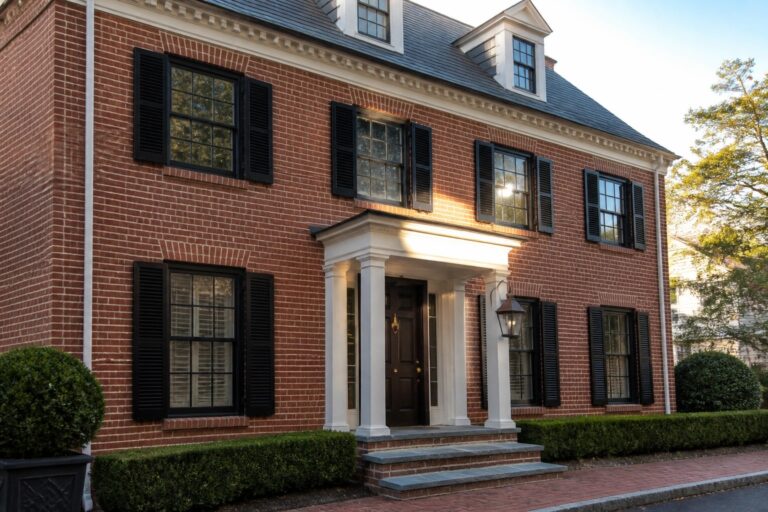
I often find that red brick exteriors in older neighborhoods hold their own better than newer materials because the color and texture age naturally with the surroundings.
The way the brick meets the roof and frames the front door can make or break how the house reads from the street.
Small choices like the mortar color or the style of the windows end up mattering more than people expect when the goal is a timeless look.
Brick works.
Over the years I have come to test ideas from places like this by picturing how they would sit on my own block before trying anything major.
White Porticos on Red Brick Homes

A white portico adds clear structure to a red brick facade and makes the front door feel like the main feature. The columns create a simple frame that breaks up the flat wall of brick while keeping the overall look balanced and traditional.
This works best on homes that already have some symmetry in the window layout. Paint the columns white and keep any shutters dark so the brick stays the main material. It suits older neighborhoods or new builds that want a classic curb appeal without extra ornament.
Arched Brick Entries
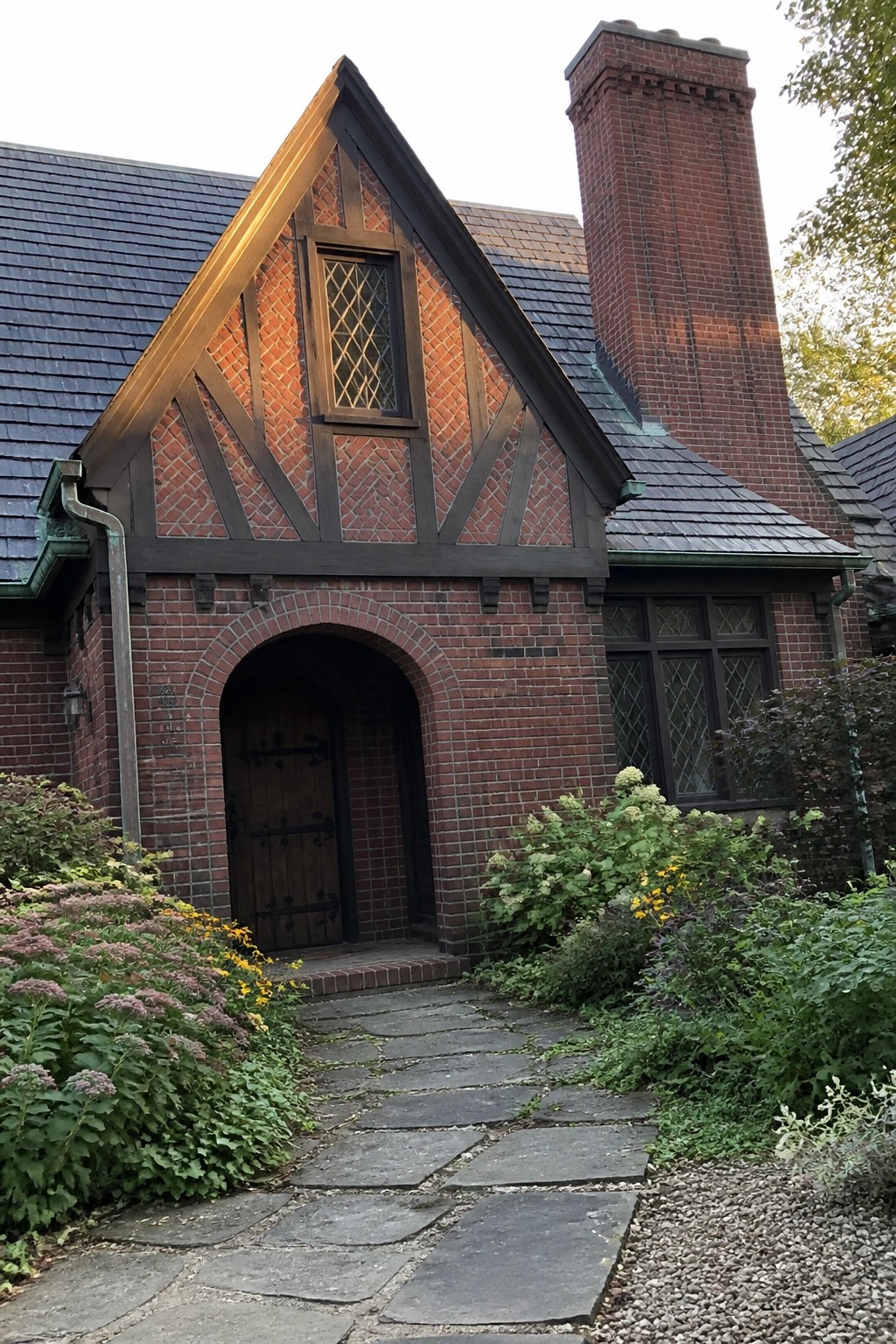
An arched brick entry gives a red brick house a clear sense of structure and age. The curve softens the straight lines of the brick while still looking solid and permanent.
This detail works best on traditional homes where the rest of the facade stays fairly plain. Match the brick and mortar as closely as possible so the arch reads as part of the original wall rather than an add-on.
Covered Porches on Red Brick
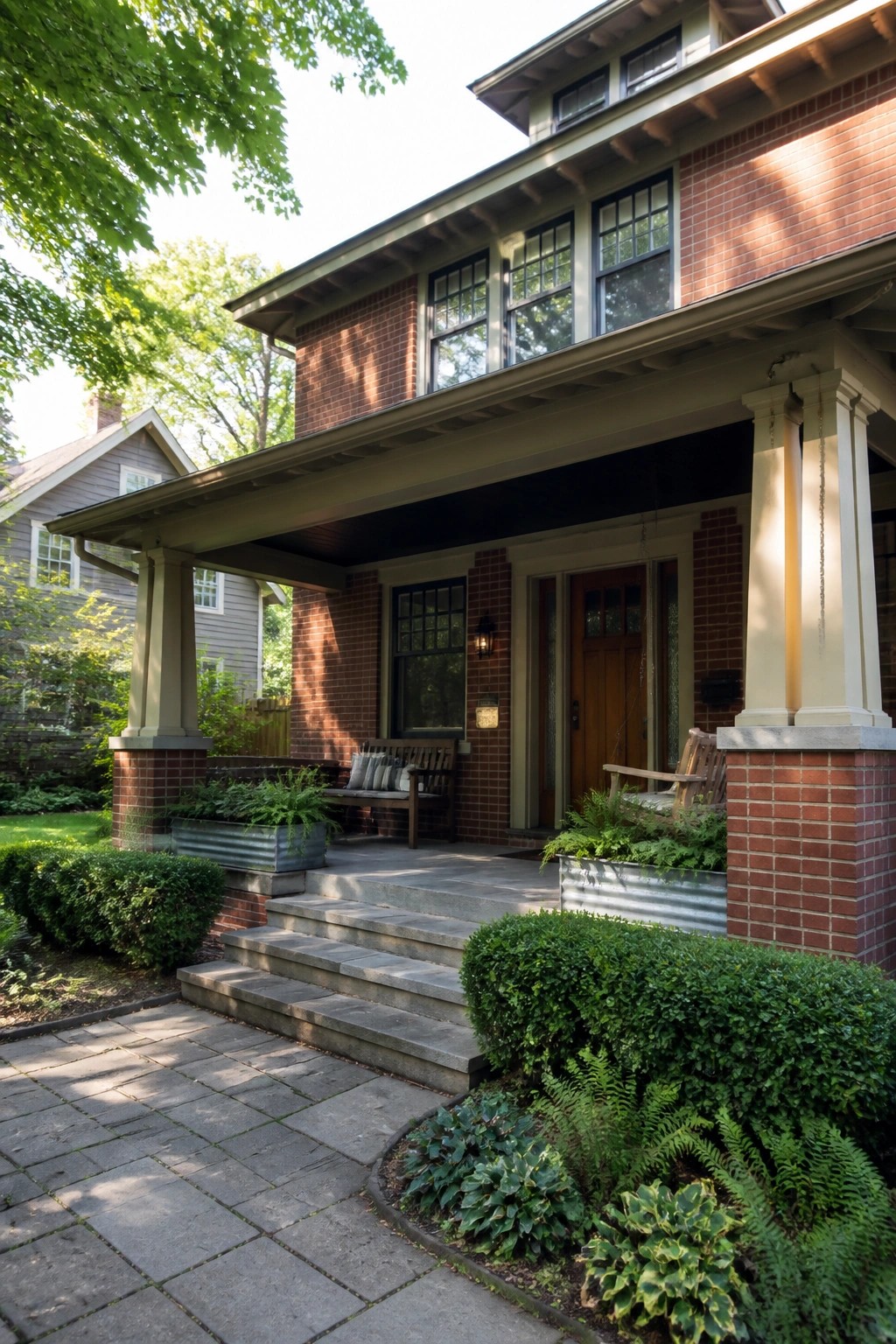
A covered porch adds real presence to a red brick house. It gives the front a settled look and creates a clear spot to pause before going inside. The brick carries through to the porch base, which helps the whole thing feel connected instead of added on later.
This setup works best on traditional homes in established neighborhoods. Keep the columns simple and let the brick do most of the work. Avoid adding too many extra details that could make the entrance feel busy.
Classical Entryways for Red Brick Homes
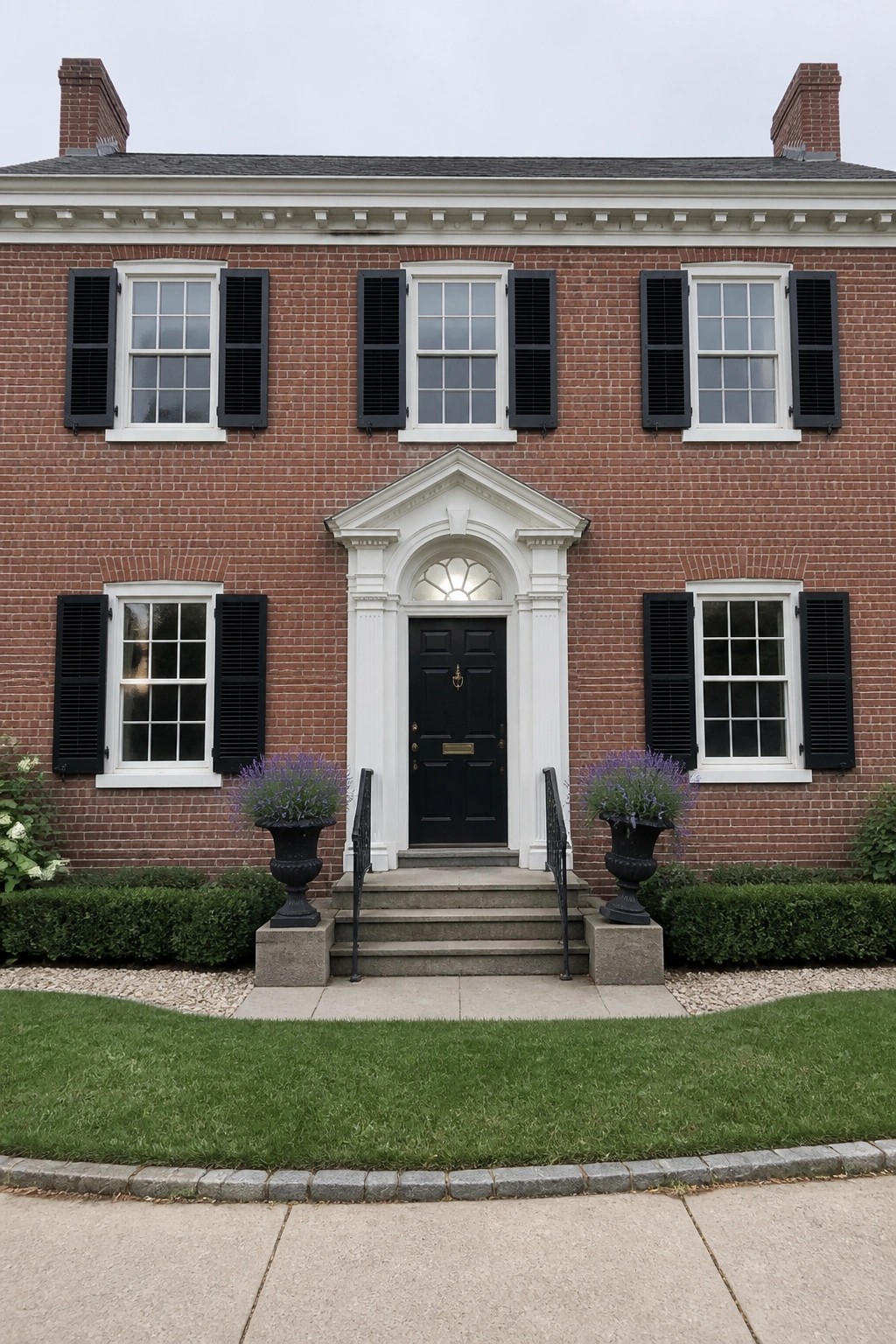
A white classical entry surround gives a red brick facade a clean focal point. It breaks up the solid color of the brick while keeping the overall look simple and balanced.
This detail suits traditional neighborhoods where symmetry matters. Use it on a centered door with a dark paint color so the white trim stands out without extra ornament.
Dark Doors on Red Brick
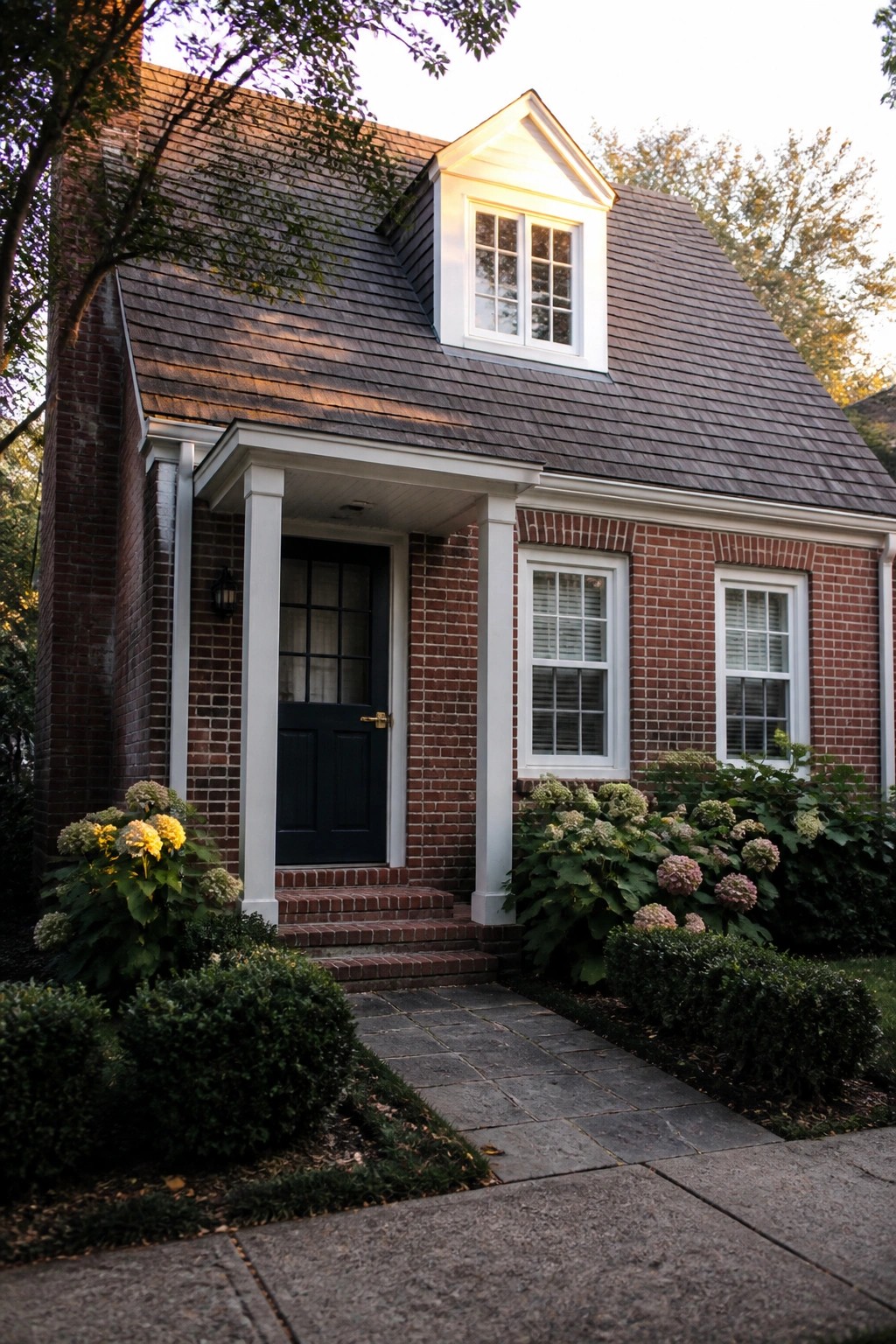
A dark front door stands out well against red brick because it gives the whole facade a clear focal point. The white columns and trim keep the look balanced and traditional without adding extra ornament.
This approach works best on smaller or mid-sized homes in established neighborhoods. Use a deep navy or black on the door, keep the trim bright white, and limit landscaping right at the steps so the entrance stays easy to read.
Low Brick Walls That Match The House

Many brick homes gain a steadier look when the same material continues into the front yard as low walls or planters. It keeps the eye moving smoothly from the house down to the ground instead of stopping at the foundation.
This approach suits traditional neighborhoods where you want the whole front to feel connected without adding extra materials. Match the brick color and joint style as closely as possible so the walls read as part of the house rather than a separate addition.
Black Shutters on Red Brick
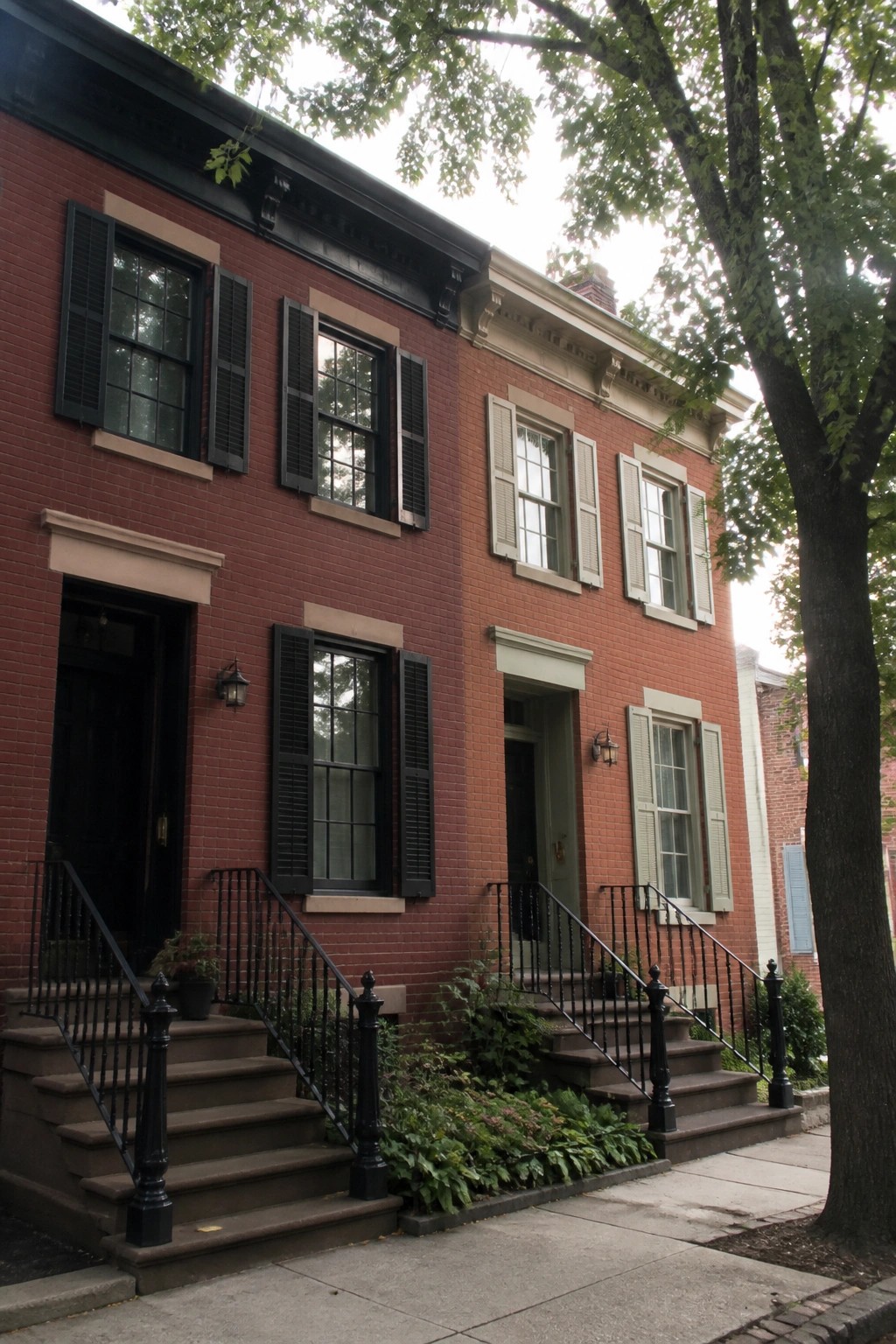
Many red brick homes gain a lot from simple black shutters. They give each window clear shape and help the brick feel more finished instead of flat.
This approach works best on traditional row houses or neighborhood homes where you want the facade to stay classic. Match the shutter color to the door or railings so the details hold together without extra decoration.
White Porch Railings on Red Brick Homes

A white porch stands out nicely against red brick and gives the whole front a clean, settled look. It adds some depth without needing extra color or big changes to the rest of the house. Many older neighborhoods already use this mix, so it fits right in and keeps the style traditional.
This works best on homes that already have a clear entry area or room for a covered porch. Keep the trim simple, add a few climbing plants if you want, and make sure the porch railings stay in proportion to the windows. Avoid overdoing the white elsewhere on the brick so the contrast stays balanced.
Classical Portico Entrances for Brick Homes
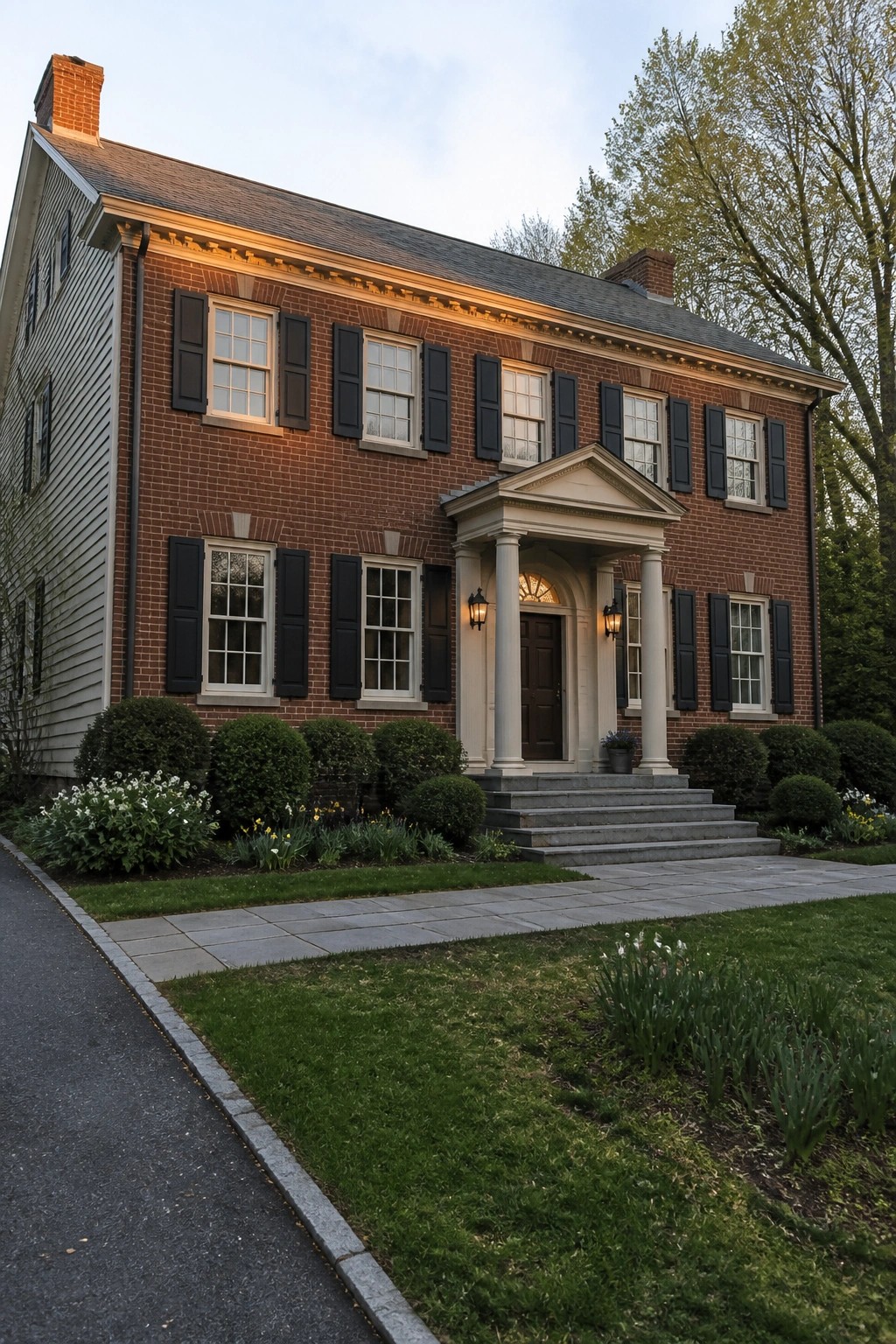
A portico with columns and a simple pediment gives a red brick house a clear sense of order. It pulls the whole front together without needing extra decoration, and it works especially well when the brick is the main material.
This approach suits traditional neighborhoods where homes already lean classic. Keep the shutters dark and the trim light so the entry stays the main point rather than competing with too many other details.
Brick Arch Surrounds for Front Doors
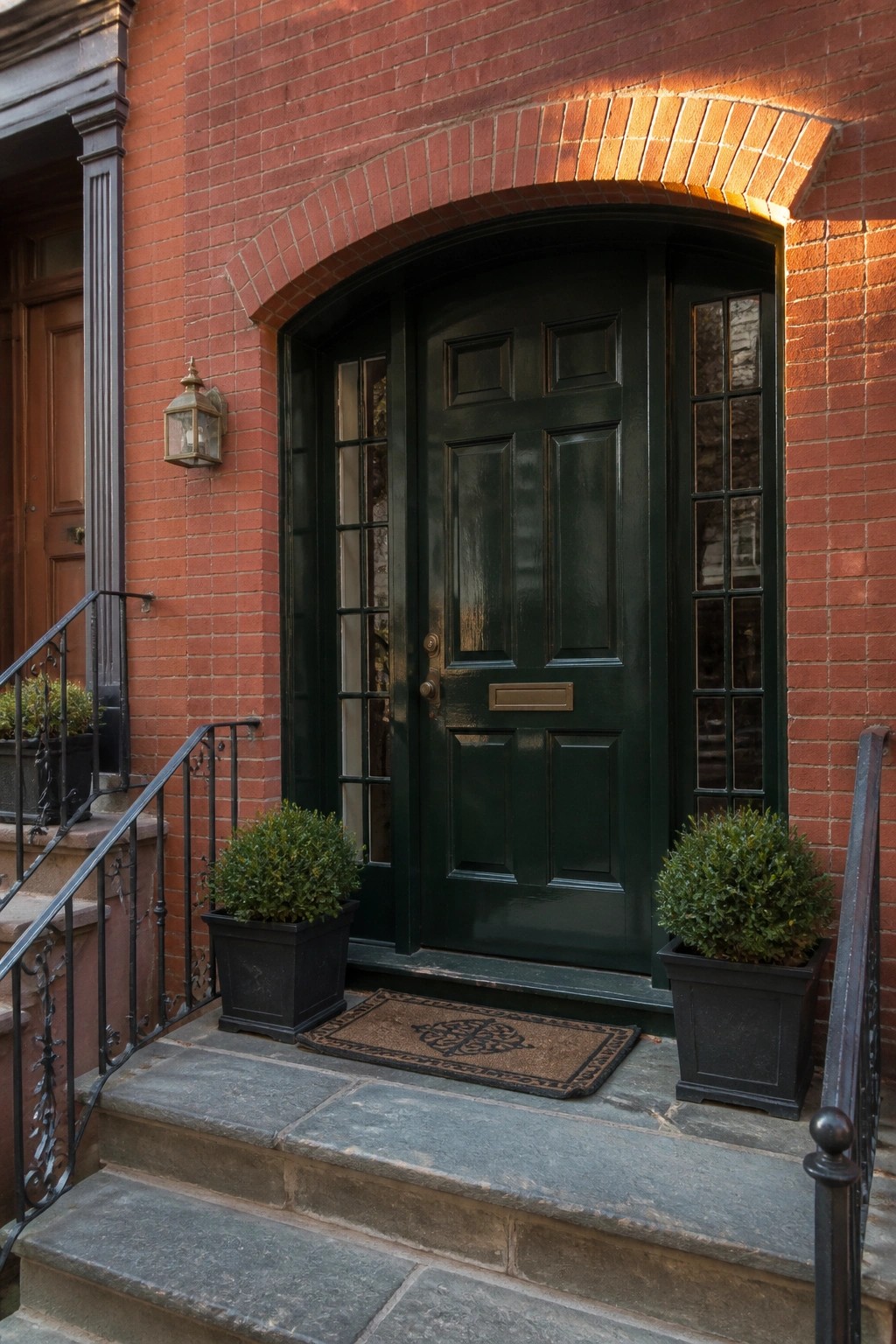
An arched brick surround gives the front door more presence on a red brick house. It breaks up the flat wall surface and creates a natural focal point without extra trim or ornament. The curve also softens the overall look while still feeling solid and traditional.
This approach suits older neighborhoods where the houses already carry simple brick detailing. Match the arch to the existing brick, keep the door color deep and solid, and add just enough sidelight glass to let light in. Too wide an arch can throw off the proportions, so stay close to the door width.
Wood Slat Screens on Brick Homes
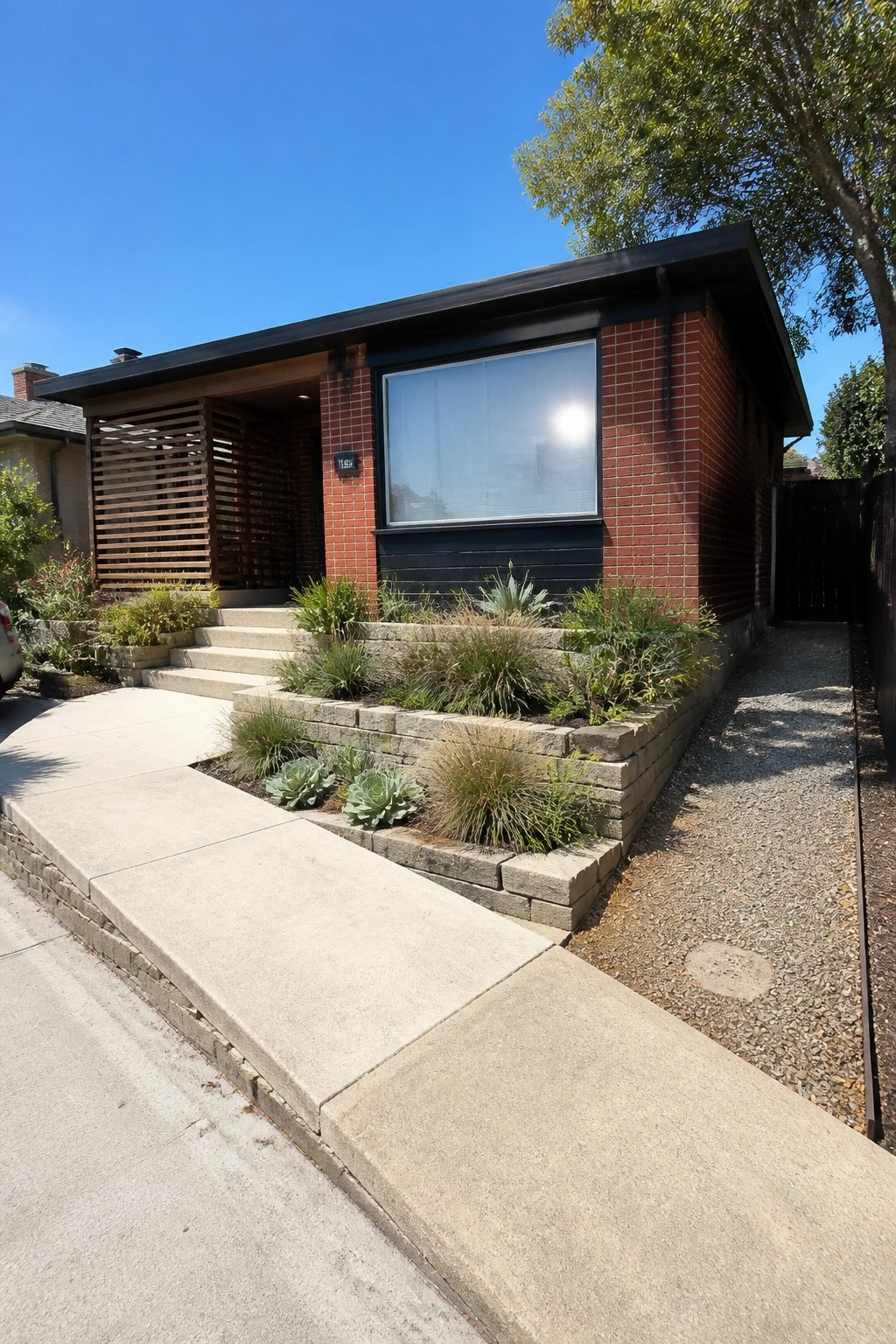
Wood slat screens work well on red brick exteriors because they add texture and a bit of separation at the entry without making the front feel closed in. The horizontal lines break up the solid brick wall and bring in a natural material that keeps the whole look balanced rather than too stark.
This approach suits homes that want a touch more privacy near the door while still fitting into a traditional neighborhood. Use a simple wood tone and even spacing so the screen feels like a natural extension of the brick rather than an add-on.
Brick Planters That Match the House
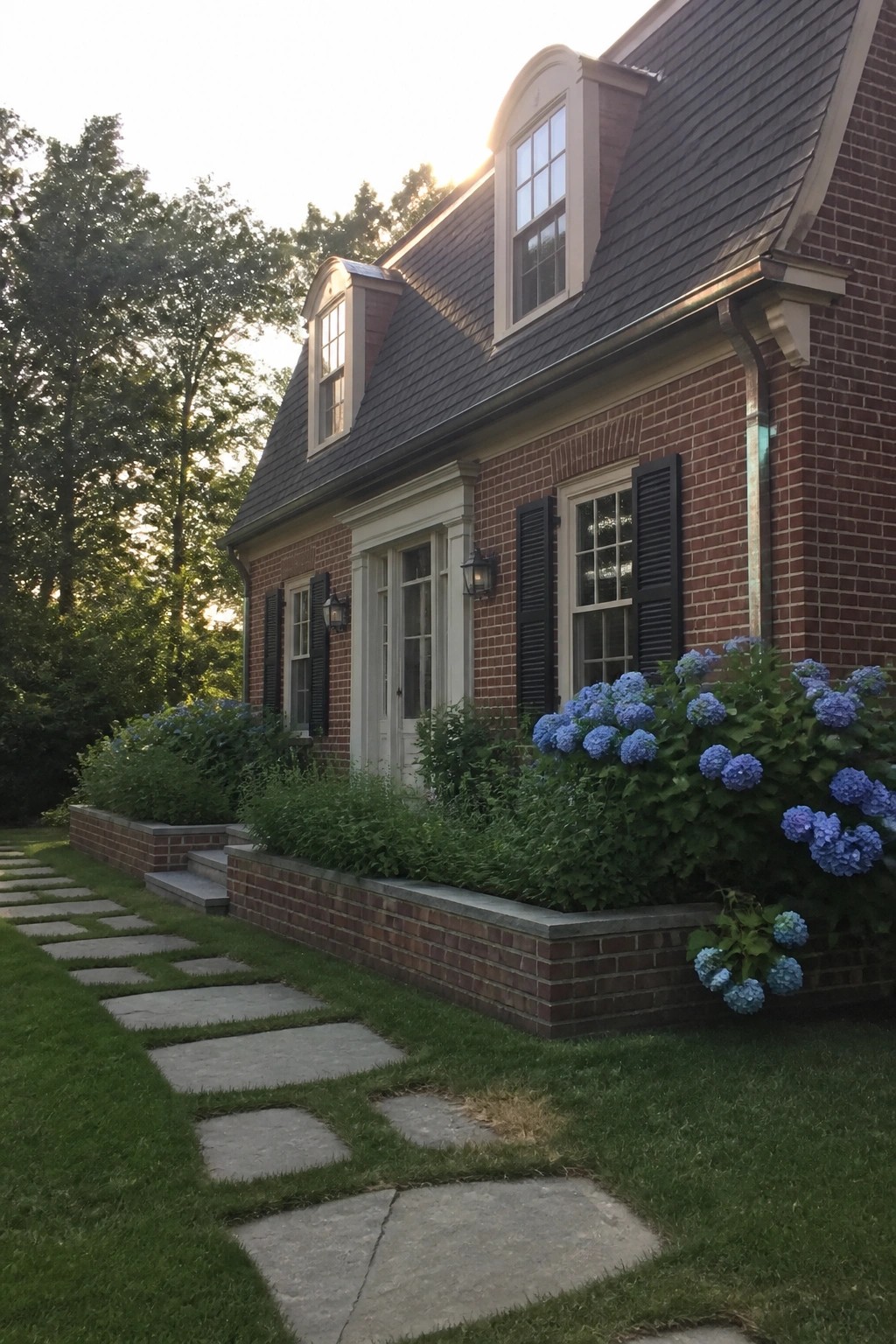
One simple way to make a red brick house feel more settled is to use the same brick for low raised beds along the front. It keeps the materials consistent so the house and garden read as one piece instead of separate parts.
This works best on traditional homes where you want the foundation to look intentional. Keep the beds narrow and plant them with shrubs or flowers that stay below the windows so the brick detail stays visible without crowding the facade.
Light Entry Trim Around Dark Front Doors
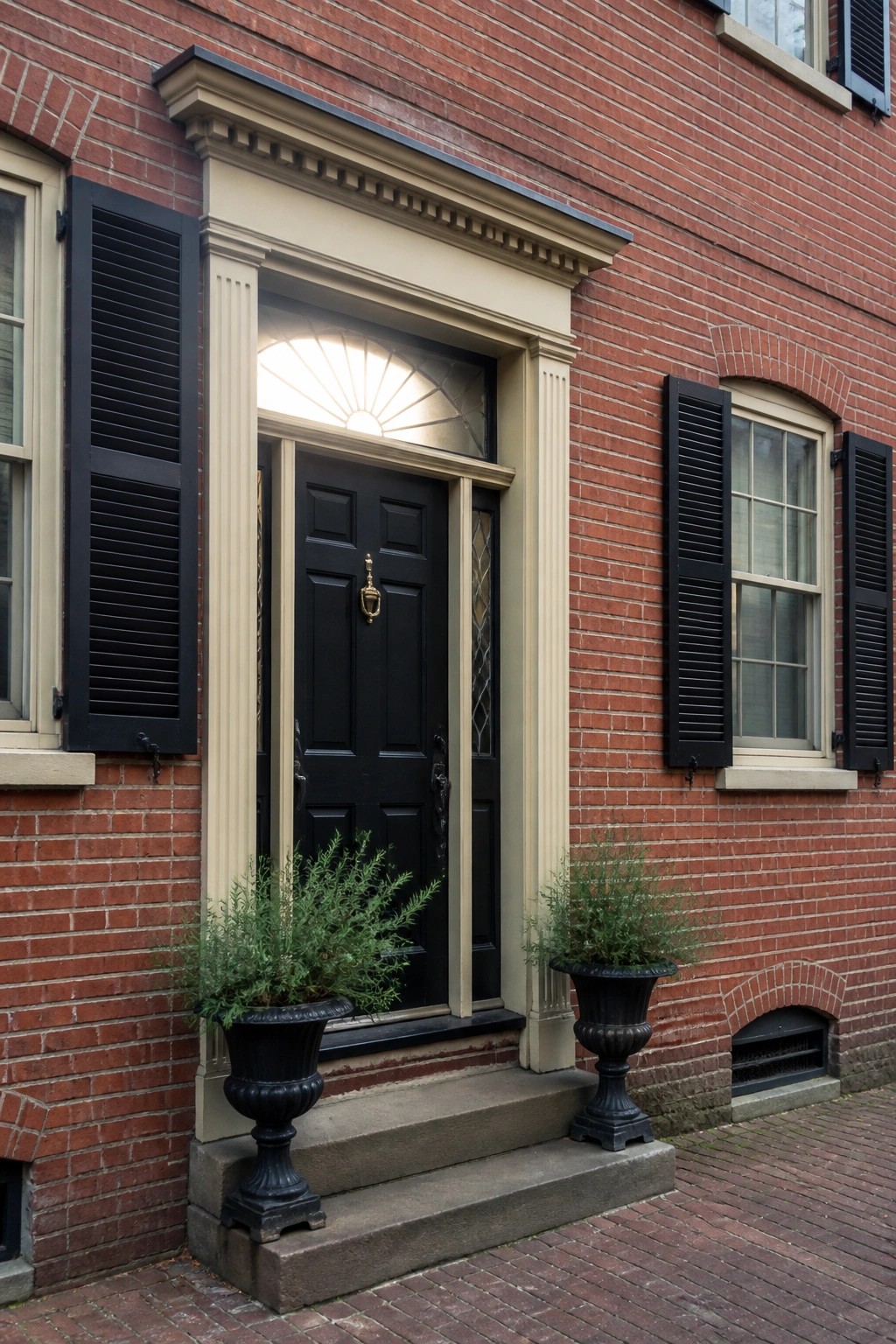
A dark front door stands out nicely against red brick when it sits inside a lighter surround. The contrast keeps the entry from blending into the wall, and the simple classical details around the door add a bit of structure without feeling fussy.
This approach works best on traditional homes where the brick already carries most of the color. Keep the surround in a soft off-white or cream, match the shutters to the door, and place matching planters at the base of the steps if space allows.
String Lights Over Brick Patios
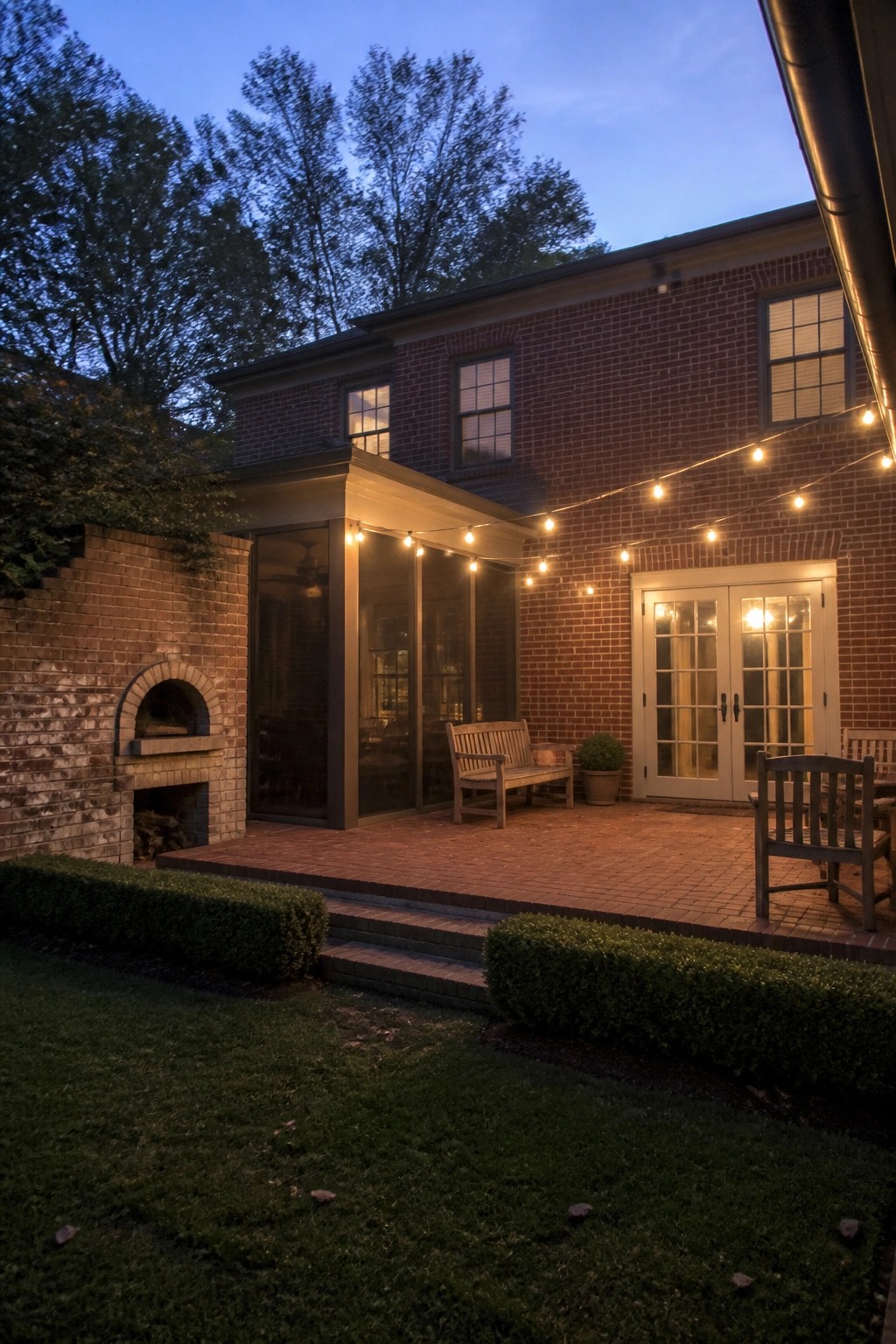
String lights give a brick patio a simple way to stay useful once the sun goes down. They create a soft overhead glow that makes the seating area feel separate from the rest of the yard without adding walls or heavy structures.
This approach works best on traditional brick homes where the warm bulbs play off the masonry rather than compete with it. Run the lights along the edge of the roof or between posts so they cover the main chairs and table without blocking the doors.
Welcoming Front Porches for Brick Homes
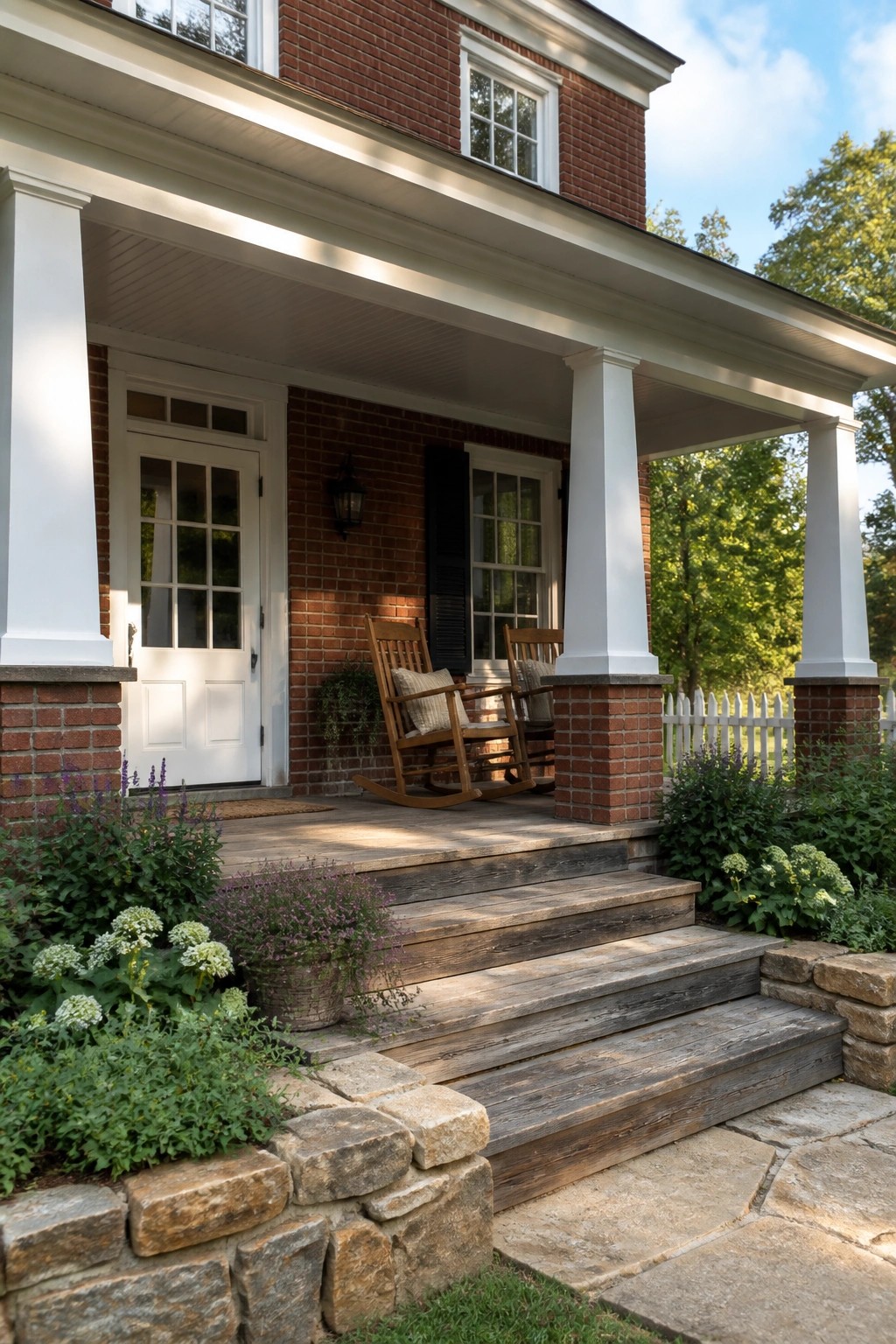
A front porch adds a welcoming layer to a red brick house without needing much extra detail. The open structure and simple wood elements help the entrance feel approachable while keeping the overall look grounded in tradition.
This works best on homes in older neighborhoods where people still sit outside. Keep the furniture basic, use natural wood tones, and avoid crowding the space with too many extras so the porch stays easy to maintain and use.
Arched Brick Window Surrounds
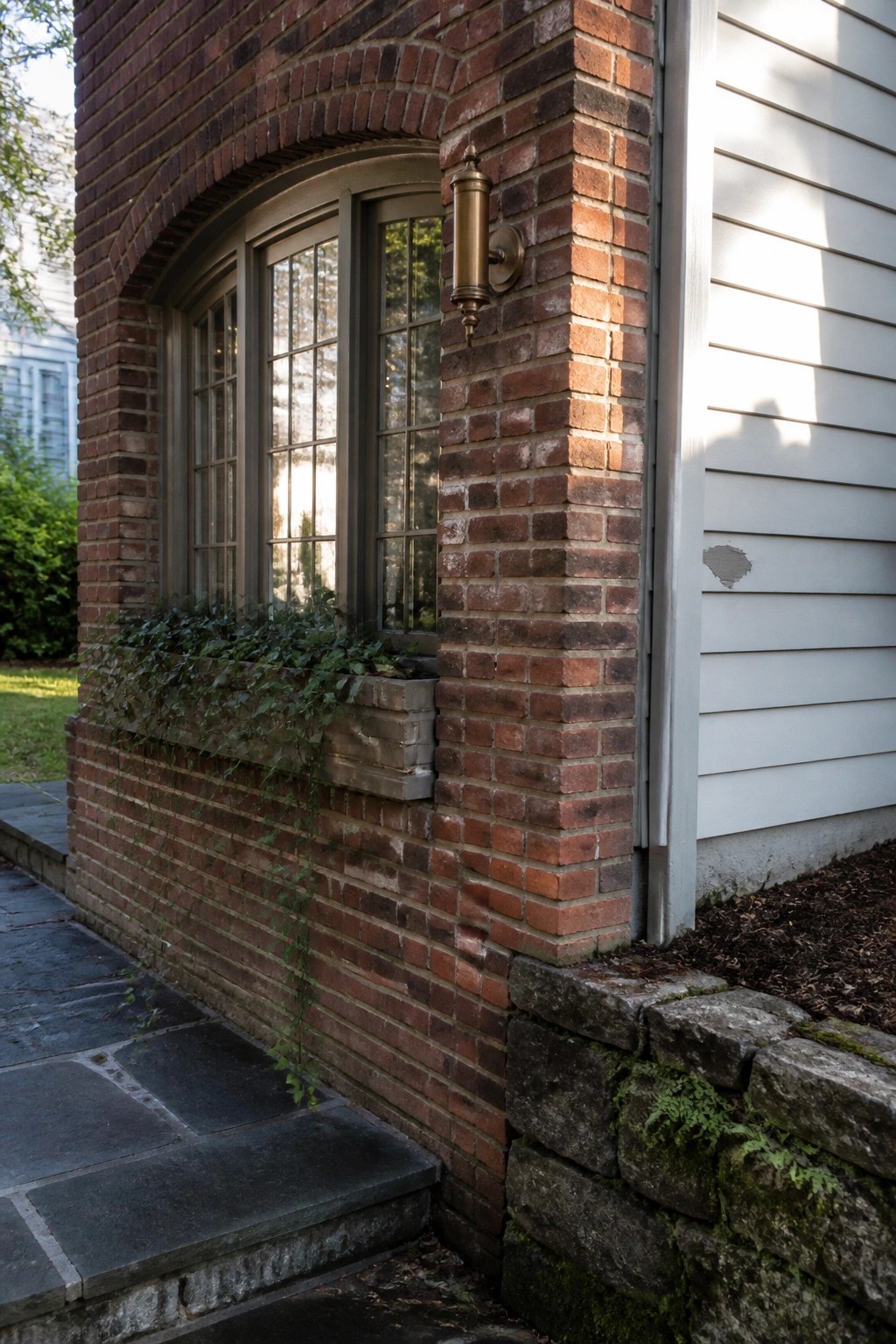
Arched brickwork around windows gives a red brick house more presence without needing extra trim or ornament. The curve softens the straight lines of the brick and helps the facade feel settled and traditional rather than flat.
This approach works best on homes in established neighborhoods where the goal is to blend with older styles. Match the brick and mortar closely so the arch reads as part of the original wall instead of an add-on, and keep any plantings low so they do not hide the detail.
Black Front Doors That Anchor Brick Exteriors
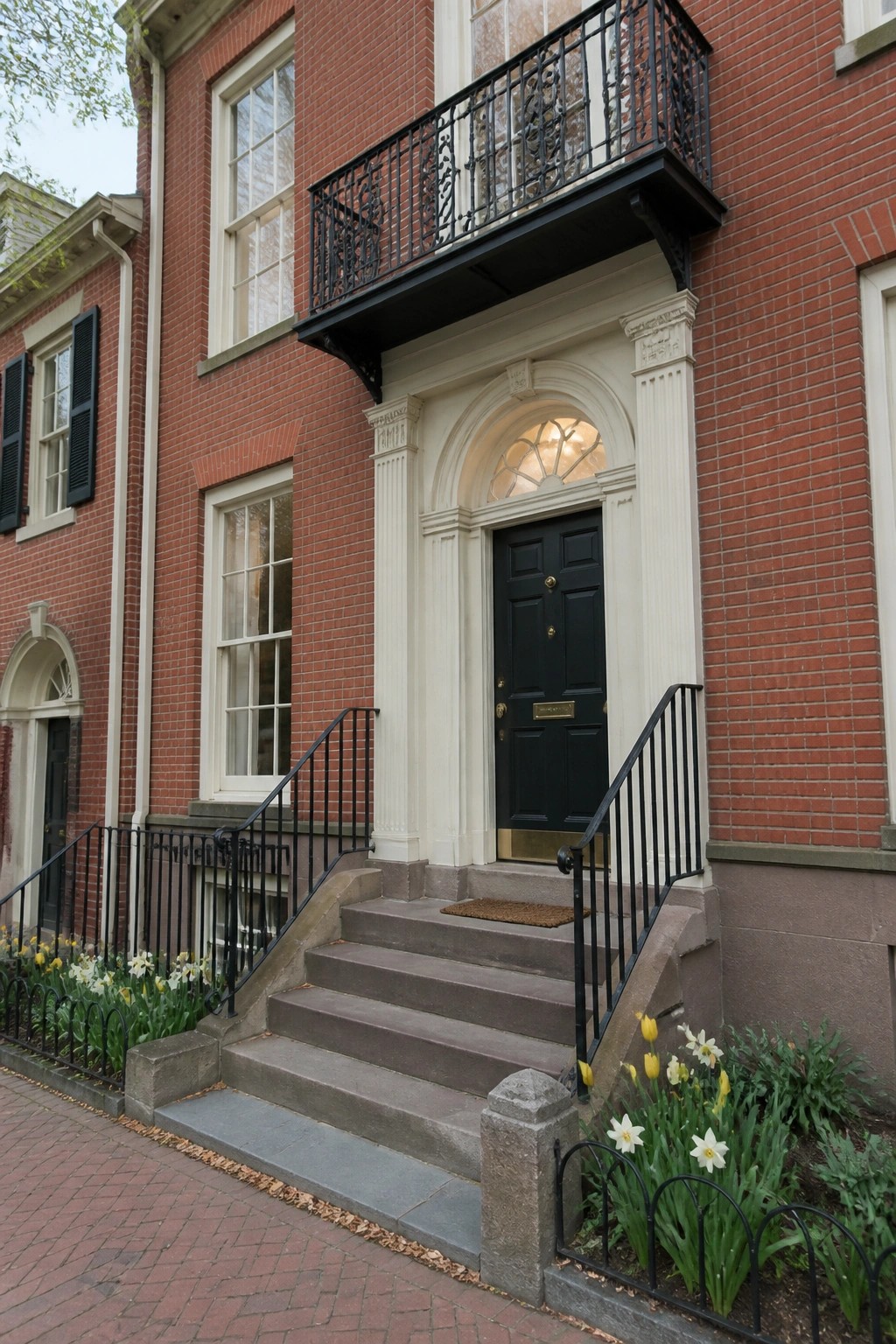
A dark front door gives a red brick house a clear focal point right at the entry. The contrast makes the door easy to spot from the street and keeps the facade from looking flat. White trim and columns around the opening help that contrast stand out without adding much extra detail.
This works best on traditional homes where you want the entry to feel solid and welcoming. Use a deep black or charcoal door with simple hardware and let the brick and trim do the rest of the work.
Red Brick With White Trim
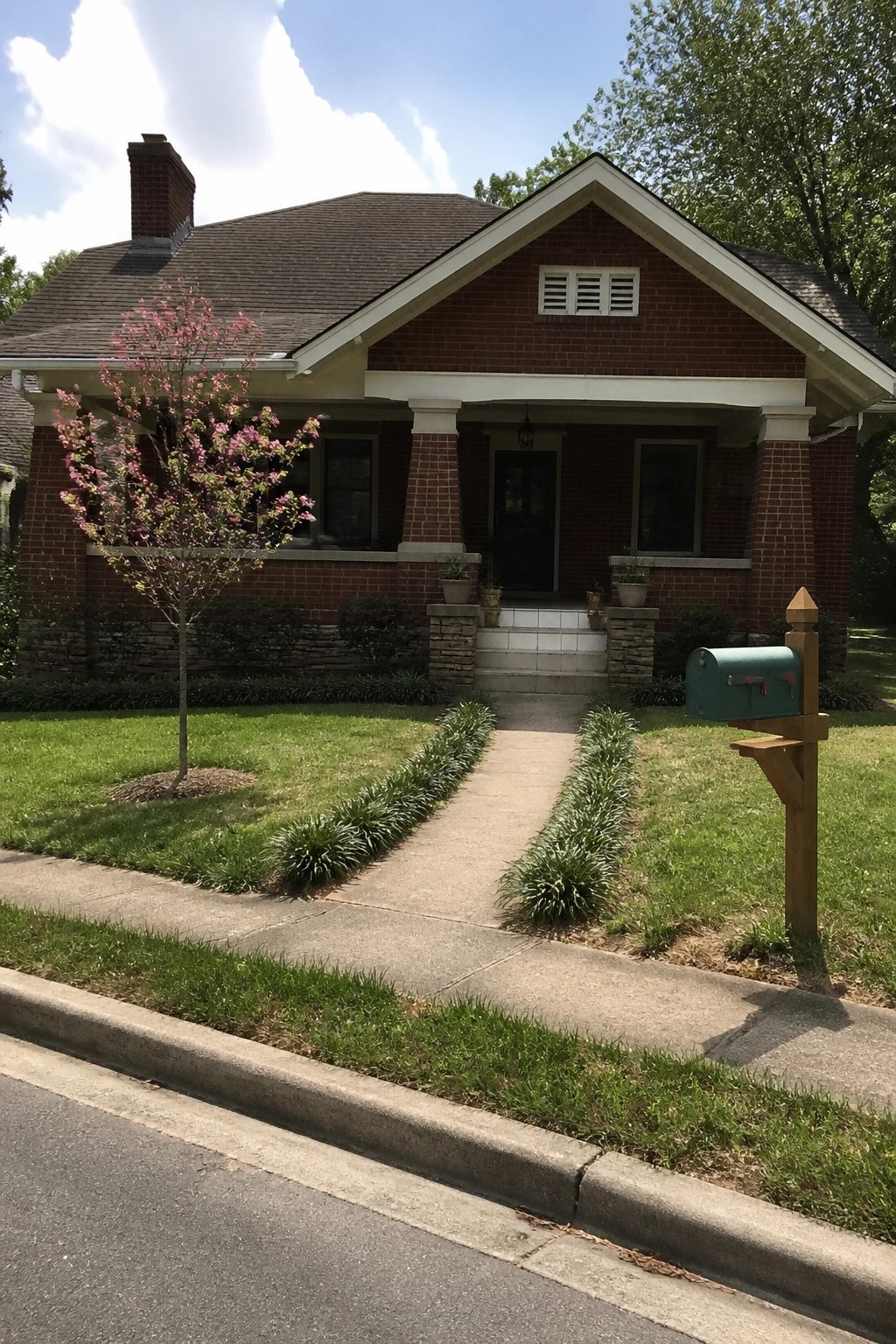
Red brick paired with white trim gives a house that solid, settled look that works in almost any traditional neighborhood. The contrast keeps the facade from feeling heavy while the brick itself adds warmth and texture that holds up over time.
This approach suits homes with simple gable roofs and balanced window placement. Keep the trim crisp and limit other colors so the brick stays the main feature.
Centered Entries On Red Brick
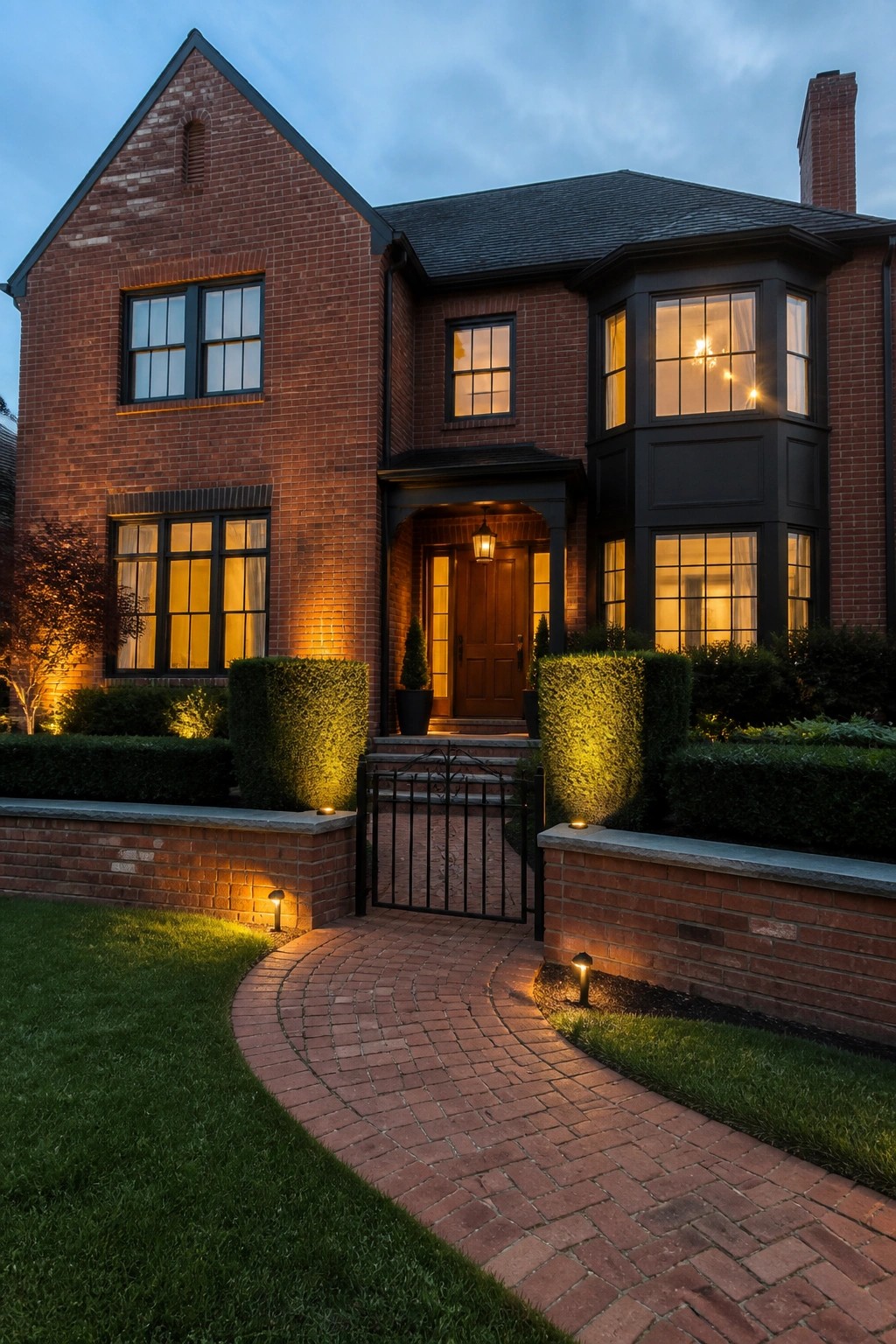
A centered entry keeps the whole front of a red brick house feeling balanced and easy to read. The door sits right in the middle with a simple overhang and one light overhead, so nothing competes for attention.
This layout works best on traditional homes where the brick already carries the main color. Use a wood door with dark trim around the windows and skip extra ornament on the facade. It stays practical and ages well in any neighborhood setting.
A Stone Ledge for Potted Plants
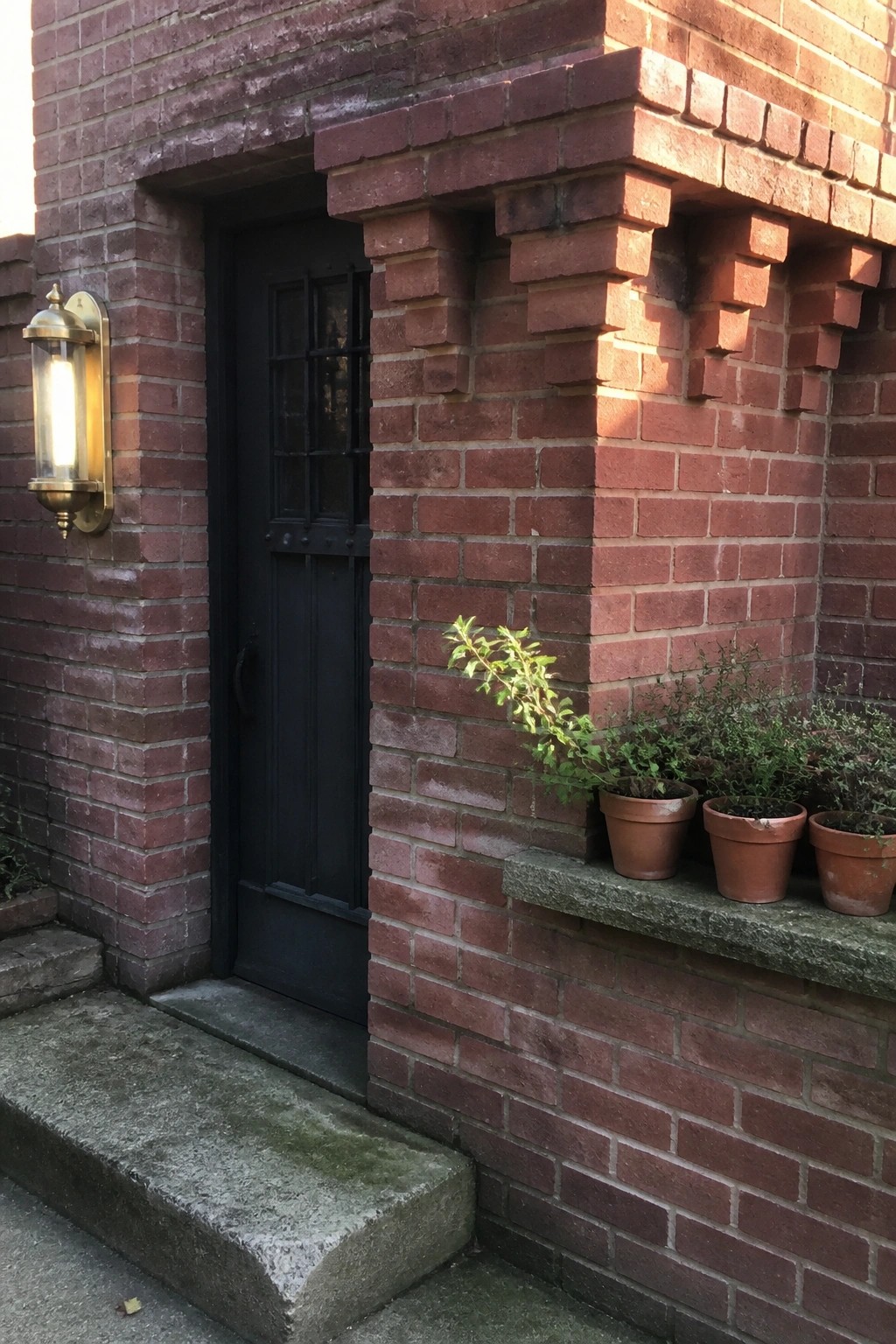
A low stone ledge built along the base of a brick wall gives you an easy spot for a few pots without crowding the steps or doorway. It keeps the planting low and contained so the brick and door stay the main focus.
This works best on older brick homes in traditional neighborhoods where you want some greenery near the entry but still need a clean look. Use plain clay pots and limit the number so the ledge does not start to feel cluttered.
Red Brick With Clean Garage Accents

Red brick stays timeless when the garage door is kept light and plain. A white door set into the brick wall stops the front from looking too heavy or closed off.
This works best on traditional homes where you want the brick to stand out without extra trim or color. Gravel with stepping stones in front softens the approach and keeps maintenance low.
Classic Rounded Entryways for Brick Homes
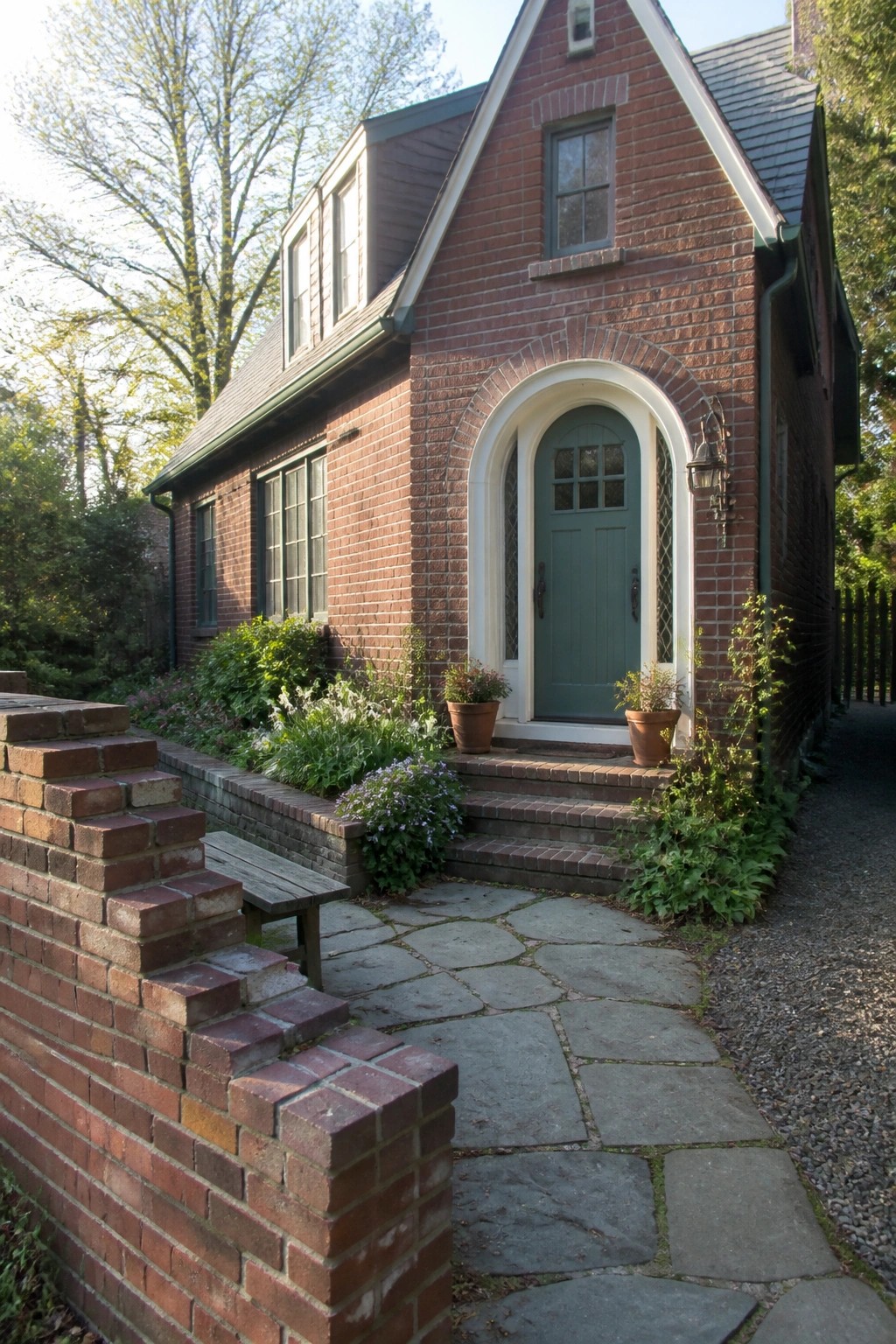
An arched entryway stands out on a red brick house because it creates a clear focal point without needing extra ornamentation. The curve breaks up the flat wall surface and makes the door feel more inviting right away.
This approach works best on smaller or medium sized homes in traditional neighborhoods. Keep the arch simple and paint it a light color to contrast with the brick, then add a door in a soft shade like green or blue.
Red Brick With a Wraparound Porch

Red brick still holds its own in traditional neighborhoods because it ages well and needs little upkeep. A wraparound porch adds real presence to the front without overcomplicating the look, and the columns give the brick some breathing room so the whole house does not feel too heavy.
This works best on homes that already have decent width at the front. Keep the porch railing and columns painted a light color so they contrast cleanly with the brick. It suits older blocks where you want the house to feel settled rather than brand new.
White Window Trim That Brightens Red Brick
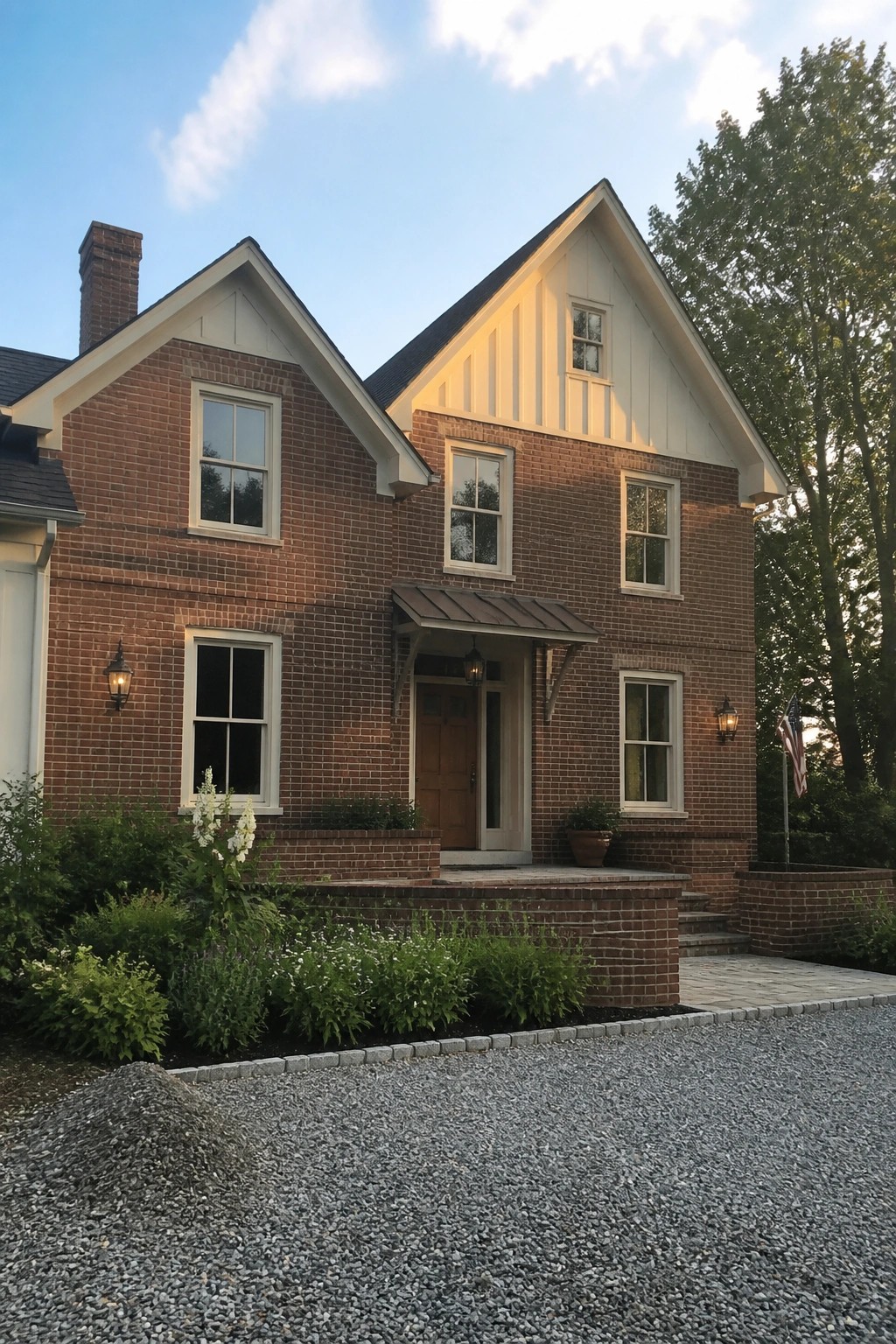
Red brick paired with white trim gives a house that clean, settled look that holds up over time. It reads as traditional without trying too hard, and the contrast keeps the facade from feeling heavy or flat.
This approach works best on homes with straightforward rooflines and gables. Keep the trim crisp and limit extra ornament so the brick stays the main feature.
Frequently Asked Questions
Q: How do I pick a brick shade that fits right in with older homes nearby? A: Go for a red with some natural variation and a bit of weathering in the tone. Walk the block first and match the range you see on the houses already there. This keeps your place from looking brand new in an established spot.
Q: What is the easiest way to keep red brick looking good year after year? A: Hose it down a couple times a season to knock off loose dirt. Check the mortar lines every spring and tuck point any spots that start to crumble. That small step stops bigger repairs later.
Q: Should I add shutters or trim? A: Stick with simple wood shutters in a soft white or deep green. They give the brick some contrast without fighting the traditional style around it.
