

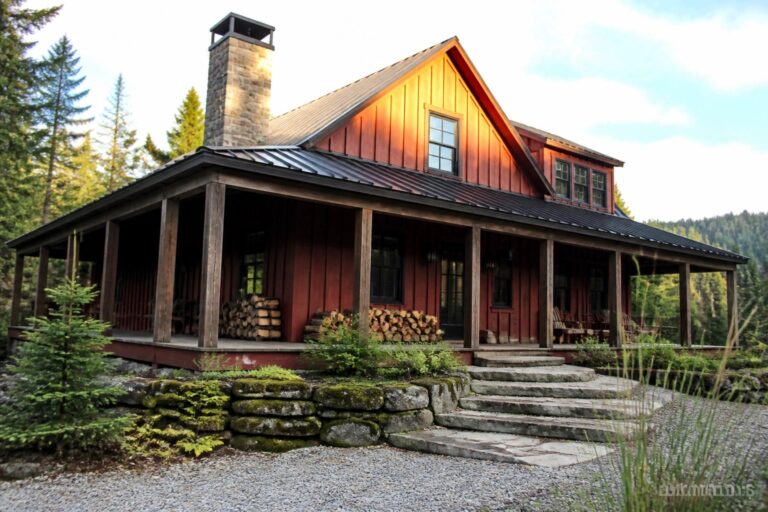
I have always noticed that red cabins can either blend into forest edges or stand apart depending on how the siding and trim are handled against the trees.
Materials like weathered wood or painted boards change the way light hits the facade and how the whole structure reads from a distance on a mountain road.
Some choices just work better in person than they do in sketches.
Roof pitch and window placement also play a bigger role than most people expect when the cabin sits on uneven ground surrounded by evergreens.
I usually picture how the color might fade after a couple of winters before deciding if an idea is worth trying.
Red Siding for Forest Cabins
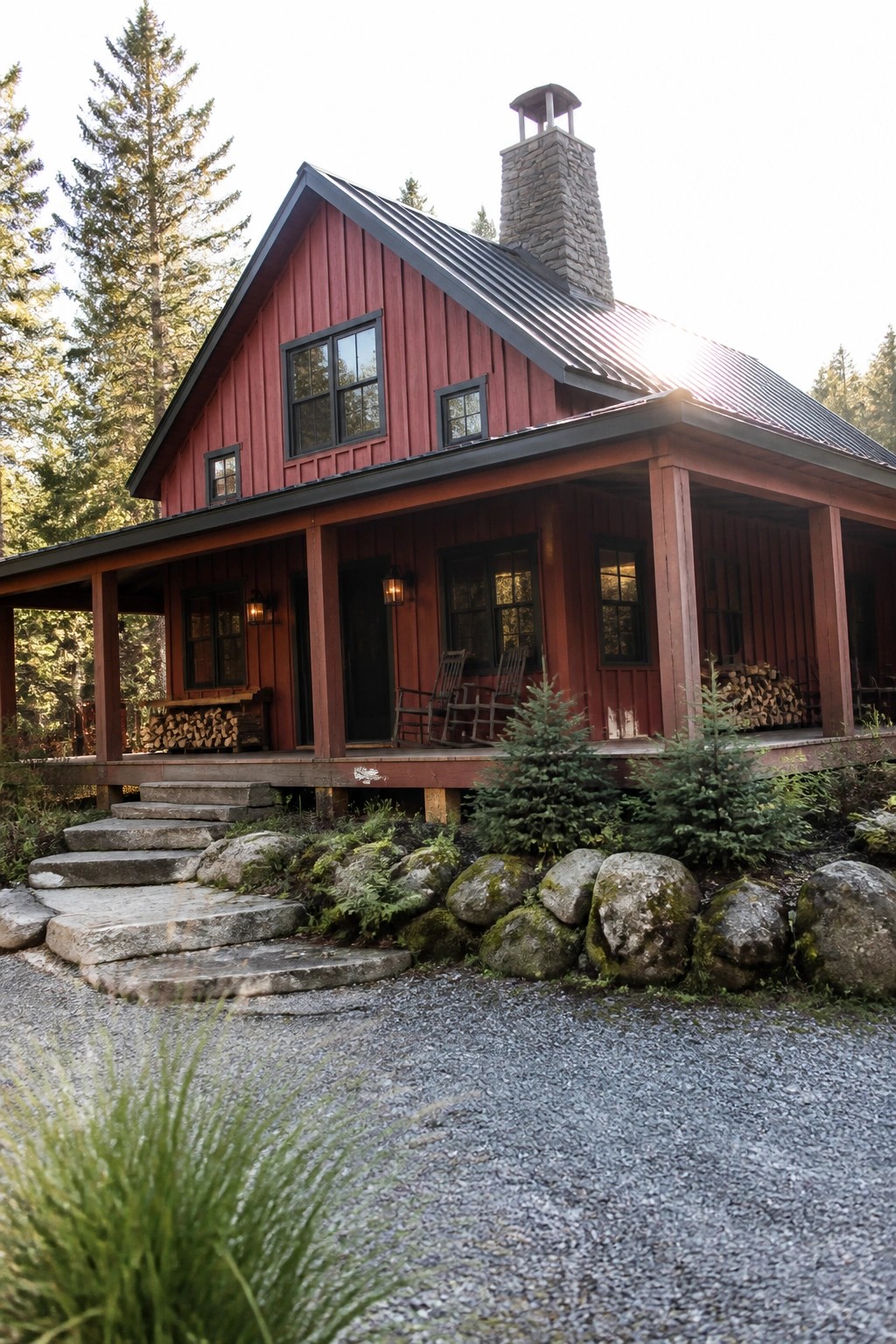
A deep red exterior color gives a cabin real presence without fighting the trees around it. The bold shade stands out just enough against the greens and browns of a wooded setting, and it keeps the house from fading into the background the way a lighter or darker color might.
This works best on simple cabin forms where the siding can be the main feature. Pair the red with a dark roof and a few stone accents so the whole look stays grounded. It suits mountain or forest homes that want some warmth but still feel at home in the landscape.
Red Siding for Forest Cabins
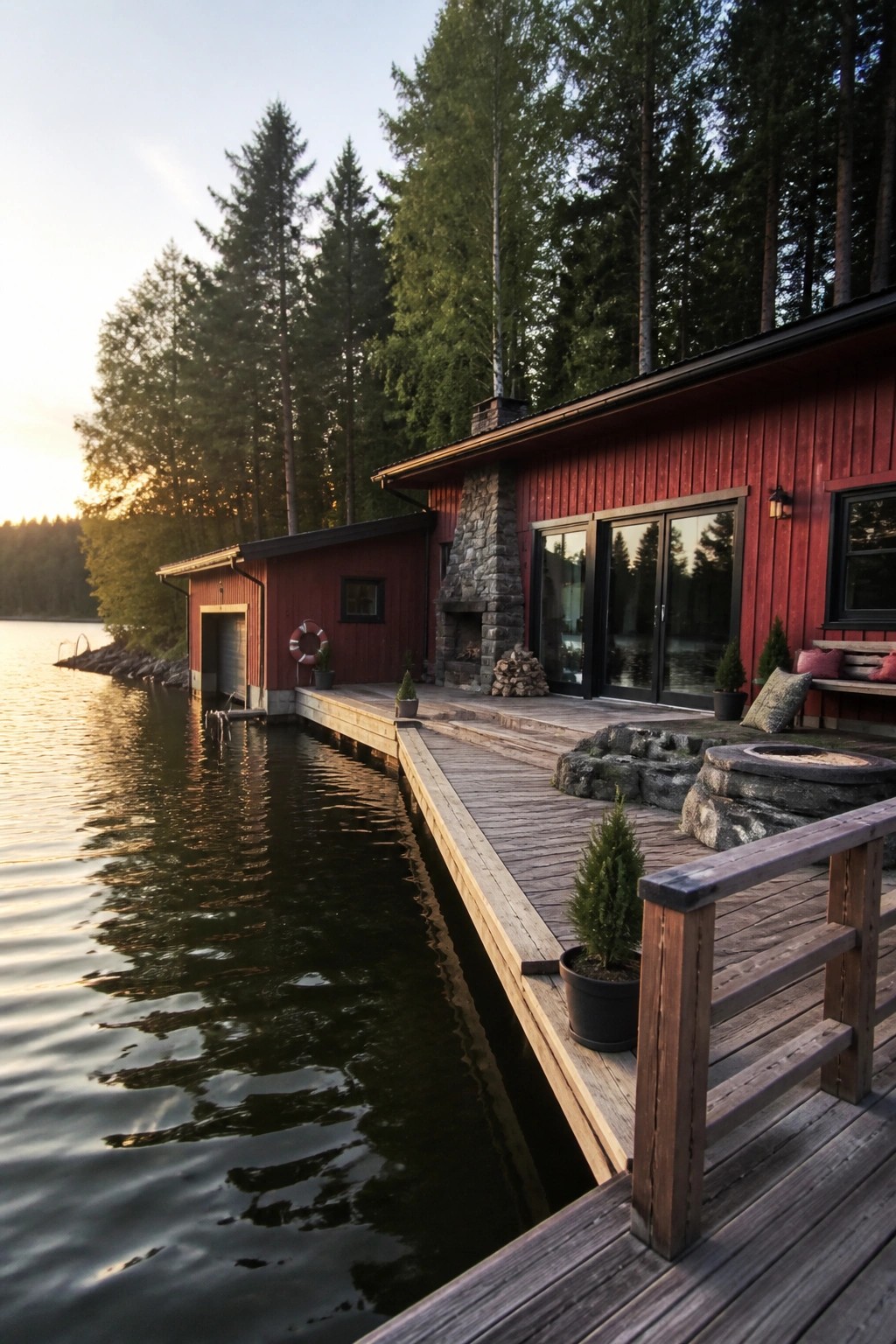
A strong red on the exterior walls helps a cabin stand out without fighting the trees around it. The color feels warm and settled once the sun starts to drop, and it pairs naturally with dark trim and stone details that keep the look grounded.
This approach works especially well on cabins with straightforward shapes and simple rooflines. Keep the red fairly saturated so it holds up against the green, and let the surrounding trees do most of the softening.
Deep Red Siding For Forest Cabins
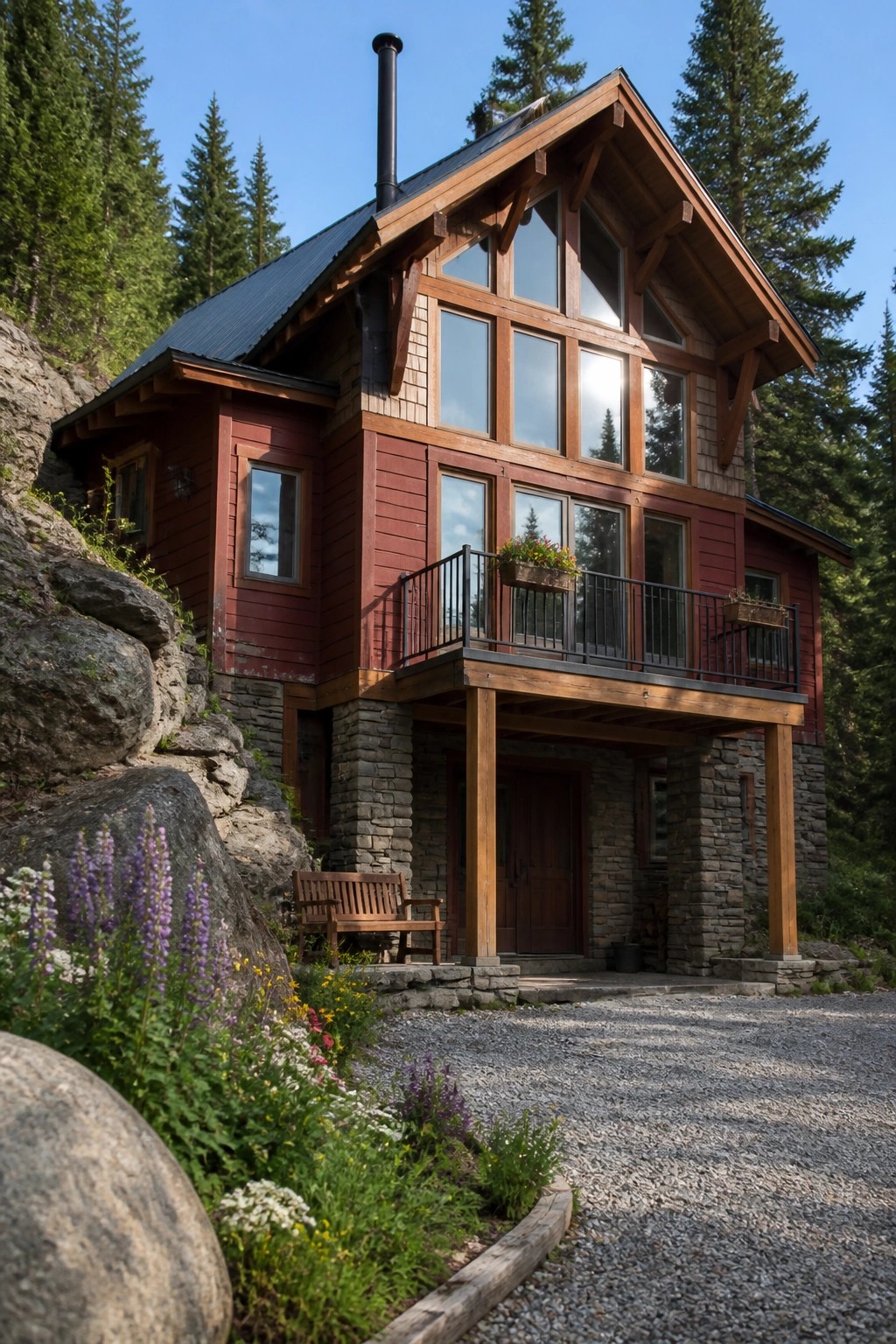
A deep red on the wood siding helps a cabin feel at home in thick woods and rocky slopes. The color adds warmth that stands out against green trees while still feeling tied to the natural setting.
This works especially well on cabins with a stone base or piers. Keep the roof and trim in darker shades so the red stays grounded instead of competing with the landscape.
Red Paint Suits Forest Cabins
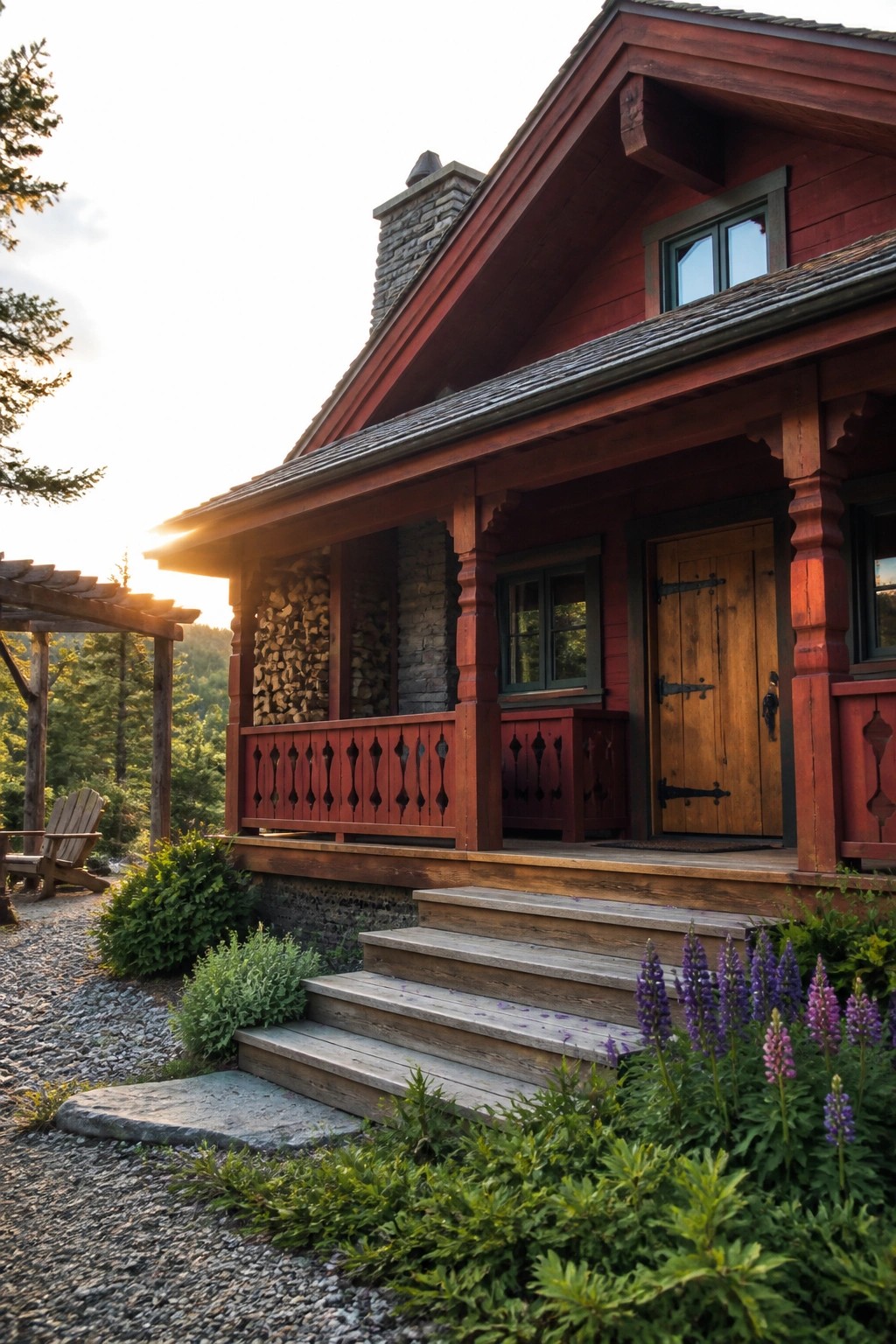
A deep red on the exterior walls helps a cabin feel at home among trees without fading into the background. The color adds warmth and makes the house easy to spot from a path or road, which works nicely in dense woods.
This choice fits smaller cabins best. Keep the trim, porch posts, and door in natural wood so the red stays balanced and does not feel too strong.
Red Siding On The Lower Walls
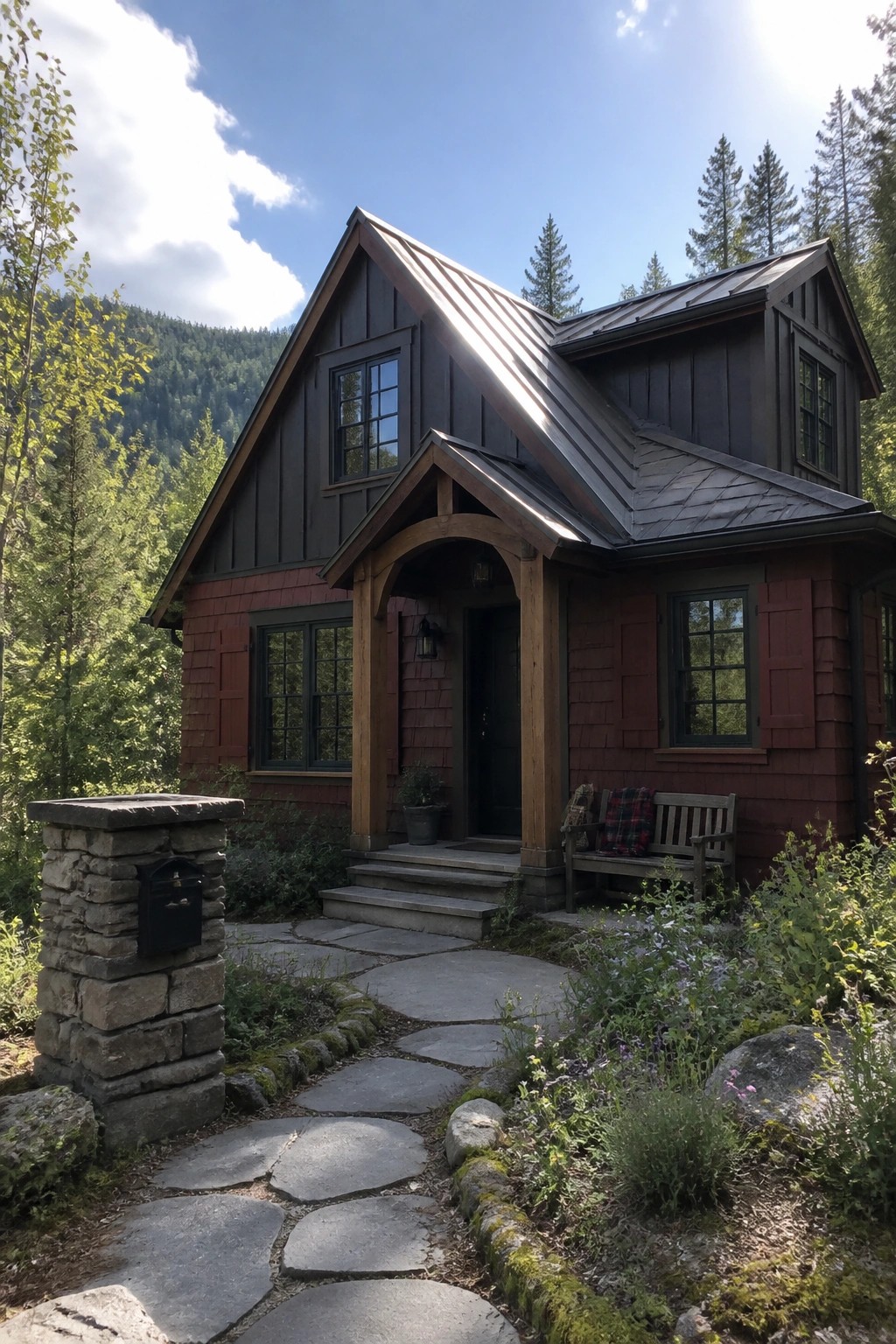
Red siding on the lower part of a cabin exterior adds warmth that stands out nicely against trees and shade. It keeps the house from disappearing into the forest while still feeling grounded. Many people like this split because the darker upper section helps the roofline feel lower and more settled.
This approach works best on smaller cabins or those set in dense woods. Keep the red rich rather than bright, and let the upper walls go dark gray or charcoal. The stone path and simple bench shown here fit right in without competing.
Red Paint on Forest Cabins
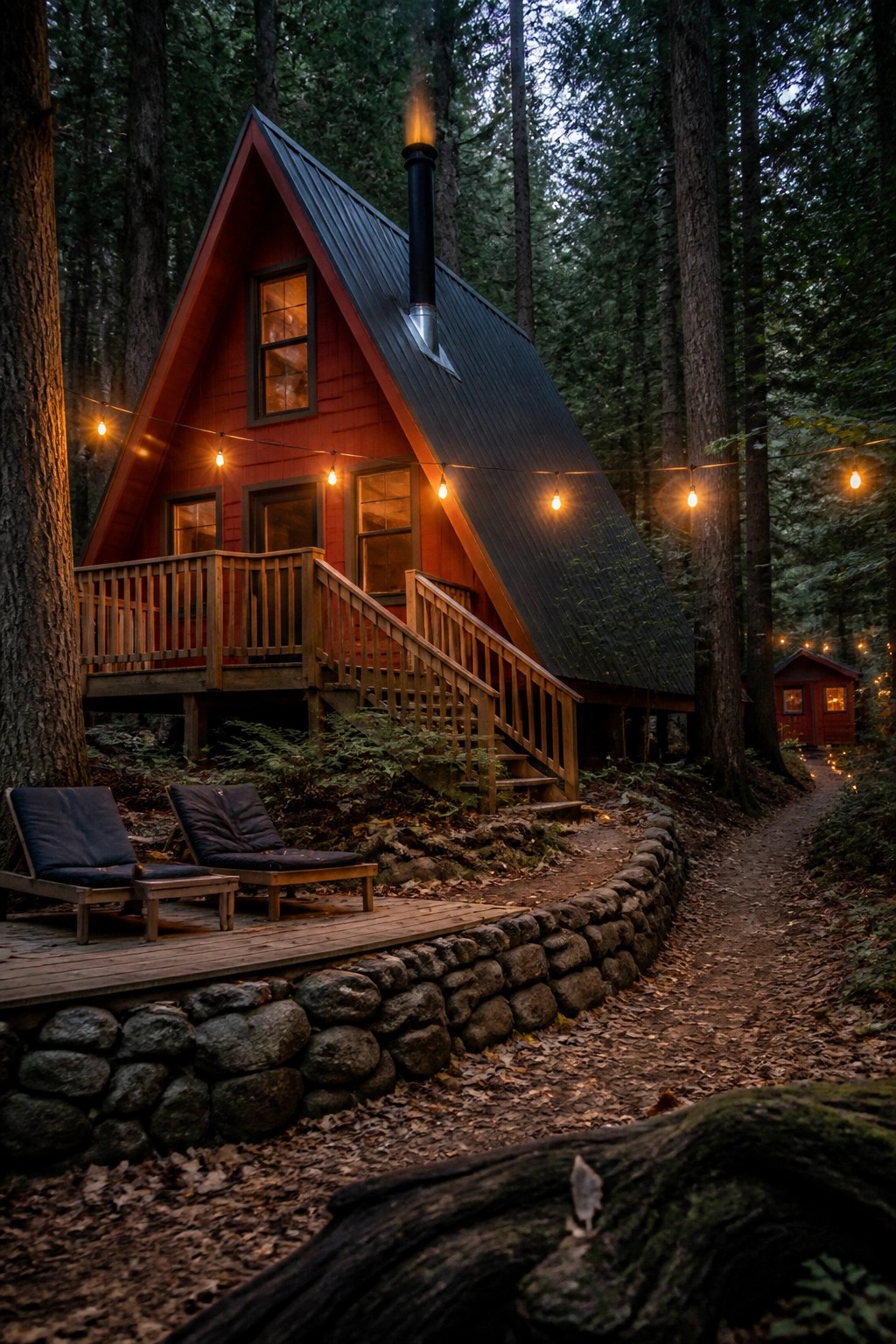
Red siding gives a cabin that warm, settled look even when the trees around it are dark and thick. It stands out just enough without fighting the woods, and the color holds up well through changing seasons.
This approach works best on smaller or simple shapes like A-frames. Keep the roof dark so the red does not feel too bright, and add a deck or path that blends into the ground cover.
Stone Bases With Red Siding
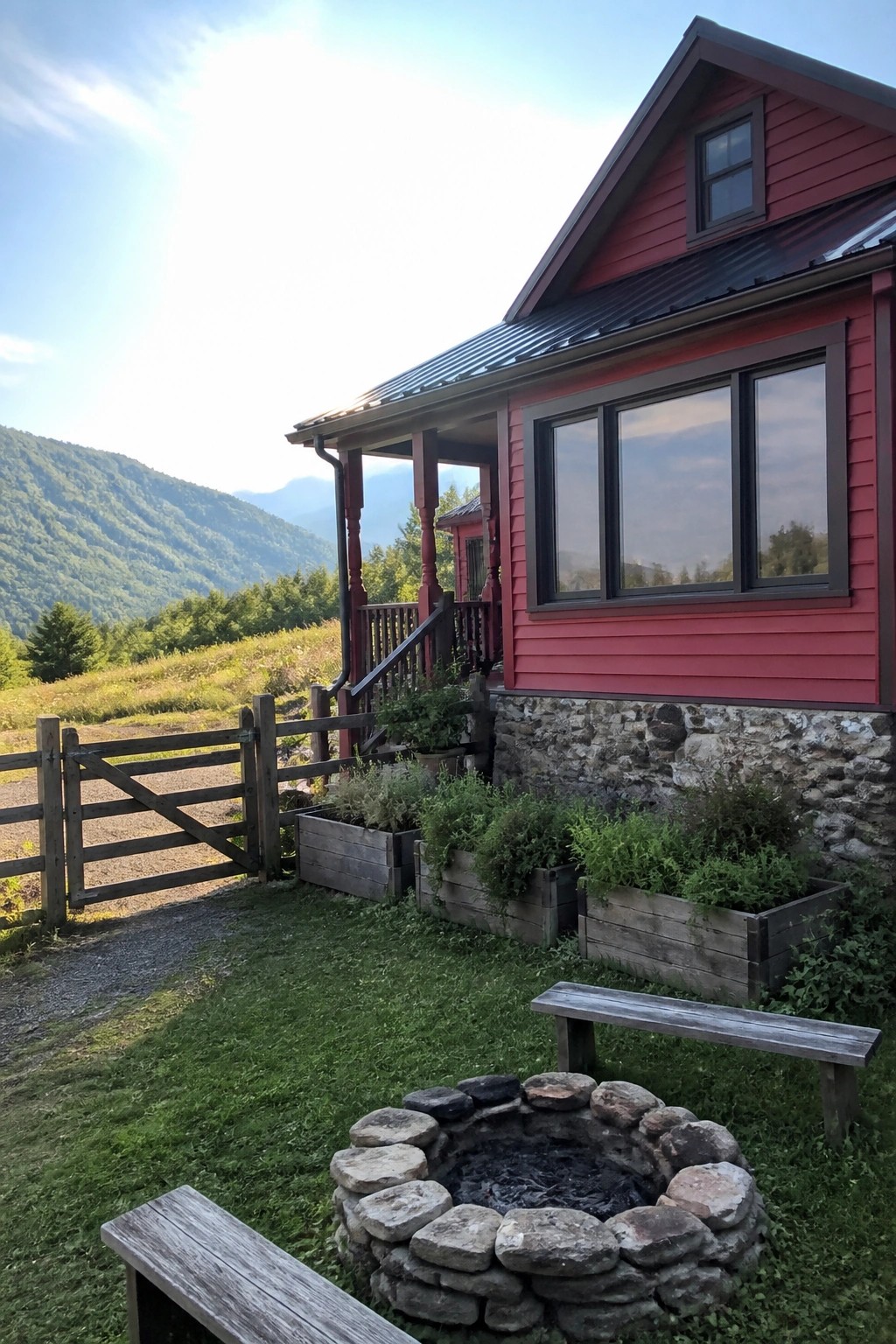
Pairing red siding with a stone foundation gives a cabin real weight in a mountain setting. The stone grounds the brighter color and keeps the whole exterior from feeling too light against the trees and rocks. It also echoes the natural materials already on the site.
This approach works best on cabins where the land slopes or has visible rock. Keep the stone low and local if you can, and let the red sit above it without extra trim. The mix stays simple and holds up well in rough weather.
Red Siding That Holds Its Own Outside
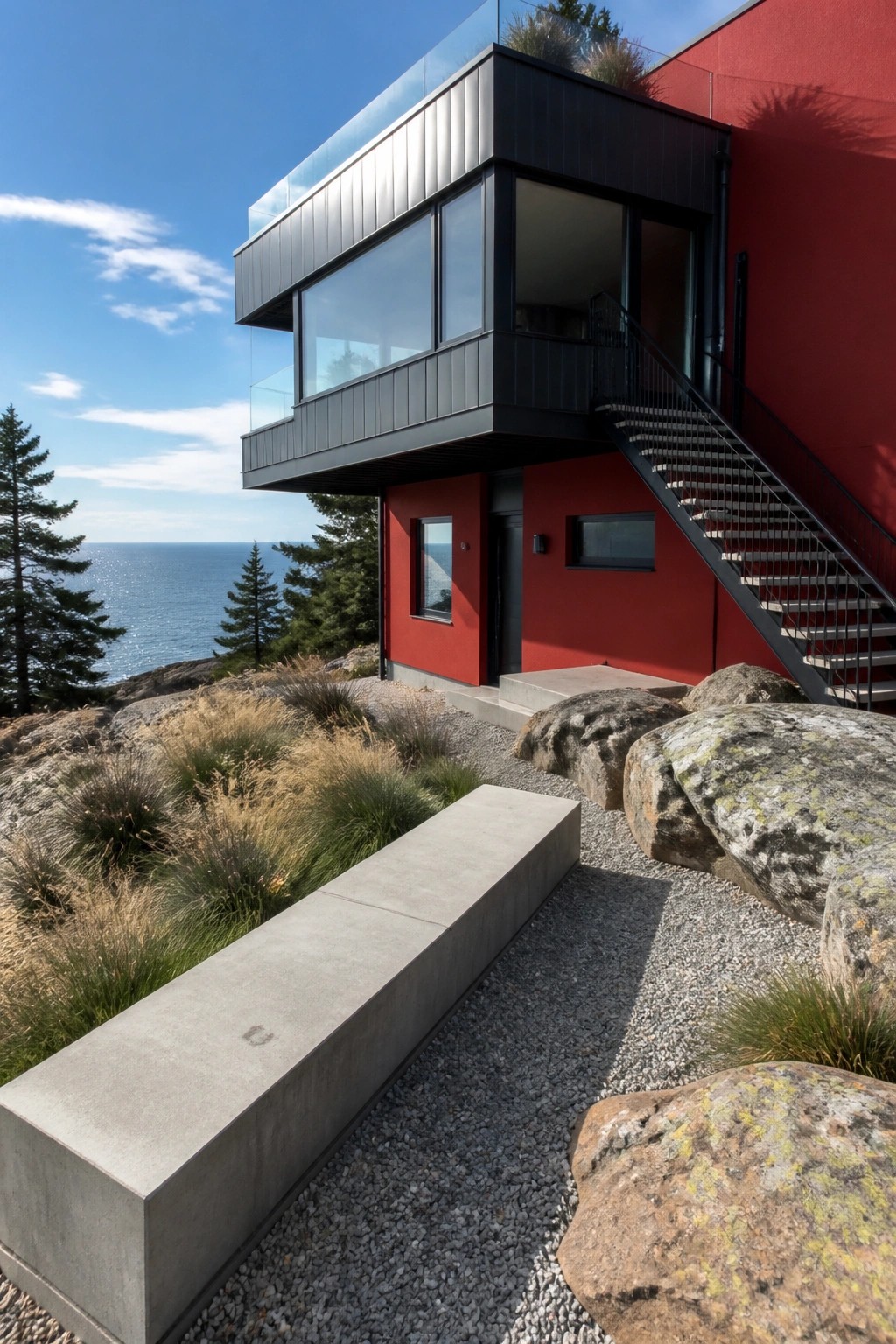
A strong red on the main walls gives a cabin real presence when the setting is mostly rock and trees. It stands out without looking out of place, and the color keeps the house from feeling small against the bigger landscape around it.
This works best on simple shapes with darker accents like black trim or metal details to balance the brightness. It suits homes in wooded or coastal spots where you want the building to feel welcoming but still tied to its surroundings.
Adding a Stone Base to Log Cabins
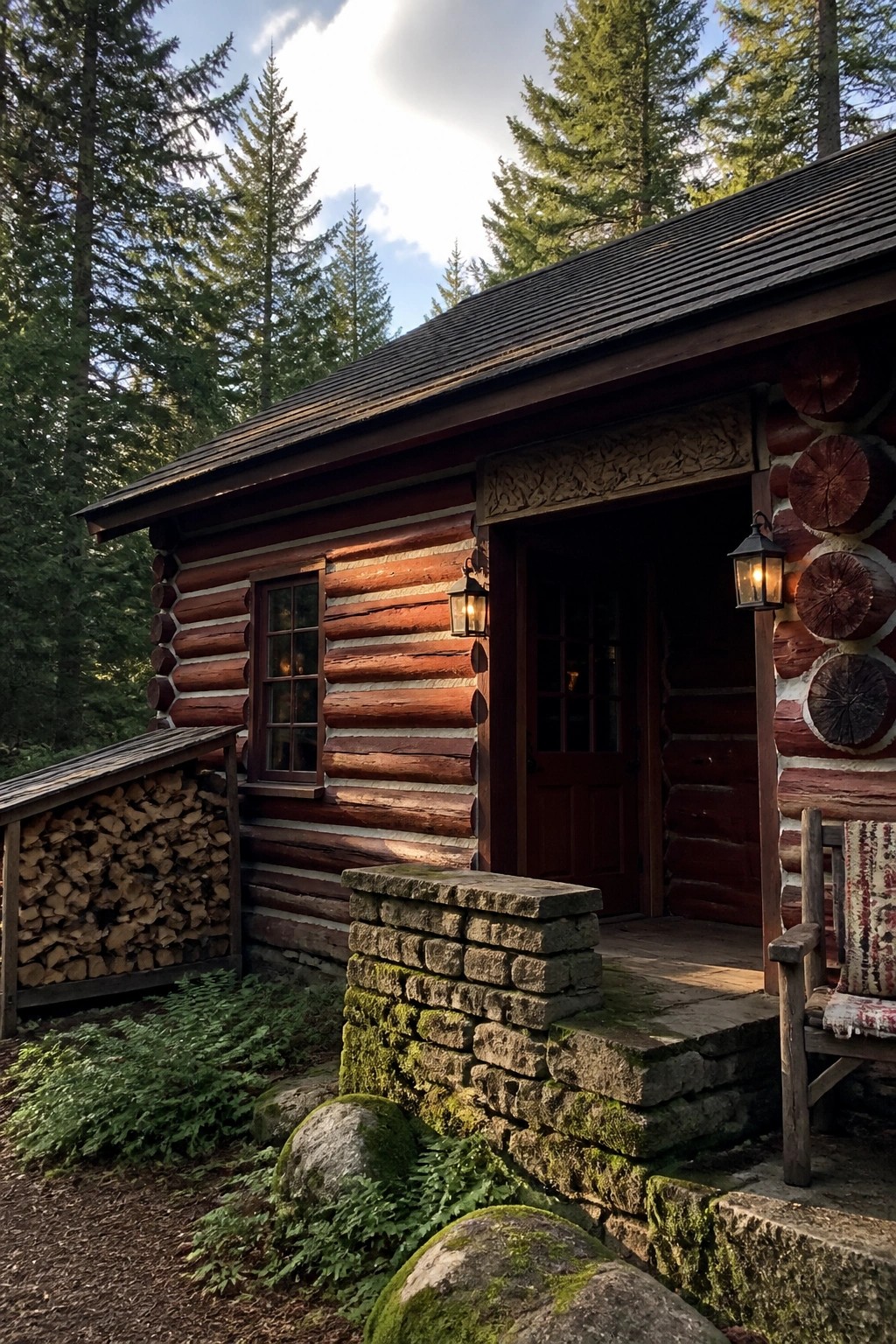
Many people like the look of a log cabin that sits on a low stone foundation instead of resting directly on the ground. The stone gives the structure a solid feel and helps it blend into the surrounding trees and soil without extra effort.
This approach works best on sloped sites or in areas with heavy rain and snow. The stone handles moisture better than wood and creates a natural transition between the cabin and the landscape. Keep the stone simple and local if possible so it does not compete with the logs.
Red Paint for Mountain Cabin Exteriors
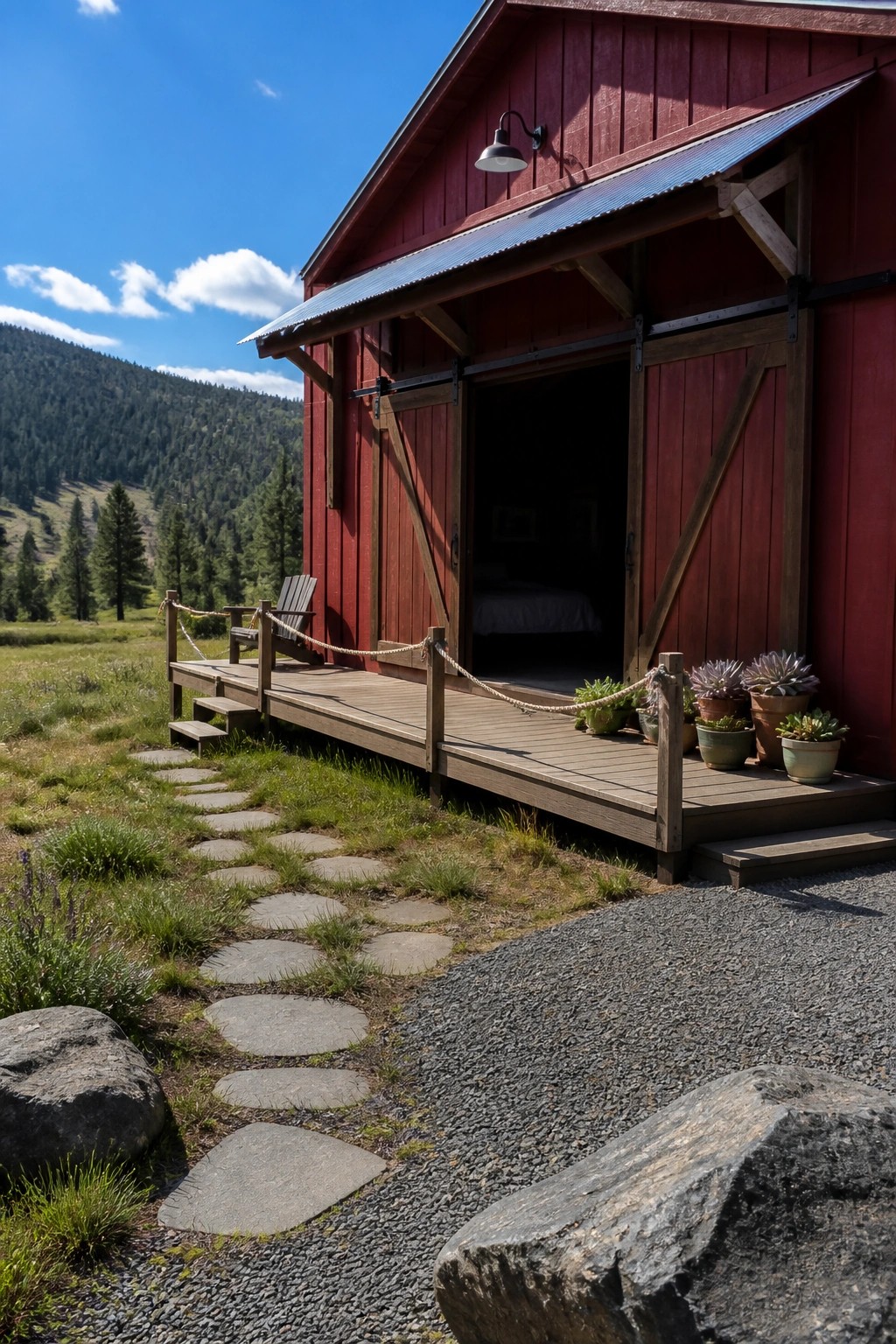
A deep red finish on the wood siding gives a cabin real presence without fighting the trees and hills around it. The color holds up well against changing light and blends into the landscape once the seasons shift, which is why it shows up so often in these settings.
It works best on simple shapes with few trim details, where the red can read as one strong block of color. Pair it with natural wood on the deck and posts so the whole thing still feels tied to the site instead of sitting on top of it.
Elevating Cabins on Supports for Sloped Sites
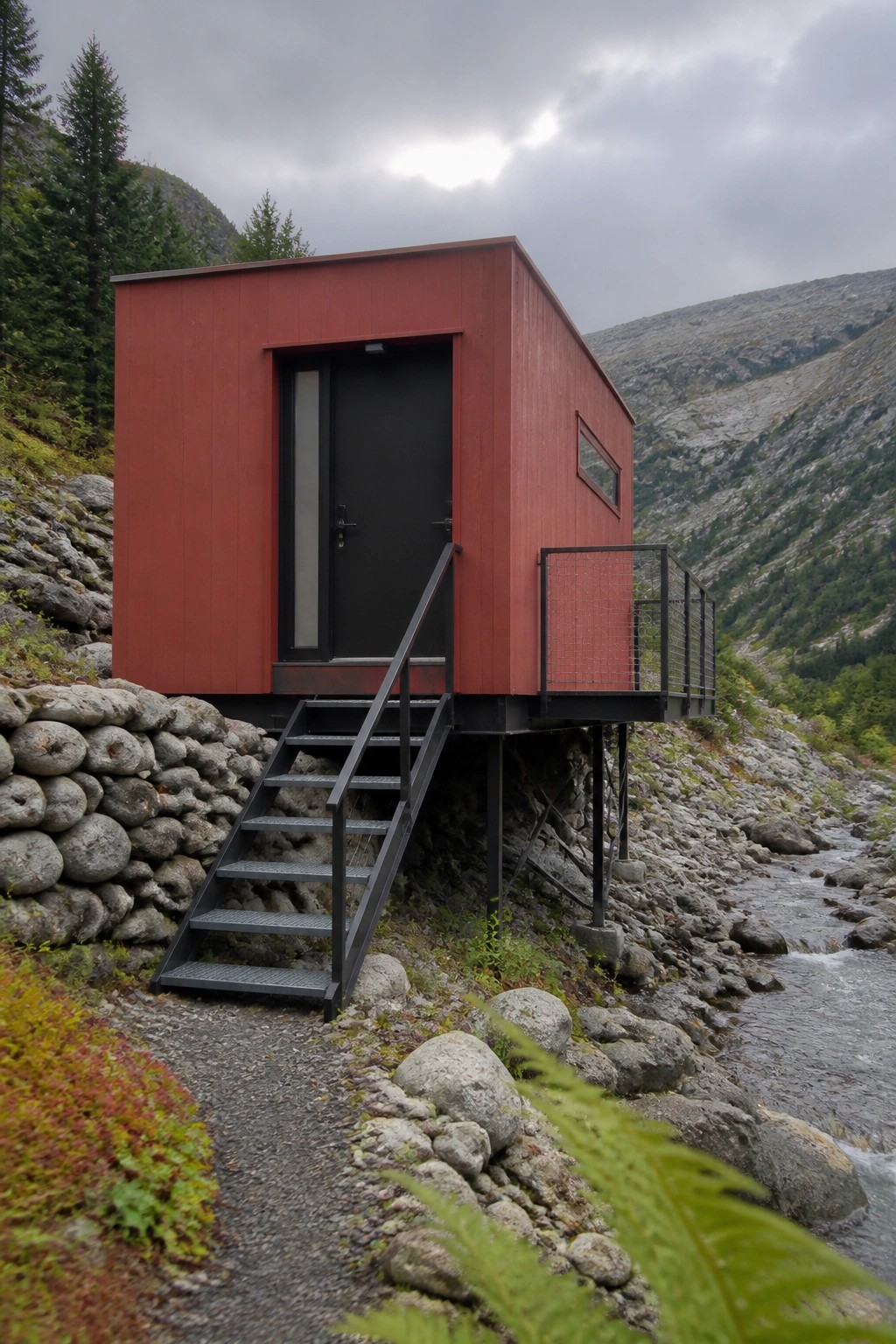
Many cabins end up on ground that drops away or runs rocky, and trying to level everything with fill or blasting rarely works out cleanly. Raising the whole structure on simple supports keeps the building straight without fighting the slope underneath.
This setup works best in mountain or forest spots where the land is uneven and you want to avoid heavy grading. The stairs then become the main way in, so they need to be sturdy and easy to use in all weather.
Place a Fire Pit in the Center of the Patio

A stone fire pit placed right in the middle of a paved courtyard gives the space a clear reason to gather. It works especially well with cabin exteriors because the low, round shape stays in scale with the buildings and does not block views of the surrounding trees.
Set the pit on a simple stone or gravel surface and add a few benches around the edges. Leave room to walk past it and keep nearby planting low so the fire stays the main focus at night.
Red Siding on Forest Cabins
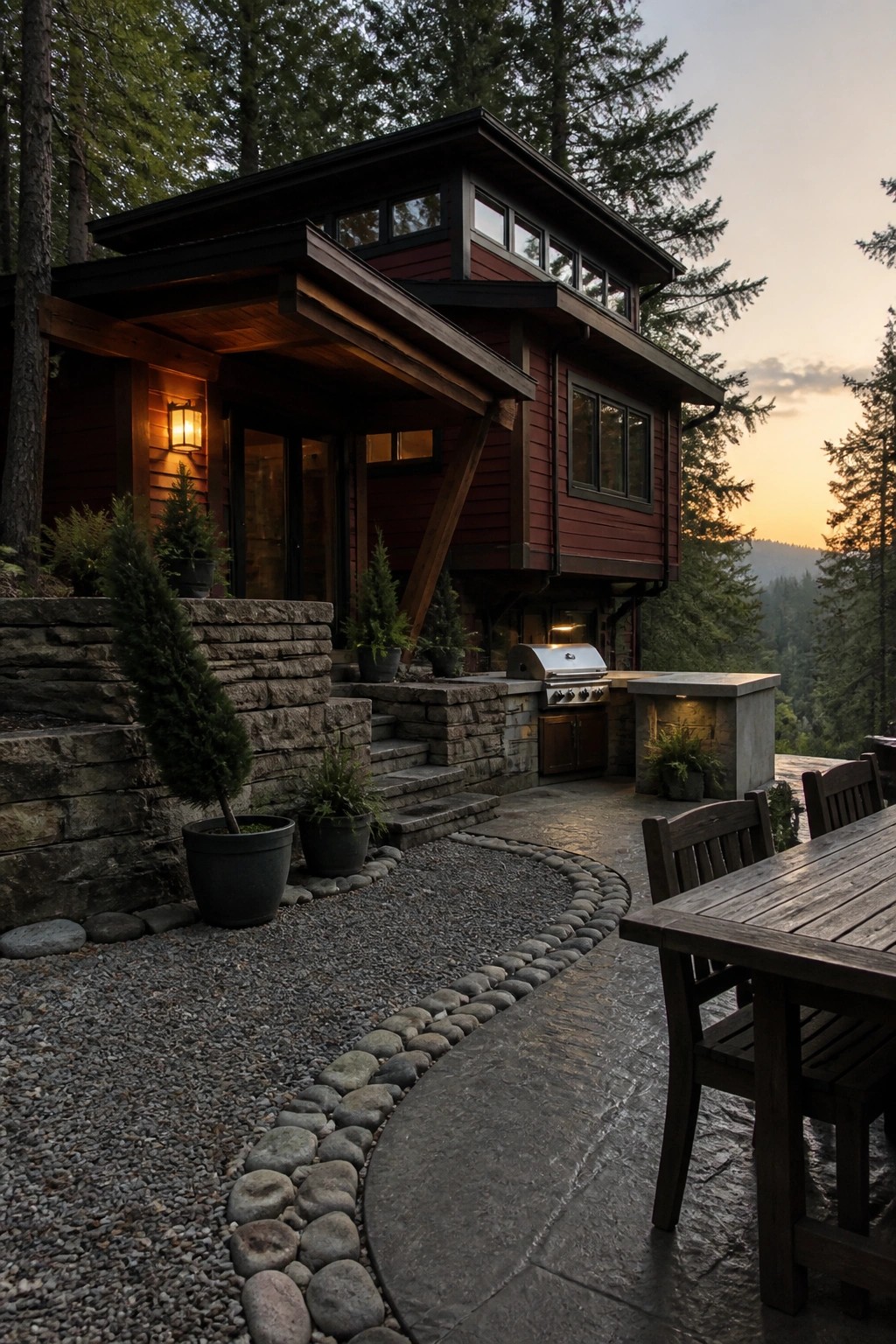
Red siding gives a cabin a clear presence among the trees without feeling out of place. The color holds its own against the deep greens and changing light in mountain settings, and it still reads as warm and simple rather than loud.
This choice works especially well on smaller or mid-sized homes tucked into wooded lots. Pair the red with dark trim and a low stone base so the house stays tied to the ground and does not fight the landscape around it.
Red Siding Makes Cabins Feel Cozy
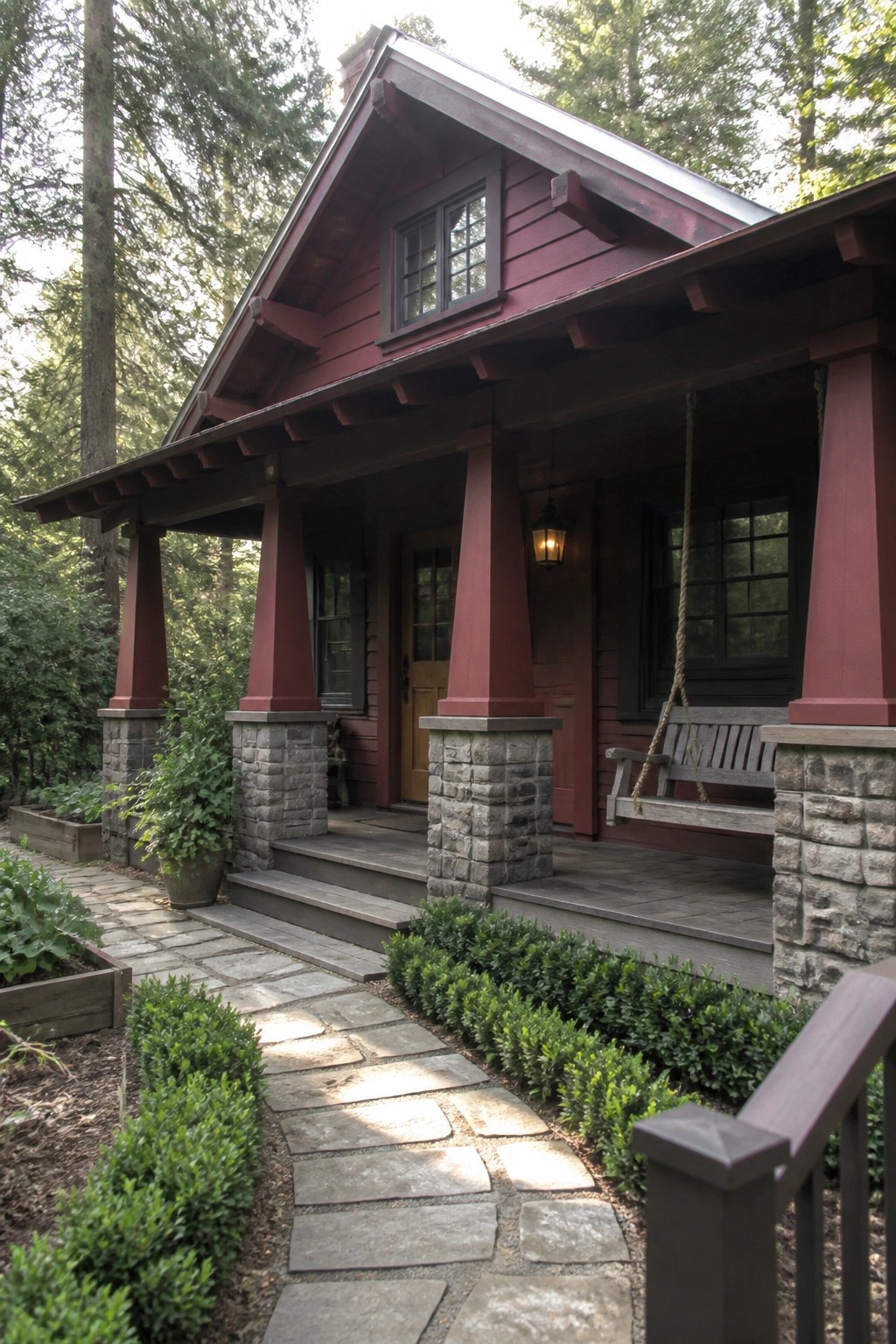
A deep red exterior works especially well on cabins tucked into trees because it adds warmth without fighting the surroundings. The color stands out just enough against the green while still feeling grounded and simple.
This approach suits forest or mountain homes that want a welcoming look without extra trim or bright accents. Keep the red on the main siding and let stone bases or natural wood doors do the rest.
Red Paint on Small Cabins
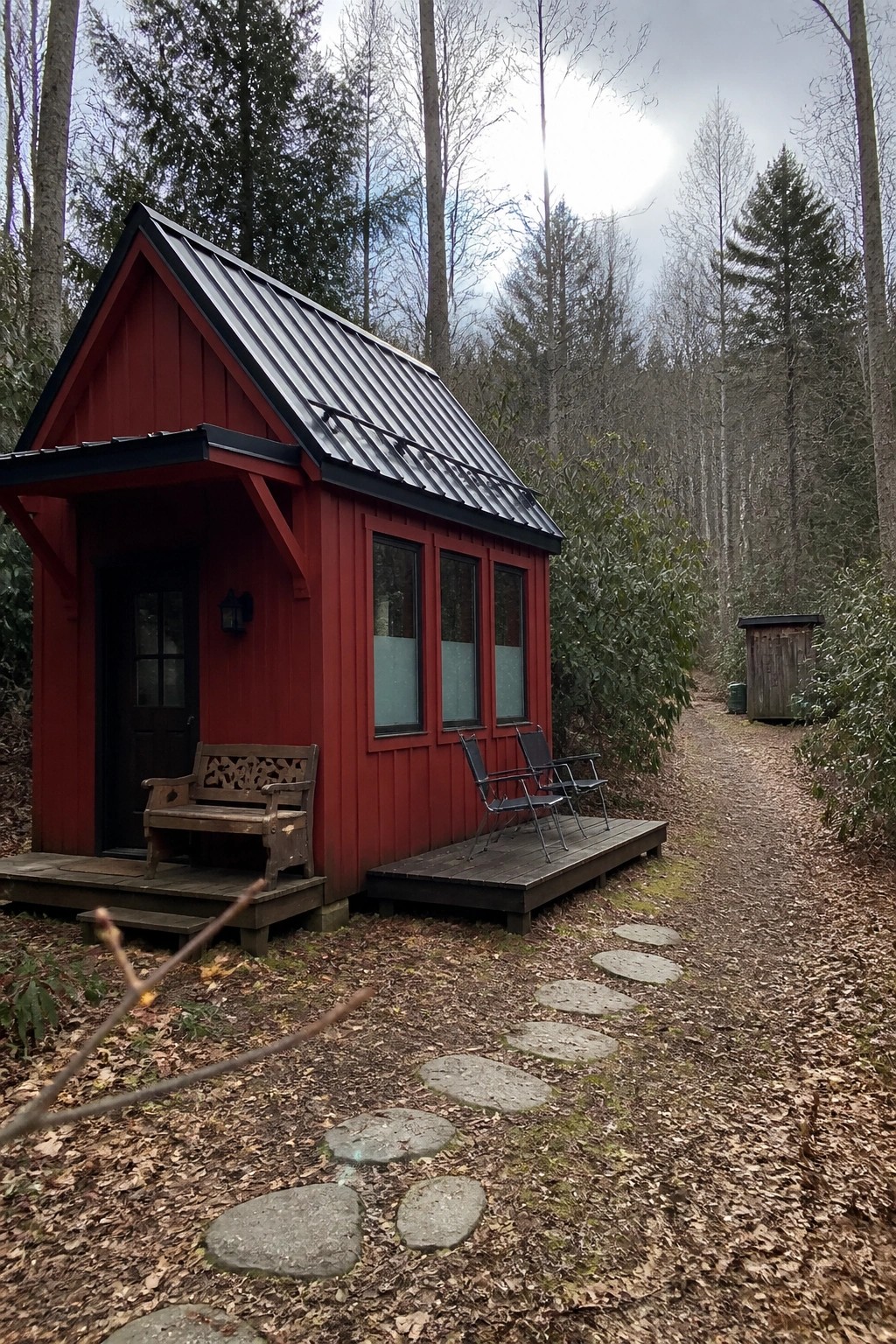
A strong red finish helps a compact cabin hold its own among trees without feeling out of place. The color adds warmth and makes the building easy to spot on the property, which matters when the setting is dense woods or shaded slopes.
This approach works best on simple shapes with clean rooflines. Pair the red with dark trim and a darker roof to keep the look balanced. It suits small forest or mountain cabins where you want presence without extra ornament.
Red Doors On Log Cabins
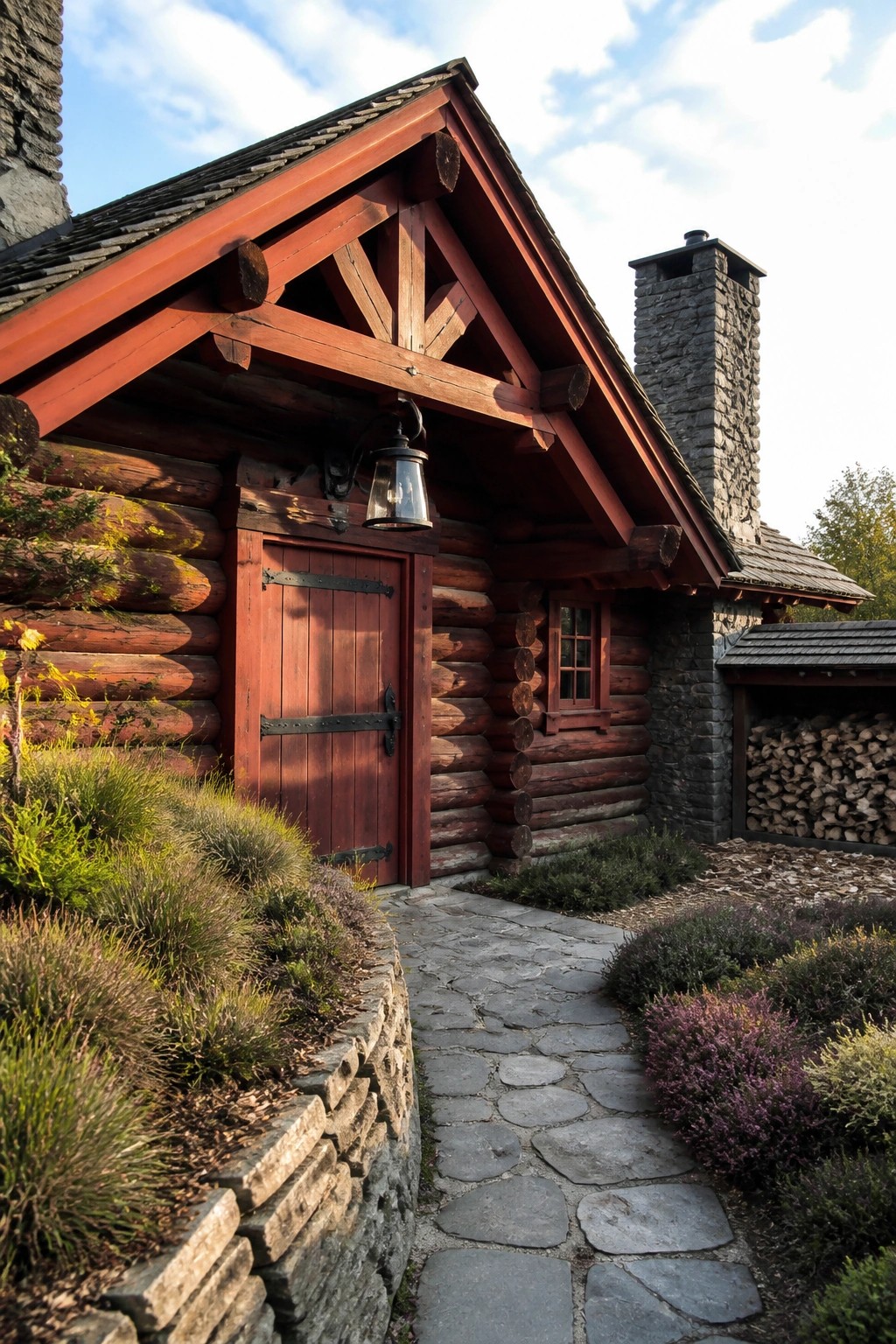
A red door gives a log cabin an instant lift without changing much else. It stands out against the brown logs and stone details in a way that feels both classic and welcoming.
This works especially well in wooded or mountain settings where the surrounding greenery can make the color pop even more. Keep the hardware simple and dark to let the red do the work.
Red Siding for Cabin Exteriors
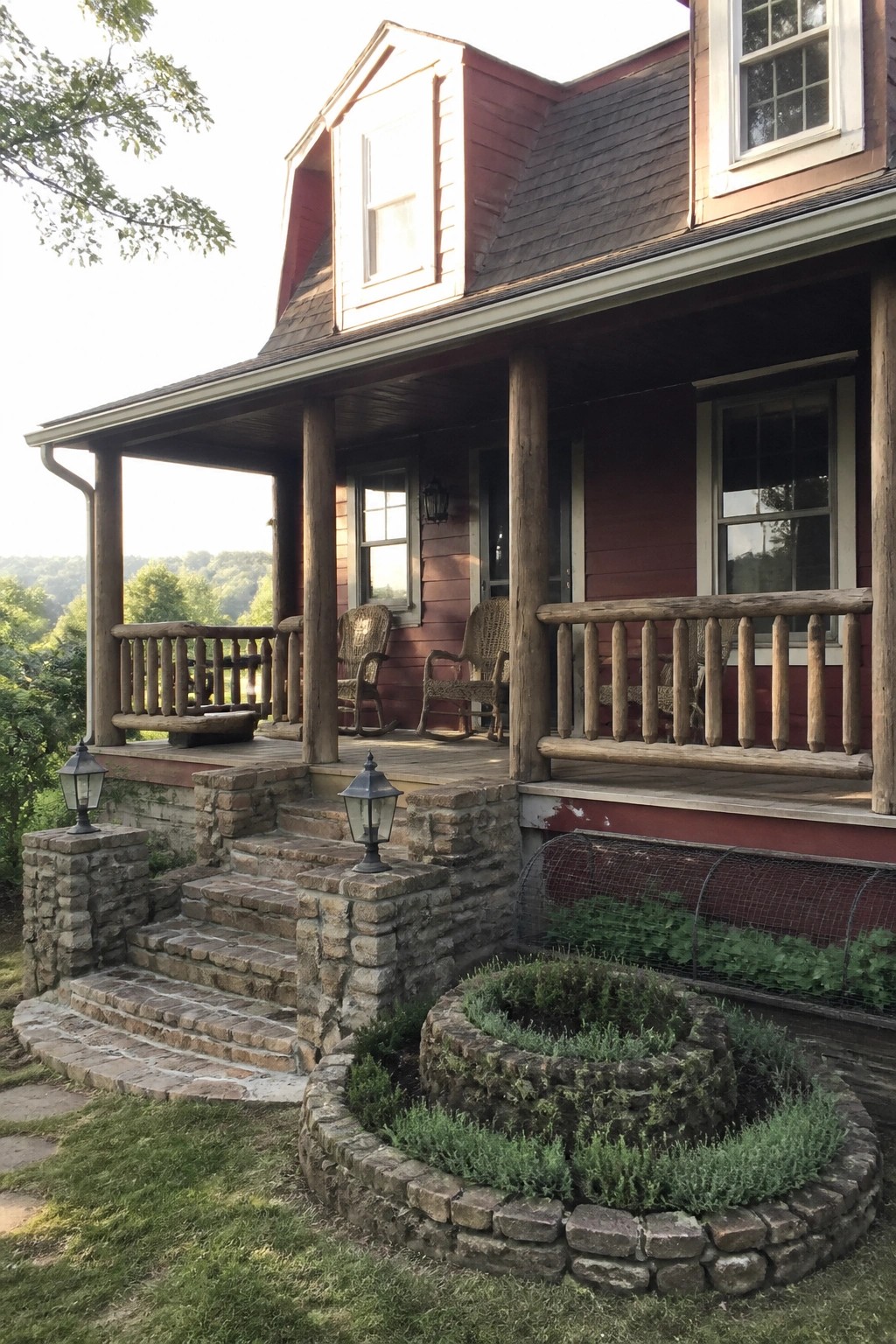
Red siding gives a cabin a warm, settled look that fits right into wooded or mountain settings. It stands out against the trees without feeling flashy, and the color holds up well when paired with natural wood and stone details around the base and porch.
This approach works best on smaller or medium cabins where you want some presence but still keep things simple. Stick to deeper reds rather than bright ones, and let the trim and porch stay in wood tones so the whole thing feels grounded.
Red Siding for Cabins in the Woods
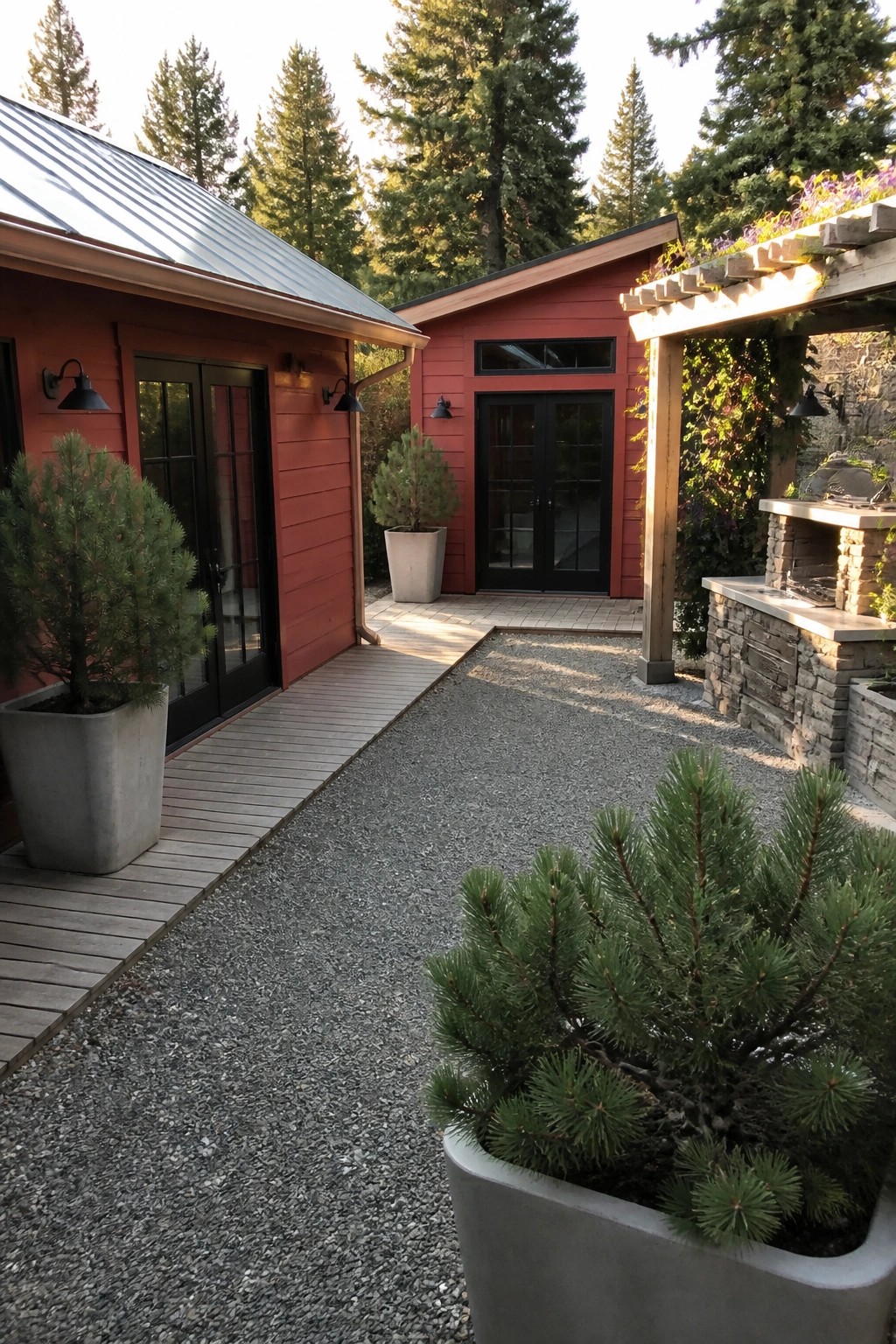
Red siding gives a cabin real presence when it sits among tall evergreens. The color holds its own against the green backdrop and pairs cleanly with dark window frames and simple metal roofing.
This works especially well on smaller cabins or additions where you want the building to feel grounded but still noticeable. Stick with matte finishes and keep surrounding plantings in neutral pots so the red stays the main draw.
Built-In Seating Around the Fire Pit
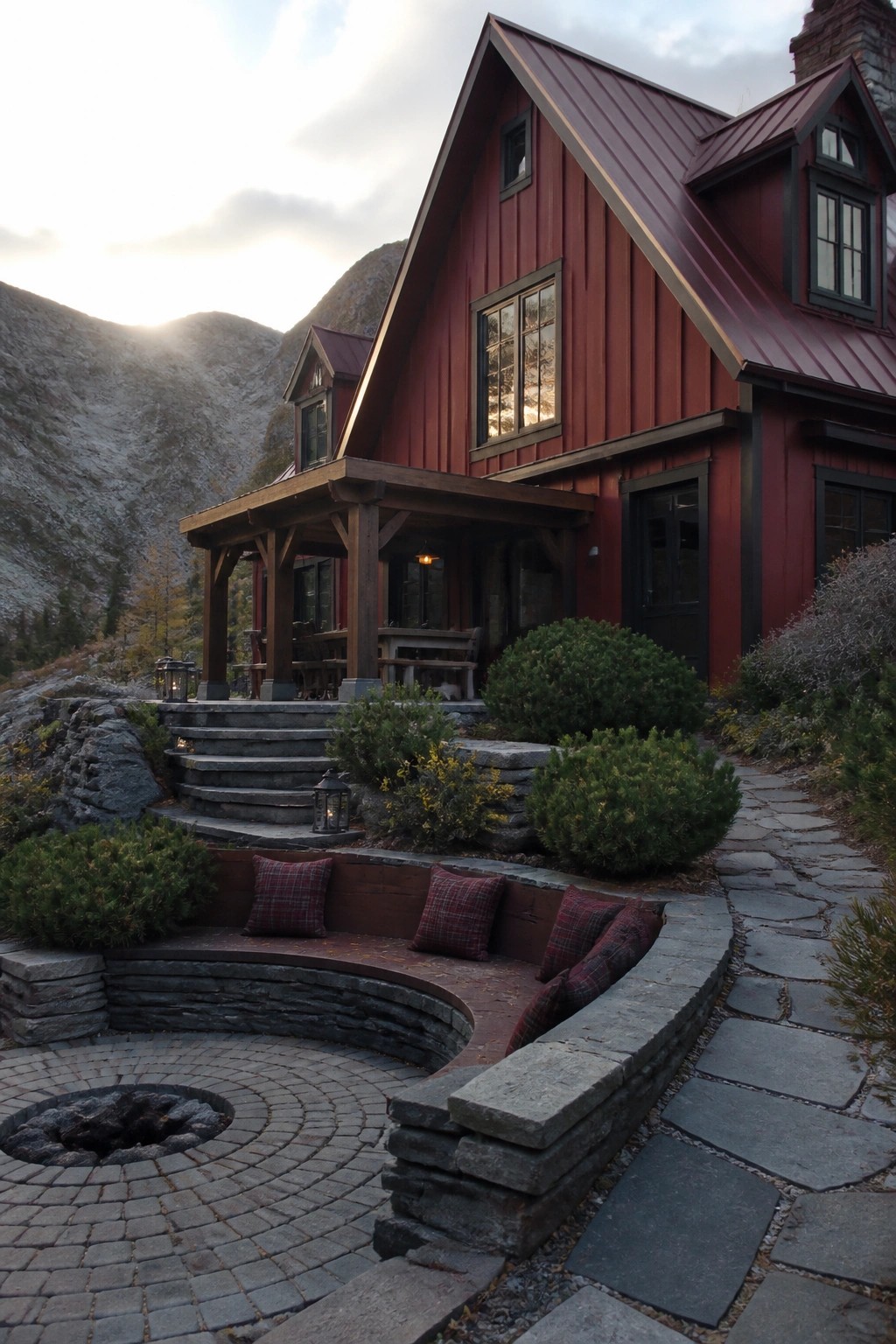
A curved stone bench that wraps around a fire pit gives the cabin a ready-made spot for evenings outside. It sits right at the base of the porch steps, so the whole area feels connected without needing extra furniture or railings. The stone matches the steps and path, which keeps everything looking settled into the slope.
This setup works best on cabins in mountain or forest settings where you want a simple outdoor room that does not fight the landscape. Use the same local stone for the bench and the fire pit ring, and keep the cushions weatherproof so they stay out year round. Avoid making the bench too tall or the circle too wide, or it starts to feel separate from the house.
Frequently Asked Questions
Q: How do I pick a red that won’t clash with the forest around my cabin?
A: Pick a deep barn red with some brown undertones. It blends into the woods without standing out too sharply. Test a sample board on the wall during different times of day.
Q: Will red paint hold up in snowy mountain conditions?
A: Choose a high-quality exterior paint made for extreme weather. Apply two coats over primer and touch up every few years.
Q: Should I match my roof or trim to the red cabin?
A: Keep the roof a dark neutral like charcoal or black. It grounds the bright red and echoes the rocky mountain surroundings. White trim can add that cozy contrast without overwhelming the look.
Q: What if I want to add a porch to my red cabin?
A: Build it from natural wood that matches the forest floor. Stain it a warm brown to tie everything together.
