

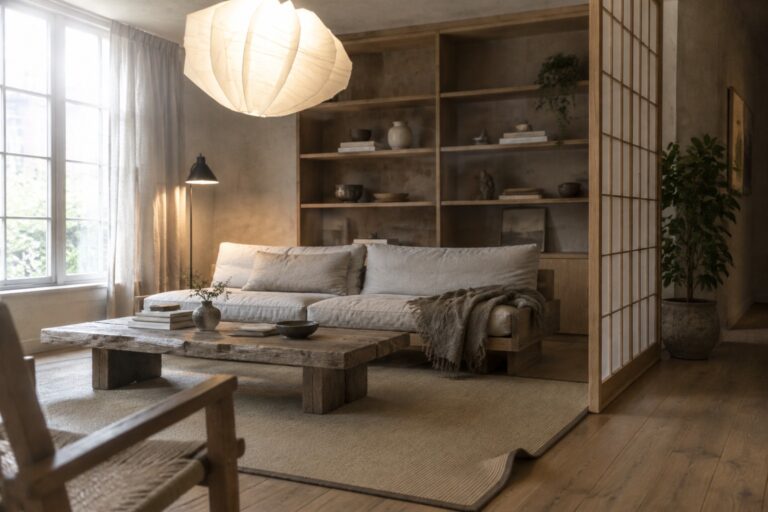
Japandi lighting works best when it brings a room together without making the space feel busier.
I find that sculptural fixtures can add a quiet focal point, especially in rooms where natural materials and simple furniture already set a calm tone.
The shape and placement matter as much as the light itself, since a striking pendant can overwhelm a small dining area or leave a reading corner feeling dim.
Warm bulbs, soft shades, and thoughtful scale help these fixtures feel comfortable in everyday use, not just appealing in a photo.
Some ideas are worth adapting to your own room, even if that means choosing a smaller fixture or hanging it lower.
Choose a Sculptural Pendant for a Calm Living Room
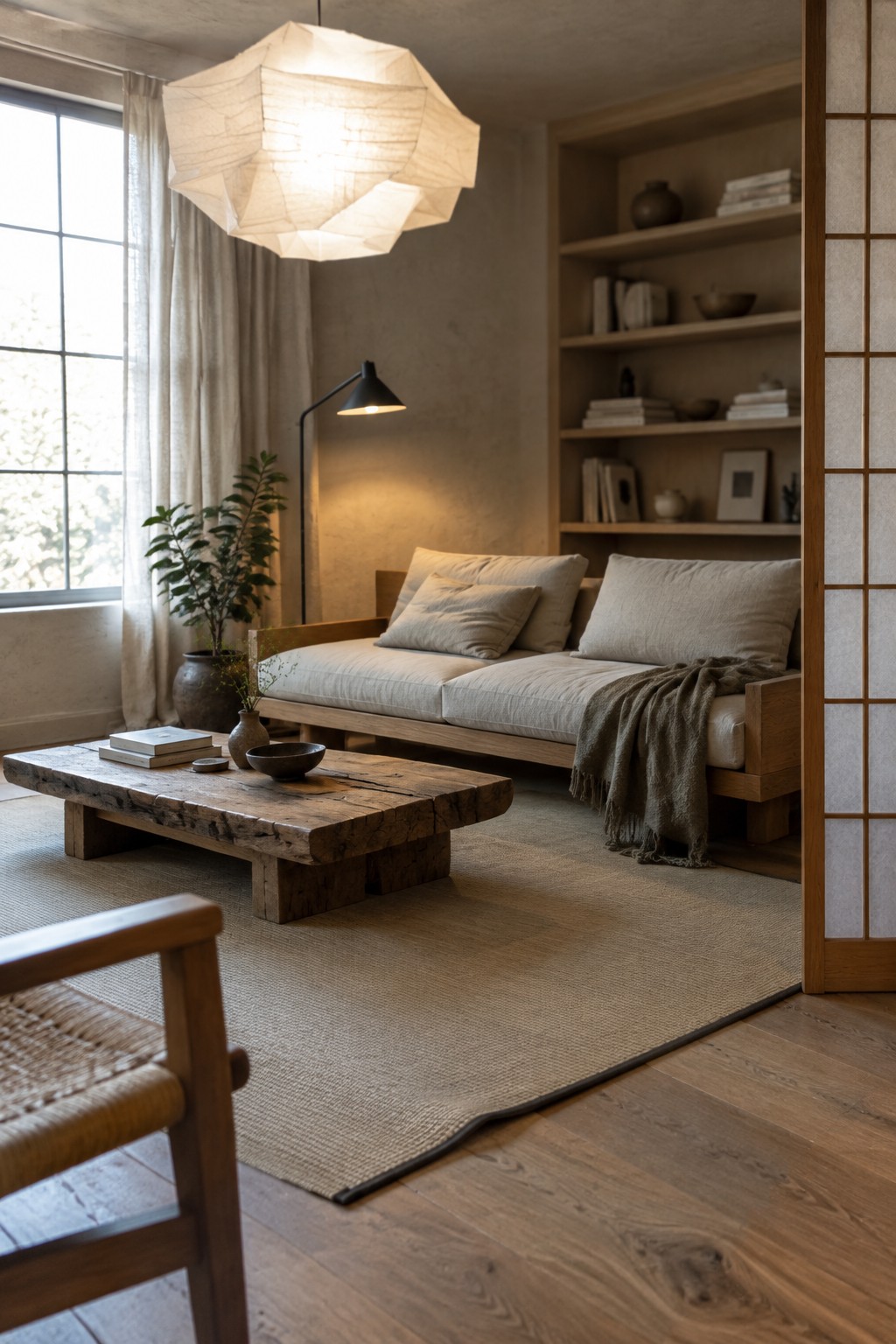
A sculptural pendant can give a Japandi living room a clear focal point without adding more furniture or decoration. A large folded-paper shade brings texture and gentle light, while its simple shape suits the natural wood and quiet colors often used in this style.
Try one above a seating area where it has room to stand out. Check the scale against the sofa and ceiling height, and use a dimmer if you want to adjust the light for reading or relaxing.
Choose a Sculptural Pendant for the Dining Room

A sculptural pendant can make a dining room feel considered without adding much visual clutter. A broad, wood-toned fixture gives the table a clear focal point, while its natural finish suits the relaxed look of Japandi interiors.
Choose a fixture sized to the table, and hang it low enough to define the dining area without blocking conversation. Keep the shape simple and let the pendant stand out against quieter finishes.
Use Sculptural Pendants As Kitchen Lighting
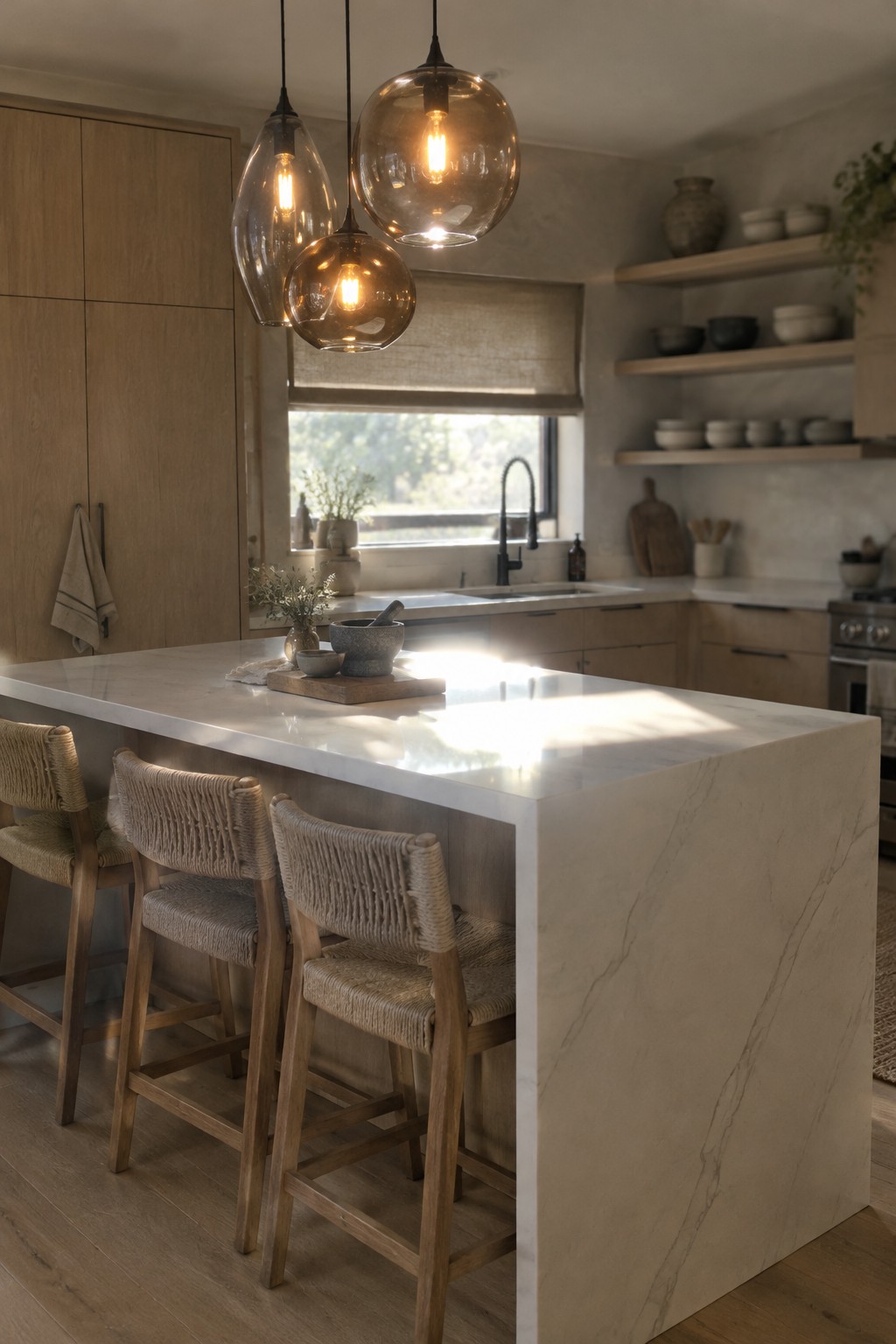
Sculptural pendant lights can make a kitchen feel more considered without adding extra decor. In a Japandi-style space, glass shades bring a little visual interest while keeping the room’s simple materials in view.
Hang a small group above an island, and vary the shapes or heights slightly for a relaxed look. Choose warm bulbs, but check that the pendants do not block sightlines or leave the work surface too dim.
Make a Sculptural Pendant The Bedroom’s Main Light
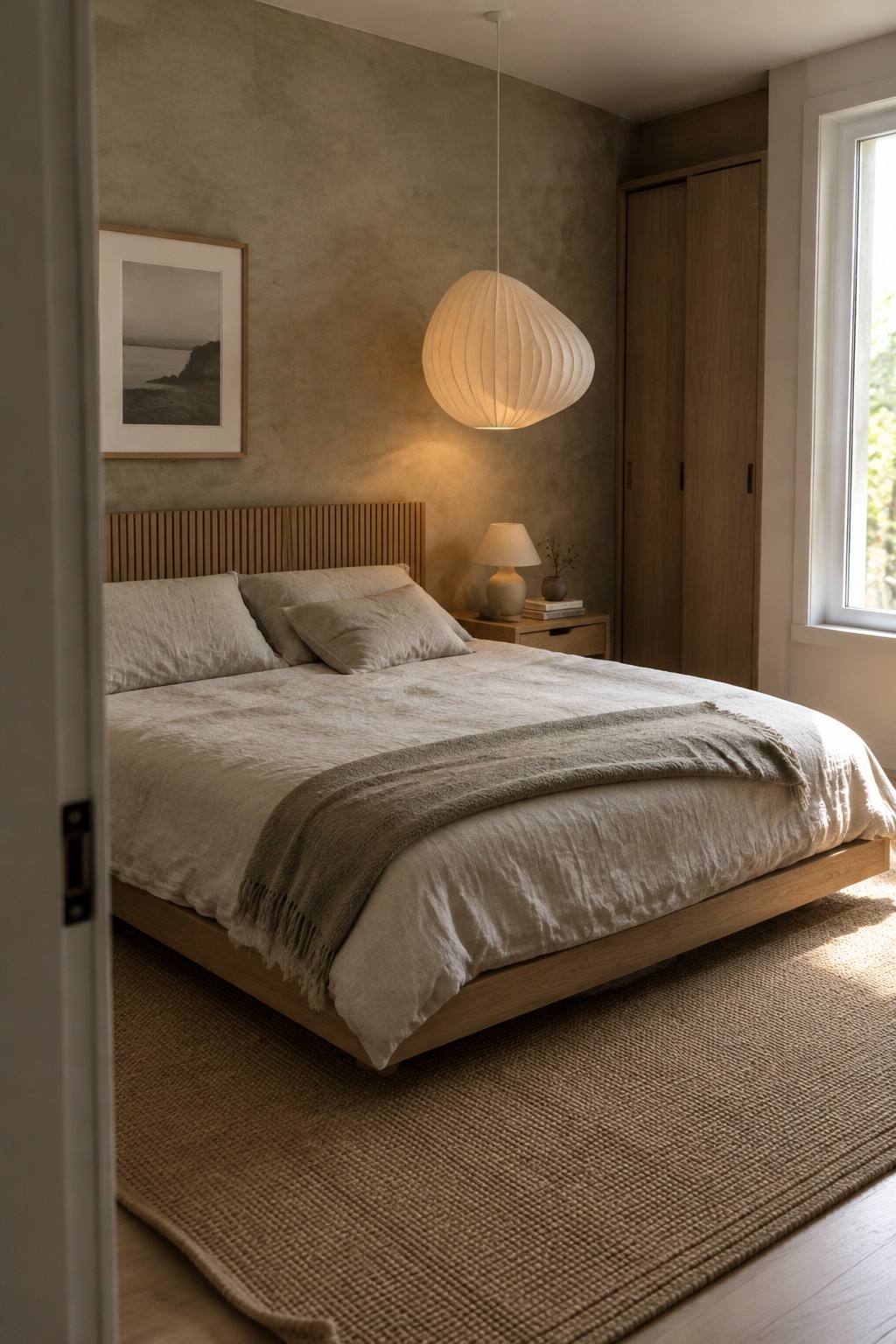
A sculptural pendant can give a bedroom a clear focal point without adding more furniture or decor. Here, the rounded paper shade brings a softer shape to the room, while its simple color suits the natural wood and linen.
This idea works well in a bedroom with a fairly pared-back look, where one distinctive fixture can stand out. Hang it where it gives useful light without blocking sightlines, and check that the scale feels right for the bed and ceiling height.
Use a Wooden Pendant to Warm Up Bedroom Lighting
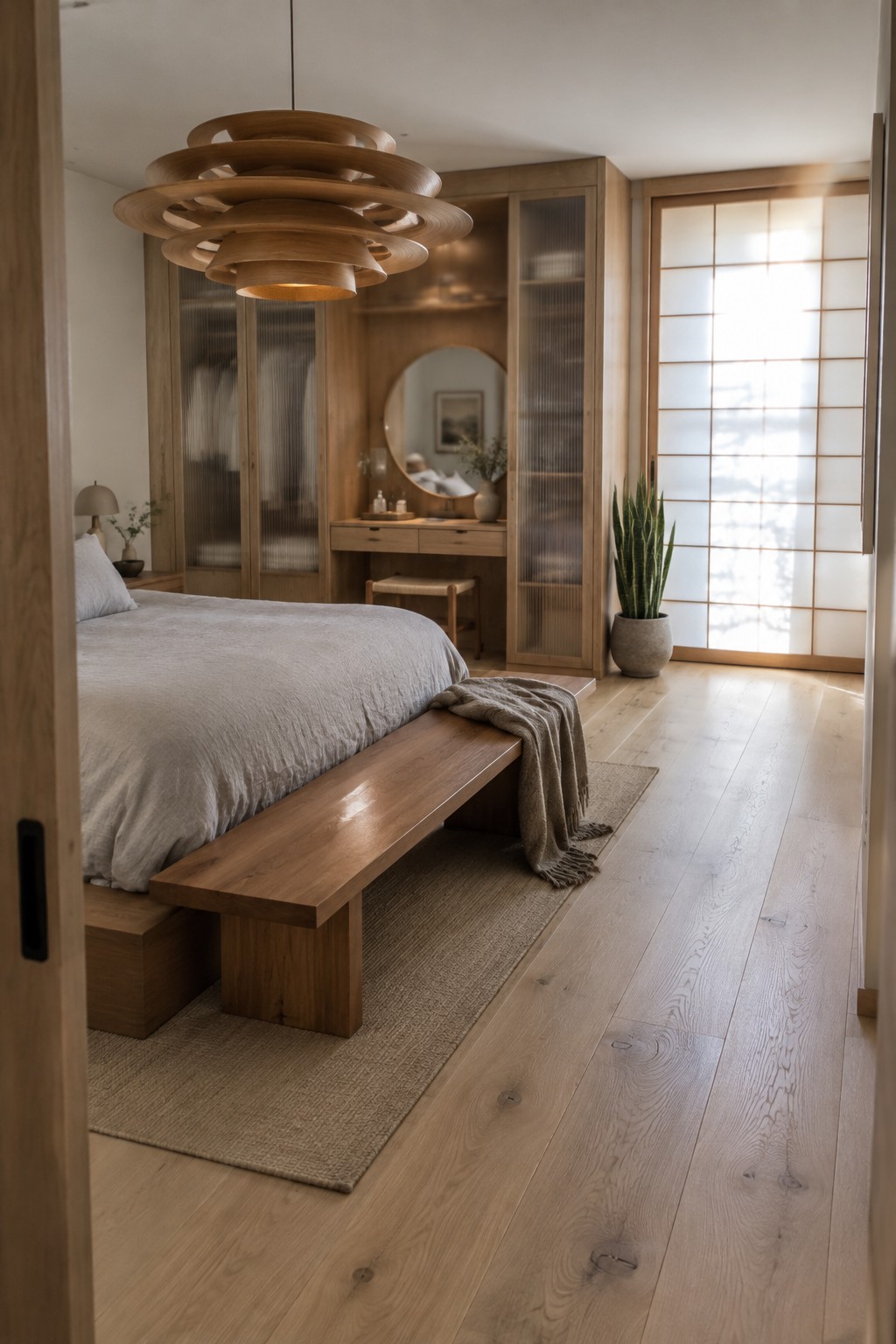
A sculptural wooden pendant can give a bedroom a softer feel than a standard ceiling fixture. Its layered shape makes the light a clear feature, while the natural material suits a simple Japandi-style space.
This approach works well above a bed or in a room with plain finishes. Choose a fixture sized for the room, and make sure it hangs high enough to leave the bed and walking area clear.
Use Sculptural Sconces to Light a Bathroom
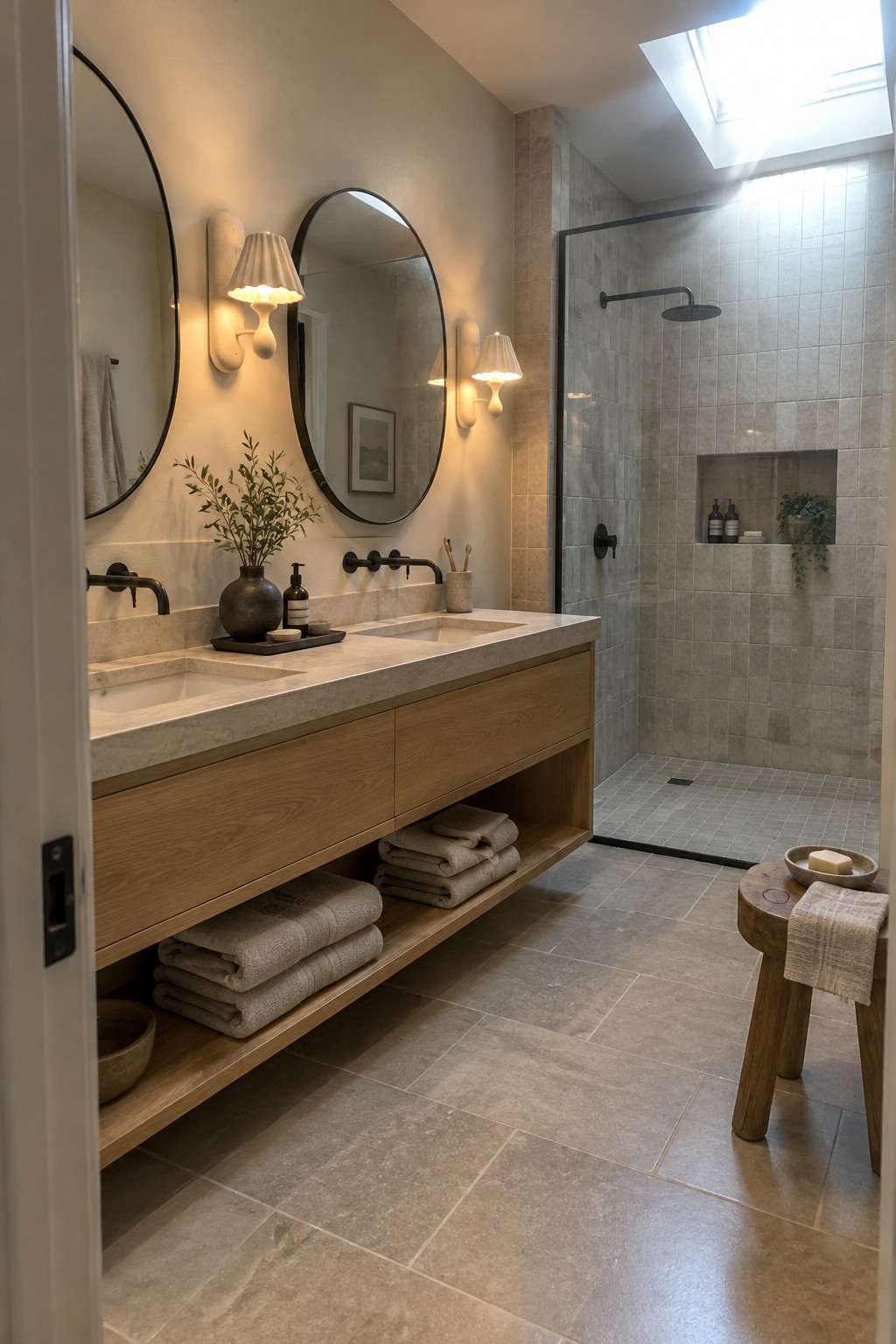
Sculptural wall lights can make bathroom lighting feel softer and more considered than a row of plain fixtures. Here, the rounded ceramic shapes and pleated shades bring a gentle, decorative touch to the vanity.
This approach works well beside a mirror, where light is useful for everyday tasks. Choose sconces that suit the scale of the mirror, and check that the fixtures are rated for bathroom use.
Use A Sculptural Pendant In The Entryway
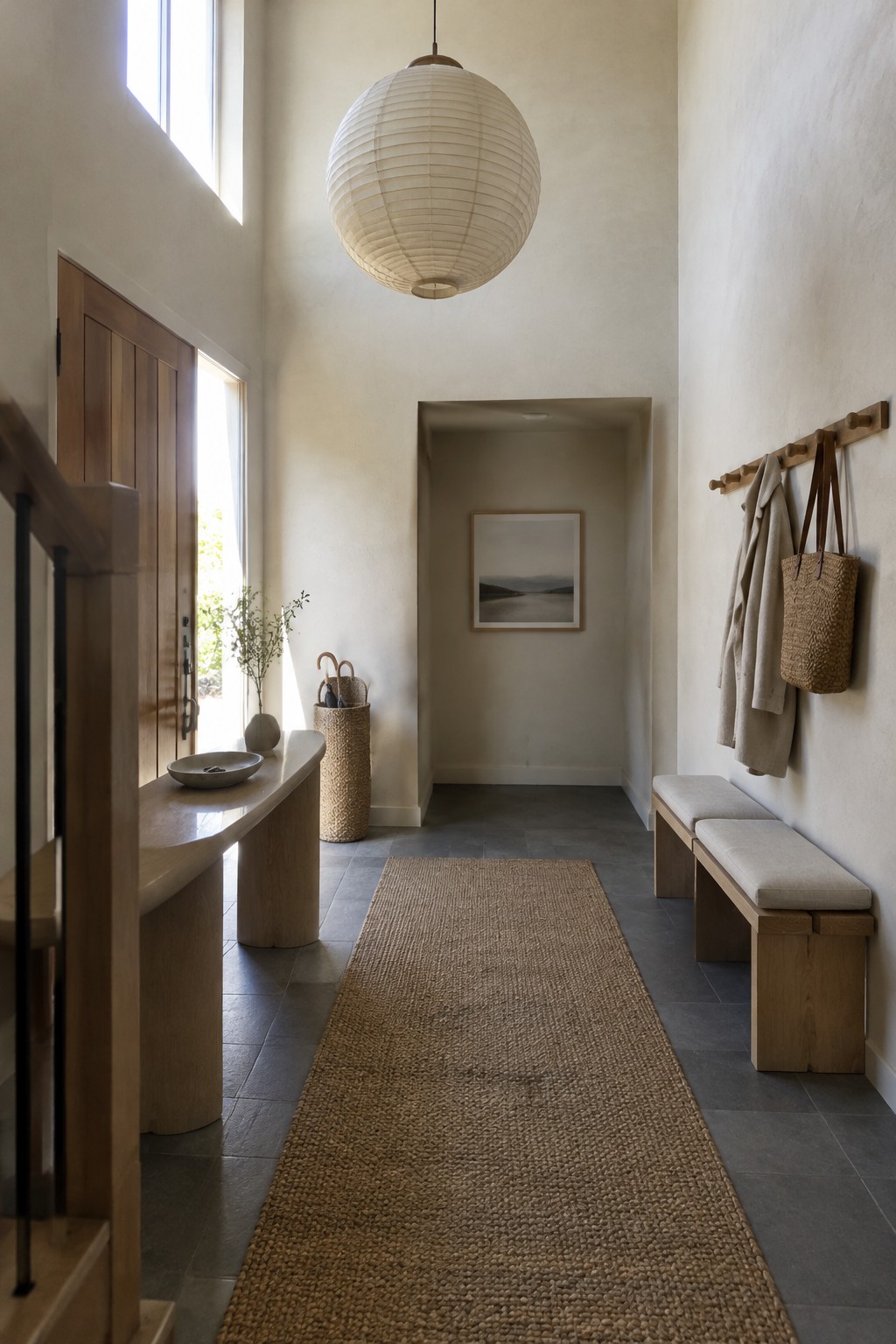
A large paper pendant can make a tall entry feel considered without adding much visual clutter. Its rounded shape brings a little softness to the space, while the simple material suits the natural finishes often found in Japandi interiors.
This works especially well in an entry with a high ceiling, where a smaller fixture might get lost. Hang the pendant where it has room around it, and check that it does not obstruct the doorway or walking path.
Use a Sculptural Pendant in a Home Office
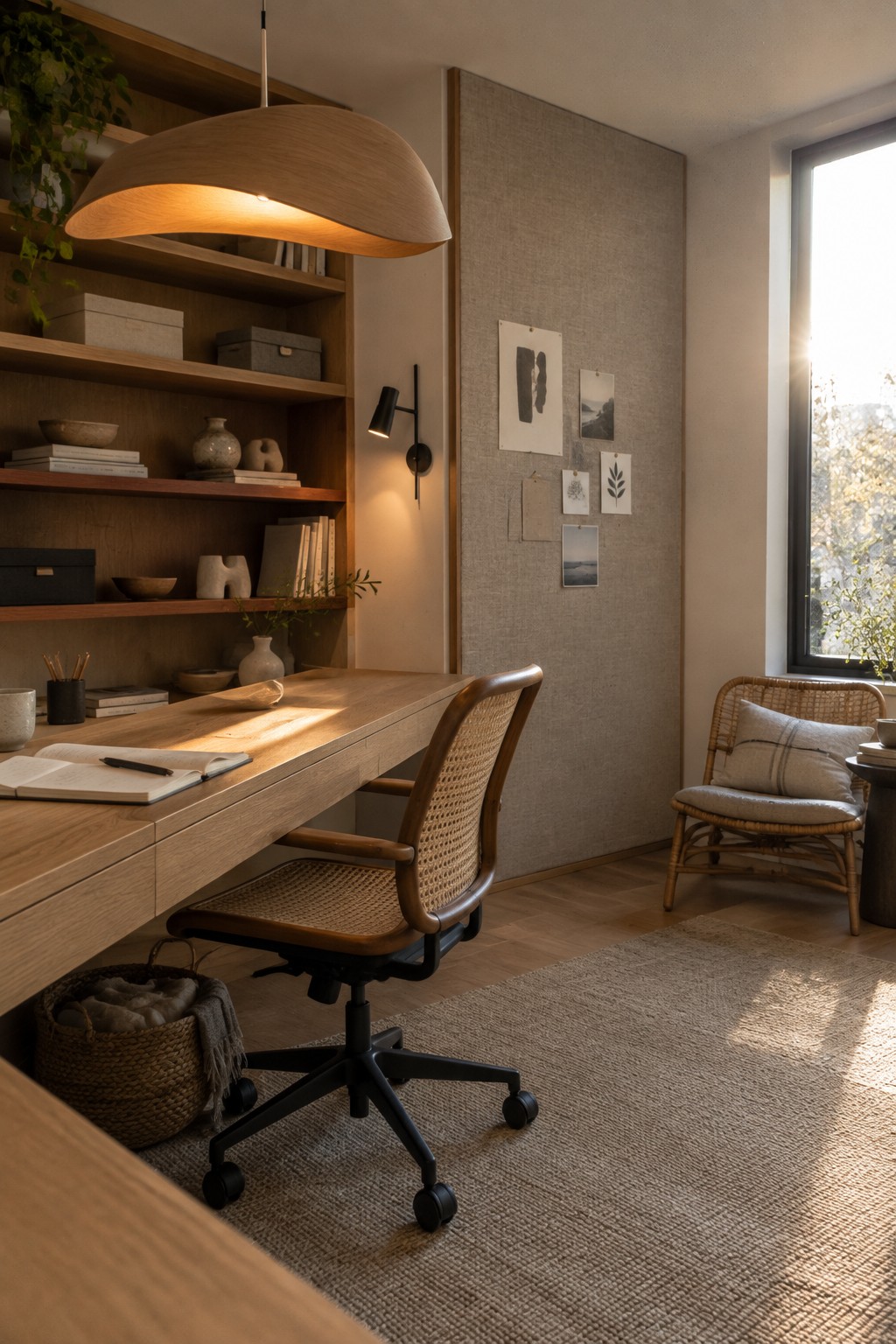
A sculptural pendant can make a home office feel considered without adding more objects to the desk. A broad wood shade brings a natural material into the room and gives the main work area a clear focus.
Choose a pendant that spreads light over the desk, and check that it hangs high enough not to obstruct your view. This approach suits a study with simple furniture and built-in shelving, where one distinctive fixture can stand out.
Use a Sculptural Pendant in a Nursery
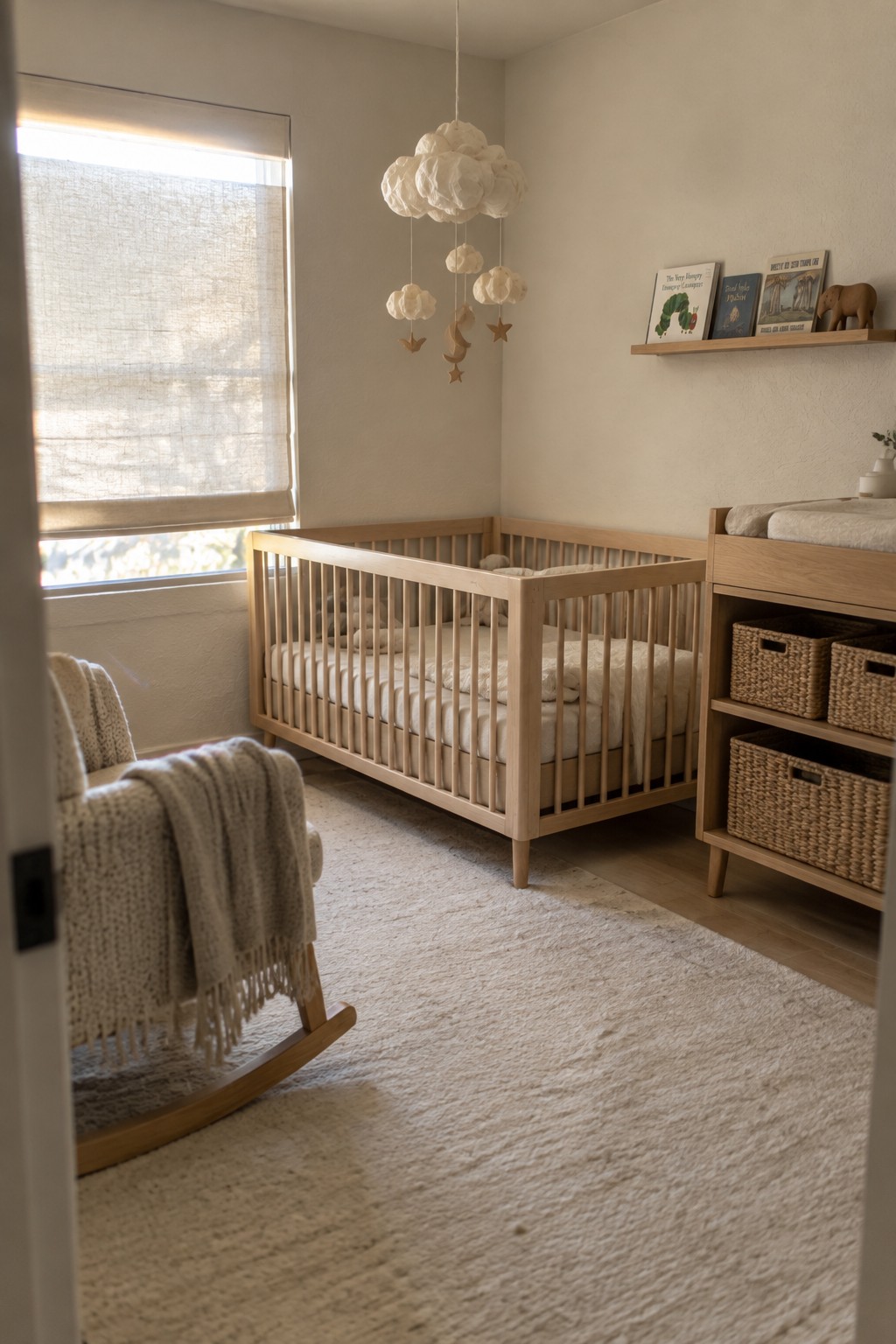
A sculptural pendant can make nursery lighting feel gentle and considered. A cloud-shaped shade brings a playful touch, while its soft form suits a room meant for rest.
Hang it where it can be admired but well away from the crib, and make sure it is securely installed. Choose a shade that diffuses the bulb rather than exposing a bright light source.
Use a Sculptural Pendant in the Laundry Room
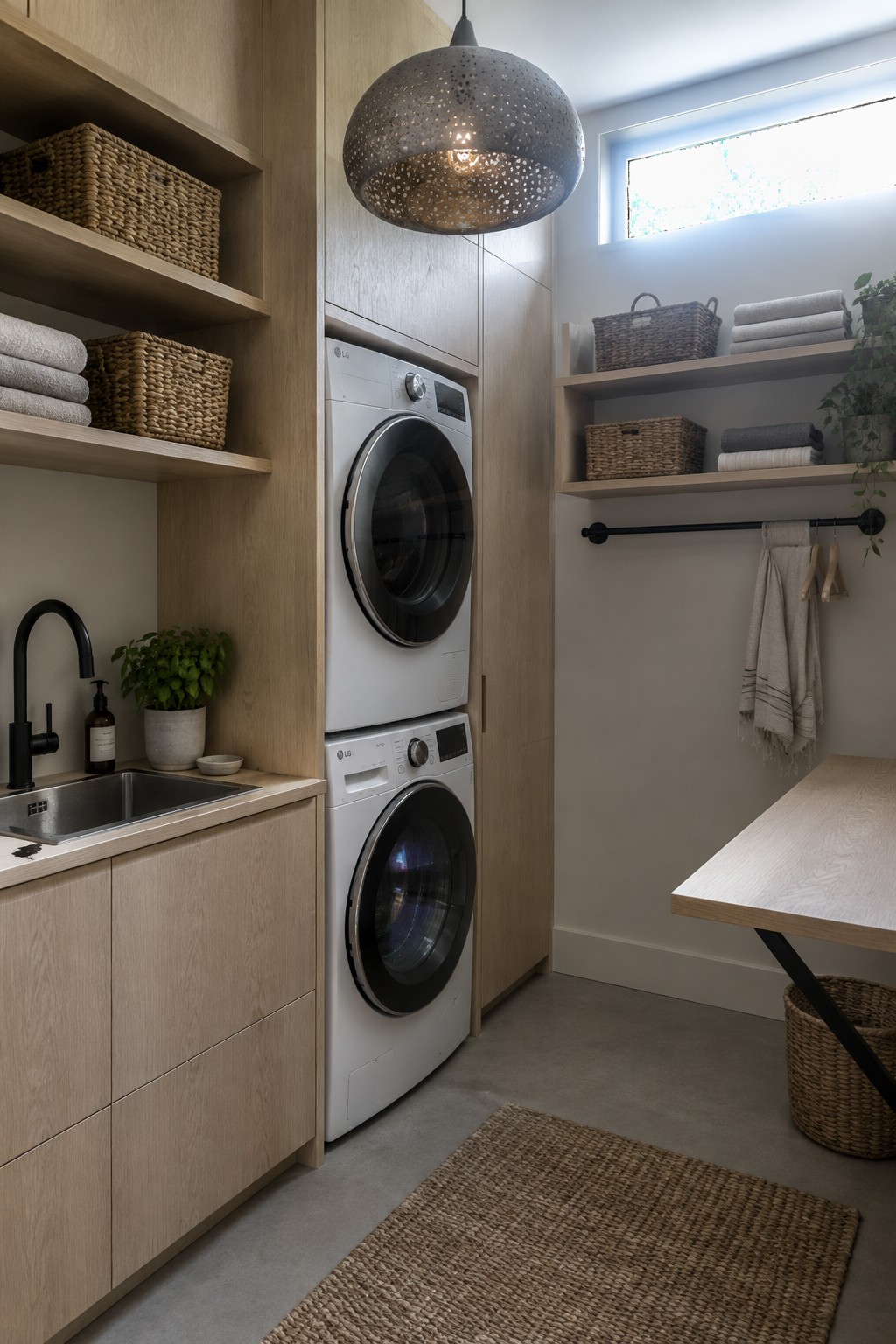
A sculptural pendant can make a utility room feel considered without taking away from its practical purpose. Here, the perforated metal shade brings a softer, more decorative touch to the simple wood cabinetry.
This idea works well in a laundry room with enough ceiling clearance and a separate task light for detailed work. Choose a shade that suits the room’s scale, and make sure it will not get in the way when you use the counter or reach for storage.
Choose a Woven Pendant for a Reading Nook
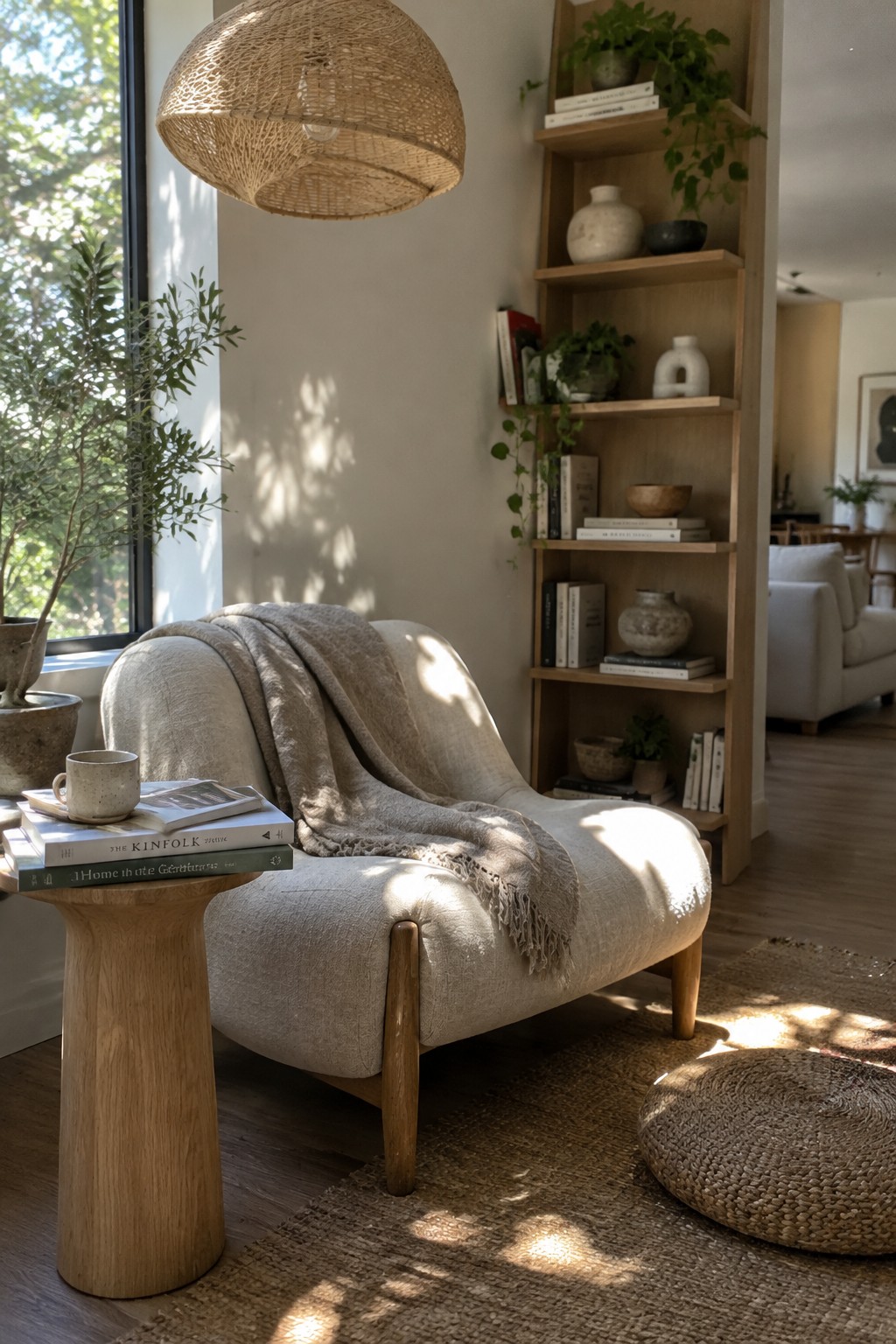
A woven pendant can give a reading nook a softer, more natural look than a plain ceiling light. Its open weave lets light filter through while making the fixture a noticeable part of the room.
This style works well above a lounge chair or in a quiet corner with natural materials. Hang it high enough to keep the space comfortable, and use a warm bulb for reading or relaxing.
Use a Sculptural Pendant to Add Shape to Bathroom Lighting

A sculptural pendant can make a small bathroom feel more considered without adding extra decoration. Here, the rounded paper shade brings a softer shape to the space, while its warm light suits the natural finishes.
This approach works well in a powder room or a bathroom with a high ceiling. Hang the fixture where it will not get in the way, and choose a damp-rated design if it will be near a shower.
Use a Sculptural Pendant to Shape Bedroom Lighting

A pendant with a folded, sculptural shade can give a bedroom ceiling light a more considered look without adding more decor. Here, the dark angular fixture stands out against the simple walls and bedding, while its shape keeps the room from feeling too plain.
This idea works well in bedrooms with restrained colors and natural materials. Choose a fixture that fits the room’s scale, and use bedside lamps for softer light when the pendant is off.
Use Sculptural Lighting in a Walk-In Closet
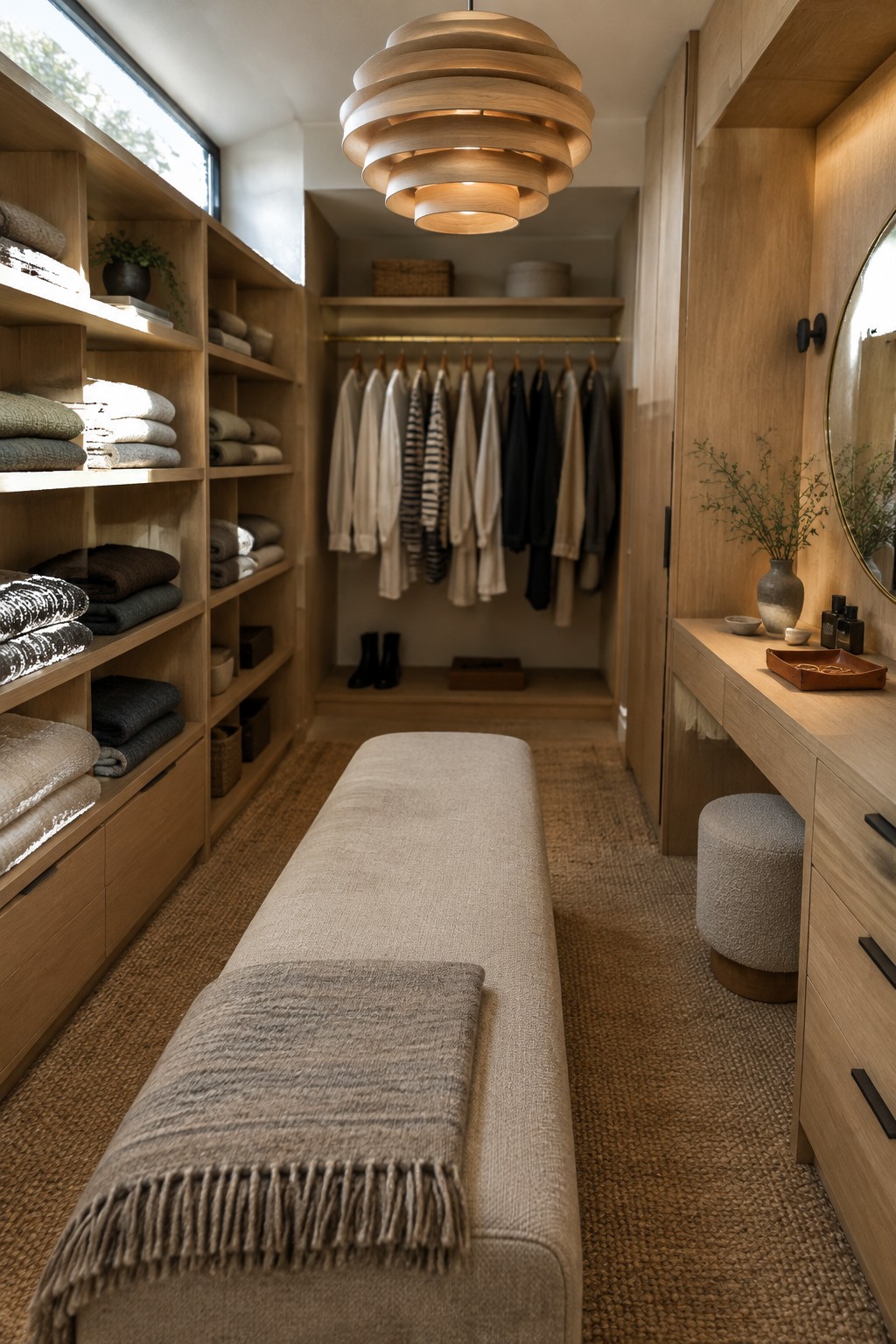
A sculptural pendant can make a walk-in closet feel considered rather than purely functional. A layered wooden fixture gives the ceiling a focal point while fitting naturally with the wood cabinetry.
This idea works best when the fixture is sized for the room and does not get in the way of hanging clothes or moving around. Keep it as the main decorative light, and add practical lighting near shelves or a mirror if you need clearer task light.
Choose a Wooden Pendant for the Dining Area

A sculptural pendant can give a dining area a clear focal point without adding much visual clutter. Here, the open wooden shade brings shape and texture above the table while keeping the overall look simple.
This approach suits a Japandi-style room, especially when the furniture and finishes are already understated. Hang the fixture so it lights the table comfortably, and choose a size that feels substantial without blocking views across the room.
Use a Woven Pendant to Bring Warmth to a Meditation Room

A sculptural woven pendant can make a quiet room feel settled without adding much decoration. Its open shape brings texture overhead, while the natural material suits the simple finishes often found in Japandi interiors.
This kind of fixture works well in a meditation space or any room meant for slow, quiet activities. Choose a size that leaves the room feeling open, and use a warm bulb so the woven shade gives off a gentle glow.
Let a Sculptural Pendant Light the Kitchen

A sculptural pendant can make a compact kitchen feel more considered without adding extra decor. Here, the dark metal shade gives the simple cooking area a clear focal point, while its rounded shape suits the natural wood and stone.
This approach works well above a small kitchen or island where one fixture can provide focused light. Choose a pendant that fits the scale of the counter, and make sure it hangs high enough to leave the worktop easy to use.
Frequently Asked Questions
Q: How do I get the Japandi look if my room already has a lot of dark wood?
A: Balance it with lighter shades around the fixture, such as cream walls, linen, or pale wood. A sculptural lamp in a simple shape can feel intentional without making the room look heavier.
Q: What kind of bulb works well with a paper or fabric pendant?
A: Choose a warm, diffused bulb so the shade glows softly instead of casting harsh light. Check the fixture’s label for the right bulb type and maximum wattage.
Q: Can a sculptural light be the only statement piece in a room?
A: Absolutely. Let the fixture take the lead, then keep nearby decor simple so its shape and shadow have room to stand out.
Q: How low should I hang a pendant over a dining table?
A: Hang it low enough to make the table feel grounded, but high enough that people can see across it comfortably. If you’re unsure, adjust the height before finalizing the installation.
