

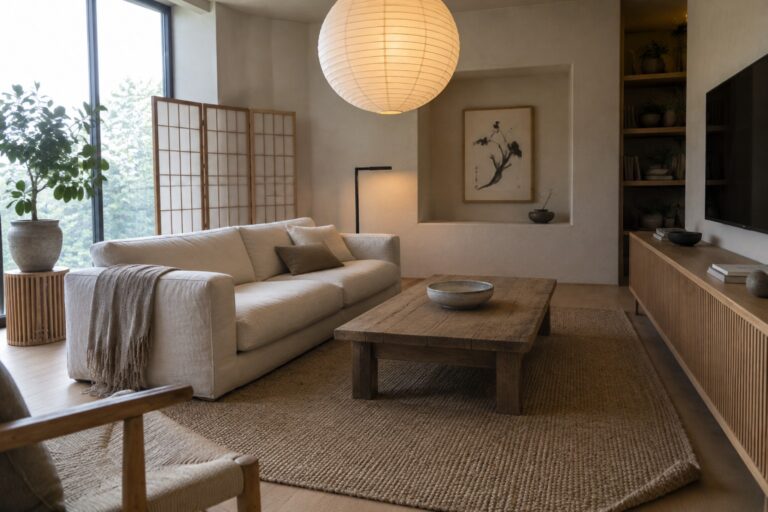
Lighting can change how a living room feels long before anyone notices the furniture.
I find Japandi spaces work best when each fixture brings warmth without competing with the room’s clean lines, natural textures, and everyday needs.
A soft pendant over the seating area or a simple floor lamp beside a chair can make a room feel calmer while still giving people enough light to read, talk, and move around.
The balance matters, since a sculptural shade may look appealing on its own but feel out of place if its scale or finish clashes with the rest of the room.
I’d start with fixtures that suit the room’s layout, then adapt the details that make these ideas feel right for home.
Make a Paper Pendant the Main Light
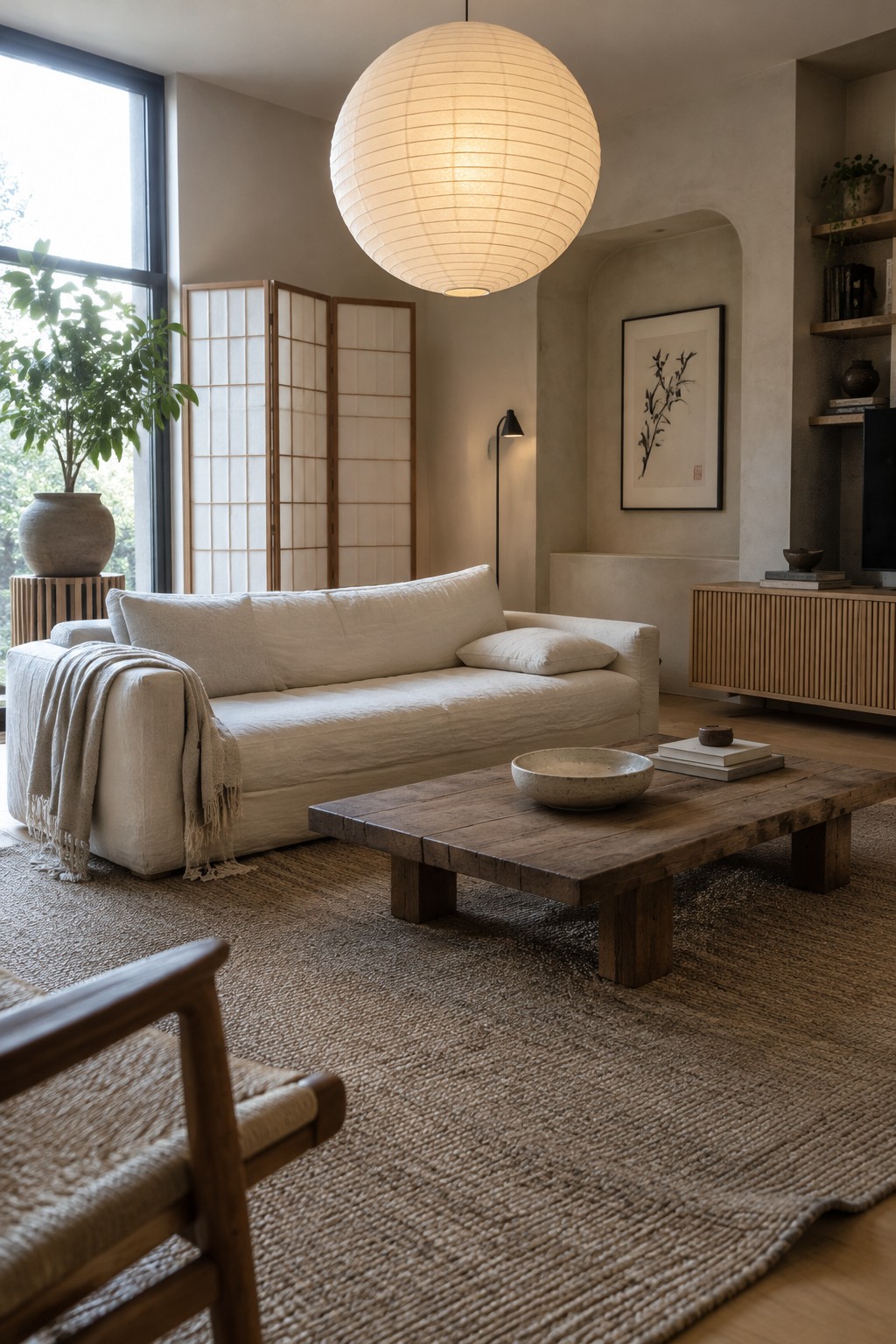
A large paper pendant can bring a soft, even glow to a living room without making the space feel formal. Its simple shape suits Japandi rooms, where natural materials and a restrained look do most of the decorating.
Hang one over the main seating area, and choose a size that feels in proportion to the room. A pleated or ribbed paper shade adds a little texture, so keep nearby light fixtures fairly simple.
Choose Woven Pendant Lights for a Japandi Living Room

Woven pendant lights bring a natural texture to a Japandi living room while keeping the furnishings simple. Their open weave lets light pass through, so the fixtures feel less heavy than solid shades. A few shades at different heights can add interest without filling the room with extra decor.
Use them above a seating area or coffee table where they can help define the space. Keep the rest of the lighting fairly simple, and choose a shade size that fits the room so the pendants do not overwhelm it.
Choose A Simple Pendant For A Calm Living Room
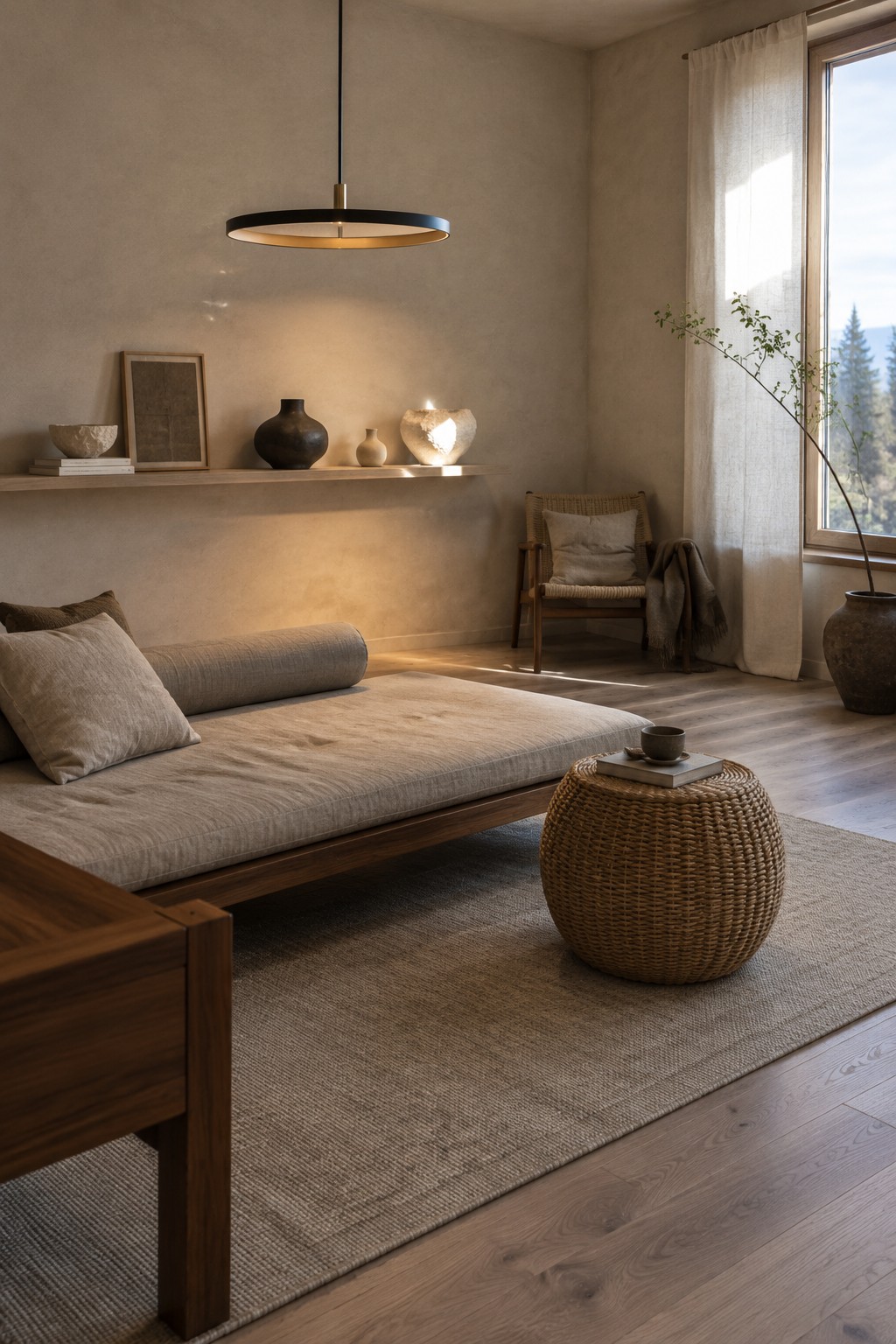
A clean, low-profile pendant can give a Japandi living room a clear focal point without making the room feel busy. A slim circular fixture suits a space with natural materials and simple furniture, where a more ornate light might feel out of place.
For a similar look, choose a pendant with a restrained shape and a warm finish, then hang it where it can light the main seating area. Check that it feels in scale with the room and does not block sightlines.
Choose a Sculptural Pendant Light

A large pendant can give a living room a clear focal point without adding more furniture or decor. A ribbed, softly shaped shade brings visual interest overhead while keeping the rest of the room simple.
This approach works especially well in living rooms with high ceilings, where a small fixture can feel lost. Hang the pendant low enough to feel connected to the seating area, but high enough that it does not block views across the room.
Use Globe Pendants to Add Soft Light

A small group of globe pendants can make the main light in a living room feel gentler and more considered. Their rounded shades suit Japandi rooms, where simple shapes and warm materials keep the decor calm.
Hang several at staggered heights above a seating area, taking care that they do not block sightlines or hang too low. Opal or softly diffused glass is a practical choice when you want a warm glow without exposed bulbs.
Use A Textured Pendant For Soft Light

A textured pendant can bring a little character to a Japandi living room without making the space feel busy. Its pale, natural finish stands out against a darker wall while still fitting the room’s quiet palette.
This style works well above a seating area where the shade can be seen up close. Choose a size that feels in scale with the room, and keep the shape simple so the texture remains the main feature.
Use a Woven Pendant as the Main Light

A woven pendant can give a living room a natural focal point without making the space feel formal. Its open texture suits Japandi rooms, where simple shapes and natural materials do much of the decorating.
Choose a pendant that fits the seating area without blocking sightlines, and hang it high enough to keep the room comfortable to use. A large rattan shade works well above a coffee table or in a room with a high ceiling.
Use a Woven Pendant for Soft, Focused Light
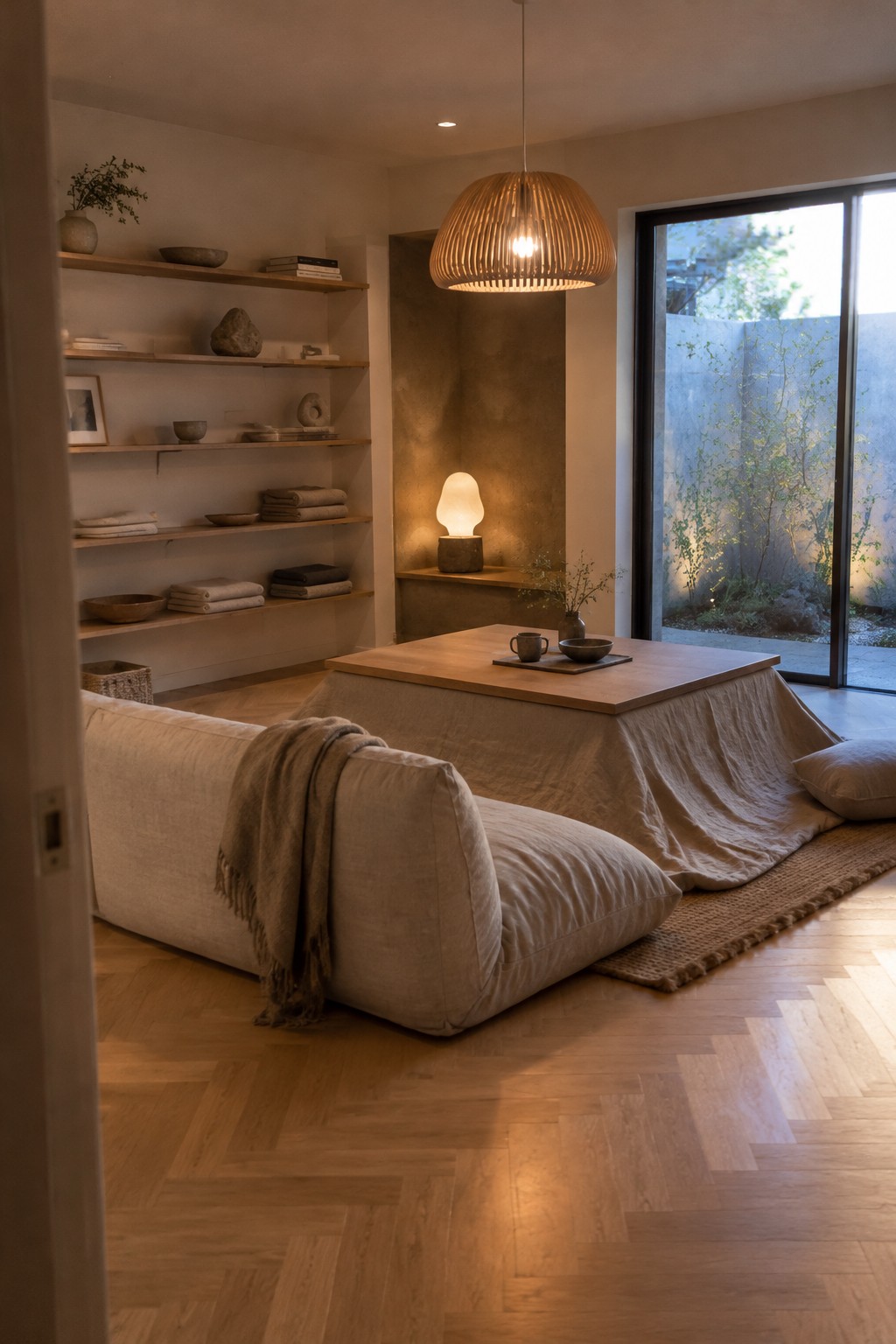
A woven pendant can make a living room’s main light feel softer without adding much visual clutter. Its open shade lets the bulb show through, while the woven material gives the fixture a more relaxed look than a plain metal pendant.
This style works well above a low coffee table or seating area, especially in a room with simple finishes. Choose a size that suits the furniture below it, and use a dimmable bulb so the light can stay gentle in the evening.
Use Branch Lighting for a Natural Japandi Look
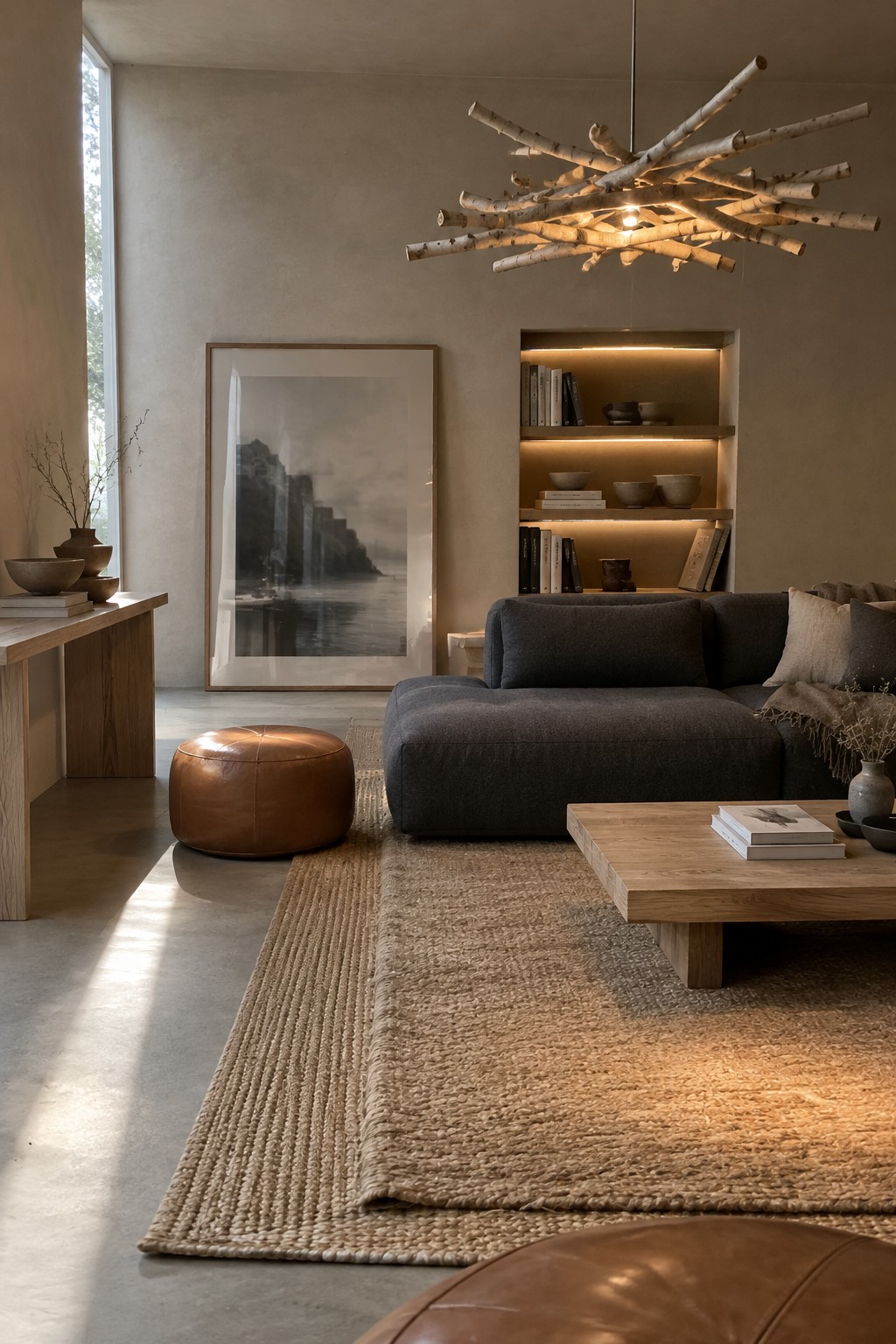
A branch-style chandelier can bring a natural material into a living room without making the room feel rustic. Its open, sculptural shape gives the main light some character while still fitting a calm Japandi scheme.
This style works best where the ceiling has room for a larger fixture, such as above a seating area. Keep the rest of the decor fairly simple so the branches remain easy to appreciate.
Use a Sculptural Metal Pendant for a Japandi Living Room
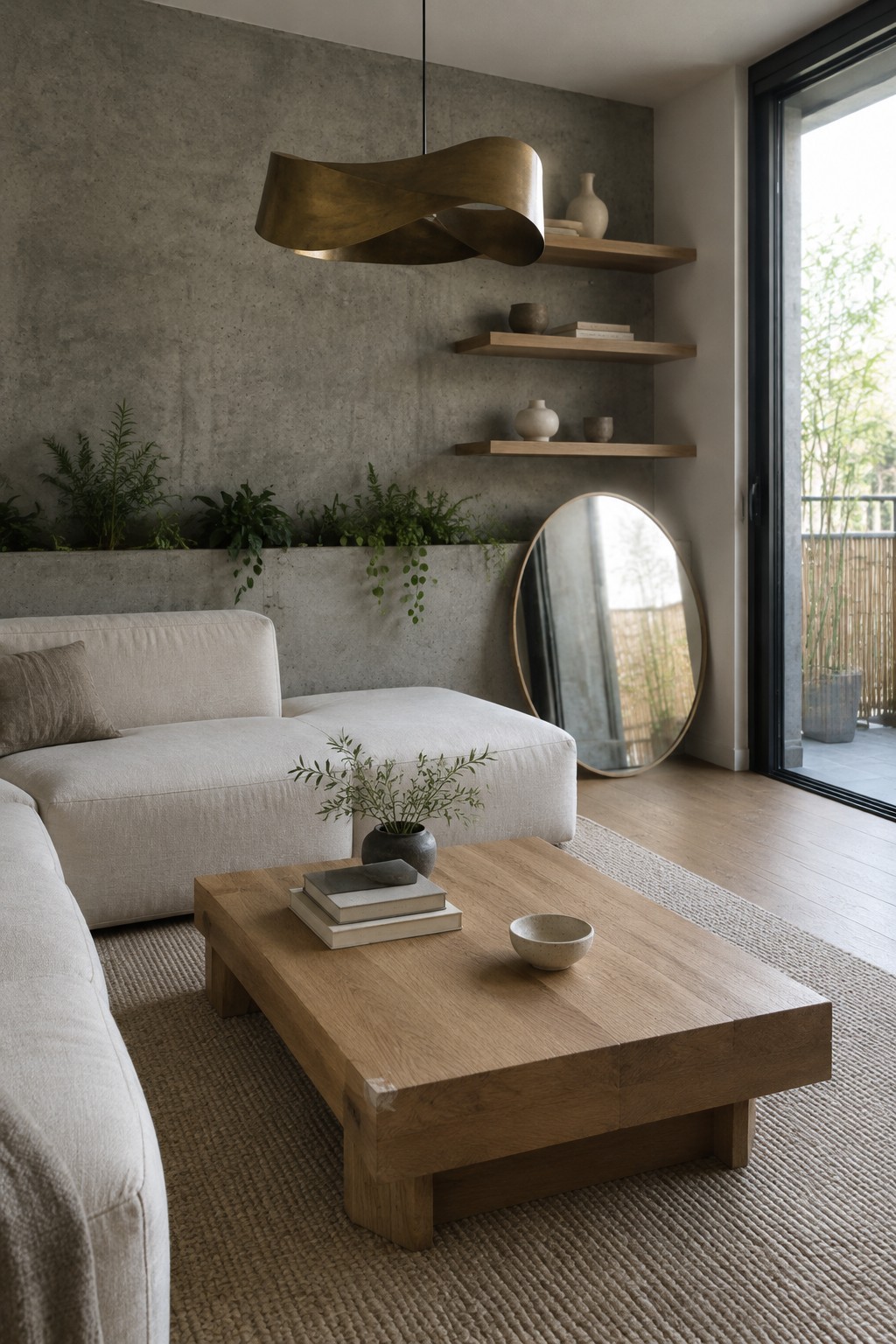
A sculptural pendant can give a calm living room a clear focal point without adding more furniture or decor. The curved bronze shade here has enough shape to stand out, while its muted finish suits the room’s natural materials.
This kind of fixture works well above a coffee table or near the center of a seating area. Keep the rest of the room fairly simple so the pendant has space to show its shape, and check that it hangs high enough to leave a clear view across the room.
Choose a Layered Pendant for a Japandi Living Room
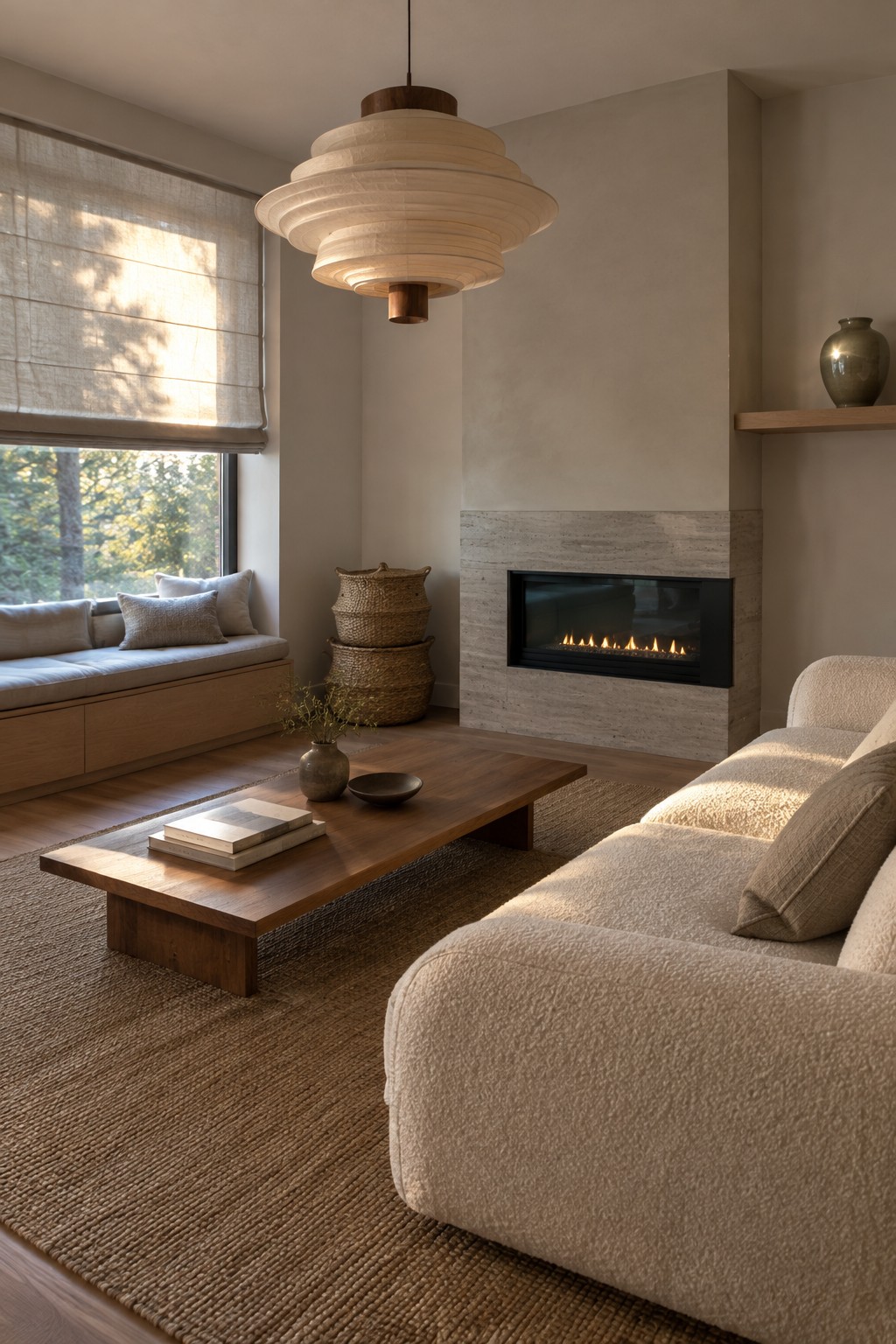
A pendant made from stacked, sculptural layers can give a living room a clear focal point without adding much visual clutter. The pale wood shade in this room has a softer feel than a sharply defined metal fixture, which suits Japandi spaces that favor simple forms and natural materials.
Use a larger pendant where it has room to stand out, such as above a coffee table or in the center of a seating area. Keep the rest of the lighting simple, and check that the fixture hangs high enough not to interrupt conversation or views across the room.
Use a Ribbed Glass Pendant as a Focal Point
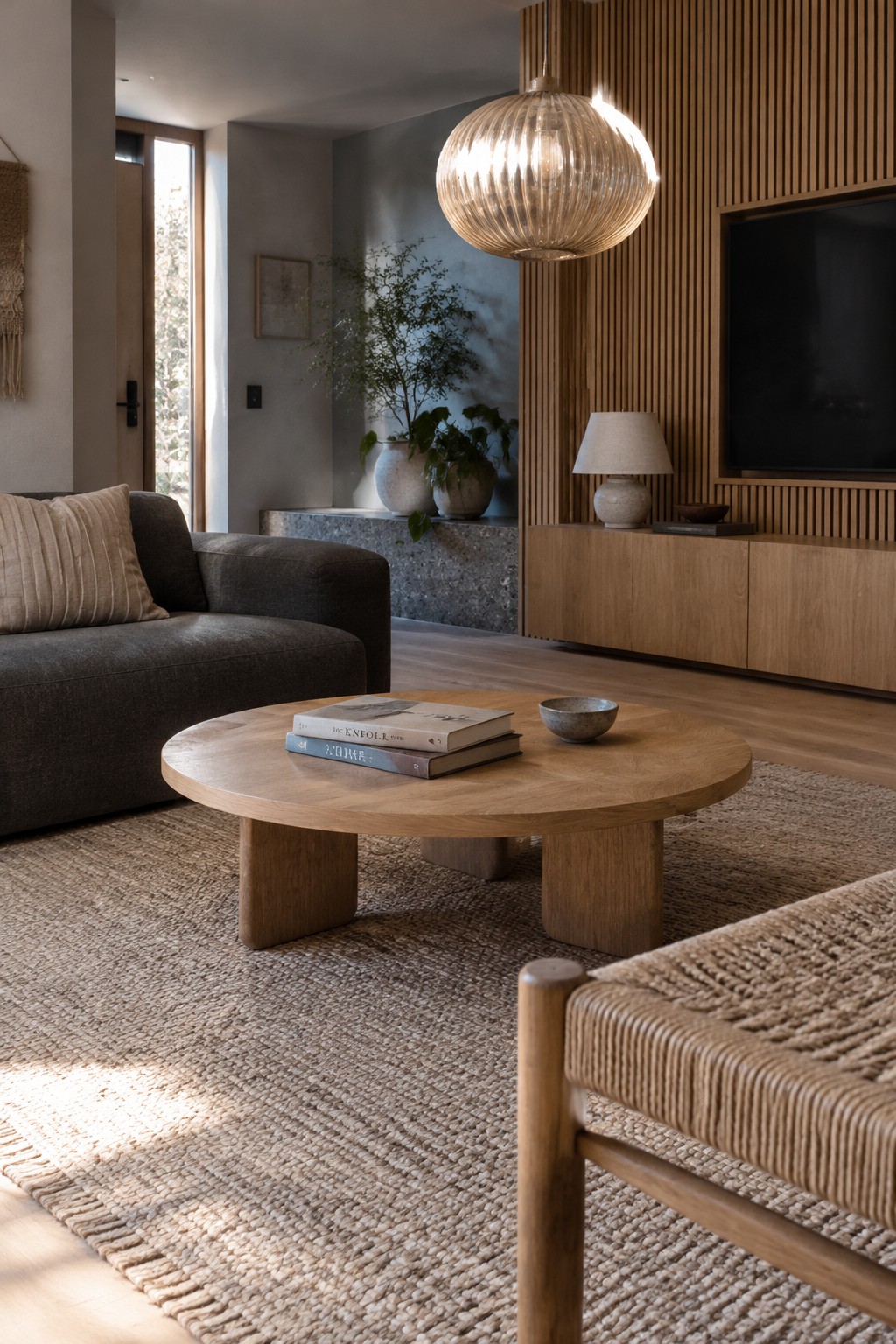
A ribbed glass pendant can make a living room’s main light feel more considered without adding a lot of visual clutter. Its rounded shape and textured surface stand out, while the glass still lets the light spread through the room.
This style suits a Japandi living room with simple furniture and natural finishes. Hang it where it has room to be seen, and check that its size feels right for the seating area rather than overwhelming it.
Use a Fabric Pendant for Gentle Overhead Light
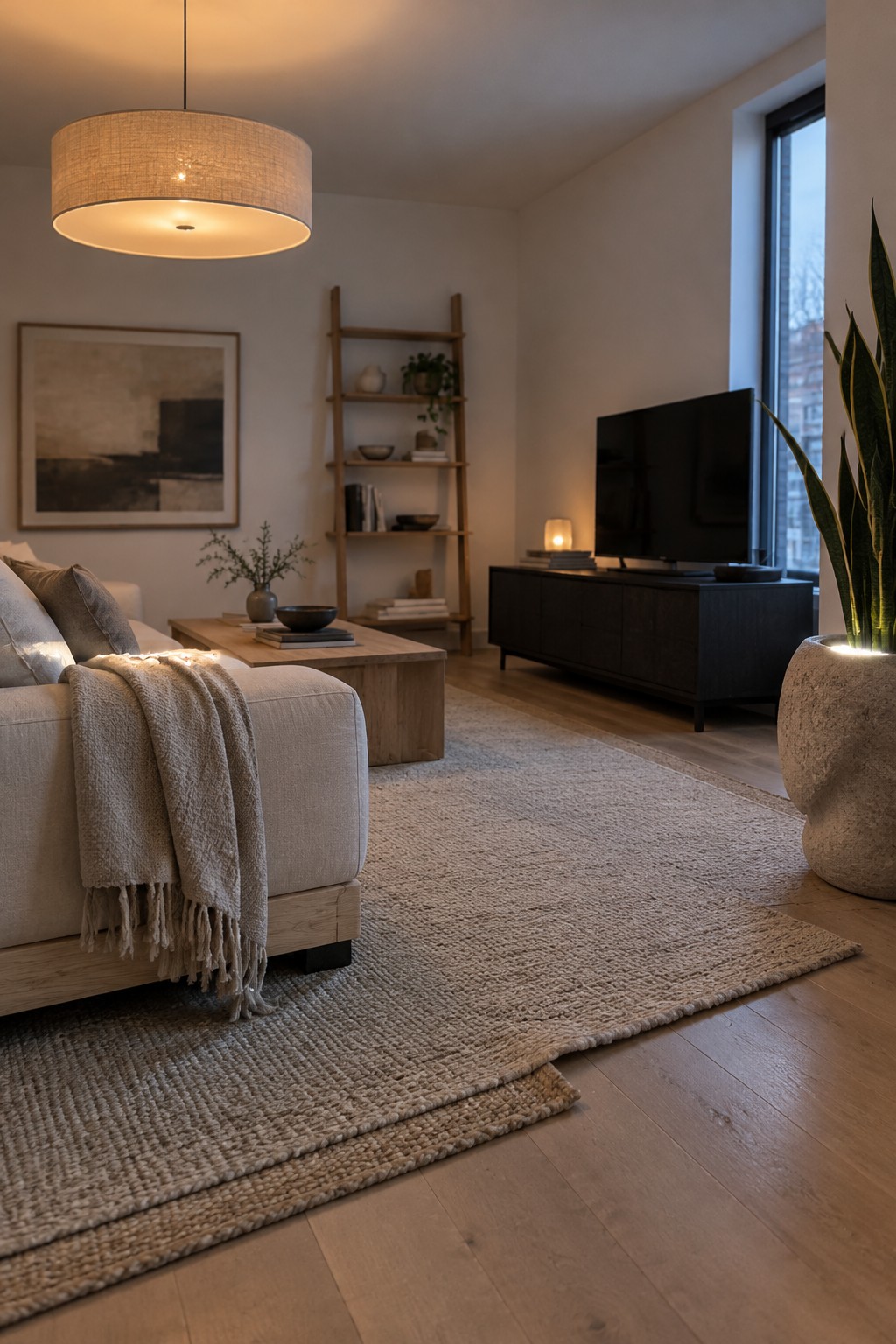
A fabric shade is a good choice when you want the main living room light to feel softer than a bare bulb or sharp metal fixture. Its broad shape spreads light across the room, while the woven surface fits naturally with the simple materials often used in Japandi interiors.
Hang one over a seating area, and keep its size in proportion to the room so it does not block sightlines. A dimmer is useful too, since the same fixture can provide brighter light for everyday tasks and a lower glow in the evening.
Choose a Scalloped Pendant for a Softer Look

A scalloped shade gives a pendant a softer outline than a plain dome, while still providing a clear main light for the living room. Here, the cream shade suits the natural wood cabinetry without competing with it.
This shape works well above a coffee table or in a seating area where the fixture can be seen up close. Keep the rest of the lighting simple so the shade remains easy on the eye.
Use Paper Lanterns to Layer Living Room Light
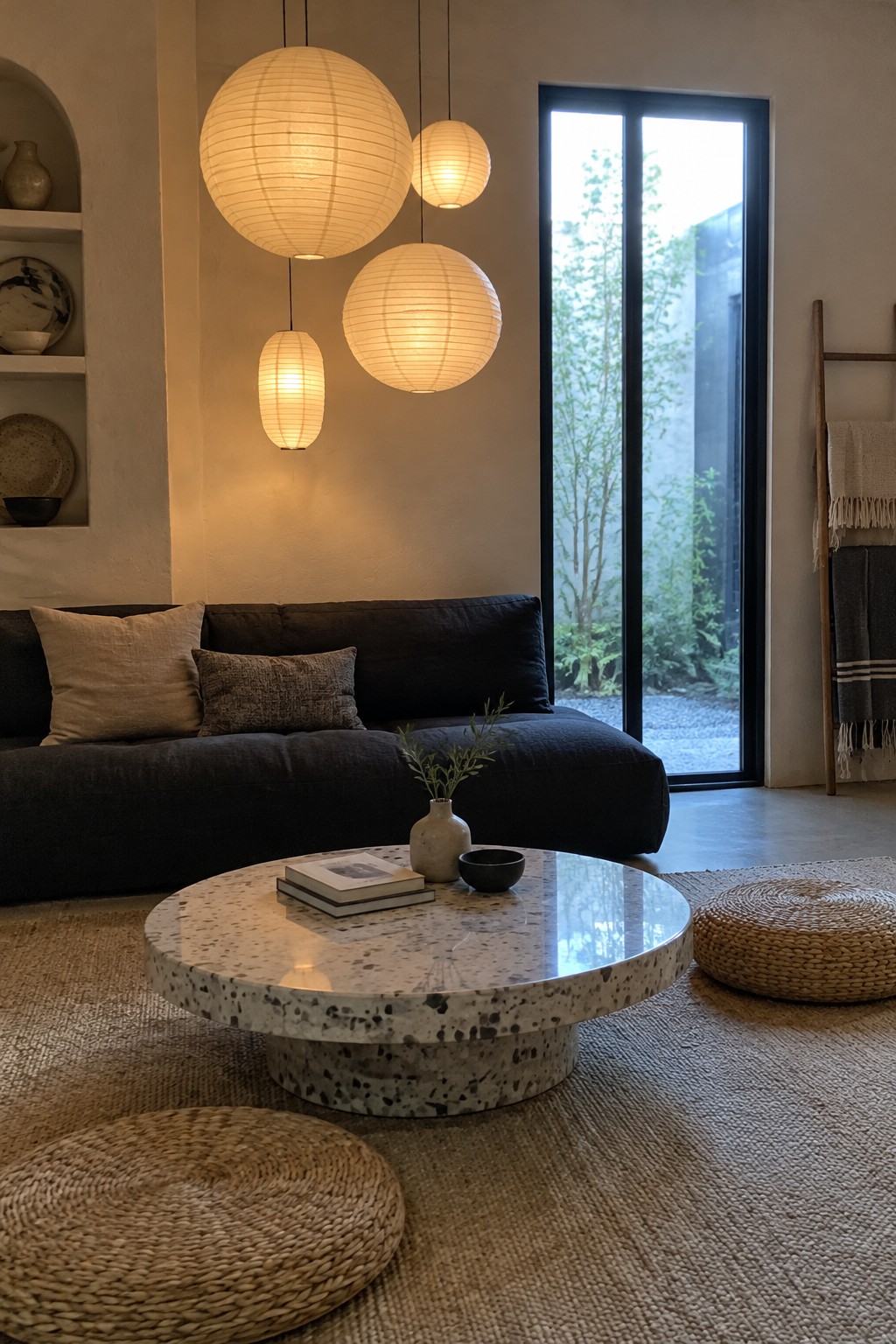
Paper lantern pendants are an easy way to make a living room feel calm and comfortable. Their softly diffused glow works especially well when several lanterns hang at different heights, giving the room gentle light without relying on one bright ceiling fixture.
Try a mix of round and oval shapes above a seating area, and keep the rest of the decor fairly simple so the lamps remain the focus. They suit relaxed, natural interiors, but leave enough space between the shades so the arrangement does not feel crowded.
Let the Pendant Set the Tone
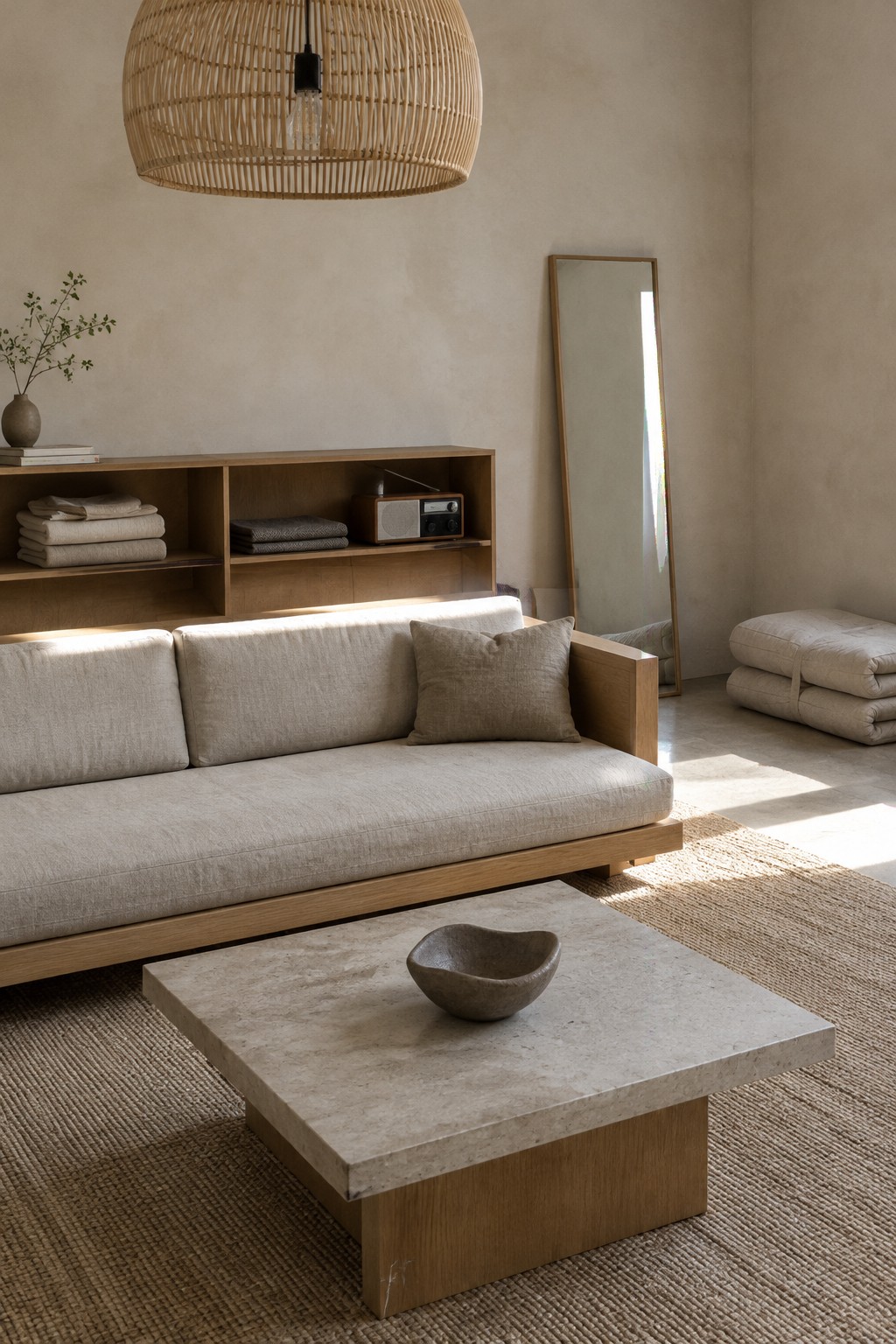
A woven pendant can be the main light in a Japandi living room, bringing natural texture to a simple, quiet space. Its open shade keeps the fixture from feeling too heavy while giving the room a clear focal point.
Choose a size that suits the seating area, and use a warm bulb for comfortable evening light. A rattan shade works especially well alongside pale upholstery and wood furniture, as long as the rest of the room stays fairly uncluttered.
Use a Linear Pendant for Even Living Room Light

A long pendant can suit a living room better than a single small fixture, especially when it hangs over a coffee table or seating area. The slim shape spreads light across a wider part of the room, while a simple finish keeps the fixture from competing with other decor.
Choose a pendant that fits the length of the table below it, and hang it high enough to keep sightlines clear. Here, a dark rectangular fixture with wood slats gives the room a natural touch without making the overhead light feel fussy.
Choose a Pleated Wood Pendant
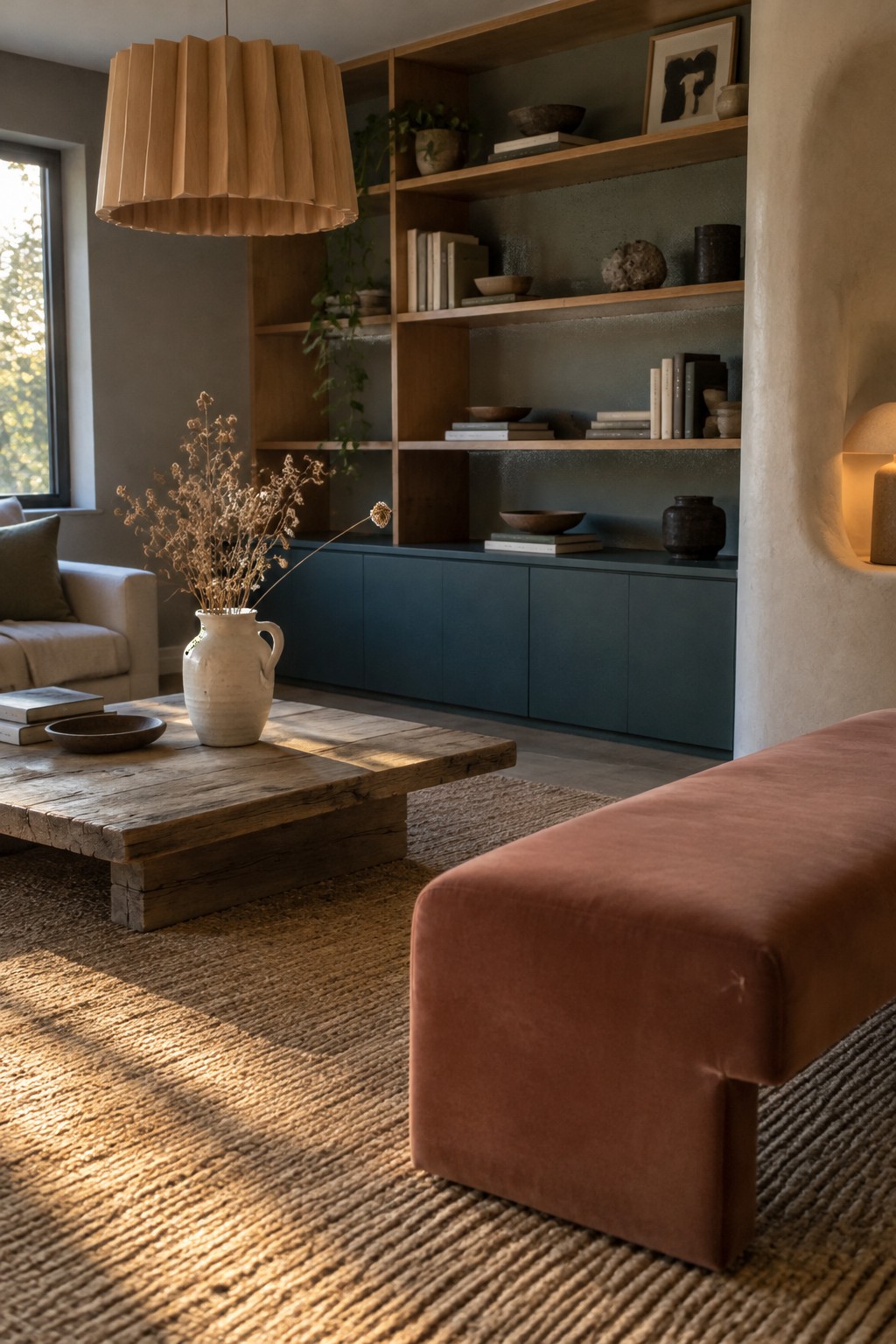
A pleated wood pendant can make the main living room light feel softer and more considered. Its warm material suits a Japandi room, while the repeated folds give the shade shape without making it look fussy.
Use a larger shade over a seating area where it can provide gentle general light. Keep nearby finishes fairly simple, and add a lamp or two for reading since one pendant may not light every corner well.
Use an Oversized Pendant as the Main Light

A large paper pendant can give a living room one clear source of overhead light without making the room feel formal. Its broad shape suits the calm, natural materials often used in Japandi spaces, and the warm glow feels gentler than a row of bright ceiling spots.
This works best over a seating area with enough open space around the fixture. Keep the shade simple and hang it high enough that it does not block conversation or sightlines. A dimmer is useful for shifting from everyday light to a softer evening glow.
Use a Woven Drum Pendant for Gentle Overhead Light

A woven drum pendant can give a living room a softer feel than a bare bulb or a very sleek fixture. Its broad shape spreads the light, while the woven band brings in a natural texture that suits a Japandi room.
Hang one over a coffee table or in the center of the seating area, and pair it with wall lights for reading or evening use. Keep the rest of the lighting simple so the pendant can stand out without making the room feel busy.
Use a Paper Pendant for Gentle Overhead Light
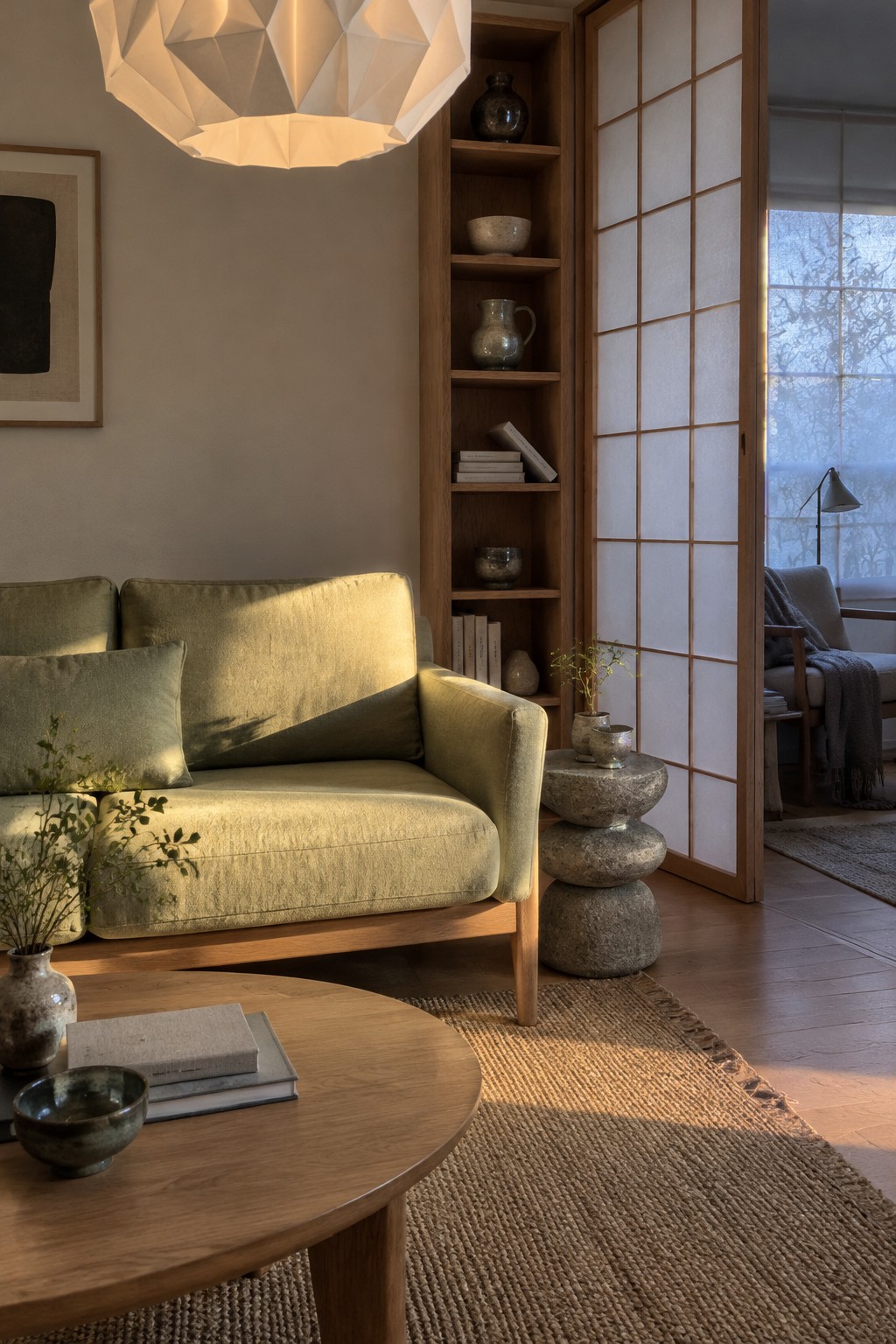
A large paper pendant can make the main light feel softer and less formal. Its folded shape gives it some presence, while the light material suits the simple, natural look often found in Japandi rooms.
Hang one above a seating area where it can spread light without getting in the way. Keep the shade in proportion to the room, and use a dimmer so the light can be adjusted for reading or a quieter evening.
Use a Cylindrical Paper Pendant for a Minimalist Look
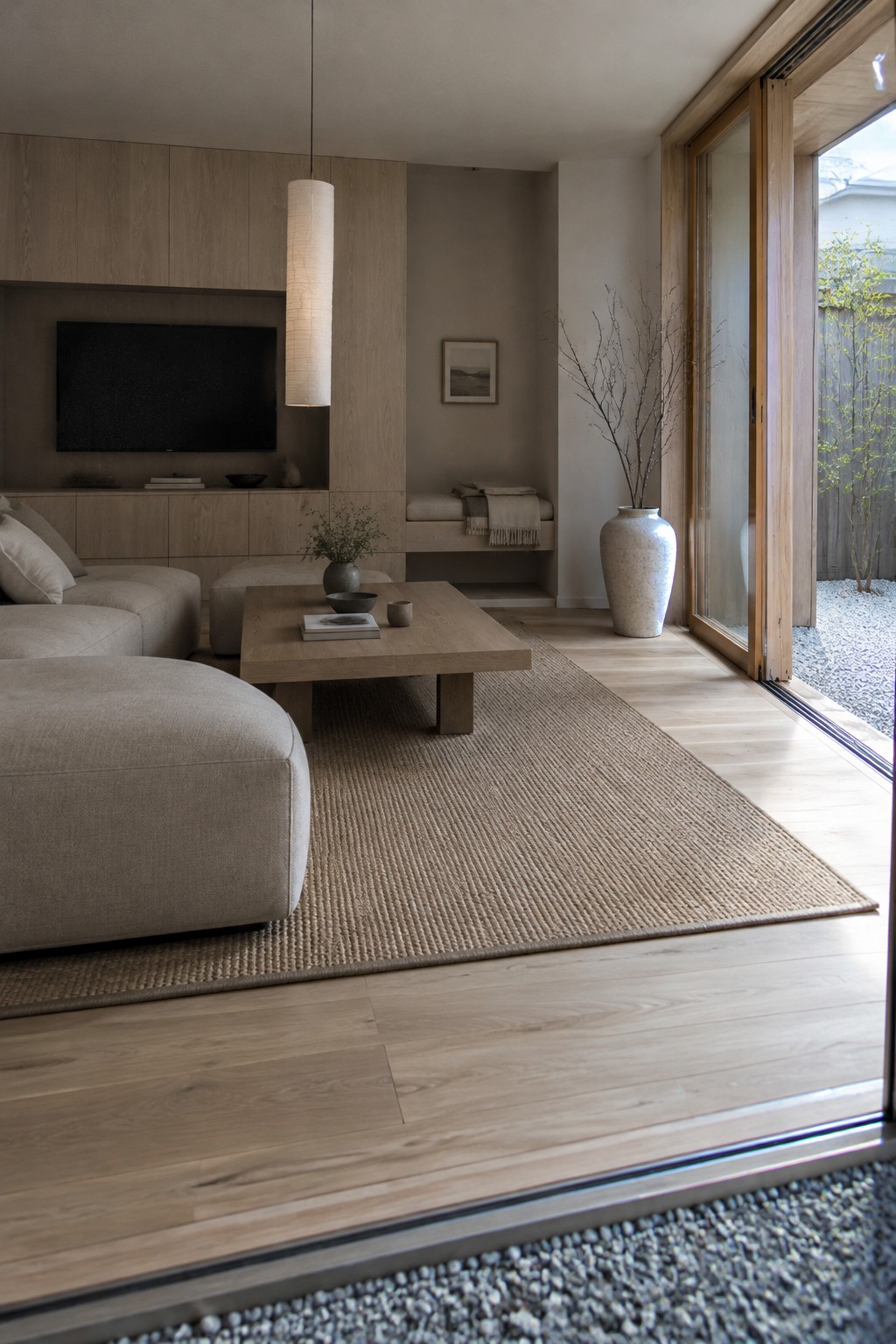
A simple paper pendant can make the living room’s main light feel less harsh. Its softly diffused glow suits Japandi rooms, where natural materials and uncluttered furnishings do much of the work.
Hang one above a seating area, making sure it is high enough to stay out of the way. A slim cylindrical shade, like the one shown here, is a good choice when you want a clear shape without a bulky fixture.
Frequently Asked Questions
Q: What kind of light fixture works best in a small Japandi living room?
A: Try a compact paper or fabric pendant with a simple shape. It gives off a soft glow without making the room feel crowded.
Q: How do I keep a dark wood or black fixture from feeling too heavy?
A: Balance it with pale walls, light upholstery, or a natural fiber rug. A shade that lets light through can also soften the contrast.
Q: Can I mix a modern ceiling light with a more traditional Japandi interior?
A: Yes. Look for shared details, like natural materials, clean lines, or a warm, muted finish. The fixture does not need to match every piece in the room.
Q: What bulb should I use for a cozy living room?
A: Choose a warm white bulb and check that it works with your fixture’s dimmer, if you have one. Cool, bright light can make a calm Japandi room feel stark.
