

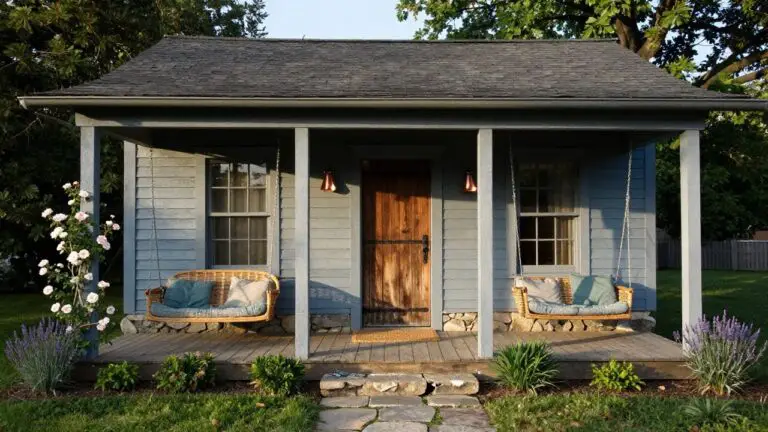
When I approach a house from the street, the facade color hits me first, pulling together the roofline, siding, and entry in a way that either welcomes or pushes away.
Rustic blue-grey tones ground everything in an earthy reality, blending seamlessly with natural stone or weathered wood to avoid that flat, painted-on look.
I’ve tested a few shades like this on smaller projects, and they age beautifully, softening over time just like the landscape around them.
Curb appeal thrives here.
Save the ones that match your lot’s light; adapting them makes a home read as truly settled into its spot.
Cottage Porch Swing Setup
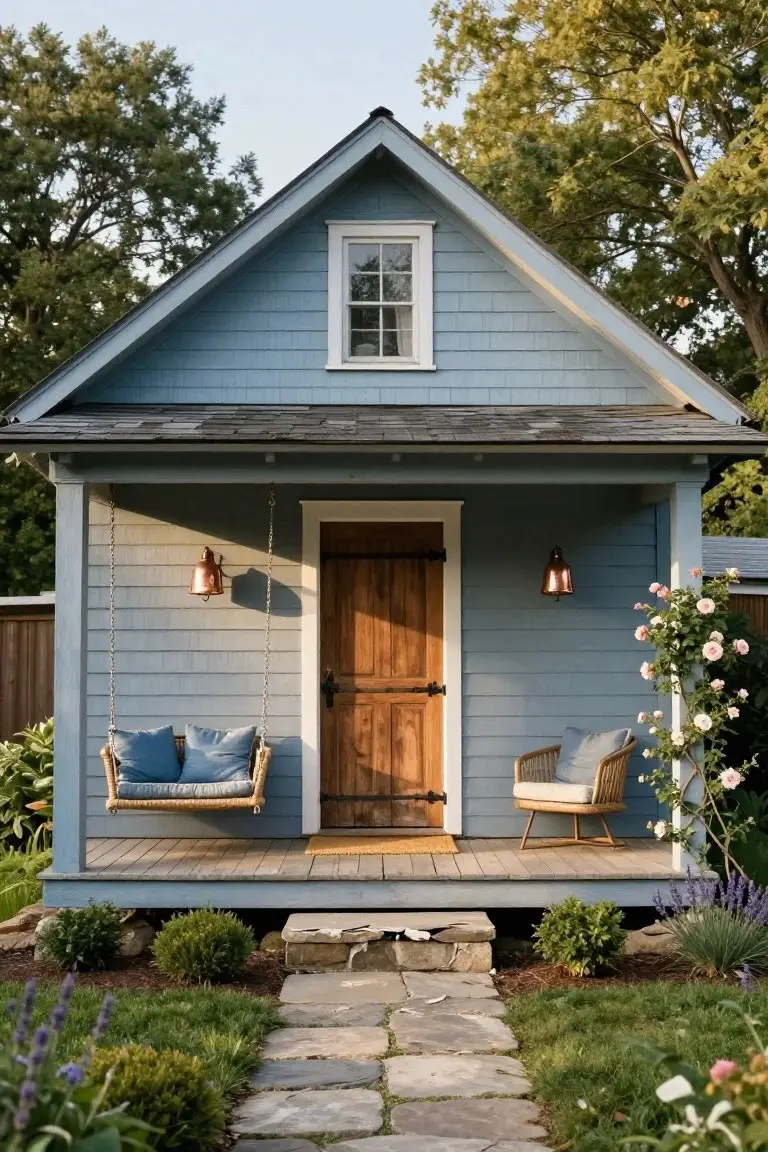
A porch swing like this one takes a simple blue-grey shingle house and turns the front entry into a spot you’d actually want to sit. Hung from chains under the covered porch, it sits right by the wooden door with cushions in a soft blue that matches the siding. Copper lanterns on each side add a bit of warmth without overdoing it, making the whole facade feel lived-in and easygoing.
This works best on smaller homes or cabins where you want that old-school rustic vibe. Hang the swing where it gets some shade, and keep the porch floor simple wood or composite. Skip anything too modern, like metal furniture, to let the earthy tones stay front and center.
Dark Blue Shingle Siding
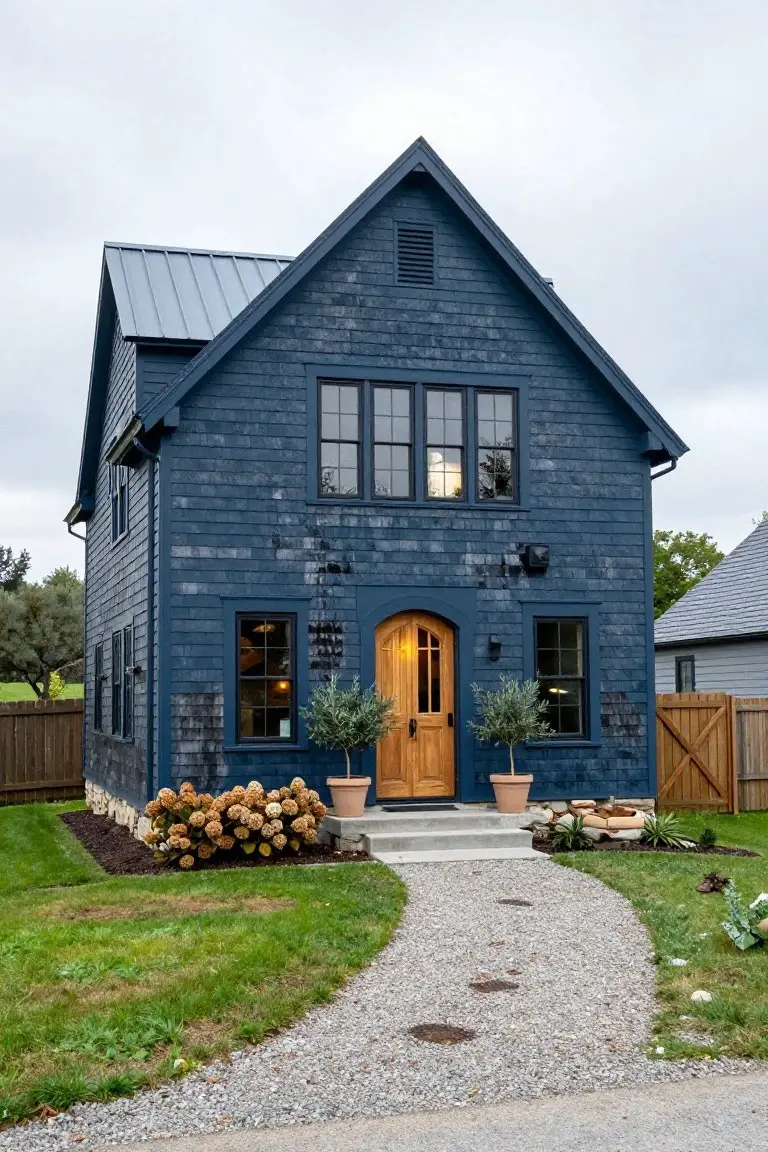
Dark blue shingles like these wrap the house in a moody, earthy tone that feels right at home in rural spots or wooded areas. The color picks up on stormy skies and evergreens, making the place look settled into its spot. That wood arched door pulls some warmth forward… without stealing the show.
Try this on a gabled cottage or small two-story home where you want curb appeal without fuss. Stick to black-framed windows and a metal roof to keep lines clean. Add gravel paths and big hydrangea clumps out front for that low-key tie-in to nature. It suits cooler climates best, where the shade reads cozy instead of cold.
Gabled Porch Entry Design
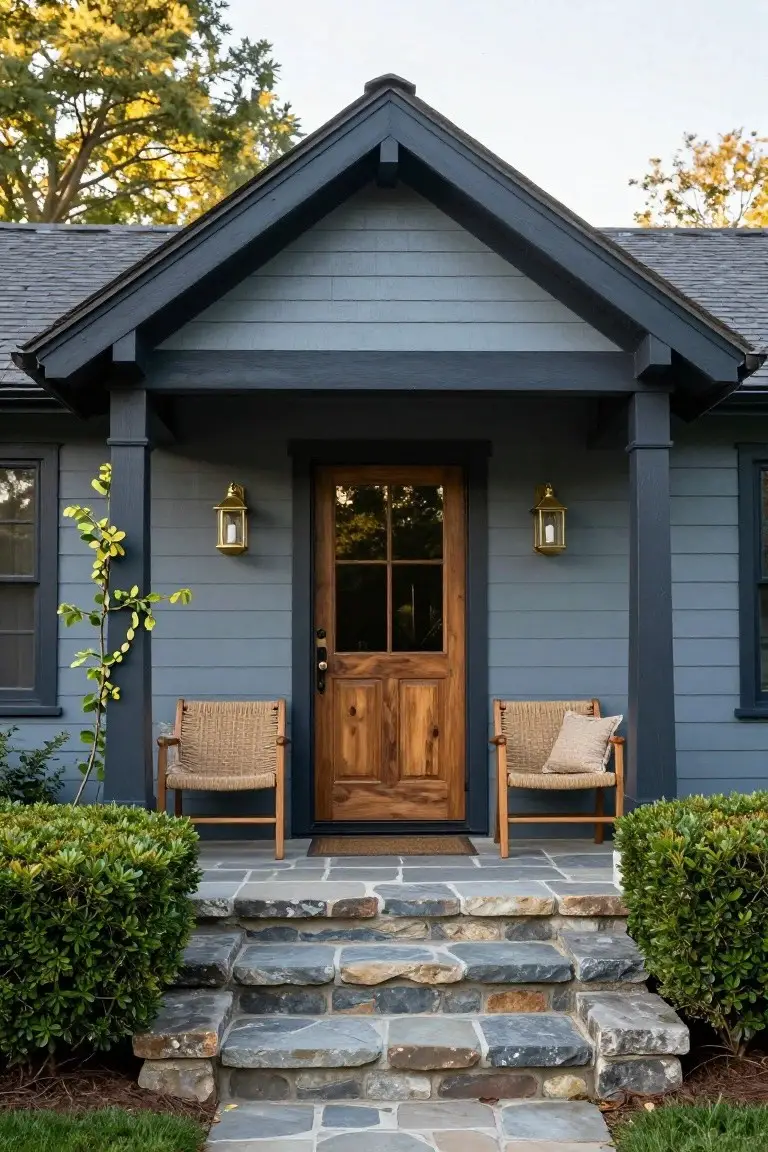
A gabled porch like this one pulls the eye right to the front door on a blue grey house. The dark trim on the posts and roofline sets it apart from the lighter siding, giving a sturdy rustic frame that feels solid and timeless. Those gold lanterns and the wooden door add just enough warmth without overdoing it.
This works best on one or two story homes where you want to highlight the entry without a big addition. Flank it with simple shrubs and stone steps for an easy path up. Skip fussy details. Keep seating casual, like rattan chairs, so it looks used every day.
Rustic Blue Grey Cabin on a Lakeside Dock
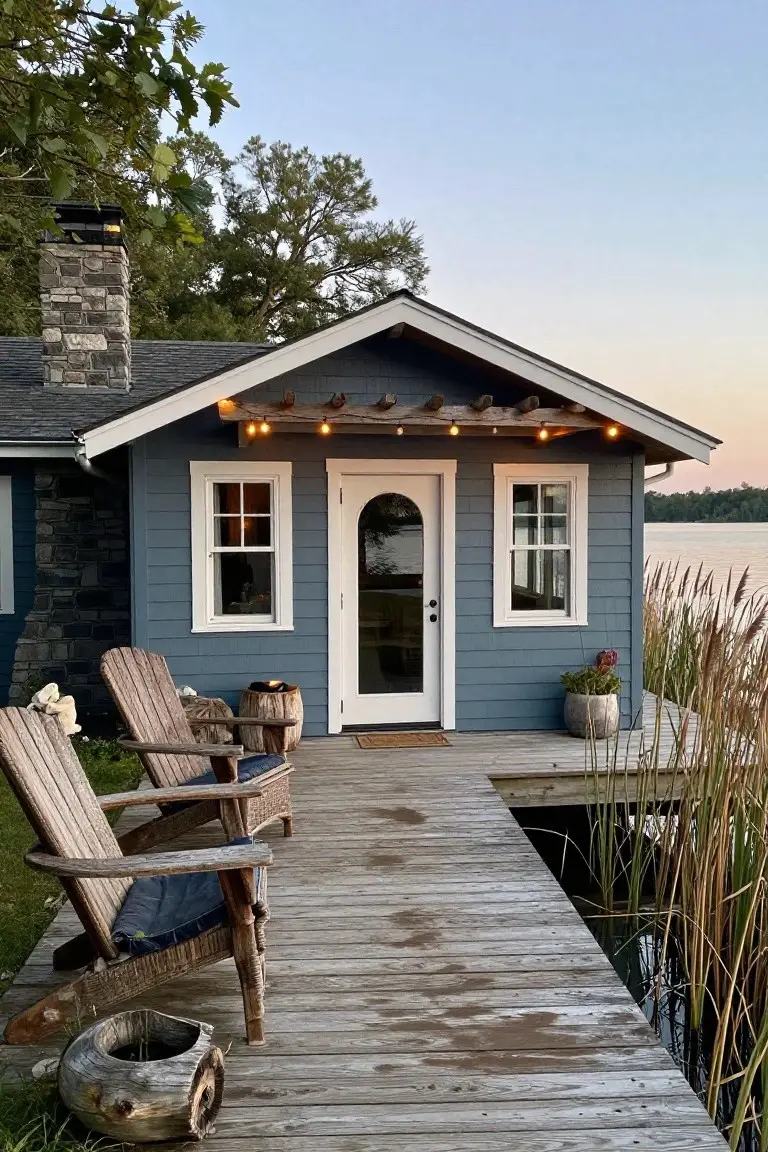
This little cabin pulls off a soft blue grey clapboard siding that sits just right against the water and reeds. The color echoes the lake without shouting, and the stone chimney base gives it some sturdy weight. Arched glass door and simple windows keep the front open and easy, like it’s waiting for you to step right in from the dock.
Paint something like this on a compact waterfront place, maybe a cottage or fishing shack. Stick with natural wood for the dock and porch so it all blends. Works best where you want low-key charm that doesn’t fight the outdoors. Skip bright trim though. Keeps things settled and real.
Stone Chimney on Blue Grey Siding
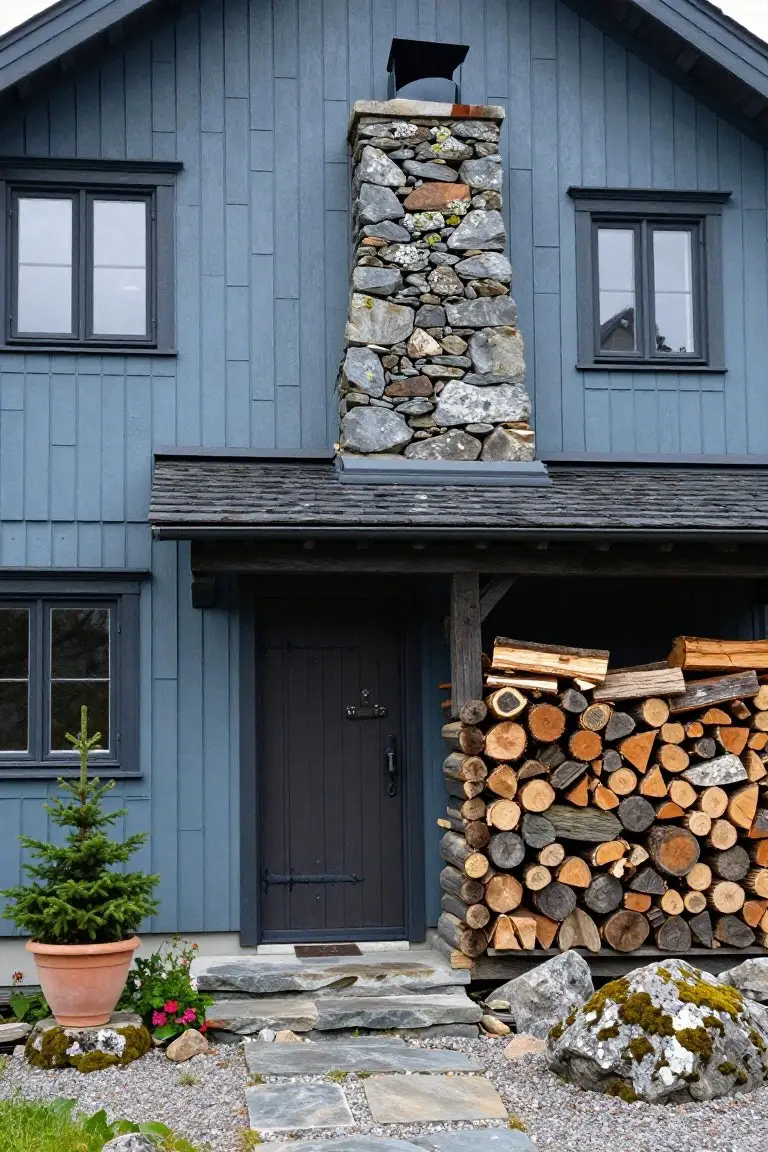
A stone chimney like this one runs straight up the side of the house, built from rough local rocks that match the surroundings. Paired with the even blue-grey siding, it brings in texture and a bit of wildness to what could otherwise be a plain wood exterior. That contrast keeps things interesting from the street.
Put this on homes in rocky or forested spots, where you can source stones nearby. A firewood stack right under the entry, as shown here, makes it practical too. It suits cabins or simple family houses that see a lot of winter use… just make sure the chimney ties into the roofline cleanly.
Soft Blue-Grey Shingle Siding
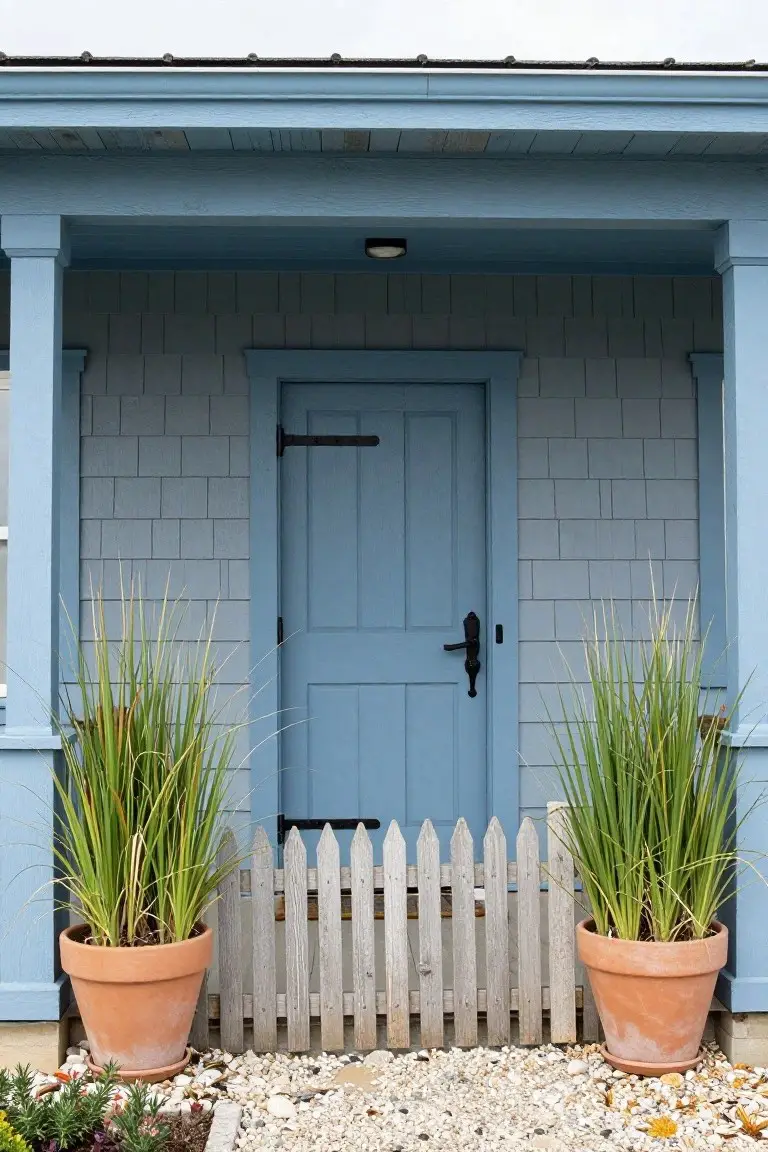
Shingle siding in a pale blue-grey tone gives a house that settled, earthy look, like it’s been there for years. Here the siding wraps the porch smoothly, and the deeper blue door stands out just enough to guide folks right to the entry. Flanking pots of tall grasses keep things simple and natural.
This siding style suits cottages or beach houses best, especially where you want low-key charm without fussy details. Use it on single-story homes to avoid overwhelming the scale. Go for gravel paths ahead of the door, and watch the paint sheen, matte finishes hold up better outside.
Rustic Grey Stucco Facade
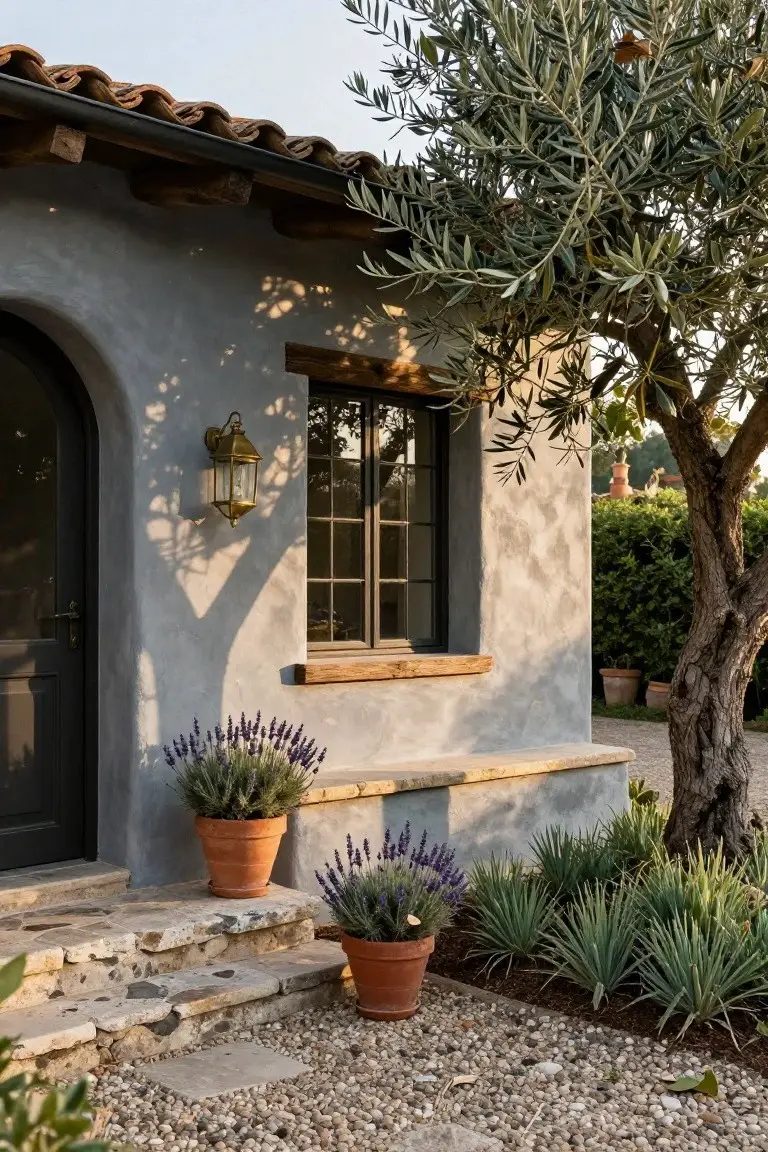
Soft grey stucco covers this house exterior, giving it a smooth but textured feel that looks naturally aged. The color sits between blue and neutral grey, pulling in the surrounding landscape without overpowering it. You see it here on the entry wall, where olive tree branches cast long shadows across the surface for extra depth on sunny days.
This works best on single-story homes or additions in dry climates, where it holds up without much upkeep. Pair the stucco with stone steps and terracotta pots of lavender like this, and it ties right into a yard with gravel paths. Skip glossy paints nearby. It keeps things feeling grounded and easy to live with.
Rustic Blue Grey Clapboard Siding
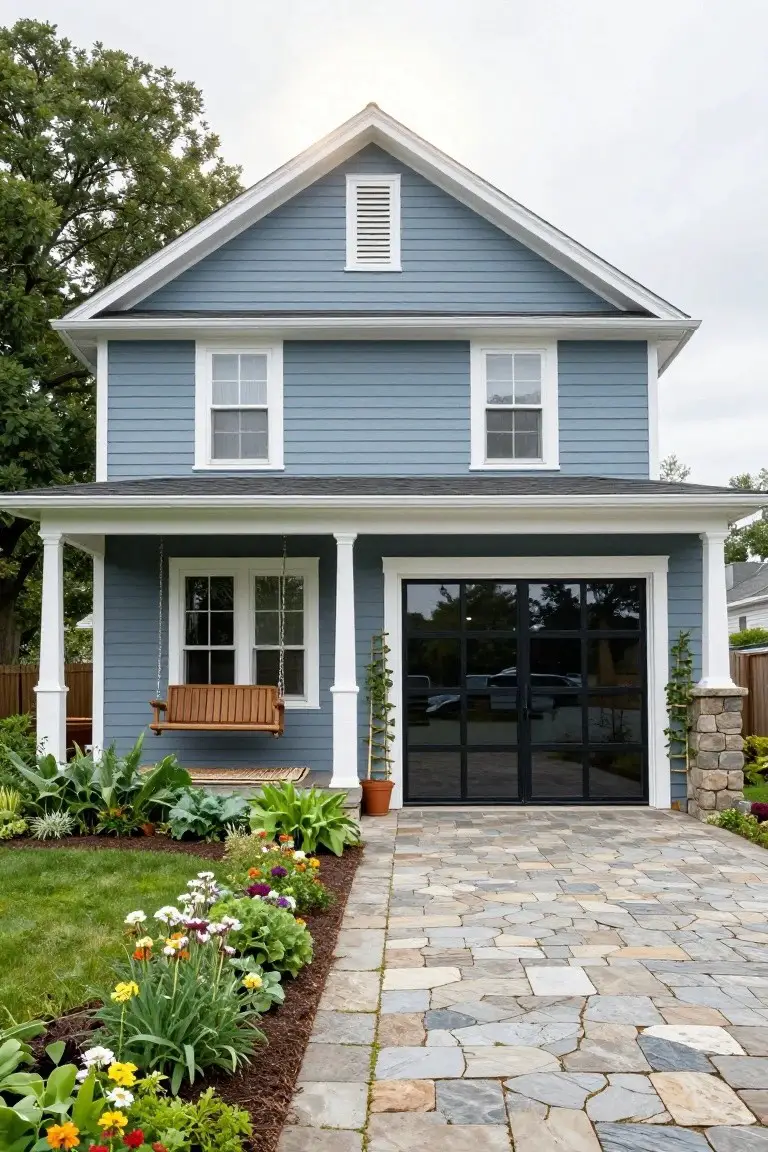
Blue grey clapboard siding like this turns a simple house into something that feels right at home in the landscape. The color picks up on overcast skies and nearby trees without being too bold. White trim around the windows and porch sharpens everything up. And that black garage door adds just enough punch.
Try it on homes with classic rooflines or a front porch. It suits Craftsman or farmhouse styles in milder climates. Keep plantings low around the base so the siding stays the focus. One thing. Scale the trim bold if your house sits back from the street.
Red Door on Blue Grey Exterior
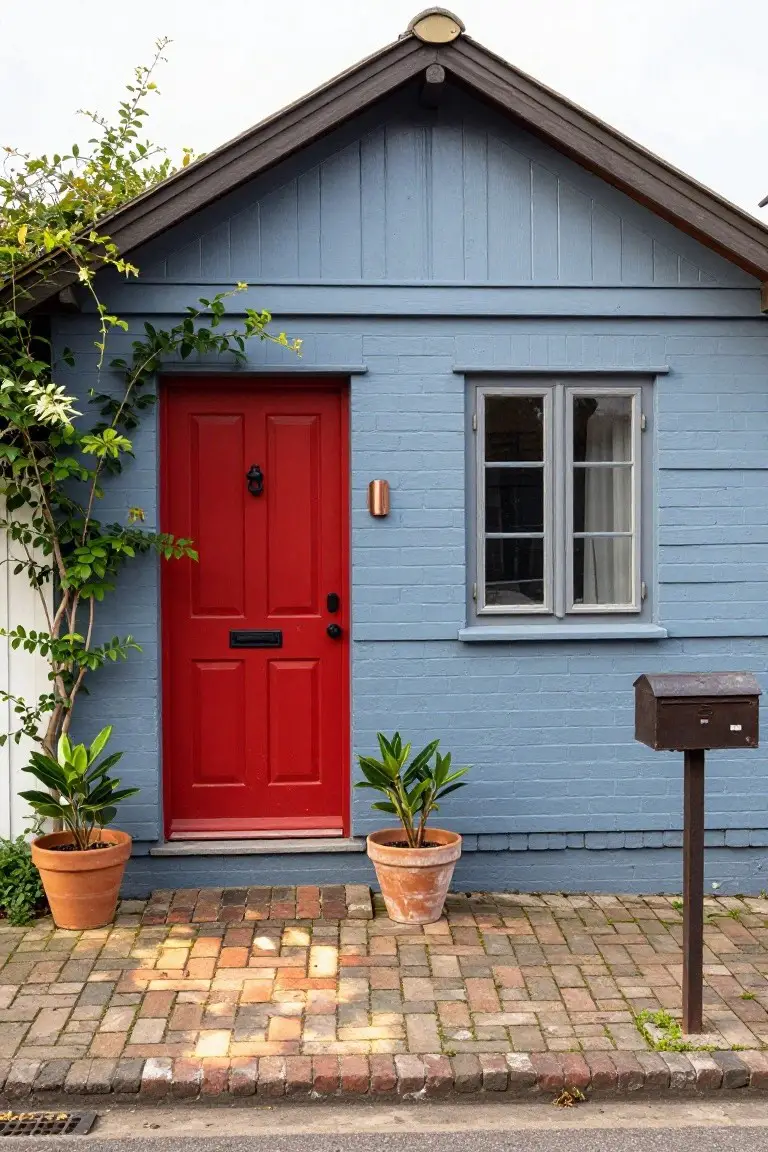
A red front door brings a lot of life to a blue grey house without overdoing it. That earthy siding color stays calm and rustic. The door pulls your eye right to the entry. A couple plants nearby keep things simple and grounded.
Try this on a small cottage or bungalow. It suits spots with some brick or stone details around the base. Just paint the door and add matching pots. Skip busy trim so the contrast stays clear.
Warm Wood Doors on Cool Blue-Grey Siding
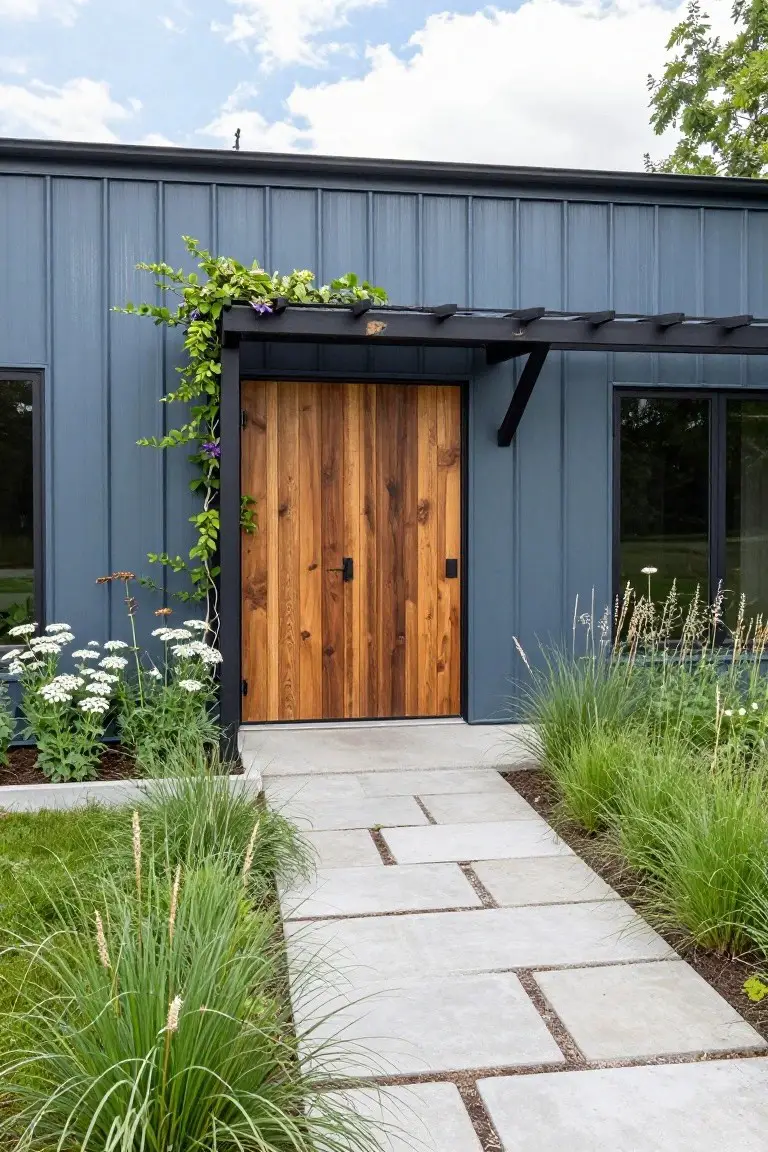
A double set of vertical wood doors sits right in the middle of this blue-grey metal siding house. That warm wood tone cuts through the cool siding color nicely. It gives the front a rustic kick without overdoing it. Folks notice the entry first now. Makes the whole place feel more lived-in and earthy.
Try this on a simple ranch or cabin style home. The contrast works best when you keep the rest plain, like with a black pergola overhead and a straight paver path leading up. Seal the wood good for outdoors. Skip fancy hardware. It suits yards with some tall grasses nearby… keeps things low fuss.
Rustic Stone Outdoor Kitchen
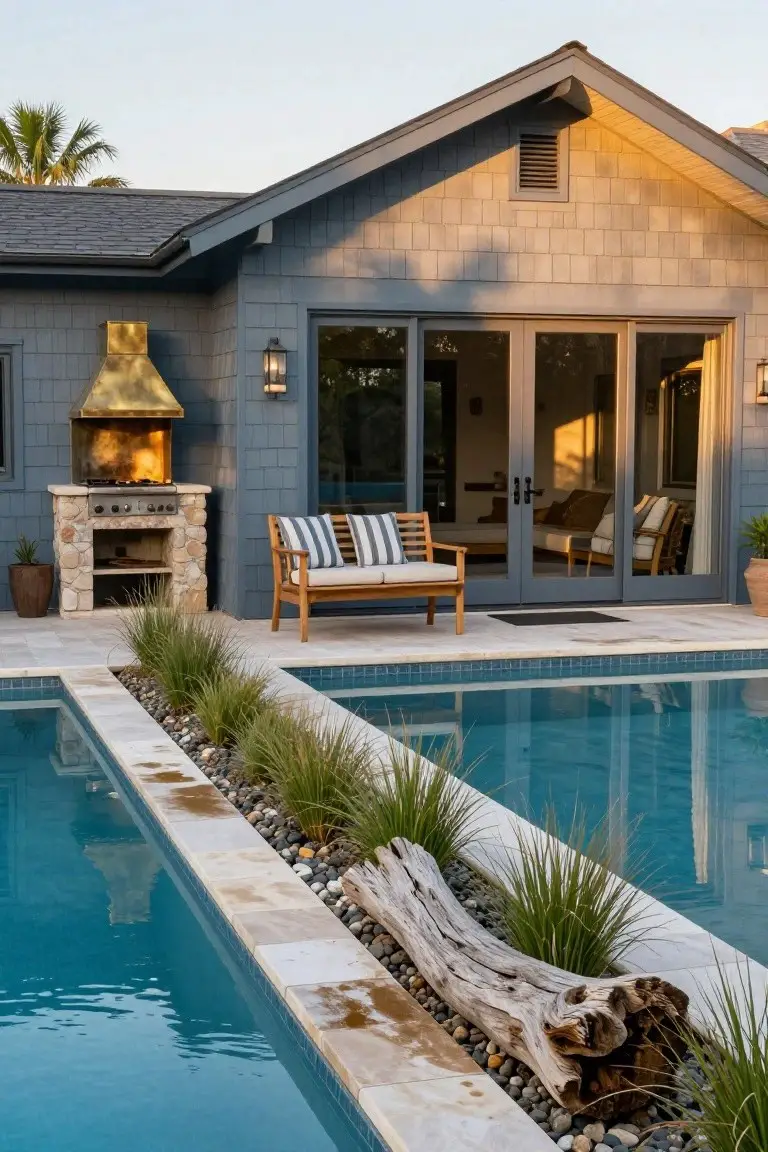
A built-in BBQ like this one brings real earthy character right up against the house. Made from rugged natural stones with a brass hood that catches the light, it fits naturally with blue-grey siding without stealing the show. It’s practical too. Keeps cooking outdoors while blending into the backdrop.
Put it along a patio near sliding doors for that seamless flow to indoor spaces, especially by a pool. This setup suits relaxed coastal yards or modern farmhouses wanting low-fuss entertaining. Skip glossy finishes. Stick to rough stone for the grounded look… it lasts better anyway.
Rustic Wooden Doors on Blue Grey Walls
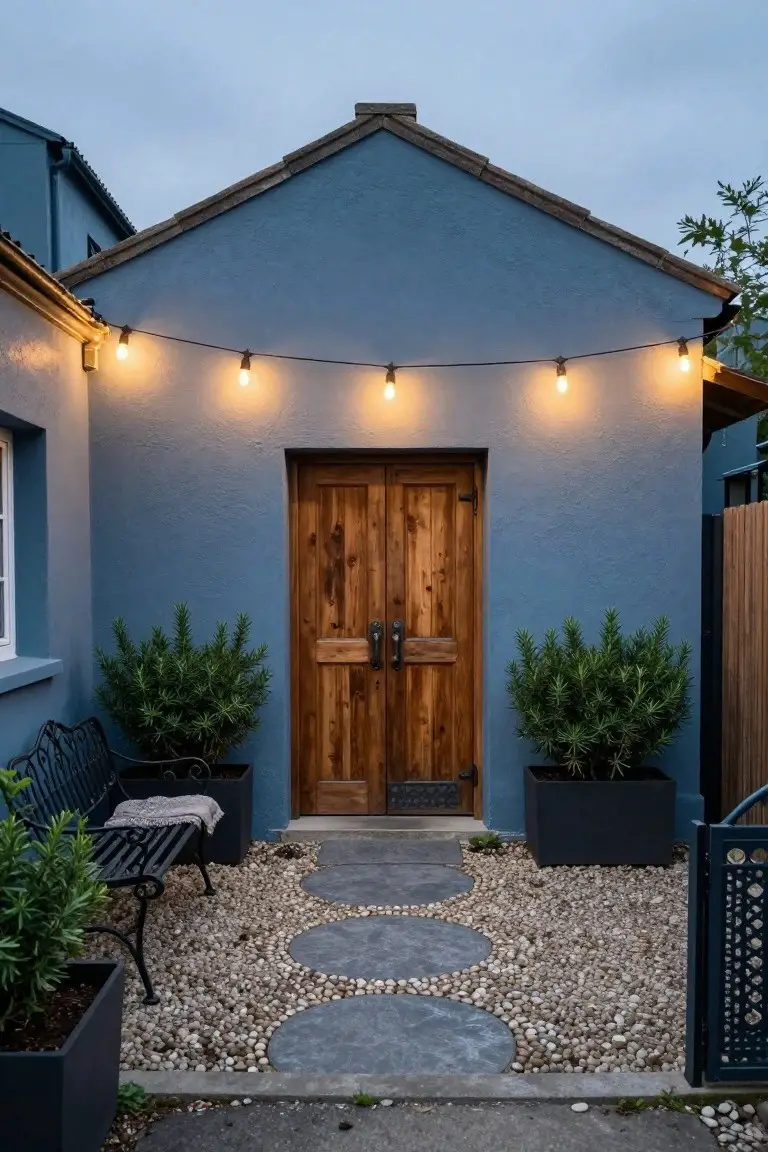
Those double wooden doors really stand out against the cool blue grey stucco. The rough wood texture warms up the smoother wall without overpowering it. It’s an easy way to give a house more character at the entry, especially when the rest stays simple.
Try this on a compact home or guesthouse where you want earthy vibes. Frame the doors with tall skinny plants in dark pots, like rosemary bushes. Skip fancy hardware. It fits older styles or modern rustic looks, and holds up well in mild weather.
Vine-Covered Pergola for Patio Shade
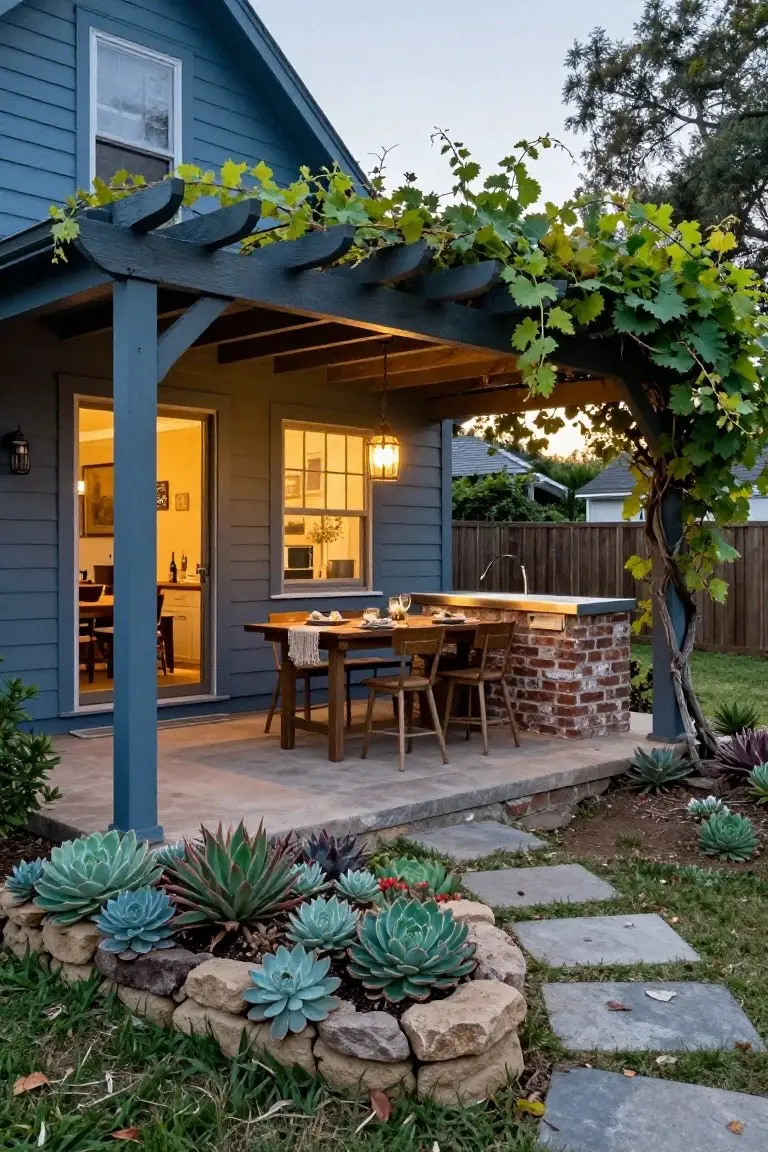
A simple pergola like this one, built with dark wood beams and draped in grapevines, turns a basic patio into usable outdoor space. It sits right off the blue-grey house, blending with the clapboard siding while the vines add that soft, earthy layer. Shade from the leaves keeps the dining table and kitchen island comfortable even on warmer days.
This works best on side patios or where you want to extend the kitchen outdoors. Go for sturdy posts that match your house trim, and pick vines that grow quick but not too wild, like grapes. Suits milder spots where plants thrive year-round. Just trim them back now and then to keep the view open.
Recommended Products

WONDERFUL SHOWCASE. The birdcage shape and four tall side panels make the structure a nice choice for climbing vines like ivy, clematis, wisteria, grape vines, flowers and more — allows them to grow naturally up towards the top.

【Premium Material & Excellent Load-bearing】The top of the pergola has a remarkable load bearing of 55 lbs/㎡, which is resistant to various complex weather conditions as long as it is wall-mounted with expansion bolts. Besides, the polycarbonate top is able to reflect 99% of UV rays and thus provide UV protection. Besides, the maximum wind resistant grade is 7(31-38mph) and the maximum snow loading depth is 4 inches after you install the ground nails and expansion bolts.

Excellent Load-Bearing:With the impressive and great load-bearing of 55lbs/㎡, this pergola is able to endure heavy snow or rain, and challenge other bad weather conditions. You have to fasten it securely on the wall and ground so it can better work
Rustic Wood Porch Awning on Blue Grey Siding
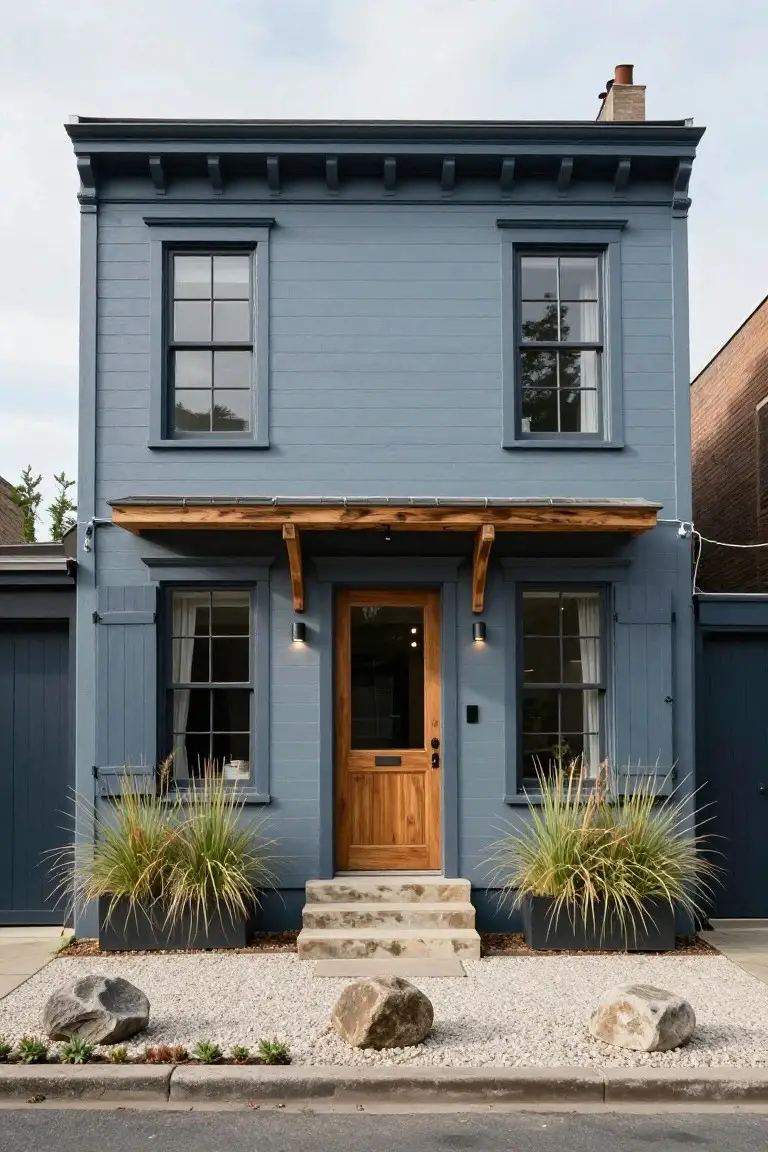
A simple wooden awning over the front door brings real warmth to a blue grey house exterior. The exposed beams and natural wood tones stand out against the cool clapboard siding. It gives the whole facade a cozy, lived-in feel without much fuss. Folks like how it nods to old farmhouses but keeps things modern enough for a city lot.
Try this on a two-story home where the entry needs more presence. Use reclaimed wood for the beams to keep costs down and add character. Pair it with a solid oak door like you see here. It works best on narrower street-facing houses. Just make sure the awning doesn’t overhang too far or it might block light from the windows.
Balcony Bench Against Blue Fence
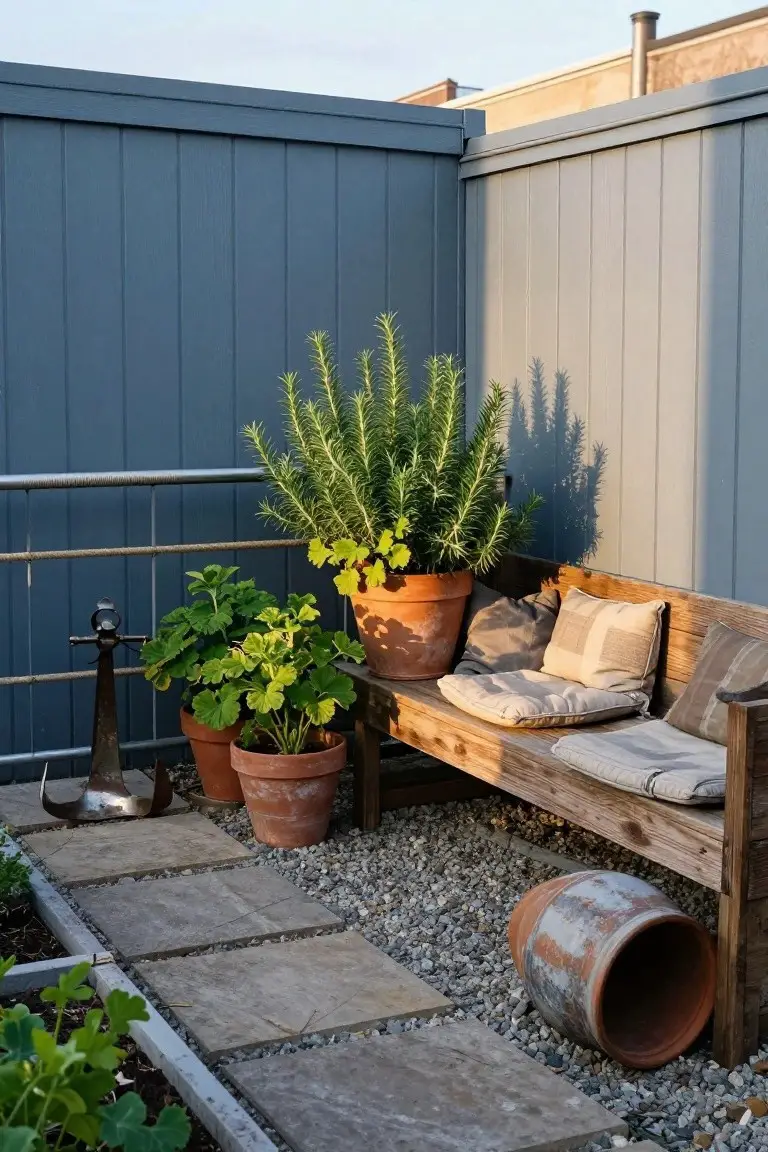
A simple wooden bench pushed right up against a blue-grey fence makes for an easy outdoor spot. Add a couple big terracotta pots with rosemary or geraniums next to it, and you’ve got that earthy rustic vibe without much work. The gravel underfoot and stone path keep things low-key and practical.
This works best on small balconies or rooftops where space is tight. Go for weathered wood on the bench to match the fence color, and pick tough plants that handle sun. Skip fancy pillows if you want it to stay real-life usable. Fits homes with that blue-grey exterior looking for a chill hangout area.
Frequently Asked Questions
Q: How do I choose a blue grey shade that feels truly rustic and earthy?
A: Head outside on a cloudy day and snap photos of your house from different angles. Compare them to shade swatches under the same light, picking one with warm undertones like a hint of taupe. That way it blends right into the landscape.
Q: What trim color pairs best with blue grey siding?
A: Go for crisp white trim. It pops against the muted blue grey and keeps the rustic vibe clean without overwhelming the earthy tones. Test a small section first to see how the sun hits it.
Q: Will blue grey hide dirt and weathering over time?
A: Yeah, it masks dust and light grime way better than brighter colors. Just hose it down once a season with mild soap, and it stays looking fresh. And skip harsh chemicals, they strip the earthy patina you want.
Q: How can I add rustic texture without breaking the bank?
A: Nail up some rough-sawn wood shutters or plank accents around windows. Source reclaimed boards from local salvage yards for that authentic, lived-in feel.
