

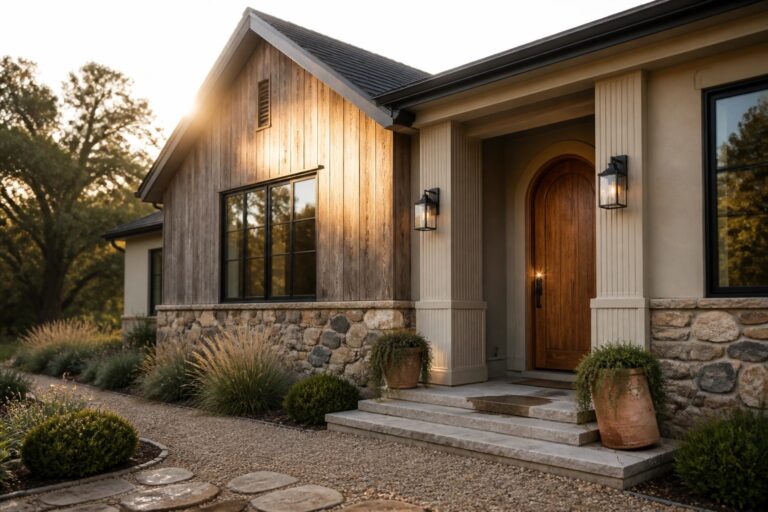
Choosing exterior colors works best when the wood, stone, and clay on the house already set the direction instead of starting from a color chart.
I have noticed that warm trim then pulls those materials together in a way that shows up clearly from the street and holds steady as the light shifts.
Many facades end up looking flat because the tones were chosen without testing how they sit next to the real textures.
Small adjustments to the trim shade often change how the whole front reads more than swapping the main wall color does.
Trying the combinations on site still feels like the only reliable step before committing.
Wood Siding With Stone At The Base
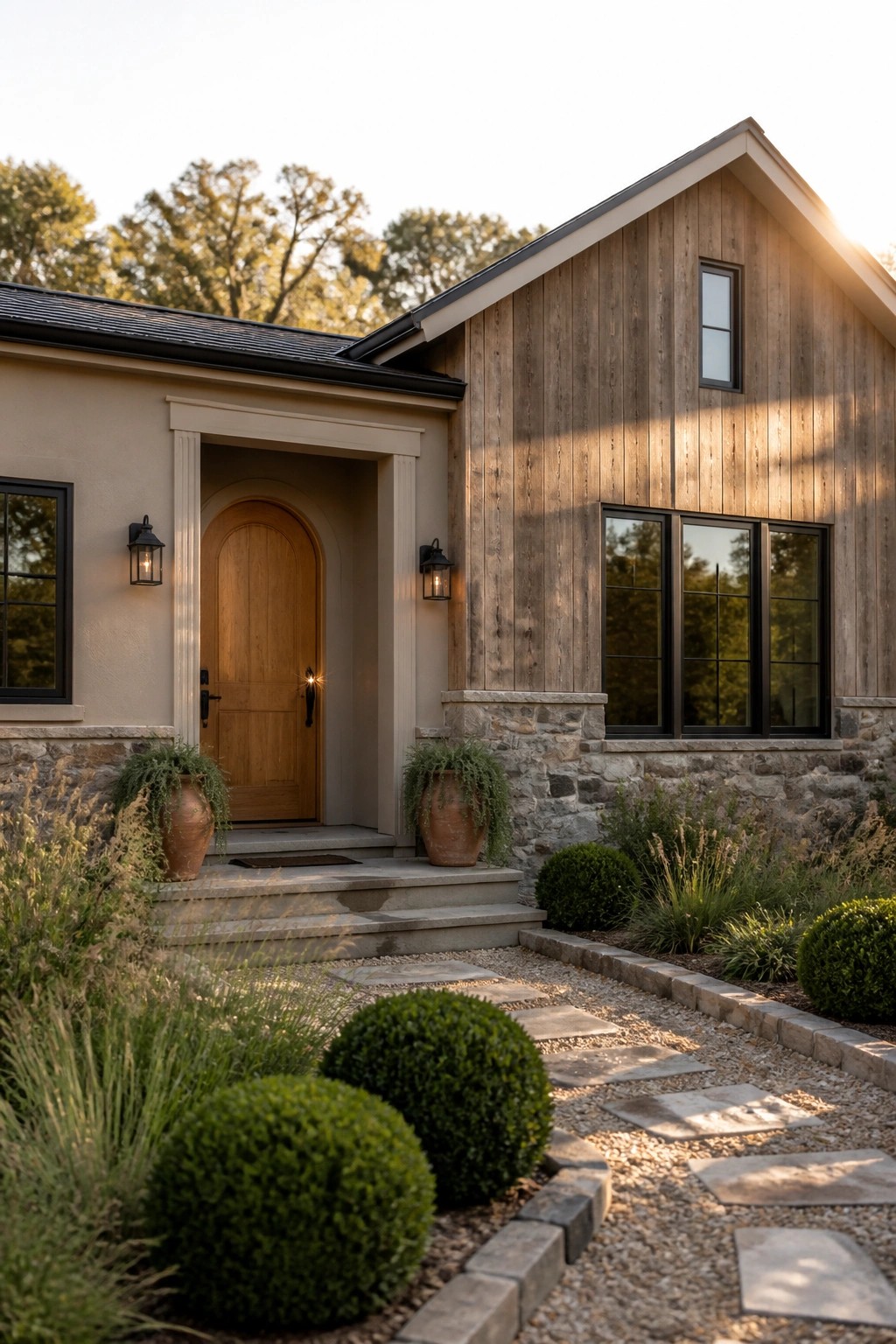
This mix keeps an exterior from feeling too light or too heavy. The vertical wood adds warmth up high while the stone anchors everything at ground level. It works especially well with earth tones because both materials already carry those colors naturally.
Use it on homes where the foundation sits a little above grade. Keep the stone section low and let the wood run the rest of the way up. The terracotta pots near the steps show how small clay accents can tie the whole look together without extra color.
Pairing Wood Doors With Stone On Earth Tone Walls
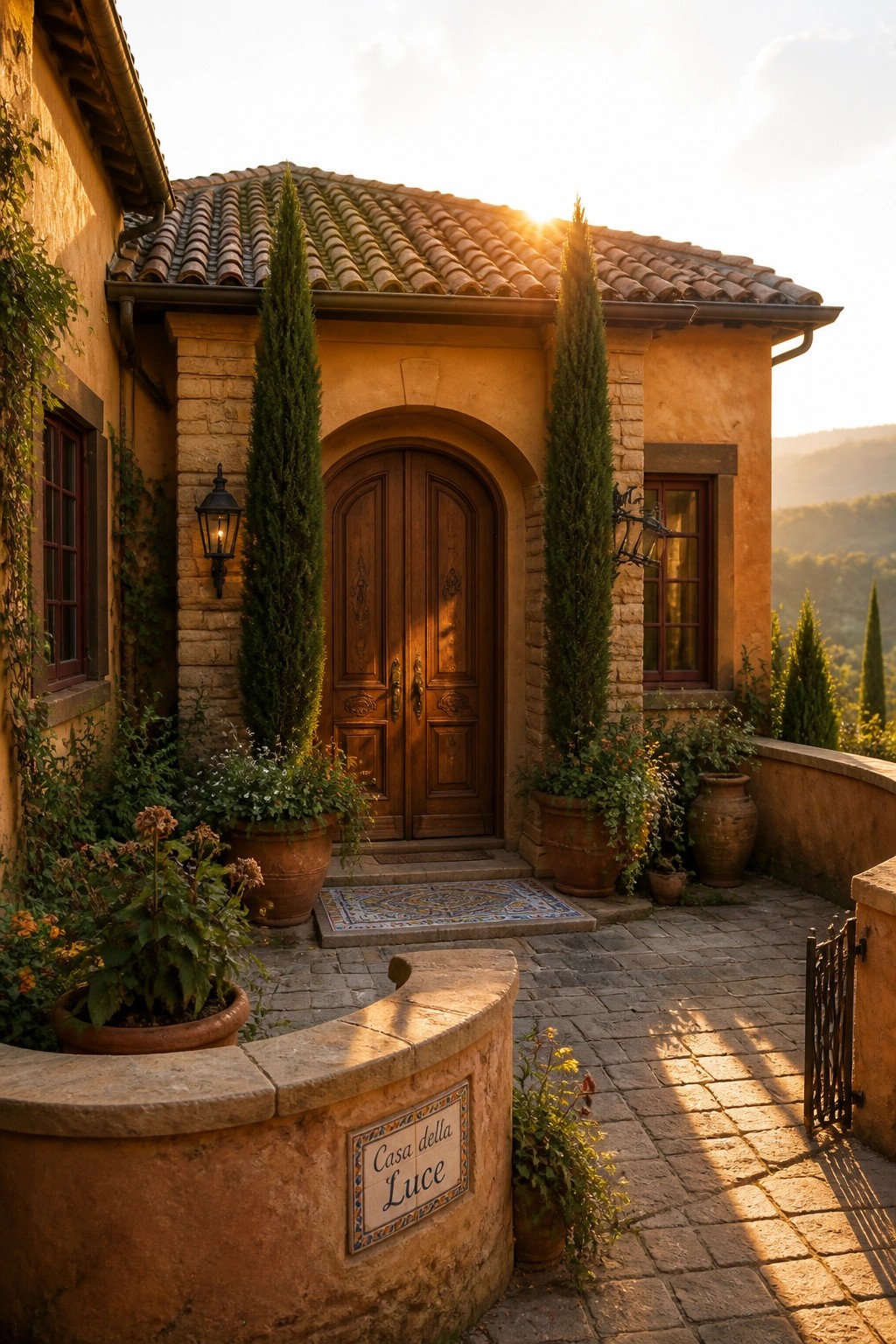
A solid wood door stands out nicely against stone and warm stucco. The natural grain of the wood brings a bit of softness to the harder surfaces while still keeping everything in the same earthy palette. It works especially well when the trim and accents stay in similar clay and sand tones.
This approach suits homes that already have stone details or stucco walls. Keep the wood finish fairly natural rather than painted, and let the door itself be the main focal point instead of adding too many extra colors around it.
Stone Bases With Wood Siding
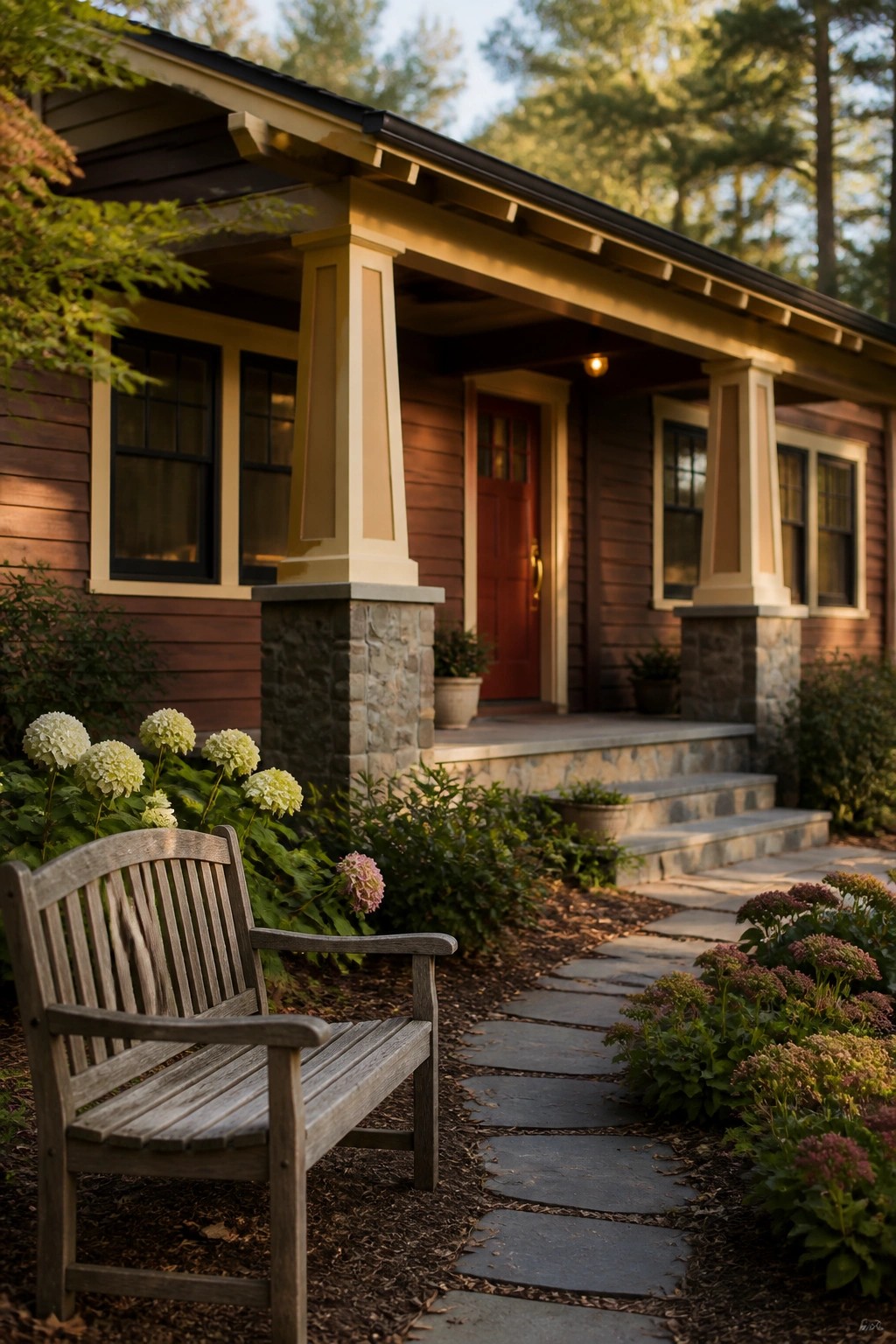
Stone at the bottom of porch columns gives wood siding a solid place to land. The mix keeps the whole front from feeling too light or too heavy, and it works especially well when the trim stays warm and the siding stays in a natural brown range.
This approach suits homes that already sit among trees or have a simple gable roof. Keep the stone height modest so it reads as a base rather than a full wall, and make sure the same warm trim color carries across the windows and eaves to tie everything together.
Stone Base With Wood Siding
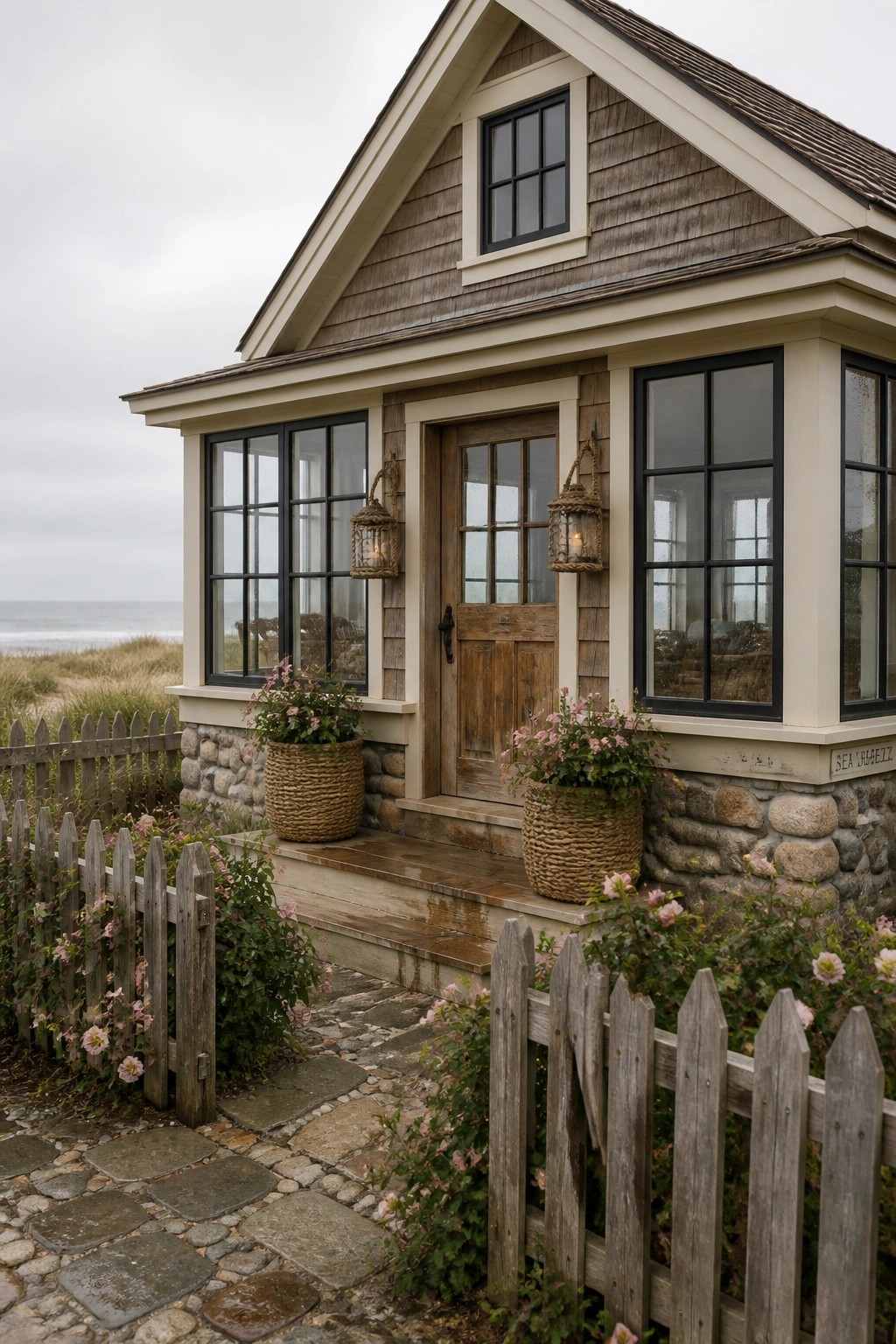
A stone foundation gives the house a solid, grounded feel that wood siding alone often lacks. It keeps the lower part of the exterior from looking too light or thin, especially on smaller homes that sit close to the ground.
This approach works best on cottages and simpler houses where you want a natural look without extra trim details. Use the stone only on the base, keep the siding in a weathered wood tone, and let the contrast do the rest.
Warm Stucco With Stone And Wood
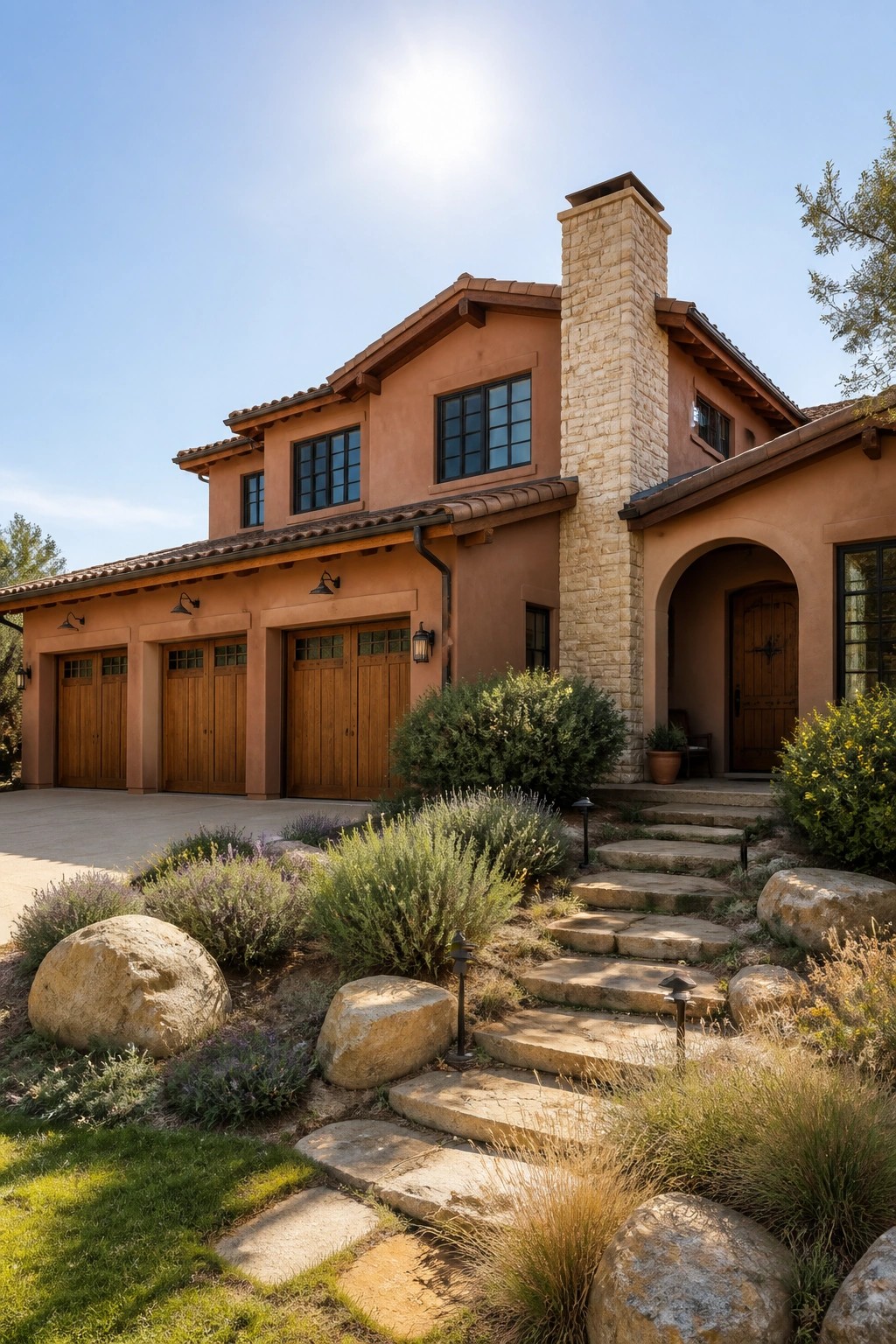
This house shows how a simple earth tone stucco can feel grounded when it is paired with real stone and wood. The warm clay color on the walls works with the light stone chimney and the wooden garage doors without needing extra contrast or trim colors.
It suits homes that already have some natural materials on the exterior. Keep the stucco in a mid-tone range so the stone reads as an accent rather than a competing element. Too many different warm shades can start to feel busy, so stick with one main wall color and let the wood and stone do the rest.
Dark Wood And Stone On The Exterior
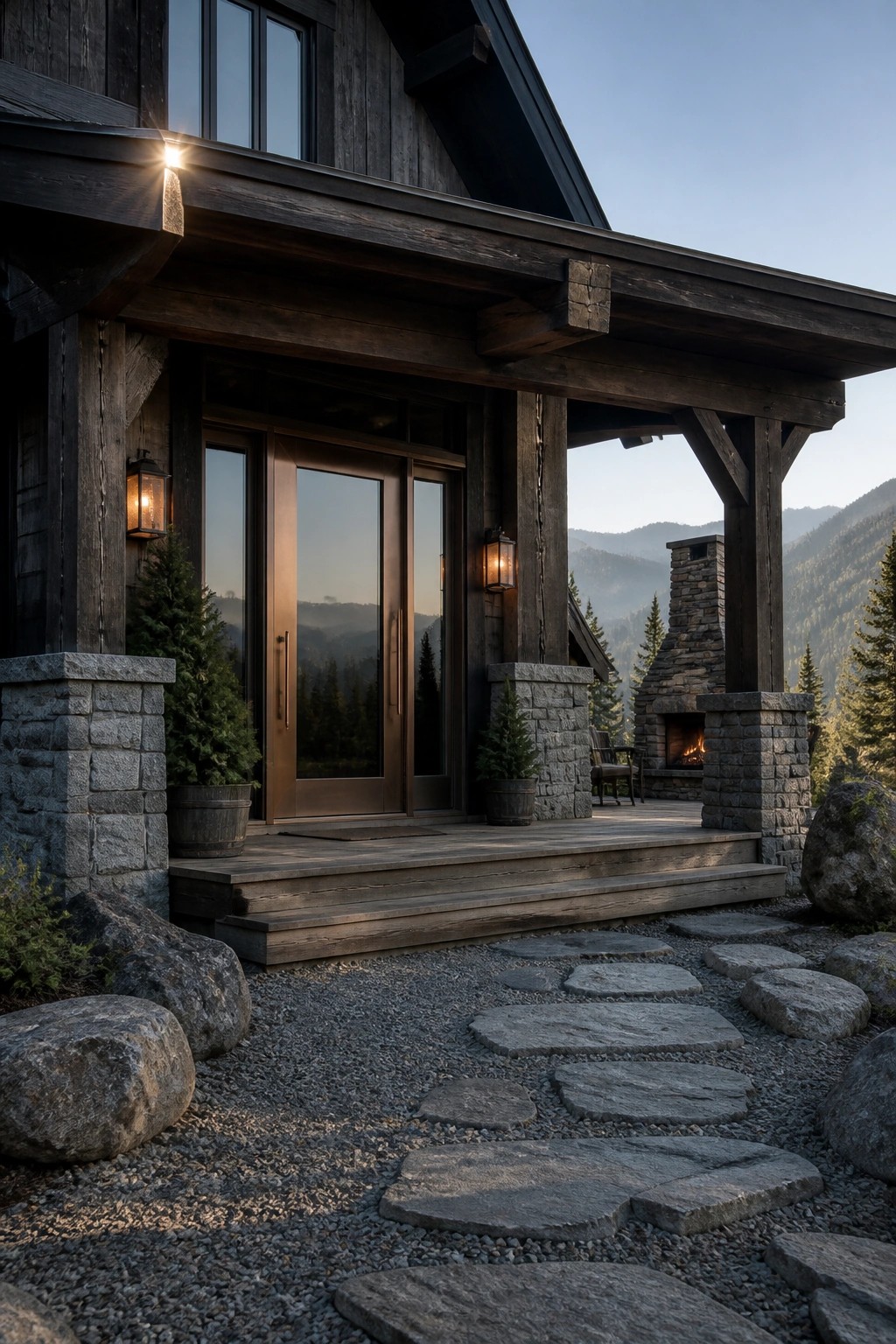
Many homes look better when the siding and the foundation feel like they belong together. Dark wood siding paired with stone bases and pillars gives that settled, natural feel without needing a lot of extra color or trim work. The contrast stays simple, and the materials age well side by side.
This approach works especially well on homes set in wooded or hilly areas where you want the house to blend rather than stand out. Keep the wood tone deep and the stone fairly local in color so nothing fights for attention. The only thing to watch is scale. Too much stone can feel heavy, so use it mainly at the base and on key supports like porch columns.
Brick With Green Trim
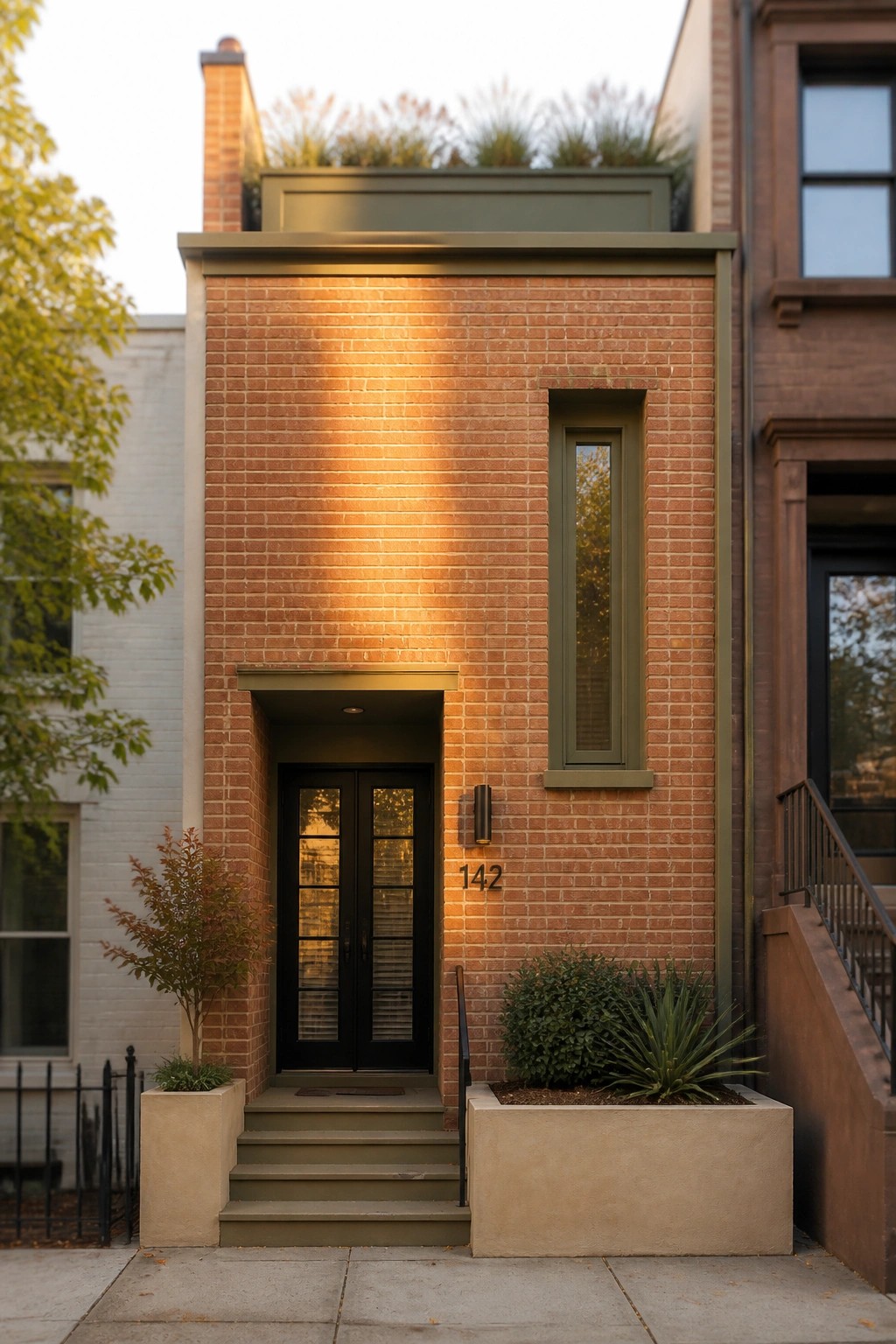
Brick already brings a strong earth tone to an exterior, so pairing it with a deep green trim keeps the whole look grounded without extra materials. The green adds just enough contrast while staying within the same natural palette, and it works especially well on narrower homes where you want the facade to feel solid rather than busy.
This approach suits older brick houses getting an update or new builds that want a simple, low-maintenance color scheme. Stick with matte or low-sheen finishes on the trim so it does not fight the texture of the brick, and test the green against the brick in different lights before committing.
Combining Wood And Stone On The Outside
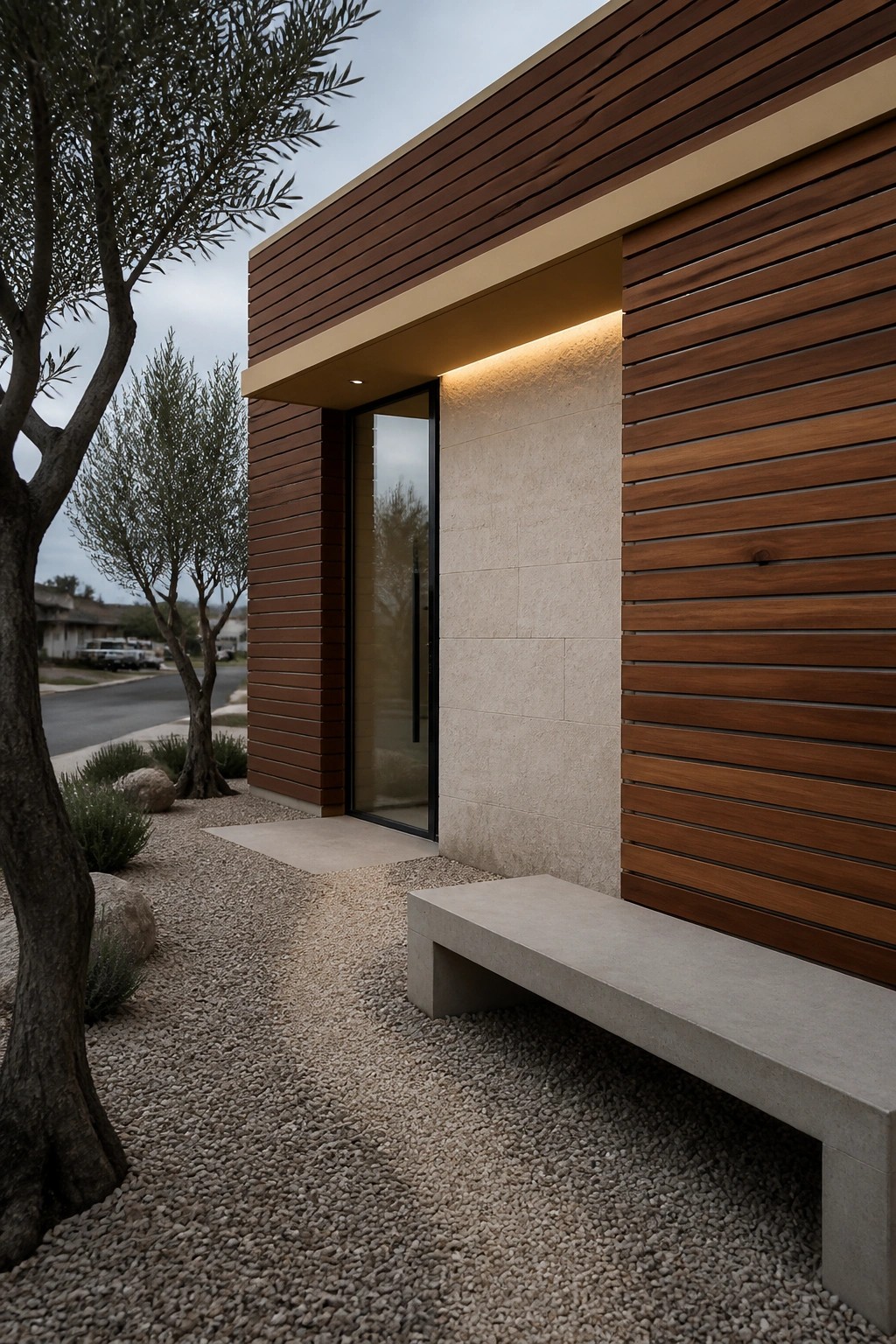
Wood siding next to stone gives an exterior a grounded look that feels natural without much effort. The warm brown wood softens the harder stone surface and keeps the whole front from looking too stark or plain.
This mix works best on homes with clean lines where you want earth tones to do the work. Keep the wood tone consistent across larger areas and let the stone stay light so the entry stays welcoming even at dusk.
Clay Pots Along a Stucco Entry
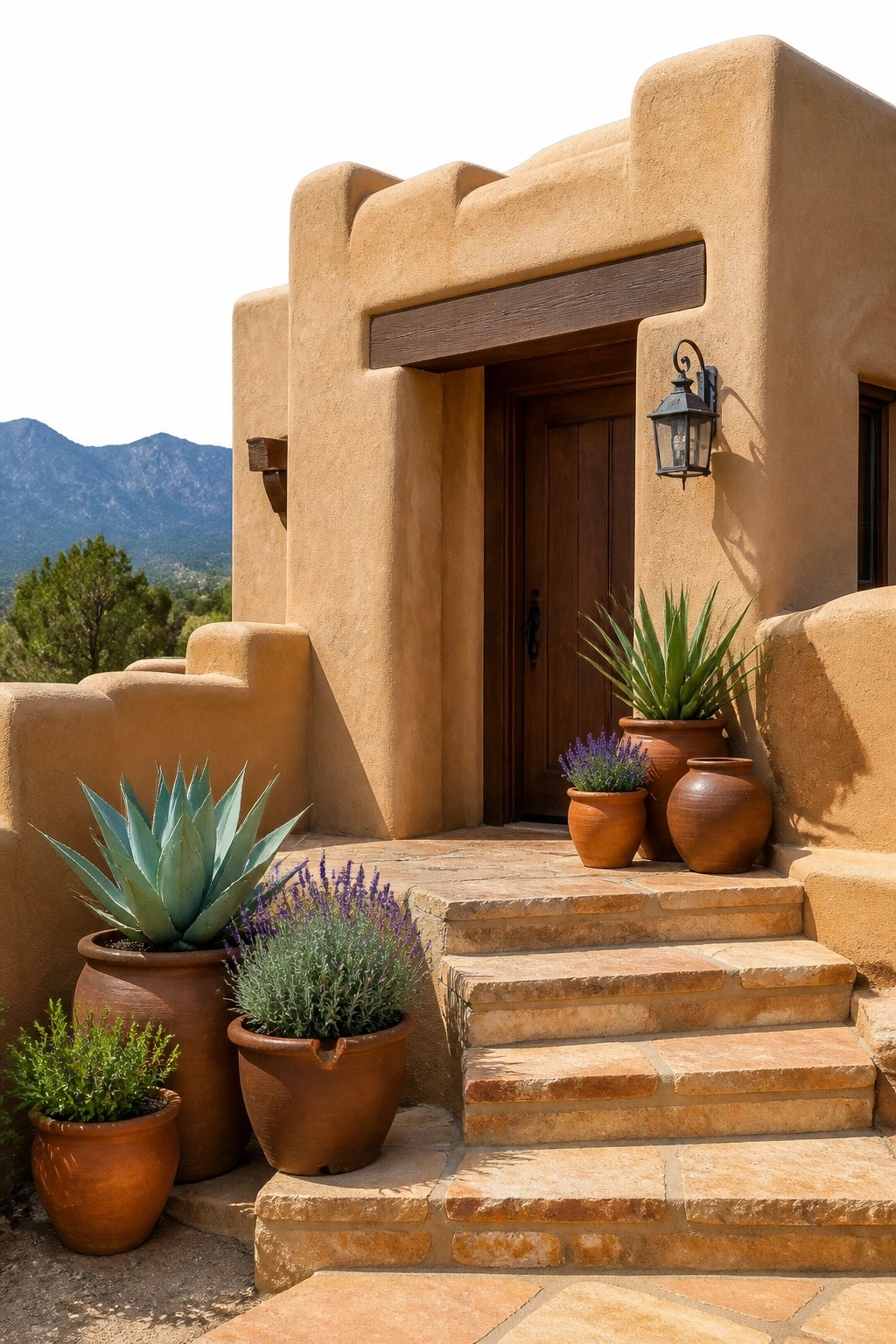
Clay pots bring a simple, grounded touch to earth tone stucco homes. They add texture and a bit of living color without competing with the warm walls or wood trim. The rough surface of the pots also echoes the natural feel of the stone steps and clay tones already in place.
This approach works best on homes with clean lines and flat walls where you want a little softness. Place the pots in small groups near the door or along the steps, and keep the plant choices simple so they do not overwhelm the architecture. Watch the scale so the pots stay in proportion with the entry rather than crowding it.
Stone Walls With Warm Wood Details
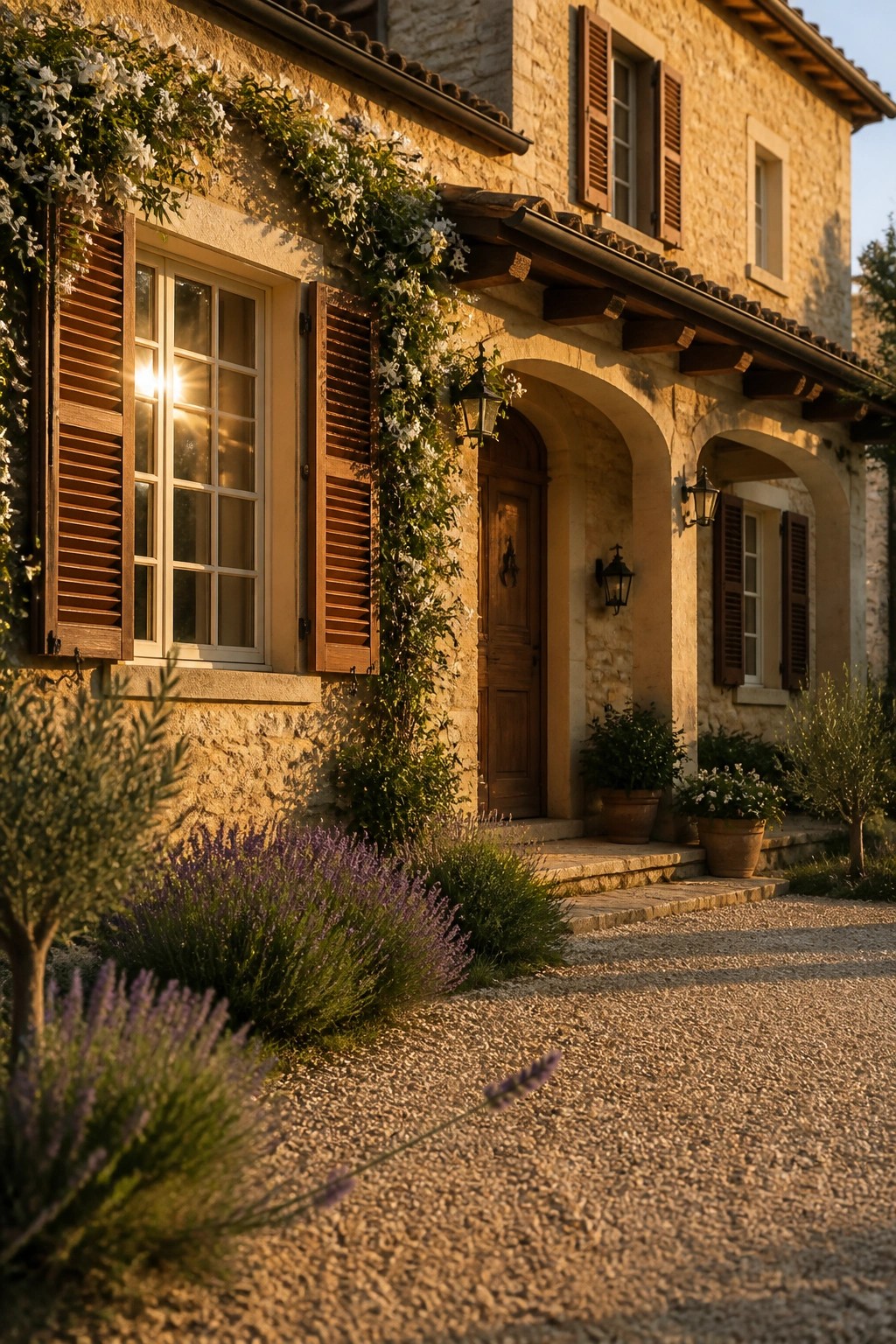
Stone exteriors gain a lot when the trim and shutters stay in a warm wood tone instead of going dark or painted. The wood softens the hard surface and keeps the whole look tied to natural materials like clay and timber.
This approach suits homes with simple shapes and older builds. Keep the wood tone consistent across shutters, doors, and any small trim pieces so the colors stay balanced rather than competing.
Wood Siding With Stone Foundations
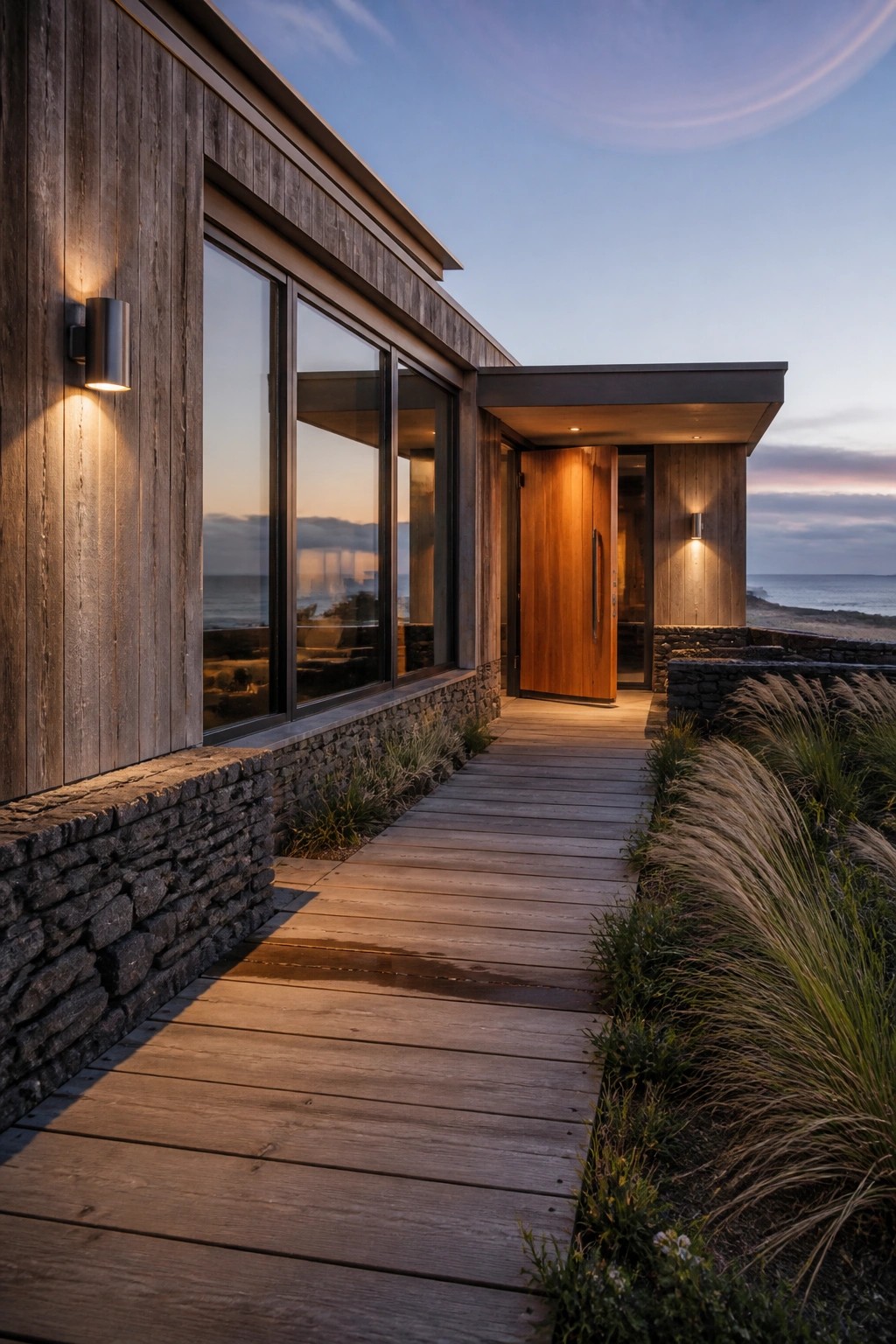
Many homes gain a settled look when the lower walls sit on a stone base and the upper siding stays in wood. The stone handles the ground connection while the wood keeps the rest of the facade lighter and simpler.
This approach works well on coastal sites or any place where the house meets uneven ground. Keep the stone dark and rough so it stays in the background, and let the wood carry a softer tone that still reads natural.
Wood Siding With A Stone Base
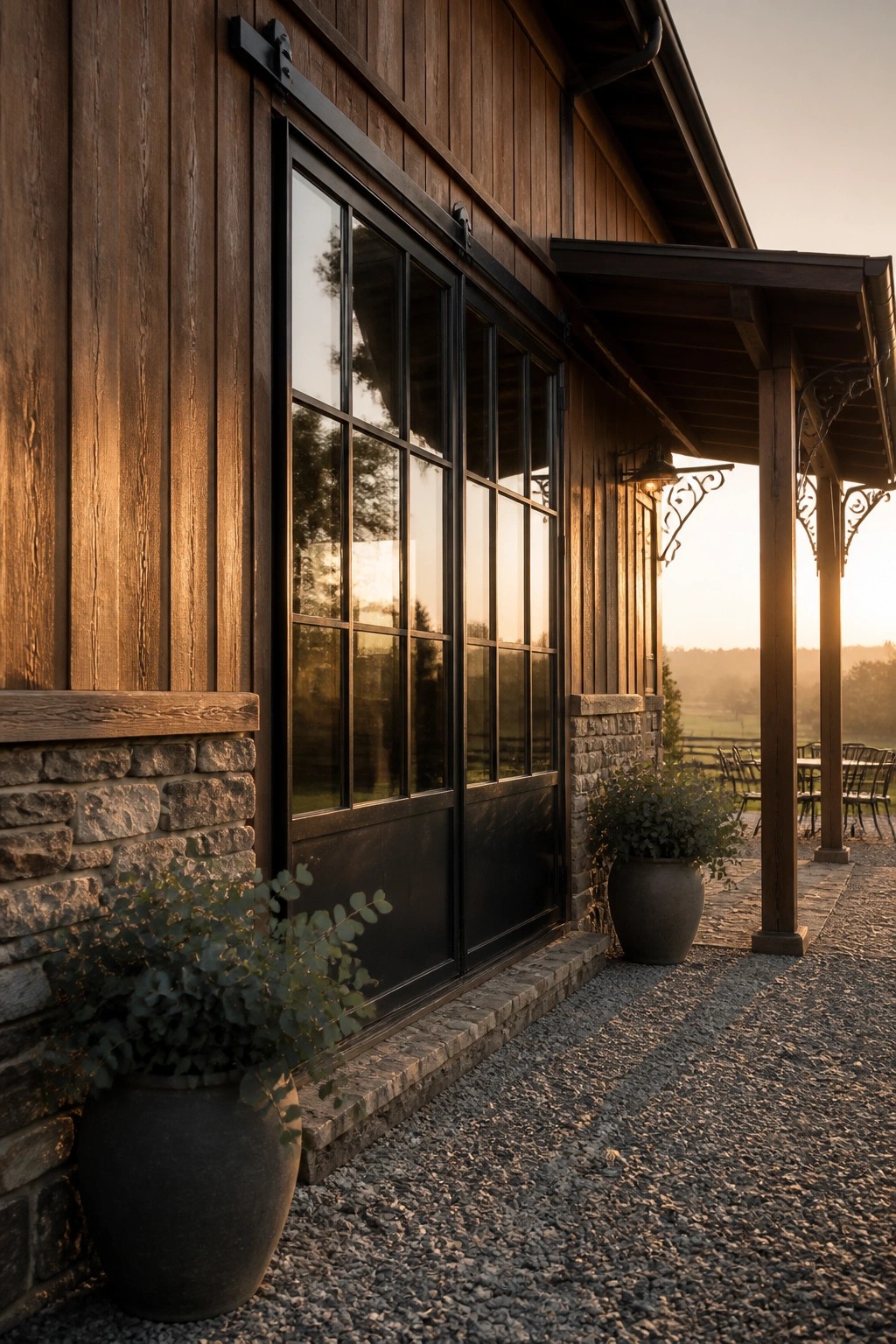
Many homes feel more settled when the bottom section uses stone and the walls above stay wood. The change in texture keeps the eye from seeing one flat surface, and the stone adds weight right where the house meets the ground.
This approach works best on houses with simple shapes and a porch or overhang. Use the same dark trim on windows and doors so the wood tones stay warm instead of competing with too many colors.
Wood Gates With Stone Paths
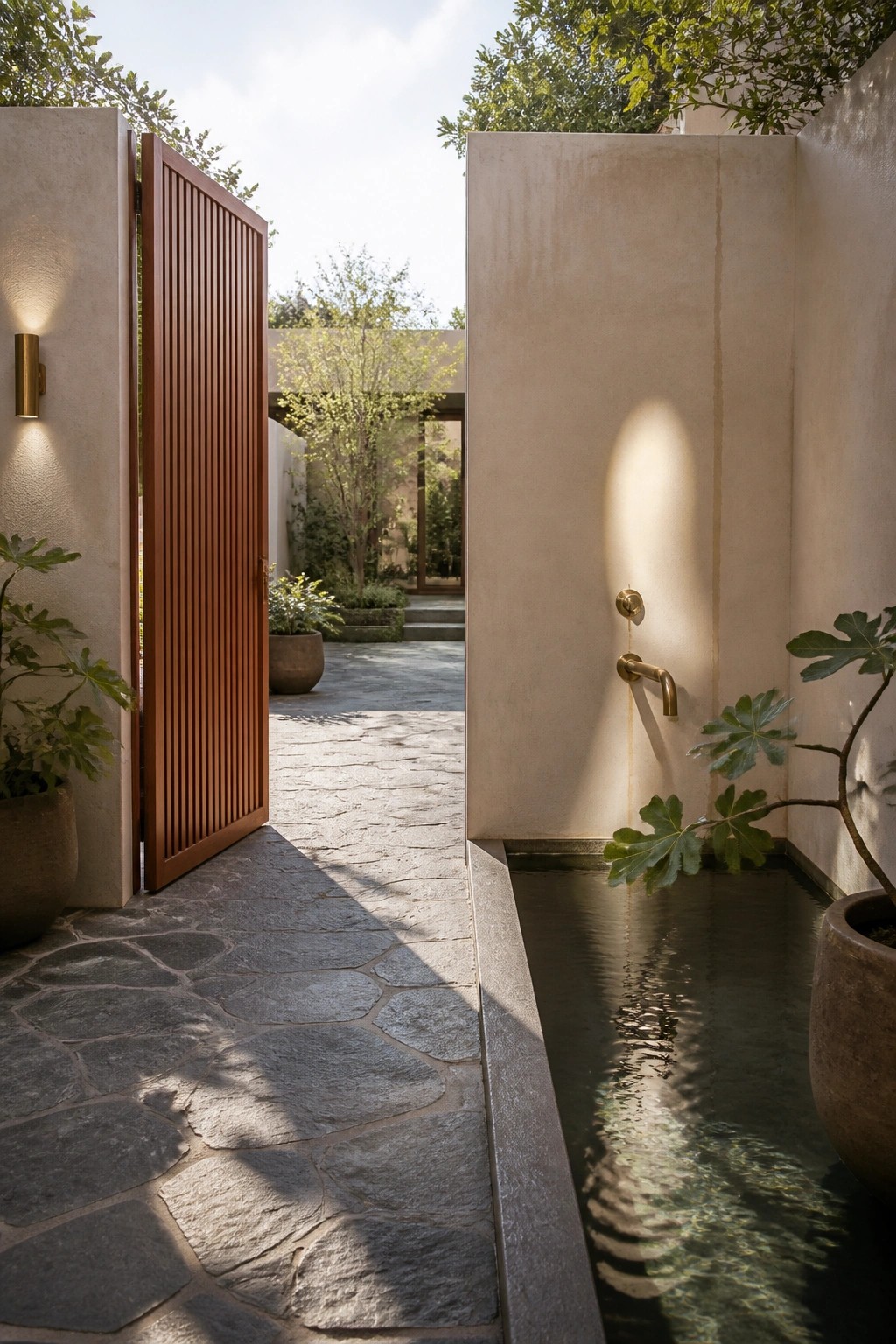
A wood gate next to a stone path gives an entry a settled, natural look that fits right in with earth tone homes. The vertical slats add some rhythm and warmth without competing with the stone underfoot or the plaster walls around it.
This setup works well on homes that already use clay tones or light stucco, since the wood can pick up those same warm notes. Stick to a medium brown finish on the gate so it does not go too dark or too orange, and let the stone stay in the cooler gray range for balance.
Stone and Wood Work Well Together on the Outside
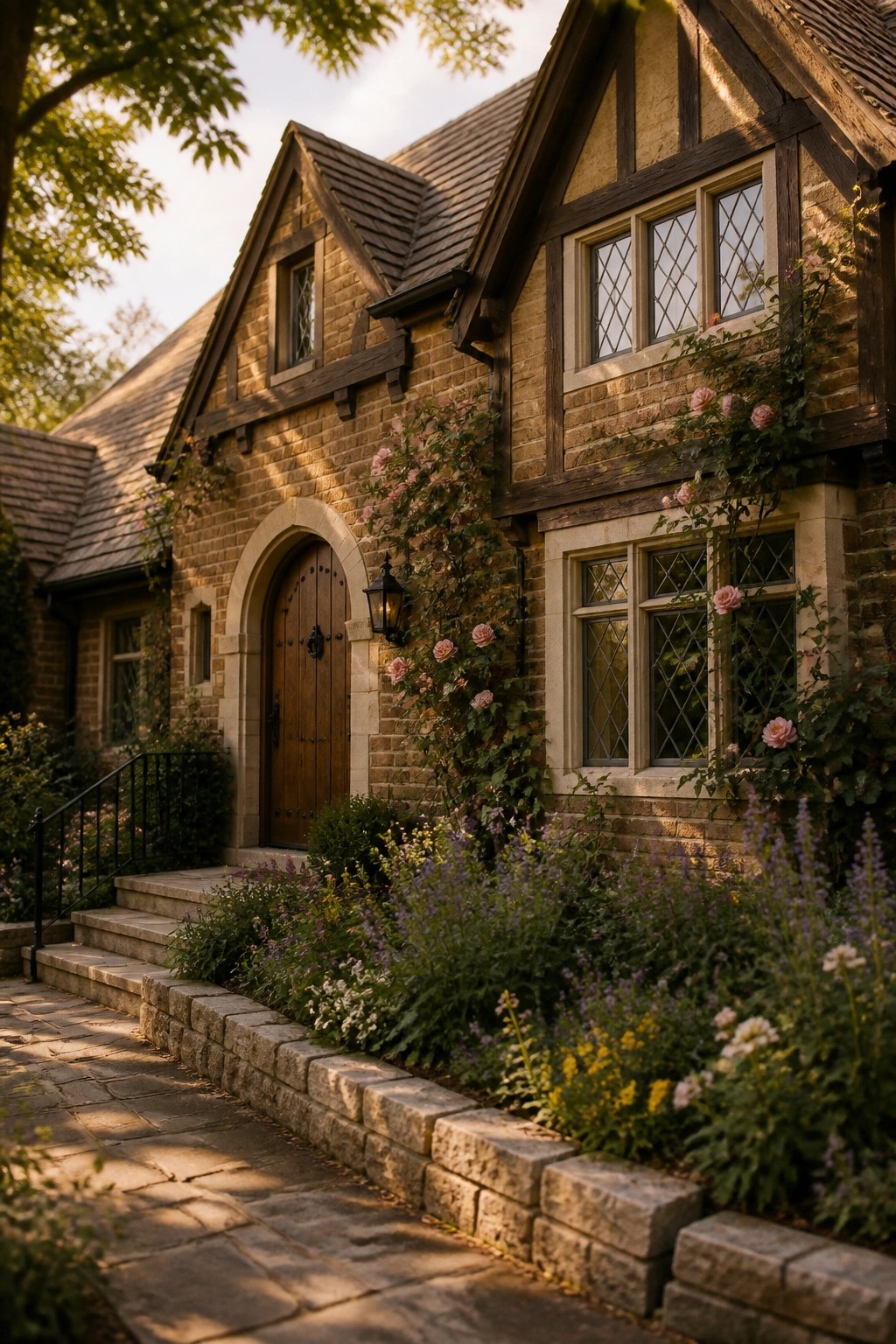
Stone and wood give an exterior a natural feel that is hard to get any other way. The rough surface of the stone next to the darker wood trim keeps the colors from feeling flat and helps the house sit nicely in its setting.
This mix works best on homes with simple shapes and pitched roofs. Keep the trim in a warm brown or soft gray so the stone and wood stay the main focus without extra contrast pulling attention away.
Terracotta Columns with Stone Bases
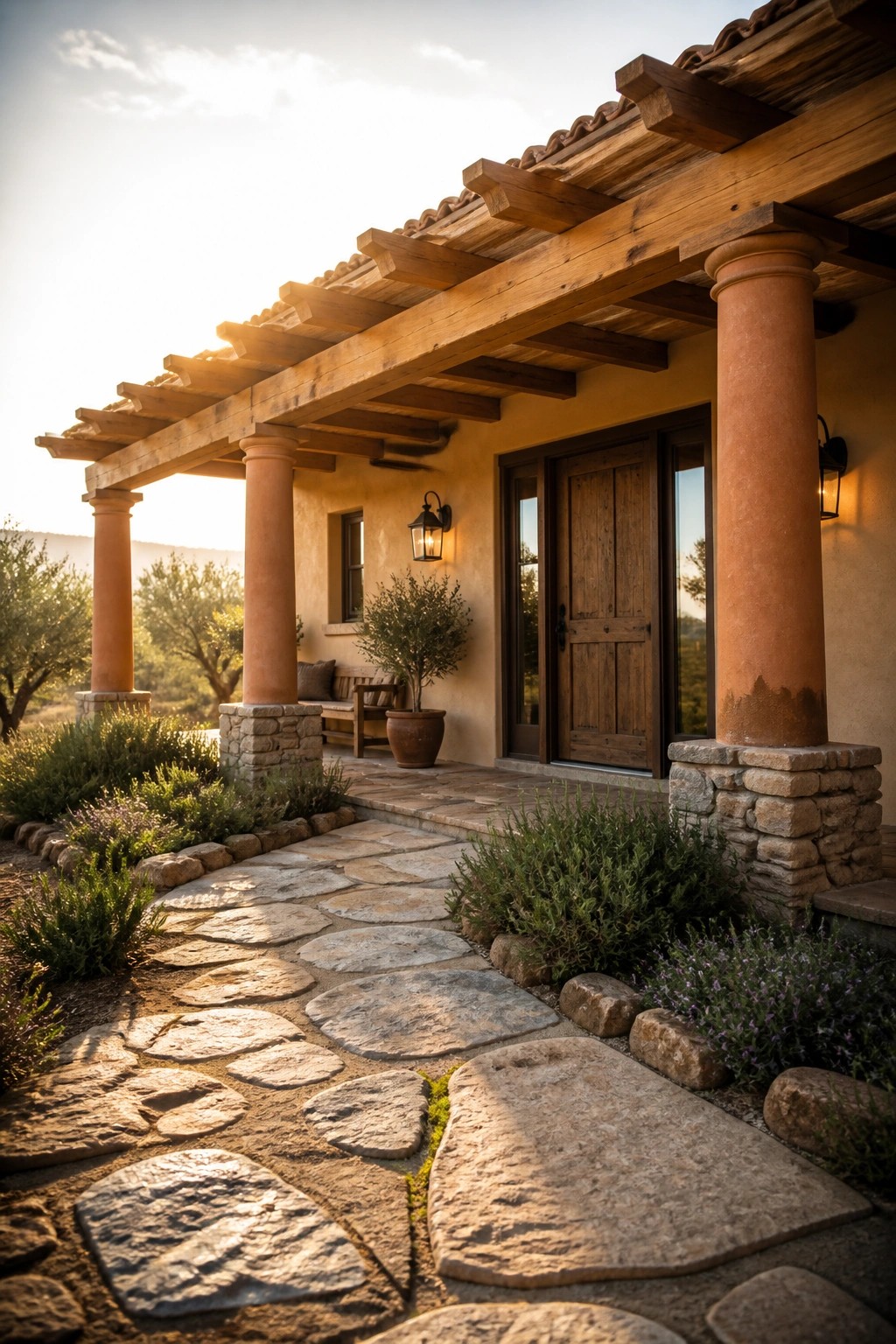
Terracotta columns give a house exterior an immediate earth tone anchor without needing bold paint choices. They pair naturally with stucco walls and sit well on rough stone bases that keep the look grounded and simple. The warm clay color works especially well when the trim and roof beams stay in natural wood tones.
This approach suits homes in dry or Mediterranean climates where the materials already feel at home. Keep the stone bases low and chunky so the columns read as solid rather than spindly. Avoid mixing in too many other colors or the clean earth palette starts to feel busy.
Stone Bases That Support Stucco Walls
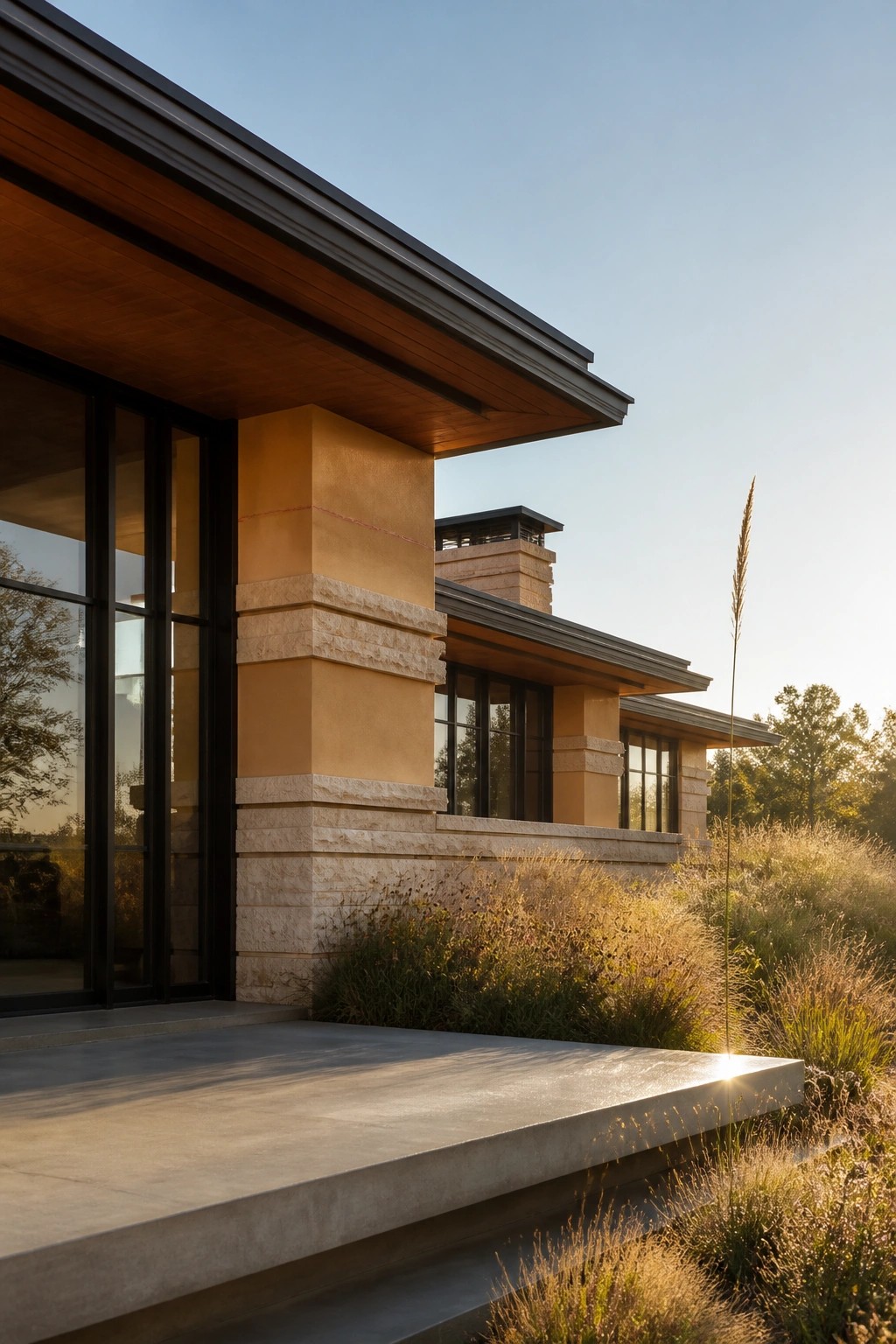
Stone at the lower sections of an exterior gives the house a heavier, more settled feel. It pairs naturally with the warmer stucco above it and helps the colors stay grounded instead of floating on the facade.
This works best on homes with deeper overhangs and simple rooflines. Use the stone in solid bands around columns or corners rather than spreading it thin across the whole wall.
Stone With Warm Wood And Clay Details
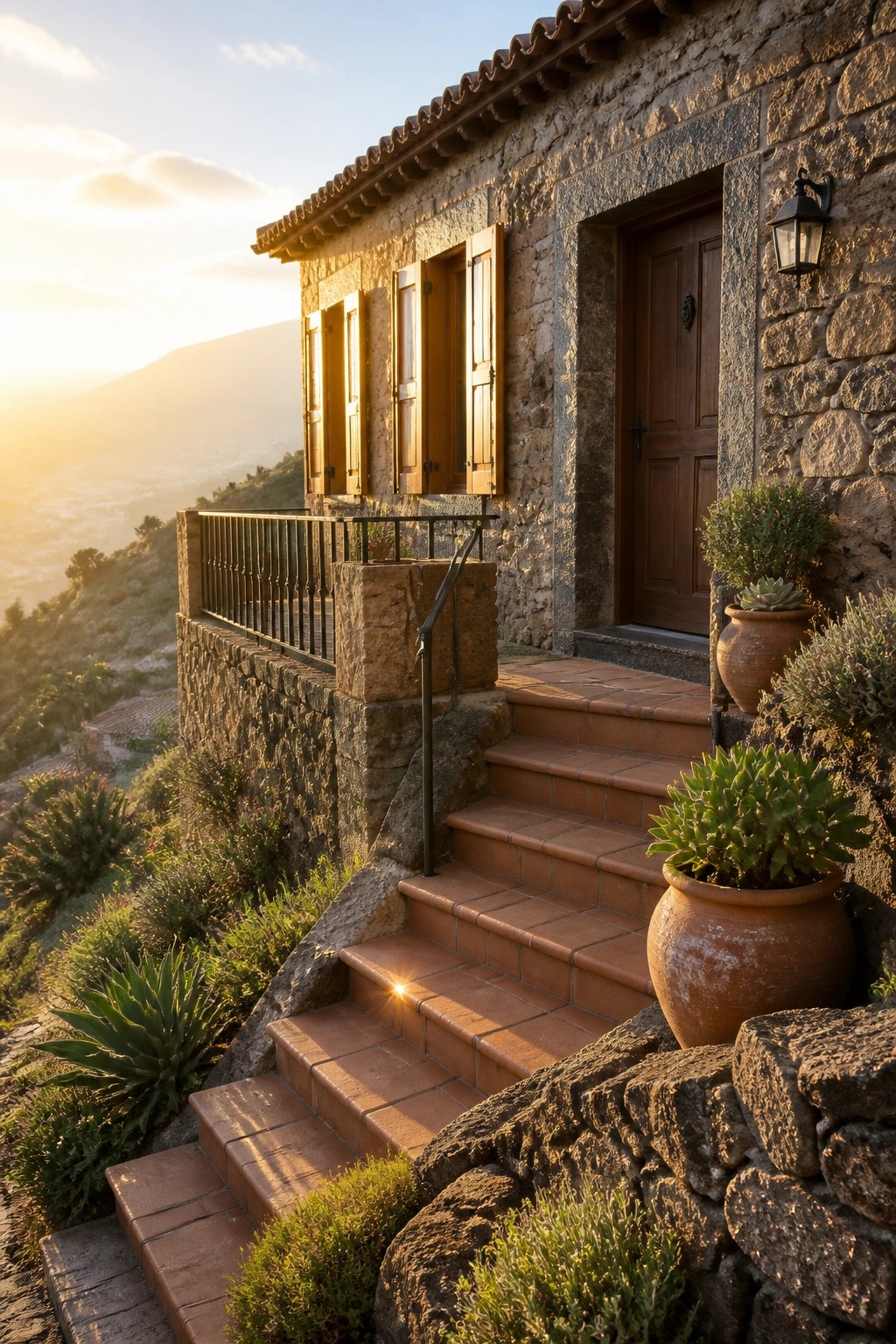
Stone walls give an exterior a solid starting point that feels settled from the start. The material holds up well over time and pairs naturally with simpler wood and clay elements rather than needing lots of extra color.
Use wood for doors and shutters, then bring in clay through steps or pots to keep the palette consistent. This works best on homes with some slope or older builds where you want the house to sit comfortably in its setting.
Stone Bases With Wood Siding
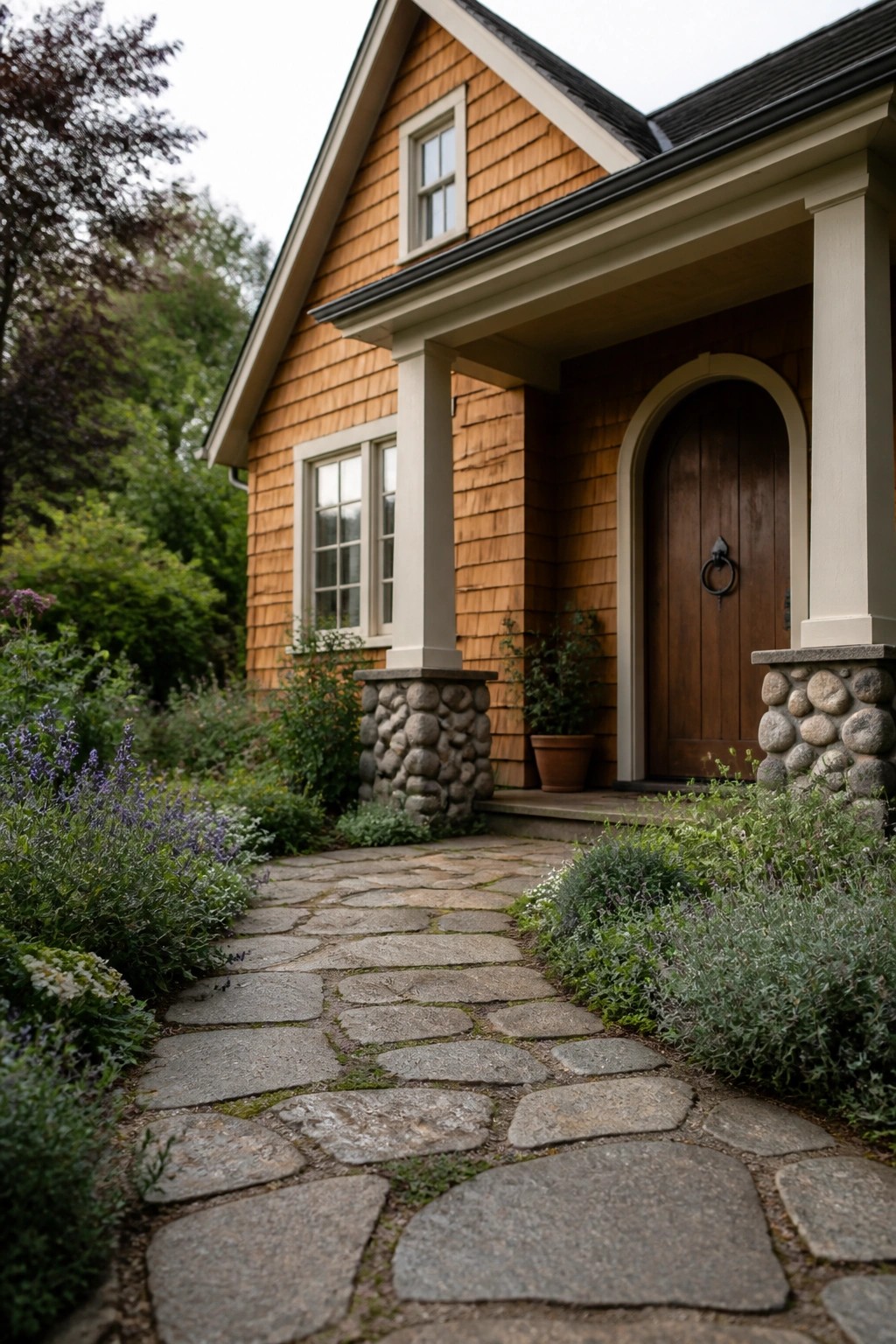
Many homes feel more settled when the porch columns rest on stone bases instead of sitting right on the wood siding. The stone gives the front a solid starting point and keeps the lighter wood from looking like it floats above the ground.
This approach works best on smaller homes or cottages where the materials need to stay simple. Use rough local stone that matches the site and keep the siding in a natural wood tone so the colors stay warm without extra paint layers.
Weathered Steel Accents On Stone Exteriors
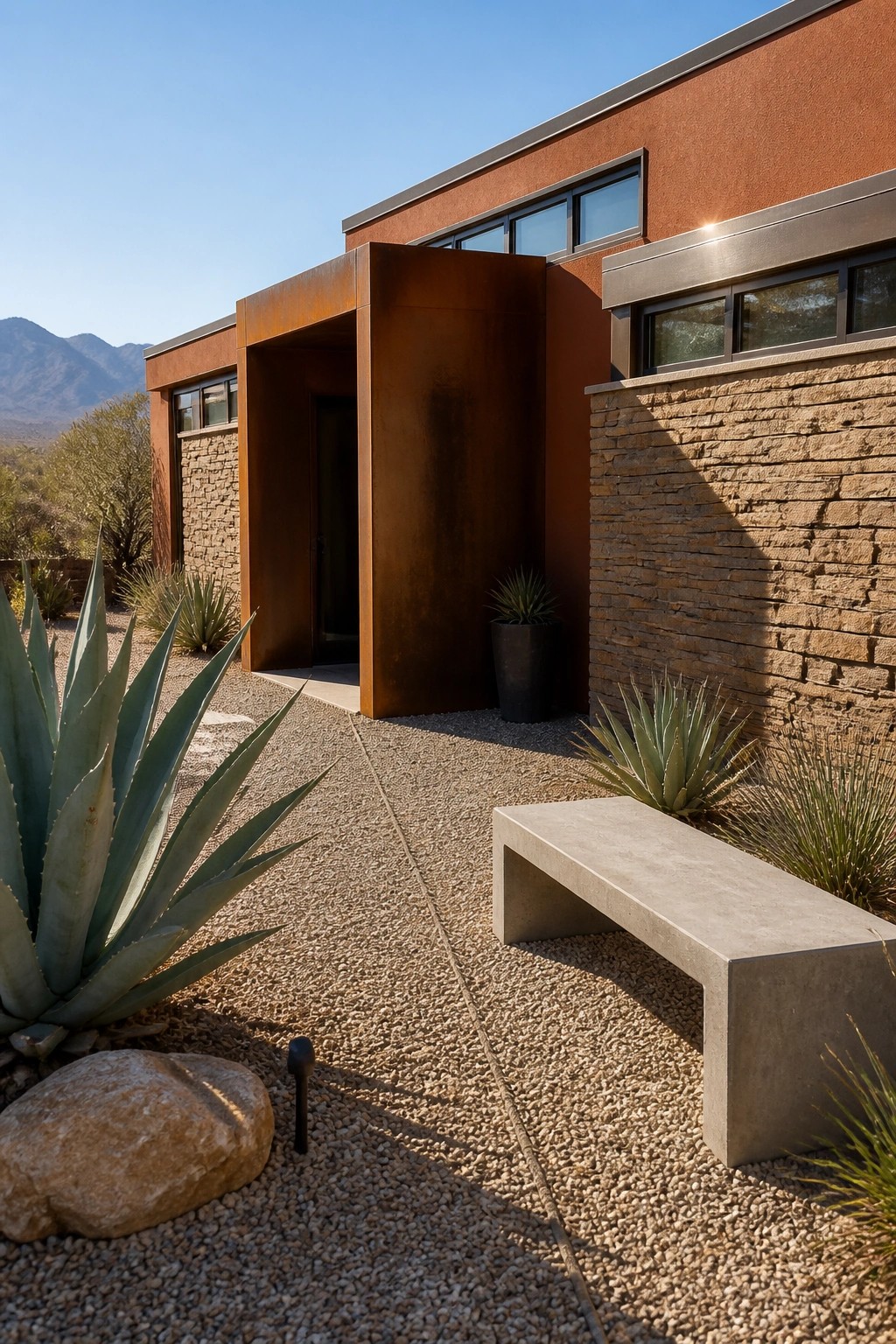
Weathered steel works well as a strong accent on homes that already use stone and stucco. The rusted finish adds warmth and texture without needing extra color, and it pairs naturally with the earth tones already in place. It gives the entry a solid, grounded look that still feels modern.
This approach suits desert homes or any house built with natural materials. Keep the steel limited to key spots like the entry or window surrounds so it does not overpower the stone. Make sure the rest of the trim stays warm and simple to keep the whole facade balanced.
Stone Walls With Warm Wood Trim
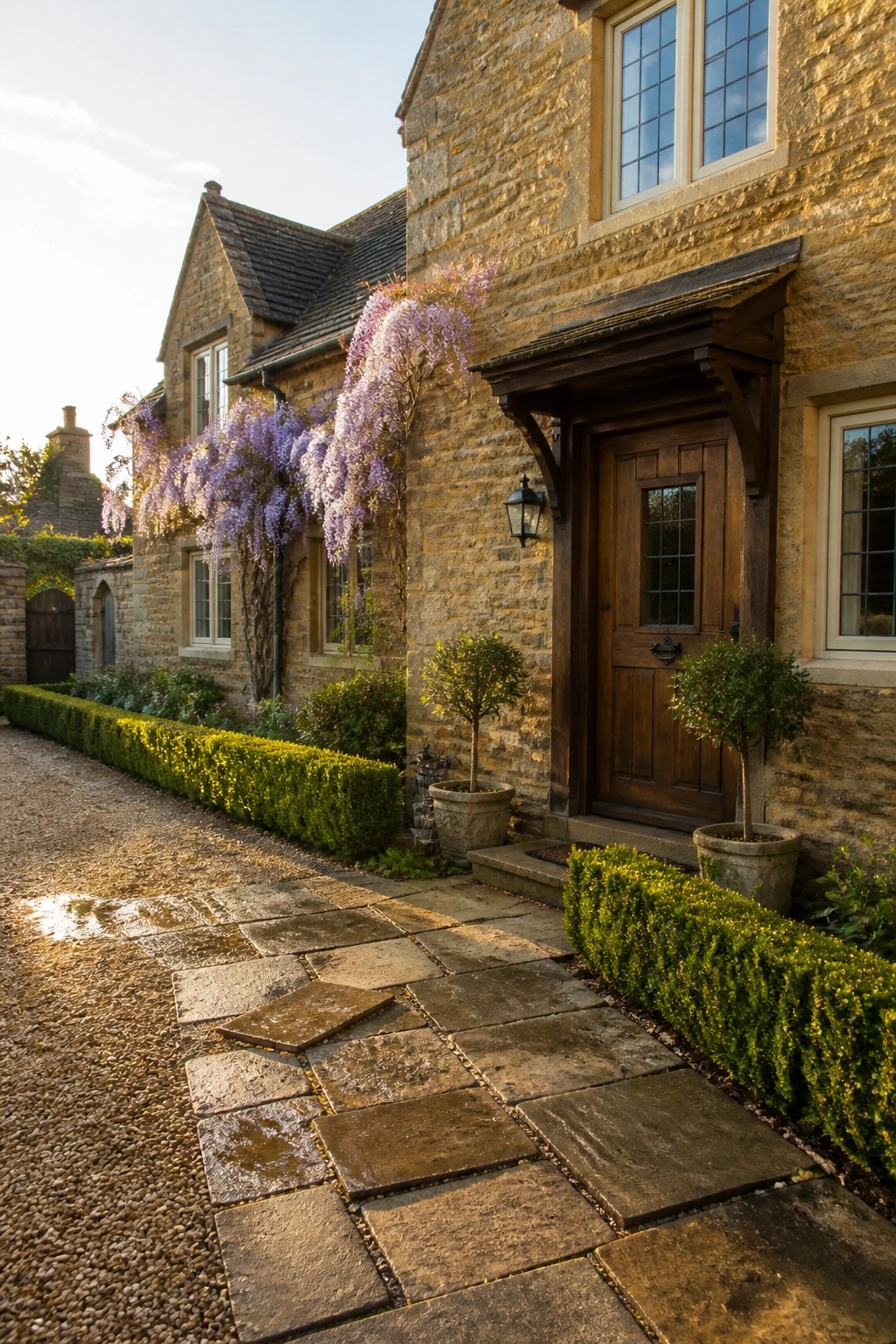
Stone exteriors gain a lot when the wood elements stay in a warm, natural tone instead of being painted or stained dark. The contrast keeps the house from feeling too heavy while still looking solid and settled into the landscape.
This works best on homes that already have a traditional or cottage feel. Use it when the goal is a simple, low-maintenance look that ages nicely without needing constant upkeep.
Mixing Wood Siding With Stone
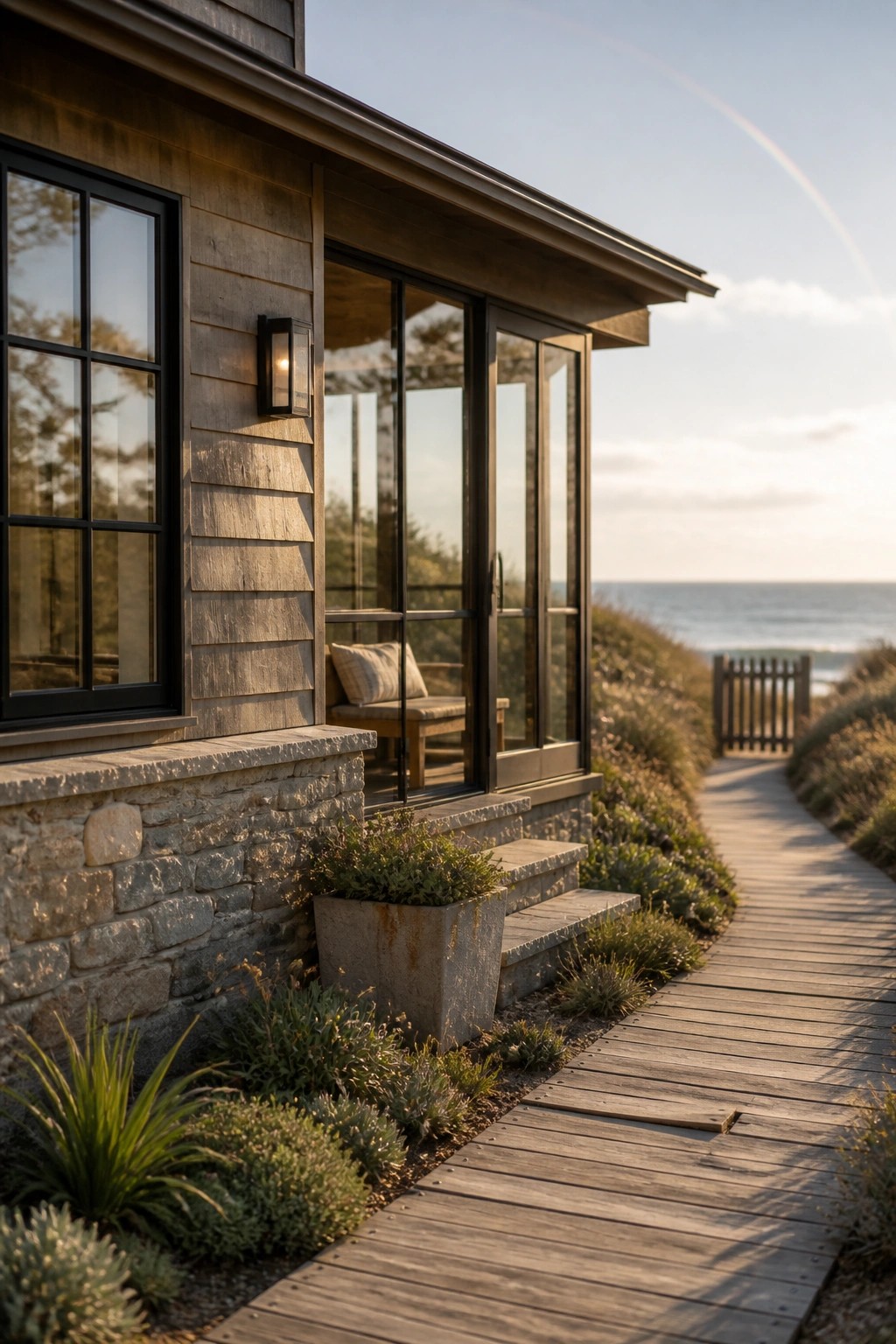
Wood siding paired with a stone base gives an exterior a settled look that feels right at home in natural settings. The contrast keeps the house from looking too light on top or too heavy below, and the two materials age well together.
This approach suits coastal homes or houses set among trees and dunes. Use a grayed or warm brown wood and a simple local stone so the colors stay in the same family without extra trim work.
Soft Tan Siding With White Trim
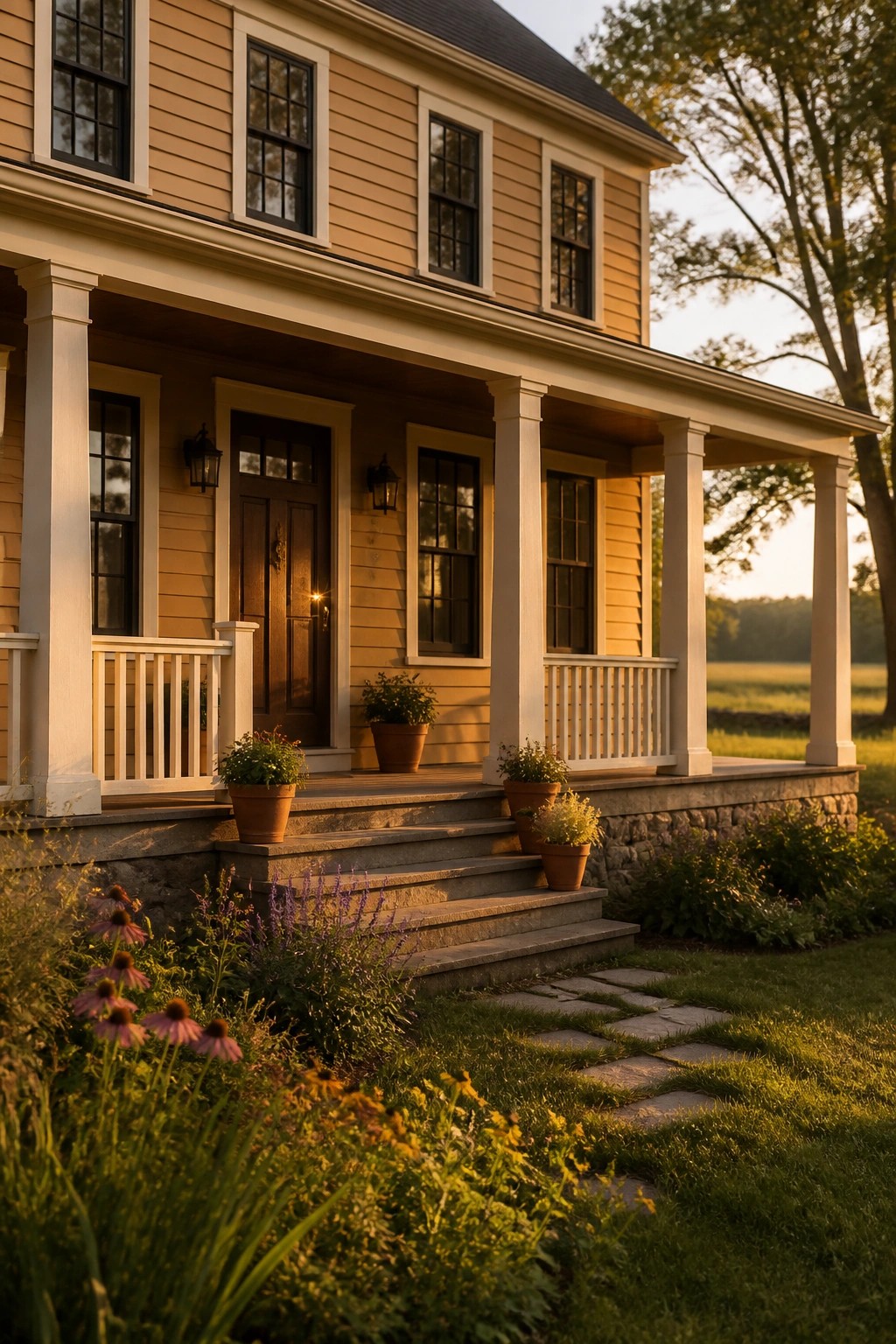
A soft tan exterior works well when you want the house to sit comfortably against grass and trees. The color picks up warm light during the day and still feels calm at dusk, especially when paired with simple white trim that keeps the whole look clean.
This approach suits homes with porches or stone foundations, since the tan lets those materials stand out without competing. Stick to one main wall color and let the trim, door, and any wood details provide the contrast.
Stone And Wood At The Front Door
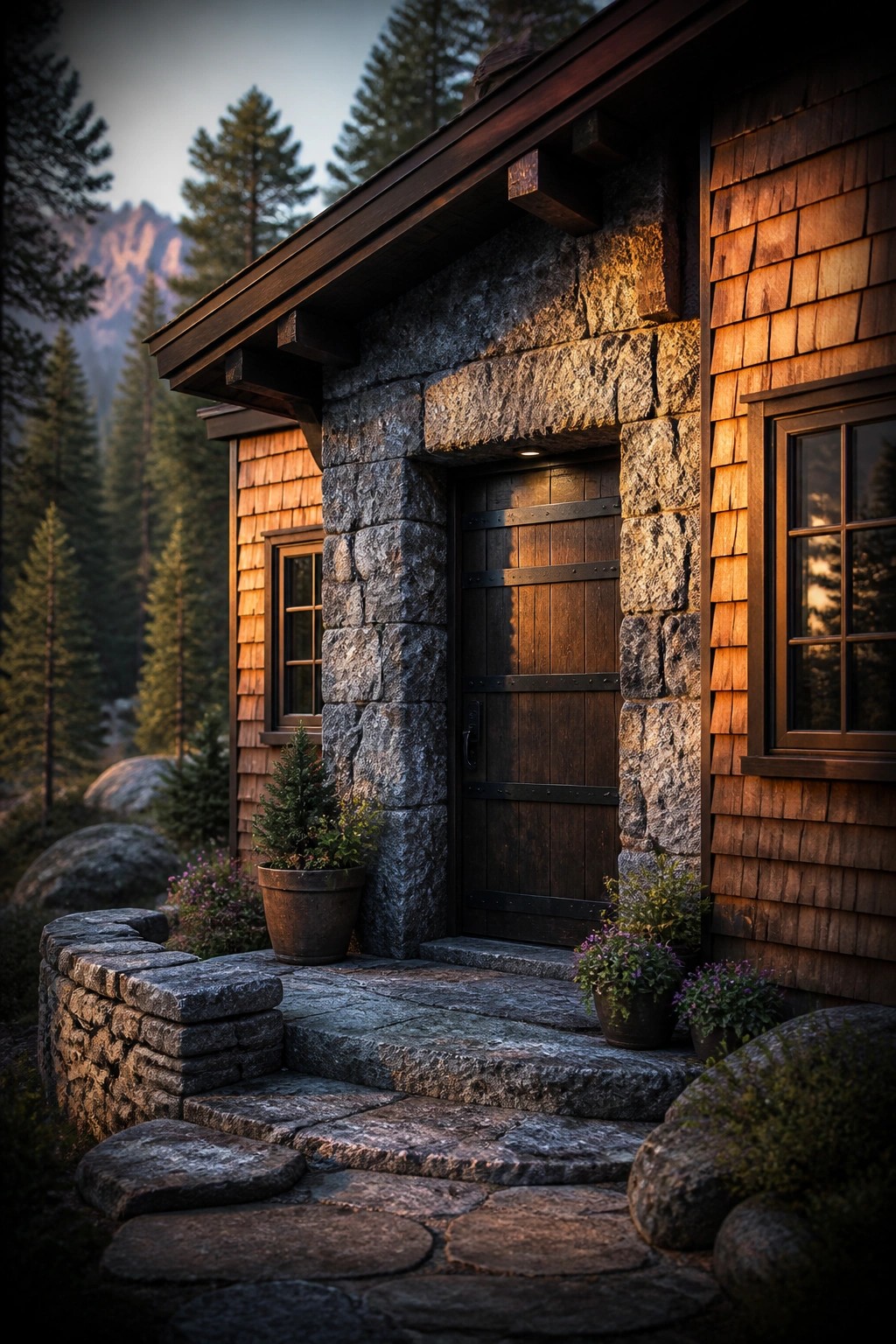
A simple way to bring earth tones together on an exterior is to let stone frame the main door while the rest of the house stays in wood siding. The contrast keeps the entry from disappearing into the wall, and the two materials already share the same warm, natural palette the article is built around.
This works best on smaller homes or cabins where you want the door to feel solid without adding extra trim or paint. Keep the stone fairly rough and let the wood age to a similar tone so the whole front stays quiet and grounded.
Frequently Asked Questions
Q: My house has mostly vinyl siding right now. Can I still use one of these wood and stone inspired colors?
A: Start by picking a tone that matches any brick or wood you plan to keep. Test a few samples on the wall during different times of day. This helps you see how the light changes the color.
Q: My stone foundation runs cool gray. Will warm trim colors still work?
A: They can balance the gray and add some life to the base. Choose trim shades with a touch of yellow or orange undertone. This creates contrast that feels intentional rather than mismatched.
Q: How do I avoid making the whole house look flat with these muted tones?
A: Layer different depths by using two or three related shades on siding, trim, and accents. Add texture through materials like rough wood or textured stone.
Q: Do these earth tones show dirt faster than other paints?
A: Mid-tone versions hide everyday dust better than very light ones. Hose them down once a year and they stay looking fresh without much extra work.
