

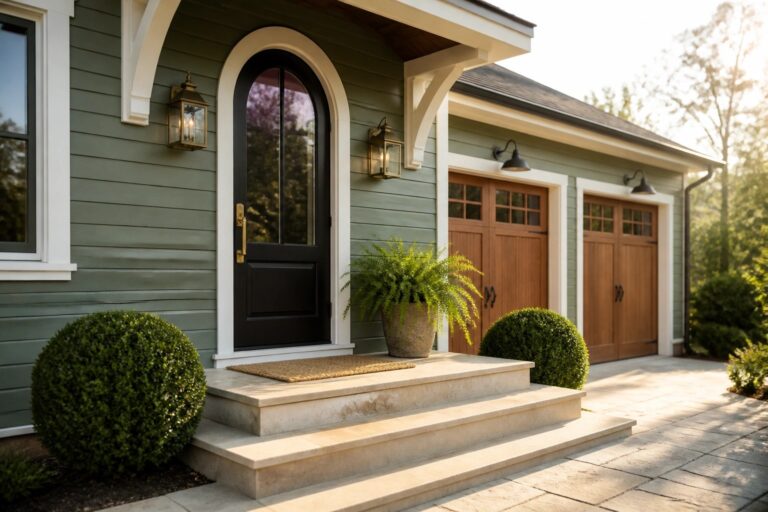
The way a house color sits against the roofline and trim often decides whether the front feels settled from the street or slightly off balance.
I usually hold samples up to the actual siding and eaves first because the green can shift once it meets the real materials and daylight.
Some shades end up looking heavier on a two story facade than they did on a single story sketch.
It rarely works on paper alone.
Watching how the color holds up next to brick or stone helps me picture which versions will still look right after a couple of seasons.
Sage Green Siding With Black Doors
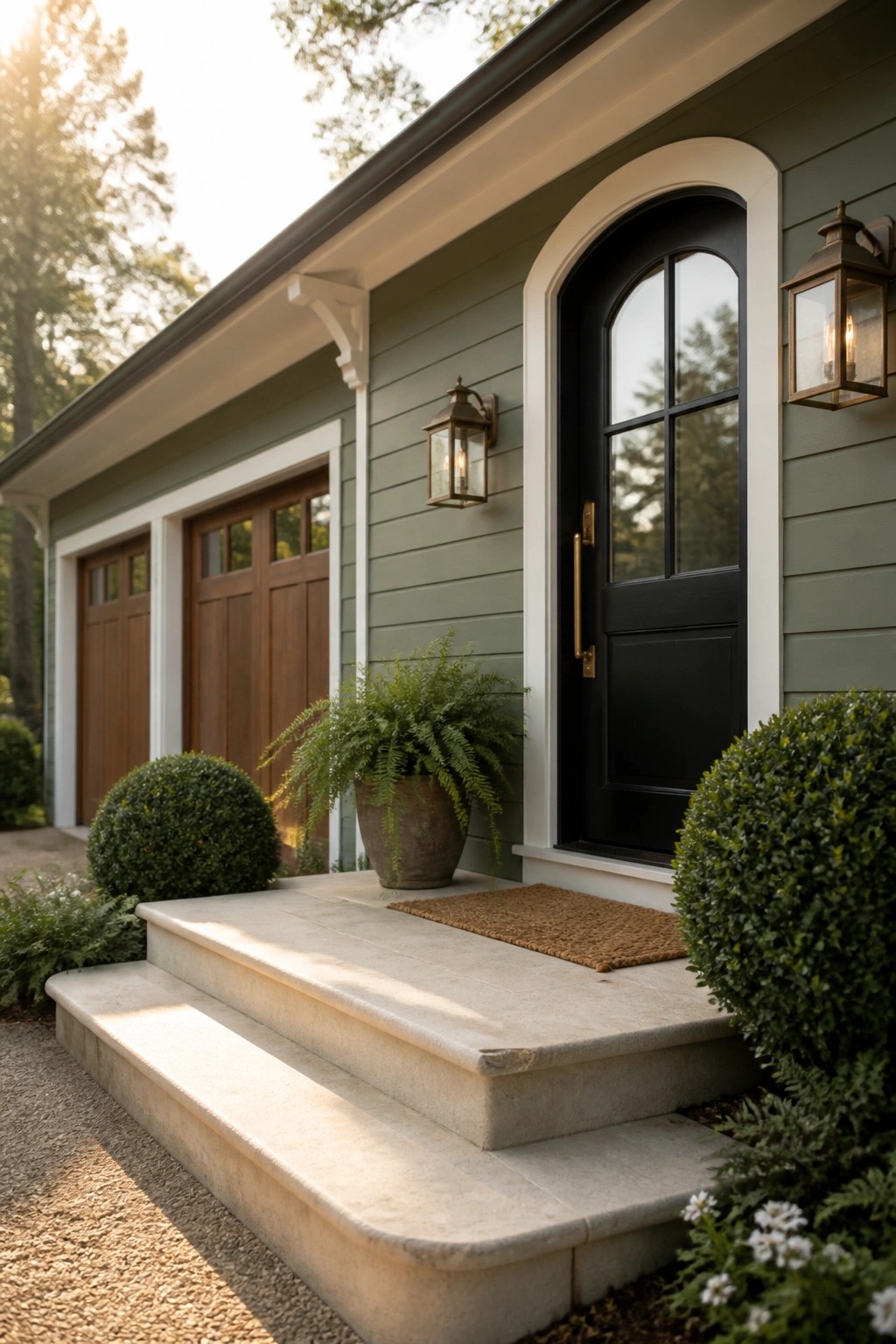
Sage green works well on house exteriors because it feels soft without looking faded or dull. The color gives the whole front a relaxed tone that still reads modern and clean.
This approach suits homes with simple shapes and straight lines. Keep the trim white and use a dark door to add contrast without extra decoration. It holds up nicely in both suburban and wooded settings.
Sage Green On Modern Exteriors
Sage green gives a house a calm updated look that still feels current. The soft tone works especially well on simple shapes where it can read as both modern and relaxed at the same time.
It suits homes with some natural surroundings or a mix of wood and dark trim. Keep the contrast on windows and doors clear so the color stays visible from the street instead of blending away.
Sage Green For A Relaxed Modern Facade
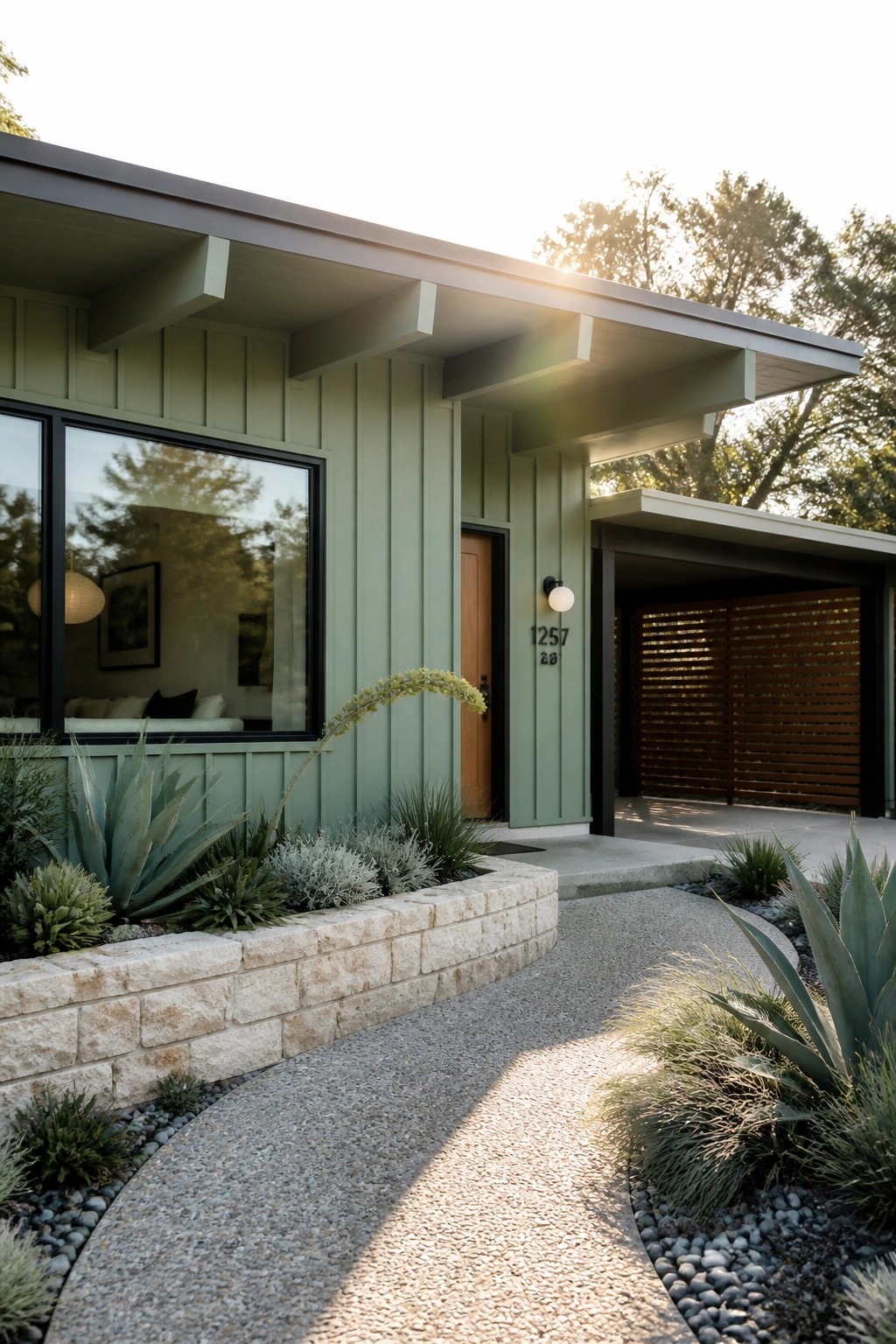
Sage green gives a house a calm presence without making it feel plain. The muted tone works especially well on clean modern lines where you want color that still feels quiet and natural.
It suits single-story homes with horizontal siding and dark trim. Keep the roof overhang simple and pair the green with black window frames so the color stays soft instead of competing with too many details.
Sage Green Siding With White Trim
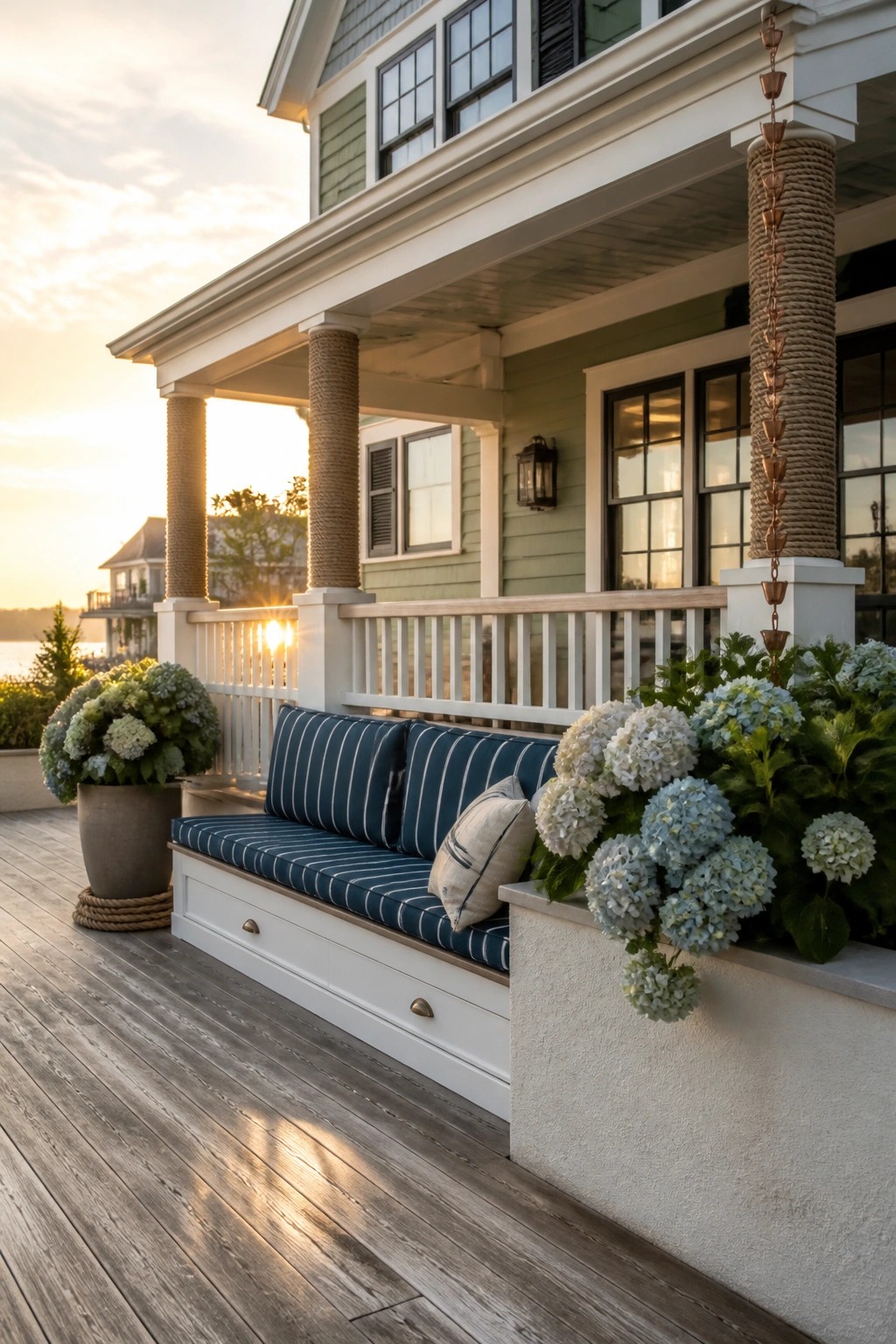
Sage green shows up nicely on this house because it stays soft even when the sun hits it. The color keeps the whole front from feeling too stark while still letting the white trim and railings stand out.
It works best on homes that already have clean lines and a fair amount of trim work. If you try this shade, keep the trim bright white and add a few large planters so the green does not get lost against the landscaping.
Sage Green Siding for Relaxed Curb Appeal
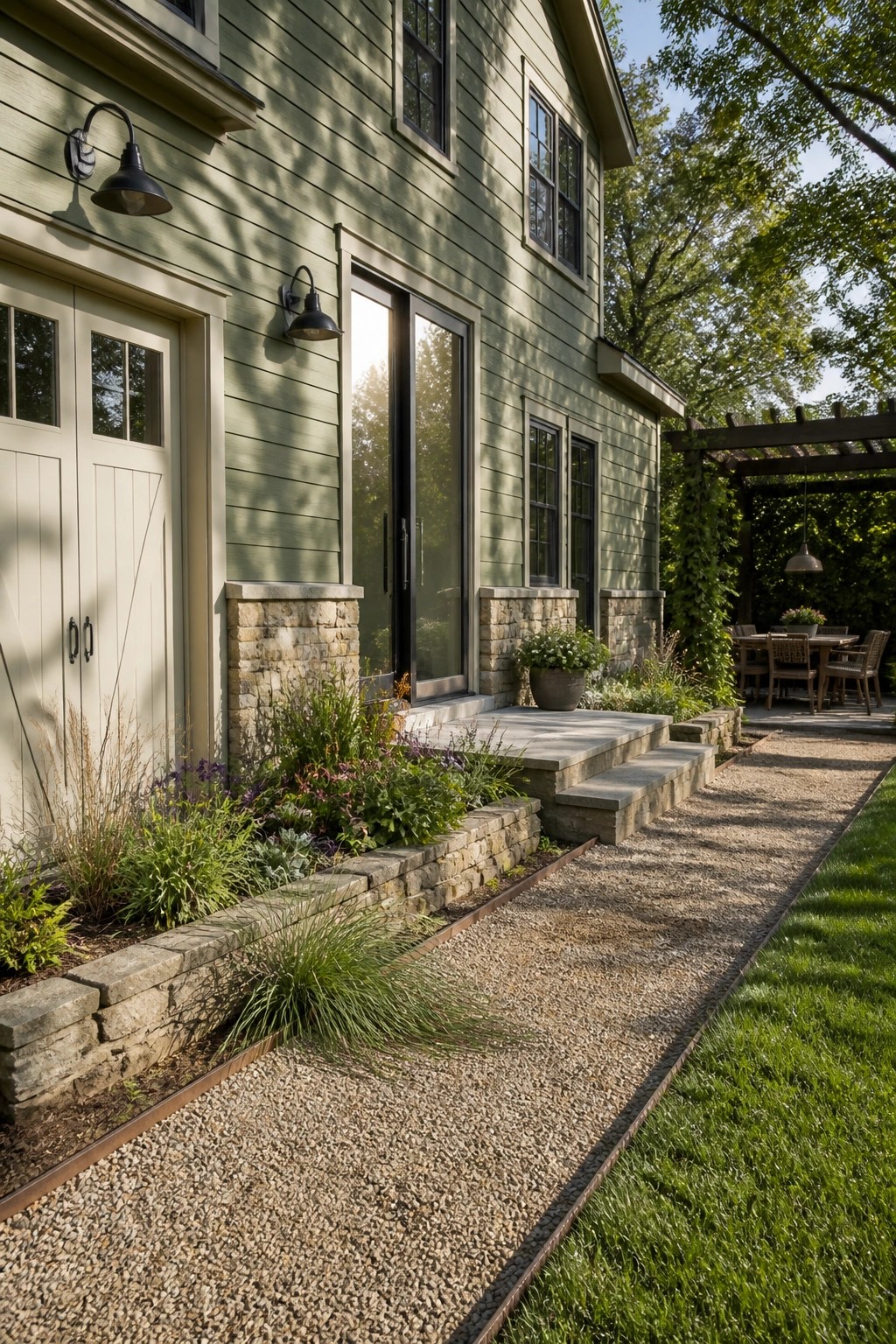
Sage green works well on house exteriors because it softens the overall look without making the home feel too rustic or too plain. The muted tone blends with surrounding trees and grass, which helps the house sit comfortably in its setting instead of dominating it.
This color shows up best on homes that already have some natural texture like stone bases or simple trim. It suits suburban or wooded lots where you want the facade to feel approachable and current at the same time. Keep the windows and doors in a dark neutral to hold the look together.
Sage Green With Dark Accents
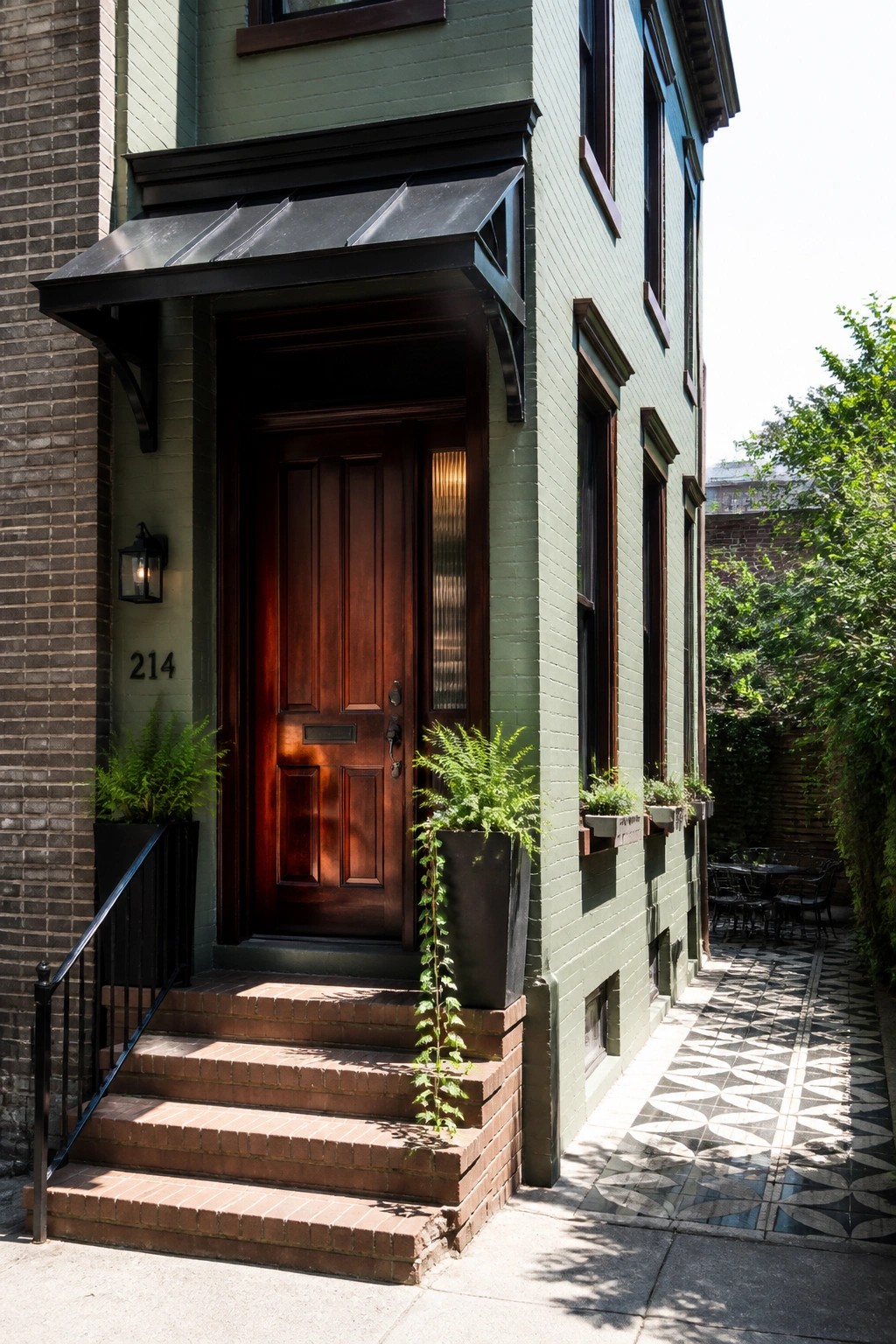
Sage green gives this house a calm, updated look that still feels classic. The color sits nicely against the dark trim and door, which helps define the entry without overpowering it.
This combination works best on homes with some architectural detail. It keeps the facade from looking too plain while staying relaxed enough for everyday curb appeal.
Sage Green Siding for a Softer Look
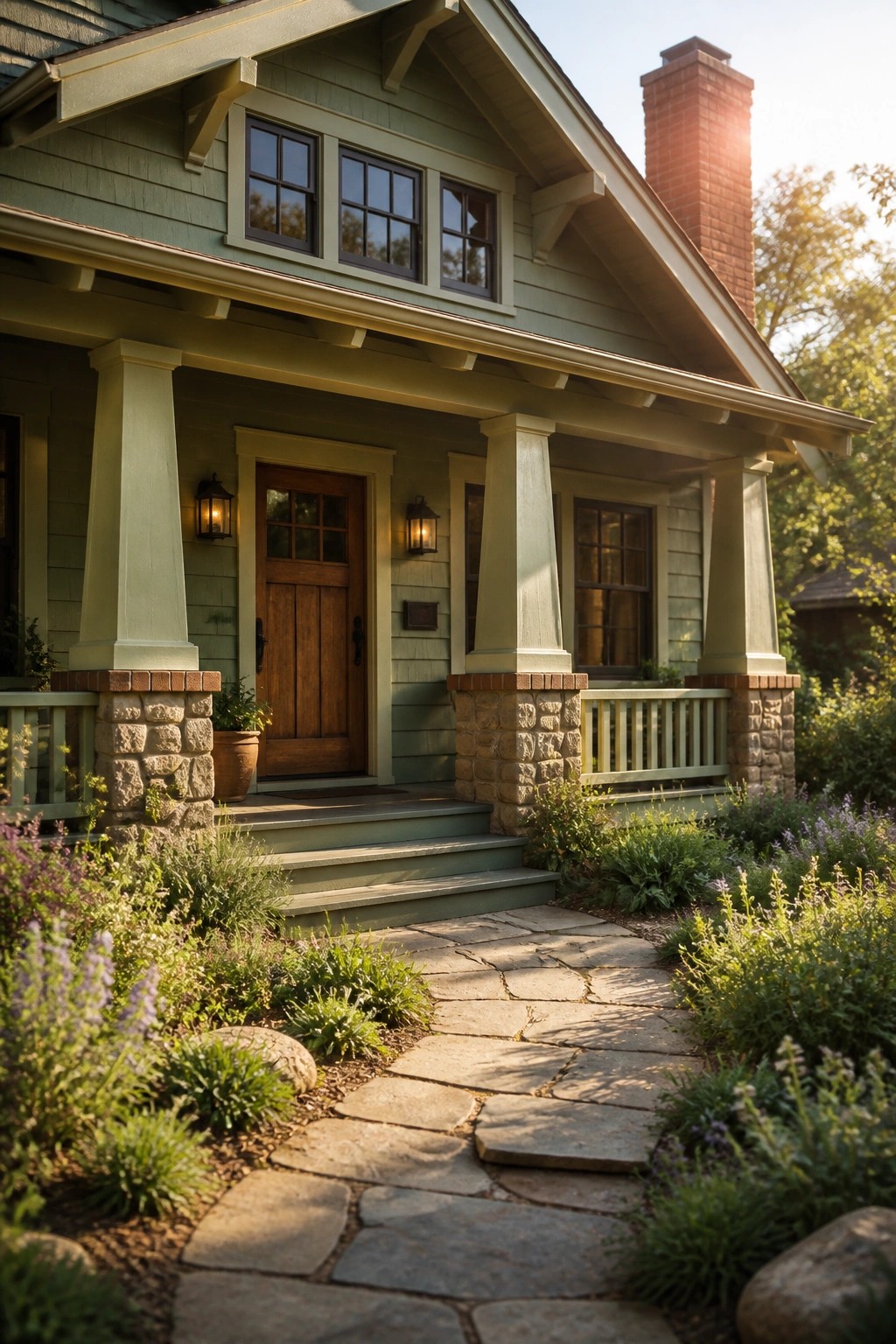
Sage green works well on the main body of a house because it stays calm without fading into the background. It gives the whole place a relaxed feel while still looking intentional next to other materials.
This color suits homes that already have natural stone or wood details. It keeps the exterior from feeling too stark and works best on houses with simple rooflines and clear trim. Just make sure the green you pick has enough gray in it so it does not turn too bright in full sun.
Sage Green for a Softer Modern Exterior
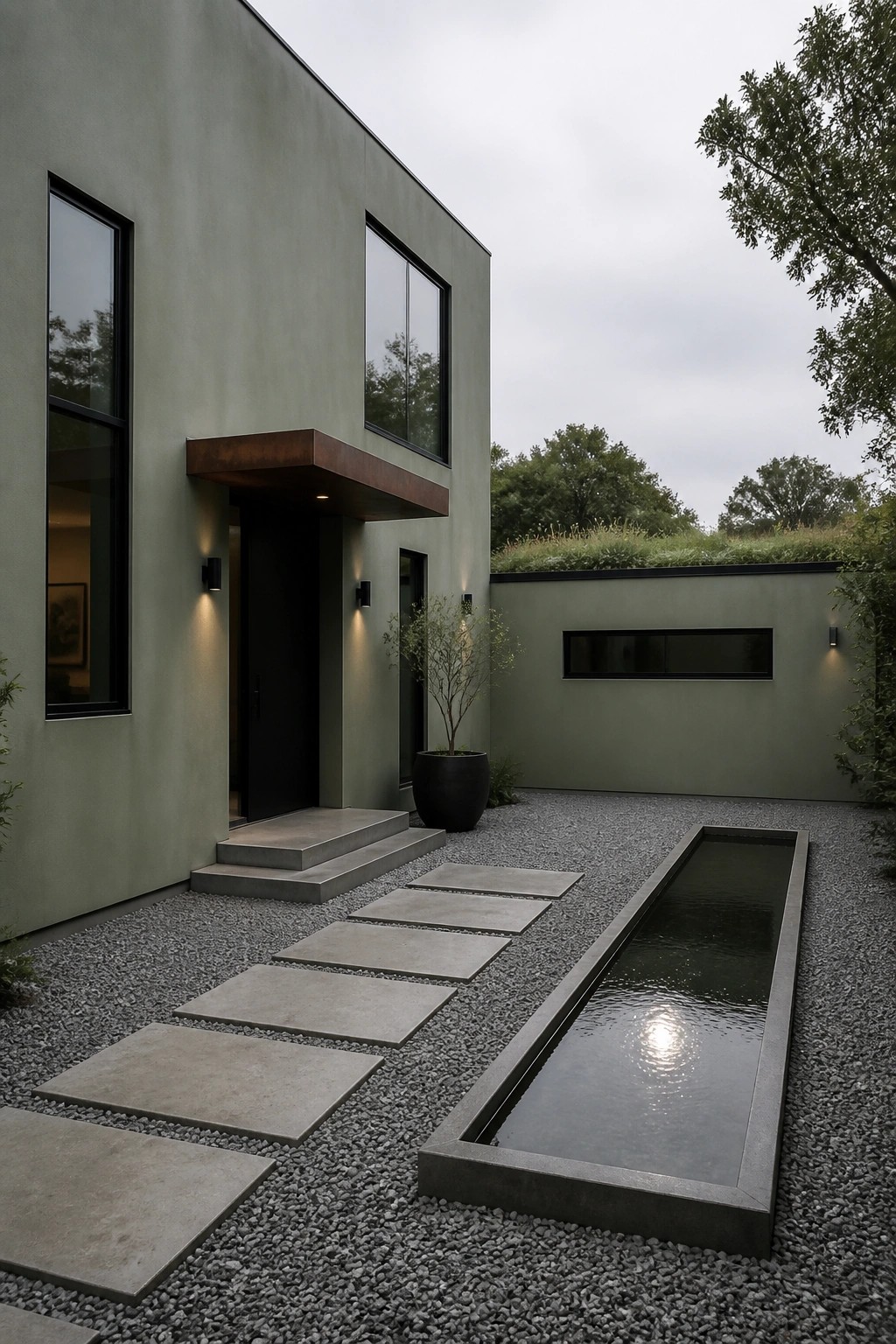
Sage green gives modern homes a calmer presence without losing their clean lines. The muted tone helps the building feel approachable rather than stark, especially when paired with dark windows and simple concrete details.
This color works best on homes that already have strong shapes and minimal ornament. Keep the trim and accents dark, and let the surrounding gravel or paving stay neutral so the green reads as the main feature instead of competing with too many other elements.
Sage Green Siding With White Trim
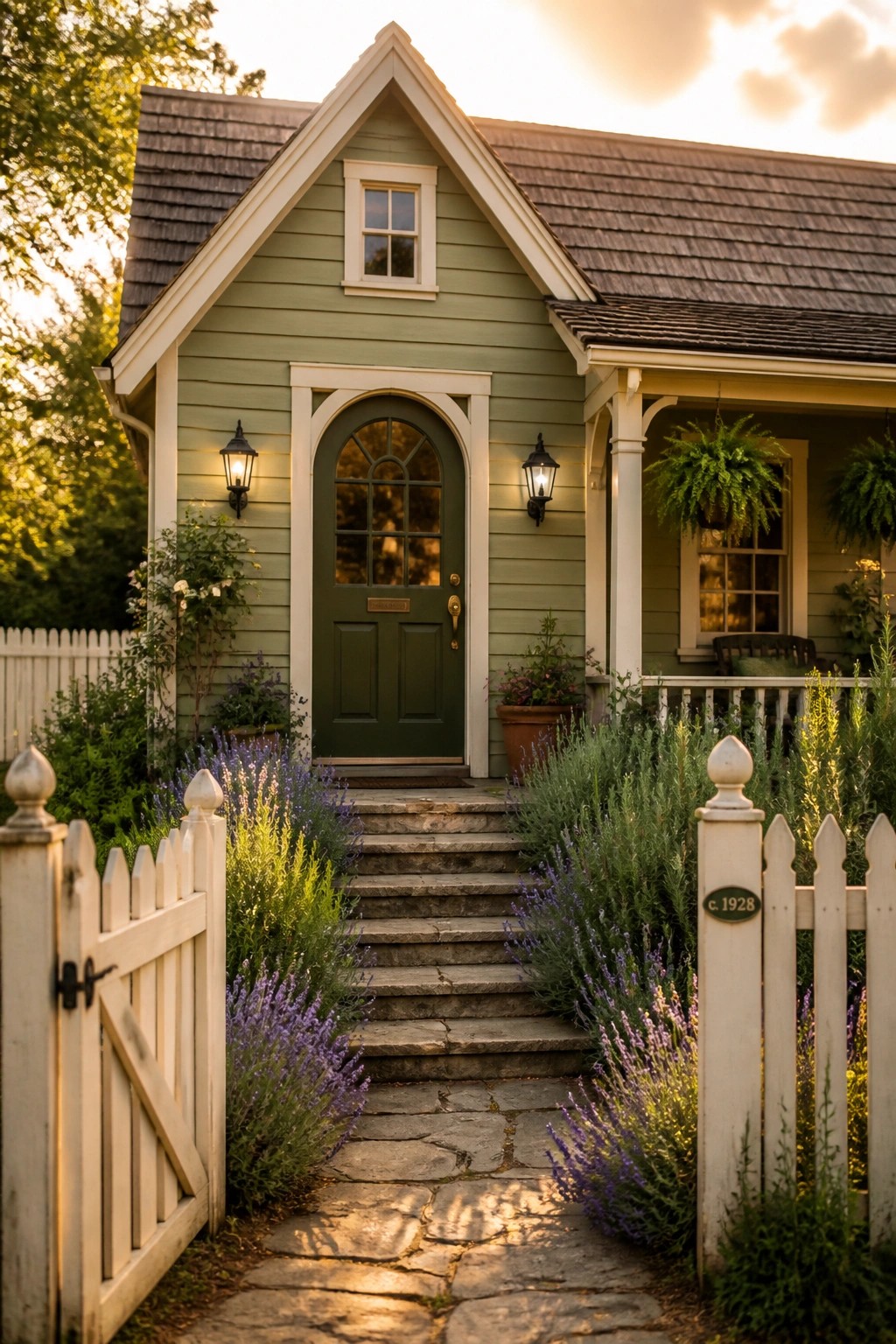
Sage green gives an exterior a soft look that still feels current. It sits nicely between too bright and too dull, which is why it works on many homes that want curb appeal without standing out too much.
This color pairs best with white trim and a deeper door shade to keep the whole front balanced. It suits both small cottages and larger houses, though the exact tone matters since greens can shift depending on the light and surrounding plants.
Sage Green With Natural Wood Accents
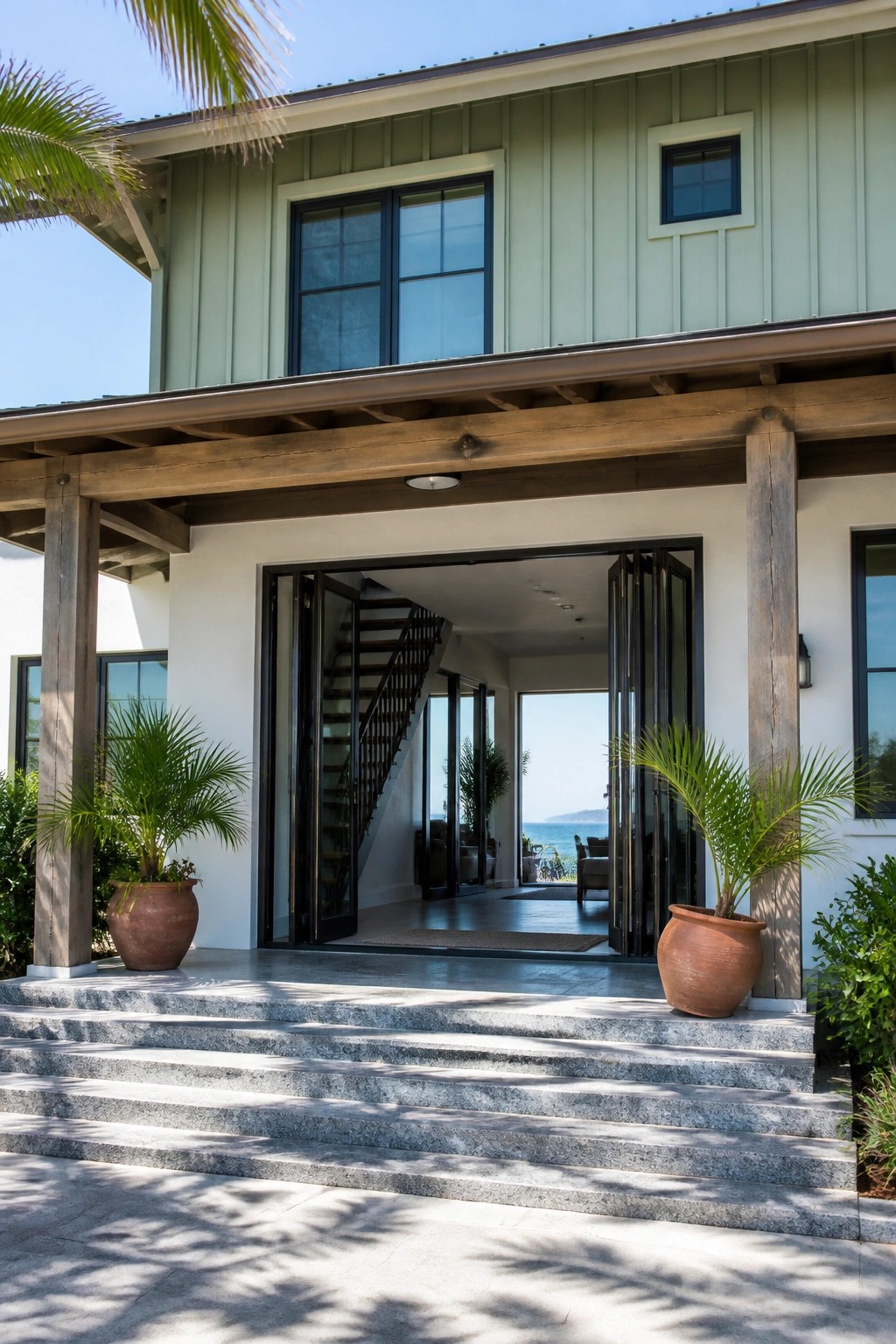
Sage green works well on homes that want a soft modern look without going too stark. The color sits nicely against wood beams and trim, giving the facade a calm presence that still feels current. It avoids the harshness of white or gray while staying easy to live with year after year.
This approach suits coastal homes or any place where you want the house to blend into its setting rather than stand out sharply. Keep the wood tones warm and natural, and limit bold accents so the green stays the main note. Dark window frames help ground the whole look.
Sage Green Stucco for Everyday Warmth
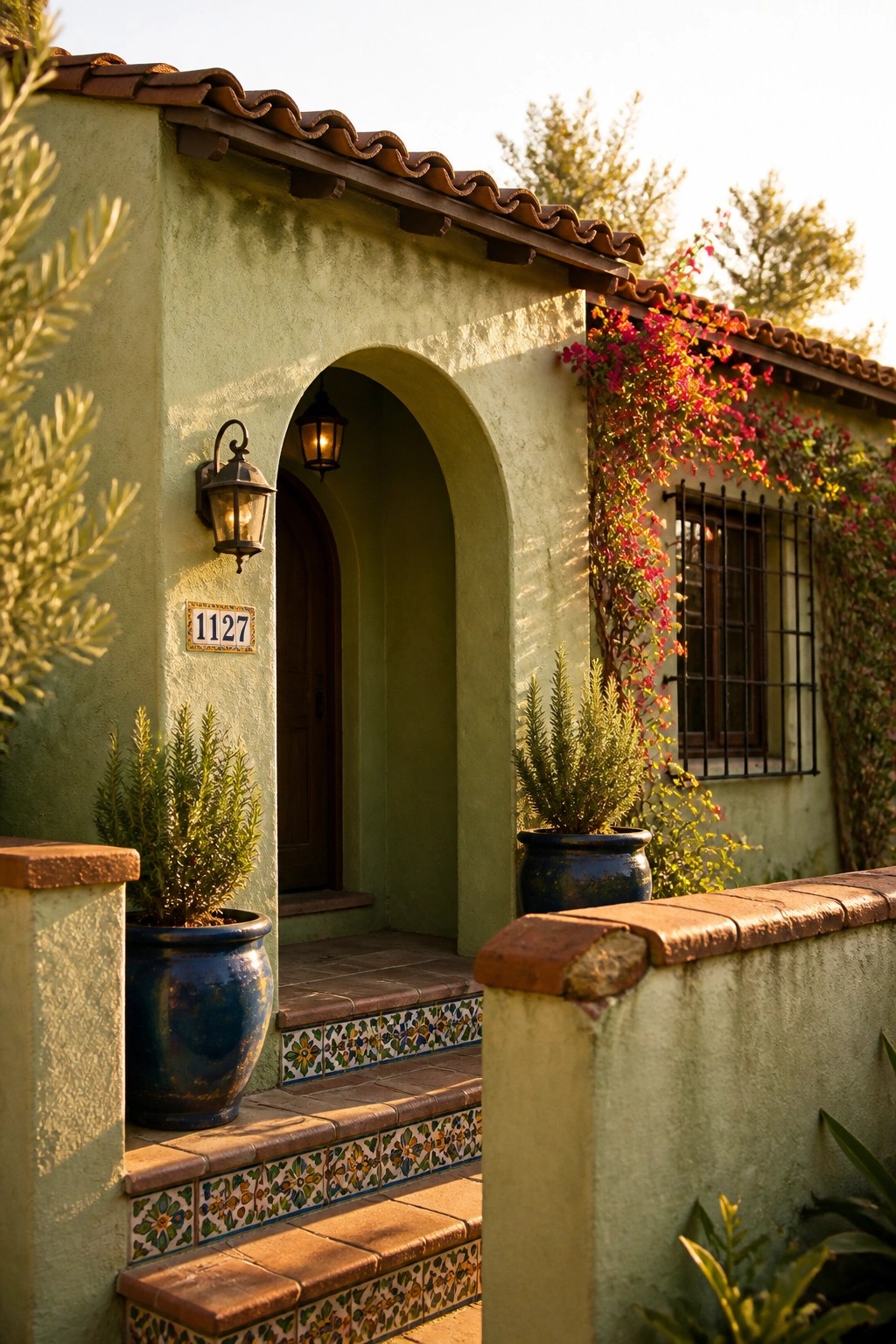
Sage green on stucco gives a house a calm, settled look that feels approachable rather than stark. The soft tone works especially well when the rest of the materials stay simple and earthy.
This color suits homes with terracotta roofs and basic trim because it keeps everything balanced without needing lots of extra detail. It works best on single-story homes or smaller facades where you want the exterior to feel relaxed instead of formal.
Sage Green Siding For A Relaxed Modern Look
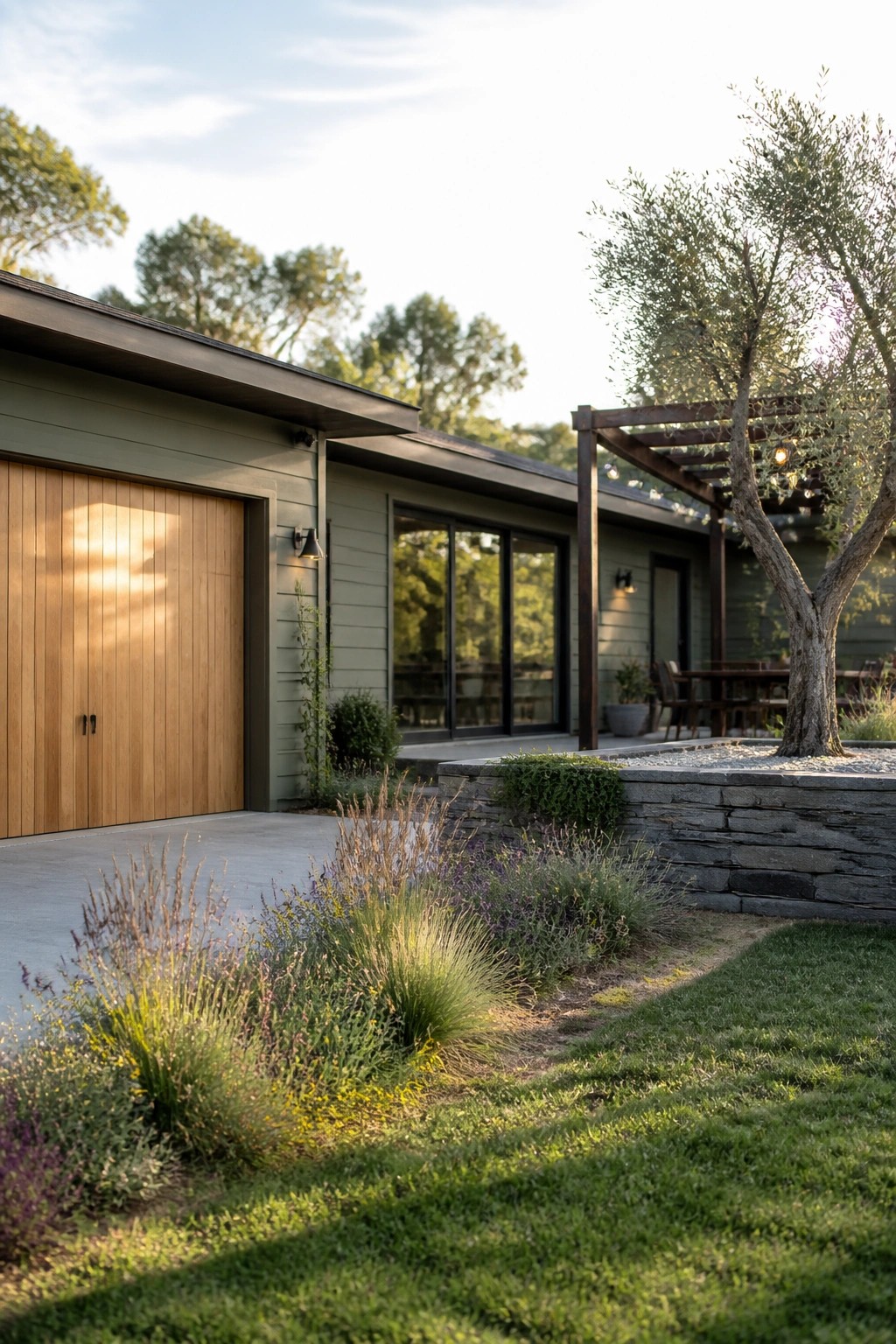
Sage green gives an exterior a calm tone that still reads modern. It sits nicely against wood trim and stone without competing, which helps the house blend into its setting rather than stand out sharply.
This color works best on homes with simple rooflines and some natural materials nearby. Keep the trim and accents in warm neutrals or wood tones so the green stays soft instead of turning muddy.
Sage Green for Modern House Exteriors
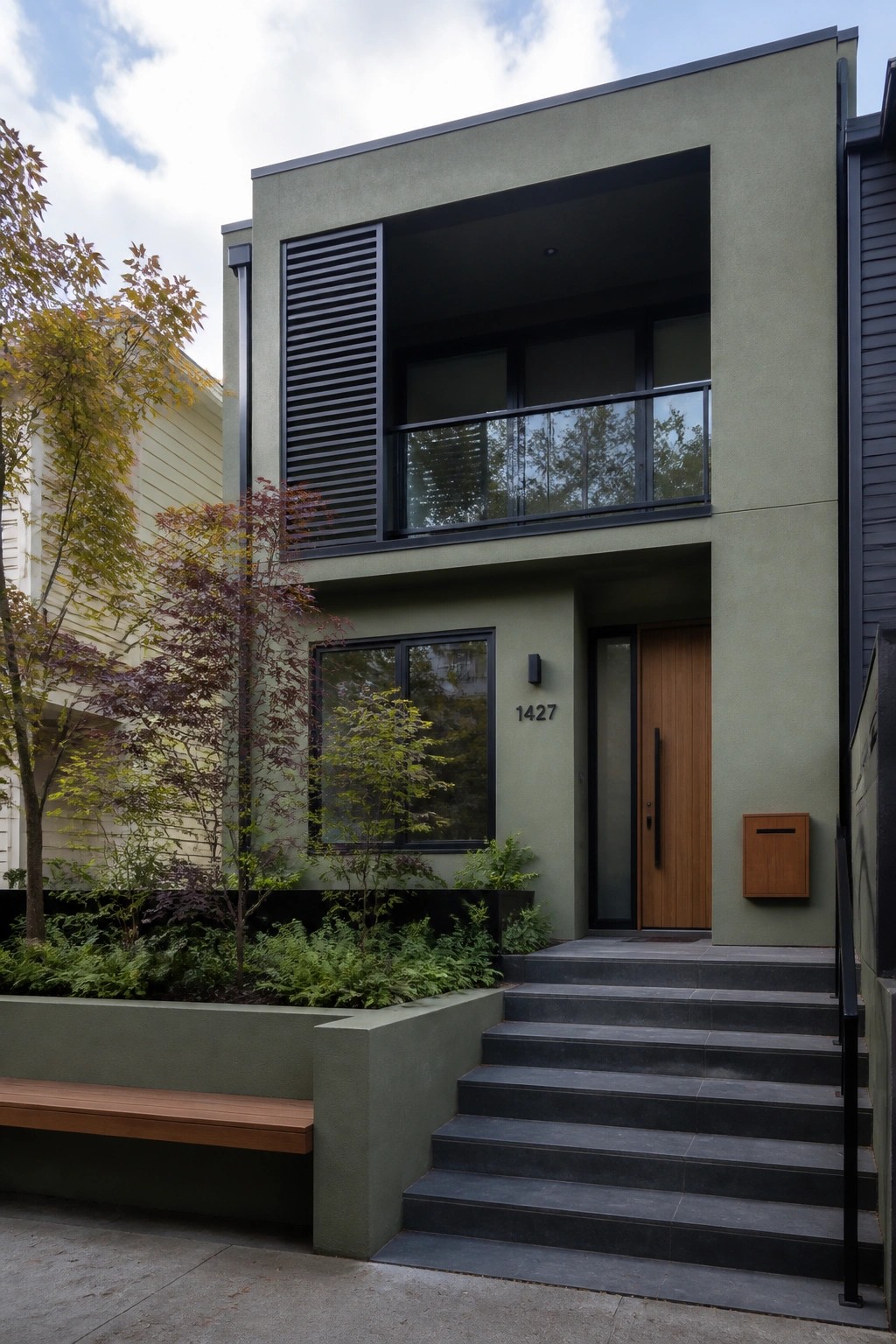
Sage green works well on modern homes because it softens the sharp lines without making the whole place feel too plain. The muted tone gives a calm look that still reads current when paired with dark frames and wood details.
This color suits homes with clean shapes and some contrast materials. It tends to blend into the street better than brighter shades, though it can show dirt more on lower sections near the ground.
Sage Green Siding with Natural Wood Trim
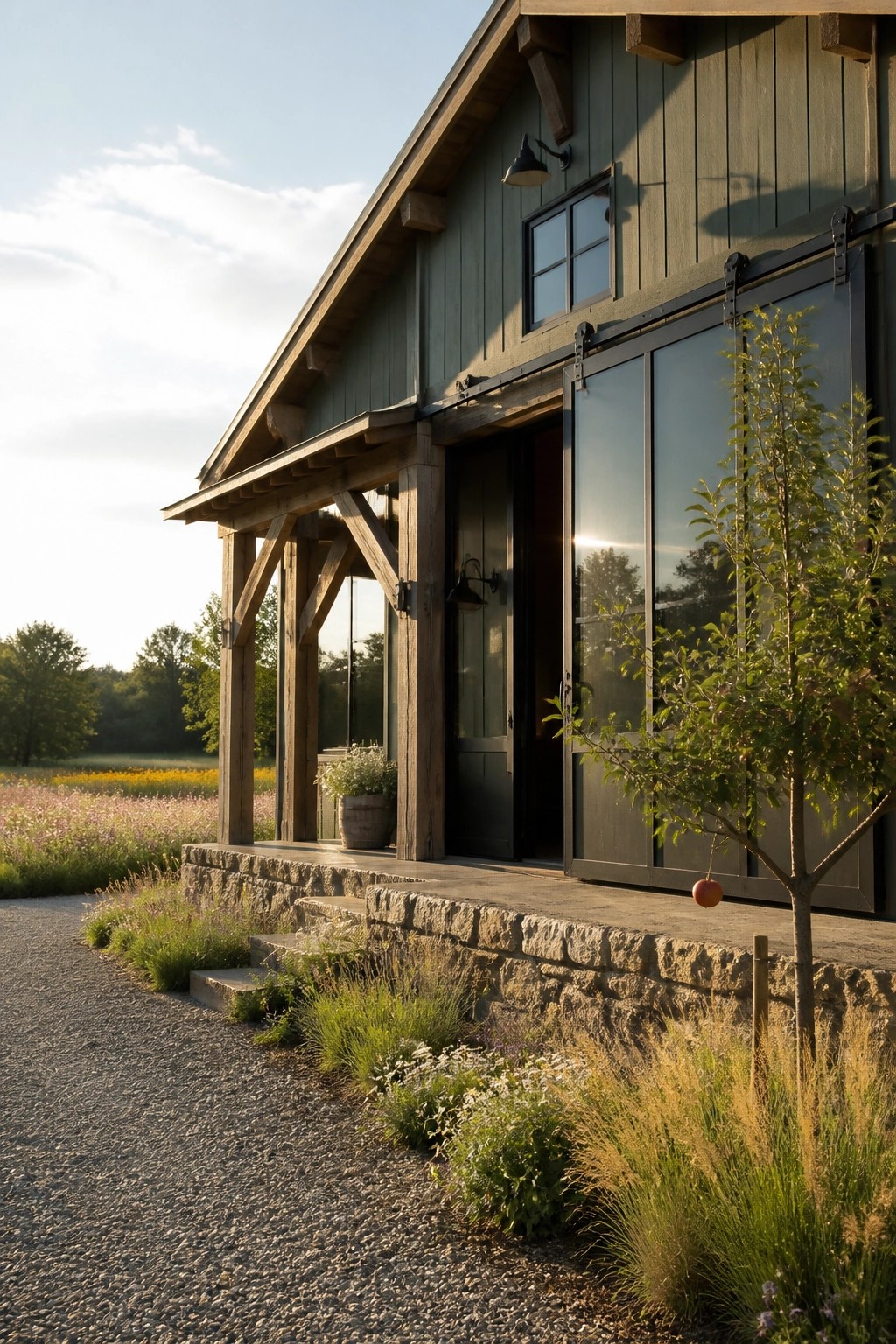
Sage green works well on homes that already have strong wood elements. The soft color lets the beams and posts stand out without fighting them, and it keeps the whole front from feeling too heavy or stark.
This approach suits houses with simple rooflines and some stone at the base. Keep the wood in its natural tone or a light stain so the green stays the main color. Dark hardware and doors help the look stay modern instead of too country.
Sage Green Exteriors
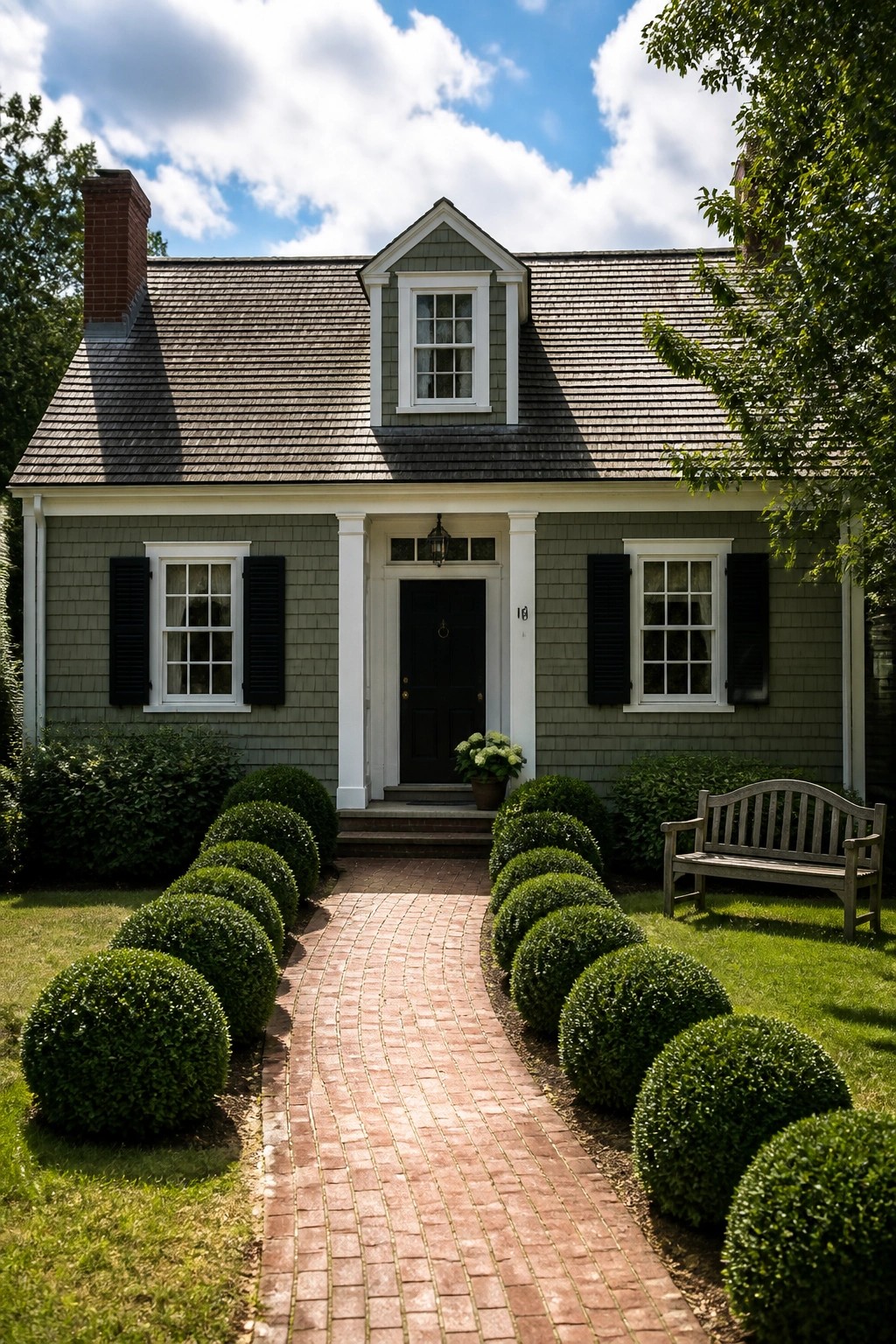
Sage green gives a house a calm presence without making it look too plain or too bold. The color sits nicely against white trim and works with darker accents like shutters to keep the look balanced rather than washed out.
This approach suits homes with simple rooflines and classic window shapes. It helps the house feel settled in its setting while still showing enough contrast to stand out from the street.
Sage Green Exterior Walls
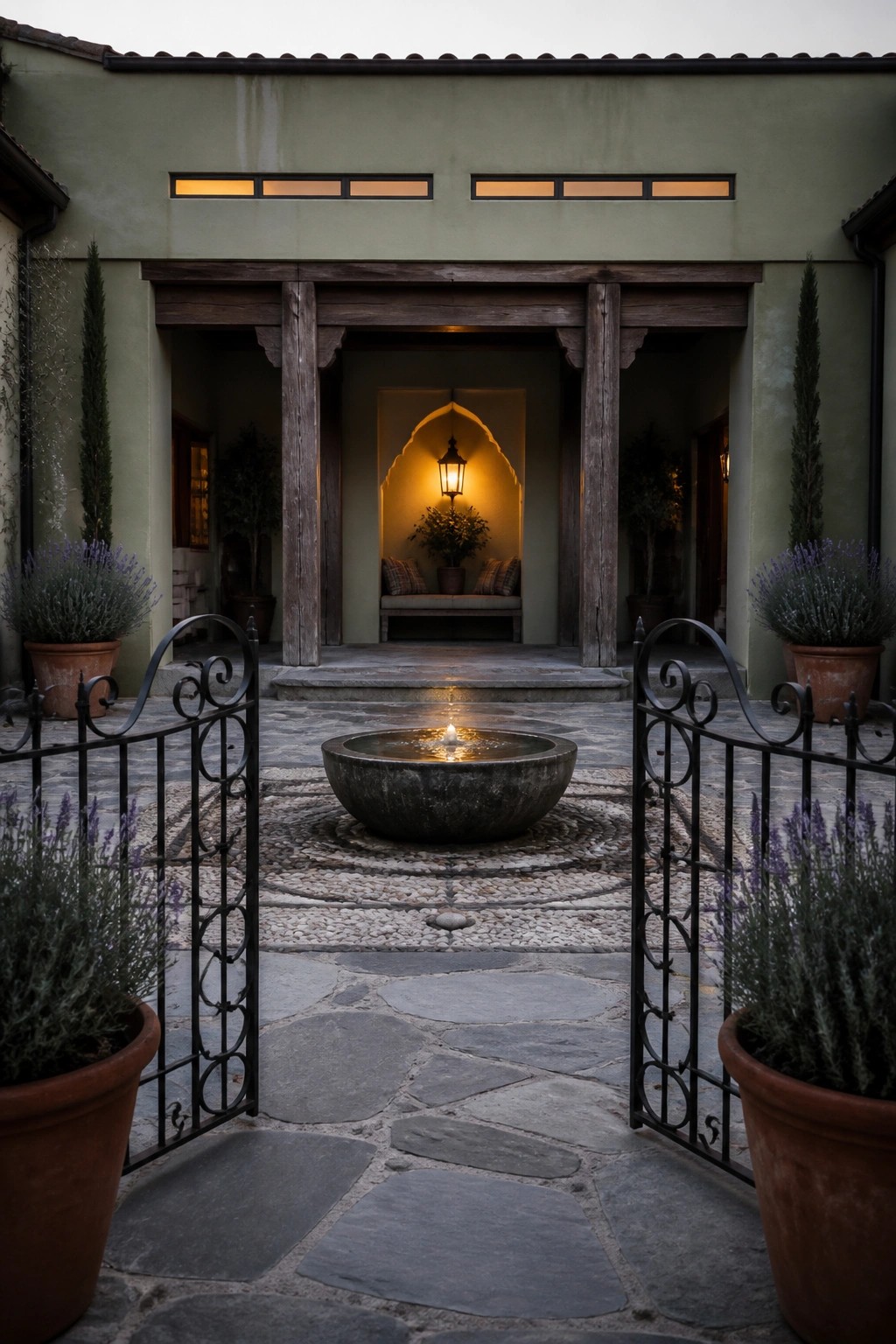
Sage green works well on exterior walls because it gives a house a soft, grounded look without feeling too bold. The color sits nicely against natural materials like wood and stone, so the whole front feels calmer and more connected to the surrounding plants.
This shade suits homes that have a courtyard or a clear entry path. Keep the trim and doors in warm wood tones, and let the green act as the main background color rather than trying to add too many other hues.
Sage Green Siding With Wood Accents
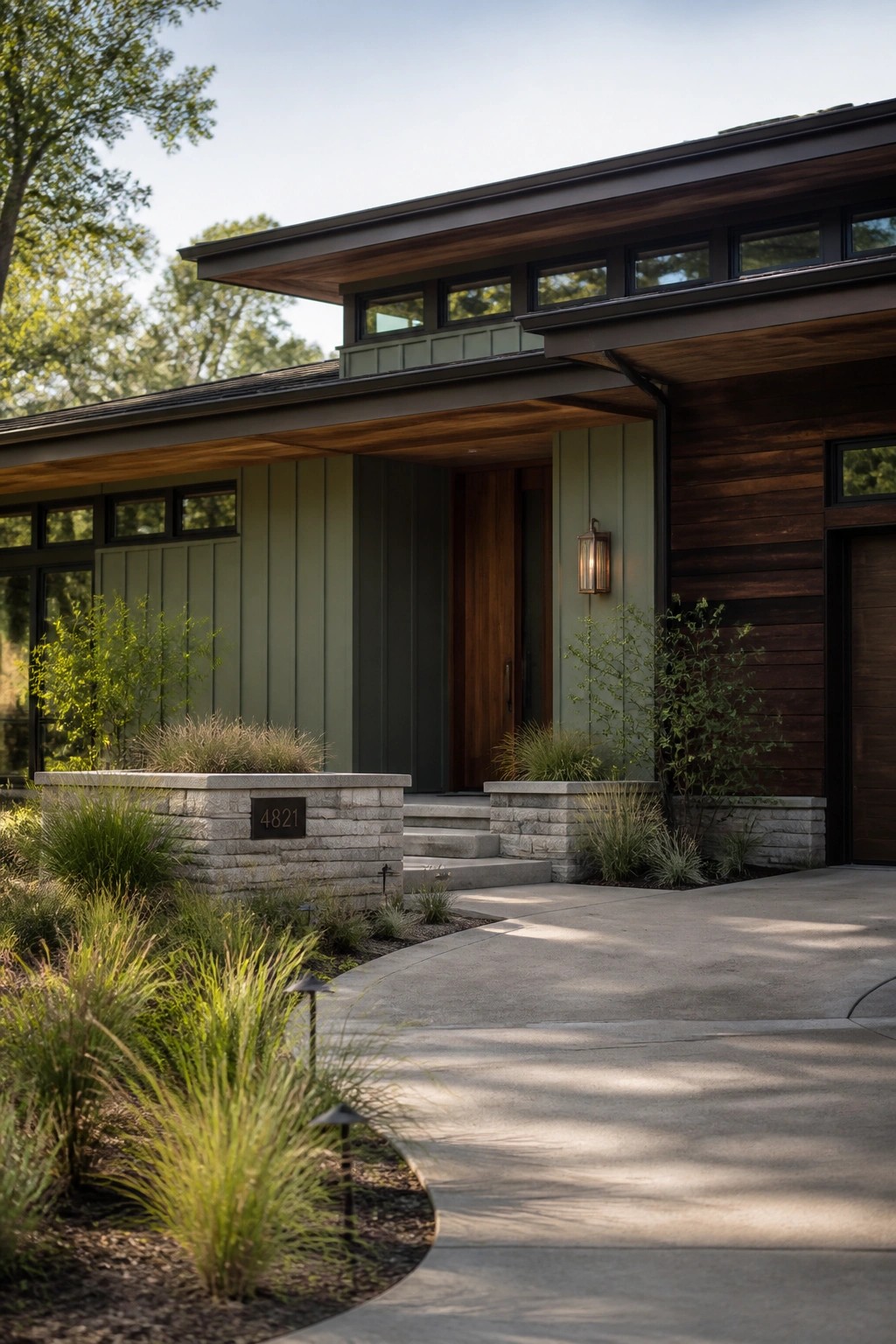
Sage green brings a calm tone to house exteriors without looking washed out or too bold. It works especially well when the main siding color sits next to warmer wood tones, as the contrast keeps the whole front from feeling flat or overly modern.
This combination suits homes with simple rooflines and mixed materials. Use the green on the largest wall areas and let wood beams or trim add depth. Keep stone or concrete elements low so the green stays the focus.
Sage Green Siding For A Calm Exterior
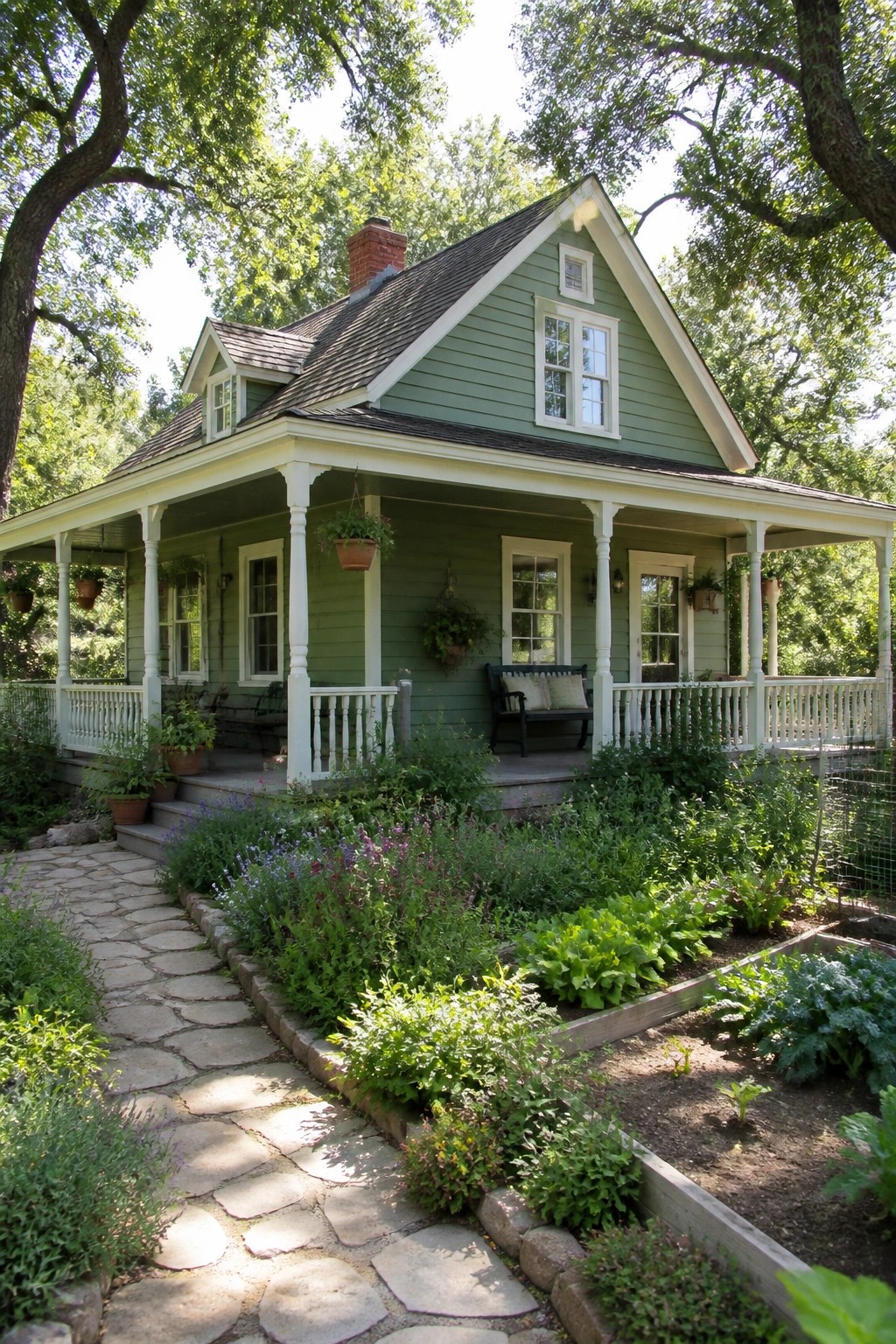
Sage green gives a house a quiet, settled look without trying too hard. The color sits nicely against white trim and keeps the whole front from feeling too stark or busy. It works especially well on homes with simple shapes and a front porch.
This shade suits older houses or newer builds that need a bit of softness. Keep the trim crisp and let the plants do some of the work around the base. Avoid pairing it with too many competing colors on the roof or accents.
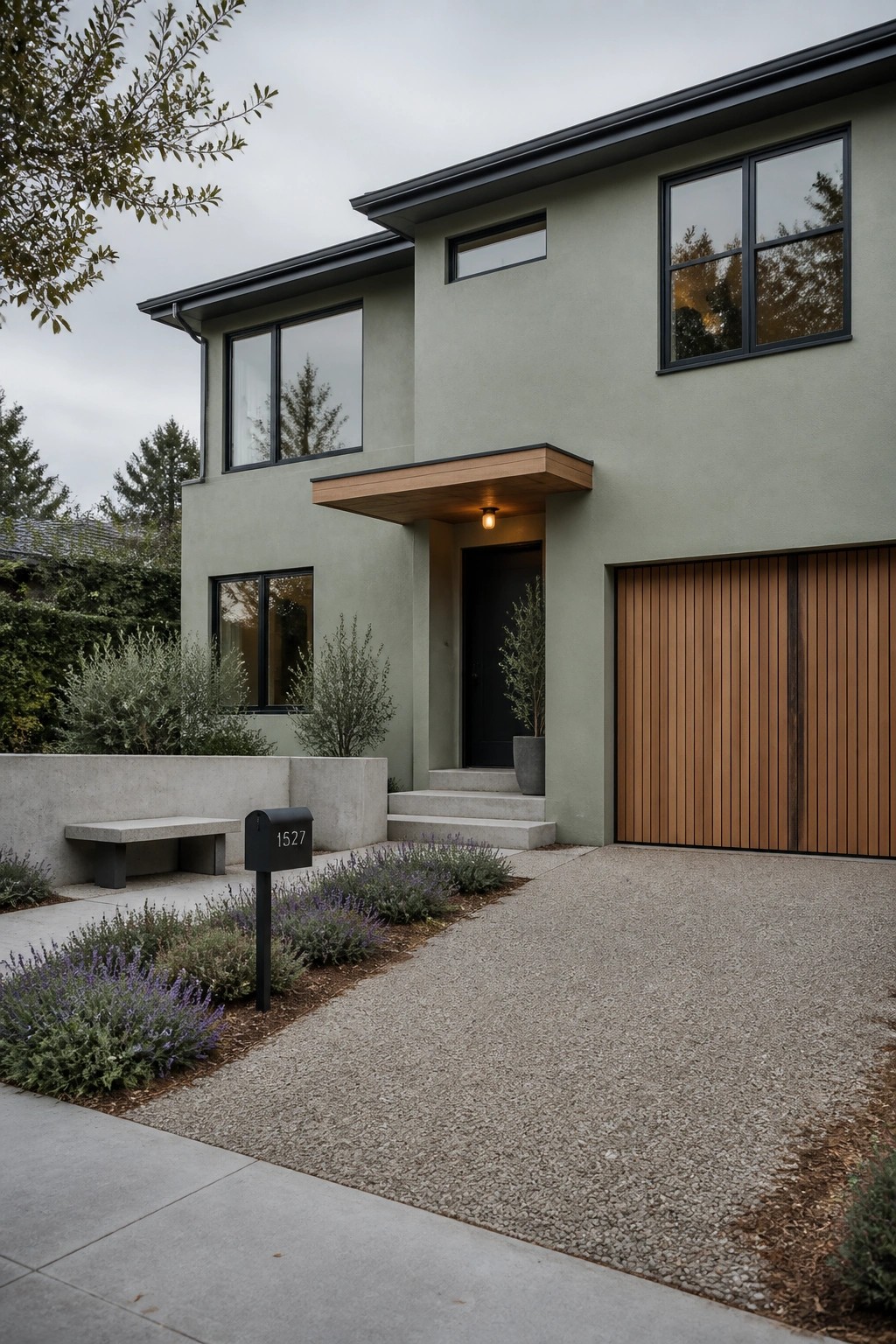
Sage Green for a Calm Modern Facade
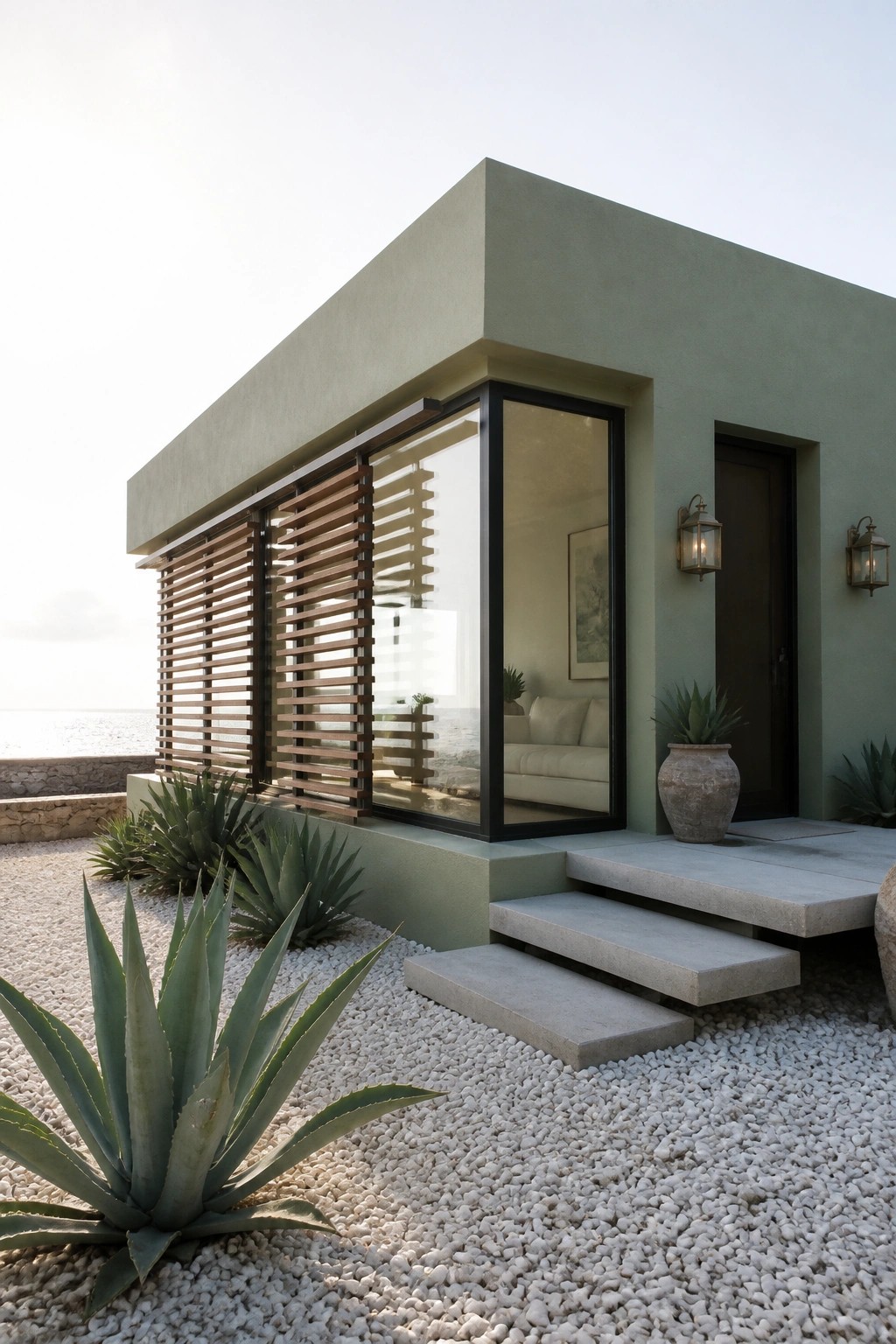
Sage green works well when you want an exterior that feels relaxed but still modern. The color softens the concrete and sharp window lines without making the house look fussy or overly traditional.
It suits homes with simple shapes and minimal trim. Use it on stucco or similar surfaces, then keep the rest of the palette quiet with wood screens, dark frames, and gravel around the base so the green stays the main feature.
Sage Green Gives Exteriors a Calm Tone
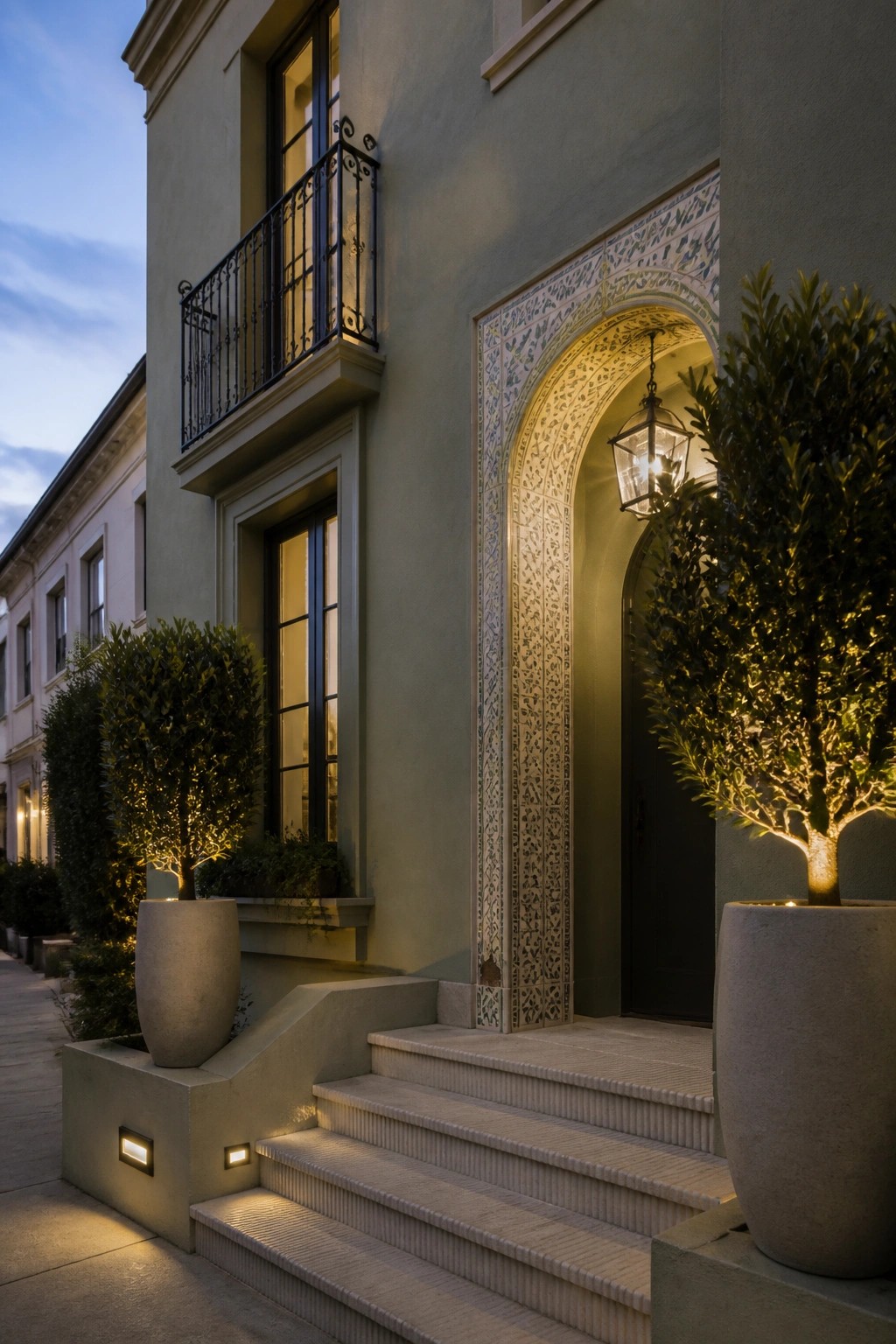
Sage green works well when the goal is a relaxed modern feel on the outside of the house. It keeps the facade from looking too stark while still letting the shape and details of the building show through.
This color suits stucco walls and pairs easily with simple accents like dark trim or patterned tile around an entry. It tends to look best on homes that already have some architectural interest, since the muted tone lets those elements stand out without extra contrast.
Frequently Asked Questions
Q: How do I test sage green before painting the whole house?
A: Grab a few sample quarts and paint them on large boards to prop against your siding. Check the colors morning and evening since light changes everything once it’s up there.
Q: Will bright sun wash out the sage on my south facing walls?
A: Choose a deeper shade with some gray in the mix so it stays rich longer. (Test the spot that gets the most direct light first.)
Q: What trim color keeps the look relaxed without fighting the green?
A: White trim keeps things looking sharp and modern. But if your windows have black frames already, match those instead for an easy win.
Q: Can sage green still work next to a neighbor’s bold blue house?
A: It blends without competing since the tone stays soft and natural. Your curb appeal stays calm while the street stays interesting.
