

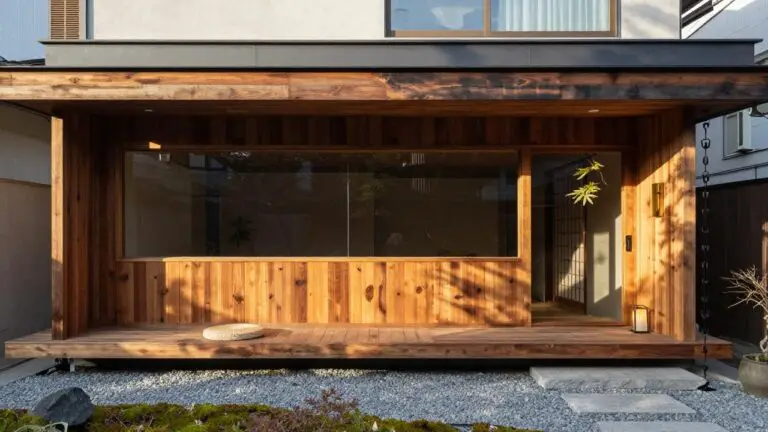
I’ve noticed how a home’s windows often set the tone for its entire street presence, especially when they avoid competing with the roofline or siding.
Japanese exterior styles stand out to me because they let natural light filter through without overwhelming the facade’s clean lines.
From the curb, it’s those understated frames and placements that first signal a sense of calm retreat.
I usually sketch a couple against my own house’s proportions to check if the serenity holds up in real shadows and seasons.
Certain ones adapt well to modern materials, making simplicity feel timeless rather than plain.
Built-In Window Benches
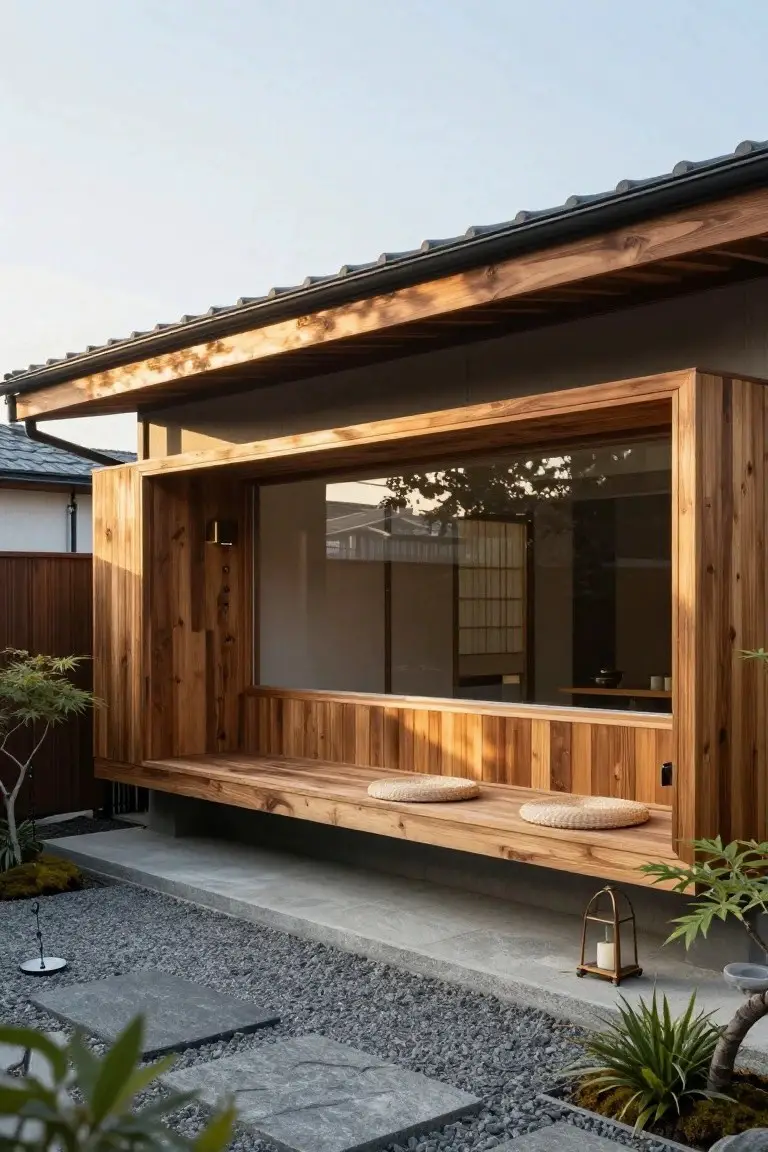
One nice touch in Japanese exteriors is building a wooden bench right into the window frame. It sits low under a wide glass opening, like here with cedar boards and a few cushions. This pulls the garden view closer, without needing extra furniture outside. It keeps things simple and calm.
These benches work best on quieter sides of the house, where you can sit and watch plants shift in the breeze. They suit modest homes with gravel yards or maples nearby. Just seal the wood well against weather, and skip busy patterns on the seats.
Frosted Sash Windows for Subtle Privacy
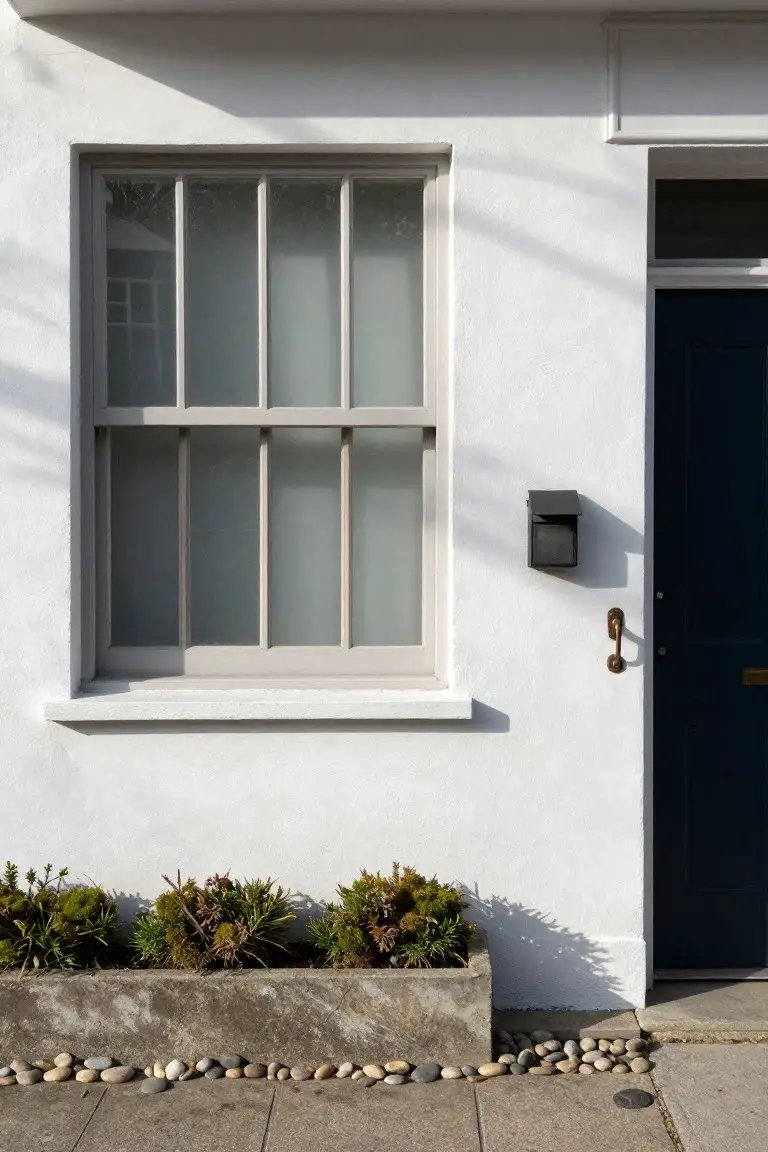
One nice touch in simpler home exteriors is using frosted glass in sash windows. It lets light filter through softly without showing what’s inside. That creates a calm street view. You see it here with the pale frames against white walls. The multi-pane design keeps things traditional but quiet.
These windows work well on homes facing the street or in close neighborhoods. They suit older houses or ones aiming for a relaxed look. Pair them with a plain door and some low plants along the base. Just make sure the frosting isn’t too dark or it cuts light too much.
Recommended Products

Ideal for adding privacy or creating a decorative look on interior windows, mirrors, shower doors and more

PROTECT YOUR ALL DAY PRIVACY: KESPEN frosted glass window film with updated matte design, provide ultimate privacy level for day and night, 94% opacity but still allows light in, it can protect your private space from being monitored and disturbed,make you always feel safe and peaceful

Easy Installation Toolkit Included: Our static cling window film requires no glue or adhesives. Just use the squeegee, soapy water and cutter for a bubble-free, professional finish on glass windows in minutes. No hiring experts needed
Wooden Framed Entry Windows
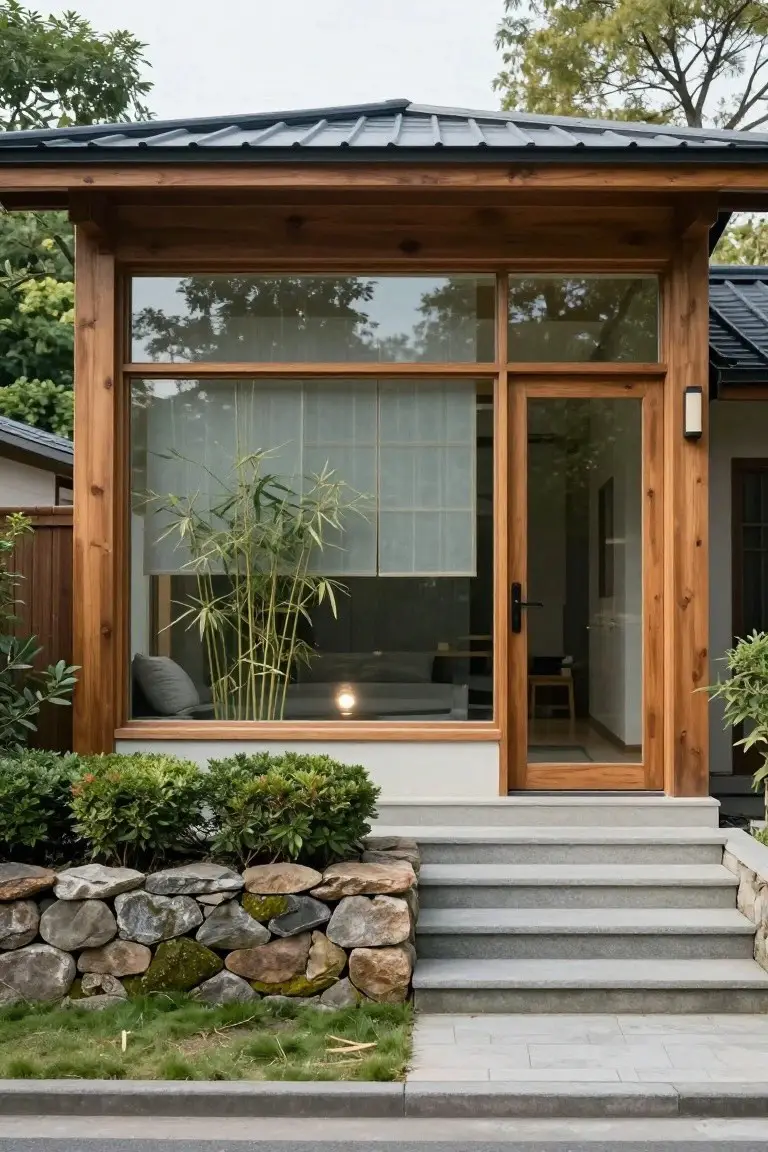
These entry windows use tall wooden frames around big glass panels right at the front door. You can see bamboo plants inside peeking through, which pulls a bit of garden calm out to the street. The wood gives it structure while the glass keeps things light and open. It’s a quiet way to show off what’s waiting indoors.
Put this on homes with a simple front yard or along a walkway. Cedar works well since it ages to a soft gray. Keep the frames slim and add shoji-style screens for some privacy. Skip it on busy roads though. It suits spots where you want neighbors to sense the peace without staring in.
Wooden Lattice Screens Beside Glass Walls
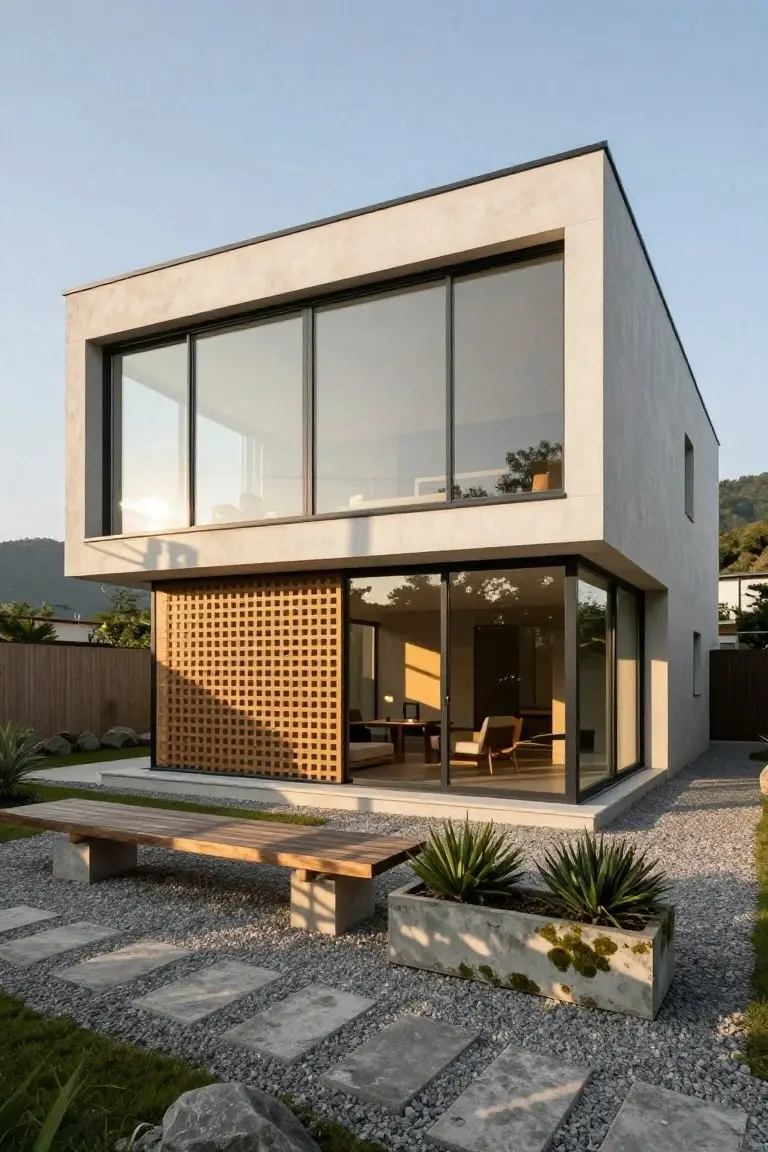
One simple way to handle big glass windows on a house exterior is adding a wooden lattice screen right next to them. Here it’s a tall panel of warm-toned slats set against the smooth beige stucco and those full-height sliding doors. It cuts down on direct views in while letting soft light filter through. That mix brings a quiet Japanese touch without blocking everything off.
This setup fits best on modern homes with open plans that back onto a yard or garden. Use it where privacy matters but you still want to connect inside and out. Keep the wood natural and the gravel simple around it. Just watch scale, the screen should match the glass height or it looks off balance.
Round Windows on White Walls
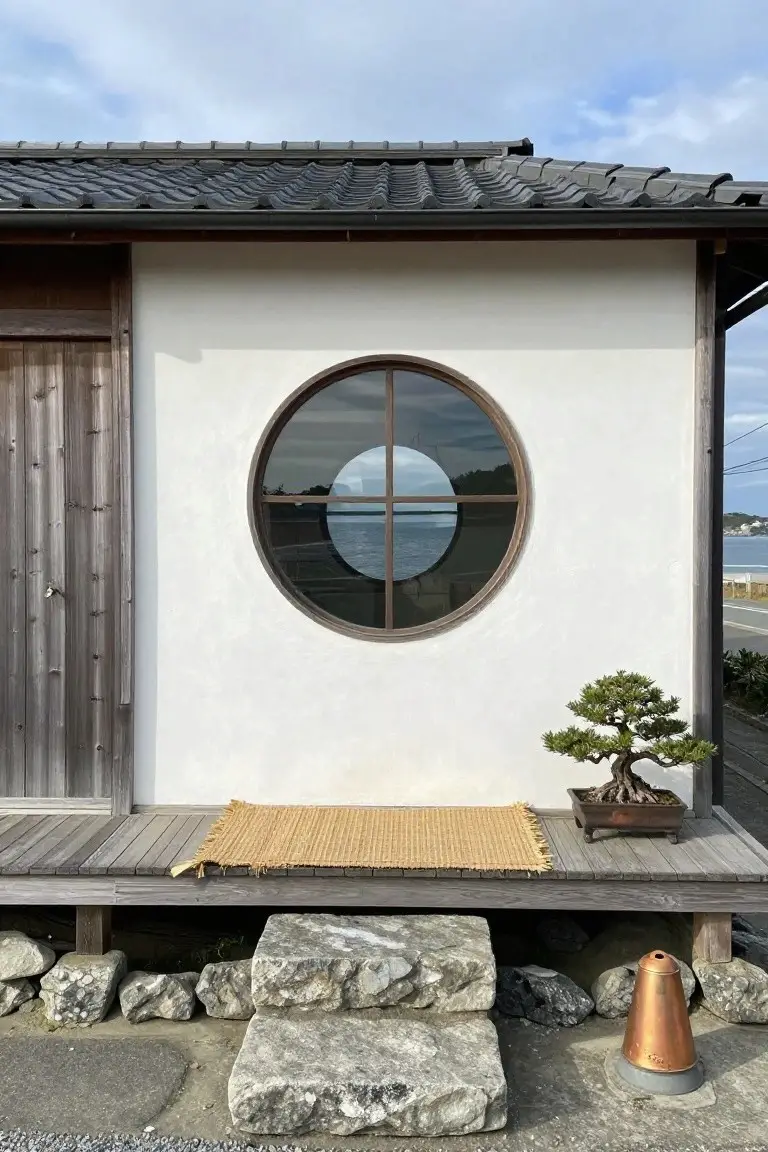
A round window like this one sits quietly on a plain white wall, letting in light and framing a sea view just right. The wooden frame and cross mullions give it that classic Japanese touch. It keeps the exterior simple, no fuss, and pulls the outside world into the design without trying too hard.
Put one where you have a good view, like facing water or a garden. It works best on modern takes of traditional homes, especially with smooth plaster walls and wood accents. Skip it on busy streets though. Add a small plant nearby, and it feels even more settled.
Lanterns Beside Windows
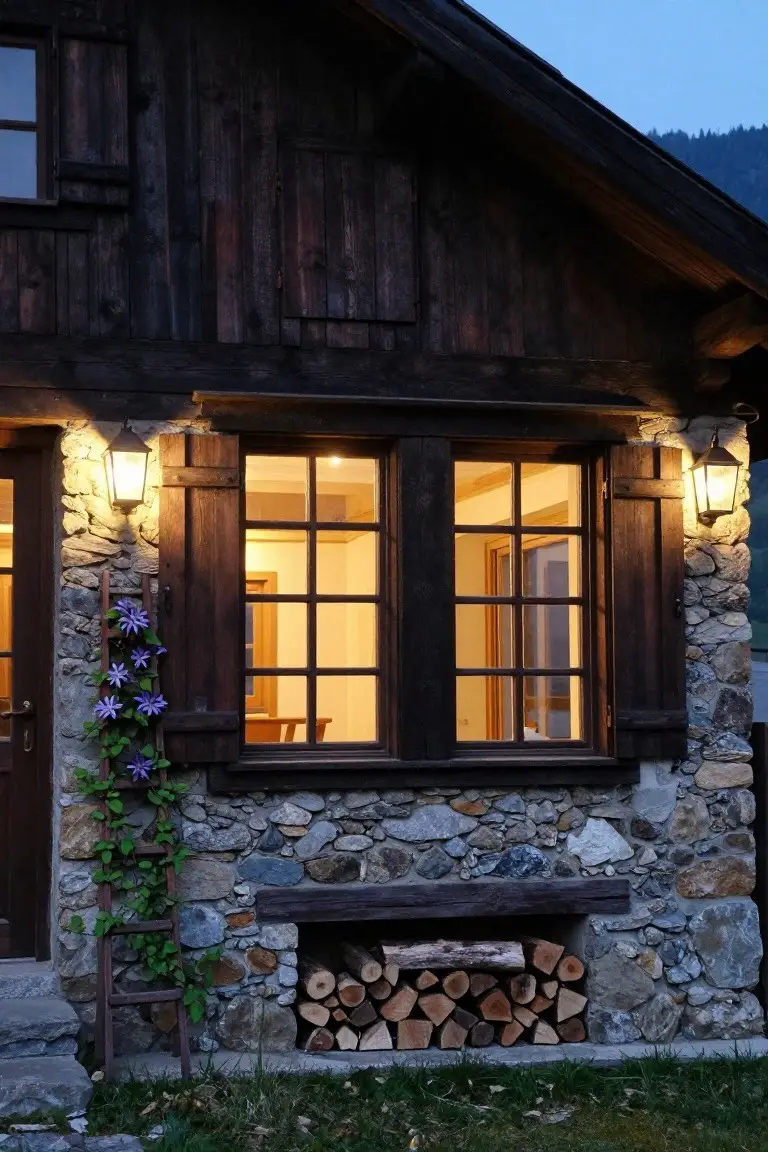
Lanterns placed right next to the windows give off a soft glow at dusk. They highlight the glass without overpowering the look. That quiet light spilling out makes the whole facade feel settled and easy on the eyes. It’s a straightforward way to add evening calm to a house.
Hang lanterns like these on posts or brackets near your main windows. They suit homes with wood or stone siding, especially in cooler spots. Keep the bulbs low-wattage so the effect stays gentle, and check they’re built for outdoor use year-round.
Slatted Wood Window Screens
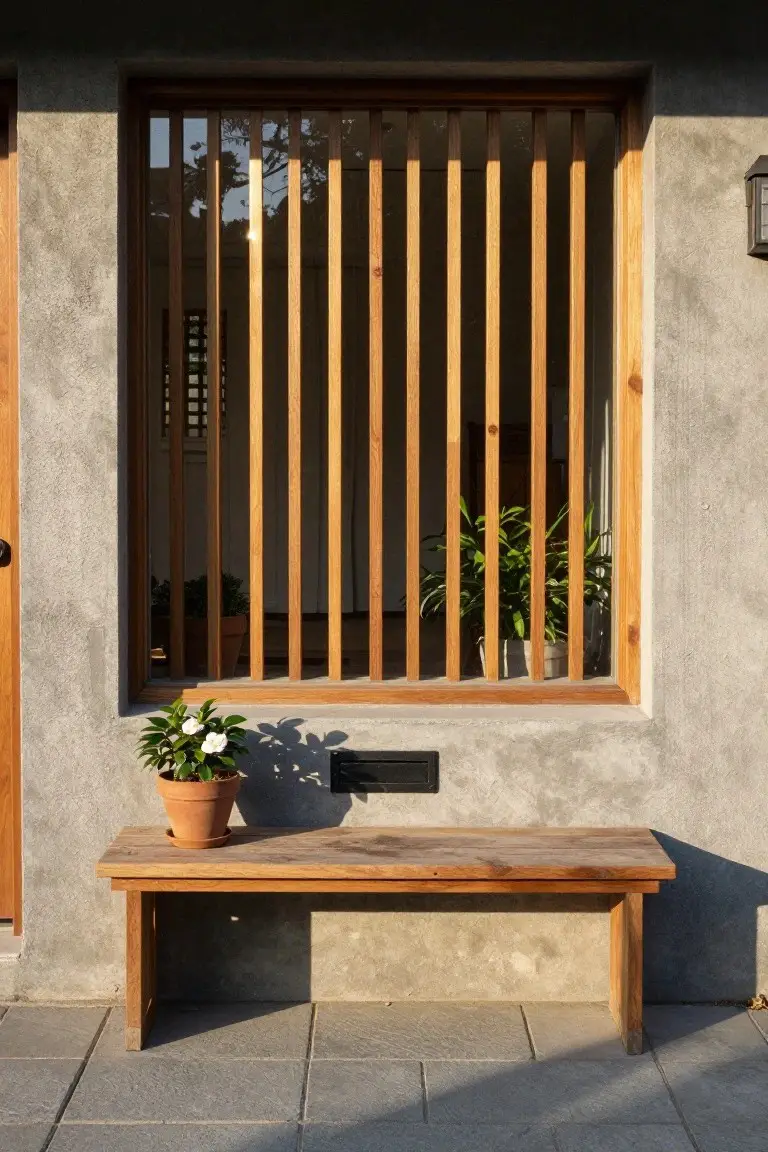
These vertical wooden slats over the window let soft light filter through while blocking direct views inside. They give the plain concrete wall a quiet rhythm that feels Japanese without trying too hard. A small potted plant nearby picks up on that simple touch.
You can add them to any modern exterior where privacy matters, like living room windows facing the street. They work best on homes with clean lines. Just make sure the wood matches your siding, or it might stand out wrong.
Shoji Windows by the Entry Door
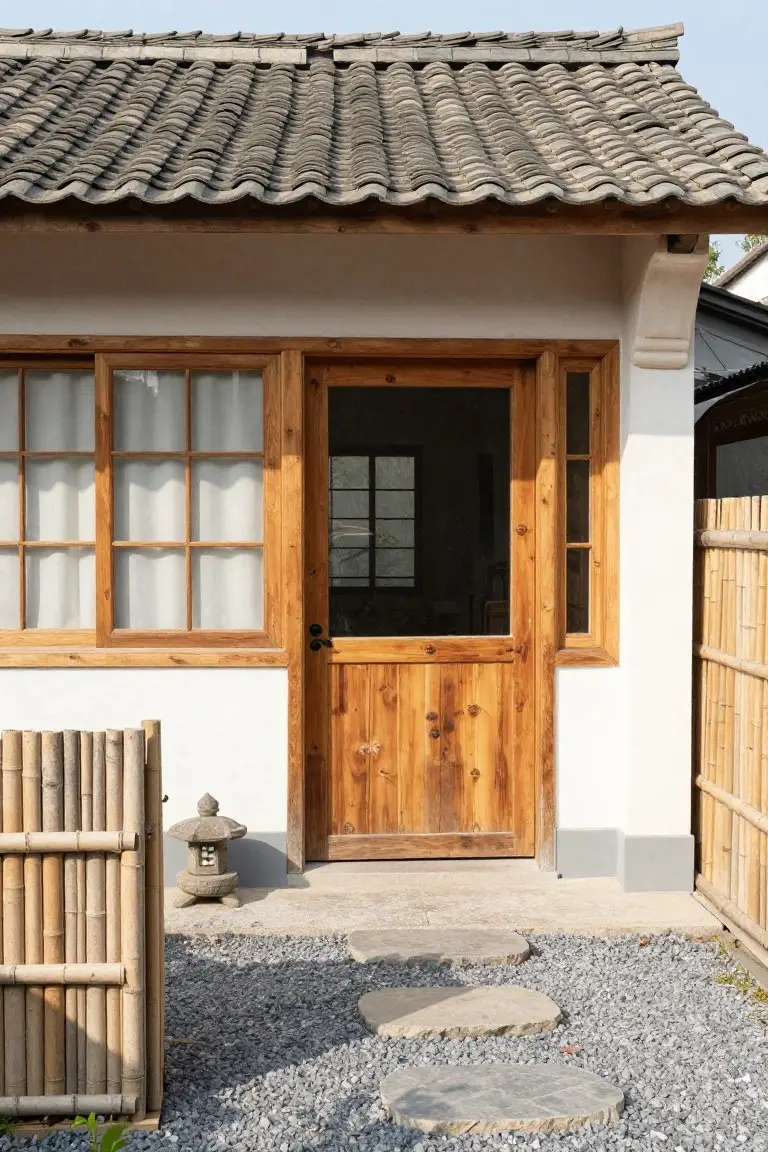
One look at this entry says a lot about quiet welcome. The shoji window sits right next to the wooden door, with those white paper screens letting in soft light. It keeps the view private from outside but hints at what’s within. That simple wood frame matches the door nicely, making the whole spot feel settled and real.
Try this where your front faces the street or a garden path. It suits homes with clean white walls or light siding, especially if you like a Japanese touch without overdoing it. Hang basic screens inside the window and pair with a plain door. Watch the screens though, they need care to stay crisp.
Steel-Framed Windows with a Simple Bench
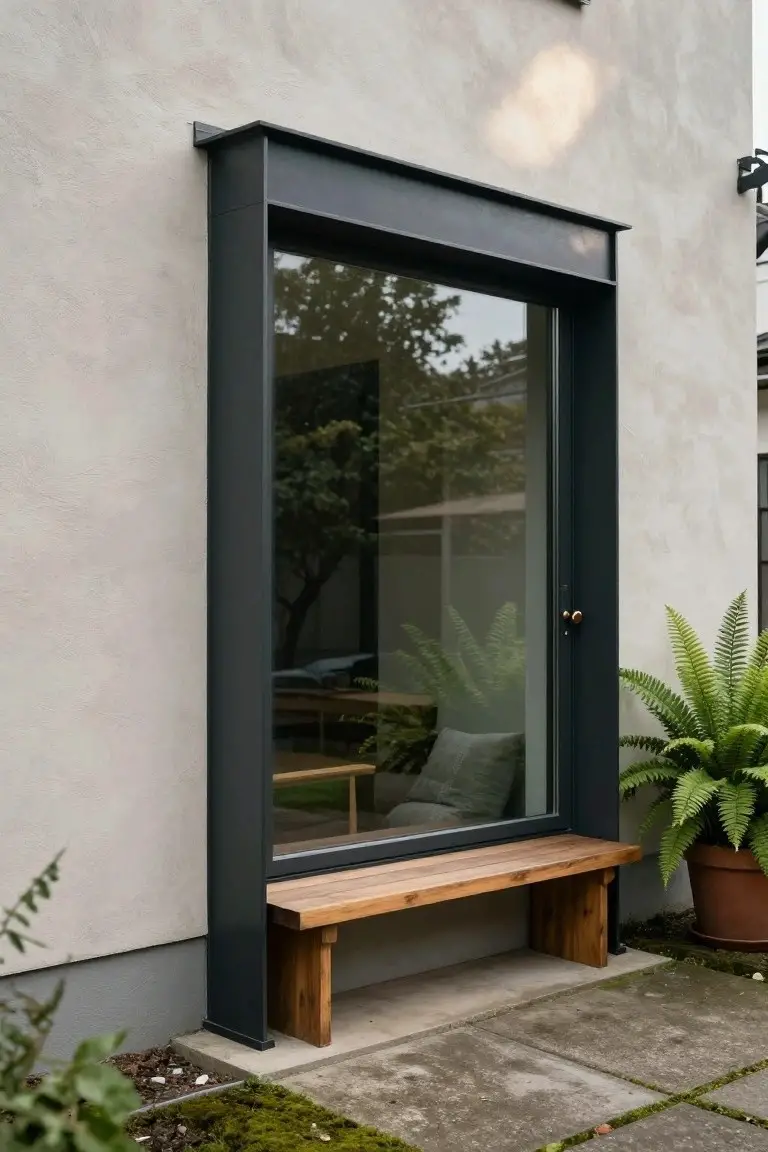
Large windows like this one, set in a strong black steel frame, let light pour in while keeping the look clean and open. The wooden bench tucked right under it adds a spot to sit and take in the view. It’s that quiet blend of metal strength and wood warmth that feels right for a calm exterior. You see the trees and cushions inside reflecting back, making the whole wall feel alive without any fuss.
This setup works best on a side wall or quiet corner of the house, where you want a peaceful pause spot. It suits modern homes with smooth stucco walls, especially if you’re after that Japanese touch of simplicity. Just make sure the bench height lines up easy with the frame, and pick weather-tough wood. Skip it on busy street sides, though. It shines where things stay still.
Symmetrical Black Windows for Quiet Appeal
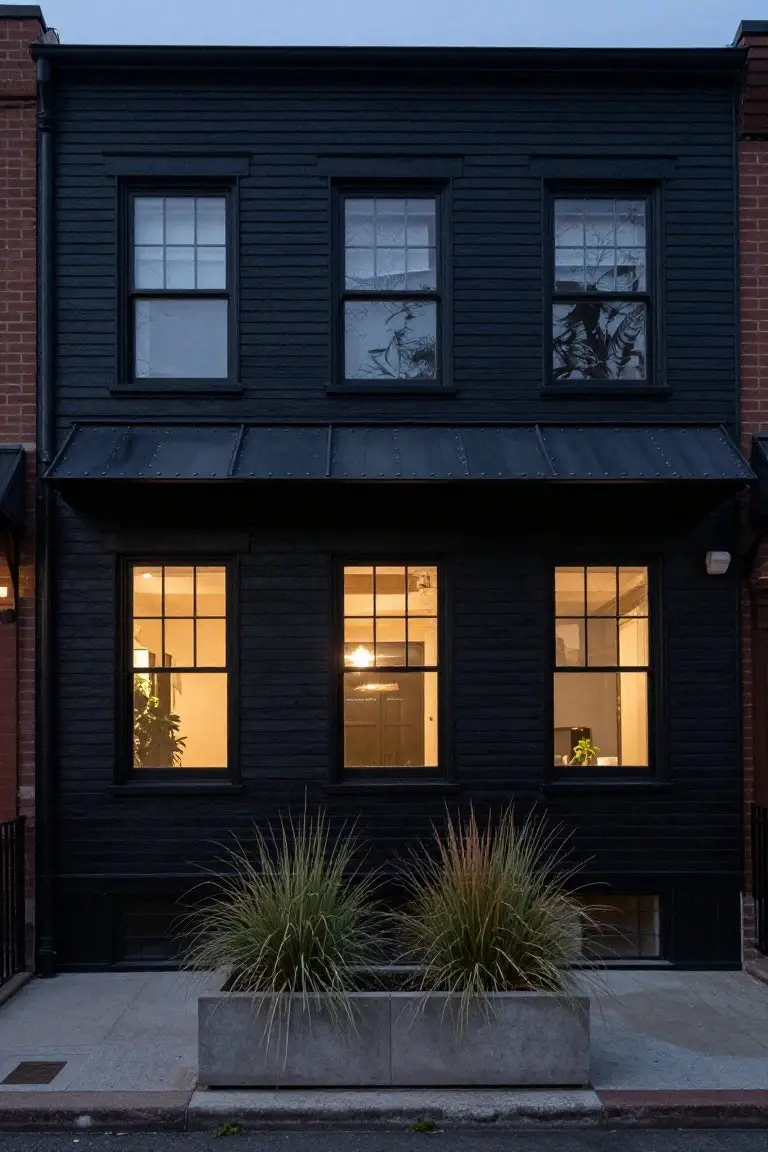
Dark window frames blend right into a black facade like this one. Three evenly spaced windows on the ground floor let warm light spill out at dusk. That simple setup feels calm and balanced. No extra trim or busy details. Just clean lines that make the house look settled and easy on the eyes.
Put this on rowhouses or narrow city homes where you want some welcome without trying too hard. Pair it with plain siding and keep plants low-key, maybe tall grasses in a concrete box out front. Skip bright colors or fussy shutters. It suits spots that get evening light so the glow shows up nice.
Shoji-Style Sliding Windows
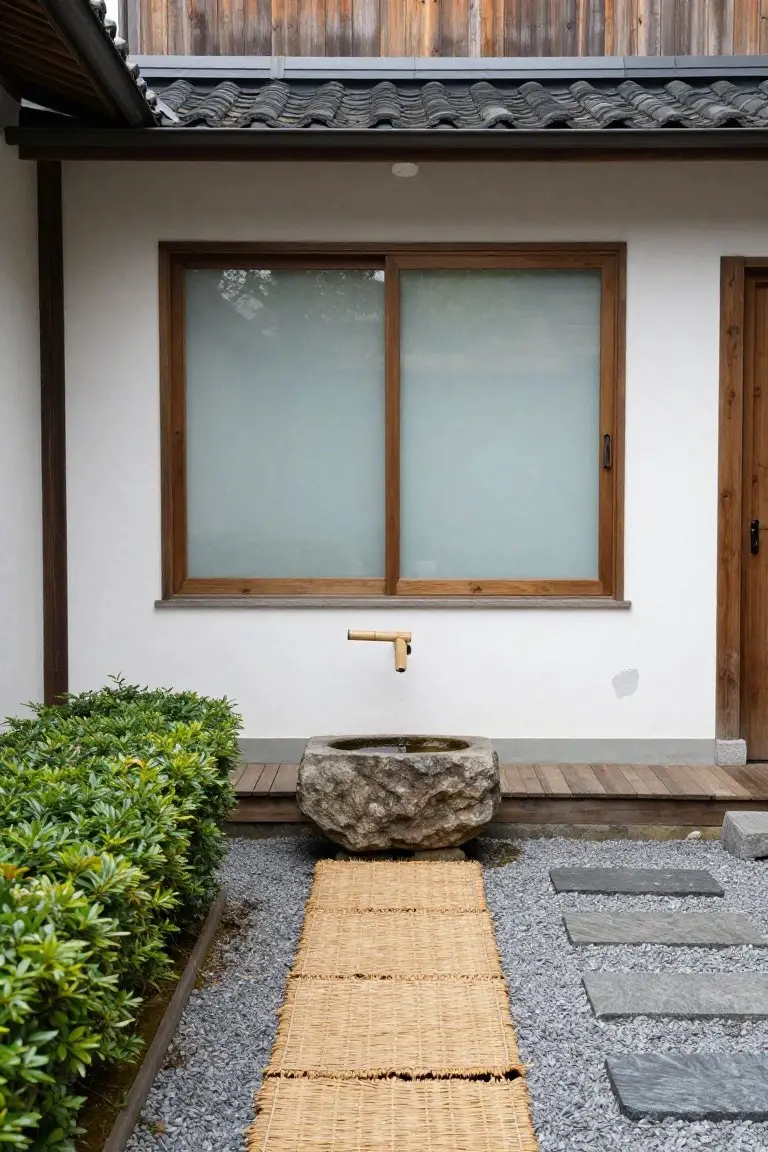
These big horizontal sliding windows with frosted glass sit flush on a plain white wall. The soft glow they let through keeps things private inside while hinting at the calm garden just beyond. A bamboo spout and stone basin nearby tie right into that quiet Japanese feel, without any fuss.
You can add them to side walls or even main facades on homes that want a serene look. They suit smaller properties or urban spots where yard space is tight. Stick to simple gravel paths and low shrubs around them. Just avoid cluttering the area, or the peace gets lost.
White Siding Paired with Shake Accents
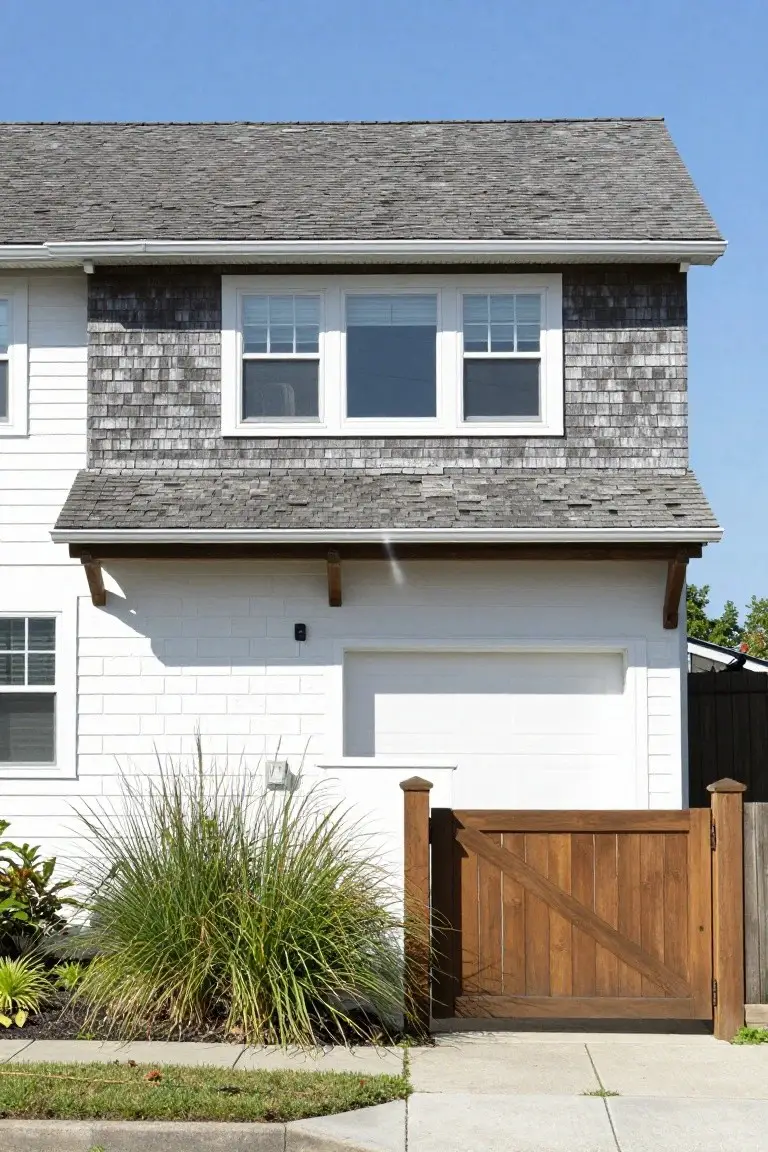
White siding keeps things clean and bright on this house exterior. The gray cedar shakes up top and over the garage add just enough texture without overwhelming the look. Those large windows sit simply in the white sections, letting light pour in while the shakes frame the upper ones nicely. It’s a quiet way to mix materials that feels settled and easy on the eyes.
This setup works great on coastal homes or anywhere you want subtle interest on a plain facade. Use shakes sparingly, like on gables or overhangs, to avoid a busy feel. Pair it with a wood gate at the driveway for that natural touch. Stick to light colors overall so it stays serene, especially if your lot has some greenery nearby.
Vertical Wood Slats Around Recessed Windows
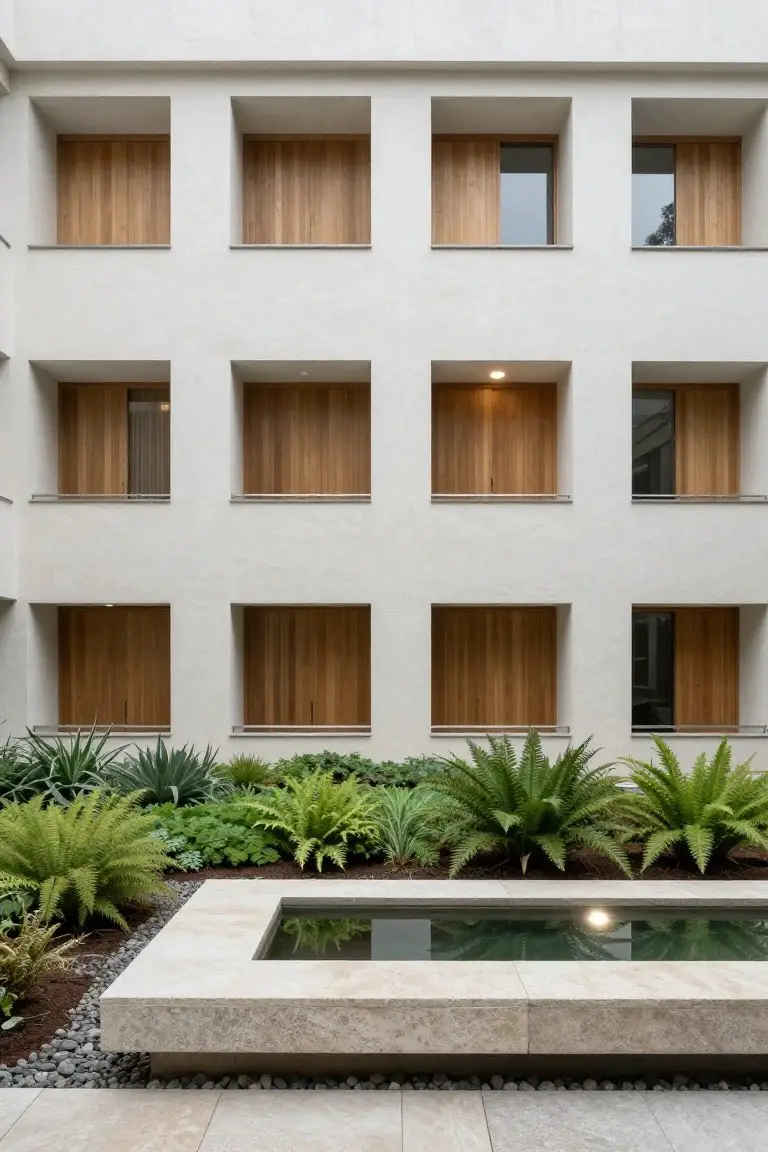
These vertical wood slats set into recessed window openings give a clean, Japanese feel to the facade. The white stucco walls stay bright and simple, while the warm wood adds just enough texture without clutter. It lets light filter through softly, keeping the look calm from the street.
You can pull this off on a modern or mid-century home facing the yard or street. Use cedar or similar slats that weather well, spacing them to control views while still seeing out. Skip it on super traditional houses, though. It works best where you want privacy that doesn’t feel shut off.
Bamboo Screens for Window Privacy
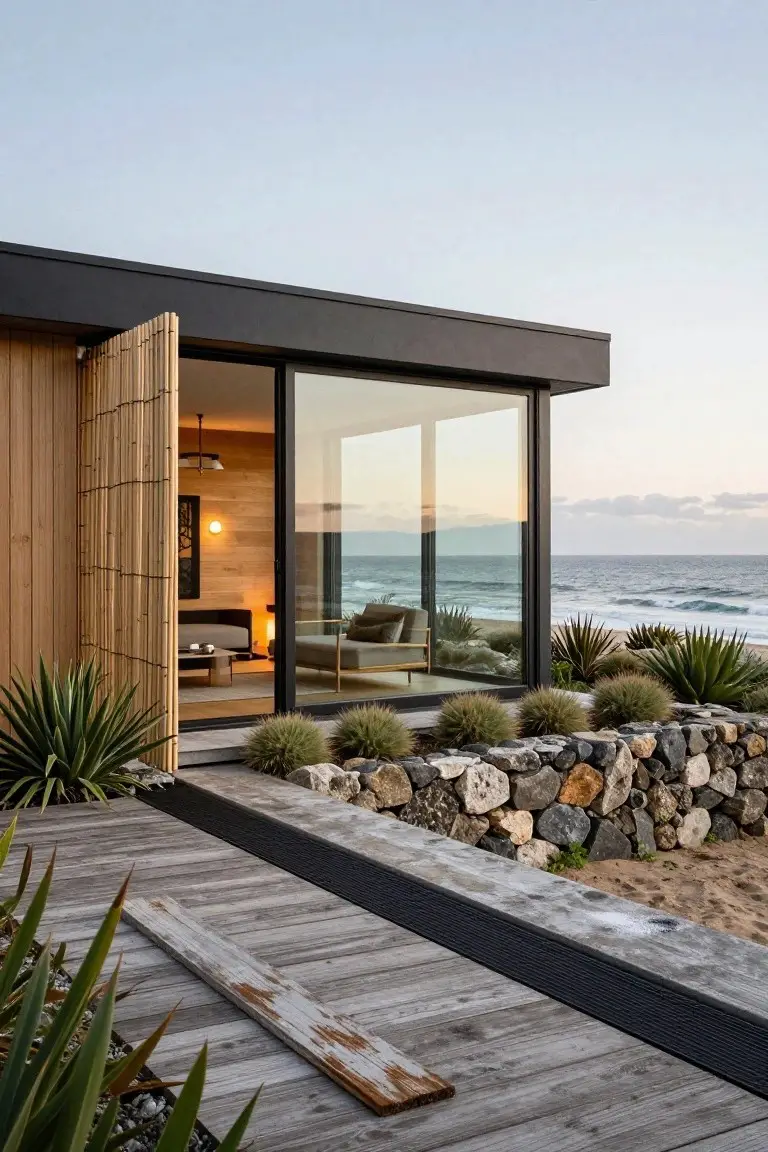
Bamboo screens like this one slide right outside big glass windows and doors. They block direct views from the side without shutting out light or the ocean breeze. It’s a quiet Japanese way to add privacy that keeps the space feeling open and simple.
Put these screens on a deck near corner windows in a modern or coastal home. They suit spots where you want some screening from neighbors but still that full view ahead. Just pick treated bamboo so it holds up in wind and salt air.
Vertical Windows in Wood-Clad Facades
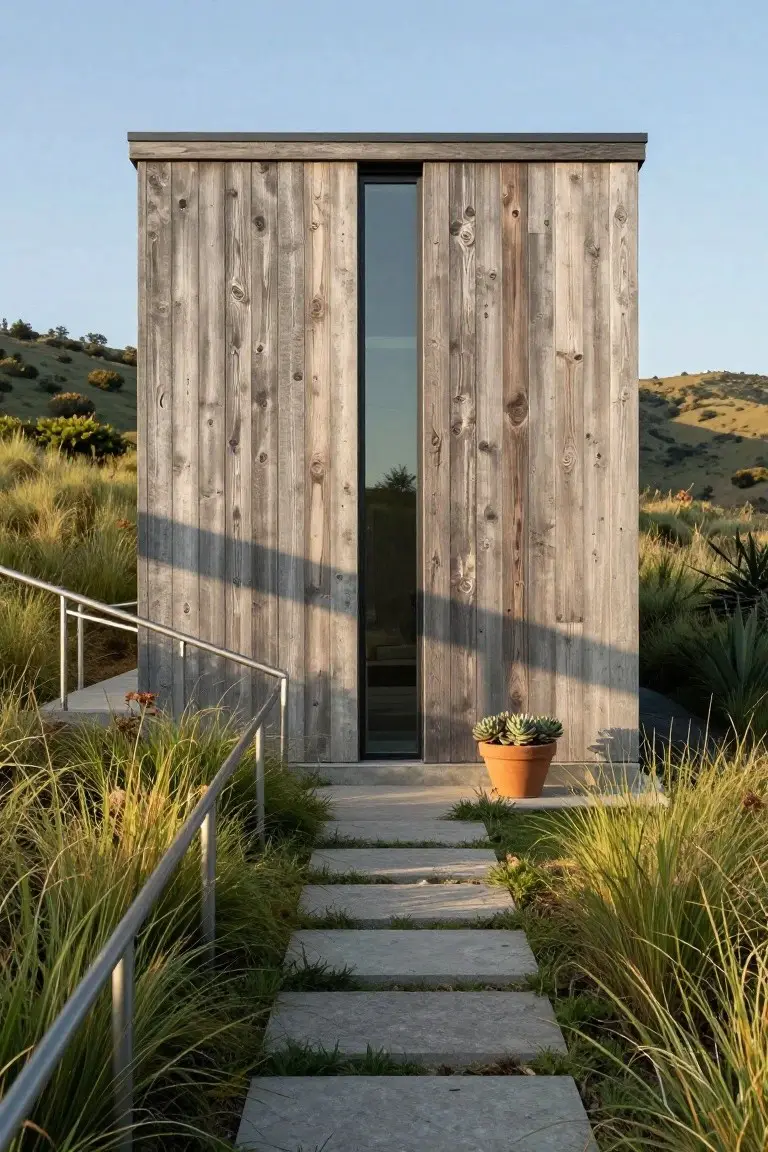
A tall narrow vertical window sliced into rough wood siding makes a quiet statement on this small cabin exterior. It pulls in soft light and hints at the inside without giving everything away. That simple cut keeps the front calm and focused, much like old Japanese screens that balance openness with privacy.
You can use this on modest homes or retreats tucked into hills. Line up a plain path to draw the eye right there, maybe add grasses on the sides. It suits spots where you want serenity over show, but pick good glass to handle direct sun or views from afar.
Shoji Paneled Sliding Doors
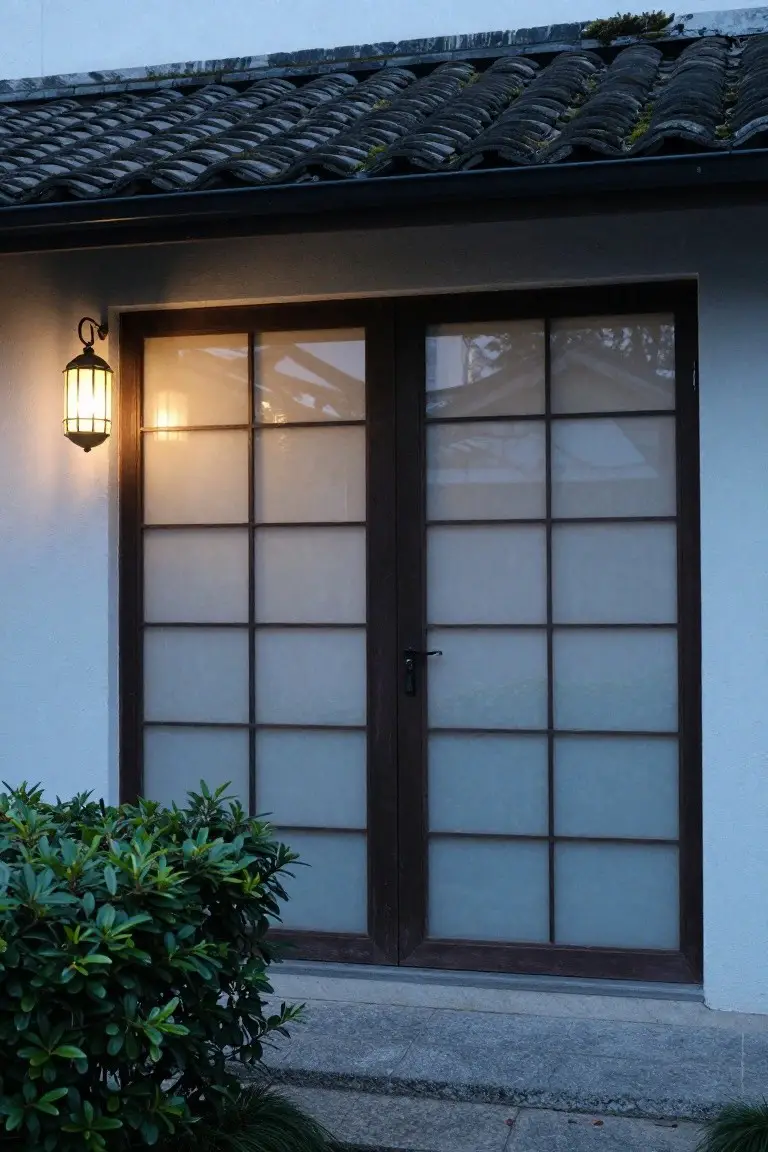
Shoji doors take a traditional Japanese look outside with their grid frames and frosted paper panels. They filter light into a soft glow, like the lantern here casts across the entry at dusk. That gentle diffusion keeps things private inside while nodding to serenity without any fuss.
You can add them to side entries or patios on homes with clean lines. They suit spots that get evening use best. Watch the panels though. Moisture wears them down over time so a covered overhang helps.
Rustic Wooden Shutters on Light Walls
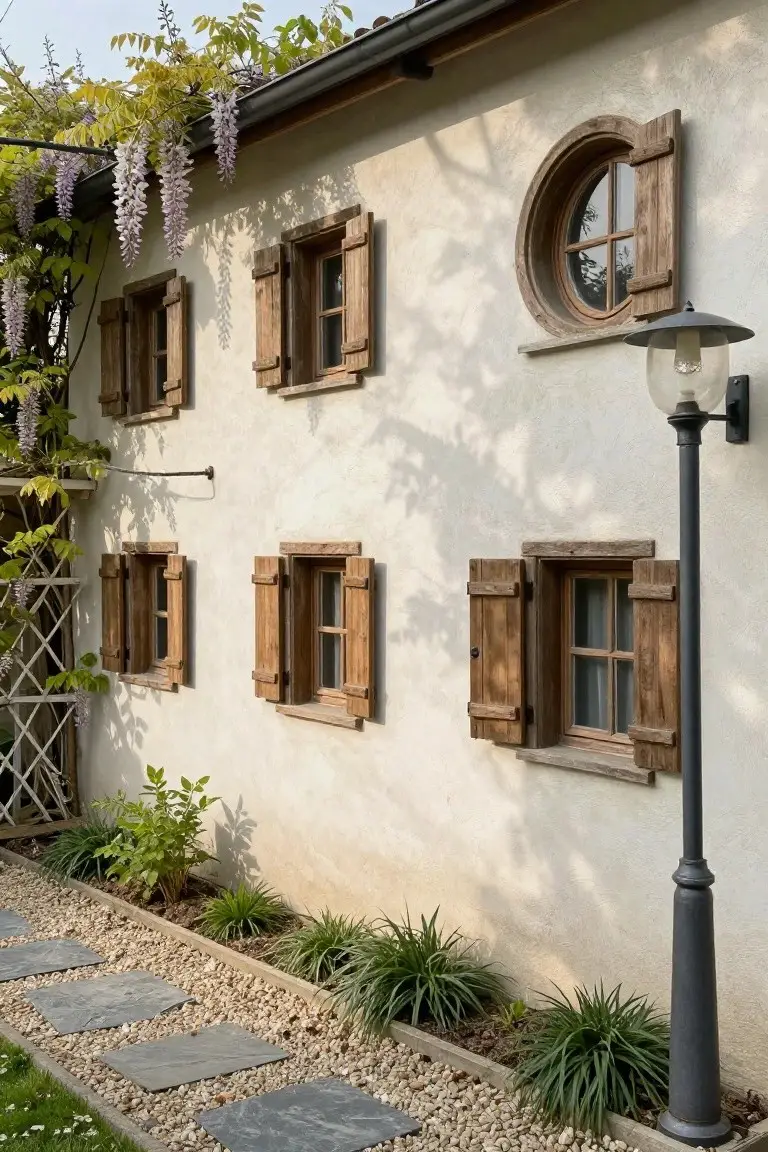
Rustic wooden shutters like these work well on a plain stucco wall. They add just enough texture without overwhelming the simple lines of the house. The light wood tone keeps things calm, and paired with climbing vines nearby, it pulls in a natural quiet feel that fits right into a serene outdoor setup.
These shutters suit older style homes or cottages with a garden path out front. Hang them on rectangular or even round windows for that balanced look. Pick unfinished wood to let it weather over time, but seal it if your area gets a lot of rain. They hold up best on sides away from heavy traffic.
Wood and Stone Framing Glass Entries
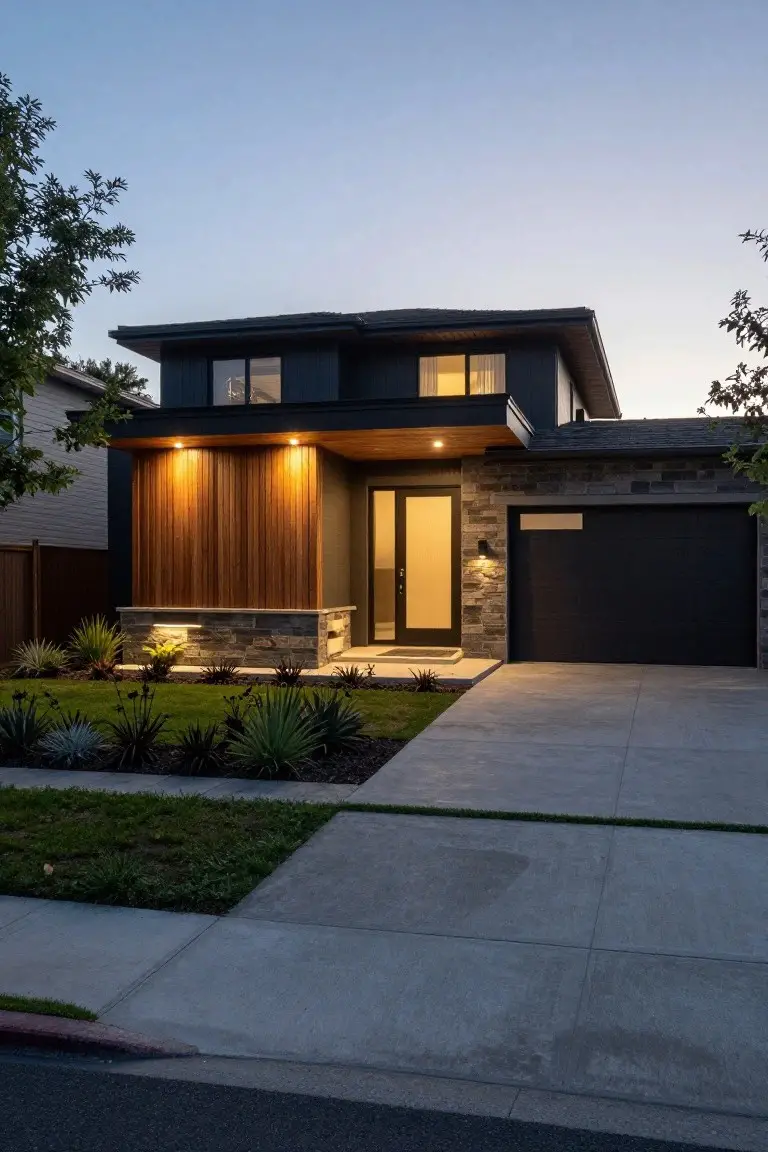
One look at this facade tells you how well wood panels and stone work together around a simple glass door. The vertical cedar slats add that natural texture folks love, while the low stone base keeps things grounded. It pulls in Japanese simplicity just right. Warm lights tucked in highlight the layers at dusk, making the entry feel calm and open without trying too hard.
Try this on a modern ranch or two-story home where you want curb appeal that lasts. It suits spots with some landscaping already, like agaves along the path. Keep the glass clear or lightly frosted for privacy. Avoid overdoing the wood height, or it might crowd the door. Fits suburbs fine, even with a plain driveway.
Floor-to-Ceiling Sliding Windows
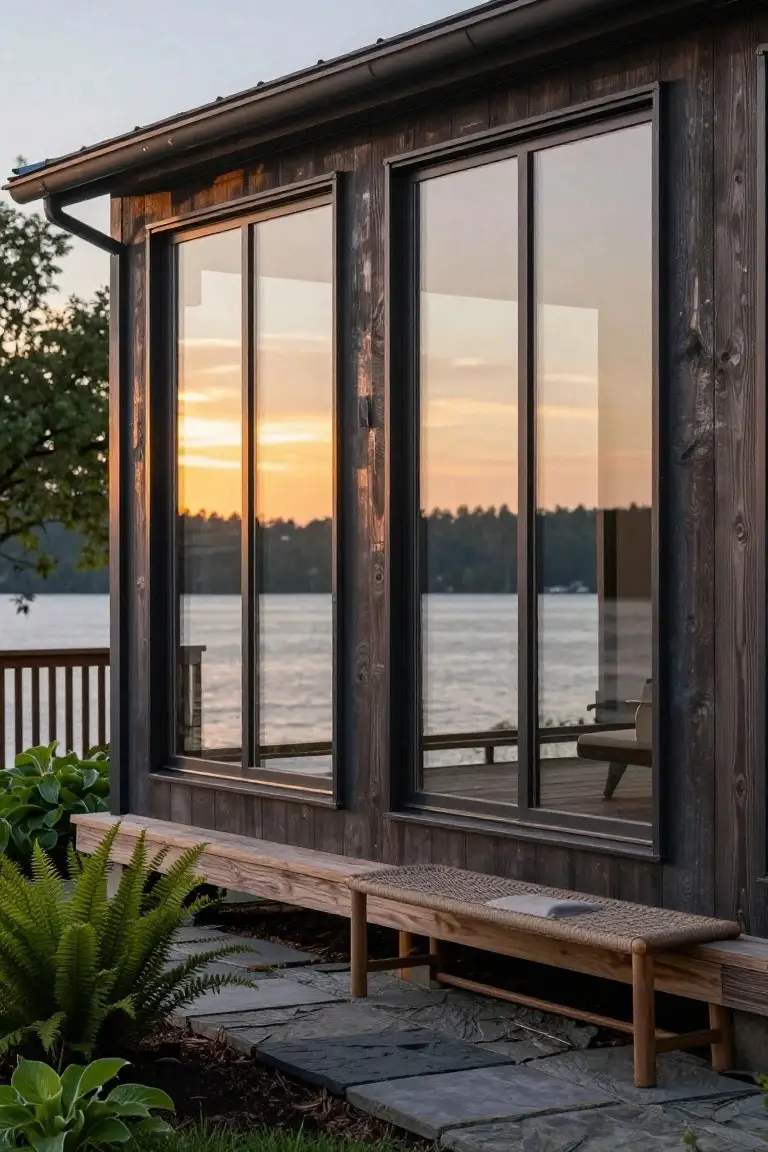
Big sliding glass panels like these pull the outside right into your living space. The dark wood walls frame them simply, without extra trim getting in the way. You get that full view of the lake and trees, and at sunset it turns the room golden. It’s a quiet way to make a small house feel bigger and more connected to nature.
These work best on homes near water or woods, where you want to borrow the landscape. Go for them on a side wall facing your best outlook, and pair with simple wood siding for that clean look. Just make sure the glass is good quality tinted glass to cut glare, and add screens if bugs are an issue.
Frequently Asked Questions
Q: These look great for traditional homes, but can I pull them off on a modern ranch style house? A: Go for slim fusuma sliders or engawa frames. They blend right in and dial down any boxy feel without overpowering the clean lines.
Q: How do I pick a style for a shady backyard spot? A: Lean toward kumiko lattice designs. Light filters through softly, even on overcast days. It turns dim corners into peaceful retreats.
Q: What’s the real talk on weatherproofing these in wet areas? A: Japanese styles use overhangs and tight seals that laugh off heavy rain. And refresh the finish every couple years to keep rot away.
Q: Quick cleaning routine for shoji screens? A: Dust with a microfiber cloth weekly. Spot clean gently with water—no harsh stuff.
