

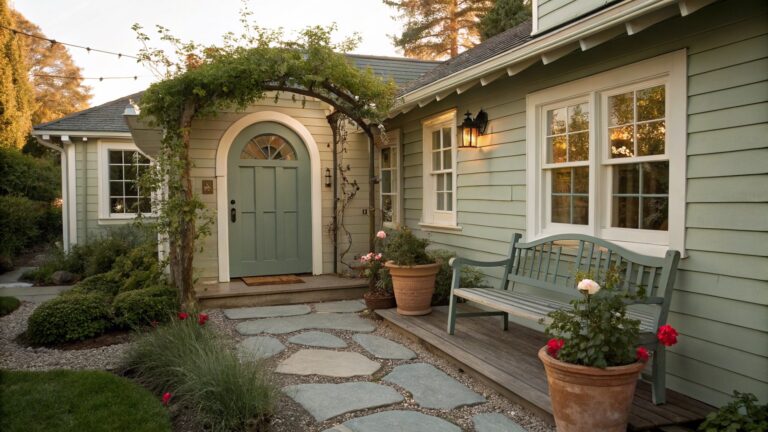
I always look at the landscaping first when approaching green houses, since the pathways and planting beds set how the whole yard flows from the street. People notice those elements right away, especially if the edging holds back the growth just enough to keep things tidy as plants mature. In my own yard, I learned that skipping a solid layout early on leads to patches that feel random instead of intentional after a couple seasons. Thoughtful structure like layered borders makes the space evolve naturally around the house. A few of these ideas are straightforward enough to sketch and test in real soil.
Climbing Roses Frame the Porch Entry
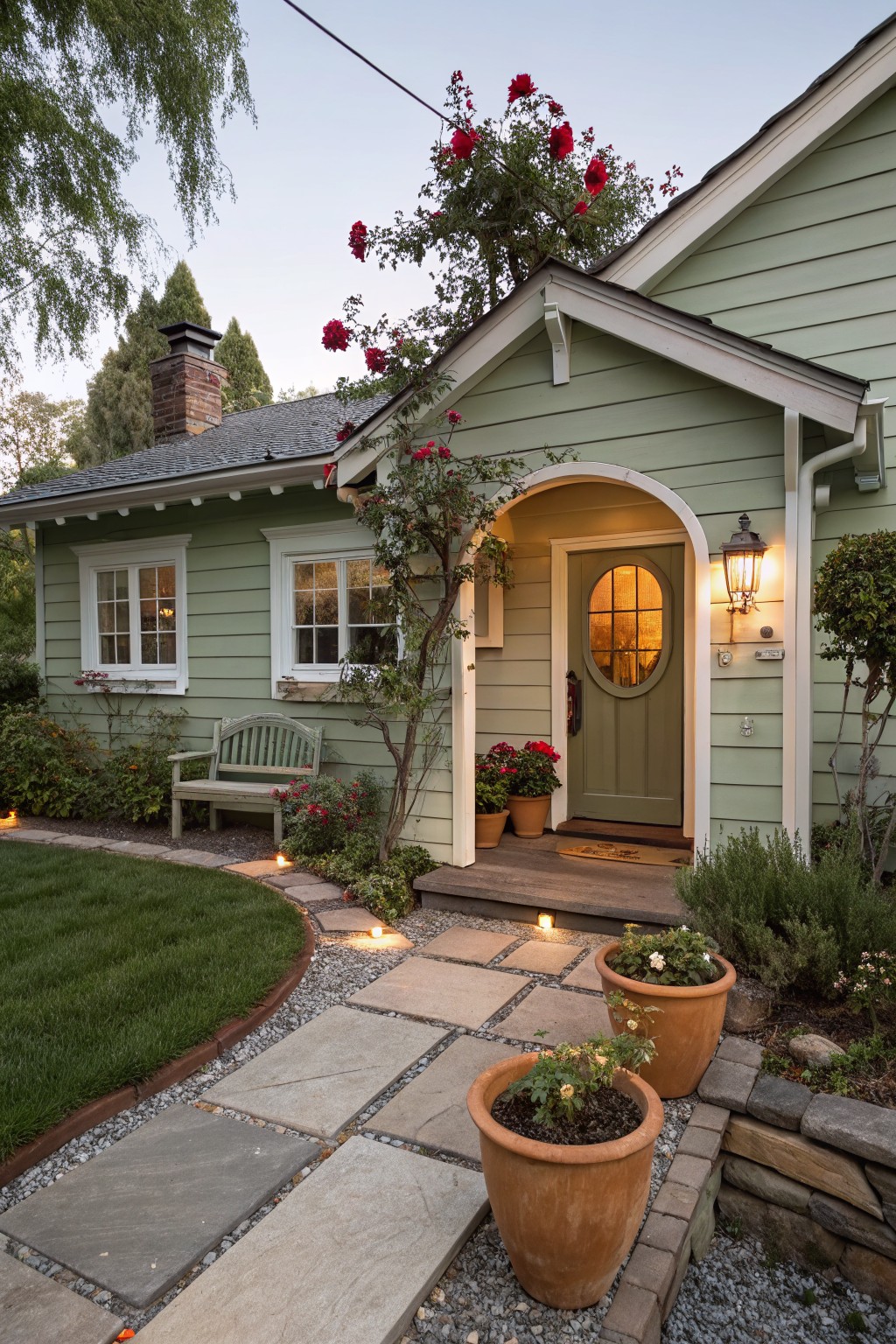
Climbing roses work well over a front porch like this. The red blooms stand out against soft green siding and pull the eye straight to the door. They soften the architecture a bit too. Makes the whole entrance feel more lived-in and pretty without much effort.
Train the vines up an arch or simple trellis right above the entry. It suits bungalow or cottage houses best, especially in mild climates where roses thrive. Pick repeat bloomers so you get color most of the season. Keep them trimmed back from the roofline.
Succulent Beds Along the Path
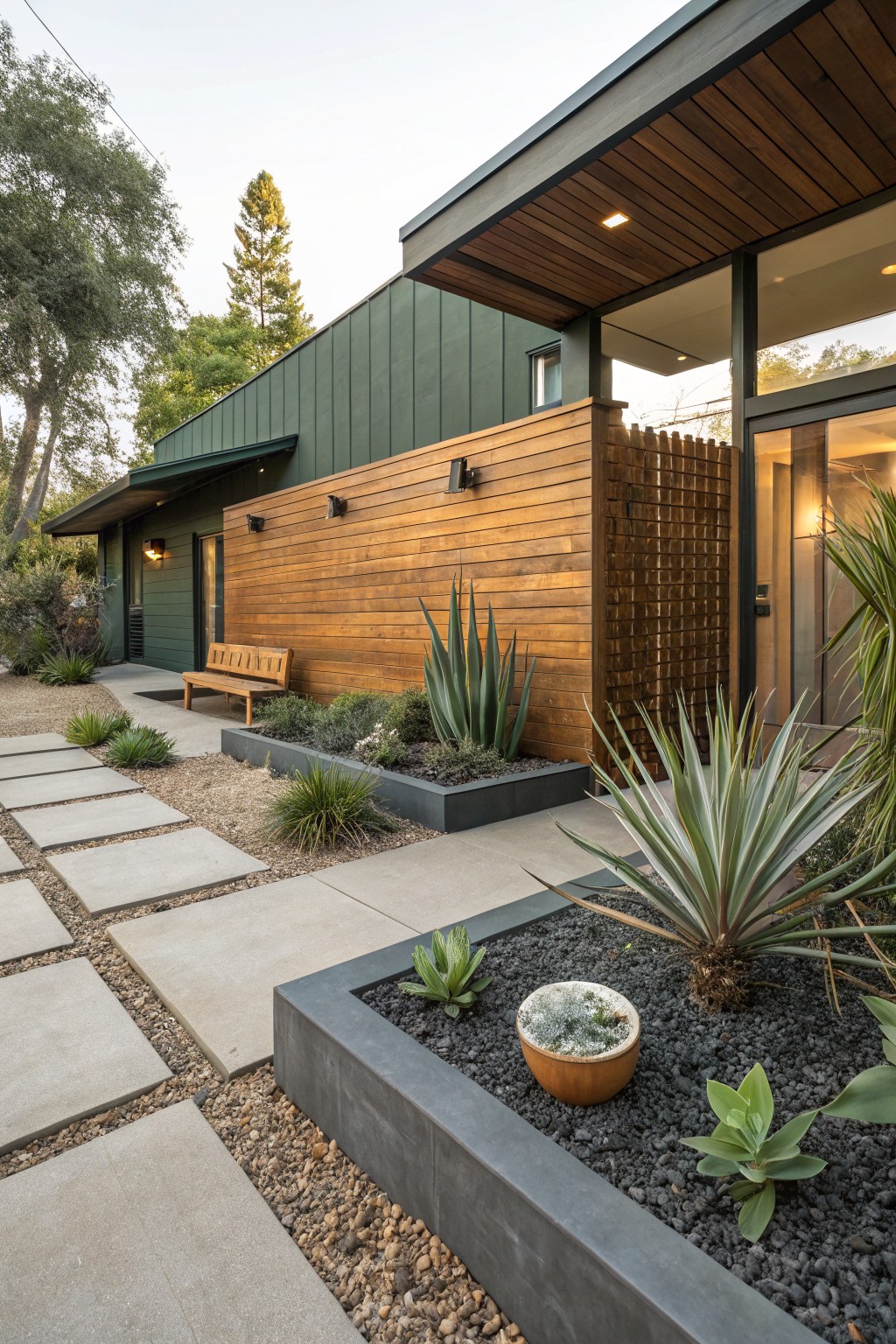
A row of black metal raised beds packed with succulents runs right next to a simple stepping stone path. Spiky agaves and gravel fill them out, making a clean line that pulls your eye to the house door. It keeps the yard looking sharp without much upkeep, and the wood bench nearby adds a spot to pause.
This works great for modern homes with green siding or any spot that’s dry. Line a walkway or driveway edge with beds like these, using local drought plants. Just build the beds deep enough for roots, and skip mulch that holds water.
Boxwoods Flanking Front Steps
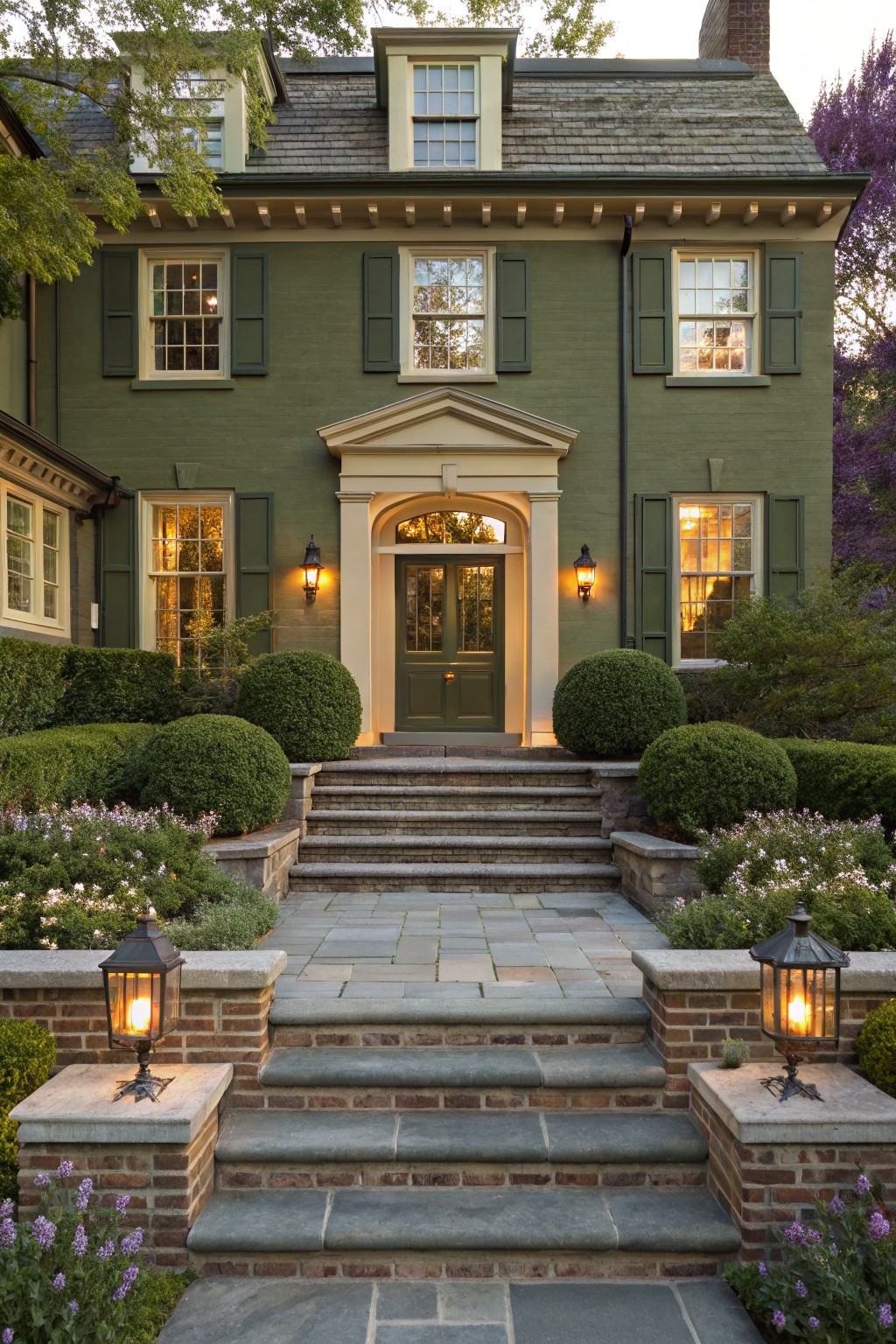
Round boxwood shrubs planted in pairs beside the entry steps make a simple way to welcome visitors. They add structure without overwhelming the path, and their green tones blend right in with a painted green house. The spheres keep things tidy and formal, guiding the eye straight up to the door.
Try this on homes with a few steps to the entrance. Keep the boxwoods pruned to about waist height so they frame without hiding the architecture. Add stone lanterns at the base for soft evening light. It works best in moderate climates where boxwoods stay healthy year round.
Climbing Ivy on Brick Walls
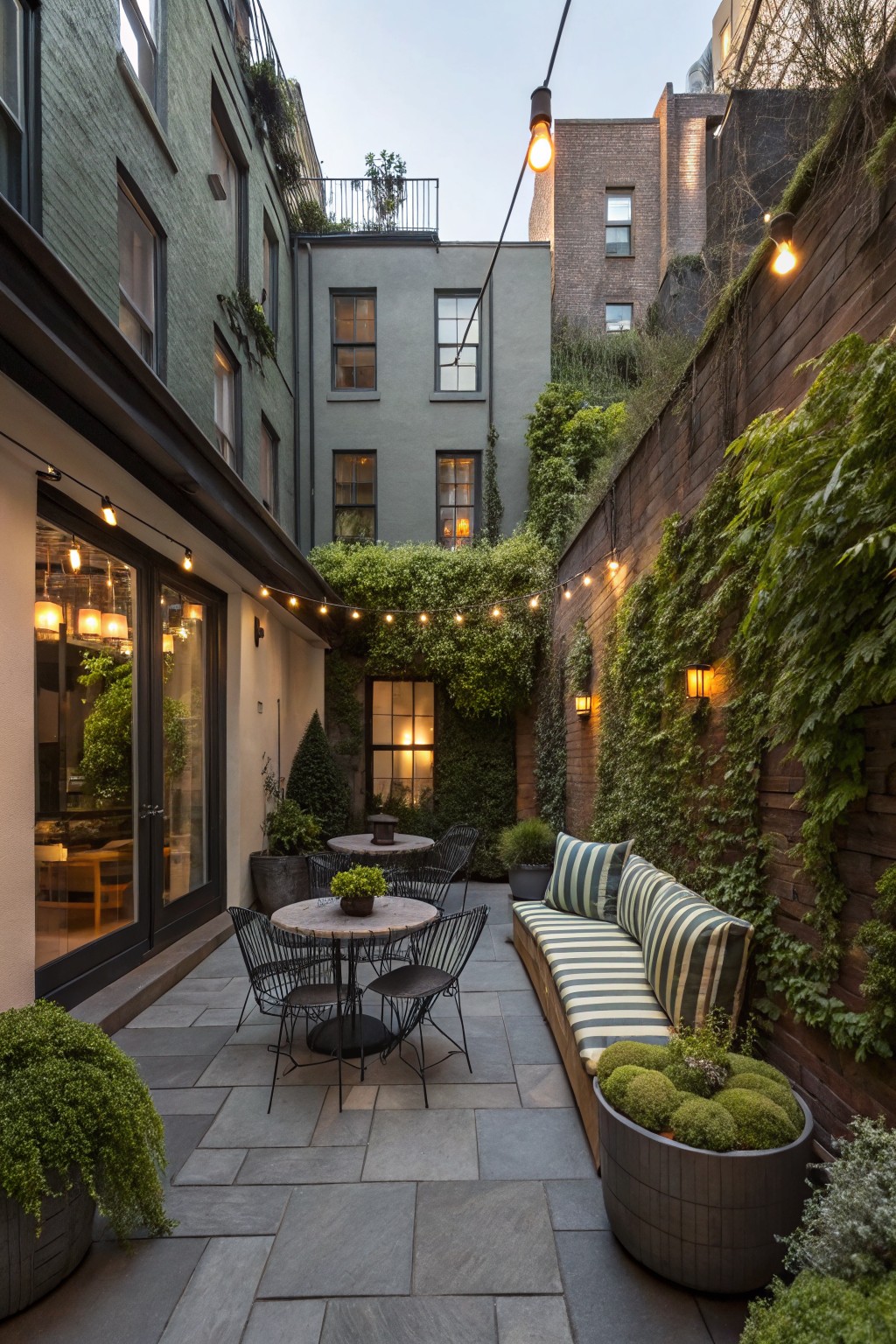
Covering tall brick walls with climbing ivy is a simple way to green up narrow urban courtyards. In this setup, the thick vines hug the entire surface, softening the rough bricks and creating a cozy enclosed feel. They climb without much help, filling the vertical space fast and blocking views from neighboring buildings. It turns what could be a plain alley into something alive and shaded.
This works best in city row houses or tight backyards where floor space is limited. Plant ivy at the base, add wires or a light trellis if needed, and let it spread (choose varieties hardy for your zone). Pair it with a slate patio and basic seating underneath. Watch for overgrowth near doors or windows…trim once a year.
Formal Boxwood Parterres
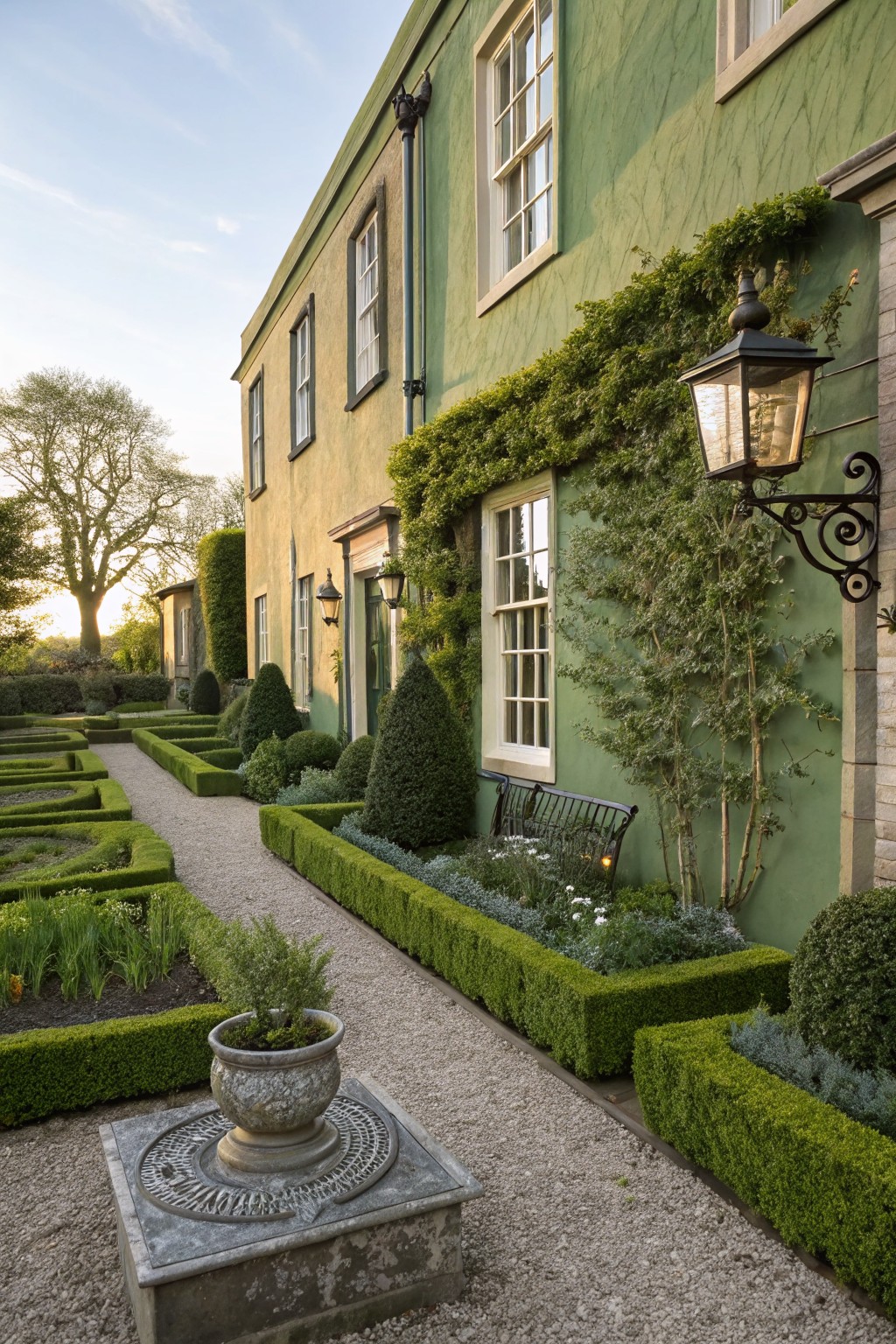
A formal parterre garden made with boxwood hedges works so well next to a green house. The clipped shapes repeat the house color in a fresh way, and the layout pulls everything together around a simple gravel path. It gives that old English garden feel without too much fuss.
Try this in front of a painted house or cottage where you want curb appeal that lasts. Plant boxwoods close for tight edges, fill beds with herbs or annuals, and line the path with gravel for drainage. Smaller yards take to it best. Just shear the hedges a couple times a year…
Winding Stone Paths Through Lush Plantings
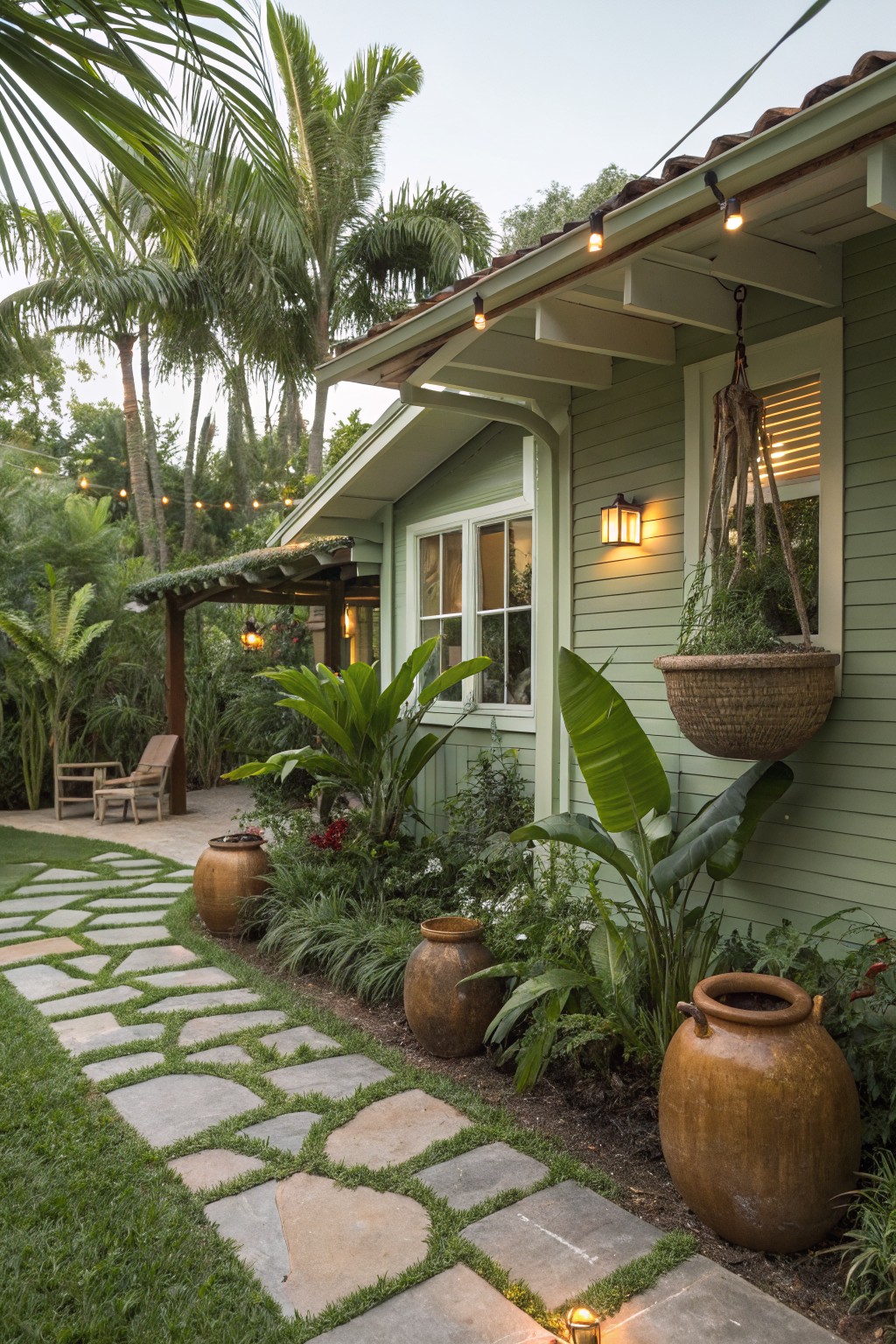
A simple winding path made from irregular stone slabs set into the grass works so well here. It pulls you right up to the house without feeling too formal. Those big terracotta pots along the way add some weight and repeat the earthy tones that go nice with a green exterior. The tropical plants fill in around it all, making the walk feel tucked into the garden.
You can do this in side yards or leading to a back door where you want a casual approach. It suits milder climates with big-leaf plants like bananas or palms that won’t overpower the path. Just keep the stones spaced naturally and add pots in a few spots for rhythm. Skip it if your yard floods easy, since grass in between needs good drainage.
Formal Boxwood and Lavender Driveway Borders
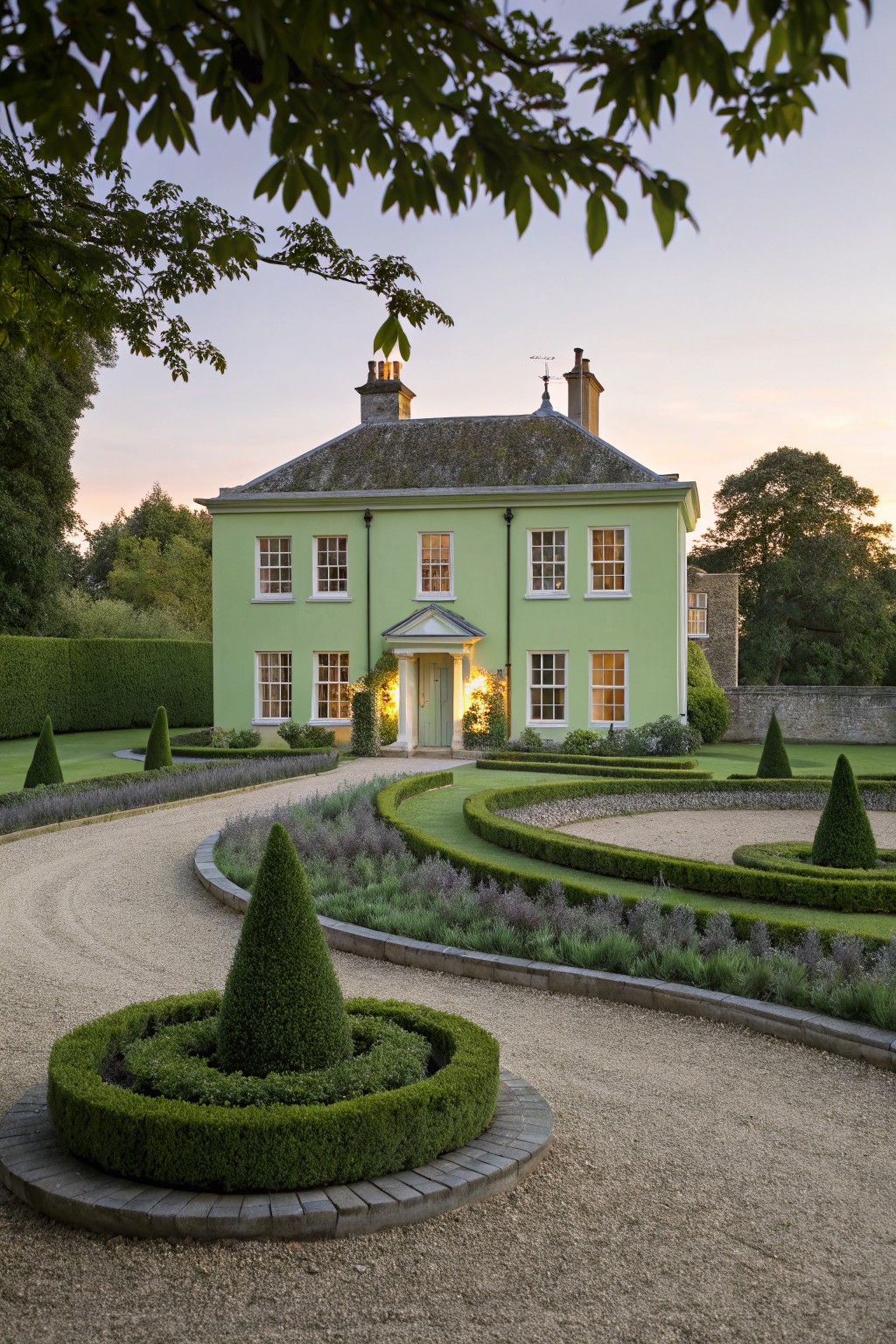
One simple way to make a green house stand out is with neat borders of boxwood topiaries and lavender strips along the driveway. The clipped shapes and soft purple tones pull the eye right up to the front door without overwhelming the pale green paint. It gives that classic garden feel, especially on older homes, and keeps things looking tidy year round.
This setup works best on curved gravel drives where you want some structure but not too much color. Plant low boxwoods in rounds and cones for height variation, then tuck lavender in between for scent and a bit of looseness. It suits country houses or estates with room for symmetry. Just shear the boxwoods a couple times a year to hold the lines.
Poolside Planting Borders
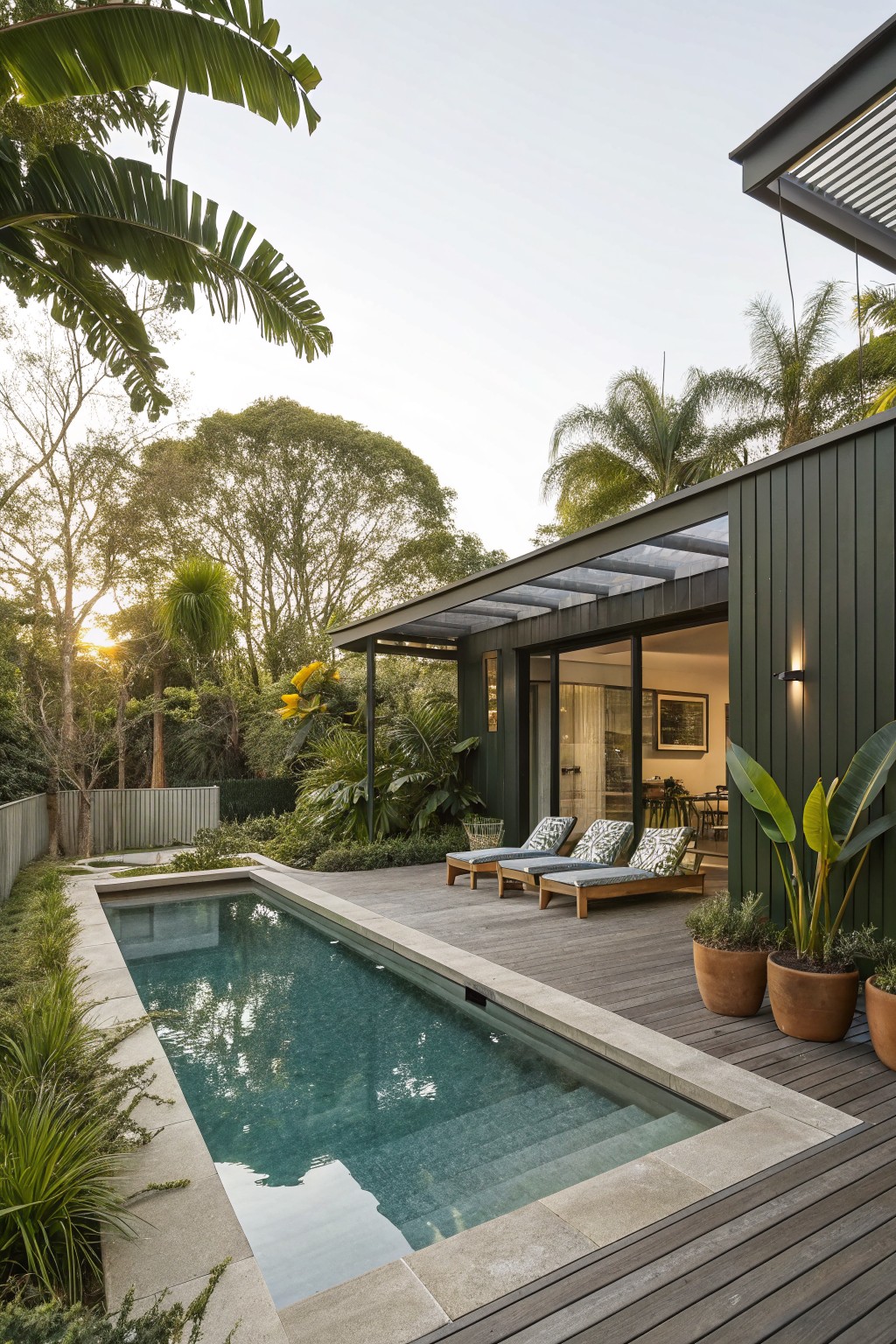
One straightforward landscaping move is to line your pool edges with layered plants. Low grasses right at the water’s edge soften the stone coping, and taller tropicals like banana plants add some height without crowding the space. It pulls the pool into the yard, making everything feel connected and green.
This setup fits narrow backyards especially well, where you want privacy and lushness without losing usable deck area. Go for drought-tolerant natives if you can, to keep maintenance low. Just watch for leaf drop near the water.
Winding Stone Steps Through Woodland Plants
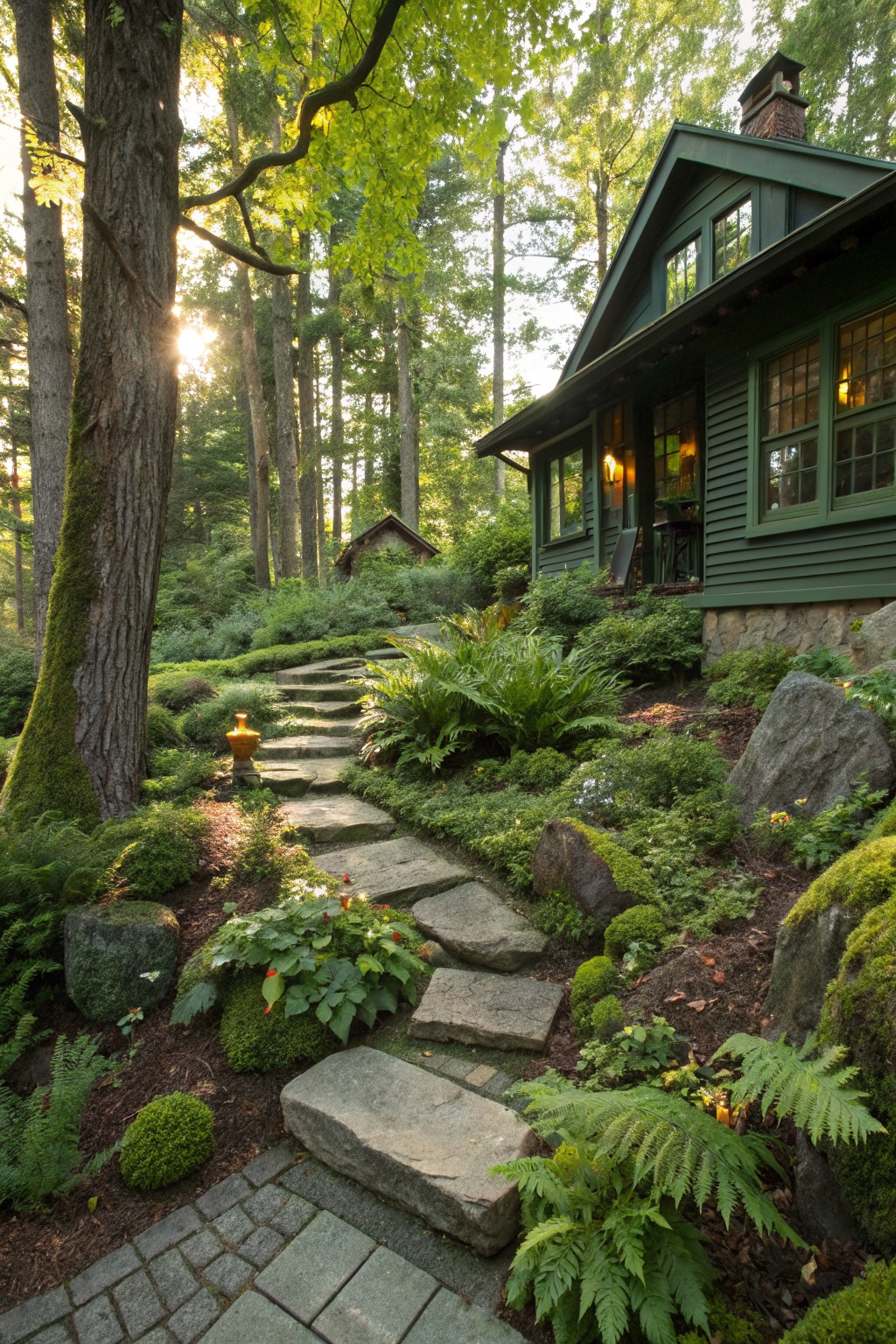
One simple way to connect your green house to its surroundings is with a winding path of irregular stone steps. Here, the steps rise gently through thick ferns, mossy rocks, and low ground covers, making the walk up feel like a natural part of the woods. It draws attention to the house without overpowering the landscape, and those rough stone edges fit right in with a cabin-style exterior.
Try this on a sloped site where you want an easy, low-key entry path. Pick fieldstones or flagstones in earthy tones, set them into the soil with minimal mortar for a seamless look. Surround with shade-loving plants like ferns and moss that thrive in damp spots. It suits wooded lots best, but watch for slippery moss after rain, so add gravel fill between steps if needed.
Stepping Stone Paths in Gravel Gardens
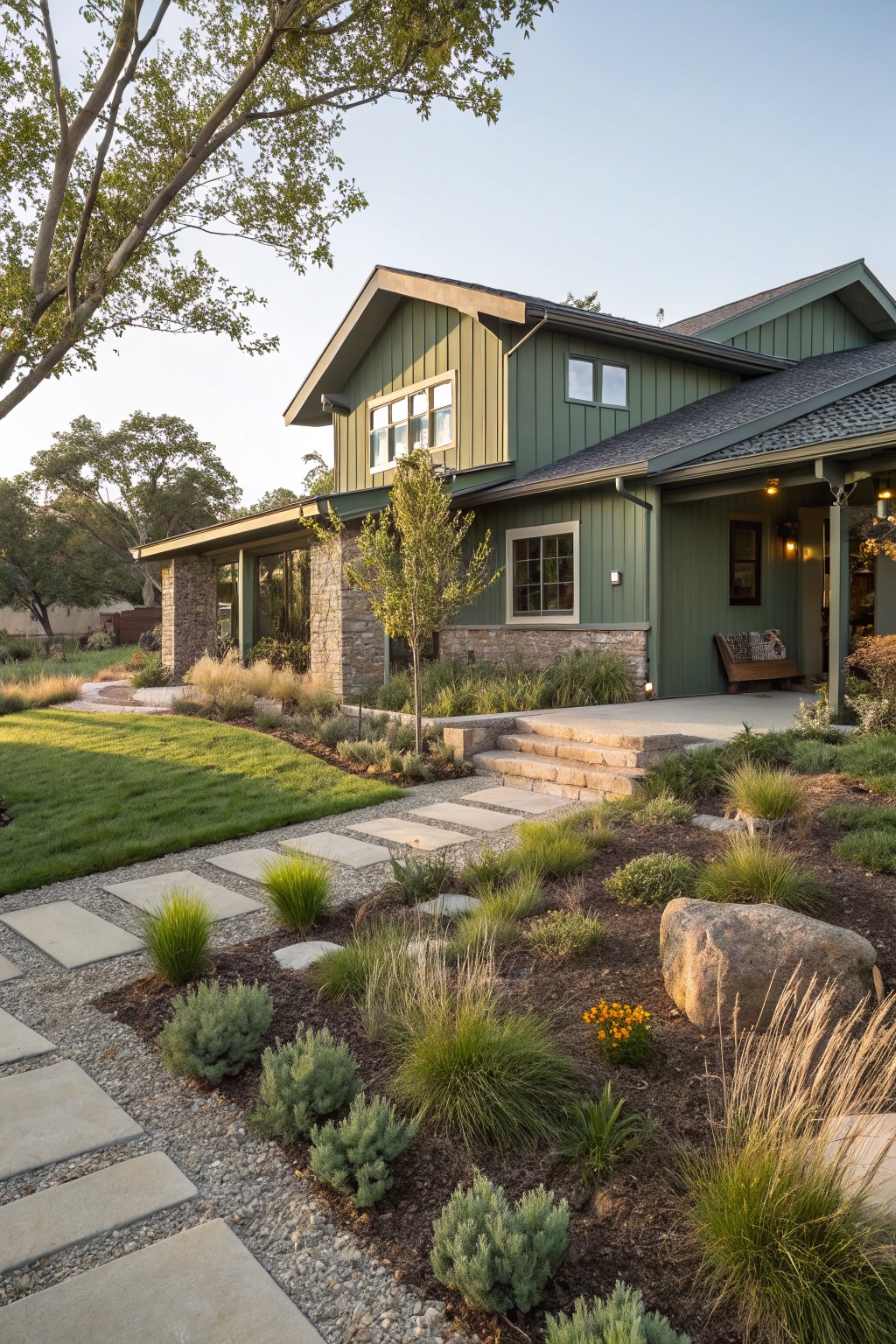
One easy way to make a green house feel more connected to its yard is with stepping stones set in gravel. They guide folks right to the front door without a fussy lawn taking over. Here you see wide concrete pavers winding through low grasses and small shrubs. It keeps things open and natural. Plus those big boulders add some weight without much work.
These paths suit sloped lots or drier spots where you want low upkeep. Lay them loose in gravel beds and tuck in tough plants like feather grass or sedum along the edges. Skip straight lines. Let the path curve a bit to match the house’s porch steps. It pulls the landscaping right up to the entry. Just watch the spacing so it’s walkable in shoes.
Raised Beds for Narrow Side Yards
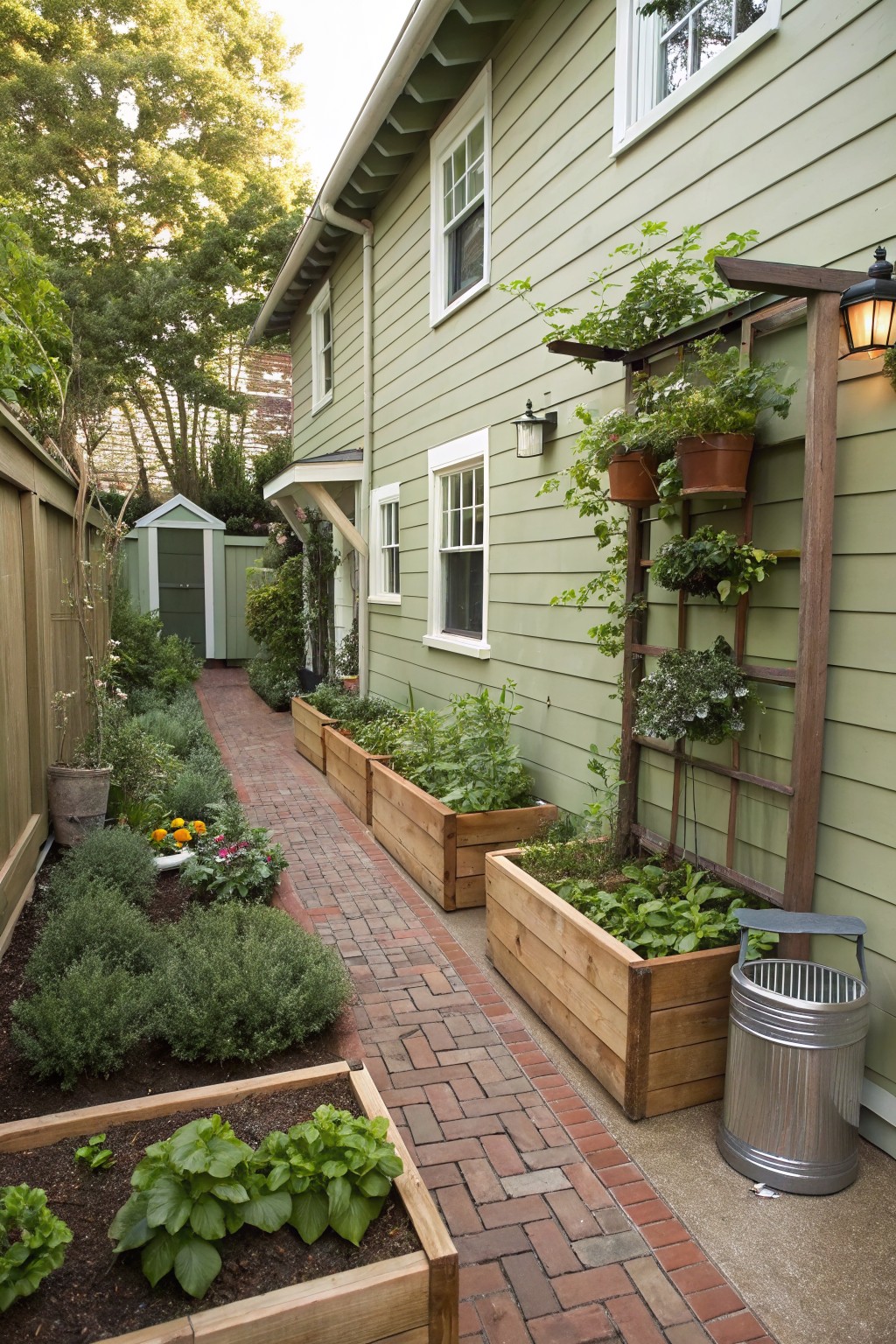
Narrow spots like side yards often go unused. But lining them with simple raised beds turns the space into something useful right away. These wooden boxes hug the path and house wall. They keep soil neat and make tending plants easy without bending over much. Veggies, herbs, and flowers fill them out nicely against the green siding.
Set them up along a brick or stone path for clean access. Wood works great since it blends with fences and sheds. Add a tall trellis for vines or hanging pots to use the wall space too. This fits small urban lots or older homes with tight setbacks. Just keep beds under two feet wide so you can reach both sides.
Front Yard Raised Garden Beds
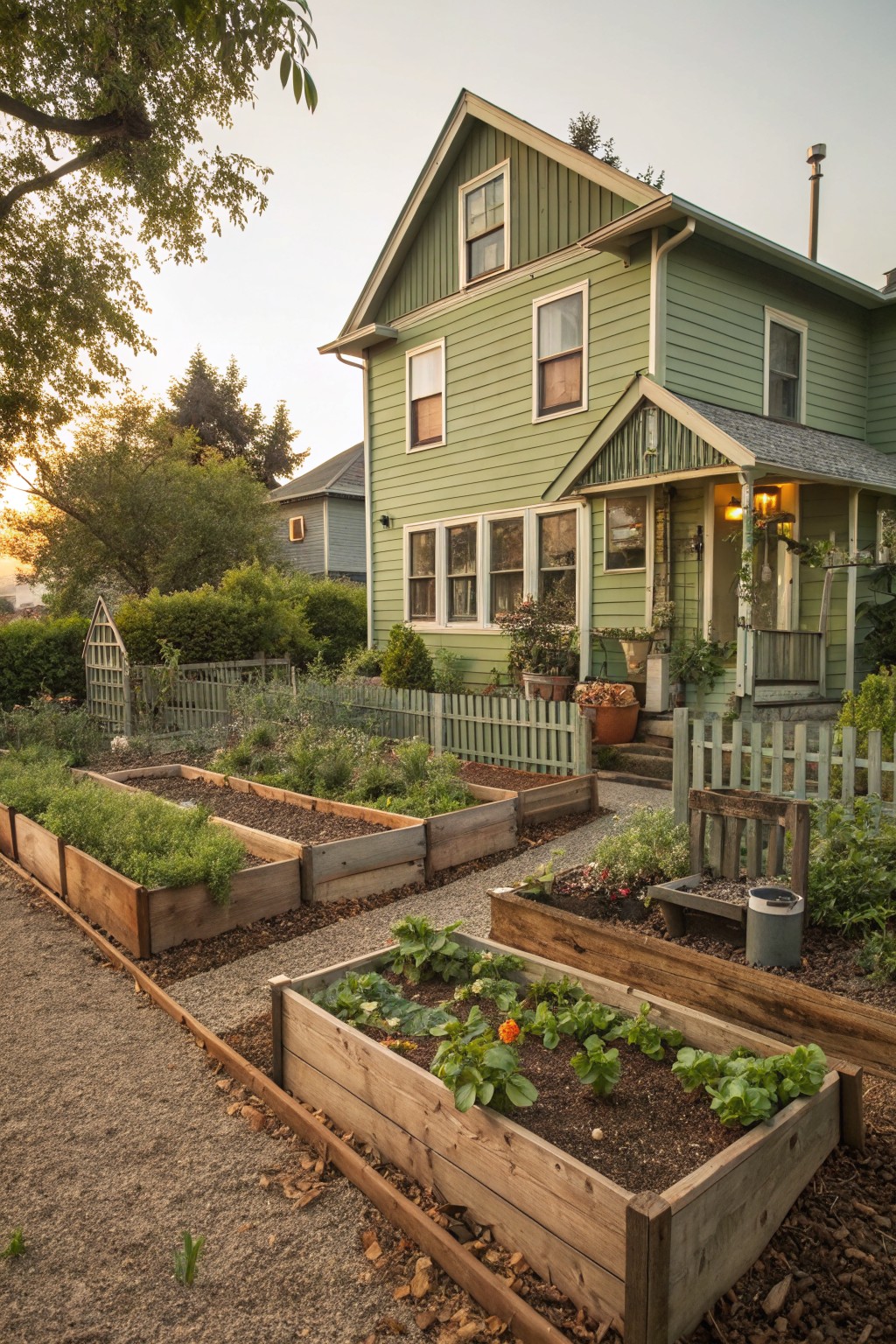
Raised wooden beds like these turn the space right in front of your house into a productive little garden. You see lettuce, beans, and even some strawberries poking up, all neat in those simple frames. Paired with a green house, the wood tones blend right in, giving a cozy, farmstead feel without much fuss.
They’re perfect for townhomes or older homes with tight front yards. Line them up along a gravel path to the entry, keep the beds about knee-high for easy picking. Stick to untreated cedar or pine so they weather to match the siding. Just watch watering near the house foundation.
Winding Stone Paths in Lush Gardens
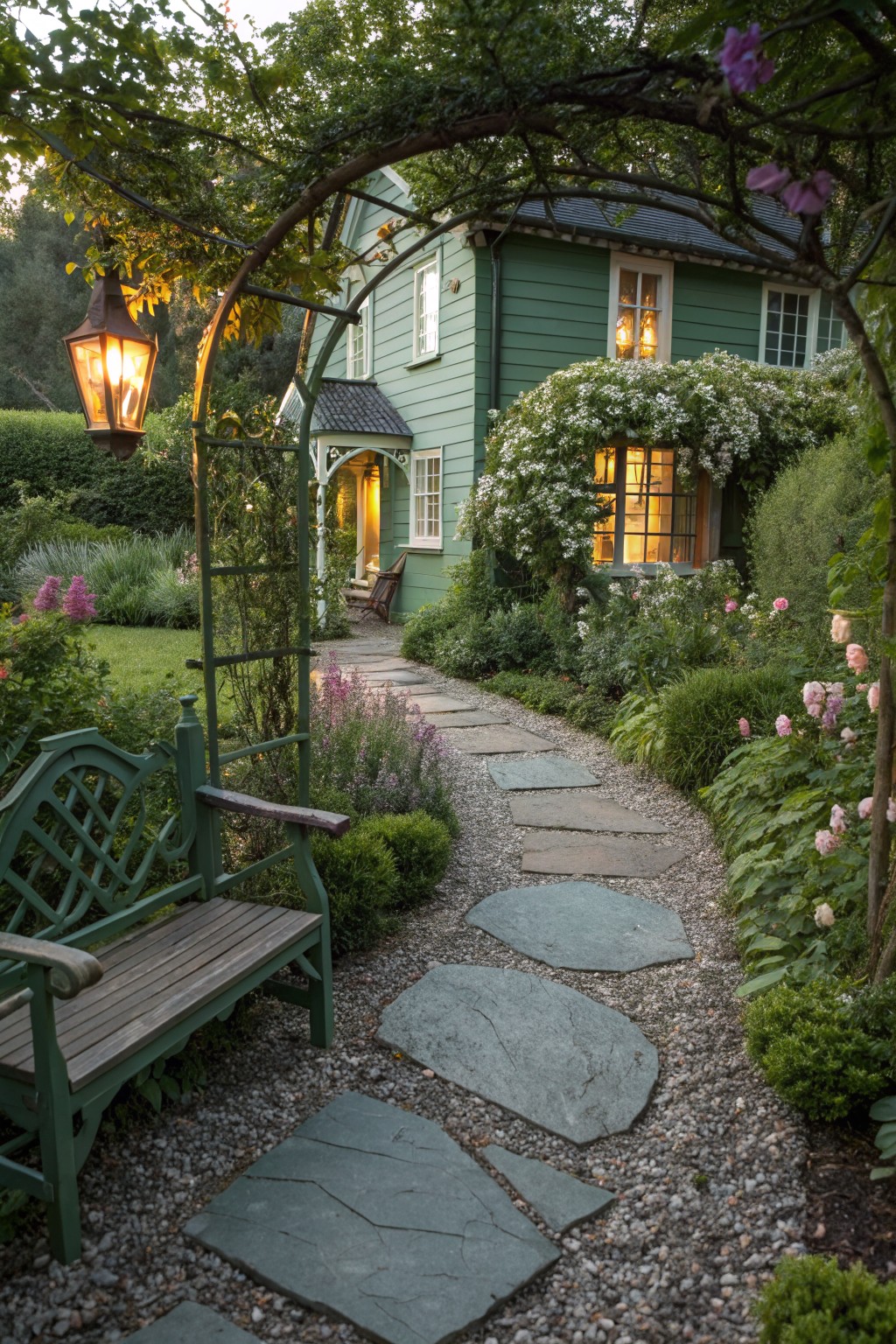
A simple winding path made from irregular slate stones set into gravel works wonders leading up to a green house. It pulls your eye right through the flowers and shrubs without feeling too straight or formal. That bench midway gives folks a spot to pause. Fits right in with all the pinks and greens around it.
Try this in a side yard or front approach where you want some garden depth. Pick tough perennials like lavender and roses that spill over the edges. Keep the stones uneven for that cottage feel, but space them so they’re easy to walk. Works best on milder slopes… avoids looking forced.
Poolside Lounge Area
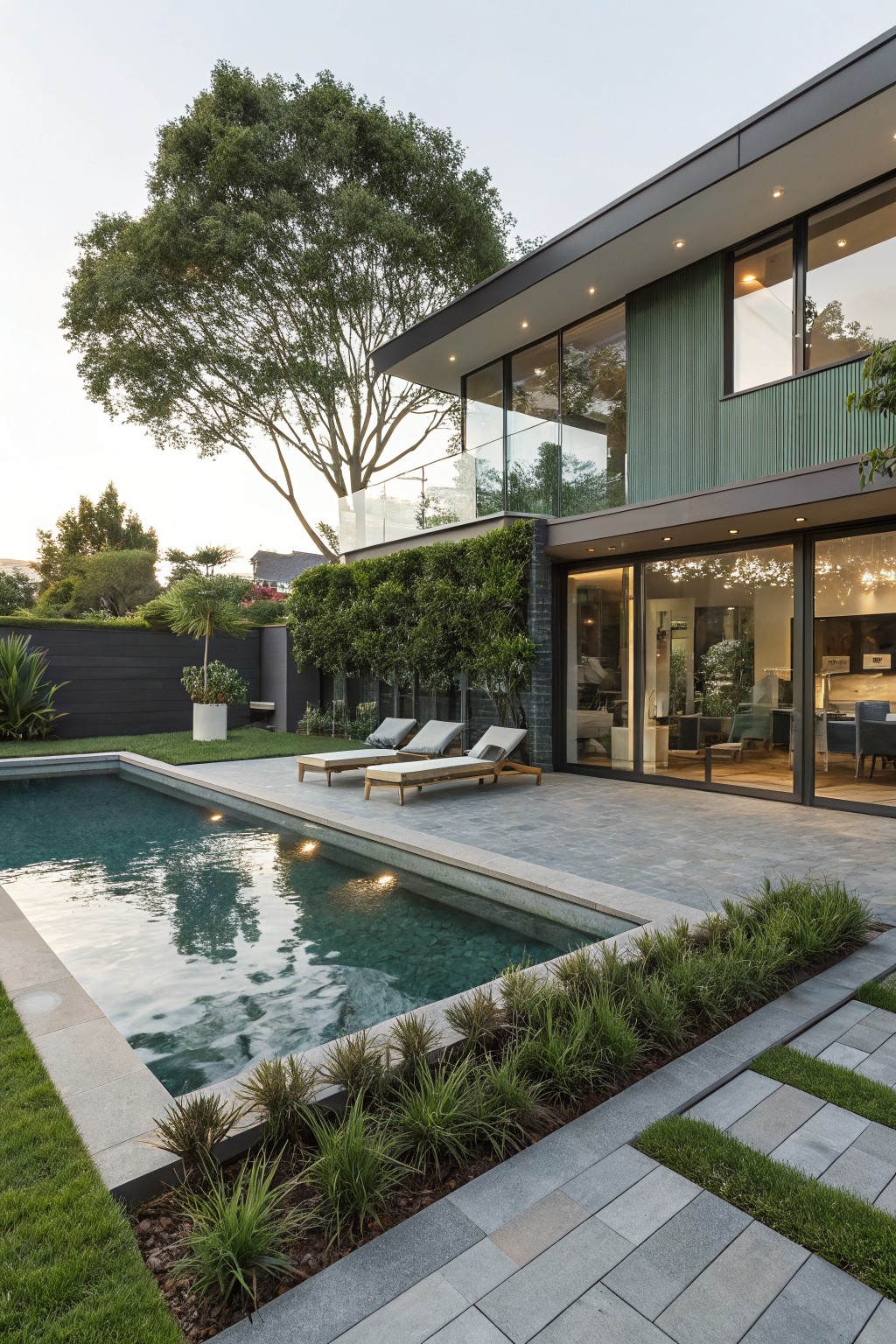
A simple setup like this poolside lounge makes outdoor relaxing feel effortless. A couple of neutral loungers sit right on the stone deck next to the water, with big glass doors slid open from the house. It turns the pool into more than just a swim spot. It’s a natural spot to hang out, read, or sip something after dinner.
This works best in backyards with enough flat space for the deck and pool edge. Go for low-key wood or neutral cushions on the chairs to keep it easy to maintain. Add some edging plants along the sides like here, but skip anything fussy. It’s great for modern homes where you want that inside-outside flow without too much work.
Straight Paver Path Edged in Gravel
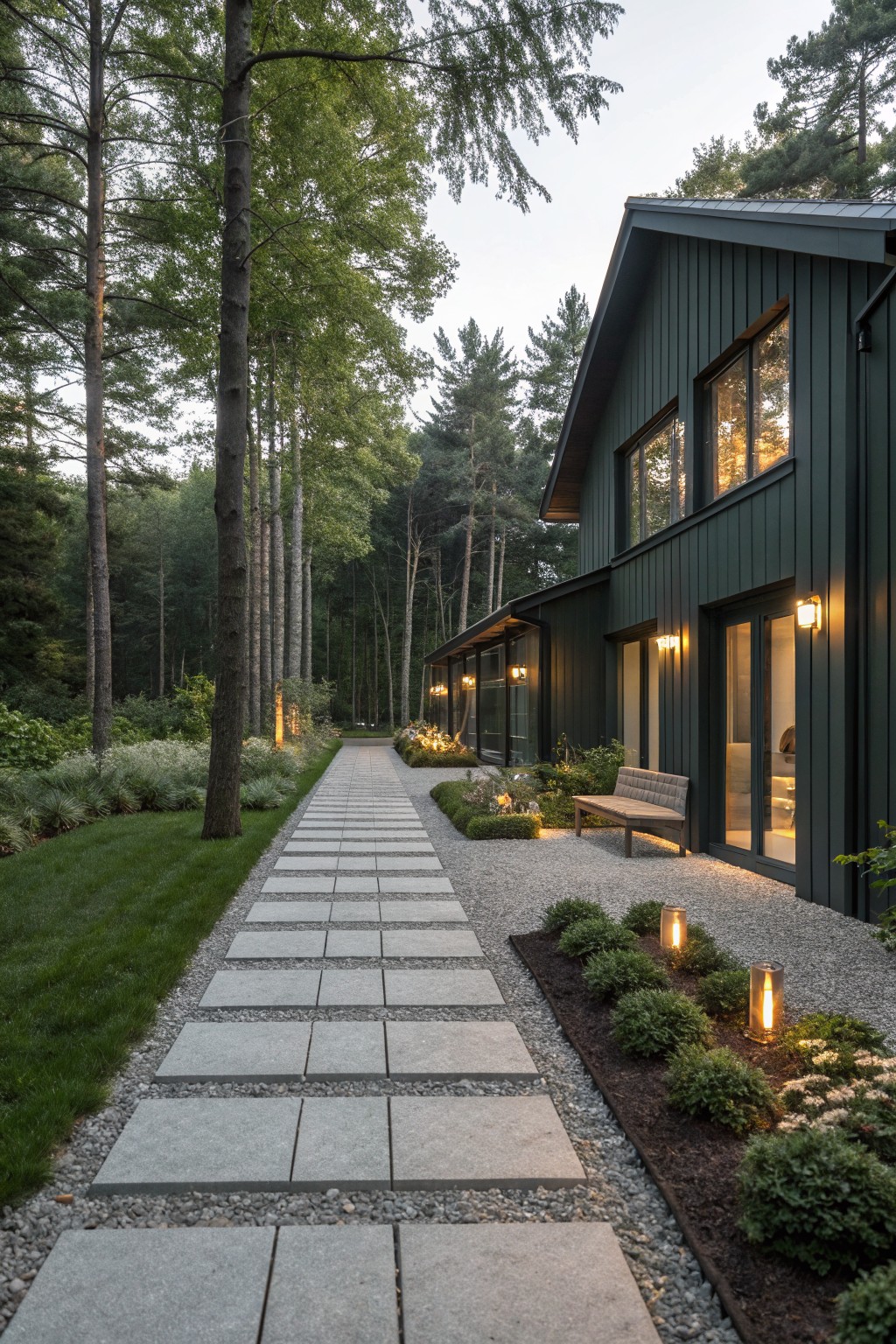
One landscaping idea that pulls a house right into the yard is a straight path made from large stone pavers set into gravel. It keeps things clean and simple, letting the dark green siding and surrounding trees do the talking. The wide pavers give plenty of room to walk without feeling cramped, and the gravel edges make it easy to mow right up to the side.
You can use this setup leading to any side entry or front door on a wooded lot. Pick pavers in a neutral gray to blend with most houses, then add low boxwoods or grasses along the edges for a bit of green without much upkeep. Just make sure the gravel drains well so it doesn’t wash out in rain… works great for low-traffic spots.
Statement Olive Trees in Backyards
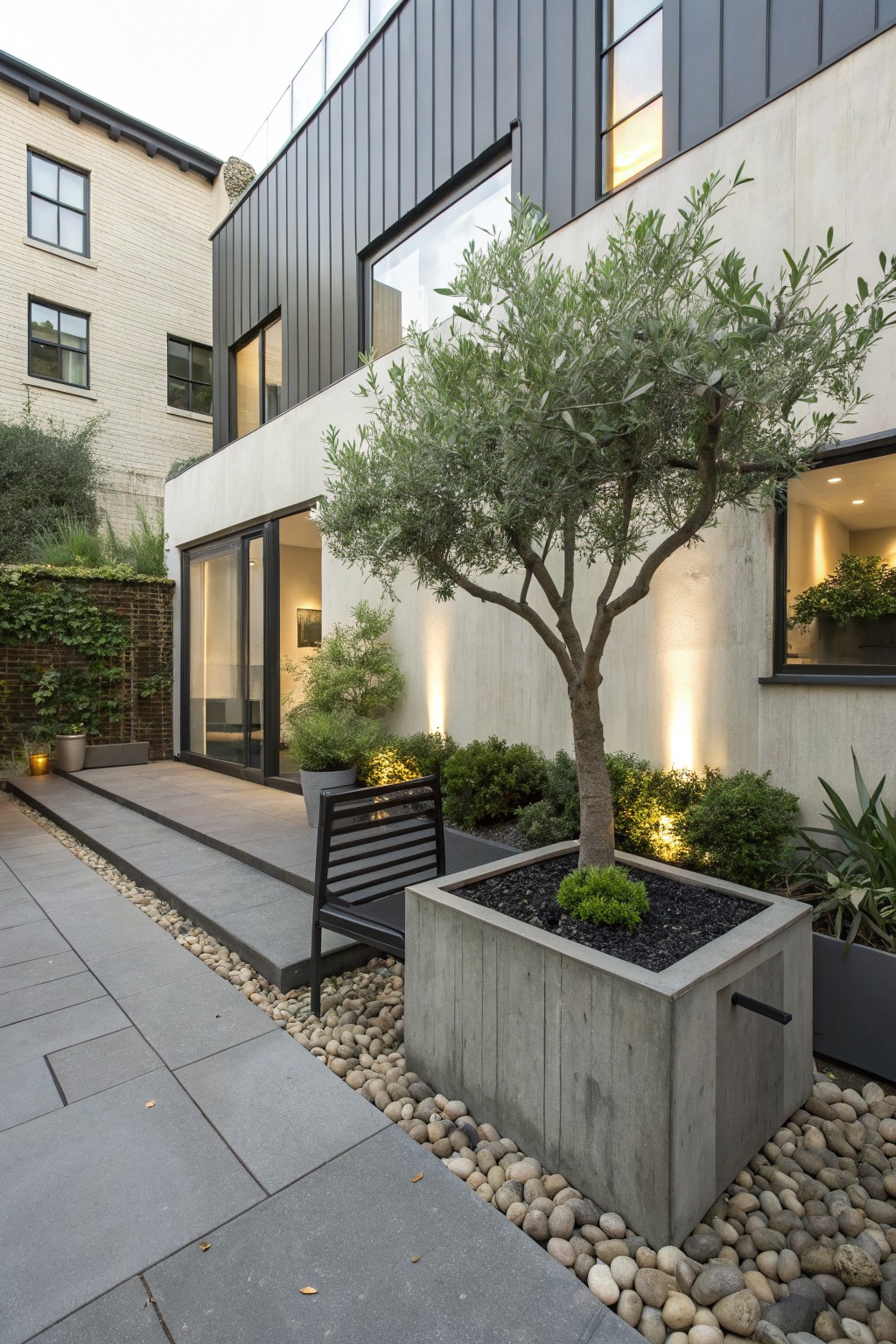
One simple landscaping move that pulls a small yard together is planting a single olive tree as the main feature. It adds height and a bit of softness against hard surfaces like concrete walls and pavers. With its twisty branches and silvery leaves, the tree stands out without needing much around it. Just some gravel ground cover and low shrubs keep things neat.
This setup suits narrow urban lots or spots next to a modern house. Put the tree where it frames the patio doors for indoor-outdoor flow. Skip heavy planting. Go for drought-tolerant stuff that matches the tree’s easy-care vibe. Watch the roots though. They spread, so plan bed edges with stone or metal.
Boxwood Hedges Edge Pool Areas
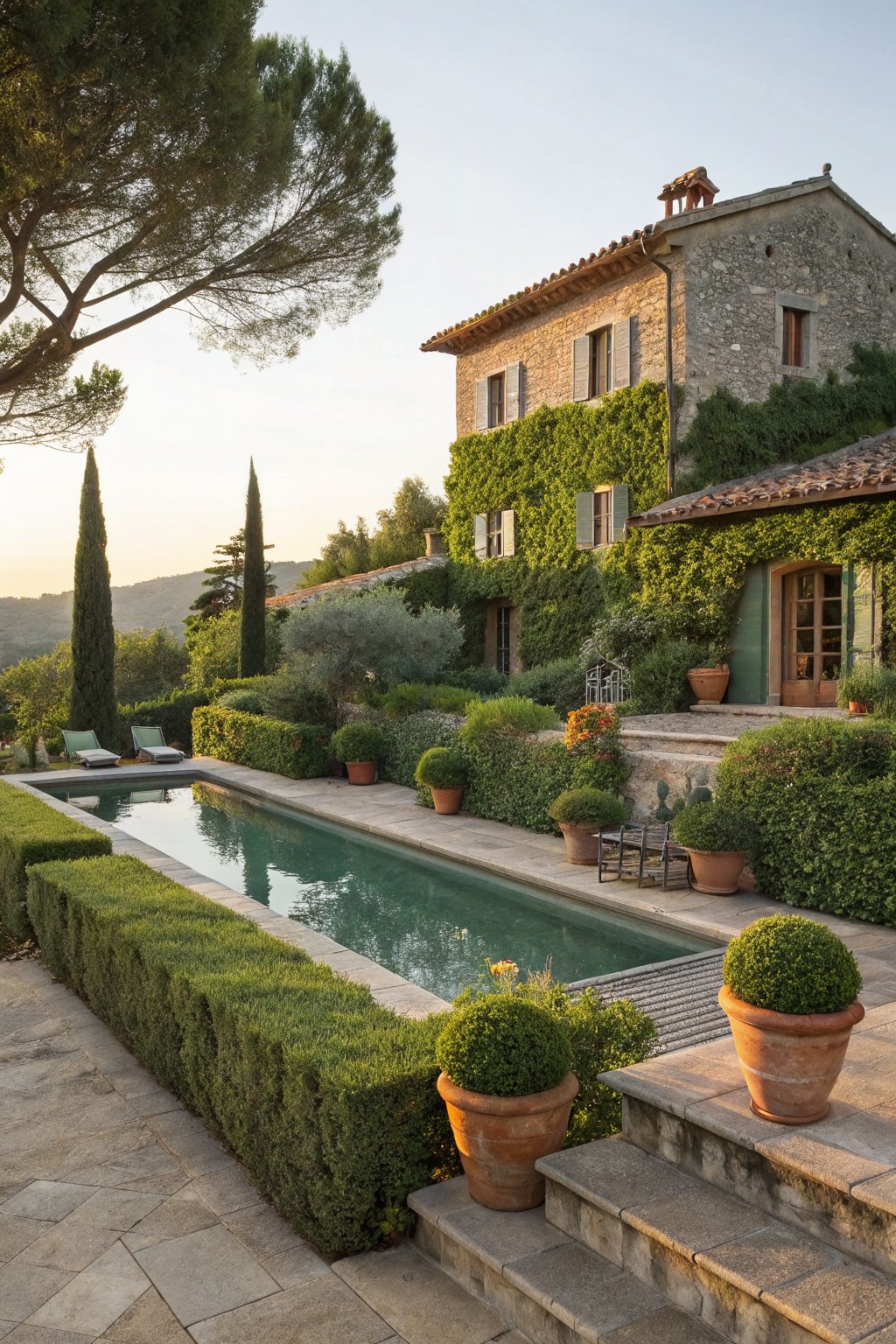
Low boxwood hedges running right along the pool give this garden a clean, structured look. They follow the water’s straight lines perfectly and keep the space feeling tidy even with all the surrounding plants. It’s a simple way to add formality without much upkeep.
Try this in terraced yards or spots with a view, where you want the pool to blend into the landscape. Plant them about a foot high, trim a couple times a year, and add terracotta pots nearby for some height. Suits older stone houses or warmer climates best.
Winding Stepping Stone Path
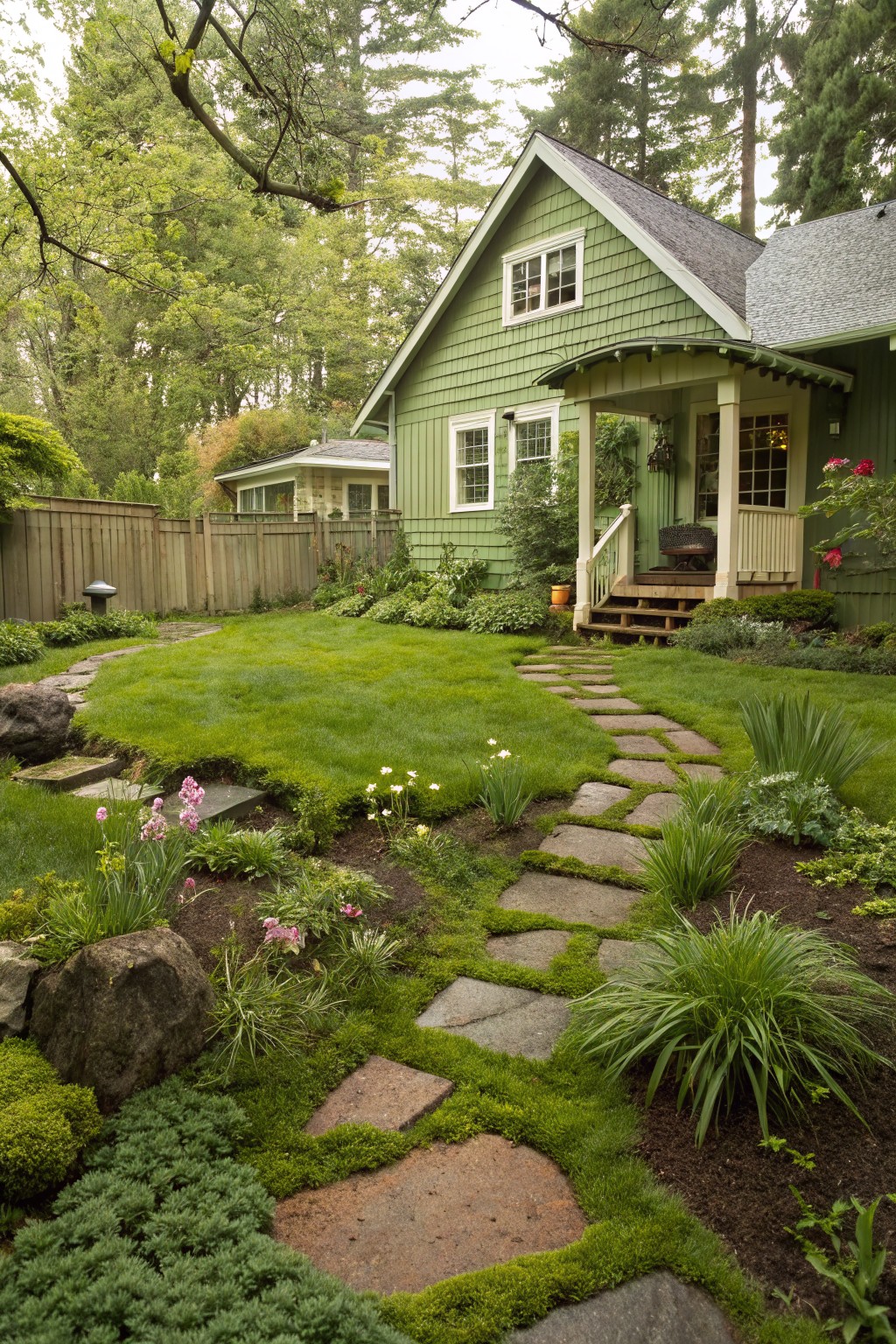
A simple winding path of irregular stone slabs works well to guide you from the street to the front door. Here it’s set right into the lawn with moss and grass filling the gaps, plus low plants and flowers along the edges. It feels natural and easygoing, not like a stiff sidewalk. Against the green house siding, it just pulls everything together without trying too hard.
Try this in a front yard where you have room for grass and some curves. Pick rough local stones so they settle in over time. Add clumps of sedum or hostas between steps for color, but keep plantings low so you don’t block the view. It suits older homes or cottages best, and watch that stones don’t shift on slopes.
Frequently Asked Questions
Q: How do I pick plants that really pop against my green house without clashing?
A: Stick to plants with silvery leaves or soft pastels like lavender and hostas. They contrast nicely with the green tones and keep things fresh. Layer them at different heights for that full, inviting vibe.
Q: My yard gets barely any sun. Which ideas from the article still work?
A: Go for shade-lovers like ferns, astilbe, and mossy ground covers from ideas 7 and 12. They thrive in low light and add that lush, woodland feel around your green house. Just keep the soil moist.
Q: What’s the easiest way to start if I’ve never done landscaping before?
A: Grab a few pots from idea 3 and fill them with easy perennials like sedum. Set them by your entrance to test the look. Once you’re hooked, expand outward.
Q: How do I make sure the landscaping stays low-maintenance after I set it up?
A: Mulch everything well to cut down on weeds and watering. Choose natives from the drought-tolerant picks in ideas 15 and 19. They handle themselves once established.
