

When you pull up to a house, the exterior colors set the tone for everything else, especially how the facade plays off the roofline and entry door. Greens ground a home in its surroundings naturally, but the right mix of bold and soft tones prevents the siding or brick from blending into the yard or shouting too loud. I tested a similar palette on our trim years ago, and it made the whole front feel more welcoming without fighting the neighboring roofs. Curb appeal hinges on those choices that make materials like wood or stucco read clearly from the street. You’ll find shades worth sketching onto your own house photos to see what sticks.
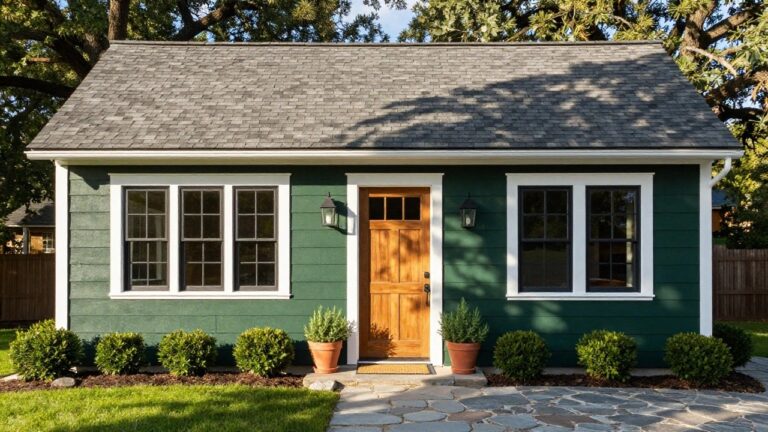
Forest Green Siding with a Warm Wood Door

A deep forest green on board-and-batten siding makes this little house stand out without trying too hard. That bold color feels right at home under trees, almost blending in while the natural wood door pulls you closer. White trim around the windows and porch keeps the green from overwhelming everything.
This setup suits cozy cottages or bungalows in wooded spots. Use it where you want curb appeal that lasts year-round. Add potted rosemary by the steps for a simple touch, and stick to stone paths out front so it all ties together. Skip it on boxy new builds.
Recommended Products

ALL SEASON PAINT & PRIMER-IN-ONE: Cascadia XL is a 100% Acrylic Latex Paint & Primer-in-One with advanced technology for rain protection and a superior finish

Please Note: Samples are for color reference only and do not depict actual siding style, material, or build
Sage Green Stucco with Terracotta Roof
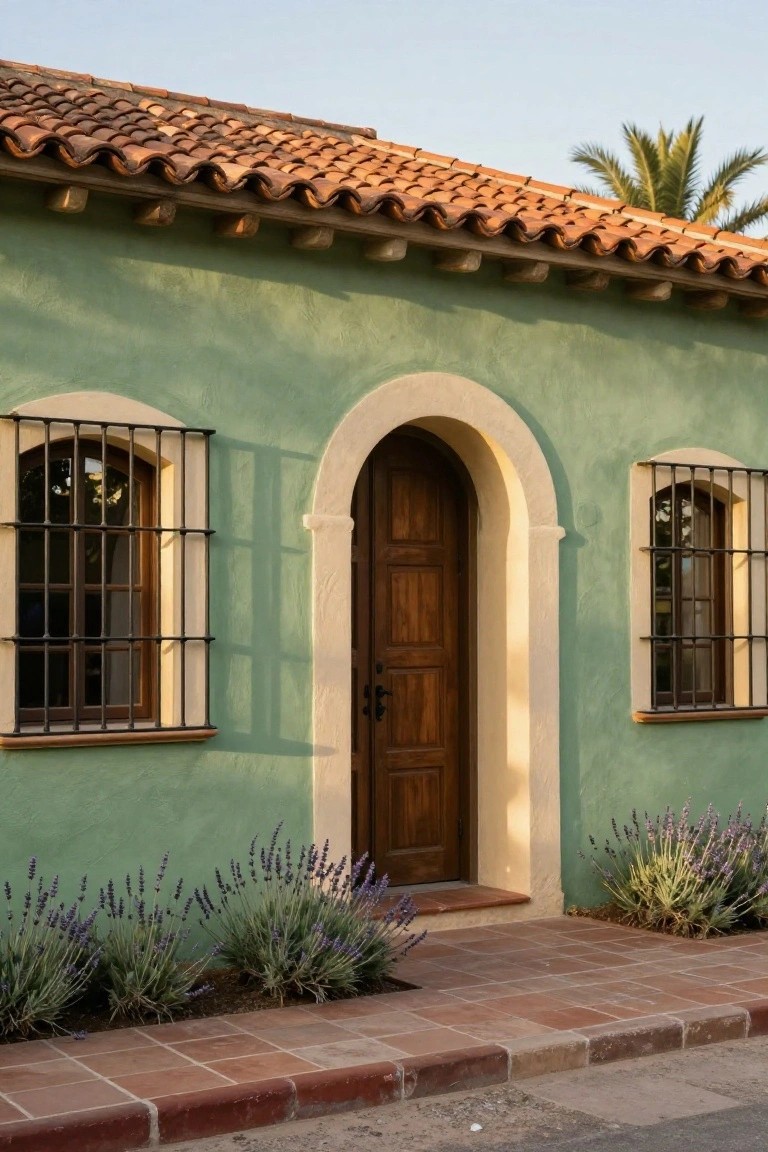
A soft sage green paint on stucco walls gives this house a calm, earthy feel. The terracotta roof tiles add that warm red-orange pop right up top, while the dark wood door pulls everything together at eye level. It’s a nice mix that keeps the green from looking flat.
This setup works best on homes with a bit of Spanish or Southwest style, especially where you get lots of sun. Go for it on single-story spots or corners like an entryway. Pair with simple plants like lavender along the base, and skip busy trim to let the colors breathe.
Pale Green Siding with White Porch Columns
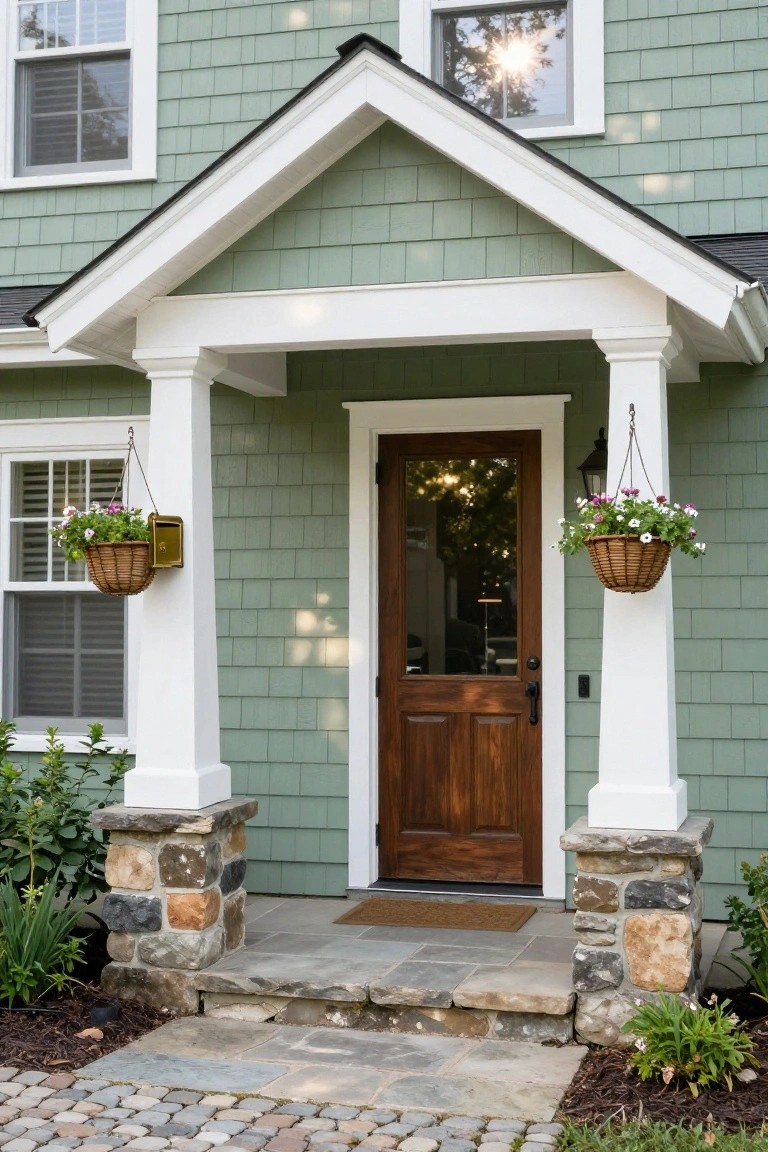
A soft pale green on the shingle siding gives this house a gentle, coastal feel that’s easy on the eyes. White columns and trim stand out clean against it, while the dark wood door adds just enough warmth. Hanging baskets with flowers soften things up around the entry without much effort.
This setup suits Craftsman or cottage-style homes, especially where you want curb appeal that doesn’t shout. Use it on a porch like this one, with stone at the bases to tie into the ground. Skip it if your yard is mostly stark modern landscaping, since the green needs some plants nearby to settle in.
Teal Green Siding with Cedar Wood Cladding
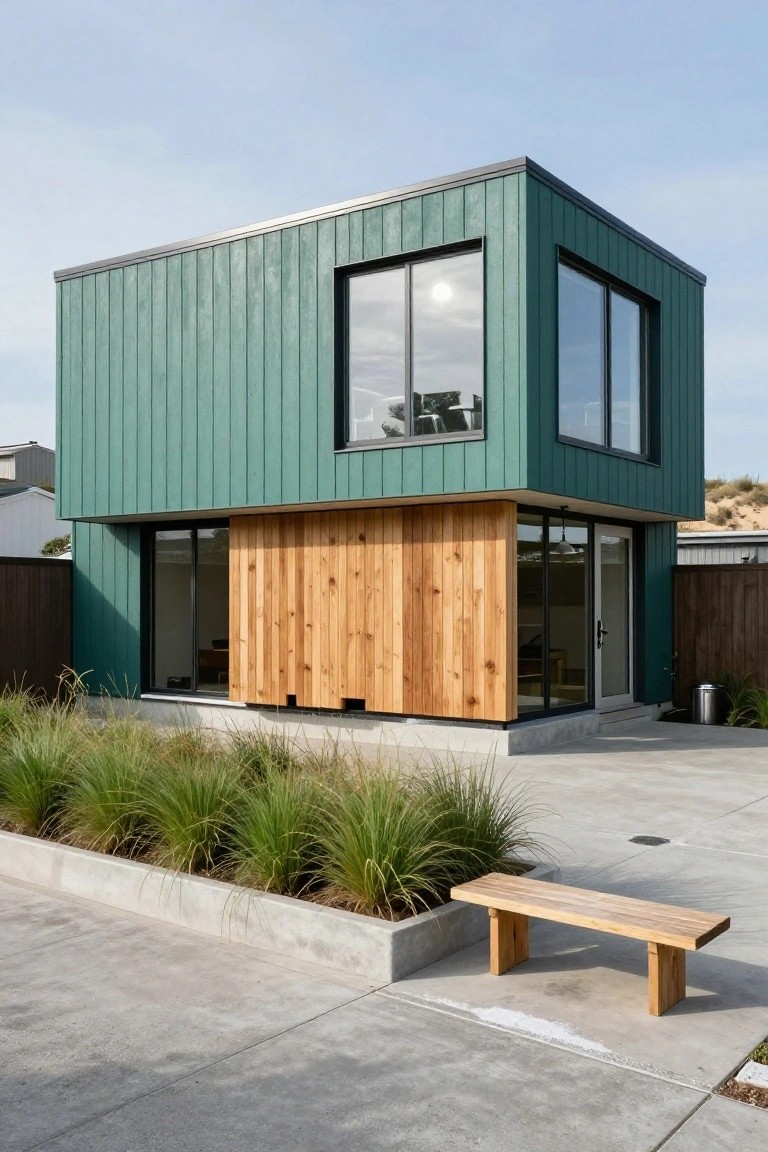
This setup uses bold teal green vertical siding on most of the house. Then a section of warm cedar wood cladding covers the entry corner. The green gives a fresh pop against the sky and yard. The wood keeps things from going too cool. It pulls the house together without much fuss.
Try this on a simple boxy modern home. It works well in beachy spots or mild climates where the green stays lively year round. Keep the wood natural so it ages nicely. Skip it on super traditional houses. The cedar bench out front hints how wood repeats outside too.
Sage Green Brick with Wood Door Contrast

A soft sage green on brick walls sets a calm, timeless tone for the house exterior. It feels gentle without being too bright. The rich wooden door with its carved details brings just enough warmth and draws attention to the entry without overpowering the green.
This combo suits older homes or cottages in milder climates. Paint the brick a muted green to keep it from looking too modern. Stain the door a deeper wood tone for balance. Add simple pots nearby if you want a bit more life around the steps.
Pale Green House with Sage Shutters
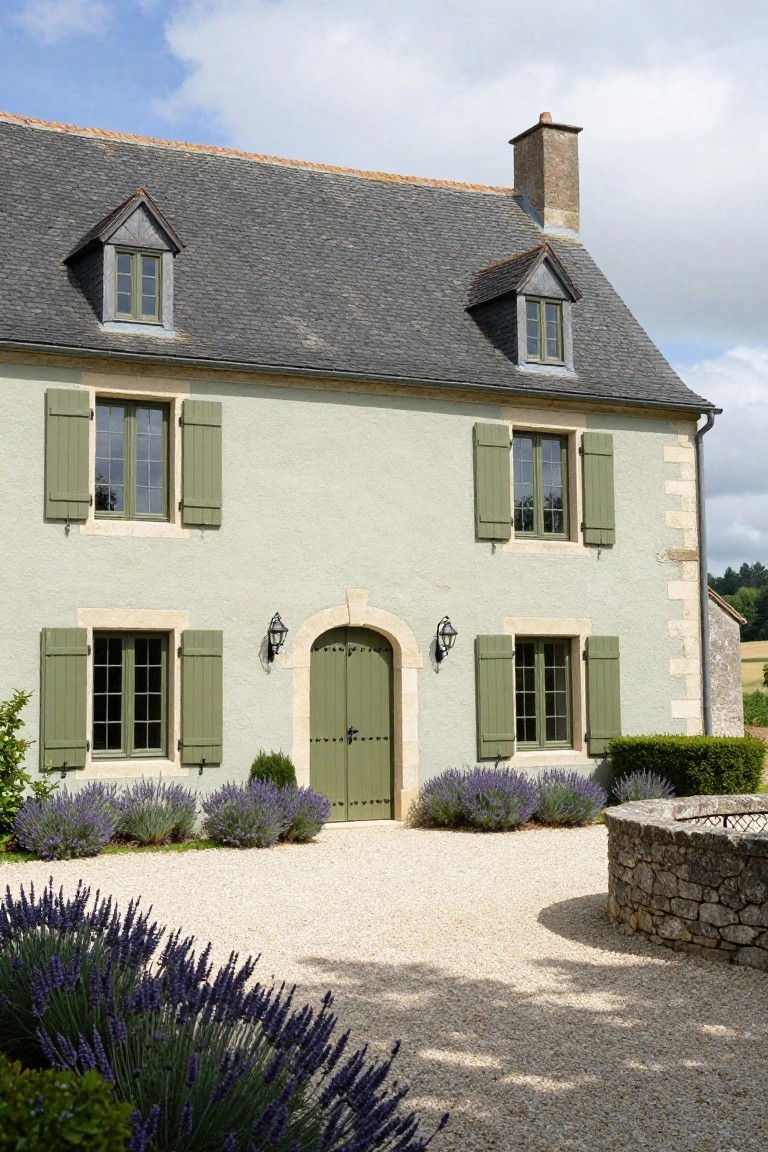
A pale green or grayish wall color sets a quiet base for this house exterior. Darker sage green shutters pull the tone together on the windows and frame the entry nicely. Lavender plants out front add a bit of purple that fits right in, keeping the whole look soft but not washed out.
This works well on older country homes or ones with stone details. Use it where you want green tones without going too bright. Stick to gravel or simple paths nearby, and avoid busy flower beds that fight the calm feel.
Green Brick Facade with Black Door

A deep green brick wall sets the stage here, wrapping around a simple black front door. That bold color pops against the matte black without overwhelming things. The wall sconces keep it practical for evenings, and a potted plant nearby ties in more green in a natural way.
This look suits city row houses or updated older homes where you want curb appeal that stands out but stays grounded. Go for bricks in that rich hue, then keep trim and door dead black for contrast. Add rust pots if you’re planting bold stuff like that tall green one… just check your local rules first.
Sage Green Cottage Siding

A soft sage green on house siding like this brings a quiet freshness to the exterior. It feels calm and natural, especially on a small cottage style. The warm wood door pulls in some rustic character without overpowering the green. White trim on the porch columns ties it neat.
This palette fits older homes or bungalows in garden settings. Use it where you want subtle curb appeal that blends with plants. Keep pots simple on the porch rail. Avoid darker greens nearby, or it might feel too heavy.
Green Stucco Exterior with Wood Door

This setup takes a bold green stucco finish on the house walls and warms it right up with a simple wooden entry door. The green has a textured look that catches the light without being too flat. That wood door, with its natural grain and a bit of glass beside it, pulls the eye to the front and makes the whole facade feel less stark. It’s a good mix of color punch and easy texture.
You can pull this off on smaller homes or additions where you want modern vibes without going cold. It suits spots with some yard around, like here with the concrete steps and grass edging in. Stick to mid-tone greens so they don’t fade fast, and match the wood tone to nearby trees for better flow. One thing…keep the door hardware matte black to stay low-key.
Green Siding with Black Shutters
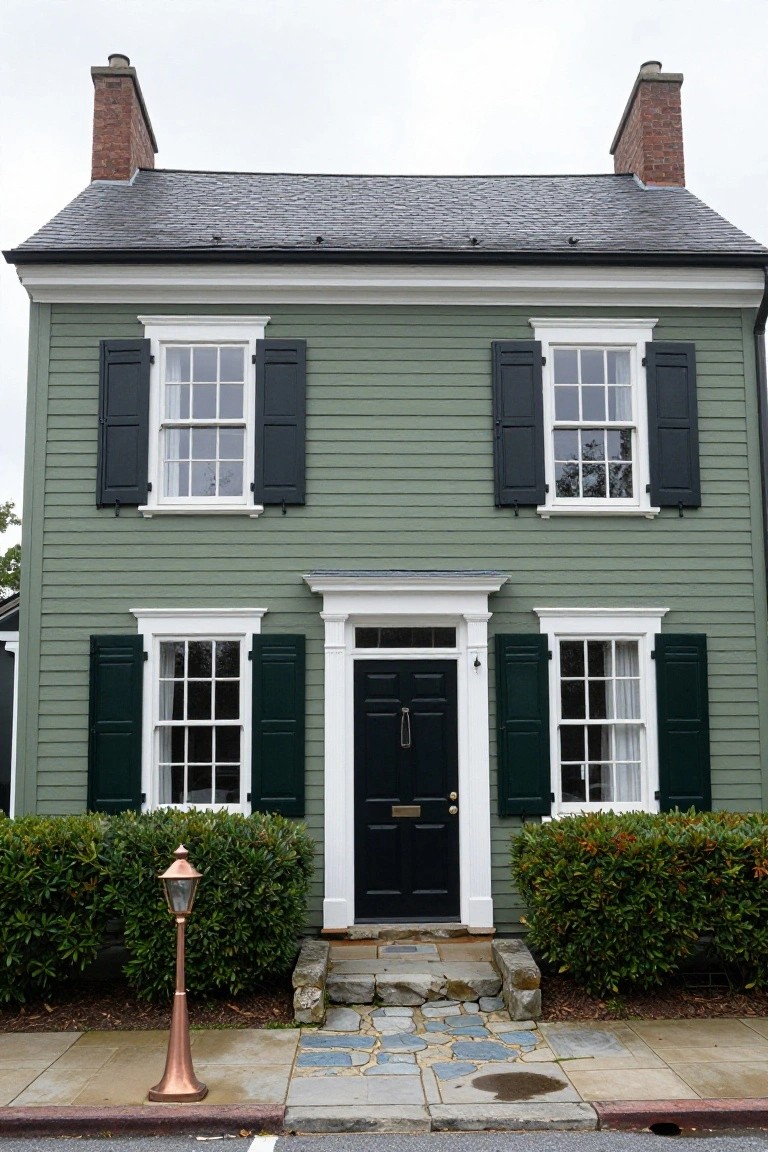
A soft green siding like this one keeps things calm and classic. The black shutters add some punch without going overboard. White trim around the windows and door pulls it all together nice and clean. It’s a look that fits right into neighborhoods with older homes. Folks like how it feels settled in, not flashy.
Try this on a two-story colonial or federal style house. Clapboard siding takes the color well. Keep the front door dark too, for that extra bit of contrast. It suits spots with some trees around. Just make sure the green isn’t too yellow, or it might clash in bright sun.
Weathered Green Wood Siding

A weathered green stain on vertical wood boards makes this cabin feel right at home in the woods. The color picks up the deep tones of nearby pines but softens in spots from age and weather, striking that balance between bold forest green and subtler patina. Stone at the base and thick log beams add just enough contrast without pulling focus from the siding.
This approach suits mountain cabins or wooded retreats where you want the house to settle into its spot. Use a semi-transparent stain so the wood grain shows through, and keep accents simple like raw timber or fieldstone. Skip it on open suburbs, though. It shines best tucked among trees.
White Stucco Paired with Terracotta Accents
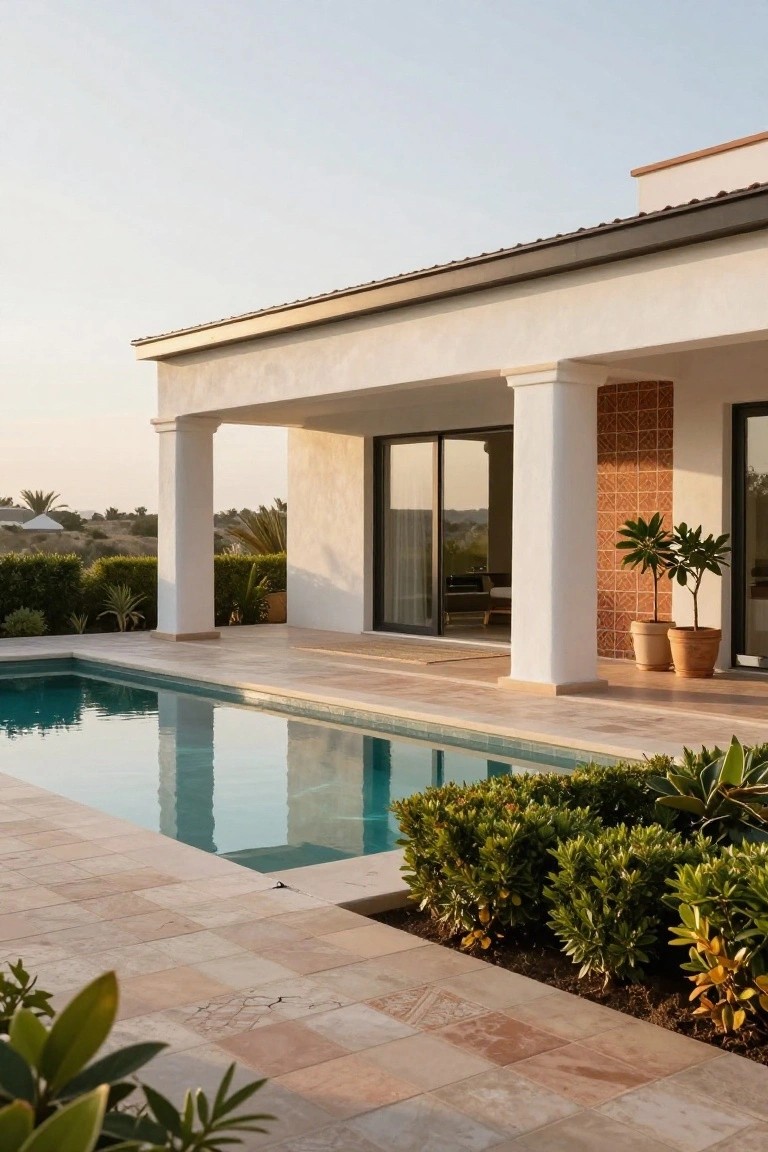
White stucco walls give this house a clean, bright look that really opens up the facade. The terracotta brick on one column adds a warm pop without overwhelming things. Green shrubs along the pool edge tie it all together, keeping the palette soft yet lively.
This setup works great on homes in sunny spots, like Mediterranean or Southwest styles. Use it where you want low-key curb appeal that feels fresh year-round. Pair the white with beige stone pavers for the deck, and keep plants simple… boxwoods or palms do the trick. Skip busy patterns on the brick to let the white stay dominant.
Soft Green Timber-Framed Facade
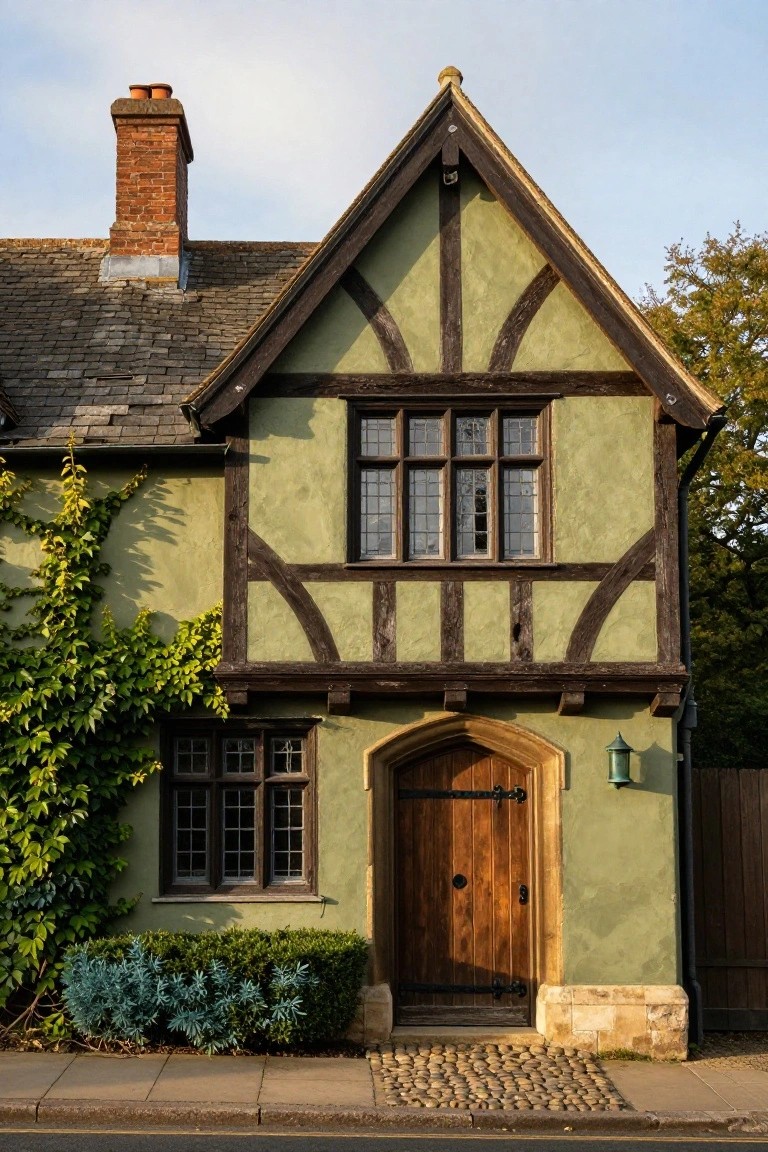
There’s something about a muted green on stucco walls with dark timber beams that just feels right for a cozy home. It pulls from old English cottages but keeps things calm and not too shouty. The green stays soft in sunlight, and those thick beams add real structure without overwhelming.
This works best on homes with gabled roofs or any traditional shape. Paint the plaster green, leave the timbers natural or stained dark. Toss in some ivy along one side if you want… it softens edges nicely. Skip it on super modern boxes, though. Stays charming on suburban lots too.
Teal Stucco Walls on Coastal Homes
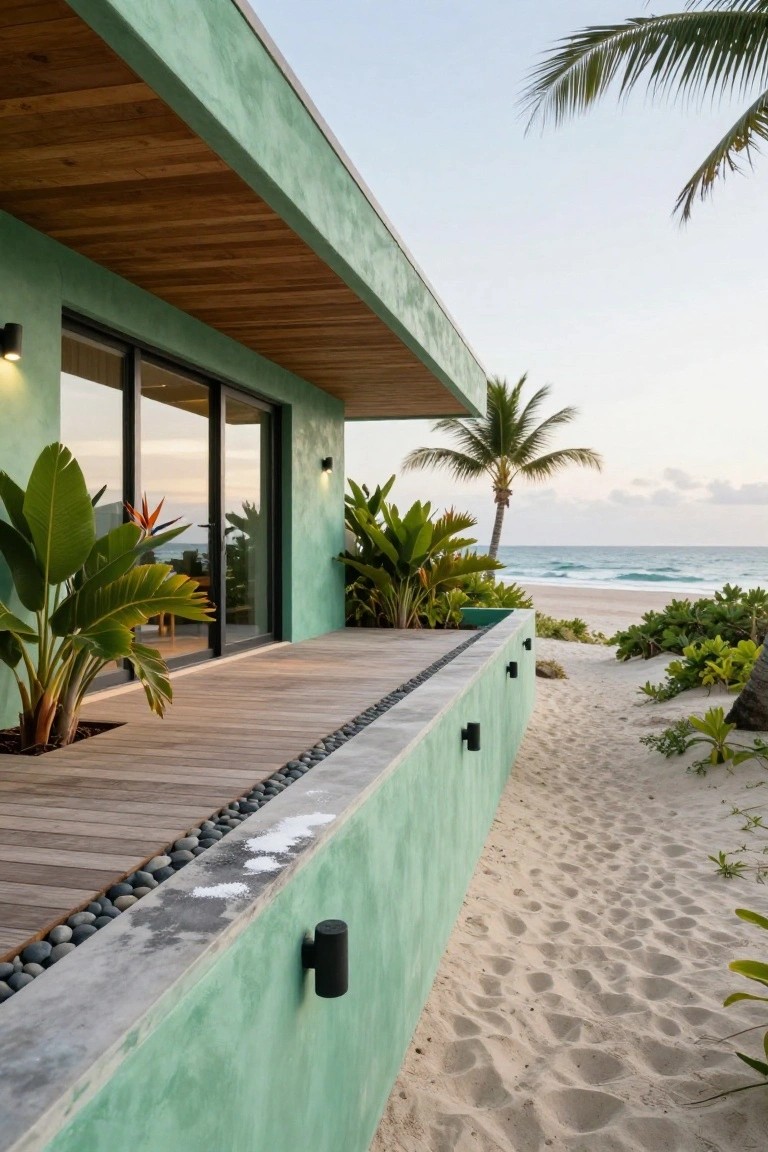
A teal stucco finish like this one brings a fresh punch to beach houses. It stands out against the sand and ocean without overwhelming the view. The color picks up hints from nearby palms and sea glass, and pairing it with plain wood decking keeps things grounded. You get bold color up close, but it fades nicely into the landscape from afar.
This works best on low-slung modern homes in warm spots. Slap it on side walls or full facades where you want some personality. Use matte paint or real stucco to handle salt air. Skip it on shady north sides, though. It shines in full sun.
Soft Sage Green Facade with Cream Trim
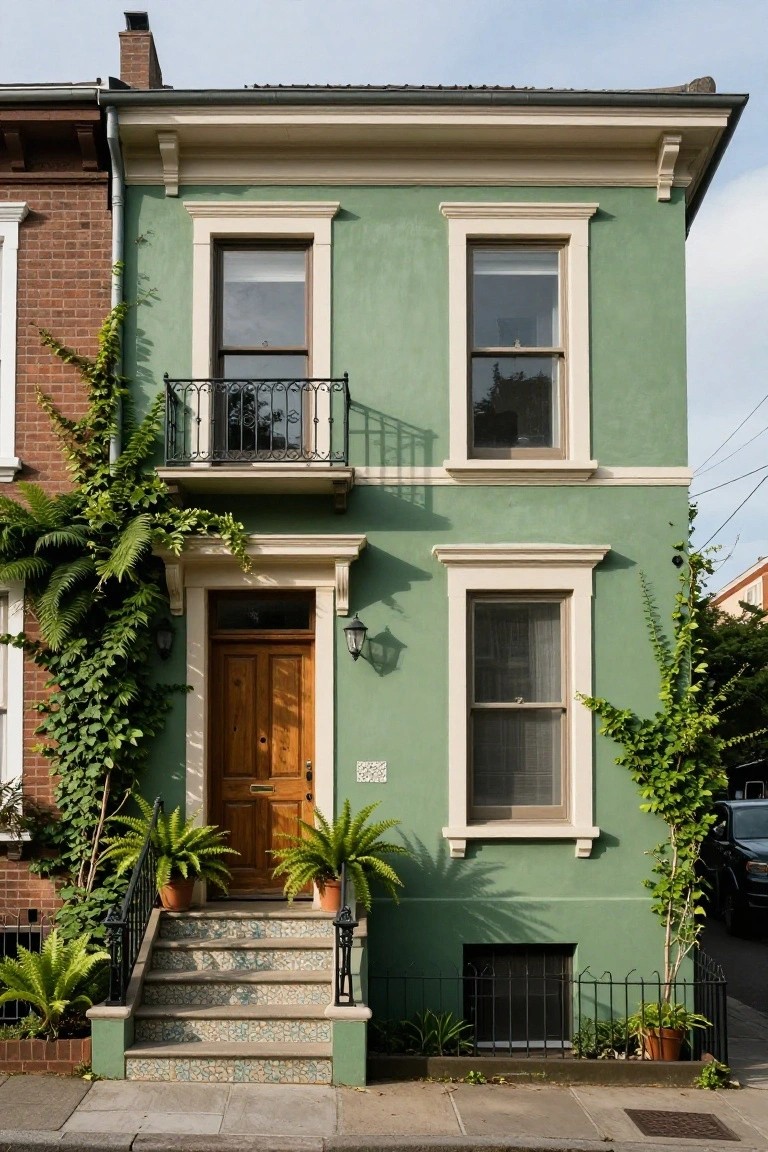
A soft sage green paint job like this one takes a classic rowhouse and makes it feel fresh without going overboard. The color sits right between bold and mellow. It picks up on the ivy and ferns climbing the brick neighbor, but stays calm on its own. That wooden door adds a bit of warmth right where you need it.
This look works best on older urban homes, narrow ones especially, where you want curb appeal that nods to history. Pair the green with creamy trim around windows and the entry to keep things crisp. Skip darker shades if your street has a lot of brick. Just add a few potted plants by the steps… and you’re set.
Sage Green Siding with Wood Entry Accents

This setup takes a soft sage green siding and lets natural wood on the door and bench do the talking. The green stays mellow across the whole facade. That wood brings in warmer tones right at the entry. It keeps the look balanced. Not too cool. Not too busy.
Try it on homes with simple lines like ranch styles or modern farmhouses. Pick wood with some character, like live edge on the bench. It works in shady spots or near trees. Just seal the wood well so it doesn’t fade against the green.
Frequently Asked Questions
Q: How do I test a green palette before committing to the full paint job?
A: Grab large sample boards from your local paint store and slap them up on different sides of the house. Walk around at different times of day to see how the light hits them. Pick the one that pops with your surroundings.
Q: What trim colors go best with a bold green siding?
A: White trim keeps things crisp and lets the green shine. Go for a soft cream if you want warmth that ties into nearby plants.
Q: …and my house has brick accents already?
A: Layer on a soft sage or olive green over siding to echo the earth tones in brick. It blends without overwhelming.
Q: How do you balance bold and soft greens in one palette?
A: And paint the body a deeper green while doors get a lighter shade. This pulls your eye around without chaos.
