

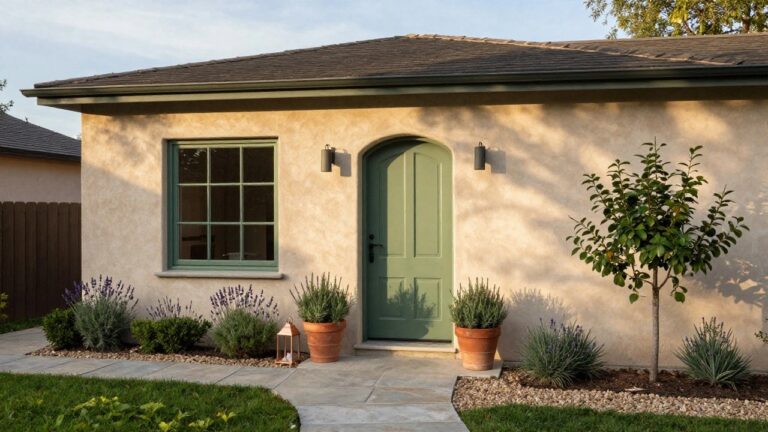
I’ve noticed over the years that green and beige exteriors stand out from the street because they make a house feel rooted in its surroundings right away.
The best ones balance smooth siding with textured stone or wood accents, so the facade reads as steady and unpretentious even under changing light.
I keep coming back to how a low-slung roofline in those colors softens the whole profile, something our own street could use more of.
Windows and entryways gain from simple frames that let the palette breathe, drawing your eye without overwhelming the calm.
One or two here might fit perfectly if you tweak them for your lot’s slope.
Green Arched Door on Beige Stucco
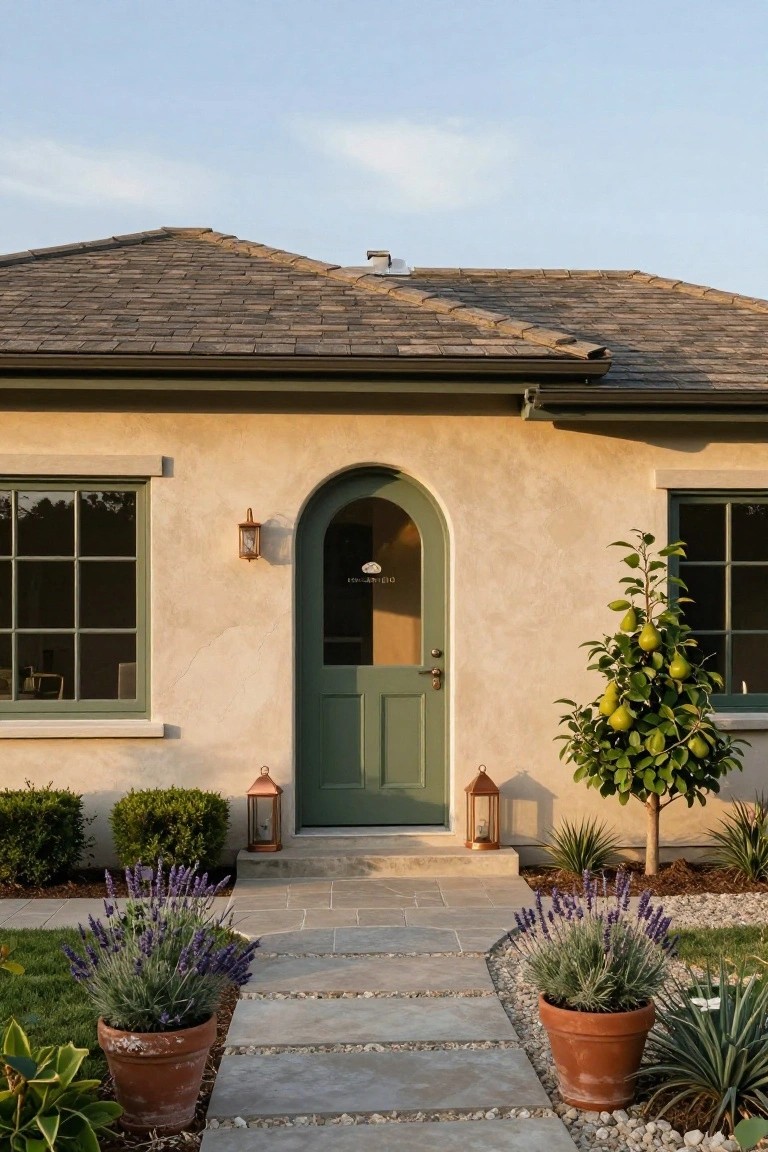
A green arched door like this one stands out nicely against beige stucco walls without being too bold. It pulls the eye right to the entry and gives the whole front a soft, old-world feel. The green ties in with the window frames and keeps everything calm and pulled together. Flanking lanterns add a bit of light that works day or night.
This setup works best on smaller homes or cottages where you want some character up front. Paint the door a deep green and keep the rest neutral. Add simple pots with lavender along the path to echo the color. Skip busy details around it so the arch stays the focus. It suits mild climates where stucco holds up well.
Recommended Products

This traditional barn door pull can similarly be used as a cabinet or drawer handle for kitchens and bathrooms

Unique Arched Design & Versatile Storage: A modern focal point with elegant arched glass doors, blending mid-century charm with contemporary style. The spacious interior and adjustable shelves effortlessly organize everything from tall wine bottles to dinnerware, fitting both cozy apartments and large homes

Contemporary cabinet and drawer handle for kitchens and bathrooms
Two-Tone Green and Beige Siding
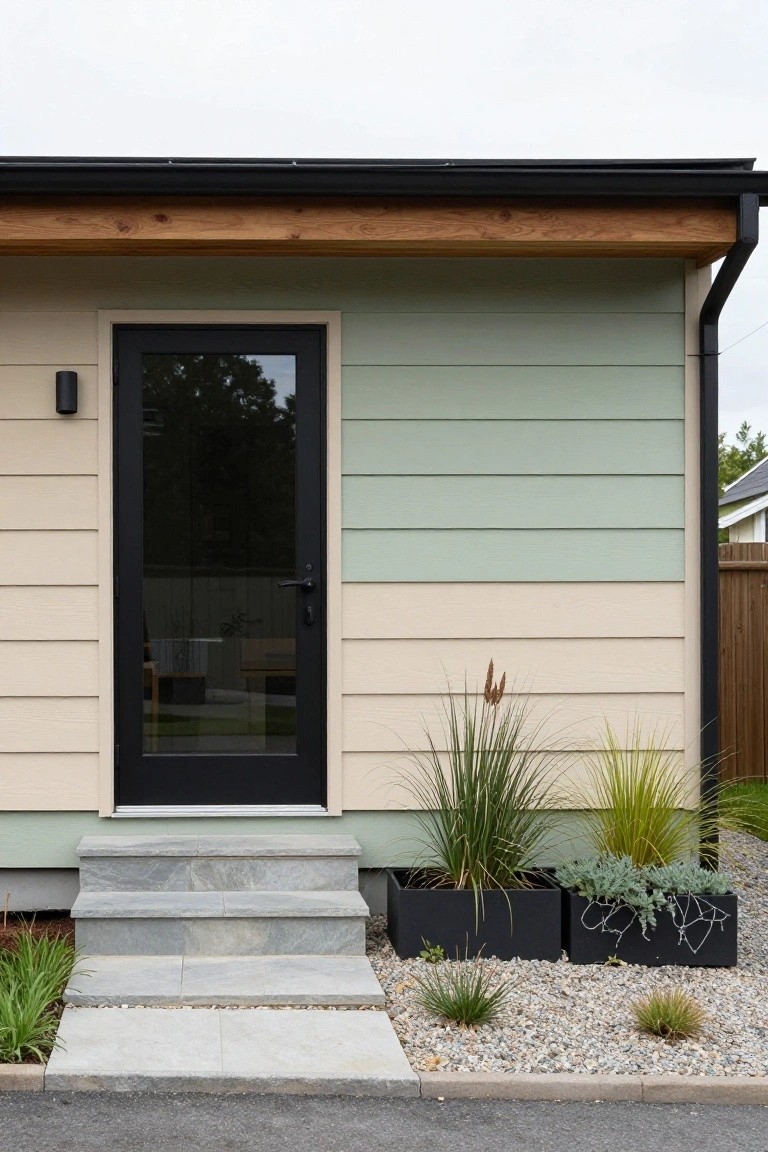
This siding setup splits soft green above and beige below on horizontal boards. It gives the house a quiet layered feel. The black door pulls it together without overpowering things. And those stone steps keep the entry clean and grounded.
Try this on ranch-style homes or smaller additions where you want calm curb appeal. It suits milder climates with the natural wood trim overhead. Just make sure the tones are close enough so it doesn’t look chopped up. Add a few grasses nearby like they did here.
Sage Green Porch on Beige Brick
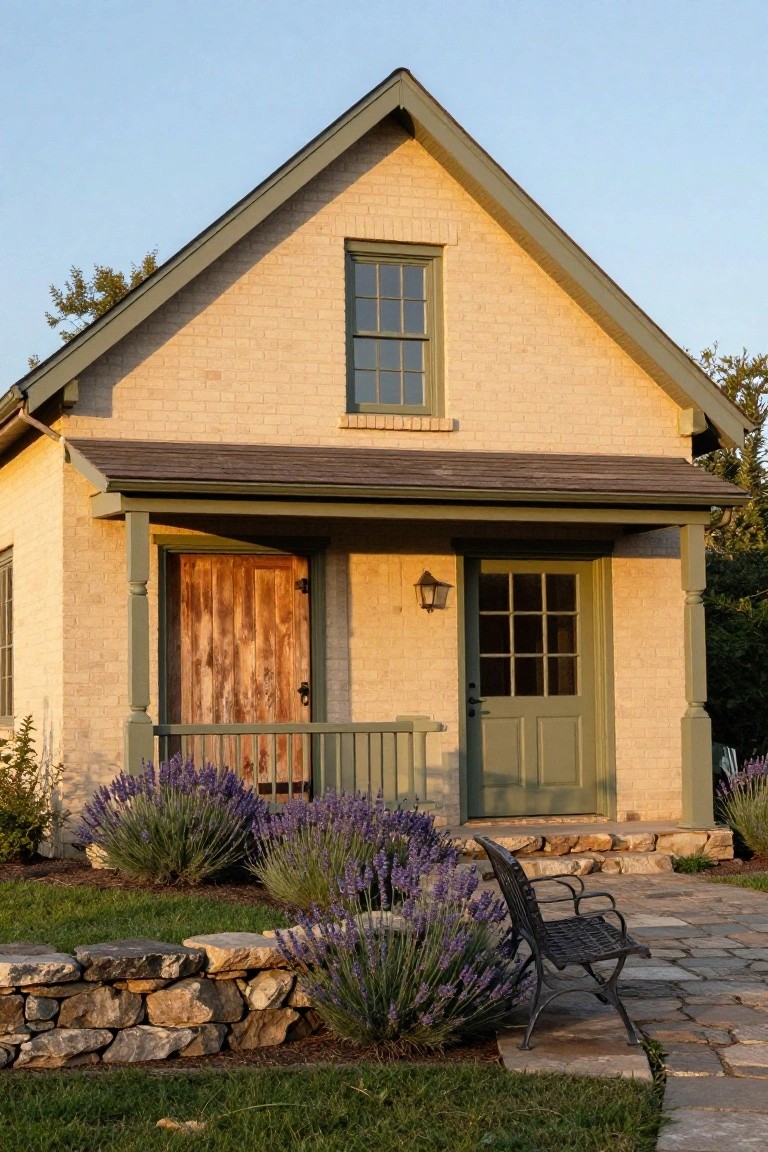
This little house pulls off a quiet look with its soft beige brick walls and sage green porch. The green shows up on the trim, posts, and that glass front door. It keeps things calm without much fuss. Pair it with a weathered wood side door and some lavender bushes out front. That mix feels settled and easy on the eyes. Brick gives a solid base. Green nods to the garden without overdoing it.
Try this on a smaller home or cottage where you want curb appeal that doesn’t shout. It works best in a yard with natural plantings. Keep the brick light and tumbled for softness. Paint the porch elements a muted green. Skip bright colors elsewhere. Watch the scale on bigger houses. It can look lost if the porch isn’t prominent.
Green Shutters on Beige Stucco
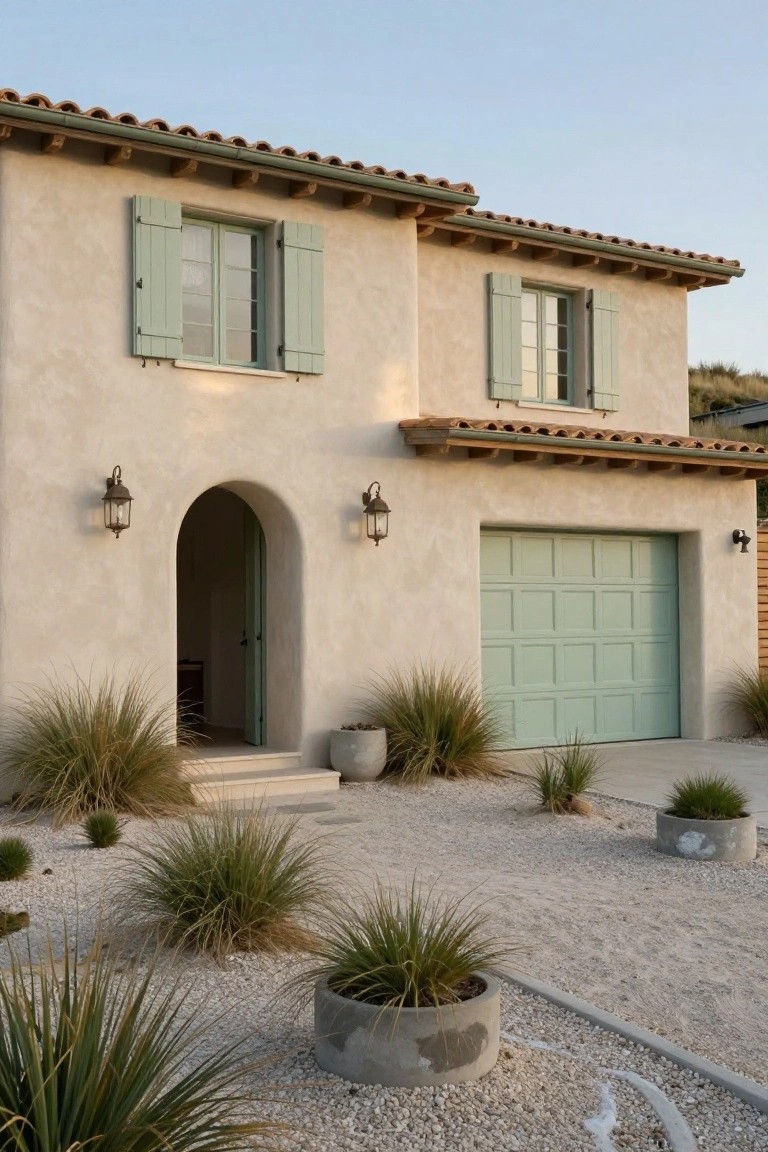
Green shutters and doors stand out nicely against beige stucco walls like they do here. The soft green shade picks up the natural tones around the house without overpowering the simple shape. It gives the whole front a calm, settled look that feels right at home in dry areas.
You can pull this off on ranch or adobe-style houses where you want low-key color. Match the green across shutters, the entry, and garage door for easy flow. Just stick to matte paint to avoid glare, and pair it with gravel or grasses out front to keep maintenance simple.
Green Trim on Beige Siding
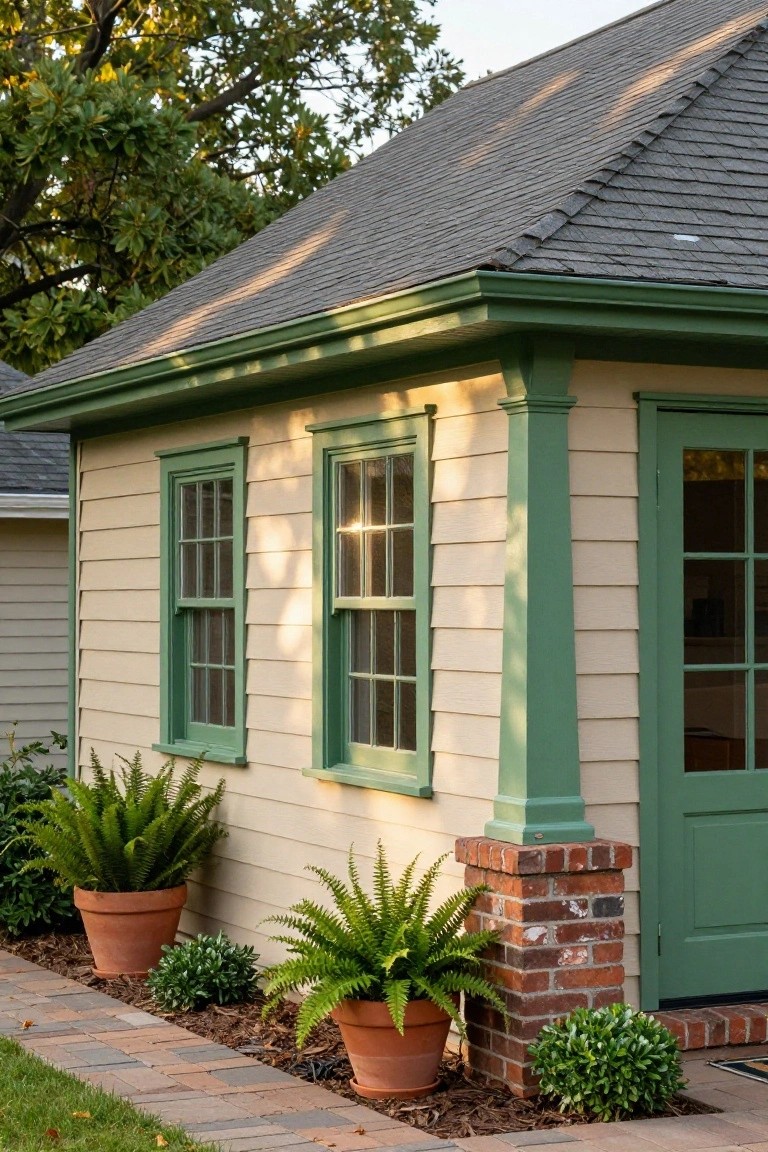
A soft beige siding like this pairs nicely with green trim on the windows, door, and roofline. It keeps things calm and steady, almost like an old cottage you drive past on a quiet street. The green adds just enough life without pushing too hard.
This setup works best on smaller homes or garages where you want a welcoming front without much fuss. Pick a muted green to match the beige tone, and keep the trim clean. Potted ferns by the entry tie it in with the yard, but skip bold colors nearby or it might feel busy.
Green Shingles with Stone Arch Entry
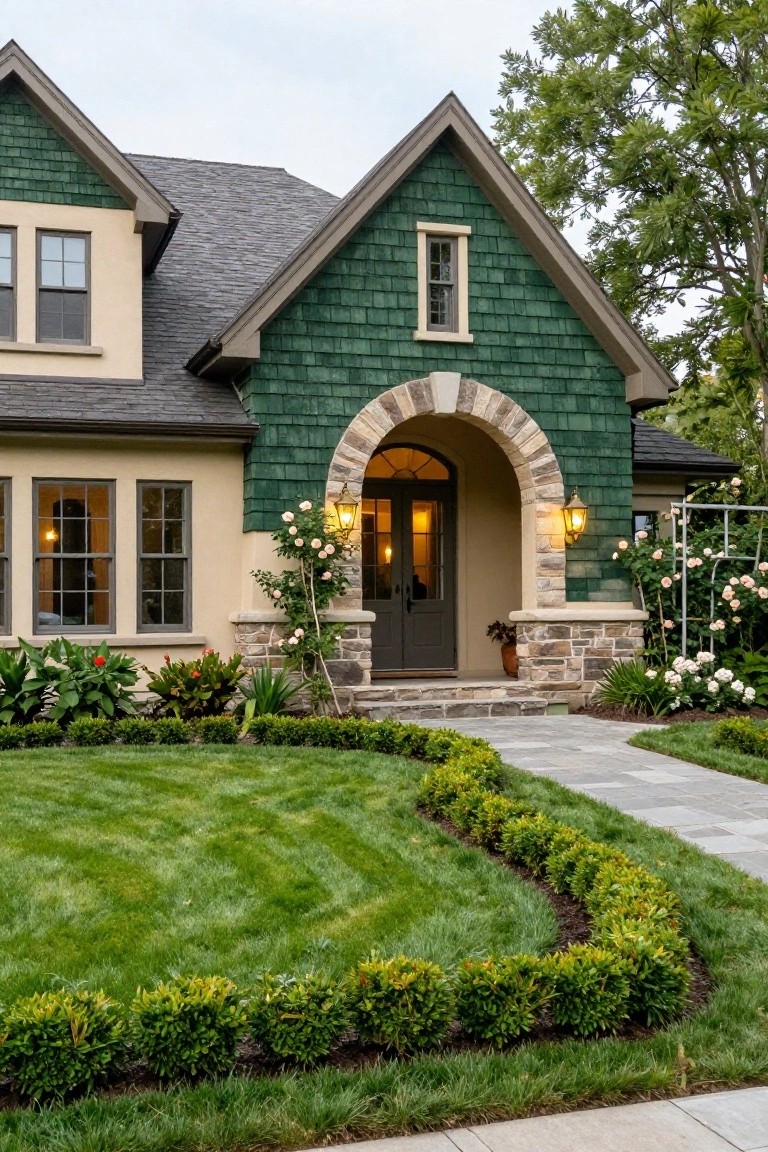
Dark green shingles cover the gabled section above the front door here. They pair nicely with the beige stone arch that frames the entry. This mix keeps things calm and pulls the house together without much fuss. The lanterns on either side add a soft glow at dusk.
You can pull this off on a traditional or craftsman-style home. It suits spots with mature trees nearby. Just keep the landscaping simple, like boxwoods along the path, so the architecture stays the focus. Avoid too much stone elsewhere or it might feel heavy.
Green Doors on Beige Walls
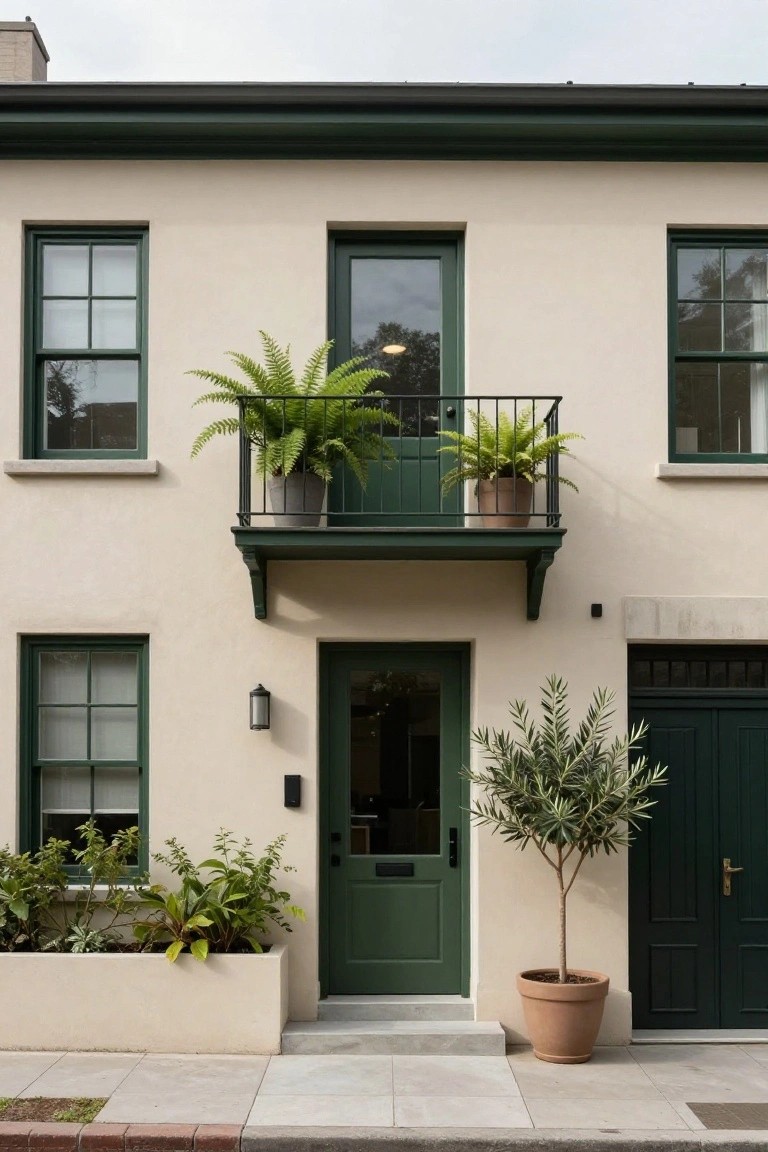
A simple way to add calm color to a house front is painting the doors and windows in green against beige walls. Here, the deep green front door and matching frames stand out just enough on the soft stucco without overwhelming the look. It keeps things feeling settled and a bit traditional.
This setup works best on older row houses or narrow townhomes where you want subtle curb appeal. Add plants in pots or boxes nearby, like the olive tree by the garage, to tie it together. Skip bright colors elsewhere to let the green do its job.
Sage Green Door and Shutters on Cob Walls
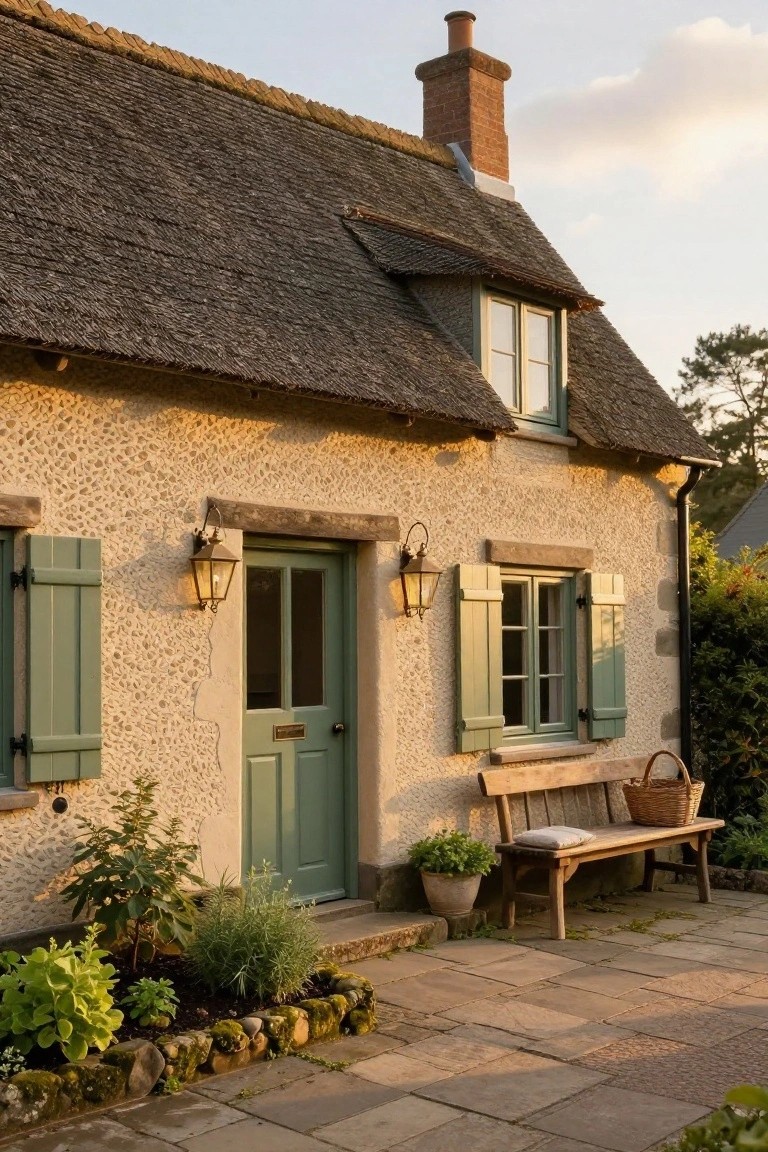
A soft sage green door and shutters stand out nicely against the textured beige cob walls of this cottage. The color picks up the green in the landscape without overpowering the house. Paired with the thatched roof and simple lanterns, it gives off a calm, lived-in feel that suits country homes.
You can pull this off on older stone or stucco houses too. Just keep the green muted so it blends with plants around the base. Works best where you want quiet charm, not bold color. Skip it on super modern facades.
Courtyard Patio with Built-In Fountain
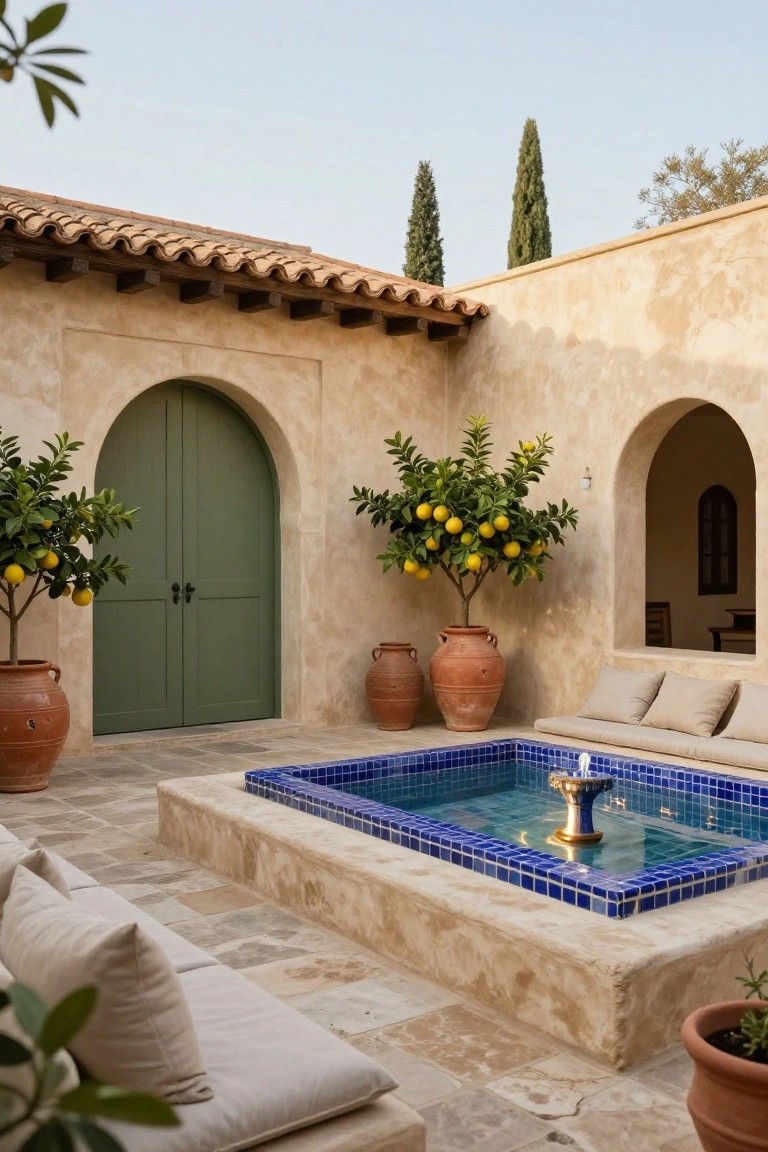
A simple built-in fountain makes this courtyard patio feel like a quiet spot to unwind. The blue tiled pool sits right in the center, with water gently bubbling from a gold fixture. Low beige cushions on the stone bench nearby keep things easy and relaxed. Paired with the green door and lemon trees in terracotta pots against those soft beige walls, it pulls the whole area together without much fuss.
This setup works best in warmer spots where you want outdoor living that stays calm year round. Think Mediterranean style homes or any backyard corner walled off for privacy. Go for a small scale like this if space is tight, and pick tiles that pick up a color from your house. Just make sure the fountain pump is low noise so it soothes more than distracts.
Green Trim on Beige Siding
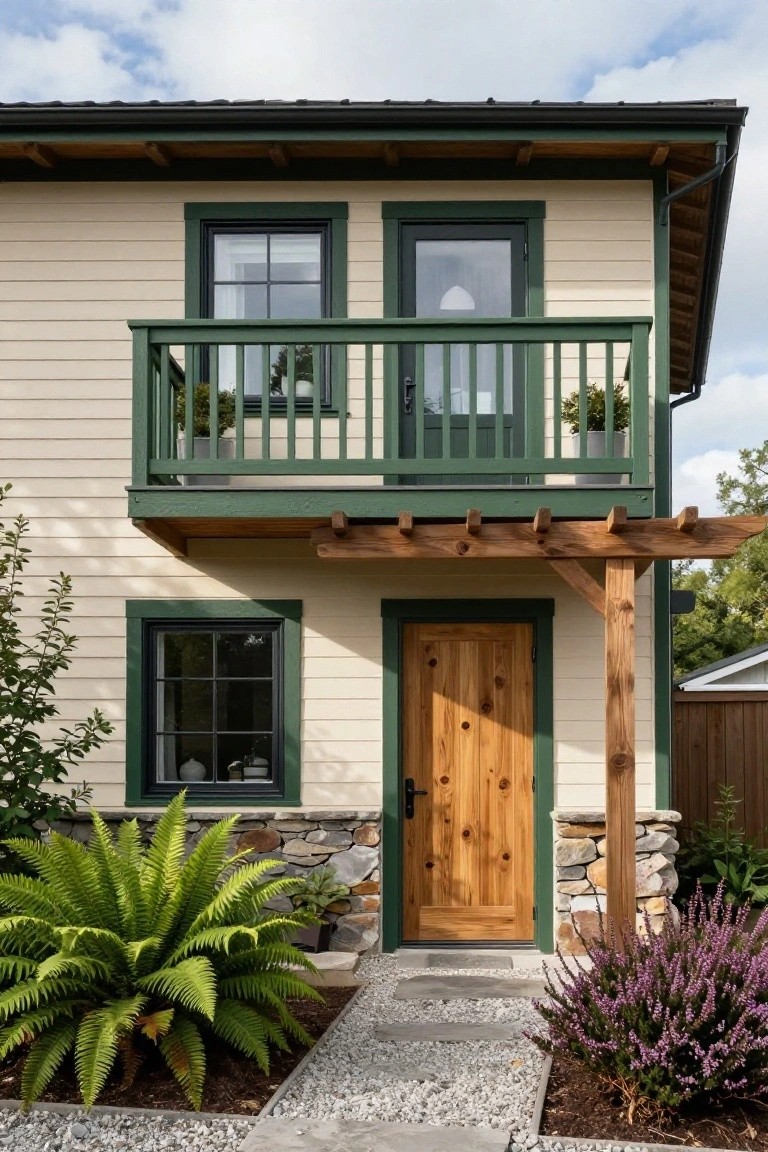
Green trim works nicely on beige siding like you see here. It adds a bit of color without overwhelming the soft beige base. The green frames the windows and balcony railing, and that wooden door pulls it all together for an easy, outdoorsy look. Houses like this feel calm because the colors echo nature, especially with plants nearby.
Try this on smaller homes or cottages where you want curb appeal that stays low-key. It suits wooded spots or mild climates best. Just keep the green shade muted so it blends rather than stands out too much, and add wood elements for balance.
Green Roofing on Beige Stucco
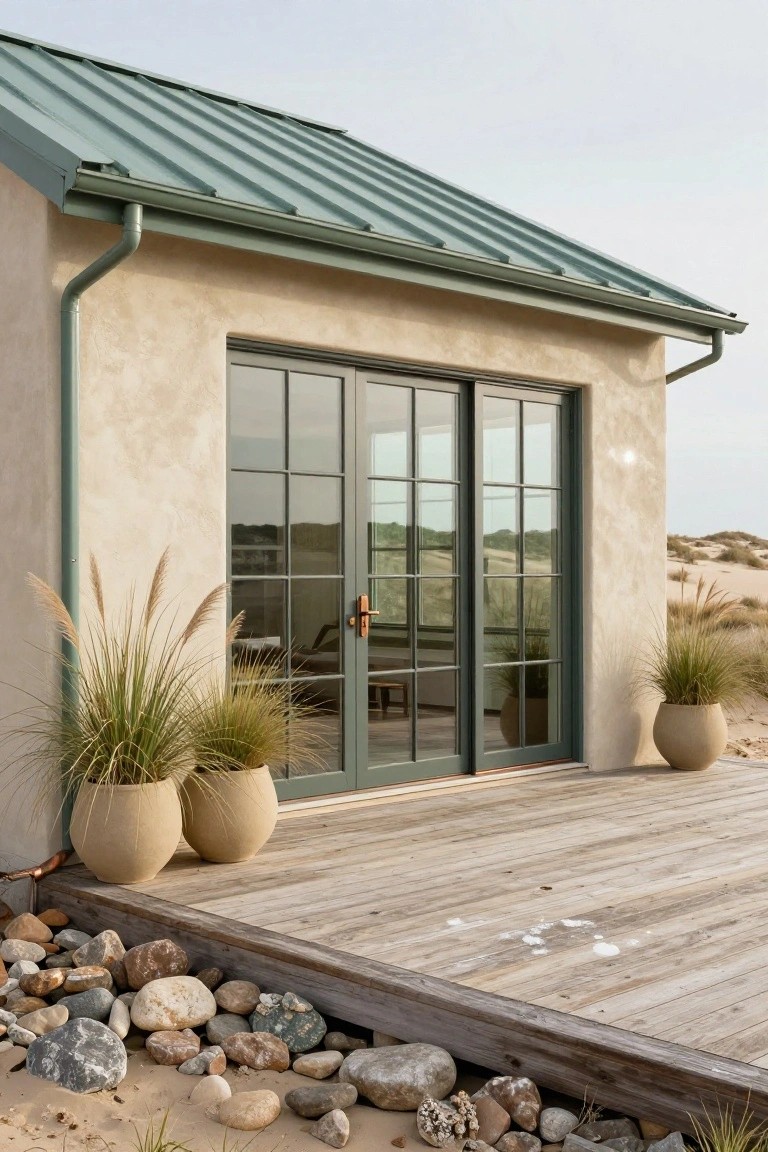
A green metal roof over beige stucco walls gives this little beach house a quiet tie to the dunes around it. The soft tan walls stay neutral while the roof’s color echoes the sea grass and hints of ocean. Those large glass doors with matching green frames pull the look together without much fuss.
This combo works best on smaller structures or vacation spots where you want low-key curb appeal. Pick a standing-seam metal roof for easy upkeep in salty air, and stucco that takes on a bit of texture from hand-troweling. It suits sandy lots… just keep plantings simple so the house stays the focus.
Green Door on Beige Stucco Facade
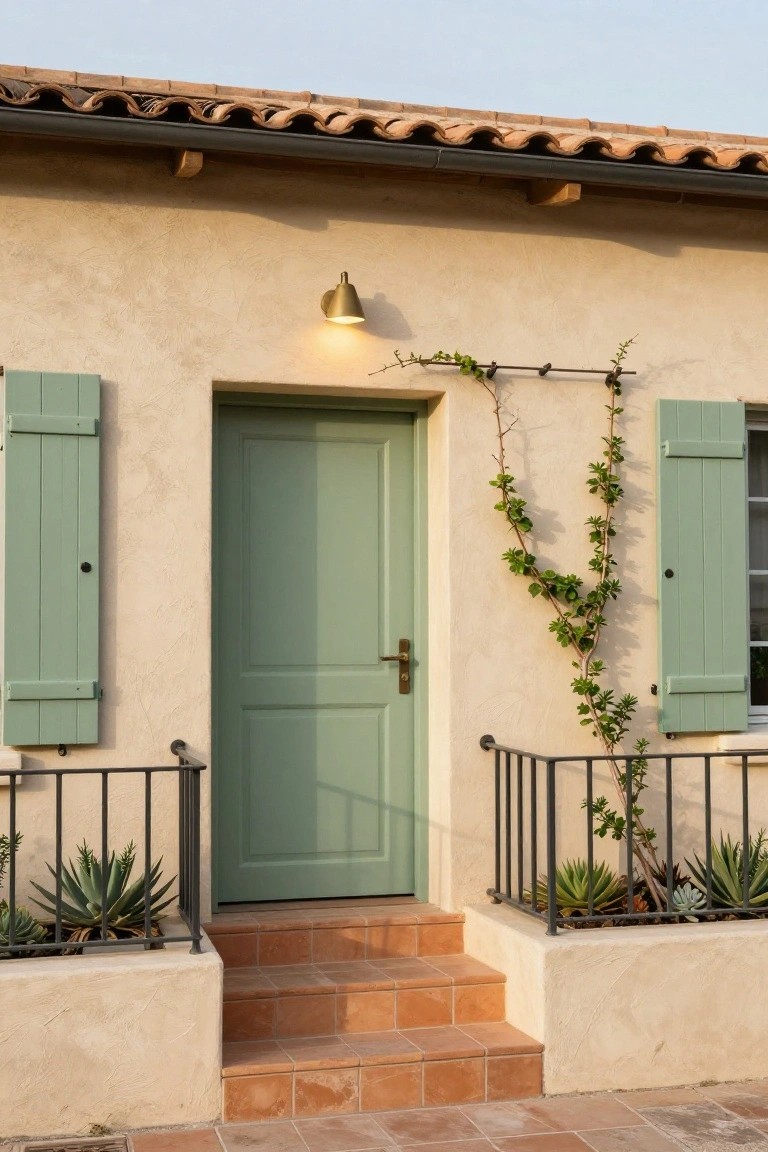
A soft green door stands out nicely against beige stucco walls. It pulls focus to the entry without shouting. The matching shutters and a bit of climbing ivy keep the look tied together and calm.
This works well on single-story homes or cottages where you want easy curb appeal. Add low pots with succulents along the steps like here. Stick to muted greens so it stays restful, not too bright.
Green Siding Over Beige Brick
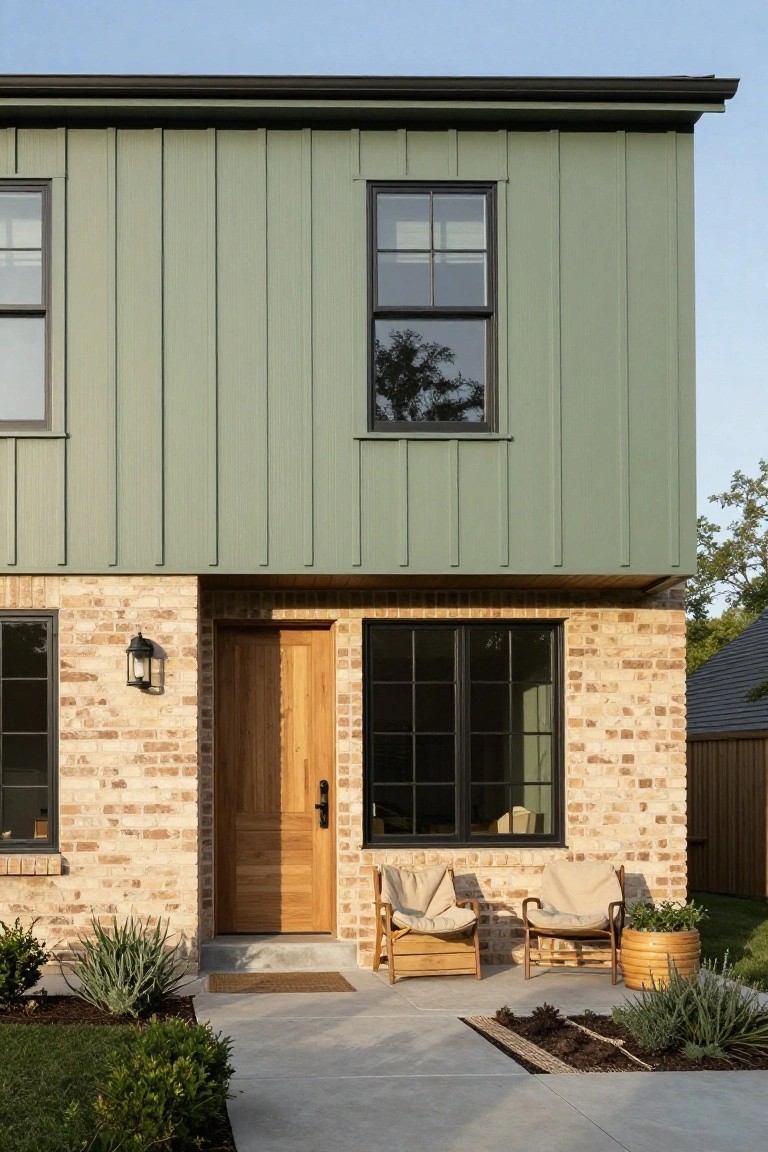
This setup takes vertical green siding and sets it right over a beige brick base. It keeps the whole front calm and steady. The green picks up on nature without shouting, and that brick down low holds everything in place. A simple wood door fits right in.
Homes like ranch styles or updated farmhouses do well with this. Keep the siding boards running vertical to stretch the height a bit. Just make sure the brick wraps enough around the entry so it doesn’t look skimpy. Add chairs out front if you have porch space.
Green Shutters and Door on Beige Siding
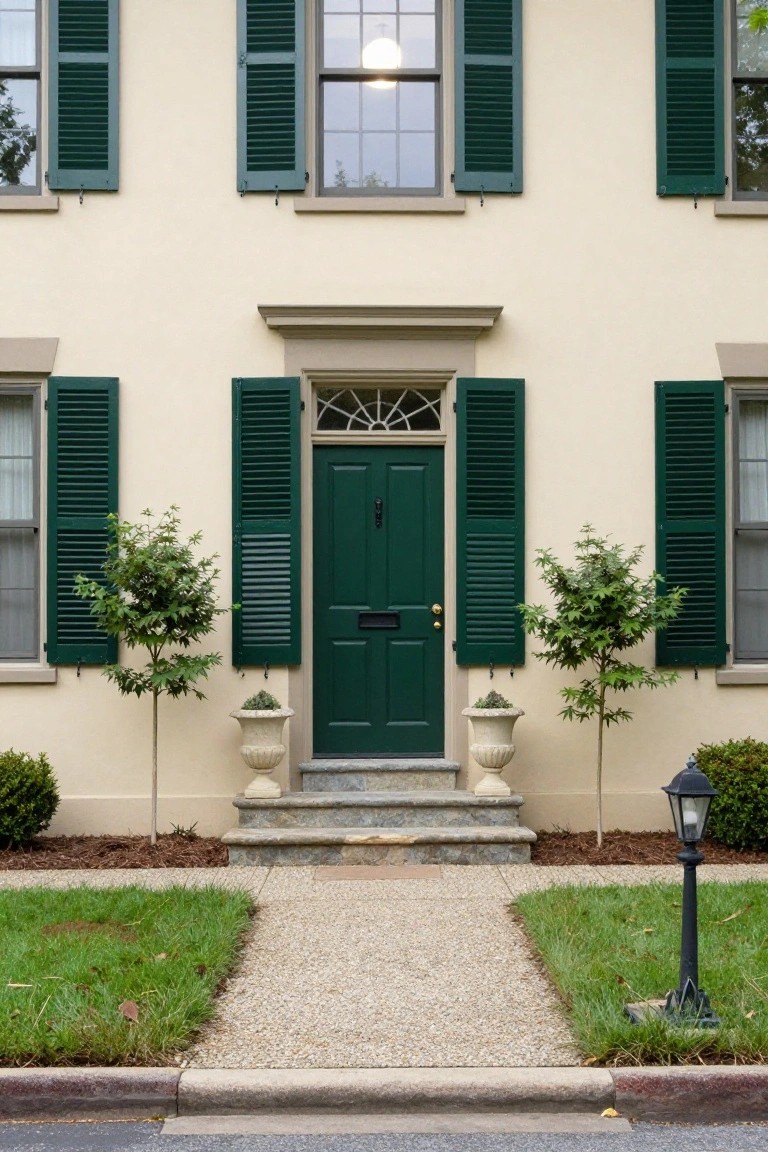
A simple way to add life to a beige house is with green shutters and a matching front door. Here the dark green picks up nicely against the soft beige walls. It keeps things calm but gives the entry a clear focal point. Those small potted trees on either side help too without overdoing it.
This look fits older homes or colonials best. Just make sure the green is a true shade not too bright. Add stone steps if you can. It works on streets with other neutral houses and stays low key year round.
Cabin Entry with Stone Pillars
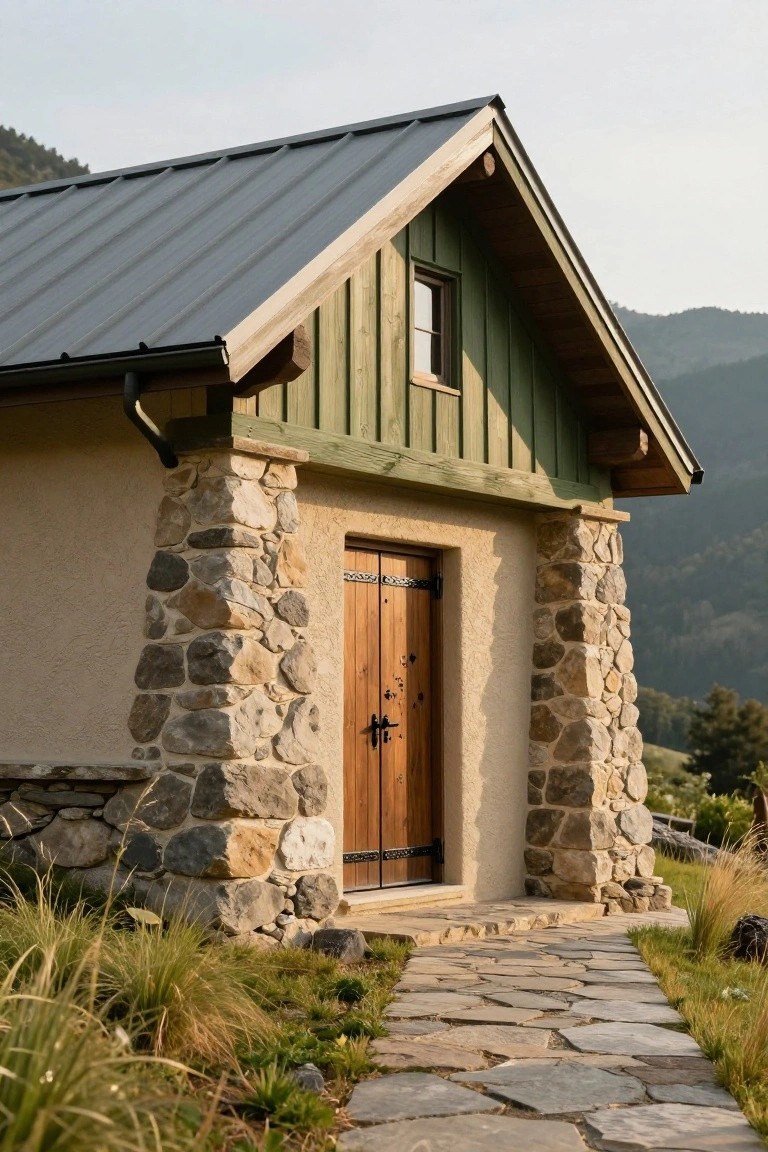
This little cabin pulls off a quiet strength by setting rugged stone pillars right at the entry. They bookend the wooden door and beige stucco wall, while green siding climbs up to the roofline. That mix feels steady without being heavy. It blends into the hillside setting too, like the house grew there.
Put stone pillars like these on compact homes or outbuildings in rural spots. They handle weather well and add curb appeal that lasts. Keep the stones local if you can. Skip them on flat city lots, though. They suit sloped land better.
Sage Green Siding with Beige Trim

A soft sage green on the siding works nicely here with the beige trim around the windows, porch, and roofline. It keeps things calm and ties into the yard without shouting. That wooden door pulls it together, warm but simple.
This setup suits ranch houses or smaller two-stories in neighborhoods with some trees around. Paint the siding first, then trim to match. Skip glossy finishes. They can make it feel busier than it needs to be.
Beige Stucco with Olive Tree Surround
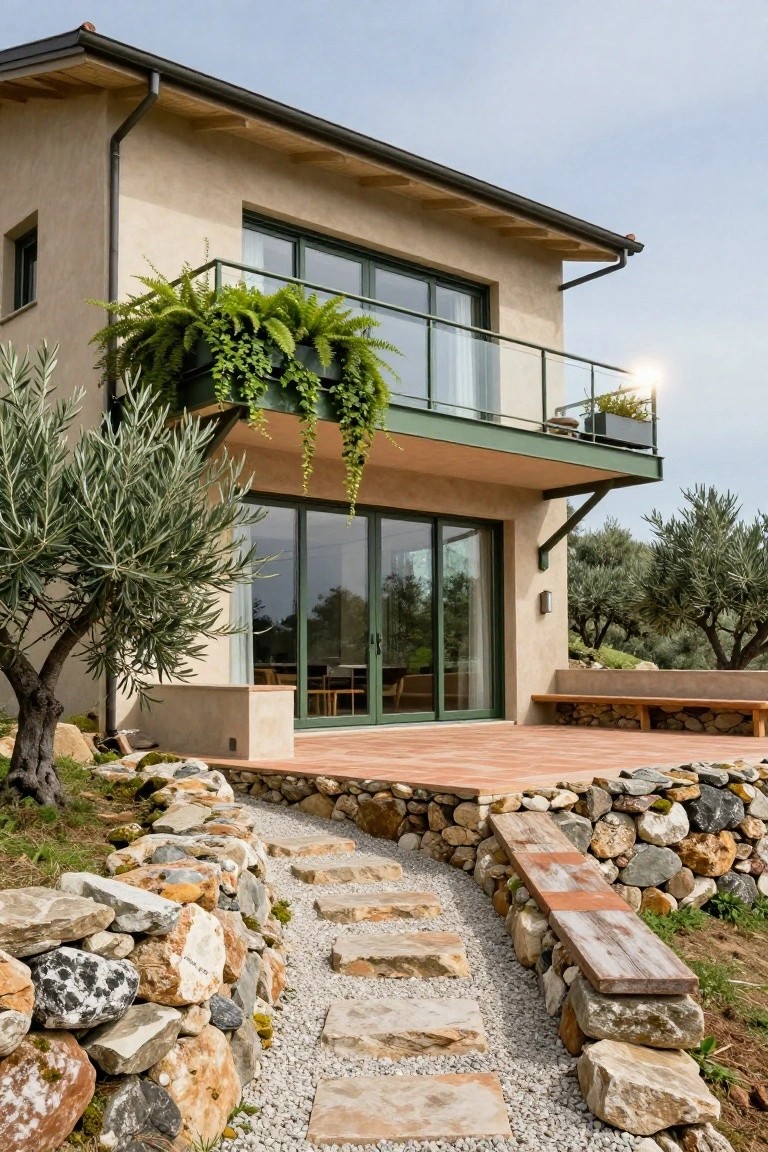
Beige stucco gives this house a quiet, earthy base that feels right at home next to olive trees. The silvery leaves on those trees pick up the subtle green tones in the window frames and balcony railings. It all comes together without any fuss, making the whole setup look settled into the landscape.
You can pull this off on a sloped lot where the house sits up a bit. Plant a couple of mature olives on either side of the main view, and keep the stucco finish rough textured. Works best in warmer spots like the Mediterranean or Southwest, where the trees thrive. Just make sure the stone path up to the deck matches the natural feel.
Sage Green Trim on Shingle Siding
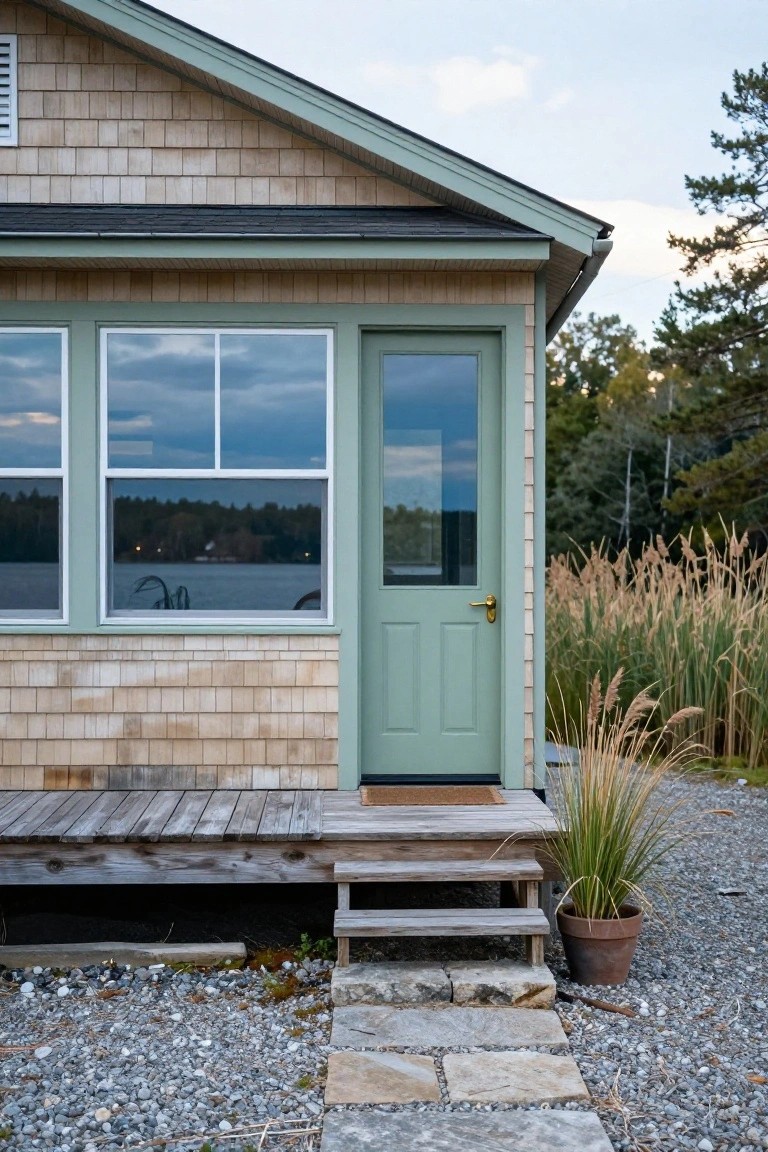
Natural cedar shingles in a soft beige give this house a weathered, lived-in look that fits right into lakeside spots. The sage green trim around the door and windows pulls it together without much fuss. That green shade echoes the reeds and trees nearby, making the whole thing feel settled and calm.
This combo works best on smaller homes like cottages where you want easy curb appeal. Pick a muted green to match your surroundings, and let the shingles age naturally for that authentic feel. Skip bold colors here, they can fight the quiet vibe.
Beige Stucco with Green Roof Tiles
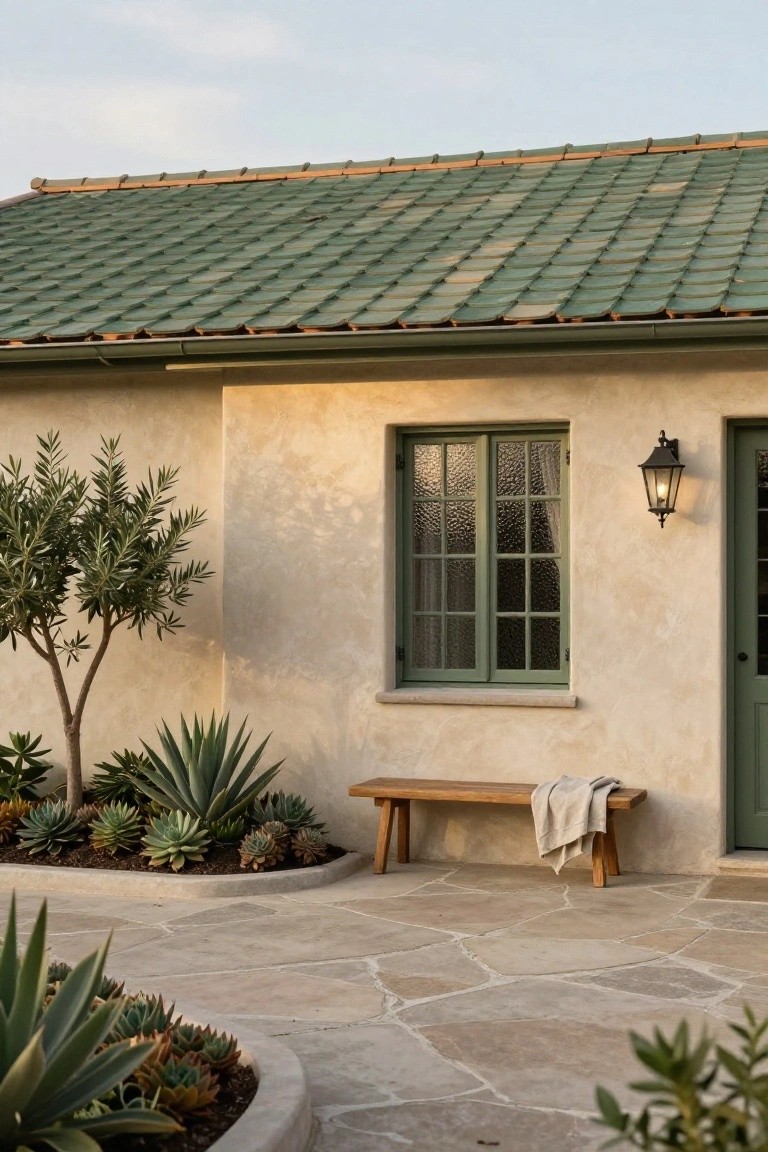
Beige stucco walls like these pair up nicely with green roof tiles for a look that’s quiet and settled. The soft texture of the stucco takes on warm light during the day, and those tiles add just enough color without standing out too much. A green window frame and door trim keep everything matching, making the whole side of the house feel pulled together.
This works best on single-story homes in dry areas, where the colors echo the landscape naturally. Stick a simple wooden bench nearby on the patio, maybe with a throw for cooler evenings. Skip busy details. It turns a plain wall into a spot that draws you over for a rest.
Green Garage Door on Beige Stucco
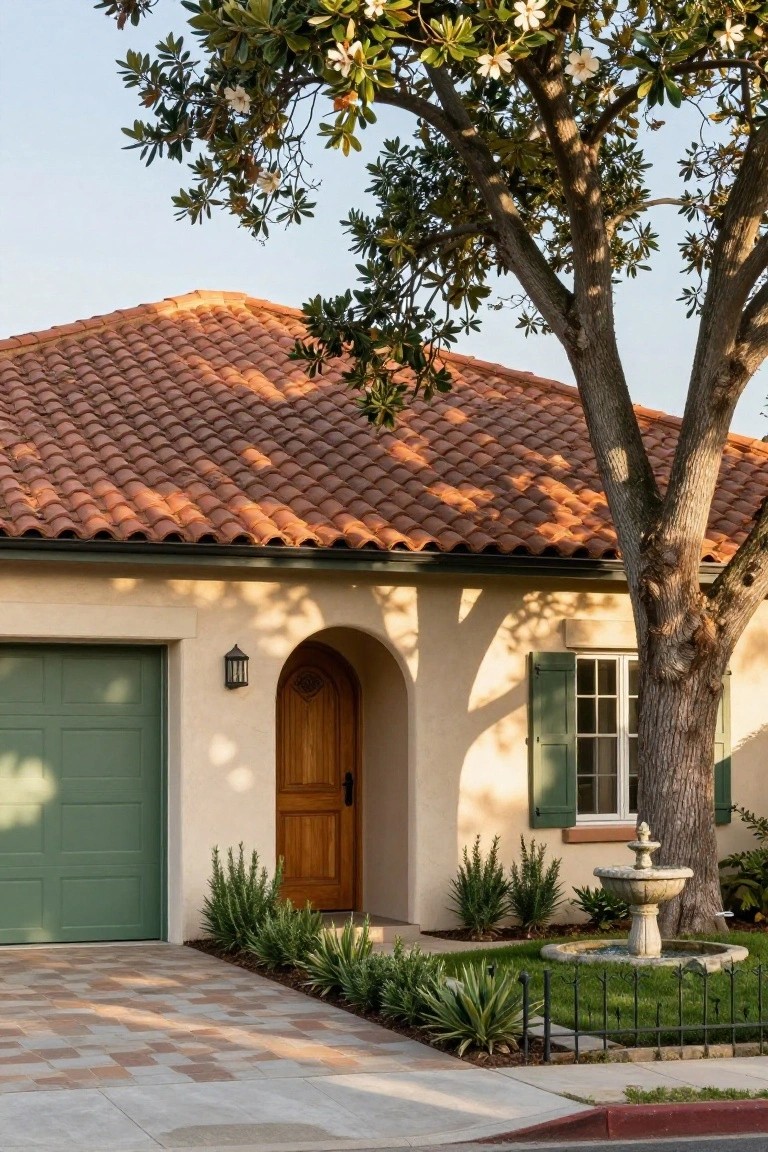
A green garage door stands out nicely against beige stucco walls and a warm terracotta roof. It brings a bit of color without overwhelming the calm feel. That big tree in front adds shade and ties everything to nature.
This look fits older homes or ones with a Spanish vibe. Use a muted green like this one, and keep plants simple around the base. It works on a street-facing spot where you want easy curb appeal.
Frequently Asked Questions
Q: What plants pair best with green and beige exteriors?
A: Go for soft evergreens like boxwood or lavender that hug the ground. They blend right into the palette and keep things serene without stealing the show.
Q: Should I paint my trim white or something else?
A: White trim pops nicely against both colors and brightens the whole look. Test a sample first on a sunny day. It makes the house feel fresh and open.
Q: How do I refresh an older house with these shades?
And paint just the body first. Layer on beige accents later. That way you ease into the calm without a big overhaul.
Q: Will these colors hide dirt and wear over time?
A: Opt for sage greens and warm taupes. They mask dust better than stark shades. Quick hose-downs every few months keep the peaceful vibe intact.
