

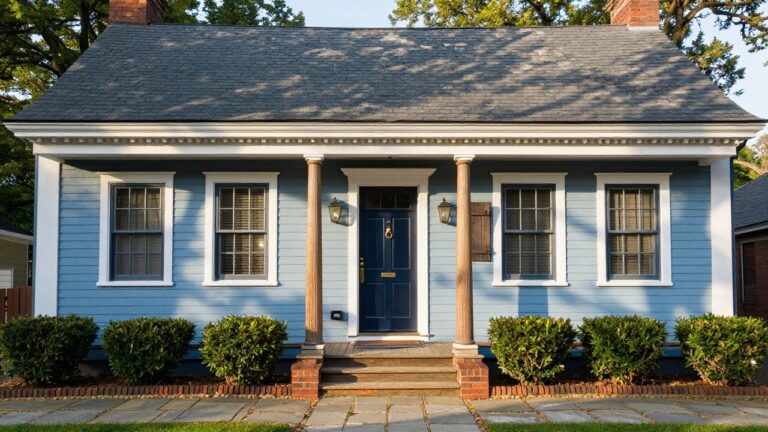
When you spot a colonial blue house from the street, its facade often pulls you in with that quiet confidence born from smart siding choices and symmetrical lines. I remember standing back after we added brick skirting to a friend’s place, watching how it grounded the blue paint against the roofline and made the entry feel more welcoming. Curb appeal hinges on those first impressions, like balanced shutters or a subtle front door arch that echoes the home’s classic bones. The best exteriors layer materials that age well together, turning a simple repaint into something that looks right through every season. Test the trim contrasts first.
Classic Columned Porch in Pale Blue
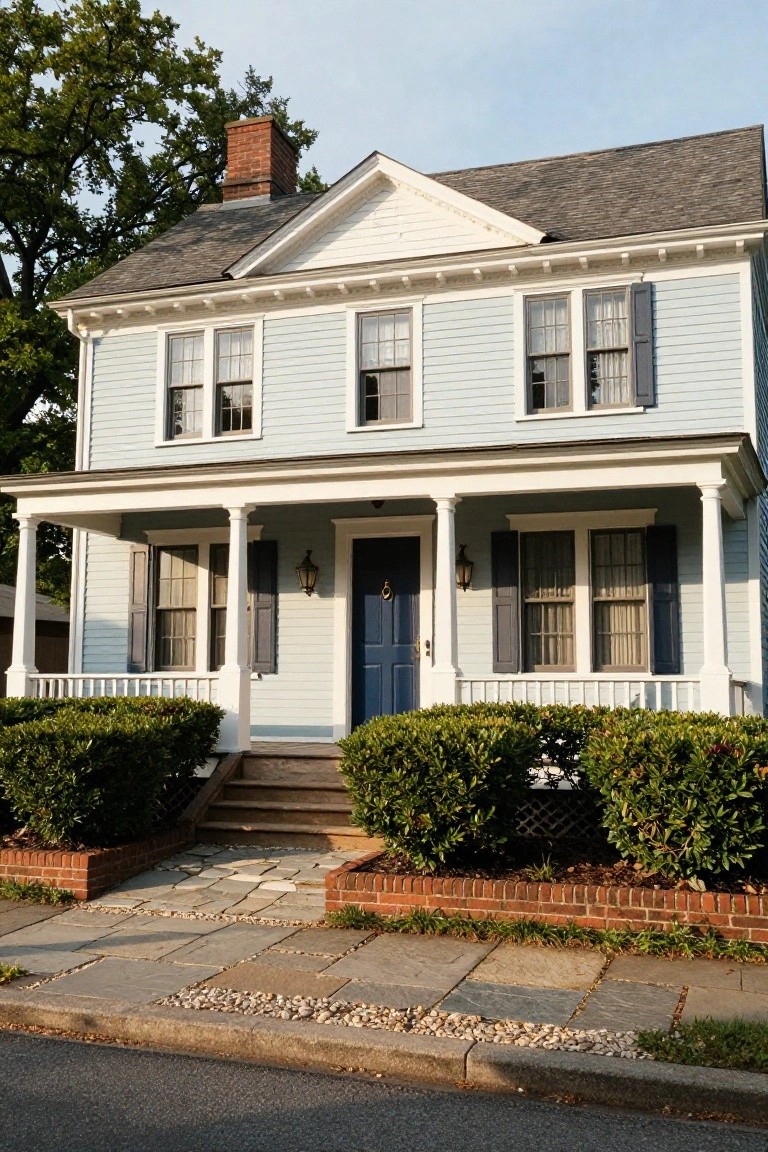
A full-width front porch supported by white columns gives this Colonial-style house its welcoming feel. The soft blue siding works so well here because it keeps things light and airy while the white trim sharpens every line. That centered blue door stands out just enough to guide folks right to the entry without stealing the show.
You’ll see this look on older homes in quiet neighborhoods, where it boosts curb appeal without much fuss. It suits two-story houses with good symmetry. Plant low boxwoods along the steps to tidy up the base, but skip tall plants that block the porch view. Keeps maintenance easy too.
Flanking the Entry with Hydrangea Pots
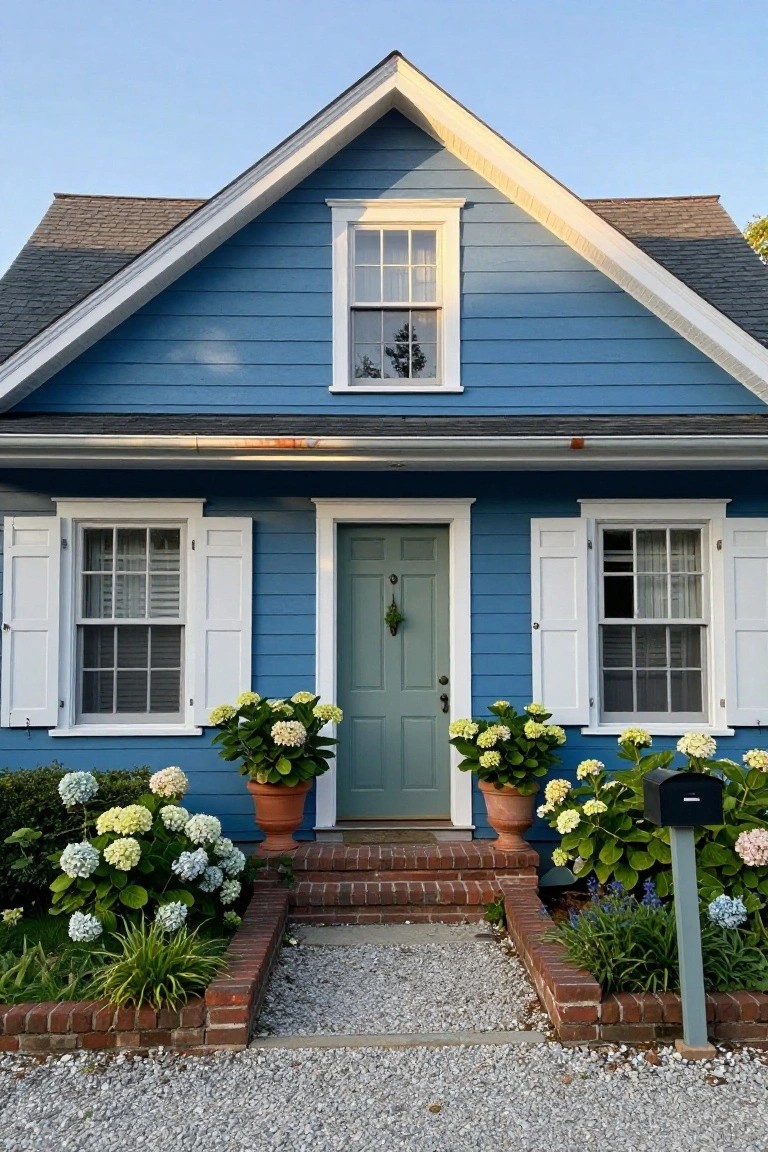
Big pots of white hydrangeas frame the front door on this colonial blue house. They sit right on the brick steps, echoing the clean white trim around the windows and door. The soft blooms tie into the blue siding nicely and give the whole facade that old-school garden feel without much effort.
Place a matching pair of terracotta pots like these on either side of your steps. White or pale hydrangeas keep things simple against blue exteriors. This setup suits smaller homes with straightforward entries. Just water them regularly in summer, and they’ll bulk up over time.
Red Door on Colonial Blue Exterior
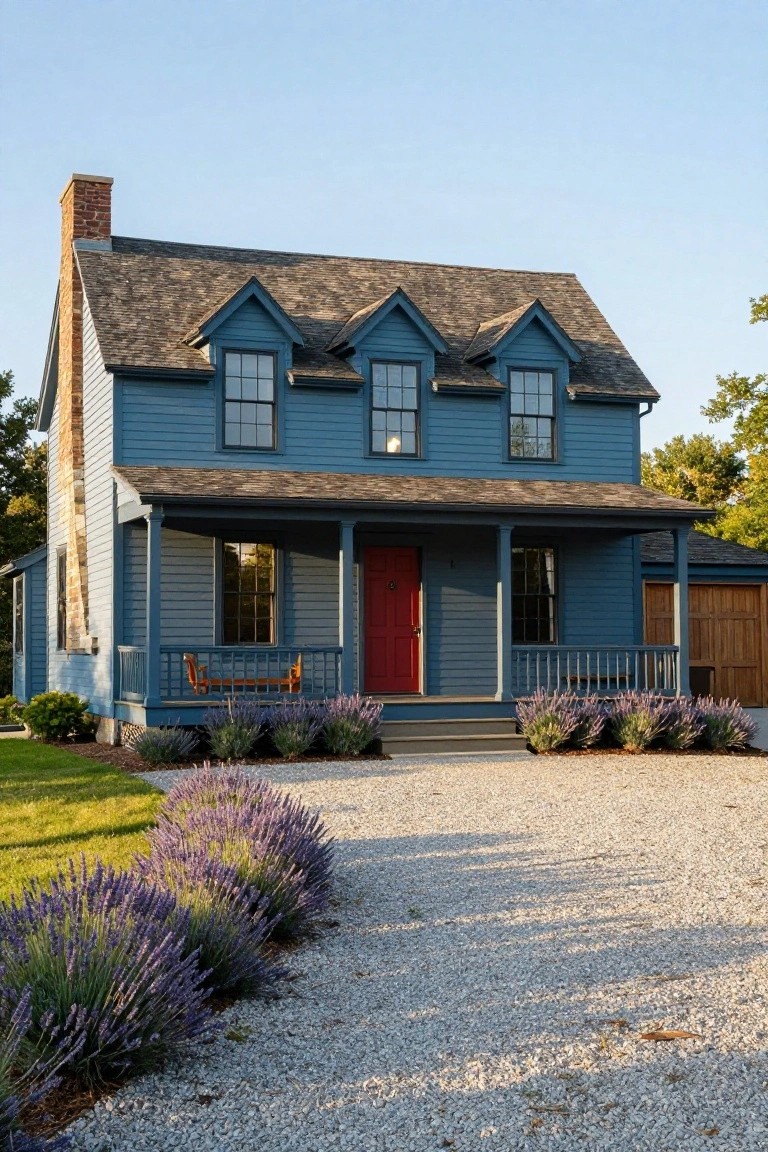
A bright red front door makes this colonial blue house feel more welcoming right away. The deep blue siding sets a calm, classic tone that fits older-style homes perfectly. That pop of red draws attention to the entry without overwhelming the whole look. It’s one of those straightforward updates that boosts curb appeal.
Try this on homes with porches and gabled roofs like this. Go for a glossy red paint to stand up to weather, and pair it with white trim around the windows and door. It suits traditional neighborhoods best. Just make sure the blue shade stays muted so the door doesn’t compete too much.
Lion Head Knockers on Colonial Blue Doors
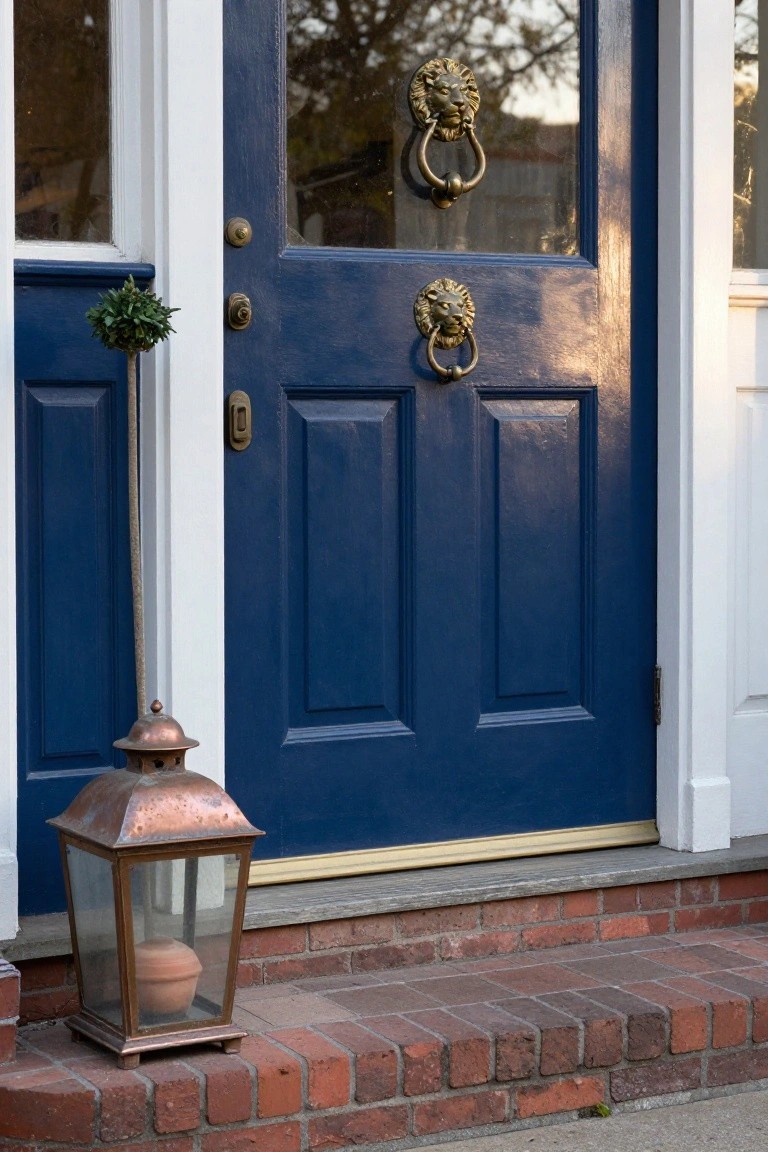
Brass lion head knockers stand out nicely against a deep colonial blue door like this one. They bring a bit of historic weight to the entry without much fuss. The shape fits right into traditional colonial style and catches the eye on approach.
Put them on paneled double doors or a solid single front door. They suit older homes with white trim best. Go for real brass so it develops that natural patina over time. Pair with a simple lantern nearby to keep things balanced.
Recommended Products

CLASSIC VINTAGE STYLE: Lion-head design adds an elegant antique accent to any entryway

Dimensions: 7 x 4 x 2" inches, weight: 490 Grams. Material: Solid Brass.

Classic Vintage Design: Add a touch of timeless elegance to your doorway with the YOUEON antique lion head door knocker. This door knocker boasts a classic and vintage appearance that is sure to enhance your home's aesthetic appeal.
Classic Blue Shutters on White Colonial Exterior
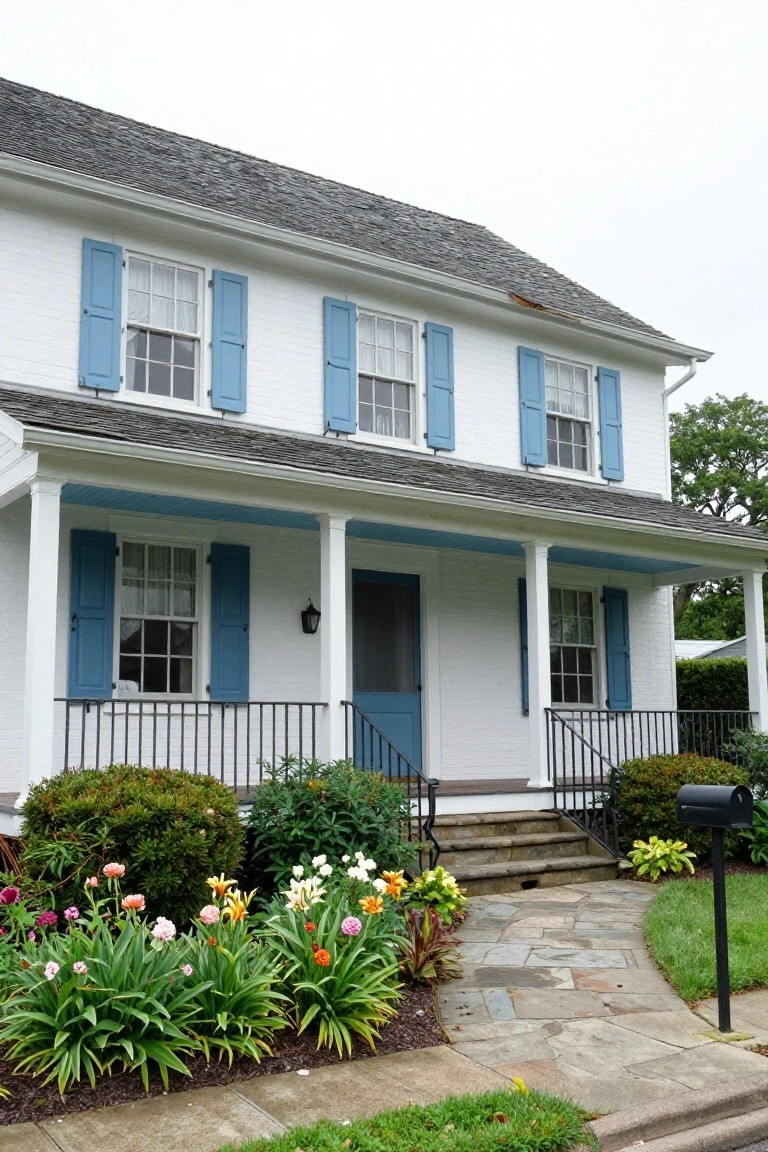
White siding with blue shutters is one of those straightforward colonial looks that just works. The clean white keeps things bright and fresh. Blue shutters add that pop of color around the windows without overwhelming the house. Here it frames the porch and entry nicely. Folks keep coming back to this combo because it feels right at home in older neighborhoods.
Try it on a two-story colonial or cape style house. Pick a true navy or colonial blue shade that matches your door too. It suits places with some mature trees nearby. Just make sure the shutters are proportional to your windows. Skip it if your house has too much going on already.
Colonial Blue House with Front Porch
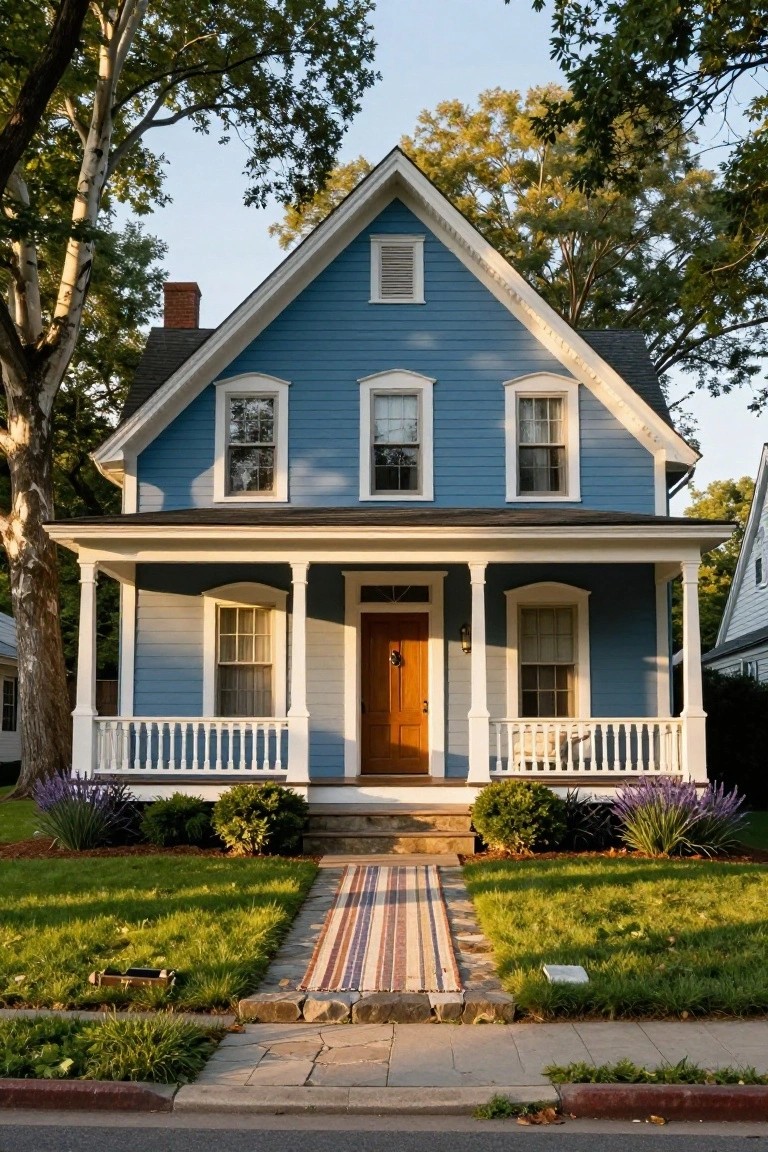
A front porch like this one takes a Colonial blue exterior and makes it feel right at home on a quiet street. The white railing and columns stand out clean against the blue siding. Those balanced windows up top keep things traditional without overdoing it.
This look suits older neighborhoods or revivals where you want curb appeal that lasts. Paint the body a soft blue, trim bright white, and add a porch swing if space allows. Skip busy details. Keep plantings low like the lavender beds here… simple wins.
Classic Porch on a Blue Colonial House
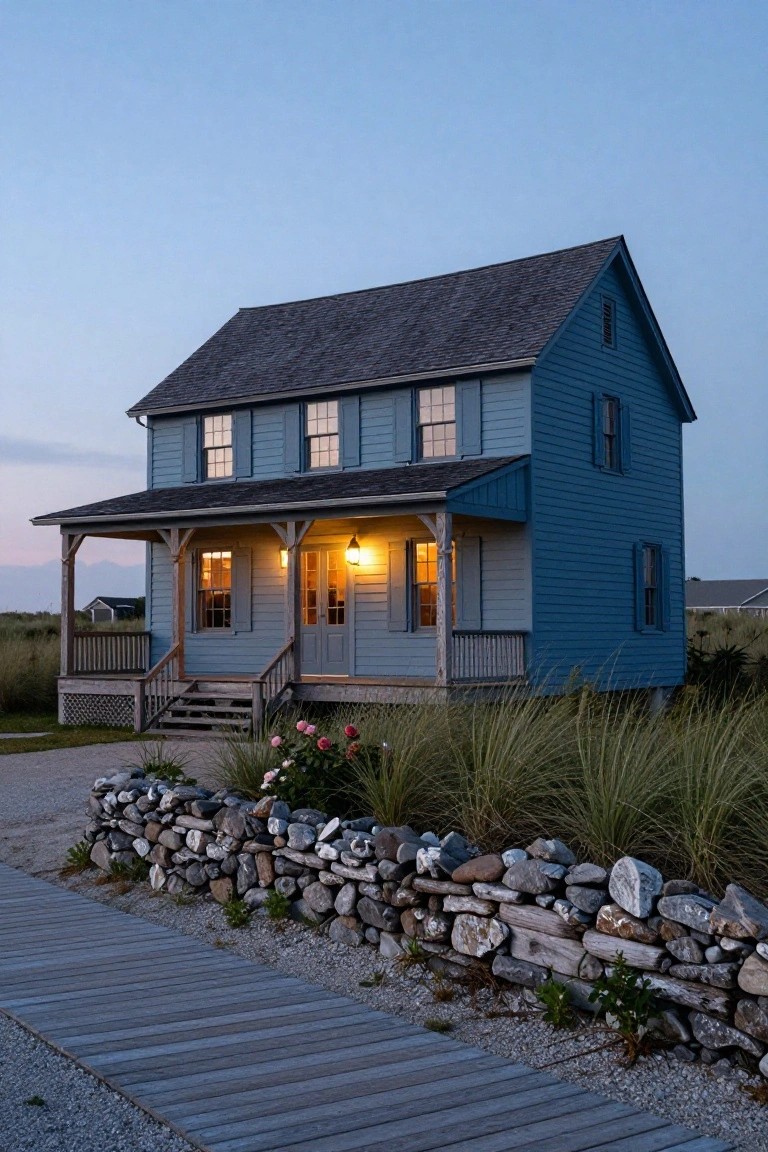
A front porch like this one takes a simple Colonial blue exterior and makes it feel right at home in a coastal spot. The wood posts and railing fit the clapboard siding just right, and those lantern lights add a soft glow that welcomes folks in as the day winds down. It’s nothing fancy, but it gives the whole house a lived-in charm that blue paint alone can’t match.
Try this on homes raised up on pilings near the water, where you want some elevation for floods or views. Keep the porch wide enough for chairs, and use lanterns hung from the beams for that evening light. Stone walls at the base keep things sturdy without overpowering the blue.
Colonial Blue Garden Shed
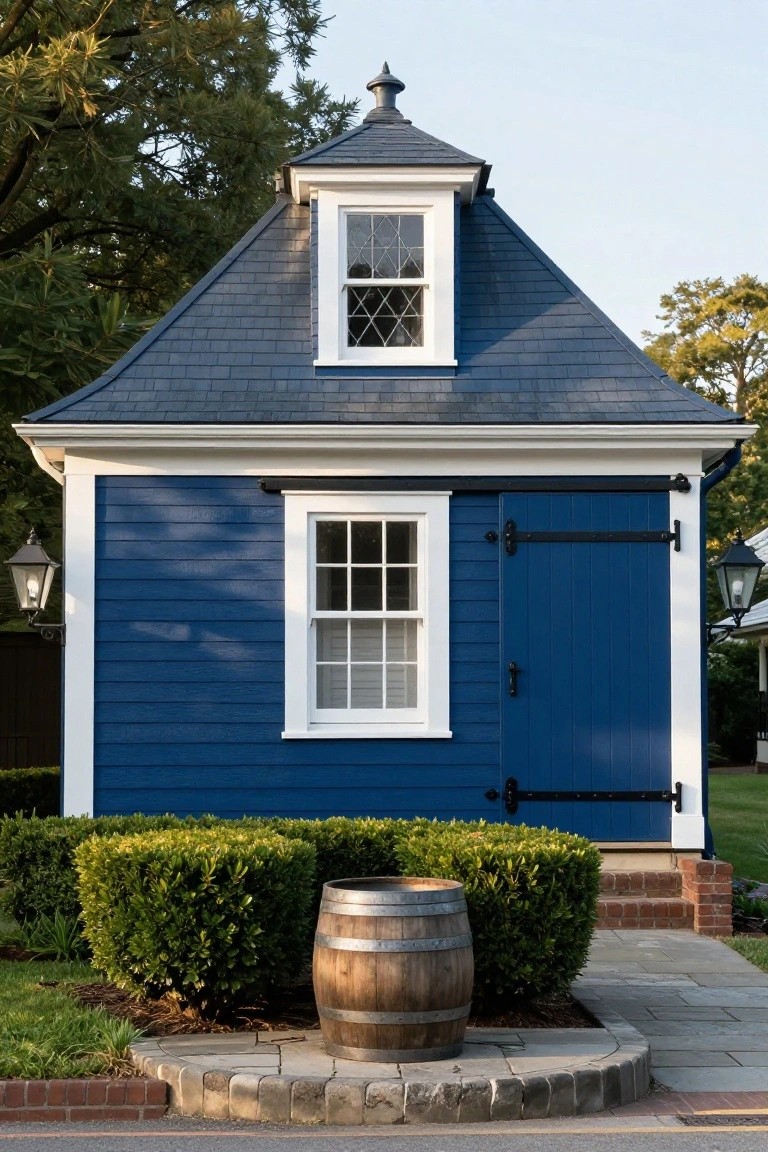
A small garden shed painted in colonial blue makes a quiet statement in the backyard. The color gives it that old-time feel without shouting, especially with the white trim around the windows and the steep slate roof. It fits right into a traditional setup, like something from an older neighborhood.
Put one near the garden or driveway for extra storage that looks good too. The blue pairs well with brick paths or green shrubs, and adding a whiskey barrel planter out front keeps things simple and folksy. Works best on smaller properties where you want charm without big changes.
Pots Flanking the Front Door
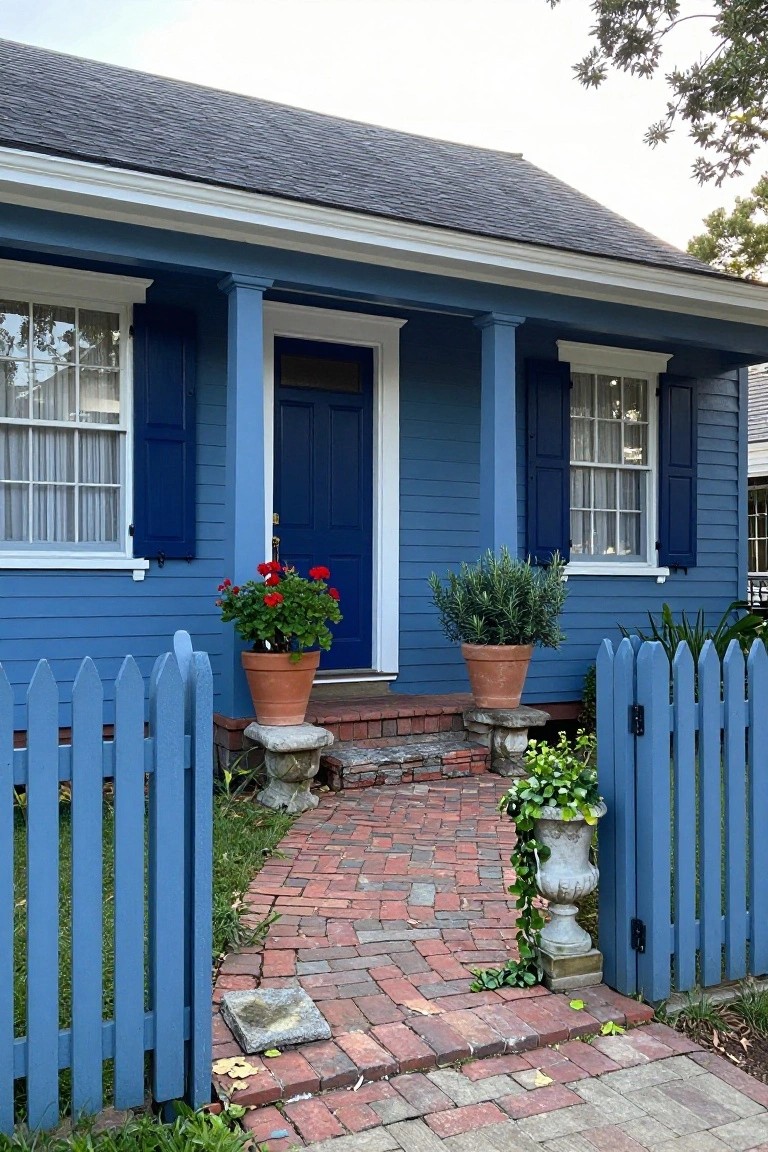
Placing big terracotta pots right next to the front door works well on a porch like this. The red geraniums pop against the blue siding and navy door. It gives the entry a cozy, lived-in feel without much effort.
Try this on cottage-style homes or bungalows with a small porch. Go for sturdy pots that handle the weather, and pick plants like geraniums that bloom for months. Keep them simple. Skip it if your steps are too narrow.
White Pedimented Entryway
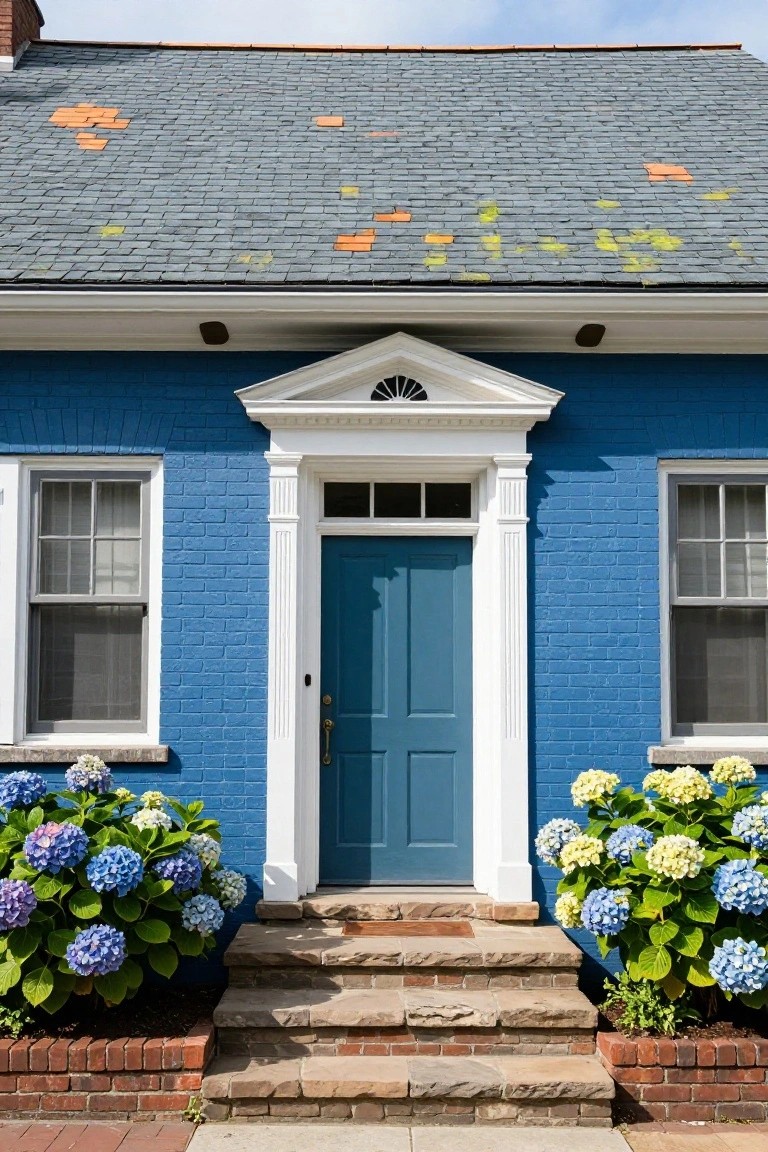
A white pedimented entryway like this one pulls the whole facade together on a blue brick house. The columns and curved top sit right over the door, giving it that clean colonial shape. With the deep blue door right in the middle, it feels balanced and welcoming from the street.
This works best on compact homes where you want some height without a full porch. Paint the brick a solid shade and keep the trim bright white for contrast. Flank the steps with big hydrangeas… they soften things up without much fuss. Just make sure the roofline above stays simple so the entry stays the focus.
Green Windows on Colonial Blue Walls
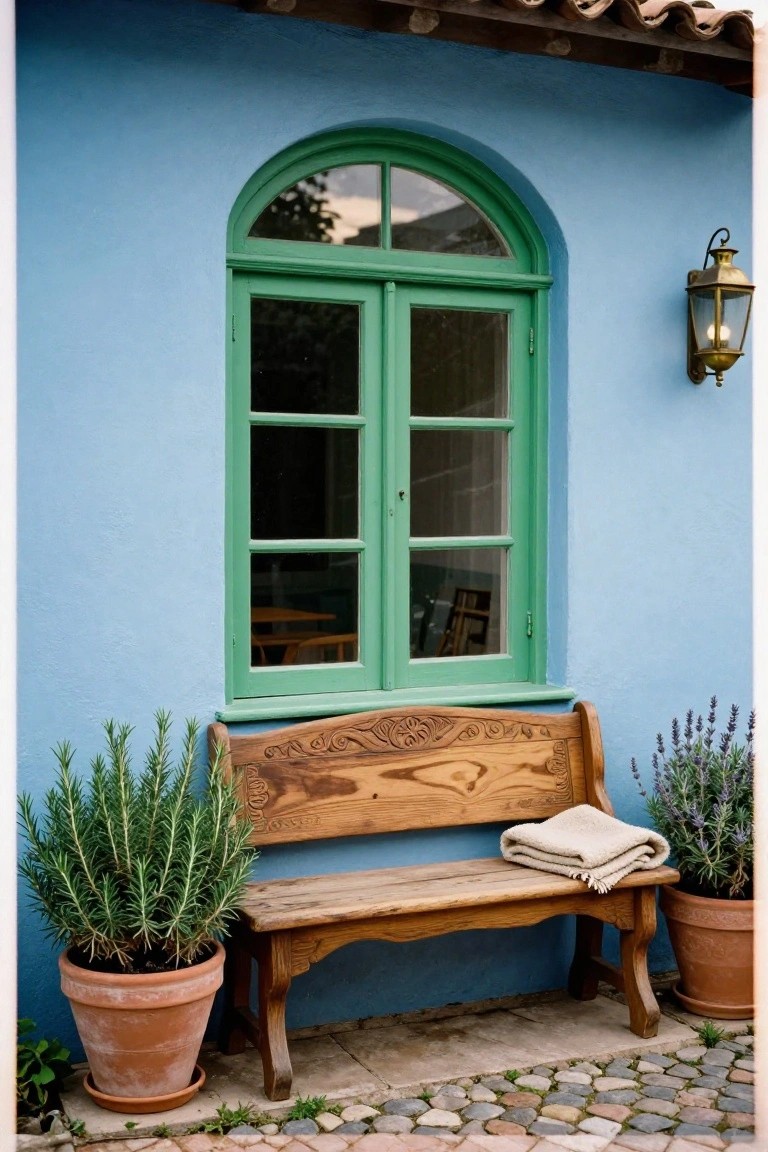
One simple way to give a colonial blue house some classic pop is painting the window frames a bright green. It stands out right away against the soft blue siding without overwhelming things. In this setup, the arched green window pulls your eye up while the blue keeps the wall calm and steady. That contrast feels fresh yet tied to older styles, like something from a European village.
You can pull this off on most any colonial blue exterior, especially if the house has stucco or adobe texture. Go for a true emerald green on wood frames, and pair it with a brass lantern nearby for extra warmth. It works best on side walls or entries where you want a little welcome without big changes. Just test the shades in sunlight first, green can shift a lot.
Classic Portico Entry
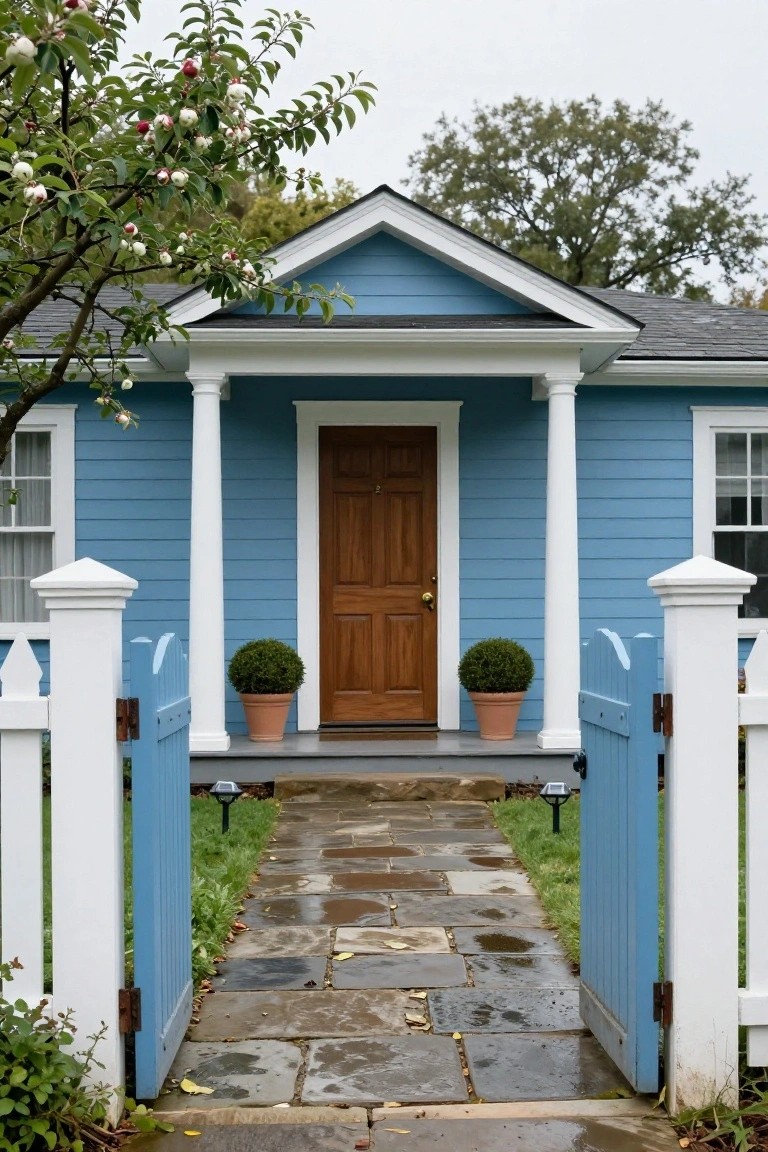
A portico like this one, with its tall white columns and crisp pediment, gives a colonial blue house that straightforward historic feel. The white stands out clean against the soft blue siding. It pulls everything together around the front door without much fuss.
This kind of entry suits most any size house, especially one-story ones with a gabled roof. Frame it with matching boxwoods on either side, and run a stone path from a picket gate straight up to the steps. Go for a solid wood door in a warm stain. It keeps rain off the entry too.
Navy Blue House with Wood Pergola
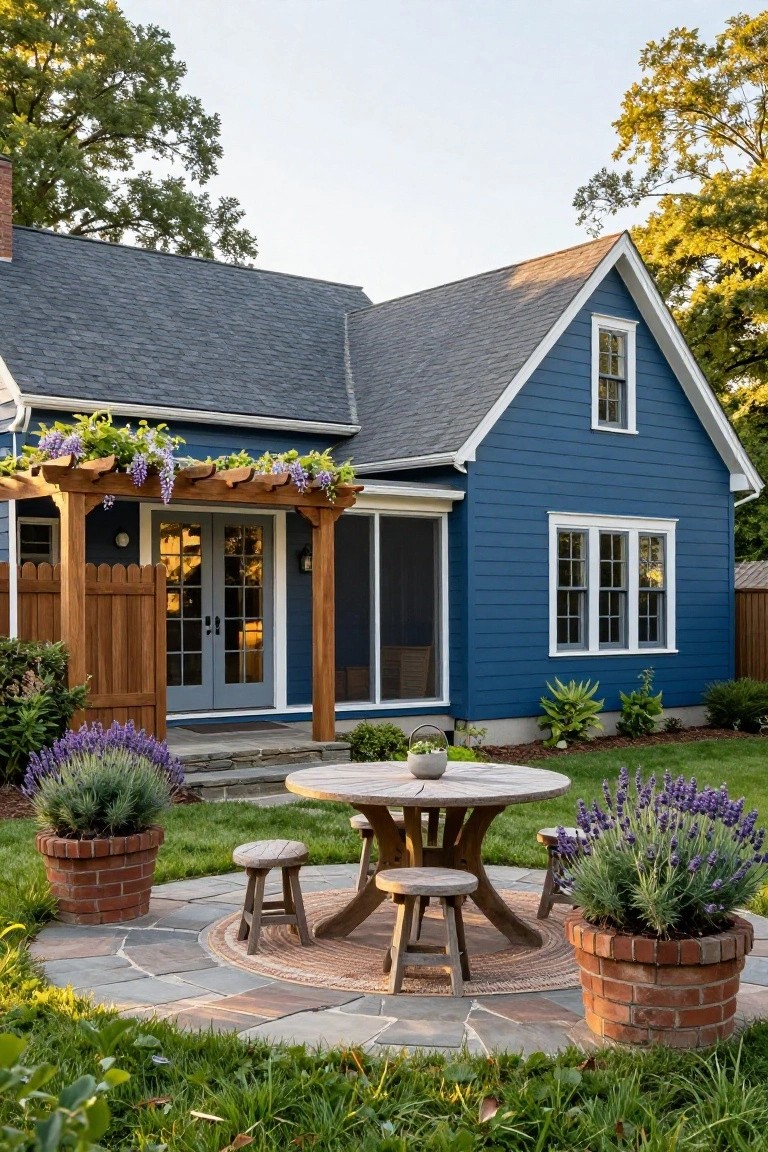
A wood pergola works well tucked against a navy blue house exterior like this one. The warm cedar posts and beams stand out against the cool clapboard siding, while purple wisteria vines trail over the top for some natural cover. It pulls the house right into the backyard without much fuss.
Put one near french doors or a sunroom for easy flow to outdoor seating. This setup fits older homes with simple lines, especially if you have grass around for that casual feel. Pick sturdy wood that matches your trim, and keep the vines trimmed back so they don’t block the light.
Columned Front Porch
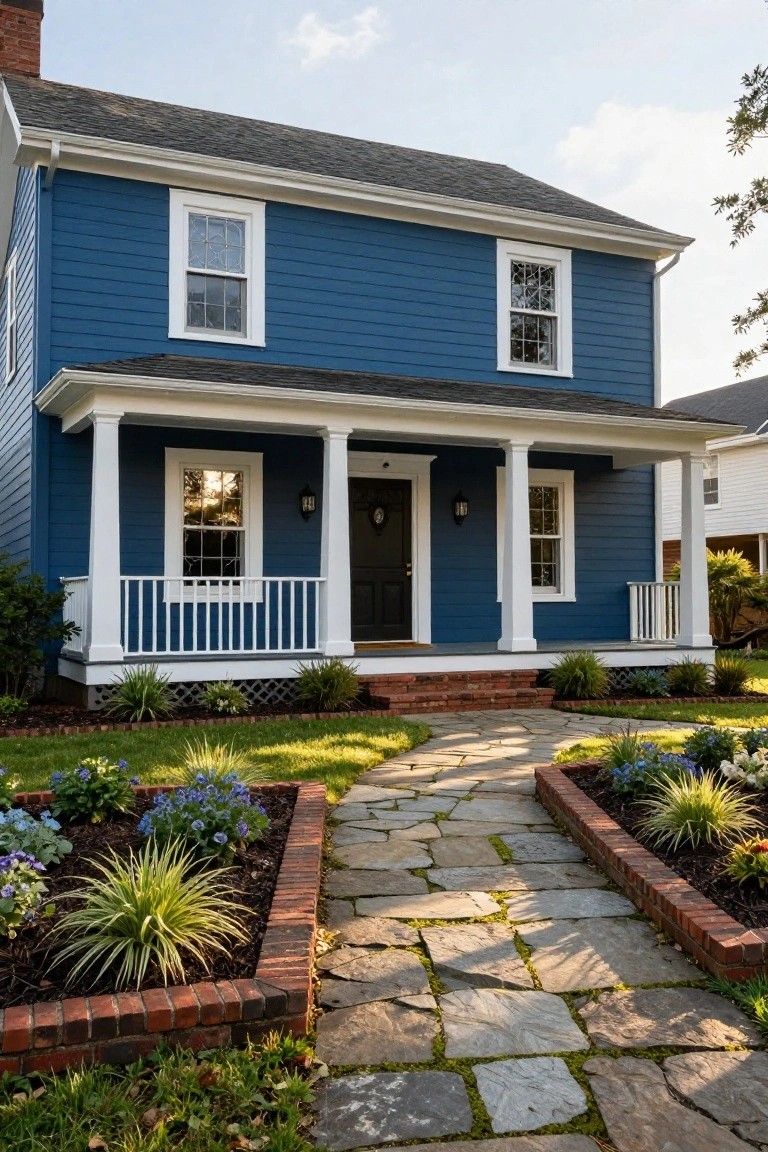
A columned front porch like this one takes a colonial blue house and gives it real presence right from the street. The white columns stand out clean against the blue siding, and they frame the entry in a way that feels solid and traditional. It’s a straightforward way to add that classic touch without overdoing it.
This kind of porch suits two-story homes with a bit of yard space. Pair the columns with a simple railing and brick steps, like here, and it leads the eye right to the door. Keep the landscaping low around the base so the architecture stays the focus. Works best in older neighborhoods where you want to nod to history.
Hydrangeas Flank the Front Door
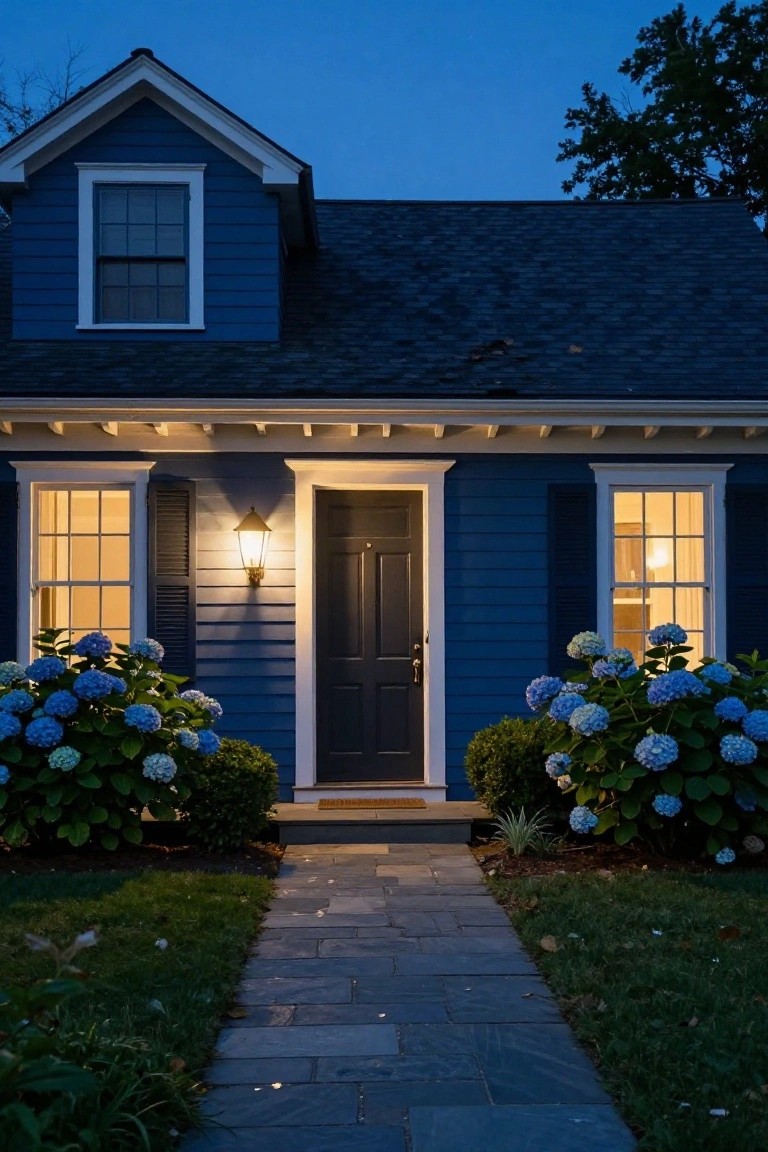
Big hydrangea bushes like these make a front entry feel settled and traditional. Placed right on either side of the door, they match the house’s blue siding with their own blue blooms. The lantern light pulls it all together at dusk, giving a soft welcome without much fuss.
This setup suits older colonials or any house wanting that timeless curb appeal. Keep the bushes trimmed to about door height so they frame without overwhelming. A simple stone path like this one leads folks right up. Watch the watering though. Hydrangeas can get thirsty in summer.
Picket Fence Painted to Match the House
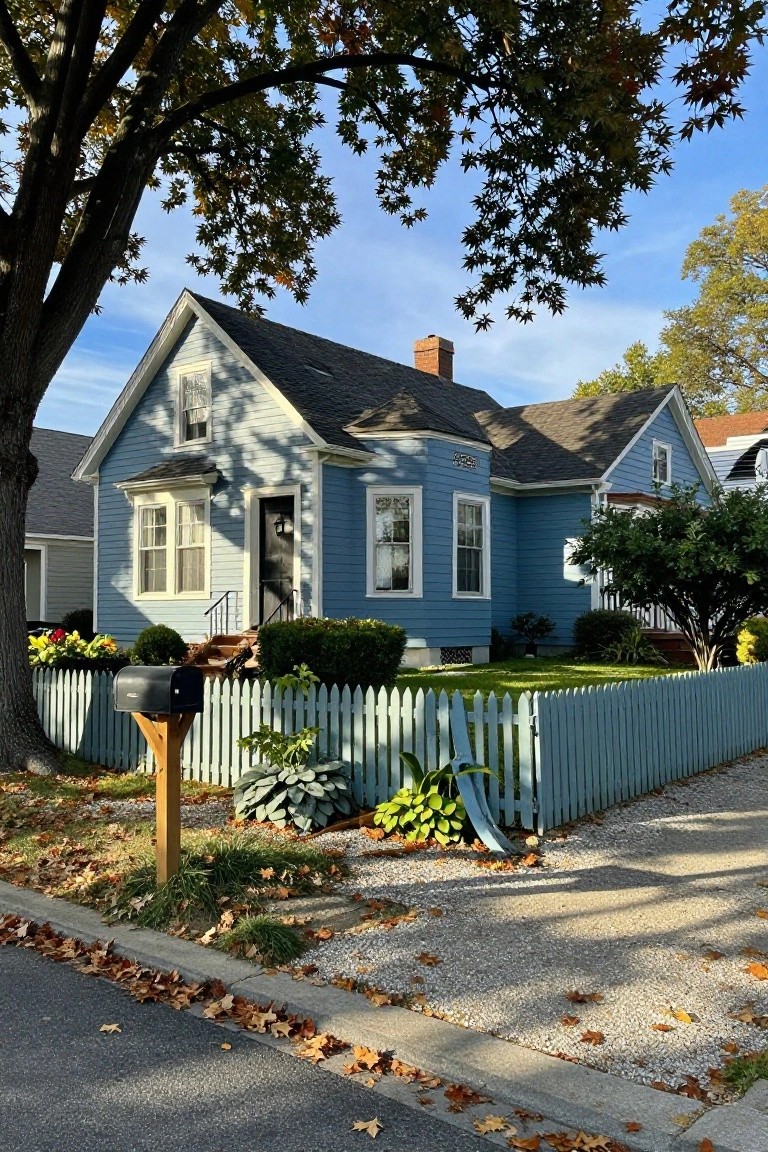
A picket fence painted the same blue as the house siding pulls the whole front yard together in a simple, classic way. It frames the home without stealing the show and gives that friendly neighborhood feel people remember from older towns. Here, low shrubs and a few flowers along the base keep things tidy, letting the fence and blue exterior do the main work.
This look suits smaller homes or cottages on quiet streets where you want easy curb appeal. Paint a basic picket fence to echo your siding color, then add gravel paths or hostas nearby for ground cover. It holds up well in mild weather but needs fresh paint every few years to stay sharp.
Hanging Porch Swing
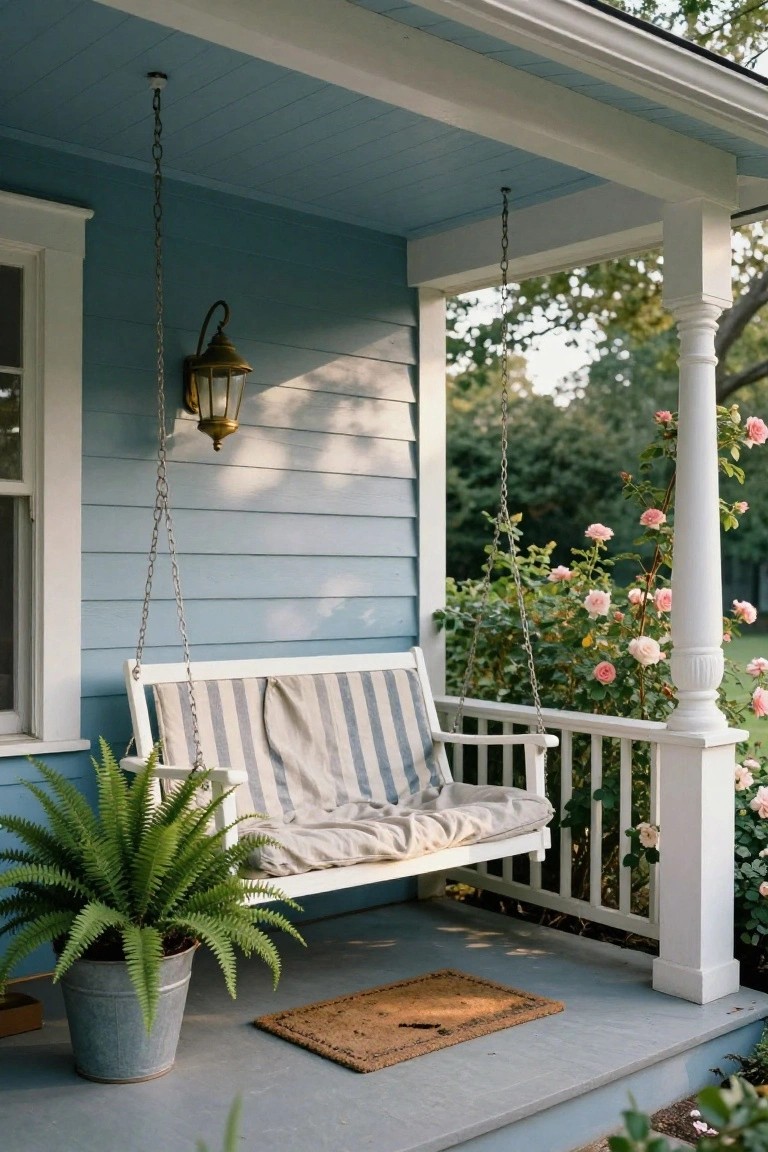
A hanging porch swing like this one fits right into a colonial blue house. It sits there under the ceiling, chained up simple and steady, with striped cushions that look lived-in. That swing pulls the whole front porch together. It gives you a spot to sit and watch the day go by, keeping things classic without much fuss.
Put one on your own veranda if you have good beams overhead. Go for wood frames and metal chains that hold up to weather. It suits older homes with columns best… pair it with a potted plant nearby for some green. Just check the chains stay tight over time.
Columned Porch Entry
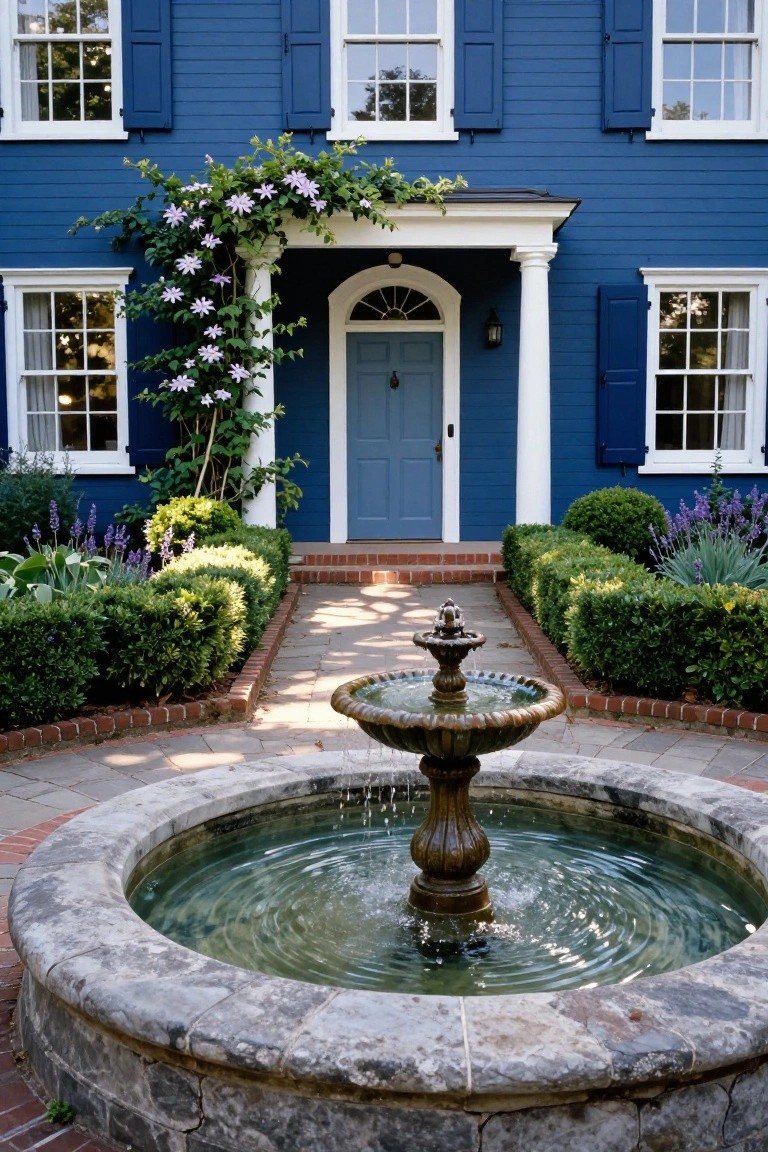
A columned porch like this one pulls the whole front of the house together. Set against the deep blue siding, those crisp white columns frame the lighter blue door just right. They nod to old-school colonial style without feeling stuffy. The vines climbing one side add a touch of green that softens things up nicely.
Put this setup on a traditional two-story home facing the street. Keep the columns bright white for contrast, and maybe plant some clematis or similar to trail over them. A stone fountain out front, like the one here on the path, draws eyes right to the door. Skip it on super modern houses, though. It shines where you want that welcoming neighborhood feel.
Frequently Asked Questions
Q: How do I pick a colonial blue shade that won’t wash out in bright sunlight?
A: Hunt for paints labeled “colonial blue” or “historically accurate navy” from reputable lines. Test samples on your siding at different times of day. That way you catch how the color shifts with light.
Q: What trim color pairs best with colonial blue for that classic look?
A: White trim always wins for sharp contrast and timeless appeal. Paint your shutters a glossy black if you want more drama. Brass accents tie it all together nicely.
Q: How do I keep my colonial blue exterior looking fresh year after year?
A: Clean the siding each spring with a gentle hose and mild soap. Spot-treat mildew right away to stop stains. Repaint every five to seven years before cracks form.
Q: Can colonial blue work on houses that aren’t strictly colonial style?
A: Absolutely, it brings elegance to ranch or craftsman homes too. Balance it with clean lines and simple landscaping. You’ll love the unexpected charm.
