

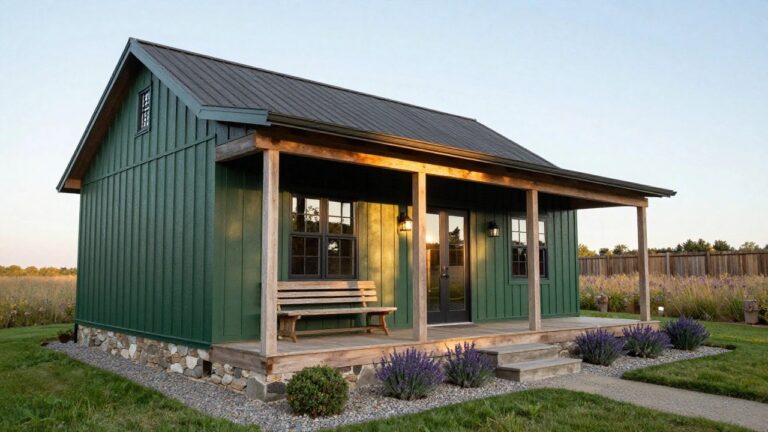
I’ve noticed how a forest green exterior can make a house disappear into its wooded setting, turning what might be a stark facade into something that belongs there. From the curb, the color softens rooflines and draws attention to thoughtful entry details like wood surrounds or stone steps that ground the whole look. Deep shades like this hold up well against evergreens, but they shine brightest when materials mix in siding with timber accents. One tweak I’ve seen work on actual homes pairs the green with muted trim to avoid any flatness up close. These examples give solid starting points for adapting that blend to your own street view.
Forest Green Siding with Wood Porch Posts
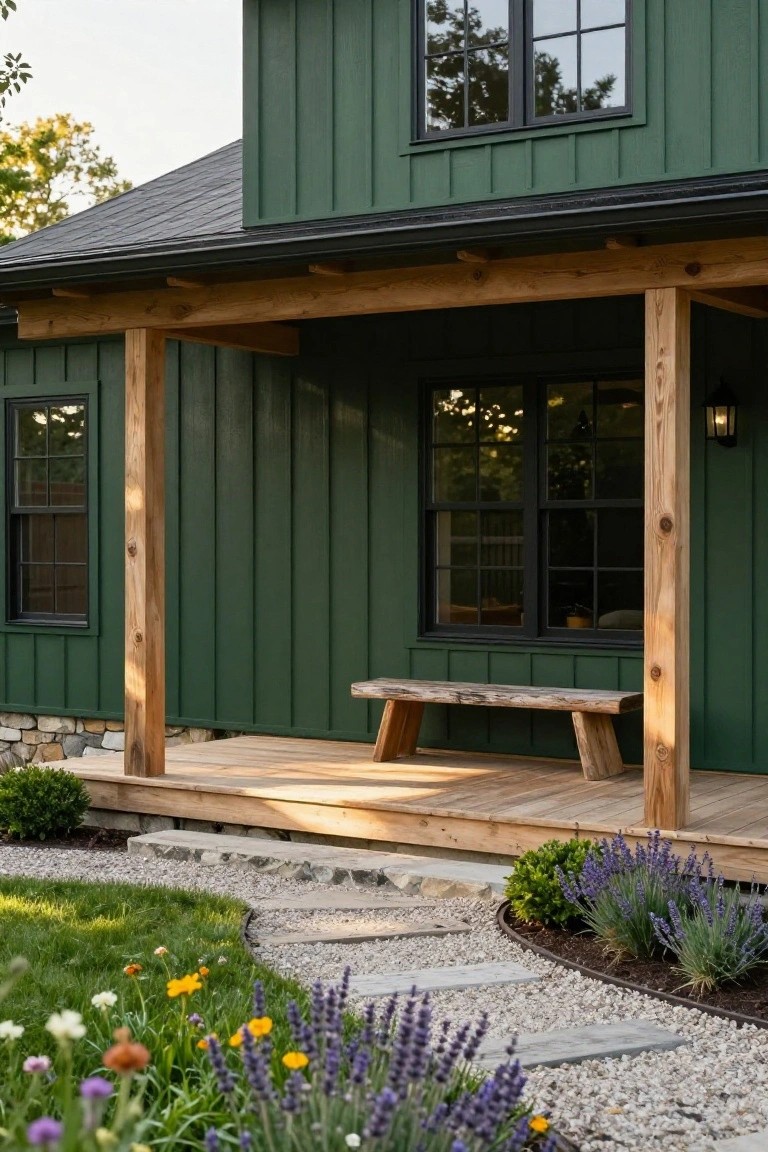
A deep forest green paint on board-and-batten siding gives this house a quiet tie-in to the woods around it. The raw wood posts and beams on the porch keep things simple and sturdy. They stand out against the green without fighting it. That mix makes the front feel settled right into the landscape, like it’s always been there.
You can pull this off on a ranch or a low two-story home where the porch wraps the entry a bit. Use rough-sawn timber for the posts to match real trees nearby. Keep the bench plain, maybe live-edge like this one. It works best where you want low upkeep but a hand-built look. Just make sure the green shade isn’t too bright or it’ll pull eyes away from the wood.
Forest Green Shingle Cottage Entry
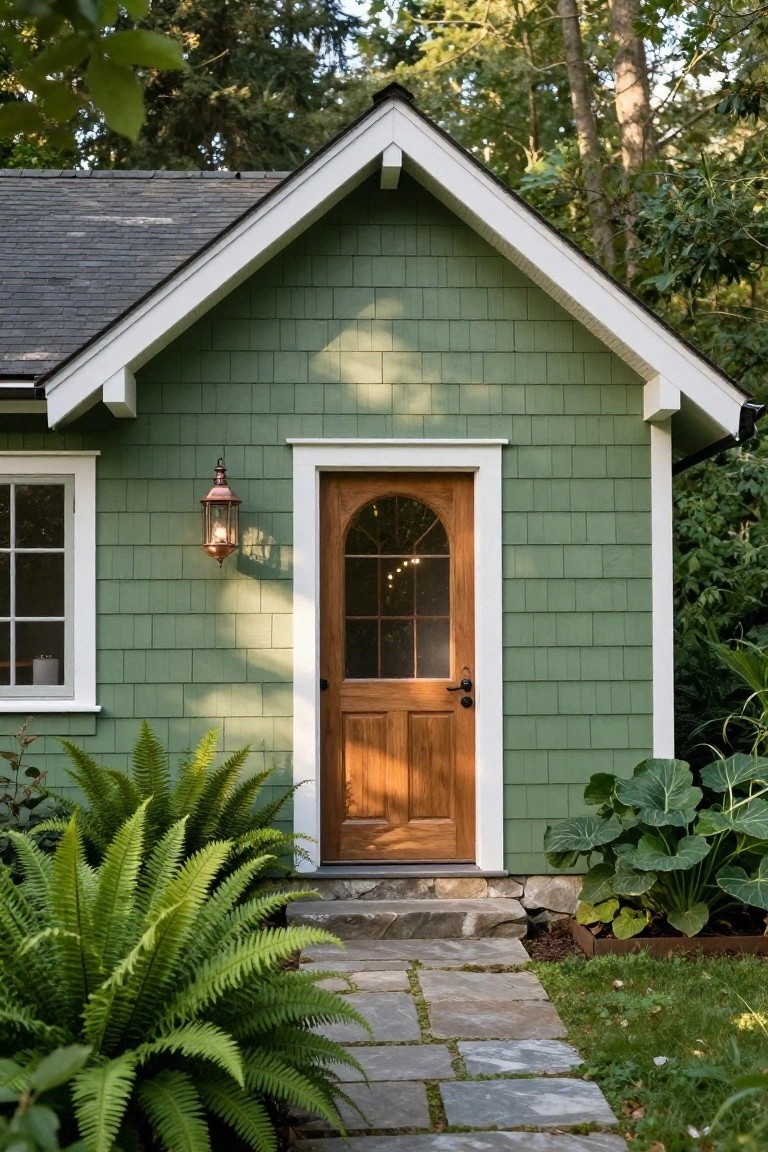
Forest green shingles give this little cottage a quiet fit with the woods around it. The shake siding in that soft green tone echoes the ferns and trees nearby, making the house feel like part of the yard instead of something plunked down. White trim keeps the edges sharp, and the warm wood door adds just enough contrast without standing out too much.
Try this look on a small guest house or garden shed where you want things to blend back a bit. The arched door works well for a welcoming touch, especially with a lantern like the copper one here. It suits shady spots with lots of green already…just make sure the wood finish stays protected from moisture.
Forest Green Vertical Siding
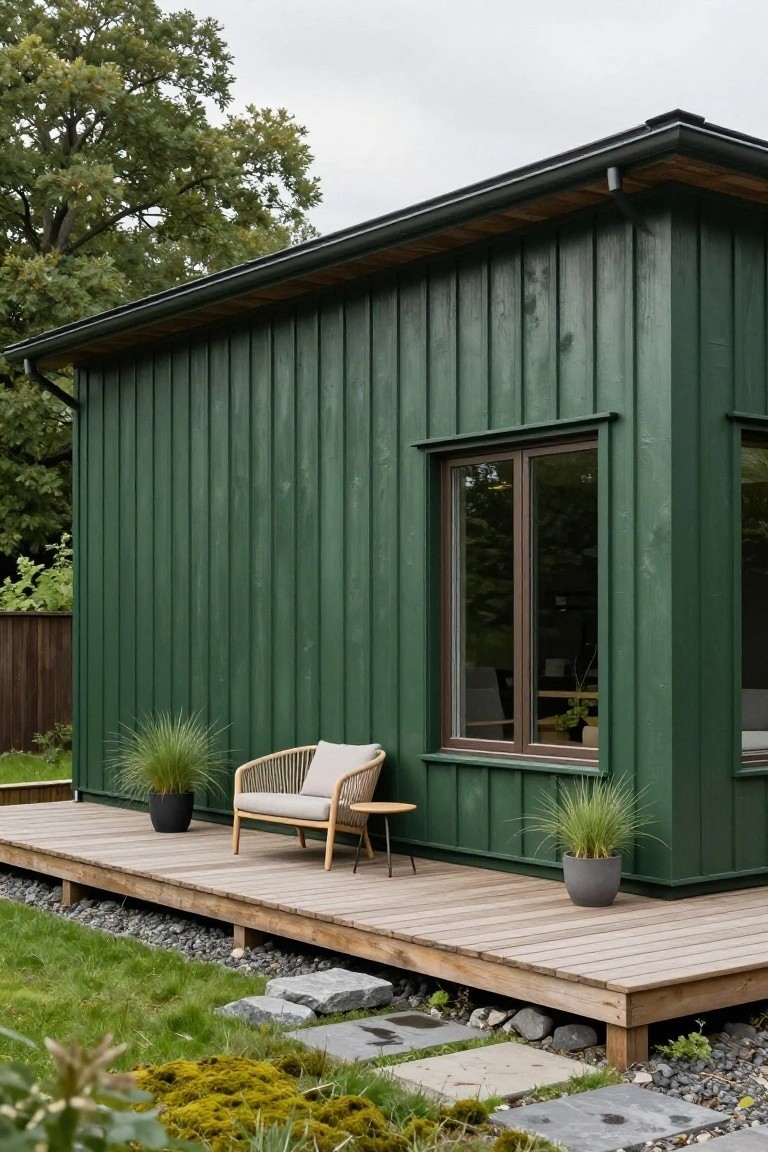
A small house like this one shows how forest green paint on vertical siding can make a building fade into the background. The deep color echoes the trees and grass nearby. It gives a cabin feel without trying too hard, especially on plain wood panels.
This works well on sheds, cabins, or even house additions in wooded spots. Pick a quality exterior paint and prime the wood first. It suits shady yards best, but check for moisture issues in wet climates.
Forest Green Siding Among Tall Trees
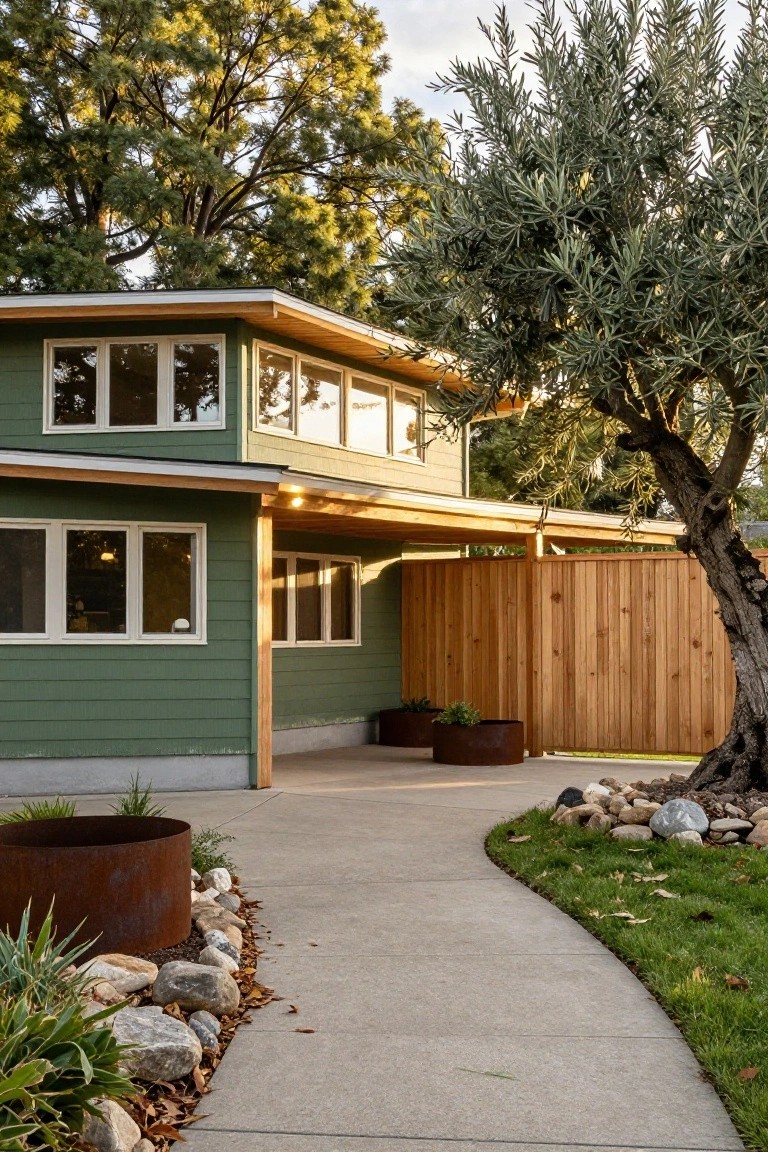
Paint your house a deep forest green, and it starts to fade into the trees around it. This place picks up on the pines overhead and that big olive tree planted right by the fence. Wood details on the overhang and gate keep things from going flat, but the green does most of the blending work.
It suits homes with simple shapes like this one, especially if you’ve got established trees close by. Go for a shade that matches your local foliage, not something too blue or yellow. Avoid open lots where the color might feel too bold on its own.
Forest Green Cottage with Climbing Roses
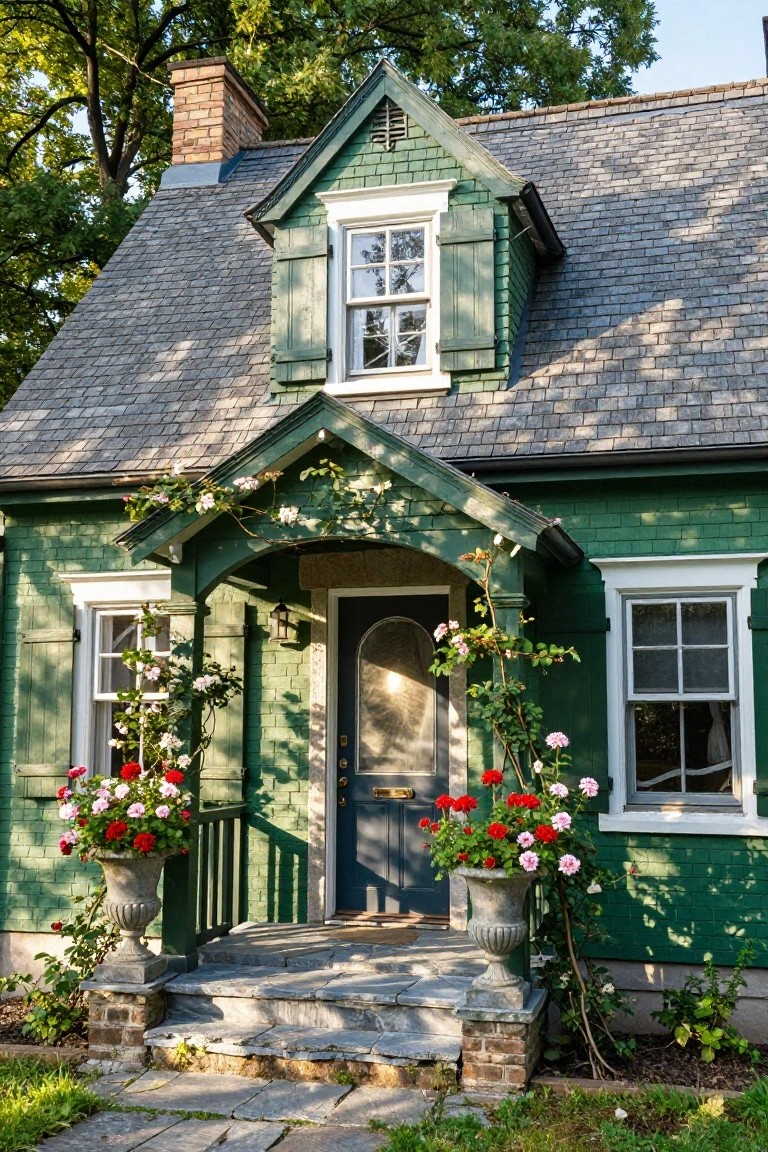
This forest green house pulls off a classic cottage look by letting climbing roses take over the porch posts and railing. The deep green paint on the shingles matches the surrounding trees so well, it almost hides the house until you get close. Those pink and white rose blooms add just enough color without overdoing it.
Try this on a smaller home with some age to it, like a bungalow or older starter house. Plant rambling roses that climb easily, and flank the steps with stone urns full of geraniums for punch. Keep the roses trimmed back a bit so they don’t swallow the door… works best where you’ve got dappled shade from big trees nearby.
Flanking the Door with Ferns
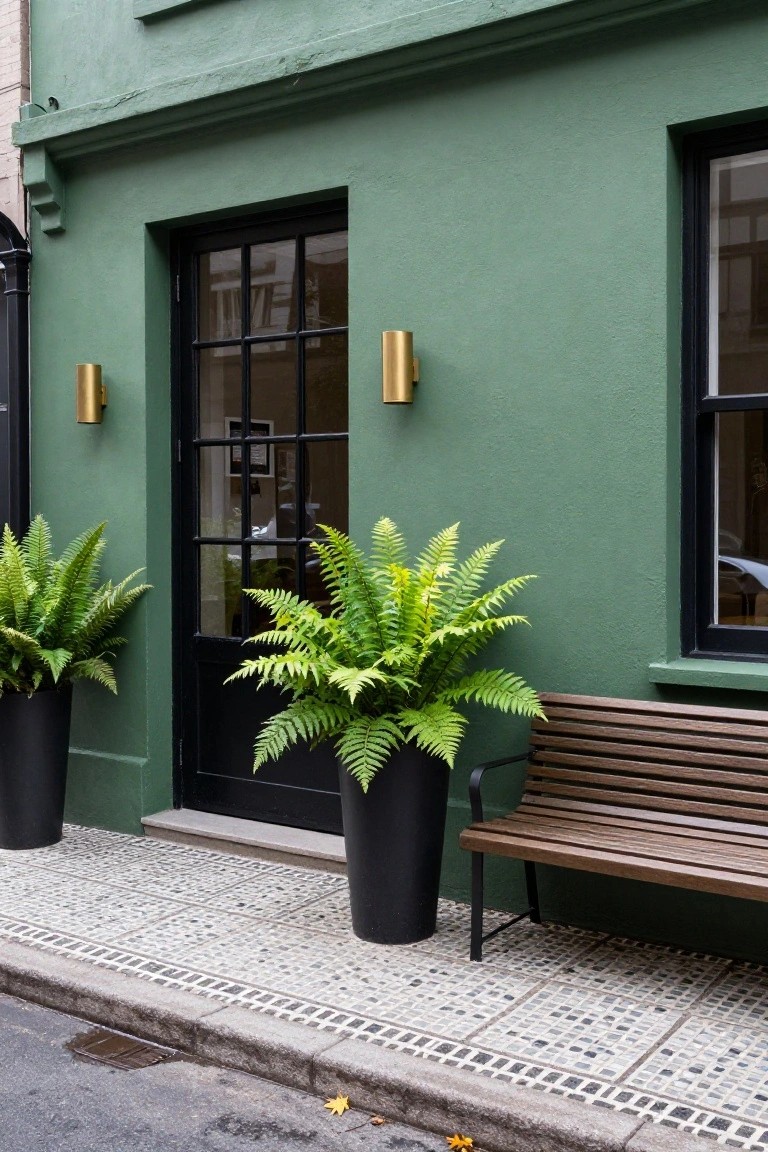
A deep forest green on the house walls looks right at home next to these tall potted ferns. The fronds pick up that same green tone. It pulls the plants and architecture together without much effort. Plus a simple bench nearby makes the spot feel lived-in already.
This works best on narrow townhouses or city row homes. Tuck black pots right by the door for height and structure. Ferns handle shade well so they’re practical too. Skip fussy trimming. Just water and let them fill out.
Forest Green Beach House Exterior
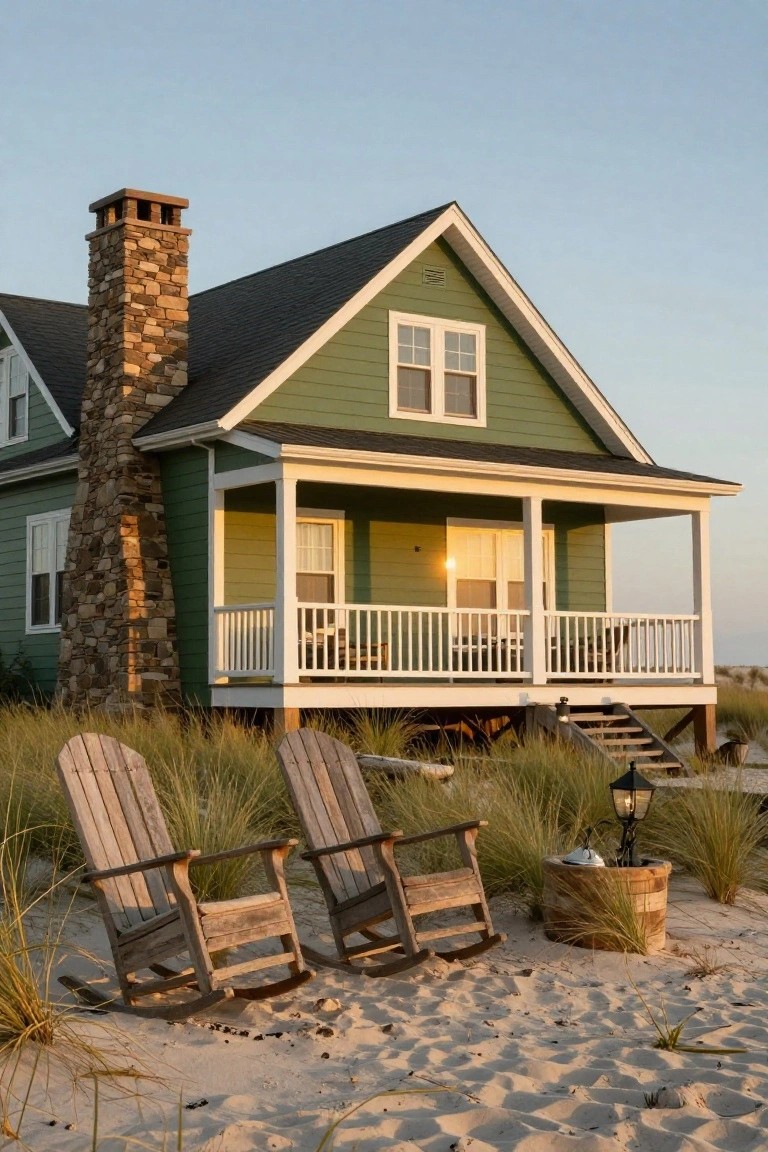
Forest green siding works wonders on a beach house like this one. It picks up the colors from the surrounding dunes and sea grass, making the home feel like part of the landscape instead of something plopped down on it. The color hides the structure a bit, which gives a cozy, tucked-away vibe right by the water.
You see this approach on elevated coastal cottages built on pilings to handle sand and tides. Pair the green with white porch railings and a rugged stone chimney for some contrast that keeps things from blending too much. It’s practical for beach areas where you want low-key curb appeal that doesn’t fight the natural setting.
Dark Green Timber Cladding
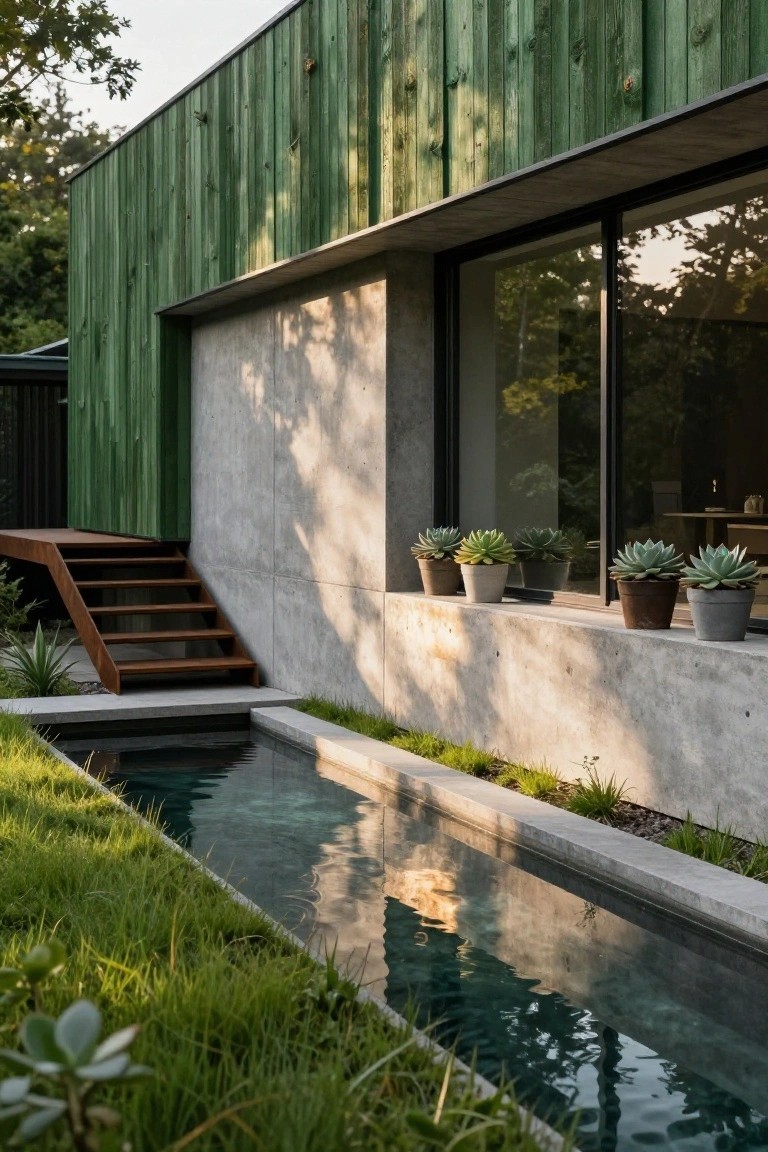
One simple way to make a house feel part of the woods is dark green timber cladding like this. The vertical boards catch the light just right and echo the trees around it without trying too hard. Paired with raw concrete walls it keeps things modern but grounded. No bold colors or fussy details needed.
This works best on homes tucked into wooded lots or near greenery. Use cedar or similar wood stained deep green then let it weather naturally. It suits low-key modern designs more than traditional ones. Watch the scale though. Too much can make the house disappear completely.
Forest Green Cottage Exterior

A deep forest green paint on the siding makes this little house feel right at home among the oaks and maples. The color picks up the shady tones from the trees, so the whole place settles into the landscape without standing out. That dark metal roof on top adds to it, looking almost like more branches overhead.
This look suits older cottages or farmhouses tucked back from the road. Pick a green with gray undertones for the best match, and add a few native flowers out front to tie it all together. It keeps things low-key… especially if you want privacy from the street.
Forest Green Siding in a Wooded Setting
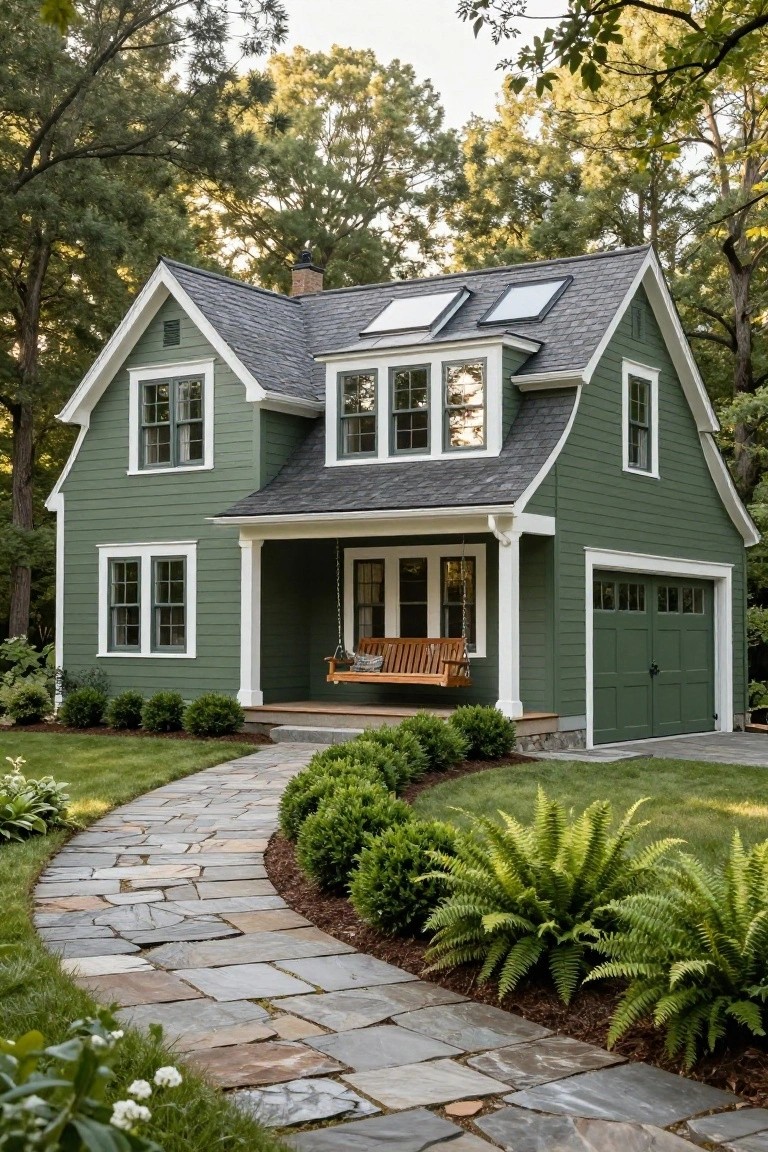
Forest green siding works so well here because it echoes the colors in the trees around it. The house almost fades into the background on a leafy lot like this. White trim on the windows and porch posts adds just enough contrast to make details stand out without pulling focus from the natural feel.
Paint a similar green shade on shingle style or craftsman homes tucked into woods or rural spots. It suits places with tall trees best… pick a tone that matches your local greenery. Keep trim light colored so the green stays dominant.
Forest Green Shingles with Wisteria
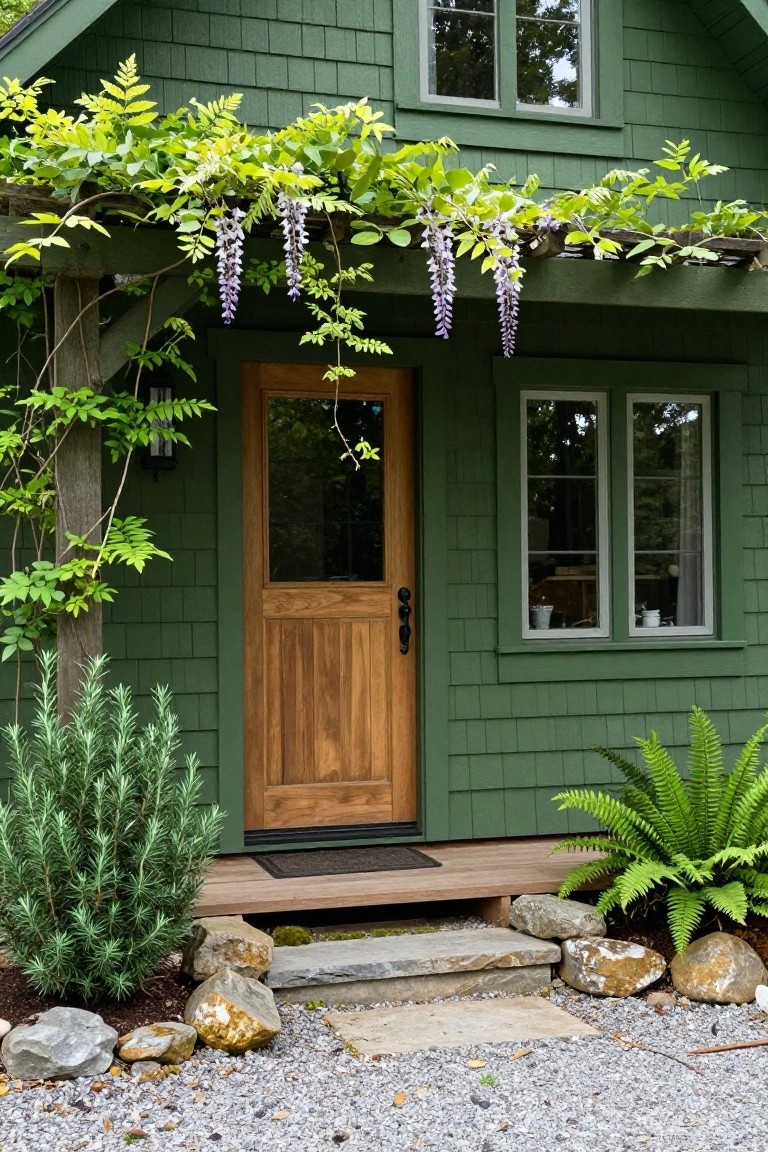
One look at this setup and you see how forest green shingles pair so well with hanging wisteria. The deep green siding fades right into the surrounding trees and plants. That wooden door adds just enough warmth to pull you closer, without standing out too much. It’s a simple way to make a house feel like part of the woods.
Try this on a cottage-style home or cabin where you want low-key curb appeal. Build a basic pergola or arbor over the entry, train the vines up the posts, and let them drape down. Keep the plants around the base like rosemary and ferns for that finished touch. It works best in shady spots with moist soil. Just trim the vines yearly so they don’t block the door.
Forest Green on a Classic Facade
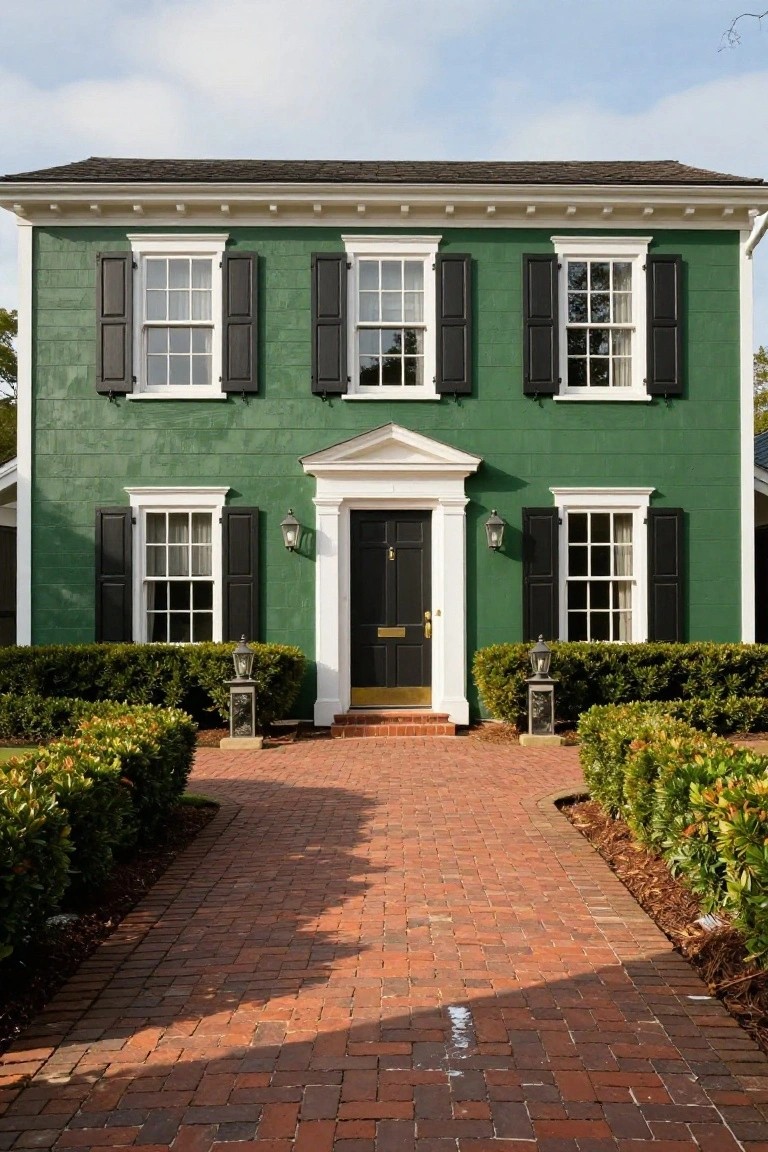
A deep forest green paint job like this turns a straightforward two-story house into something that sits easy with the landscape. The color picks up on nearby trees and shrubs without shouting, and black shutters plus white trim around the windows and entry keep the lines clean and traditional. It’s a simple switch that makes the place feel settled in its spot.
This works best on homes with balanced windows and a centered door, think Colonials or older builds in wooded areas. Paint the siding that rich green, add boxwood hedges along the walk, and you’ve got curb appeal that doesn’t fight the yard. Skip it on super modern boxes, though. The green can overwhelm sharp angles.
Forest Green Stucco with Terracotta Accents
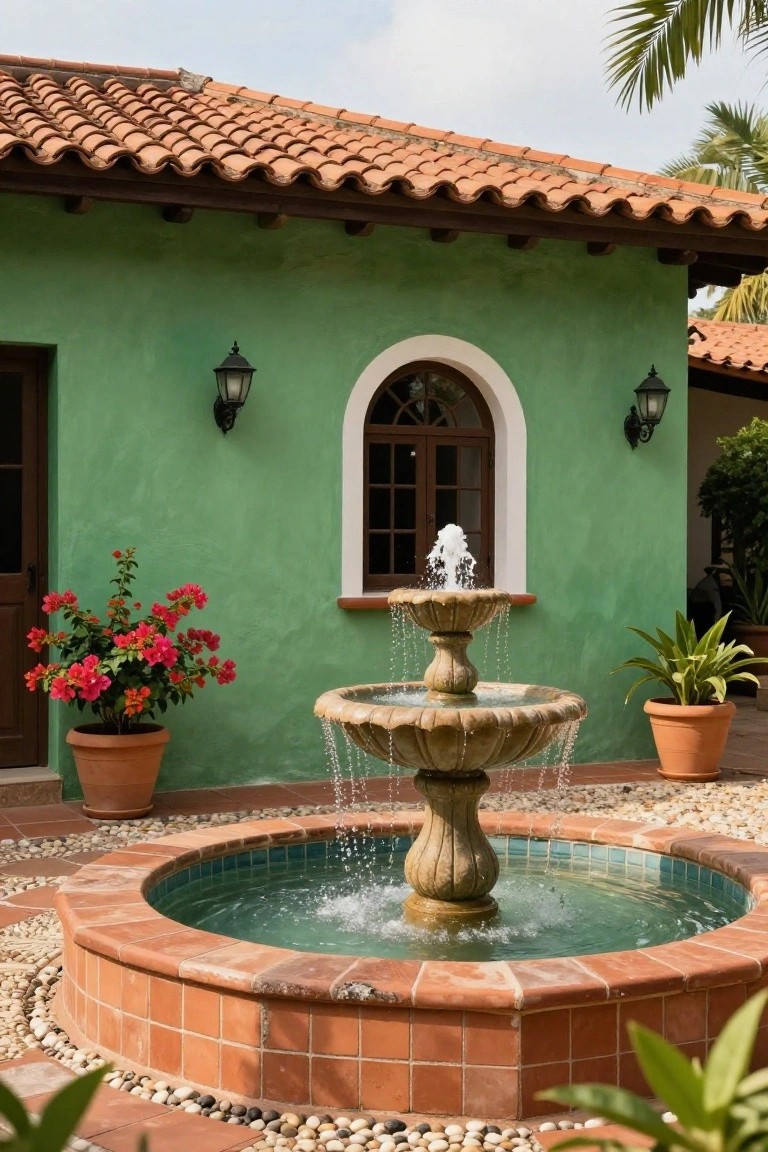
Forest green paint on stucco walls gives a house that tucked-away-in-nature feel, especially when you add terracotta roof tiles and matching tiled edges around a fountain. The green picks up on surrounding plants and trees without clashing, while the warm terracotta keeps things from looking too dark or flat. It’s a simple combo that works in warm spots.
This setup suits older-style homes in mild climates, like Spanish colonial or Mediterranean looks. Paint the walls a deep forest green, then lean into terracotta for roofs, patios, or pots nearby. Skip it on super modern houses, though. It might feel too folksy there.
Forest Green Chalet Siding
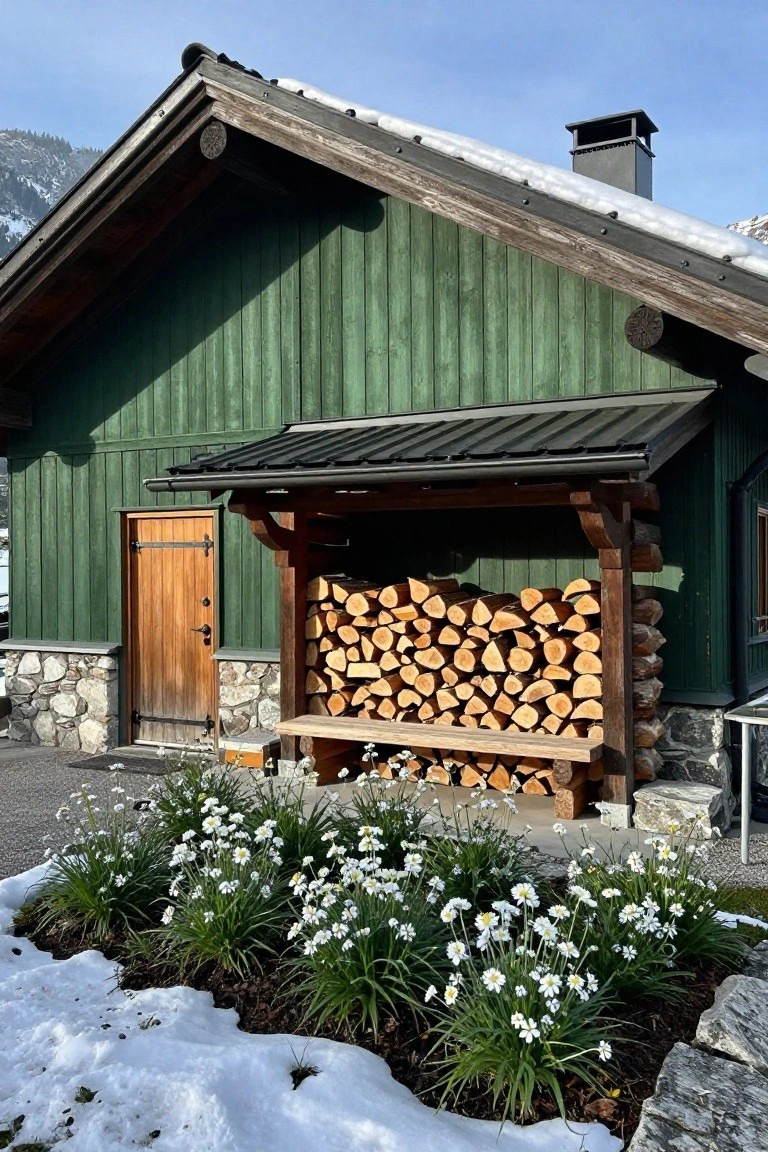
A deep forest green paint on vertical wood siding turns this chalet into part of the mountain backdrop. It picks up on the evergreens nearby without trying too hard, and that sturdy woodpile shelter built right into the side keeps the look practical for cold weather spots.
This works best on cabins or homes tucked into wooded hills where you want the house to stay low-key. Go for a shade that matches local trees, and mix in some log details like the door frame here. Skip it on open flat lots, though. It needs trees or rocks to play off.
Forest Green Metal Cladding
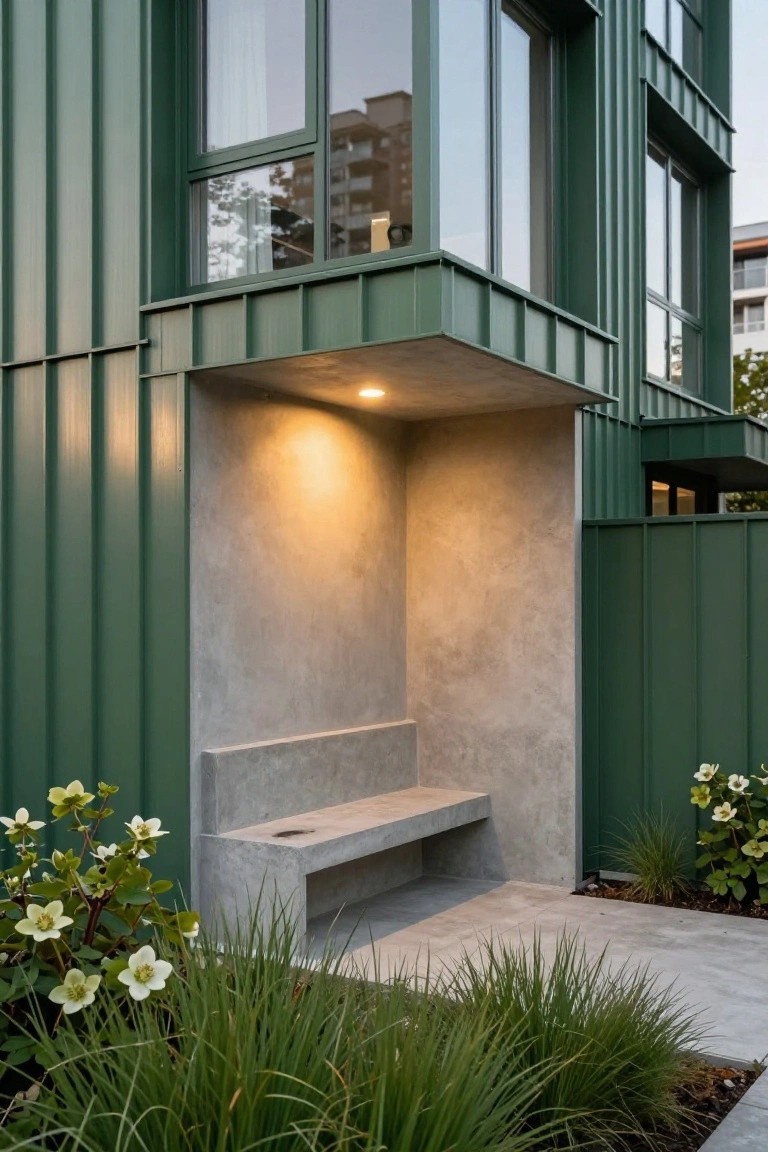
Forest green metal panels like these give a house a clean, modern look that sits right into the landscape. The vertical corrugated siding catches light in a subtle way and picks up on nearby trees and plants without trying too hard. It’s tough material too. Stands up to weather better than wood siding in many spots.
You can use this on full facades or just accents around entries and windows. Works best on newer builds or updates where you want low upkeep. Pair it with concrete elements like that bench area for contrast. Just check local rules on metal finishes. They can dent if you’re not careful around tools or ladders.
Forest Green Shingles on Beach Homes
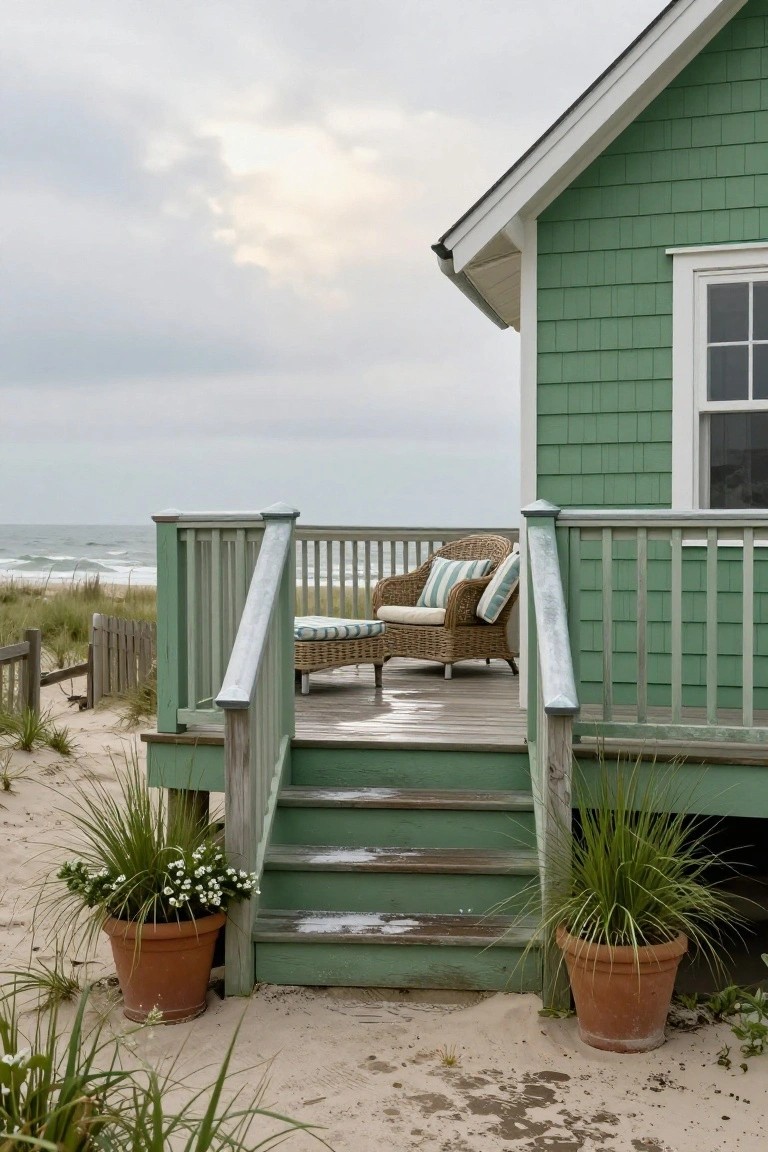
Forest green shingles work really well on houses right by the ocean. They pick up the colors from the sea grass and dunes so the place doesn’t stick out like some bright white box. You see it here with the porch steps and that simple wicker chair setup. It just settles into the landscape nice and easy.
Try this look if your spot has sandy soil or tall grasses nearby. It suits low beach cottages best, especially with wood railings and terra cotta pots for plants. Keep an eye on moisture though, since shingles need good ventilation in salty air.
Forest Green Siding with Ferns
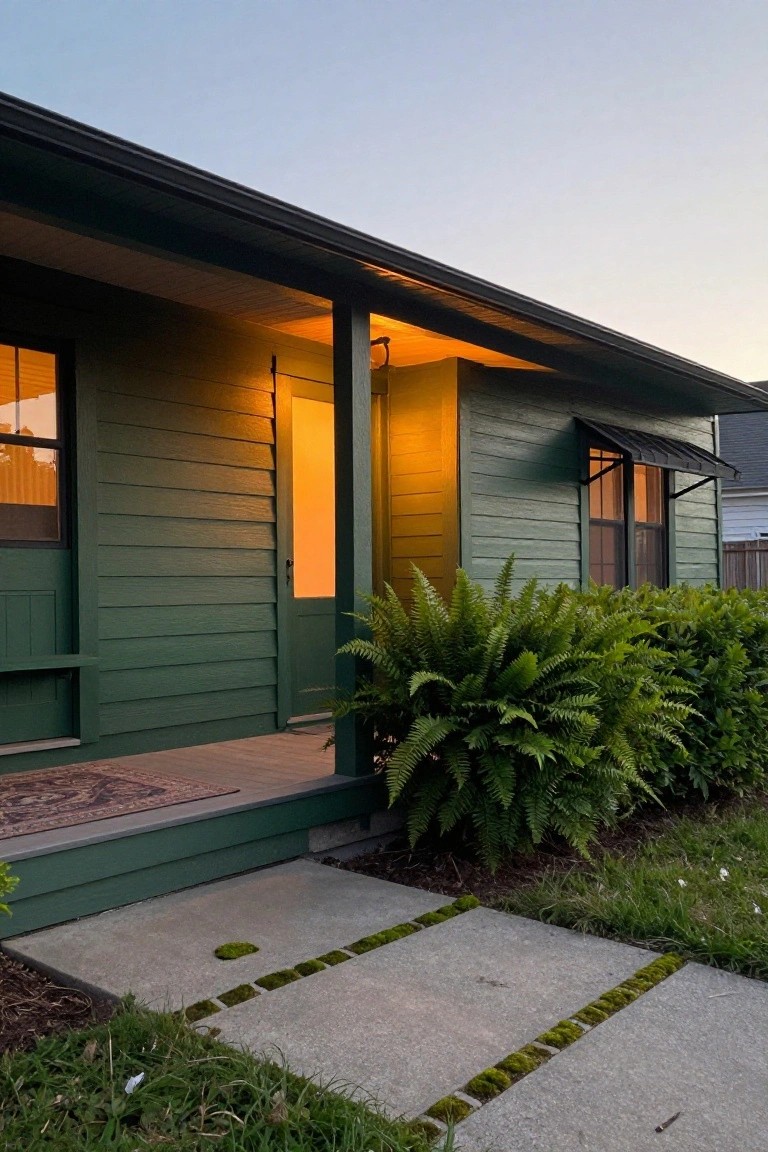
A deep forest green paint on the siding here picks up straight from the thick ferns planted along the base. It makes the whole house look like it grew up with the yard. That open door spilling warm light inside just adds a welcoming feel without pulling focus from the green.
Try this on a simple cottage or bungalow where the clapboard holds paint evenly. Line the front with ferns or similar low shrubs to echo the color. A plain concrete path with moss in the cracks keeps things grounded. Best for wooded lots or shady yards where bold green stays dark and lively.
Forest Green Exterior on a Classic Home
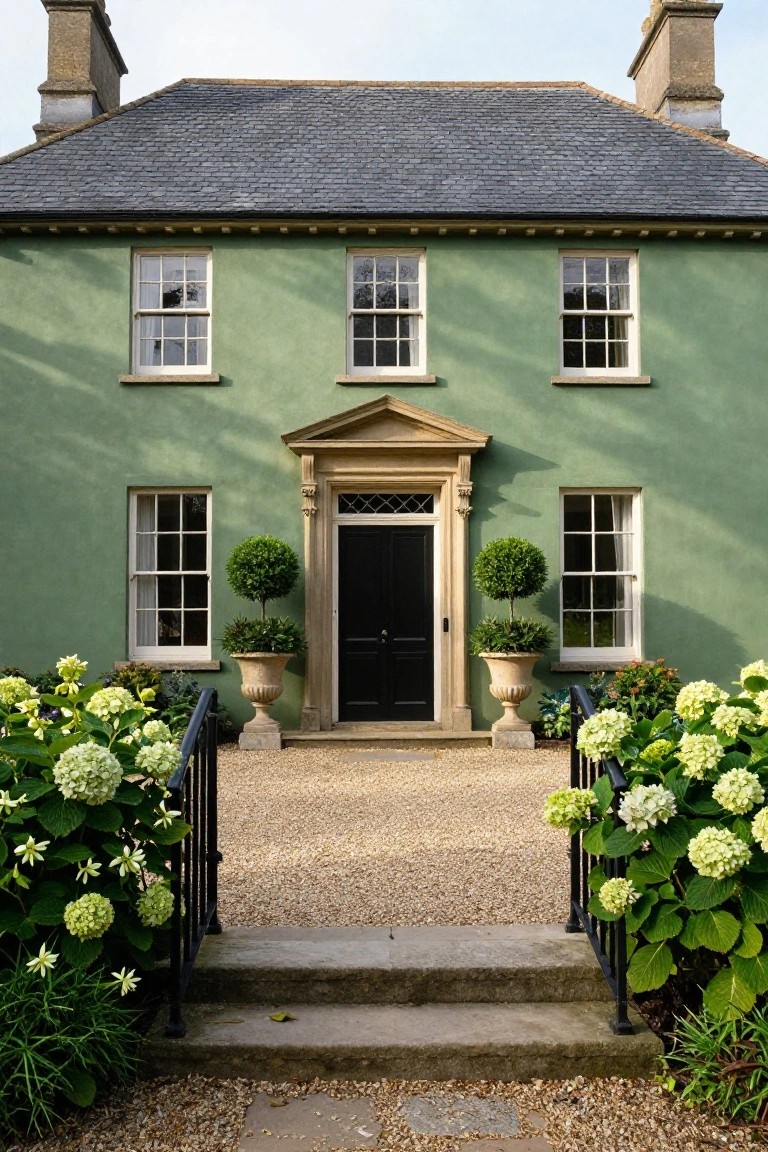
A soft forest green paint turns this traditional house into something that feels part of the garden. The color echoes the hydrangeas blooming along the front path and the boxwoods framing the door. It keeps the architecture crisp with white window frames and stone details, but softens everything so the house doesn’t stand out too much.
This look suits older homes in green settings, like countryside spots or wooded lots. Pick a muted green to avoid going too bold, and plant whites or pale flowers nearby for contrast. Gravel paths like this one keep the entry simple and let the color shine.
Forest Green Metal Siding on a Boxy House
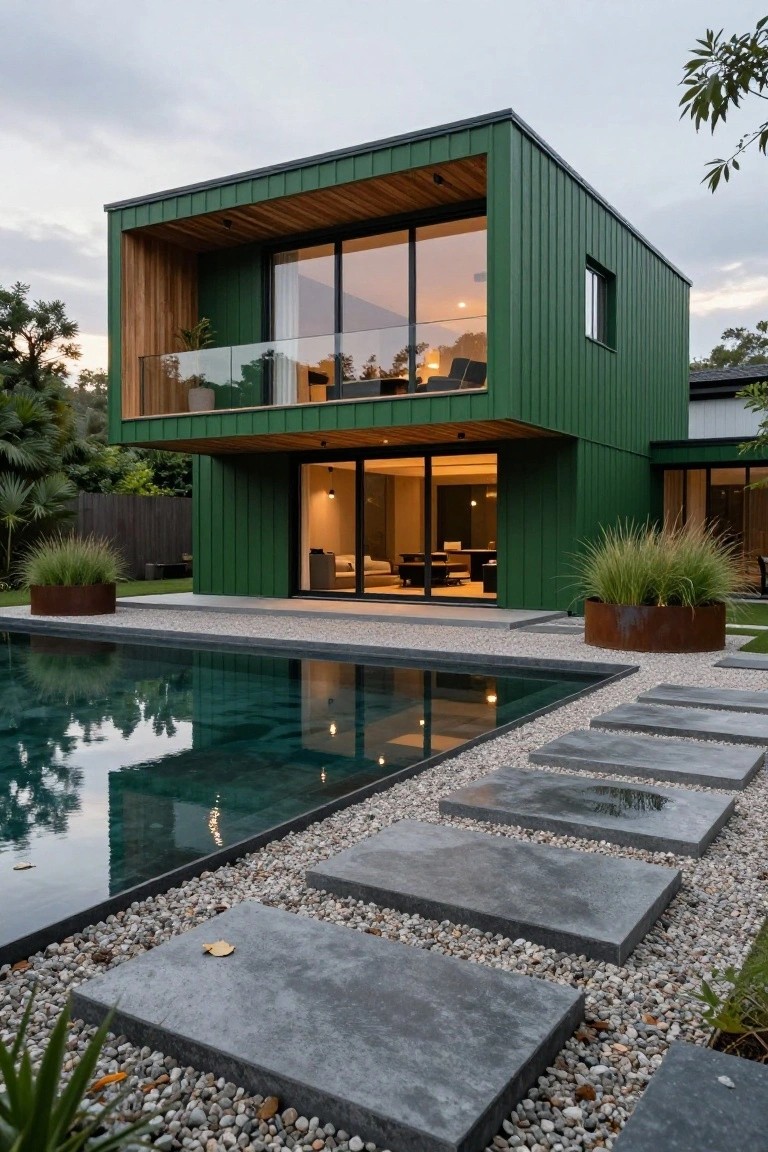
Forest green metal siding wraps this simple boxy house like it grew there. The vertical panels pick up on nearby trees and plants, making the modern shape feel settled into the yard instead of plunked down. Large glass doors and a wood balcony add just enough warmth without fighting the green.
This works great for flat-roof homes or additions in wooded spots. Go for corrugated panels in a deep shade, and keep other materials plain like concrete paths or glass. Skip it on busier streets, though. It shines where nature’s already doing most of the work.
Forest Green Cottage Exterior

This cottage pulls off forest green siding in a way that makes the house fade right into its surroundings. Tall trees frame the sides, and the green paint echoes the leaves so well you almost don’t notice the house at first. White trim around the windows and porch keeps things crisp without fighting the color.
It’s a good pick for wooded lots or rural spots where you want the home to feel settled in, not showy. Pair it with a simple screened porch for shaded sitting, and use gravel paths to lead right up. Skip it on bare urban lots, though. The green needs nature nearby to shine.
Forest Green Cottage Blends Into the Garden
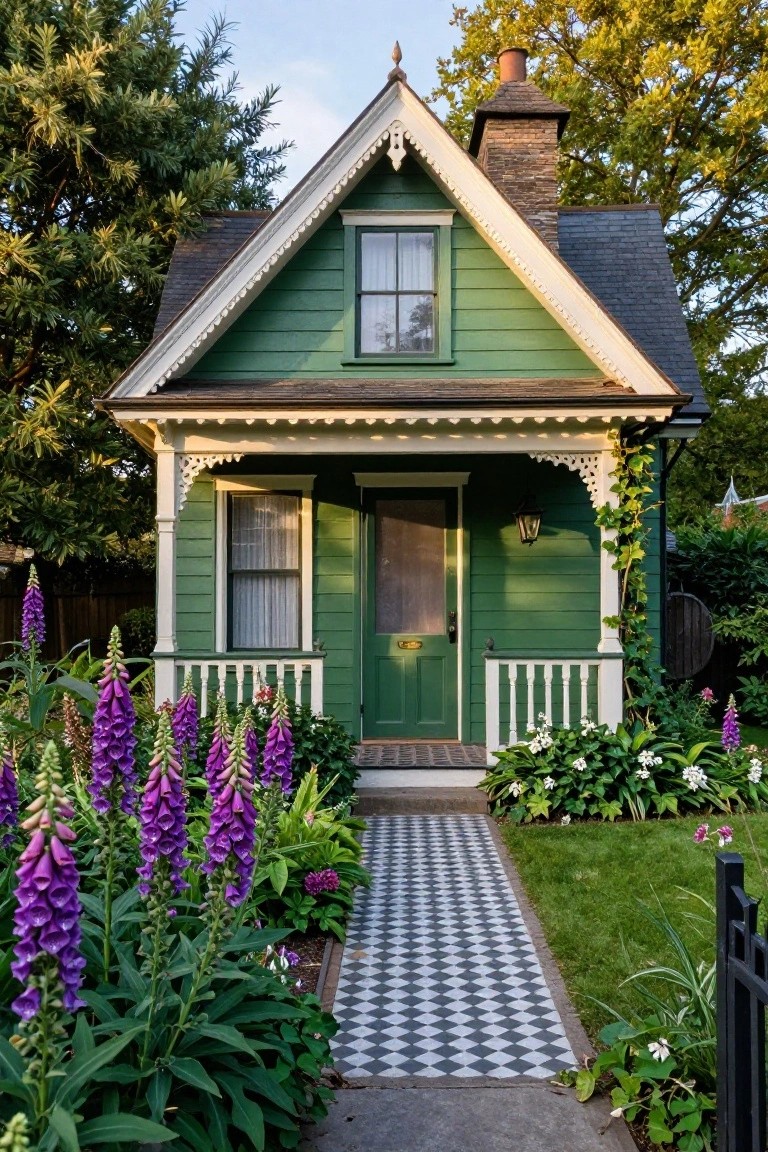
This little house shows how forest green siding can make a small cottage feel right at home among the trees and plants. The deep green paint picks up the shades in the surrounding evergreens and garden beds, so the place doesn’t stick out like some brightly colored homes do. White trim around the windows, porch, and roofline gives it that crisp contrast without overpowering the natural look.
Try this on older-style homes or bungalows tucked into wooded lots or big yards. Paint the siding a true forest green, then add white gingerbread details on the porch rails and eaves for pop. Line the entry path with tall flowers like foxgloves to tie it all together. It works best where you want the house to settle in quietly, not shout.
Frequently Asked Questions
Q: Will forest green make my house feel too dark in a shady yard?
A: Pick a shade with warm undertones to brighten it up. Layer in light trim like creamy white around windows. That pulls in surrounding light and keeps things lively.
Q: What plants go great next to forest green siding?
A: Go for ferns, mossy ground covers, or evergreens that echo the hue. They weave your house right into the landscape. Skip flashy blooms, they steal the show.
Q: How do you maintain forest green paint through harsh weather?
A: Clean it yearly with a gentle hose and mild soap. Touch up scuffs quick before they spread. Fresh coats every five years or so hold that deep color strong.
Q: Can modern homes rock forest green exteriors?
A: Absolutely, pair it with clean lines and metal accents. It grounds sleek designs in nature. But test a sample first, some grays wash it out.
