

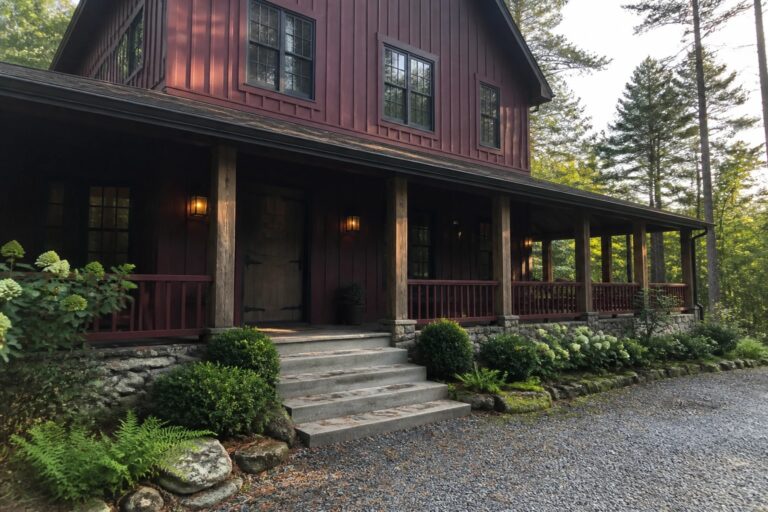
I have spent time walking around wooded properties and watching how a deep red exterior settles into the trees rather than fighting them for attention.
The color choice often comes down to how the paint catches filtered light through the branches and how it pairs with the roof and trim materials already in place.
Some shades only reveal their true depth once the full facade is viewed from the road.
I tend to photograph a few test patches at different times of day before making any final call on a project like this.
When the red works with the natural backdrop the whole house starts to feel like it belongs there instead of sitting on top of the lot.
Deep Red Siding for Wooded Homes
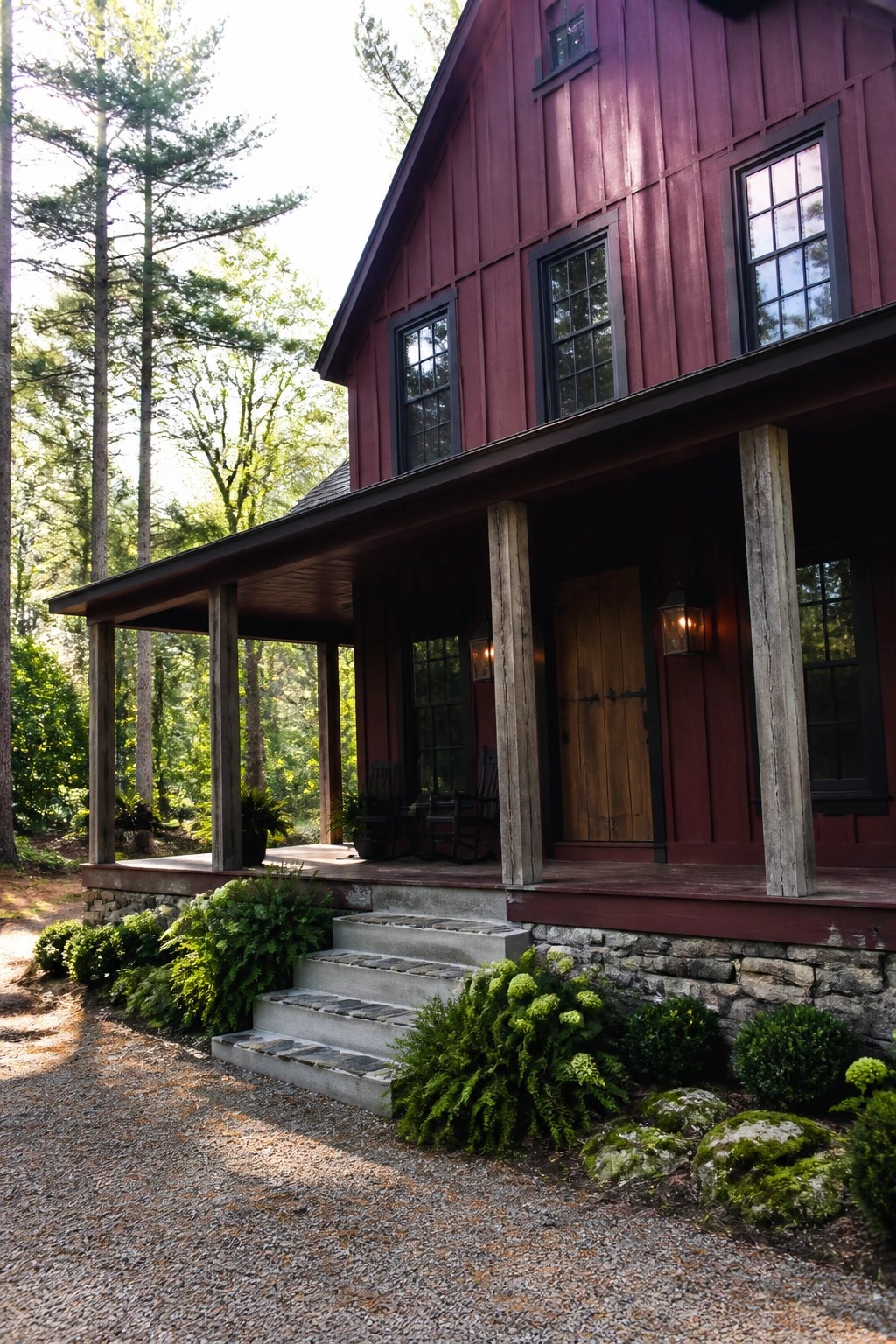
A deep red on the exterior helps a house sit quietly among trees instead of fighting them. The color echoes the bark and shadows around it, so the building feels like it belongs there rather than just appearing on the site.
This approach works well on straightforward shapes where the siding can carry most of the look. Pair the red with a few natural wood elements like posts or a door, and keep the trim dark so the whole thing stays simple and settled.
Dark Red Siding With Stone Accents
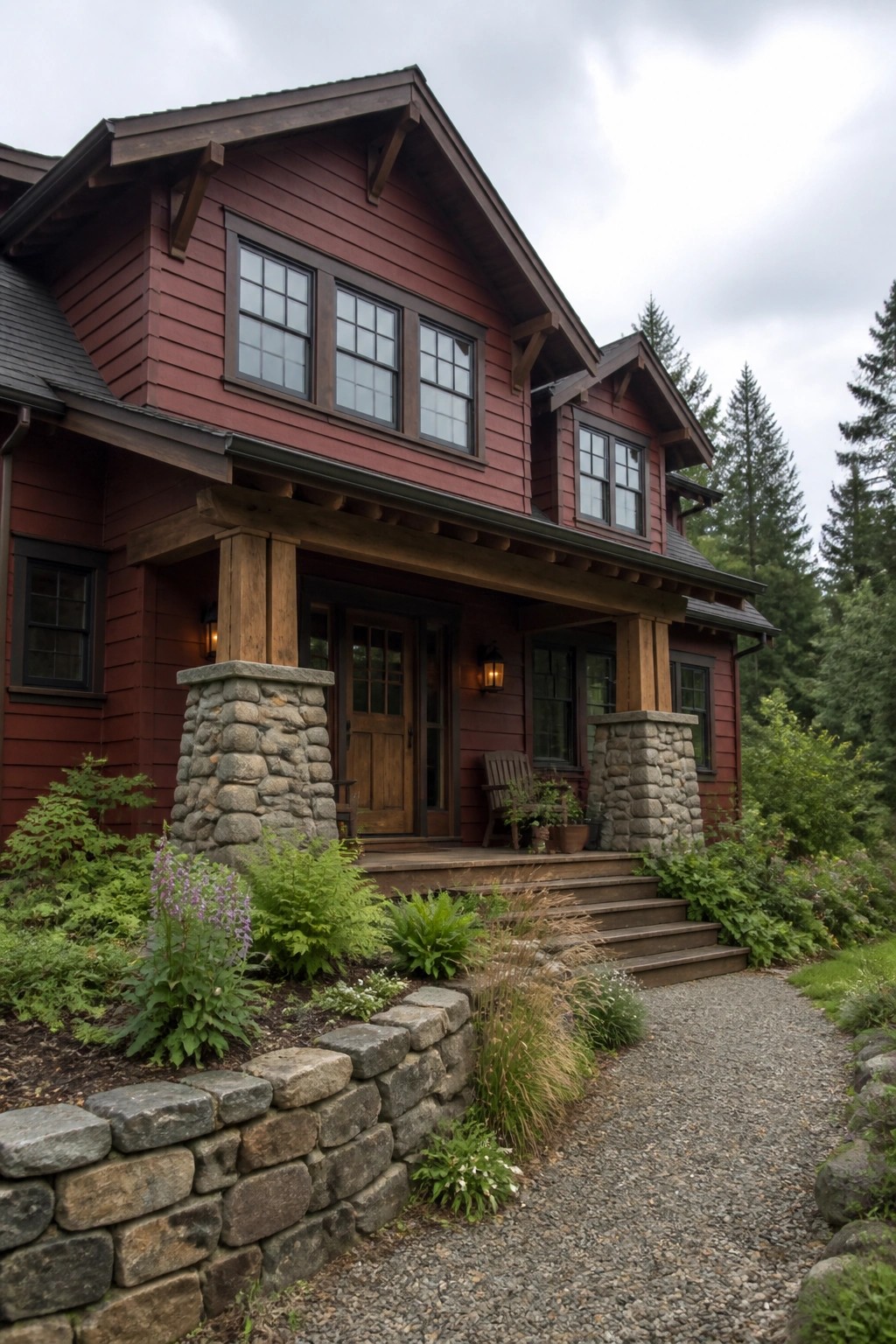
Dark red siding holds up well in wooded settings because it picks up on the deeper tones in the trees without fading into the background. The color gives the house presence while still feeling at home among evergreens and mixed foliage.
Stone at the base and around the porch helps settle the red into the landscape. It works best on homes that already have some wood trim, since the natural materials keep the whole exterior from looking too flat or new.
Dark Red Siding Fits Wooded Settings
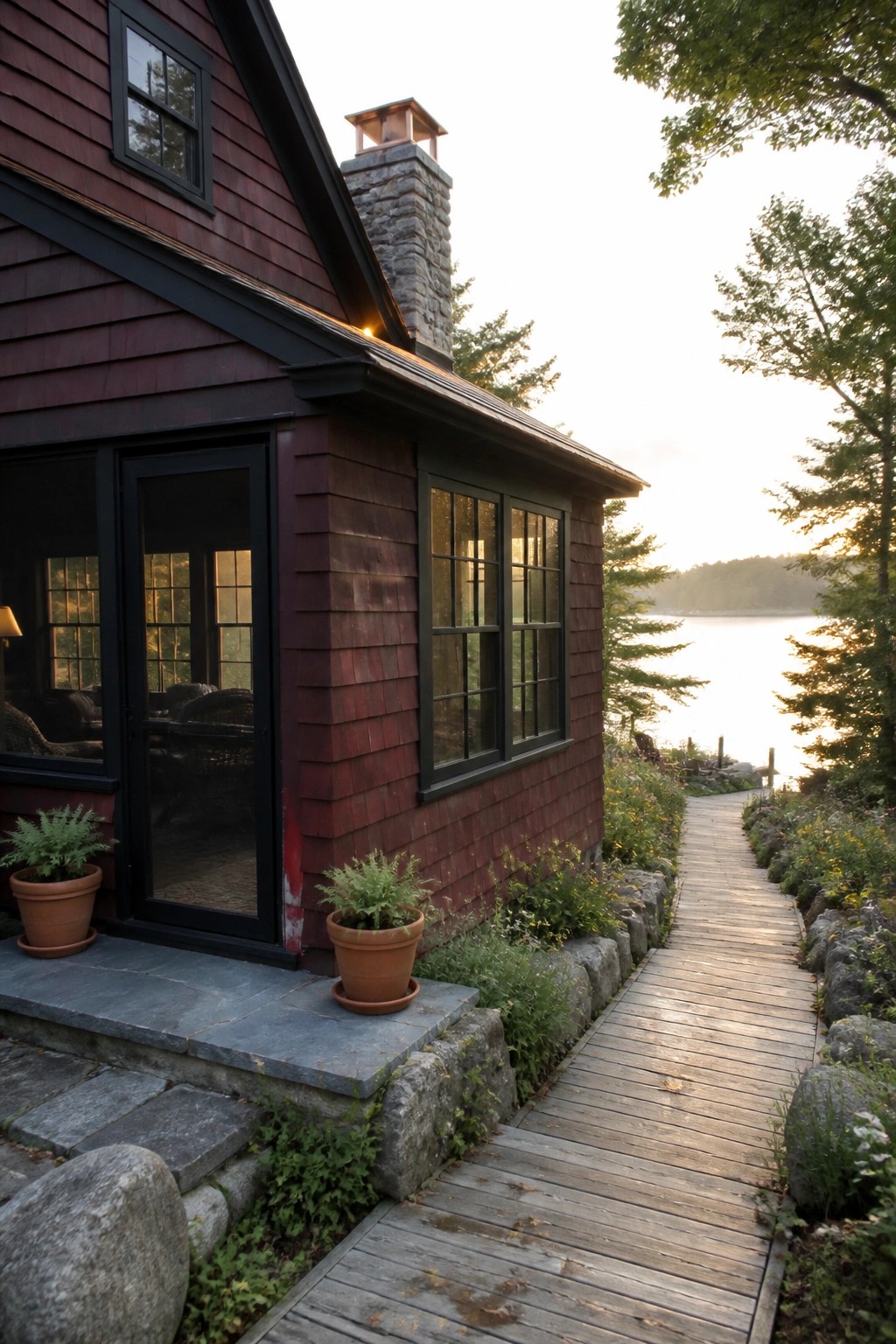
A deep red exterior works well in wooded areas because it picks up tones from the trees and ground without fighting them. The color gives the house presence while still letting the setting feel dominant.
This choice suits homes with straightforward shapes and natural materials. It tends to age nicely as the wood weathers and the surrounding growth fills in.
Dark Red Siding With White Trim
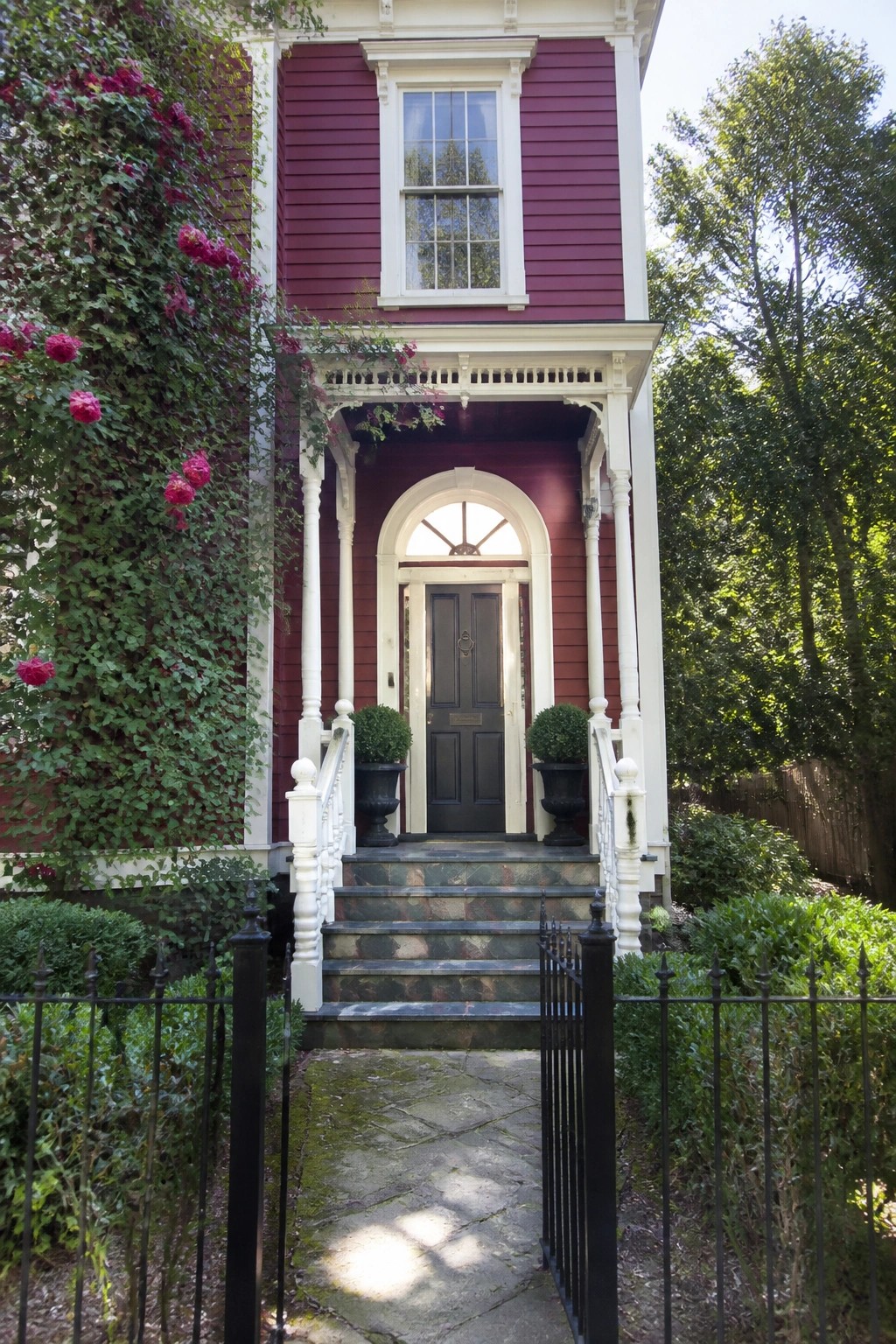
A deep red exterior holds its own against trees and shade without looking heavy. The color gives the house weight while the white trim keeps the lines clean and the whole look from feeling too dark in a wooded spot.
This works best on homes with clear architectural details like columns or an arched entry. Stick to a matte or low-sheen paint so the red feels natural rather than glossy, and let simple greenery at the base soften the contrast.
Stone Foundations Under Red Siding
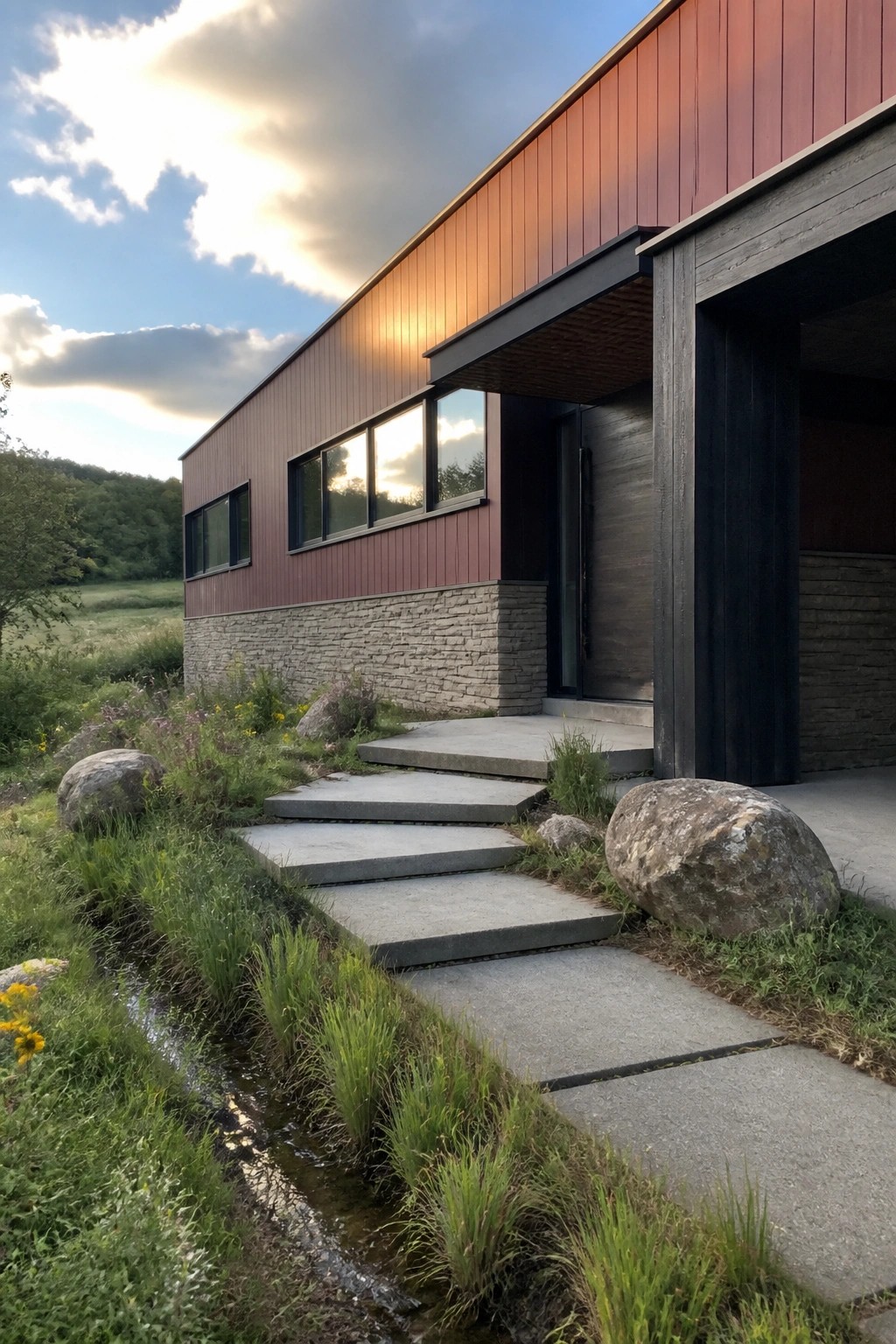
A stone base gives a red house something solid to sit on. It keeps the color from feeling like it is floating above the ground and helps the whole exterior blend into grass, trees, and rocky terrain without extra effort.
This works best on homes set in wooded or rural spots where you want the building to feel settled rather than placed. Keep the stone low and natural looking, then let the red siding run straight up from there. The mix stays simple and holds up well over time.
Wood Accents On Red Brick Exteriors
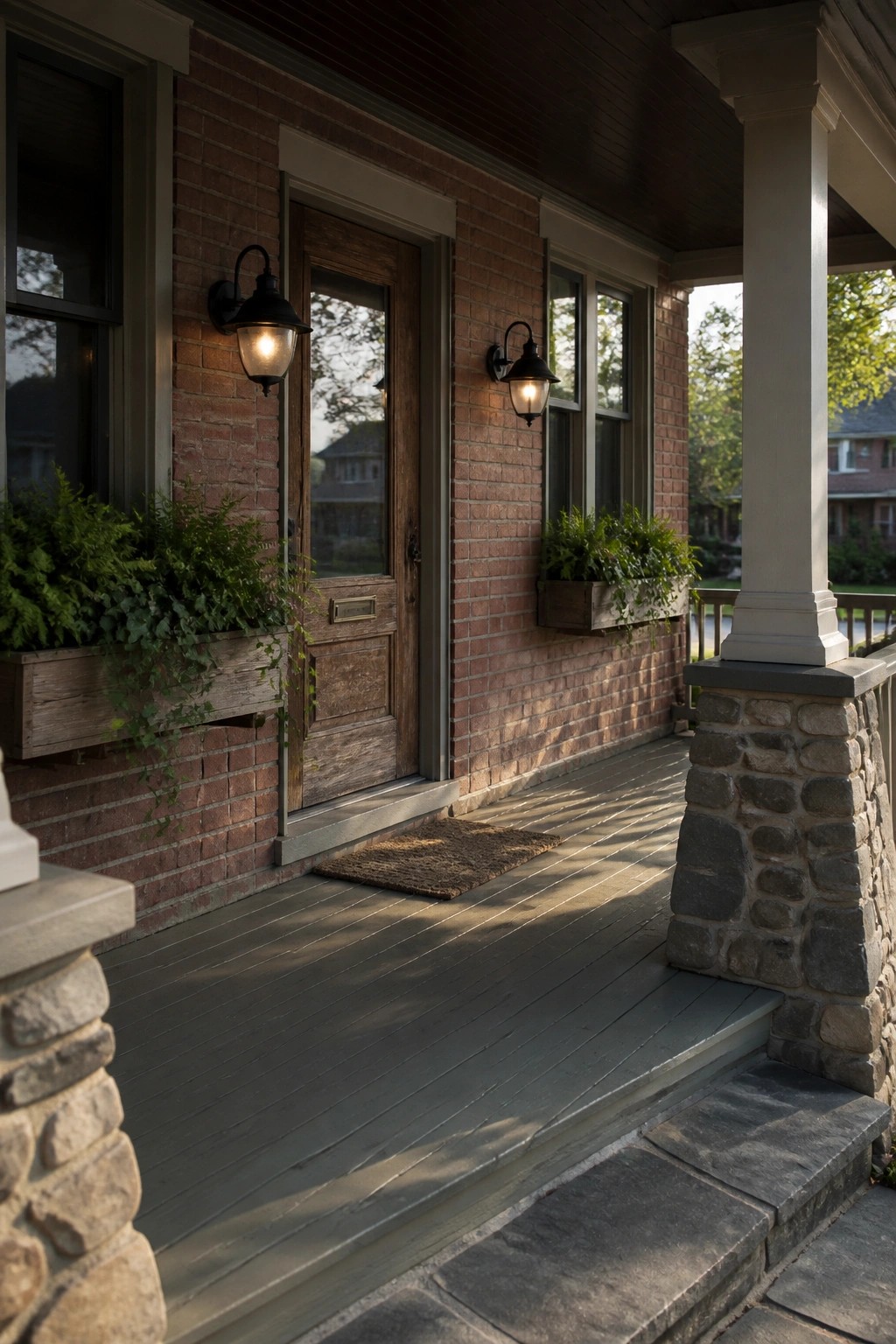
A wood door and matching planters bring a softer touch to dark red brick. The natural tone stands out without fighting the strong color of the brick, and it helps the house feel more at home among trees.
This works best on homes that already have some stone or wood trim. Keep the wood finish simple and add a pair of lanterns beside the door so the entry stays easy to find at night.
Dark Red Siding for Wooded Lots
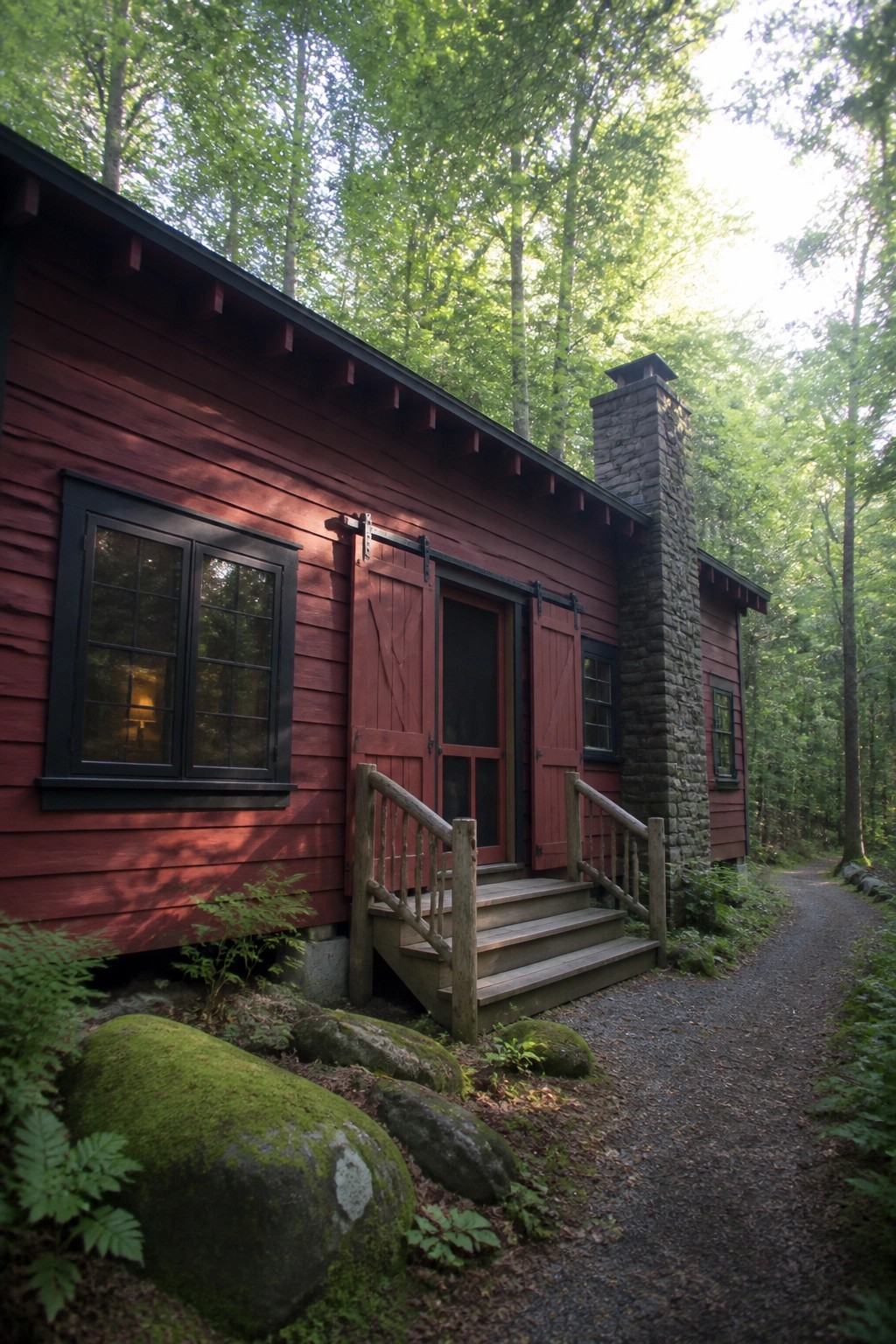
A deep red exterior gives a house real presence among trees without fighting the greenery. The color stands out in shade while still feeling tied to the natural setting, and it holds up well against changing light through the day.
This approach works best on simple wood-sided homes where the red can be balanced with dark trim and stone accents. Keep the roof and windows restrained so the color stays the main feature rather than competing with too many other details.
Deep Red Siding for Wooded Settings
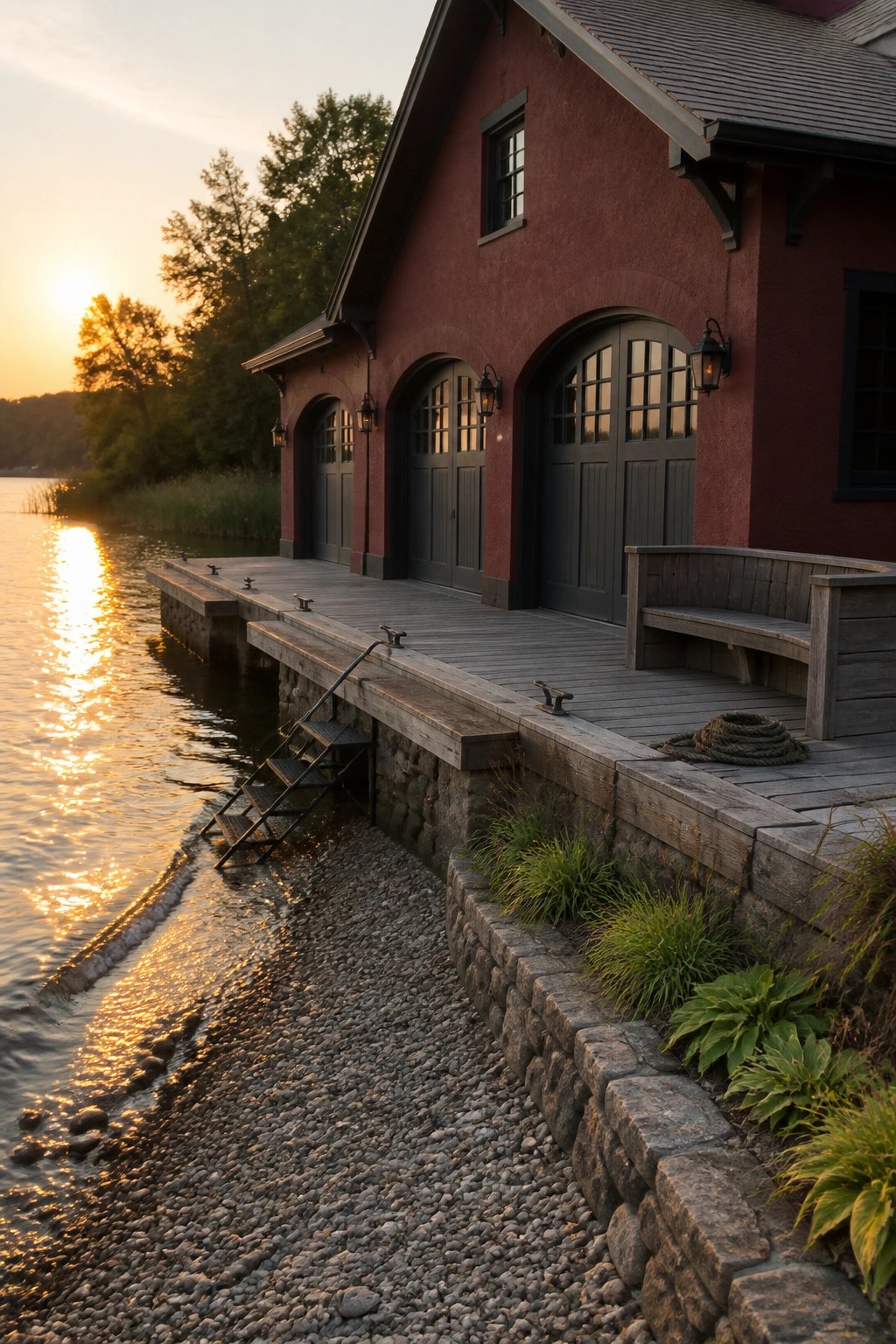
A deep red exterior works well when a home sits among trees and water because the color echoes the natural tones around it without disappearing. The dark doors and trim add just enough contrast to keep the house from feeling too soft or lost in the landscape.
This approach suits homes that need to stand out a little while still feeling grounded. It pairs especially nicely with stone bases or simple wood details, and it holds up in changing light throughout the day.
Dark Red Siding With White Trim
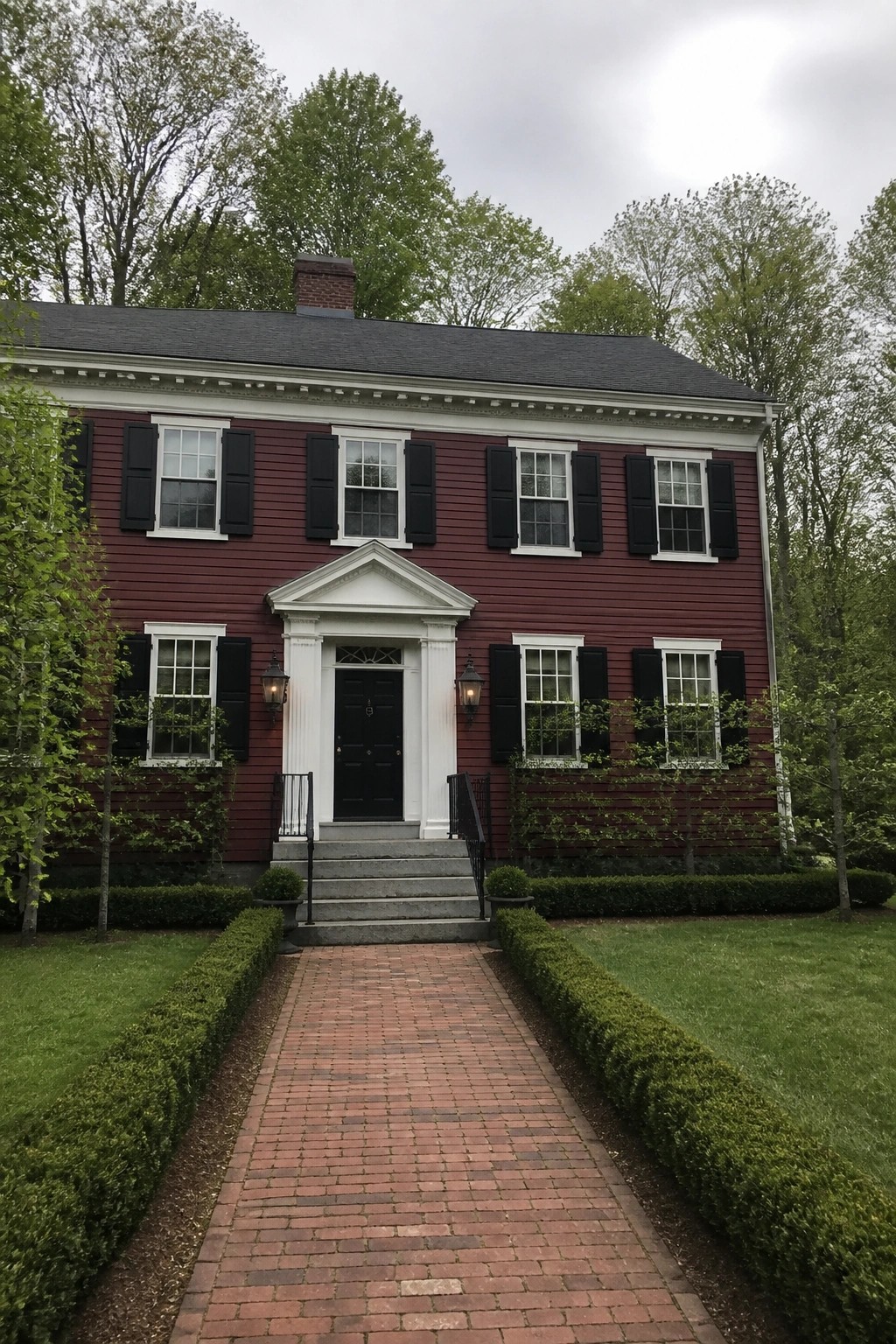
Dark red siding stands out in a wooded setting while still feeling at home among the trees. The white trim around windows and doors keeps the color from feeling too heavy and gives the whole house a clean, settled look.
This combination works best on older or traditional homes where the shape is already simple and balanced. Keep shutters and the front door dark so the red stays the main feature instead of competing with too many light colors.
Dark Red Siding With Stone Foundations
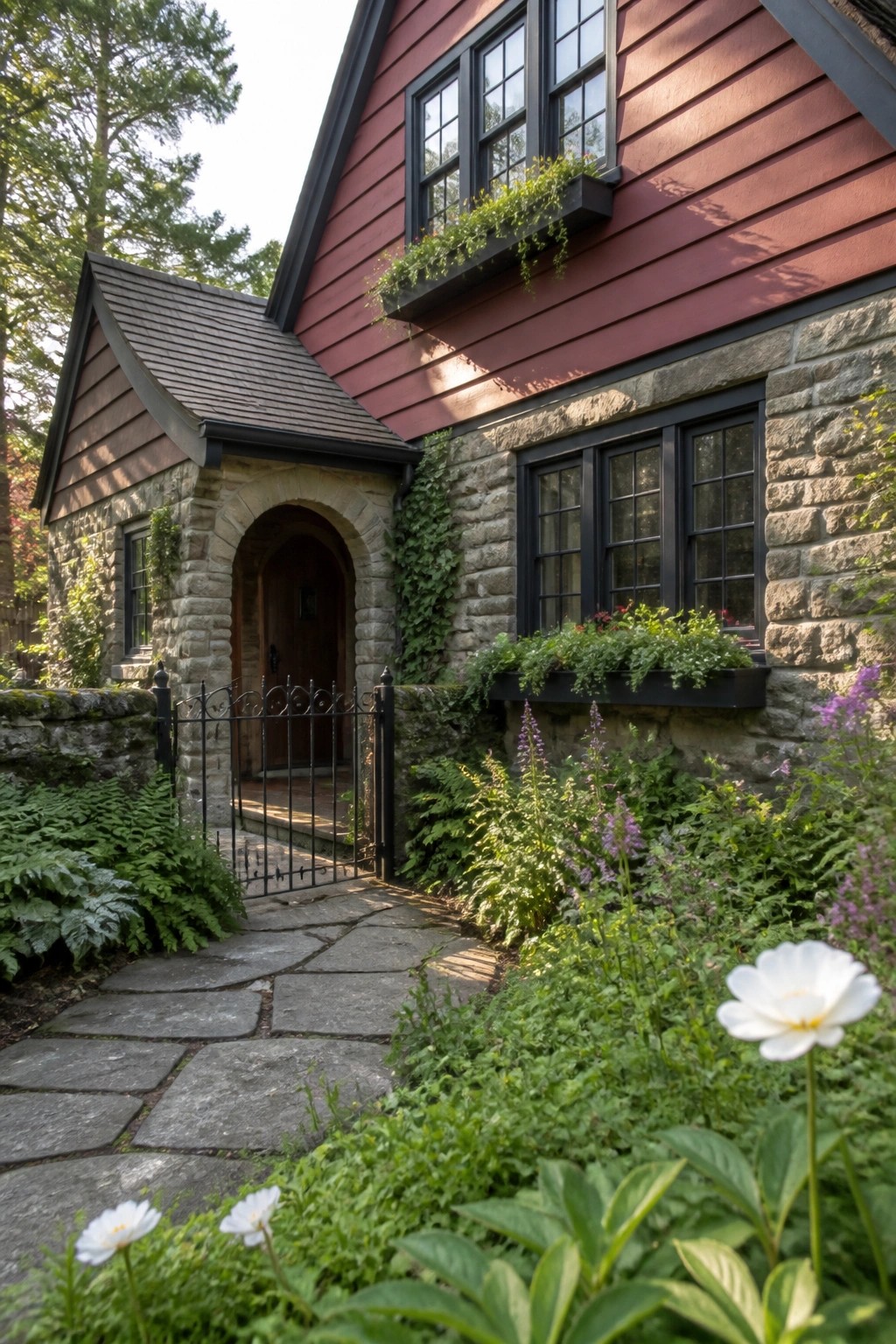
A deep red exterior works especially well in wooded settings because it holds its own against the greens and browns around it. When the lower half of the house is built in stone, the red feels more anchored and less likely to look out of place among trees.
This combination suits homes with simple rooflines and traditional details. Use dark window frames and a stone arch at the entry to keep the look balanced, and let the red cover the main wall areas so the color reads clearly from the road.
Dark Red Siding That Fits Among Trees
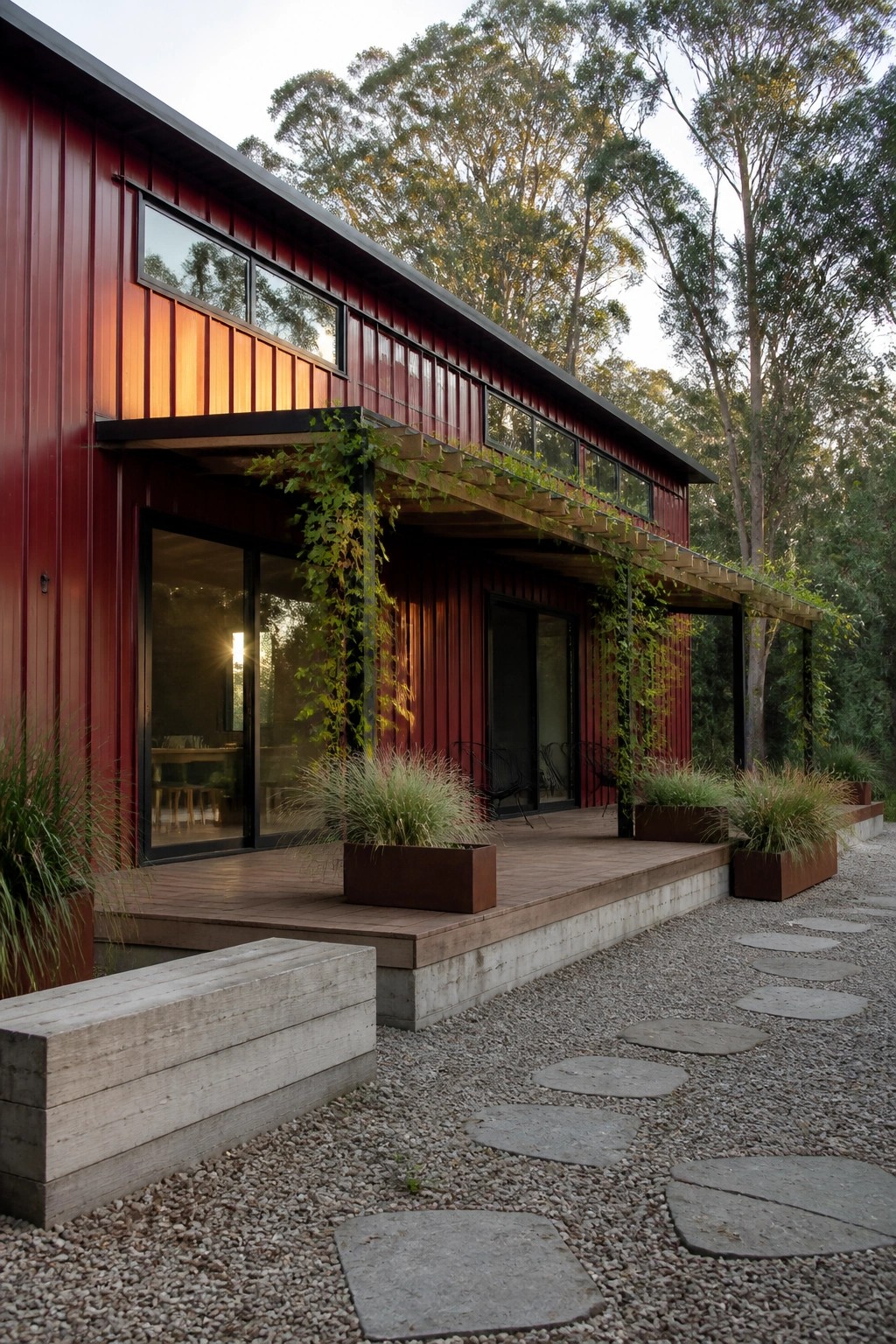
A deep red metal exterior holds its own in a wooded setting without feeling out of place. The color echoes the warm tones in the tree trunks and catches the light in a way that keeps the house from disappearing into the shadows.
This approach works best on straightforward shapes where the siding can read as a single strong surface. Keep the trim simple and add wood decking or planters so the red does not sit too stark against the ground and surrounding plants.
Dark Red With Black Trim
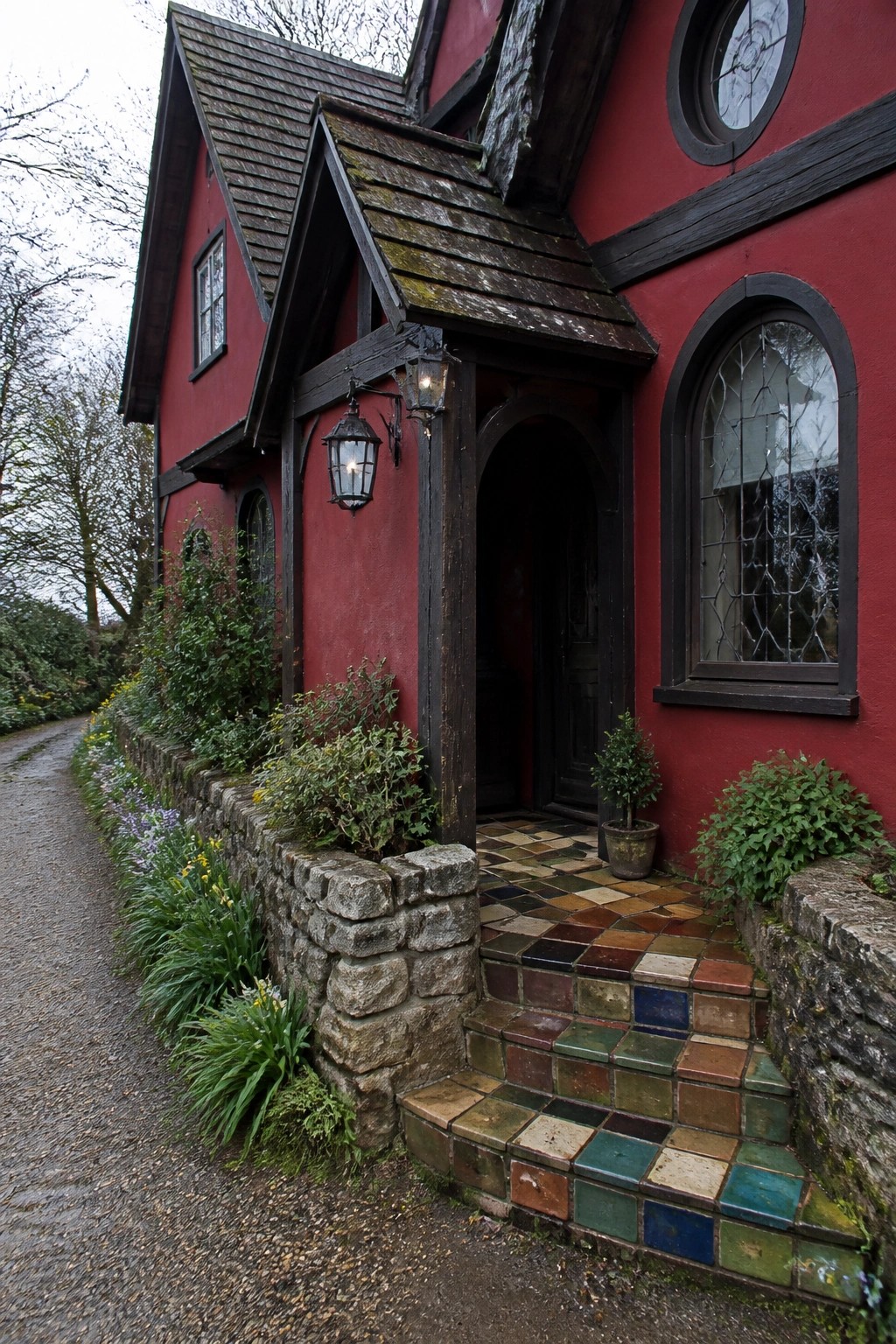
A deep red exterior gains a lot of presence when the trim, beams, and window frames stay dark. The contrast makes the rooflines and gable shapes stand out clearly against trees and overcast skies.
This color pairing works best on houses with visible structure like porches and angled roofs. Keep the trim matte and the red slightly muted so the house feels settled rather than loud.
Dark Red Siding Works Well Among Trees
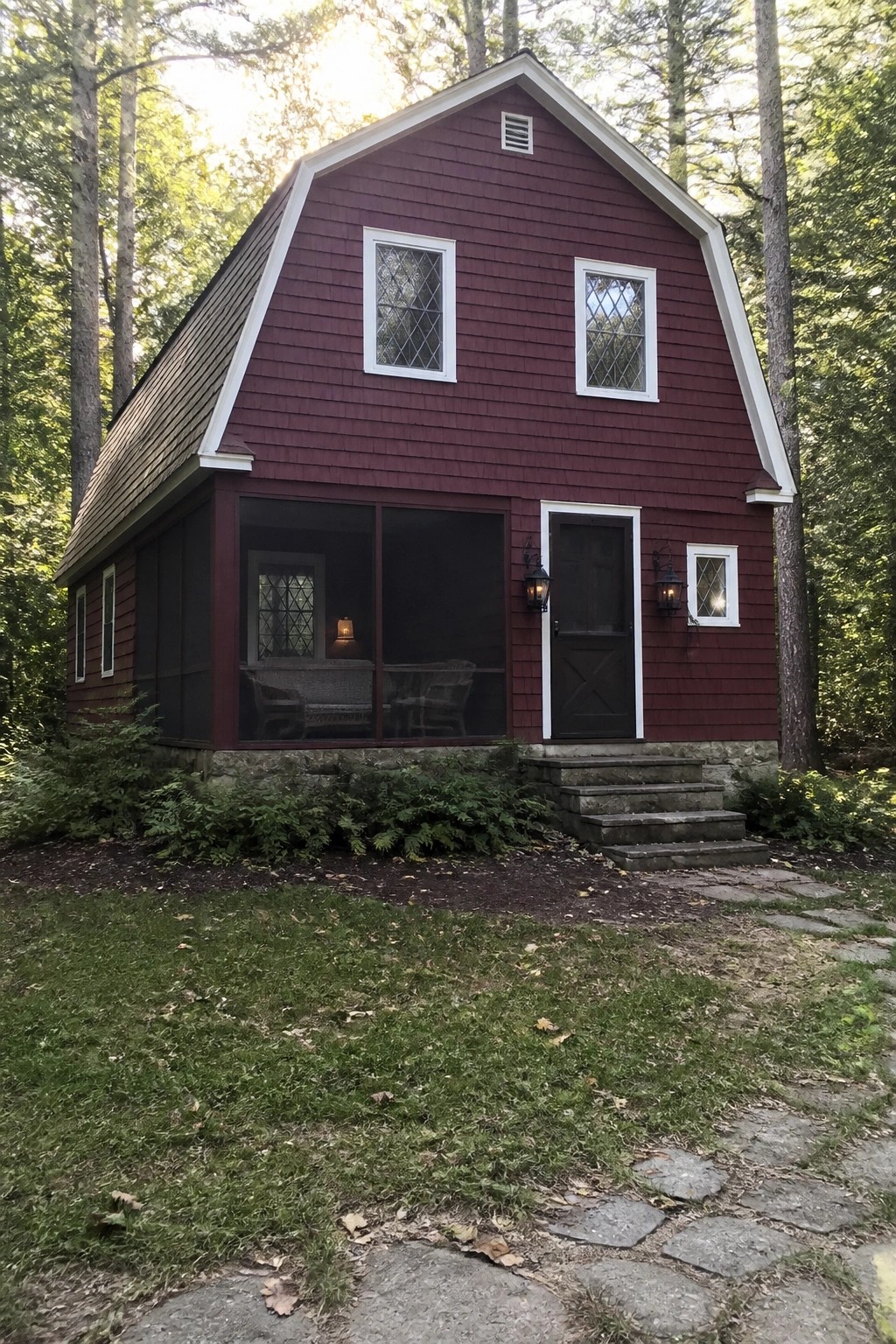
A deep red exterior helps a house feel settled in a wooded spot instead of standing out too sharply. The color picks up on the bark and shadows around it without needing extra tricks.
This approach suits homes on lots with heavy tree cover. Keep the trim light so the rooflines and windows stay easy to read from the path.
Deep Red Siding for Forest Homes
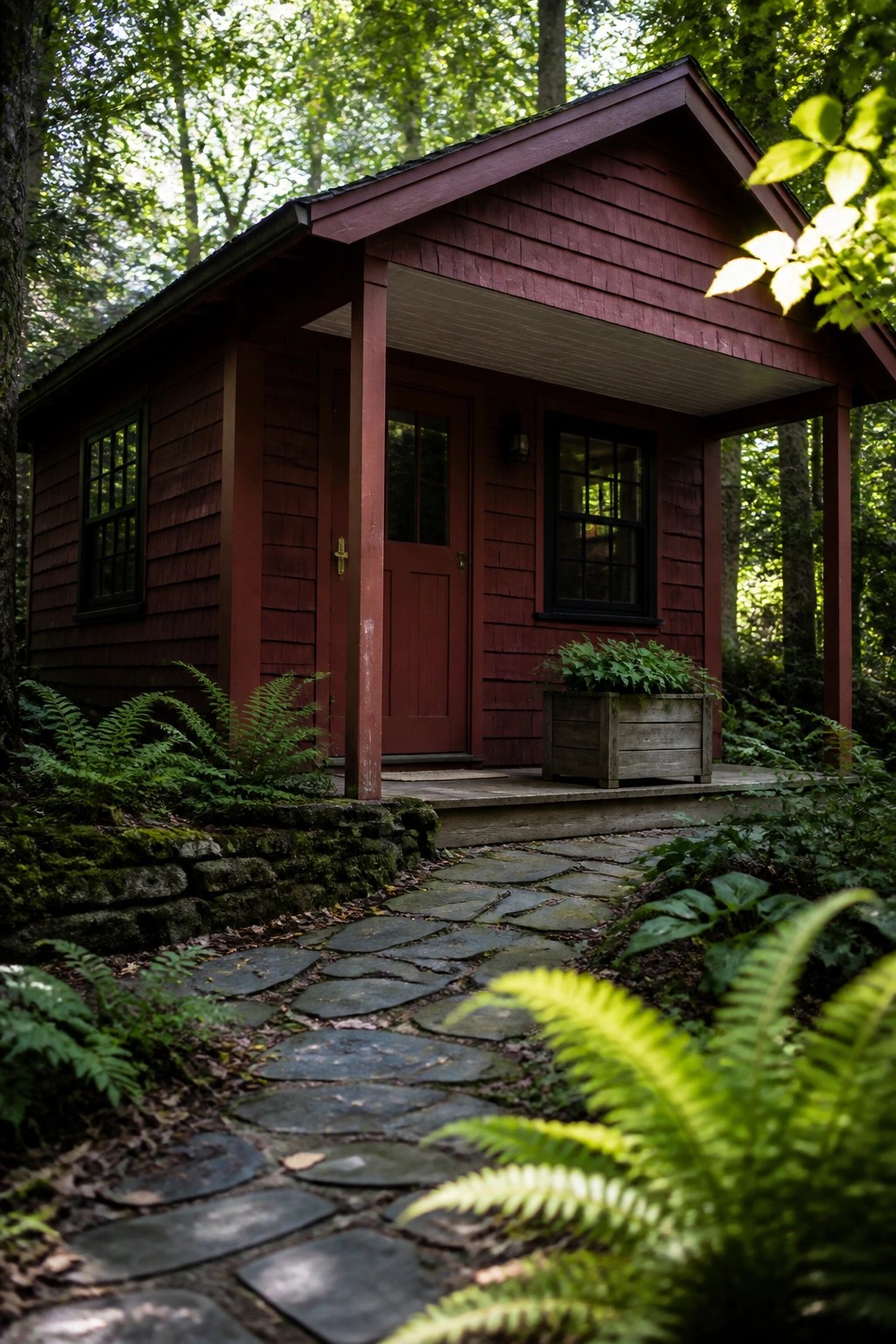
A deep red exterior can look right at home among trees because the color picks up on the darker tones in bark and shadows. It avoids the brightness that lighter shades might bring to a shaded setting and still gives the house some presence without fighting the greenery.
This approach works best on smaller homes or cabins where the siding is mostly wood shingles or clapboard. Keep trim simple and let the surrounding plants do the rest. The stone path and low ferns in front help tie everything together without extra effort.
Dark Red Siding With Black Trim
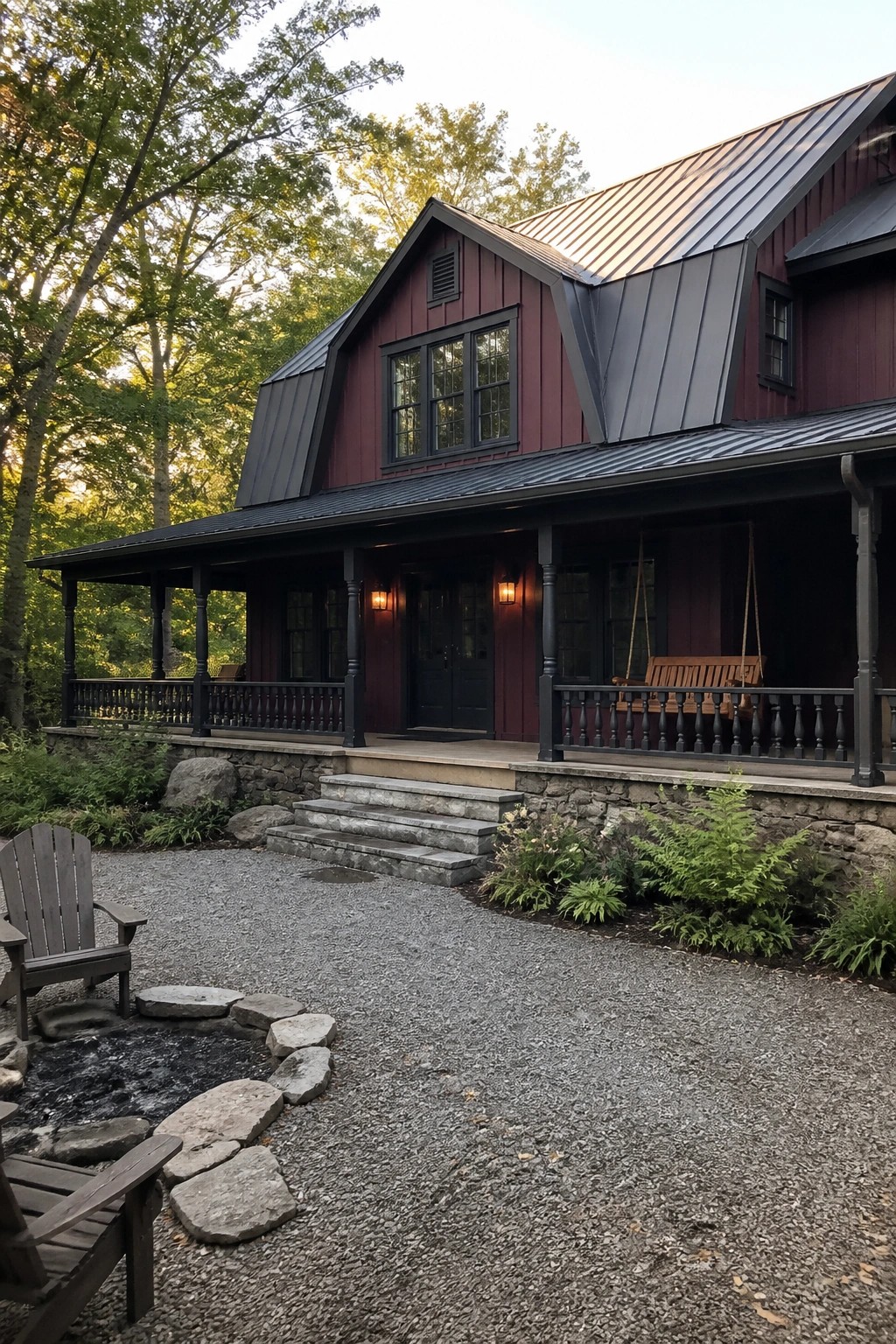
A deep red exterior can sit nicely among trees without feeling too bold or too dark. The color picks up the warmth from surrounding foliage while the black trim and roof keep the whole look grounded and simple.
This approach works best on homes with straightforward shapes and gabled roofs. Stick to matte or low-sheen finishes on the siding so the red does not compete with the natural light filtering through the trees.
Frequently Asked Questions
Q: How do I pick a dark red that won’t clash with all the green around my house? A: Focus on reds with a bit of brown in them. These tones blend better with tree bark and leaves year round. Test a sample on your siding during different seasons to see how it looks.
Q: Will dark red hold up against the damp and moss in wooded spots? A: Choose paints made for high humidity areas. Clean the surface well before applying and add a good primer. This keeps the color from peeling too soon.
Q: What roof color works best with a dark red house in the woods? A: Go for dark gray or black shingles (they echo the shadows under the trees). Keep trim in a soft cream to add some light contrast.
Q: Do I need special lighting for a dark red exterior at night? A: Warm LED spots aimed at the walls bring out the red nicely. Place them to avoid glare on the windows.
