

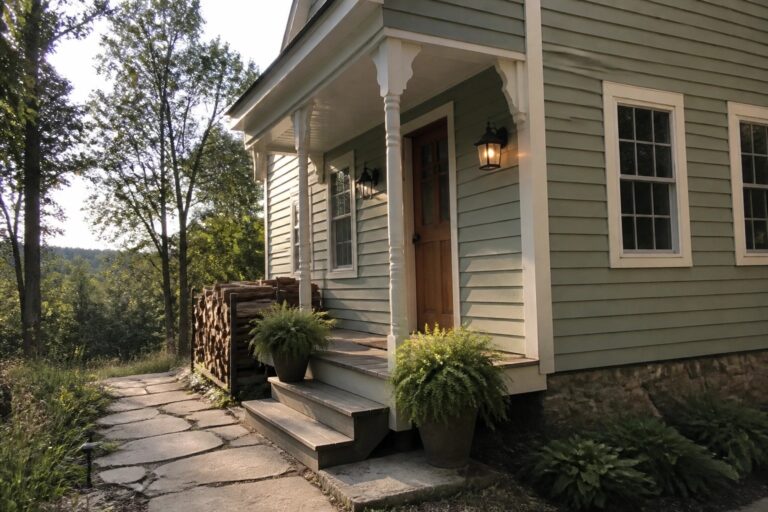
I’ve found that earthy house colors often look different once they’re up against trees and changing daylight throughout the year.
When I test them on my own siding the ones with too much gray tend to turn flat by late afternoon while warmer versions stay grounded next to the roof and any stone.
Some shades just disappear.
Placing a few samples right beside the trim and landscaping helps me see how each one will settle in over time instead of guessing from a small chip.
Rural settings reward colors that can handle both bright sun and the softer light that comes after rain so I always check them at least twice before making a final choice.
Soft Sage Green Siding Beside Natural Stone
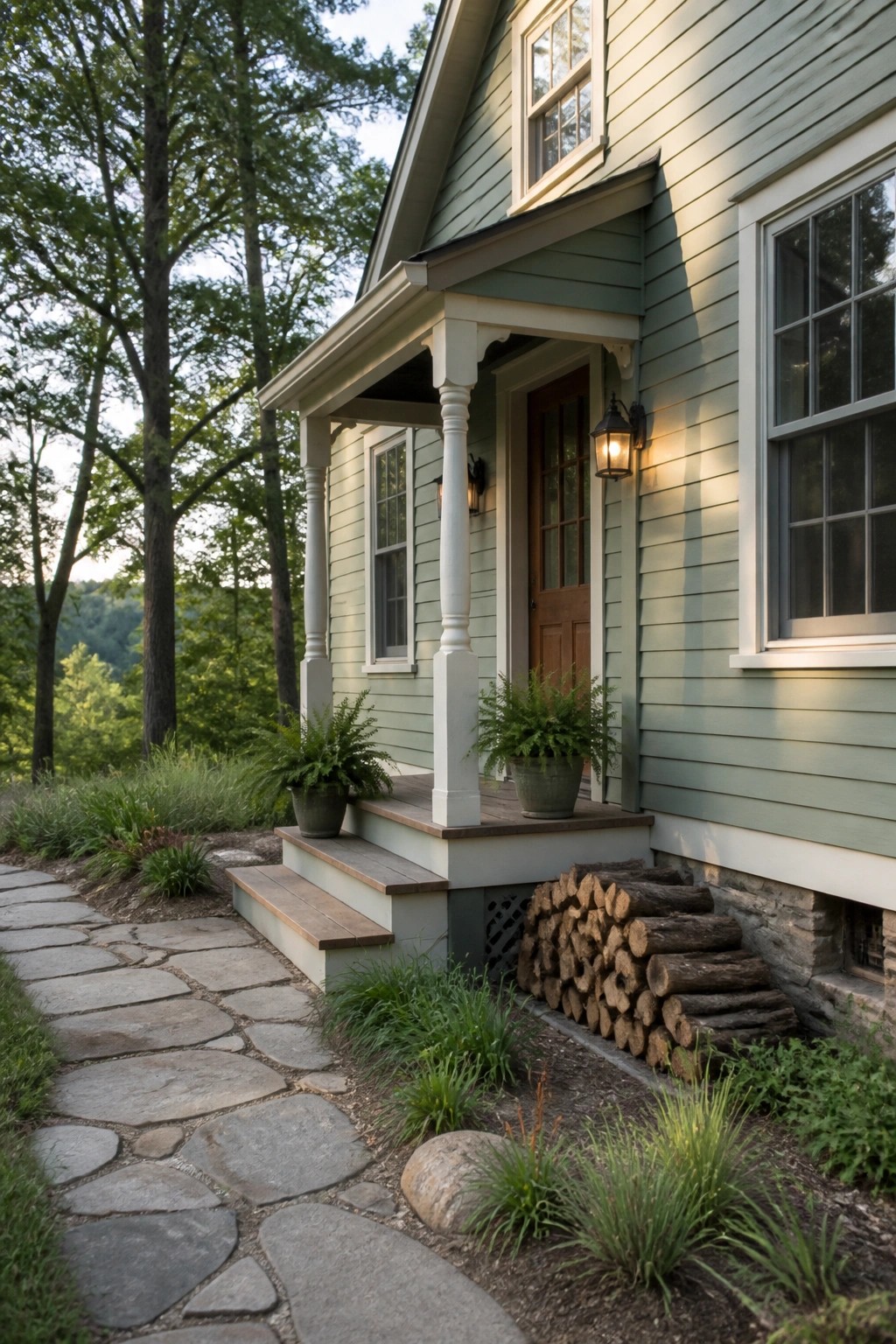
This siding uses a soft sage green that feels calm and slightly gray. It is the kind of earthy shade that sits comfortably in a wooded setting without fighting the trees around it. You see the same quiet tone in colors like Benjamin Moore October Mist, Sherwin Williams Evergreen Fog, and Behr Soft Sage.
The gray lean keeps the green from turning too yellow in daylight, so it stays steady next to the stone base and white trim. It works well on homes where you want the color to feel settled rather than bold, and it pairs easily with natural wood and simple masonry details.
Warm Beige Brick Beside Natural Stone
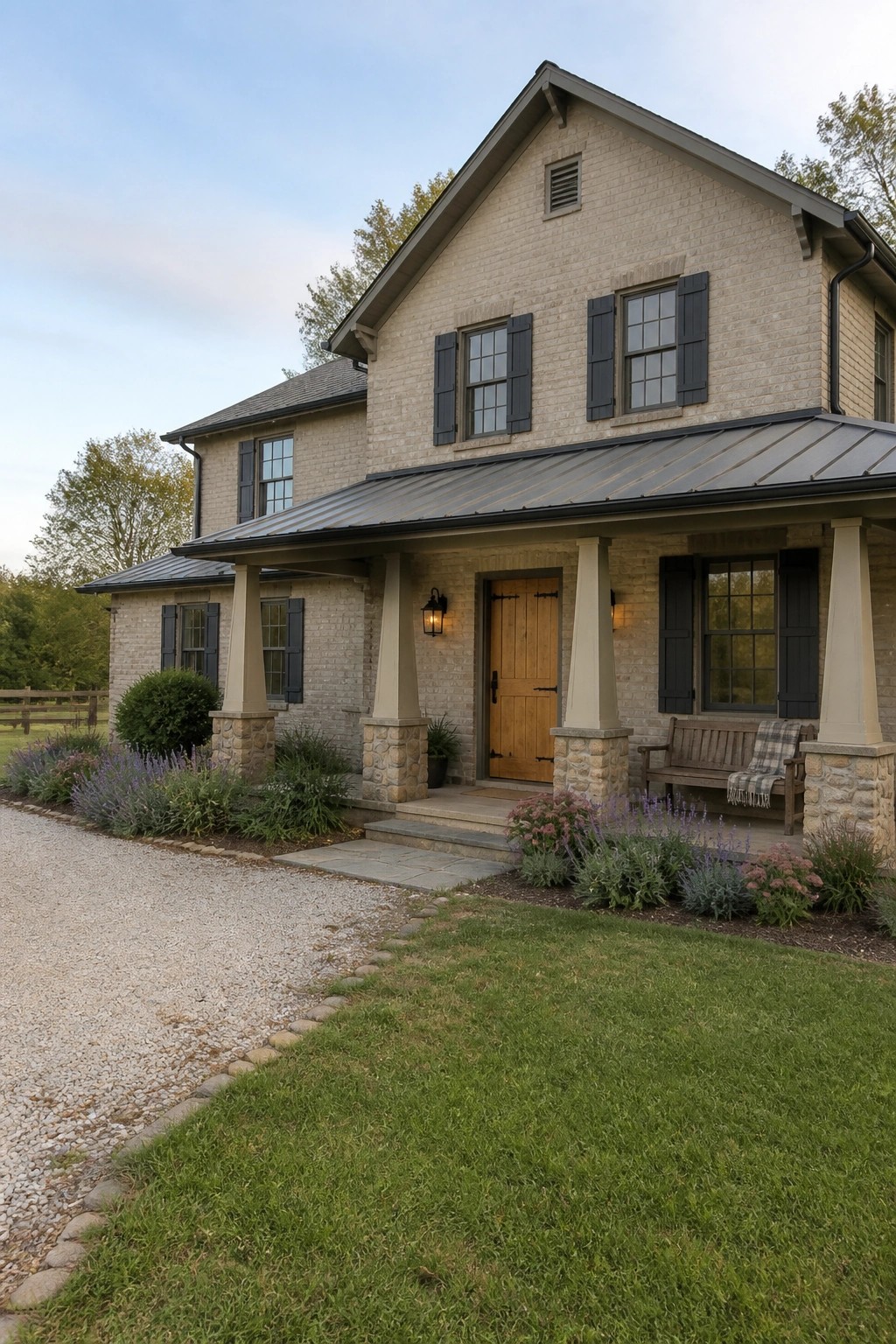
This warm beige exterior color works well on brick because it keeps the surface from looking too flat while still feeling grounded. It has that soft, slightly grayed tone that blends easily into wooded and rural settings without standing out too much. Many people choose it when they want something simple that ages nicely with the landscape.
It sits comfortably next to stone and wood details, which helps the whole house feel connected to the surroundings. Colors like this tend to read a little warmer in afternoon light and cooler in shade, so testing a few samples on the actual wall is useful. Good matches often include Sherwin Williams Accessible Beige, Benjamin Moore Edgecomb Gray, or Behr Creamy Mushroom.
Muted Olive Green Siding With Dark Wood
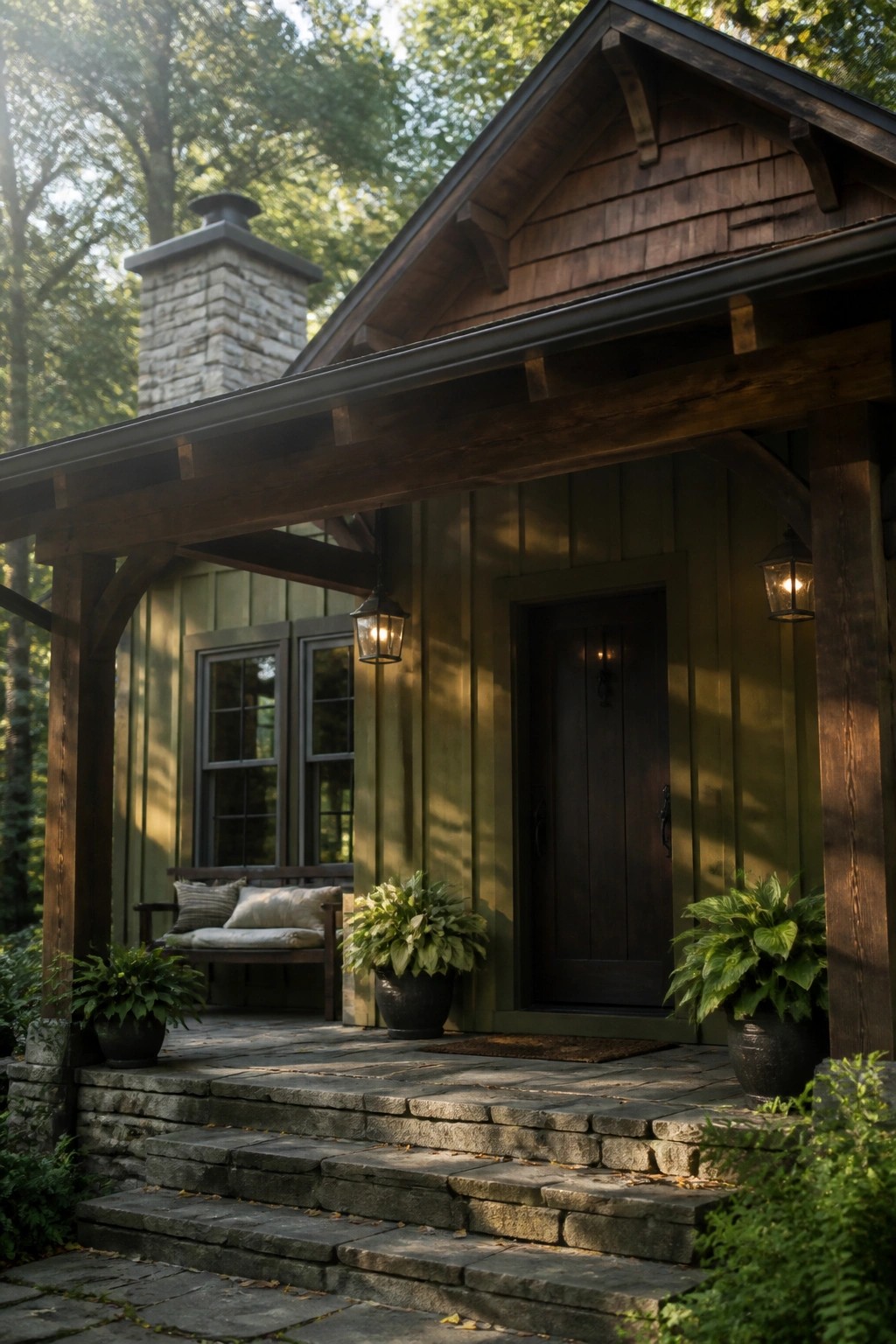
This muted olive green on the siding gives the house a quiet, grounded look that blends into the trees. It reads as a mid-tone earthy green rather than a bright or cool one, which makes it feel natural in a wooded spot.
The color works best when it sits next to dark wood beams and stone, the way it does here. It can handle dappled light without shifting too much, and it pairs well with simple trim in black or deep brown. Good matches include Sherwin Williams Rosemary, Benjamin Moore Dark Olive, Behr Olive Branch, or Farrow & Ball Olive.
Soft Gray Green Beside White Trim
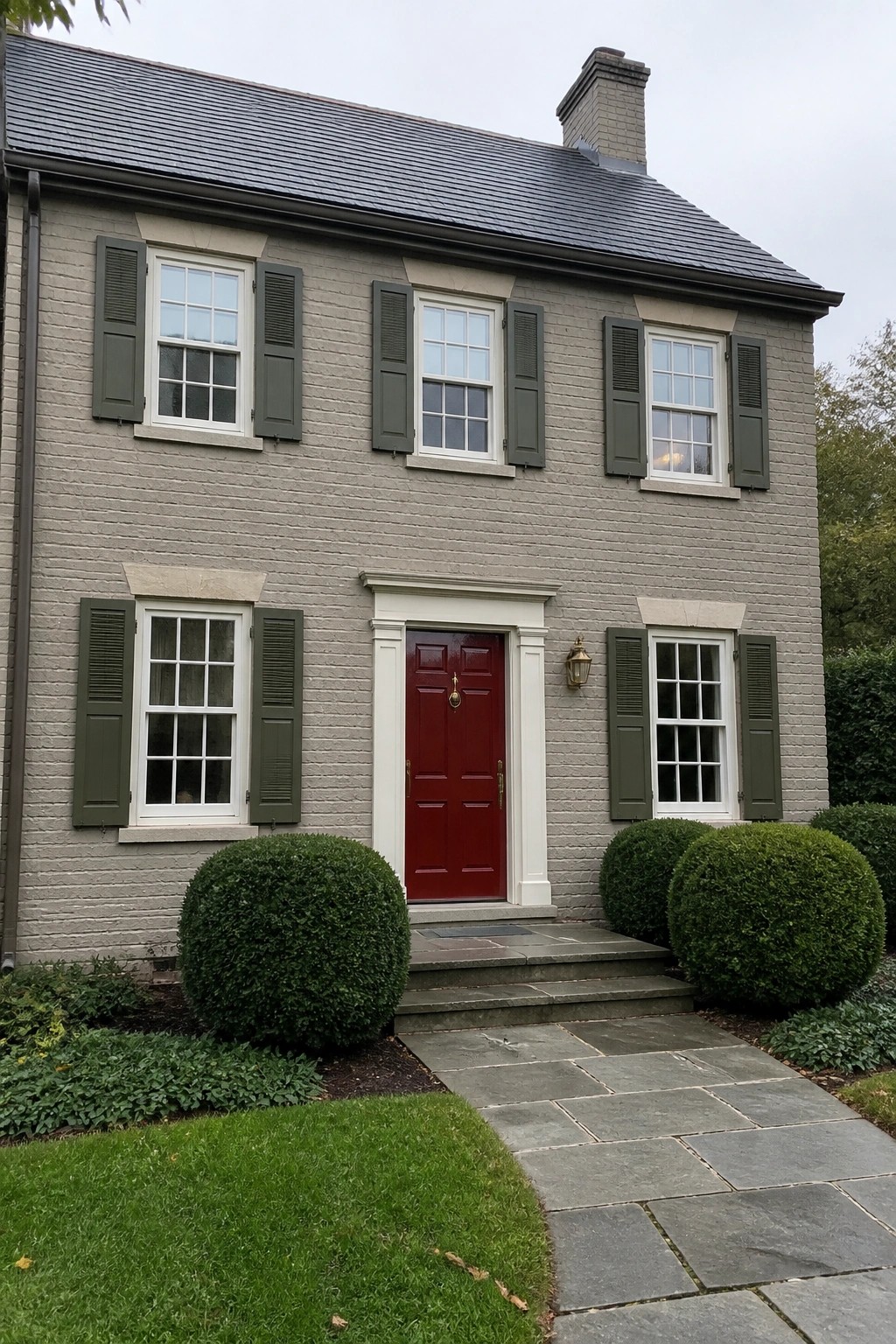
This muted sage green gives the house a quiet, grounded look that fits right into wooded or rural settings. It sits somewhere between green and gray, so it never feels too bright or too dull against the surrounding trees and stone. The color has enough depth to show the texture of the siding without looking heavy.
It pairs cleanly with white trim and lets a red door stand out without clashing. In overcast light the gray undertone comes forward a bit, which helps the house blend in rather than pop. Try it on homes with simple trim and natural materials nearby.
Warm Brown Siding Against Natural Stone
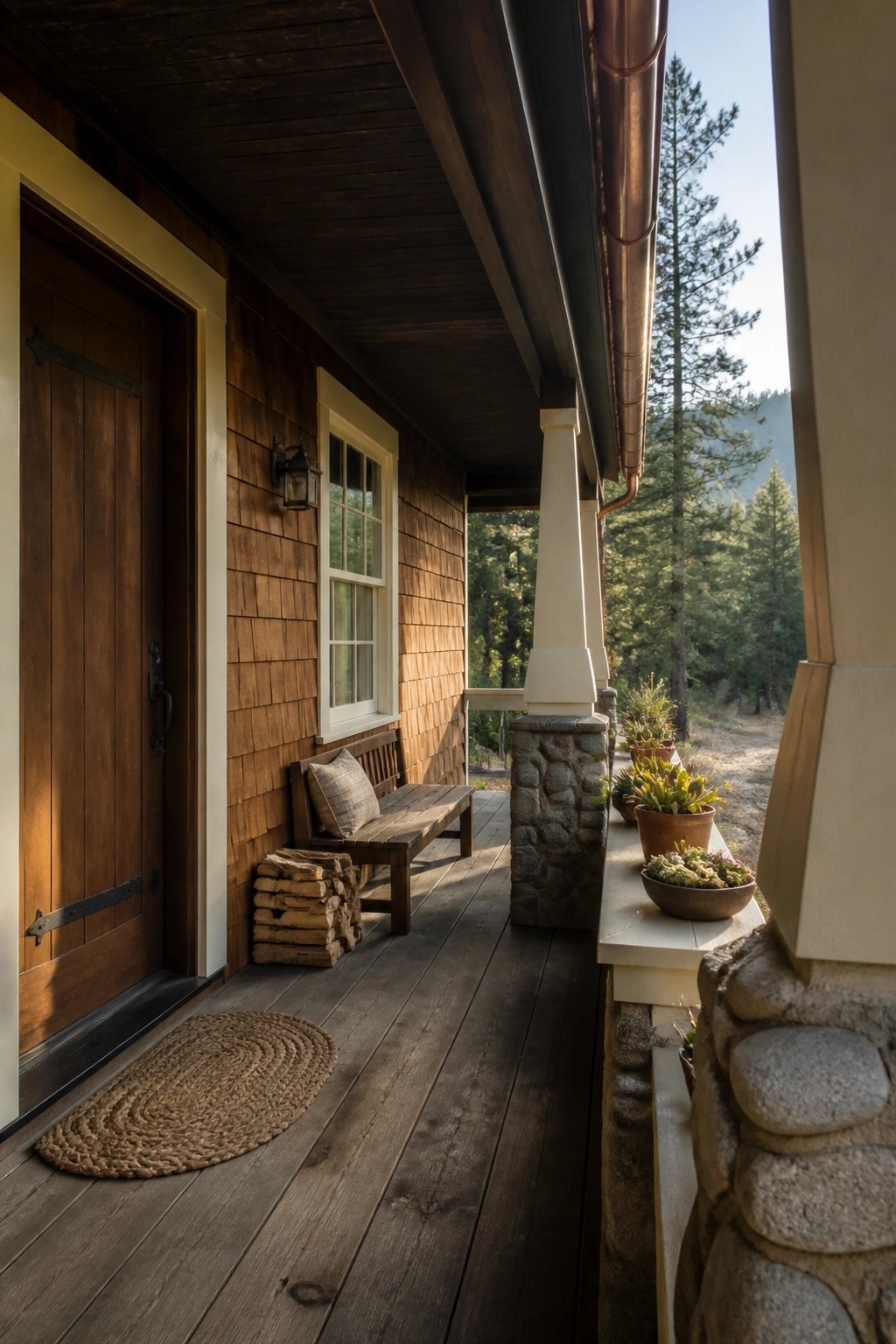
A warm medium brown works well on exterior wood siding in wooded settings. This earthy tone keeps the house grounded without standing out too much against the trees and natural surroundings.
It has a slight golden undertone that pairs nicely with stone columns and wood trim. Try something close to Sherwin Williams Accessible Beige or Benjamin Moore Edgecomb Gray if you want a similar soft brown that still feels natural outdoors.
Deep Green Siding Against Natural Stone
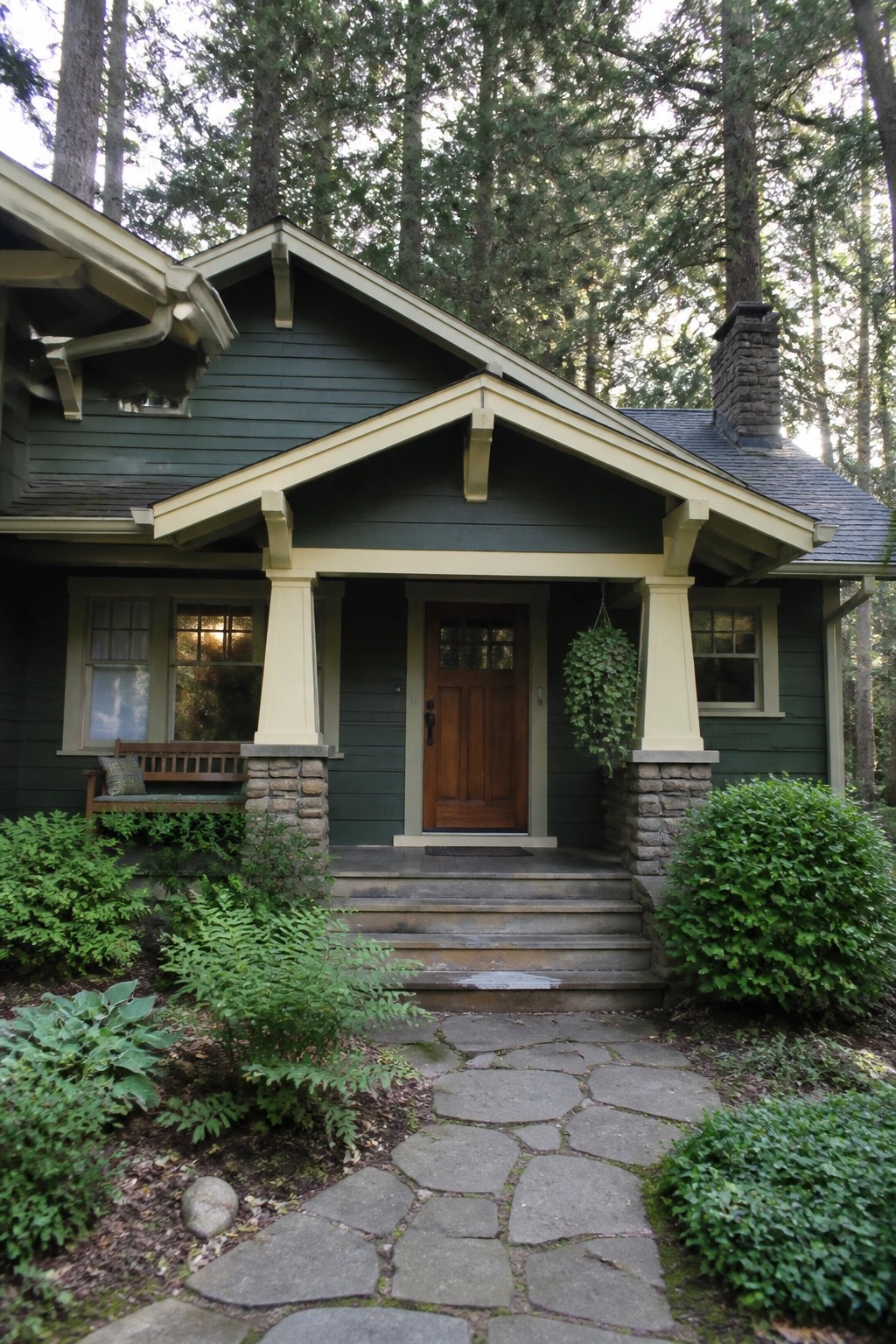
A deep forest green works well on the siding here. It gives the house a grounded look that fits right into the trees without trying too hard. The color sits between a true green and something a little darker, which keeps it from feeling too bright or too dull in the shade of the woods.
It seems closest to Sherwin Williams Rookwood Dark Green, Benjamin Moore Forest Green, Behr Forest Floor, or Farrow & Ball Green Smoke. Pair it with light trim and stone so the green does not take over, and test a sample on the north side of the house first since the shade can make it read cooler than expected.
Warm Greige Siding Beside Natural Stone
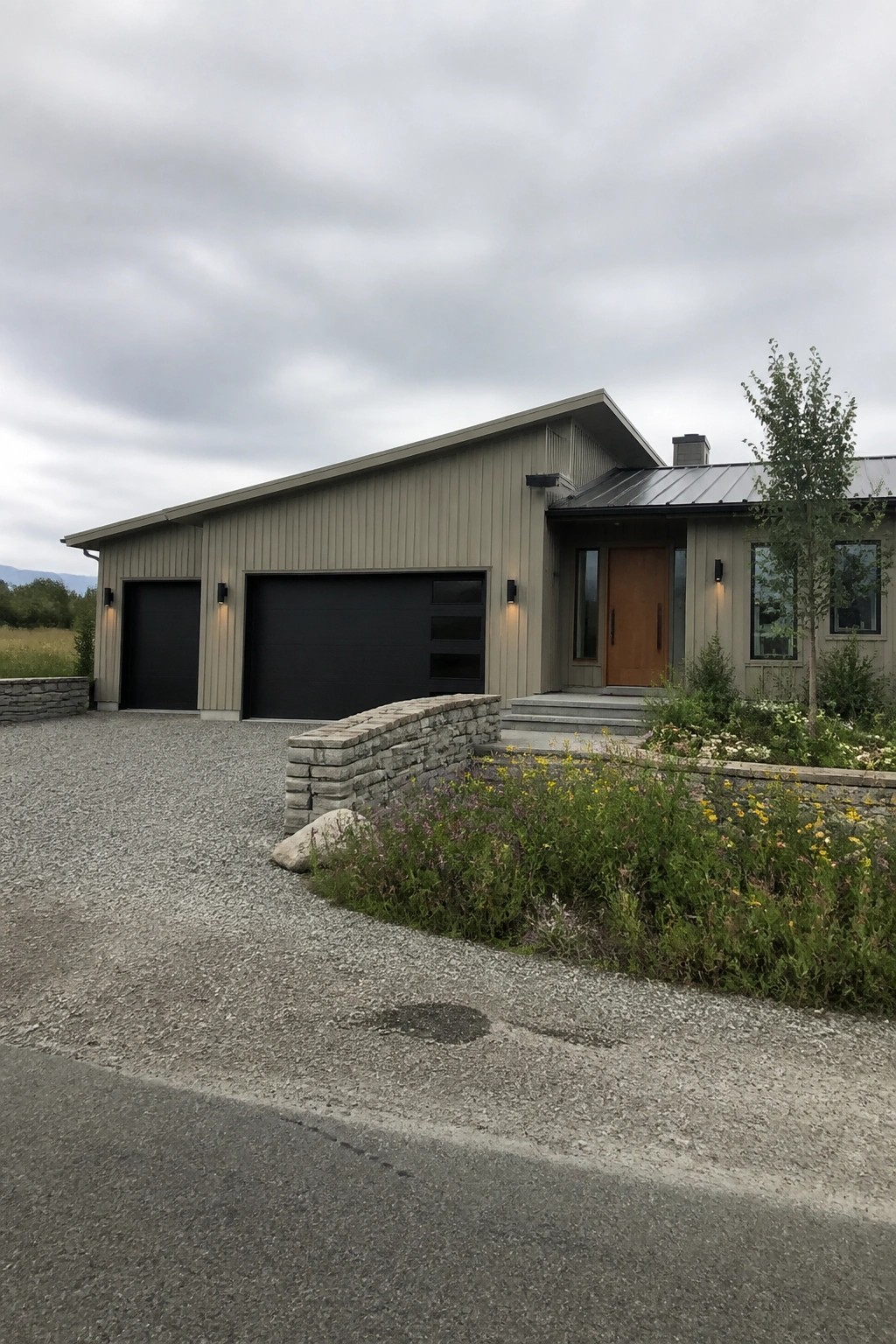
This muted greige works well on the horizontal siding of a rural home. It sits between gray and beige with a soft earthy feel that blends into wooded or open settings without standing out too much. The color stays calm next to dark garage doors and helps the whole house feel grounded.
It pairs easily with stone walls and simple metal roofing. In bright daylight it can read a little warmer, so it often looks best on homes with some natural shade from trees. Try something close to Sherwin Williams Accessible Beige, Benjamin Moore Revere Pewter, or Behr Greige if you want a similar tone.
Deep Green Against Red Brick
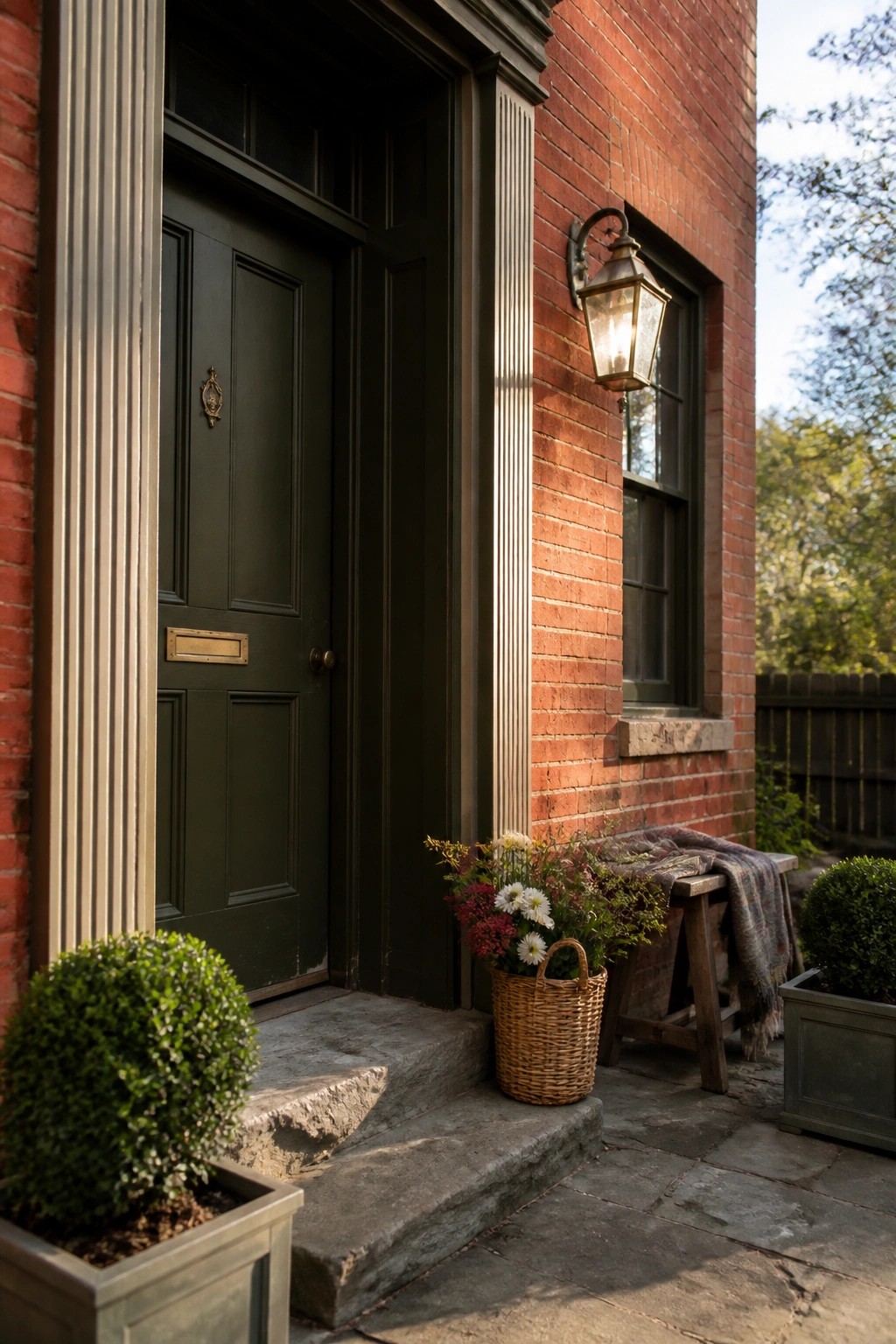
This deep forest green on the door and surrounding trim feels solid and traditional. It has a rich, earthy tone that sits comfortably next to red brick without competing with it.
The color stays fairly true in daylight and works best with simple masonry and natural wood accents. Try something close to Benjamin Moore Black Forest Green or Sherwin Williams Forest Green if you want a similar depth for a rural entry.
Golden Yellow Siding With Stone Foundations
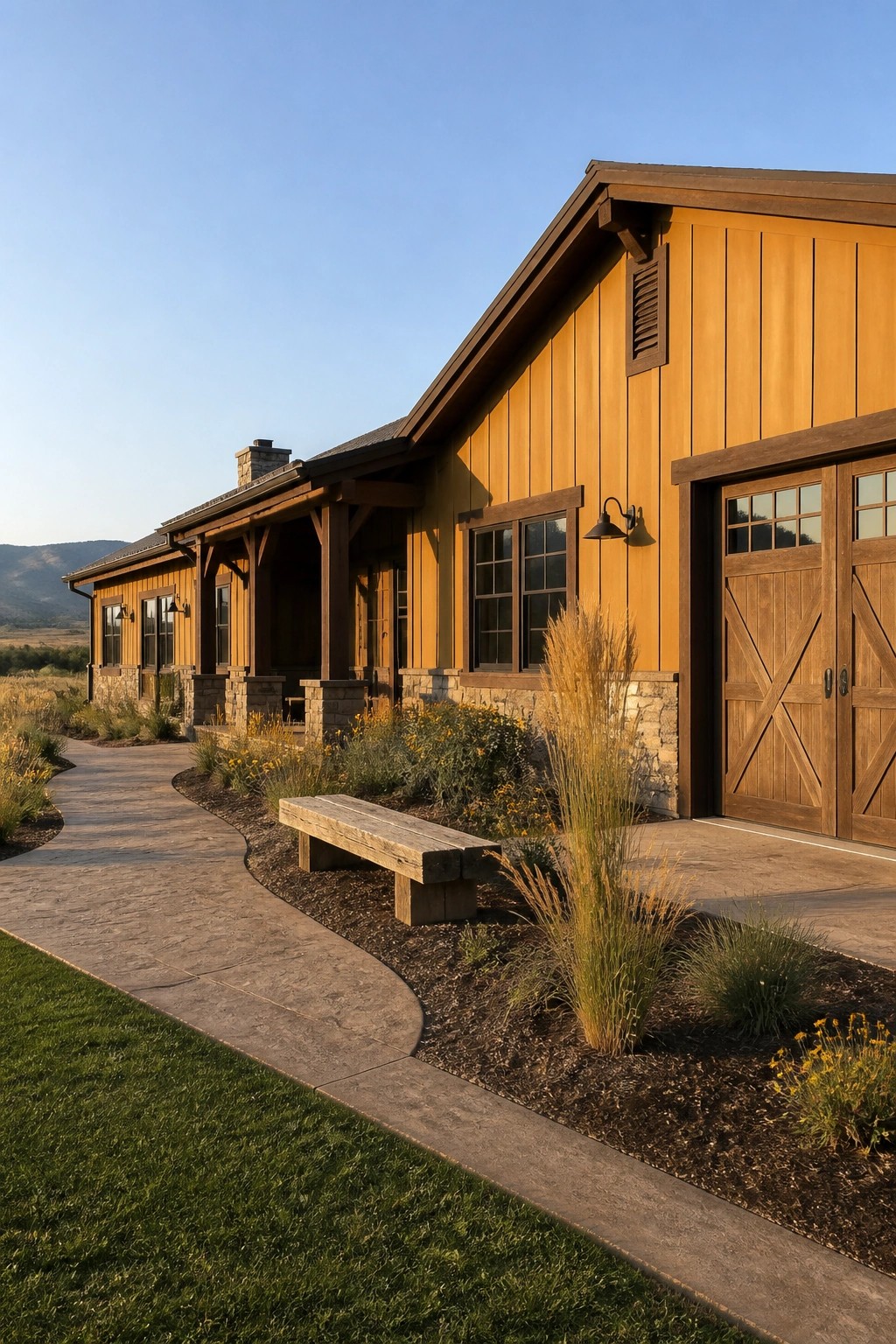
This warm golden yellow gives the house a soft earthy glow that feels natural in a rural setting. It sits comfortably next to the stone base and dark wood trim, creating a balanced look that does not fight the landscape around it. Colors in this range often read closest to Sherwin Williams Golden Fleece, Benjamin Moore Hawthorne Yellow, or Behr Golden Honey.
The shade carries a mild orange undertone that keeps it from looking too lemony outdoors. It works especially well on homes with natural stone or wood accents, and it tends to stay pleasing even when the light shifts through the day.
Warm Taupe Siding With White Trim
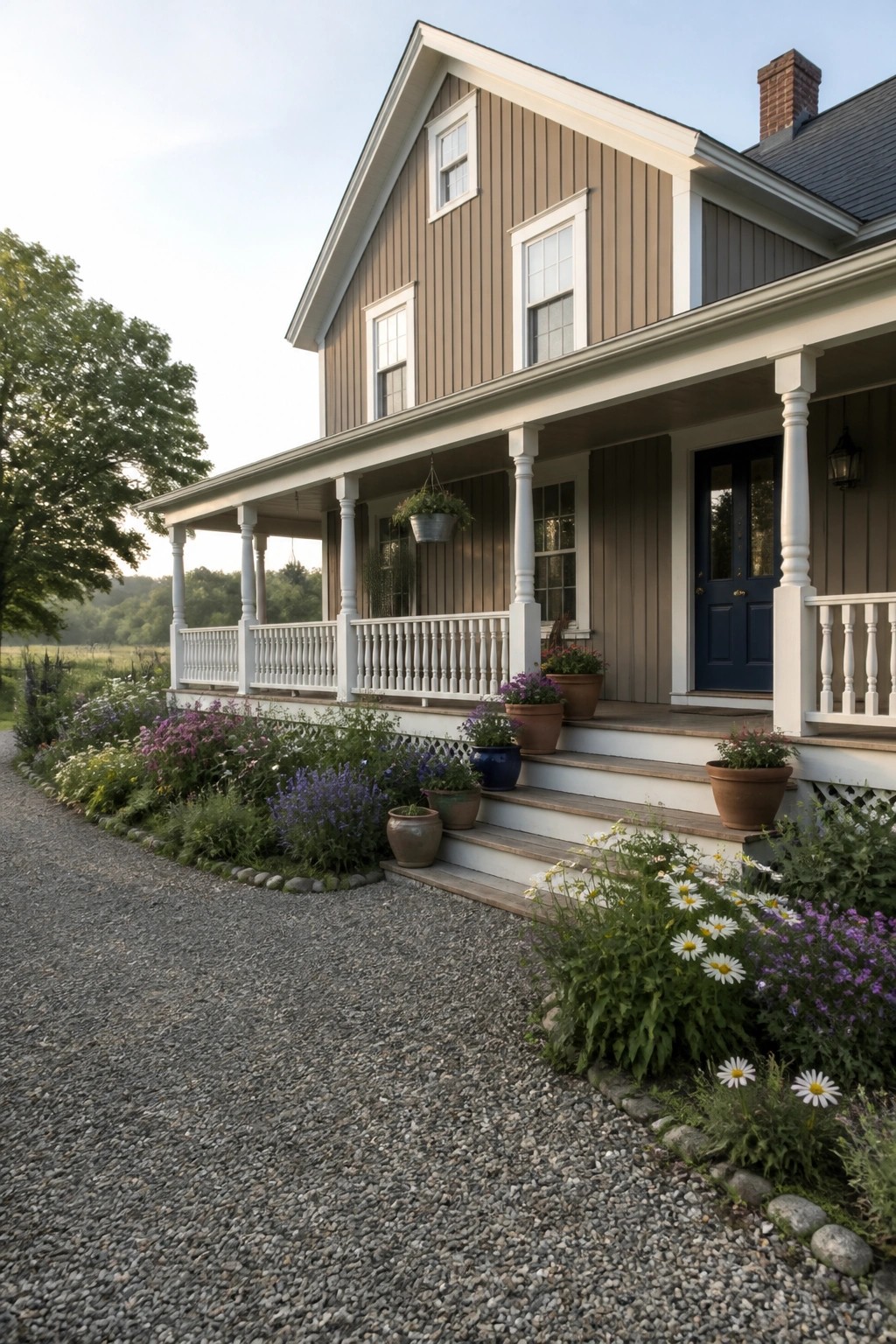
This earthy taupe is a mid-tone neutral that sits between gray and brown. It gives the house a settled look that feels right at home in a wooded or open rural spot. The color stays calm next to the white trim and does not fight the surrounding trees and fields.
It has a slight warm undertone that keeps it from looking flat or cold outside. Pair it with white or cream trim and a darker roof for balance. In strong sun it can read a little lighter, so testing a sample on the actual siding is worth the extra step.
Soft Blue-Gray Siding With Stone Base
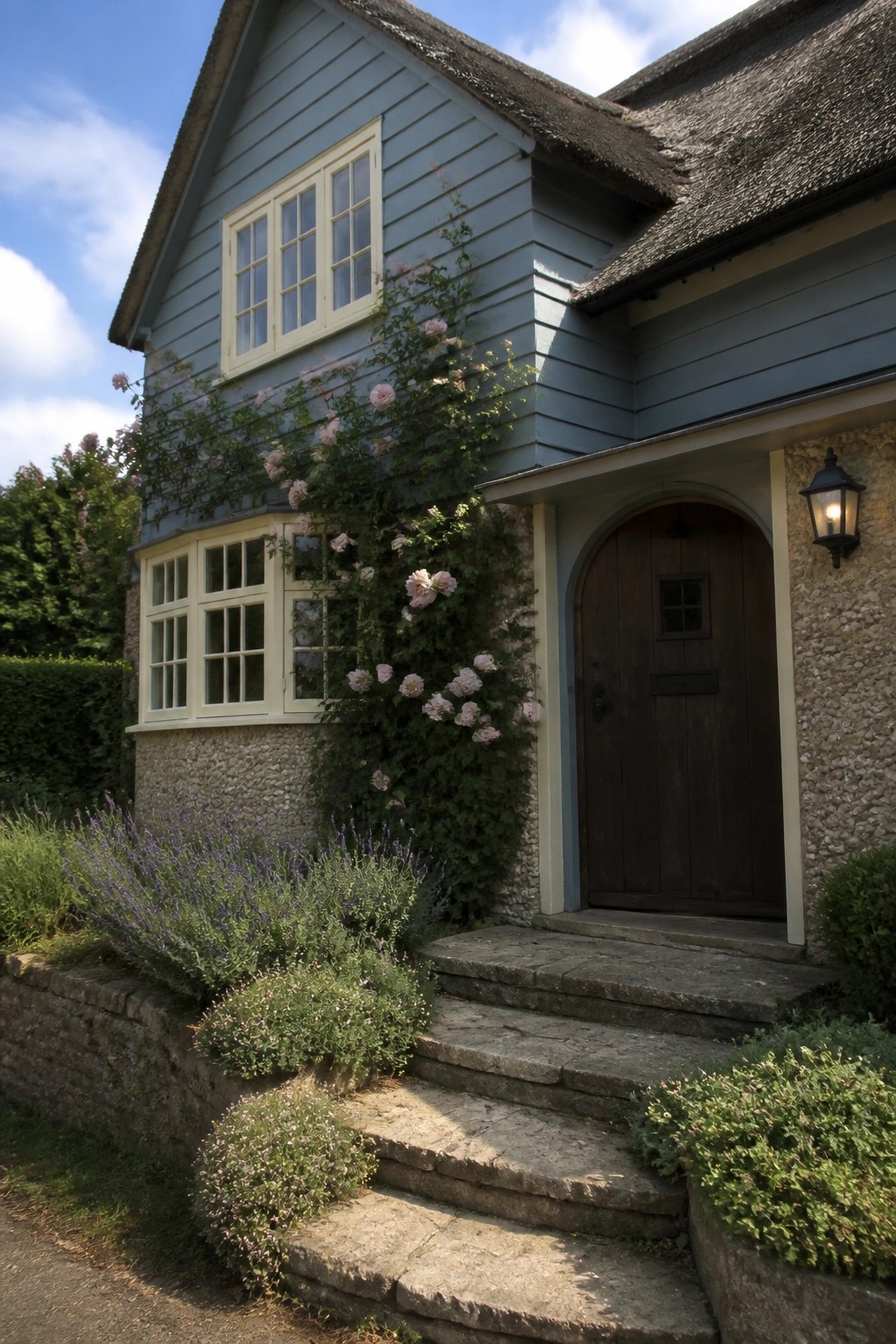
A soft blue-gray gives this house a calm, earthy feel that sits nicely in a rural setting. It reads as a muted cool tone that blends with the landscape instead of fighting it.
This color works best when paired with natural stone or pebble surfaces at the base. It holds up well in daylight and looks especially at home with dark wood doors and simple trim.
Deep Green Siding With Warm Wood
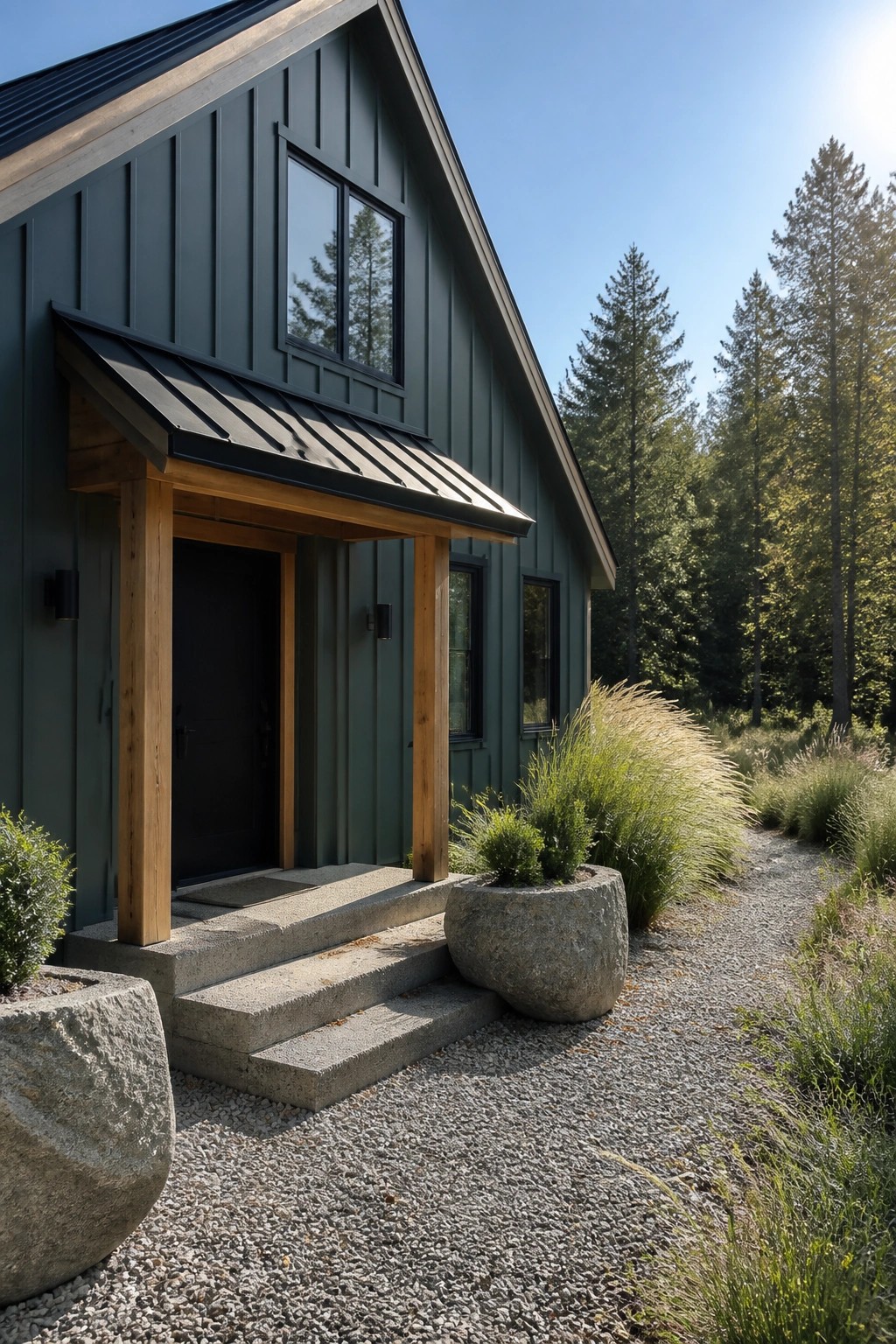
This deep forest green gives the house a solid, grounded look that fits right into a wooded setting. It reads as a cool-leaning dark green that stays rich without turning black in bright light. Colors like Sherwin Williams Evergreen Fog, Benjamin Moore Forest Green, Behr Forest Floor, or Farrow & Ball Hague Blue come close.
The tone works well because it sits comfortably next to the warm wood posts and natural stone planters without fighting them. It also pairs nicely with a dark roof and gravel path, so the whole exterior stays simple and low-maintenance. Just test it on a large board first, since deeper greens can shift more than expected once the full siding is covered.
Warm Beige Siding Beside Natural Stone
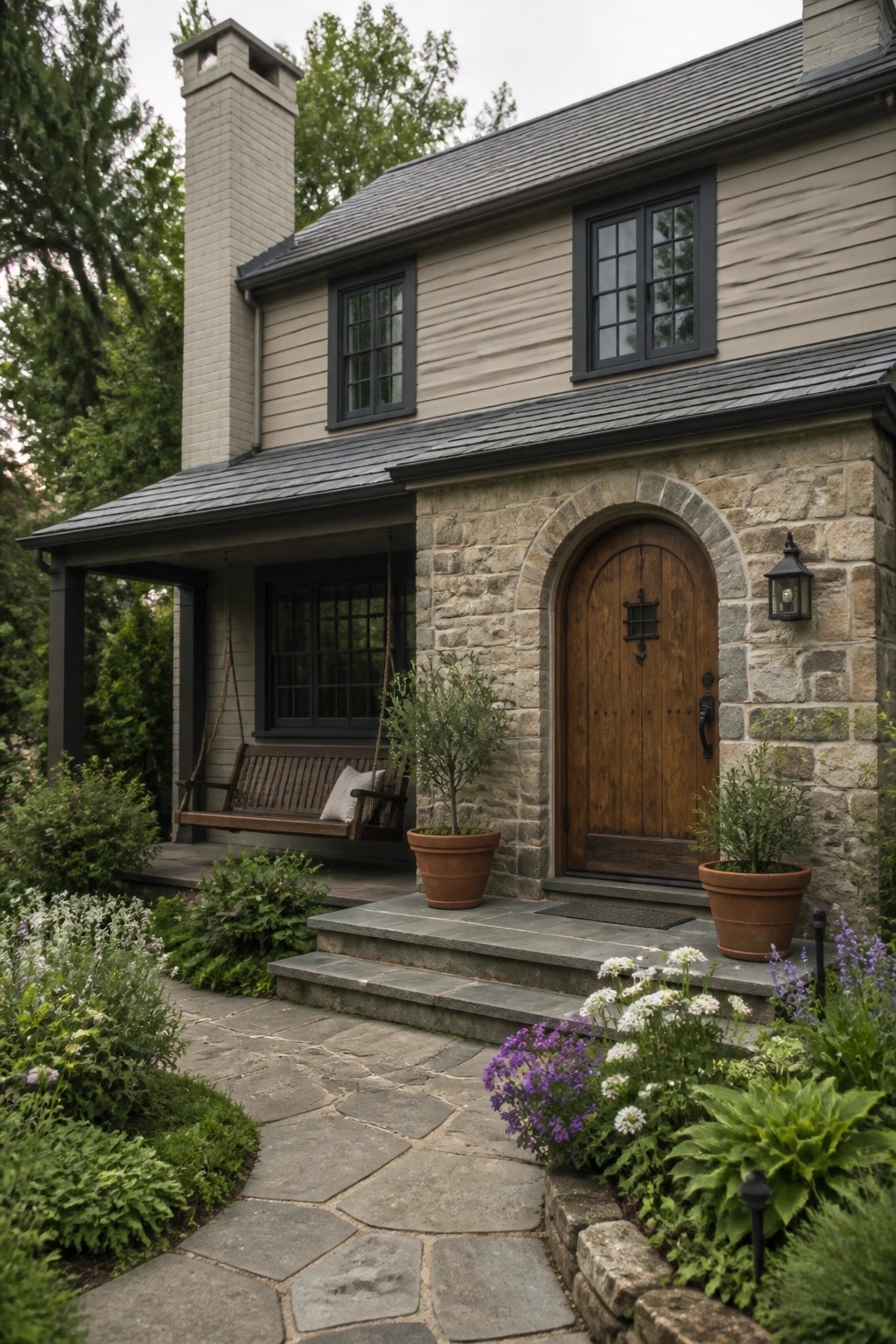
This light warm beige on the siding gives a quiet, earthy base that fits right into wooded surroundings. It sits between gray and tan without leaning too far either way, so it feels grounded rather than washed out next to the stone.
The color reads best with deeper roofing and dark window frames because those elements keep it from looking too pale. It works well on homes where the lower half stays in natural stone, since the two materials balance each other without needing extra trim color.
Soft Sage Green Beside Weathered Wood
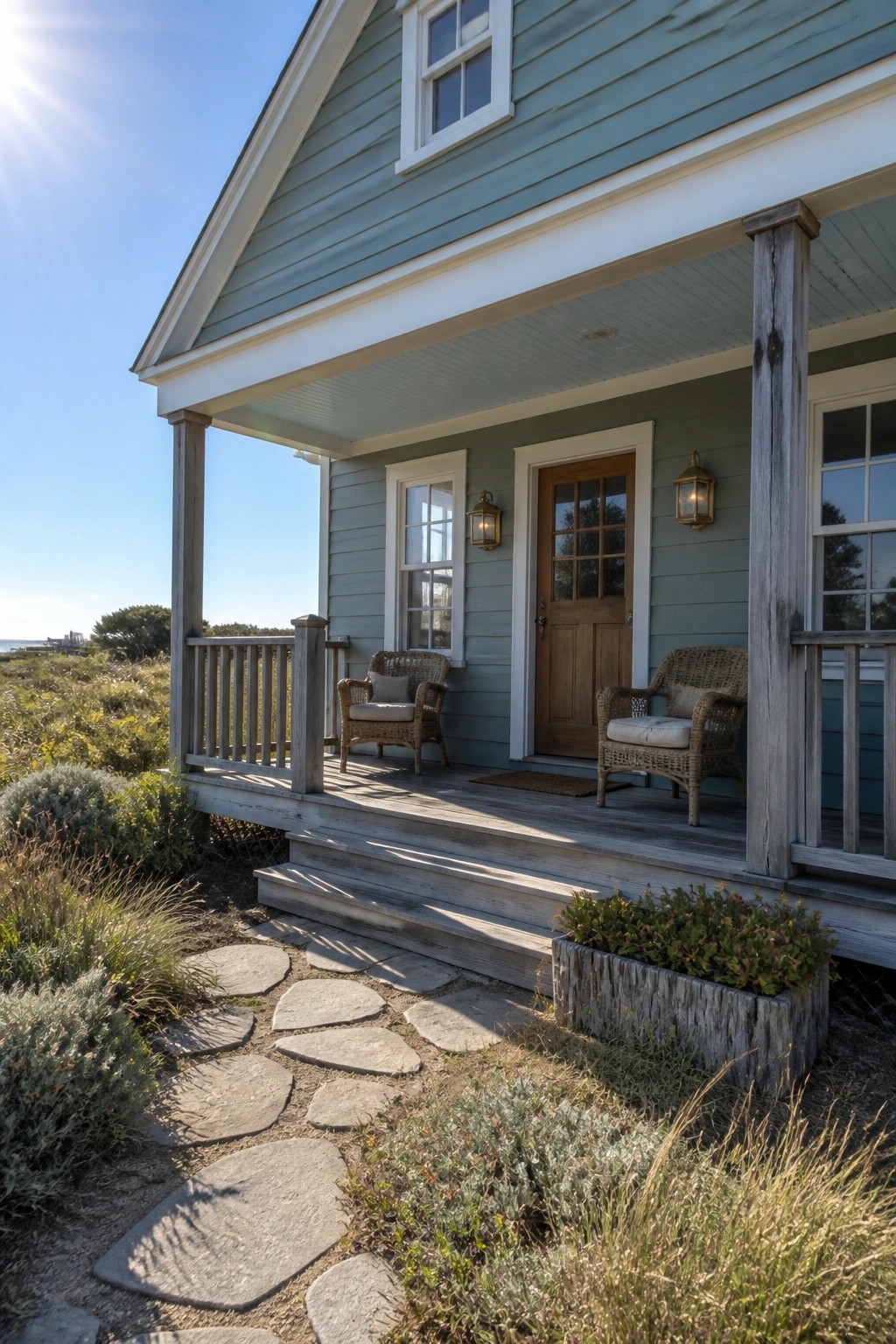
This soft sage green siding has a muted, slightly cool tone that feels right at home in a rural setting. It sits nicely against the grayed wood posts and railings without looking too bright or too washed out.
The color reads as a mid-tone sage with a touch of blue in the undertone. It pairs well with natural wood tones and simple trim, and it holds up nicely in full sun without shifting too much. Try it with something like Sherwin Williams Evergreen Fog, Benjamin Moore Saybrook Sage, or Behr Soft Sage.
Barn Red Siding With Rustic Wood Doors
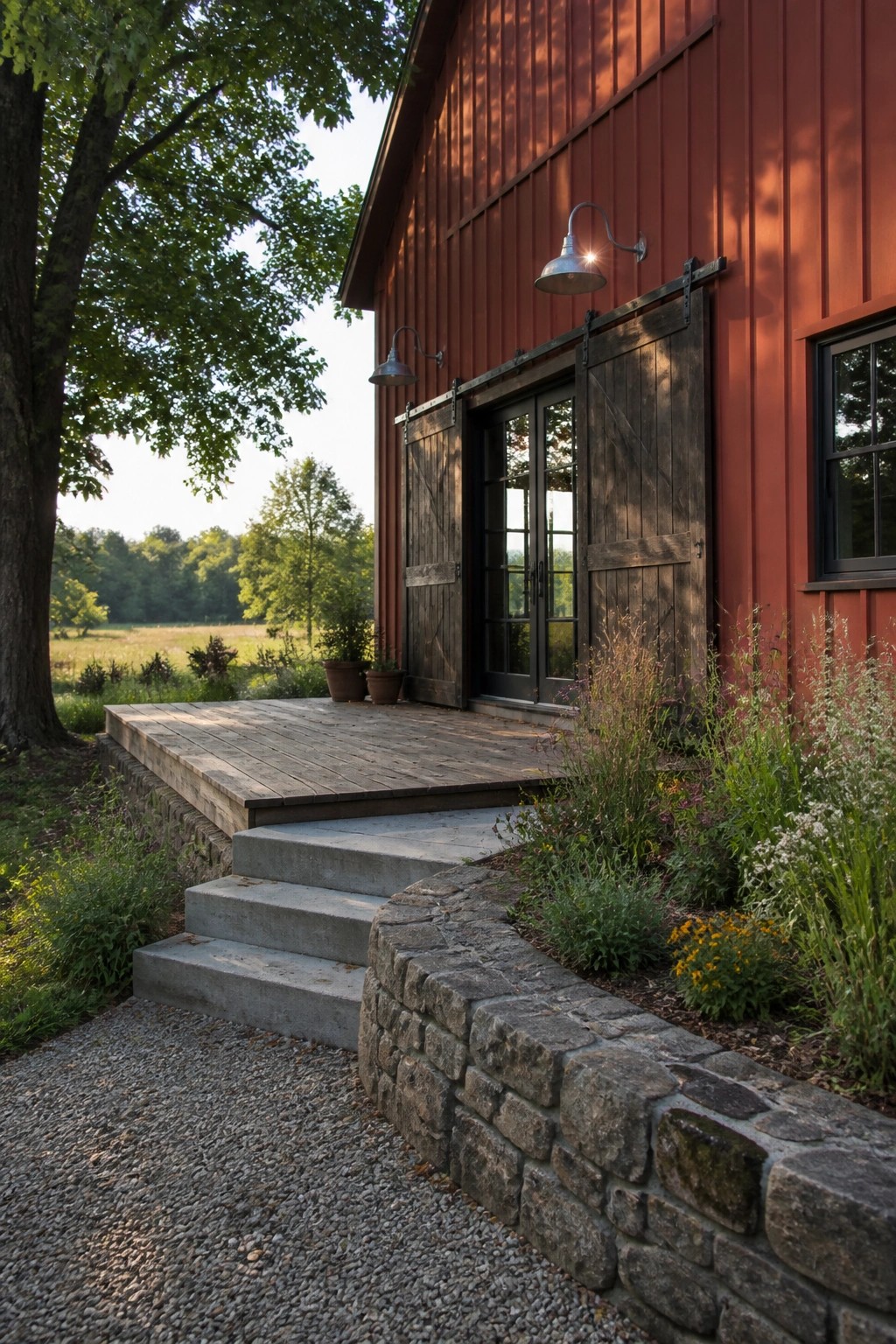
A warm barn red works well on this kind of rural exterior. The color has a deep earthy tone that feels grounded next to the weathered wood and stone base. It reads as a classic choice for wooded settings because it sits comfortably with the natural surroundings without standing out too sharply.
This red leans slightly toward the orange side in daylight and pairs best with dark wood trim or black windows. It holds up nicely against greenery and gravel paths. Avoid using it on homes with cool gray stone or very pale trim because the contrast can feel too strong.
Soft Sage Stucco With a Dark Roof
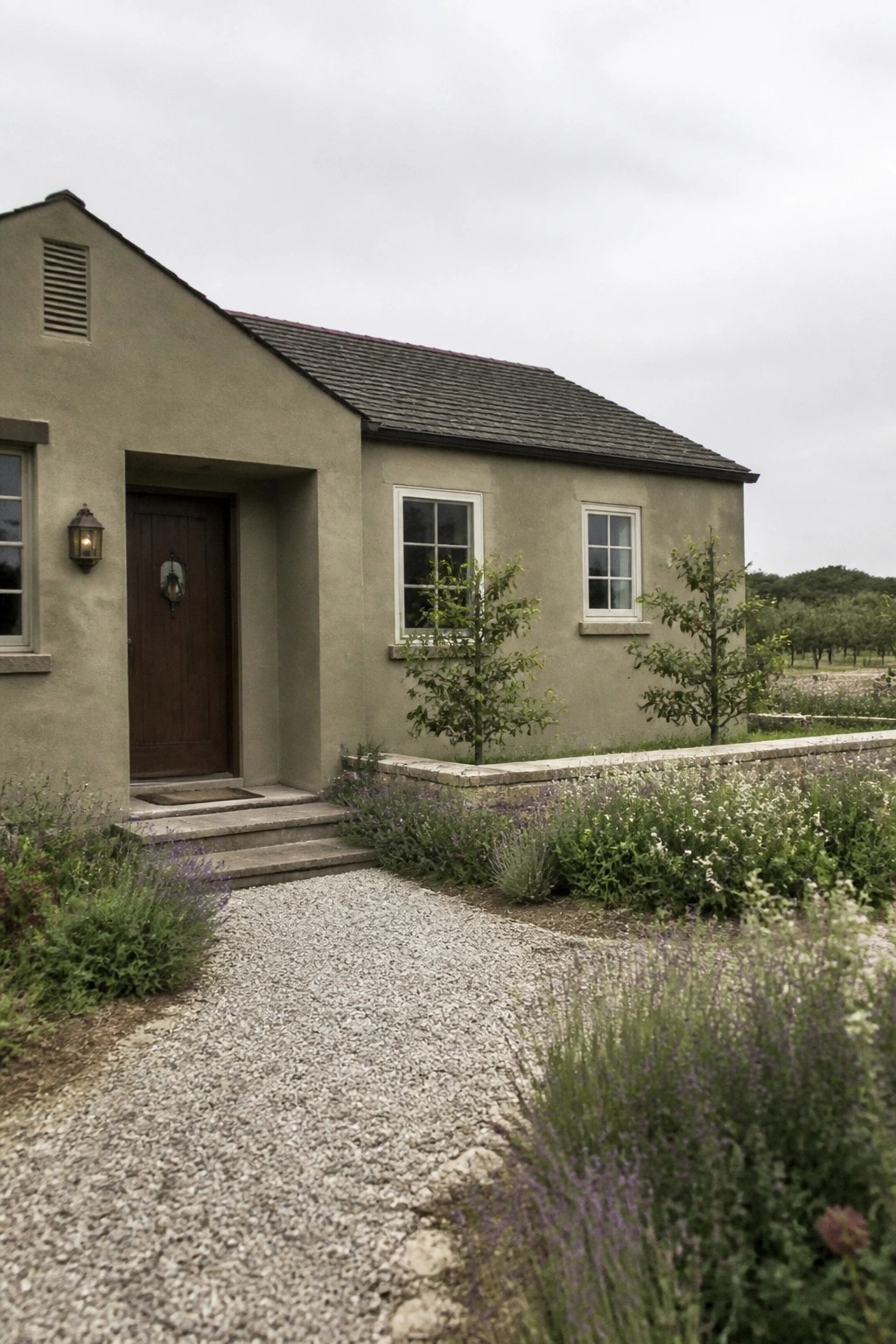
This muted sage green on the stucco siding gives the house a quiet, grounded look that fits right into a rural setting. It is not a bright green but more of a soft, earthy tone that feels natural rather than decorative.
The color has a slight gray undertone that keeps it from looking too fresh or garden-like. It pairs easily with dark roofing and simple gravel paths, and it holds up well against the surrounding fields and trees without fighting them.
Warm Brown Siding With Cream Trim
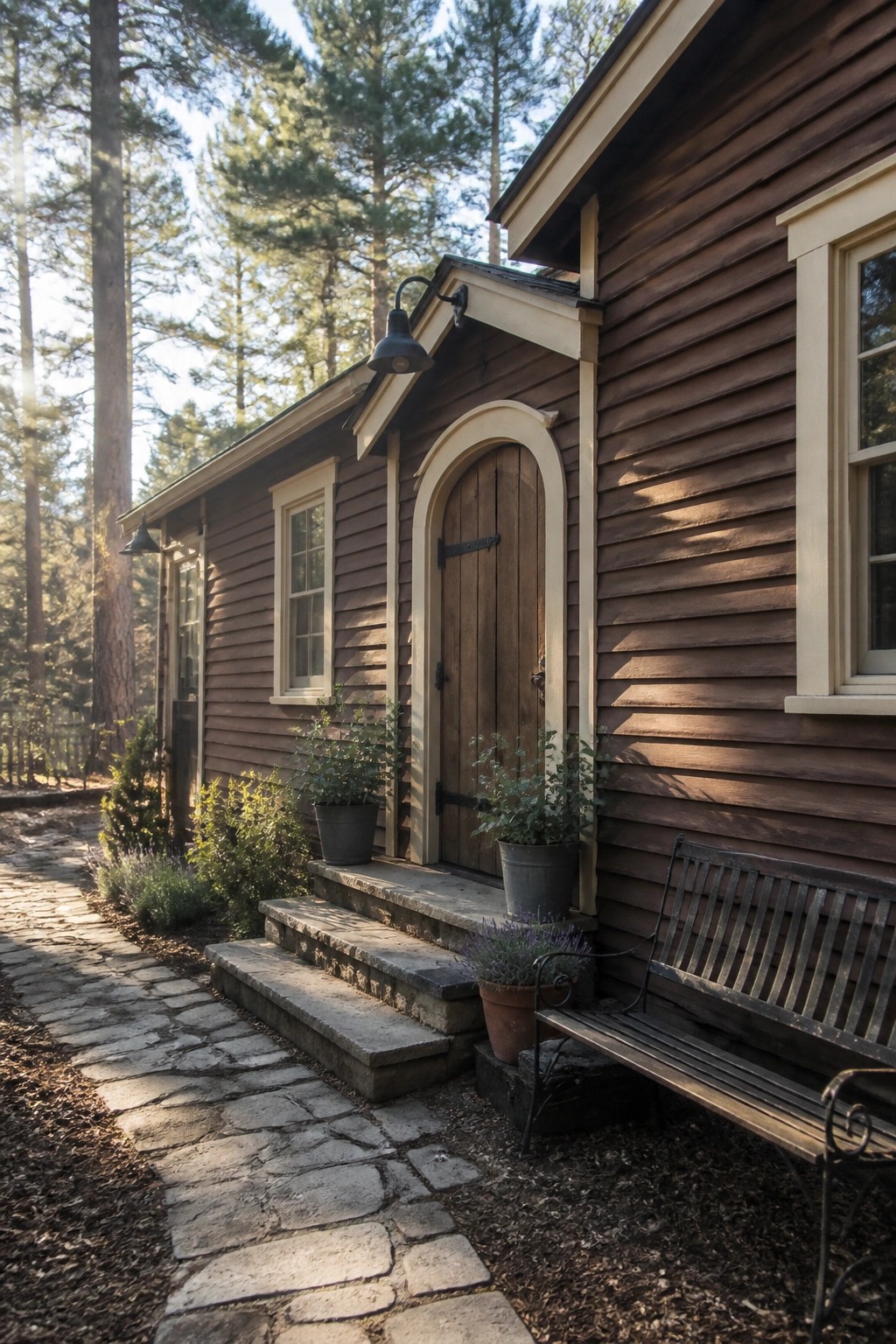
This warm brown siding gives the house a solid, grounded look that feels right at home in a wooded area. It has a rich earthy tone that sits comfortably between deep chocolate and a soft taupe, making the whole exterior feel settled rather than stark.
The color reads a bit warmer in daylight and works well against the lighter trim and stone steps. Something close to Sherwin Williams Tobacco Brown or Benjamin Moore’s Brownstone would give a similar effect, especially on horizontal siding where the grain still shows through.
Frequently Asked Questions
Q: How do I know which shade from the list will actually blend with the mix of evergreens and open patches around my place? A: Walk the property at midday and again near sunset to see where shadows fall on the walls. Hold paint samples against the siding in those spots instead of guessing from a screen or store display. The right pick will feel like it grew there rather than just sitting on top.
Q: What trim color pairs best with these earthy shades? A: Stick with a crisp white or a soft gray that echoes the bark tones around you. Avoid anything too bright that will stand out against the woods.
Q: Do these colors hold up okay when pollen and sap hit the house every spring? A: They mask the buildup better than pale tones so the siding stays looking fresh longer between cleanings. Pick a paint with built-in mildew resistance since shady wooded spots stay damp. One good coat applied right beats touching up every other year.
Q: My neighbor used a similar color already. Will it look like we copied each other? A: Rural areas often have overlapping palettes because the land itself suggests the same tones. Shift yours slightly warmer or cooler to set it apart without clashing. Most people end up glad they stayed true to the setting anyway.
