


The front entry is the first handshake.
It’s the first impression, the first piece of the story your home tells.
And getting that story right is a delicate balance.
It’s about creating a space that feels genuinely welcoming, but also elevated and intentional.
A place that feels like coming home.
The Journey to the Door
The experience of an entryway begins before you even reach the door.
It starts at the curb.
The path leading to the front door sets the entire mood. A straight, formal walkway made of crisp bluestone pavers creates a very different feeling than a meandering path of decomposed granite. One feels stately and direct. The other feels relaxed and organic.
It’s all about creating a sequence, a sense of progression.
Sometimes a slight widening of the path as it nears the steps, or a subtle change in material, can signal that you’ve arrived. It’s a small gesture. But an effective one.
For a modern home, large-format concrete slabs with tight joints and grassy inserts look incredible. Clean. Graphic. For a more traditional or cottage-style house, aged brick laid in a herringbone pattern feels like it’s been there forever.
It just feels right.
This journey shouldn’t be an afterthought. It’s the opening scene.
A Sense of Shelter
A covered entry is a fundamental gesture of welcome.
It offers protection from the rain and sun. It creates a transitional space between the outside world and the private world inside.
But not all covered entries are created equal.
A deep, full-width front porch on a Modern Farmhouse invites lingering. It’s a space for rocking chairs and conversation. It’s practically an outdoor room.
On the other hand, a simple gabled portico on a classic Colonial home is more formal. It provides shelter and architectural definition without encouraging you to hang out for hours. It’s a polite nod.
Then there are the modern approaches.
A clean, flat-roofed overhang, maybe wrapped in the same wood as the siding, can feel incredibly chic. It’s minimalist but still functional. It defines the entry without adding historical fuss.
And sometimes, the right answer is no cover at all.
For certain architectural styles, like a desert-modern home or a stark minimalist cube, adding a porch would feel forced. In those cases, the drama comes from the door itself, the lighting, and the sheer honesty of the structure.
It’s all about what the house wants to be.
Recommended Products

Efficient Drainage Design: Designed with an upgraded directional drainage sink, this polycarbonate door awning quickly guides rainwater away from your entrance. From light drizzles to heavy downpours, it keeps your doorway clean, dry, and slip-free

[ Drainage Sink Design ] - Nollapo New Window Awnings Adopt The Drainage Sink Design. With This Design, The Drainage Sink Can Disperse The Water Flow To The Side And Will Not Flow To Front Of The Visor, No Longer Wet Pedestrians Who Passing Through The Visor. It Can Effectively Avoid The Common Problem Of Mold And Water Vapor Condensation Inside The Hollow PC Board At The Same Time.
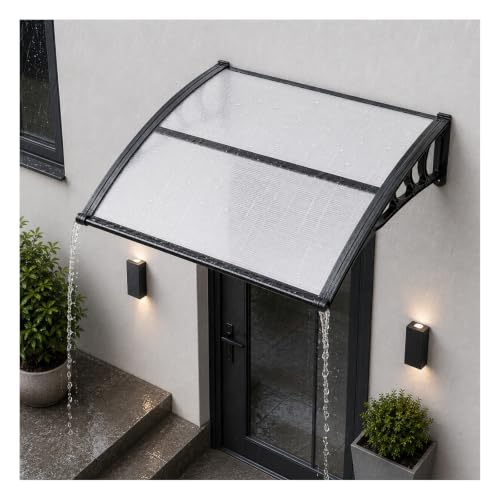
Efficient Drainage Design: Designed with an upgraded directional drainage sink, this polycarbonate door awning quickly guides rainwater away from your entrance. From light drizzles to heavy downpours, it keeps your doorway clean, dry, and slip-free
The Door is the Star
The front door is the focal point. No question.
It’s where the eye lands, and its design has to be deliberate.
Material choice is huge. A solid wood door, especially in a species like mahogany or white oak, brings unparalleled warmth and character.1 Each knot and grain pattern is unique. It feels substantial. Honest.
A steel door, often with large glass panels, communicates something else entirely. It’s sleek, secure, and unapologetically modern. Looks great. Feels strong.
And then there’s color.
A brightly colored door is a classic move for a reason. A cheerful yellow, a deep navy, or a daring coral can inject so much personality. But it shouldn’t feel random. That pop of color works best when it connects to something else, like a flower in the garden or a color in the stonework.
Of course, you can’t go wrong with timeless choices. A high-gloss black door is pure elegance. A dark charcoal gray is sophisticated and moody.
And a natural wood door, simply sealed to show off its beauty, is a statement in itself.
The glass is another part of the puzzle. A door with lots of clear glass feels open and connected to the outdoors. But it’s not for everyone, especially when privacy is a concern.
That’s where frosted or reeded glass comes in. It lets the light stream through while obscuring the view. It’s the perfect compromise between open and closed.
Recommended Products

RENOVATE YOUR LIVING SPACE: Quick and easy decorating, applies in minutes, will look great for years and always give you the feel of an antique window pane without the expense or commitment

【Classic 1-Lite Frosted Door Glass Insert】This door glass insert features a modern, minimalist design with frosted tempered glass, adding a stylish touch to your entry door. It enhances privacy while allowing ample natural light to brighten your home. Designed to replace existing door window glass, the frame measures 22" x 36" (+1") and fits 1-3/4" thick doors, making it an ideal upgrade for front door glass

MODERN 5-LITE PRIVACY GLASS: Five horizontal lites feature dual-pane glass combining a Low-E pane with a frosted pane. The frosted glass enhances privacy while allowing natural light into the entry, while the Low-E pane helps reduce heat transfer. The factory-finished fiberglass surface features a brushed woodgrain texture for a clean, contemporary appearance.
Lighting Makes the Mood
At night, lighting completely transforms the entry.
It has two jobs to do. The first is practical. It needs to safely illuminate the path, the steps, and the lock on the door.
The second job is all about atmosphere.
A pair of classic sconces flanking the door creates a beautiful, balanced symmetry. It’s a look that works on almost any traditional home. The style of the sconce, whether it’s a rustic lantern or a streamlined cylinder, refines the aesthetic.
For a more modern or dramatic statement, a single, oversized pendant light hung from the porch ceiling can be amazing. It acts as a piece of sculpture.
But don’t forget the landscape.
Subtle uplighting on a beautiful tree or washing up a stone facade adds incredible depth and dimension. It makes the entire front of the house glow. Path lights are important, but they should be low and discreet. Their job is to guide the way, not to create an airport runway.
And the color of the light itself is crucial. A warm white light, somewhere around the 2700K temperature range, is what you want. It’s soft, inviting, and flattering. Cool, bluish light tends to feel clinical and unwelcoming.
Not ideal for a home.
Recommended Products

EXCELLENT FULLY DIMMING PERFORMANCE: Compatible with 90% dimmers in the market (listed in the below product description), you could adjust the brightness of these candelabra led bulbs from 0-100% stably, no noise, no flicker, set your own mood and enjoy it

【Vintage Candle Flame Shaped Bulbs】5.5W LED candelabra bulb is equivalent to a 60w incandescent lamp and is made of high quality glass. The retro candle flame tip shape gives your lamp a gorgeous and impressive look that is not only practical but has a strong decorative appeal. Perfect LED candelabra bulbs are widely used in your bedroom, living room, hallway or outdoor lighting fixtures with E12 base.

【Classic Vintage Design & Wide Application】Designed based on Thomas Edison's original filament bulb, the vintage retro style making this led bulb also a beautiful decorative lights. Those led bulbs are suitable with chandeliers, ceiling fans, pendant lighting, sconces, lamp post, lanterns or any home lighting fixture with an E26 medium standard base socket. Widely used in bedroom,living room,dinning room, bathroom, laundry room, porch or entryway.
The Finishing Touches
It’s the small things that pull the entire look together.
They’re the supporting cast to the front door’s starring role.
House numbers are a great example. They’re a legal necessity, but they can also be a point of high design. The font, the scale, the material, the placement—it all matters. A set of sleek, brushed nickel numbers mounted directly on the siding feels very different from classic brass numbers on a plaque.
Planters add life and softness.
Symmetrically placed urns filled with structured boxwoods feel formal and manicured. A single, large architectural planter with flowing ornamental grasses feels more modern and relaxed. It’s about echoing the home’s overall vibe.
Even the doormat plays a part. A simple, high-quality mat made of coir or rubber, free of cutesy sayings, does the job perfectly. It’s about function and quiet quality.
Symmetry or asymmetry? There’s no wrong answer.
A perfectly symmetrical entry feels ordered, calm, and traditional. An asymmetrical layout, maybe with one large planter, a single sconce, and offset house numbers, can feel more dynamic and contemporary.
It all just depends on the story you want to tell.
When all these elements are in sync, the effect is powerful.
The path, the cover, the door, the hardware, the light, the plants.
They all work together.
And the result is an entryway that doesn’t just look good. It feels good. It feels like an authentic welcome.
