

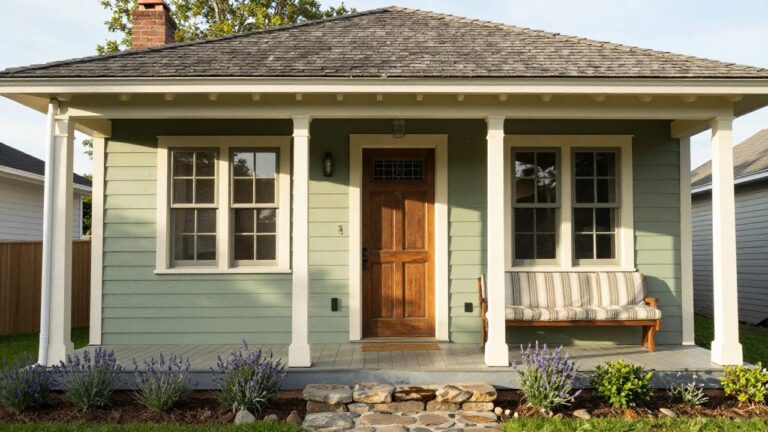
Craftsman houses take on a quiet historic depth when painted green, blending their broad rooflines and sturdy porch columns into the landscape without stealing the show.
From the curb, you spot how the color lets wood trim and stone bases stand out, creating that first impression of solid, lived-in appeal.
I once watched a neighbor test a muted olive on theirs, and it made the facade read warmer and more approachable than the faded beige ever did.
Certain greens enhance the entry details too, drawing your eye to the right spots while keeping the overall lines clean and balanced.
Those choices stick with you.
Craftsman Porch Benches Add Casual Seating
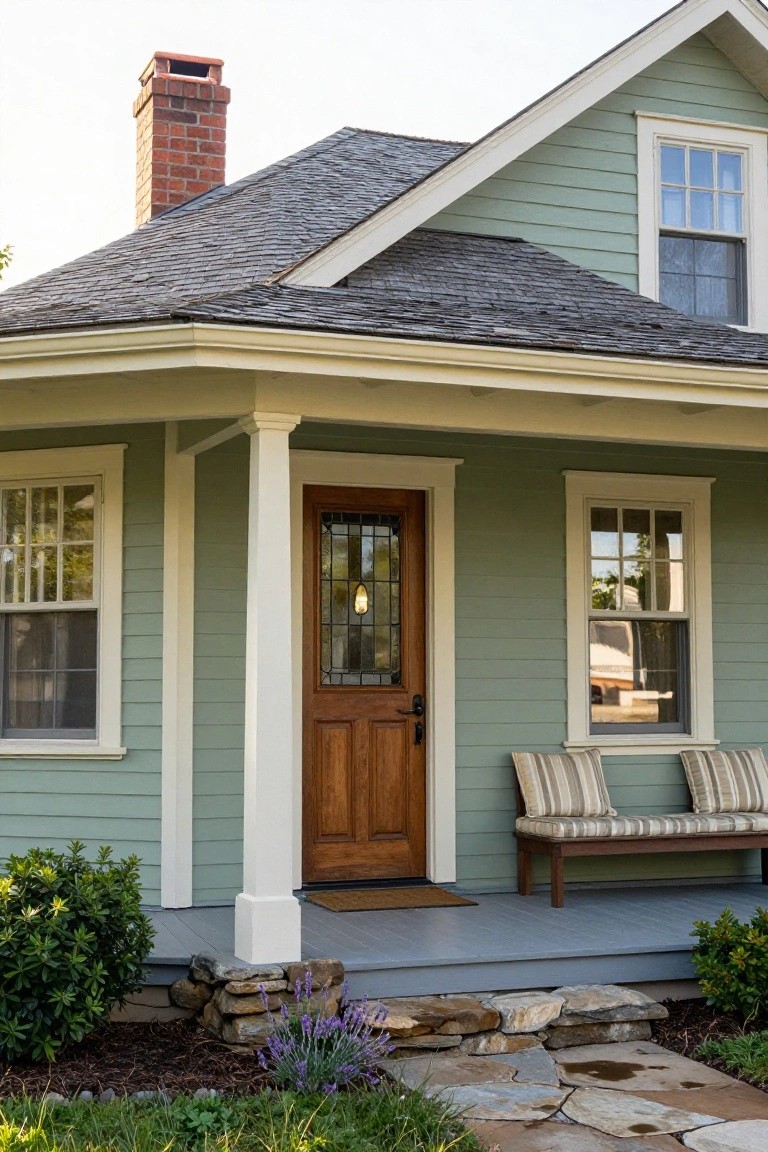
A front porch bench setup like this one on a green Craftsman house makes the entry feel more lived-in and friendly right away. Those simple wooden benches with striped cushions sit neatly under the covered porch, next to the paneled wood door. They pull folks in without much fuss, especially when the house has that soft green siding and white trim for a nod to older styles.
This works best on smaller bungalows or cottages where you want extra seating without crowding the space. Tuck them against the wall by the door, pick cushions in neutral stripes, and keep the frames plain wood to match. Skip it if your porch is super narrow, though. It suits everyday family homes in milder climates.
Dark Green Shingled Craftsman Facade
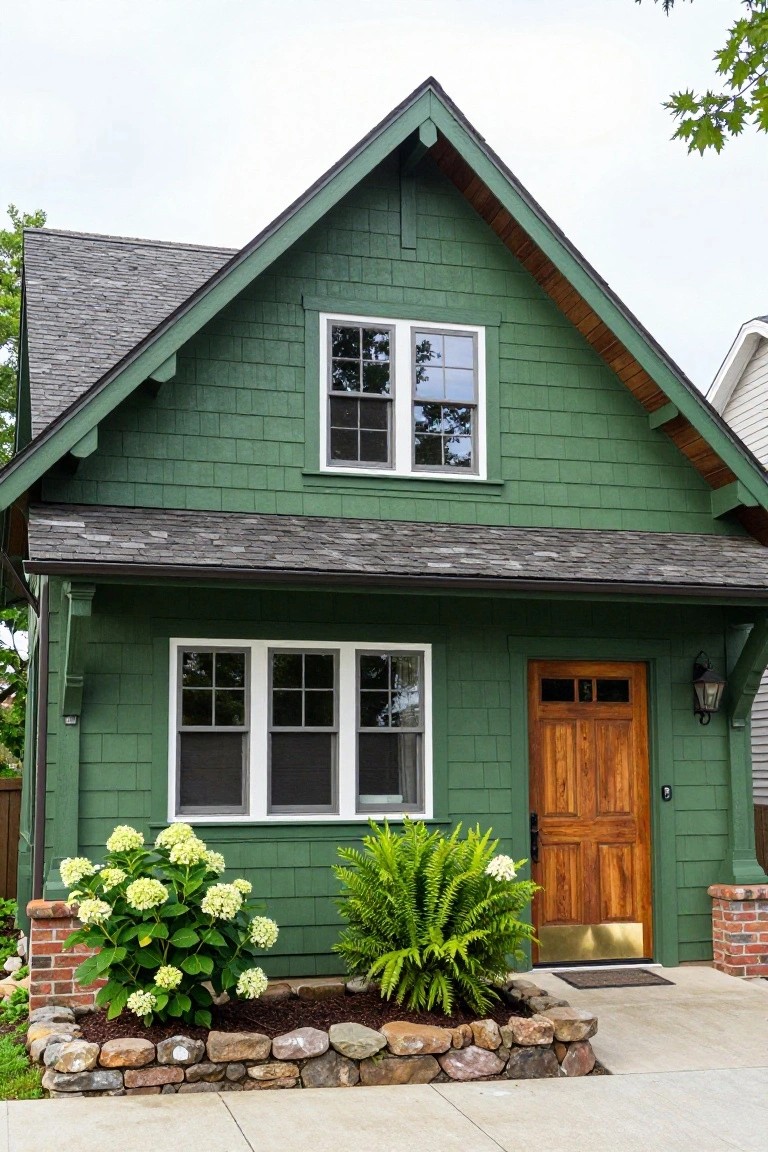
A deep green paint job on shingle siding like this one brings out the best in a Craftsman bungalow. It gives the house that settled-in historic feel, especially with the steep gable roof and those tapered porch columns. The color reads rich but not overpowering from the street.
This look suits smaller homes in older neighborhoods where you want some character without going overboard. Stick to natural wood on the door and keep landscaping simple, like a few hydrangeas by the steps. Just make sure the trim stays crisp white to let the green do its thing.
Sage Green Craftsman with Stone Chimney
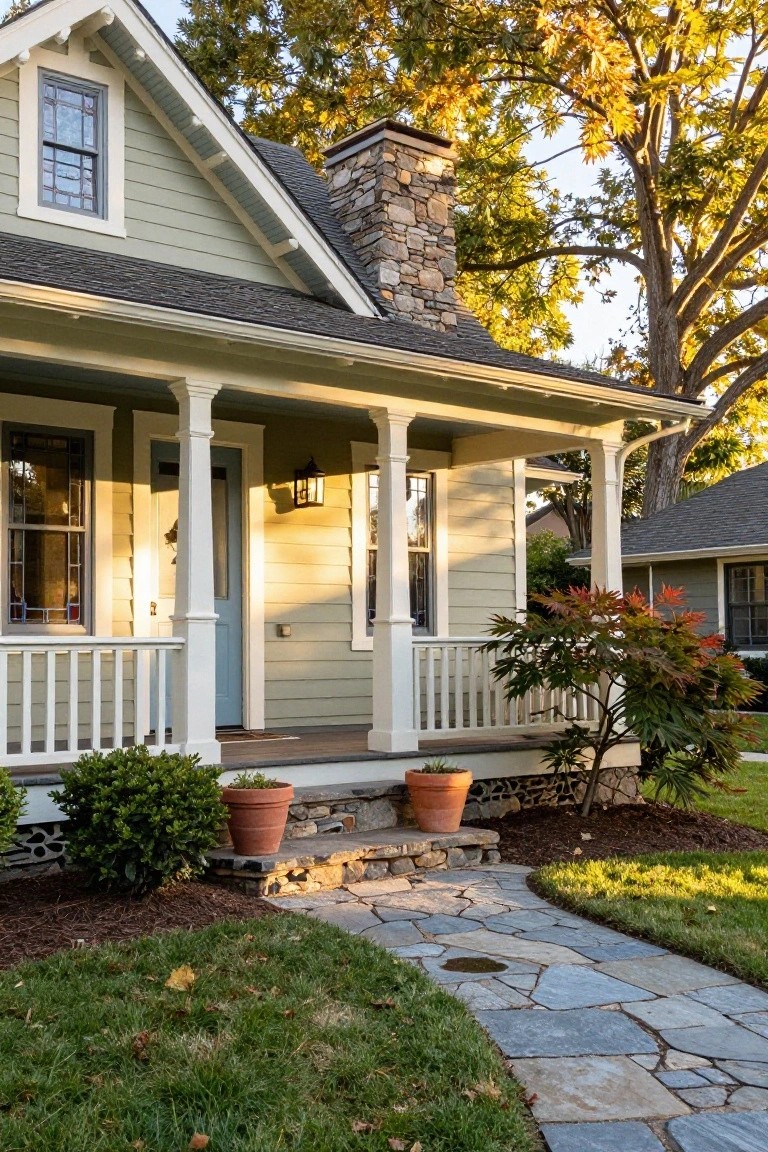
This Craftsman house uses a soft sage green siding that feels right at home in a neighborhood with trees turning color. The tall stone chimney stands out against the clapboard, giving the whole front a bit of that old-time solidity without overpowering things. It’s the kind of look that nods to history while keeping the place approachable.
You see this work best on single-story bungalows where the chimney draws the eye up. Pair it with white trim around the windows and a simple blue door for contrast. Stone like this holds up well over time, especially if your area gets rain or wind. Just make sure the mortar matches the green tones so it blends instead of fights.
Pale Green Siding on a Craftsman Bungalow
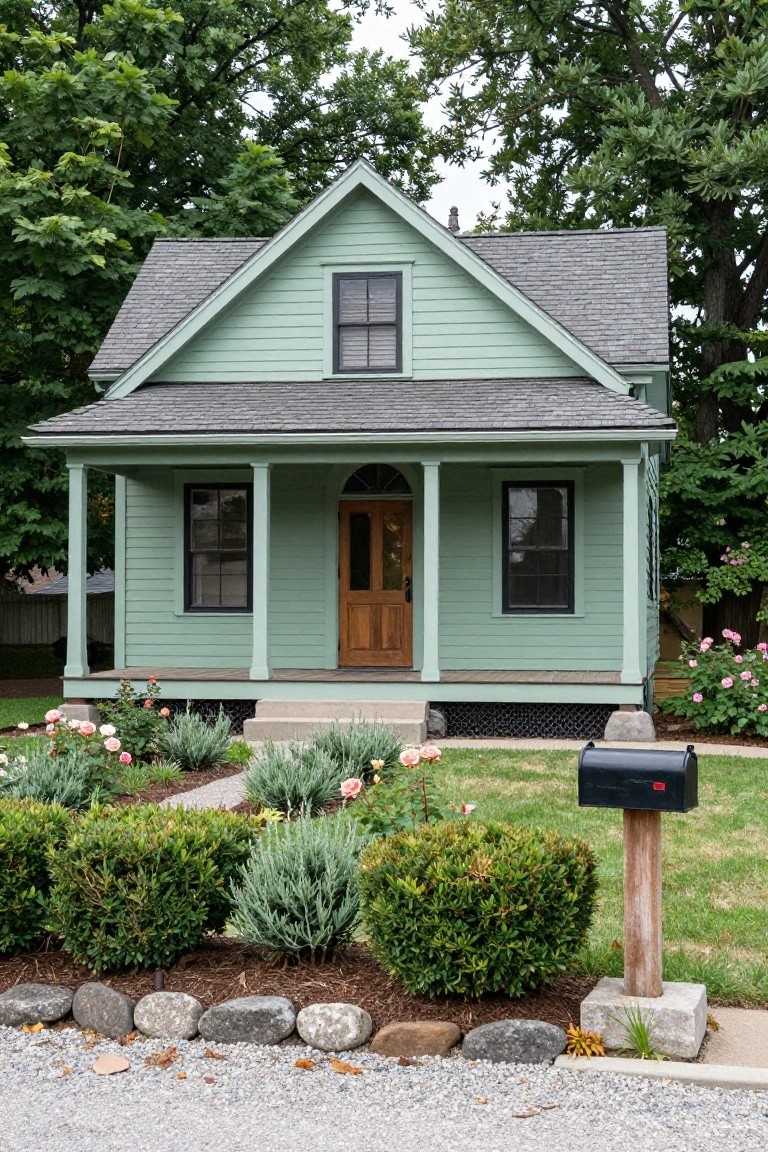
A soft pale green like this brings out the best in a classic Craftsman house. It sits quietly against the trees and yard without shouting, but still gives that old-time feel folks love. The dark window frames pop just enough, and the simple porch pulls it all together.
This color works great on smaller bungalows in neighborhoods with lots of green around. Paint the siding this shade, keep trim black or dark, and add a few roses out front for extra charm. Skip it on super modern spots, though… it shines where history matters.
Classic Craftsman Porch Design
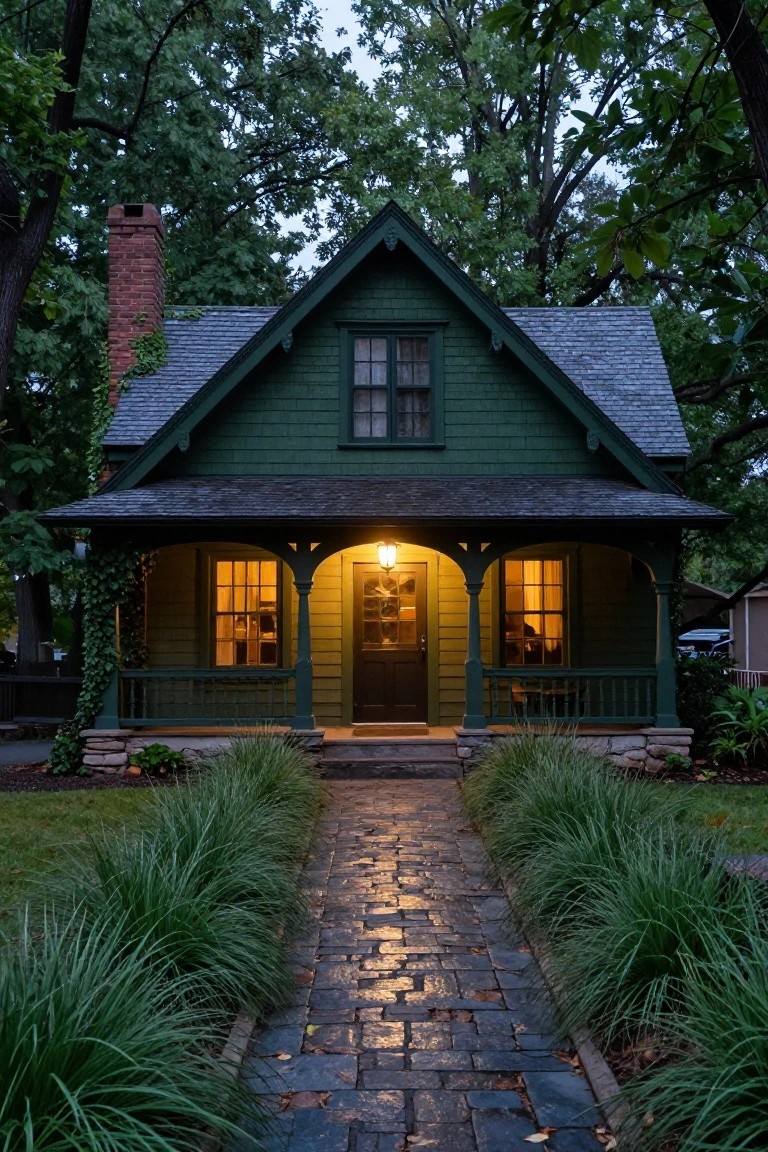
A deep front porch like this one on a green Craftsman bungalow pulls you right up to the house. Those tapered columns and the simple railing give it that old-time feel without much fuss. The lantern light spilling out at dusk makes the whole entry warmer and more noticeable against the dark siding.
Put this style on a one-story home facing the street. It suits smaller lots where you want some shelter from weather too. Keep the paint deep green on the shingles and trim it lighter so the porch pops. One thing, make sure the roof overhang is generous or rain will splash the steps.
Mint Green Craftsman Bungalow Facade
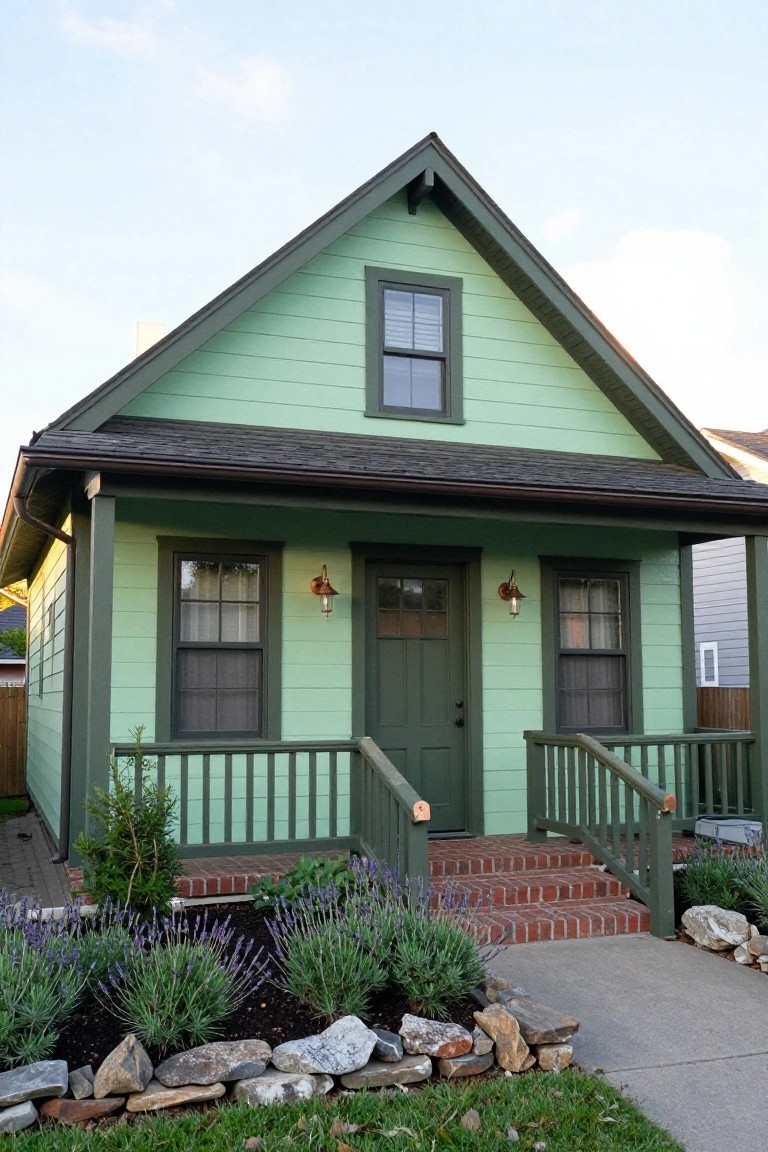
A pale mint green like this works wonders on a Craftsman bungalow. It highlights the gabled roof and shakes without overpowering them. Dark trim around the windows and that deep green door pull it together. The covered porch up front adds to the cozy feel. Folks notice how it nods to old-time charm but stays fresh.
Try this on small homes from the early 1900s, especially where you want curb appeal that fits the street. Use it with brick steps and simple railings. Lavender beds nearby keep things low fuss. Just pick a paint rated for sun exposure. It holds up better that way.
Sage Green Craftsman Bungalow
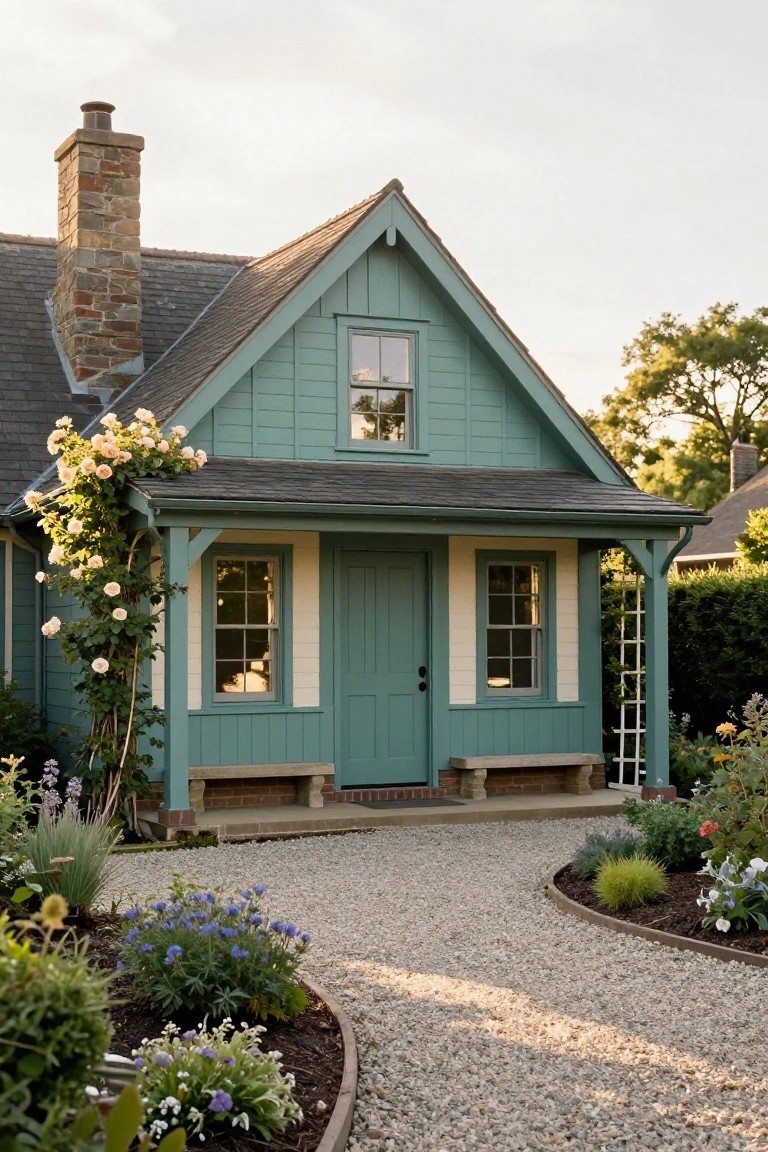
A soft sage green on the siding gives this Craftsman bungalow a nod to its historic style. It feels settled and right at home with the stone chimney and shingle roof. The climbing roses trailing over the porch edge pull it all into that cozy cottage look folks love for older neighborhoods.
This works best on compact homes facing a street or garden path. Use a muted green like this to keep things calm, not shouty. White trim on the windows and door keeps it crisp. Add gravel for the walkway and a few perennials around the base… simple upkeep that lets the color do its job.
Sage Green Craftsman Bungalow Exterior
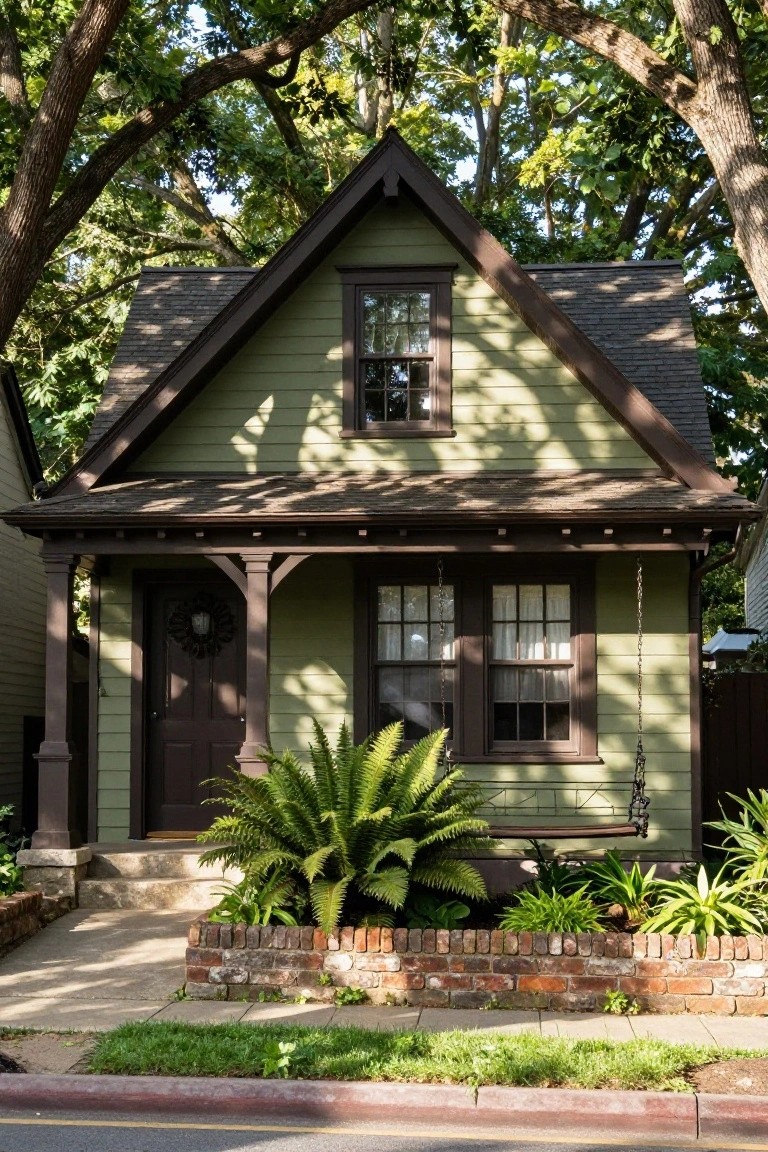
A soft sage green like this pulls classic Craftsman lines right into the landscape. You see it on the siding here, working with the dark brown trim on the gable roof and porch brackets. That color choice keeps the house feeling rooted in its era. It blends easy with overhanging tree branches too.
Try this shade on a smaller bungalow in an older neighborhood. The green mutes things just enough to look lived-in, not showy. Pair it with deeper trim for definition. Skip it if your lot gets full sun all day. The color shows best in dappled light.
Muted Green Siding on a Craftsman Facade
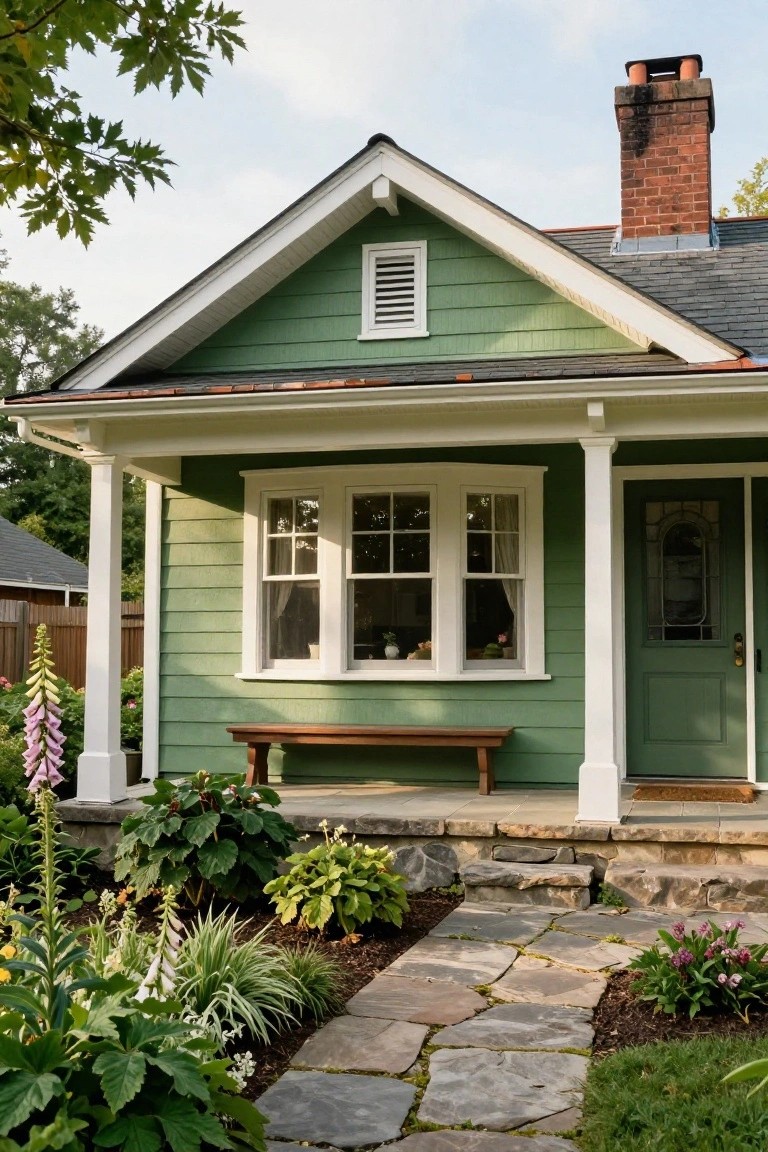
Green siding like this shows up a lot on older Craftsman homes. It gives the house a soft, natural look that fits right into the neighborhood without standing out too much. The shade here is muted enough to feel classic, and pairing it with white trim around the windows and porch keeps things clean and sharp. That contrast makes the whole front pull together nicely, especially with the brick chimney up top.
You can pull this off on a bungalow or smaller two-story home facing the street. Pick a sage or seafoam green paint that’s low sheen to hide dirt better. Stick to white for the trim, and add a simple bench on the porch like this one for everyday sitting. It works best where you have some trees or plants nearby to echo the green tones. Just avoid going too dark, or it might feel heavy in shady spots.
Craftsman Porch Columns in White Trim
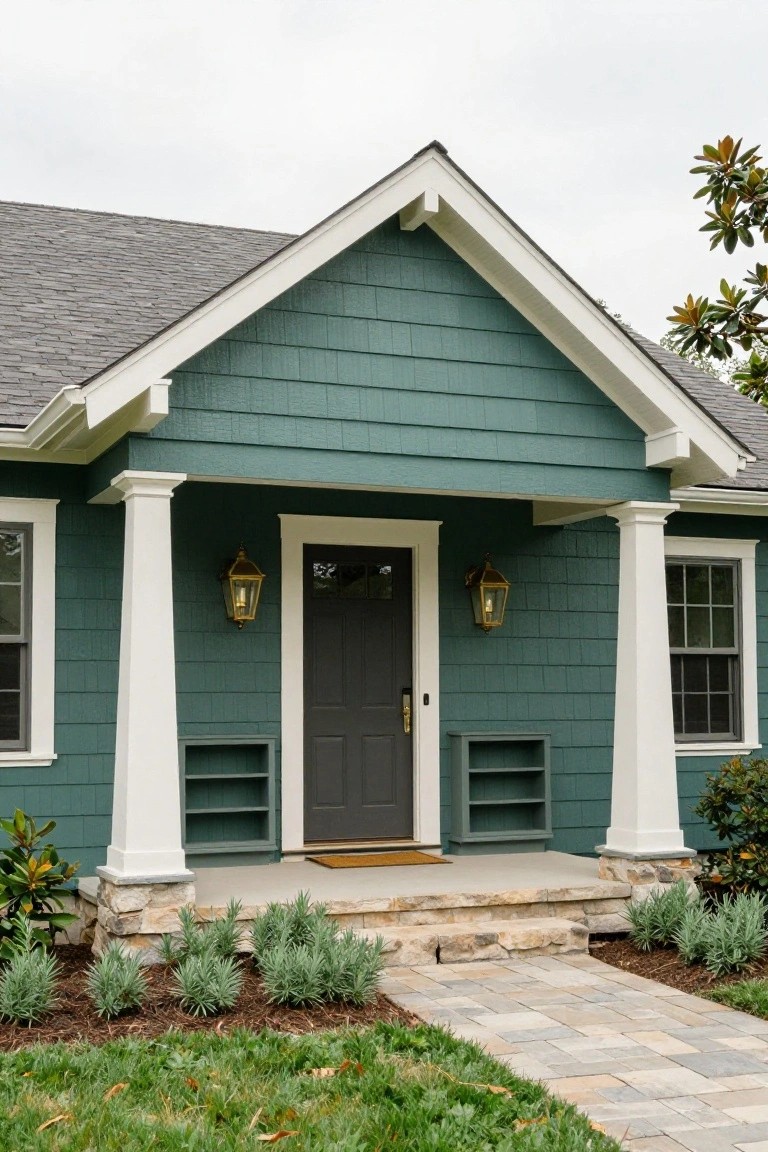
Tall white columns like these hold up the porch roof and frame the front door on this green Craftsman house. They give the whole facade a sturdy, historic feel that pulls your eye right to the entry. The dark green shingle siding sets them off nicely without stealing the show.
You can add similar columns to a bungalow or cottage style home for that welcoming touch. They work best when tapered a bit at the base and paired with simple lanterns. Keep the scale right for your house size, or they might look too big up close.
Craftsman Porch Posts
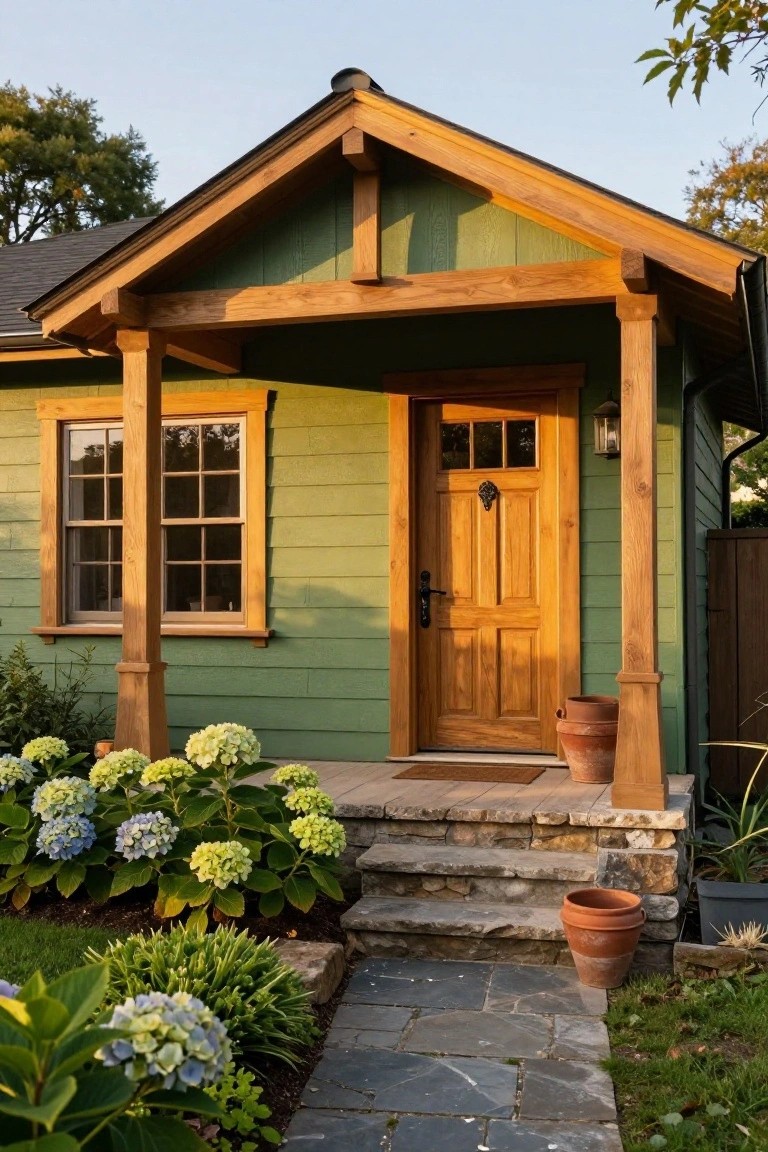
A front porch with sturdy tapered wooden posts like these brings out the best in a Craftsman house. They support the roof overhang nicely and frame the entry door just right. Against green siding, the natural wood tone adds a layer of warmth that feels right at home in older neighborhoods.
You can pull this off on a bungalow or small cottage by choosing posts from reclaimed timber or cedar. Stain them to match the door hardware. It suits shady spots well, since the overhang keeps rain off the steps. Just make sure the base sits firm on stone or concrete.
Sage Green Craftsman Porch Entry
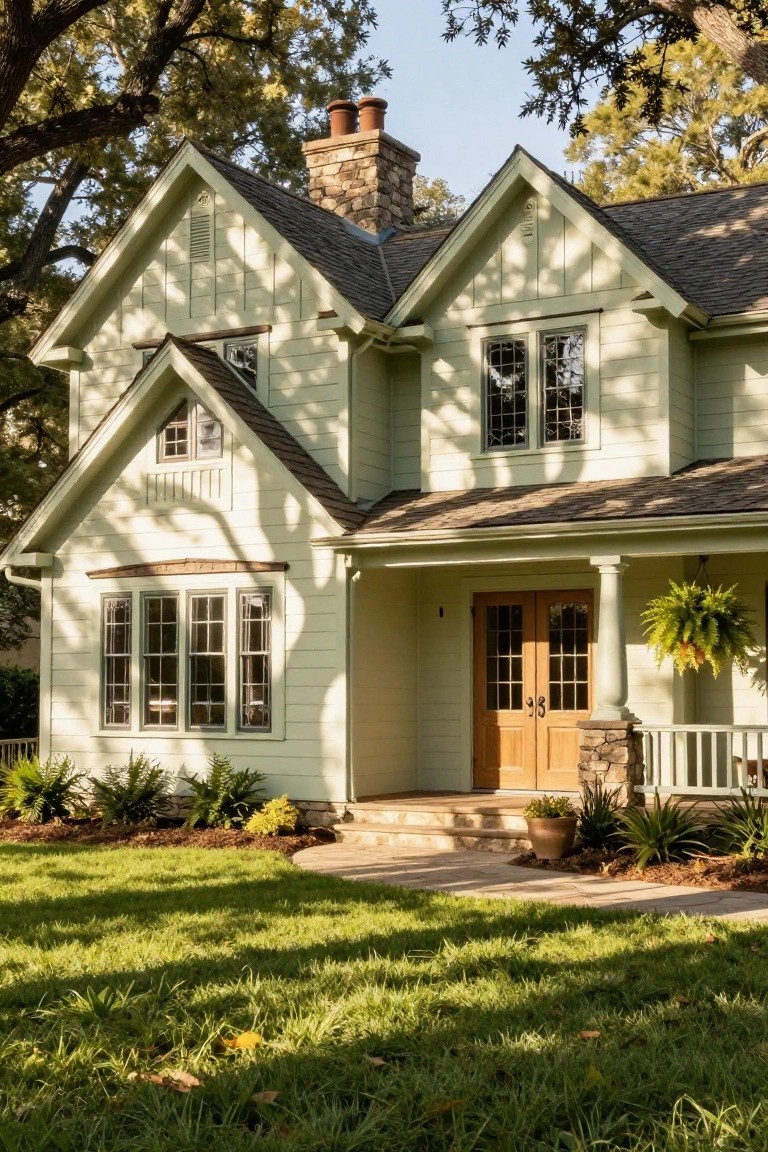
A soft sage green paint on the siding gives this Craftsman house a gentle historic look that fits right into a tree-lined yard. The gabled porch sticks out with its tapered columns and double wooden doors. It pulls the eye to the front without shouting.
Try this on a one or two-story bungalow where you want curb appeal that feels settled in. Stone on the chimney and base keeps things sturdy. Skip bold colors around it. The green works fine near oaks or ferns, just mow the lawn clean.
Sage Green Shingles on a Craftsman Facade
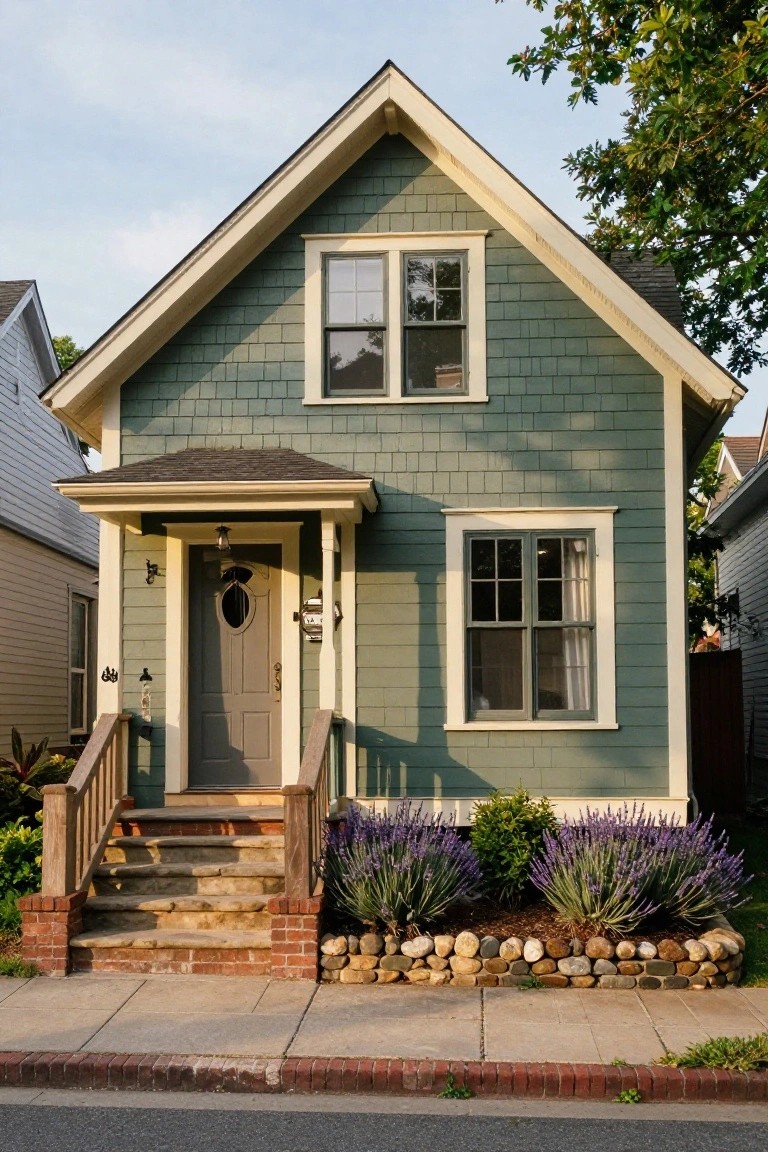
A soft sage green shingle siding like this one gives a Craftsman bungalow that old-school neighborhood feel. It catches the light just right in the late afternoon, blending with the trees and sky without shouting. The white trim on the windows and porch keeps things crisp, and that covered entry pulls it all together nicely.
This look suits compact homes built around 1910 or so, especially on tree-lined streets. Go for a muted green to avoid it clashing with brick steps or stone paths. Pair it with simple porch lights and low plants at the base… keeps maintenance easy too.
Soft Sage Green Craftsman Siding
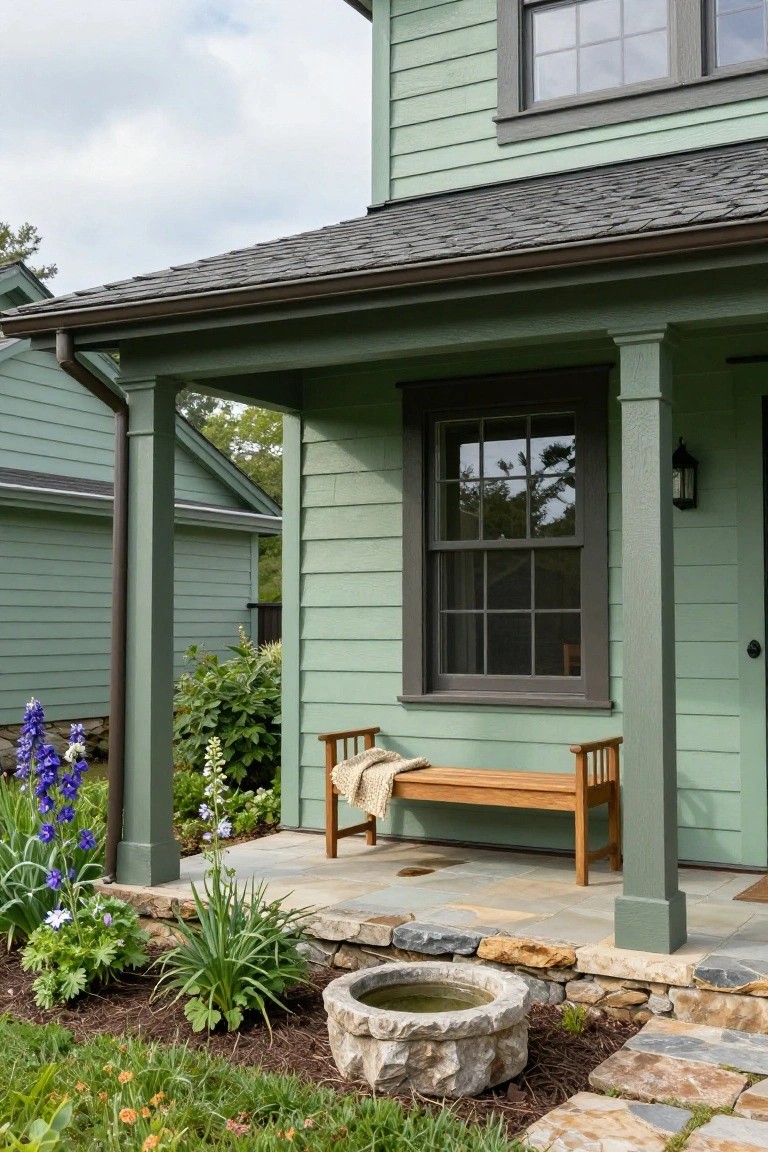
This sage green siding catches the eye on a Craftsman house because it’s muted enough to feel settled in place, like it’s been there for years. The color lets the house blend a bit with the garden plants nearby, while the darker trim on windows and roof keeps everything crisp. A simple bench on the porch shows how practical the setup stays.
Paint your Craftsman bungalow or cottage this way if it’s got straightforward lap siding and a covered porch. It suits tree-lined streets or rural spots best, where green tones echo the surroundings. Pick a high-quality semi-gloss exterior paint so it holds up to weather… and skip glossy finishes that show every smudge.
Recommended Products

Ideal for use on interior/exterior surfaces including wood, plastic, plaster, metal, masonry and unglazed ceramic

Premium Paint and Primer In One - High Hiding Formula for Excellent Coverage with Smooth Application
Stone Accents Warm Up Green Craftsman Facades
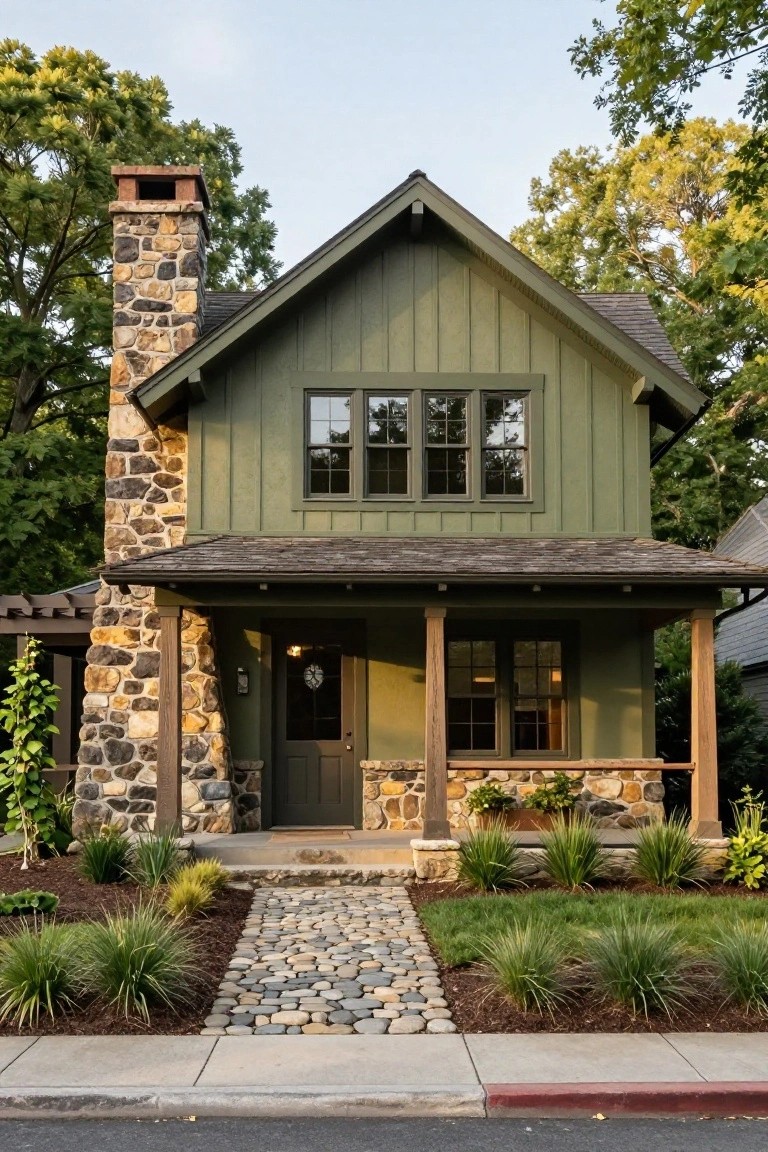
One simple way to give a Craftsman house that old-time feel is with a tall stone chimney rising up one side. Here it’s paired with matching stone pillars at the front porch, set against sage green siding. The mix keeps things sturdy and grounded. It pulls your eye up without much fuss.
This works best on homes tucked into tree-lined streets or spots with a bit of slope. Use local fieldstone if you can, to blend right in. Keep the landscaping simple, like grasses and a pebbled path… nothing too busy. Skip it on super modern lots, though. It shines where you want cozy history.
Frequently Asked Questions
Q: Which green shades give that perfect Craftsman vibe without going too dark?
A: Pick sage or olive tones with warm undertones.
They nod to nature and age beautifully in sunlight. Avoid cool mints, they feel too crisp.
Q: How do I make sure my green paint lasts on a Craftsman exterior?
A: Prep the surface well, scrape off loose paint first.
Prime with an oil-based product to seal the wood. Touch up scuffs yearly to fend off peeling.
Q: Can I add Craftsman details to my plain green house without a full redo?
And start with the gables. Hang wooden brackets or install shake shingles there. It pulls the look together fast.
Q: What’s a quick porch update that matches these green Craftsman fronts?
A: Add tapered columns and a wide frieze board overhead.
Paint them a contrasting cream. Your entry pops with instant historic charm.
