

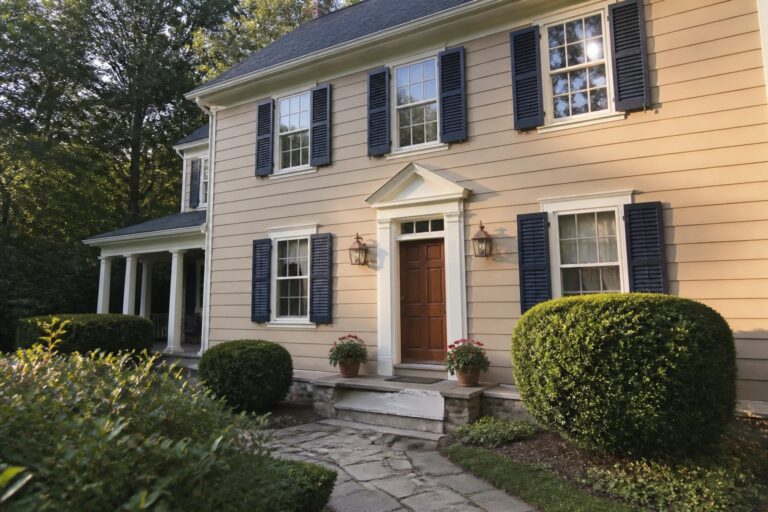
I have watched beige paint on siding shift from warm to almost gray as the light changes from morning to late afternoon.
The best shades sit comfortably next to brick foundations and stone accents without pulling too pink or too green once they are up on the house.
Some beiges hold steady through rain and bright afternoons while others turn muddy.
I always paint a large test patch on the actual siding and check it at different times of day before making a final choice.
Trim color and nearby landscaping often reveal whether a beige will look settled on a traditional suburban home or simply fade into the background.
Warm Beige Siding Against Natural Stone
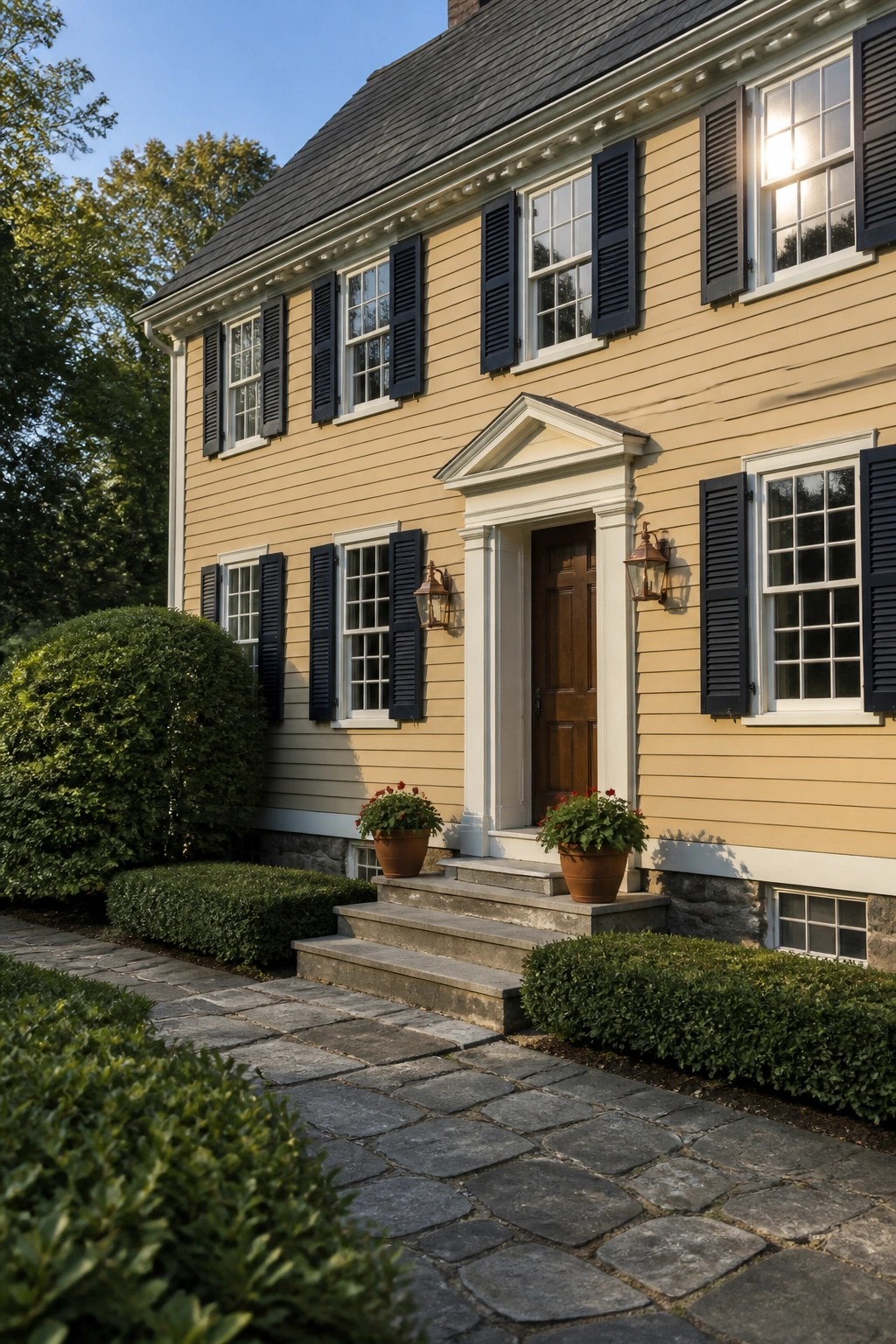
This warm beige siding brings a soft yellow undertone that feels sunny without being too bright. It sits nicely on a traditional suburban house and gives the whole front a calm, settled look. Many people reach for colors in this range because they stay friendly next to both stone and greenery.
It reads closest to Sherwin Williams Creamy or Benjamin Moore Manchester Tan, with Behr Almond Wisp as another close option. The color holds up well in full sun and works best when paired with white trim and a natural stone base. Dark shutters add just enough contrast without overpowering the beige.
Warm Beige on Painted Brick
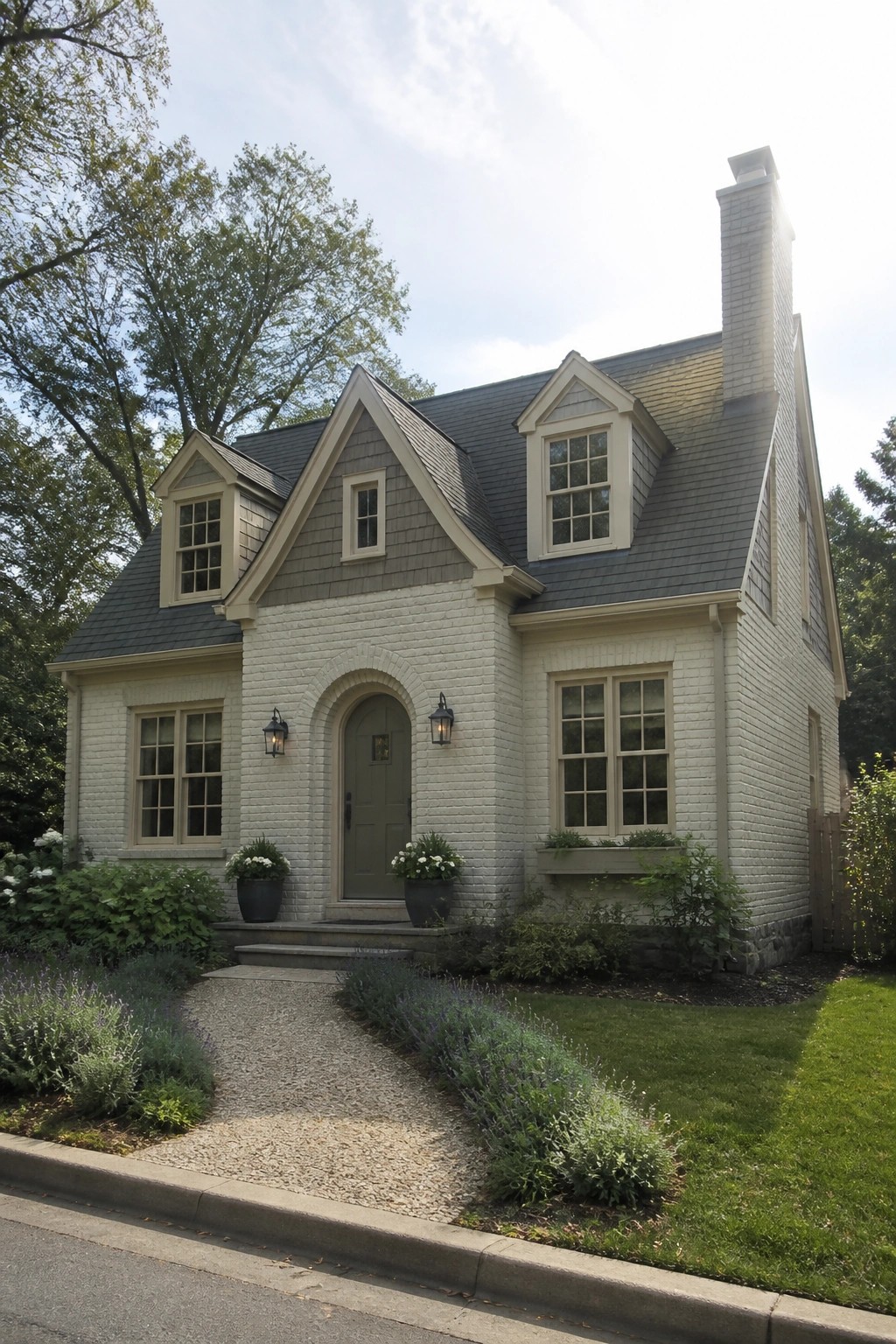
This warm beige reads as a soft, light neutral that works especially well on brick exteriors. It gives the house a clean, traditional look without feeling stark or too bright.
The color sits nicely against the dark roof and cream trim, and it keeps its warmth in full sun. It suits older suburban homes that want a simple update while still looking settled.
Warm Beige Siding Against Stone Bases
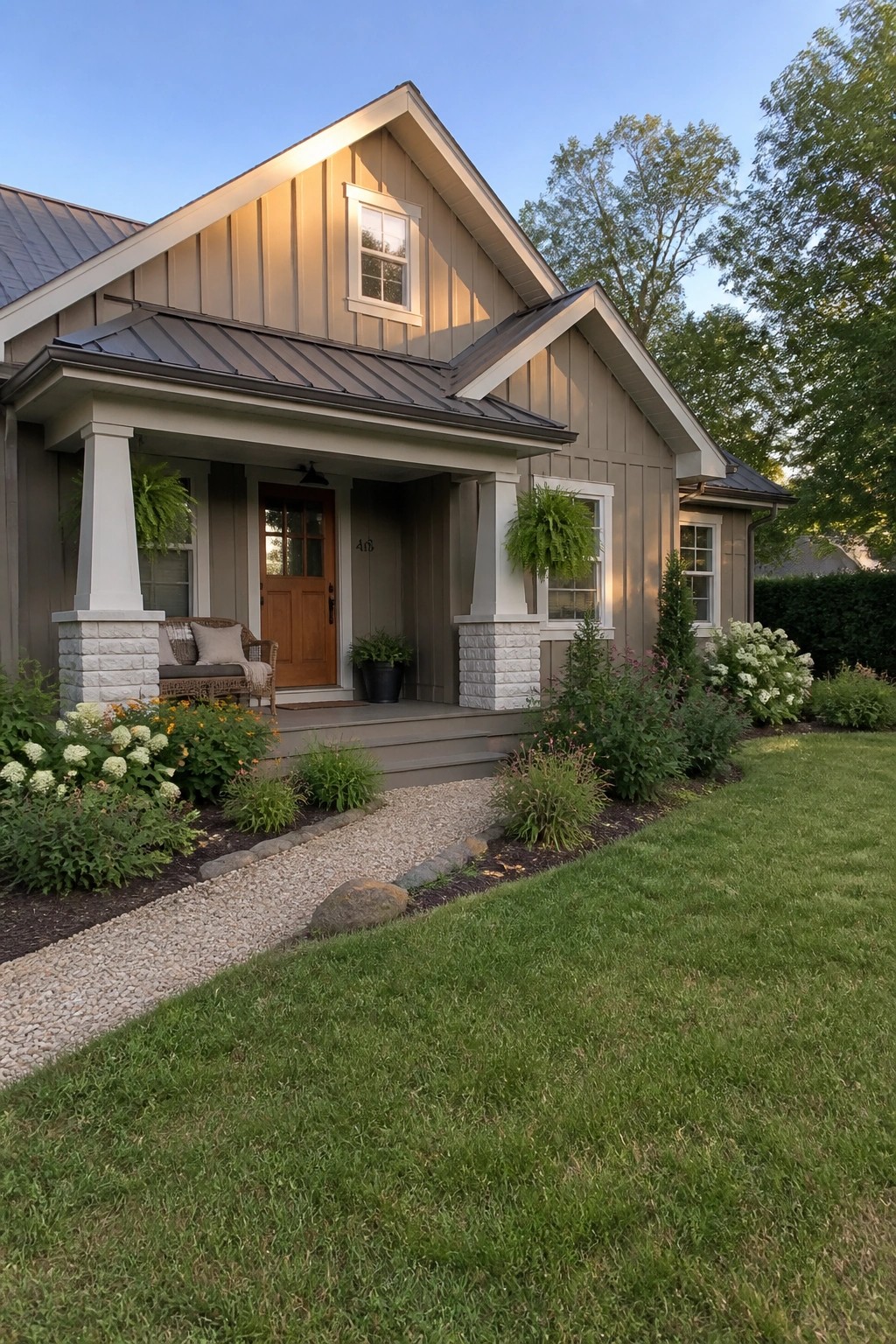
This house uses a soft warm beige on the siding that sits nicely between gray and brown. It gives the whole exterior a settled, traditional feel without looking too plain or too yellow. Colors like this work well on suburban homes because they stay calm next to both natural materials and darker roof tones.
It seems closest to Sherwin Williams Accessible Beige or Benjamin Moore Manchester Tan, with a hint of the same warmth found in Behr Almond Wisp. The beige holds up nicely against the white stone column bases and dark metal roof, so it never feels washed out. Pair it with clean white trim and simple landscaping to keep the look balanced.
Warm Beige Siding With White Trim
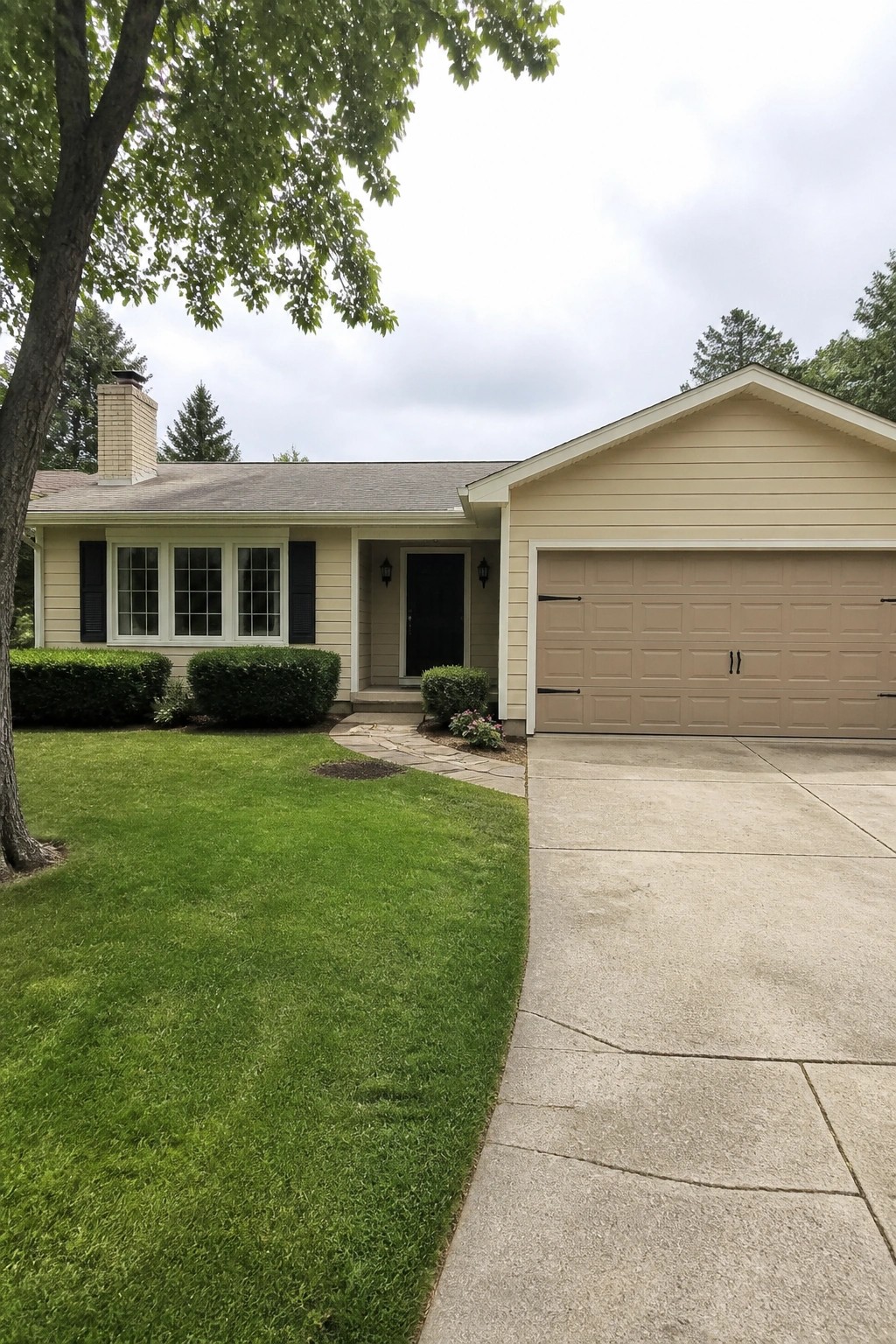
This warm beige gives the house a soft, classic look that fits right into a traditional suburban neighborhood. It sits somewhere between a light tan and a creamy neutral, and it seems closest to Sherwin Williams Accessible Beige or Benjamin Moore Manchester Tan.
The color has a gentle warmth that works well with white trim and green landscaping. It covers both the main siding and the garage door in one even tone, which helps the whole front feel pulled together without looking flat in daylight.
Beige Siding With Natural Stone
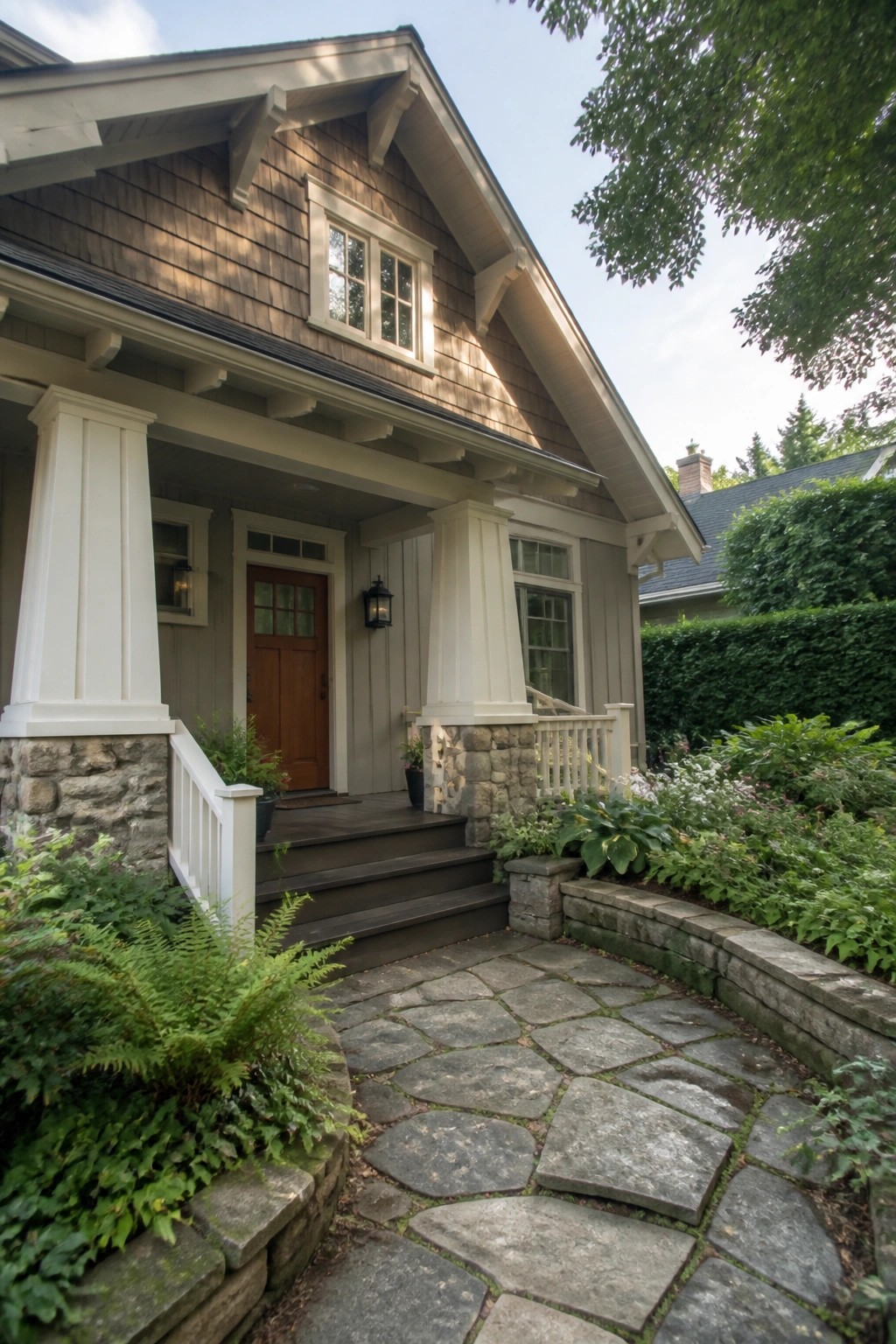
This house uses a mid-tone beige on the siding that leans slightly warm with a touch of gray. It gives a quiet, settled look that fits right into traditional suburban neighborhoods without feeling too stark or too dark.
The color works especially well next to the natural stone on the porch columns and base. White trim keeps it crisp, while the dark wood door and windows add contrast that stops the beige from fading into the background. It pairs best with stone or brick foundations and holds up nicely in full sun.
Warm Beige Siding With White Trim
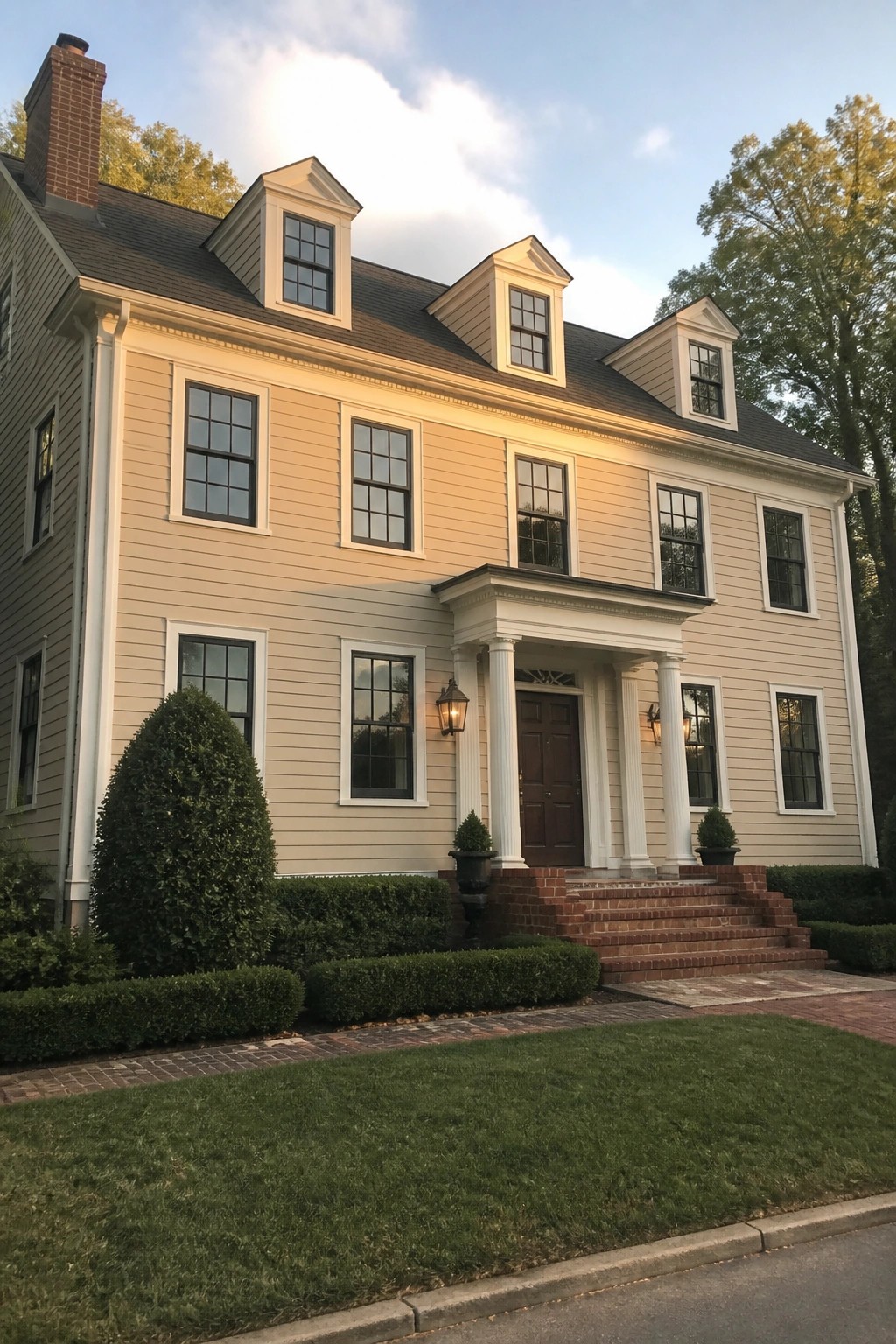
This warm beige siding gives a traditional suburban house a soft, settled look that still feels fresh. It sits in that useful middle ground between too yellow and too gray, so it reads clean next to white trim without looking stark.
The color has a gentle yellow undertone that picks up warmth in afternoon light. It pairs easily with red brick steps and dark roofing, and it holds up well on larger homes where you want something classic but not flat. Try it with Sherwin Williams Accessible Beige, Benjamin Moore Manchester Tan, Behr Almond Wisp, or Farrow & Ball String.
Warm Beige Siding Beside Natural Stone
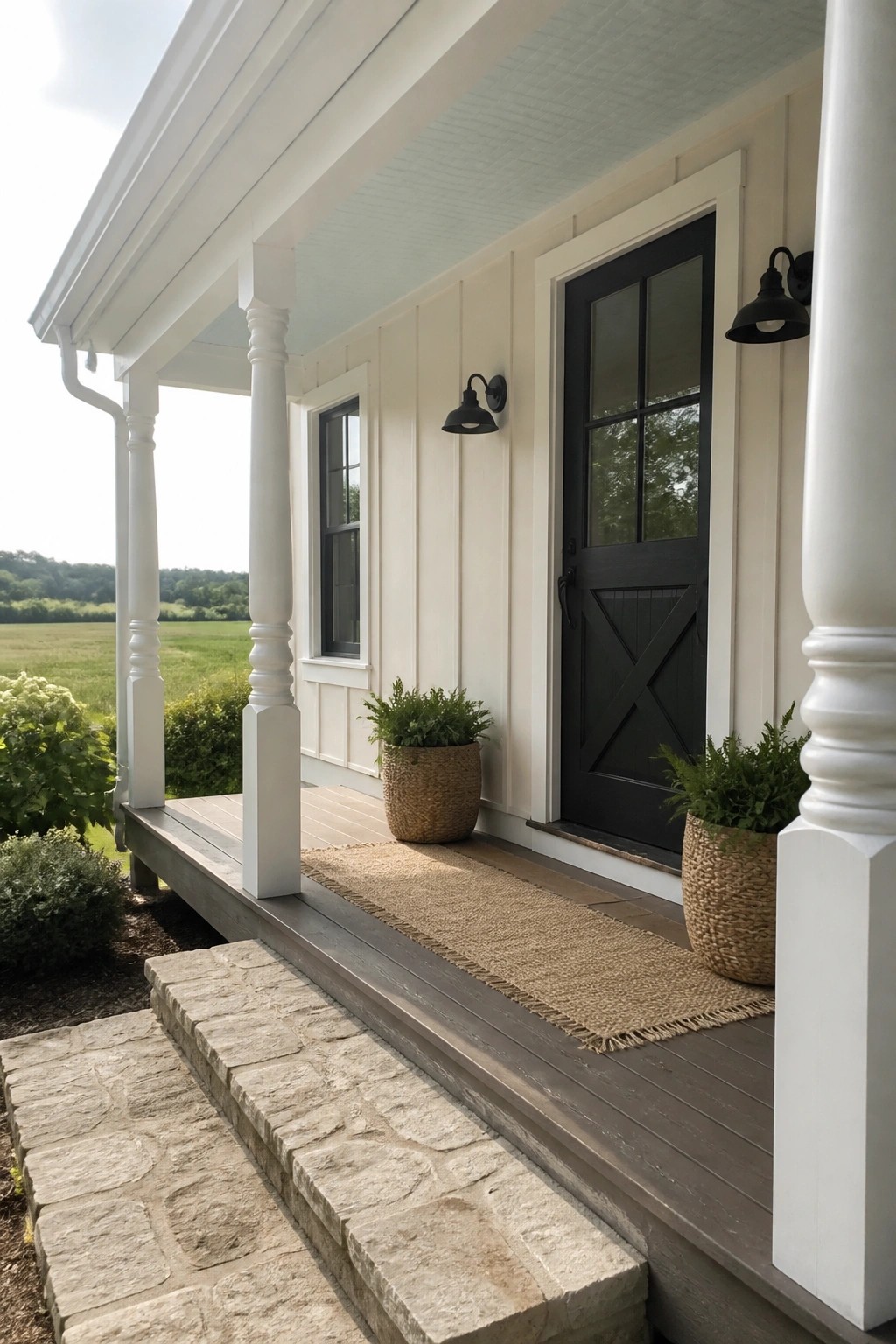
This light warm beige on the siding gives a soft, classic suburban look. It has a gentle creamy tone that feels steady next to the stone steps and dark door without going flat.
The color sits nicely in bright daylight and pairs well with natural stone or dark accents. It works best on traditional homes where you want something calm that still feels finished.
Warm Beige Siding With Black Window Frames
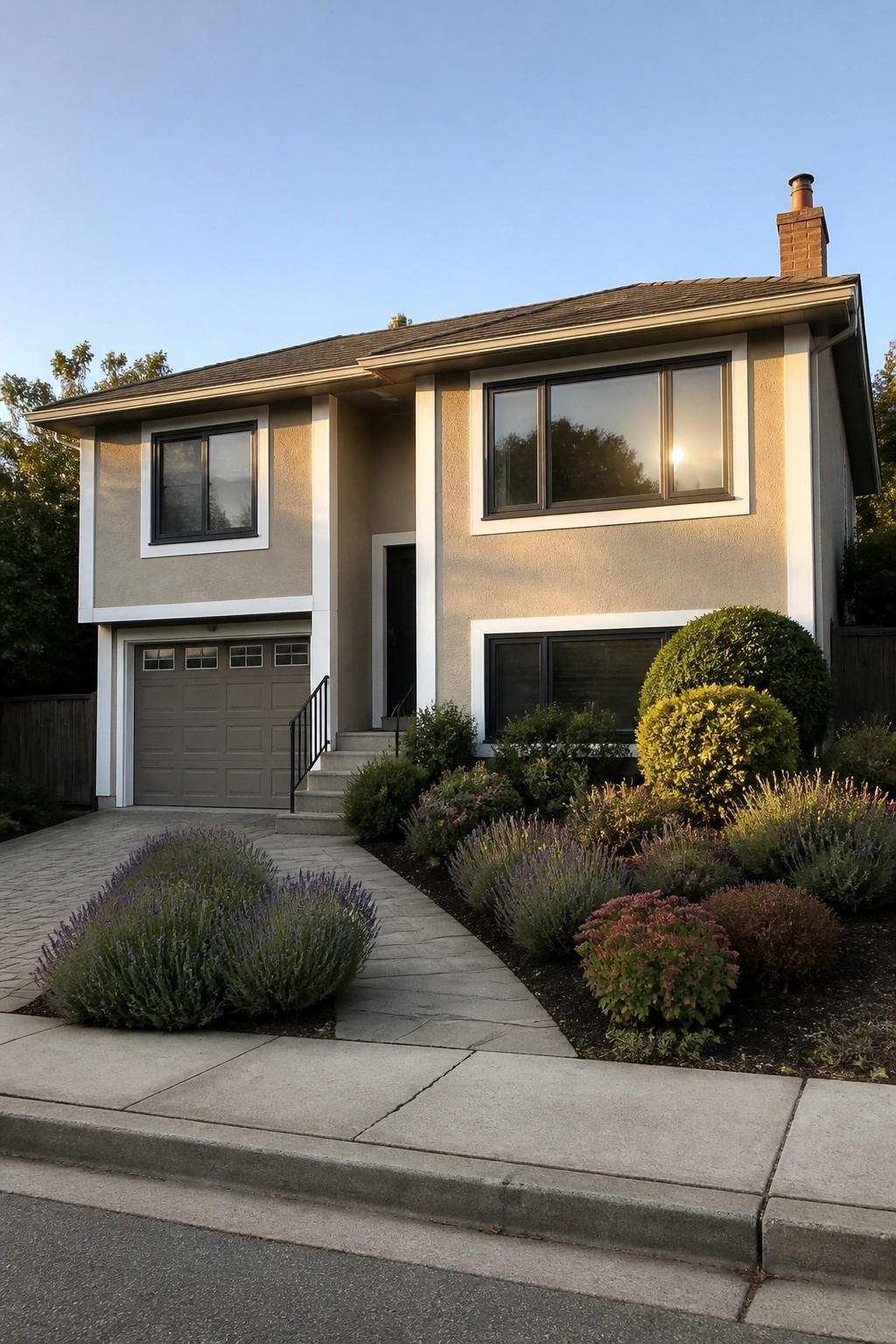
This is a straightforward warm beige that reads soft and steady on the main house walls. It gives the two-story suburban home a clean, settled look that works with the garage and overall shape without needing extra contrast.
The tone sits comfortably next to white trim and black windows, and it stays even in full sun. It pairs best with simple materials like the gray roof and brick chimney, and it avoids turning too pink or too gray as the light changes through the day.
Warm Beige Against Dark Timber Trim
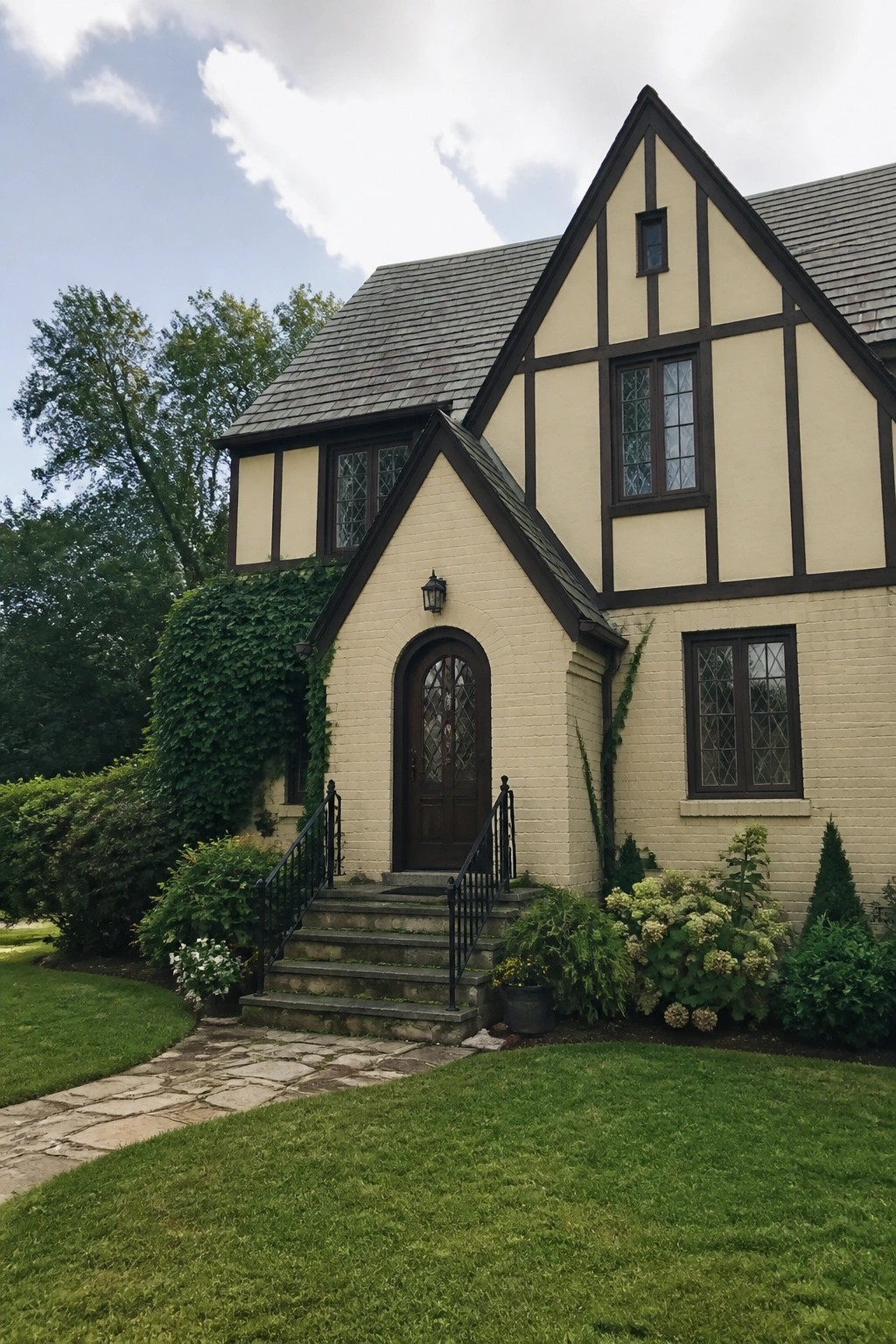
A warm beige like this one gives traditional homes a soft, settled look that still feels fresh. It sits between cream and tan, so it reads gentle rather than washed out, especially when the rest of the house uses dark wood details.
This shade works best with brown or black trim and a medium roof color. Try something close to Sherwin Williams Accessible Beige, Benjamin Moore Edgecomb Gray, or Behr Almond Wisp if you want a similar tone on your own house.
Warm Beige Siding With Crisp White Trim
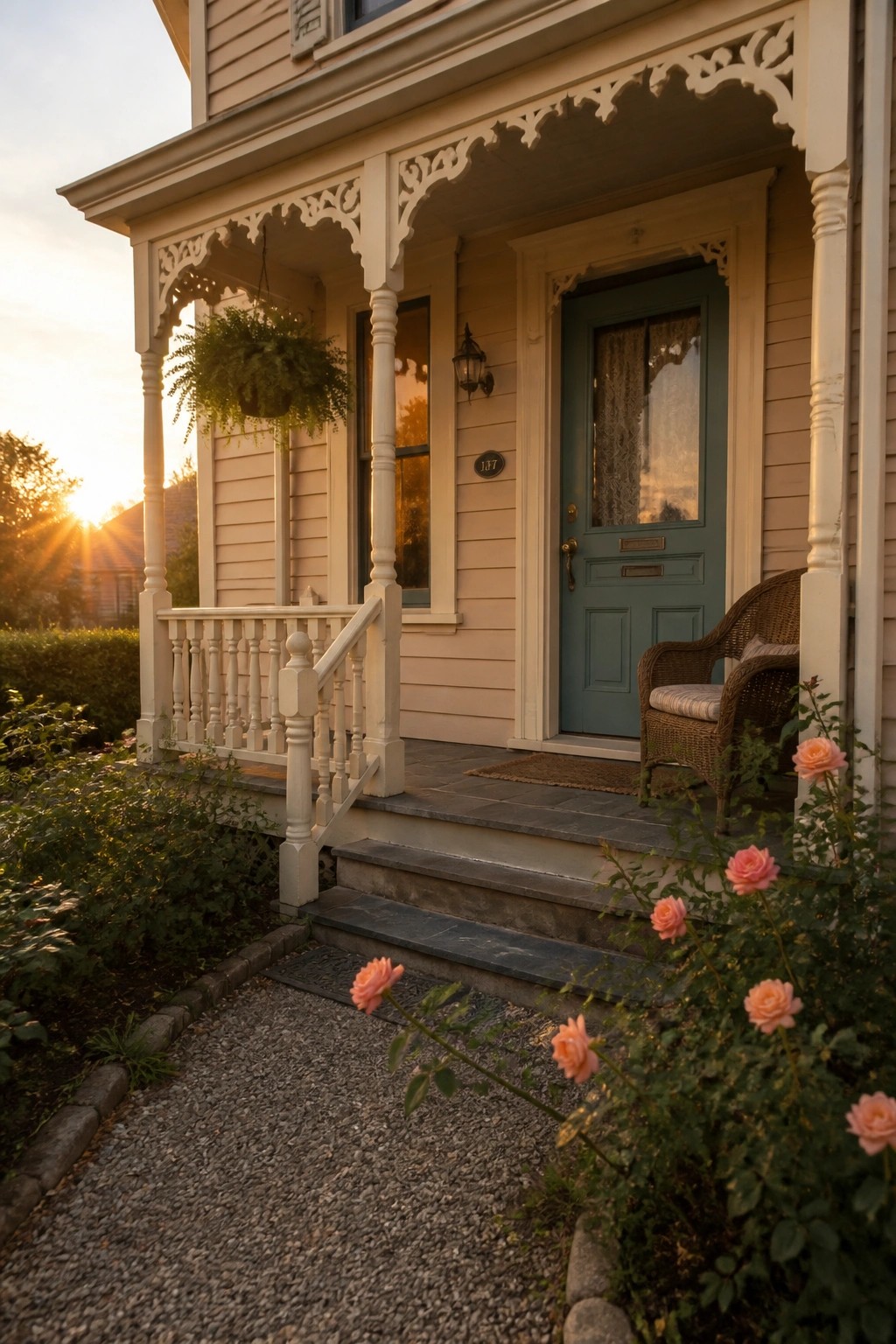
This warm beige siding gives a classic suburban look that feels steady and easy to live with. It sits in a soft neutral range that leans slightly yellow rather than gray, which helps it stay friendly next to white trim and a bolder door color. Many people reach for shades like Sherwin Williams Accessible Beige, Benjamin Moore Manchester Tan, or Behr Creamy Mushroom when they want this same effect.
The color works well on traditional homes because it pairs cleanly with white columns and railings without looking stark. It also holds its own in changing daylight, staying calm rather than shifting too cool or muddy. Pair it with a mid-tone door if you want a bit of contrast, but keep the trim bright to keep the whole front simple.
Warm Beige Siding Against Red Brick
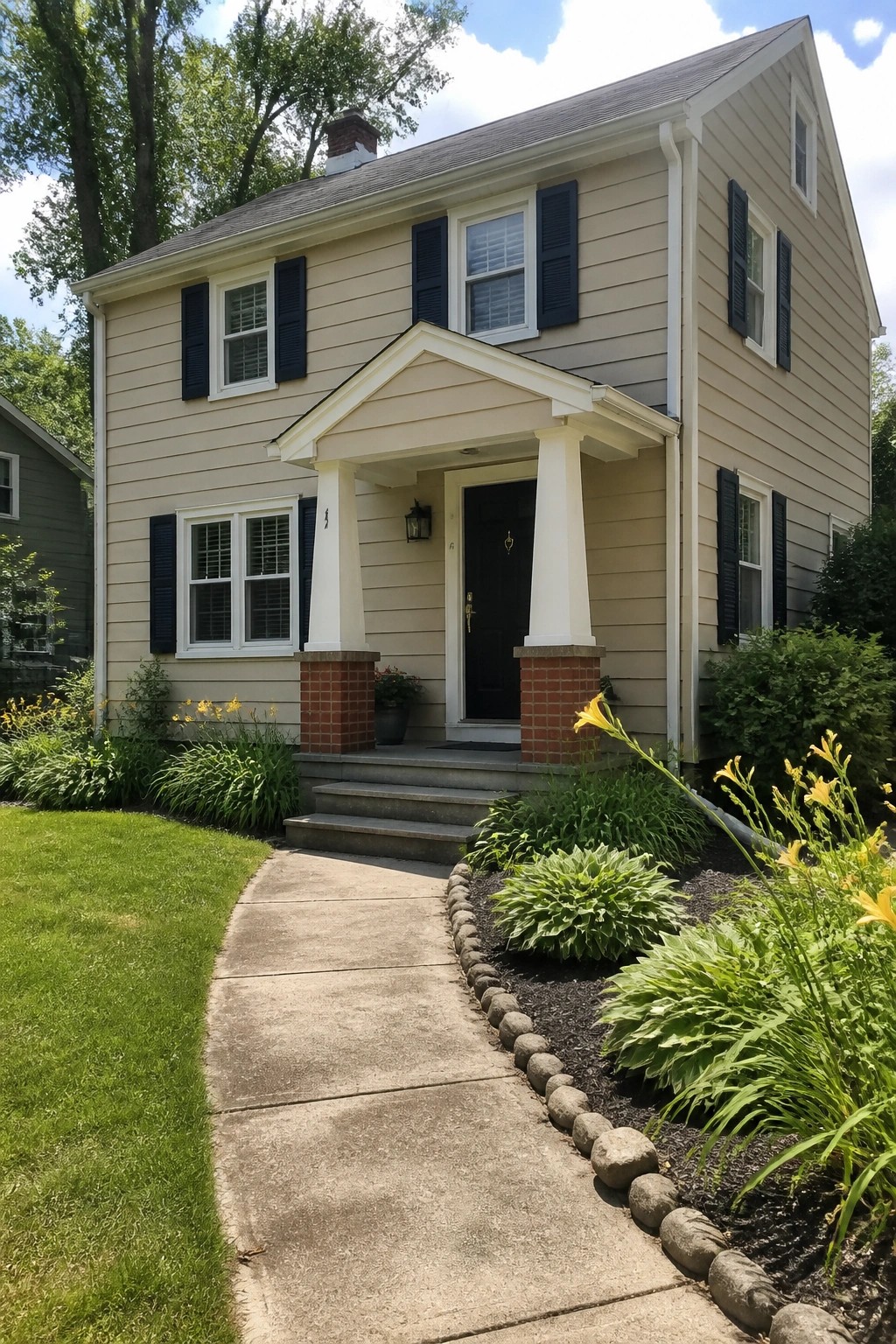
This house uses a warm beige on the siding that sits nicely between tan and light gray. It gives the whole exterior a soft, settled look without feeling too yellow or too cool. Many suburban homes lean on this kind of neutral because it stays easy to live with year after year.
The color works especially well next to the red brick on the porch columns and steps. It pairs cleanly with white trim and dark shutters without fighting them. Colors like Sherwin Williams Accessible Beige, Benjamin Moore Edgecomb Gray, Behr Almond Wisp, or Farrow & Ball Slipper Satin land close to this shade.
Beige Siding Against Stone and White Columns
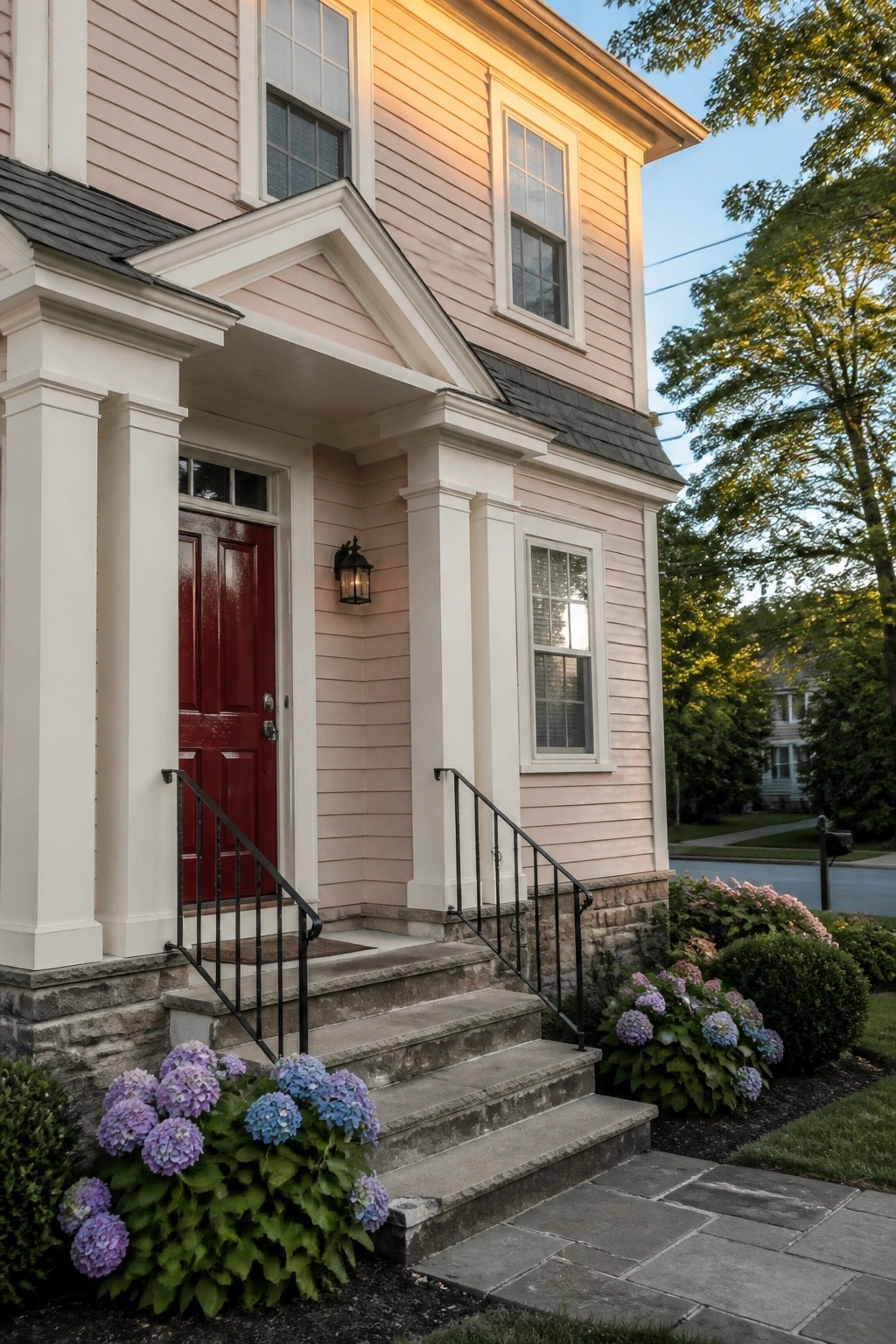
This warm beige siding gives the house a soft, settled look that fits right into traditional suburban streets. It sits somewhere between a light tan and a pale greige, and colors like Benjamin Moore Pale Oak, Sherwin Williams Accessible Beige, Behr Almond Wisp, or Farrow & Ball Slipper Satin come close.
The color reads a little pinkish in afternoon light but stays gentle next to the white trim and stone base. It works best on homes with clean lines and simple details, where the siding can stay the main surface without competing with too many other materials.
Beige Siding With Natural Stone
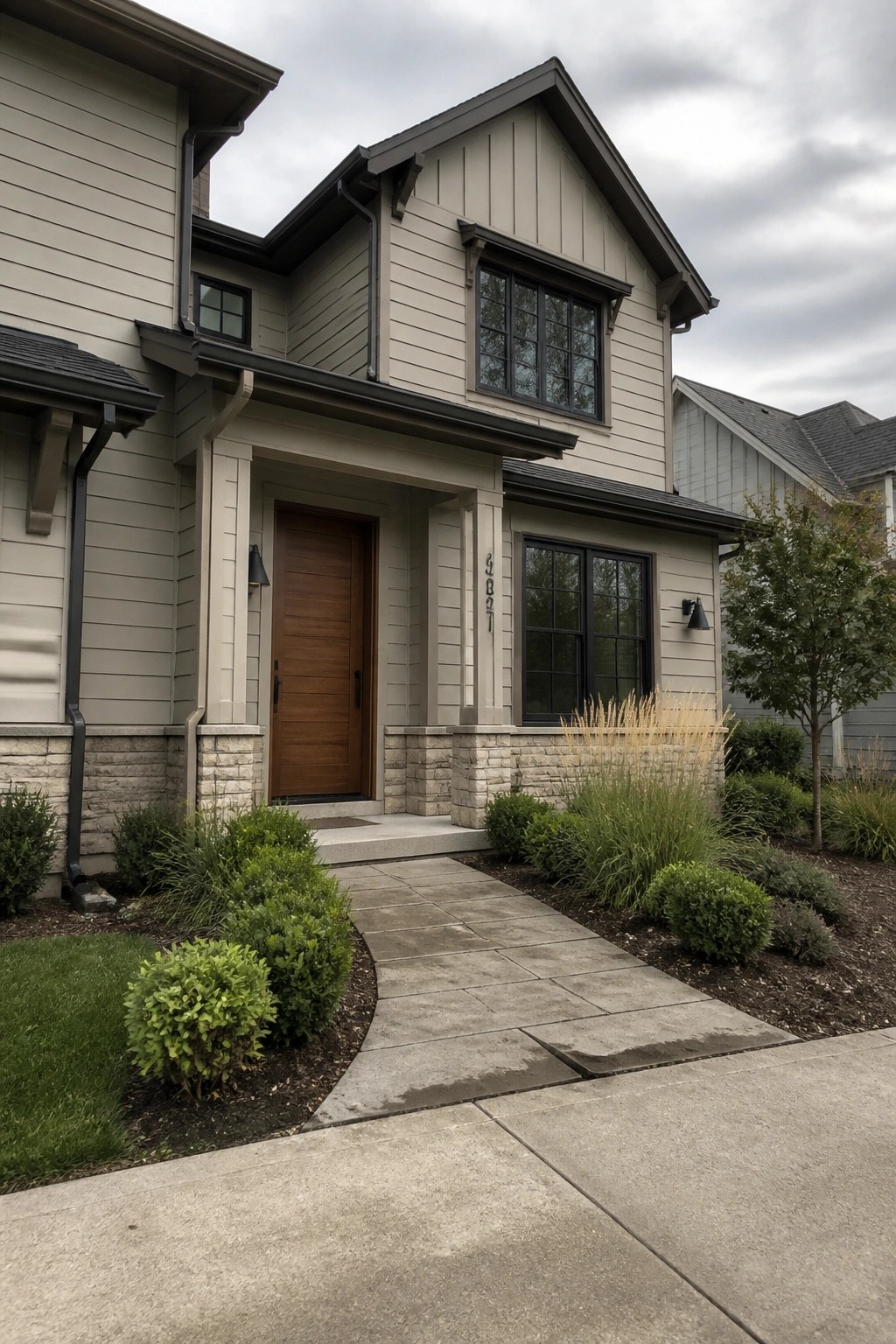
This light beige siding color gives a clean traditional look that fits right into suburban neighborhoods. It has a soft warm undertone that feels steady without being too yellow or too gray. Colors like Sherwin Williams Accessible Beige, Benjamin Moore Edgecomb Gray, or Behr Silver Satin come close to this shade.
The stone base underneath helps keep the beige grounded so it does not wash out in daylight. It works well with black windows for a bit of contrast and pairs easily with wood doors or simple landscaping. On a two-story home like this, the color stays calm across larger wall areas without feeling flat.
Warm Beige Siding Beside White Trim
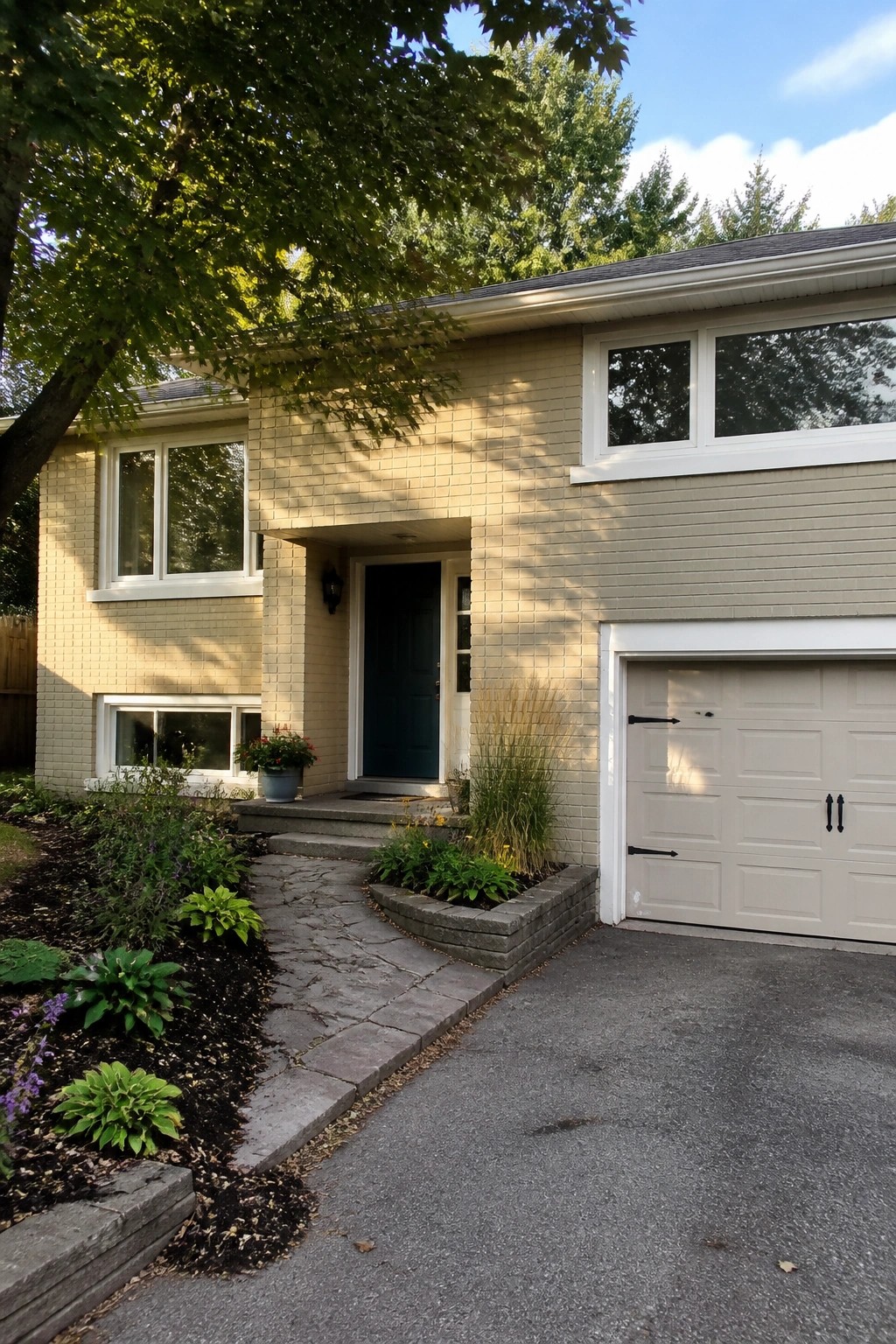
This warm beige works well on traditional suburban siding because it feels soft without looking washed out. It has enough warmth to sit comfortably with older style homes and pairs easily with the white trim and garage door shown here. Many homeowners like it because it stays friendly in both sun and shade.
The color leans slightly yellow rather than gray, which helps it avoid looking cool or flat outdoors. It works best on homes with white or cream trim and simple landscaping. Try testing it on a small section first since the warmth can shift depending on the roof color nearby.
Warm Beige Siding With White Trim
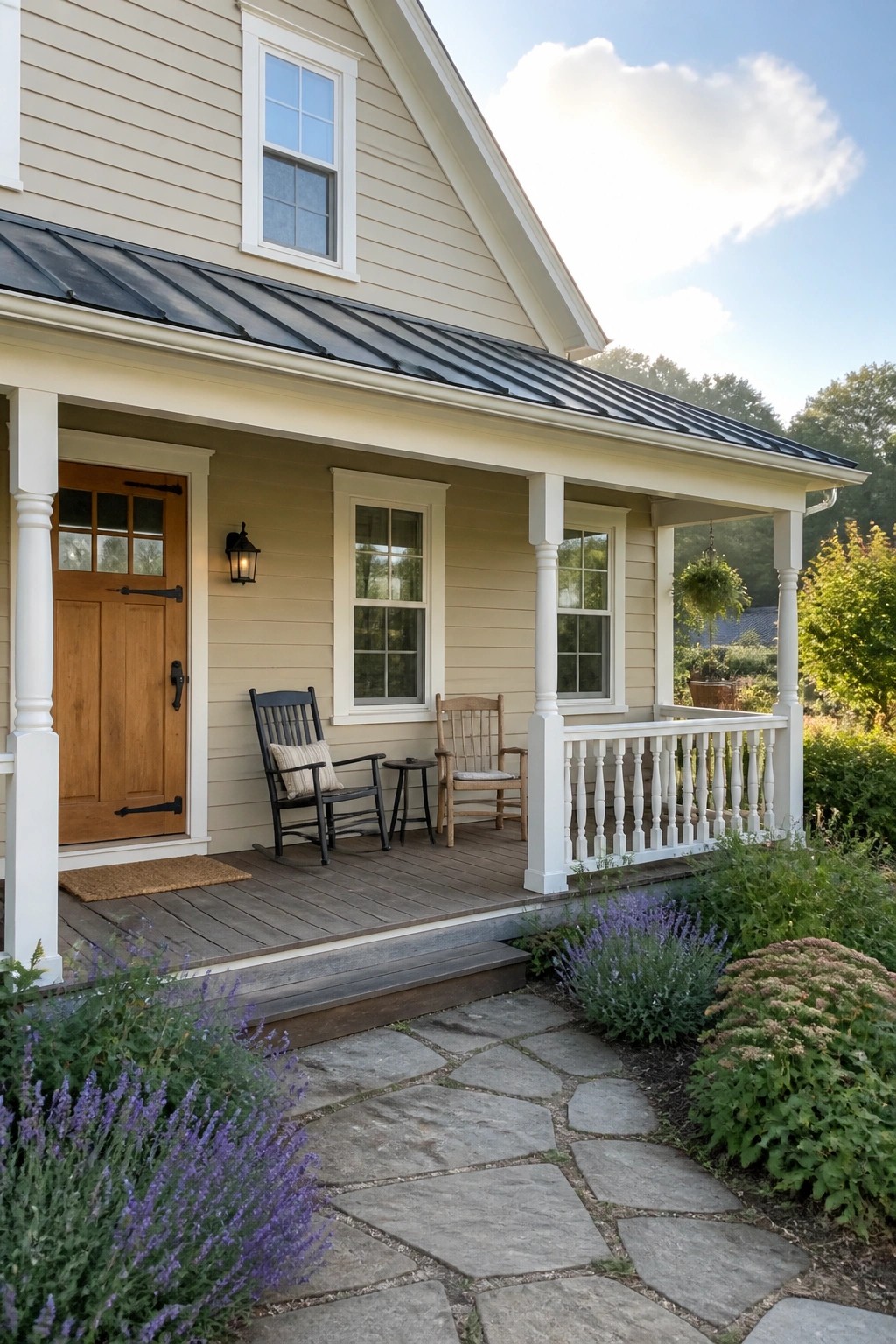
A warm beige like this works well on traditional suburban homes because it feels soft but still grounded. It sits somewhere between cream and light taupe, giving the house a gentle presence without looking washed out next to white trim.
The color has a mild yellow undertone that shows up nicely in full sun. It pairs easily with dark roofing and natural stone paths, and it holds up well against the green landscaping that usually surrounds these homes. Try shades such as Sherwin Williams Accessible Beige, Benjamin Moore Manchester Tan, or Behr Almond Wisp if you want something close.
Warm Beige Beside Natural Stone
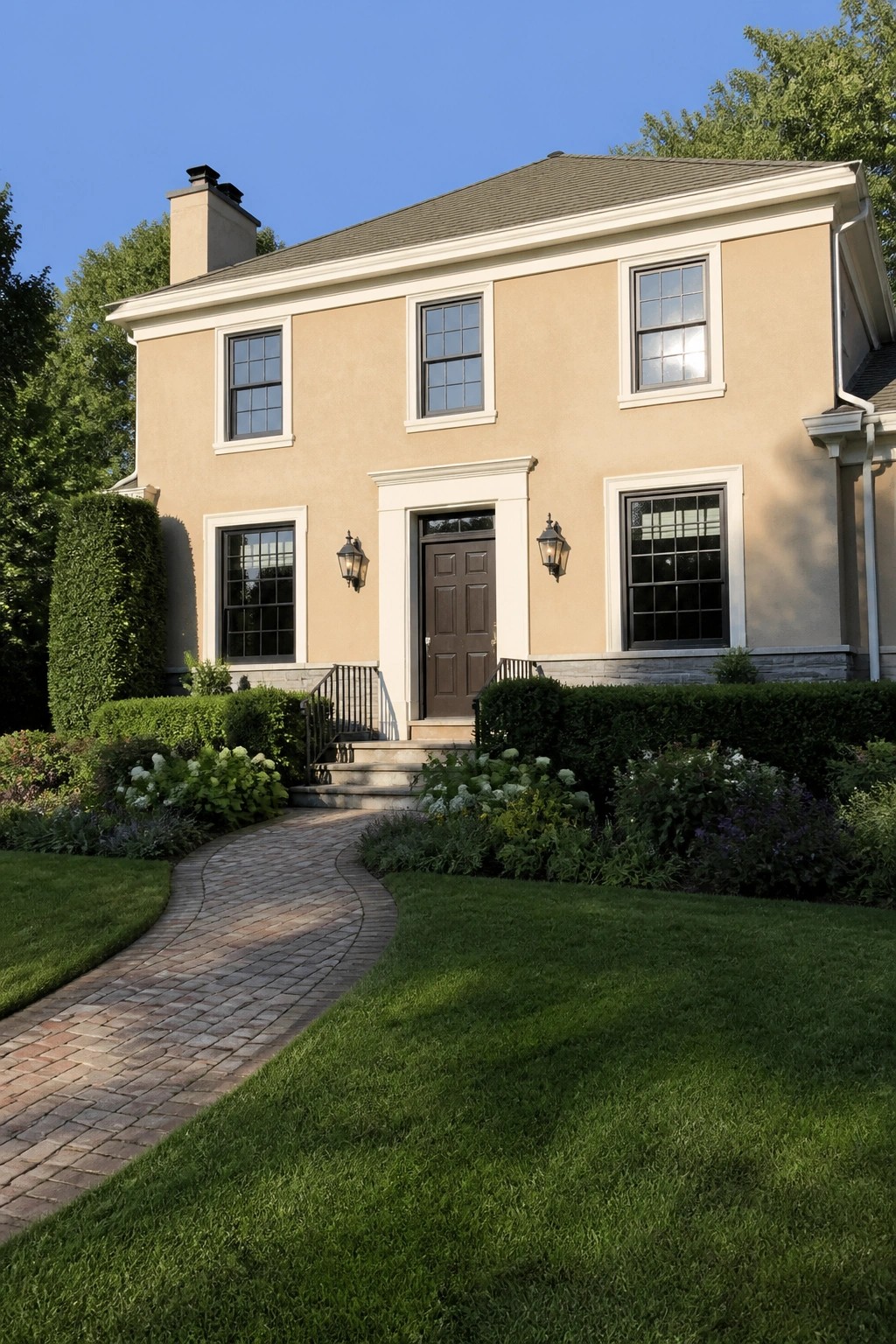
This warm beige works well on traditional suburban homes because it stays soft without turning too yellow or gray. It has enough depth to feel grounded next to the stone base while still keeping the whole house light and approachable. Colors like Sherwin Williams Accessible Beige, Benjamin Moore Manchester Tan, Behr Almond Wisp, or Farrow & Ball Slipper Satin all sit in this same range.
It pairs cleanly with white trim and darker doors, which helps the beige read as intentional rather than flat. On houses with stone or brick foundations it avoids looking washed out in full sun, though it can shift warmer on south-facing walls so testing a sample is worth it.
Warm Beige Siding Beside Natural Stone
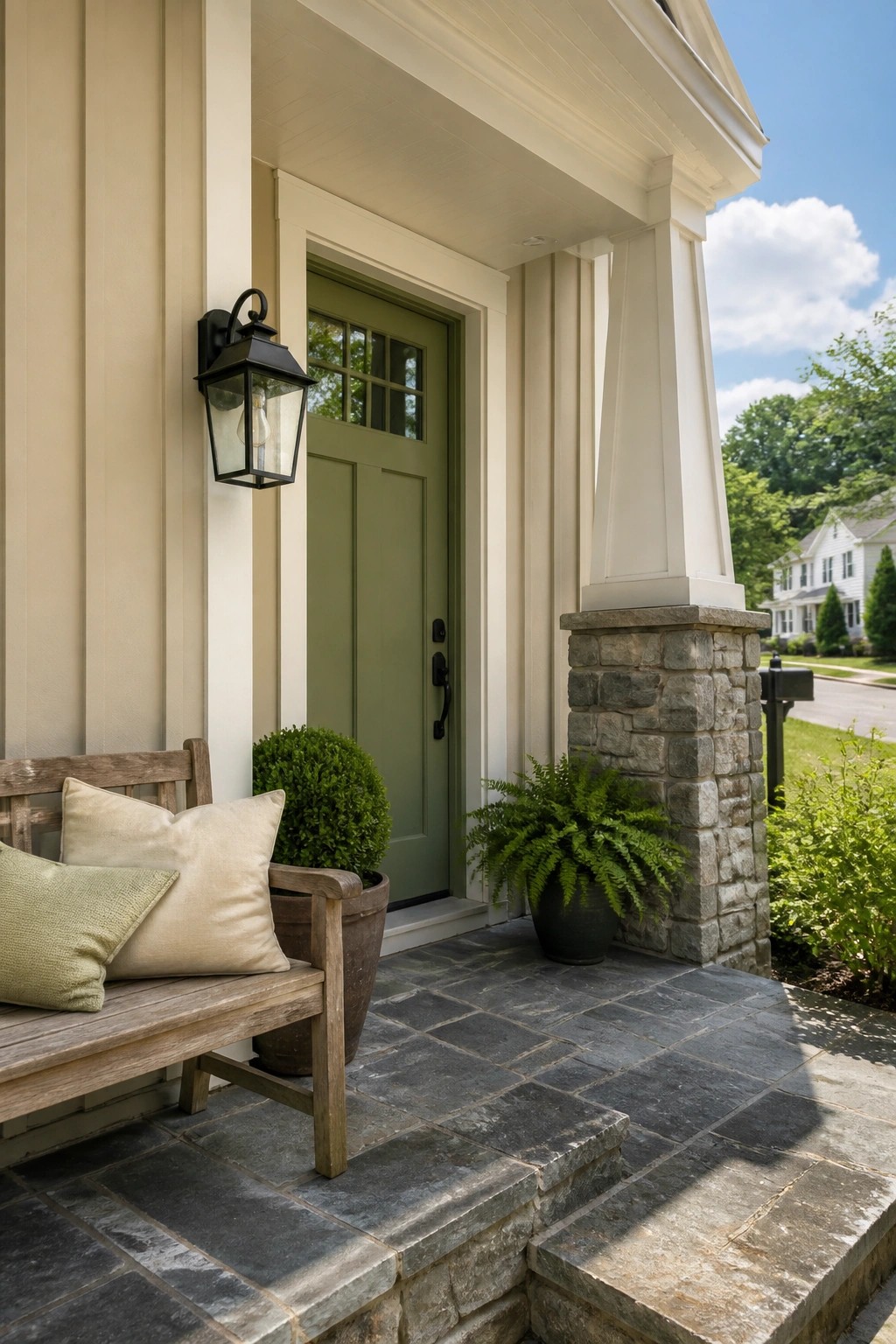
This warm beige siding sits in a soft cream range that feels easy on traditional homes. It has a gentle yellow undertone that keeps it from looking flat next to stone or white trim. Many people like it because it gives the house a settled look without needing a lot of contrast.
It works best on homes with masonry details or simple wood siding. Try pairing it with off-white trim and charcoal roofing so the beige stays the main color. Matches to consider are Sherwin Williams Creamy, Benjamin Moore Manchester Tan, Behr Almond Wisp, or Farrow & Ball Slipper Satin.
Greige Beige Siding Next to Concrete Steps
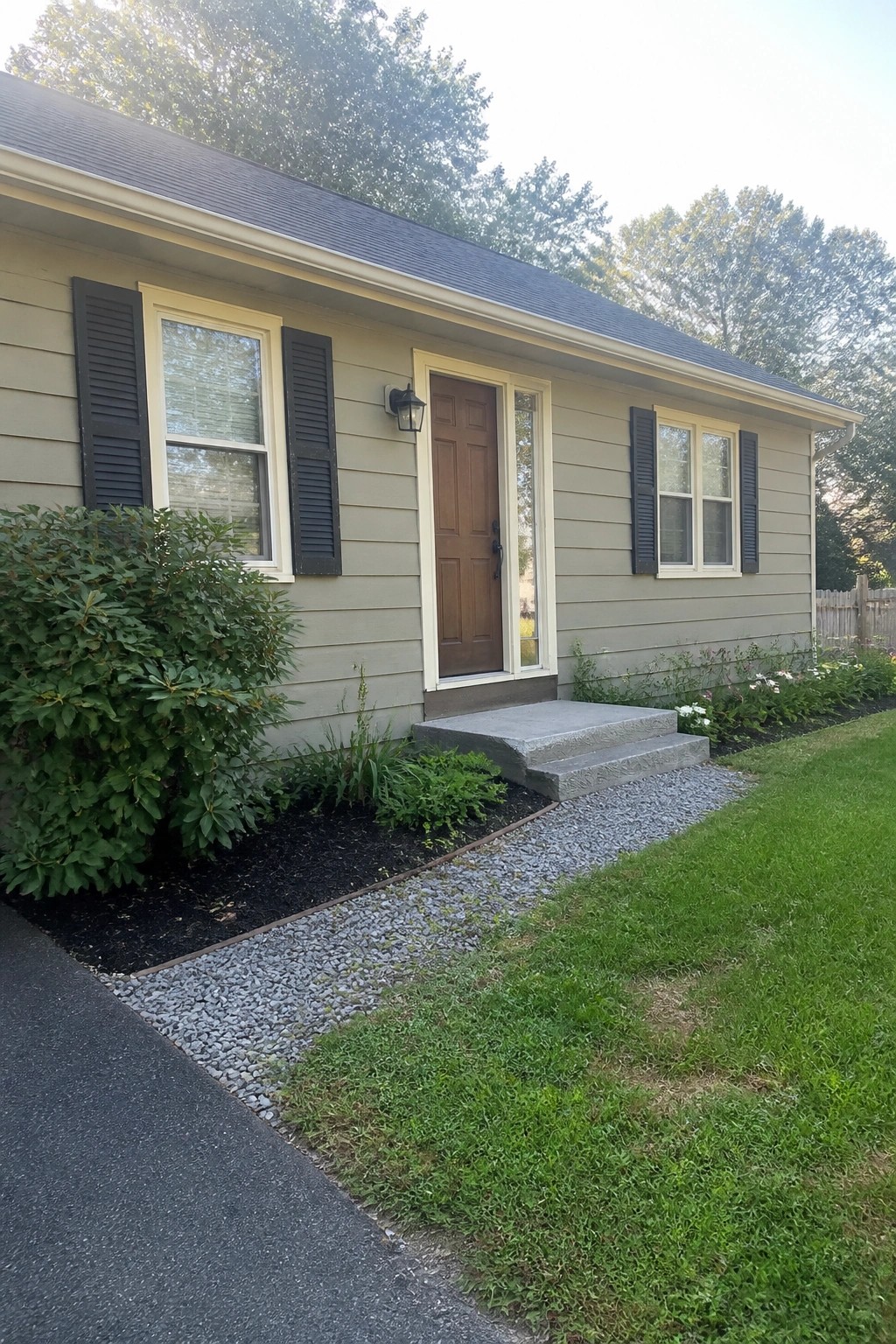
This siding shows a light greige beige with a soft cool lean that feels steady on suburban homes. It avoids looking too yellow or too flat, which makes it a reliable choice when you want something classic but not boring.
The color sits well against the gray concrete steps and warm wood door without fighting them. It also holds up next to the dark shutters, though it can read a little cooler in strong daylight, so test a sample on the actual wall before committing.
Warm Beige Siding With a Stone Base
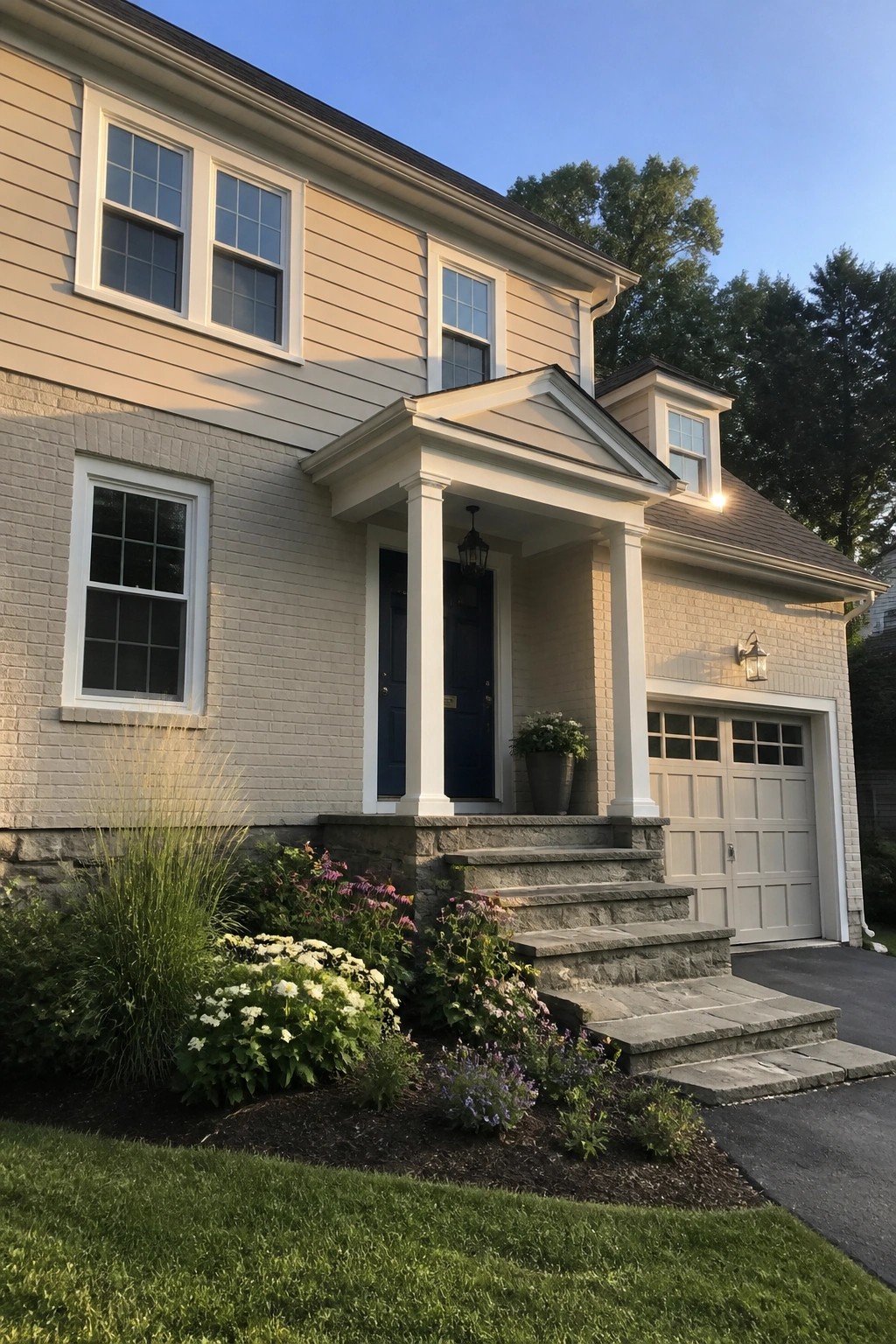
This warm beige is a straightforward choice for traditional suburban homes. It sits in that soft middle ground between cream and taupe, giving the house a settled look without feeling too yellow or too gray. The color holds up well next to the stone foundation and keeps the whole front from looking flat.
It has a gentle warmth that pairs nicely with white trim and a darker roof. On houses like this it tends to read a little softer in afternoon light, so it works best on homes that get decent sun. If your lot is heavily shaded you might want to test a slightly lighter version so it does not go muddy.
Frequently Asked Questions
Q: How do I test a beige color before painting the whole house? A: Grab a few sample pots and paint large boards. Lean them against the house at different times of day. This shows how the shade shifts with sunlight.
Q: Will a light beige make my trim stand out too much? A: Pair it with a slightly darker beige or warm gray for the trim. The contrast keeps things interesting without clashing. Stick to colors from the same family for a smooth result.
Q: What maintenance does a beige exterior need over time? A: Wash the walls once a year to remove dirt. Touch up chips right away so they do not spread.
