

When I look at houses around my area, the ones with dark exteriors often stand out because the color brings out the shape of the building itself.
That effect depends on the siding material and how the trim is handled against it.
Some colors that seem dramatic in a paint store end up looking flat once they cover the whole facade.
I usually recommend checking the shade at different times of day before making a final decision.
It saves a lot of regret later on.
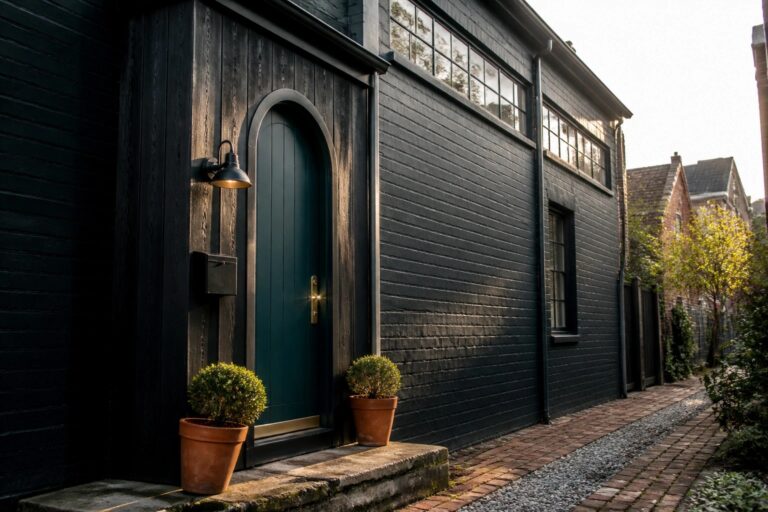
Bold Door Color Against Dark Siding

A strong door color can give a dark house more presence without changing the whole exterior. The teal arched door here stands out cleanly against the black siding and makes the entry the main focal point.
This approach works well on homes with simple facades that need a bit more character. Keep the trim and hardware minimal so the door color stays the focus. It suits older houses or compact builds where you want curb appeal without adding extra trim or details.
Dark Siding To Give A House More Presence
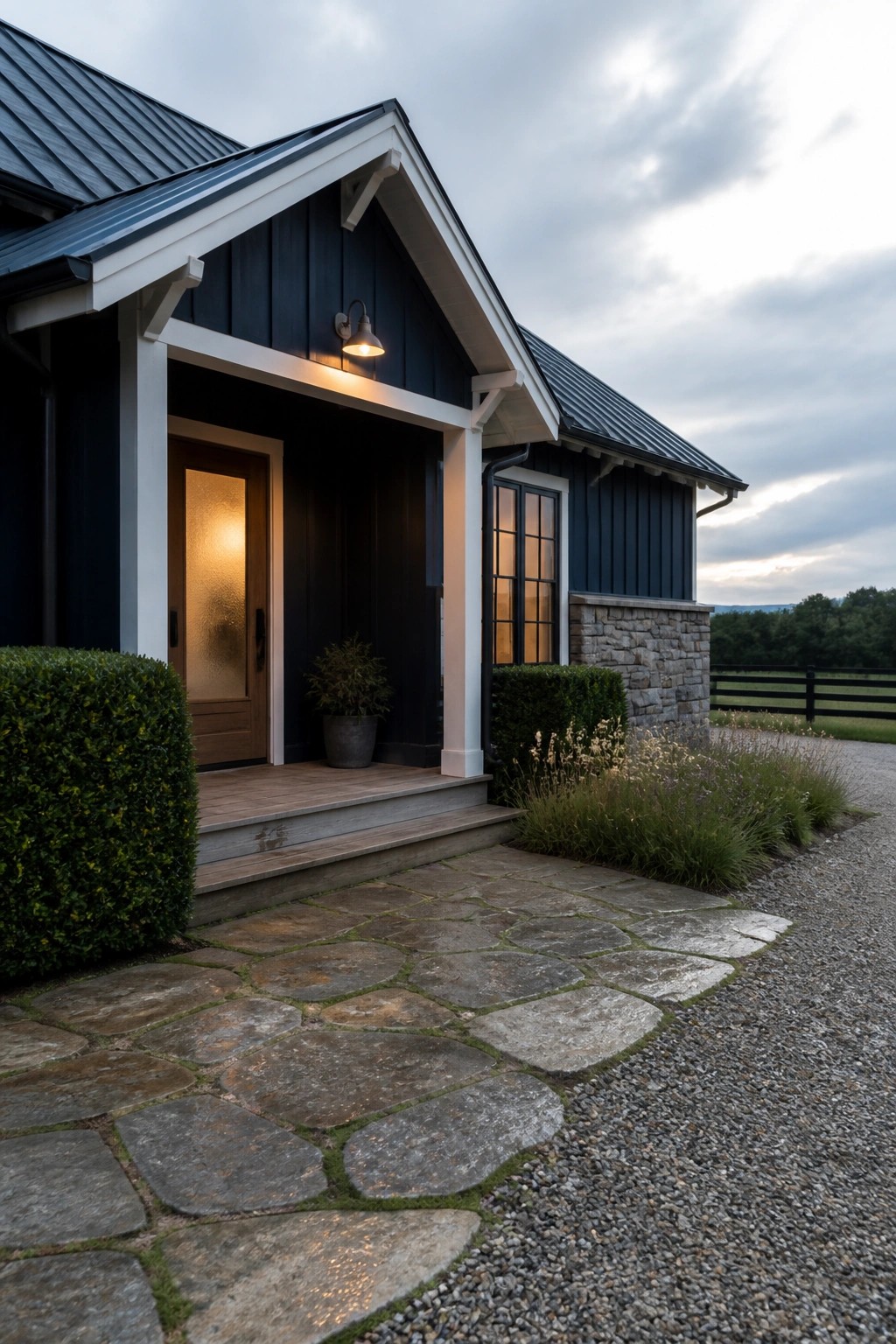
A deep color on the siding makes the whole structure read as more solid and intentional. It sharpens the rooflines and trim without adding extra details, which is useful on houses that have fairly simple shapes to begin with.
This works best on homes that already have some contrast built in, such as white trim or a stone base. Keep the rest of the palette limited so the dark tone stays the main feature rather than competing with too many other materials.
Dark Blue Siding With Stone
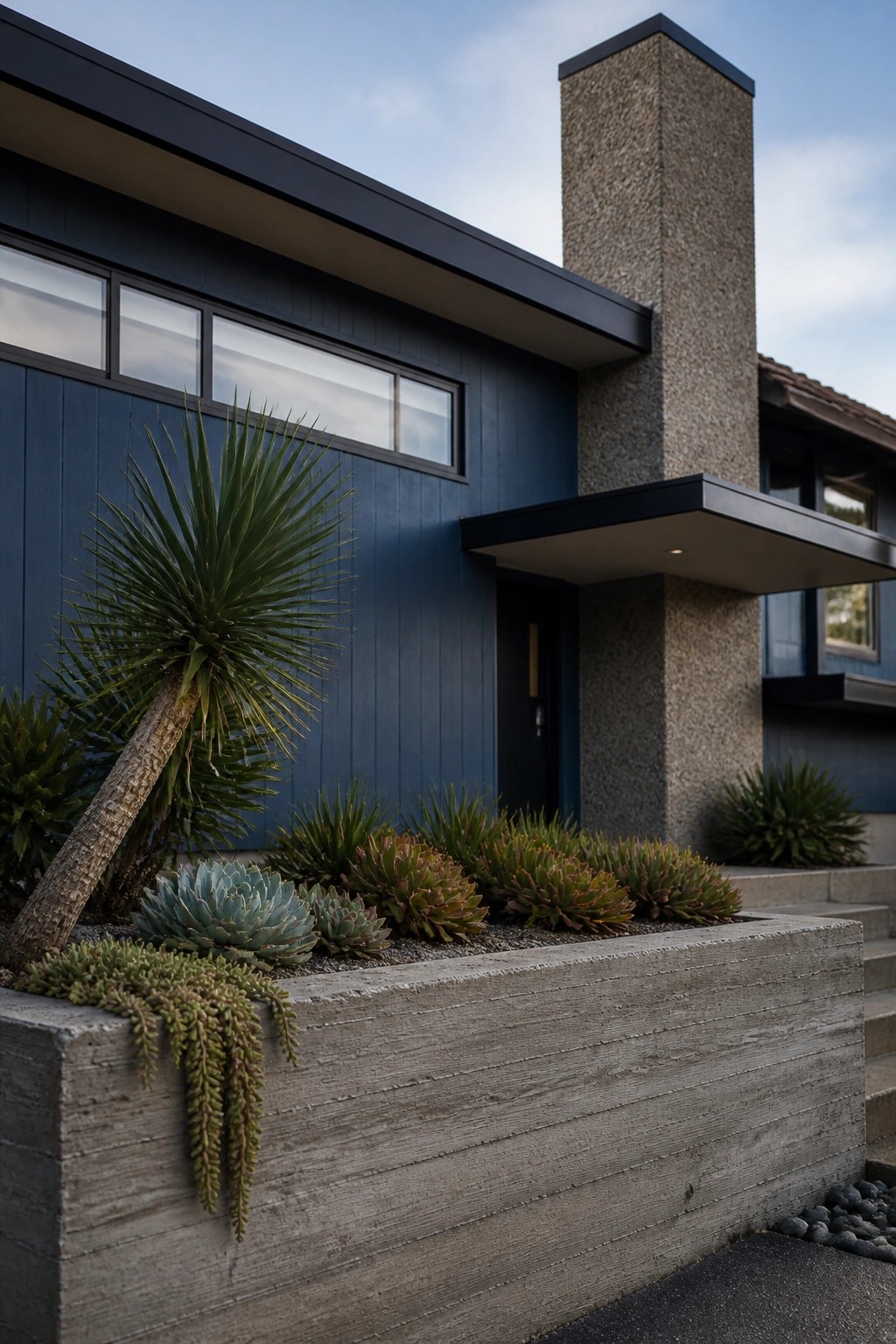
A deep blue exterior like this one sharpens the house shape and gives it more weight. The color sits back against lighter skies and makes the roofline and windows read clearly.
This approach suits modern homes that already have strong forms. Keep one rough material like stone nearby so the dark paint feels balanced rather than heavy.
Dark Door and Trim on a Bold Red Exterior

A dark door and matching trim can turn a strong exterior color into something more striking. The black door and shutters stand out sharply against the red walls, which gives the whole front a clearer shape and more presence without needing extra details.
This approach works best on homes with simple lines where the color contrast can do the work. Keep the door finish matte so it reads as architecture rather than decoration, and make sure the surrounding trim stays consistent so the look stays clean.
Navy Blue Siding for Stronger Presence
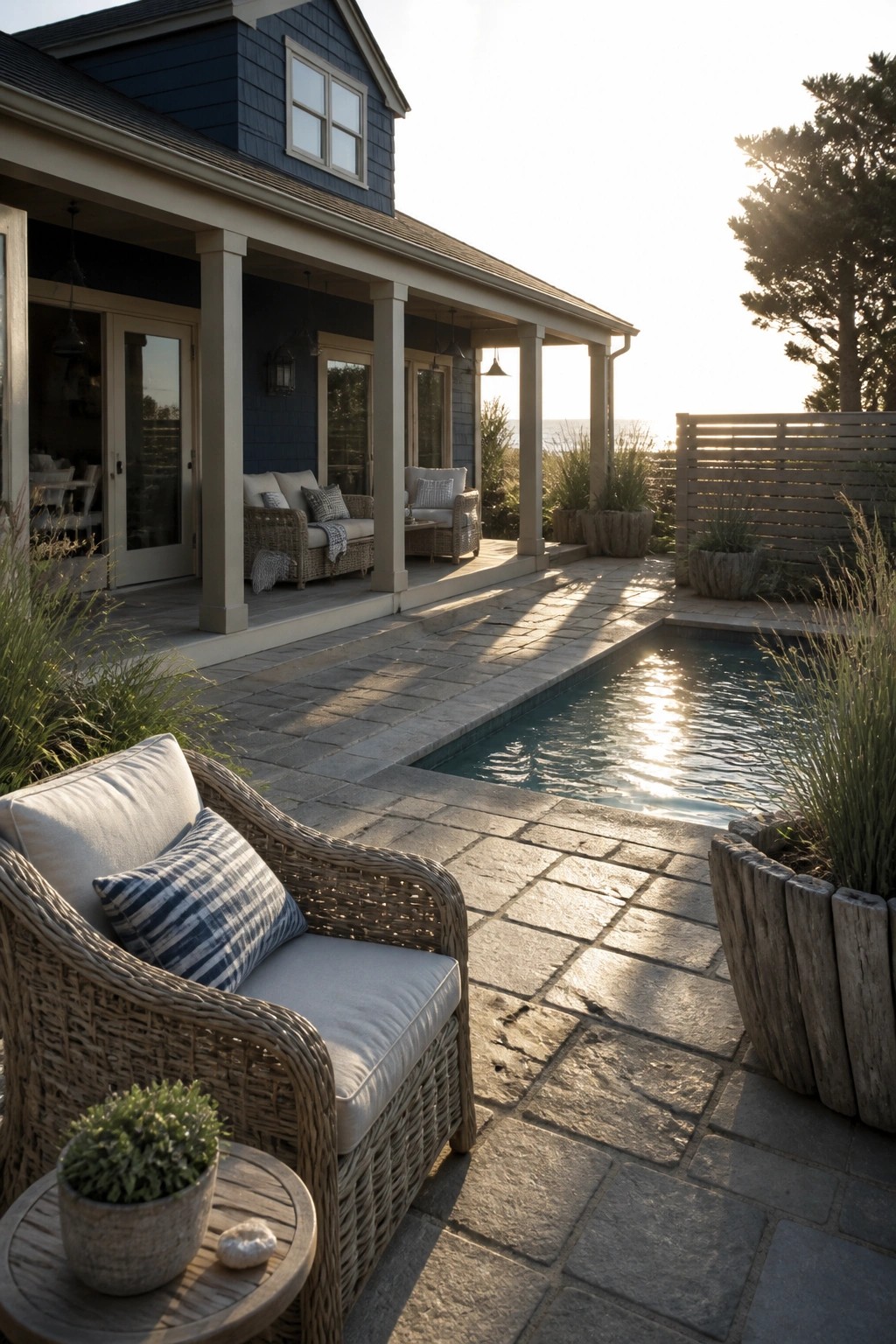
A deep navy blue on the main body of the house gives the whole structure more weight. The color helps the roofline and window placements stand out instead of fading into the background.
This approach works best on homes with simple forms and some trim detail. Keep the trim and porch posts light so the dark siding does not swallow the architecture.
Dark Exteriors With Wood Accents
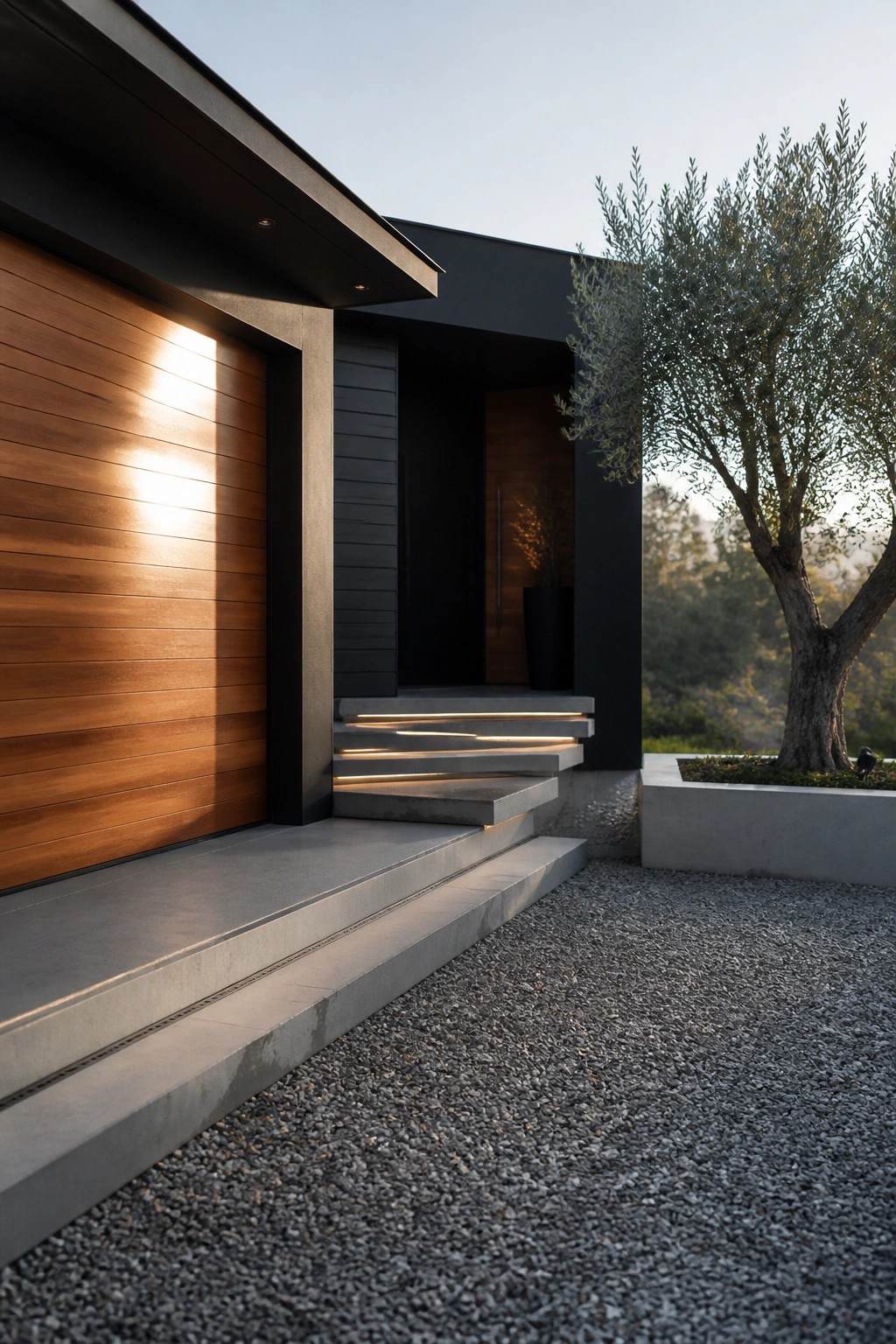
Dark paint on the main structure of a house gains more impact when set against warm wood siding. The contrast keeps the dark color from feeling flat and helps the architecture read as more intentional.
This works best on homes with clean lines where you want to draw attention to specific areas like a garage or entry. Use it when the goal is a stronger presence without adding extra trim or ornament.
Dark Exterior Paint Highlights Victorian Details

A deep purple exterior color like the one on this house makes the ornate trim and gable shapes stand out clearly. The dark tone turns the brick into a strong backdrop instead of letting the details get lost.
This approach works best on homes that already have interesting rooflines or decorative woodwork. Keep the trim and windows in a contrasting dark shade so the color does not flatten the whole facade.
Dark Siding With Natural Wood Accents
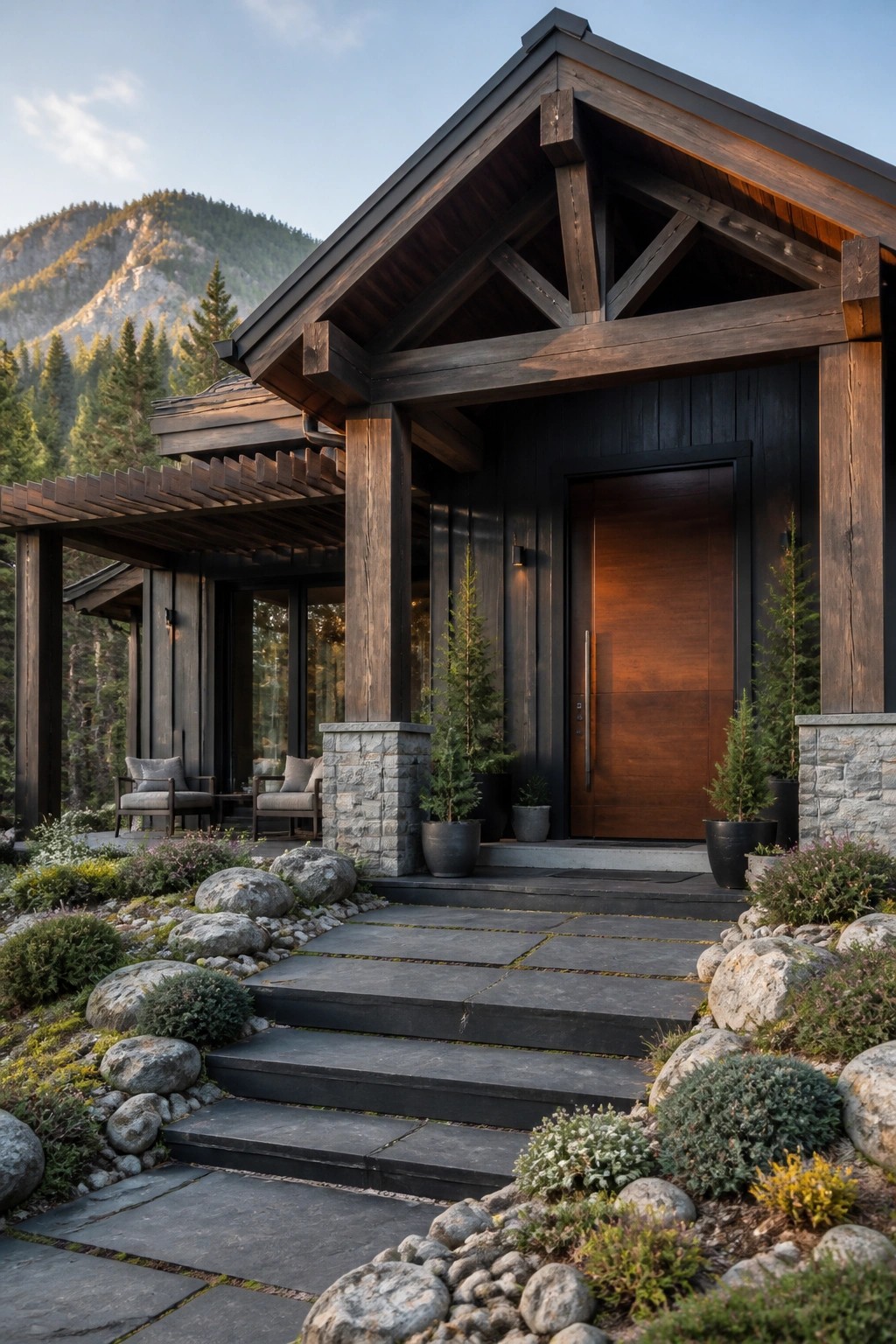
Dark siding works well when a house has strong lines that deserve more attention. The deep color makes the structure feel more solid and dramatic without needing extra ornament. It also helps the home blend into wooded settings while still standing out.
This approach suits homes with exposed beams or large doors in warmer wood tones. Keep the contrast simple and let the siding do most of the work. Too many competing materials can weaken the effect.
Dark Green Exterior Paint Adds Architectural Drama
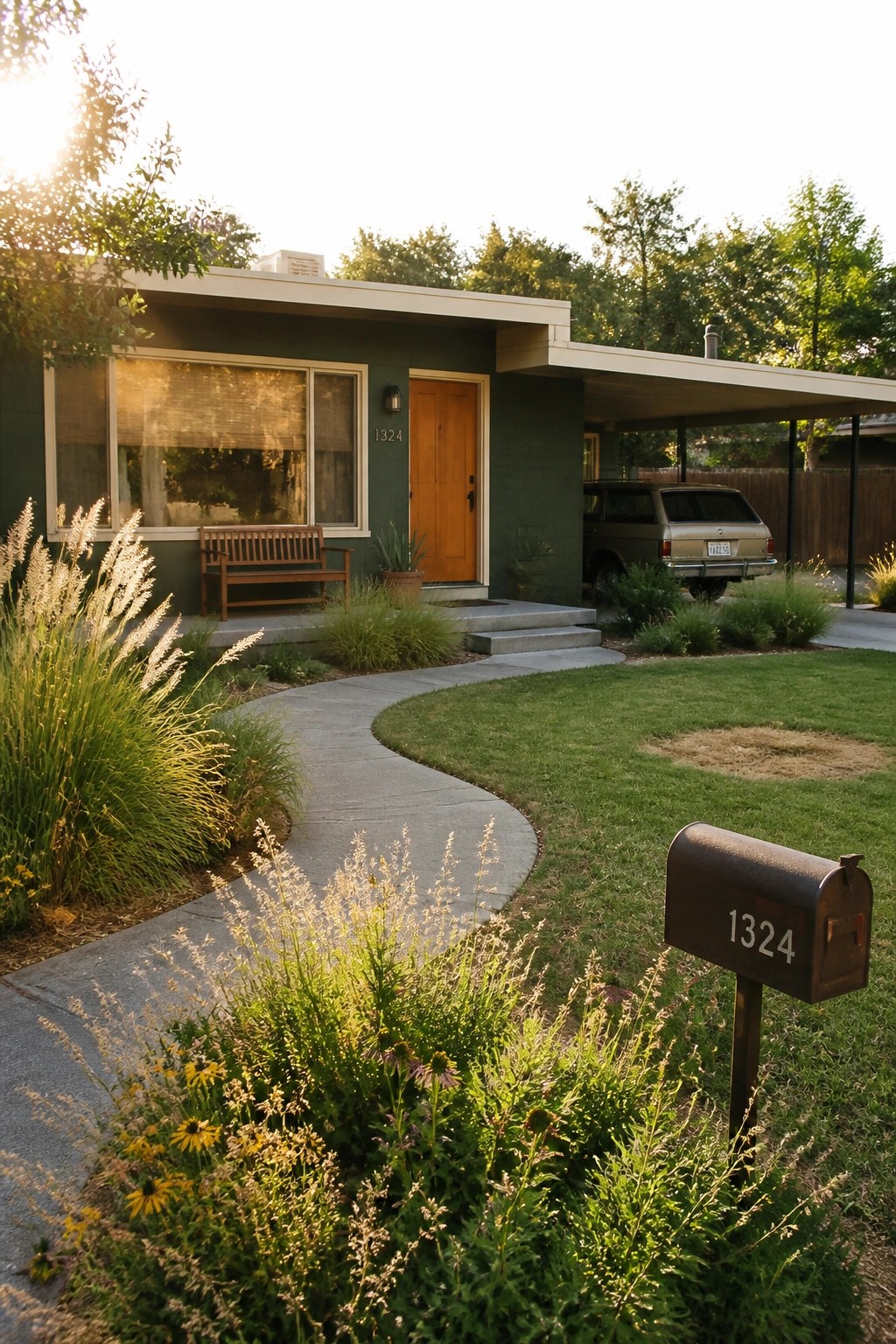
A deep green like this one gives the house a solid, grounded look that makes the simple lines stand out. The color turns a basic mid century shape into something more striking without needing extra trim or details.
This works best on homes with clean rooflines and few decorative elements. It suits ranch styles or similar houses where you want the paint itself to create contrast and presence.
Painting Brick Exteriors Black

A dark paint color can give a brick house more presence without changing the structure. The black finish brings out the texture in the brick and makes the whole front feel more solid and defined.
This works best on older homes that already have strong architectural lines. Keep the trim and doors in a lighter or metallic tone so the dark color does not swallow the details.
Deep Green Stucco With Stone Details
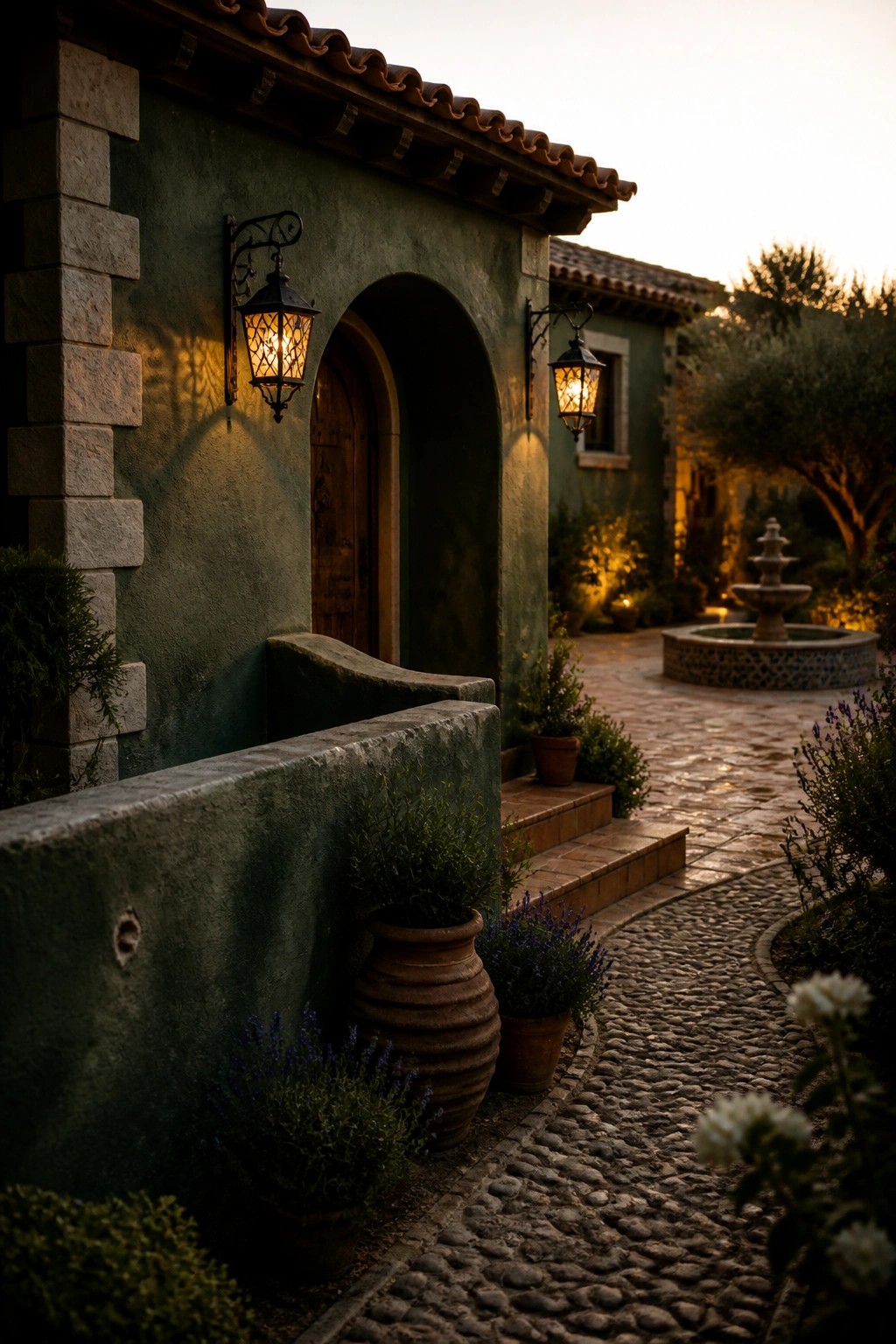
A deep green works well on stucco because it gives the walls more weight without looking flat. The color shifts with the light and makes the whole front feel more solid, especially when there is already stone around the openings.
Use it on homes that have some natural stone or masonry already in place. The contrast helps the architecture read more clearly and keeps the color from feeling like just another coat of paint. Stick with warm wood doors and simple metal lights so the green stays the main feature.
Dark Siding for Coastal Homes
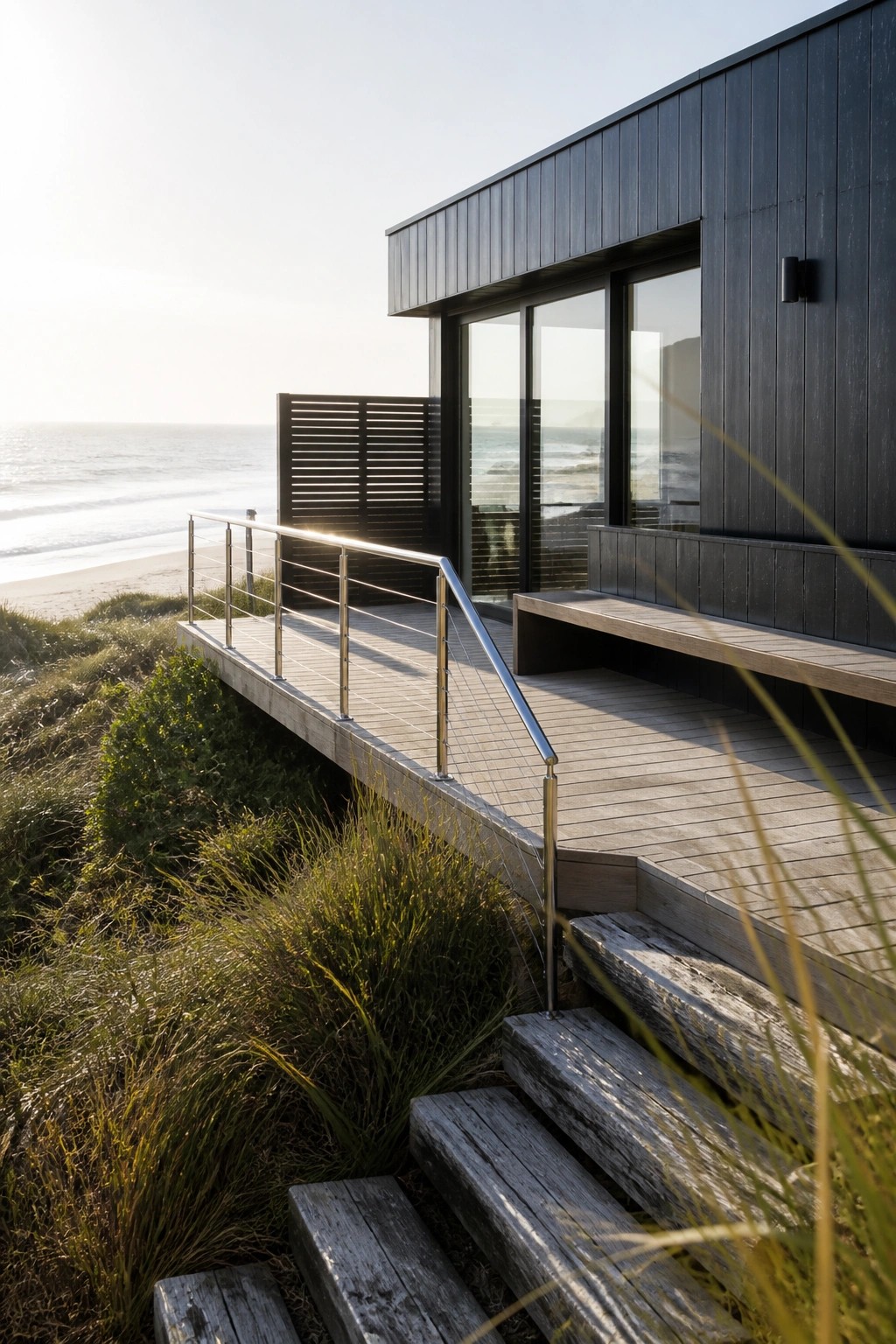
Dark siding gives a house real weight when it sits right by the water. Instead of fading into the bright surroundings, the deep tone makes the shape of the building stand out and feel more deliberate.
This works best on simple modern homes where the lines are clean. Keep the trim and windows minimal so the color carries the look without extra decoration.
Dark Color That Sharpens Timber Details
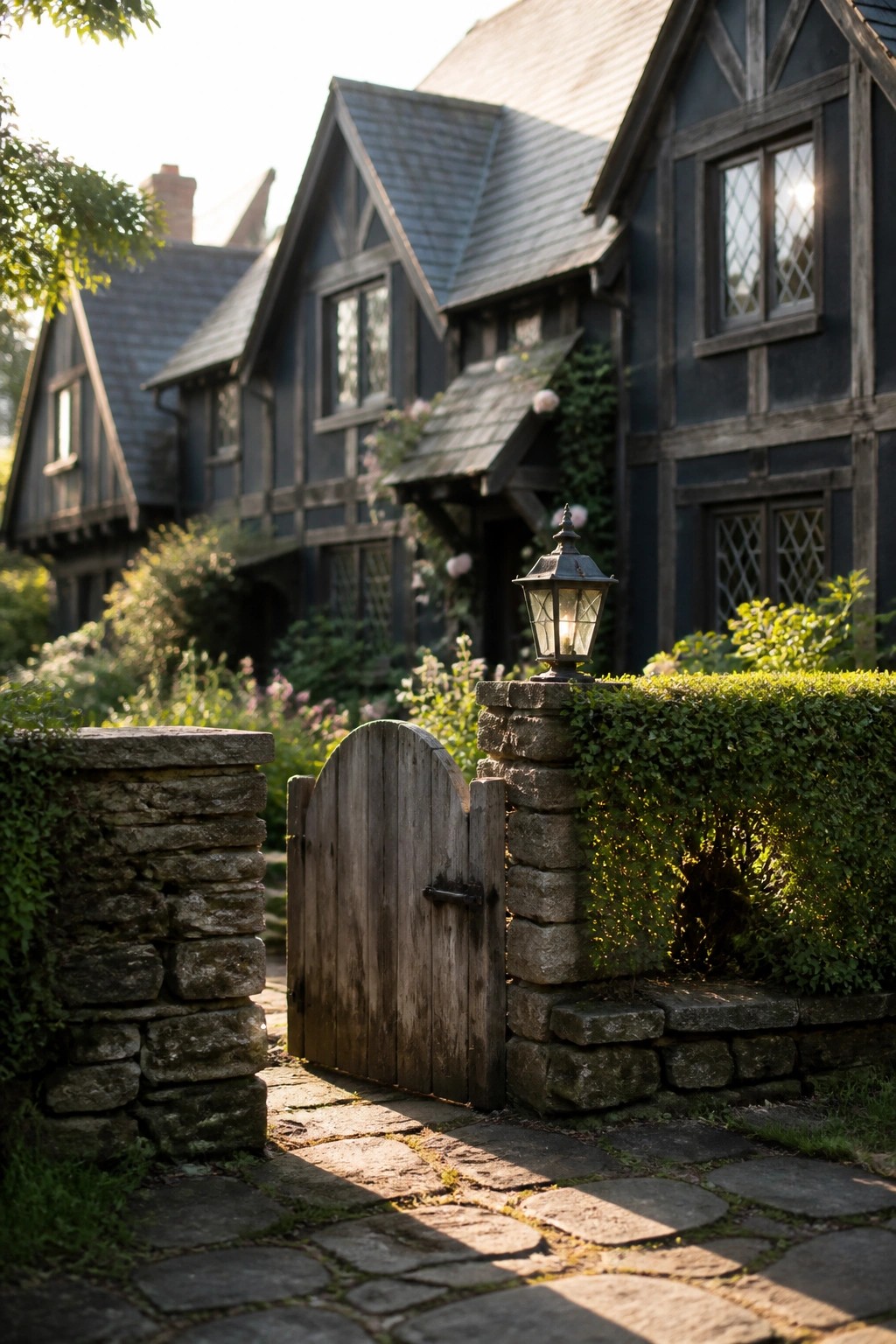
A deep dark paint color on the main body of the house makes the exposed framing and rooflines stand out clearly. Many homes with this kind of structure end up looking flat when painted in lighter tones, but the strong contrast here gives the facade more presence without adding any new trim or details.
This works best on older homes that already have interesting woodwork or steep roof angles. Keep the windows and doors in a lighter shade so the house does not feel closed off, and test the color on a large patch first since dark shades shift a lot in different light.
Dark Colors on Outbuildings
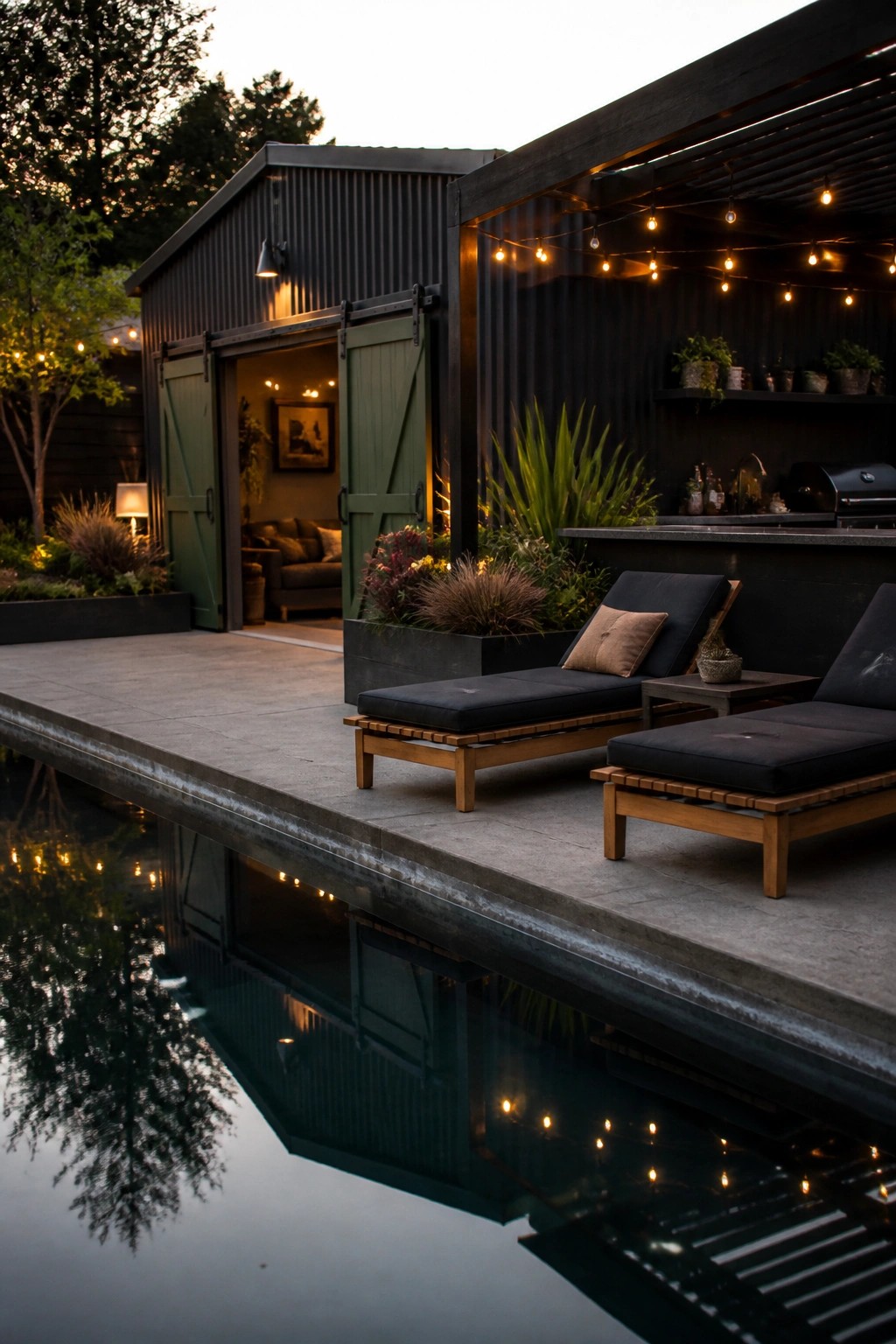
Dark siding on backyard structures can turn a simple patio into something with more weight and presence. The black metal finish here gives the whole seating area a stronger frame without needing extra decoration or bright accents.
This approach works best on sheds, pool houses, or detached garages where the color can reflect in water or contrast with lighter paving. Keep the trim simple and let the material carry the look, especially if the main house already uses a lighter shade.
Dark Brick to Strengthen the Facade
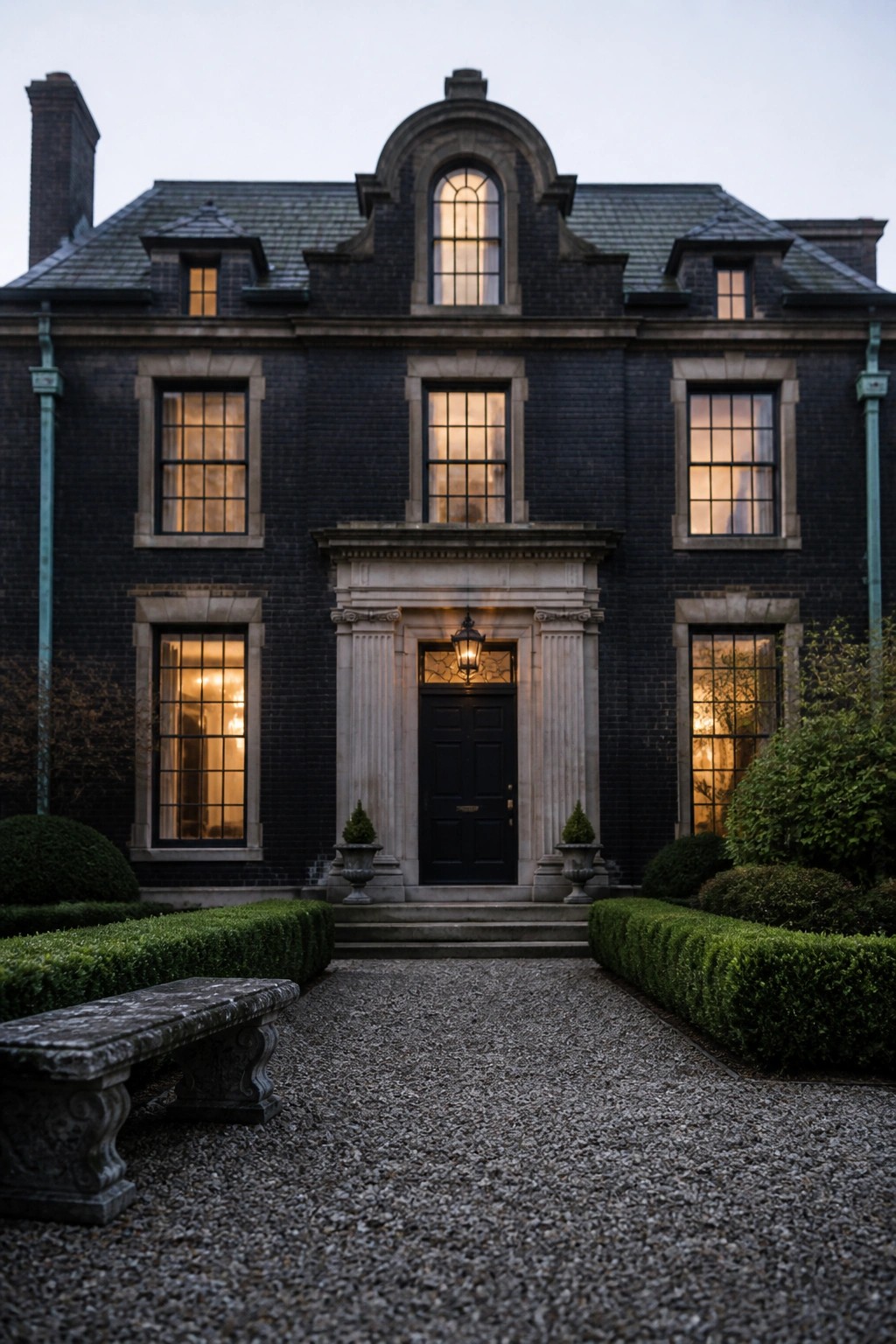
A dark exterior color can make a house feel more solid and structured. On homes with clear symmetry and strong trim details, a deep tone like black or charcoal brick pulls everything together without extra ornament. The contrast with lighter stone around the windows and door becomes more noticeable, which adds presence from the street.
This approach works best on older or classically shaped houses that already have good proportions. It can hide minor surface flaws in the brick while making the overall shape read more clearly. Just keep the trim and entry elements in a lighter material so the dark color does not swallow the architecture completely.
Dark Siding Gives the House More Presence
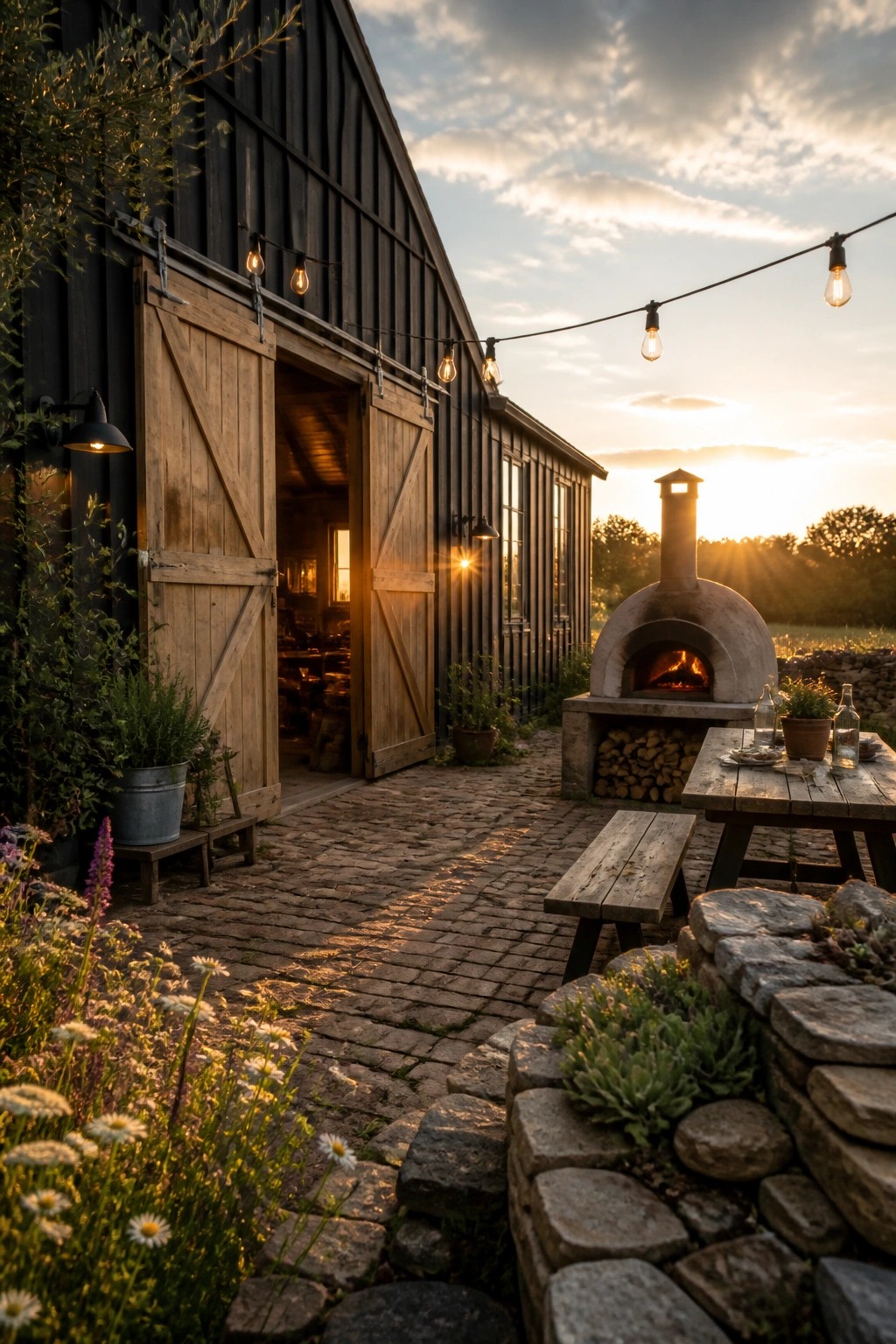
A deep black finish on the exterior walls can make even a simple structure feel more substantial. The color absorbs light and sharpens the lines of the roof and doors, so the shape of the building stands out instead of fading into the background.
This approach works especially well on homes with clean shapes and some wood trim or doors for contrast. It suits rural or semi-rural settings where you want the house to feel grounded without needing extra trim or ornament. Just keep the surrounding landscape simple so the dark color stays the main feature.
Dark Paint on the Porch and Siding
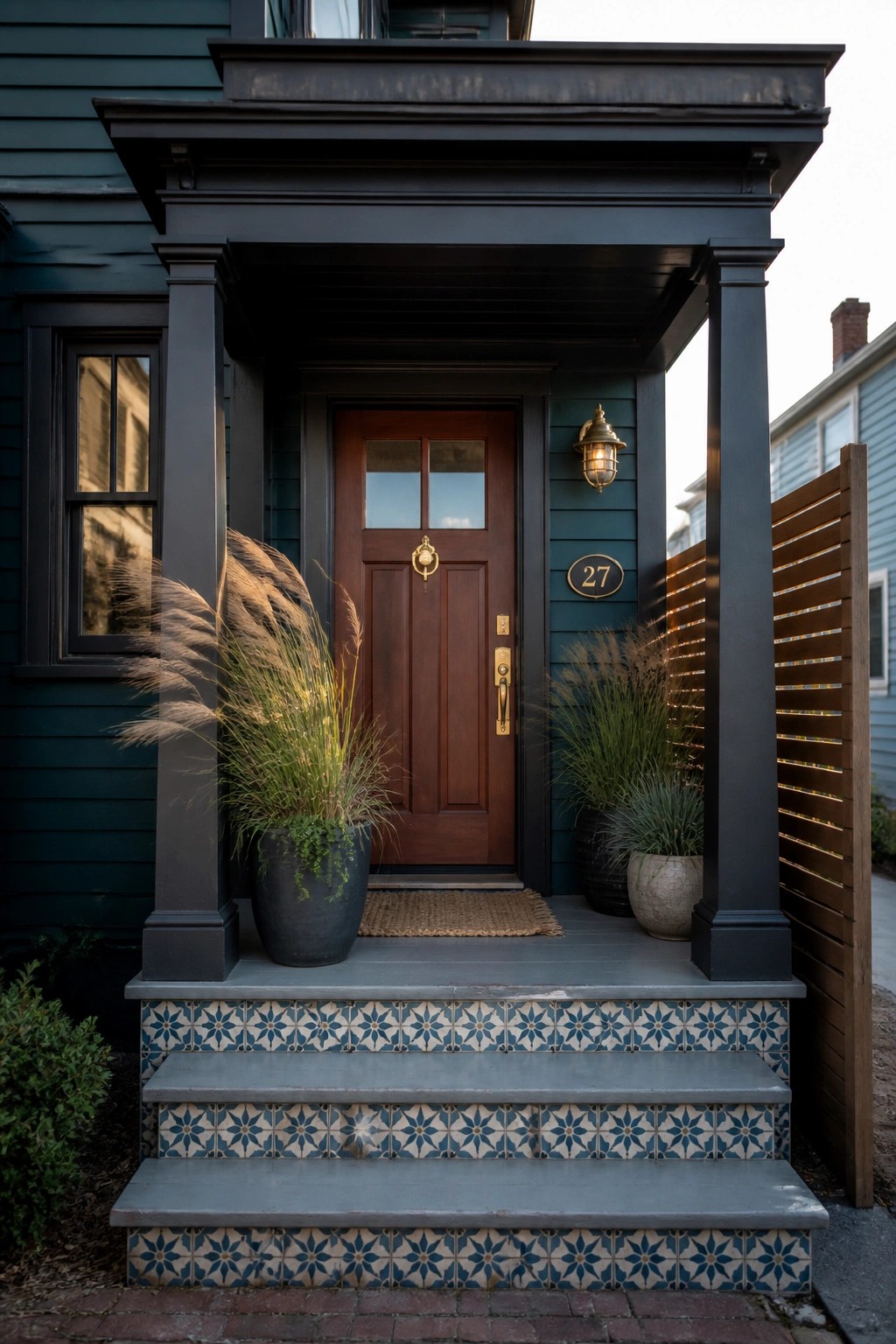
Painting the porch structure and siding a deep dark color gives the front of a house more weight. The dark tone makes the whole entry feel solid and pulls attention to the shape of the columns and overhang.
This works best on homes with fairly simple lines that need a bit more presence. Pair the dark paint with a lighter or warmer door so the contrast stays clear and the entry does not disappear into the background.
Deep Blue Siding For Extra Drama
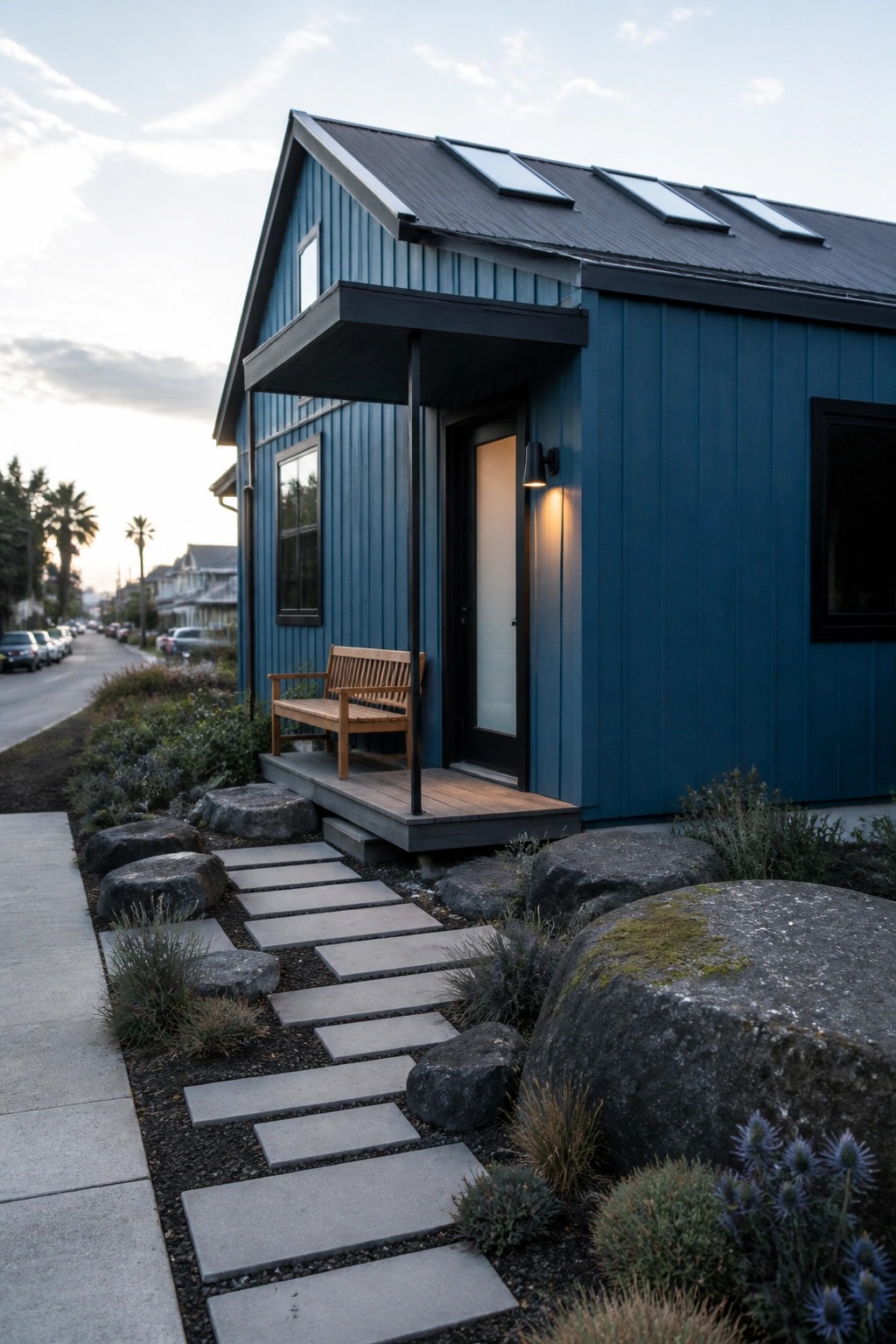
A strong dark color on the exterior can give even a simple house shape more presence. This deep blue siding works because it absorbs light and creates contrast with the black trim and roof, making the lines of the house feel sharper and more intentional.
This approach suits homes with clean forms and minimal ornament. It works best when the color is carried across the main walls and paired with dark window frames or roofing so the whole mass reads as one bold statement rather than a collection of parts.
Deep Green Paint Adds Presence
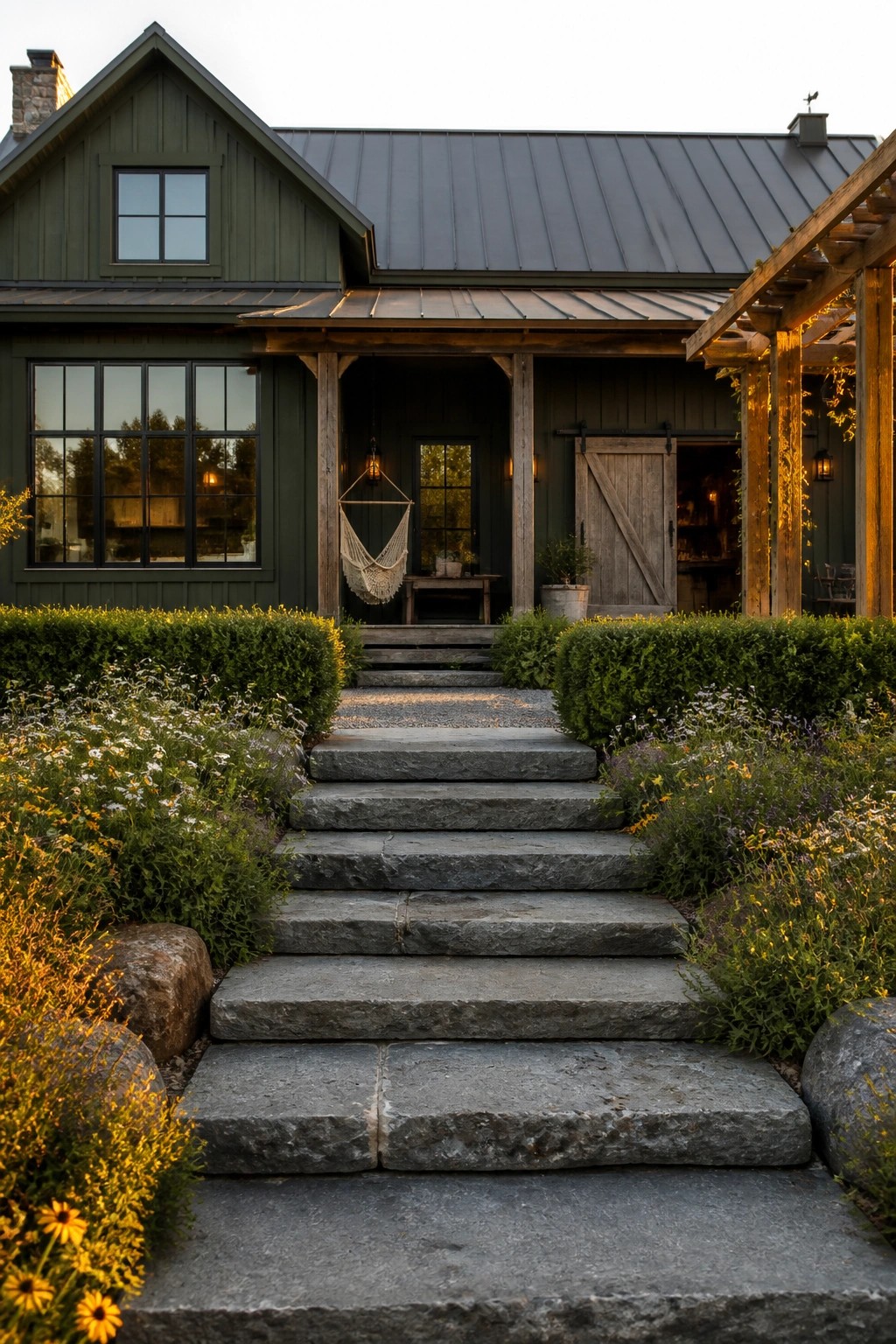
A deep green exterior color can make a house feel more solid and interesting without needing lots of extra trim or detail. The color works especially well on homes with clean rooflines and larger windows because it lets the shape of the building stand out instead of getting lost against the surroundings.
This approach suits homes that already have some architectural lines worth noticing. It pairs best with simple materials like dark roofing and stone accents so the overall look stays balanced rather than overwhelming. Keep the trim and doors in a similar dark tone if you want the color to feel cohesive.
Deep Black for the House Exterior
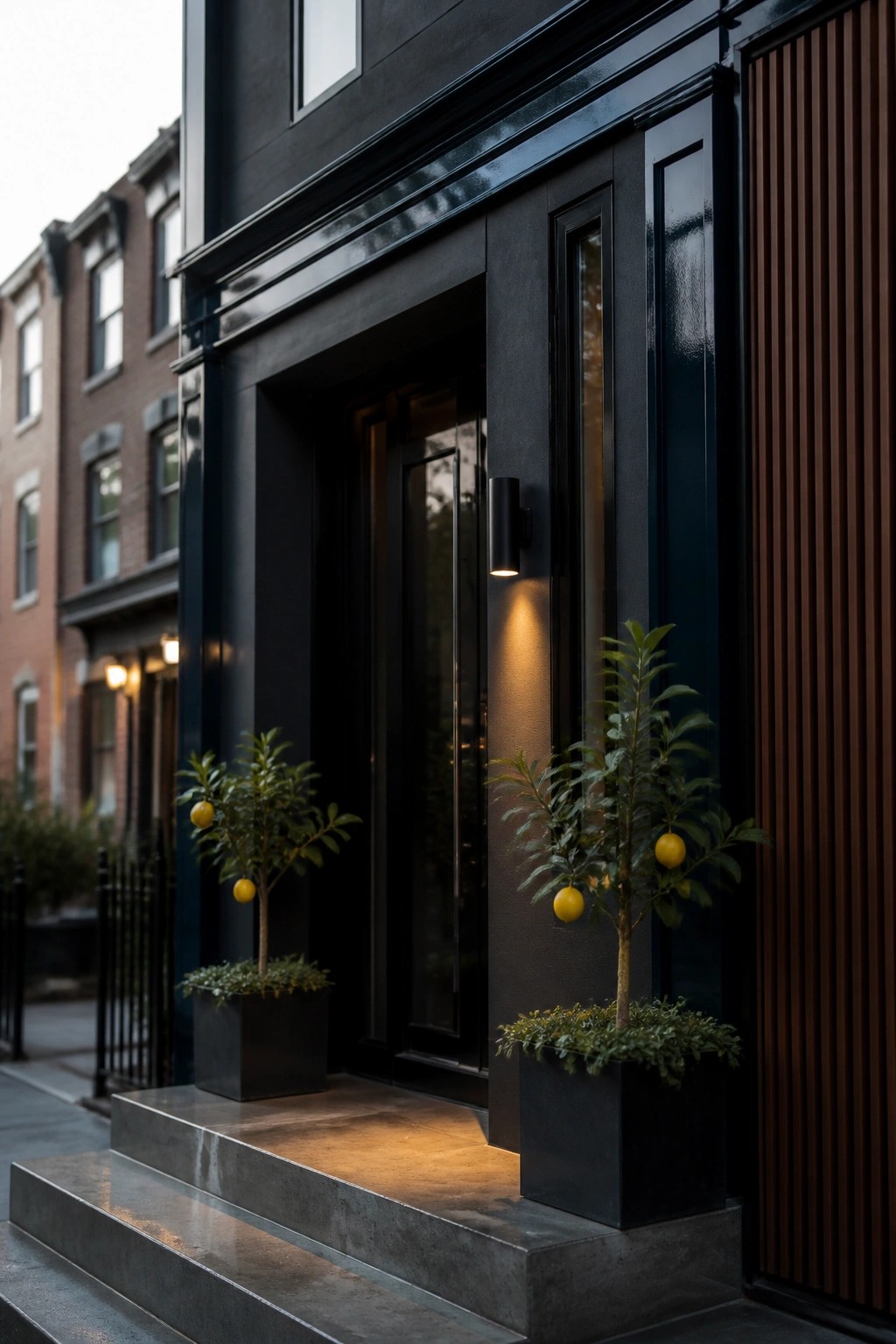
A deep black paint job on the facade gives a house more weight and presence. It pulls the eye to the shape of the building and makes even simple trim and door details stand out without any extra ornament.
This works best on homes with clean lines and a few strong architectural features. Keep the windows and doors in a contrasting tone so the dark color does not swallow them up, and use simple plantings near the entry to keep the look balanced.
Dark Colors That Frame a Deck
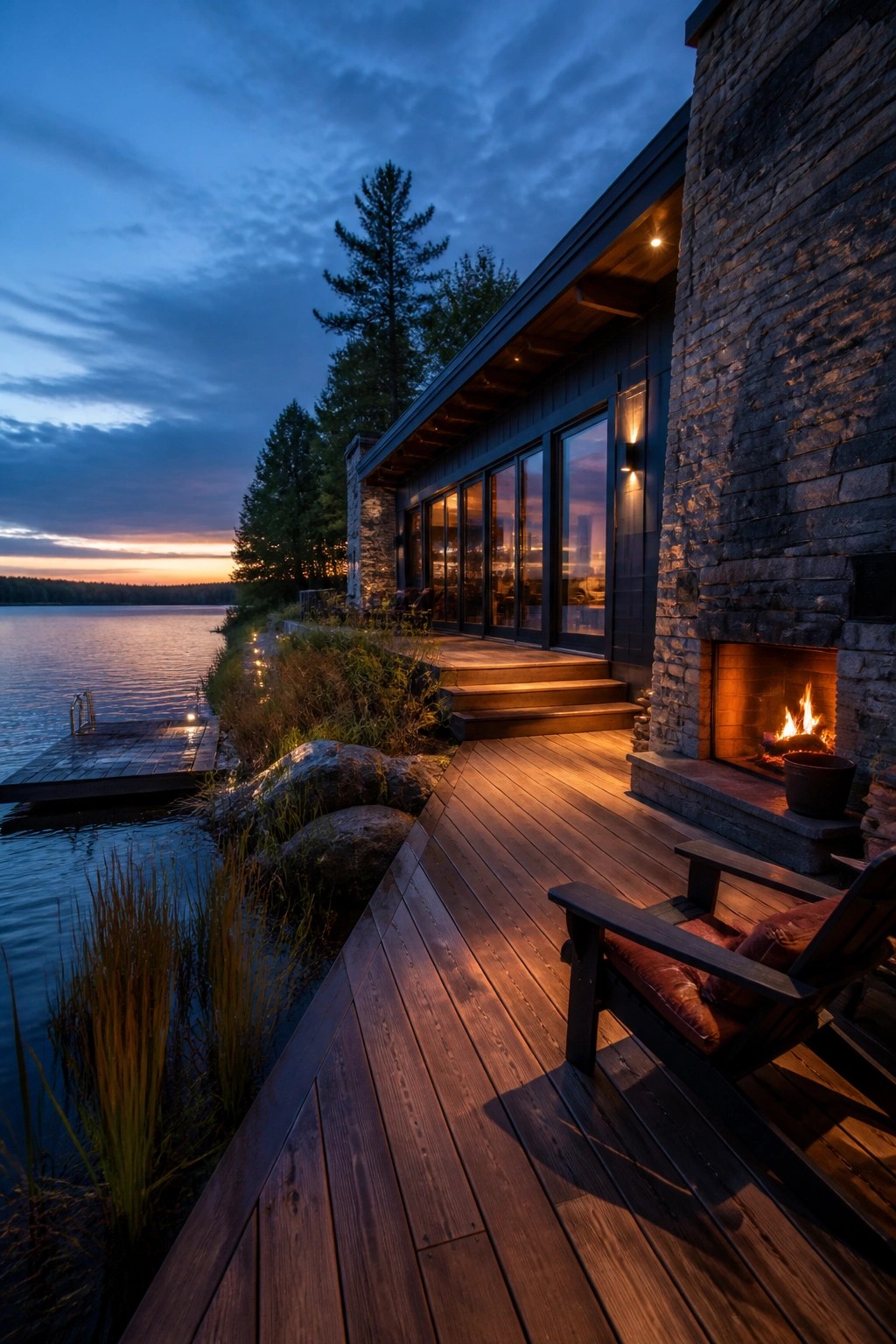
A dark exterior color can make an outdoor deck feel more intentional and grounded. The deep siding gives the wooden deck and seating area a stronger backdrop, so the space reads as part of the house rather than something added on later.
This approach works best on homes with simple lines and good natural surroundings. Keep the deck material light or warm so the contrast stays balanced, and use a few outdoor lights to keep the area usable after dark.
Frequently Asked Questions
Q: Which dark shade holds up best when my house gets full sun every afternoon?
A: Pick a deep charcoal or navy with cool undertones so the color stays rich instead of fading fast. Test a sample board on the actual wall for a few days to see how the light changes it.
Q: How do I keep the trim from disappearing against such a bold wall color?
A: Use a crisp white or soft off-white on the trim and eaves. This contrast pulls out the house lines and stops the dark paint from swallowing the details.
Q: Will dark paint make my small house look even smaller?
A: It can if you cover every surface. Paint the main body dark and leave the foundation or lower band in a lighter tone to add height and keep the scale balanced.
