

I always scan the trim first on blue houses because it shapes how the whole facade reads from the street, tying the roofline to the entry without stealing the show.
Certain shades sharpen window frames and siding edges, making even modest homes gain that polished neighborhood presence.
A few years back, I adjusted the trim on our blue-sided garage, and a soft charcoal grounded the cool tones far better than the stark white everyone defaults to.
Get it wrong, though, and the house fades into blandness, no matter the architecture.
Shades like these can adapt to your light and materials for lasting curb appeal.
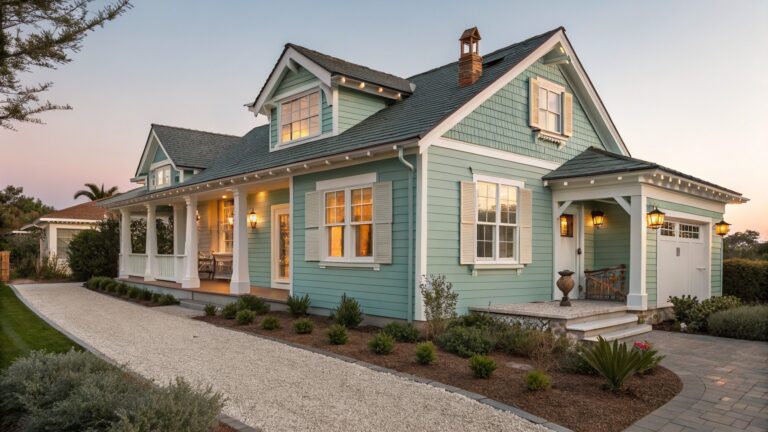
White Trim Sharpens Light Blue Siding

White trim stands out clean and simple against this soft blue siding. The bright white on the porch columns, window frames, and shutters pulls the house together. It keeps the blue from looking too muted, especially in that coastal style with the gabled roof and wide porch. Folks like how it feels fresh without being stark.
Try it on homes with gentle rooflines or big porches. It suits seaside spots or suburbs where you want classic curb appeal. Just match the trim paint to your shutters and doors for that pulled-together look… and stick to semigloss for easy cleaning.
White Trim on Navy Siding
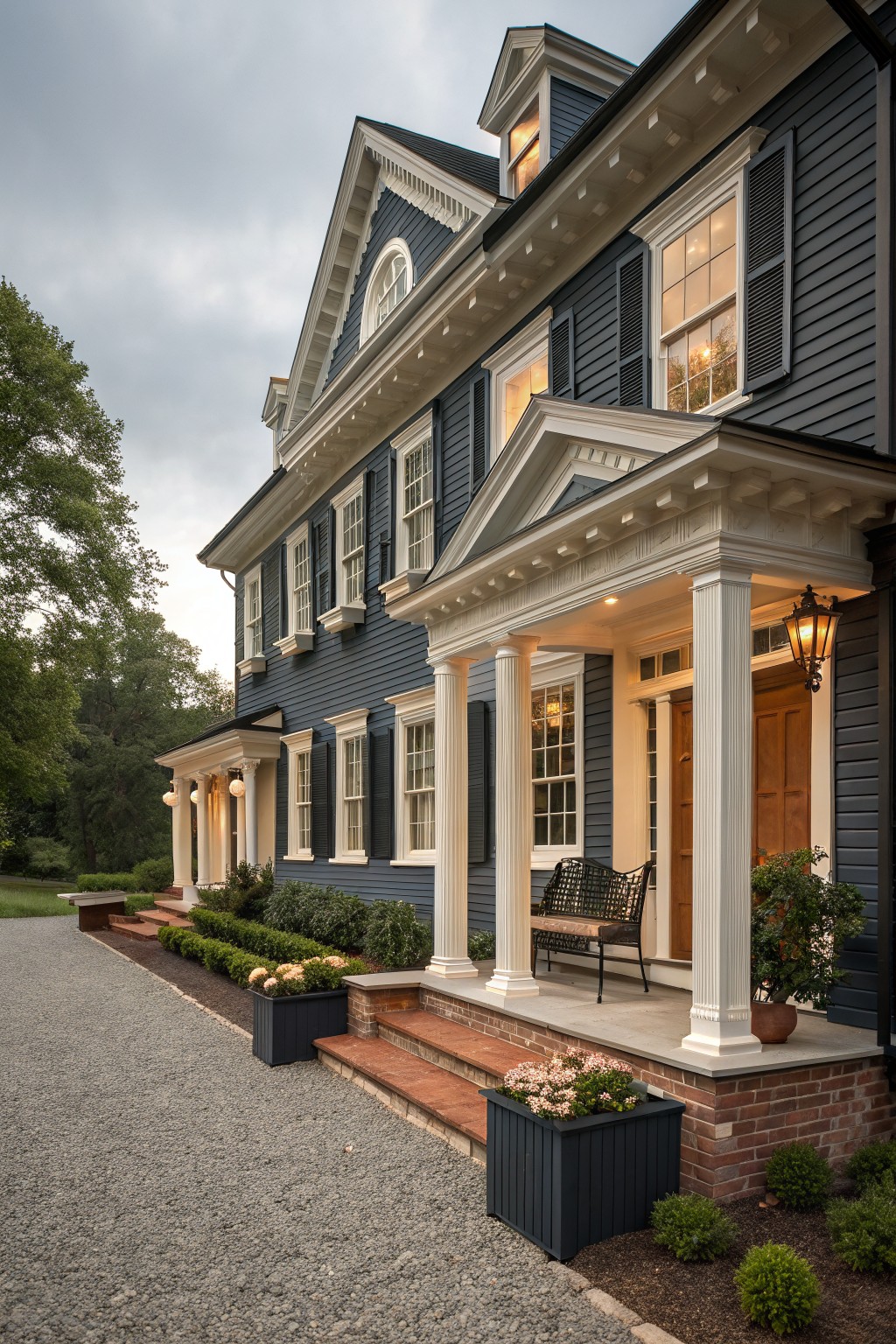
A deep navy blue siding like this pairs perfectly with crisp white trim. It keeps the house looking sharp and traditional. The white columns on the porch and the window surrounds stand out clean against the dark paint. That contrast adds polish without much effort.
This trim choice suits older style homes, like colonials or Greek Revivals. Use bright white paint on all the architectural details, from the pediment to the shutters. It works best where you have some brick or stone nearby… keeps everything tied together. Avoid creamy whites. They can muddy the look.
Wood Trim on Dark Blue Siding
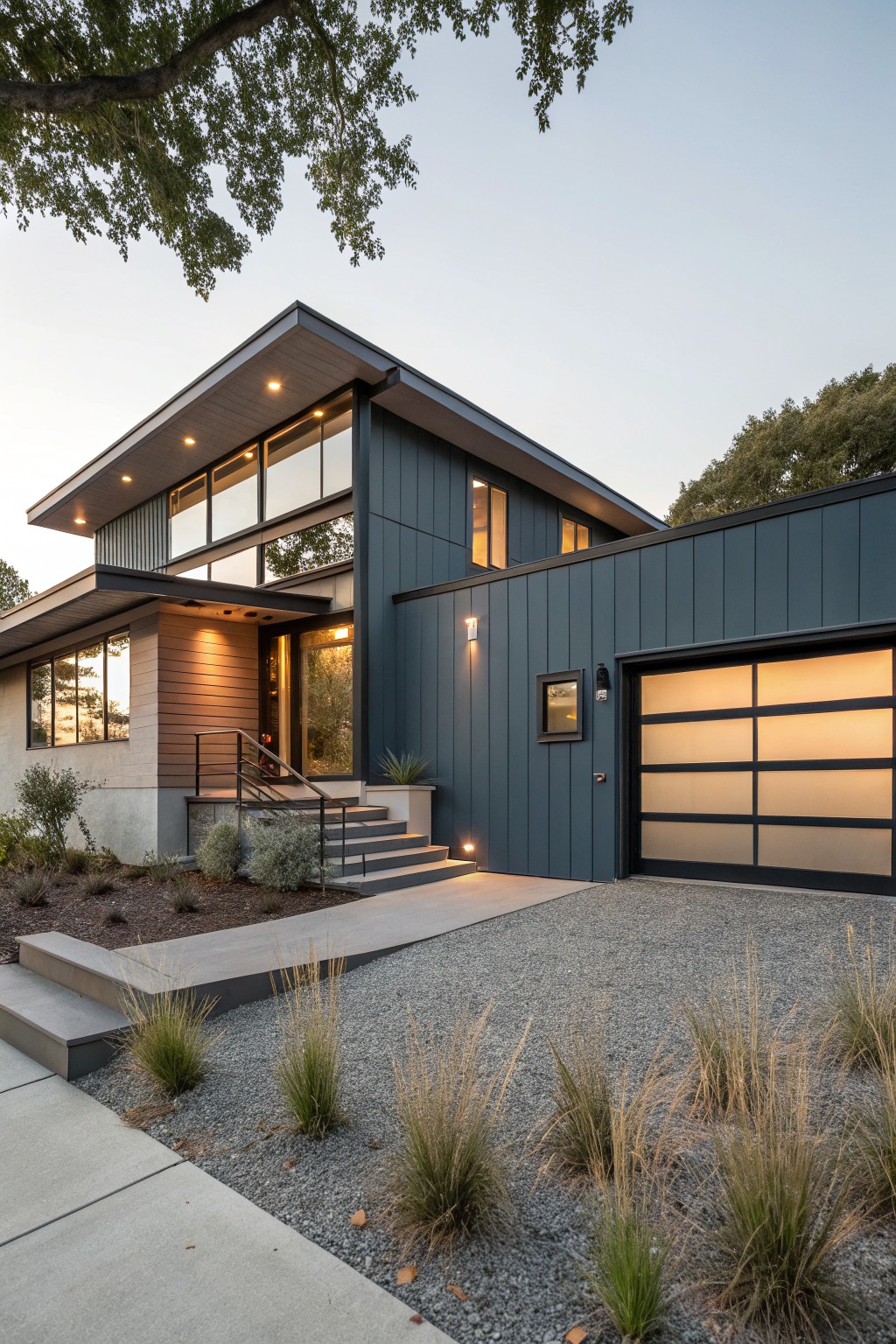
Warm wood trim works nicely on this dark blue house. The siding has that cool, modern feel with its vertical panels. But the cedar-like wood around the entry door and stairs brings in some natural warmth. It softens things up and draws your eye right to the front door.
You can pull this off on any blue exterior that leans contemporary. Pick a honey-toned or reddish wood to contrast the blue tones. It suits homes in wooded areas or suburbs. Seal it yearly though. Wood takes a little upkeep to stay sharp against all that siding.
Creamy Trim on Deep Blue Siding
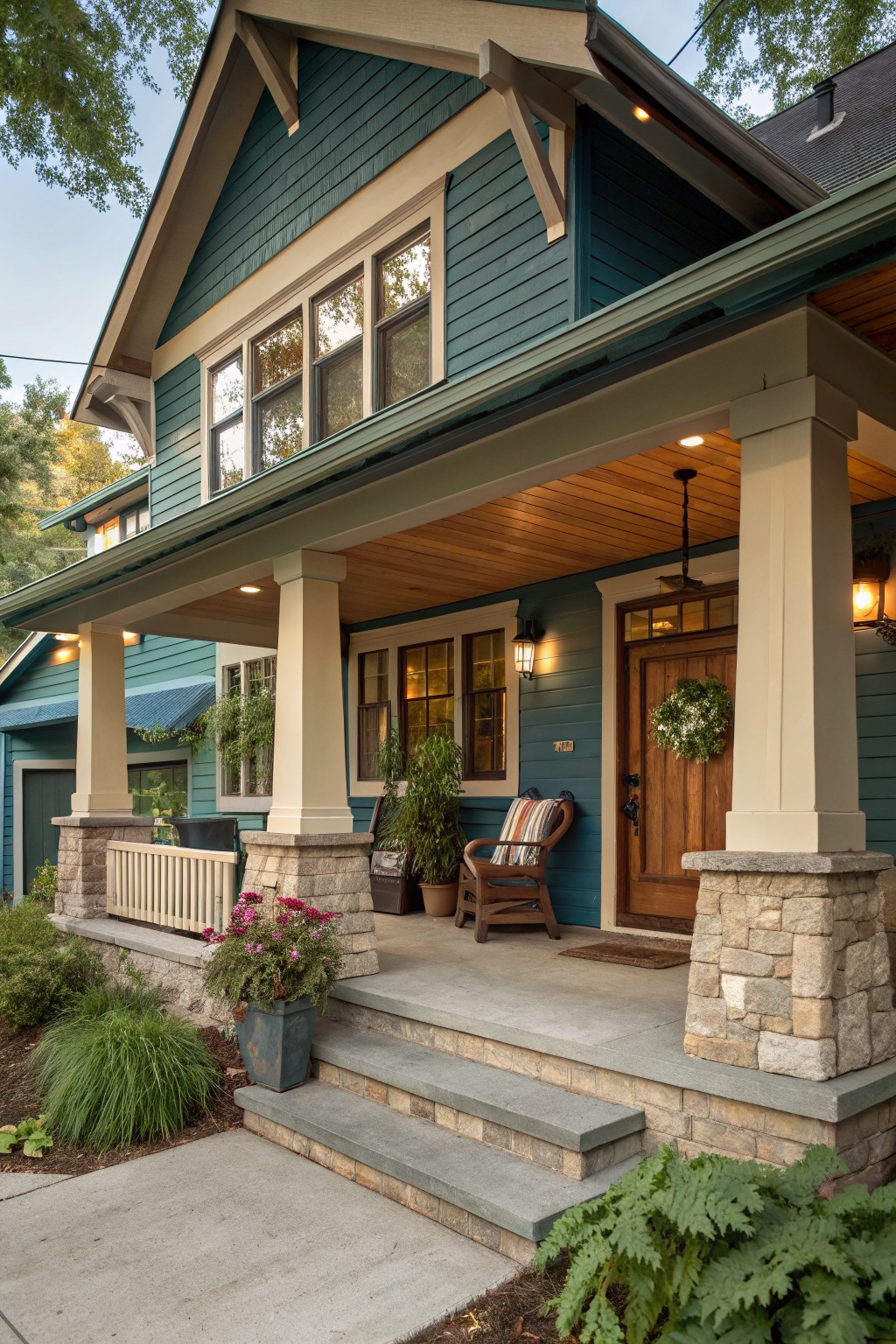
Deep blue siding like this teal shade looks sharp with creamy trim around the windows, eaves, and porch columns. It keeps the bold color from feeling too heavy. The light trim lifts the whole facade and makes the house stand out without much fuss.
This combo works best on craftsman or bungalow styles with covered porches. Pick a warm cream that matches stone bases if you have them. It suits homes in wooded spots or suburbs where you want classic curb appeal. Just test samples in different light. Shade changes everything.
Rosy Pink Trim
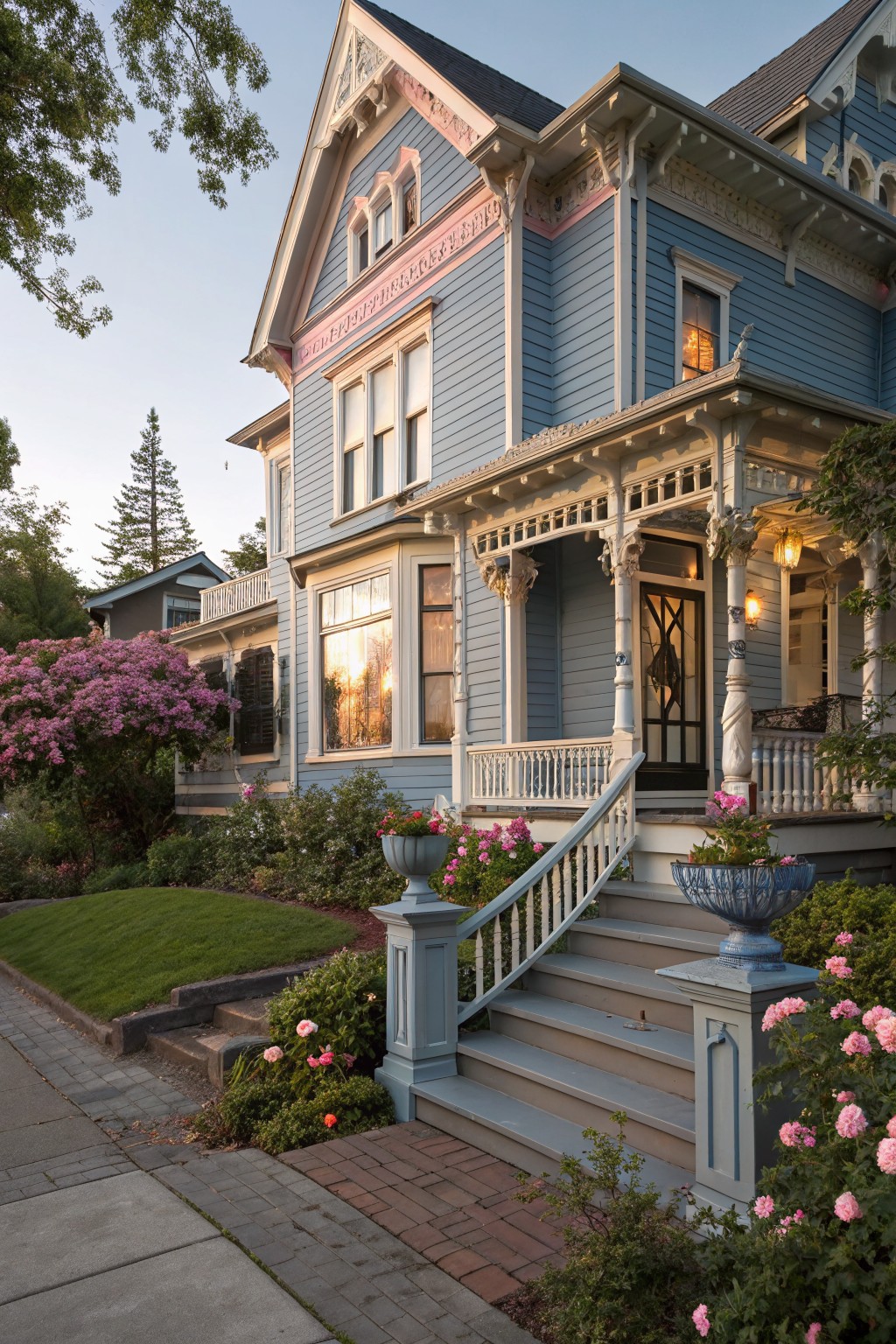
A soft rosy pink trim works wonders on this blue Victorian house. It outlines the eaves and upper details just right, warming up the cool blue siding without clashing. That gentle pink hue ties right into the pink flowers nearby, making the whole front yard feel connected.
You’ll want to use this on homes with lots of gingerbread or scrollwork, like older Victorians or Craftsman styles. Pick a shade that’s not too bright so it stays subtle in different lights. It suits neighborhoods with mature trees and gardens best. One thing. Make sure your painter tests the colors on a small spot first.
Natural Wood Front Doors on Blue Houses
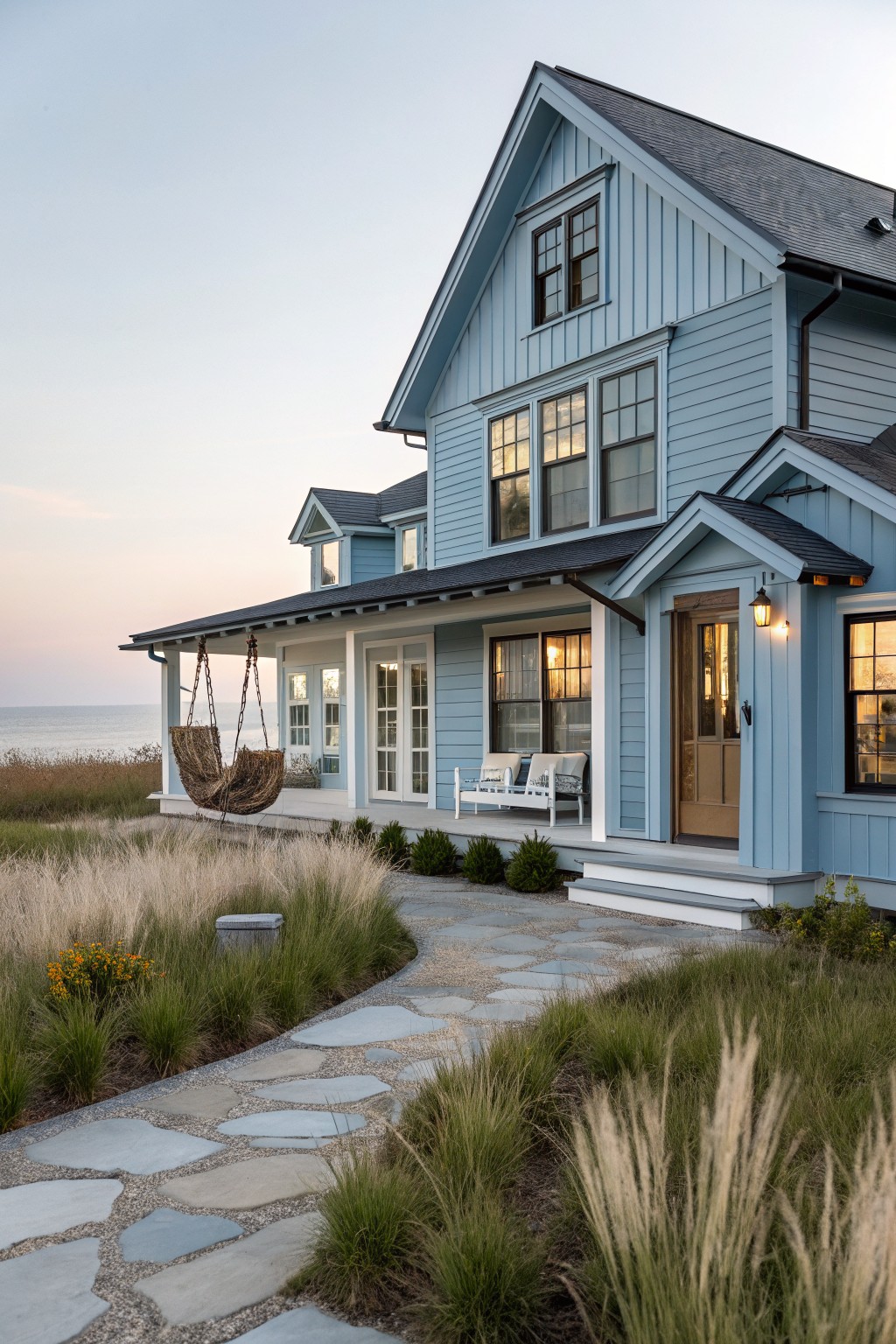
A natural wood front door gives this blue house a welcoming touch that softens the cool siding color. The wood grain shows through just enough to pull some warmth into the cooler blue without clashing. White benches on the porch pick up on it too and keep things simple.
You can pull this off on any clapboard or shingle-style home facing the water or in a casual neighborhood. Pick a door with clean lines and a good stain finish to handle the weather. Skip fancy glass panels if you want that understated feel.
Cream Trim on Blue Siding
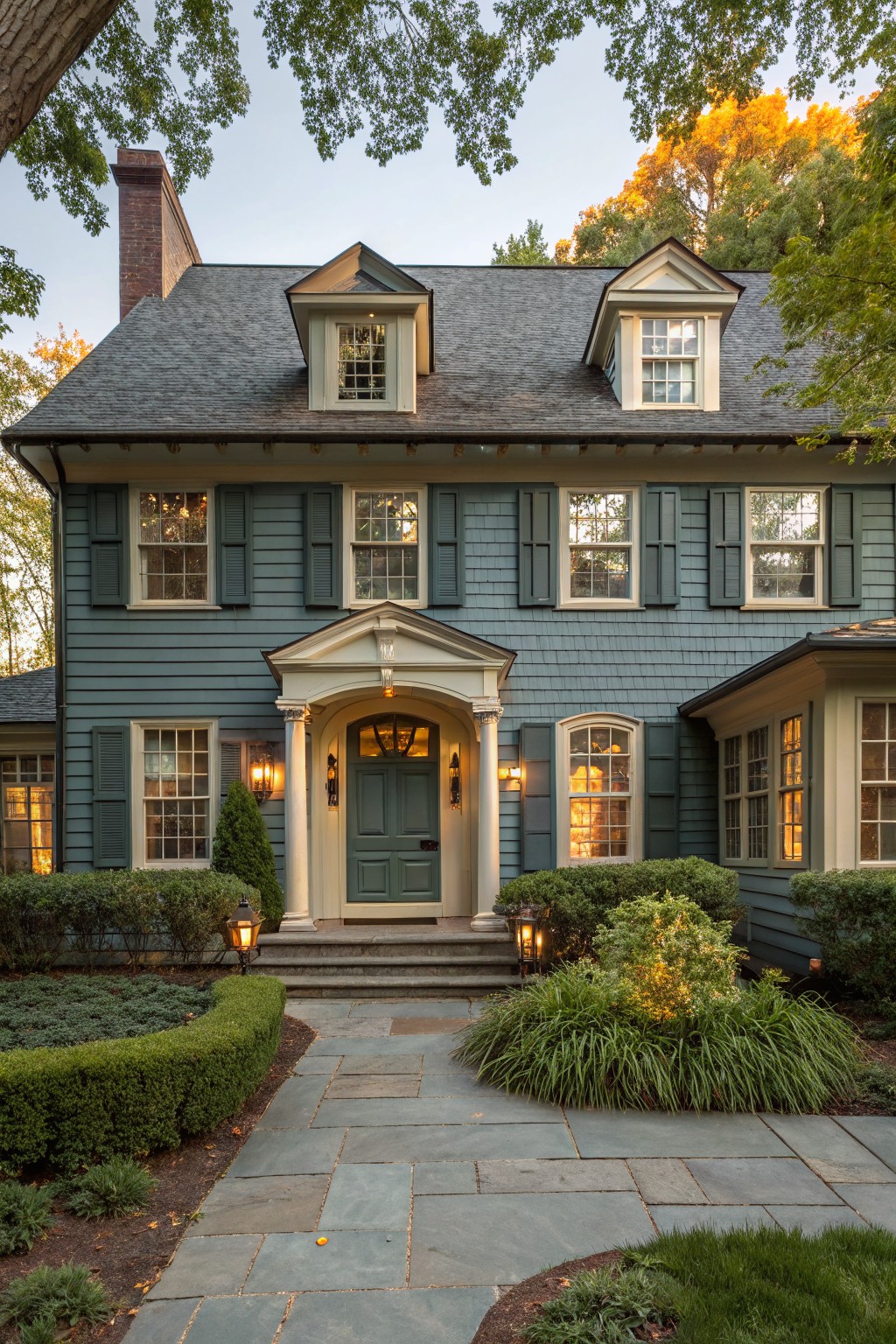
A soft cream trim works nicely on this kind of muted blue siding. It picks up the house’s traditional lines around the windows and dormer without overpowering the blue. That gentle contrast keeps things looking clean and settled in with the landscape.
Try it on older homes or Colonials where you want some polish but not a modern edge. Paint your existing trim to match, and add a deeper door color for balance. Just stick to a warm cream so it doesn’t wash out in shade.
Black Trim Sharpens Navy Blue Siding

A deep navy blue house like this one gets a clean lift from black trim around the windows, door, and railings. The dark frames stand out against the rich blue paint without overwhelming it. That contrast keeps things crisp and pulls the eye right to the entry, making the whole facade feel put-together.
This works best on older rowhouses or townhomes in city spots. Paint your trim in flat black to match the ironwork on steps or gates. It holds up on clapboard or shingle siding, just test a sample first to see how the blue shade plays in your light.
White Trim on Mint Green Houses
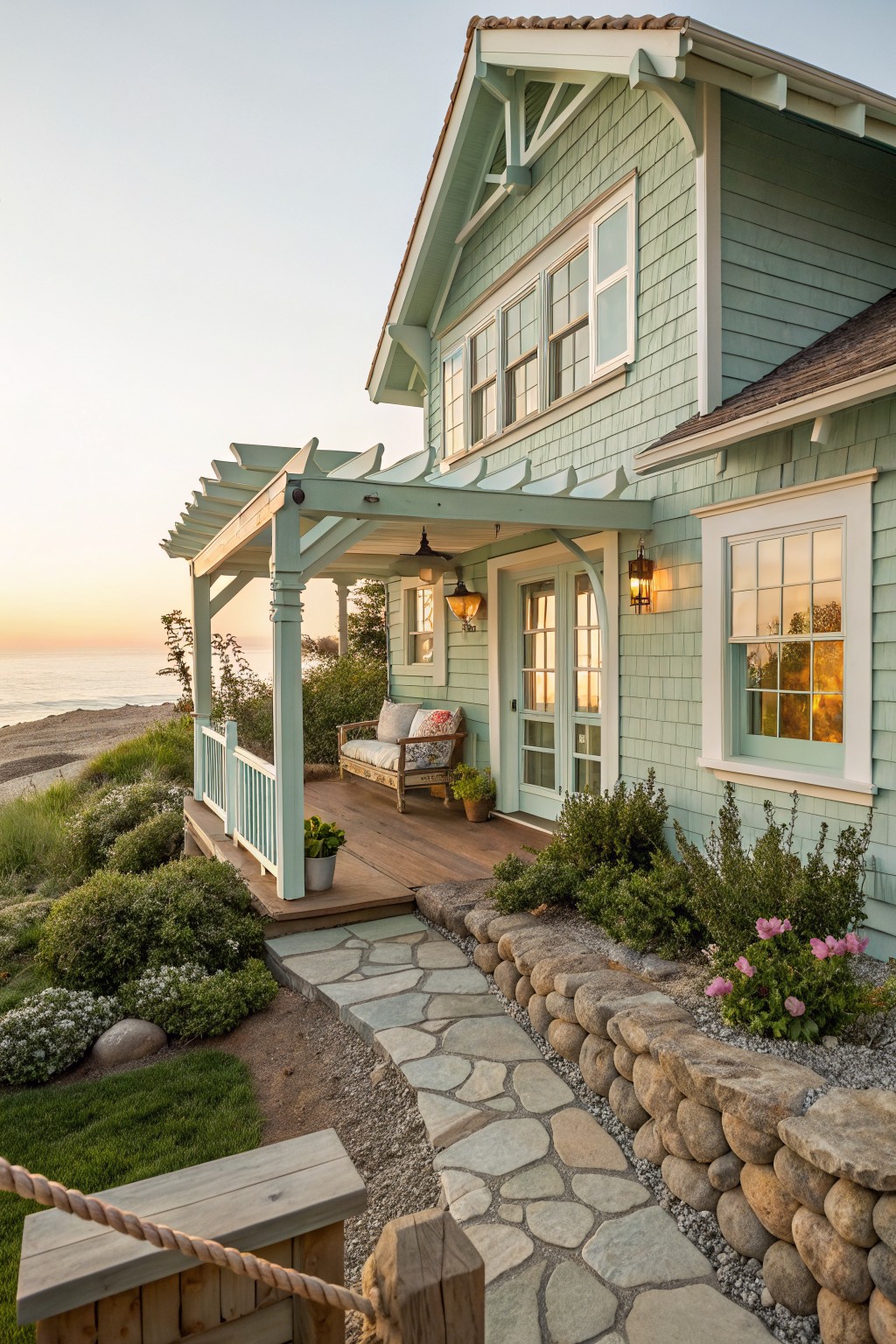
White trim gives this soft mint green house a sharp, finished look. The siding has that gentle blue-green tone, almost like sea glass, and the white frames around the windows and doors make everything stand out clean. It keeps the house feeling light and beachy without getting too busy.
You can pull this off on any cottage-style or shingle home near water, or even in town if you like a relaxed vibe. Pick a bright white paint that holds up to weather, and paint the trim thicker around entries for more polish. Skip it if your house faces heavy shade. It might look dull.
Dark Trim on Blue Siding

Dark trim works well on blue houses like this one. The blackish frames around the windows and the dark roofline pull the eye right to the architecture. It adds some needed contrast to the soft blue siding without overwhelming the look. Stone accents near the entry help too, keeping things grounded.
Try this on homes with simple shapes, like Craftsman styles or older bungalows. It suits places with trees or near the coast where you want a bit more definition. Just make sure the trim color is a shade deeper than the siding, or it might blend in. Stone or brick details nearby make it even stronger.
Clean White Trim Bands
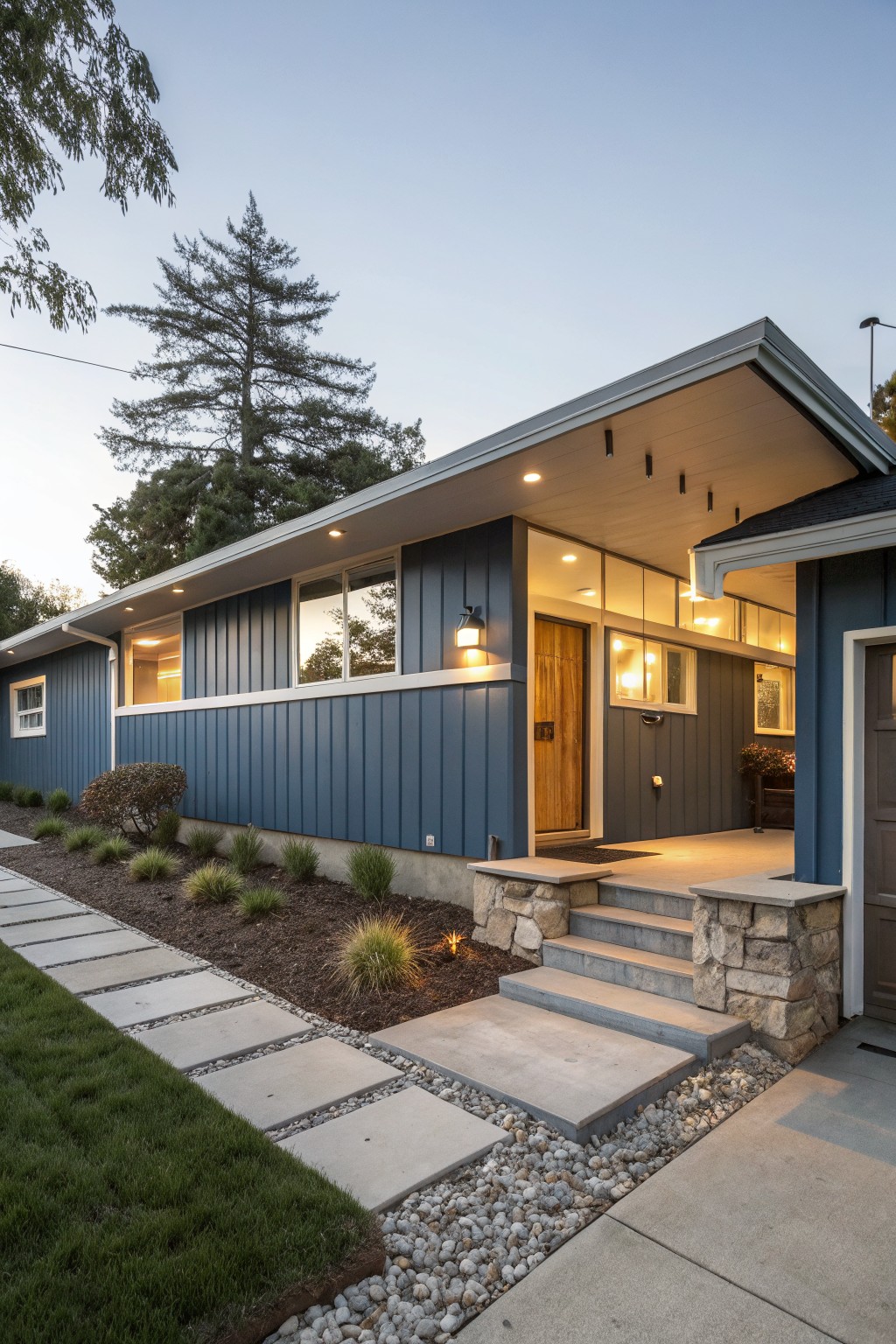
A good trim choice for blue houses is clean white bands running horizontally across the siding. They cut sharp against the deep blue, making the whole facade feel tighter and more put together. You see it here on the long side wall, framing the windows just right without much fuss.
This trim style suits ranch or mid-century homes with plank siding best. Run the bands at waist height or under the roofline, and keep the paint flat or eggshell to stay low-key. It works on bigger houses too, but skip it if your blue is too light… washes out easy.
Warm Red Trim on Blue Houses
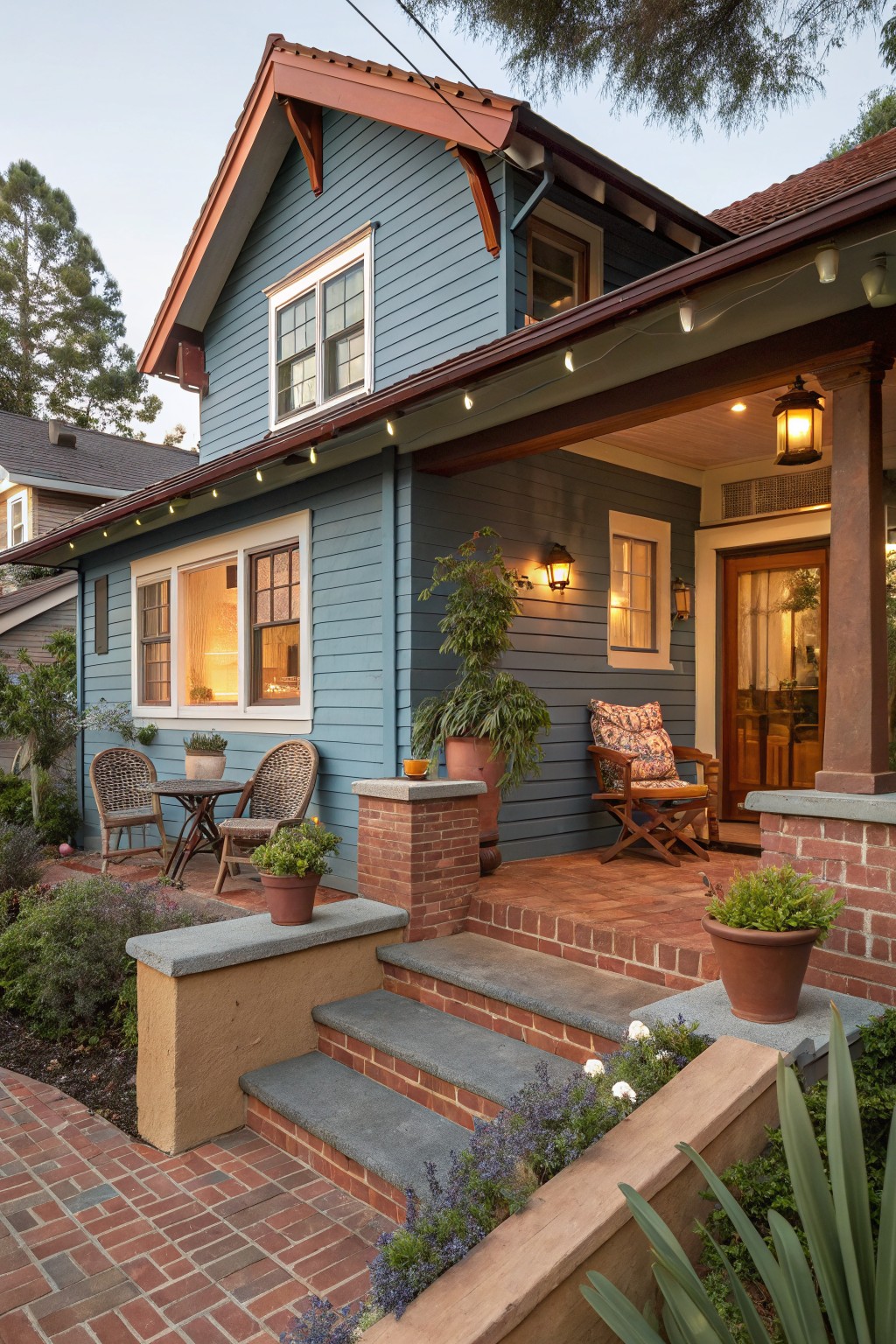
Blue siding gets a real lift from warm red trim like you see on the roof eaves and gables here. That reddish hue pulls from Craftsman roots and makes the whole facade feel settled and classic without trying too hard. It ties right into the porch brackets and steps too, giving the house some grounded character against all that cool blue.
This works best on bungalows or older homes with some architectural detail already. Paint your trim in a brick red or rusty orange to match, and keep the rest simple. Steer clear of super bright reds though, they can fight the blue. A softer tone keeps it easygoing and lets the house shine from the street.
White Trim on Blue Houses
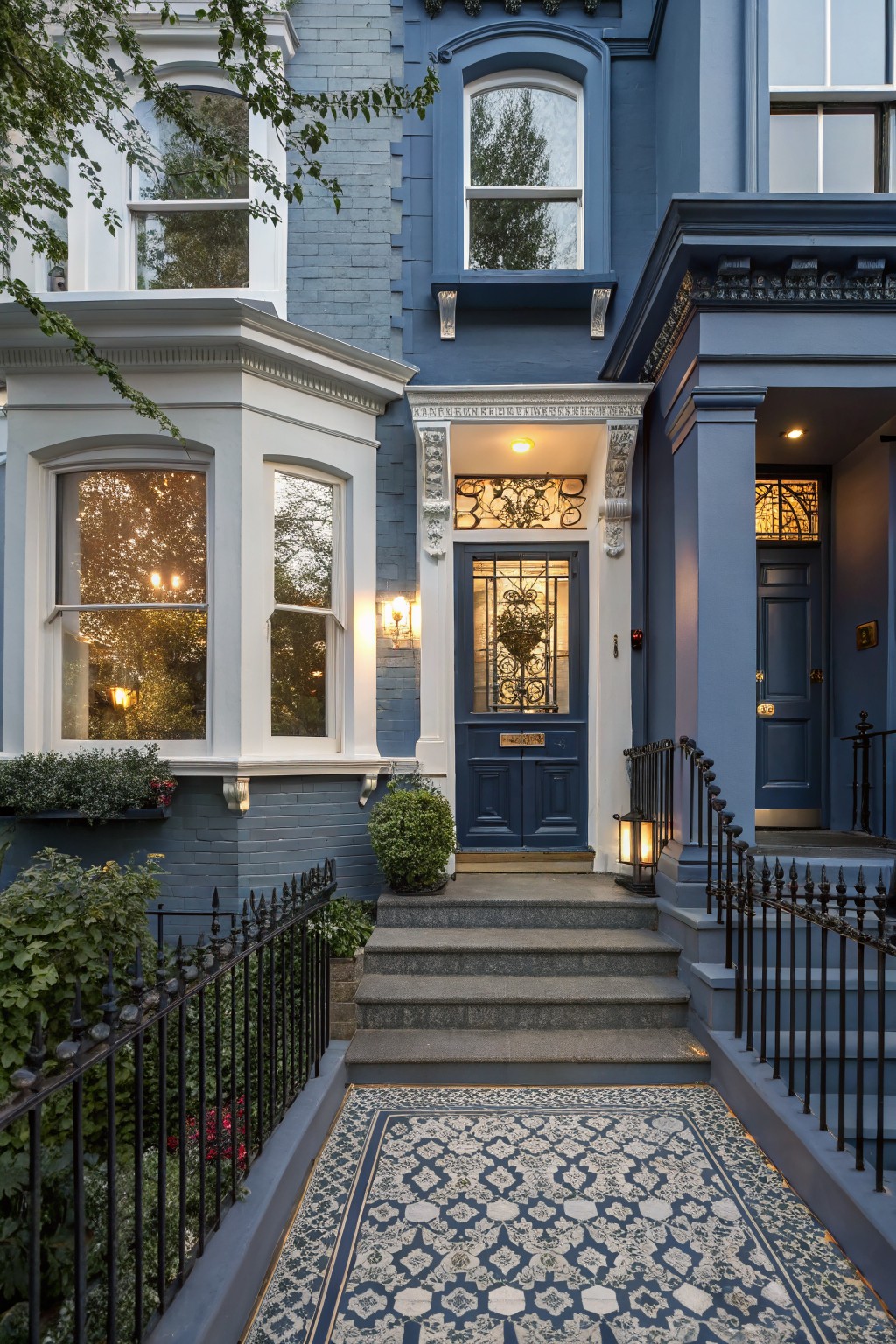
White trim stands out on a blue house because it keeps things clean and sharp. You see it here framing the bay windows and doors against the deep blue brickwork. That contrast pulls your eye right to the architecture details like the ornate glass and molding. It adds polish without much fuss.
This trim color works best on older homes with some character, like Victorians or row houses. Go for a bright white on all the edges, eaves, and window surrounds to match the blue body paint. It suits urban streets or garden frontages. Just make sure the white is fresh, or it can look dingy fast.
Crisp White Trim
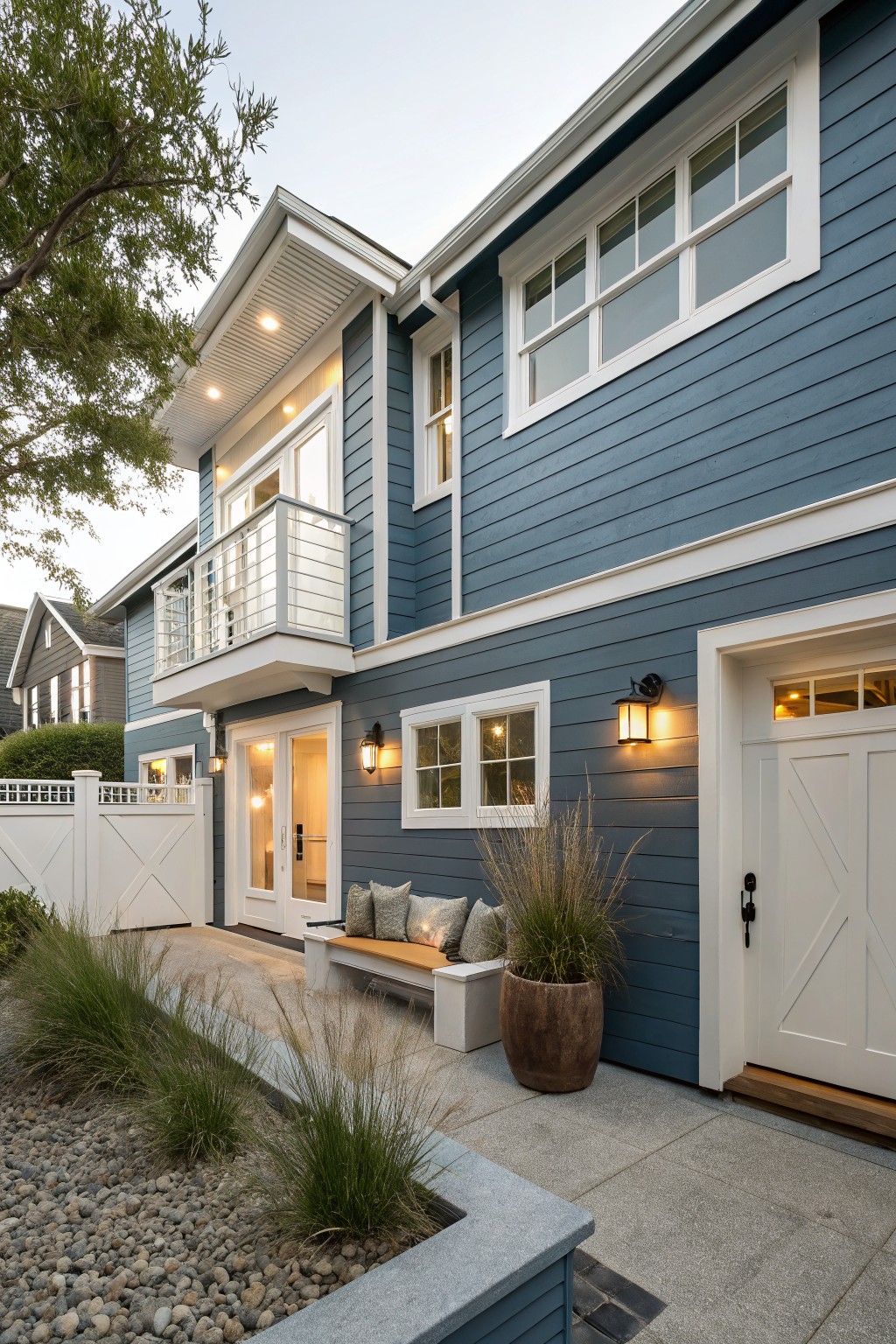
White trim works great on a blue house like this one. It gives the siding a clean edge that makes everything look sharper and more put together. The blue paint here has that soft coastal feel, but the white around the windows, doors, and balcony railing pulls it all into focus without much fuss.
You can pull this off on most any blue house, especially if it’s got some modern lines or sits in a neighborhood with other painted homes. Just make sure the white is a true bright shade, not off-white, to keep the contrast strong. It holds up well in mild weather too, though you might need to touch up the trim every couple years.
White Trim on Mint Blue Houses
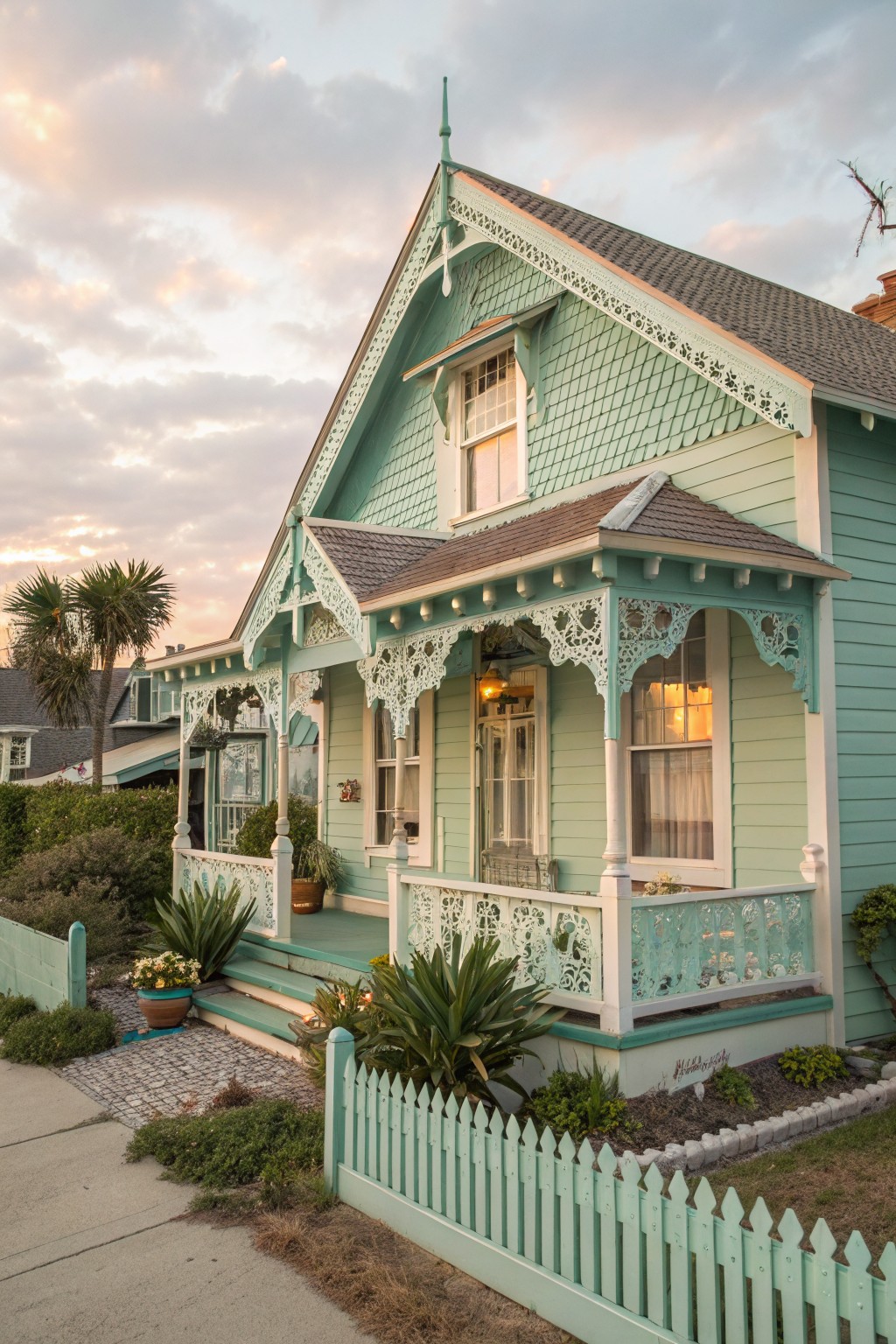
White trim stands out nicely against a soft mint blue house like this one. It picks up all the fancy details on the porch and gables without overwhelming the color. That crisp contrast makes the whole place look sharper and more put-together, especially on older styles with lots of woodwork.
Try this on Victorian or Craftsman homes where you want to show off trim without going bold. It works best in milder climates so the blue stays fresh. Just keep the trim painted clean and bright to hold that polish.
Warm Wood Trim on Blue Houses
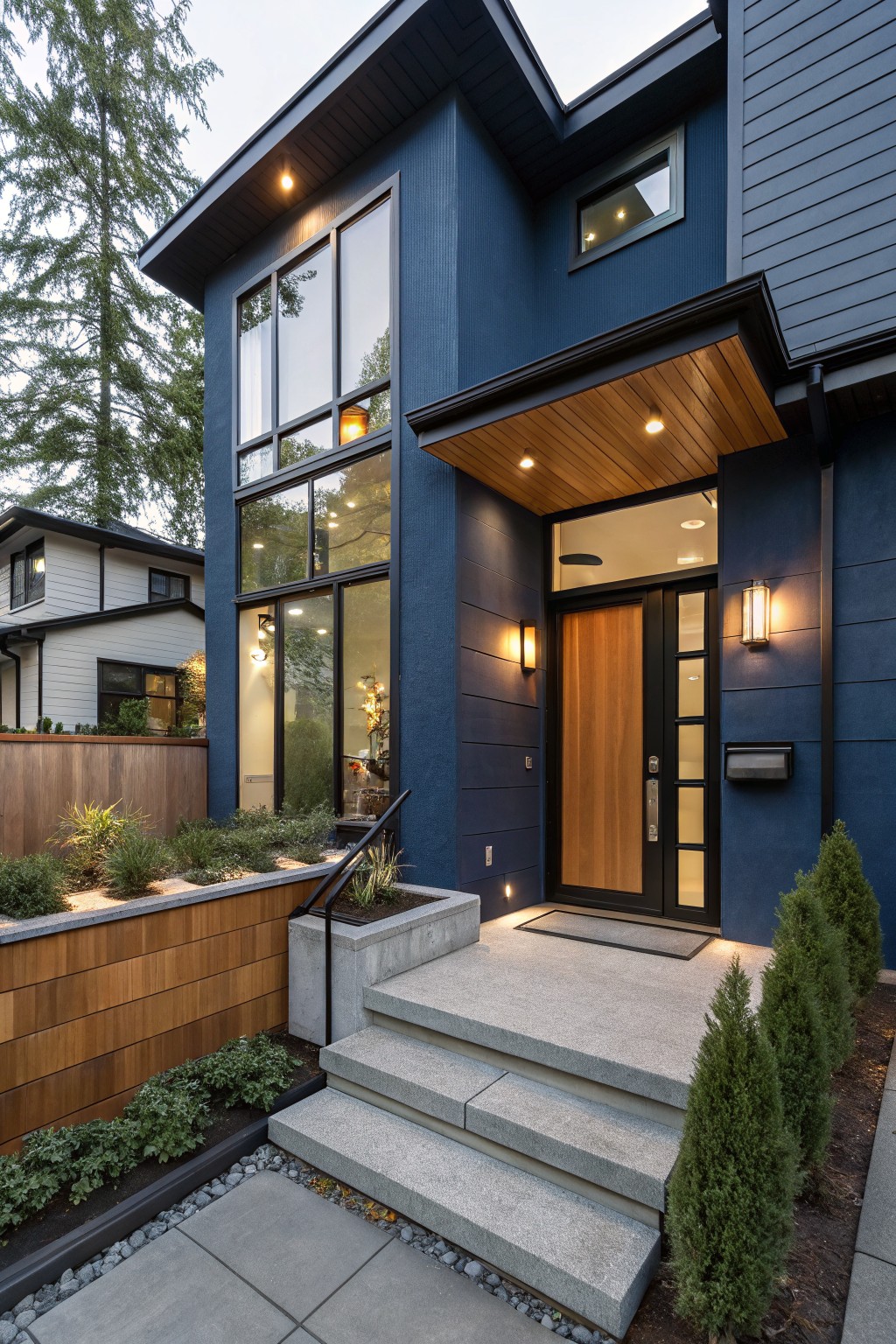
Wood trim brings a nice touch of warmth to blue houses. You see it here with cedar shingles wrapping the lower part of the house and a solid wood door at the entry. That natural tone cuts through the cool navy siding without clashing. It makes the whole front feel more inviting, like the house is settled into its spot among the trees.
This works best on modern or craftsman-style homes where you want some contrast but not too much busyness. Use cedar or similar wood on the base, entry overhang, or door to keep things simple. Skip it if your blue is super bright, though. It pairs well with concrete steps and simple plantings along the front.
White Trim on Blue Shingle Houses
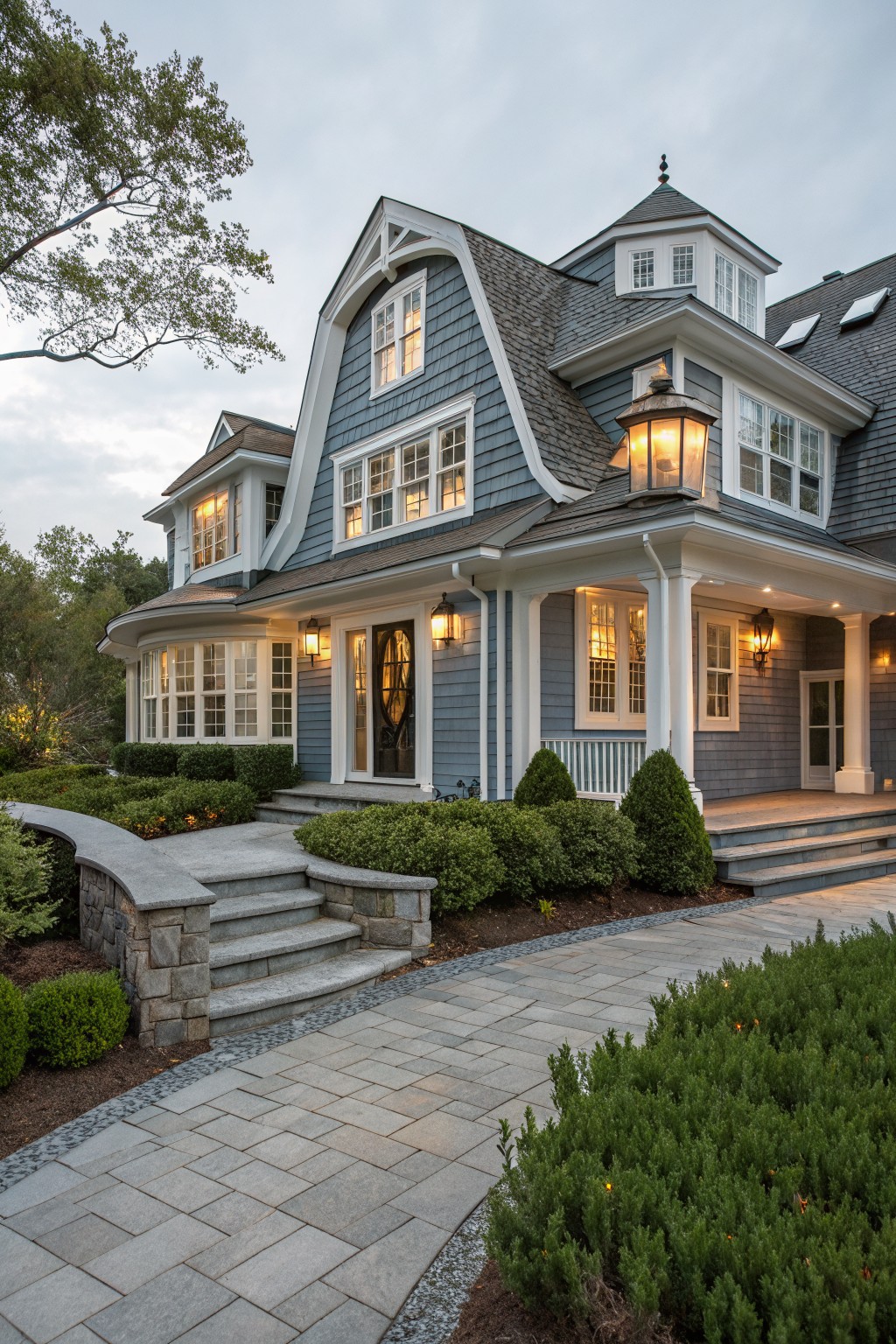
A blue shingle house like this one looks sharp with plain white trim outlining the windows, doors, and porch columns. The white picks up the light and keeps the blue from feeling too heavy. It gives that polished coastal feel without much fuss.
White trim suits most blue houses, especially shingle-style ones in the Northeast or by the water. Use it on bigger homes where you want contrast around the entry and upper stories. Just make sure the paint is a true white, not off-white, or it might blend in too much.
White Trim on Blue Houses
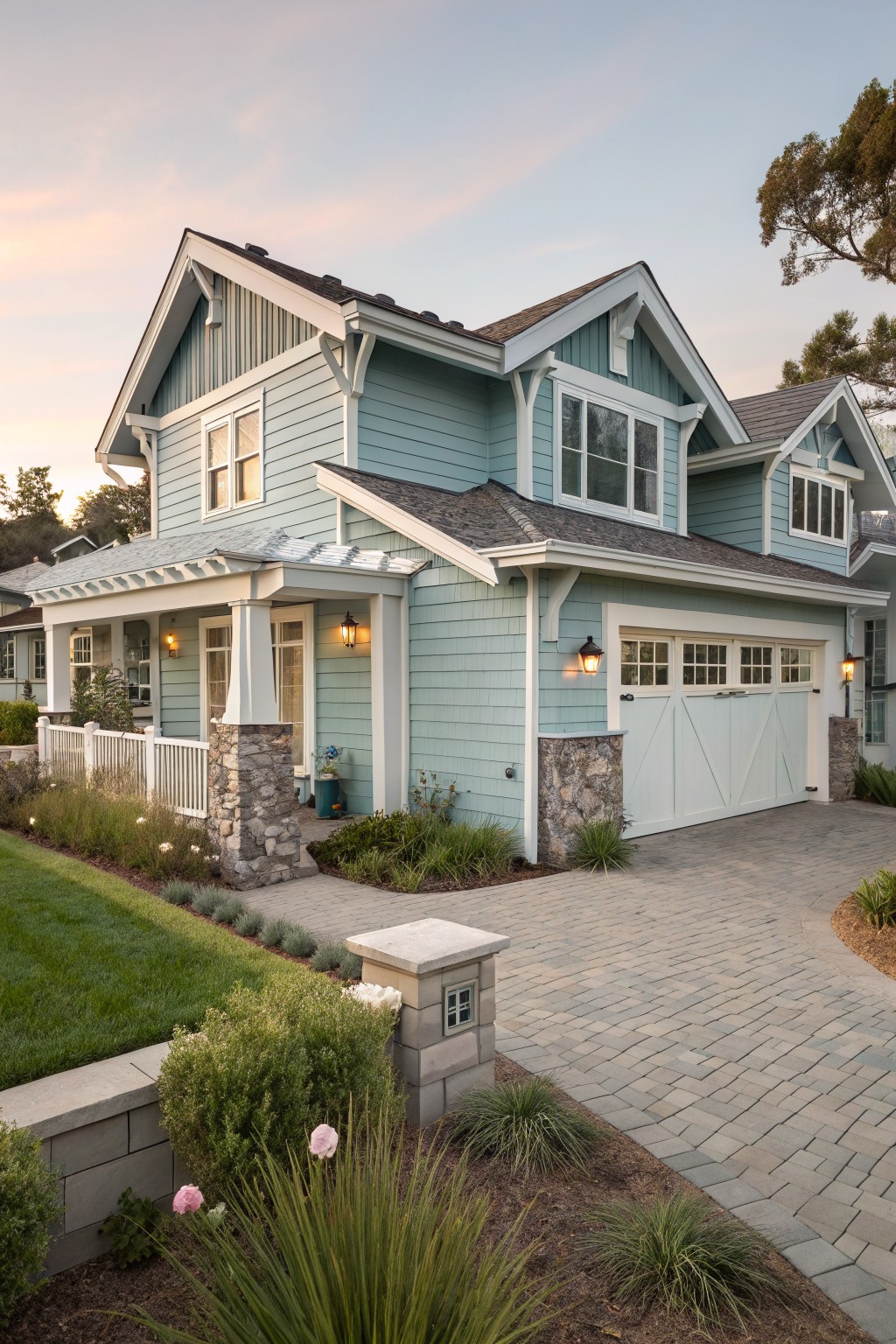
A soft blue siding like this pairs nicely with crisp white trim. It outlines the windows, porch columns, and garage door cleanly. That contrast keeps the house looking fresh and put-together, especially with the shake texture on the gables.
Try this on homes with some architectural interest, like Craftsman styles or coastal builds. Pick a bright white paint that won’t yellow fast. It suits milder climates where the blue won’t fade too quick. Just make sure the trim seals well against weathering.
Frequently Asked Questions
Q: What trim colors pop best on a light blue house?
A: Warm neutrals like soft beige or greige add subtle contrast and make the blue feel fresh. They ground the lightness without washing out.
Q: Does black trim work on darker blue houses?
A: Black delivers sharp drama and a sleek vibe. Paint a test patch first. It shines against navy but can feel heavy on super dark shades.
Q: How do I preview trim colors without painting the whole house?
A: Buy sample pints and brush them on scrap plywood. Prop it against your siding at different times of day. You’ll spot the real match quick.
Q: Cream or white trim for most blue houses?
A: Cream softens the look on cooler blues. White crisps up warmer tones.
