

When I walk my neighborhood, the exteriors that pull me in usually balance bold colors with the home’s actual shape and materials.
Blue and grey schemes stand out because they soften rooflines and make entries pop, especially on brick or siding that catches morning light.
They boost curb appeal without clashing with neighboring houses.
I’ve tested a few on paper first, and the ones that translate well to real facades often pair deeper greys with lighter blues.
These options give you solid starting points to tweak for your own street view.
Light Blue Siding with Navy Door
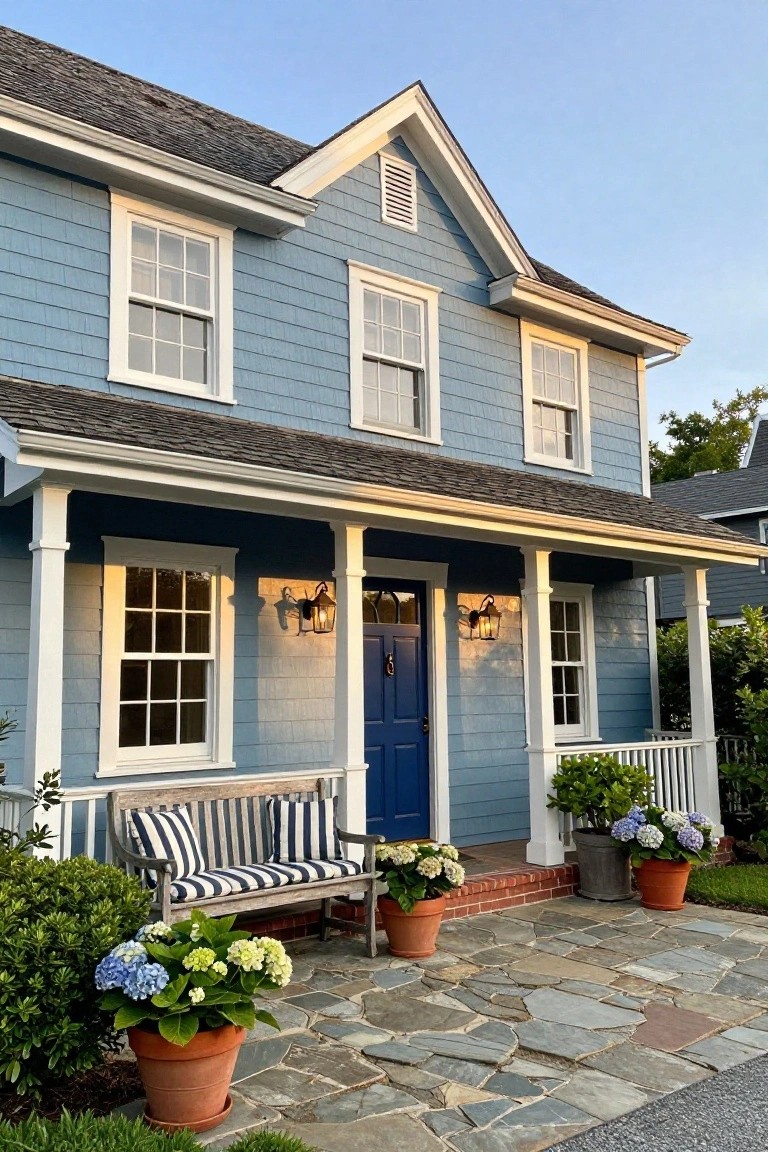
A soft blue clapboard siding like this one sets a calm tone for the whole house. The navy front door adds just enough contrast to make the entry stand out without overpowering things. White trim around the windows and porch columns keeps everything clean and ties it back to classic coastal looks.
This setup works great on two-story homes with gable roofs, especially in neighborhoods with trees and lawns. Pick shades from the same blue family so they harmonize. It boosts curb appeal on a budget, and the porch bench nearby makes guests feel welcome right away.
Recommended Products

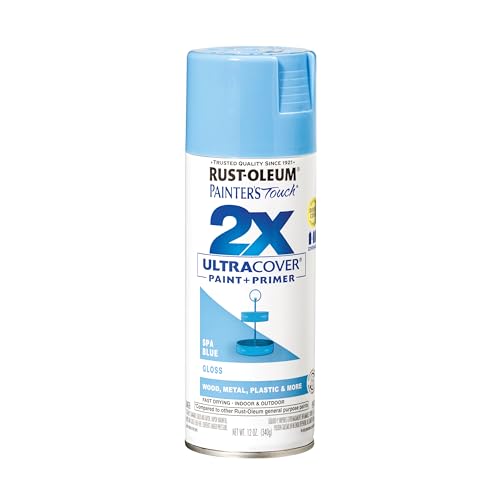
Ideal for use on interior/exterior surfaces including wood, plastic, plaster, metal, masonry and unglazed ceramic
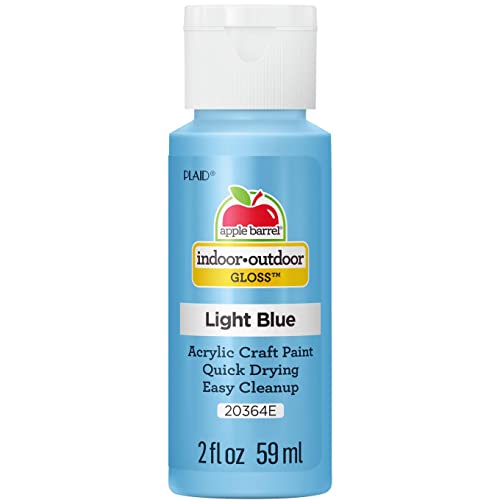
CONVENIENT SIZE - This Apple Barrel Gloss Acrylic Paint comes in a versatile 2 oz size that is great for basecoating, stenciling and so much more
Navy Blue Cladding on a Modern Facade
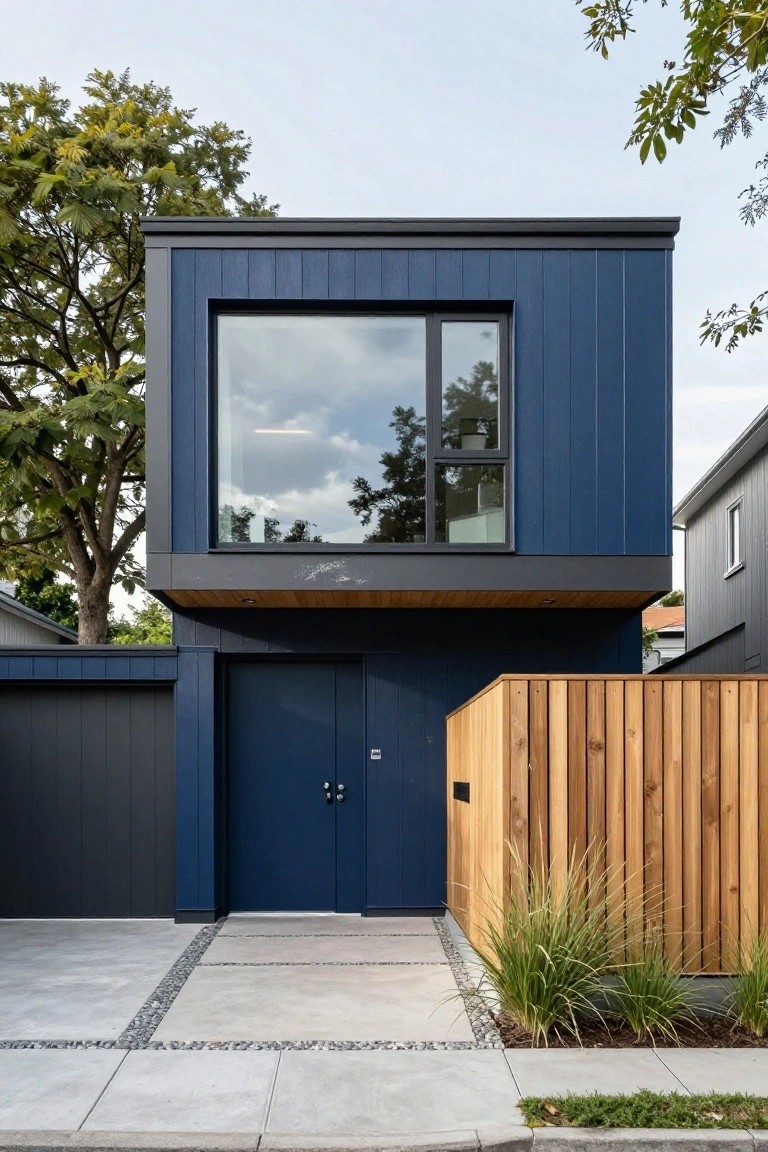
This exterior takes navy blue vertical siding and runs with it across the main walls. It pairs up nicely with a charcoal grey garage door right next to the entry, keeping the look sharp and pulled together. A touch of cedar wood on the overhang and fence brings in some natural warmth that stops the blue and grey from feeling cold.
You can pull this off on a straightforward boxy house like this one. It suits spots with mature trees nearby, where the colors echo the surroundings a bit. Keep the wood details simple so they don’t compete… and pick a matte finish on the siding to avoid glare.
Grey Shingles Paired with a Blue Front Door
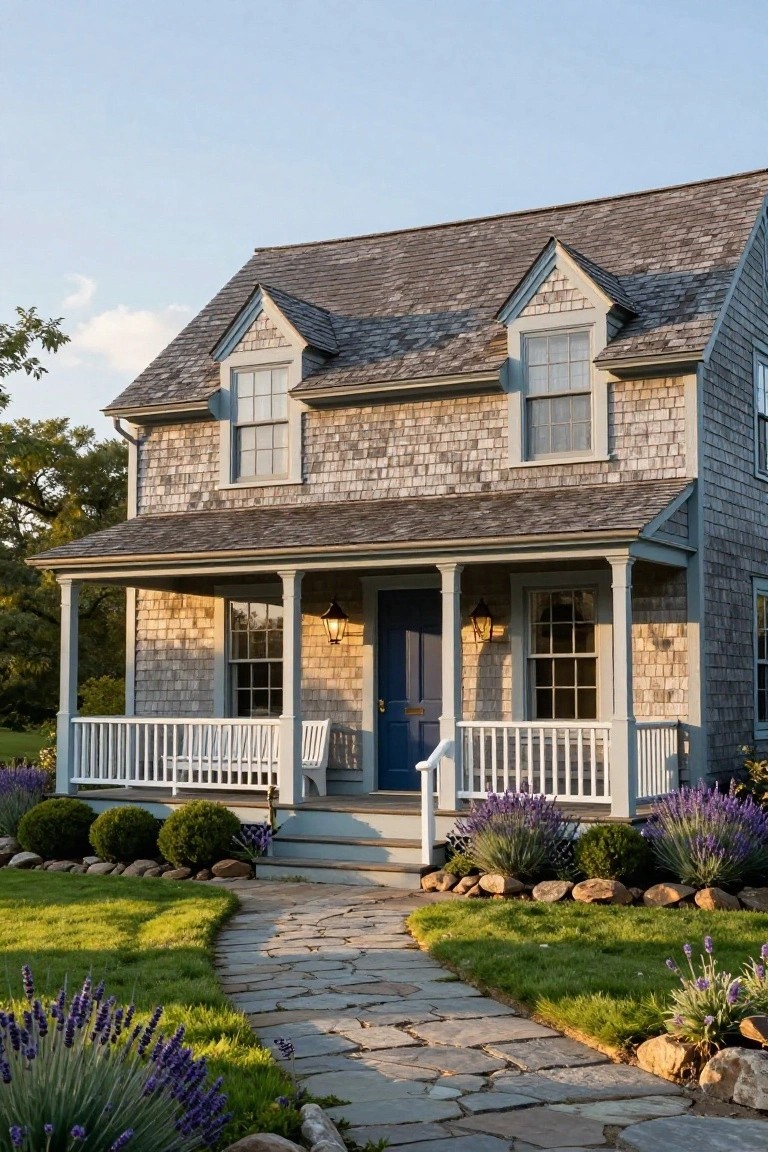
A blue front door gives this shingle-style house a fresh focal point against the soft grey cedar shingles. The color shows up nicely in the late afternoon light, pulling your eye right to the entry without overwhelming the neutral siding. White trim around the windows and porch keeps everything crisp, and that simple porch setup makes the door feel even more welcoming.
This works best on coastal or traditional homes where you want some personality but not too much flash. Go for a navy or deep blue shade on a house with light to medium grey shingles, and pair it with white railings or shutters. Keep the landscaping low-key, like lavender borders, so the door stays the star. Just make sure the door hardware is brass or black to match the classic vibe.
Recommended Products

ADVANCED SECURITY: Ideal for front and exterior doors where security and style are needed; includes 1" deadbolt with hardened steel spinning pin, anti-drill plates and anti-pick pins to help protect against forced entry
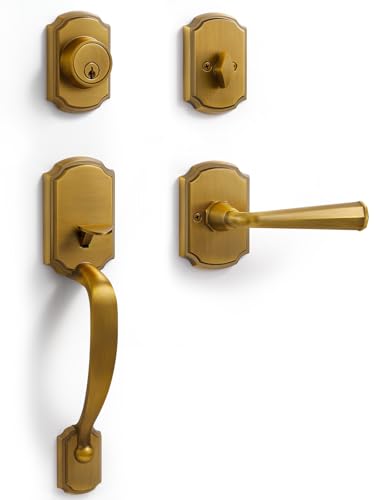
UNIQUE DESIGN:This Front Door Handle is Designed to Fit Most Decoration Styles, and Suitable for Both Commercial and Residential Applications

𝙐𝙥𝙜𝙧𝙖𝙙𝙚 𝙮𝙤𝙪𝙧 𝙛𝙧𝙤𝙣𝙩 𝙙𝙤𝙤𝙧 - Welcome your guests with a strong first impression, and the entry door lock set is the first details your family experience every day. Clean lines and rich tones of gold add the finishing touch to this entry door handle set. The right hardware complements your home’s exterior and looks modern and classic
Light Blue Siding with Wood Pergola
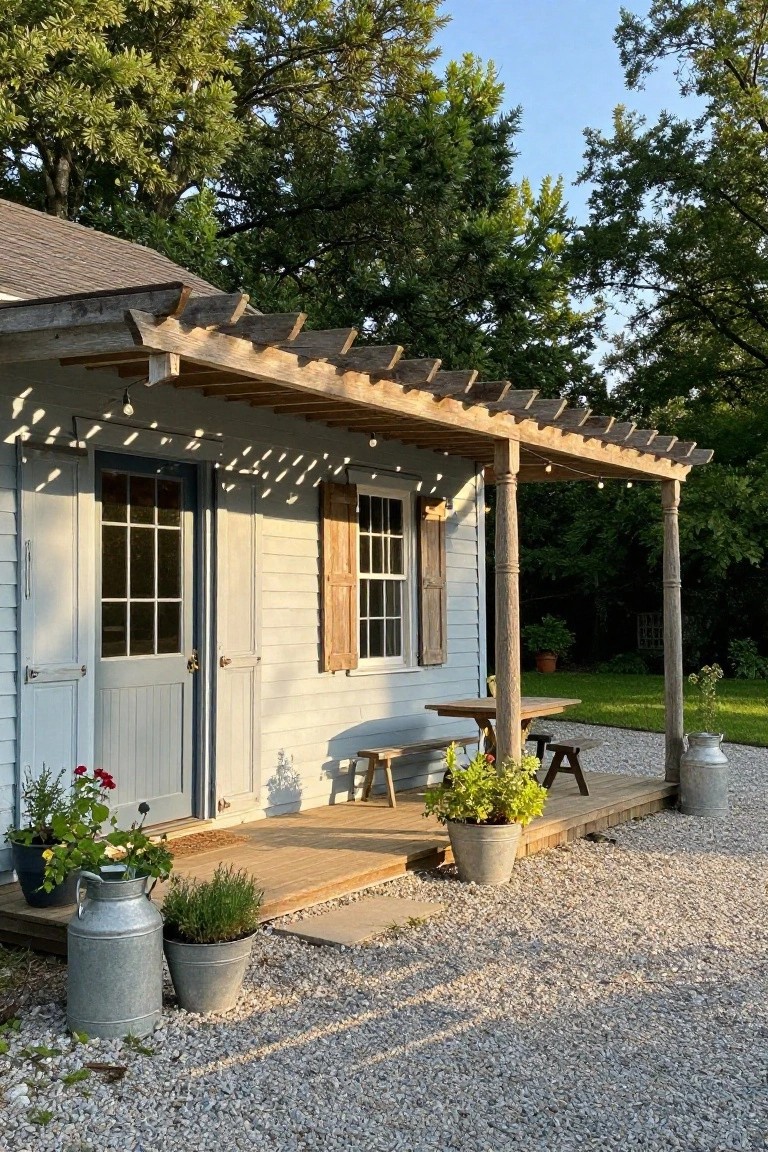
A light blue clapboard siding like this makes a small outbuilding feel right at home in the yard. The soft color reads as grayish in some lights, which keeps things calm without going too bold. Adding a simple wood pergola overhead brings in texture and a bit of shade. Those weathered beams catch the sun nicely and make the whole spot look lived-in, not fussy.
Put this look on a shed, workshop, or even a playhouse. It suits casual backyards with gravel paths or grass. Go for rough-sawn wood that ages over time, and keep pots simple around the base. Watch the scale though. On a bigger house, you’d need thicker posts to match.
Recommended Products

Weather and corrosion resistant coating protects exterior/interior surfaces like wood, metal, concrete, masonry and more

PERFECT SIZE & BRILLIANT COLORS - This line of vibrant, multi-surface acrylic paint is the perfect addition to any collection of art supplies! This craft paint comes in a 2 oz bottle

ALL-IN-1 PAINT & PRIMER: A hardy multi-purpose and multi-surface one-coat paint and primer in one for almost any indoor or outdoor surface. A wall, ceiling, floor, skirting board, cabinet, furniture and door paint for your bathroom, kitchen, home and garden.
Grey House with Blue Front Door
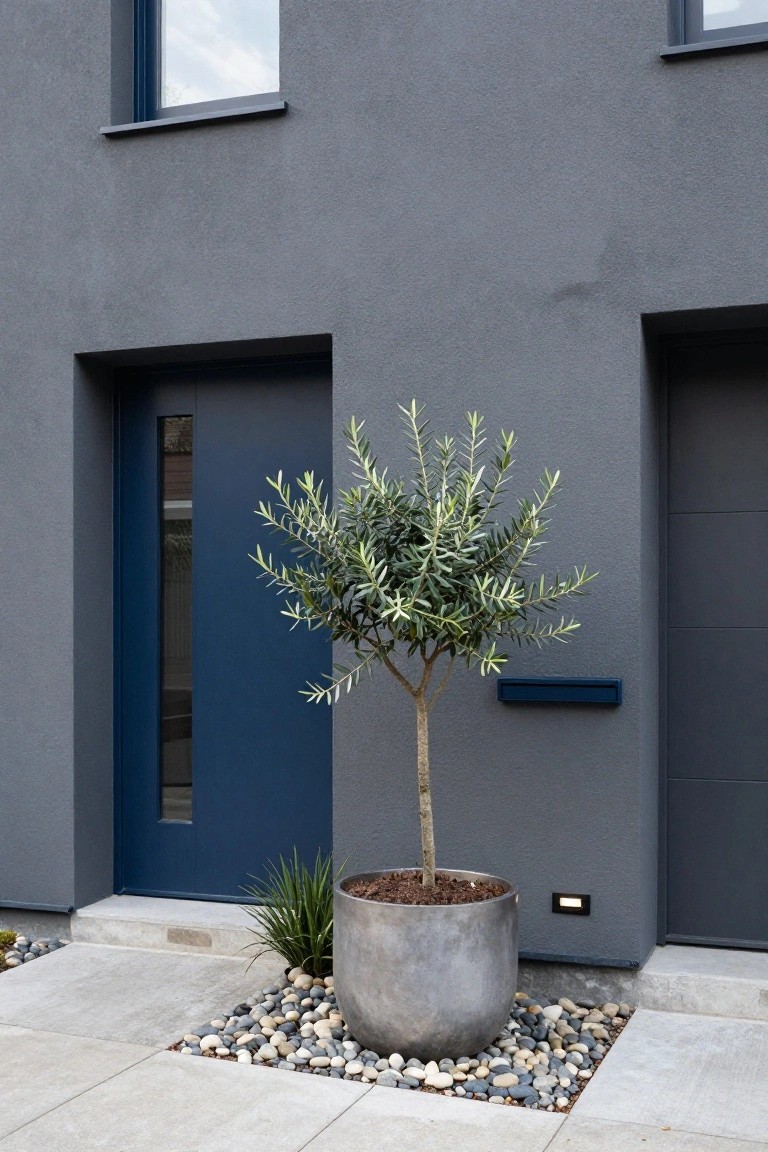
A grey exterior like this one feels clean and modern right away. That deep blue door pulls your eye straight to the entrance without much fuss. It adds just enough color to make the place feel lived in, especially next to the simple pot of olive branches.
Try this on a straightforward house facade, maybe one with flat walls and big windows. Keep landscaping basic, like pebbles and a single tree in a pot. It suits townhouses or suburbs where you want modern looks without going overboard. One thing, match the blue tones so it doesn’t fight the grey.
Navy Blue on a Traditional House
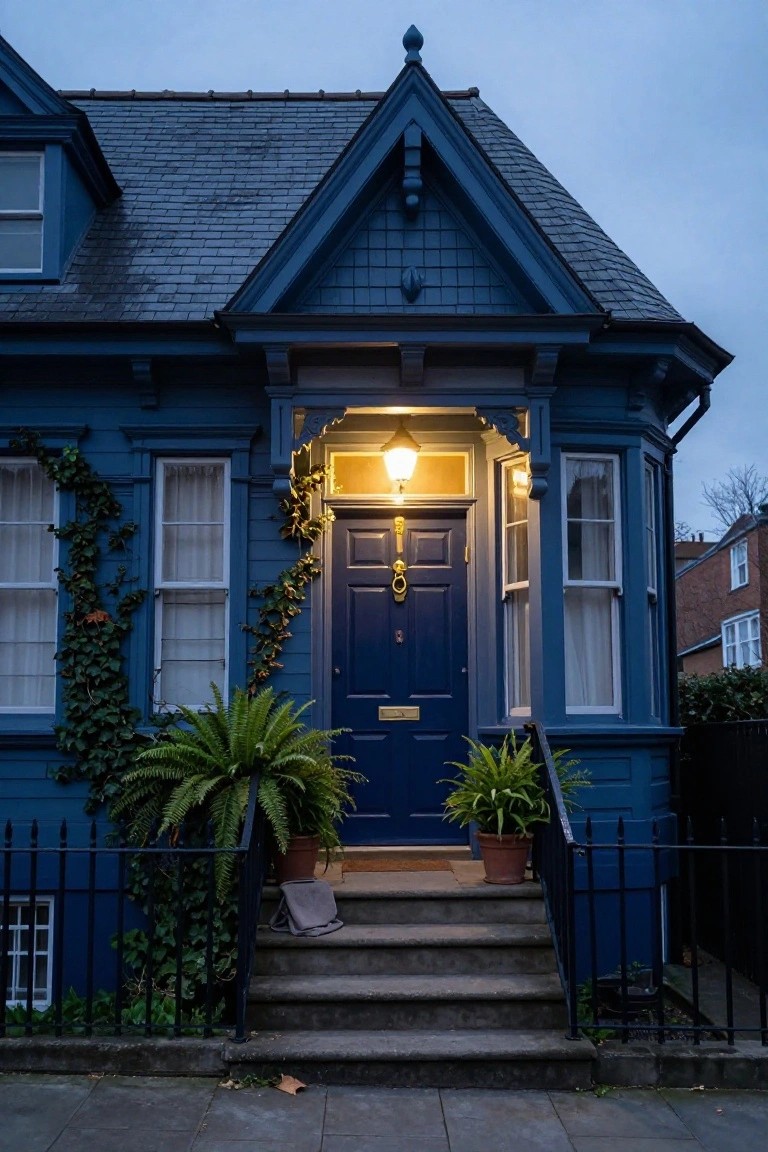
A deep navy blue paint like this turns an older home into something that stands out without trying too hard. The slate grey roof ties right in, giving the whole facade a calm, layered look that feels right for evening light. That single warm lantern over the porch pulls your eye to the entry, making the place look lived in and welcoming.
Try this on Victorian or Craftsman style houses where the gables and trim can take the bold color. Match the door to the siding and add brass hardware plus a couple potted ferns on the steps. It suits urban streets or quiet neighborhoods, but skip it if your roof is too light, or the contrast might fight.
Grey Stucco Facade with Blue Pot Accents
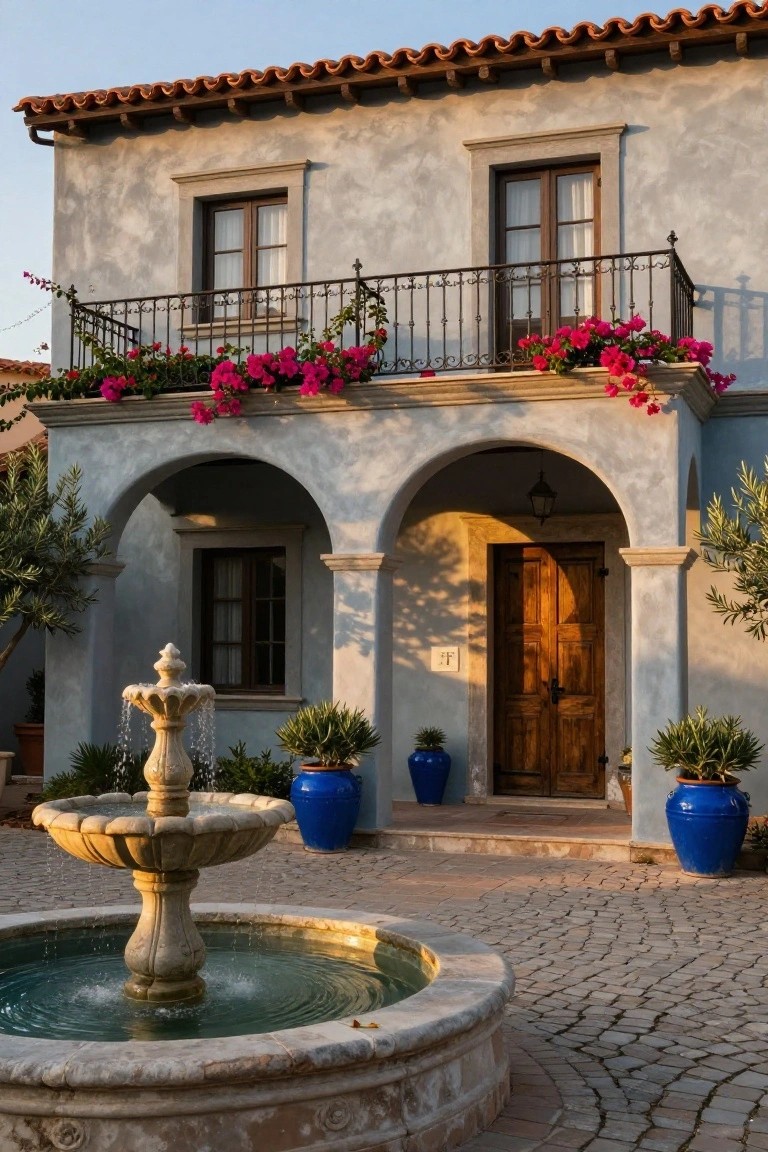
Grey stucco gives a house that soft, timeless look, especially in warmer spots like the Southwest. Here, the pale walls set off those big blue-glazed pots nicely. They hold simple plants and sit right by the entry fountain. It keeps things calm but adds just enough color without going overboard.
You can pull this off on most any stucco home facing south or west. Place the pots near doors or patios where they catch the light. Stick to a few large ones so they don’t crowd the space. Works best with terracotta roofs or wood doors… keeps the whole front feeling tied together.
Soft Blue Shingles for Beach Houses
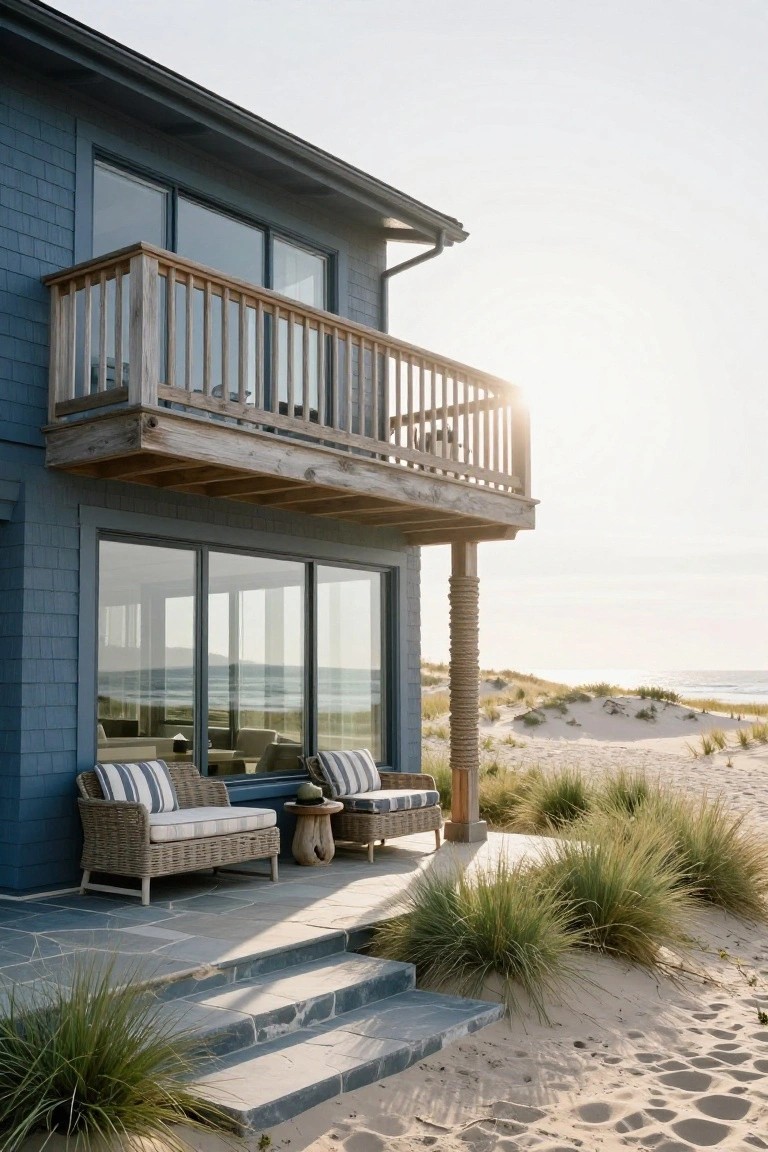
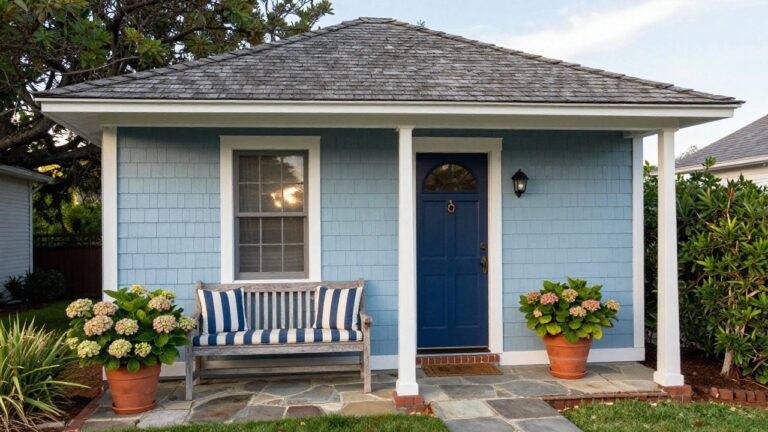
A soft blue shingle siding like this one fits beach homes perfectly. It echoes the muted tones of the ocean and sky without shouting. Paired with a simple grey stone patio, it lets the house settle into the dunes naturally, keeping the look relaxed and lived-in.
This scheme works best on single-story or low-slung houses near the water. Use it where you want curb appeal that doesn’t fight the landscape. Skip darker shades if your area’s too shady, they can feel heavy. Just keep the trim neutral to let the blue carry the color.
Grey Brick House with Navy Blue Door
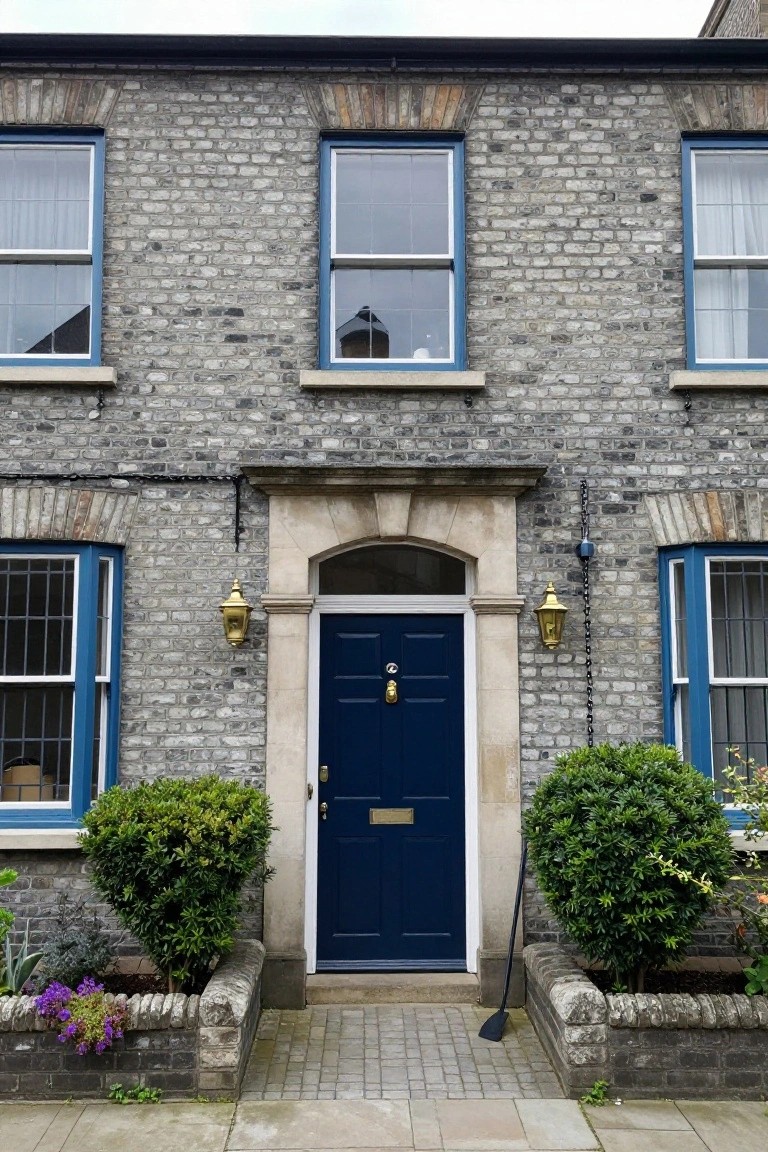
A navy blue door stands out nicely against the soft grey tones of aged brick. It pulls the eye right to the entrance without overwhelming the simple lines of the house. The blue windows echo that color, tying everything together in a calm way that feels fresh on a traditional facade.
This look suits older row houses or semis in town settings. Just paint the door and frames in a deep blue, then flank the entry with boxwoods for some green. Skip flashy colors elsewhere to keep the focus sharp. It boosts curb appeal on a budget.
Navy Blue Siding with Stone Chimney
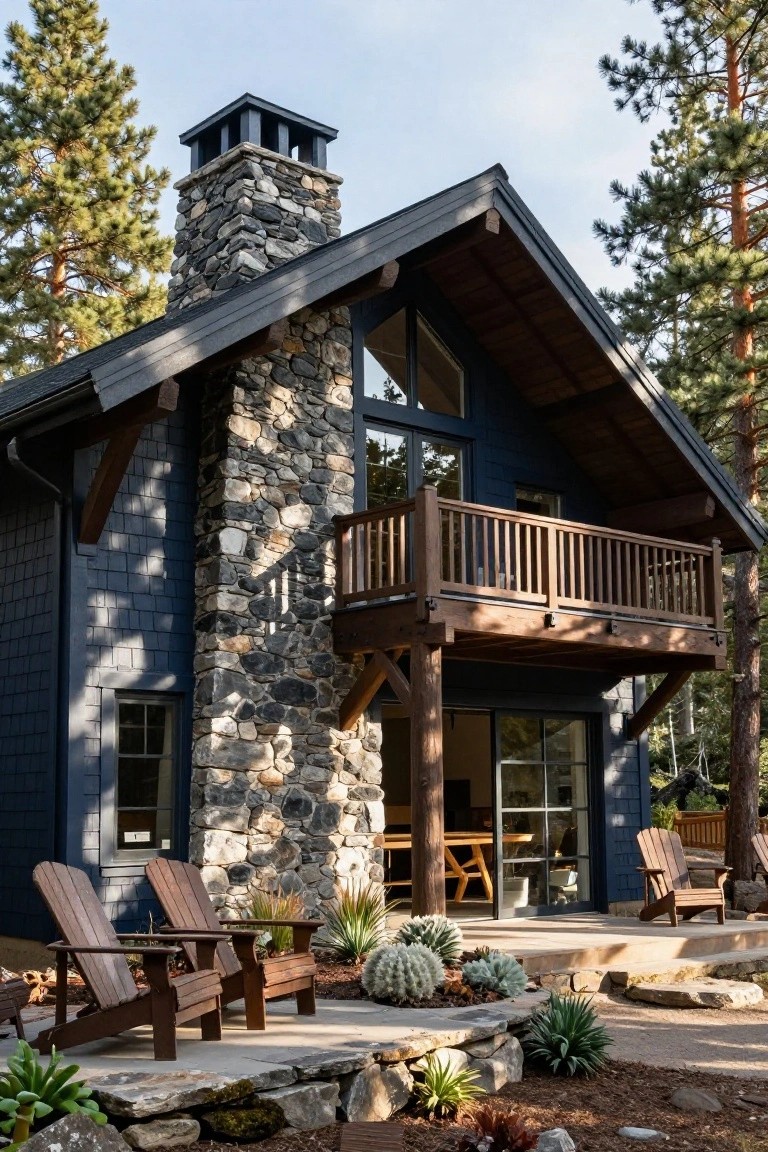
A cabin like this one uses deep navy blue siding alongside a tall, rugged stone chimney to create a look that feels right at home in the woods. The grey stones climb up one side, mixing rough texture with the smooth siding, while wood beams and railing add just enough warmth. It’s a simple way to make a house look sturdy and settled into its spot without going overboard.
This setup works best on sloped sites or mountain homes where you want the exterior to blend with pines and rocks. Pair the navy with local stone for that grounded feel, and keep wood details minimal so the blue stays the star. One thing to note: the dark color shows scuffs less, but test it in shade first to see how it reads.
Navy Blue Brick Facade
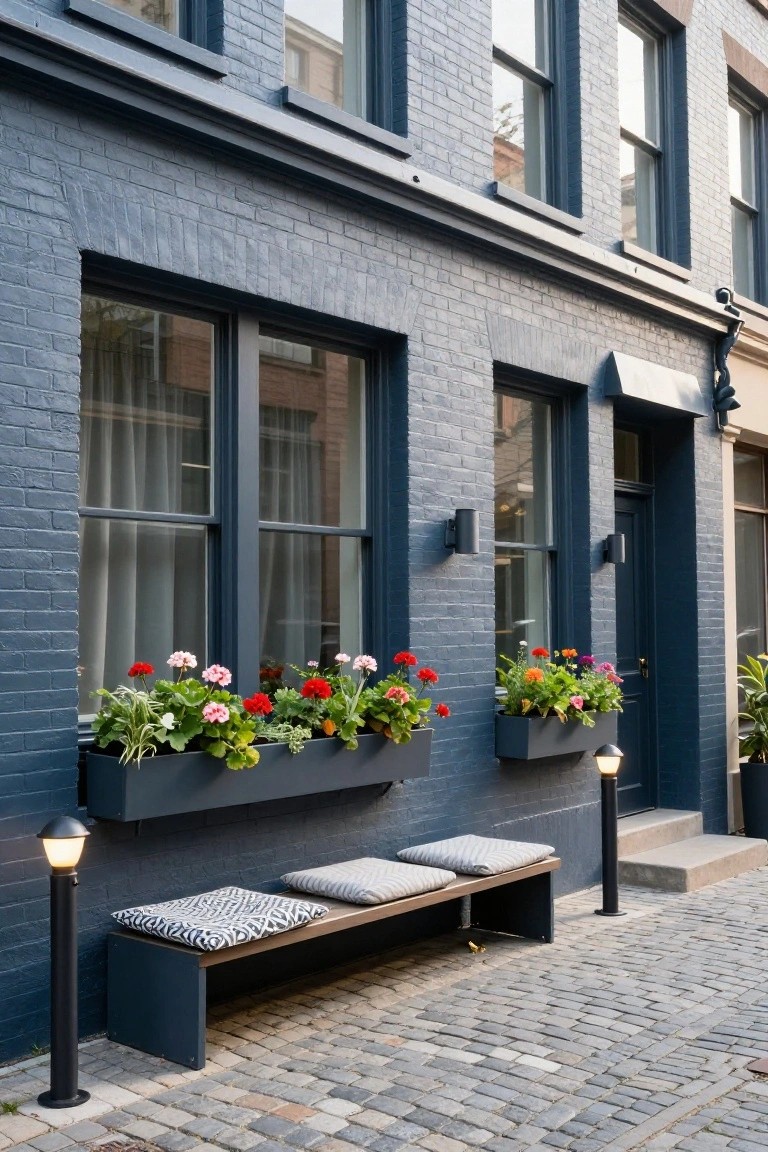
A deep navy blue paint on brick turns a plain townhouse wall into something moody and pulled together. It keeps the texture of the bricks showing through while giving the whole front a richer look. Those geraniums spilling out of the window boxes bring in reds and pinks that wake everything up.
This setup suits older brick homes in the city, especially where you want low-key curb appeal. Go for matte paint to avoid shine, and stick to simple black or grey trim around doors and windows. Dark colors like this hide dirt better too, but refresh the flowers seasonally to keep it lively.
Blue Shingle Cottage Exterior

This setup uses soft blue shingles on a simple gabled house to create that easy cottage charm folks love. The color picks up the sky and trees around it without shouting, and the white porch columns keep things clean and open. A plain wooden table right there on the porch makes the front feel lived-in already.
Put this on a small home tucked into woods or a big yard, where you want welcoming without fancy. Stick with white or light trim so the blue stays the star, and add a few plants along the walk like lavender to soften the edges. Skip dark roofs if your spot gets too much shade.
Warm Wood Accents on a Blue-Grey Facade
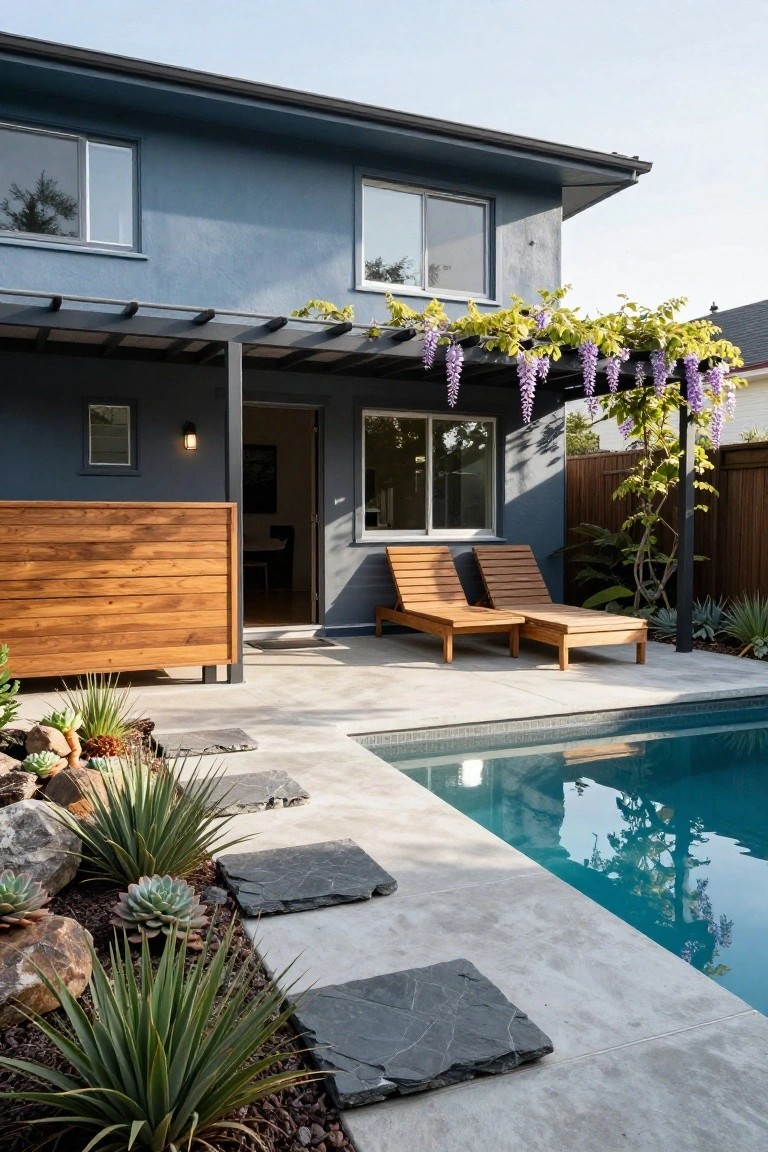
A cool blue-grey stucco wall sets a calm modern base for this house exterior. Then warm cedar panels slide in as a privacy screen right by the back door. It breaks up the cool tones without overwhelming them. The wood adds that natural touch folks gravitate to, especially near a pool patio.
Try this on mid-century or ranch style homes in sunny spots. The cedar holds up outdoors and pairs easy with concrete decks or black metal pergolas. Just keep the wood finish light to let the blue shine through. Skip it on super small yards though. It needs some breathing room.
Navy Blue Door on Grey Stone Walls
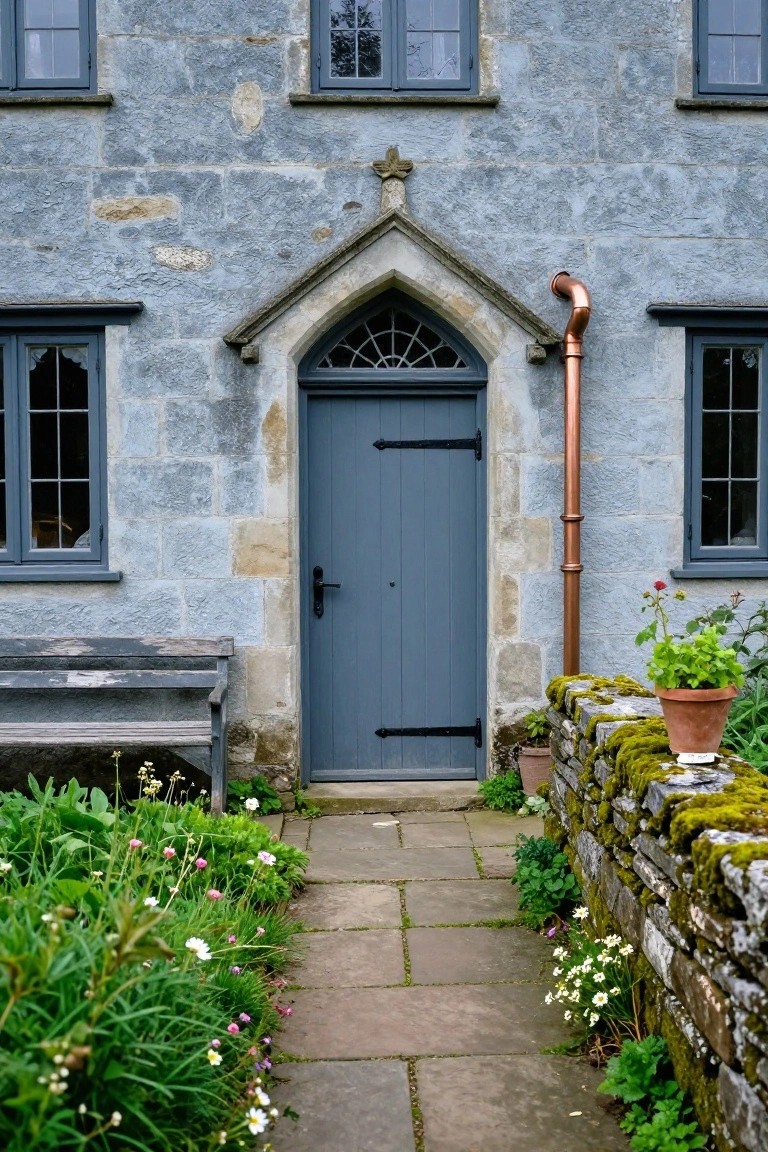
A navy blue door stands out nicely against the soft grey tones of a stone facade. It gives the entry a welcoming feel without overpowering the natural stone texture. That copper downspout running nearby adds a bit of warm contrast too. This combo keeps things classic and easy on the eyes.
Try it on older stone cottages or farmhouses where the architecture already has character. Paint matching window frames in a similar blue to tie it together. Skip busy landscaping around the door. Just a simple path and some low plants work best to let the colors shine.
Navy Shingles for Coastal Cottages

Navy blue shingles give this beach house a look that fits right in with the dunes and sea. The dark color blends with the natural surroundings instead of standing out. It has that weathered charm from the start. White trim keeps things crisp around the windows and door.
Try this on small cottages or bungalows near the water. Use cedar shakes for real texture that holds up to salt air. Add a simple wood porch like this one. Skip glossy paints. They chip too easy in the wind. Keeps the place looking settled and easy.
Classic Stone Arch Entry
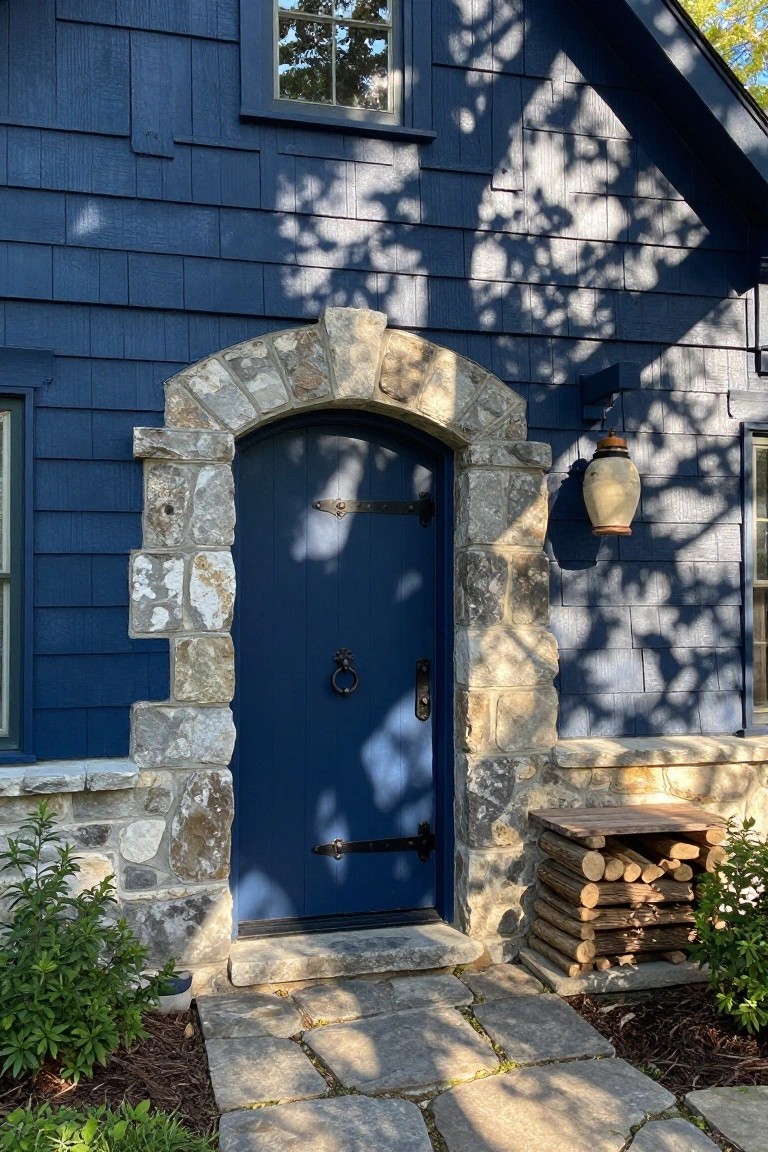
A simple stone arch around the front door gives this house entry real character. The light fieldstone stands out against the deep blue siding and matches the navy door nicely. It feels sturdy and a bit old-world without trying too hard.
This works best on cozy homes like cottages or bungalows. Frame a bold door color with stones that pick up nearby landscape tones. Keep the arch proportional to your door size. Skip it on super modern houses, though. It leans traditional.
Blue Corrugated Metal with Grey Concrete

This exterior uses bold blue corrugated metal panels for the main siding, paired right up with smooth grey concrete sections. The blue gives it a fresh coastal punch that stands out against the ocean backdrop, while the concrete keeps things solid and grounded. Large glass walls let the inside flow out, making the whole setup feel open and tied to the view.
You can pull this off on sloped lots or spots with water nearby, where the blue picks up sky and sea tones naturally. Stick to clean lines and big windows to let the colors do their thing. It works best on modern builds, but watch the scale, the panels need room to breathe so they don’t overwhelm a smaller house.
Deep Blue Door on Light Grey Walls
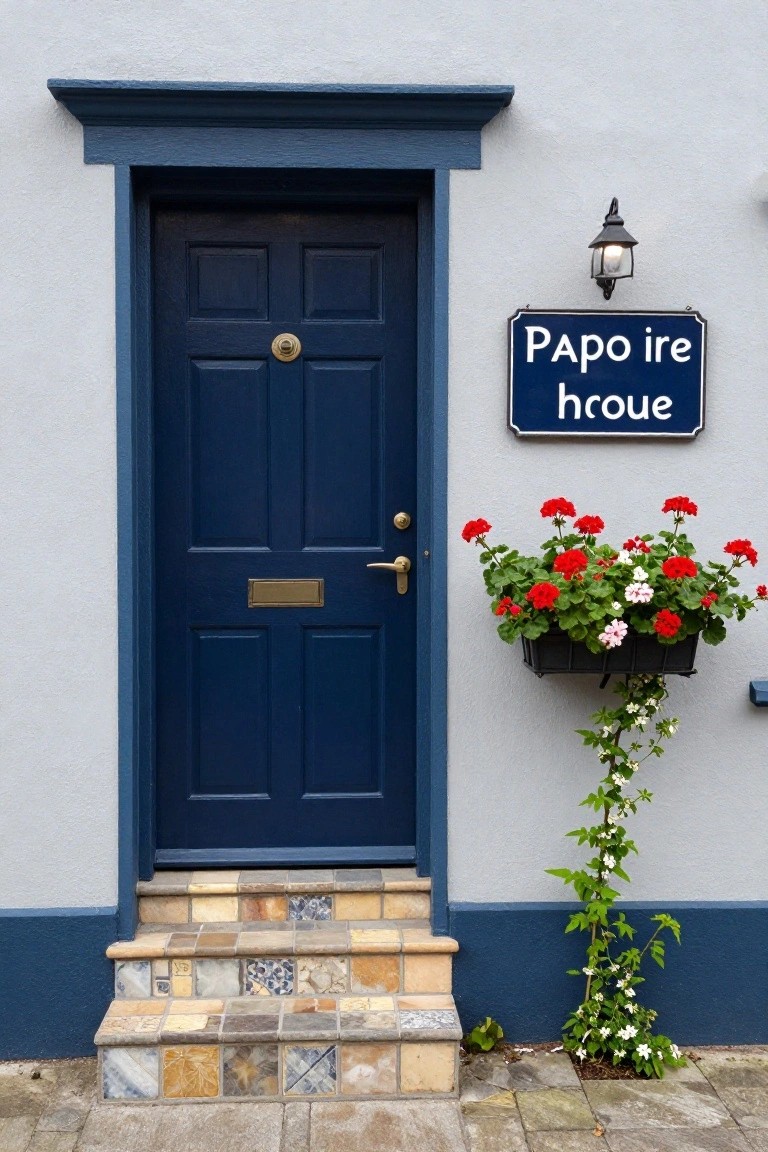
A deep navy blue door stands out nicely against pale grey walls like this. The contrast pulls your eye straight to the entry without much fuss. That blue feels solid and classic. It ties into the blue trim around the frame too. A simple brass knocker and letterbox keep things straightforward.
This look suits older homes or cottages best. Maybe add a hanging basket of geraniums nearby for some red punch. Skip bold colors elsewhere so the door does the main work. Watch the scale though. On a bigger house it might need bigger plants to balance it out.
Frequently Asked Questions
Q: My house gets a lot of direct sun. Should I avoid dark blues and greys?
A: Stick to lighter shades like soft sky blue and pale dove grey.
They reflect heat and hold their color longer under that glare. Darker tones soak up the sun and fade quicker.
Q: How do I make blue and grey pop on red brick siding?
A: Paint the trim in a clean white to frame the brick nicely.
It pulls focus to the blue accents on doors or shutters without fighting the red. Your house ends up looking sharp and balanced.
Q: What’s a quick way to test these color combos before full paint?
A: Buy big sample swatches and tape them to your siding.
Walk around at morning, noon, and evening light. Pick what sings in your real setting…
Q: And can I add a pop of color with these schemes?
A: Tuck in a mustard yellow front door against navy blue siding and charcoal grey trim.
It sparks interest right at the entry. The neutrals keep everything grounded.
