

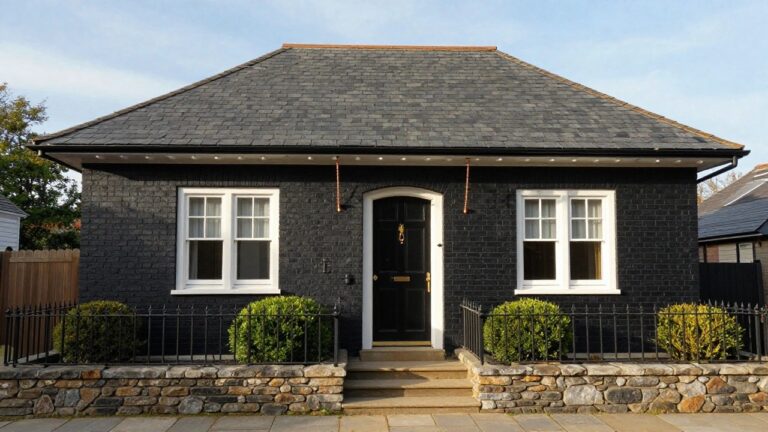
I’ve driven past plenty of traditional homes over the years, and the black exteriors always pull me in with their understated power from the street. What sets them apart lies in how the dark tones sharpen the rooflines and entry arches, making the whole facade feel more defined without overwhelming the neighborhood. Curb appeal hits different here, especially when materials like brick or clapboard take on that moody depth under changing light. I keep coming back to ones that mix black paint with natural stone accents, since they hold up better over time and avoid looking flat in person. Worth noting down a couple for my own siding refresh.
Black Brick Facade with White Trim
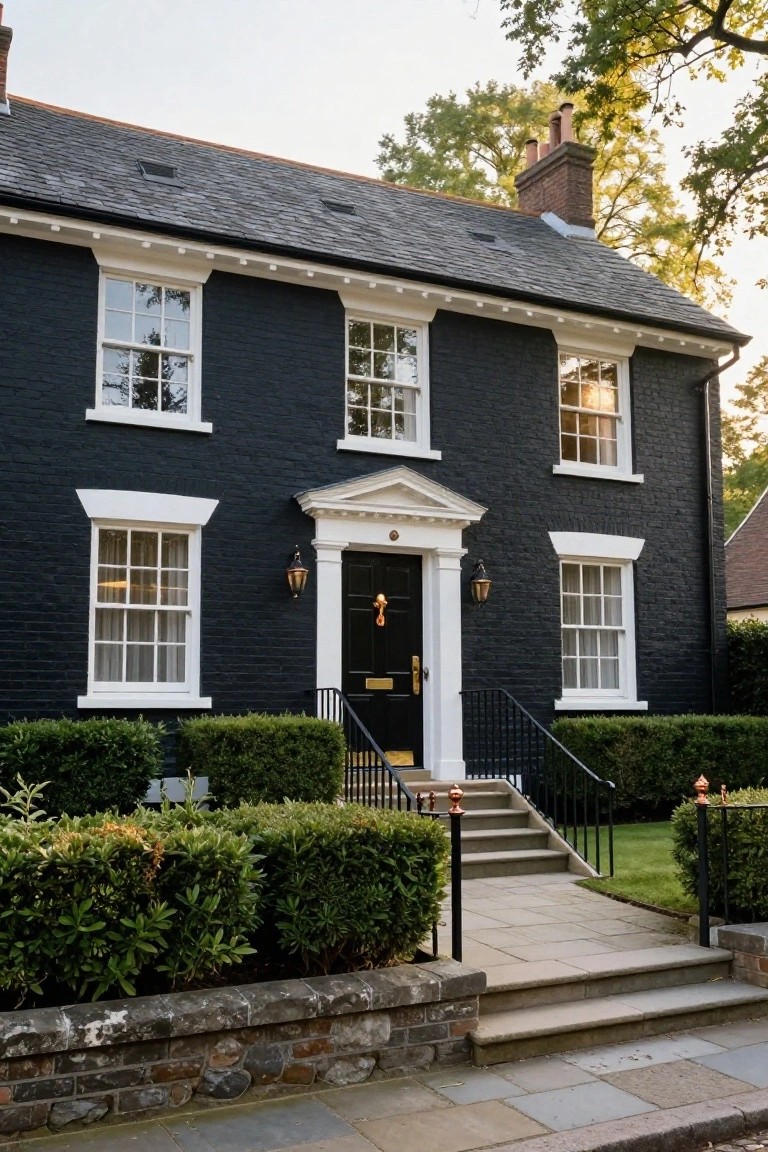
Black brick gives this traditional house a strong, elegant presence. The dark paint on the brick really sets off the white window frames and the pediment above the door. Those lanterns on either side add just enough detail without overdoing it.
You can pull this off on most classic homes, especially ones with good proportions already. Keep the landscaping simple, like low boxwood hedges along the front. It suits spots with some tree cover too, so the dark doesn’t feel too heavy.
Recommended Products
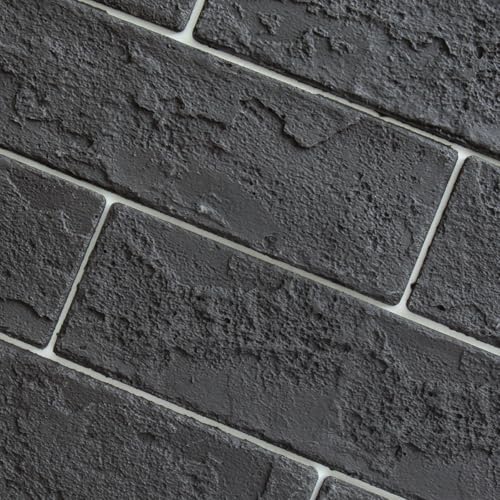
One box contains 100 cost-effective thin brick veneers, covers 14.2 sq. ft. Each piece is 2.36-in width x 8.66-in length x 0.15-in thick. Want to take a closer look at these tiles before placing a full order?Order a sample brick! Samples come full size and they're a great way to get a feel for a tile's size, color and texture. You can even see how it looks on the wall in your chosen space.

BLACK TRIM AND PLASTIC RESTORER: Restores the appearance of faded vinyl and plastic trim to a refreshed, well maintained look suitable for both interior and exterior automotive trim surfaces

Modern Floating Effect for Better Visibility: Designed with a floating mount, these house numbers create a clean shadow effect that improves readability from the street—ideal for quick identification by guests, delivery drivers, and emergency services.
Black Traditional Facade with Columns
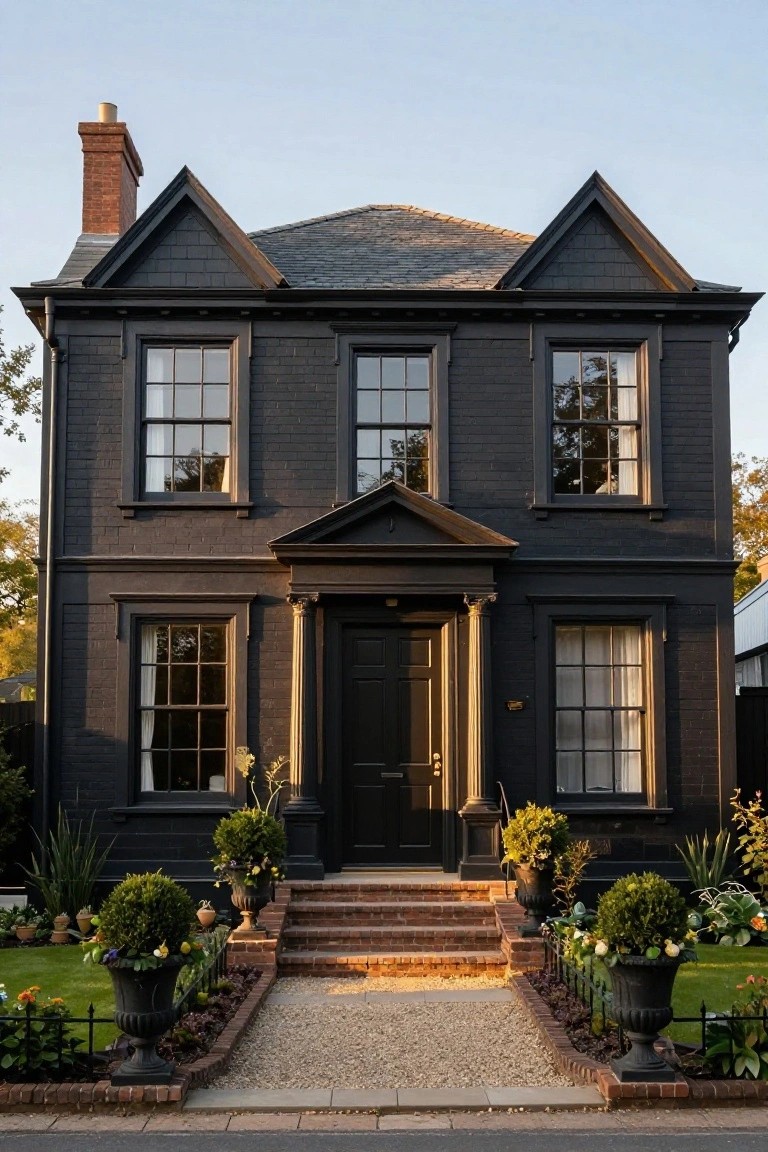
Black paint turns a straightforward traditional house into something moody and refined. Here the dark color coats the brick walls and trim, setting off the tall sash windows and that central entry with its columns and pediment. It gives the whole front a quiet drama without overdoing it.
This look suits older style homes with good symmetry, like Georgian or colonial ones. Go for it on a two-story facade where the proportions already work. Keep landscaping simple, maybe boxwood topiaries by the steps, so the house stays the main focus. Just test the paint first to see how it holds up in your weather.
Black Half-Timbered House Front
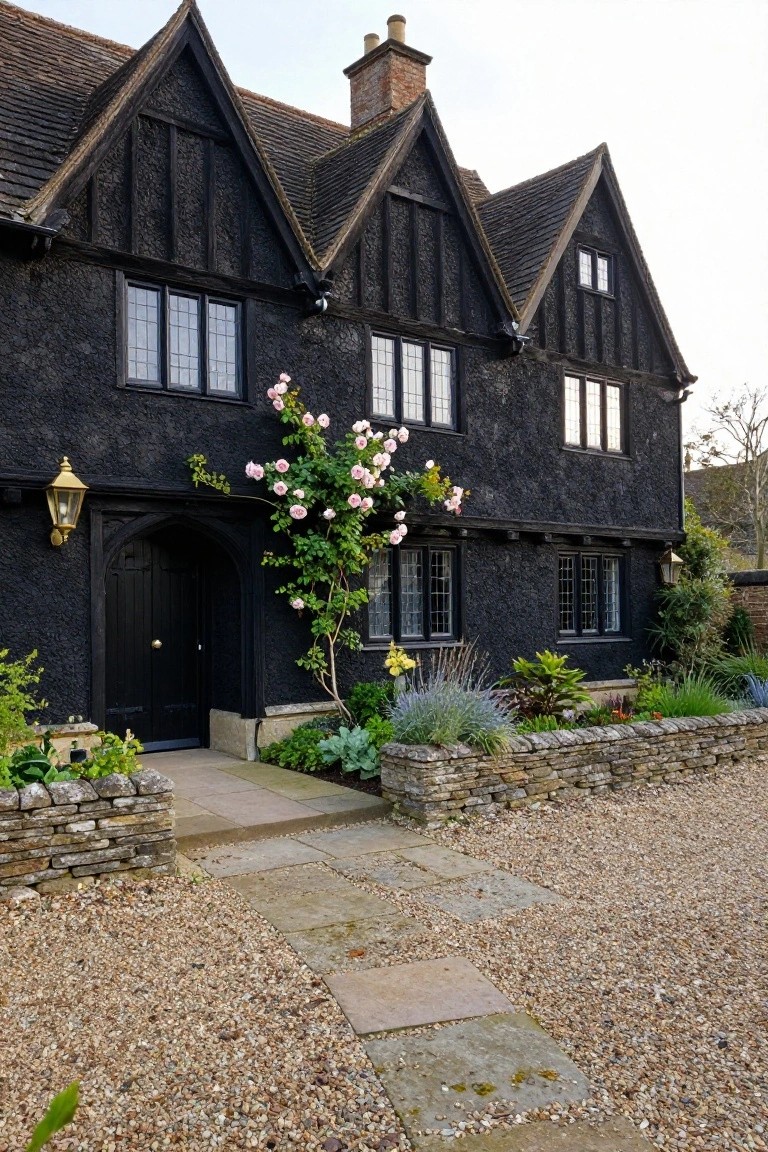
A traditional timber-framed house painted all black gives the front a strong, moody look that feels both old and fresh. The dark beams and walls stand out sharp against the sky. That pink climbing rose by the door adds just a touch of color without overdoing it.
This style suits older cottages or farmhouses in the country. Paint the timbers and plaster the same deep black for that unified feel. Keep plantings simple around the entry so the house stays the focus. It hides dirt well too.
Portico Entry on Black Traditional Houses
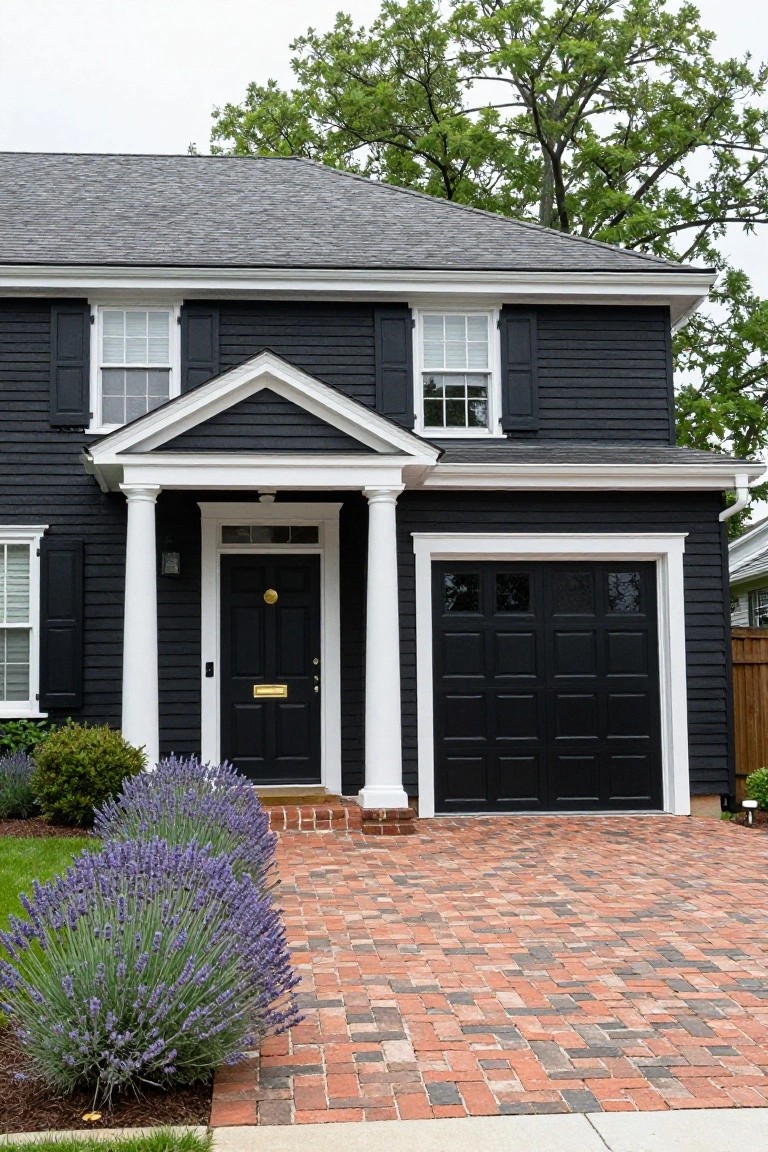
A simple portico like this one adds real class to a black house. White columns stand out sharp against the dark siding, and they frame the front door just right. It pulls the whole facade together without much fuss. The gold knocker on the black door gives a nice touch too.
This setup suits older style homes, like colonials or capes. It works best where you want curb appeal that feels steady and not showy. Just make sure the columns match the roof pitch so nothing looks off. Keep plants low around the base… lets the entry do the talking.
Dark Shingle Siding on a Gabled Home
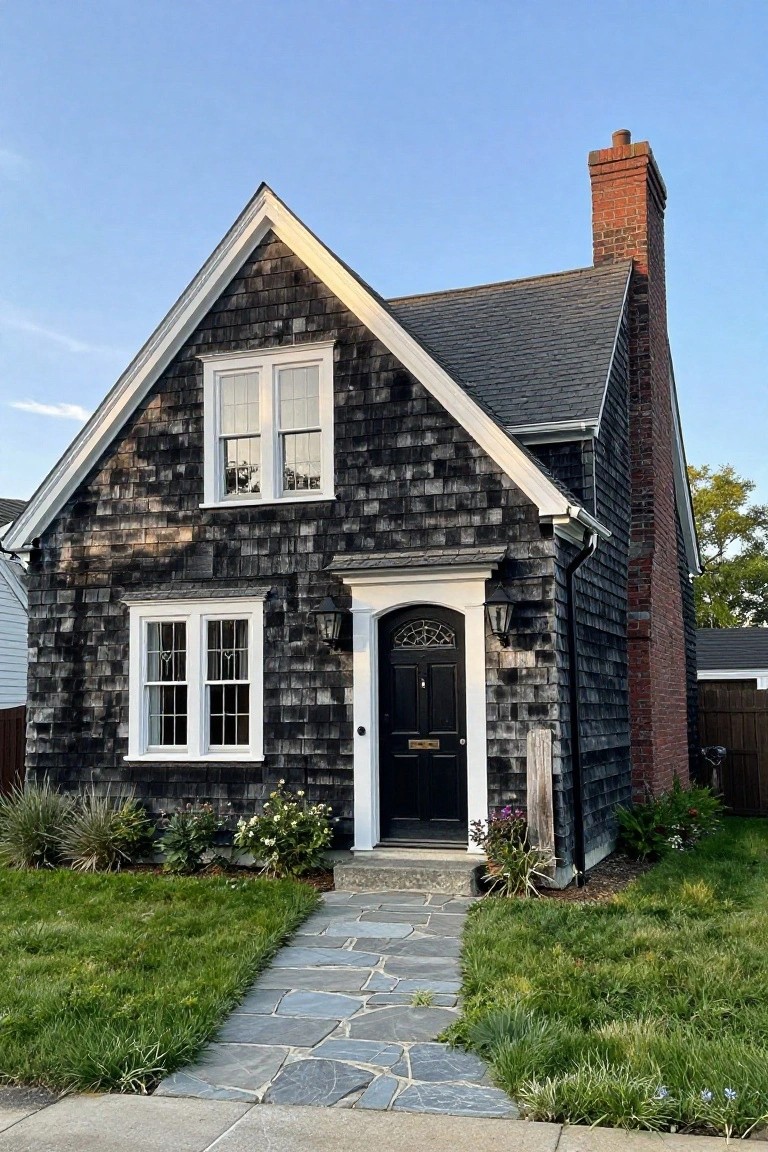
Dark shingle siding like this gives a traditional house real character without much fuss. The blackened cedar shakes cover the whole facade and roofline, making the place feel solid and a bit mysterious under that blue sky. White trim around the windows and door keeps things crisp, so the dark doesn’t overwhelm.
You can pull this off on smaller homes or cottages in older neighborhoods. Stick to clean lines like the arched black door here, and add a simple stone path to lead folks right up. It suits coastal spots or anywhere you want low-key curb appeal that ages well… just make sure the shakes are properly treated to hold up over time.
Dark Brick House with White Portico Entry
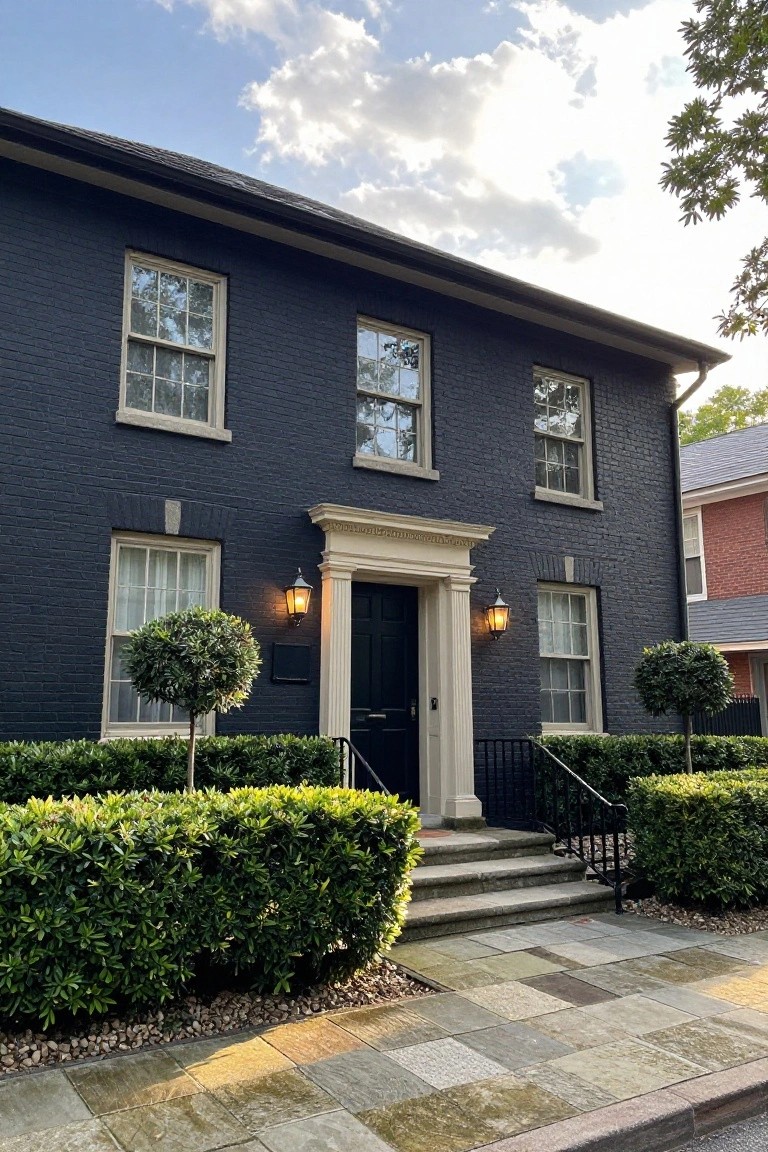
A dark brick exterior like this one sets a strong, classic tone right from the street. The navy-black bricks give the house a moody elegance that feels timeless, especially when paired with a crisp white portico over the front door. Those lanterns on either side add just enough light without overdoing it. It’s a look that says traditional without trying too hard.
This setup works best on older homes or ones with some historic charm, like colonials or federals in town. Paint or stain the bricks a deep shade if yours are lighter, then keep the trim bright white for that pop. Boxwoods along the steps help frame it nicely. Watch the scale though. A small portico can get lost on a big house.
Dark Traditional House with Covered Porch Entry
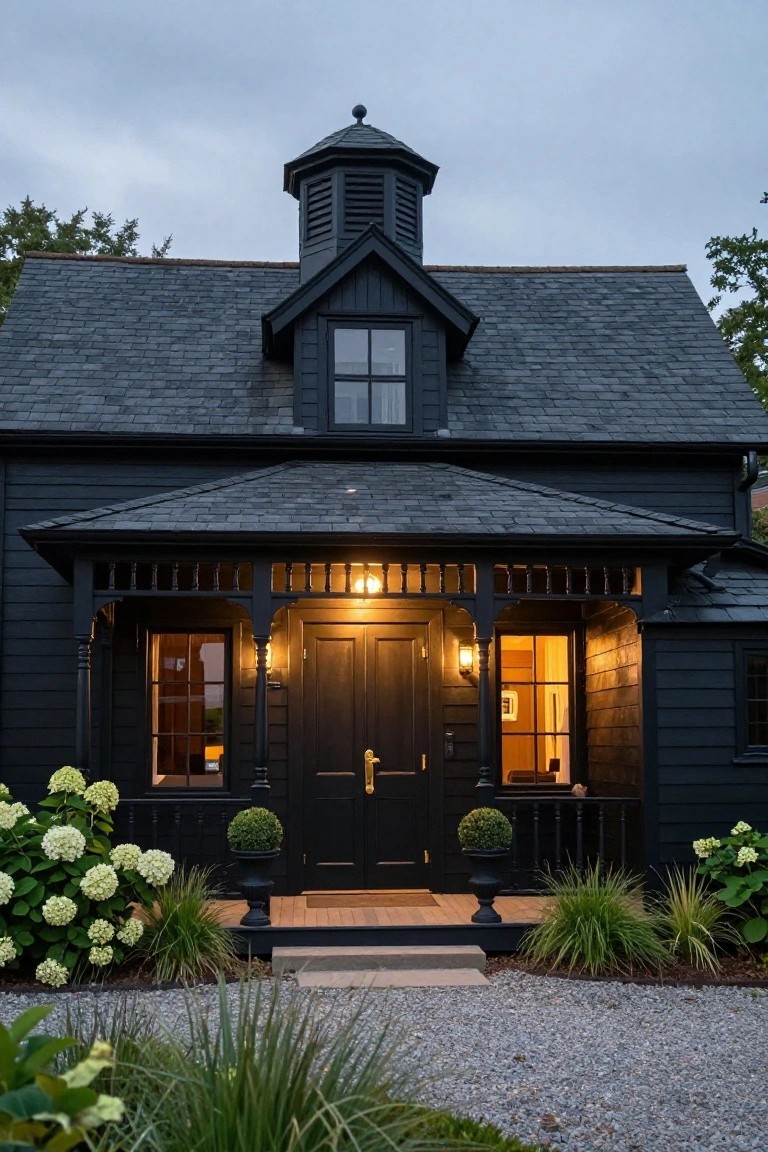
A covered porch like this one takes a black traditional house and makes the front door feel more approachable. The dark siding sets a strong base, but those turned posts and simple lanterns pull you right up to the steps without overwhelming the look. White hydrangeas nearby keep things from feeling too heavy.
This setup works best on smaller homes or cottages where you want classic charm without going overboard. Stick to black paint on the wood siding and trim, then add warm lighting at dusk. It suits rural spots or older neighborhoods, just watch the scale so the porch doesn’t swallow the house.
Arched Black Door on Dark Stone Facade
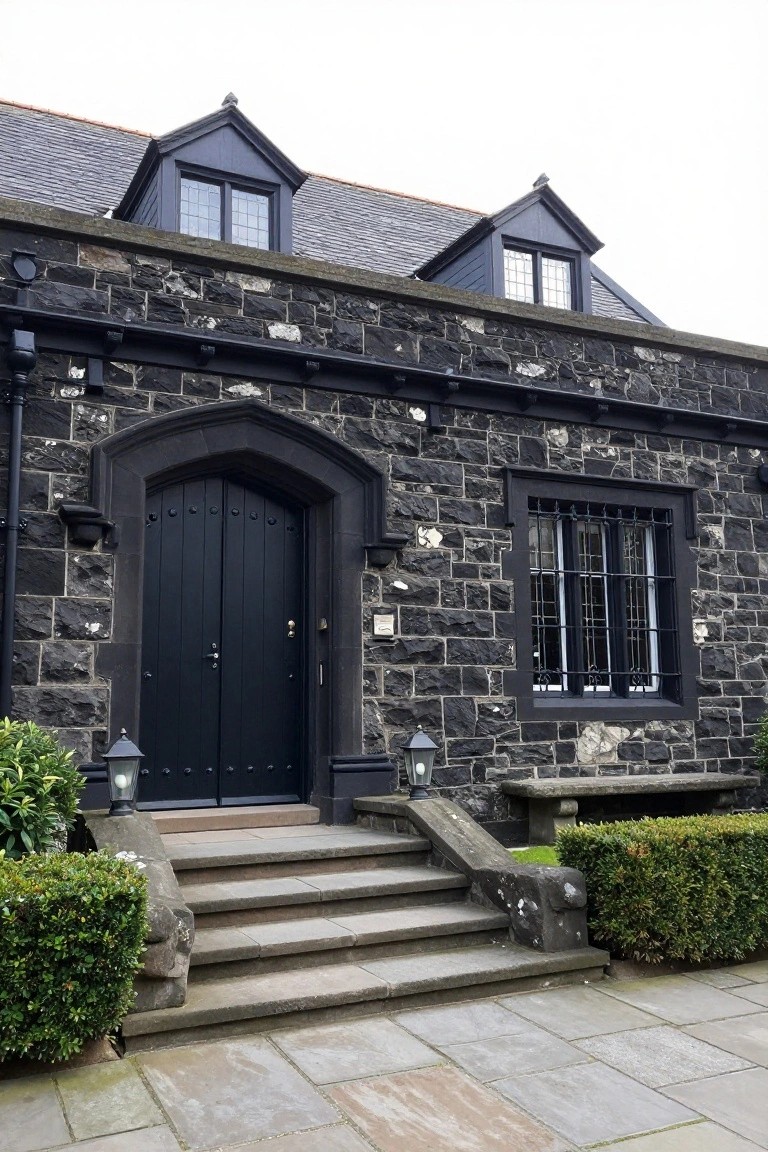
A tall arched doorway like this one makes the front of a dark stone house feel special right away. Set into rough black stone walls, the heavy black wooden door with its studded panels draws your eye up. Flanked by lanterns, it adds quiet drama without much fuss. That’s the appeal of traditional dark exteriors. They stand strong.
This setup works great on older stone homes or craftsman styles aiming for more presence. Use local stone if you can to keep costs down. Add simple lanterns for light at night. Skip bright colors around it. Let the arch and dark tones do their thing. Just right for a shady spot or north-facing entry.
Black Victorian Cottage Exterior
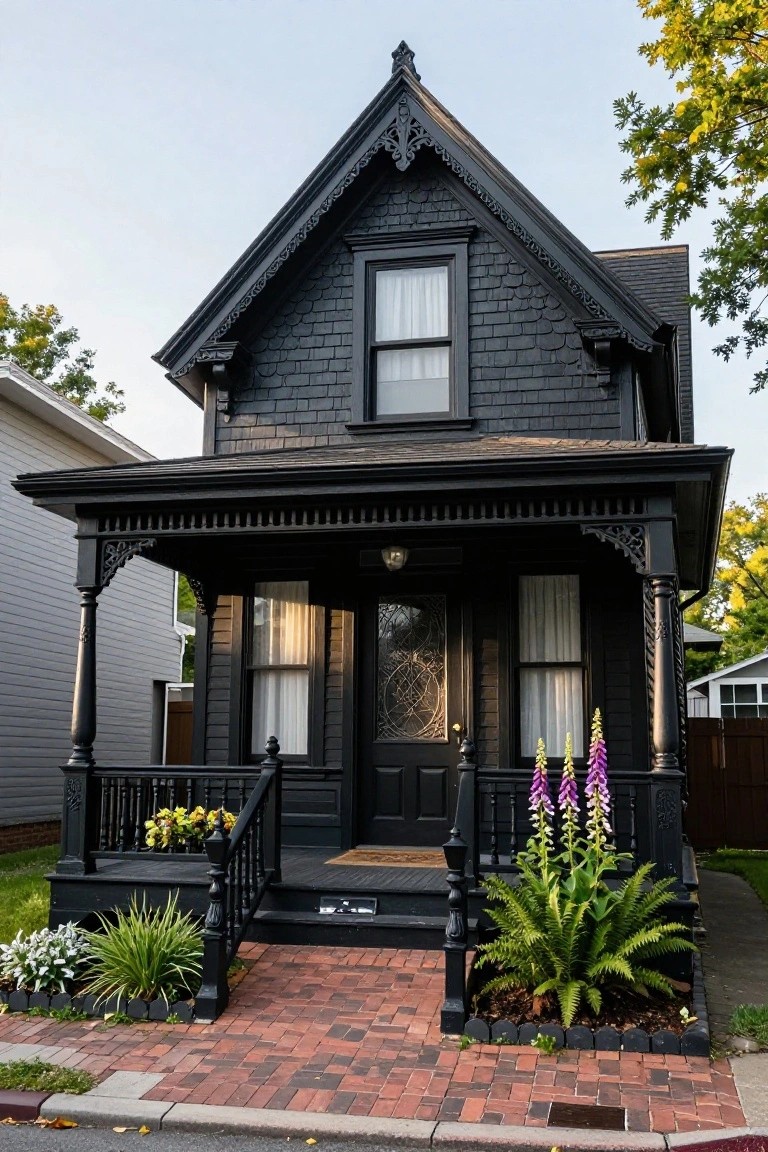
This black Victorian cottage pulls off a full dark paint job without looking gloomy. The matte black finish covers everything from shingles to trim, letting the house’s steep roofline, pointed gables, and carved porch posts stand out on their own. Tall foxgloves and ferns at the entry add just enough color to keep things lively.
Try this on older homes with busy details like gingerbread trim or multi-pane windows. It suits neighborhoods with mature trees where the dark tone blends right in. Skip it on plain boxy houses, though. They need more shape to carry the look.
Dark Shingle Siding on a Gabled Home
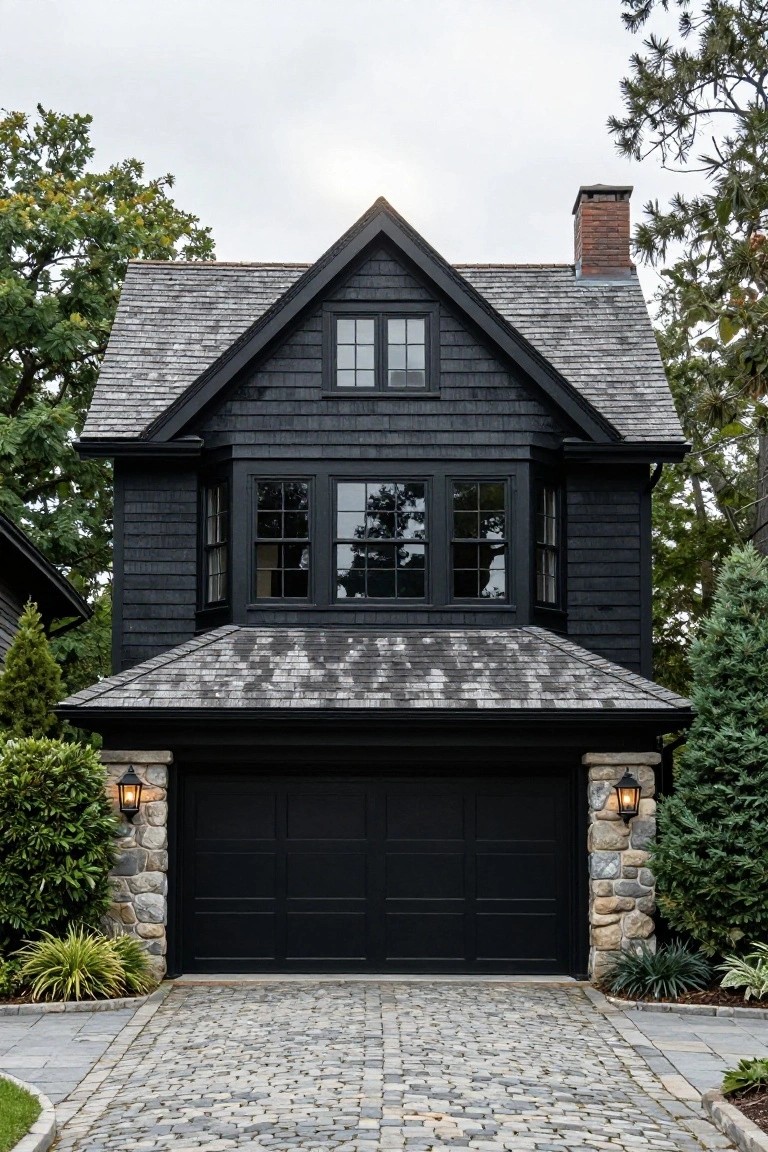
Black shingle siding like this takes a basic gabled house and gives it real presence. Painted a deep charcoal, the shakes create a moody backdrop that nods to old coastal cottages but feels fresh today. It pulls the eye right to the simple lines of the roof and windows.
Try this on a two-story home tucked into trees or a leafy neighborhood. Stone pillars around the garage add just enough texture without overwhelming things. Keep plantings low and green nearby…it keeps the dark siding from feeling too heavy.
Classic Porch Swing on Dark Brick
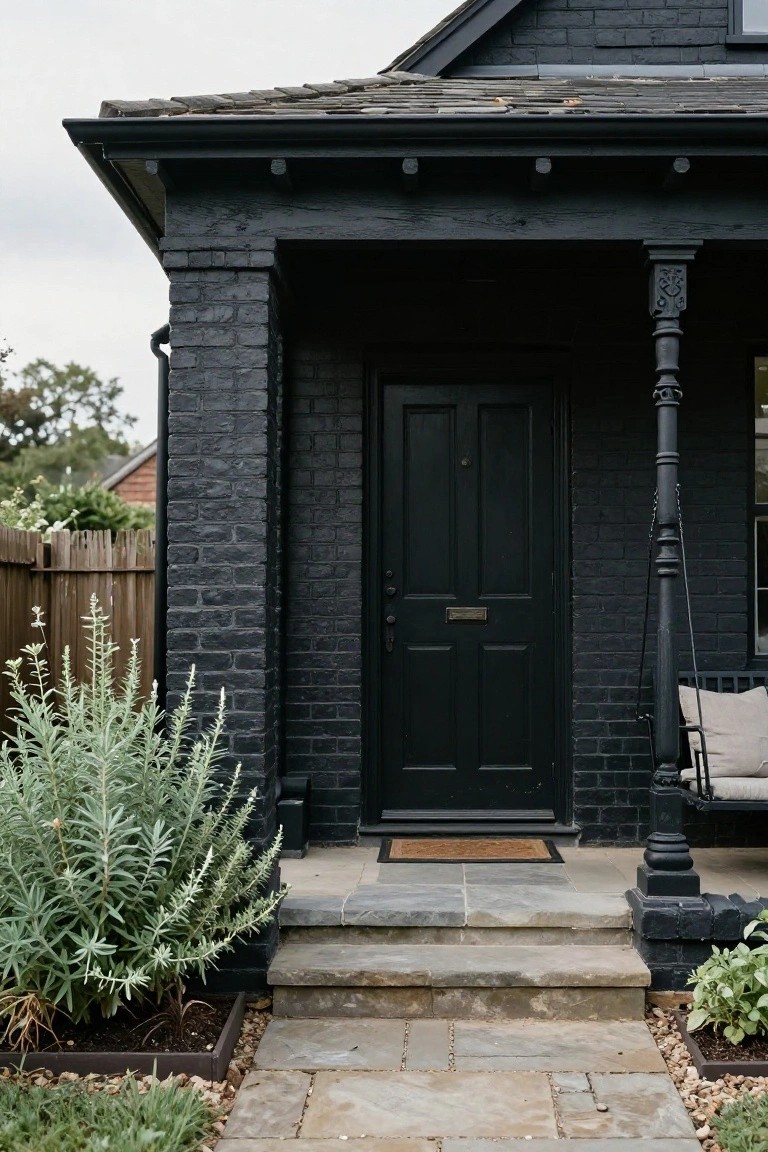
A porch swing hanging from an ornate black column right by the front door gives this dark brick house a lived-in feel. The all-black exterior stays bold and elegant, but that simple swing makes the entry look welcoming, like it’s been there for years. It’s a small touch that nods to traditional homes without going overboard.
This works best on covered porches with good roof support, maybe three or four steps up from the path. Use weatherproof cushions in neutral tones so they don’t fight the dark scheme. It’s perfect for older-style houses or cottages where you want curb appeal that’s cozy, not fussy. Just make sure the chains are strong.
Classic Black Shingle House Exterior
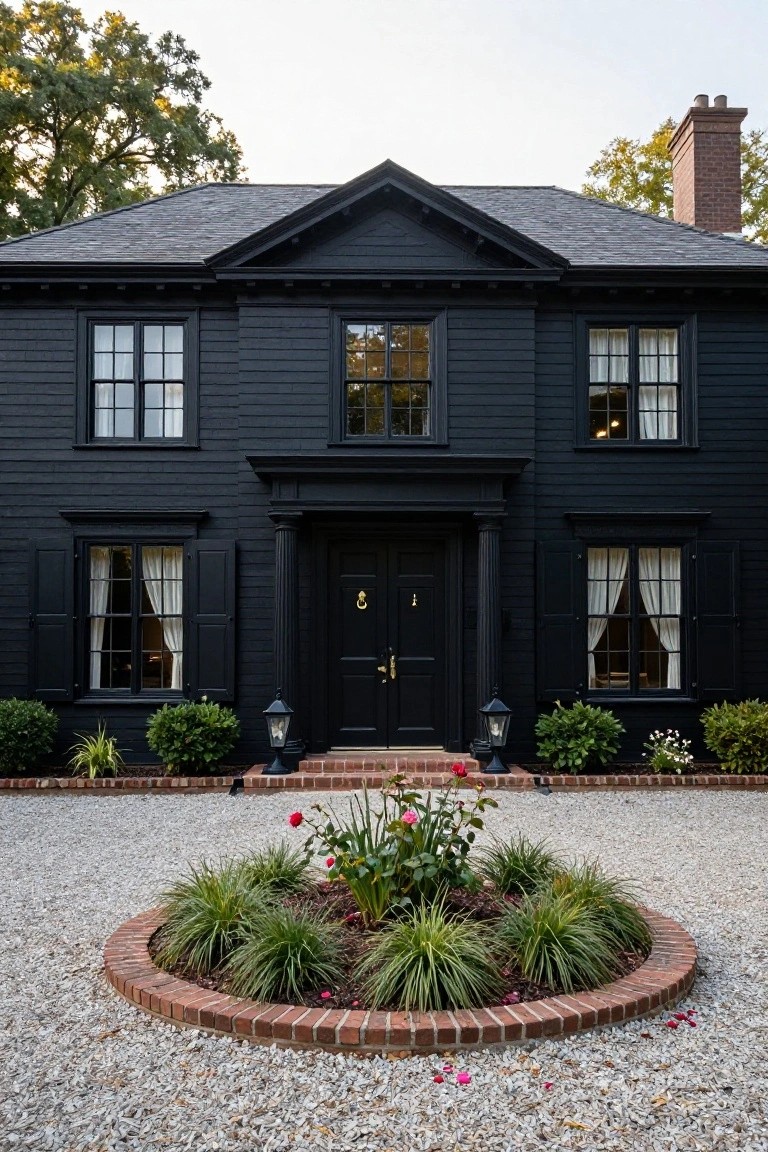
Black paint on shingle siding gives a traditional house this deep, moody look that feels both historic and fresh. The even rows of windows and centered entry pull it all together without trying too hard. A few gold accents on the door knocker stand out just right against the dark.
This style suits bigger homes in wooded spots where the black blends into the trees a bit. Paint everything the same shade for that unified feel, then add lanterns by the steps. Skip busy landscaping up front so the house stays the focus. It holds up well year-round too.
Black Half-Timbered Cottage Facade
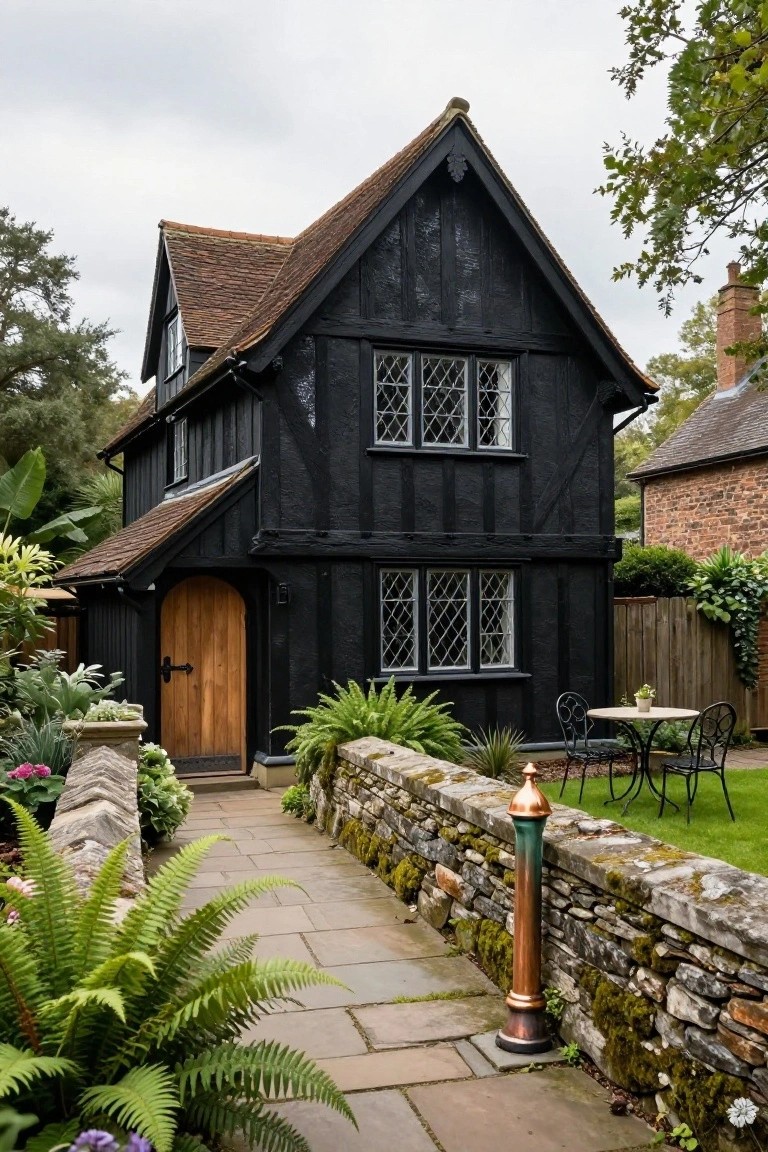
Black half-timbering turns a simple cottage into something striking. The dark timbers frame white plaster walls nicely, and that arched oak door pulls it all together at the front. It gives off a quiet elegance that’s hard to beat on older style homes.
Paint your timbers black over a traditional frame, then keep windows leaded for that authentic touch. This works great on compact two-story houses tucked into gardens. Just make sure the roof tiles stay warm-toned… it keeps things from going too grim.
Black Brick Townhouse Facade
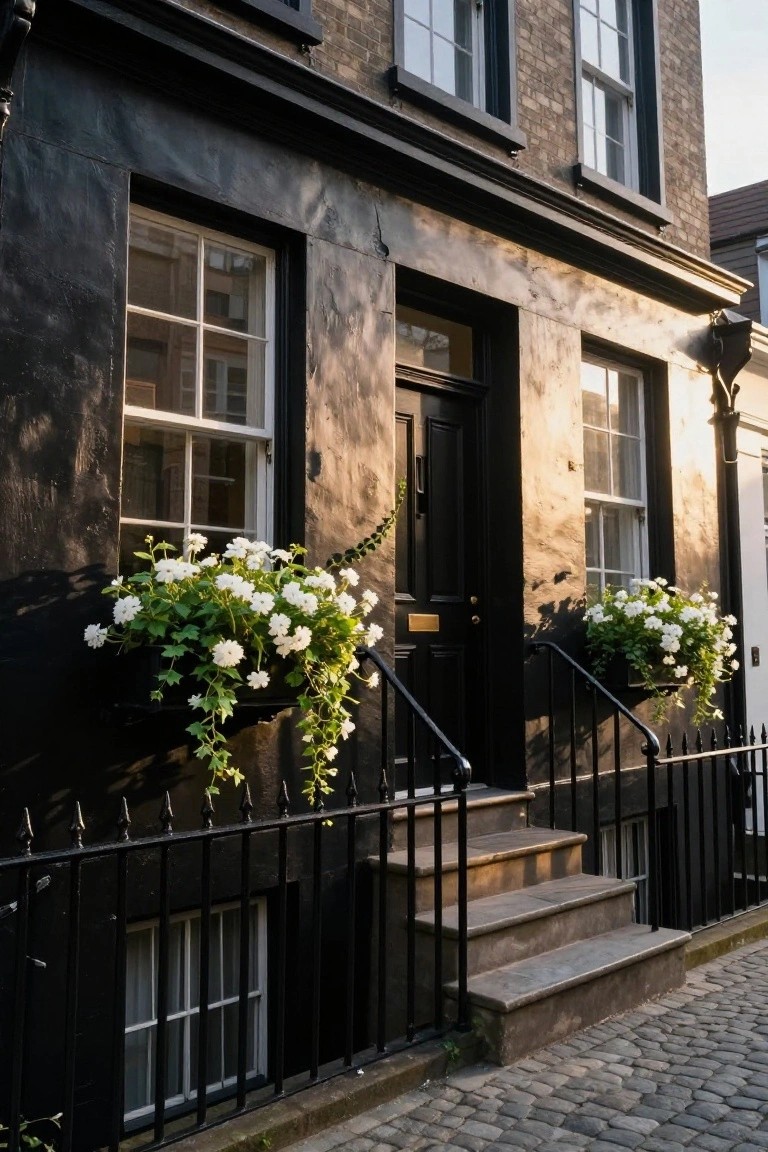
A traditional brick house painted matte black turns heads without trying too hard. The dark color soaks up the brick texture underneath, giving the whole front a moody, solid look that feels both historic and fresh. White flowers spilling from window boxes add just enough lift, like those madeline blooms hanging over the black iron railing.
This works best on narrow townhouses or row homes in older neighborhoods, where the black keeps things from feeling too busy on a tight street. Paint the door and trim to match, then keep plantings simple and white. Skip it on super sunny spots, though. The dark can fade fast without good upkeep.
Black Clapboard Siding on a Gabled Home
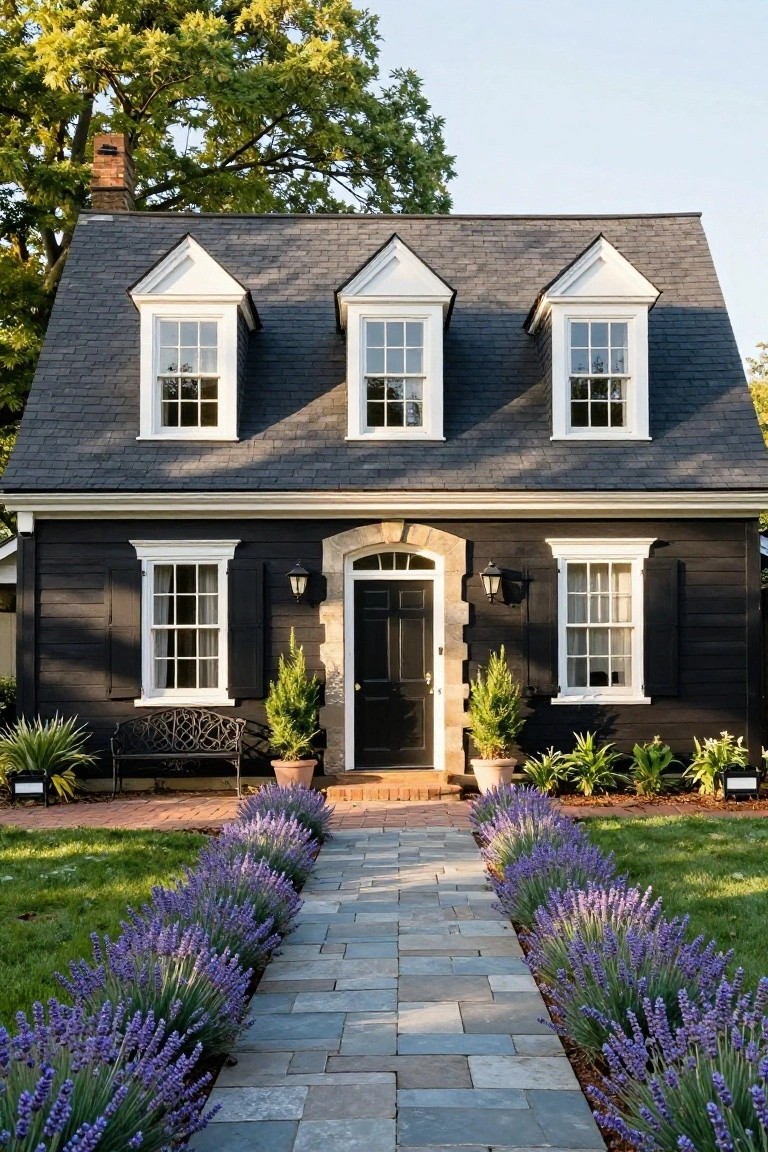
Black clapboard siding turns a simple gabled house into something striking. Here the dark paint covers the wood siding smoothly, setting off white trim around the windows and roof peaks. It gives that traditional shape a fresh edge, moody but clean.
This look fits cottages or older homes in leafy neighborhoods. Use it where you want curb appeal without big changes. Line the front path with low plants like lavender to guide folks right to the door. Dark siding shows dirt less than you might think.
Stone-Framed Entry Door
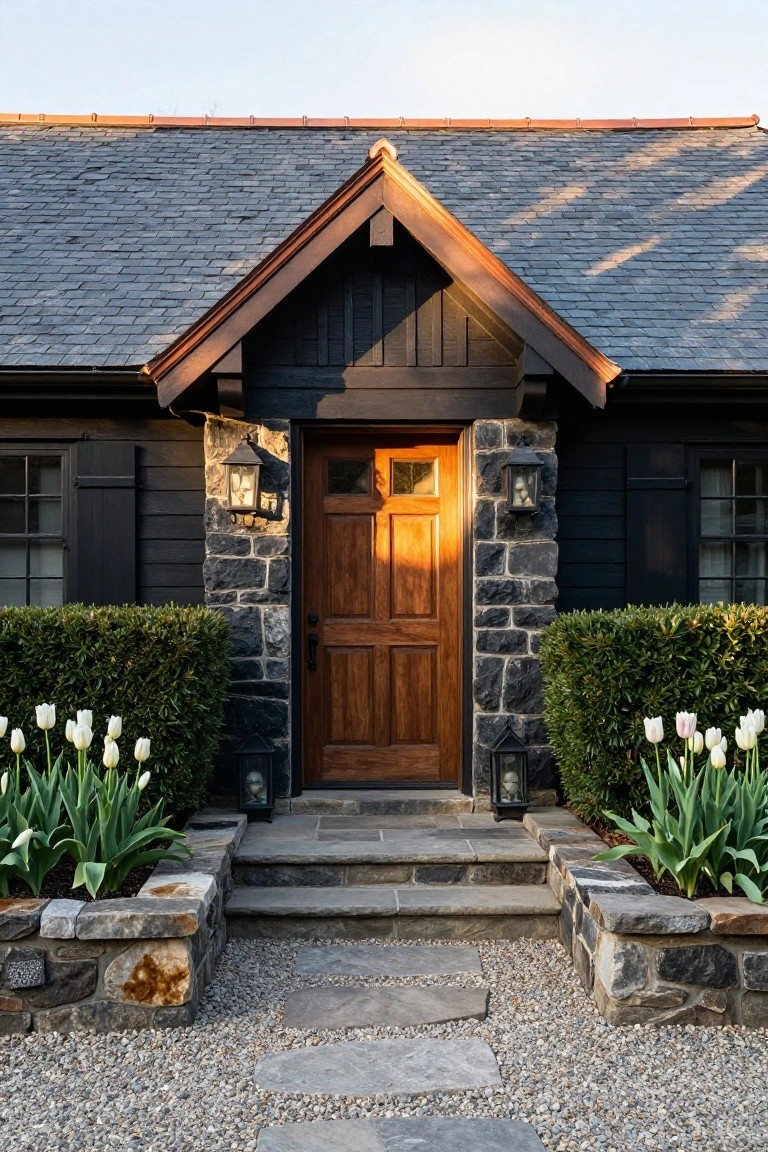
A simple way to give a dark traditional house more presence at the front is stone pillars flanking the entry door. The rough fieldstone here ties into the slate roof while the warm wood door adds a bit of glow against all that black siding. It keeps things sturdy and classic without overdoing it.
This setup suits compact homes like cottages or older colonials where the entry needs some weight. Plant boxwoods or seasonal tulips right beside the pillars for extra polish, and hang lanterns for evening light. Skip it if your house is super modern, though. It pulls best toward traditional looks.
Recommended Products

Featuring a modern lantern design, this outdoor post light is made of Iron Metal in a black finish with a glass shade. Waterproof and anti-rust, it was durable while adding a unique atmosphere to your house.

Featuring a modern lantern design, this outdoor post light is made of Iron Metal in a black finish with a glass shade. Waterproof and anti-rust, it was durable while adding a unique atmosphere to your house.

Featuring a modern lantern design, this outdoor post light is made of Iron Metal in a black finish with a glass shade. Waterproof and anti-rust, it was durable while adding a unique atmosphere to your house.
Black Board-and-Batten Siding Facade
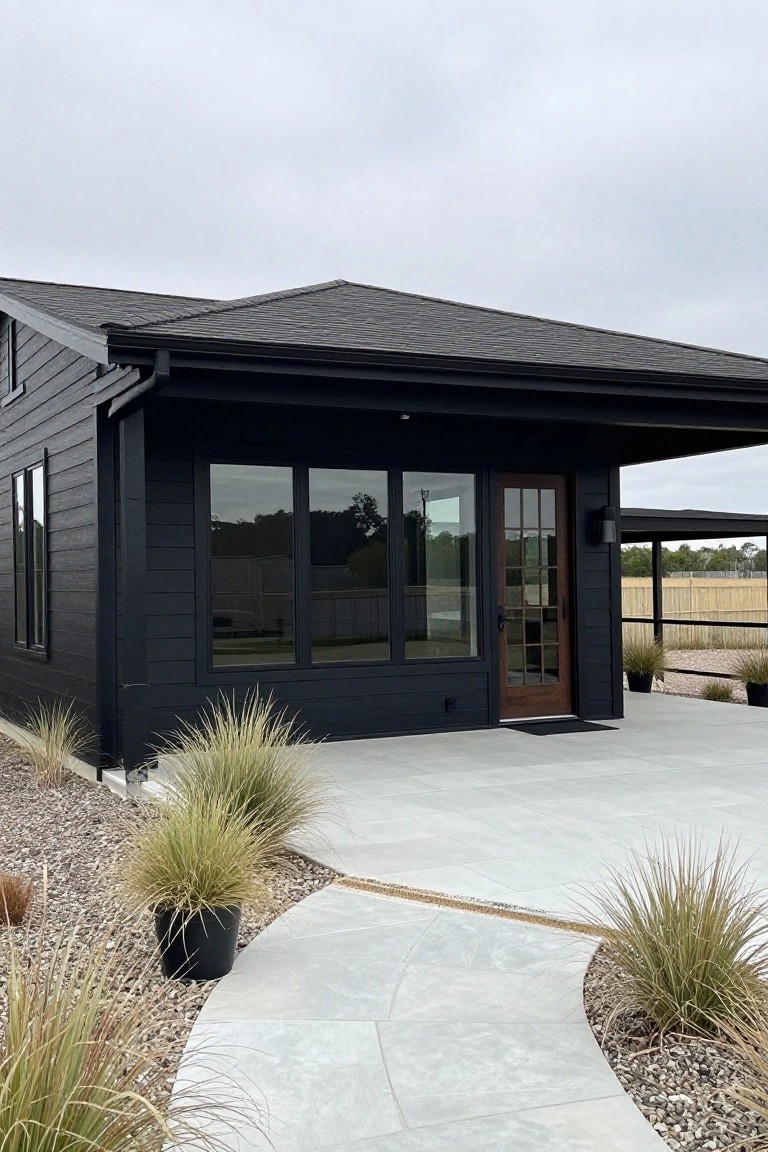
Black board-and-batten siding turns a simple gabled house into something striking. The dark finish soaks up light and gives the whole front a quiet strength. Here it covers everything from the roof overhang to the base, making the large windows and door pop without extra trim.
This look fits older neighborhoods or rural spots where you want curb appeal that lasts. Pair it with a natural wood door like this one for a bit of warmth. Skip bright accents. It holds up well in sun or wind, just seal the siding right at install.
Black Door on Brick House Front
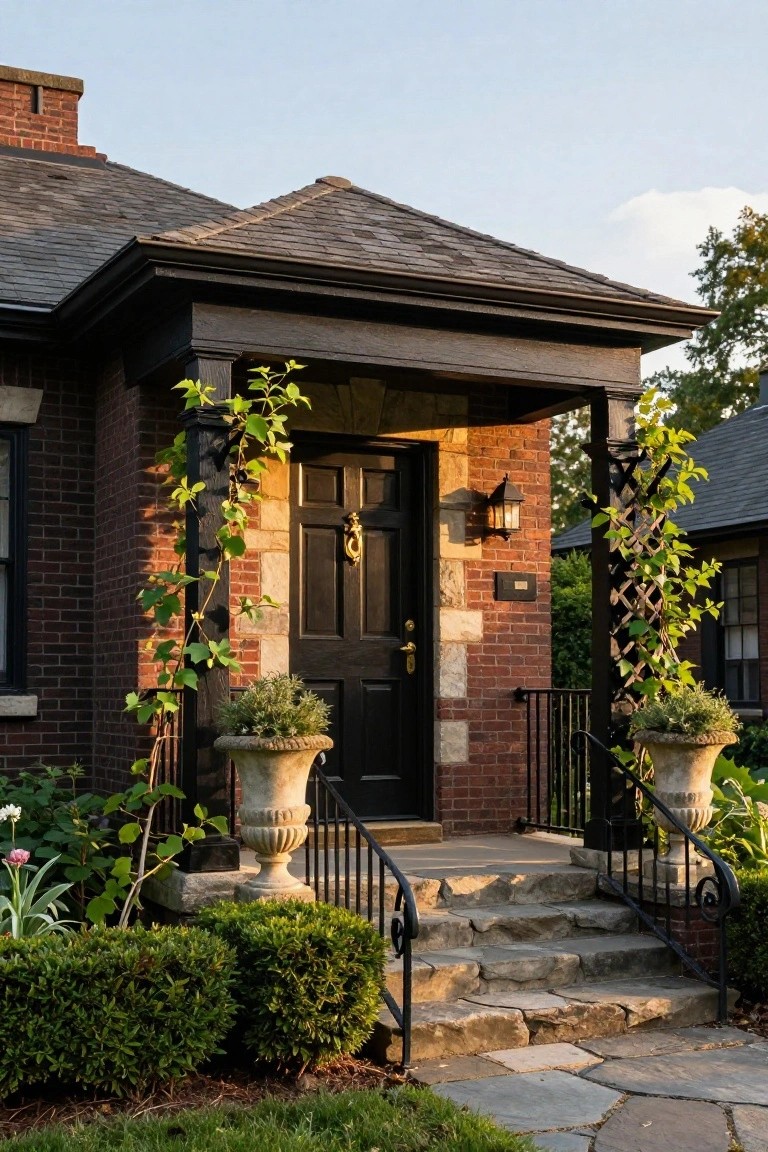
A black front door like this one pulls the eye right to the entry on a traditional brick house. The dark wood contrasts nicely with the warm red brick and stone accents around it. It keeps things classic but adds that bit of edge we’re after in dark elegance looks.
This works best on older homes with solid brick facades, especially if you have a covered porch to frame it. Add climbing vines on the dark posts and a couple urns nearby… it softens the boldness just enough. Skip it on super modern places though; the vibe needs some history to feel right.
Black Paint on a Traditional Colonial House
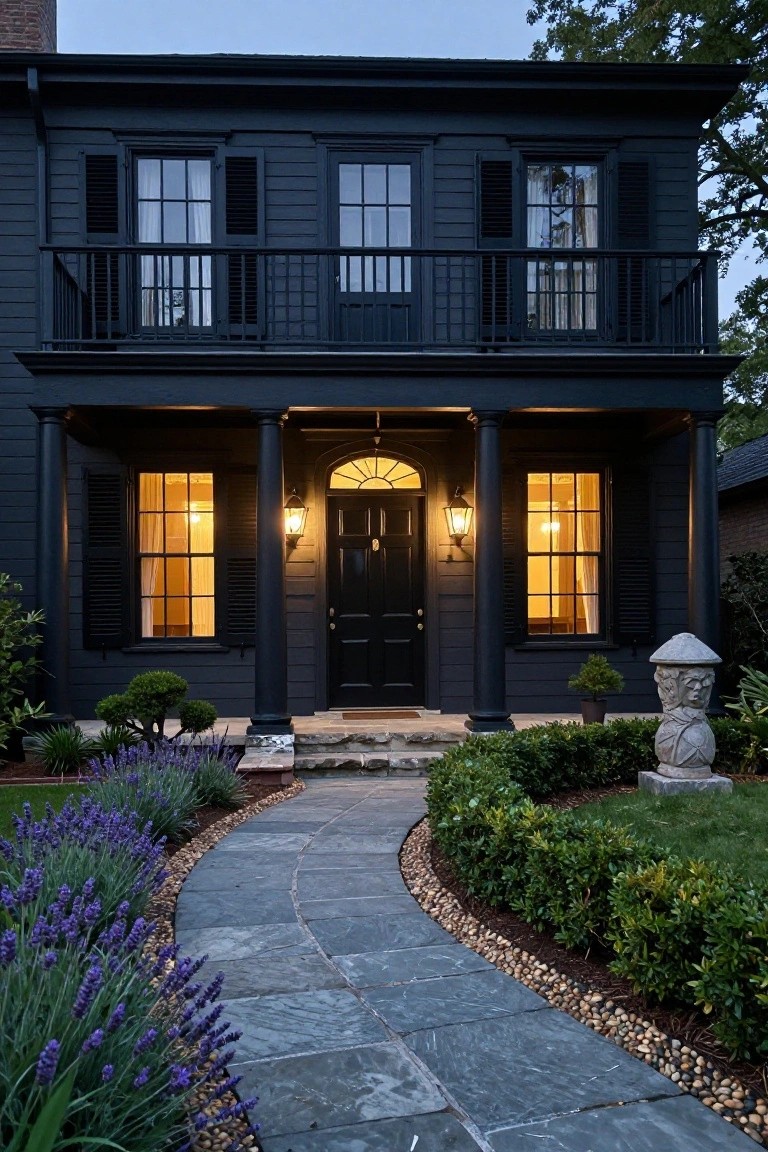
A traditional colonial house painted entirely in deep black turns heads in a quiet way. The clapboard siding soaks up the evening light, letting warm glows from the windows stand out sharp. Those columns and the arched entry pull it together without trying too hard.
This look fits older homes with clean lines and symmetry. Go for matte black paint that hides dirt better. Add lanterns by the door for that welcoming touch at night. Skip busy landscaping upfront. It keeps the focus on the house… and watch the fading on sunny sides.
Frequently Asked Questions
Q: How do I choose the right shade of black for my traditional house?
A: Go for a true black or charcoal with subtle undertones that match your local stone or brick. Test samples on your siding at different times of day. That way it blends with the architecture instead of fighting it.
Q: Will black siding make my house too hot in summer?
A: Black absorbs heat, sure, but modern paints with reflective pigments cut that down a lot. Add overhangs or plant some shade trees nearby. You get the sleek look without turning your home into an oven.
Q: What trim colors pop against black exteriors?
A: Crisp white trim sharpens the edges and highlights traditional details like cornices. Try warm cream if your roof has red tones—it warms up the drama without overwhelming.
Q: How often do I need to repaint black siding?
A: Plan on refreshing every 5 to 7 years, depending on your weather. Clean it yearly with a gentle hose and mild soap to fend off dirt buildup. And skip harsh pressure washers—they strip the finish fast.
