

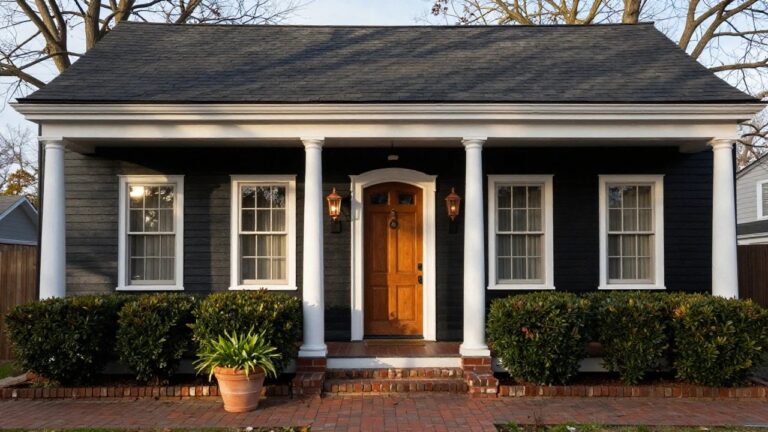
Colonial houses draw you in with their balanced facades and steep rooflines that read strong from any angle on the street.
Black siding takes that tradition and layers on drama through deep shadows and crisp contrasts with lighter trim.
I drove by a black Colonial last fall and noticed how the entry porch suddenly anchored the whole front without needing extra fuss.
People spot the bold color first, but it’s the way materials like shake shingles or smooth panels handle the weight that makes these exteriors hold up year-round.
A handful here mix classic details with small tweaks you could test on your own curb.
Black Clapboard on a Colonial Facade
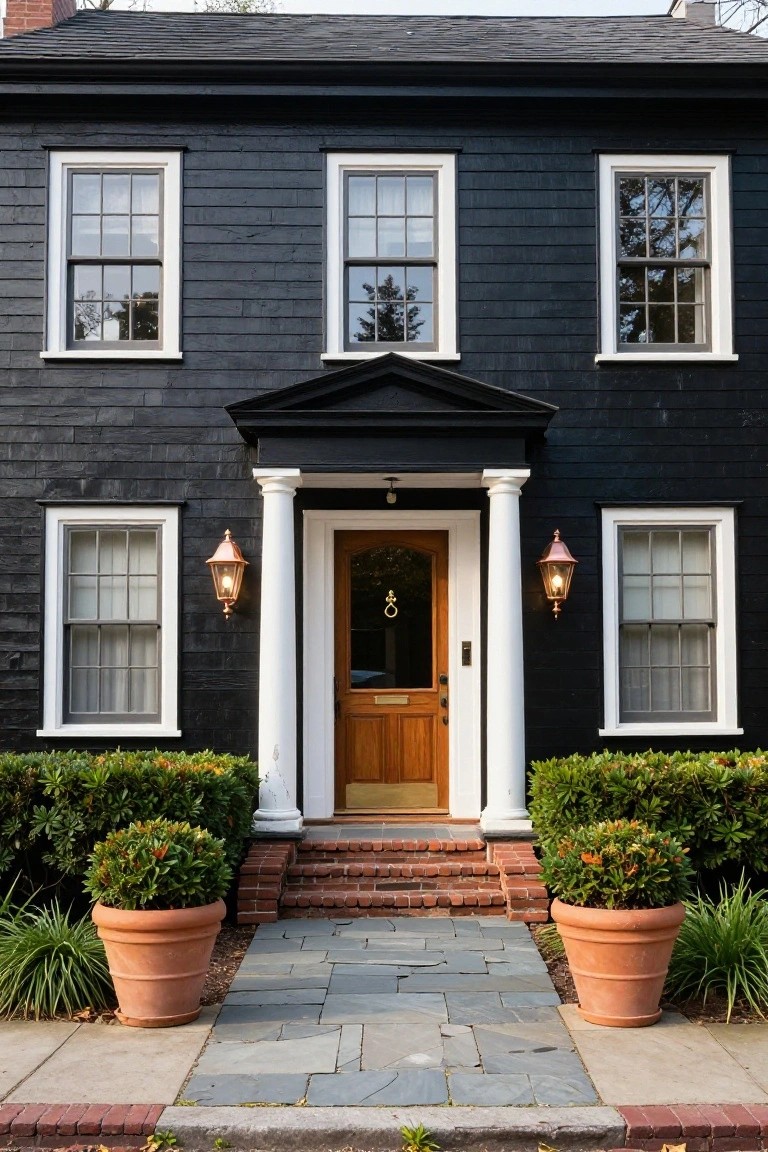
Black clapboard siding turns a standard colonial house into something with real presence. The dark paint soaks up light and makes the white window frames and columns stand out sharp. A wood door and copper lanterns keep it from feeling cold.
This look fits older homes on tree-lined streets, where you want curb appeal that nods to history but grabs eyes. Go for high-quality paint to hold up over years. Add boxwoods or simple pots out front… they frame the entry without overdoing it.
Black Shingled Colonial Facade
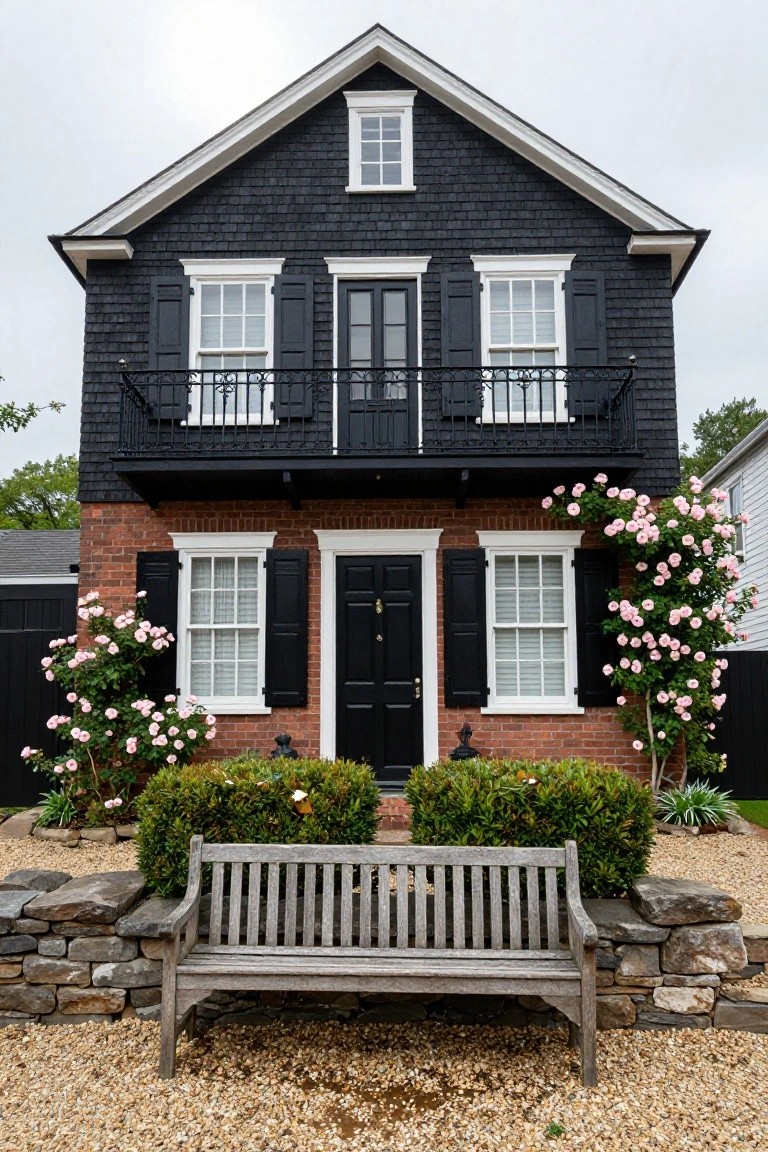
Black shingles covering the upper story of this colonial house make a strong statement against the brick base below. White trim outlines the windows and doors nicely, keeping things sharp without too much fuss. A touch of pink roses climbing one side softens it just enough.
This setup suits older neighborhoods or spots with some tree cover, where the dark siding picks up shadows for depth. Keep landscaping simple, like boxwoods flanking the entry and a plain bench nearby. It boosts curb appeal without much upkeep, as long as you seal the shingles well.
Black Shutters on Pale Colonial Siding
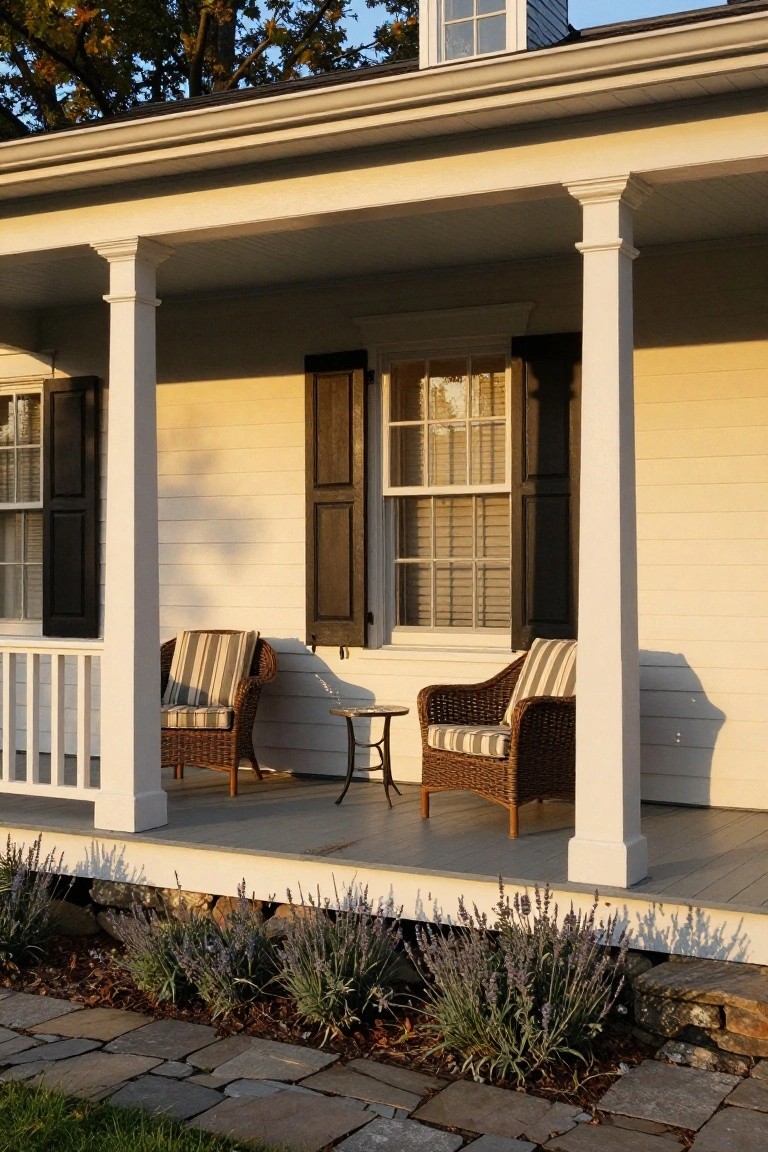
Black shutters stand out strong against the pale siding on this colonial house. They keep the traditional look but add real punch to the facade. Windows get that crisp frame, and the whole front feels more defined, especially with white columns holding up the porch roof.
This setup works best on light-colored homes like beiges or soft yellows. It suits older neighborhoods or countryside spots where you want curb appeal without going overboard. Just make sure the shutters match the window size, and don’t crowd the front with too much else.
Black Brick Townhouse Exterior
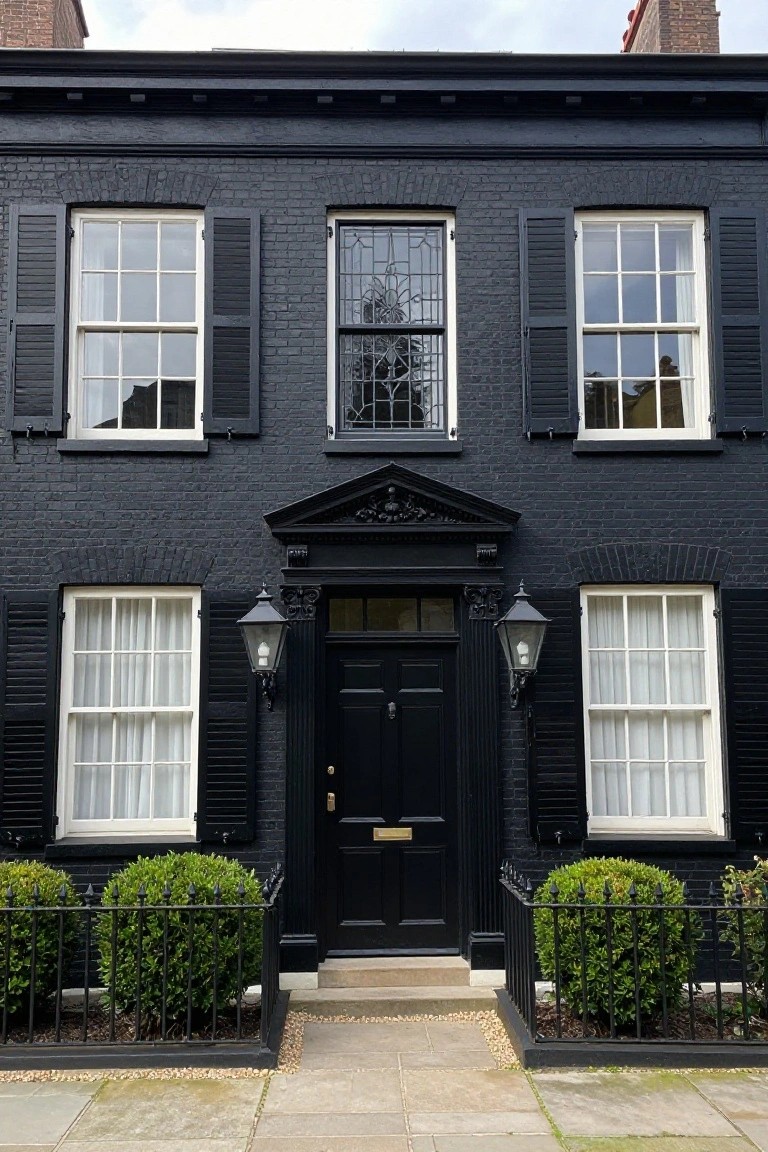
A coat of black paint on brick like this gives a colonial townhouse serious road presence. The Georgian details hold up fine, from the balanced windows to the carved door surround, and the color pulls it all together without hiding the history. White sashes keep things readable up close.
This works well on narrow urban homes or older neighborhoods where you want to stand out a bit. Go for flat black paint over primer, pair it with simple lanterns and clipped boxwoods out front. Brick needs to be in good shape first, or the paint might not stick long.
Navy Siding on a Colonial Front
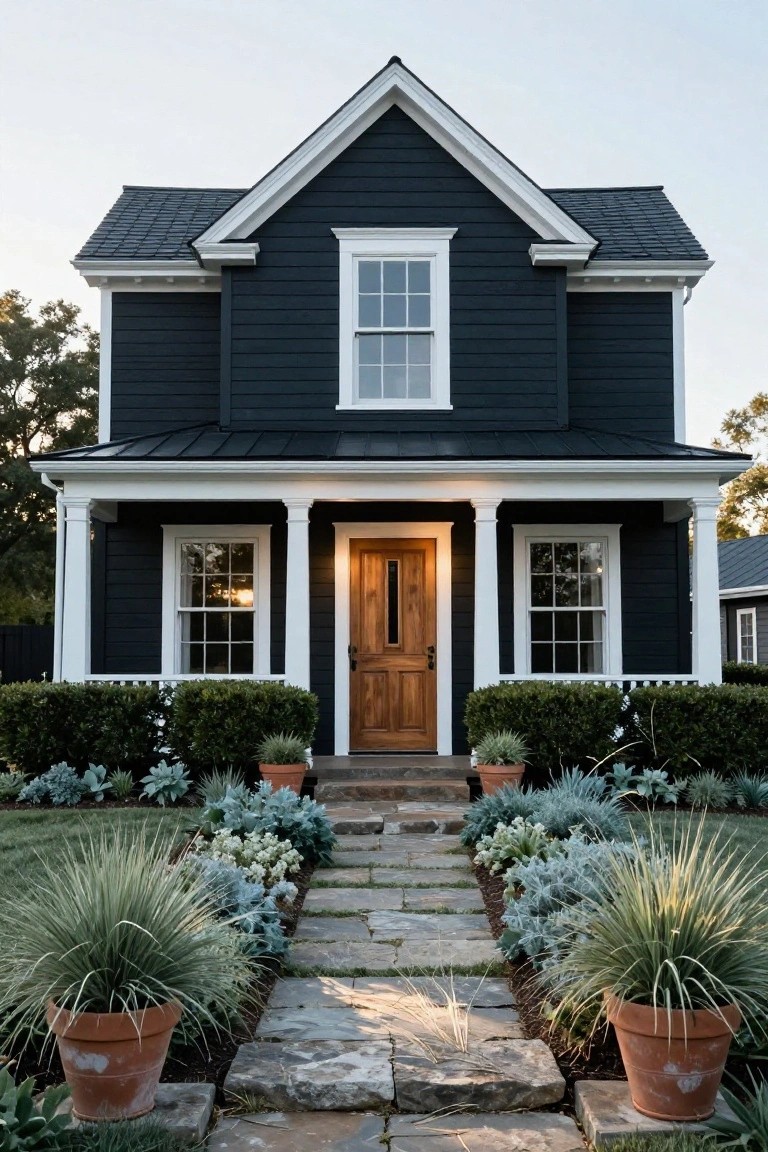
A deep navy clapboard siding gives this colonial house a bold update while keeping its traditional shape. White trim around the windows and porch columns stands out crisp against the dark body. That wood front door pulls it together with a bit of warmth.
Try this on a smaller home with a gabled roof and simple porch. It suits neighborhoods where classics mix with modern touches. Keep landscaping low-key so the house stays the star… boxwoods and a stone path work fine. Just make sure your trim stays white for that sharp look.
White Hydrangeas Against Black Siding
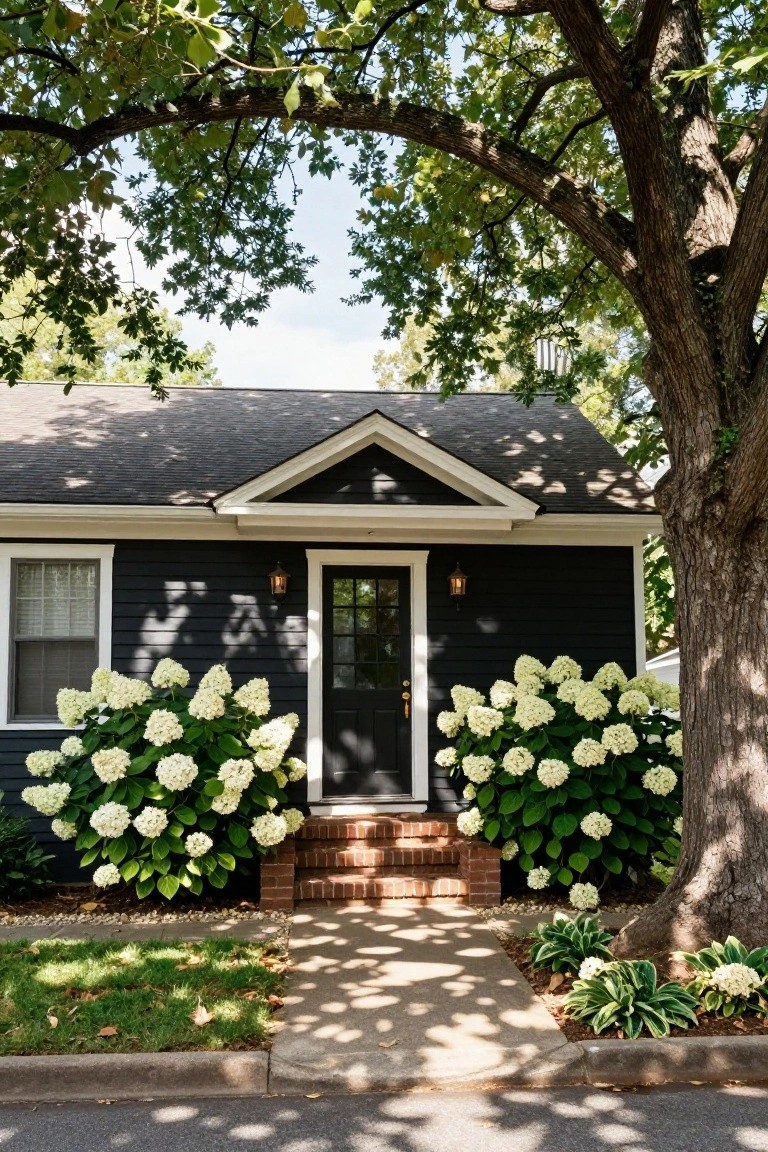
Big white hydrangea bushes planted right by the front steps make this black Colonial house pop in a good way. The dark siding sets off the fluffy blooms so they look full and bright, especially with the white trim around the door and windows. It’s a simple move that ties the house to the yard without much fuss.
Try this on any darker exterior where you want some life at eye level. These bushes do well in spots with a bit of shade from a nearby tree, and they come back bigger each year. Just keep the bed mulched to hold moisture, and it’ll suit older neighborhoods fine.
Black Colonial with White Trim Contrast
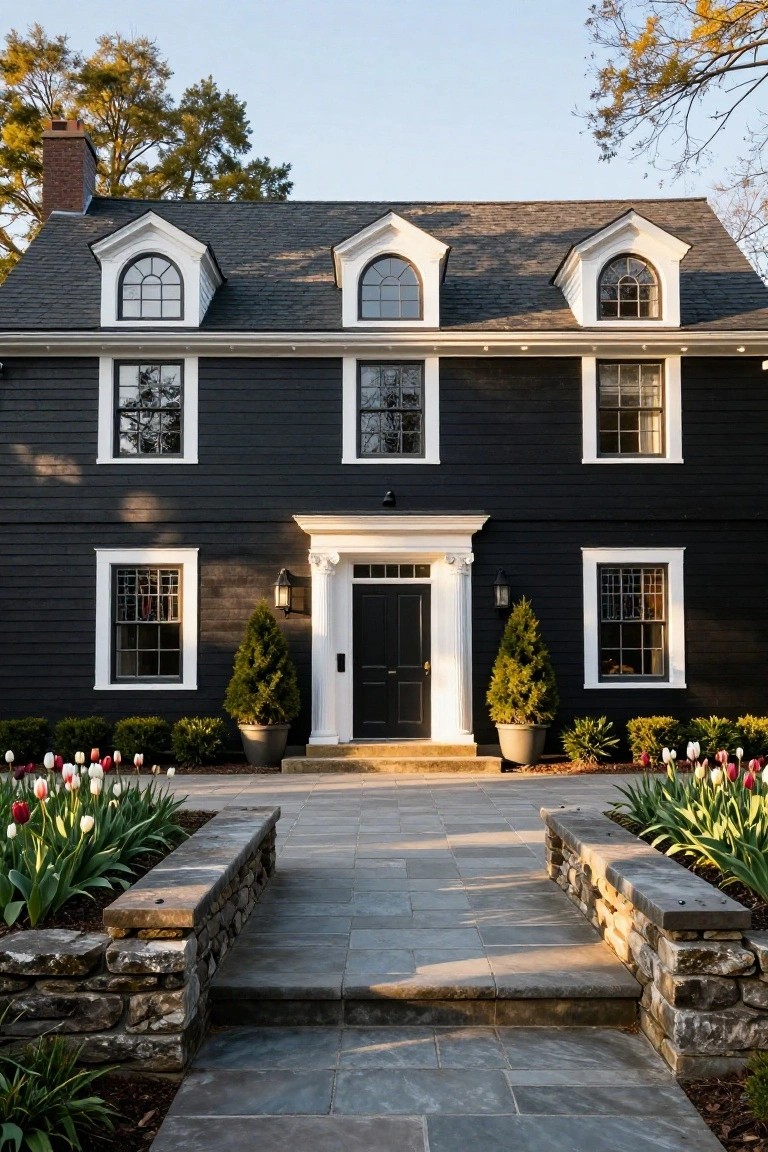
Black siding on a colonial house like this one takes the traditional shape and turns up the drama without losing that classic feel. The dark clapboard pairs with crisp white window frames and trim to make every detail stand out. Symmetrical windows, dormers, and the columned entry get highlighted in a way lighter colors just can’t match. It’s a simple change that nods to history while feeling fresh.
This look suits older neighborhoods or wooded lots where the house needs to hold its own against nature. Keep landscaping straightforward, like boxwoods by the door and tulips in beds along the path, so the architecture stays front and center. Watch the paint quality, though. Black shows dirt more, so plan for regular touch-ups.
Matte Black Shingles Define This Colonial
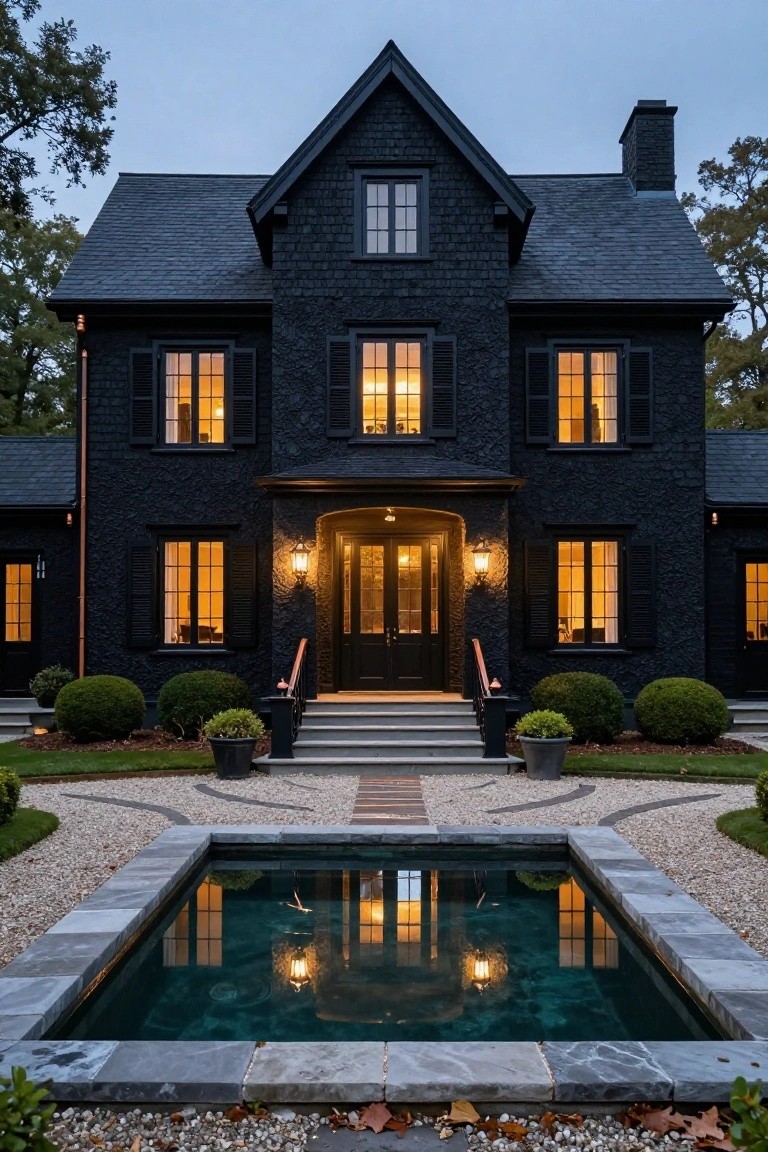
Matte black shingles wrap this whole colonial house, from the steep roof down to the textured siding. It keeps the traditional gables and symmetry but turns up the drama, especially at dusk when warm lights shine through the black-framed windows. That contrast makes the dark exterior feel alive instead of flat.
Try this on a classic colonial or saltbox style if you want curb appeal that stands out year-round. The black hides dirt well and pairs nice with stone steps or copper downspouts. Just make sure your lighting pulls focus at night… it really helps. Suits wooded lots or suburbs where bold fits right in.
Black Colonial with White Trim Contrast
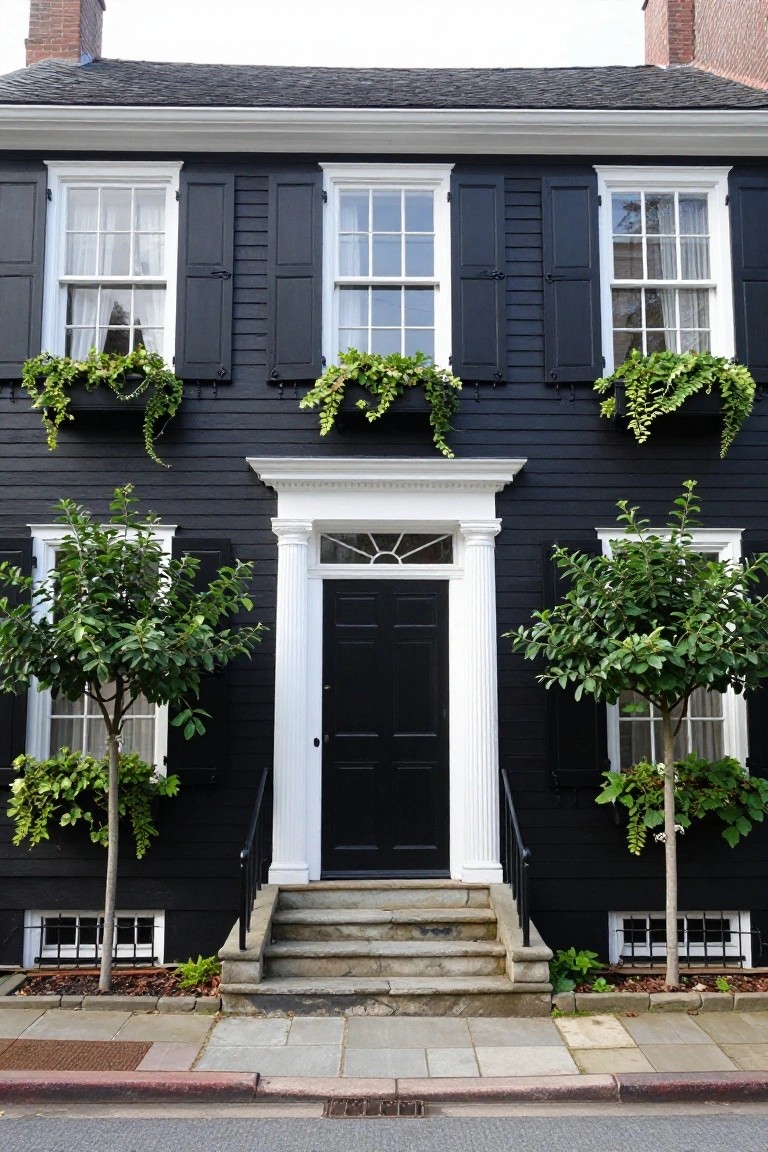
Black paint on a colonial house like this one turns a familiar style into something bold. The dark siding hugs the traditional clapboard shape and gabled roof, while white trim outlines every window and frames the entry columns. It keeps that classic symmetry but ramps up the drama without changing the bones.
This look suits older homes in town settings, where the black stands out against lighter neighbors. Stick to crisp white for doors and trim to avoid muddiness, and flank the entry with simple trees or window boxes for a touch of green. It might feel too stark in shady spots, though.
Copper Accents on Black Shingle Siding
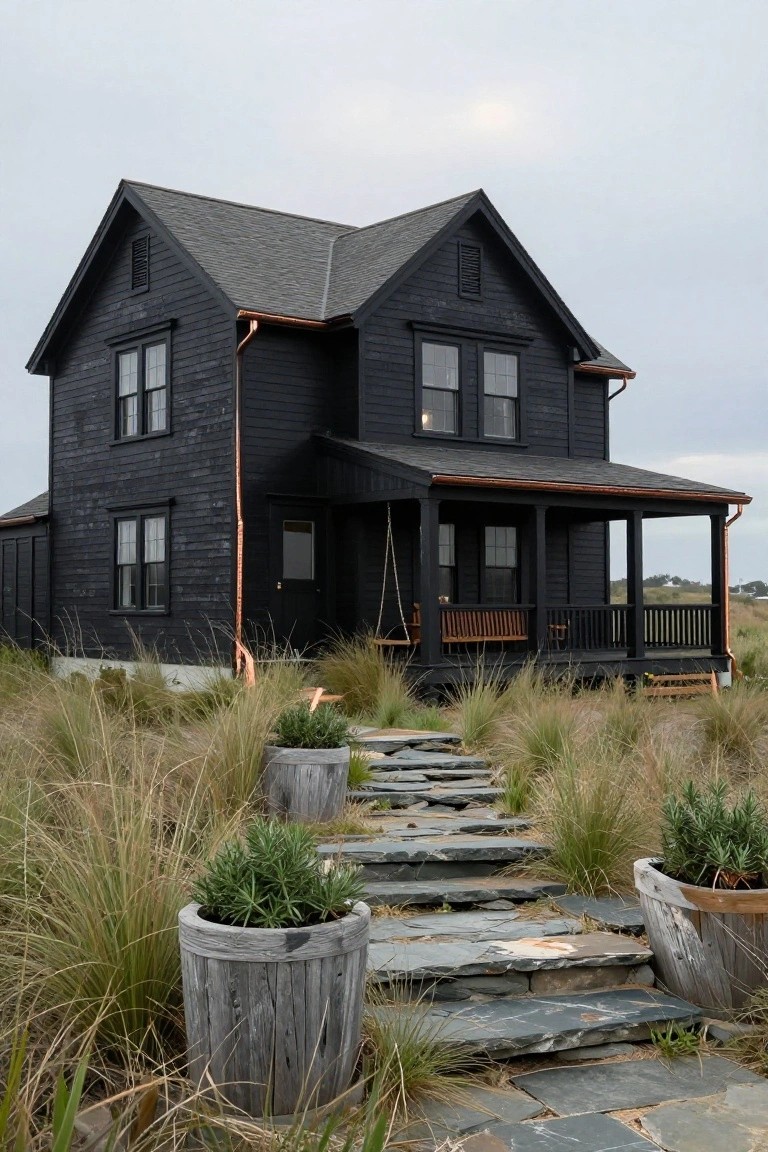
Black colonial houses look sharp with copper downspouts and gutters running along the edges. That reddish metal pops right now against the dark paint, and over time it turns green and settles in. It keeps the traditional shape but adds a little edge without overdoing it.
Try this on homes near the coast or in open areas where the patina can develop naturally. Stick to plain black on the shingles, skip busy trim, and let the copper do its thing. Works best where you want subtle upkeep that improves with age.
Black Shingle Siding on Colonial Homes
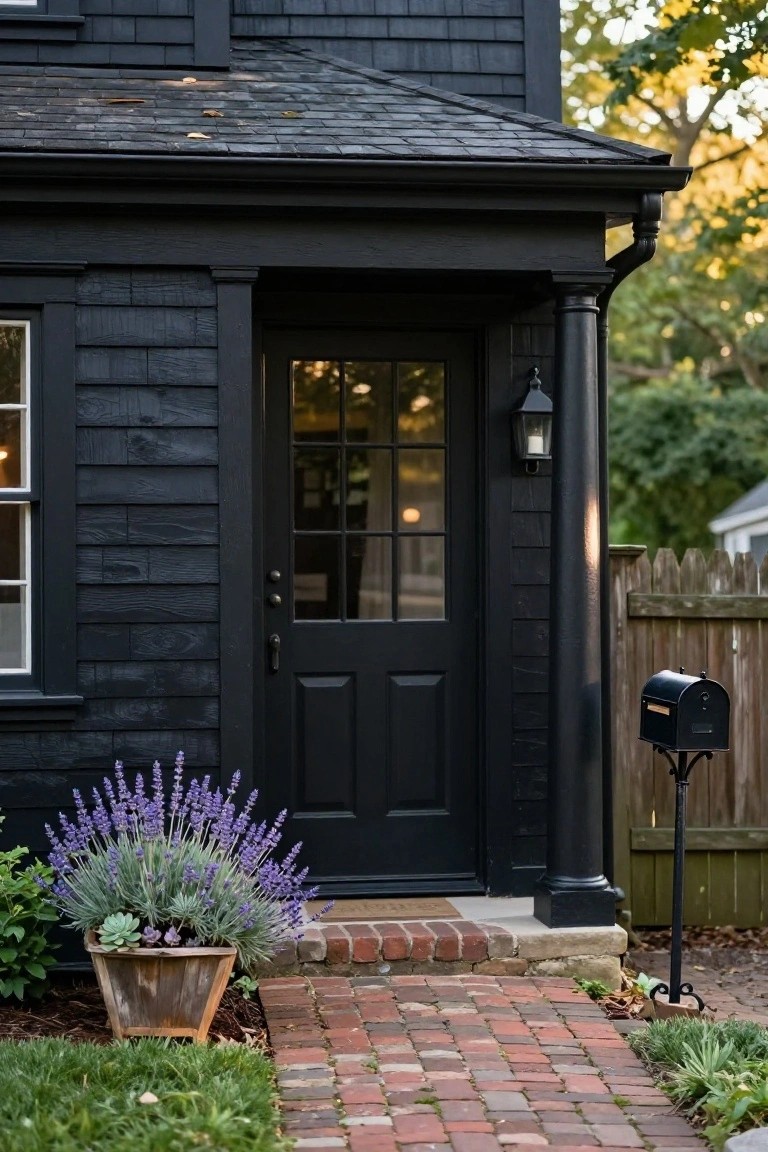
Black shingle siding gives this colonial house a moody edge that still feels right at home in a traditional neighborhood. The dark paint on the cedar shakes picks up the classic roofline and window shapes without overwhelming them. A simple porch column and black door keep things grounded in that old-school style. It’s the kind of look that turns heads on a quiet street.
You can pull this off on homes from the 1700s or a fresh build with colonial details. Start with quality shakes that hold paint well, and pair the black with brick steps or a flagstone path to avoid a flat feel. Watch the trim. White or cream works best to make windows pop. Add a pot of lavender by the door for a soft touch… it keeps the drama from getting too heavy.
Black Door on Pale Stone Facade
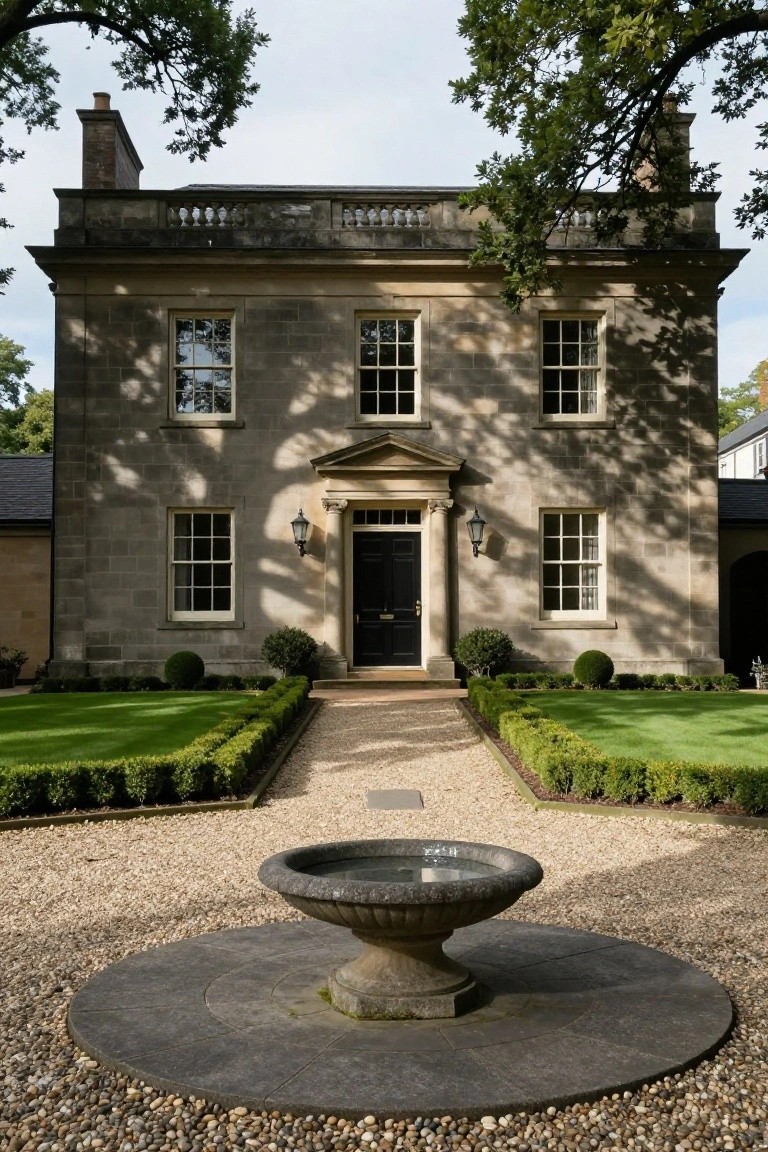
A black front door stands out strong against the soft, light stone of this colonial house. The pale ashlar blocks give a timeless feel, but that deep black pulls focus to the entryway right away. Flanked by lanterns and a simple pediment, it keeps the tradition while adding some edge.
This look fits older stone or brick homes that need a bit more presence from the street. Go for a solid wood or fiberglass door with clean lines, and match the hardware in brass or black. It shines on quieter streets… just keep the surround plain so the contrast does the talking.
Brass Accents on Black Colonial Doors
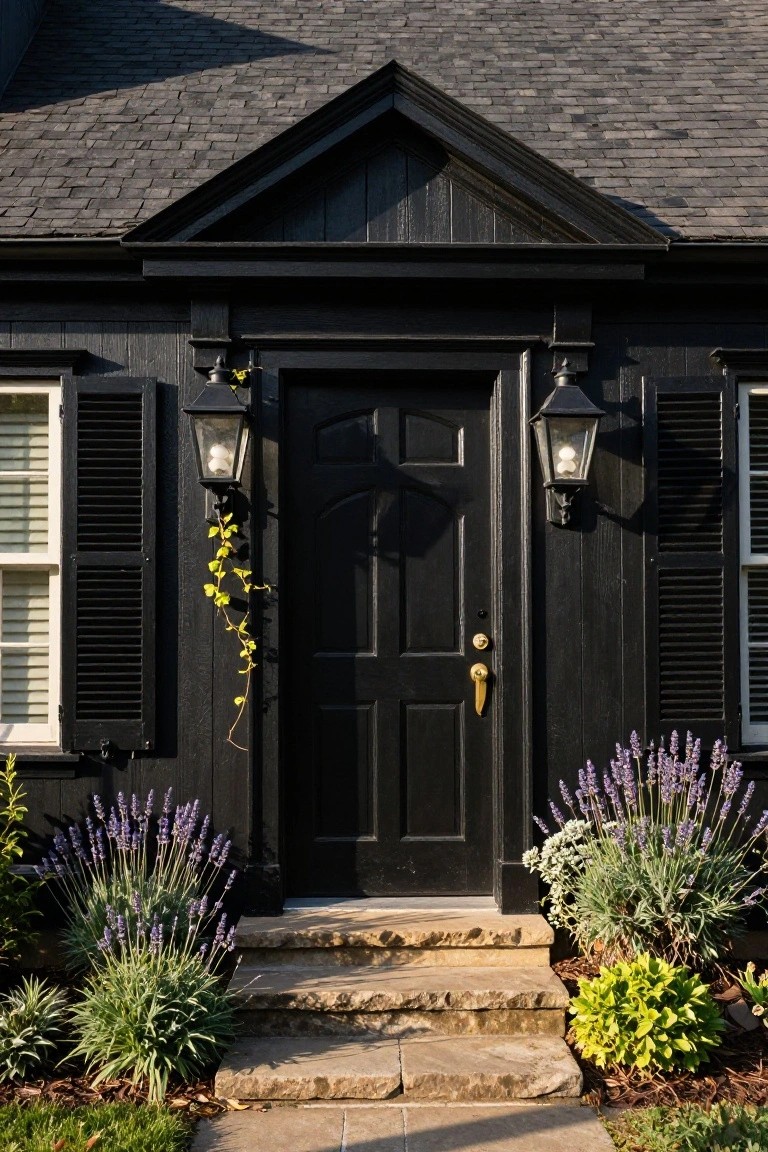
That brass door knob and handle really stand out against the black paint on this colonial front door. It’s a simple way to keep the traditional look while adding some warmth and shine to the dark exterior. The gold pulls your eye right to the entry without overwhelming the bold black siding.
This works best on older style homes where you want drama but not a full modern overhaul. Go for real brass that ages nicely, and pair it with matching lanterns on either side like here. Skip it if your door gets too much direct sun, though. The patina might not hold up.
Black Siding with White Entry Trim
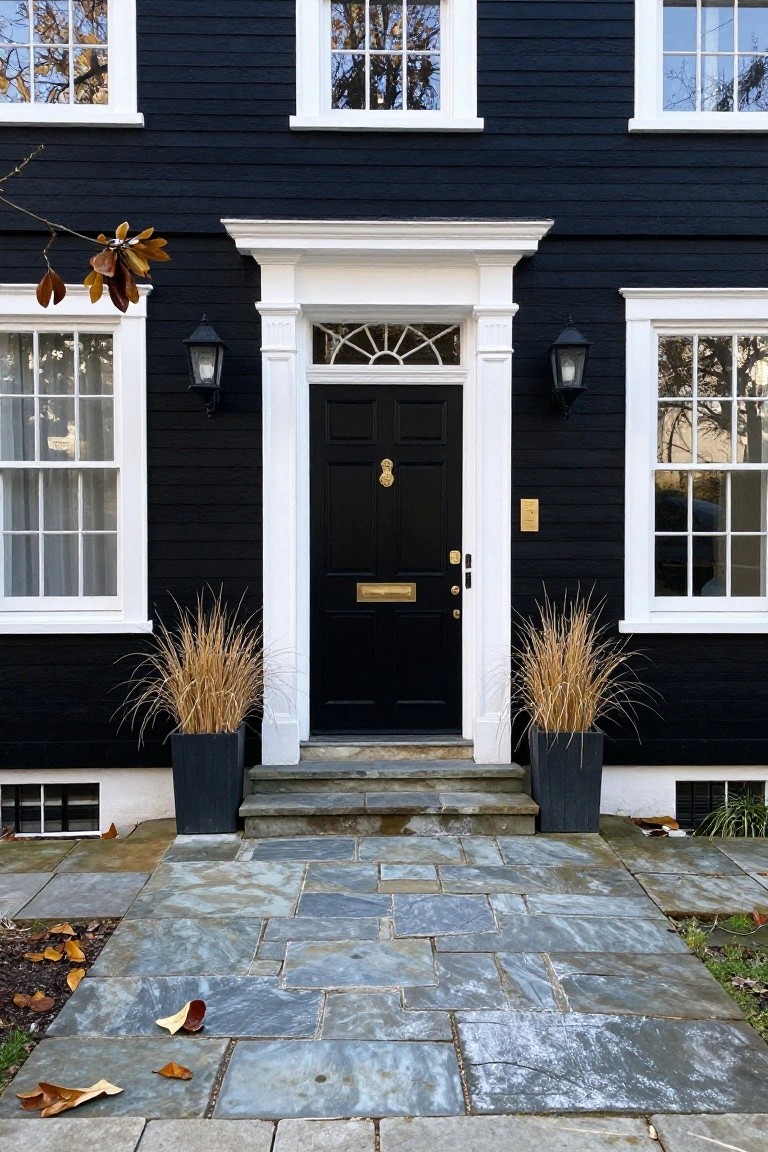
Black siding turns a standard colonial into something that catches the eye right away. White trim around the windows and that clean portico over the door make the dark body feel sharp and structured. The black door fits right in, with just enough brass hardware to nod to the classic style.
This look suits older homes with solid colonial lines, especially if the neighborhood goes for bold fronts. Stick to matte black paint to avoid glare, and keep the trim bright for punch. Simple pots of tall grass on either side work well without overdoing the yard.
Black Shingles on Colonial Facades
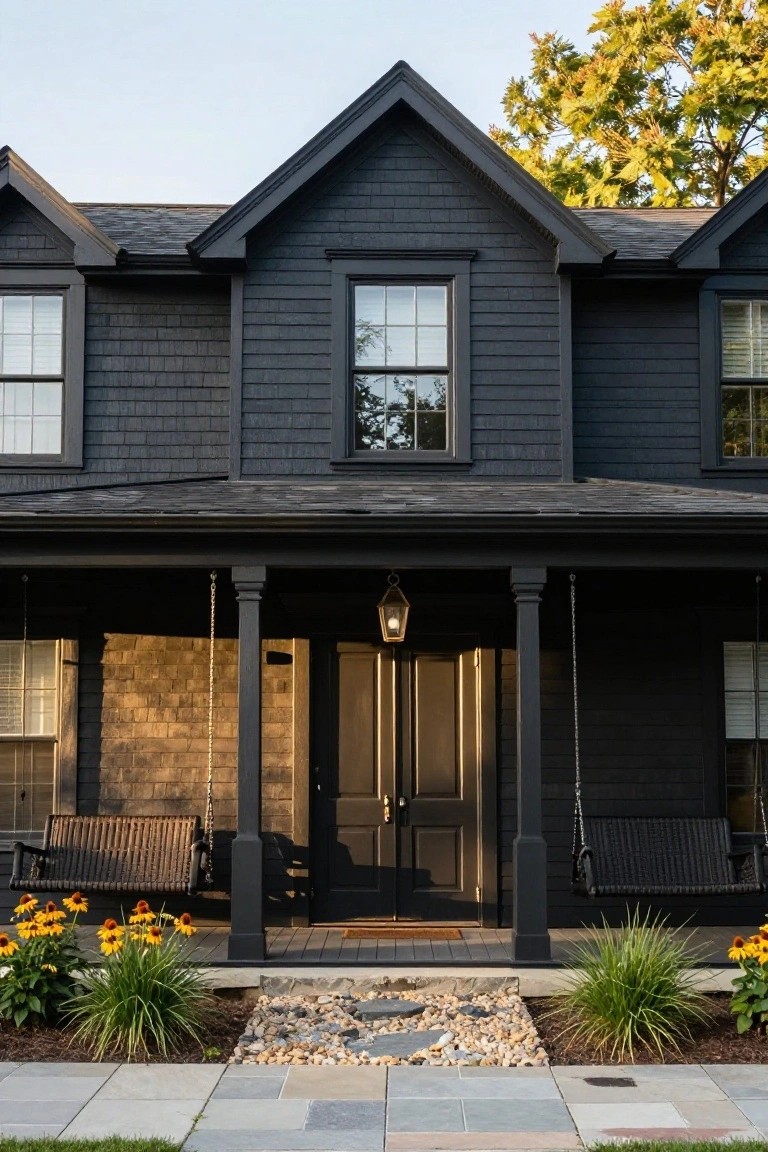
Black shingles give this colonial house a strong, moody look that fits right into the neighborhood without trying too hard. The dark siding covers the whole front, from the gables down to the porch posts, and it picks up the shadows nicely in the late light. That traditional peaked roof and balanced windows keep things familiar, but the black shifts it toward something more dramatic.
You can pull this off on older colonials or new builds in suburban spots with trees nearby. Stick to simple accents like a lantern by the door and those porch swings to make the entry feel lived-in. Just keep the landscaping low-key, with gravel beds and a few flowers, so the house stays the main draw. It might feel too dark in super sunny areas, though.
Black Colonial with White Columns
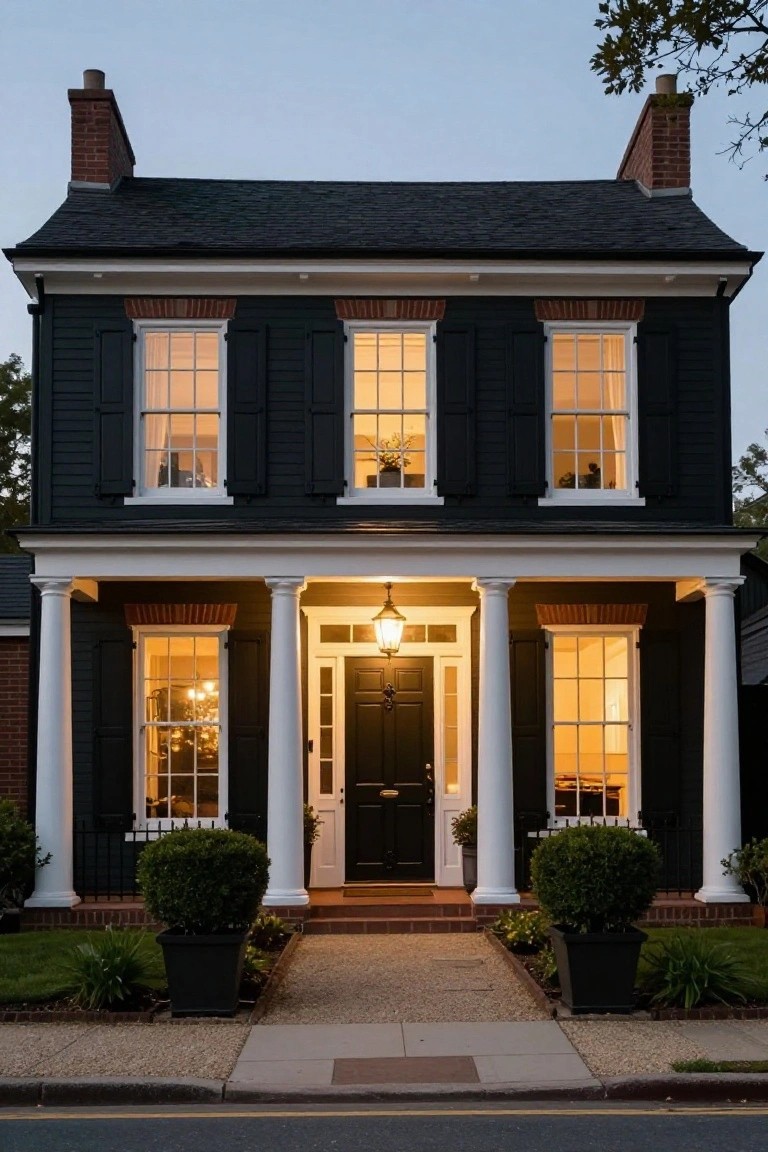
Black paint on a colonial house like this one turns a classic style into something with real presence. The dark siding covers the clapboard walls, while crisp white columns on the porch keep that traditional feel. Brick accents around the windows and chimney add just enough warmth without pulling focus. At dusk, the lit-up rooms make the whole front pop.
This setup suits older neighborhoods or suburbs where you want curb appeal that stands out but fits in. Go for high-quality exterior paint to handle the weather, and keep landscaping simple with boxwoods or low shrubs. It might feel too bold on a smaller house, so test a sample first on a sunny day.
White Colonial with Black Trim Accents
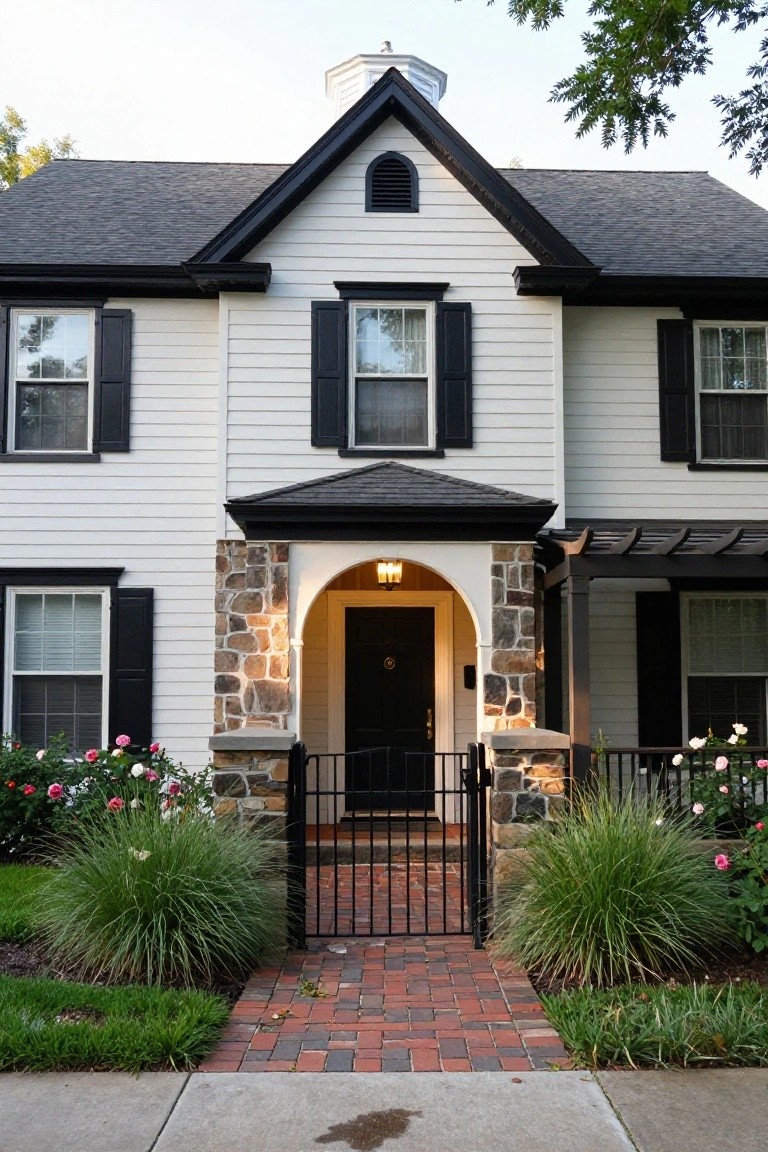
Black trim gives this white colonial house a sharp, modern edge while sticking to classic lines. The dark shutters frame the windows nicely, and the black roof edges and door pull the whole front together. That high contrast makes the place stand out from the street without losing its traditional feel.
You can pull this off on most two-story colonials, especially if the siding is bright white. Focus the black on shutters, trim around gables, and the entry door. Add stone pillars like these to break it up a bit. It works best where you have some landscaping to soften things around the base.
Frequently Asked Questions
Q: How do I pick a black shade that won’t look flat on my colonial?
A: Hunt for blacks with subtle blue or gray undertones. They add depth and play nice with traditional lines. Test swatches in morning light on your actual siding.
Q: What trim color makes black siding pop without overwhelming the house?
A: Go with bright white. It frames windows and doors sharply, just like old-school colonials. Avoid off-whites, they muddy the drama.
Q: Will black exteriors fade fast in the sun?
A: Pick paints rated for exteriors with UV blockers. They stay true for years. Clean gently once a year to keep the shine.
Q: How do I clean black siding without damaging the finish?
A: Mix dish soap and water, then hose it down softly. Black hides grime better than pale colors anyway. Rinse well and let it air dry.
