

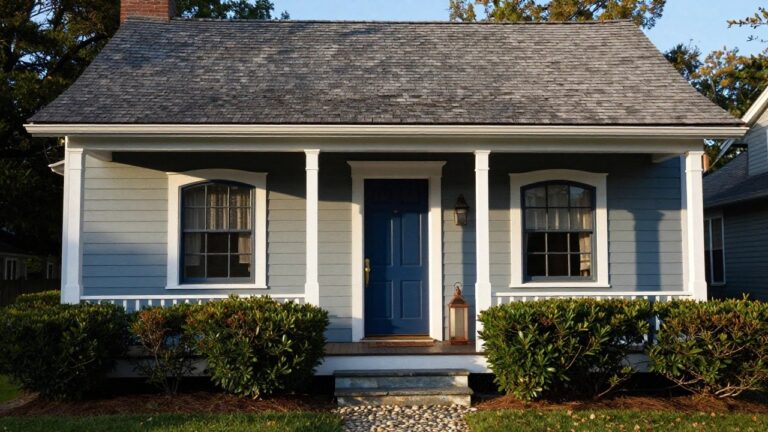
I’ve walked enough neighborhoods to know that a house’s exterior color hits you first from the street, shaping how welcoming it feels before you even step closer. Blue-gray shades stand out to me because they soften harsh rooflines and make materials like cedar siding or stucco read more balanced in changing light. A couple years back, I watched a plain ranch next door get a blue-gray facelift, and suddenly the entry porch pulled everything together without overpowering the yard. They pair nicely with both bold black shutters and crisp white trim, depending on your home’s style. Some of these looks are practical enough that I’ve saved a few paint swatches to hold up against our own brick facade one afternoon.
Navy Door on Blue Gray Siding
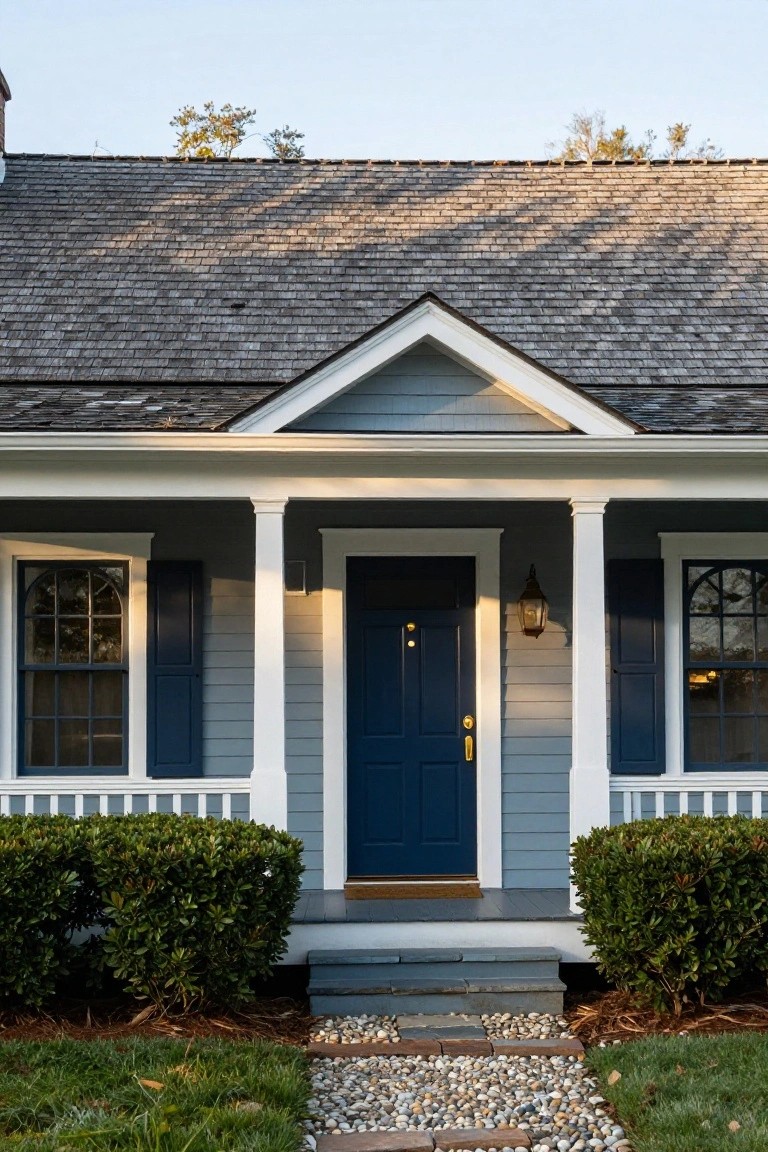
A navy front door really stands out against blue gray siding like you see here. The lighter shade on the house lets that deeper blue pull your eye right to the entry. White trim on the porch columns and windows keeps everything clean and ties it back to a classic feel.
This works well on homes with some traditional lines, like cottages or farmhouses. Go for it if you want more welcome at the front without big changes. Lighter blue grays give the best contrast. Darker ones might blend the door in too much.
Recommended Products

Ready to use, pre-mixed door and trim paint offers a fresh new look on interior or exterior metal, wood and fiberglass

Ready to use, pre-mixed door and trim paint offers a fresh new look on interior or exterior metal, wood and fiberglass

Use for a variety of indoor and outdoor project surfaces including wood, metal, plaster, masonry or unglazed ceramic
Blue Gray Siding with Wooden Garage Door
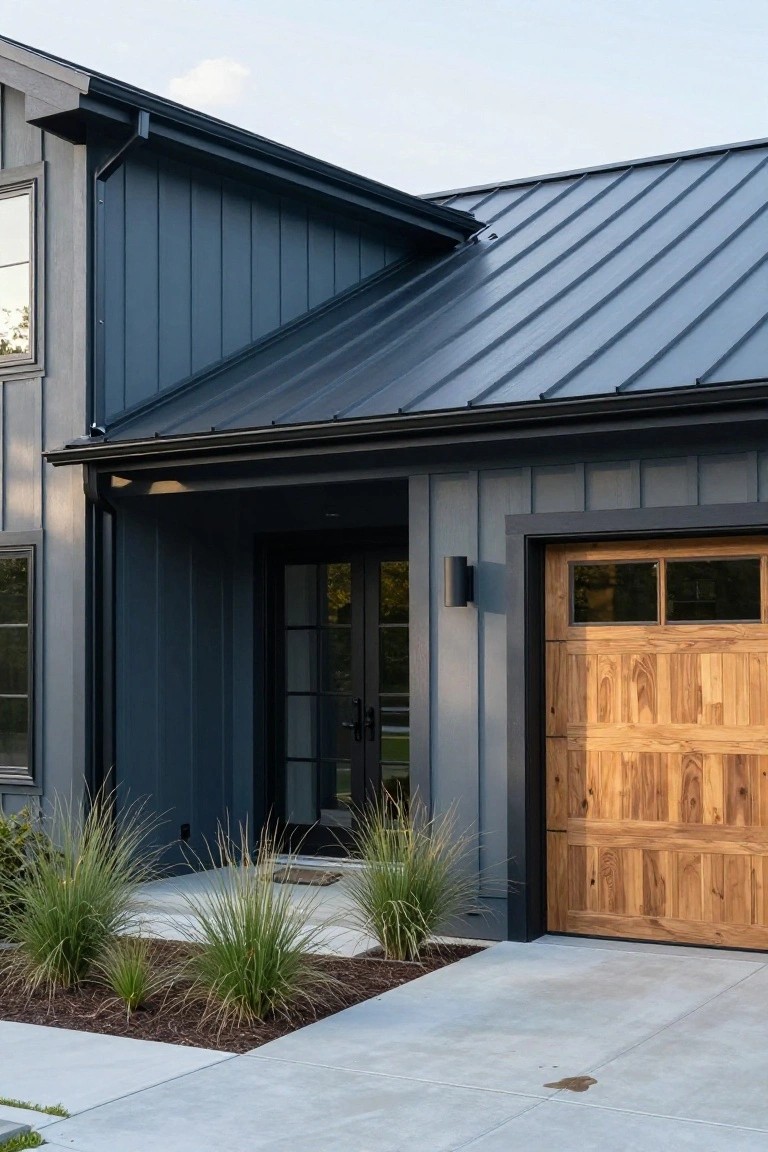
A dark blue gray siding like this pairs nicely with a natural wood garage door. The cool siding color stays crisp and modern. But that warm wood tone right there in the garage pulls things together. It keeps the house from looking too stark. Folks notice how the vertical siding lines up clean with the wood planks on the door.
This setup works best on ranch or contemporary homes where you want some contrast at the street. Go for lighter woods like teak or cedar that won’t overpower the siding. Seal the wood good since it’s out front taking the weather. Skip it if your garage faces full sun all day…might fade too quick.
Soft Blue Gray Stucco Cottage
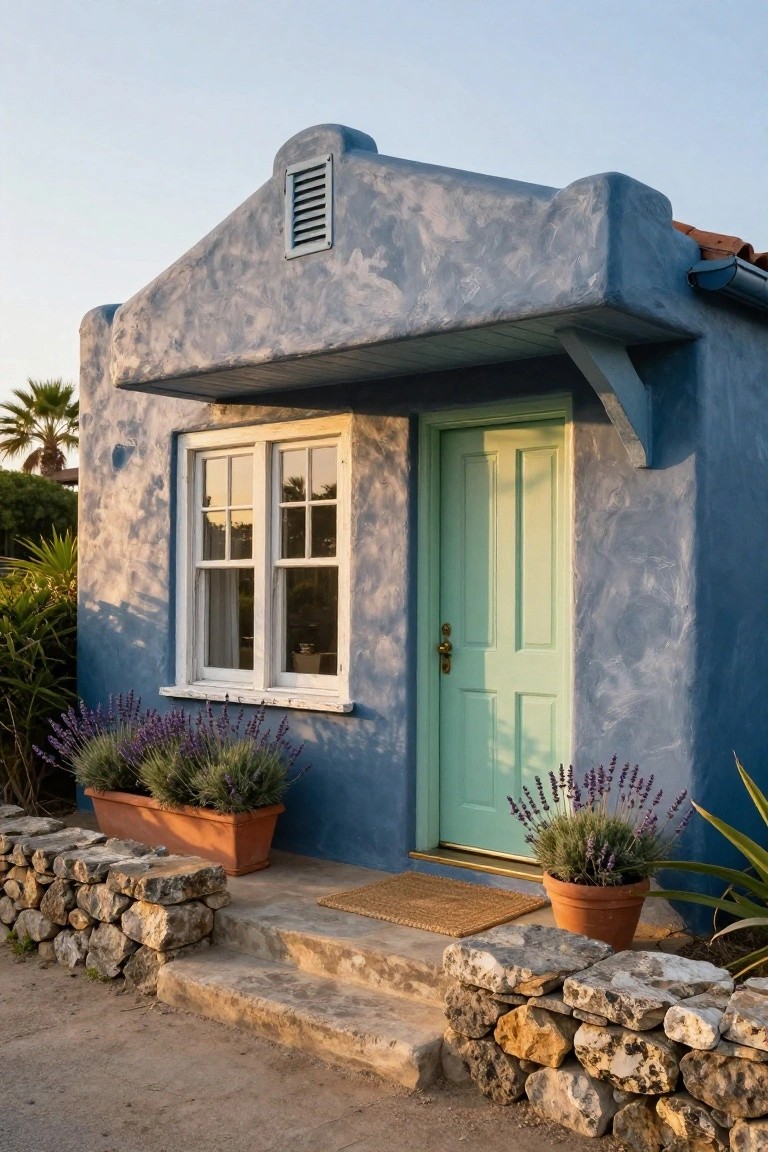
This soft blue gray stucco wraps the little cottage in a calm, dusty tone that picks up the sky and sea air around it. The textured surface adds some natural roughness, making the house feel settled into its spot rather than slapped on. A mint green door gives just enough lift without overdoing it.
Try this on smaller homes in warm spots like the Southwest or coast, where the color fades nicely over time. Keep plantings simple, like lavender in pots by the entry, and use stone for the base to tie it to the ground. It suits adobe shapes best. Skip it on big modern boxes, though. The tone can look too muted there.
Blue Gray House with Stone Entry Pillar
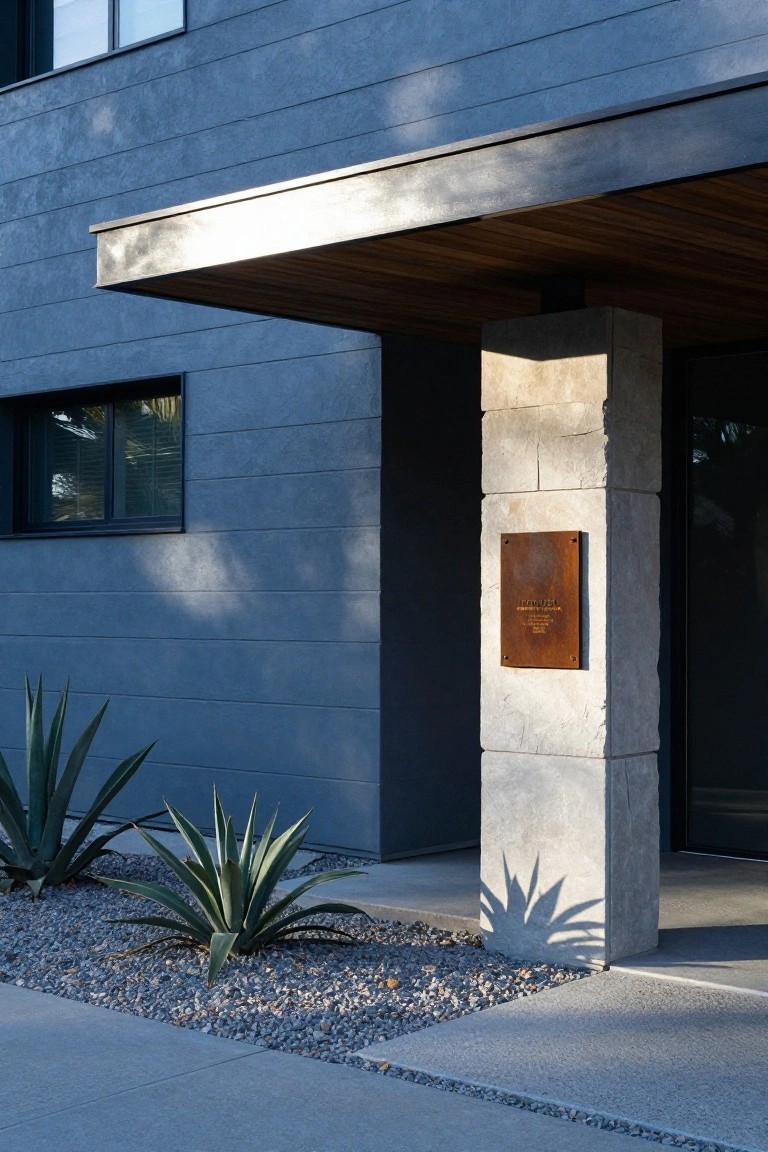
One simple way to make a blue gray exterior feel more welcoming is adding a tall stone pillar right at the front door. Here the cool blue gray stucco walls get some warmth from the light limestone column, topped with a wooden overhang. It breaks up the flat look of the siding and draws your eye to the entry without much fuss. Those agave plants at the base tie it into the yard nicely too.
This works best on modern or ranch style homes where you want subtle contrast. Pick a stone that picks up earth tones to balance the gray. Keep the pillar sturdy, maybe 8 to 10 feet tall… nothing too skinny. It suits low-water yards in sunny spots, and avoids feeling too stark up close.
Blue Gray Siding on a Brick House
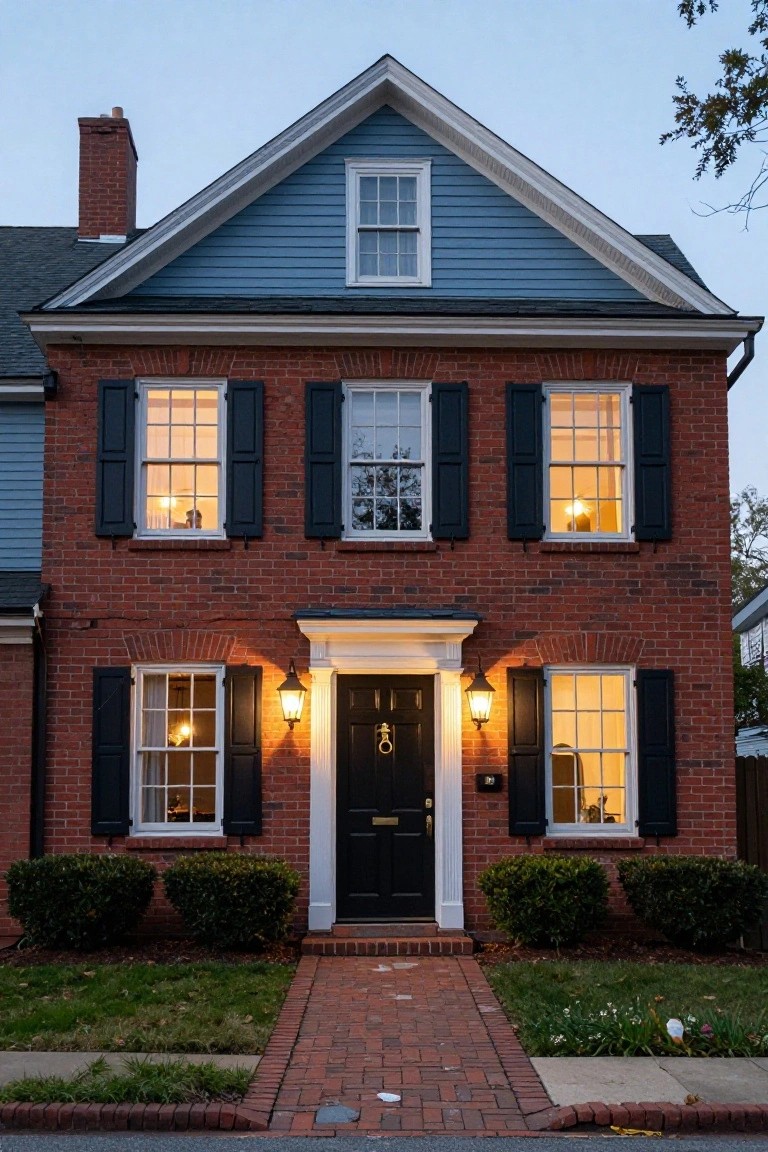
One straightforward way to work blue gray into your exterior is to use it for the siding up top on a house with a brick base. This setup keeps the warmth of the red brick down low around the entry and first floor. Then the blue gray takes over on the gable end. It freshens up a traditional colonial style without going overboard.
You’ll see this a lot on older homes in the East Coast or South. The color picks up nicely from the evening sky in the photo, with lanterns lighting the black door. Try it if your brick is in good shape already. Just make sure the trim stays white or black to let the two tones stand out. Avoid it on super modern builds, though. It suits homes with some history best.
Coastal Blue Gray Siding
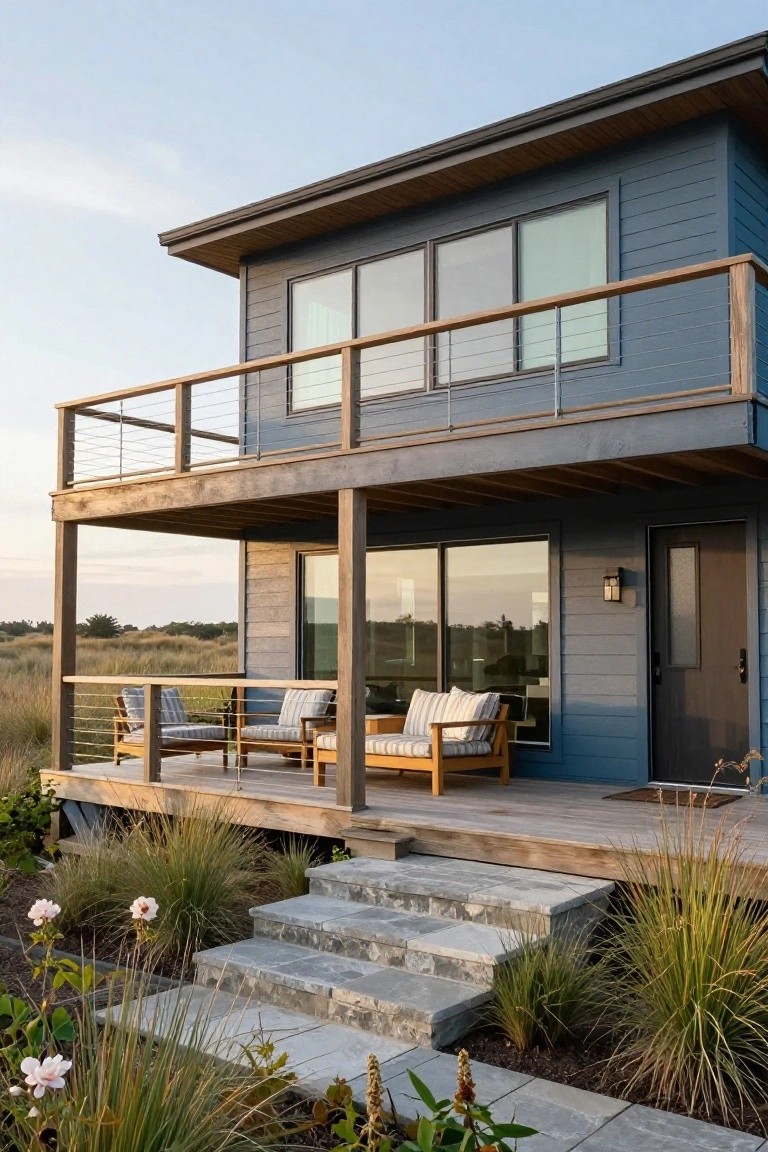
A soft blue gray on the siding gives this house that easy coastal look, like it’s been there forever. The color picks up the gray of the ocean and dunes without trying too hard. Wood posts and the deck underneath keep it from feeling cold, and those big windows let light flood in.
Try this on clapboard or vertical siding for homes near water or in open areas. It works best where you want low-key curb appeal that blends with nature. Just make sure the wood trim stays natural to balance the gray tones.
Cozy Cottage with Blue Gray Siding
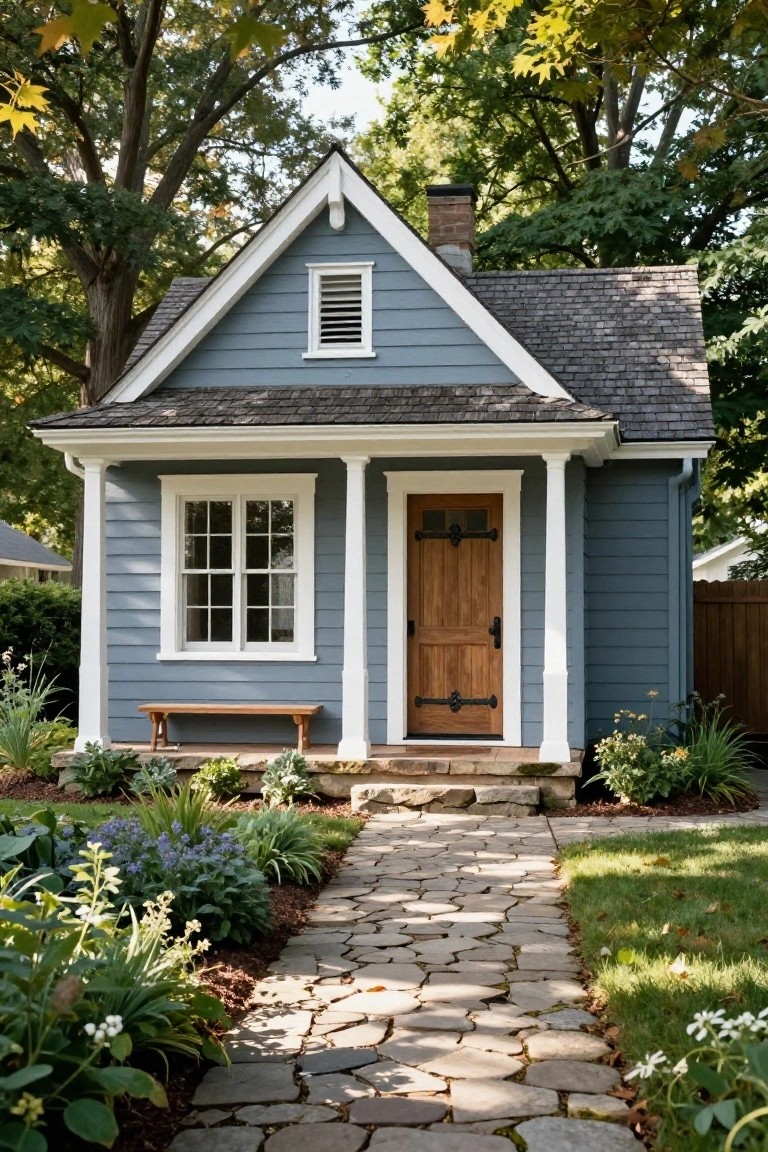
Blue gray siding works wonders on small cottages like this one. It gives the house a soft, settled look that fits right into a leafy yard without overpowering the space. White trim around the windows and porch keeps things clean and classic, and that wood door adds just enough warmth.
This color suits older neighborhoods or spots with mature trees. Go for it on homes with simple rooflines and a front porch. Stick to lighter shades of blue gray if your lot gets decent sun… darker ones can feel heavy in shade. A bench out front ties it all together nicely.
Muted Blue Gray Townhouse Facade
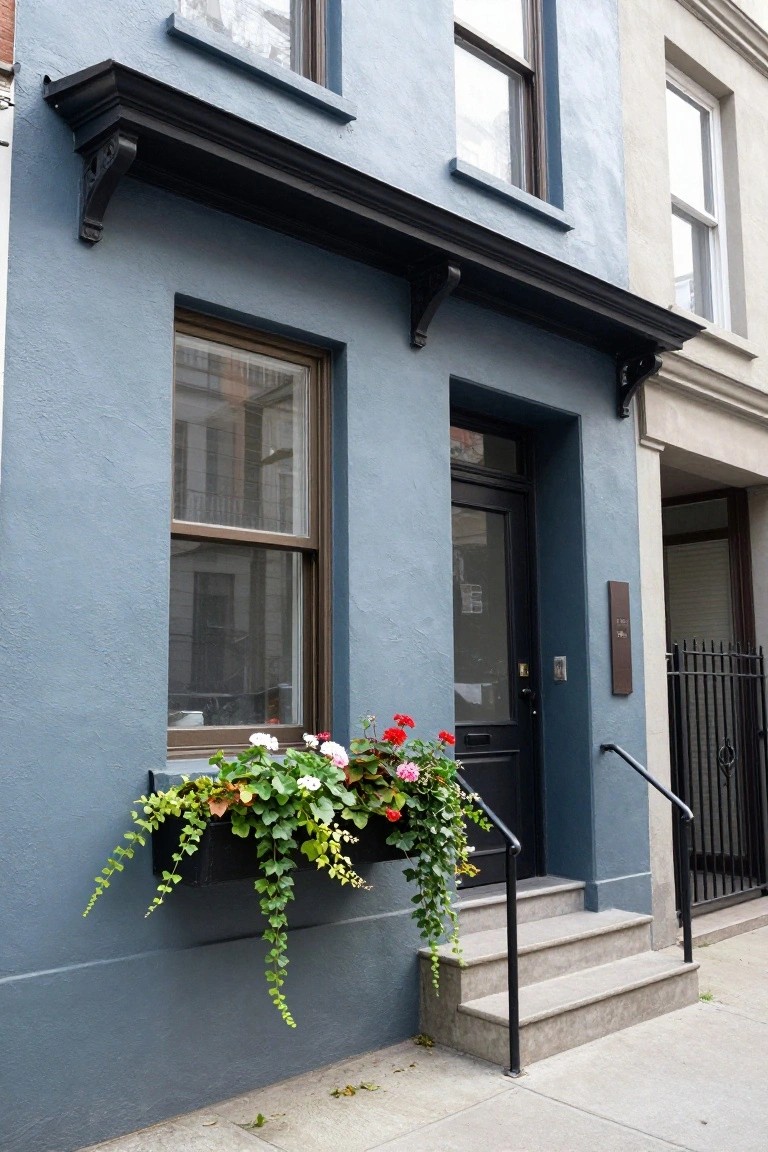
A soft blue gray paint like this works great on narrow city townhouses. It gives the stucco wall a calm, steady look that blends with the street without standing out too much. Black trim around the door and windows adds simple contrast, and that one flower box spilling over with ivy and geraniums brings in some easy color.
This setup suits older row houses or urban spots where you want low-key charm. Go for a muted shade to keep it neighborly. Add a deep window box at eye level with trailing greens and a few bright blooms. It perks up the entry on tight budgets, just watch the watering in hot weather.
Soft Blue Gray Siding on a Gable Cabin
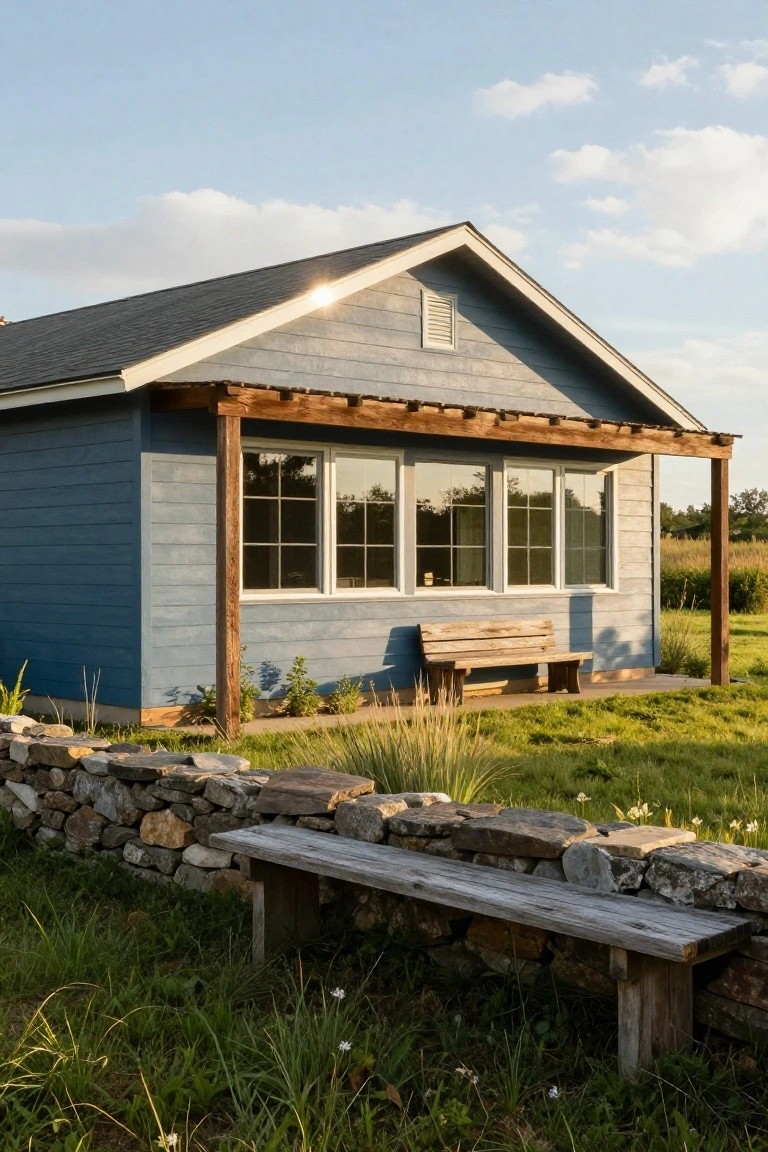
A soft blue gray siding like this turns a basic gable house into something that just fits its spot. It catches the light nicely without shouting, and on a small build like this one, it keeps things feeling compact and settled. That muted tone blends with the sky and fields around it, making the home look like it’s always been there.
You can pull this off on guest houses, workshops, or little backyard cabins where you want low-key charm. Stick to clapboard or similar siding for the texture, and add a simple wooden pergola or benches to warm it up. It suits rural or wooded lots best. Skip bold trim colors, though. Let the siding do most of the talking.
Blue Gray Clapboard on a Compact Two-Story Home
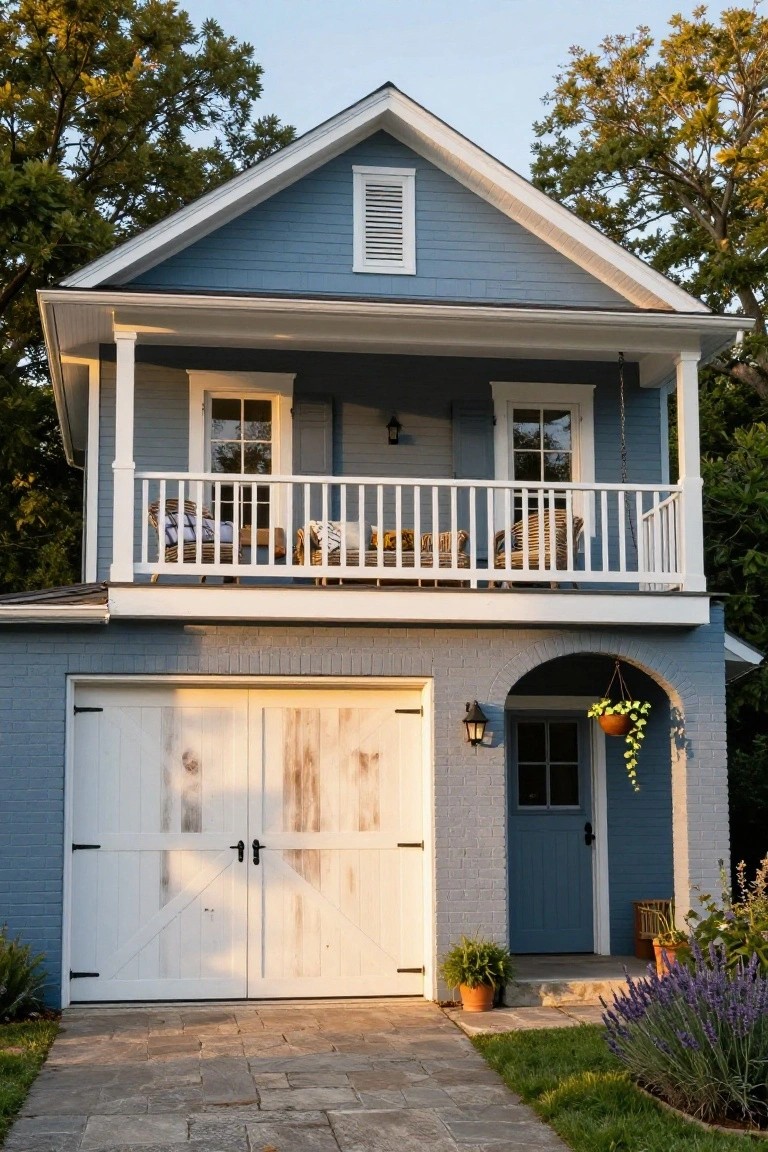
A soft blue-gray clapboard siding like this one turns a simple two-story setup into something that feels right at home in a neighborhood. The color picks up the sky and trees around it without overpowering the white trim or garage doors. That gentle shade keeps the house looking clean and settled in.
This look fits best on carriage houses or small lots where you want the garage on the ground floor and living space up top. Add a balcony with basic chairs and some plants along the walk for easy appeal. It holds up well in mild climates, but test a sample first to see how the sun plays off it.
Blue Gray Shingles with Turquoise Door
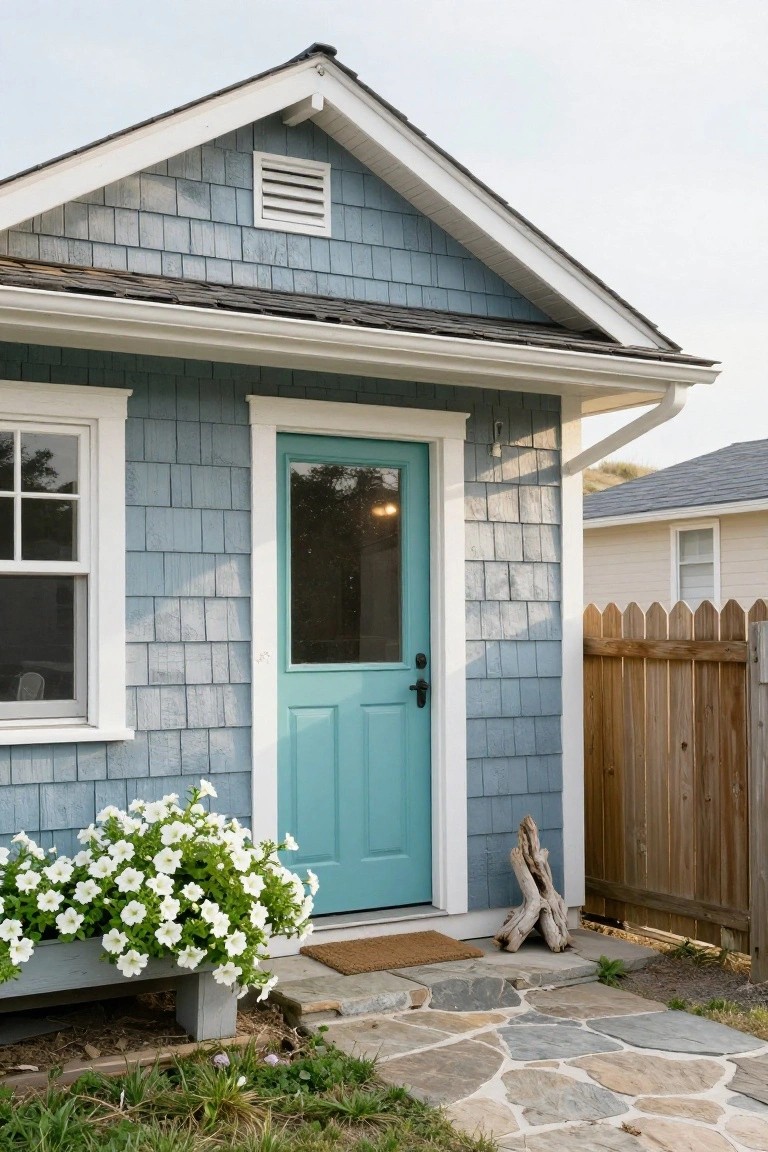
A blue gray shingle siding gives this little house a classic coastal feel. Then they went with a turquoise door at the entry. That bright color pulls your eye right to the front without overwhelming the softer siding. It’s a simple way to add personality.
This setup suits cottages or beach houses best. Keep plantings neutral, like white flowers in a plain box, so the door stays the star. Just make sure the turquoise shade leans toward the siding’s blue tones. It keeps things tied together.
Blue Gray Chalet Exterior
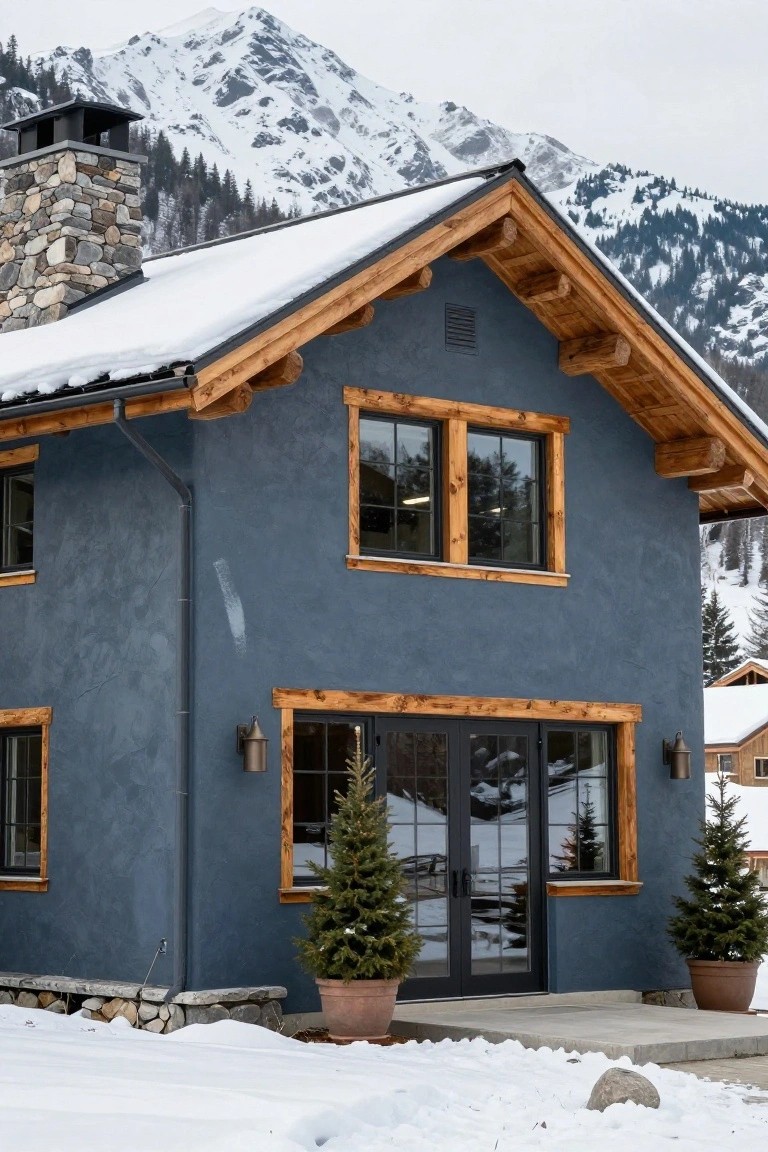
A blue gray stucco finish gives this chalet a clean, modern edge that fits right into a snowy mountain setting. The color picks up the cool tones from the peaks and sky without feeling cold, thanks to the rich wood trim around the windows and roofline. Small potted pines by the entry add a simple touch of green that ties it all together.
This look works best on homes with steep roofs and alpine vibes, like cabins or vacation spots in hilly areas. Go for it if your house has stone or wood details already. Just make sure the gray isn’t too dark, or it might blend into overcast days.
Blue Gray Shingle Siding on Beach Cottages
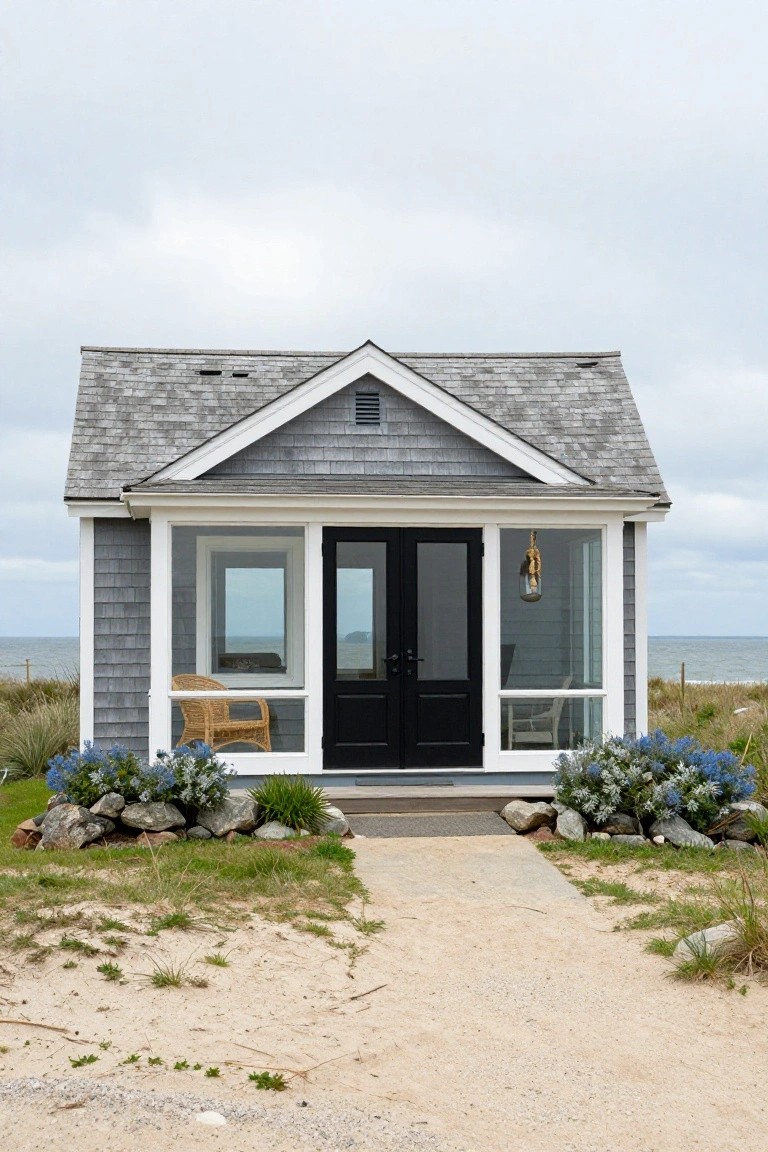
Blue gray shingle siding like this gives a beach house that easy coastal vibe. It pulls in the soft tones from the sea and overcast sky, so the place feels right at home on the shore. No harsh lines. Just a quiet, lived-in look that has worked for years on East Coast spots.
Try it on smaller cottages or vacation getaways where you want low fuss. White trim around the windows and porch keeps things crisp, and black doors add a simple pop. Works best if your roof shingles match the gray family… keeps the whole front pulling together without much effort.
Blue Gray on Timber-Framed Houses
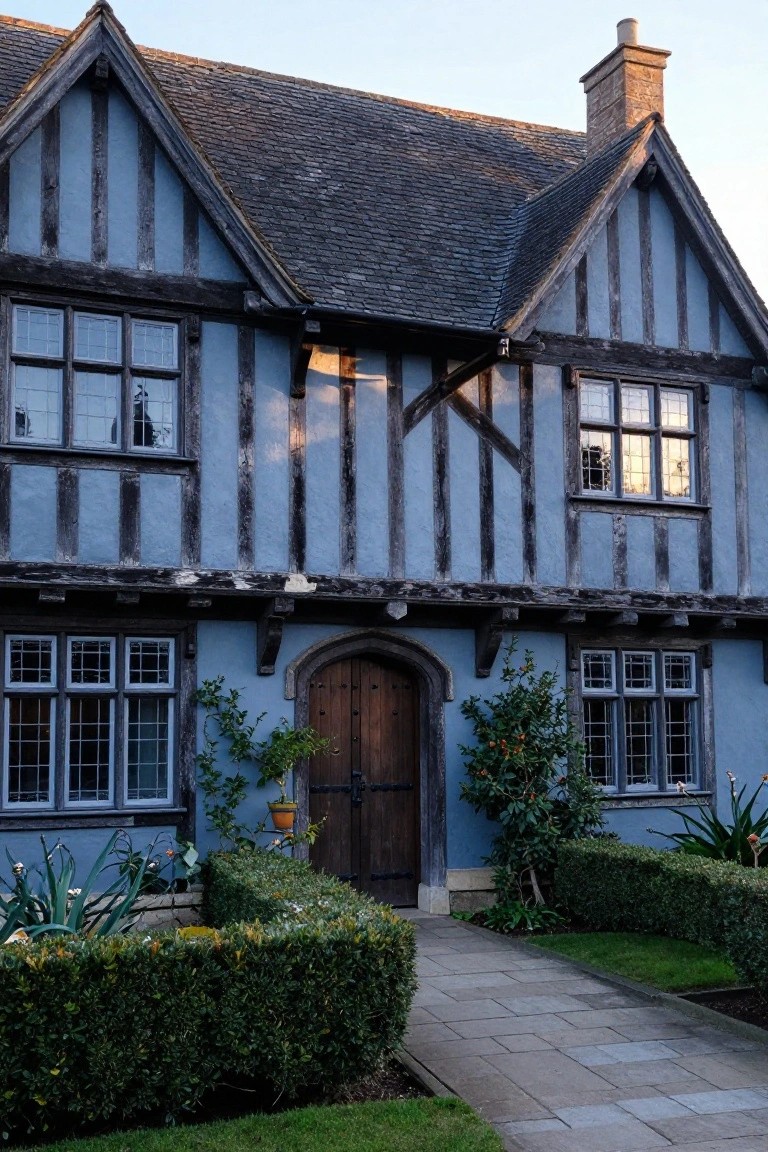
A timber-framed house like this one looks right at home in blue gray. The color settles into the plaster panels between those dark wood beams without overpowering them. It gives the whole facade a quiet, lived-in feel that suits older styles.
This works best on traditional homes with exposed framing, say Tudors or cottages from the countryside. Paint the infill blue gray and leave the timbers their natural dark tone. Add low box hedges along the path to frame the entry… keeps things simple and draws the eye to the door.
Modern Blue Gray Stucco Exterior
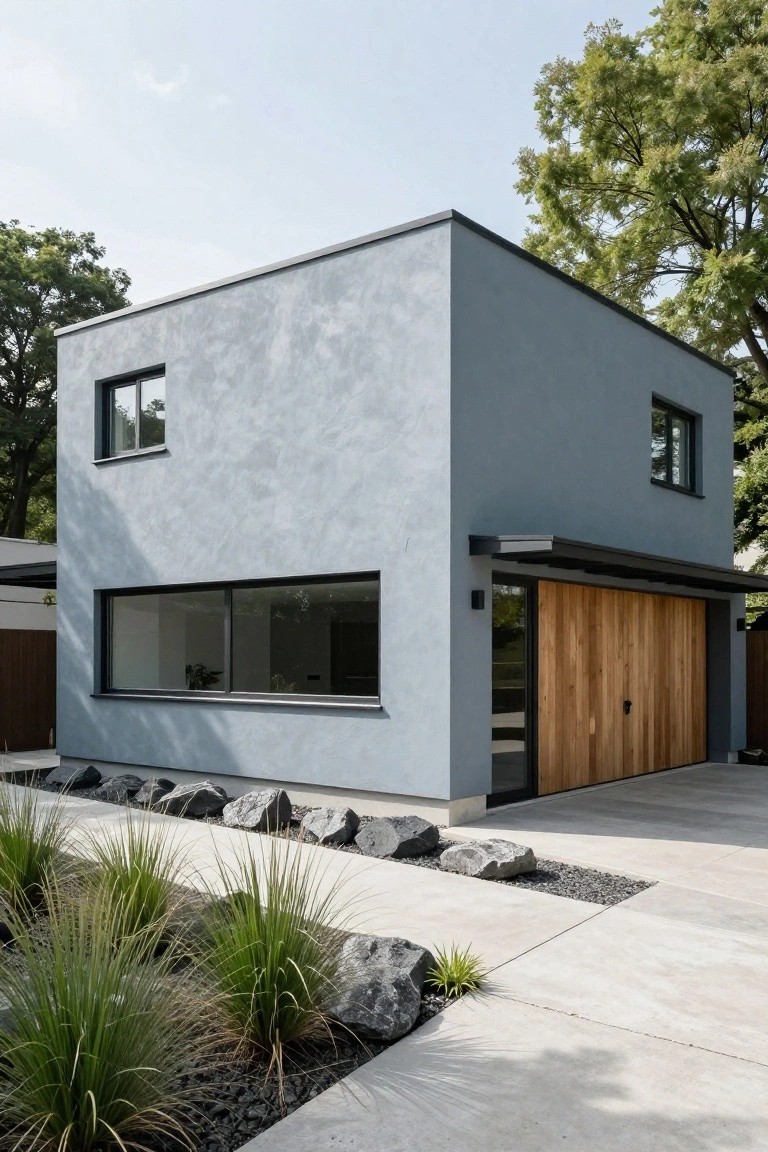
This blue gray stucco finish gives the house a clean, modern edge without trying too hard. It’s got that soft blue undertone that reads calm during the day and picks up some depth at dusk. Paired with a simple wood garage door, it keeps things balanced and lets the architecture stand out.
You can pull this off on boxy homes like this one, or even add it to ranch styles for a fresh update. Stick to matte stucco to avoid glare, and echo the color lightly in the landscaping with gray rocks. It suits spots with trees nearby, where the shade brings out the blue a bit more.
Soft Blue Gray Cottage with Climbing Roses
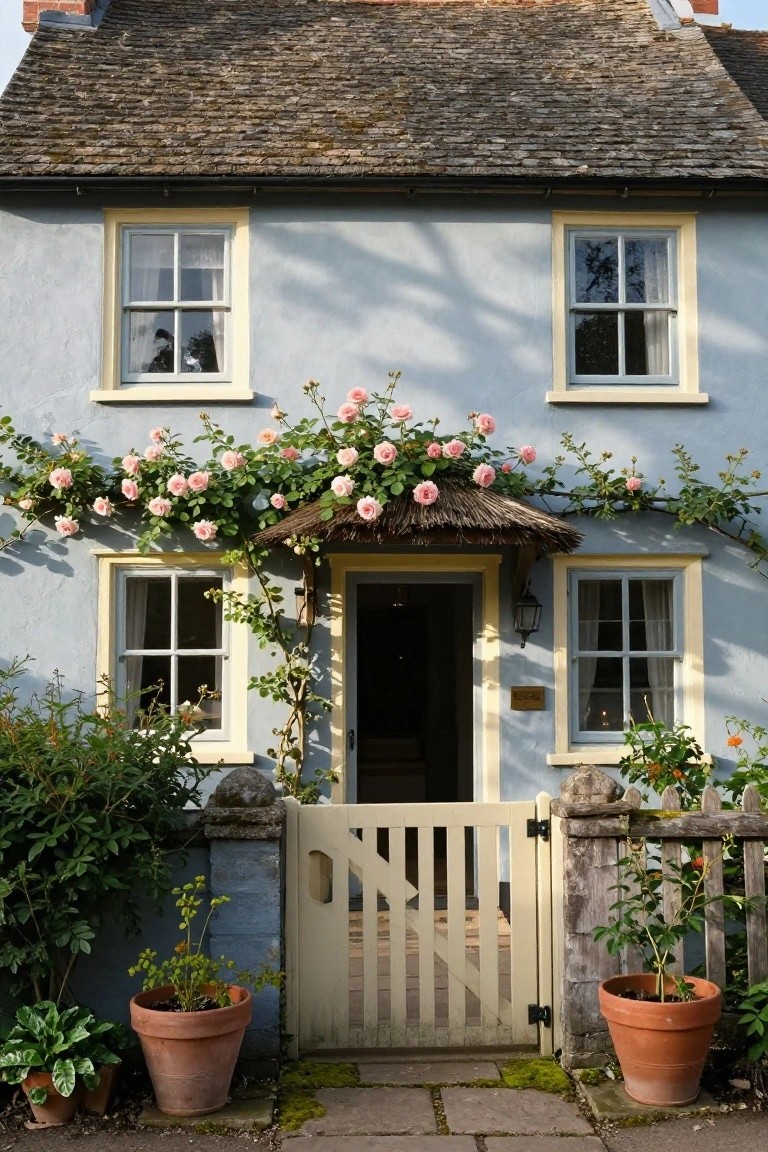
A soft blue gray exterior like this one gets a big lift from climbing roses. The pale pink flowers tumble over the porch and up the walls, adding a touch of romance to the cool siding. It turns a plain cottage into something straight out of a storybook, without much fuss.
This setup suits older homes or bungalows in the country. Pick vigorous climbers that hug the structure, train them along the entry like here, and they’ll bloom year after year. Just watch for overgrowth… and add a white gate or simple pots to frame the path.
Deep Navy Brick Townhouses
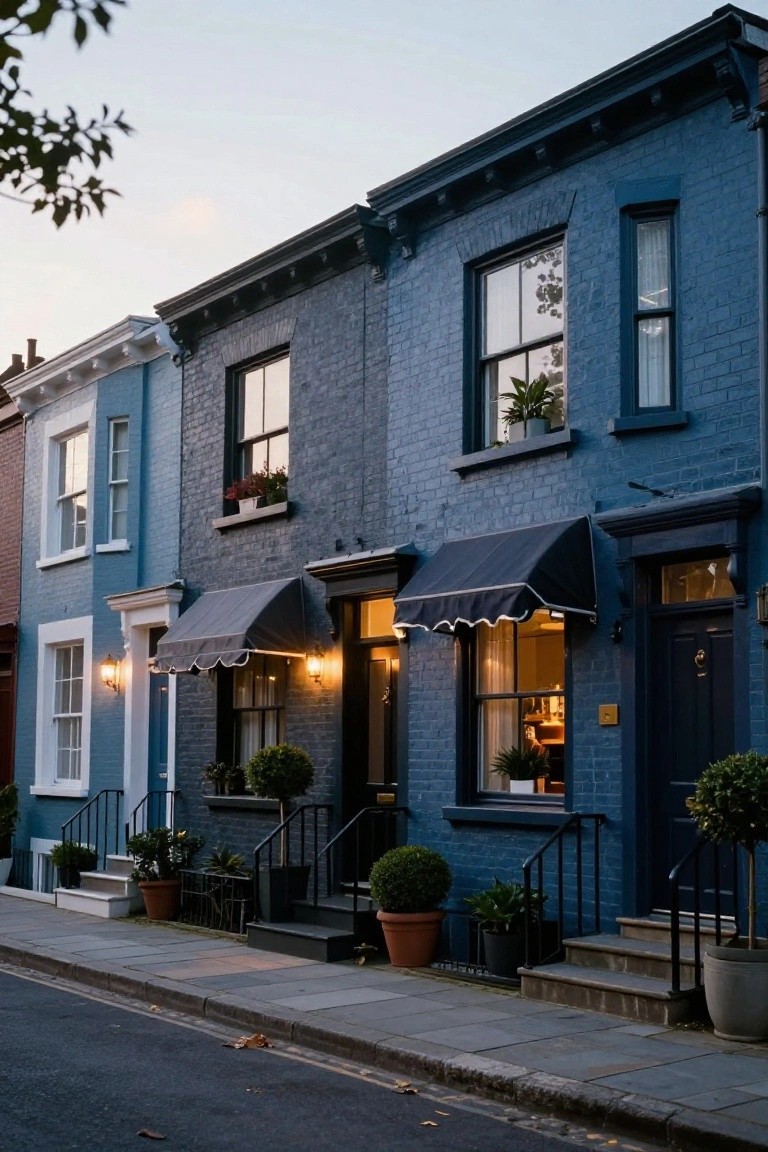
A deep navy blue on brick turns a standard row house into something quietly striking. It keeps the solid feel of traditional brickwork but shifts it cooler and more modern. Black awnings over the doors add sharp contrast. And those lanterns light up the entry just right at dusk.
This look suits older urban neighborhoods where homes sit close together. Paint or stain existing brick if yours is faded, or hunt for navy bricks on a remodel. Pair it with black trim and a few potted topiaries out front. Skip busier colors nearby… it shines on its own.
Blue Gray Stucco Exterior
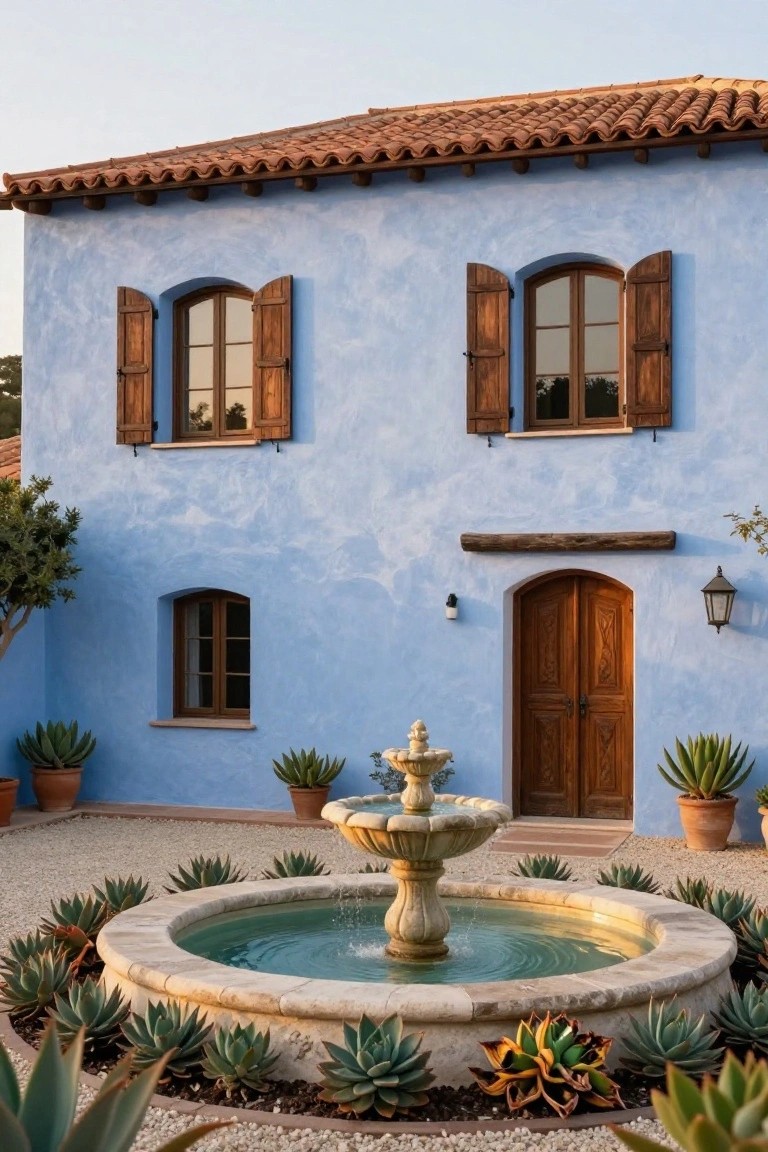
A soft blue gray stucco finish on the house walls brings a calm, coastal touch to this Mediterranean-style home. The color picks up hints from the sky and sea without being too bright. It pairs well with the warm terracotta tile roof and dark wood door and shutters. That gentle shade makes the place feel welcoming right from the street.
This look works best on homes in sunny, dry areas where you want low upkeep. Use it on stucco or plaster walls, and keep plantings simple like agaves around a front fountain. It suits ranch or Spanish revival houses. Just test the shade in your light first, since blue grays can shift cooler or warmer depending on the sun.
Blue Gray Siding with Stone Entry Pillars
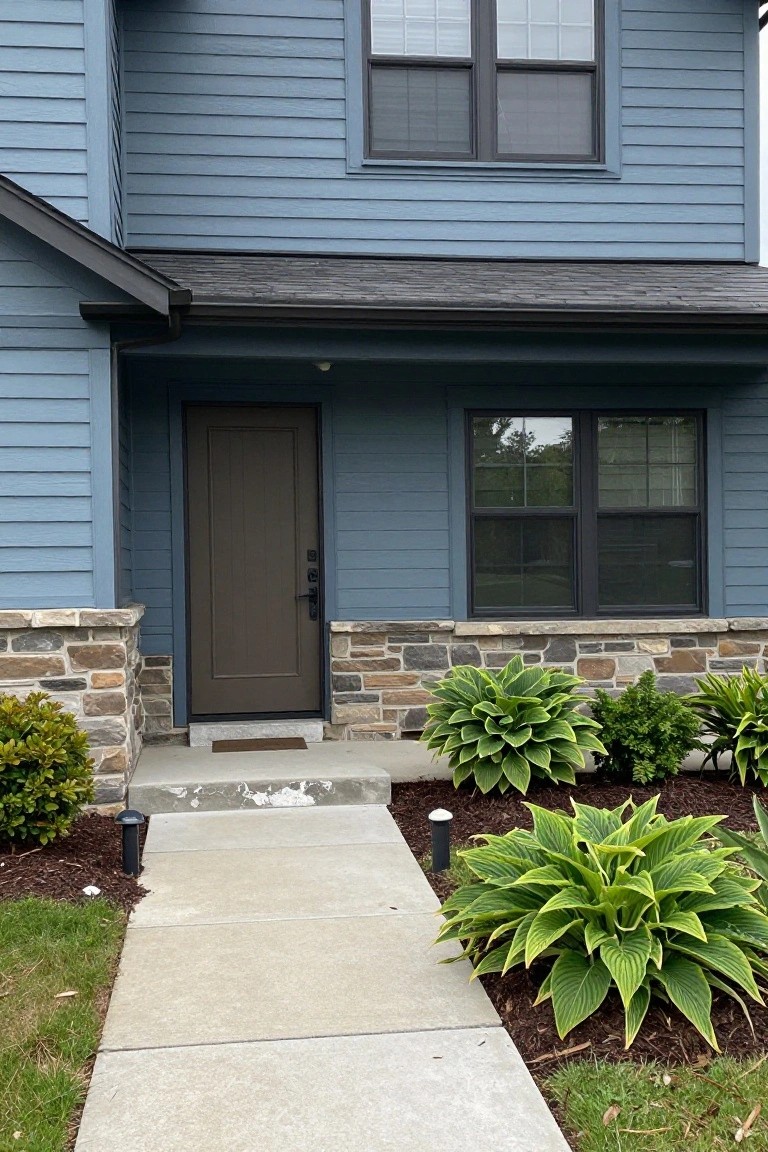
Stone pillars like these make a blue gray exterior feel more solid right at the front door. The siding has that cool, calm tone that can sometimes look a bit floaty on its own. But adding chunks of natural stone at the base ties everything down. It pulls in some earthiness without overpowering the color.
This setup works well on ranch or craftsman style homes where you want subtle curb appeal. Pick stone that matches your region’s rock, maybe in tans and grays. Keep the door dark for pop, and add low plants around the base. Skip it if your lot is super tight, though. It needs a little room to breathe.
Blue Gray Siding with Wood Shutters
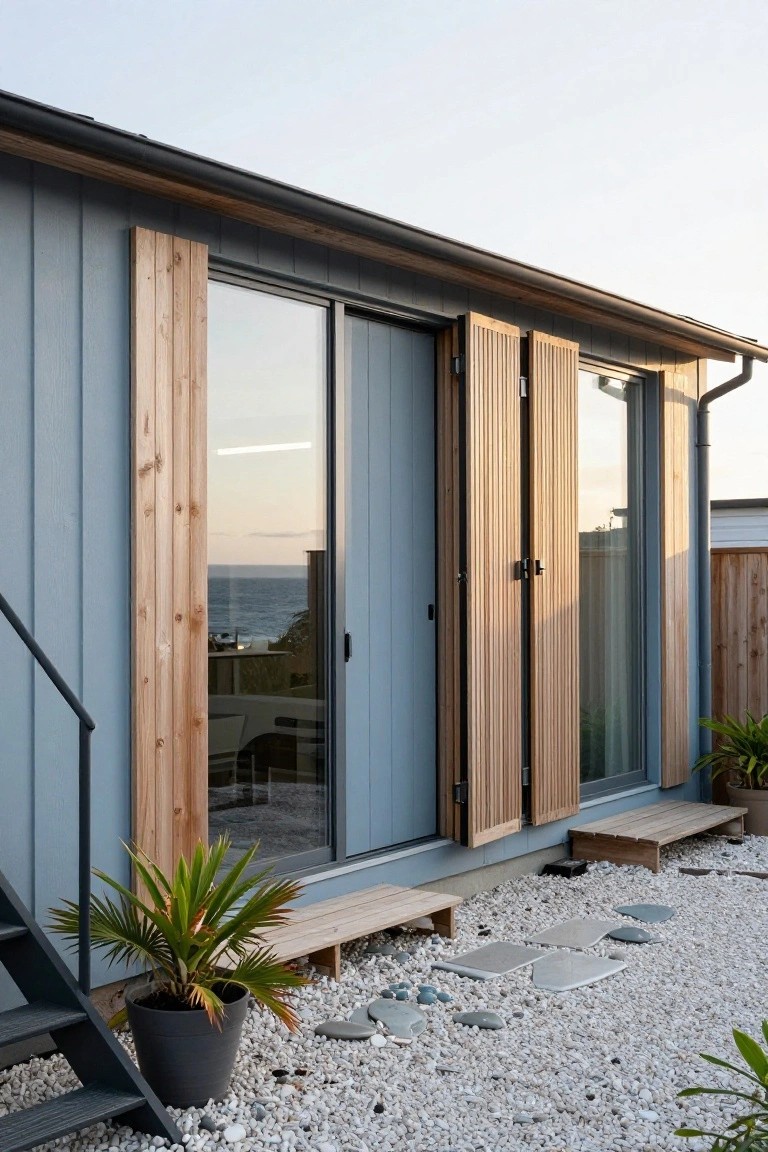
A soft blue gray siding like this gives a house a calm, coastal feel right away. Pair it with natural wood shutters on the sliding glass doors, and you get nice contrast. The cool siding stays in the background while the warm wood pulls your eye and adds some texture. It works well on a simple cabin shape overlooking water.
Try this on beach houses or elevated modern builds where you want low-key curb appeal. Frame big windows or doors with the shutters to highlight views inside. Go for untreated cedar or similar so it ages to a silver tone over time. Skip paint on the wood if you like that weathered look, but seal it first against salt air.
Blue Gray Shingles for Lakeside Homes
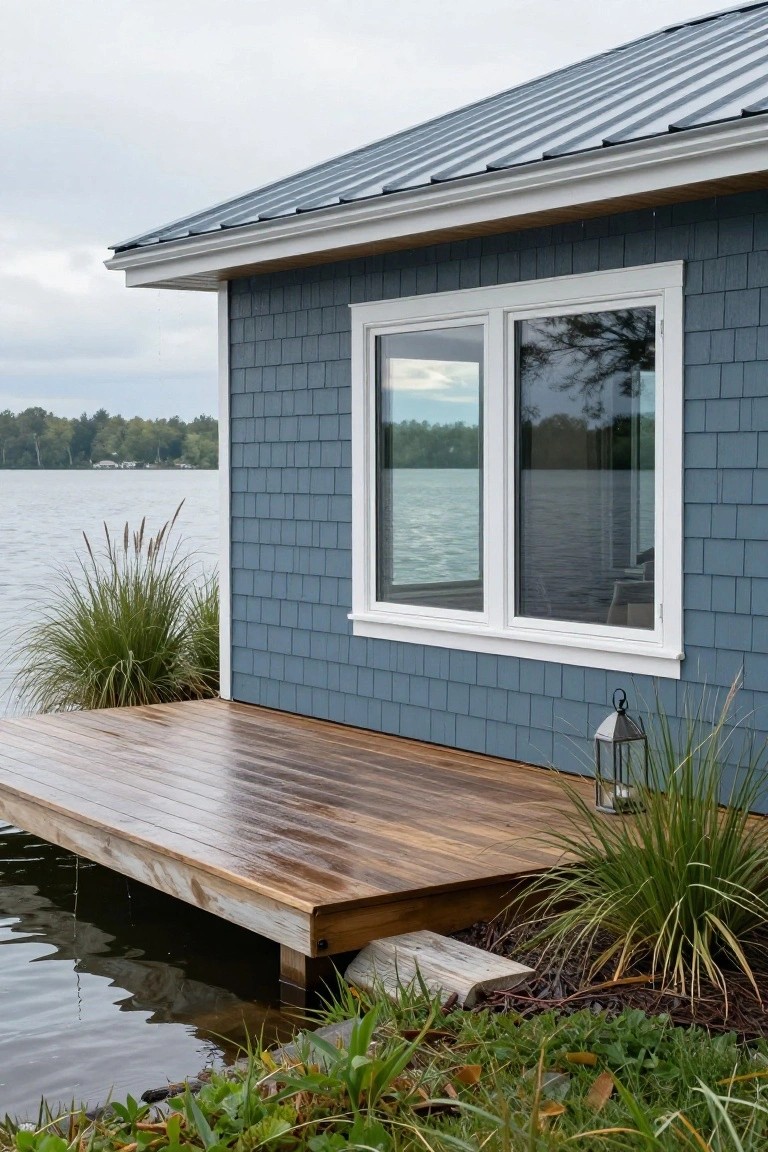
Blue gray shingles give this lakeside house a cozy, settled look that fits right in with the water and trees around it. The color picks up the soft tones from the lake and sky, while the shake texture adds some rustic charm without going overboard. Pair it with white trim around the windows, and you get a clean contrast that makes the house stand out just enough.
This works best on homes near water or in wooded spots where you want the exterior to blend rather than shout. Go for a standing seam metal roof in a matching gray if you can, and keep landscaping simple with tall grasses nearby. It suits cottages or smaller houses, but watch the scale on bigger builds so the shingles don’t look too busy up close.
Blue Gray Siding with Black Front Door
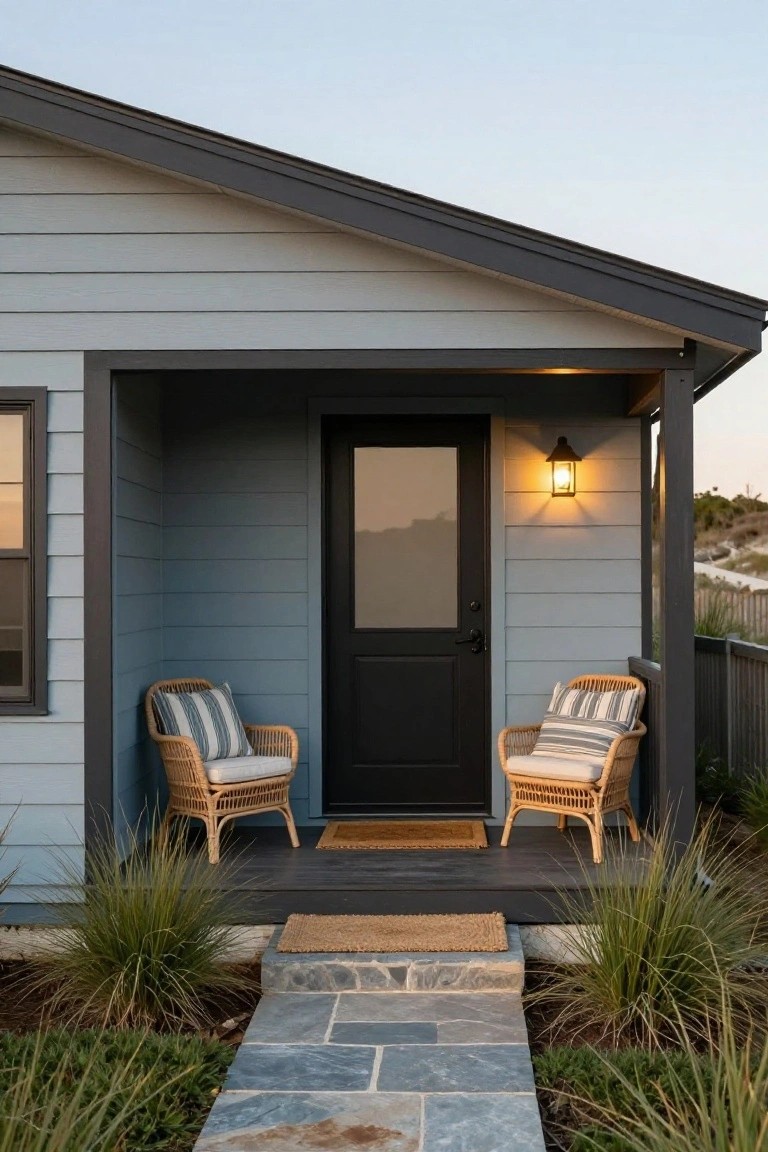
A light blue gray paint on the siding gives this house a soft, coastal feel that doesn’t overwhelm. The bold black front door stands out right away, pulling focus to the entry without much fuss. Add simple wicker chairs on the porch, and it turns the whole front into something welcoming. That color combo keeps things calm yet defined.
Try this on homes near water or in mild climates where you want curb appeal that lasts year round. It suits ranch styles or cottages best, pairing well with stone paths or basic landscaping. Just make sure the door trim matches the black to avoid a mismatched look.
Light Blue-Gray Cottage Facade
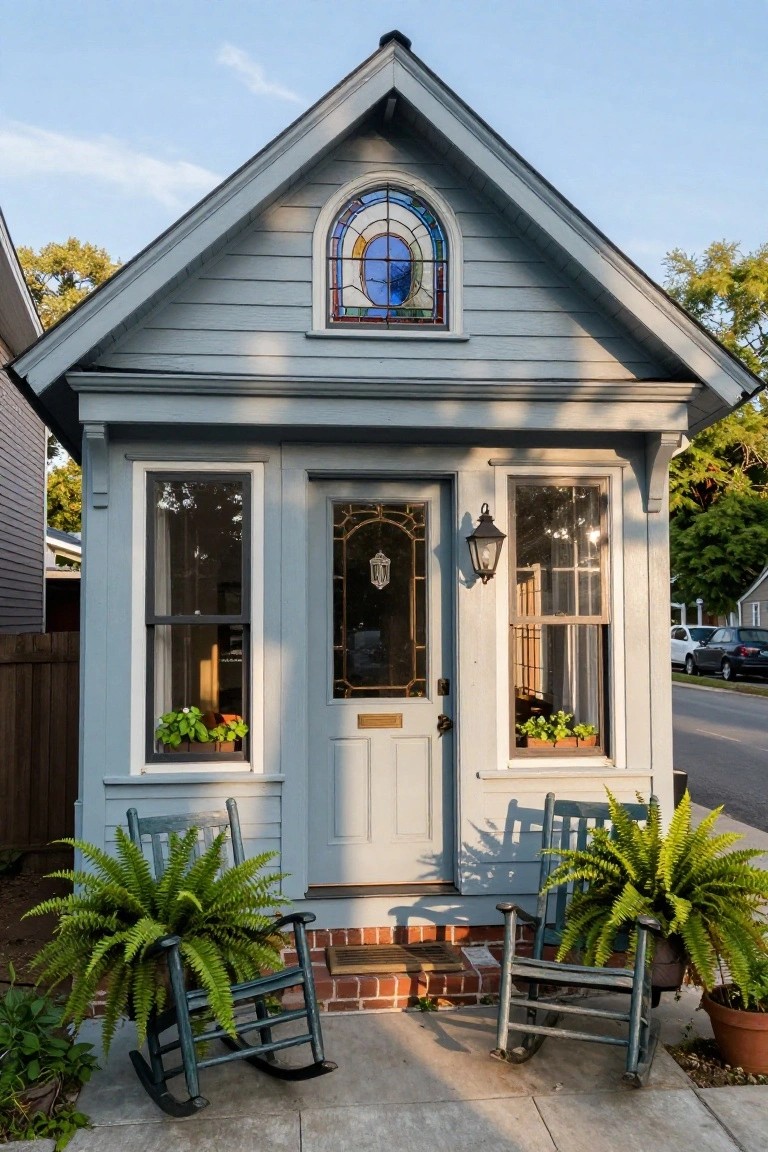
A soft blue-gray paint like this brings out the best in small cottage homes. It keeps things calm and approachable, especially when the house sits close to the street. Here, the color wraps the clapboard siding nicely, letting natural light play off it during the day. That stained glass window up top adds just a touch of color without overwhelming the quiet shade.
This shade suits older neighborhoods or spots with lots of green around. Use it on bungalows or tiny houses under 1,000 square feet. Stick to crisp white trim on doors and windows. Then set out a couple of rocking chairs and ferns on the porch. It pulls the look together fast… and makes folks want to stop by.
Blue Gray Siding on a Gabled Home
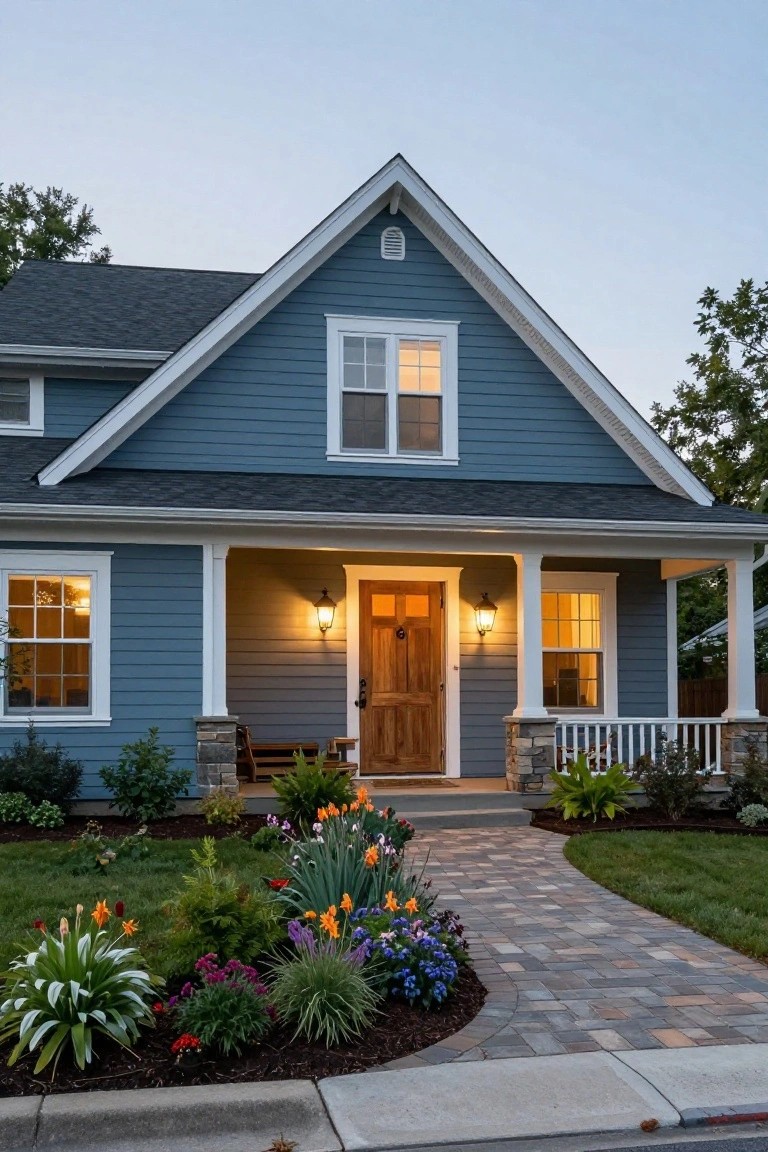
This blue gray siding gives a traditional gabled house a fresh, calm look without going too bold. The color sits nicely between navy and soft gray, working well on clapboard siding like you see here. It picks up the evening sky a bit and lets the white trim pop around the windows and porch posts. That wooden front door adds a warm touch right where it counts.
Homes like this one, with a covered porch and simple roofline, suit the color best. It keeps things approachable for family neighborhoods. Pair it with stone accents at the base and some colorful plants along the walk, but skip anything too fussy. Just make sure your trim stays bright white to keep the contrast clean.
Frequently Asked Questions
Q: Does blue gray hide dirt and wear better than other colors?
A:
Blue gray tones mask dust and pollen way better than bright whites or pastels. Rain and wind just blend right into the subtle shade. You end up washing the house less often.
Q: How do I test blue gray shades before committing to the whole house?
Grab a few sample cards from the paint store and slap them up on different sides of your home. Check them morning, noon, and evening to see how sunlight changes them. That way you avoid any big surprises.
Q: What trim colors pair best with blue gray siding?
A: White trim pops clean against blue gray and keeps things crisp. Go for a soft off-white if you want less stark contrast… it warms up the look nicely.
Q: Will blue gray work on a house with lots of brick accents?
Paint the siding blue gray and let the brick shine as is. The cool tones play off warm brick without clashing. And it gives your place that modern edge everyone notices.

1 Comment
Do you know the paint color and manufacturer for the Modern Farmhouse Charm house you posted?