

When you pull up to a farmhouse, the exterior paint color hits you first and shapes how the whole place reads from the road. It needs to work with the siding texture, roof pitch, and entry details to create real curb appeal that lasts through seasons. I found that on ours, a muted blue-gray made the board-and-batten facade feel more settled against the fields than brighter options ever did. Shades that nod to the surroundings often make the house blend in comfortably while still standing out to neighbors. Pick a couple to sample on your trim before committing.
White Farmhouse Siding with Blue Door
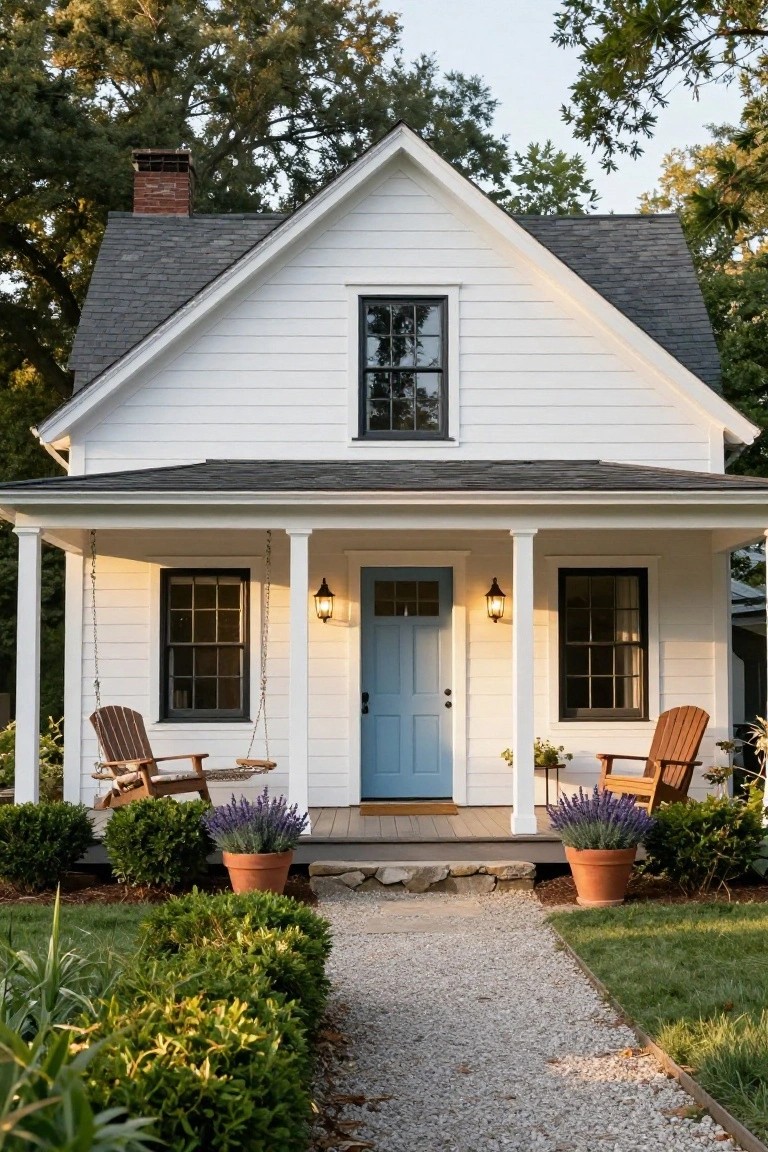
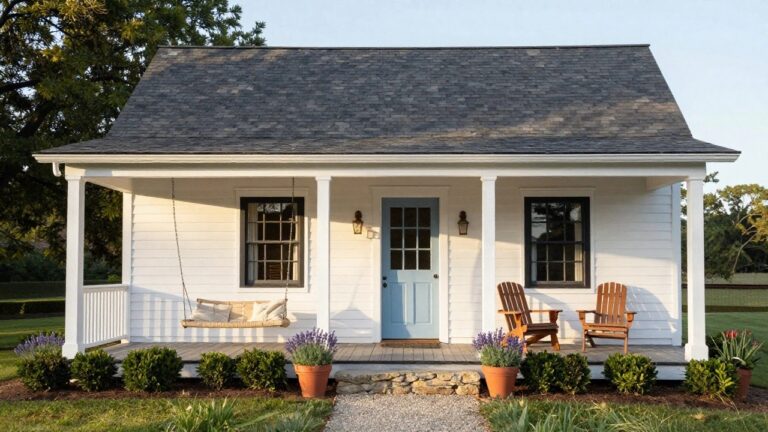
A fresh coat of bright white paint on the siding gives this farmhouse that clean, classic look folks have loved for years. Then the blue door pulls it all together at the front. It’s simple but makes the entry feel welcoming right away. Black frames around the windows keep things sharp without overdoing it.
This color combo works best on homes with porches and simple lines like this one. Go for a soft blue, not too navy, so it stands out in afternoon light. Test samples first, since whites can look different in shade. It suits older places needing a lift, or new builds aiming for that timeless feel.
Light Gray Clapboard Siding
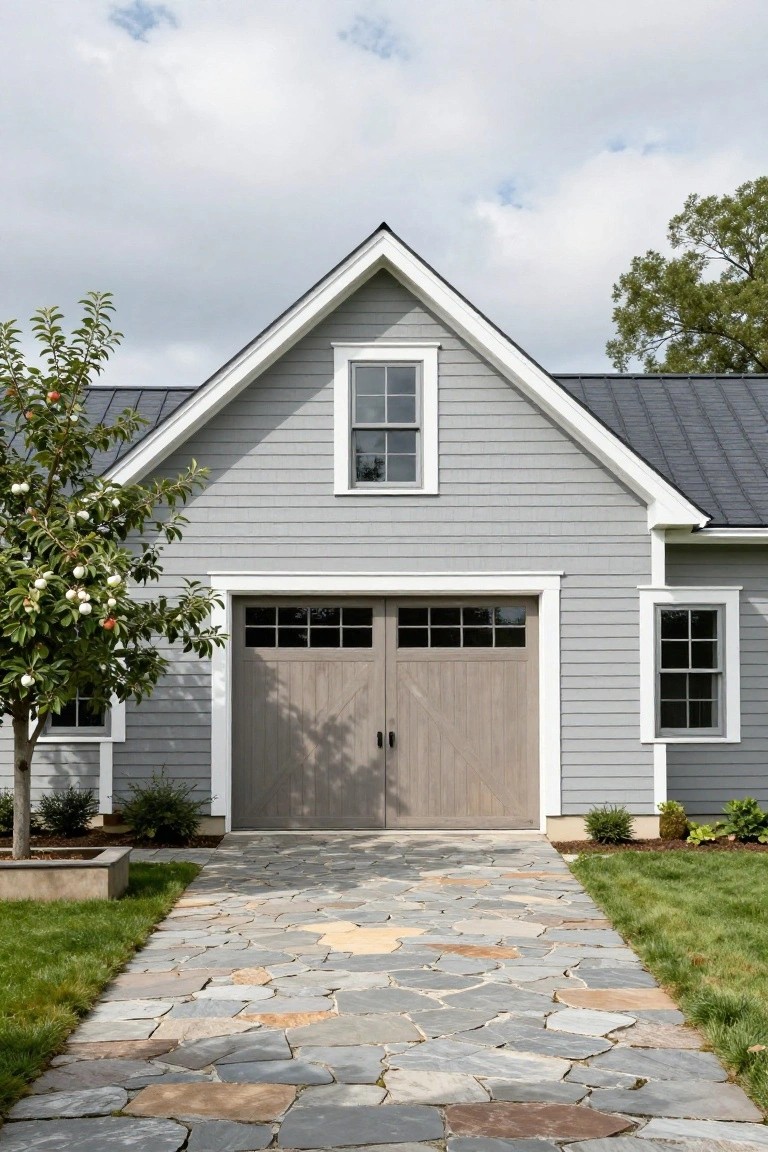
Light gray clapboard siding like this keeps a farmhouse looking crisp and timeless. It softens the overall shape without going too dark, and that white trim around the windows and roofline makes everything pop just right. The gray picks up on overcast skies too, so the house blends into its spot nicely.
Try it on garages or smaller outbuildings first, especially if your main house has a similar roof. It suits spots with some trees nearby, like this apple tree adding a bit of color. Just stick to a mid-tone gray… too pale can wash out.
Red Barn Paint for Farmhouse Exteriors
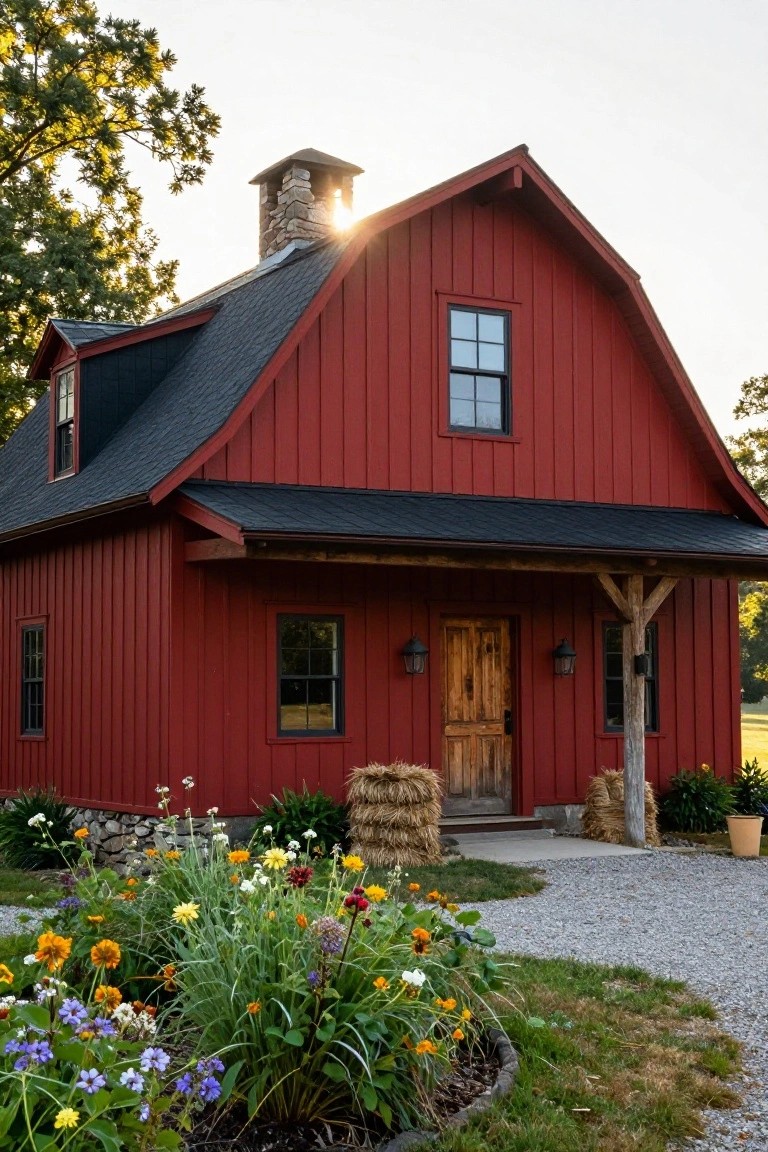
That deep red paint you see on barn-style farmhouses never goes out of style. It pulls from old-time rural roots and makes the whole house pop without trying too hard. Here the color covers vertical siding nicely, setting off a black roof and simple wood door. Folks like how it ties into the land around it.
Try this shade on homes with those curved roofs or timber porch posts. It suits bigger properties with some open yard, but you can make it work on smaller lots too. Just keep accents neutral like dark shingles or stone chimney. Watch the sun on it though. Fades slower on north sides.
Recommended Products

Flows on smoothly and dries to a tough, durable finish

ONE COAT COVERAGE – The Jetcoat Red Premium One Coat Barn & Fence Paint provides one-coat coverage for a beautiful, durable finish that will last. No need to apply multiple coats, saving you time and effort.

Use for a variety of indoor and outdoor project surfaces including wood, metal, plaster, masonry or unglazed ceramic
Navy Blue Siding with Red Door
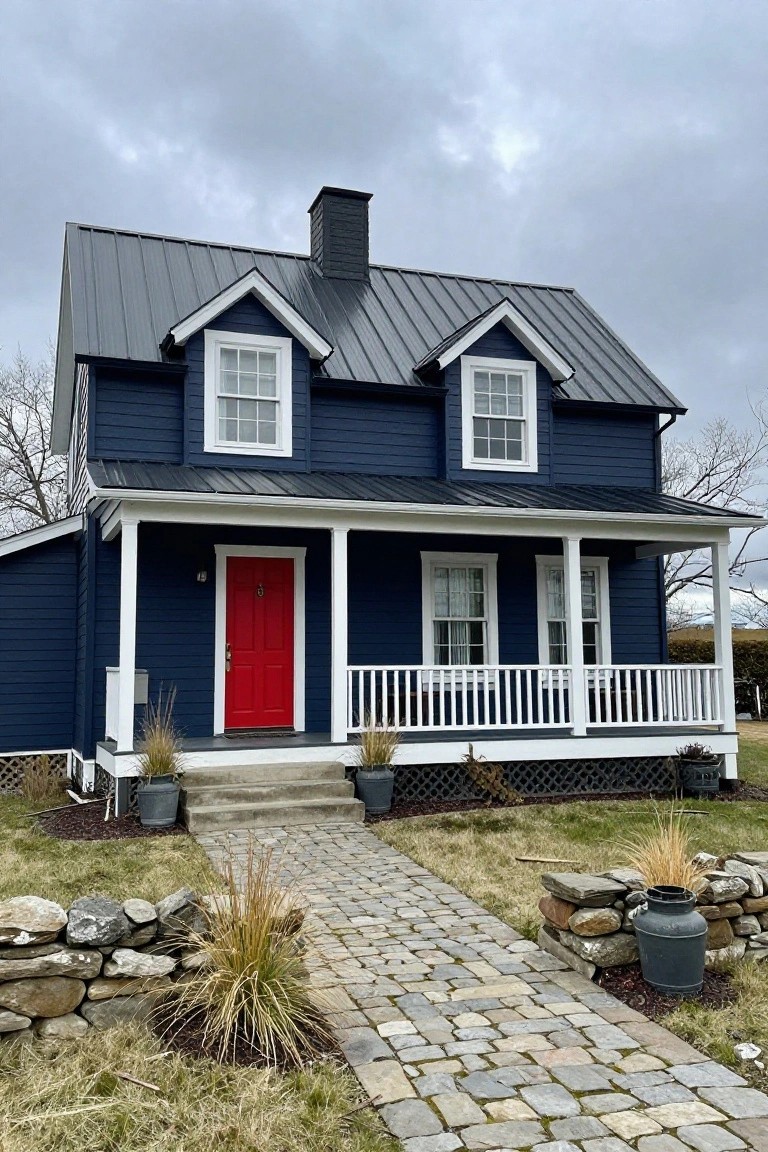
Navy blue paint on the siding gives a farmhouse that fresh, grounded look without going too light or bright. Pair it with a red front door, and you get that classic pop people notice right away. White trim around the windows and porch keeps everything crisp. It’s a simple way to make the house stand out on a quiet street or in a rural spot.
This combo works best on homes with some traditional shape, like gables and a porch. Test the shades first, since navy can read darker in shade. Red doors hold up well painted with good exterior grade stuff. Skip it if your house faces south all day, might feel too heavy.
Recommended Products


ALL-IN-1 PAINT & PRIMER: A hardy multi-purpose and multi-surface one-coat paint and primer in one for almost any indoor or outdoor surface. A wall, ceiling, floor, skirting board, cabinet, furniture and door paint for your bathroom, kitchen, home and garden.
Black Shingle Siding for Farmhouses
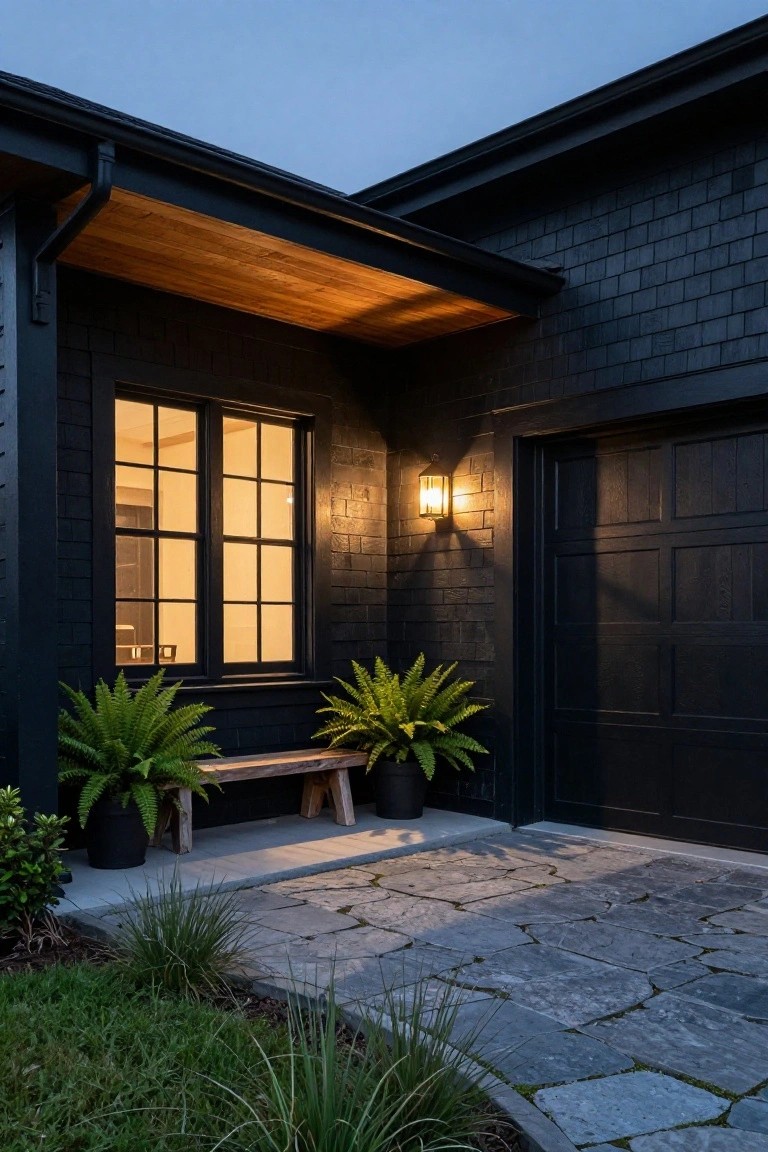
Deep black paint on shingle siding turns a basic farmhouse into something with real presence. It keeps the classic shape but adds a moody edge that feels fresh. Here the warm cedar beam overhead pulls back some of that darkness. And the ferns in matching black pots just blend right in without trying too hard.
Try this on houses with simple rooflines and good window placement. It suits spots that see evening light, making the glow stand out nice. Stick to a few wood touches so it doesn’t get too cave-like. Pairs well with stone paths or gravel for the ground.
Pale Green Farmhouse Siding
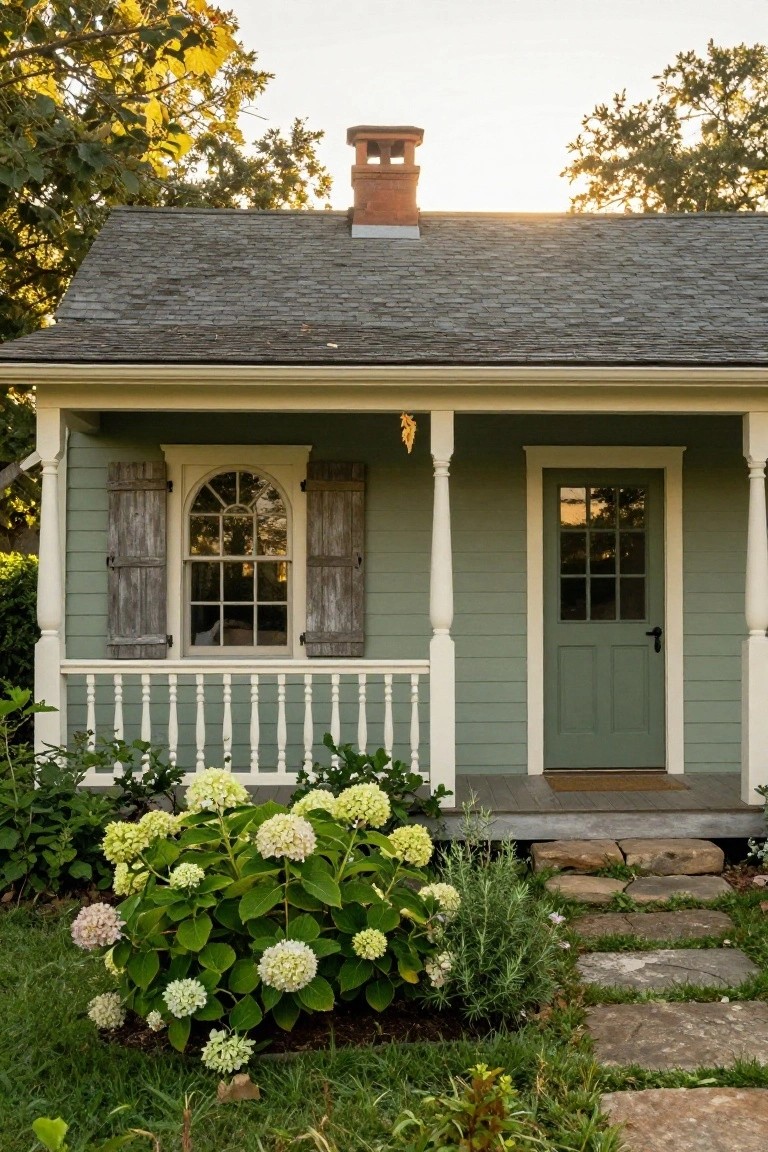
This soft pale green on the siding makes a simple farmhouse feel right at home in its yard. It picks up the garden greens without shouting, and the white porch columns keep things clean and classic. That worn shutter detail adds just enough age.
Paint it on clapboard or shingle homes with porches like this. It suits country or wooded spots best, where you want a calm entry that blends in. Go a shade lighter if your lot gets full sun… keeps it from looking too flat.
Light Blue Exterior Paint
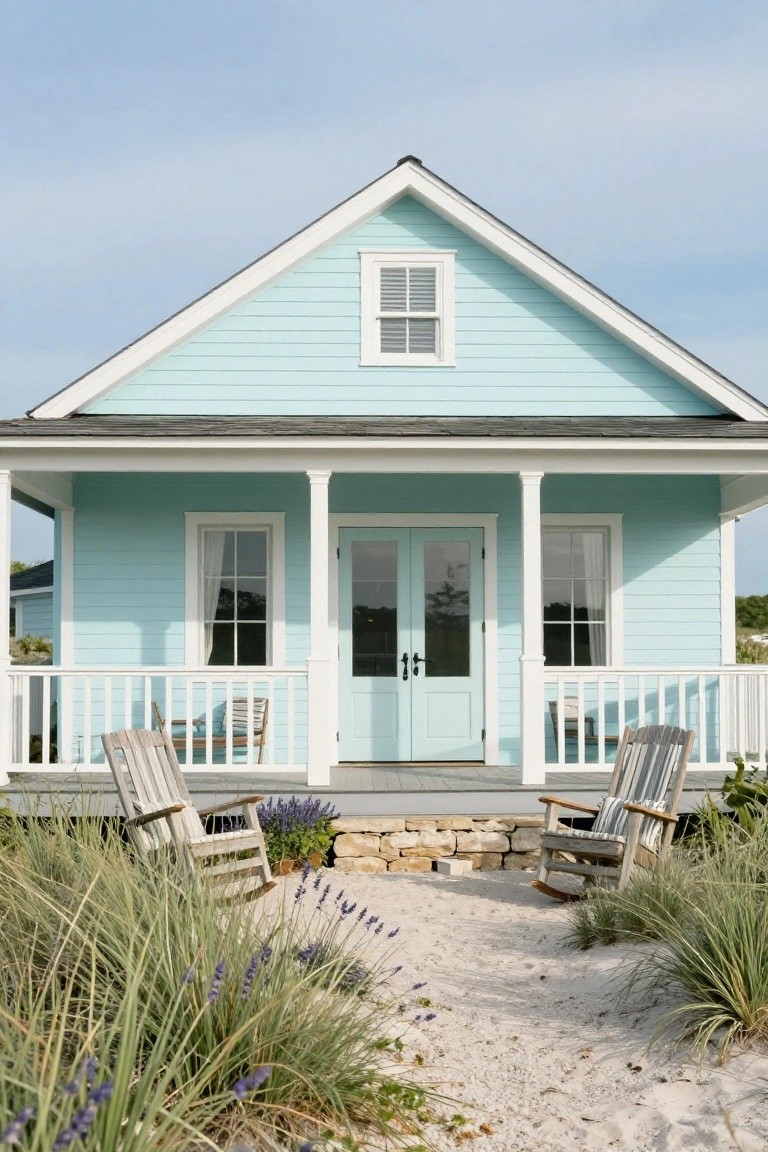
A soft light blue paint like this on farmhouse siding brings a calm coastal feel right to your front door. It pairs simply with white trim around the windows and porch columns, making the whole house look fresh without trying too hard. That color pops gently against sand and grass, too.
This shade works best on clapboard or shingle houses in beachy spots or relaxed country settings. Pick a quality exterior paint that holds up to salt air or sun. Just clean it now and then, since lighter colors show dirt over time if you skip that.
Soft Beige Stucco Exterior
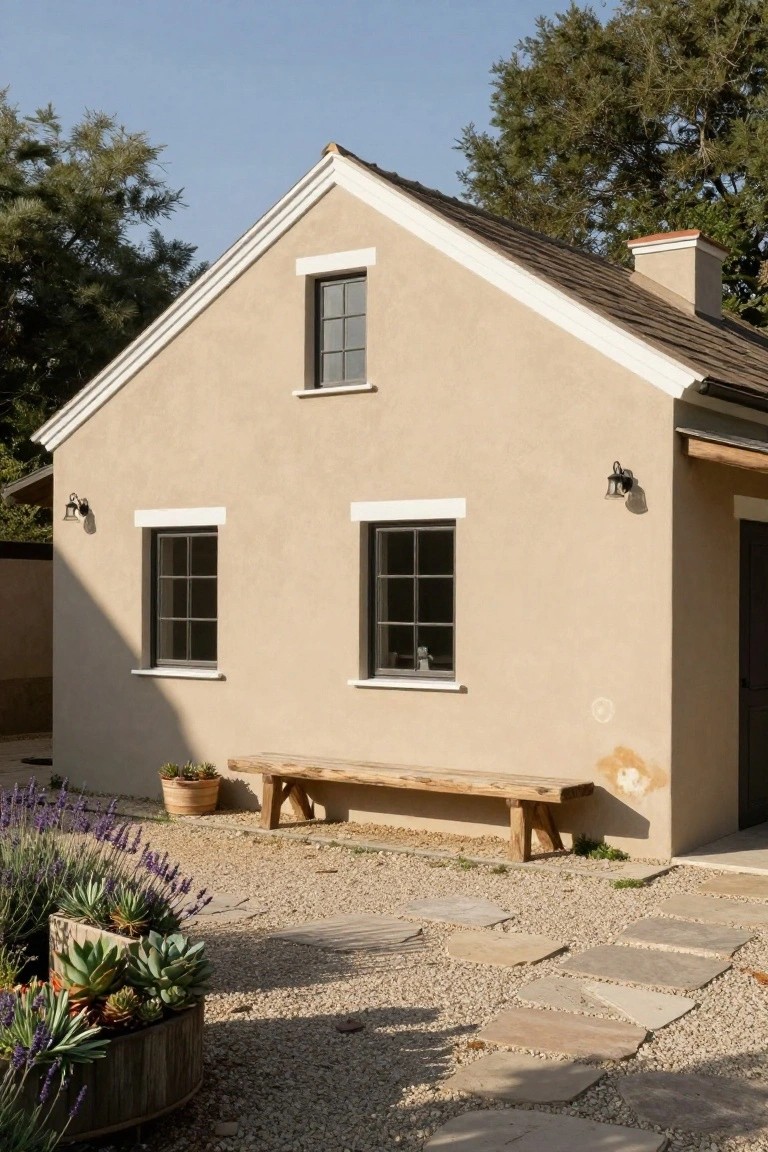
A soft beige stucco finish like this one gives a farmhouse that easy, lived-in feel. It picks up the warm tones from the surrounding gravel and plants without standing out too much. White trim around the windows and roofline keeps things crisp and pulls the eye up to that classic gable shape.
This color works best on homes with simple lines and a bit of rustic charm. Try it in sunny spots where it won’t wash out, and pair it with natural wood accents or a gravel yard for that grounded look. Just make sure the stucco base is prepped right so the paint holds up over time.
Pale Yellow Siding for Farmhouses
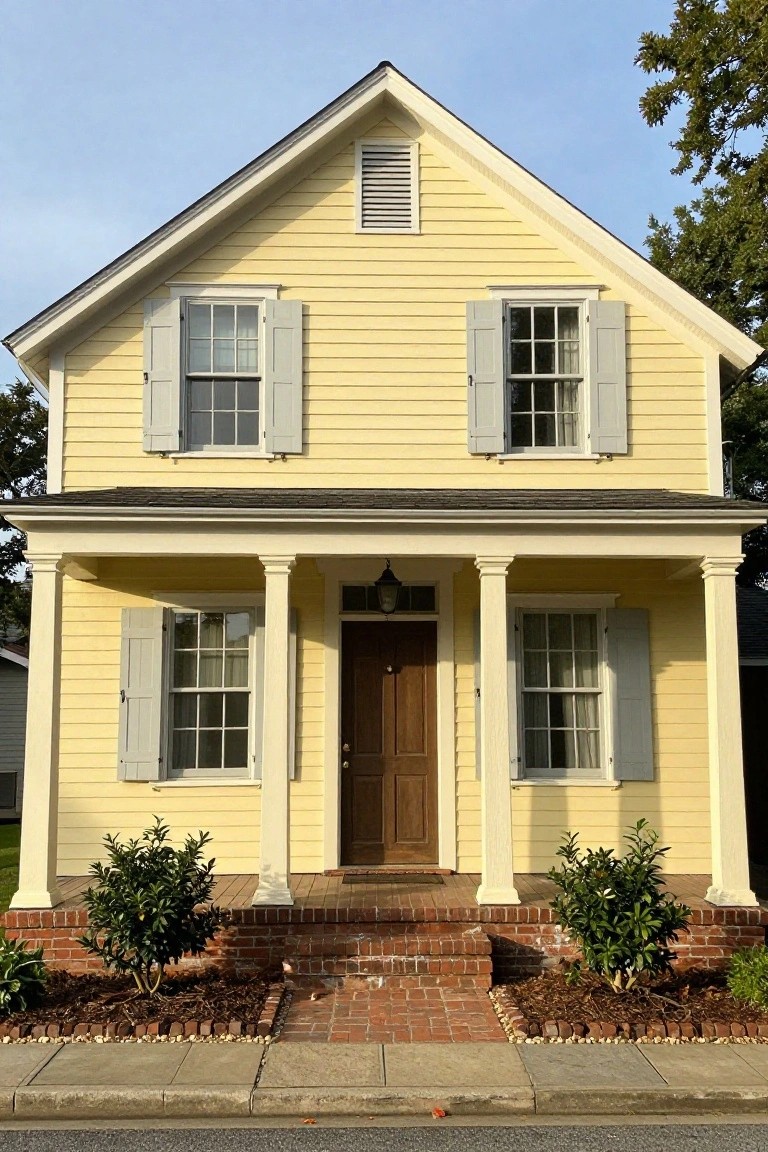
A pale yellow like this on farmhouse siding brings a gentle warmth that lights up the whole front of the house. It pairs nicely with gray shutters and white porch columns, making the place look clean and lived-in without trying too hard. Folks notice how it softens the look compared to stark whites.
This color works best on older-style homes with clapboard siding, especially where there’s good sun. Use it on the body, then stick to grays or blacks for shutters and trim to keep the balance. In shadier yards, test a sample first… it can pull a bit green sometimes.
Sage Green Siding on Farmhouse Sheds
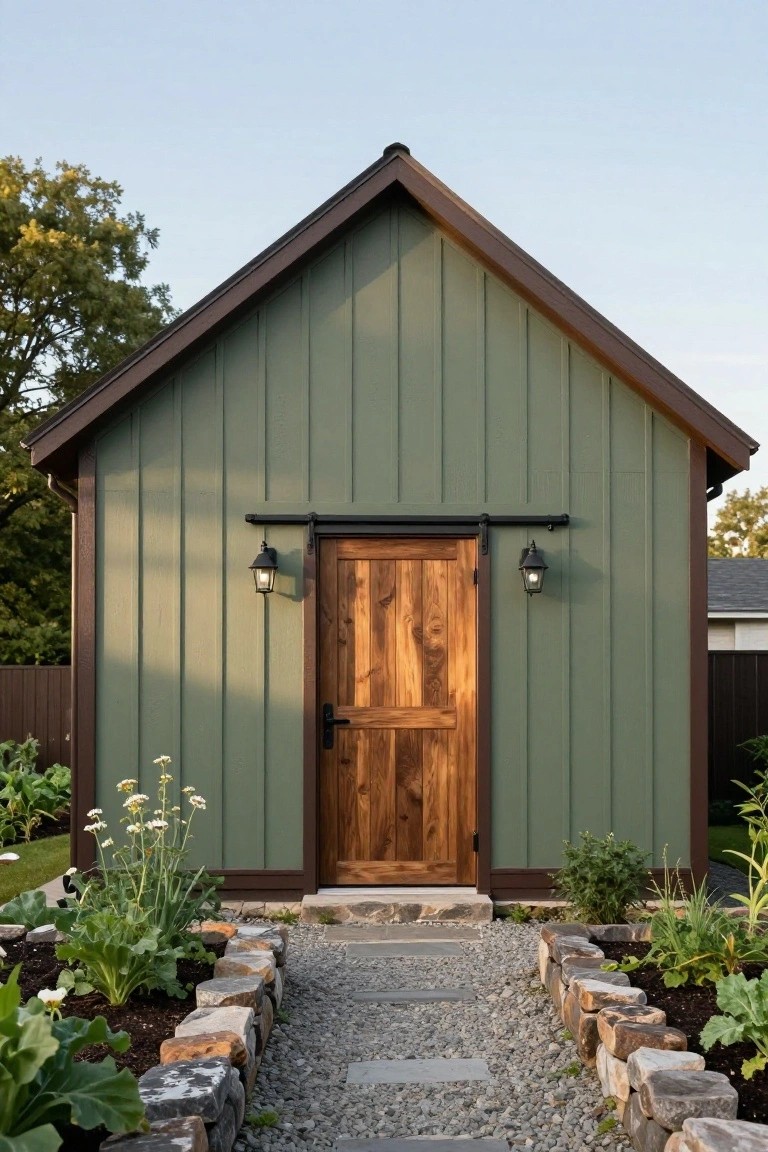
Sage green paint shows up nicely on this little shed. The vertical board-and-batten siding takes the color well, giving a calm look that fits right into a backyard setting. Paired with a walnut sliding door and black lanterns, it feels sturdy without being too bold. That soft green keeps things fresh but settled in with the garden around it.
You can pull this off on a garage, workshop, or even a playhouse. It works best where you want the building to blend a bit with plants and trees. Go for high-quality exterior paint to hold up to weather. Just test a sample first, since green can shift a lot in different lights.
Dark Green Siding for Farmhouses
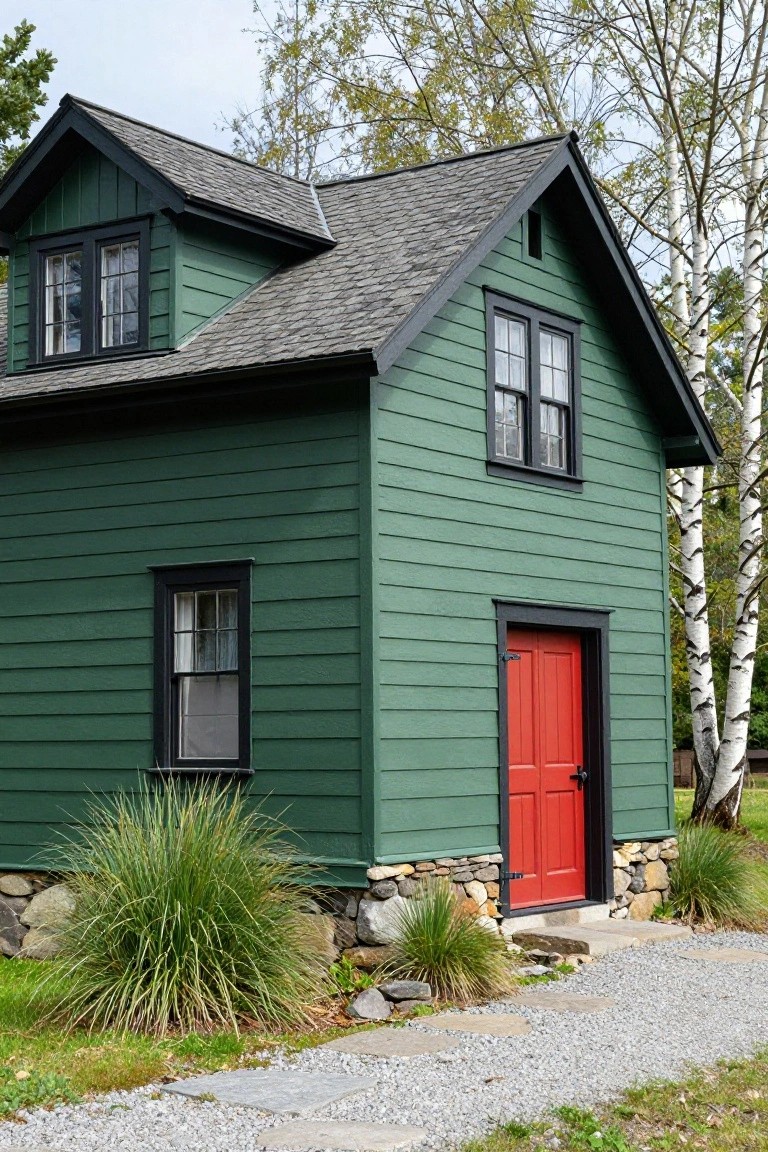
This dark green siding gives a farmhouse that cozy, tucked-away feel. It works nicely against trees and stone, like the base here. The black trim around the windows keeps things sharp, and that red door adds just enough color without overdoing it. It’s a look that feels settled in its spot.
You can pull this off on a small outbuilding or guest house first, to see how it sits with your landscape. It suits wooded lots or rural spots best. Pair it with natural stone at the bottom and keep plantings simple, like grasses nearby. Avoid lighter greens, they can look too bright next to bark and rocks.
Light Blue Siding with a Yellow Door
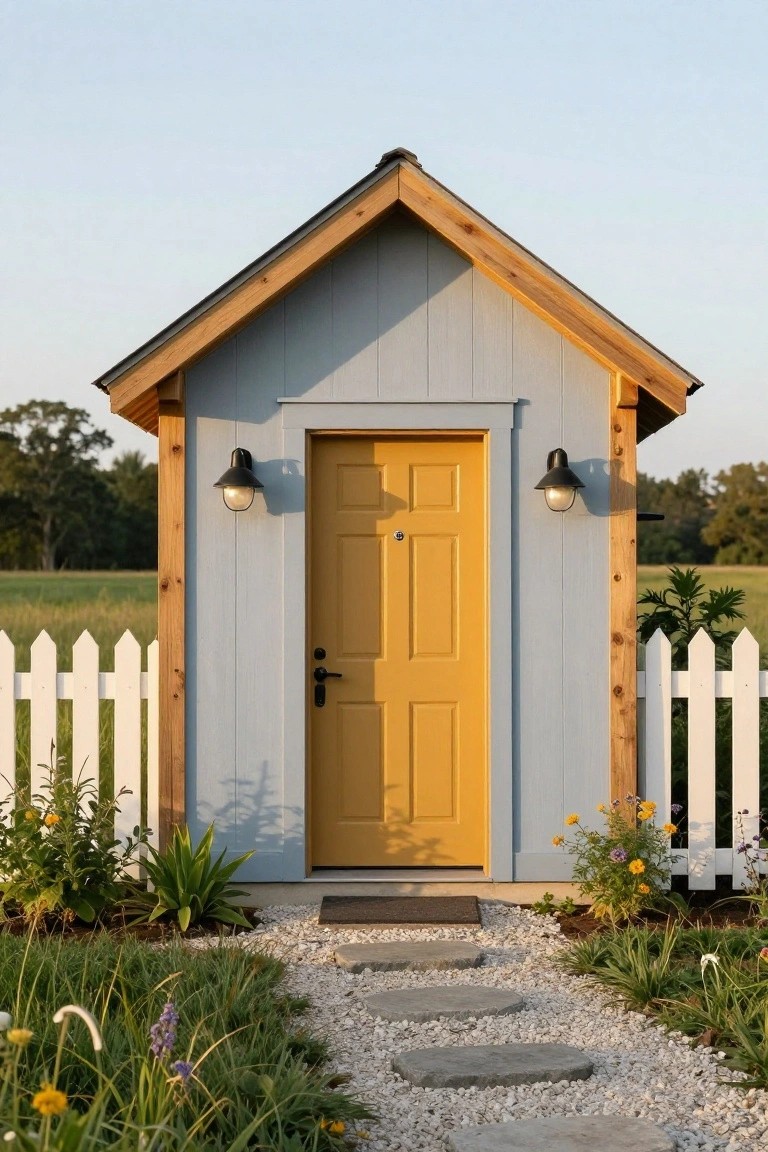
A soft light blue on siding like this gives a farmhouse shed a calm, faded look. Then that yellow door pulls your eye right to the entrance. It’s simple but makes the whole thing feel more welcoming, especially with the wood trim tying it together.
Try this on a garden shed or playhouse before going bigger. It suits open yards where you want some color without overwhelming the space. Just keep the door bright to stand out against the muted blue.
Two-Tone Stucco in White and Terracotta
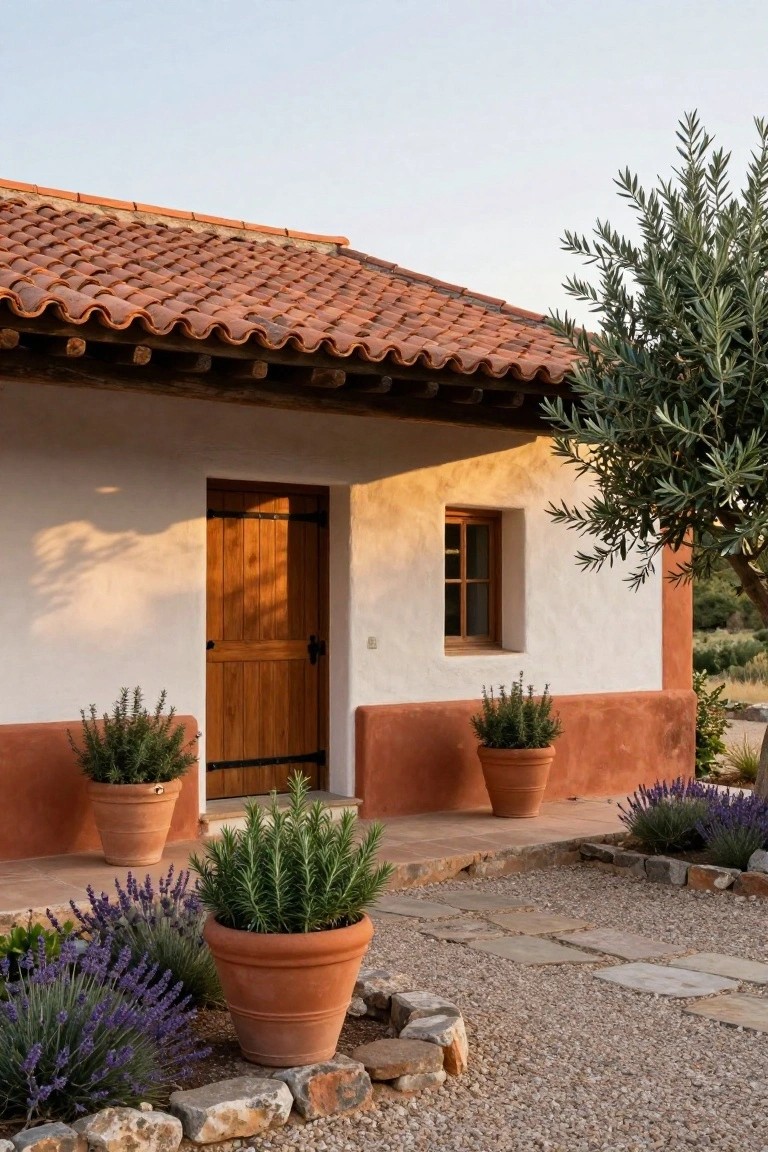
Farmhouse exteriors look right at home with a two-tone stucco finish like this one. The upper walls in soft white keep things bright and clean, while the lower base in warm terracotta ties into the roof tiles. It gives the house a grounded, sun-warmed feel without much fuss. That natural contrast makes the place feel settled into its spot.
You can pull this off on older homes or new builds in dry climates where the colors won’t fade fast. Pair it with a simple wood door and some potted herbs out front for extra life. Just stick to matte finishes so it stays low-key, and avoid busier trim that fights the calm vibe.
Beige and Gray Two-Tone Exterior
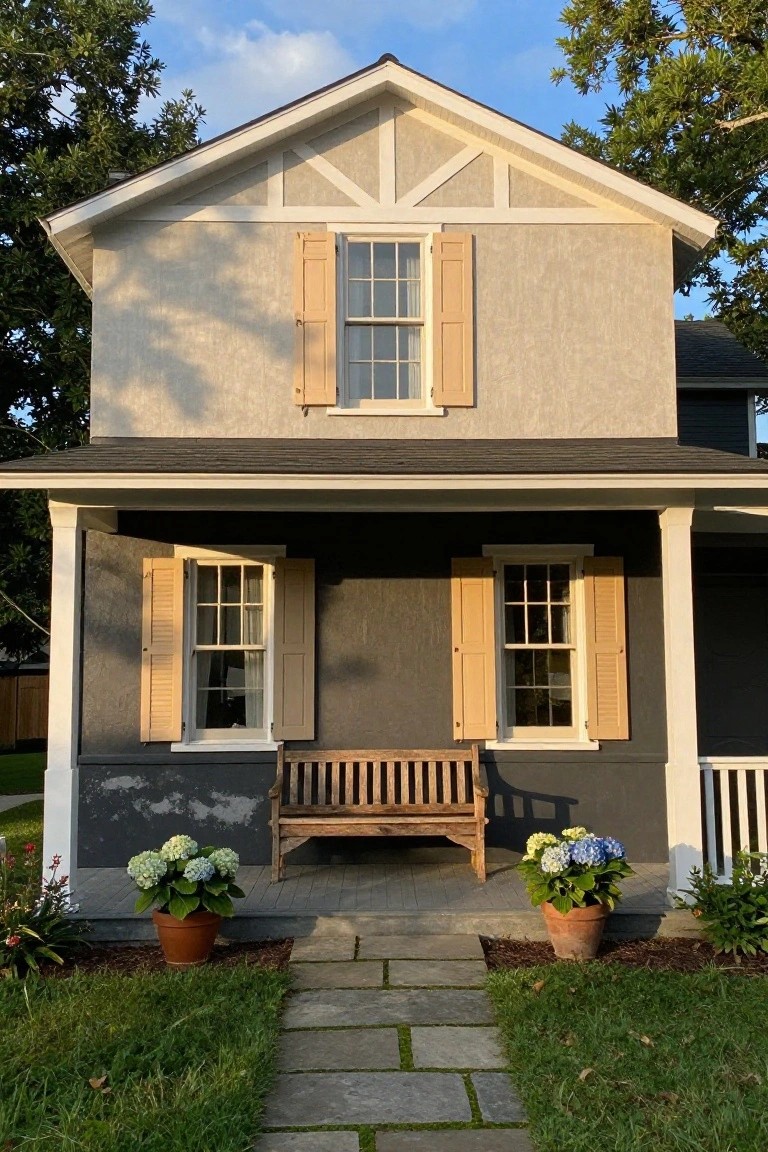
This setup takes a light beige siding on the upper part of the house and pairs it with a deeper gray right at the porch level. The contrast keeps things interesting but stays calm and farmhouse classic. White trim ties it all in, and those wood shutters add a bit of warmth without overdoing it.
Try this on a one or two-story home where you want some depth to the facade. It works well in neighborhoods with trees or open yards, since the neutrals pick up on natural surroundings. Just make sure the gray isn’t too black, or it can feel heavy.
Soft Blue Farmhouse Exterior
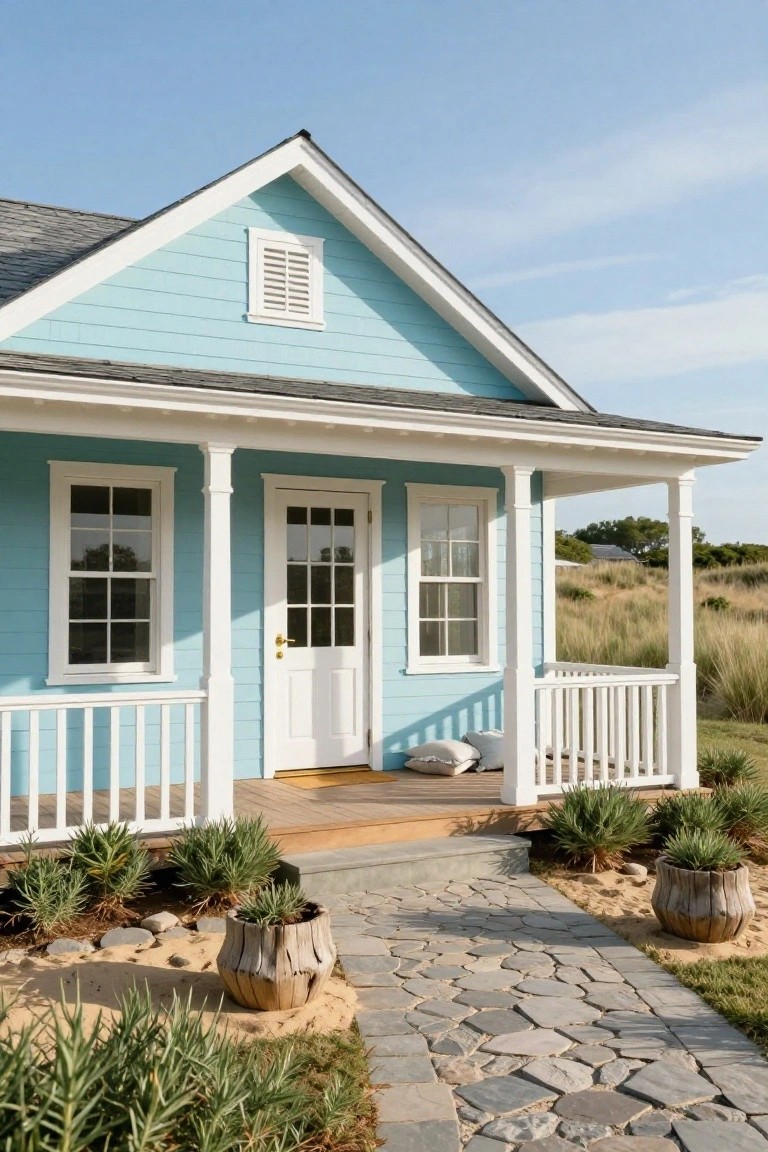
A soft blue paint like this gives a farmhouse a fresh coastal feel without going too bold. It works well on clapboard siding with white trim around the windows and porch columns. That contrast keeps things crisp and lets the house stand out against sand and grass.
Try it on smaller homes near beaches or open fields where you want easy curb appeal. Stick to pale shades so they stay light in full sun, and keep landscaping simple with low plants along the path. It suits classic gabled roofs best.
Soft Beige Siding for Farmhouses
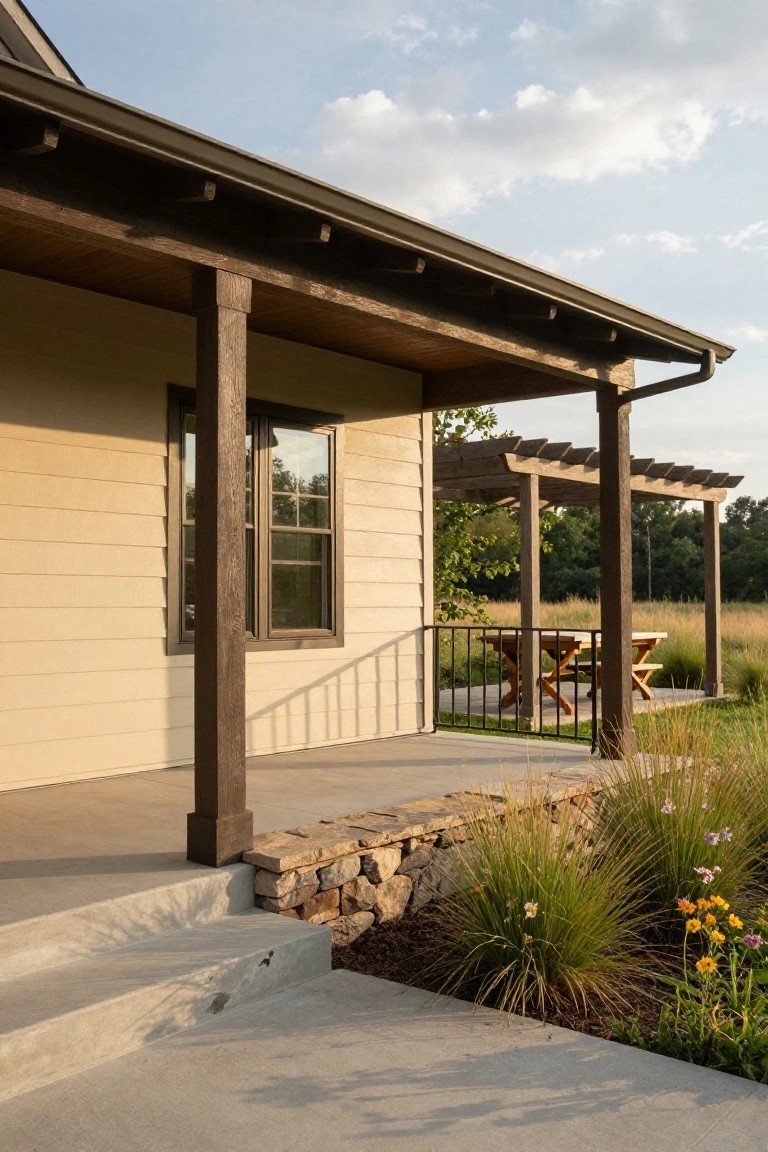
A soft beige paint on the siding gives this farmhouse a gentle, lived-in feel that blends right into the landscape. It’s not stark white or harsh gray. Just a warm neutral that picks up the tones from the fields and trees around it. The dark wood on the porch posts and trim sets it off nicely without overpowering things.
This color works best on homes with some wood elements or stone accents already in place. It suits rural spots or suburbs where you want the house to look settled in, not brand new. Pair it with black or deep brown shutters if you need more contrast. Avoid going too pale if your area gets a lot of dirt or pollen. It washes clean enough though.
Purple Garage Doors
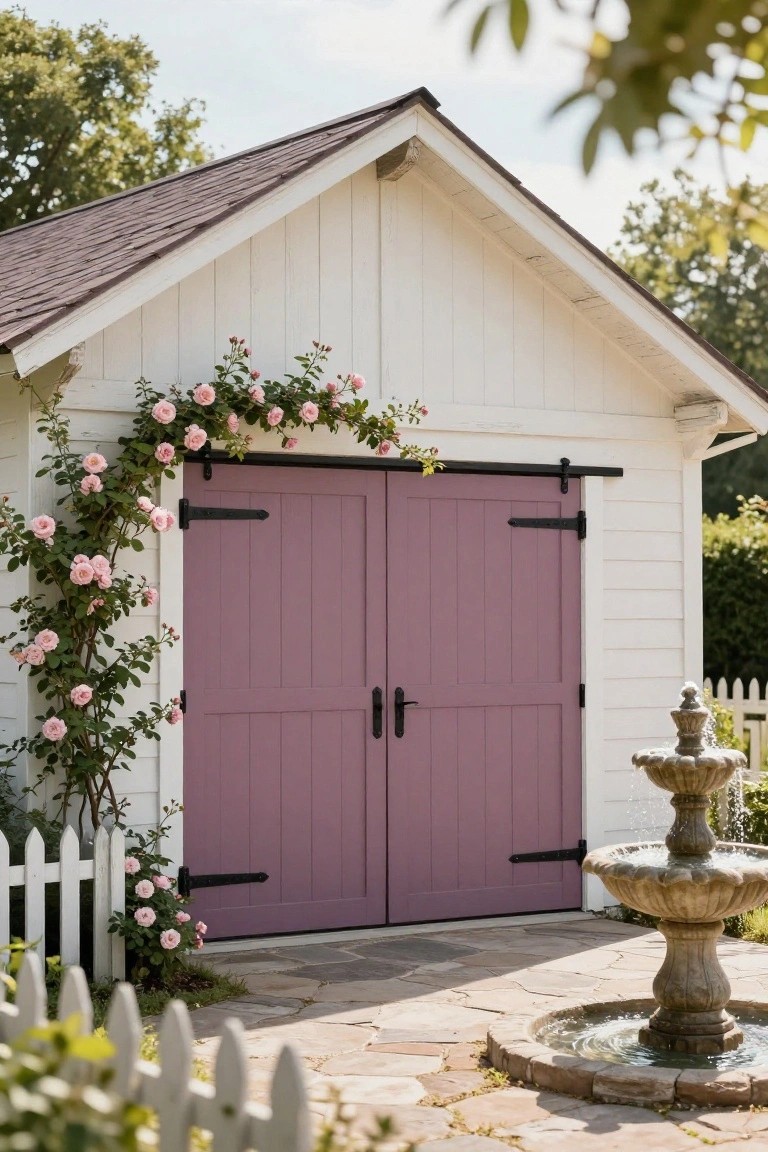
A deep purple paint on garage doors gives this white farmhouse shed a fresh twist. It pulls the eye right to the entrance without overwhelming the simple clapboard siding. Climbing roses nearby tie it into the garden feel.
This color works well on detached garages or workshops where you want some personality. Stick to crisp white or beige siding so the purple pops. Black hardware keeps things grounded. It’s great for modern farmhouses but test a sample first… sun can shift the shade.
Dark Gray Siding for Farmhouses
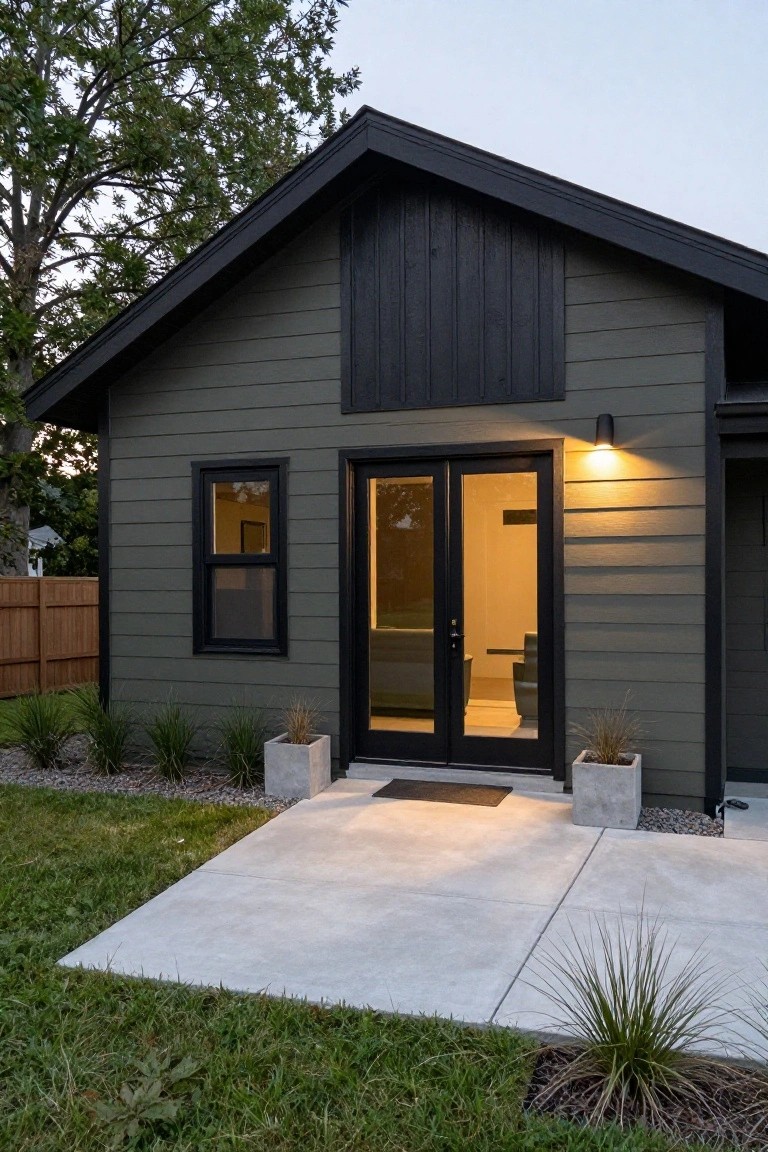
Dark gray paint like this turns a simple farmhouse into something with real presence. It feels modern but nods to classic barn styles, especially with those black frames around the doors and windows. The color holds up well in shade from nearby trees, and that entry light adds a welcoming glow come evening.
You can pull this off on cabins, garages, or main houses with straightforward lines. Stick to matte finishes to keep it from looking too shiny, and use gravel or concrete around the base like here for easy upkeep. It suits yards with some green but not too fussy… just watch for pollen stains in spring.
Mint Green Farmhouse Siding
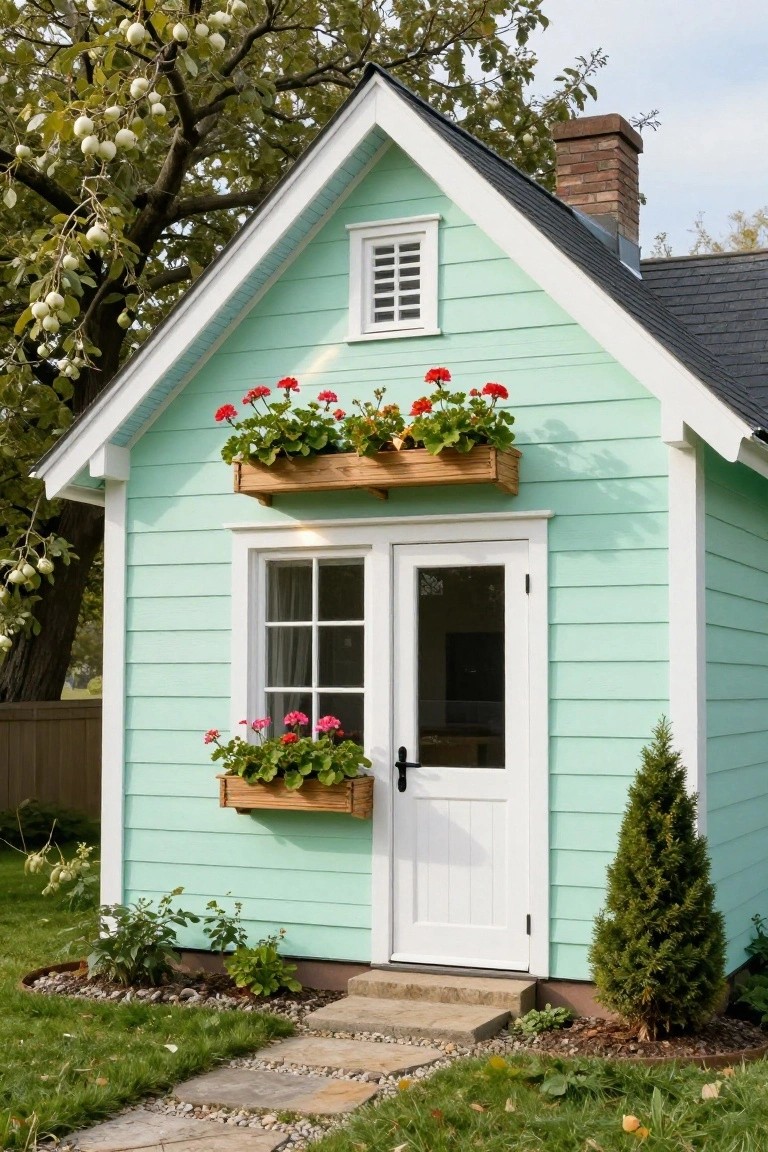
A soft mint green paint like this on farmhouse siding keeps things fresh and not too heavy. It lightens up the classic clapboard look, especially with crisp white trim around the windows and door. Those flower boxes overflowing with red geraniums add just the right pop of color without overdoing it.
This color works best on smaller structures like garden sheds or guest houses where you want a cozy, cottage vibe. It pairs well with natural landscaping and stone paths. Just keep an eye on dirt buildup since the light shade shows marks more easily.
Soft Cream Siding with Black Trim
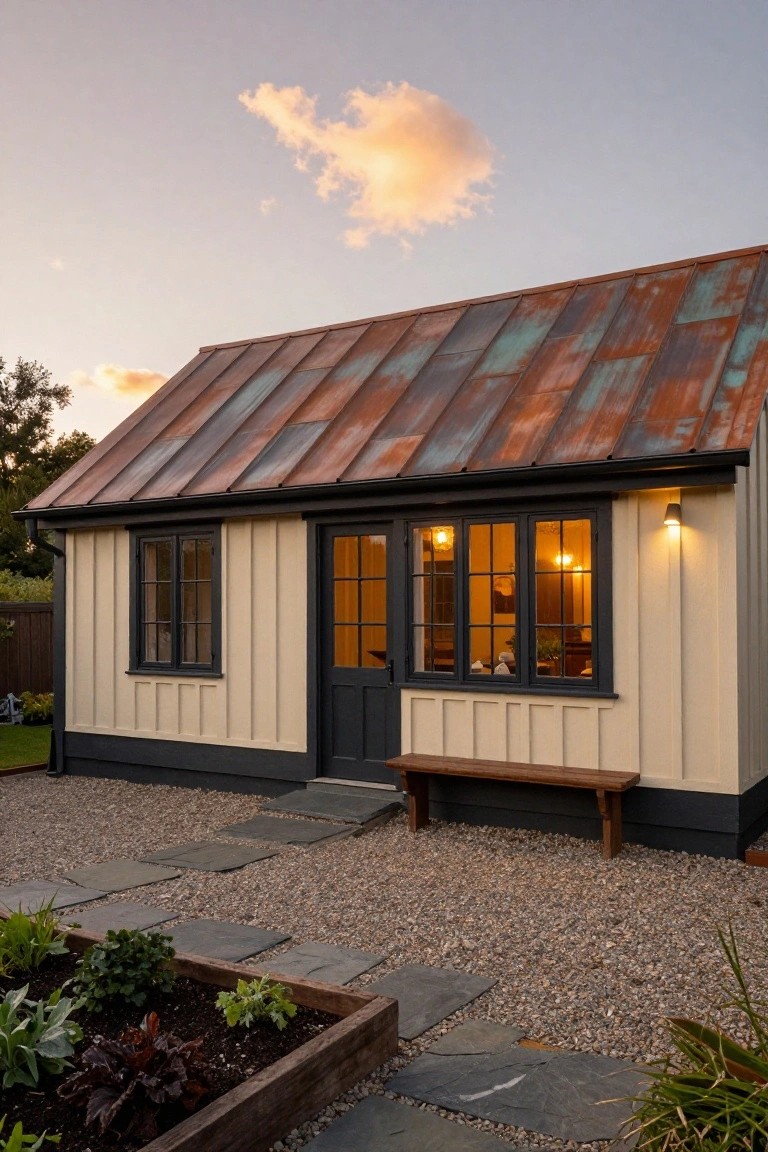
A soft cream paint on the siding works well here against those black window frames and door. It keeps the farmhouse feel but looks cleaner and more modern than stark white. The rusty metal roof pulls it all together without much fuss.
Try this on a small cottage or guest house where you want curb appeal that doesn’t shout. It suits gravel yards and simple gardens best. Just make sure the trim paint is a true black, not gray, to get that crisp edge.
Crisp White Plaster Walls
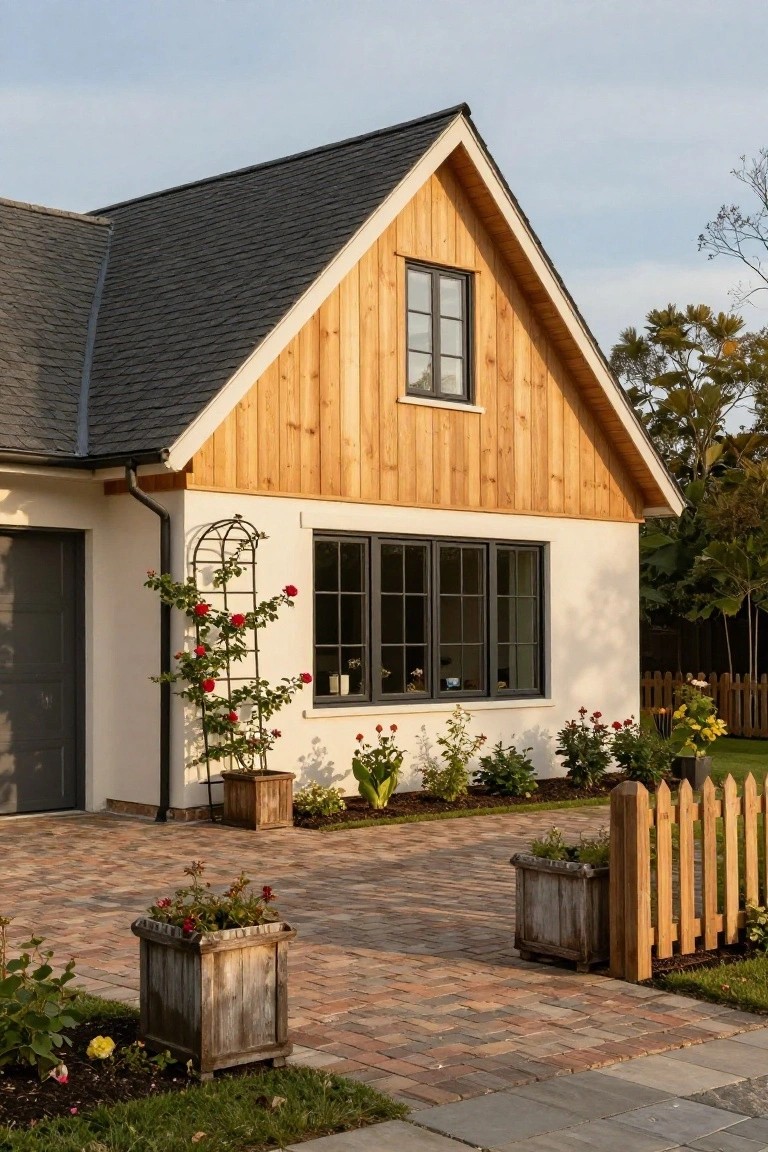
A clean white paint on plaster walls gives this farmhouse a bright, fresh look. The natural wood cladding up on the gable pulls in warmth without overpowering things. Black window frames keep it sharp, and it all ties together for curb appeal that feels current but rooted in tradition.
Try this on homes with some wood details or a simple gable roof. It suits milder areas where dirt doesn’t show as much. Just make sure the plaster is prepped right so the paint holds up over years. Pairs well with gray stone or brick accents too.
Navy Blue Siding with a Yellow Front Door
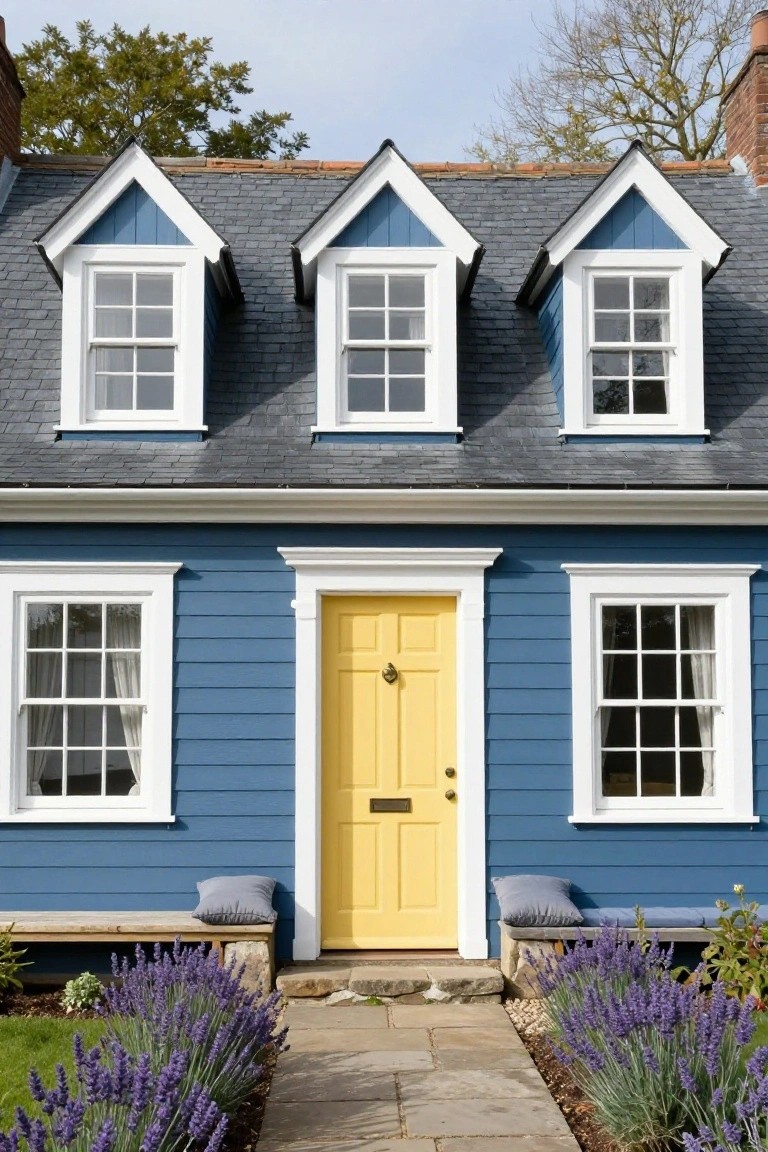
This look uses a deep navy blue on the siding, then pops a bright yellow door right in the middle. It gives a farmhouse a cheerful entry that stands out without trying too hard. The white trim keeps everything crisp, and those dormer windows up top add some classic shape. Folks like how the yellow pulls your eye to the door, making the house feel more welcoming from the street.
Try this on a shingle or clapboard farmhouse, especially if you have a simple gable roof. It works best where you want contrast but not chaos, like pairing with neutral stone steps or lavender beds out front. Just make sure the blue is a true navy, not too gray, or the yellow might fight it. Keeps curb appeal strong year round.
Frequently Asked Questions
Q: How do I test these colors on my own house before buying gallons?
A: Paint big swatches on foam board with sample pints. Prop the board against your siding in full sun and shade. Check it over a week as light shifts.
Q: What if my farmhouse has a dark roof—do light paints still work?
A: Light bodies balance dark roofs perfectly. They lift the whole look and keep things airy. Just avoid going too pale or it washes out.
Q: Can I pair these with colored doors and shutters?
A: Go for it—bold accents like barn red or black make farmhouses pop. They draw the eye without overwhelming the body color.
Q: North-facing house here—which shades hide dirt best?
A: Greens and warm grays shrug off grime better than whites. They age gracefully in shade. And they nod to nature around most farmhouses.
