

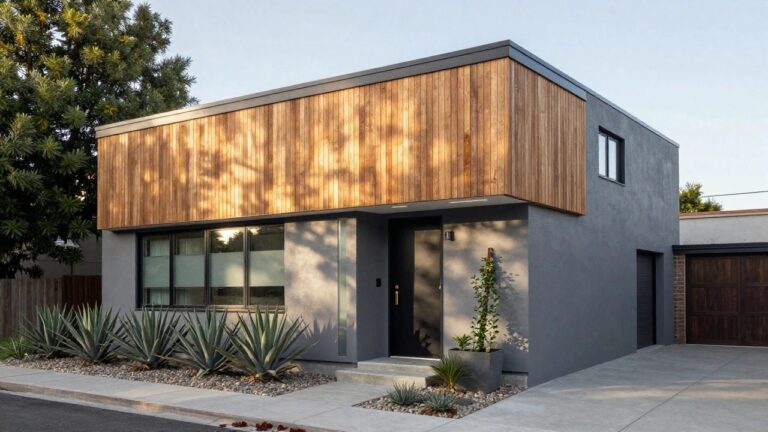
I’ve spent time walking neighborhoods full of modern homes, and the exteriors that pull you in right away balance their bold lines with paint colors that enhance the siding and roof without overwhelming them. A good scheme makes the facade read cleanly from the street, highlighting entries and windows while tying into the overall material mix. When I updated our own house, I noticed how subtle shifts in color temperature changed the way sunlight hit the stucco, making it feel more integrated with the landscape. Colors that work best often layer neutrals for the body with deeper tones on accents, creating depth that lasts through seasons. A few of these combinations stand out as ones worth sampling on your own walls before committing.
Warm Wood on a Gray Facade
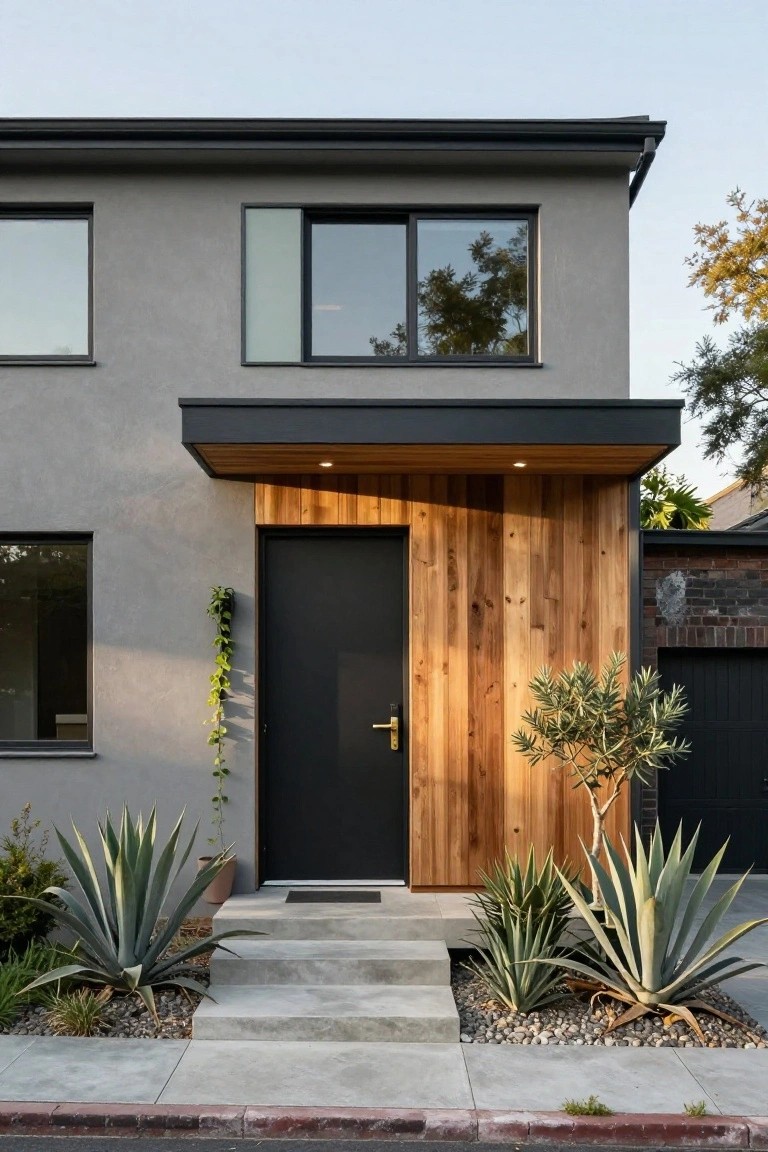
A light gray stucco covers most of this modern house, giving it a clean, understated look that fits right into a sunny neighborhood. Black frames the windows and front door for sharp contrast, but the real standout is the cedar wood cladding the entry canopy. That wood brings a bit of natural warmth to balance the cool tones. Without it, the gray might feel too stark.
This combo works best on single-story or low-profile homes where you want modern style without going all cold and minimal. Use cedar or similar wood just at the entry to draw folks in, and keep plants simple like those agaves by the steps. It suits drier spots too, since the materials hold up well. Just make sure the wood gets some protection from the weather.
Navy Blue Walls with Wood Garage Door
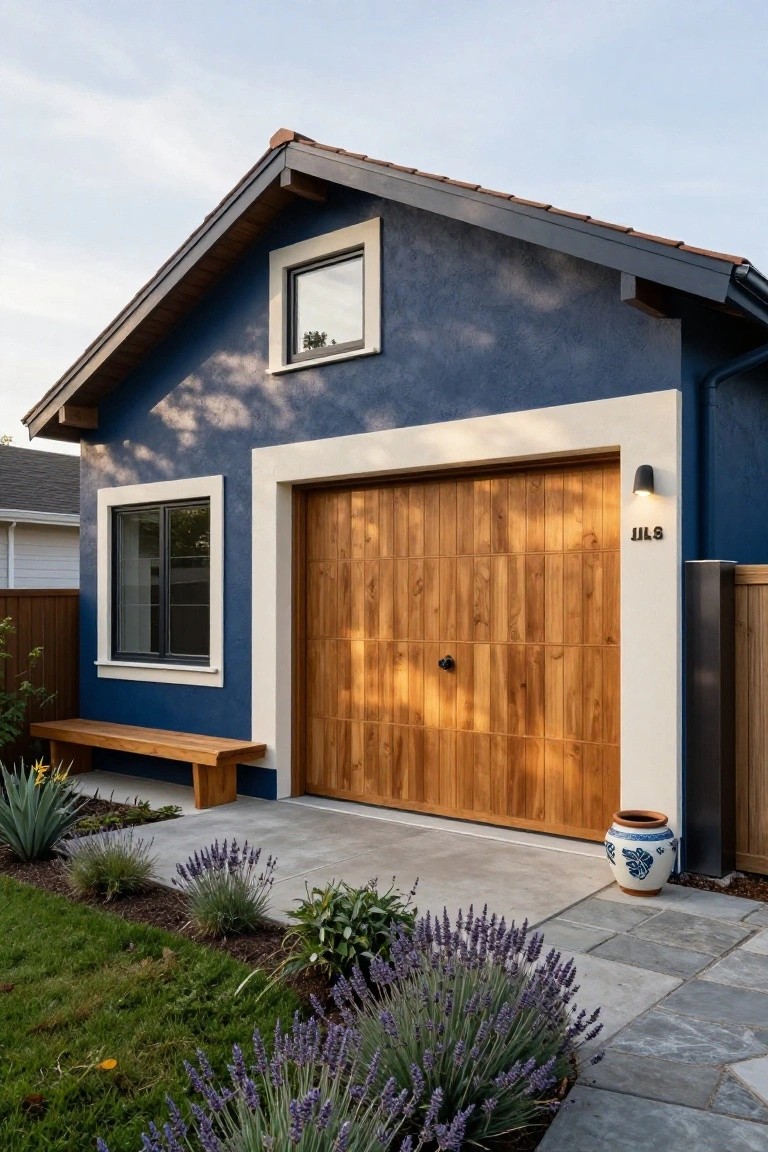
A deep navy blue on the house walls makes this modern home stand out without feeling cold. The light vertical wood on the garage door warms it right up, and white trim around the door and windows keeps everything crisp. It’s a simple way to mix bold color with natural tones for curb appeal that lasts.
Try this on a single-story or low-profile house where the blue can wrap around nicely. It works best in mild climates since the dark shade soaks up some sun. Pair it with a wood door in teak or cedar, and add potted plants nearby to soften the edges. Just make sure your trim paint holds up to weather.
Sage Green Exterior Walls
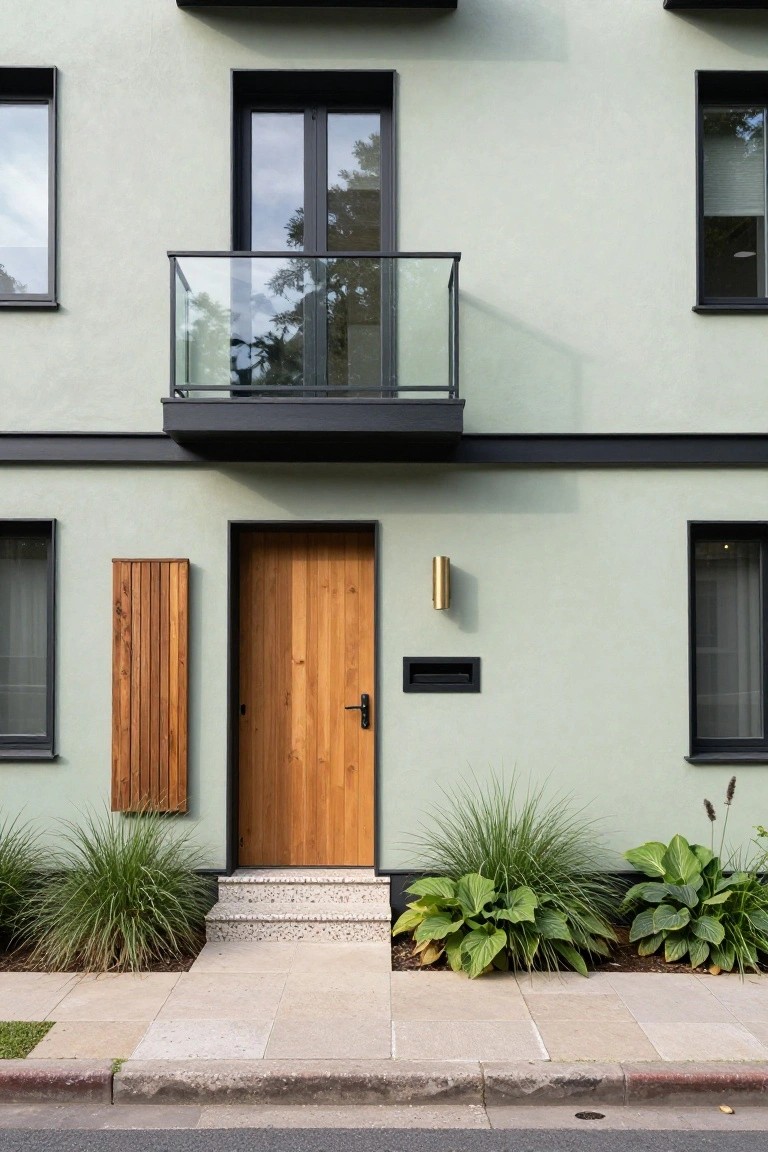
Sage green makes for a calm, modern exterior paint color that feels fresh without being too bold. It works well on stucco or smooth walls like these, pairing nicely with black window frames and a balcony edge for clean contrast. The soft tone picks up hints from nearby trees and sky, helping the house blend into its spot while still standing out.
Try this on a two- or three-story contemporary home, especially one with flat roofs or simple lines. Add a warm wood door and maybe a gold light fixture to keep it from feeling cold… it suits urban or suburban settings best. Just make sure the green isn’t too yellow, or it might clash with brick paths.
Crisp White Siding with Navy Trim
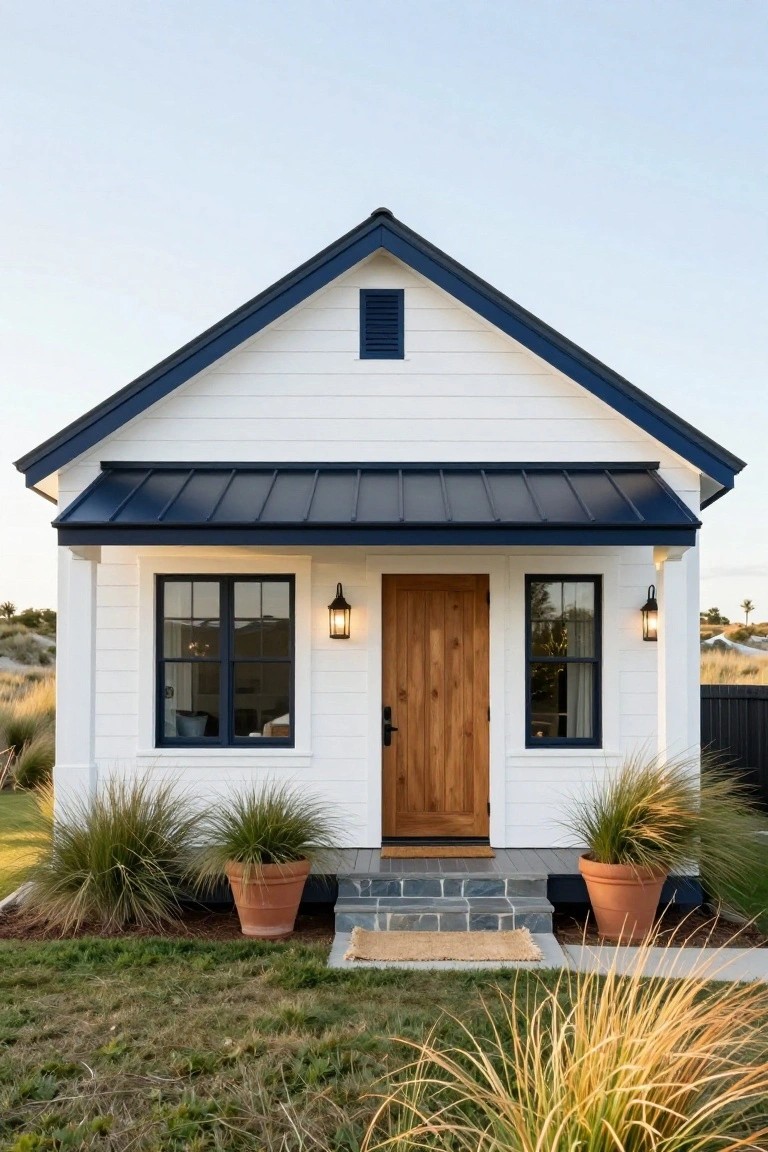
A simple way to update a house exterior is bright white siding topped with navy blue on the roof and porch. The sharp contrast keeps things fresh and modern. It avoids blandness, and the wood door adds just enough warmth to welcome folks in.
This scheme fits cottages or small modern homes best, especially in coastal spots where the navy nods to the sea. Pick a glossy metal roof like this for extra punch. Skip it on busier streets though, it shines more in quiet yards.
Crisp White Siding with Black Trim
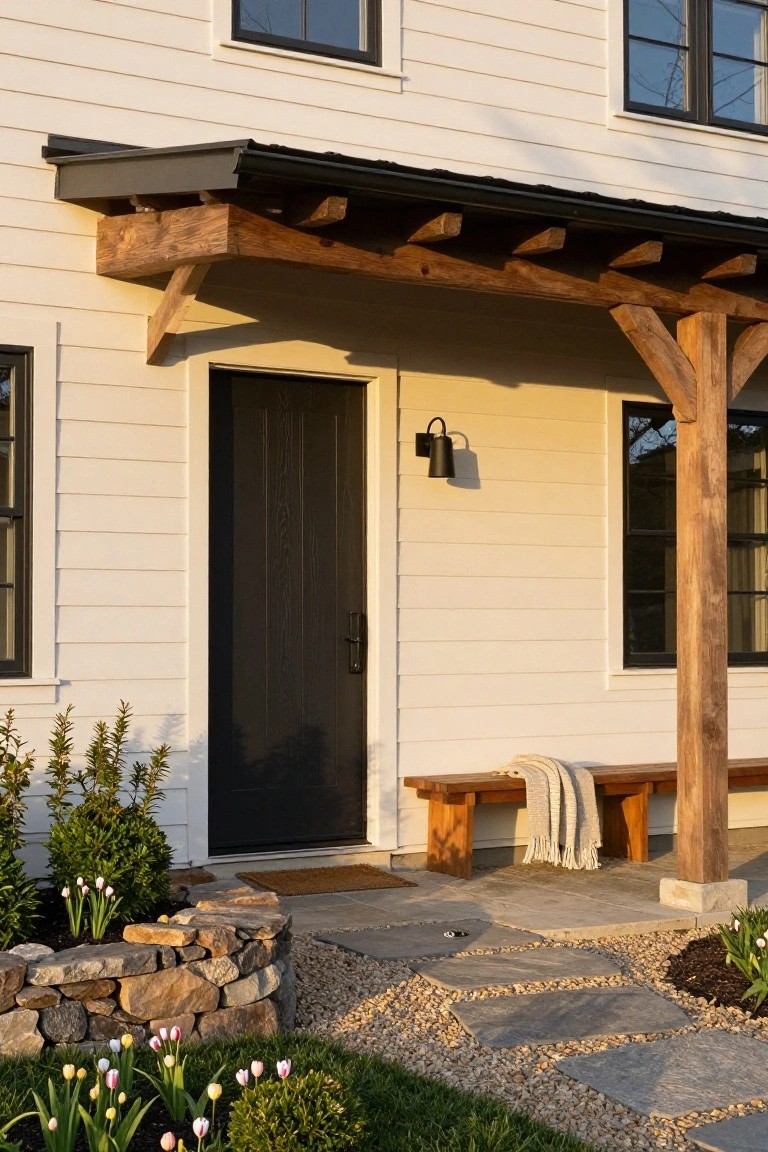
A simple white exterior like this one keeps things clean and fresh. Pair it with black windows and a black front door, and you get a sharp modern edge that feels current without trying too hard. The natural wood porch pulls it together, adding just enough warmth so the black doesn’t feel cold.
This setup works great on straightforward houses, especially ones with clean lines like farmhouses or contemporaries. Paint the body a bright white, go matte black on trim and door, then let wood elements stay unfinished. It suits most neighborhoods. Just make sure the porch wood is sealed against weather.
Black Wood Siding for Modern Homes
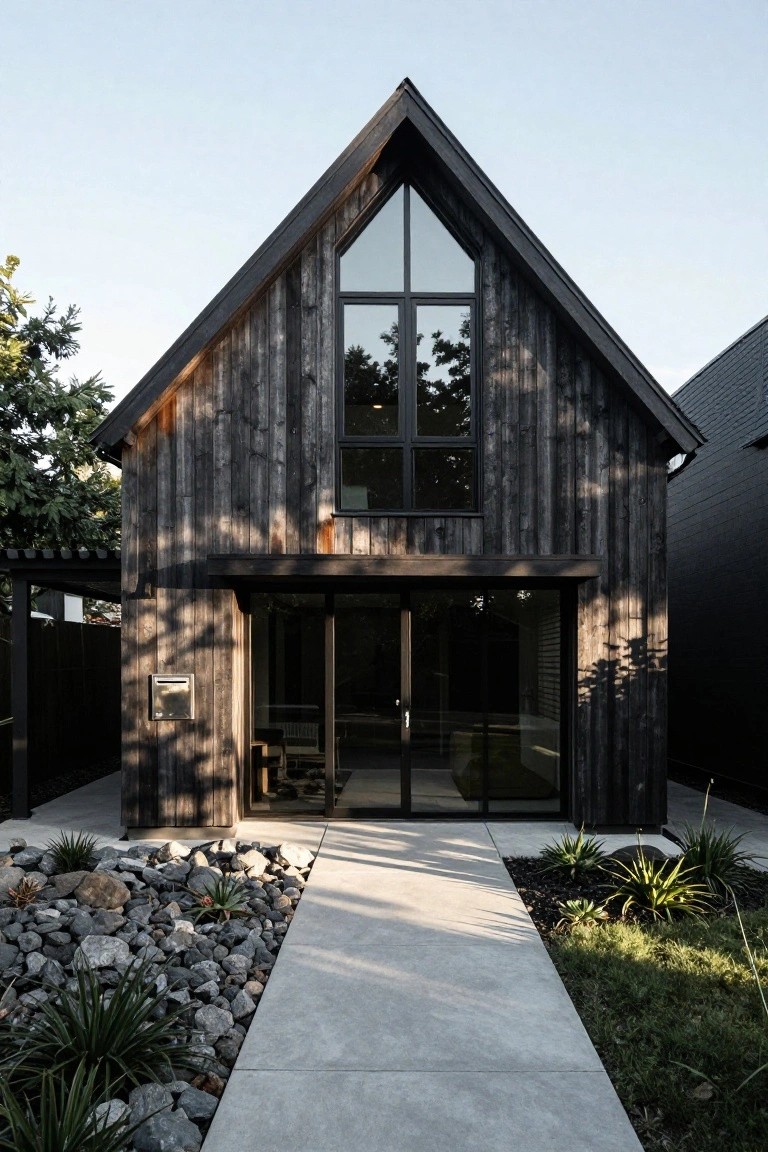
Black wood siding like this gives a house a strong, moody look that feels both rugged and put-together. It’s charred or stained timber that weathers nicely over time, so you don’t have to worry much about upkeep. That big gabled front with the tall window pulls it all together, making the place look taller and more open without any fuss.
This works best on simpler shapes like gables or A-frames, especially if you pair it with clean glass doors and a light concrete path out front. It suits spots with trees around, since the dark tone blends right in. Just keep plantings low and spare nearby, or it can feel too heavy.
Warm Terracotta Exterior Paint
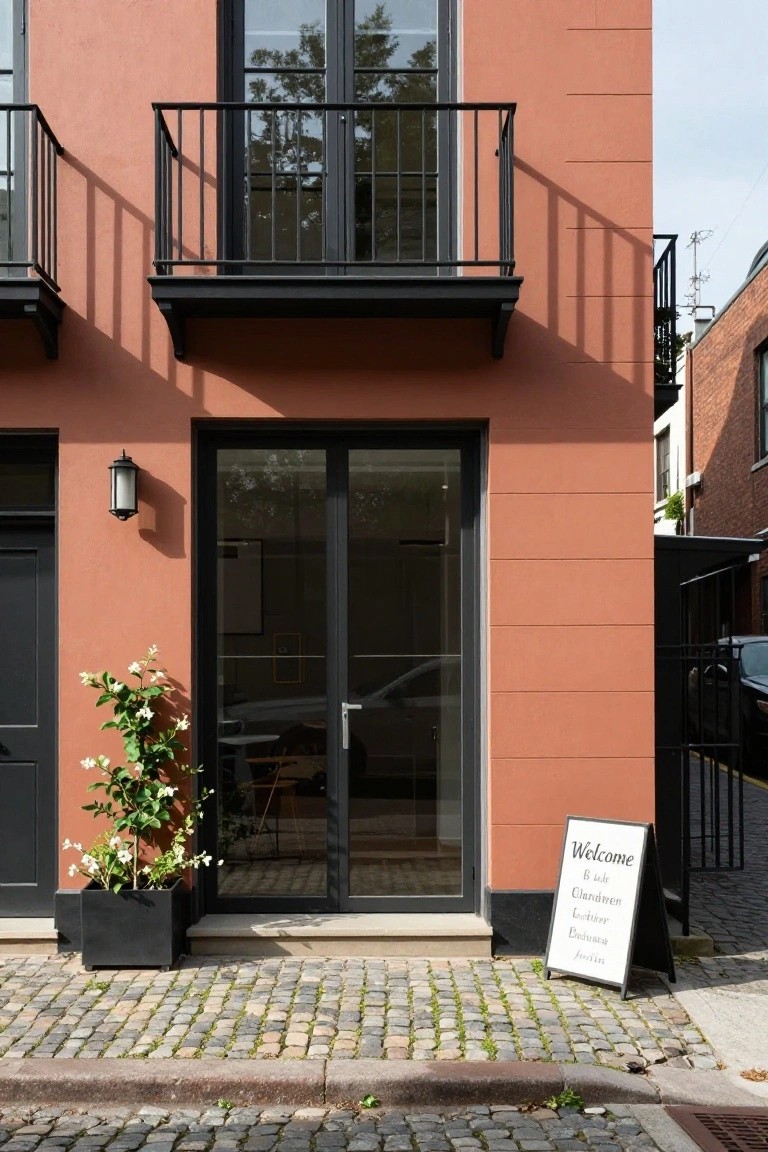
A warm terracotta shade like this one brings a fresh take to modern houses. It has that earthy feel without going too rustic, and the black frames around the doors and windows keep things sharp and contemporary. People notice it right away on the street.
Try it on row houses or simple boxy builds in town. It suits places with some brick neighbors, since the color nods to that without copying it. Just keep plantings minimal, like one climber in a pot by the entry… keeps the focus on the walls.
Beige Stucco with Dark Wood Panels
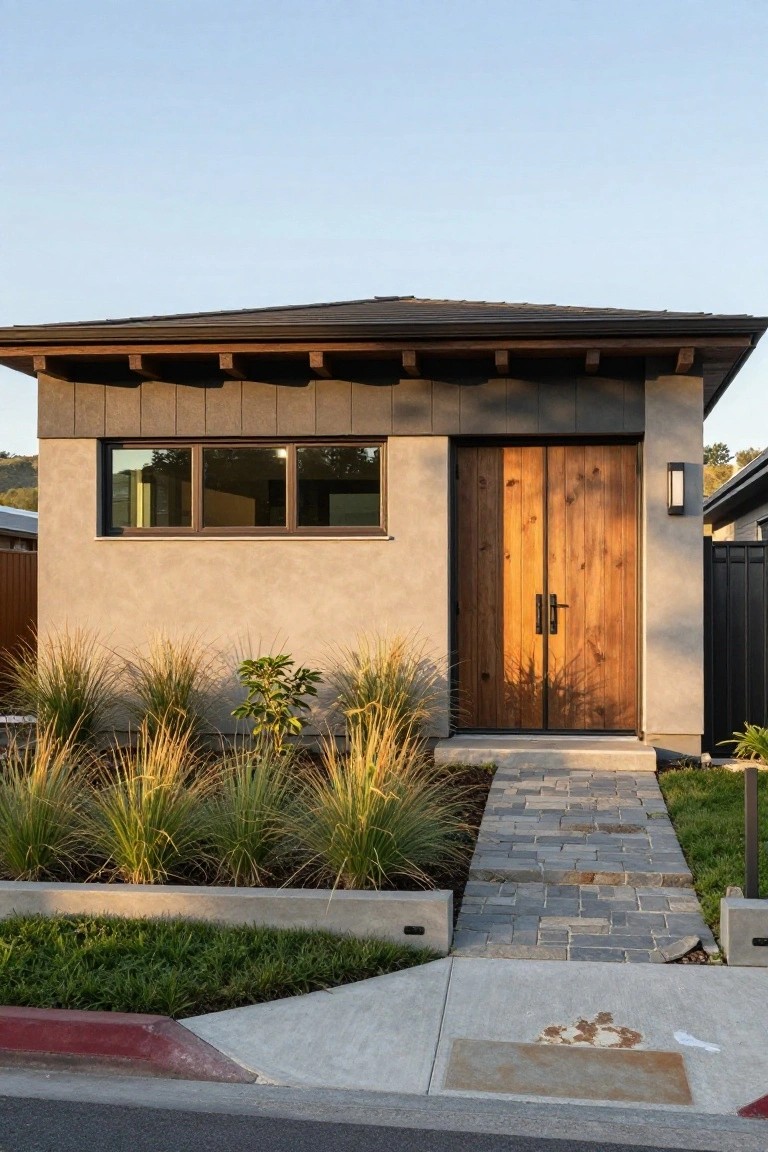
A soft beige stucco covers most of this modern house, paired with dark charred wood panels along the top edge. The warm wood double doors at the entry pull it all together. What stands out is how the light stucco reflects the sun without looking stark, while the darker wood adds shadow and depth. It’s a simple way to make a boxy facade feel less cold.
This scheme works best on smaller homes or additions in mild climates. The beige hides dirt better than white, and the wood accents give scale to flat walls. Use it where you want modern lines but not an all-metal look… pair with gravel paths or grasses out front to keep the yard low fuss.
Sage Green Siding with Black Trim
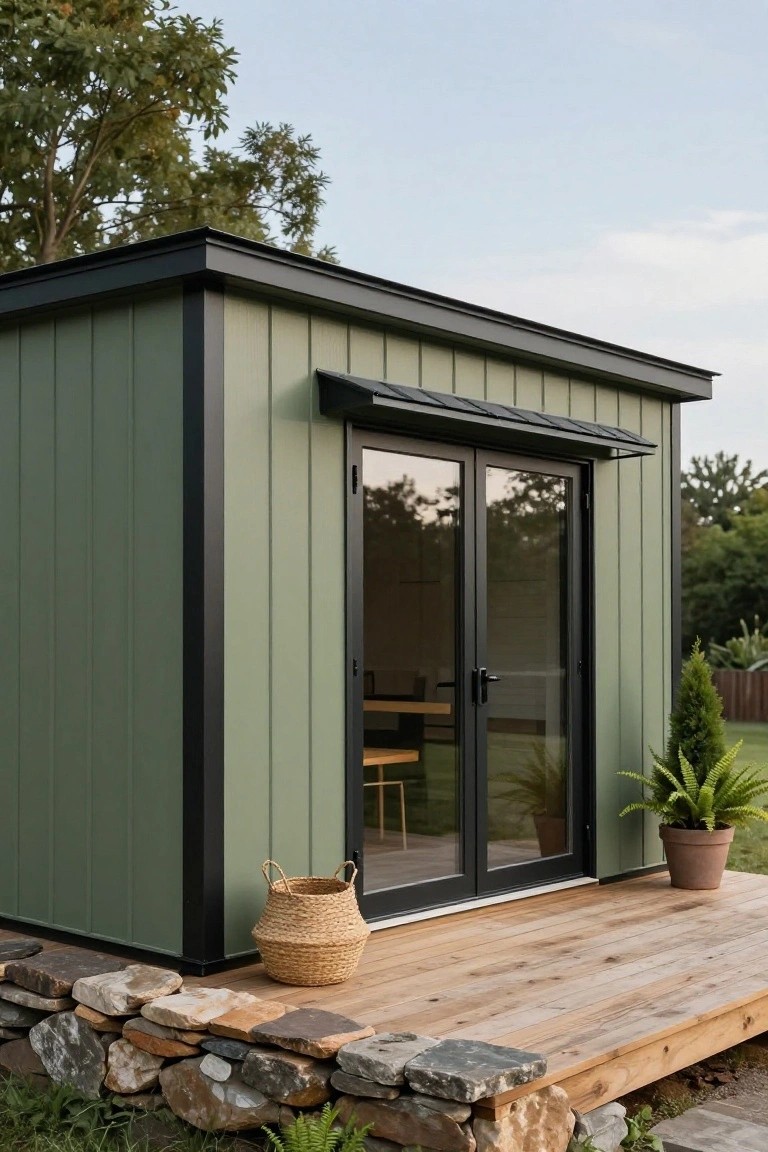
This setup uses a soft sage green on the vertical siding paired with crisp black trim around the edges, roofline, and doors. It gives a modern cabin feel without going too bold. The green reads calm against trees and sky, and the black keeps things sharp and grounded.
Try it on a backyard shed, garage, or even a full house facade if you want something fresh but not flashy. It suits wooded lots or suburbs where you need color that blends in a bit. Just make sure the black frames are sturdy metal or good paint to hold up over time.
Powder Blue Stucco for Coastal Modern Homes
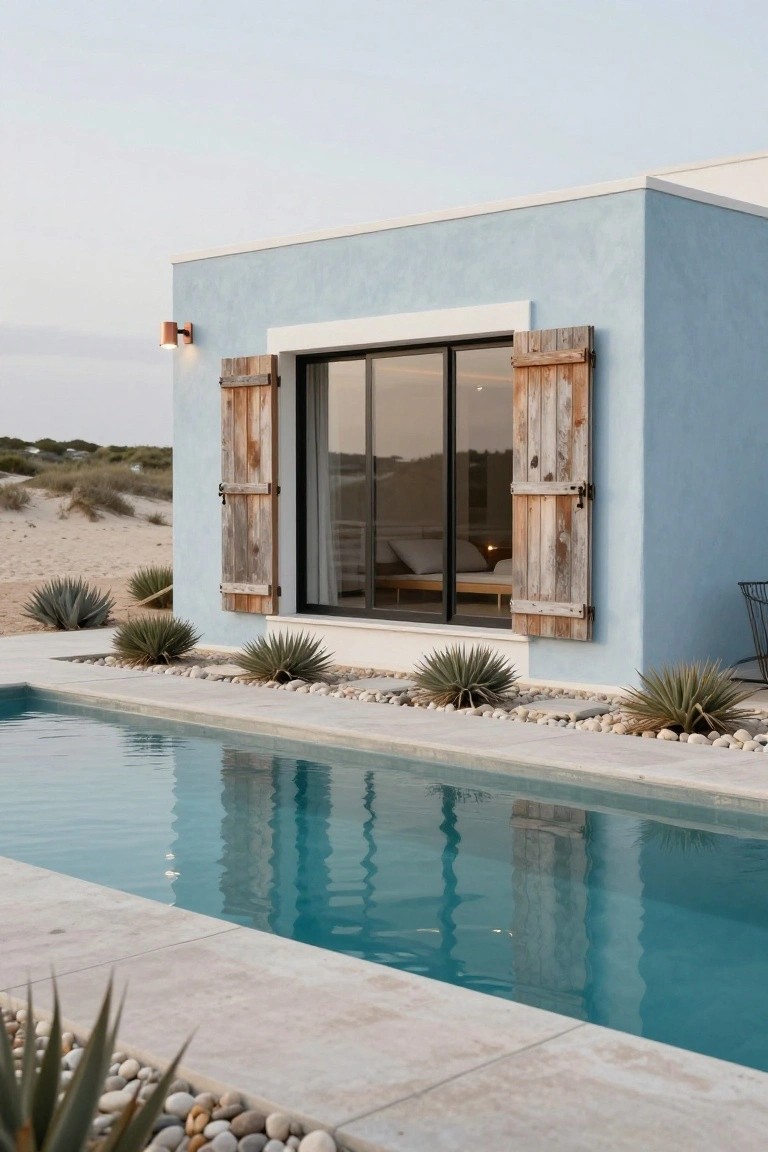
A soft powder blue on stucco walls gives a modern house that easy coastal feel without trying too hard. It picks up the sky and sea around it, especially here with dunes in the background. Pair it with weathered wooden shutters like these on the big glass windows, and you get some nice texture contrast that keeps the look from being too plain.
This color works best on homes in sunny, dry spots where you want a relaxed vibe. Test a few shades on your wall first since light blue can shift with the light. Skip it if your area gets a lot of rain, as stucco needs protection. Add simple plants like agaves along the base to tie it into the yard.
Black Siding with Warm Wood Entry

This setup takes a boxy modern house and makes the front stand out using deep black wood cladding over most of the facade. Then it switches to vertical planks of natural warm-toned wood right at the entry, with concrete steps leading up. That simple switch adds interest and pulls your eye to the door without extra fuss.
It works well on flat, simple house shapes where you want some warmth up close. Try a dark stain or paint on siding, then untreated or lightly finished wood accents at the entry on homes with clean lines. Skip it if your house has lots of curves or trim already, or it might feel too choppy.
Warm Terracotta Stucco Exterior
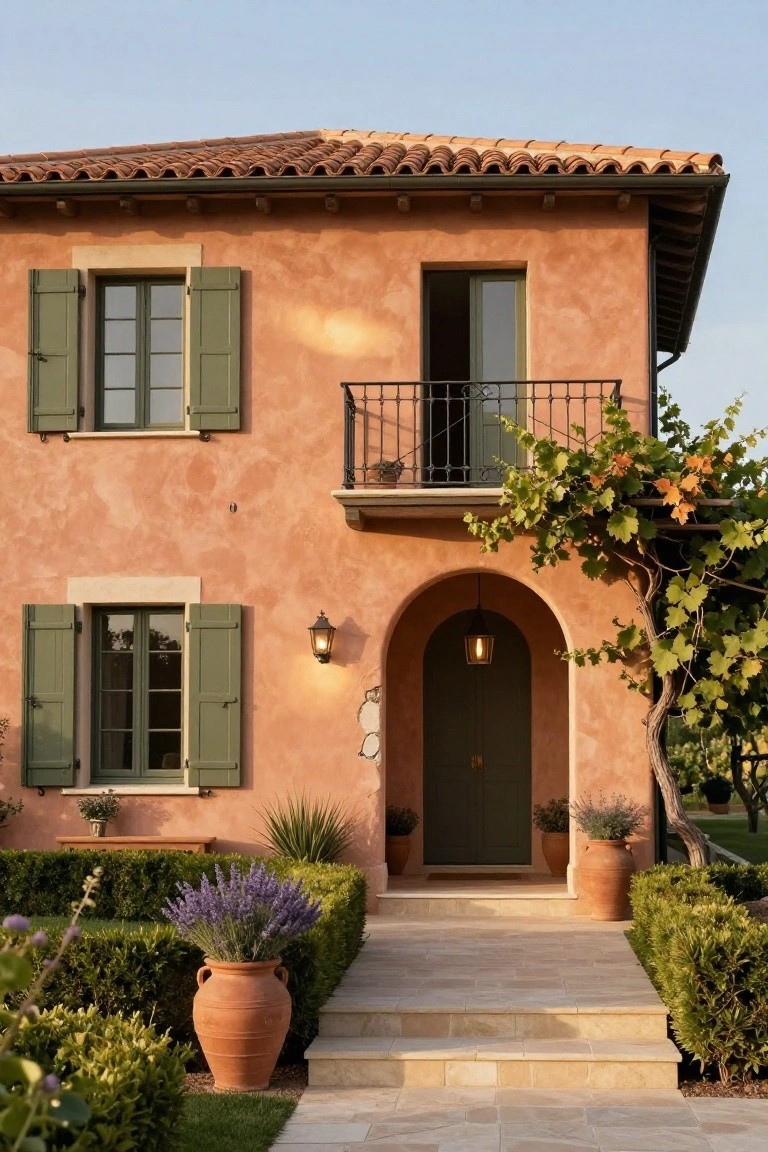
This soft terracotta stucco on the house walls gives a warm, sun-baked feel right away. Paired with green shutters and a bit of climbing vine, it pulls together a simple Mediterranean look without trying too hard. It’s not bright orange. Just a muted peach tone that settles into the landscape nicely, especially under that golden light.
Try it on homes in sunny spots or anywhere you want curb appeal that lasts year-round. It works best with clean lines like arched doors and tiled roofs. Stick to green or black accents to keep it grounded. Avoid going too pale, or it washes out.
White Exterior with Wooden Door Accent
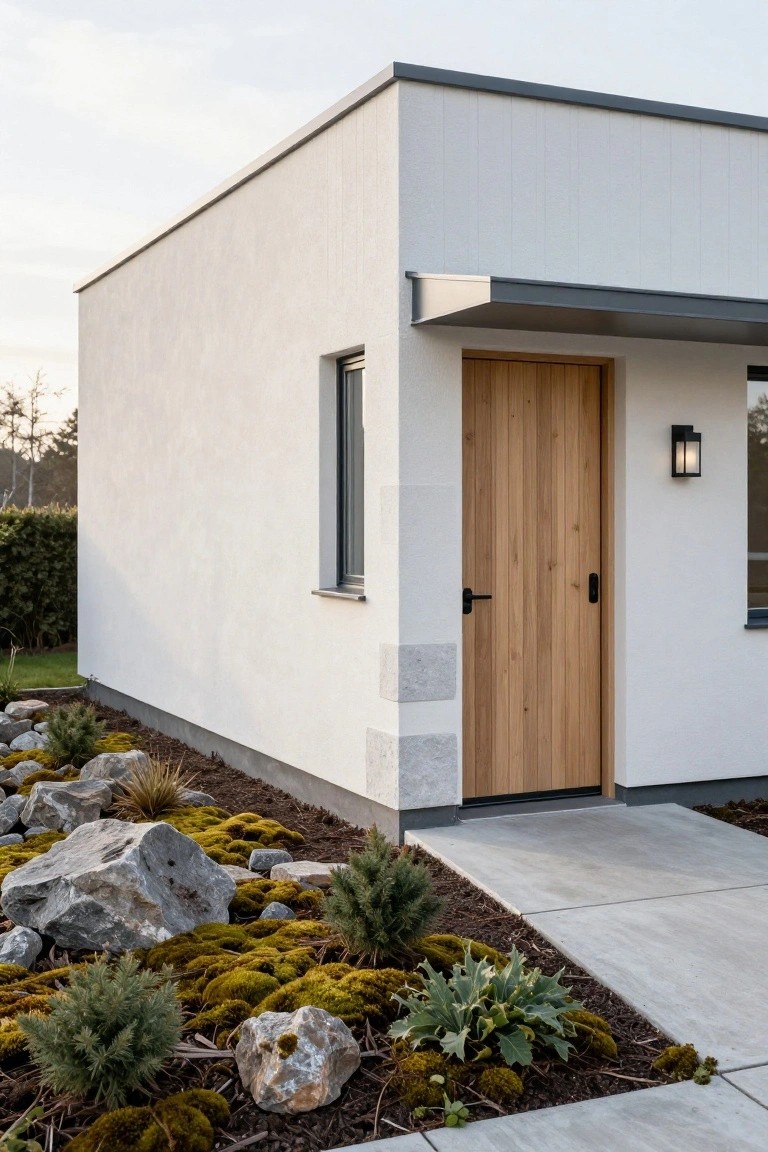
A fresh white paint job on the walls gives this modern house that clean, minimalist look. Then the natural wood door steps in as the main focal point. It adds real warmth right at the entry without overwhelming the simple lines. Folks like how it makes the front door pop and feel more inviting.
This works best on boxy or flat-roofed homes where you want subtle contrast. Go for light-toned oak or cedar that picks up on any nearby plants. Keeps curb appeal high. Skip it if your area gets too much direct sun, though. The wood might need extra sealing.
Light Gray Stucco with Dark Trim
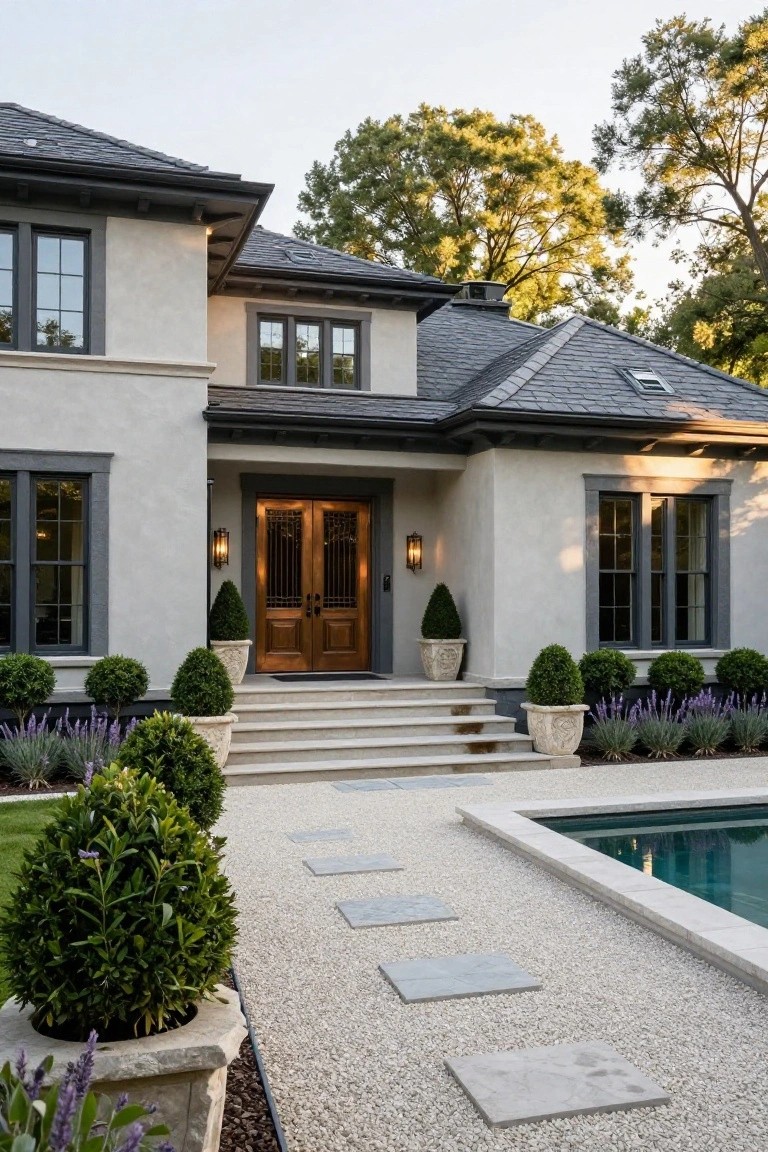
A soft light gray stucco covers the walls here. Black frames outline the windows and roof edges. Then a bronze double door pulls it together at the entry. That mix keeps things modern but not cold. The gray feels calm against trees and sky.
Try this on a house with simple rooflines and big windows. It suits suburbs or mild climates where you want low-key curb appeal. Stone steps and a few pots like these help. Just skip bold colors elsewhere or it gets busy.
Black and White Exterior Contrast
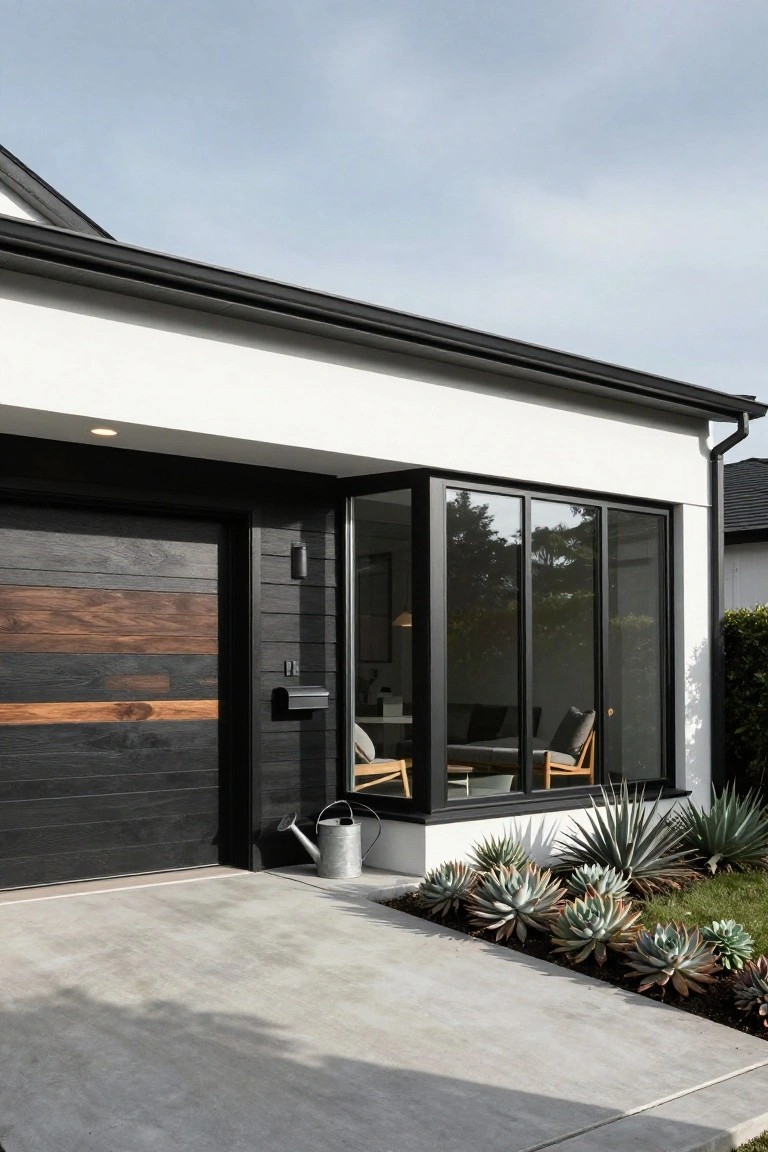
A simple black and white scheme like this one turns a basic modern house into something sharp and current. White walls keep things bright and clean, while the black garage door pulls focus right to the entry. That wood-grain texture on the door adds just enough warmth to avoid a stark feel.
This works best on flat-faced homes in sunny spots where the contrast pops under natural light. Stick to black frames on windows and minimal trim elsewhere. Add low plants along the edge for balance, but don’t crowd it. It’s forgiving for beginners since the bold colors do most of the work.
Terracotta Stucco Walls
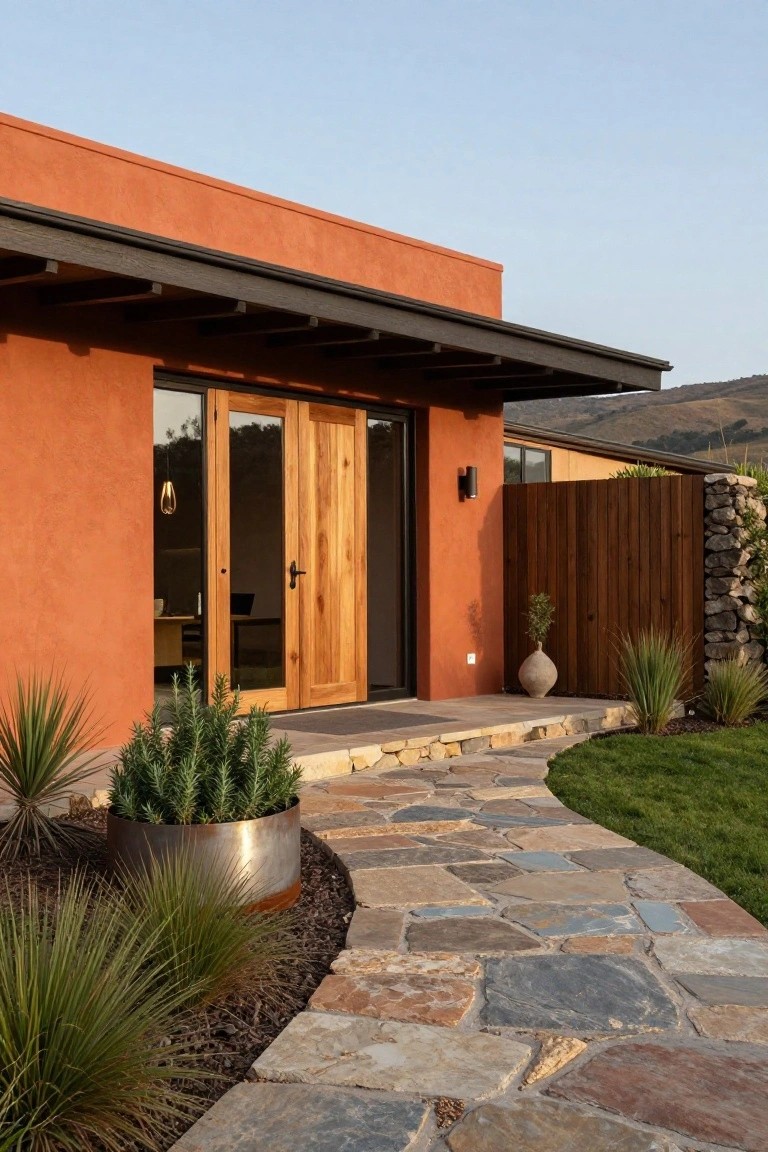
Terracotta stucco gives a modern house a warm, grounded look that pulls from the earth around it. You see it here on these rust-colored walls, set off by dark frames around the glass doors and windows. It softens the clean lines of the architecture without going too rustic. That color just sits well against hills or open sky.
Try it on homes in dry areas where the tone echoes the landscape. Pair the walls with black metal trim and natural wood doors, like this entry setup, then add a stone path to tie it in. It works best on single-story or low-profile designs. One thing… make sure your stucco mix handles the sun, or the color might fade over time.
Green Recessed Niche for Seating
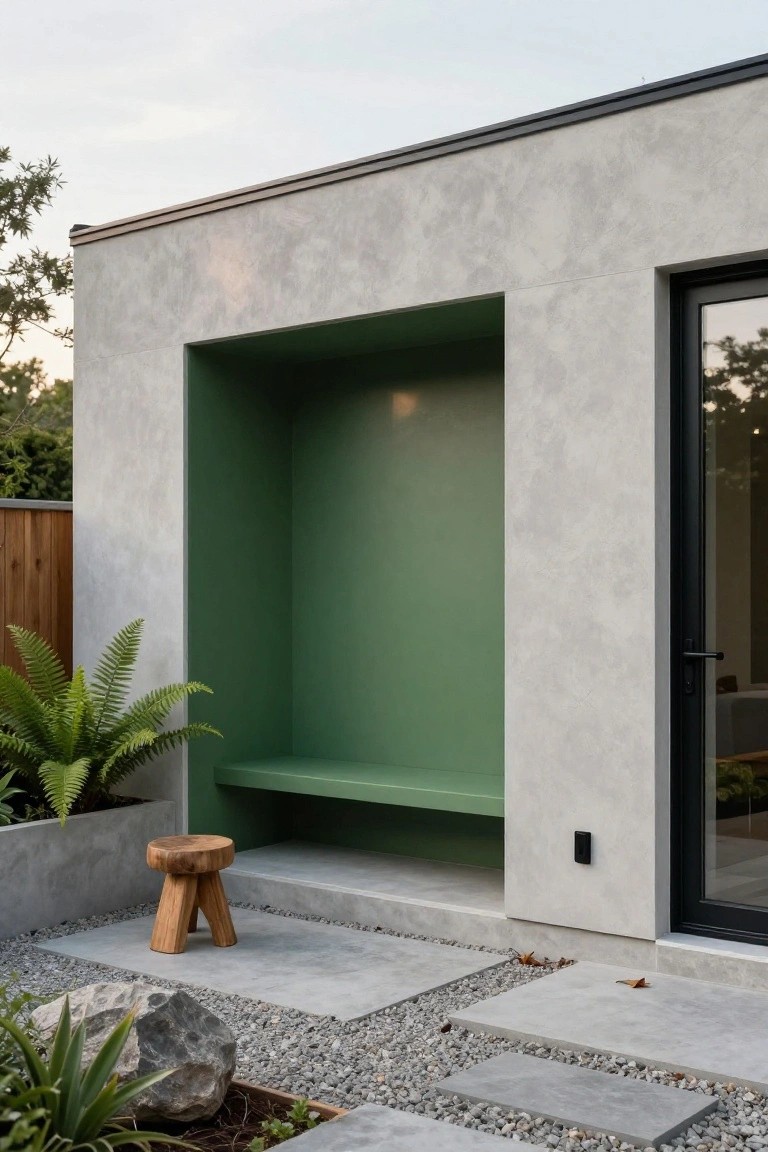
A simple recessed spot painted deep green turns a plain wall into something useful. Here it’s got a built-in bench, and that color stands out nice against the neutral gray stucco without overwhelming the look. Adds a little outdoor hangout right on the house.
Try this on a side wall near a door or patio. It fits modern homes with clean lines and tight yards. Just keep the bench plain, add a stool if you want, and some low plants around. Skip busy patterns… lets the green do its thing.
Warm Beige Stucco for Desert Homes
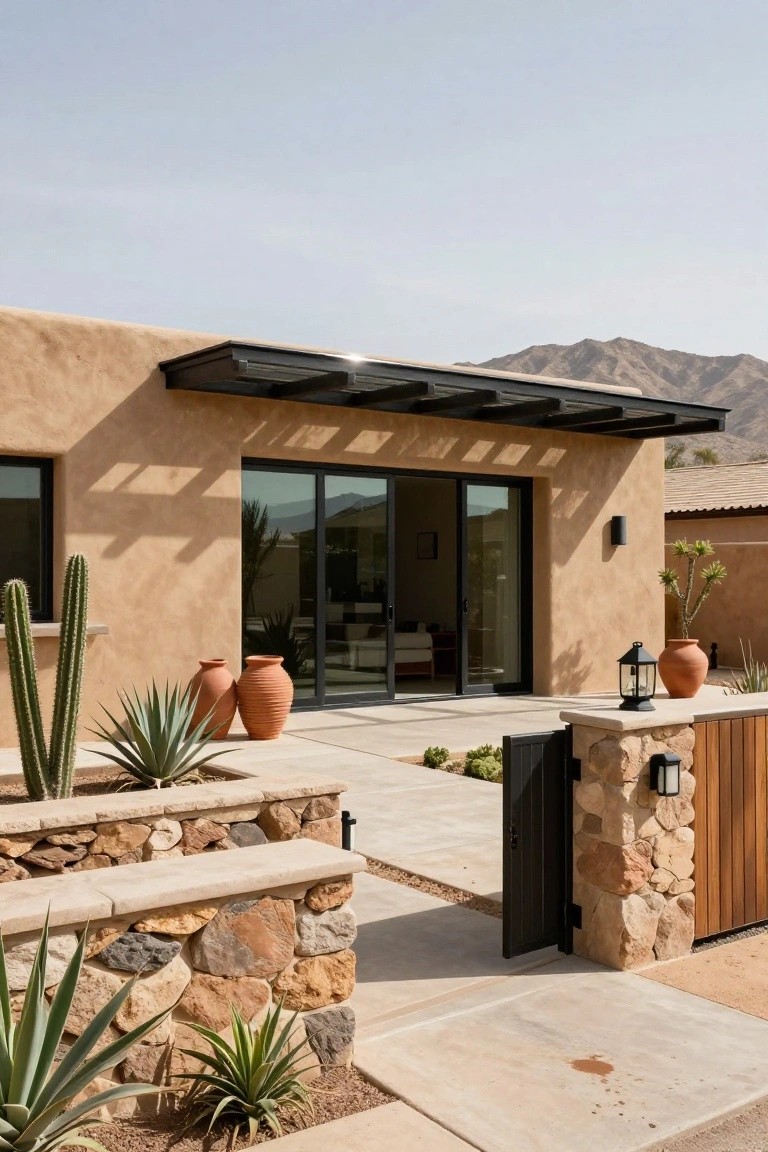
Warm beige stucco like this pulls the house right into its desert setting. The soft tan color matches the sandy ground and distant mountains so well that the place feels like it’s always been there. Those subtle texture variations in the stucco add just enough interest without overdoing it.
Try this shade on modern homes in dry areas where you want the exterior to stay quiet and timeless. It works best with stone bases or wood gates for contrast, and native plants like cacti keep things simple. Just clean it now and then to avoid dust buildup.
Mustard Yellow Exterior with Black Trim
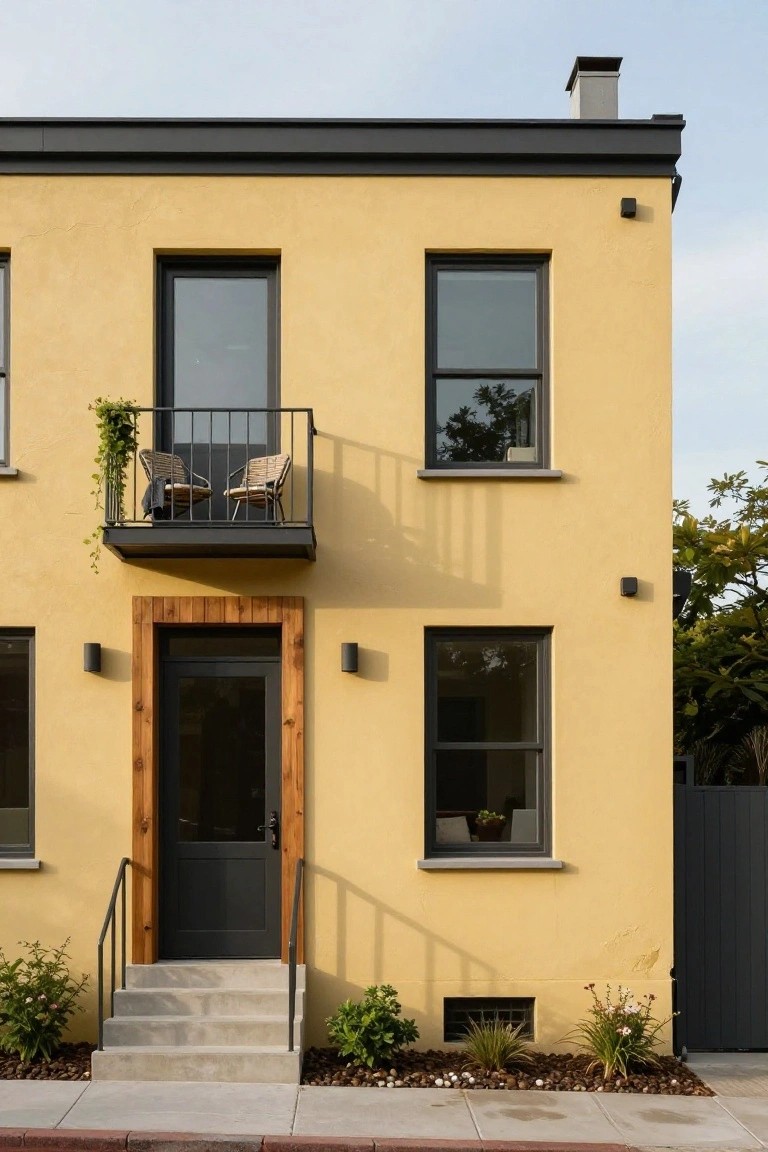
A mustard yellow paint color on the house walls brings a cheerful vibe that’s surprisingly modern. Paired with black window frames and door surrounds, it creates clean lines that make the whole facade stand out. The wood frame around the entry adds just enough warmth to keep it from feeling stark.
This scheme suits contemporary homes with simple shapes, especially in suburban spots with some tree cover. Use it on stucco or plaster for best hold-up. Test samples in morning and afternoon light first… yellows shift a lot. It pairs well with neutral hardscape like concrete steps.
Gray Metal Siding with Stone and Wood
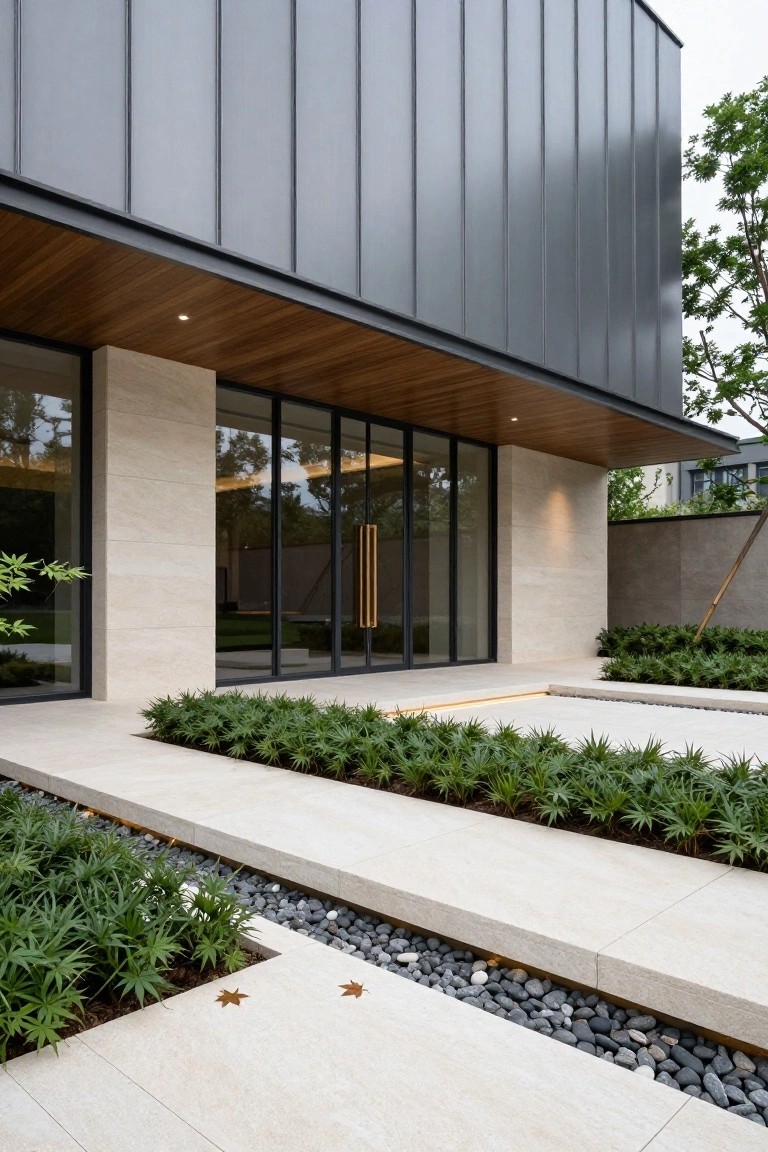
Dark gray metal panels cover much of this house’s side wall, giving it a clean modern edge. Tall beige stone pillars frame the glass entry doors, while a wood overhang shelters the space. That mix keeps things sharp but adds enough texture and warmth to feel welcoming from the street.
Try this on mid-sized homes in town or suburbs where you want standout curb appeal without bright colors. Pair the gray siding with light stone around doors or windows, and use wood for overhangs or trim. It suits flat-roofed or simple boxy designs best. Just keep plantings low around the base so the materials stay the focus.
Soft Green Siding for Coastal Homes
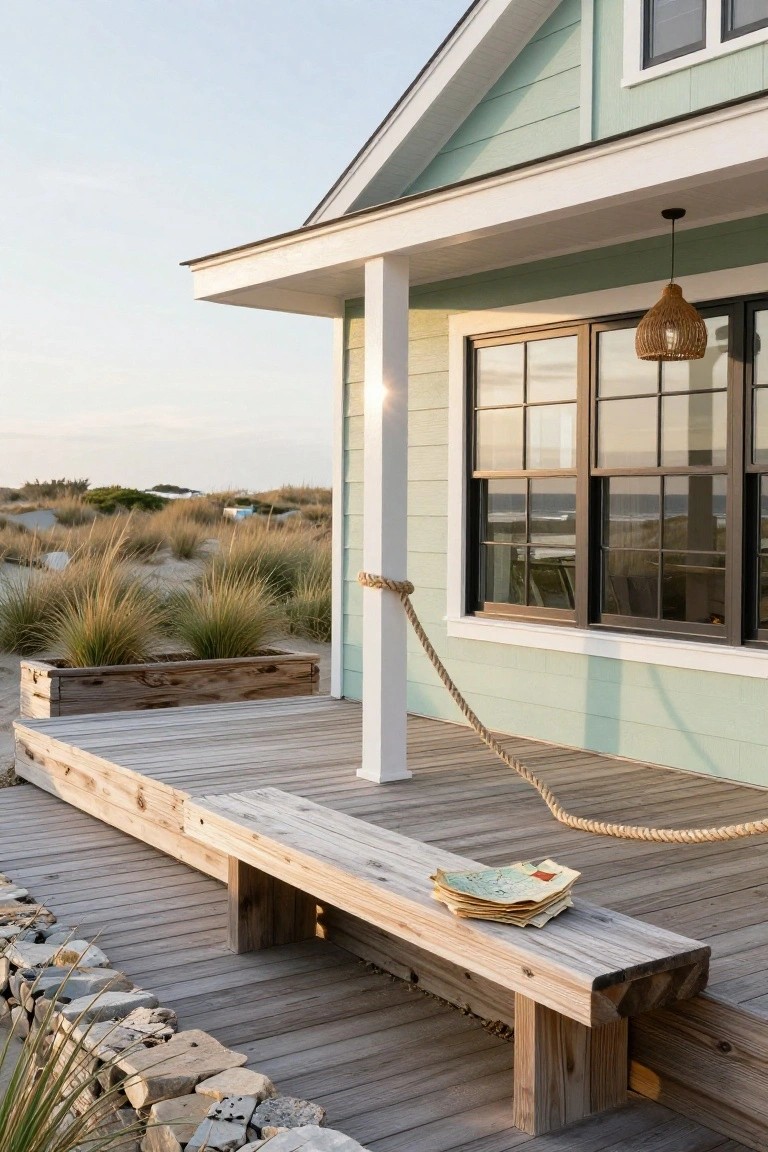
A soft green siding like this one picks up on beachy tones without going overboard. It feels calm and ties right into the sand and sea grass nearby. White trim keeps things crisp, and simple touches like rope around the posts add a nautical nod that doesn’t distract from the color itself.
This paint color works best on modern houses in relaxed spots, think shorelines or casual suburbs. Go for a light mint shade on vertical siding, and match it with white for porches and trim. Skip it if your yard is too wooded, since it shines more in open, sunny areas.
Navy Blue Exterior with Cream Trim
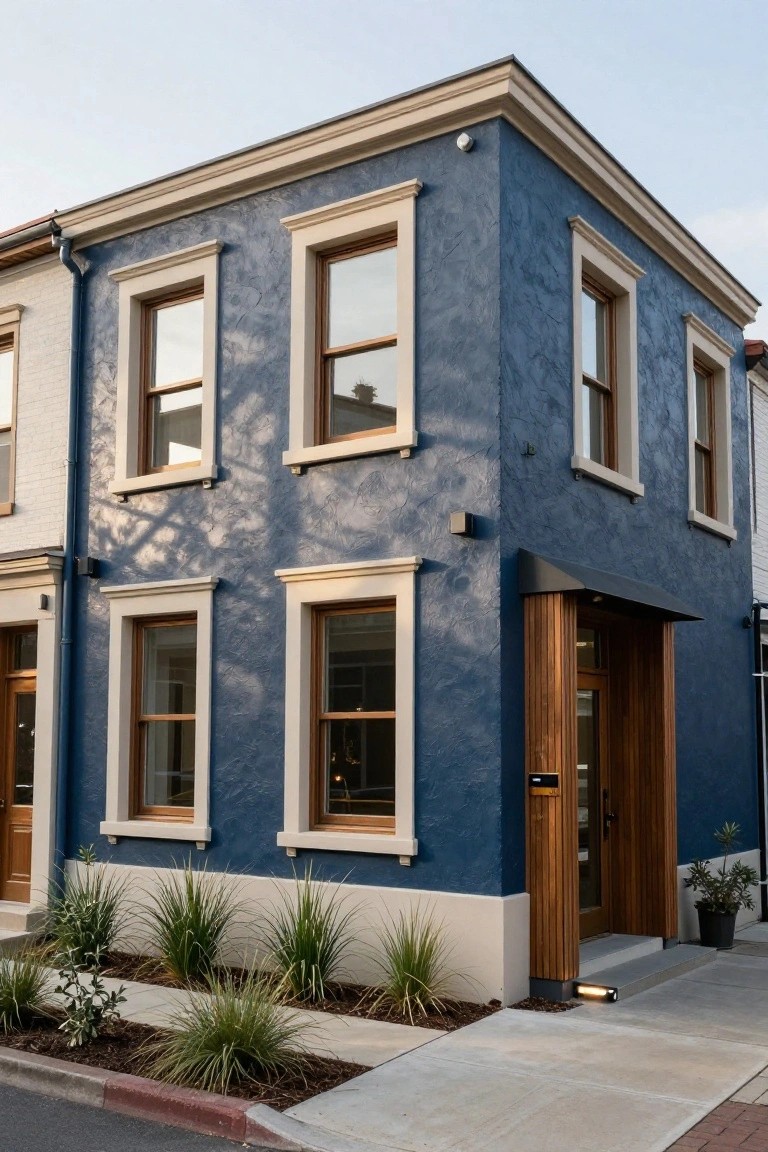
A deep navy blue paint on the house body paired with cream trim gives this corner home a fresh modern look. The blue feels bold but not overpowering, especially with the textured stucco finish that catches the light. It stands out on the street without screaming for attention, and the cream keeps things clean and balanced.
This scheme works best on homes with simple lines or row-house styles, like urban townhouses or craftsman updates. Pair it with a wooden door for warmth, and keep landscaping low-key with grasses along the base. Just make sure your trim paint is a true off-white to avoid yellowing over time.
Modern Beige Stucco with Black Window Frames
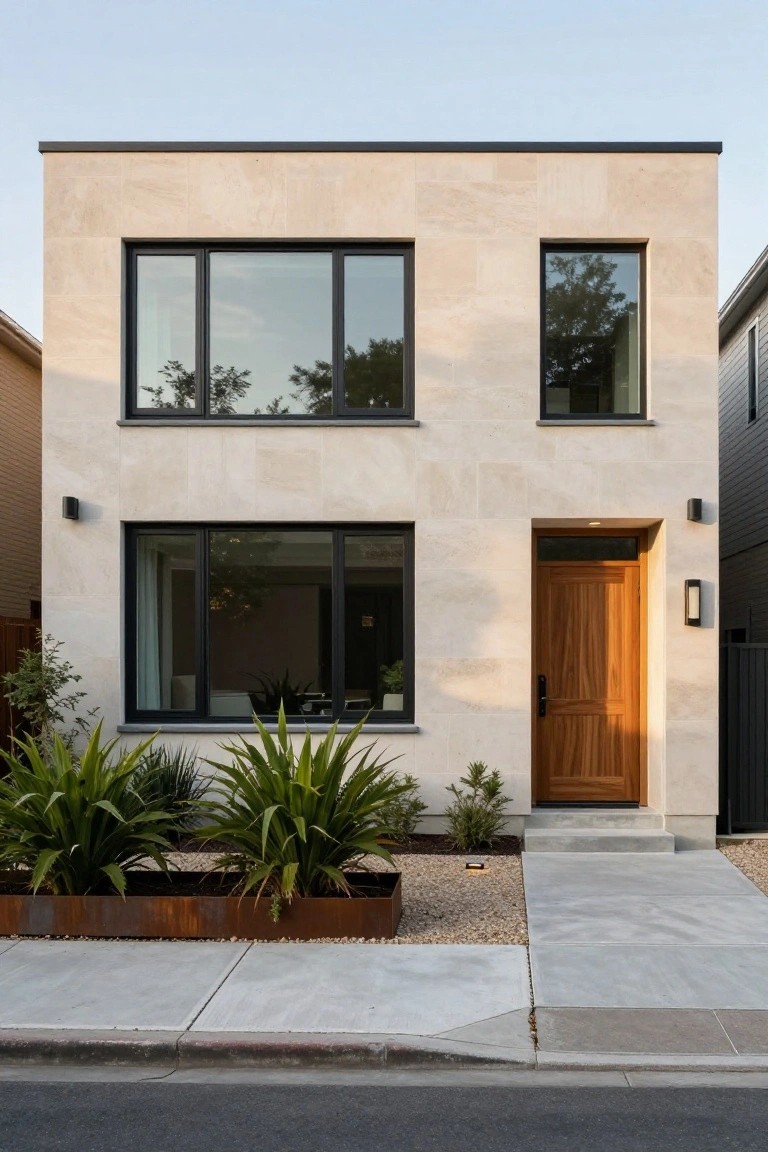
A warm beige stucco covers this house facade, keeping things simple and clean. Black frames around the large windows pop against it, making the design feel sharp yet not too cold. That wood door in the middle adds just enough natural tone to pull it together.
This setup works well on boxy modern homes in sunny spots. It hides dirt better than white, and the contrast helps windows stand out from the street. Stick to low plants out front so the colors stay the focus. Avoid busy trim elsewhere.
Frequently Asked Questions
Q: My modern house is in a shady spot. What colors pop best there?
A: Go for cooler tones like soft grays or muted blues. They reflect light without washing out. Warm shades turn dull in low light, so skip those.
Q: How do I try out a scheme before committing to the full paint job?
A: Grab large paint samples and brush them on poster board. Hold it up against your siding at different times of day. You’ll see quick how it plays with your actual light.
Q: Can I mix ideas from different schemes, say navy body with white trim?
A: Sure, modern houses love that flexibility. Pick one dominant color from a scheme you like, then pull accents from another. Just keep the total palette to three colors max.
Q: What’s the easiest update if I can’t repaint everything right now?
A: Paint just the front door and shutters. A bold contrast there refreshes the whole vibe instantly.
Recommended Products
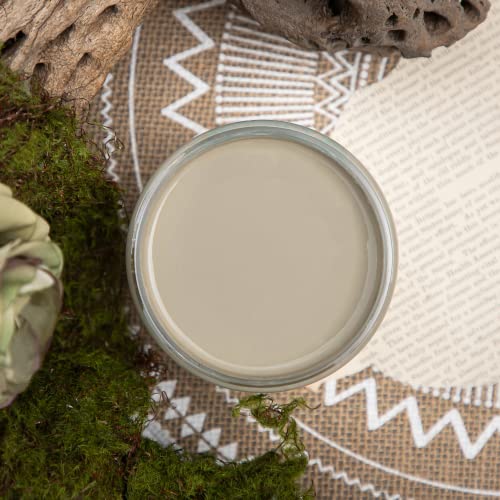
CHALK MINERAL PAINT – Spanish Moss is a green/gray chalk mineral paint. This earthy, succulent color was brought to life through the woodland moss around Florida. Use Spanish Moss to bring a rural and rustic atmosphere to your home. Our chalk mineral paint is ideal for wood, metal, plastics, brick, stone, glass, concrete, and so much more. An 8oz container of this paint should cover about 38 sq. ft.
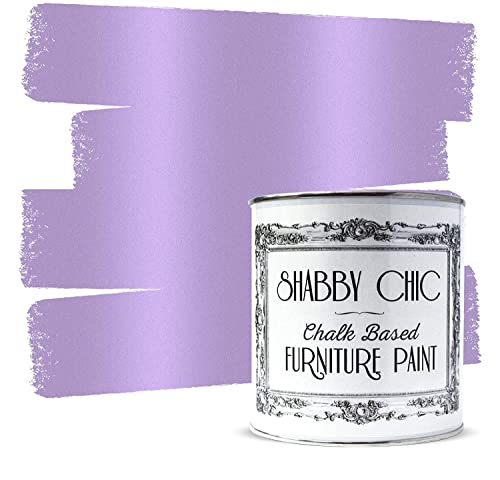
INTERIOR DESIGN: The term ‘shabby chic’ boasts ‘the beauty of imperfection’, that’s what shabby chic is all about – restoring furniture while still giving it a distressed, ‘imperfect’ finish.

SUPER MOON | Our pure, bright white with a cool laidback look that elevates any room effortlessly
