

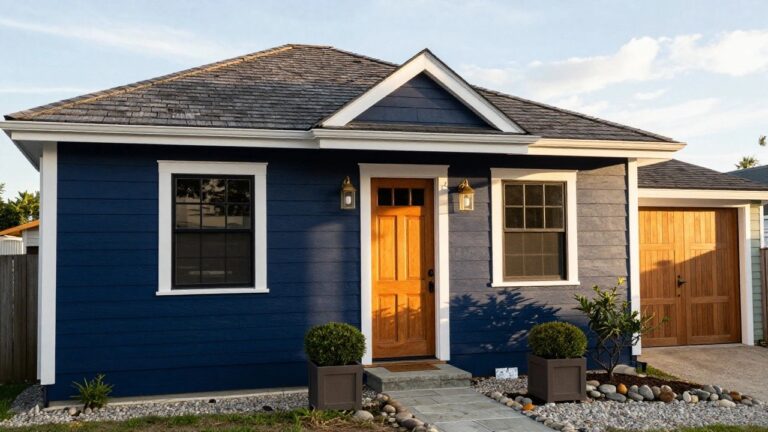
When you pull up to a house, the color choices on the siding, trim, and shutters set the tone before you even step inside.
I always notice how some facades blend seamlessly with their rooflines and stone accents, while others clash and feel off-balance from the curb.
Last summer, I tested a few navy and cream pairings on our garage door, and it changed how the whole front read under afternoon light.
These ideas lean into real materials like brick or vinyl, showing ways to boost curb appeal without overdoing it.
A couple stand out as keepers for adapting to different styles.
Navy Blue Siding with White Trim
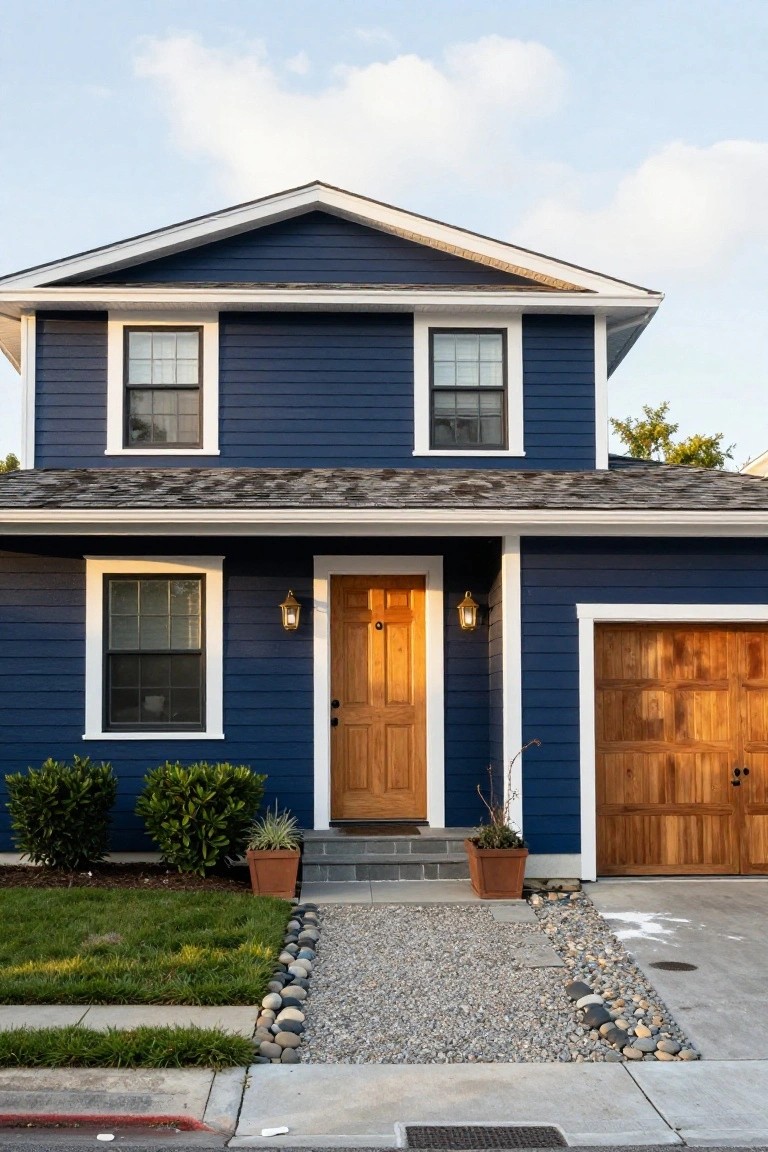
Navy blue siding like this gives a house strong curb appeal. The white trim keeps everything crisp and balanced. A wooden front door adds just enough warmth to keep it from feeling cold.
This combo suits craftsman or colonial homes pretty well. Use it where you want a classic look that holds up over time. Go for quality paint, though. Navy shows dirt easier than lighter colors.
Recommended Products

Ready to use, pre-mixed door and trim paint offers a fresh new look on interior or exterior metal, wood and fiberglass

Use for a variety of indoor and outdoor project surfaces including wood, metal, plaster, masonry or unglazed ceramic

Ready to use, pre-mixed door and trim paint offers a fresh new look on interior or exterior metal, wood and fiberglass
Warm Beige Exterior with Black Door
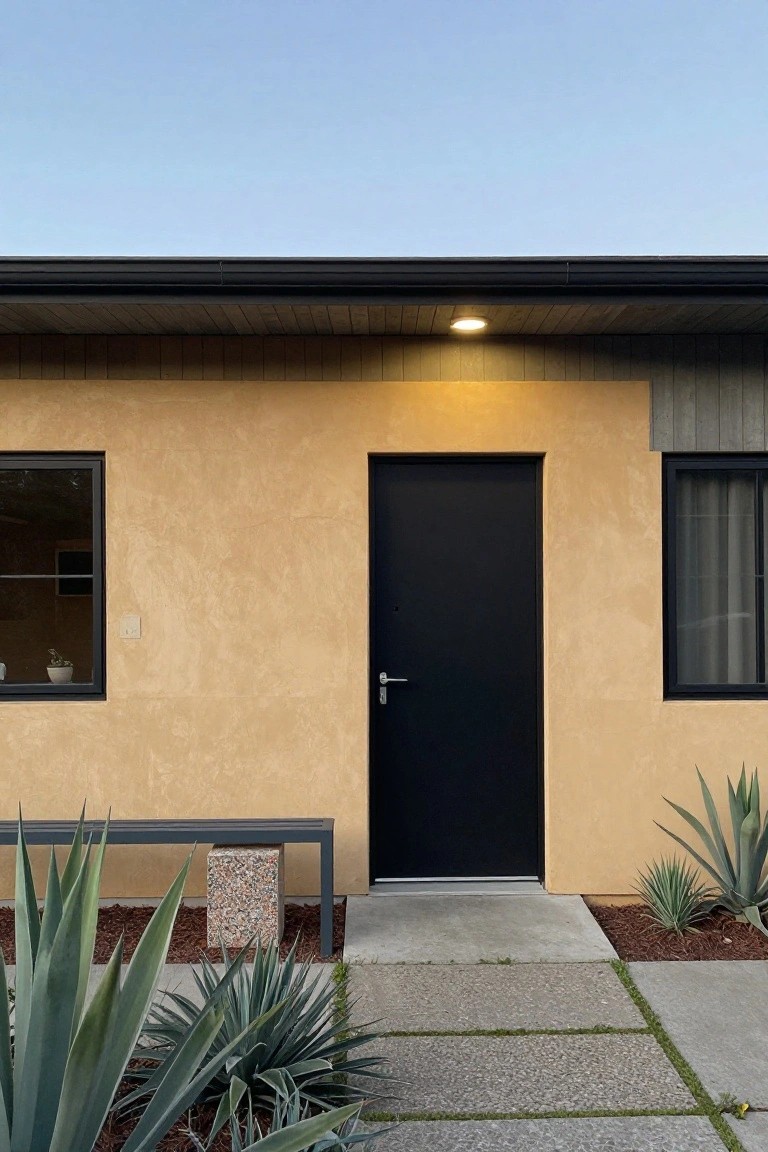
A warm beige stucco on the house walls pairs nicely with a solid black front door. It keeps things simple and modern without going overboard. The black door adds some punch right at the entry, and those agave plants nearby help tie it into the yard.
This combo works well on midcentury-style homes or anything low-slung in a dry climate. Paint the stucco in a soft tan or taupe shade, then go bold on the door. Skip busy trim. It suits places where you want the house to blend a bit with the landscape… but still stand out at the curb.
Pale Green Exterior with Red Door
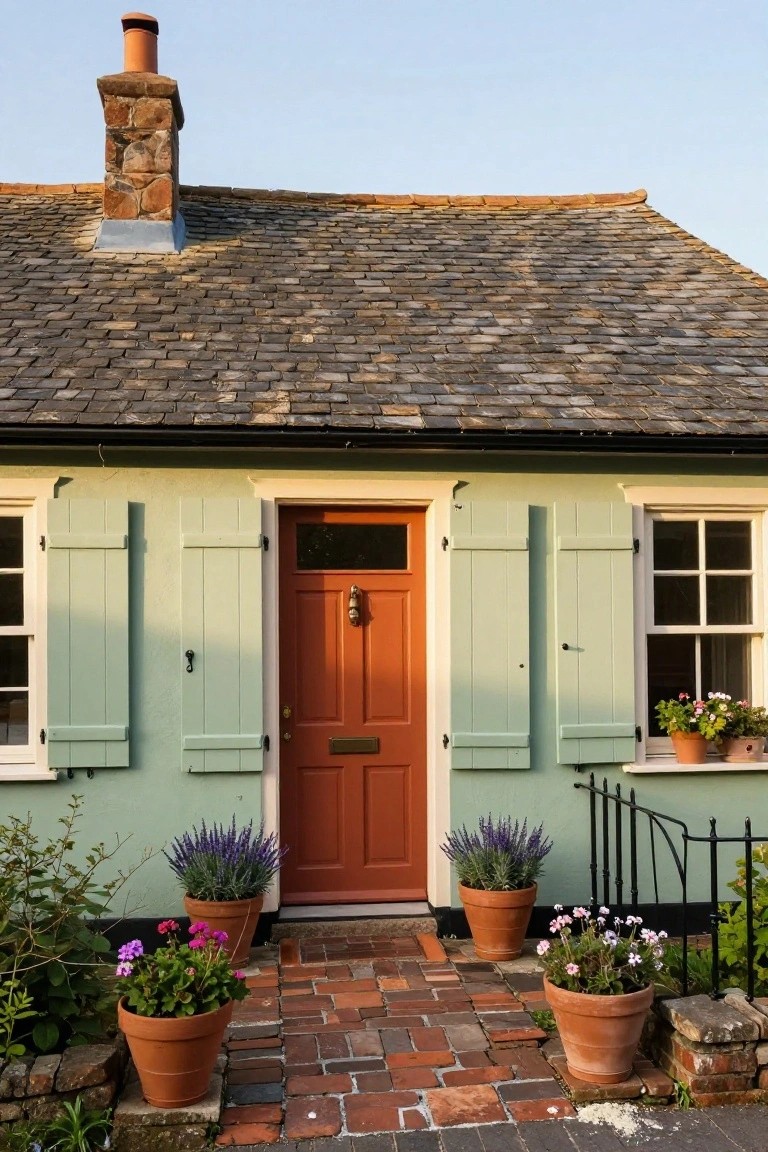
A pale green house like this one looks fresh and calm against a natural backdrop. The soft color on the walls and shutters keeps things understated, almost blending with the garden around it. Then that red door jumps right out. It adds a welcoming pop without overwhelming the whole look. Paired with simple plants in terracotta pots, it draws your eye straight to the entry.
This setup works great on older cottages or small homes where you want curb appeal without a big remodel. Paint the body in a sage or mint green, then go bold on the door with a glossy red. It suits country or coastal spots best. Just keep the plants low-key so they don’t steal the show.
Blue Siding with White Trim
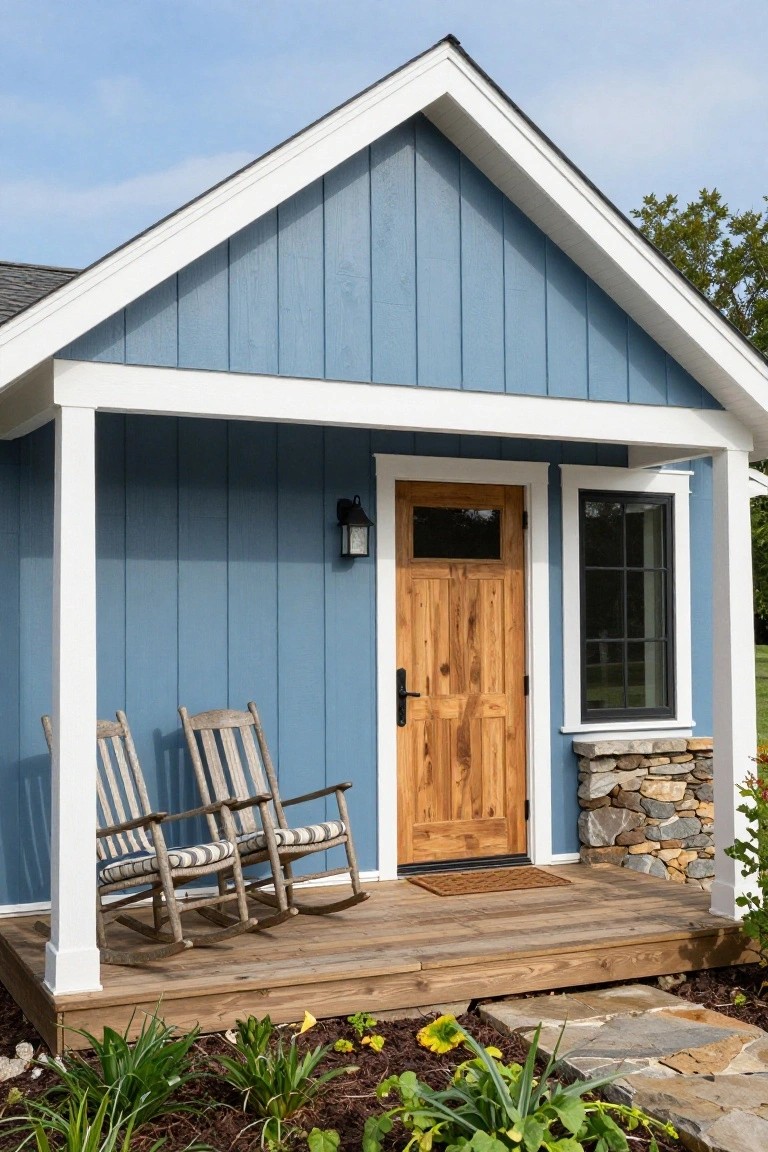
A soft blue siding like this gives a house a calm, approachable feel right from the street. The white trim outlines everything cleanly, from the gable roof down to the porch posts, while the warm cedar door pulls it together without overpowering. Rocking chairs out front make the whole entry look lived-in and friendly.
This combo suits cottages or small homes in wooded spots, where the blue blends with greenery but still pops. Use it on a porch setup like this one, and add a stone base if your yard has slopes. Just keep the wood tones natural… no need to stain everything to match.
Light Stucco with Green Shutters
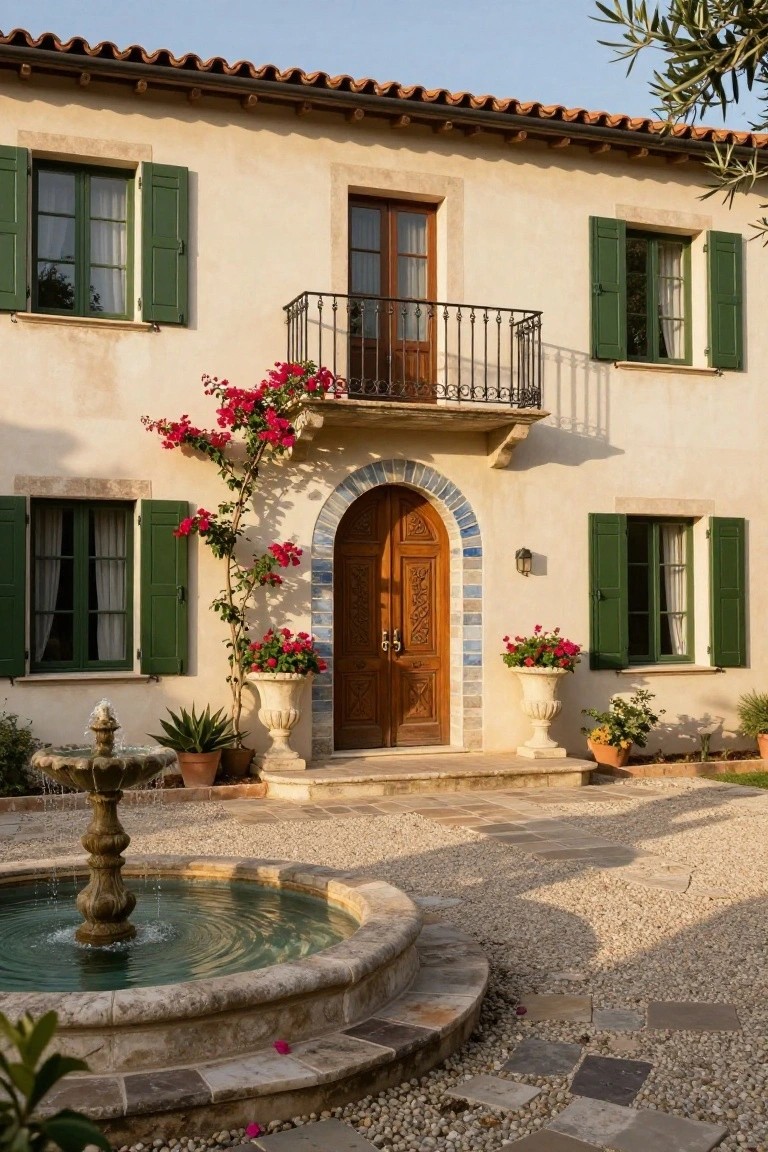
A warm beige stucco covers the walls here, setting off those deep green shutters on every window. It’s a simple combo that feels right at home in a Mediterranean-style house. The green gives some life to the neutral base without overwhelming things, and it ties in nicely with plants around the entry.
This setup works best on sunny lots where you want curb appeal that lasts year-round. Go for it on ranch or two-story homes with balconies. Add a wood door or blue tile accents if you like, but keep the stucco matte to avoid glare.
Black Brick with Gray Door

Black brick walls give a house a solid, moody base. Pair them with a gray front door like this, and you get a clean entry that doesn’t fight the dark bricks. The black mailbox and simple grass plants keep things straightforward. It’s a look that feels current but not fussy.
This combo suits narrow townhouses or row homes in the city. Use matte gray paint on the door to tone down shine, and add a black lantern for light at night. Skip bright colors elsewhere… it stays sharp that way. On lighter streets, it really stands out.
Light Blue Siding with Cream Trim
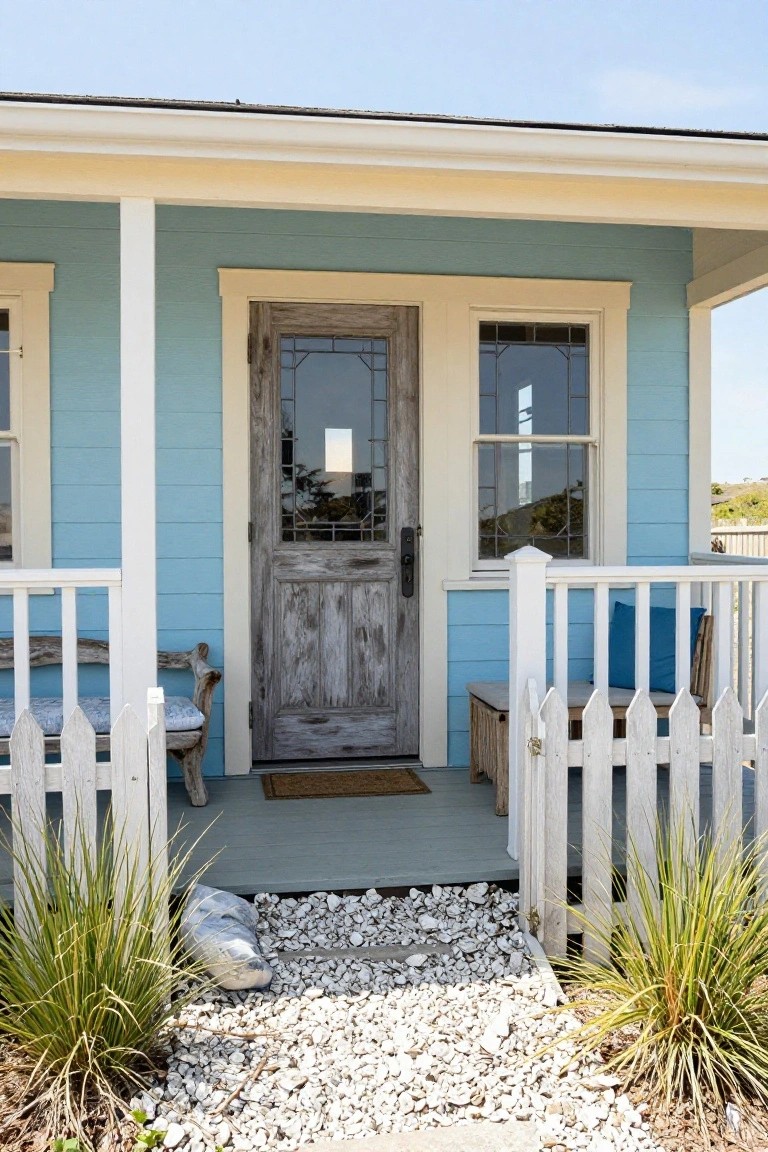
A soft light blue on the siding gives this little cottage a calm beachy feel that looks great under a clear sky. The cream trim around the windows and door warms things up a touch. And that weathered gray front door? It adds some character without clashing.
This combo suits small homes near the water or in sunny spots. Pair it with white porch posts and natural gravel paths to keep the look open and low-key. Steer clear of bold accents. They can make it feel too busy.
Brick House with Green Door and Shutters
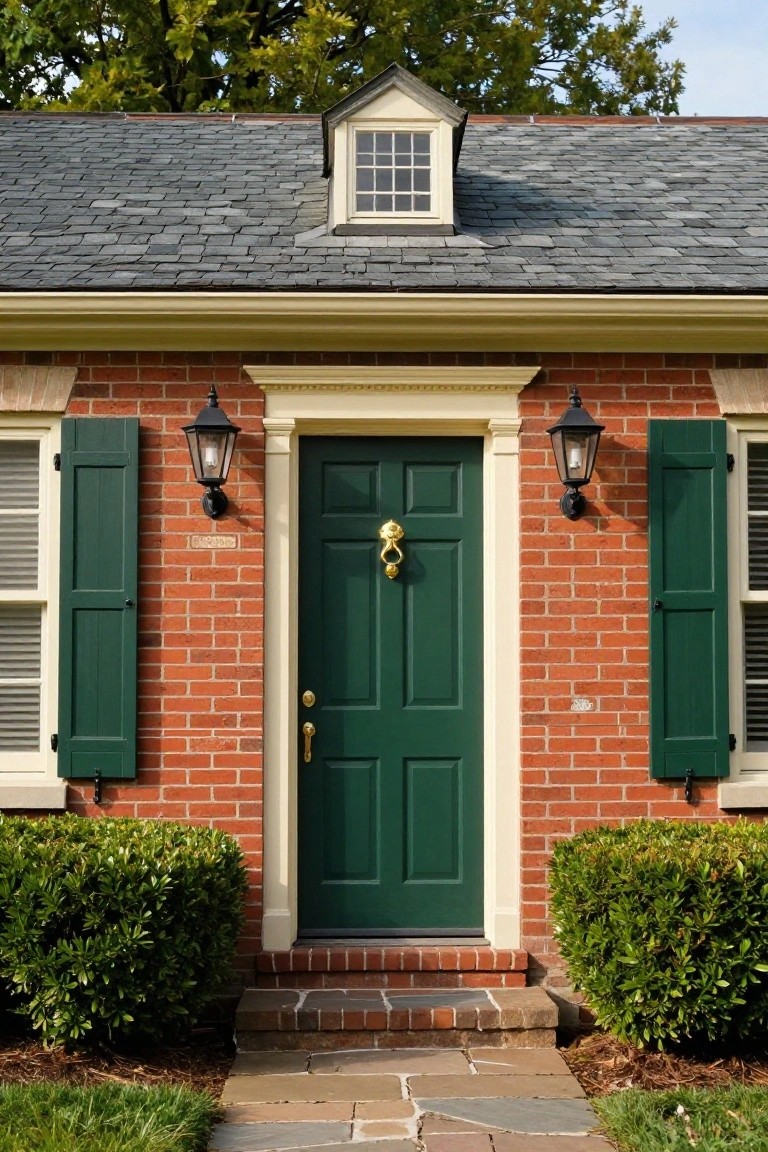
A red brick house gets a fresh look with a deep green front door and matching shutters. The warm tones of the brick play nicely against the cool green. It pulls the eye right to the entry without much fuss. Brass lanterns and a gold knocker add just enough shine.
This combo suits older homes or colonials in the suburbs. Use it where you want curb appeal that lasts through seasons. Keep trim in cream or off-white to tie it together. Skip it on super modern places, though. Might feel out of step.
Orange Entry Pop on Beige Walls
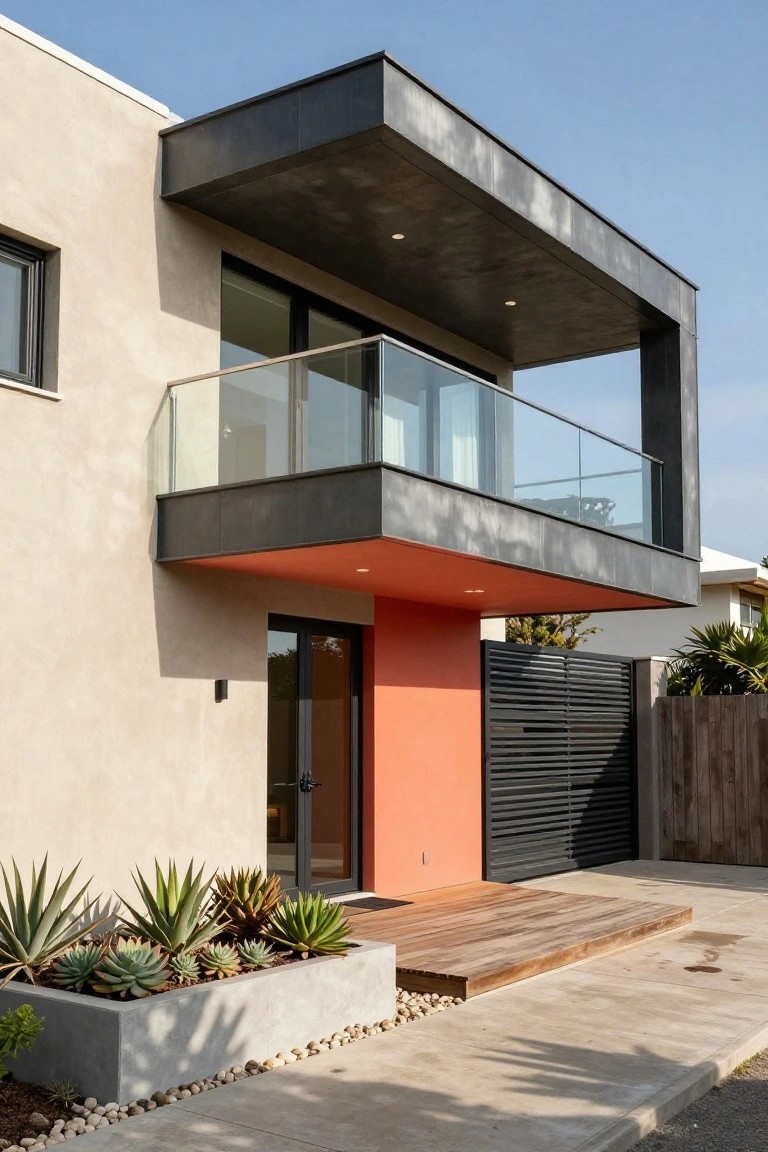
A light beige stucco covers most of this house, keeping things calm and blending with the sunny surroundings. Then there’s that bold orange around the entry door and under the balcony. It pulls your eye right to the front, making the whole facade feel more alive without going overboard. The dark metal gate and railing tie it together nicely.
This combo works great on modern or ranch-style homes, especially where you want some warmth and personality up front. Paint just the entry area orange, and stick to beige elsewhere. It suits drought-friendly yards with succulents too. One thing: pick a true orange, not too red, or it might clash in cooler light.
Warm Wood Shingles with Green Trim
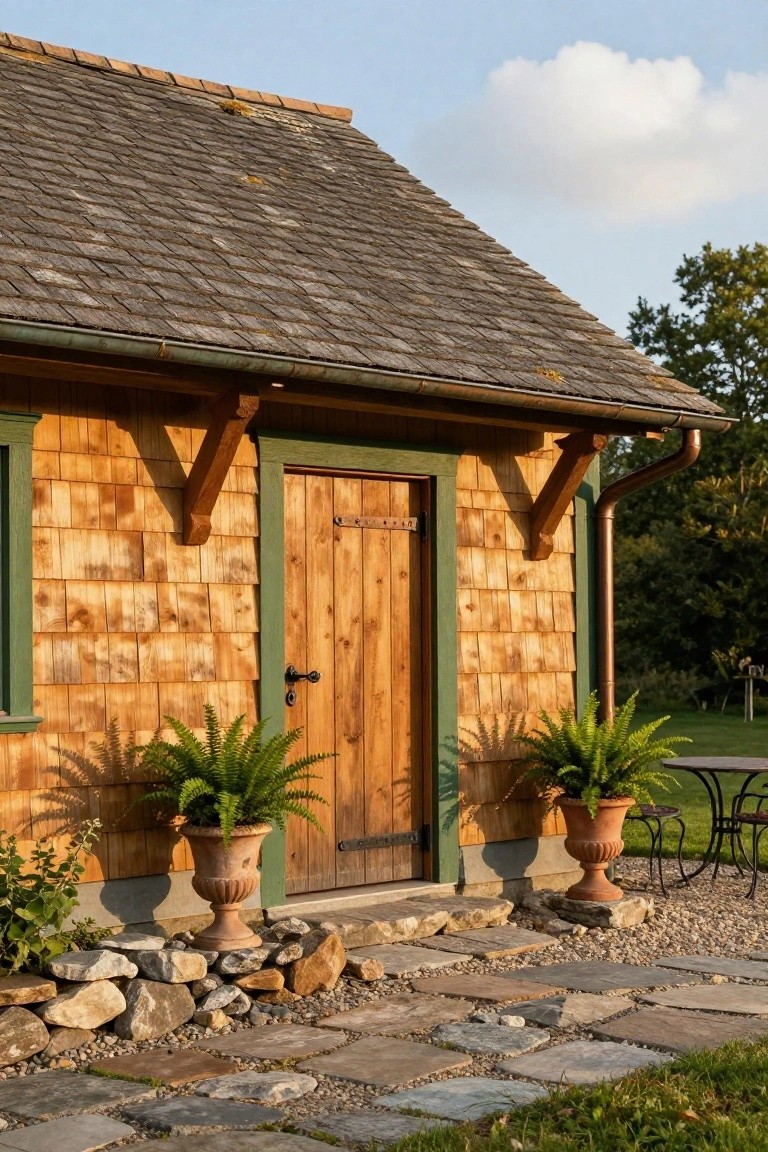
Warm wood shingles like these cedar ones bring a soft orange-brown tone to the exterior. They weather nicely over time, picking up that golden patina folks like on older homes. The dark green trim around the windows and door pulls it together without clashing. Add a plain wooden entry door, and the whole side feels settled and real.
This setup works best on homes tucked into wooded spots or rural areas. It suits cottages or cabins where you want colors that fade into the landscape. Just match the green shade to your trees or shrubs nearby… keeps everything from looking forced.
Neutral Stucco Paired with Wood Tones
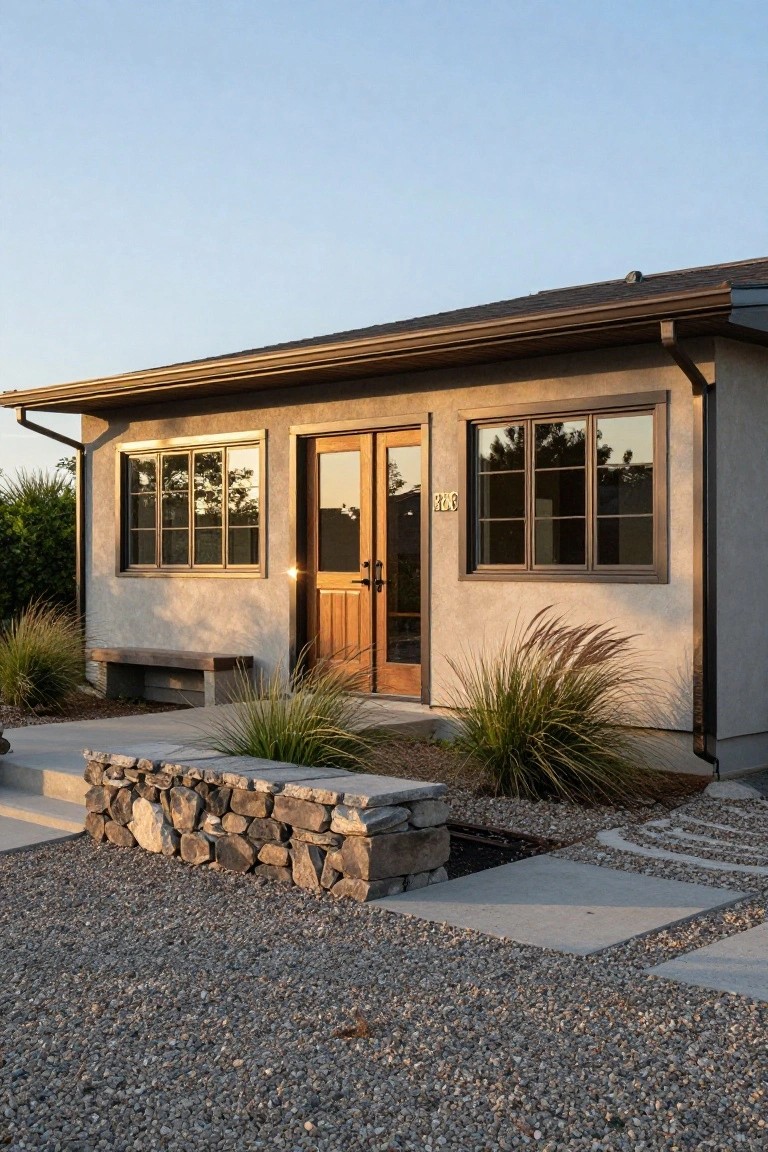
A light beige-gray stucco covers the walls here, working alongside warm honey-toned wood on the double doors and window frames. The dark brown roof and gutters pull those earth colors into a quiet harmony. Folks like this because it feels settled and real, not flashy.
Try it on ranch-style homes or bungalows in sunny spots. Keep landscaping simple with gravel and tall grasses so the house stays the focus. Seal that wood well, or it fades fast.
Orange Siding with Teal Door
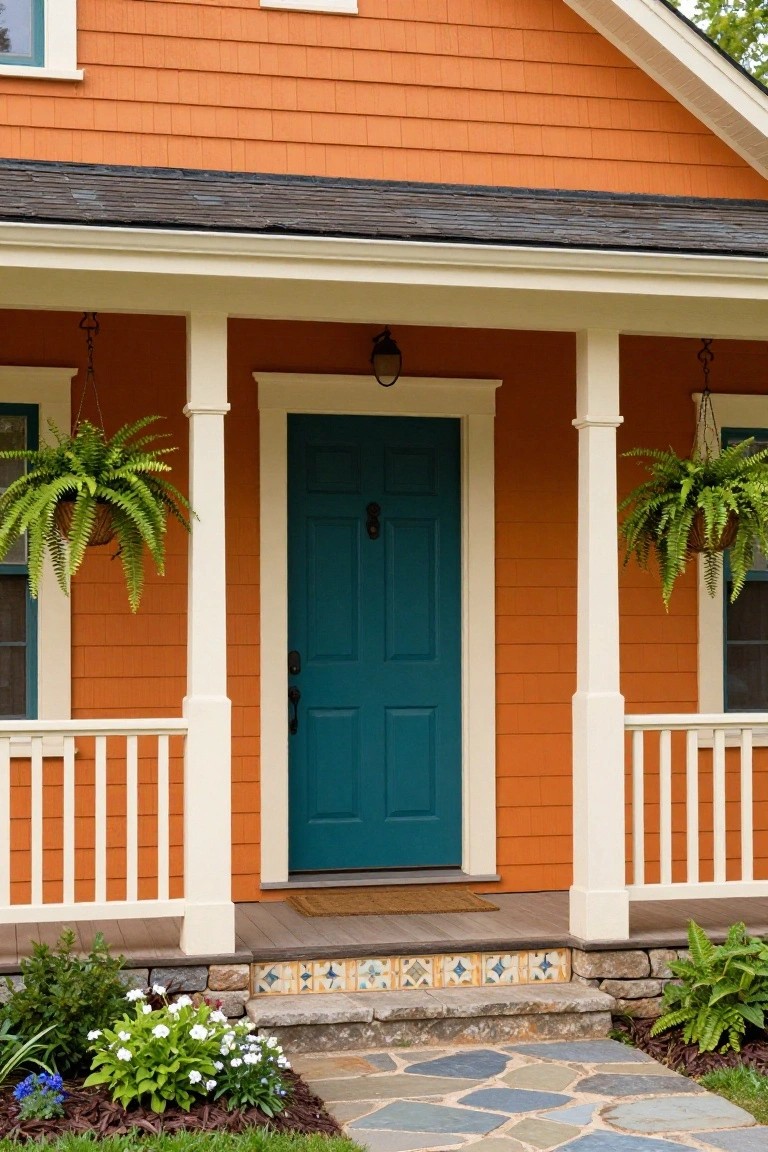
A warm orange siding like this gives a house a cozy, earthy feel right from the street. Pair it with a teal front door, and you get real contrast that pulls eyes straight to the entry. White trim around the porch and windows keeps things clean and lets those two colors do the talking.
This setup suits older-style homes with front porches, like Craftsman bungalows or cottages. It works best where you have some green plants nearby to soften the boldness. Skip it on super modern boxes, though. Might overwhelm a plain facade.
Light Gray Siding with Cedar Door
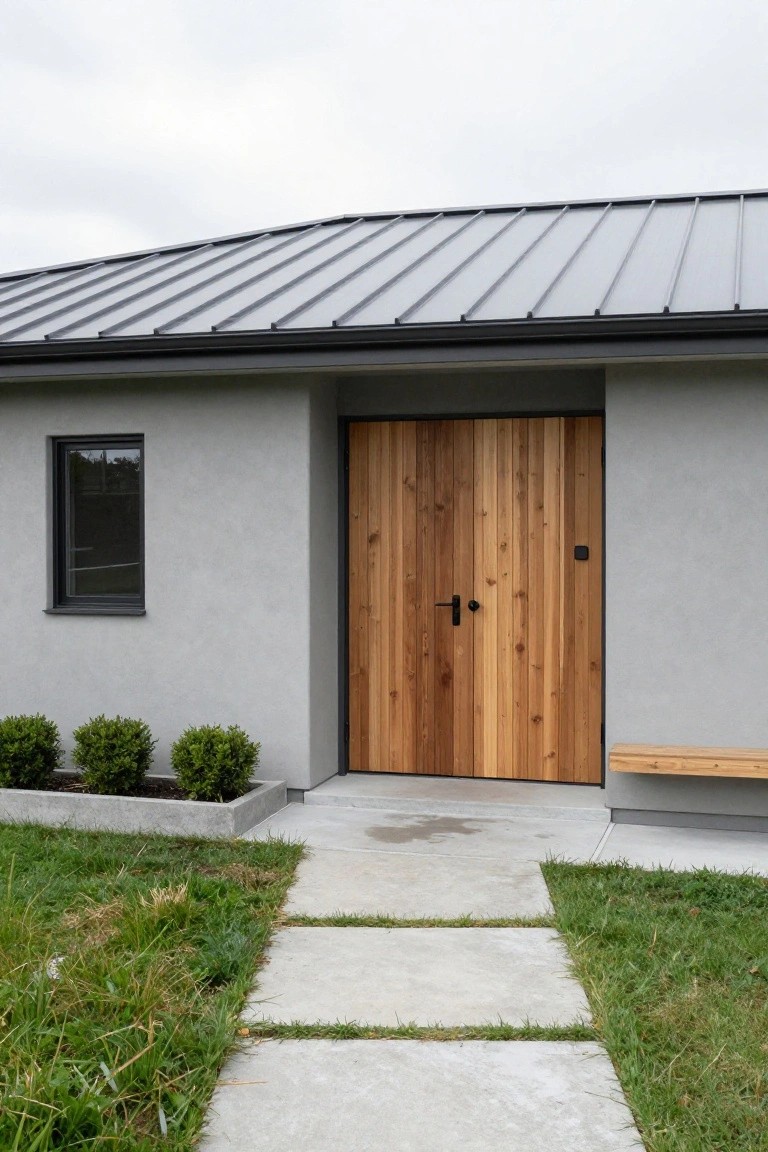
A light gray exterior like this one keeps things simple and modern. But that tall cedar wood door changes everything. The reddish tones in the wood add a bit of warmth right where you need it, at the front entry. It pulls your eye without making the house feel too busy. Gray handles all sorts of weather too.
Try this on a low-slung modern home or even a plain ranch house. Use cedar or similar wood for the door and maybe a bench nearby. Stick to black frames on windows and doors to sharpen the look. Just seal the wood well so it stays that nice color over time.
Blue Doors on White Stucco
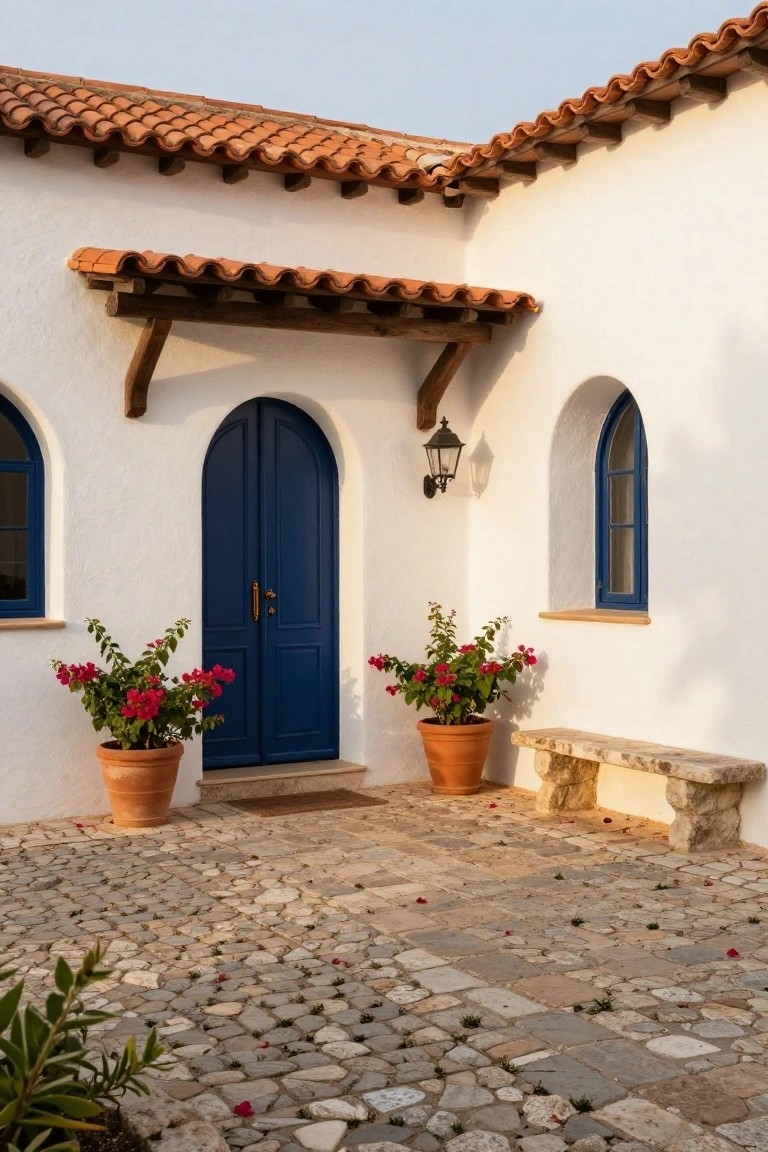
A deep blue door stands out sharp against plain white stucco walls. That simple color switch gives the whole entry a clean, welcoming feel. The arched shape adds some old-world charm, and pots of pink bougainvillea on either side tie in extra color without much fuss.
This look fits homes in warm, dry spots like the Southwest or Mediterranean-style builds. Pick a true blue, not too bright, and keep the white fresh each year. It pulls the eye right to the door… good for curb appeal on smaller houses too.
Black Siding with a Yellow Door
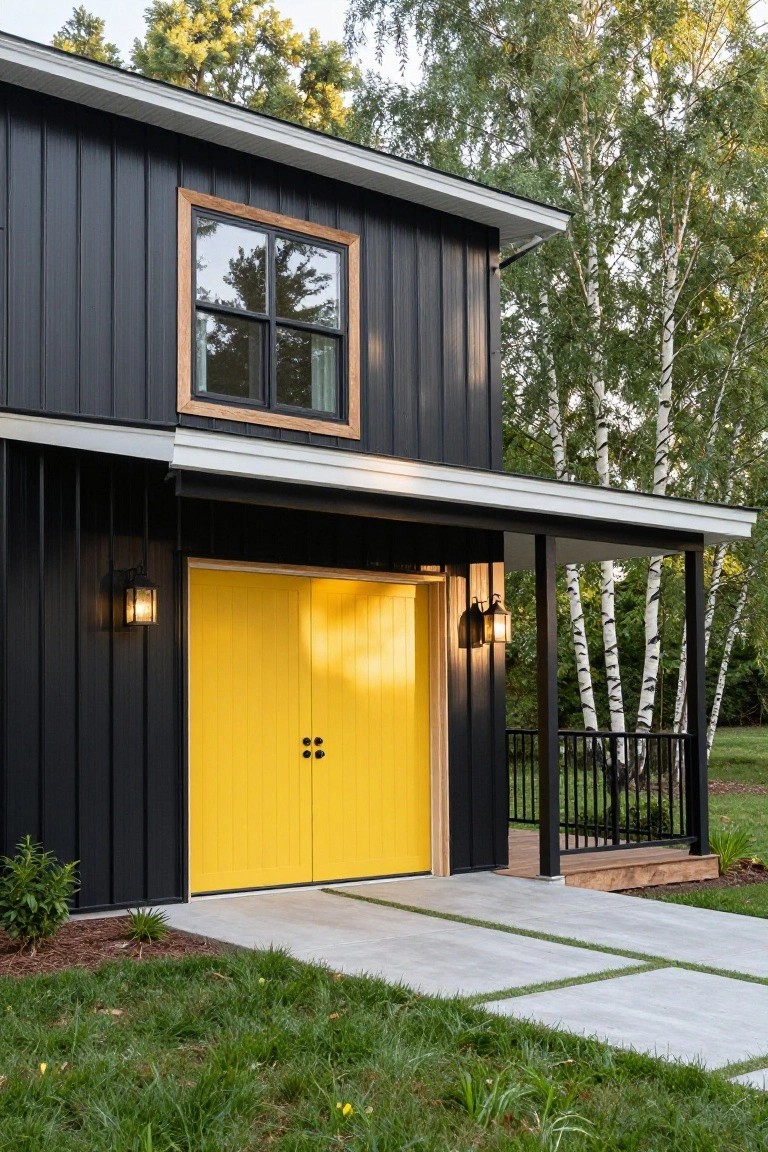
Dark siding like this black metal paneling sets a strong, simple backdrop for a house or garage. Then a bright yellow double door pulls everything forward. That one color punch creates real curb appeal. It works because the black keeps things grounded while the yellow adds life right where people notice first.
Try this on a backyard building or even a main entry if your architecture stays straightforward. Black lanterns on each side tie it together nicely. It suits wooded lots or modern farm styles best. Skip it if your house has too much going on already… the yellow needs room to shine.
Red Door on Mint Green Walls
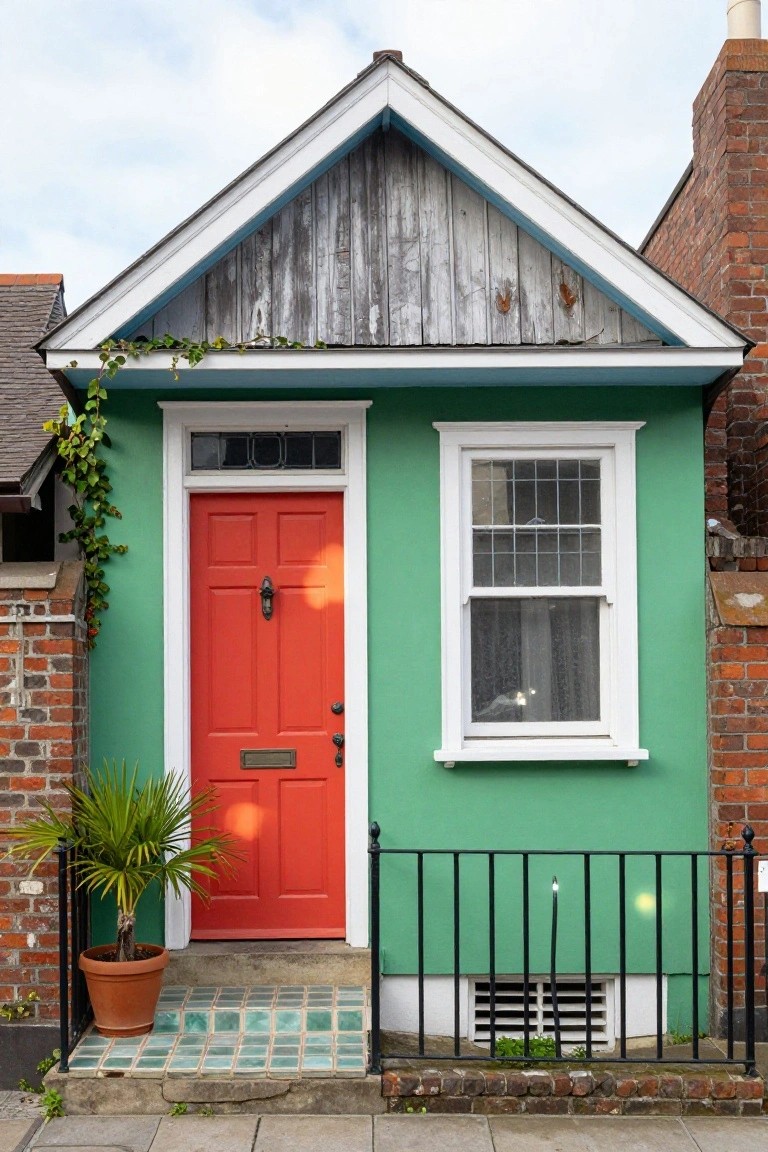
A bright red door like this one grabs your eye right away on a soft mint green house. The colors play off each other nicely. Red brings energy to the front, while the green keeps things calm and fresh. White trim around the door and window cleans it up. A bit of ivy and that palm plant add life without trying too hard.
This combo fits older cottages or row houses best. It perks up brick surroundings too. Go for a glossy red paint on the door to make it shine. Pick a pale green so it doesn’t overwhelm small spaces. Watch the light. In shady spots, the red might fade a touch…
Soft Beige Cottage Facade

A soft beige plaster finish like this gives traditional homes that easy, aged look people love on country houses. It lets the terracotta roof tiles and dark wood door stand out without competing, and those climbing red roses next to the arched entry add just enough color pop. The whole front feels settled and welcoming, like it’s been there forever.
Try this on gabled or timber-framed houses in milder climates where you want low-key curb appeal. Pair it with simple lanterns and evergreens for year-round interest, but pick a beige with some yellow undertone so it warms up in sunlight. Steer clear of stark white trim, though. It can make things feel too crisp.
Teal Door on Adobe Exterior
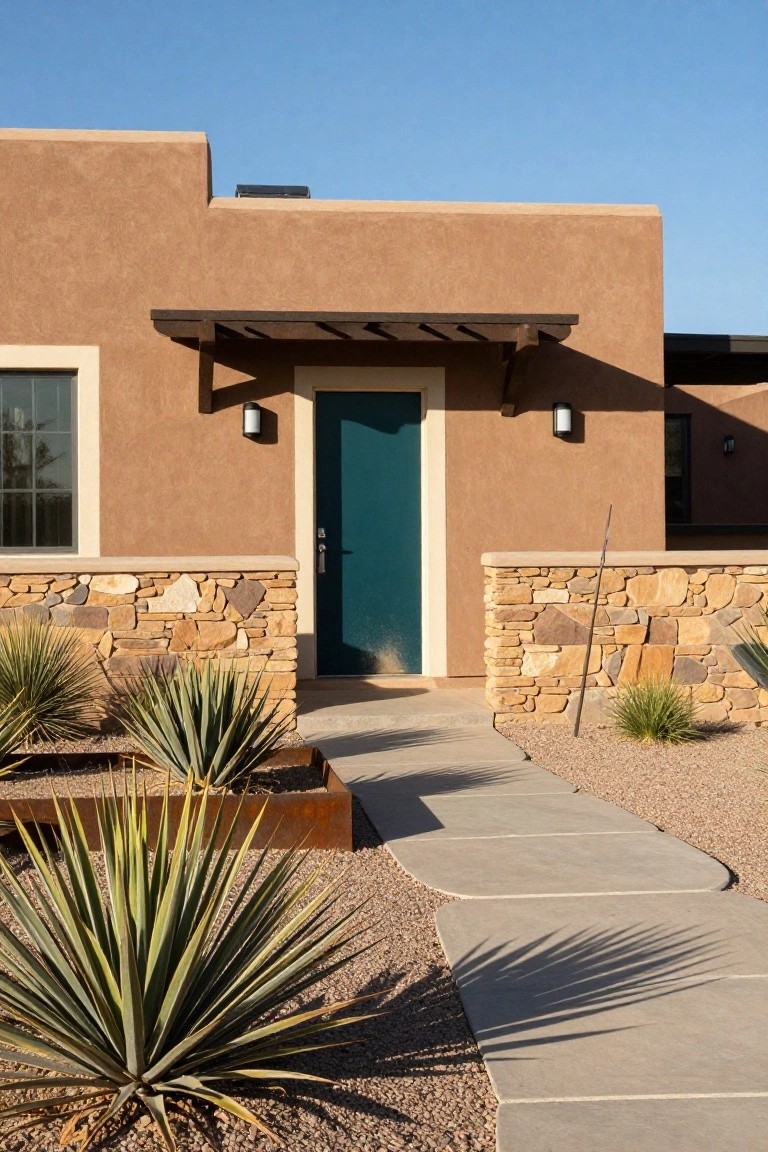
Warm terracotta adobe walls meet a bold teal door in this setup. The earthy tone keeps things grounded while the door adds just enough color to draw the eye right to the entry. Stone accents at the base tie it into the desert surroundings without overdoing it.
This combo works best on southwestern or modern ranch homes where you want curb appeal that feels natural. Pick a true teal shade that picks up sky or ocean hints, even in dry areas. Keep landscaping simple with agave or yucca so the colors stay the focus… avoid busier plants that compete.
Multi-Color Paint Schemes for Older Homes
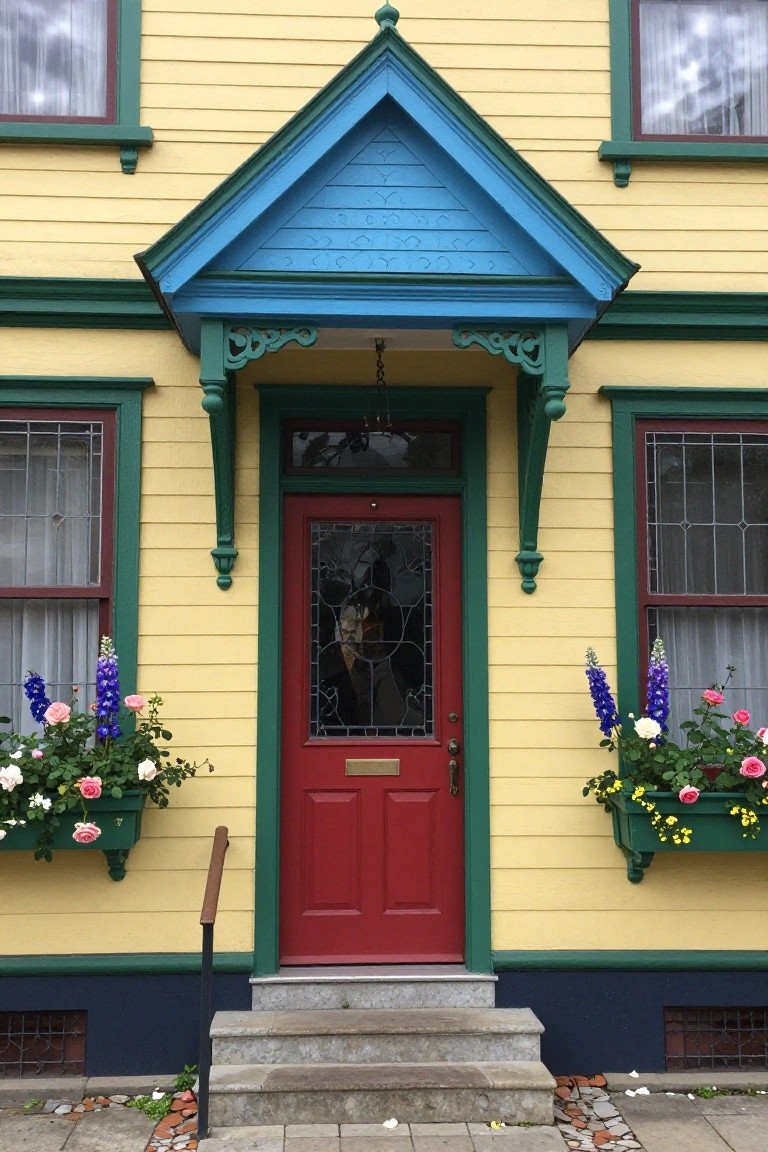
Houses like this one show how a simple yellow base can come alive with green trim, a blue porch roof, and a red front door. It turns a plain older place into something cheerful that stands out on the street without trying too hard. The colors play off each other nicely, and the flower boxes add a bit more life around the entry.
This works best on Victorian or Craftsman style homes where you have lots of trim and rooflines to work with. Pick shades that are close in tone but different enough to pop, like mustard yellow with teal blue. Test samples in real light first… older wood siding holds paint well, but watch for peeling on the porch parts.
Gray Siding with a Wood Door
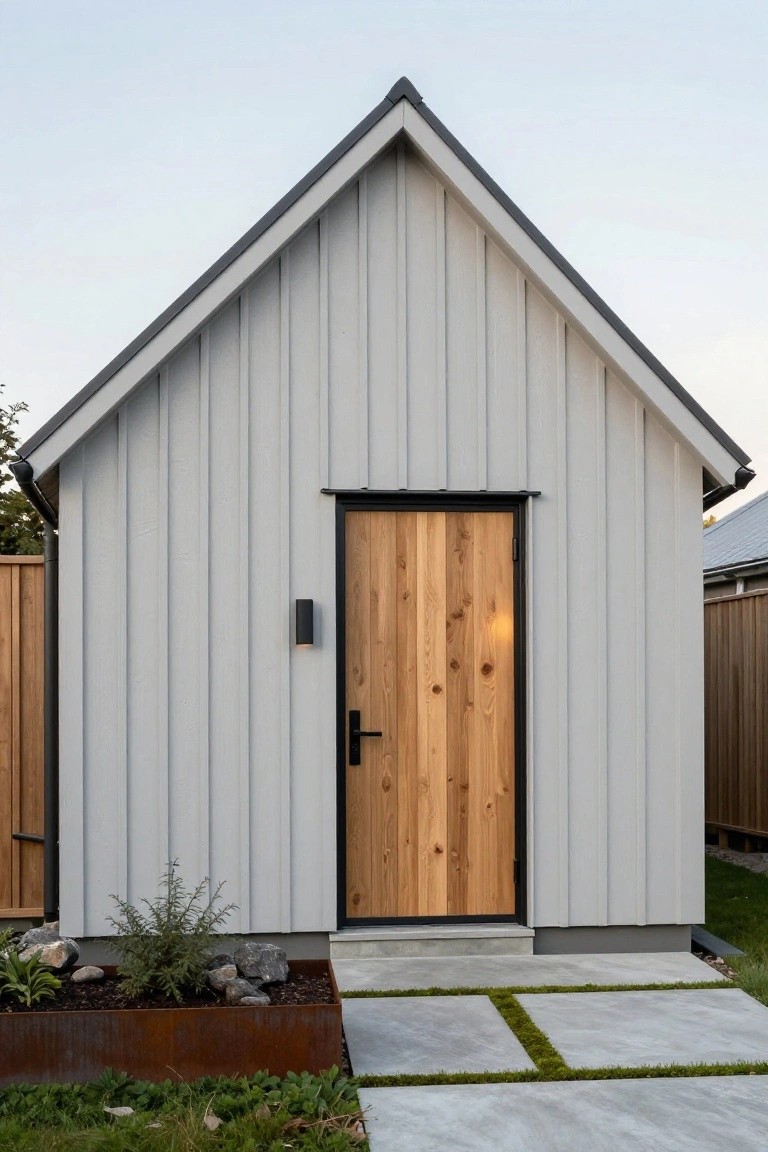
A light gray siding like this pairs nicely with a simple wood door to give your exterior a fresh, modern feel without going overboard. The vertical boards on the siding keep things crisp and tall-looking. That wood door adds just enough warmth to pull you closer. It’s a combo that feels current but not fussy.
Try it on a garage, shed, or even your main entry if you want something straightforward for a backyard or suburban spot. Stick to clean lines around it, like concrete steps or a low planter. Works best where you don’t want bold colors taking over.
Sunny Yellow Door on Dark Green Siding
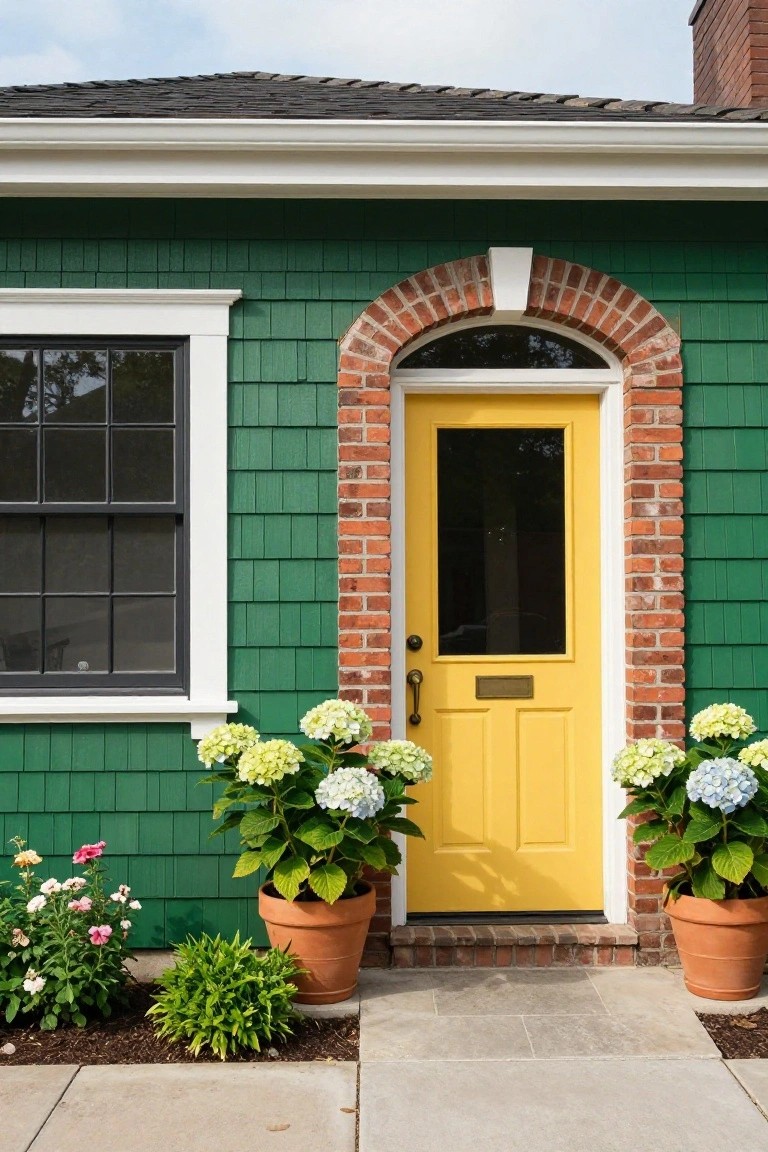
A bright yellow front door really wakes up a dark green house exterior. The green siding has that cozy, evergreen look, almost like a cottage tucked in the woods. But that yellow door? It pulls your eye right to the entry and makes the whole front feel more welcoming without much effort. Here, brick around the door adds a little warmth, and simple pots of white hydrangeas keep things fresh.
This color combo suits older homes like bungalows or Craftsman styles, especially where you want curb appeal on a budget. Paint the door glossy yellow for extra pop, and stick to white trim to let the contrast shine. Just make sure the green isn’t too blackish, or it might swallow the yellow. Works best in mild climates where the green stays lively year-round.
Blue Exterior with Orange Door Accent
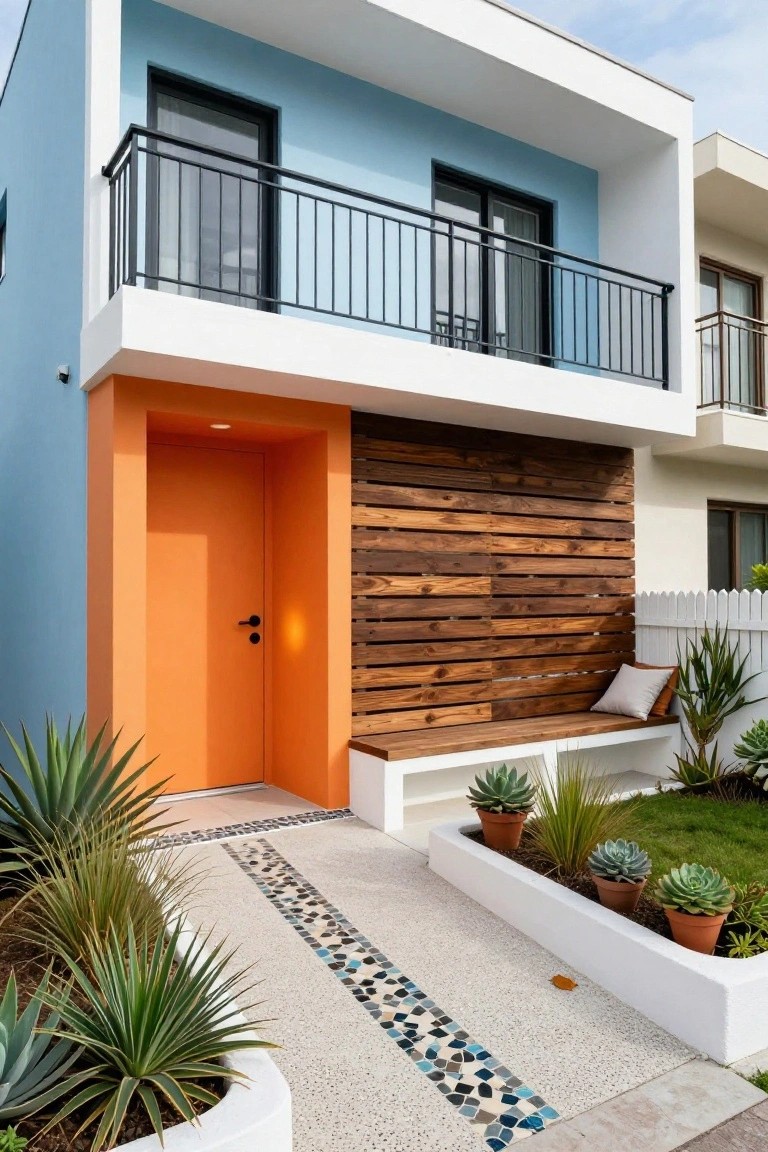
This look takes a light blue house body and punches it up with a vivid orange front door. It stands out on a clean, modern facade like this one, where the blue keeps things calm and the orange pulls your eye straight to the entry. A bit of wood slat paneling nearby ties in some natural texture, making the colors feel balanced rather than shouty.
You’ll want to use this combo on homes with simple lines, maybe in warmer spots where the hues pop under the sun. It suits smaller houses aiming for big curb appeal. Pick a matte orange to keep it grown-up, and pair with white trim so nothing fights for attention.
Frequently Asked Questions
Q: How do I test these color combos on my actual house?
A: Buy sample pints and slap large patches right on your siding in a few spots.
Walk by at morning, noon, and evening to catch the light changes. You will spot what really works.
Q: What if my neighborhood has strict HOA rules on colors?
A: Check their guidelines first, then tweak combos to fit.
Pull from approved neutrals and add subtle accents they allow. Neighbors stay happy, house still pops.
Q: Do north-facing houses need different colors?
A: Lighter shades warm them up since they get less sun.
Try soft taupes or pale blues. They brighten without fading fast.
Q: Can I paint everything one color for a modern vibe?
A: Yes, go monochromatic with siding, trim, and door.
Pick a mid-tone grey or green. It pulls the look tight and sleek.
