

I’ve driven past plenty of vintage houses over the years, but the ones painted green always catch my eye first from the street because that color plays so well with aged siding and classic rooflines.
The facade choices pull you right in, whether it’s a crisp hunter shade highlighting gingerbread trim or a softer sage wrapping around a wraparound porch.
I once stopped to sketch the entry on a Queen Anne with that green exterior, struck by how the hue made the original woodwork stand out without overwhelming the neighborhood feel.
These homes show materials like clapboard or stucco holding the color through seasons, rarely looking dated up close.
A few tweaks from them could refresh your own curb appeal in ways that last.
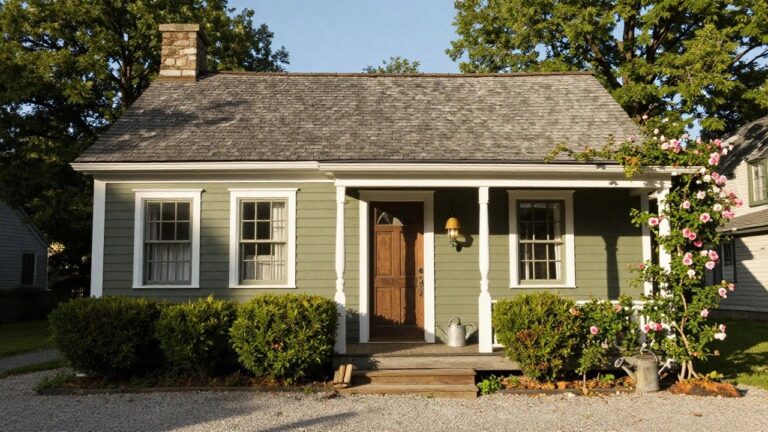
Soft Green Shingles on a Cottage Facade

Green shingle siding like this gives a house that settled-in, vintage feel. It picks up on the trees and plants around it without trying too hard. The soft color works year-round. Pair it with a simple wooden door and you get real curb appeal that says homey, not fussy.
This look fits older cottages or small additions best. Keep trim white for contrast and add climbing roses near the entry. They climb the corner and soften things up. Watch the paint choice though. Go for something mildew-resistant since shingles hold moisture.
Mint Green Victorian Cottage Exterior

A soft mint green paint job like this one turns a simple Victorian cottage into something straight out of a storybook. The color picks up the ornate wood trim around the porch and gables, making those carved details stand out without overwhelming the house. That stained glass window up top adds a nice pop of color on gloomy days.
Try this shade on homes built around 1900 with gingerbread trim or steep roofs. It suits shady spots or cooler climates where the green stays fresh year-round. Just keep the trim painted a deeper green to match, and add potted foxgloves by the steps for a welcoming touch.
Classic Green Cottage Porch
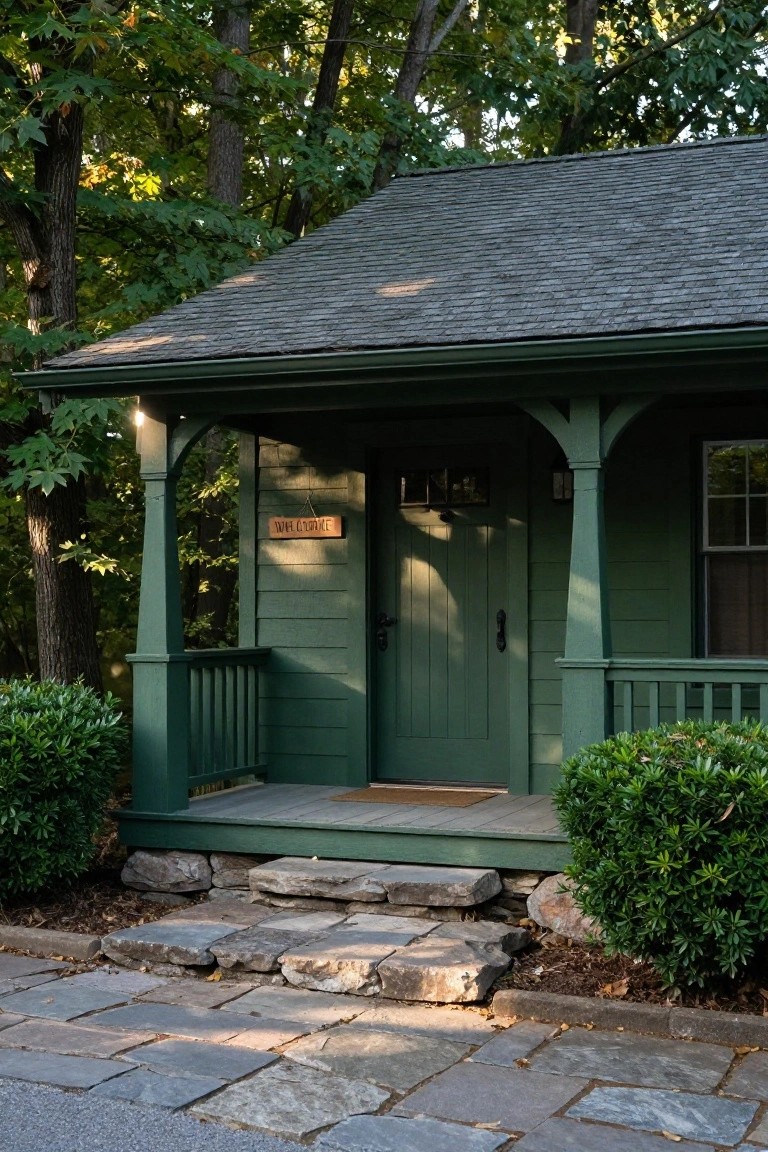
A covered porch like this one pulls a vintage house right into its wooded spot. Painted deep green to blend with the trees around it, the setup keeps things simple. That plain wooden door and the “Welcome” sign hanging there make it feel like someone’s always glad to see you.
Put this kind of porch on a small older home or cabin where you want easy charm up front. It suits shady yards best, since the green fades into the background nicely. Just stick to basic railings and steps so the color does the main work.
Teal Siding on a Modern Cottage
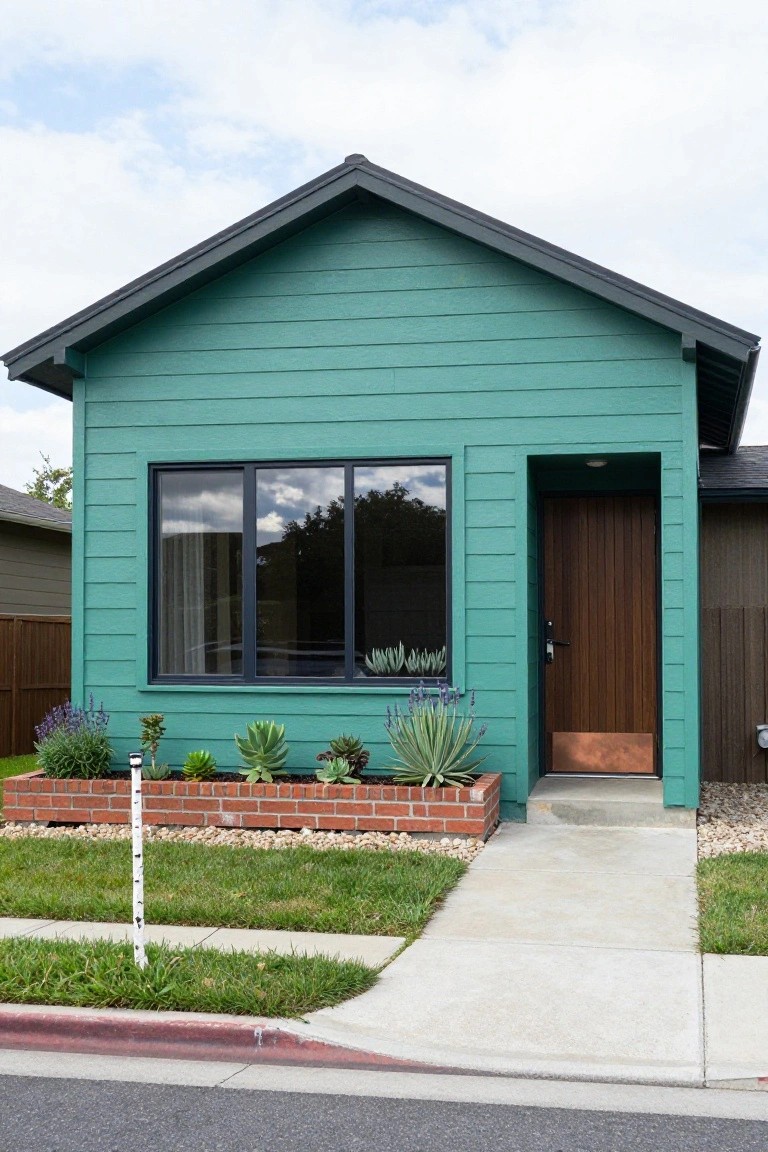
Teal siding like this takes a basic gabled house and gives it quiet personality. The horizontal boards in that fresh green shade pick up on vintage coastal houses but feel right at home today. Paired with black window frames and a simple wood door, it stands out without trying too hard.
Paint your siding teal if you have a compact front facade facing the street. It suits milder climates where the color won’t fade fast, and add a row of succulents along the base for easy curb appeal. Just stick to quality exterior paint to keep it looking good year after year.
Pale Green Siding with Black Shutters
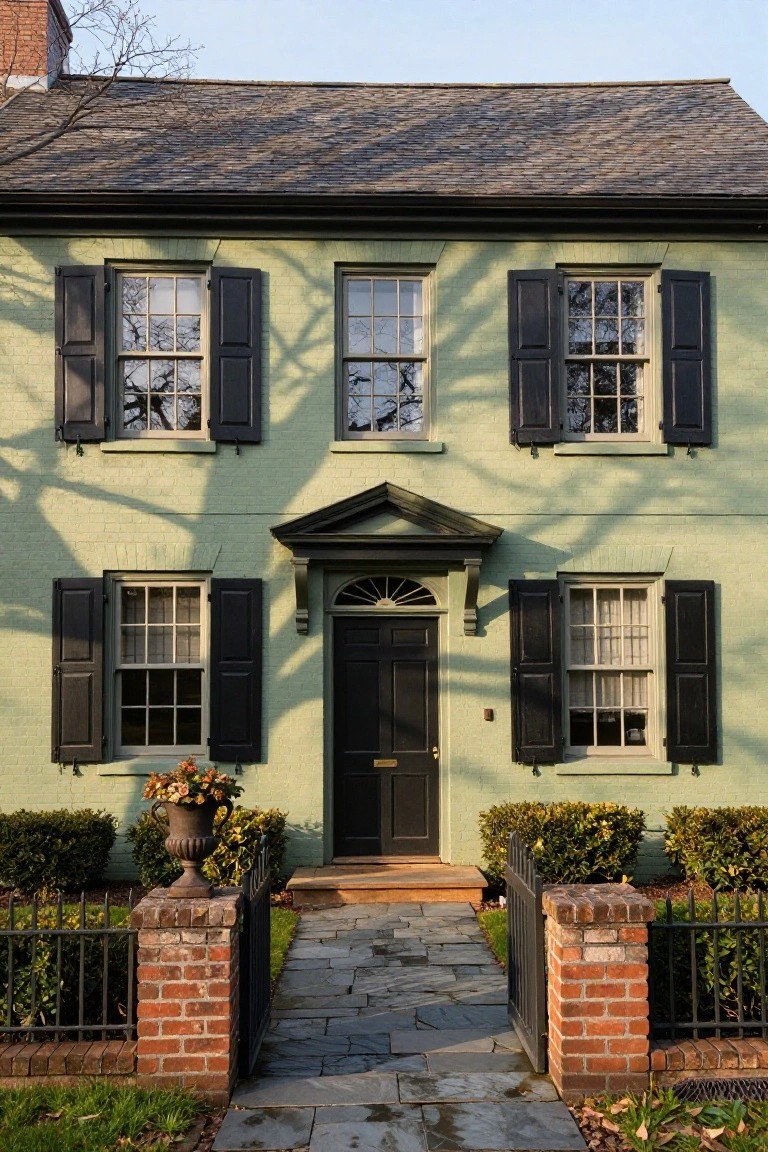
A soft pale green like this on a classic two-story house gives it real vintage roots. The black shutters pull everything together. They frame the windows nicely and match the front door. That contrast keeps the look sharp without being too busy. It fits right into neighborhoods with older homes.
Try this on Federal or Georgian style houses. The green softens brick chimneys or foundations. Stick to matte black for the shutters. Add boxwoods along the walk to tie it in. Just avoid glossy finishes. They can look off on a house this age.
Recommended Products

Outdoor Hardware Supply 9" x 27" shutters are manufactured from UV-resistant vinyl, resisting chipping and no fading over time. Louvers Do not allow air passage - Decorative Only

One Piece Injection Molded Polypropylene Construction

One Piece Injection Molded Polypropylene Construction
Classic Green Door on a Stone Cottage
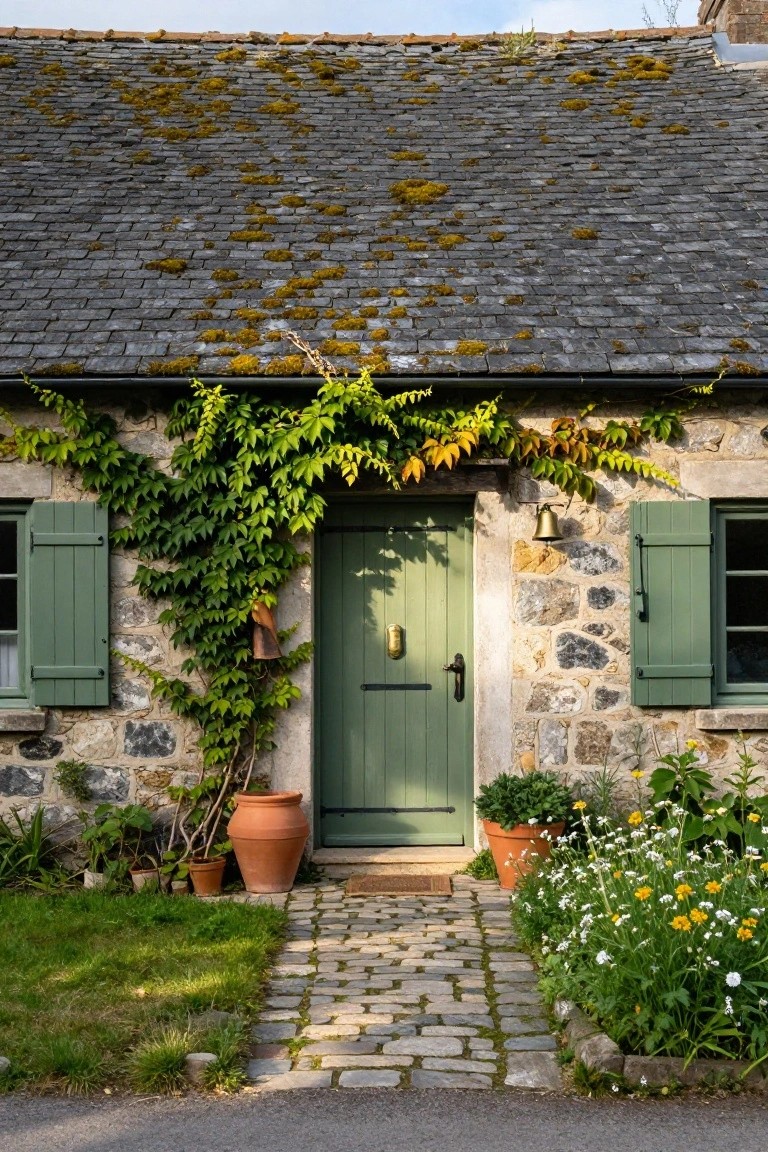
A deep green front door like this one makes the whole facade feel welcoming and full of character. Set into rough stone walls with mossy slate shingles overhead, it stands out without trying too hard. The ivy trailing over the entry just softens everything nicely, hinting at years of quiet living.
This look suits older stone or brick homes, especially cottages in rural spots. Pick a sturdy wood door and a shade of green that’s not too bright, maybe with some patina over time. Frame it with climbing vines if you can, and keep the path simple with cobbles leading up. It draws folks in without much fuss.
Mint Green Door on Brick Terrace
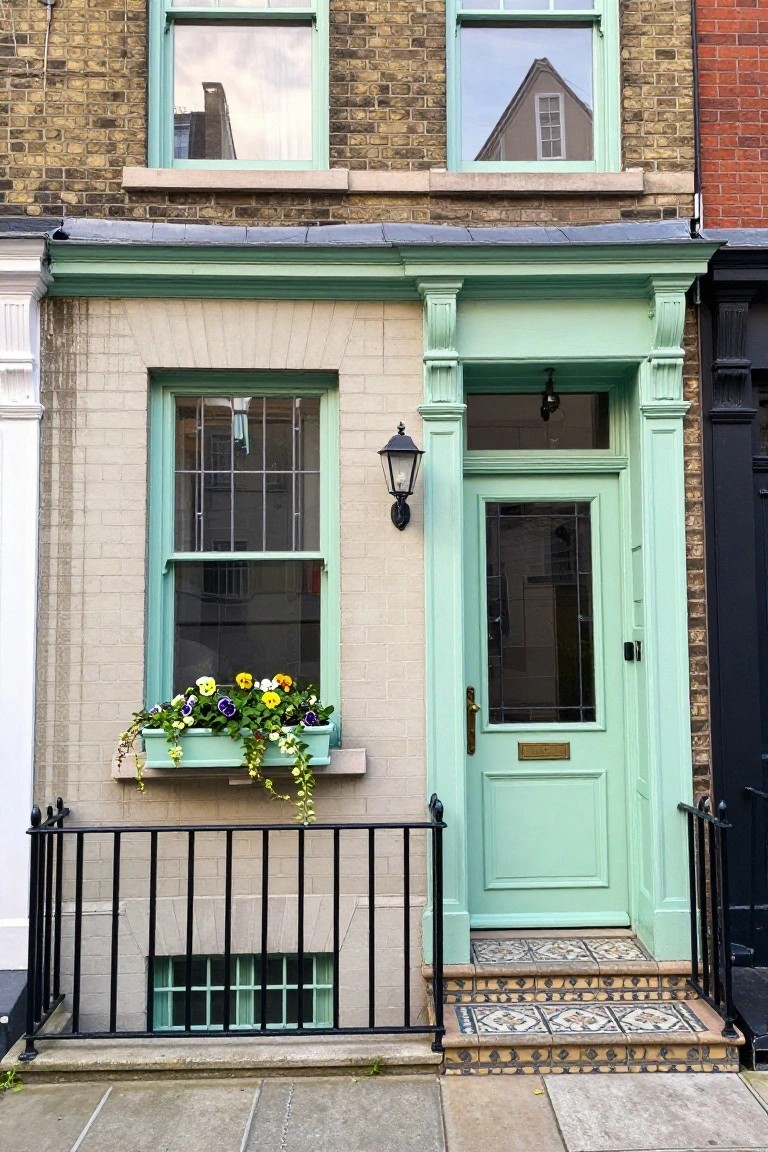
A mint green front door like this one turns a simple brick terrace house into something really welcoming. The soft color picks up the yellow tones in the brick without overwhelming it, and that window box full of pansies adds just the right touch of life right at eye level. It’s vintage but feels fresh, especially on these narrow London-style rows where every door counts.
Try this on older brick or stucco homes in a row, where you want to stand out a bit without clashing with neighbors. Pair it with brass hardware and some trailing plants in the window box. Keep the trim consistent so it doesn’t look patchy, and it works best on south-facing spots where the color stays true in sunlight.
Green Timbers on a Half-Timbered House

Half-timbered houses show up a lot in vintage designs, usually with dark black timbers that give a strong, bold frame. But going with green paint on the timbers softens everything right up. It pulls in the garden colors and makes the cream plaster walls feel brighter. That climbing clematis hugging one side just fits naturally.
You see this work best on older cottages or farmhouses tucked into countryside spots. Pick a stain that lets the wood grain peek through so it doesn’t look flat. Add a lantern by the arched door like this one for that welcoming glow at dusk. Steer clear if your house has sharp modern lines; it shines on traditional builds.
Vibrant Green Door Entry
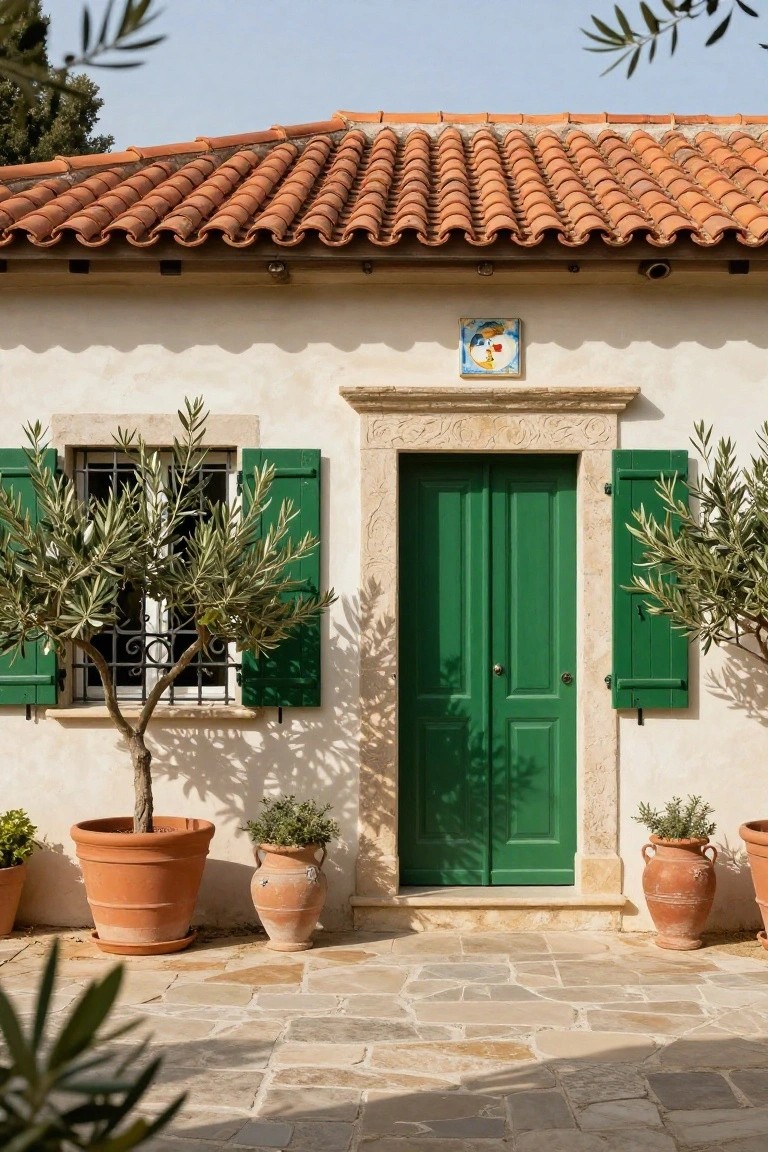
A bright green door like this one makes the whole front of the house pop against plain white stucco walls. Paired with matching green shutters, it pulls your eye right to the entrance and gives off that old-world Mediterranean feel. The tall olive trees in terracotta pots frame it nicely without much fuss.
This setup works best on simple older homes or cottages in warm climates. Just paint a sturdy wooden door and shutters in a strong green shade, then add a couple big potted evergreens nearby. Skip it on super modern places, though. It shines where you want easy curb appeal that lasts.
Vintage Green Garden Shed Entry
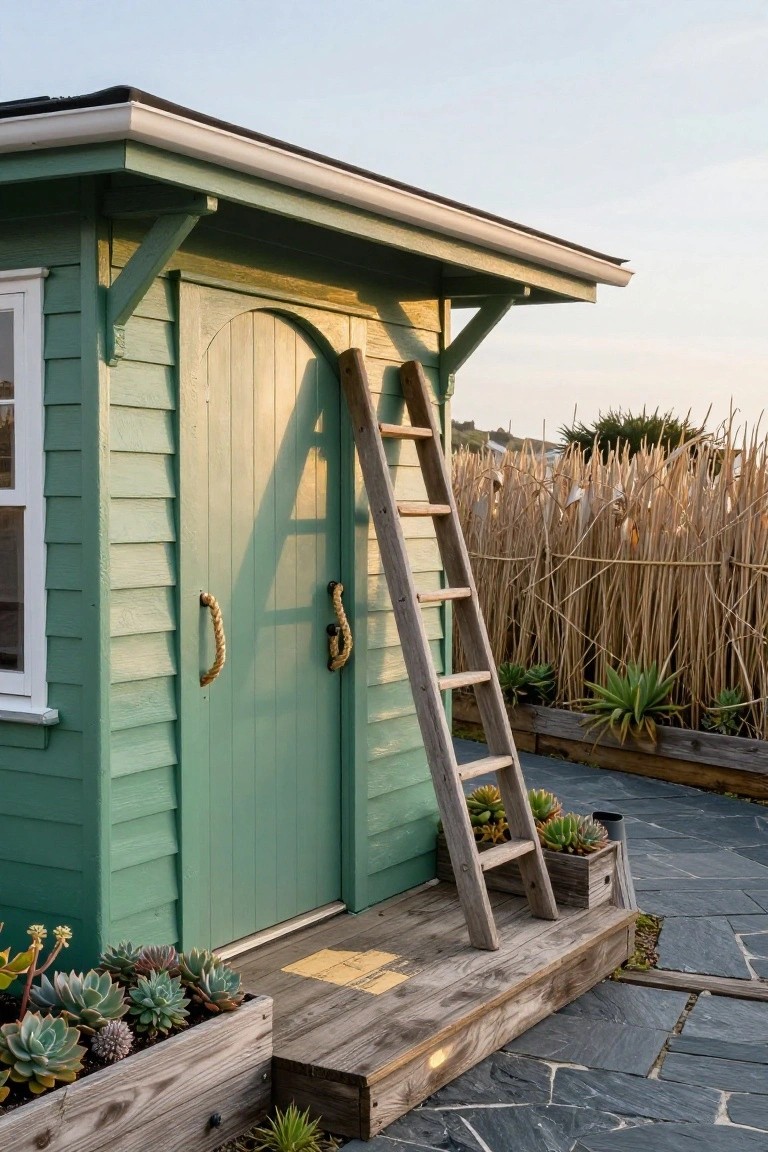
This setup takes a plain wooden shed and gives it real character with that soft mint green paint and an arched door. The rope handles on the door nod to old seaside spots, making the whole thing feel like it’s got a story behind it. It’s simple but pulls you right in for a closer look.
You can pull this off on any small outbuilding in the yard, like a potting shed or playhouse. Go for board-and-batten siding in that muted green, shape the door with a gentle arch, and swap basic knobs for nautical rope pulls. Works best where you’ve got some coastal or cottage vibes already… keeps things practical too, since the color hides dirt well.
Green Door on Brick Facade
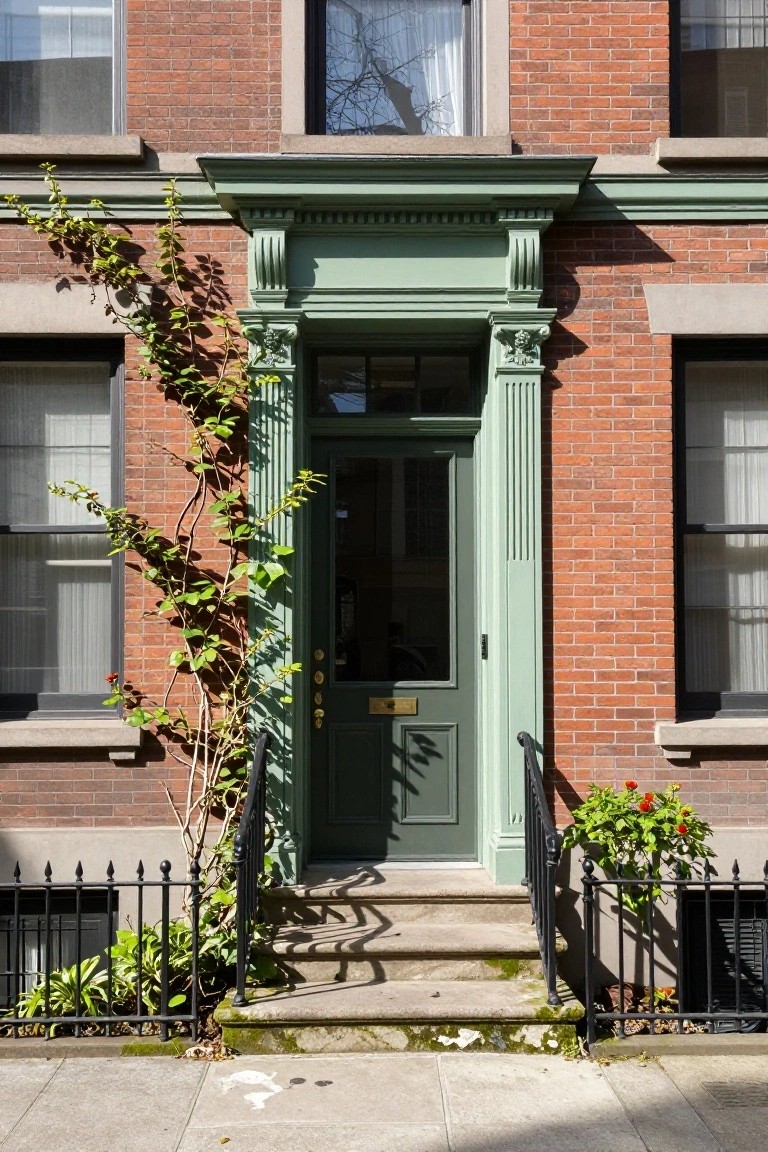
A green door like this one pulls the eye right to the entry on an old brick house. The shade works so well against red brick because it feels fresh but settled in, like it’s been there forever. That column detail and glossy paint just add to the vintage nod without overdoing it.
This setup suits city rowhouses or any narrow urban front. Go for a deep green that’s not too bright. Let some ivy climb nearby if you want, but keep the steps clear. It makes the place look cared for in a simple way.
Classic Green Garden Shed Exterior
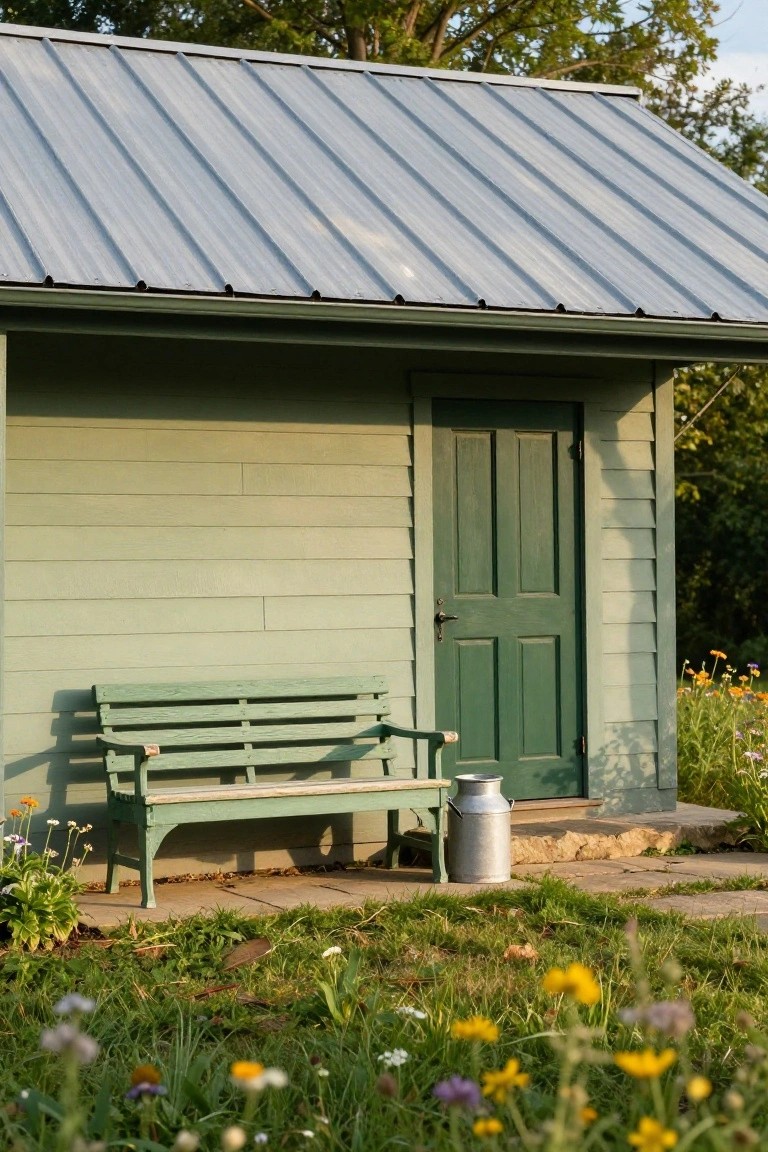
A soft green clapboard siding like this one turns a basic outbuilding into something that belongs right in the yard. Paired with a dark green paneled door and a matching bench out front, it gives off that old farmstead vibe without trying too hard. The metal milk can sitting there just seals the rustic feel.
This look fits older country homes or cottages with plenty of grass and flowers nearby. Grab some exterior paint in sage or mint tones, refresh the siding and door, then add a simple bench. Skip it on modern places though… it might clash.
Mossy Roofs Add Vintage Charm
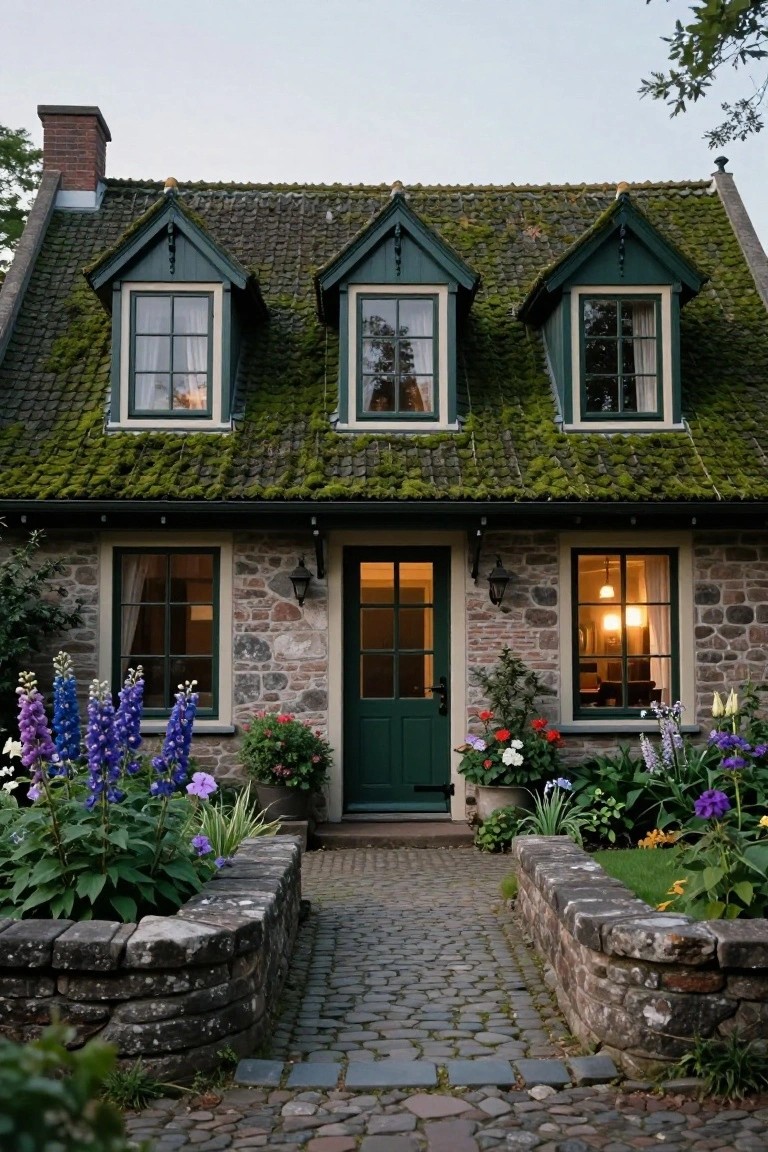
A mossy roof like this one turns a simple house into something with real history. The green patches on those tile shingles make the steep gables feel softer and more settled in, especially against the stone walls and green window frames. It fits right into that vintage green exterior vibe, looking like the place has been there for generations.
You see this work best on older cottages in damp areas where moss grows on its own. Pair it with a simple green door and some flowers out front to keep the look cohesive. Watch for too much buildup though… it can hold moisture if your roof isn’t pitched right.
Climbing Roses Soften Green Cottage Facades
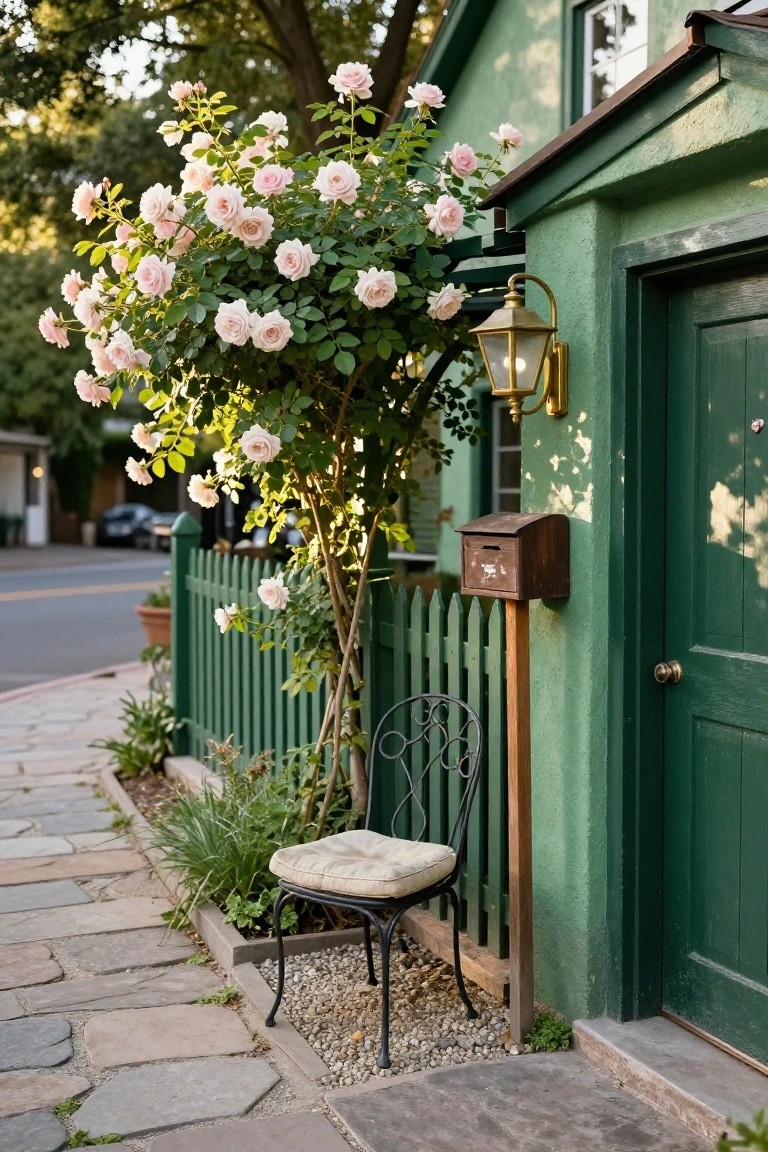
A tall climbing rose bush loaded with soft pink blooms grows right up against this mint green house wall and picket fence. It frames the dark green door without overwhelming the simple architecture. That burst of flowers adds a touch of old-world romance that makes the whole front feel like a story from a garden book.
Plant these on the fence line or a sturdy post near your entry for the same effect. They suit compact vintage homes or bungalows in mild climates where roses thrive. Go for disease-resistant varieties to keep it low fuss, and prune lightly each year to encourage more blooms.
Green Shutters Around Door and Balcony
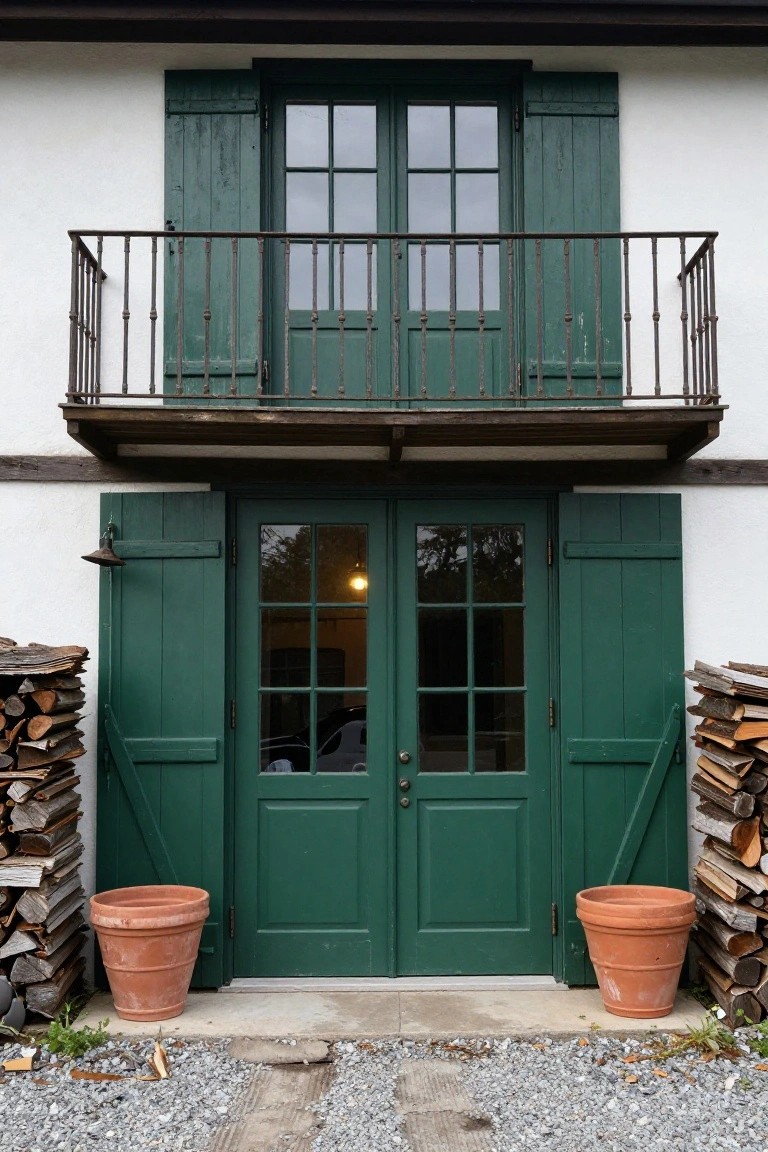
Green shutters painted in the same deep shade cover both the upper balcony windows and the main double doors here. Against the white walls, they pull the front of the house together in a way that feels settled and lived-in. It’s a look that nods to older country homes without trying too hard.
You can pull this off on frame houses or cottages, especially if you have a balcony or upper windows to match. Just paint everything the same green for unity, and add stacks of wood or simple pots out front to keep it practical. Skip it on super modern places, though. The wood needs regular upkeep to stay sharp.
Frequently Asked Questions
Q: How do I pick a green shade that fits my vintage house’s story?
A: Walk around your neighborhood and snap photos of greens you love on old homes. Bring them to the paint store and match against your siding under natural light. That way, you capture the subtle tones that make your place feel timeless.
Q: My green siding looks dull. How do I clean it safely?
A: Mix dish soap with warm water, grab a soft-bristle brush, and scrub gently from top down. Rinse with a garden hose on low pressure. Let it dry fully before checking if you need a fresh coat.
Q: Can I mix green with other colors on the trim?
A: Try creamy white or soft black for contrast that pops without overwhelming the green. Paint the trim first, step back, and tweak if it feels off. And yeah, it keeps the vintage vibe alive.
Q: What’s quick maintenance to keep green paint looking fresh?
A: Inspect for cracks each spring and seal them right away. That stops water from sneaking in and causing bigger headaches later.
