

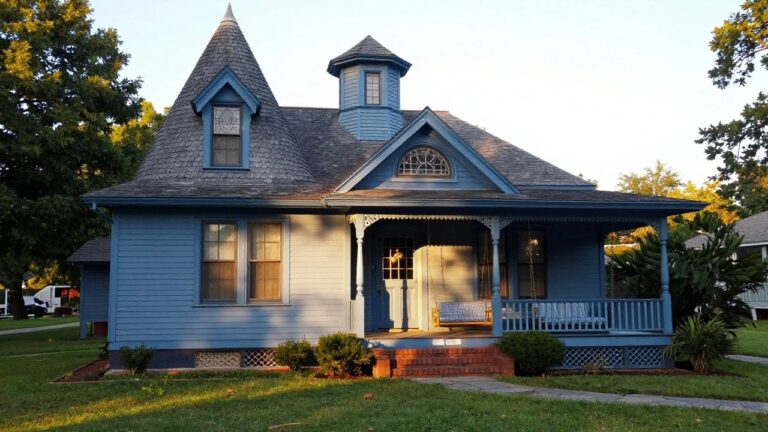
I’ve noticed that blue on a Victorian exterior pulls the eye from down the street, especially when the trim contrasts just right against gingerbread details and steep rooflines.
That curb appeal hits different in real neighborhoods, where the facade needs to blend history with everyday life instead of just looking sharp in photos.
One approach I keep coming back to is pairing the blue body with white or cream accents on the entry porch, because it grounds the color and makes the whole house read as welcoming.
Materials like clapboard siding or brick bases also play a big role in keeping things timeless, avoiding that dated feel some painted Victorians pick up over time.
These ideas remind me which details are worth noting for a future repaint.
Victorian Turret in Deep Blue Paint
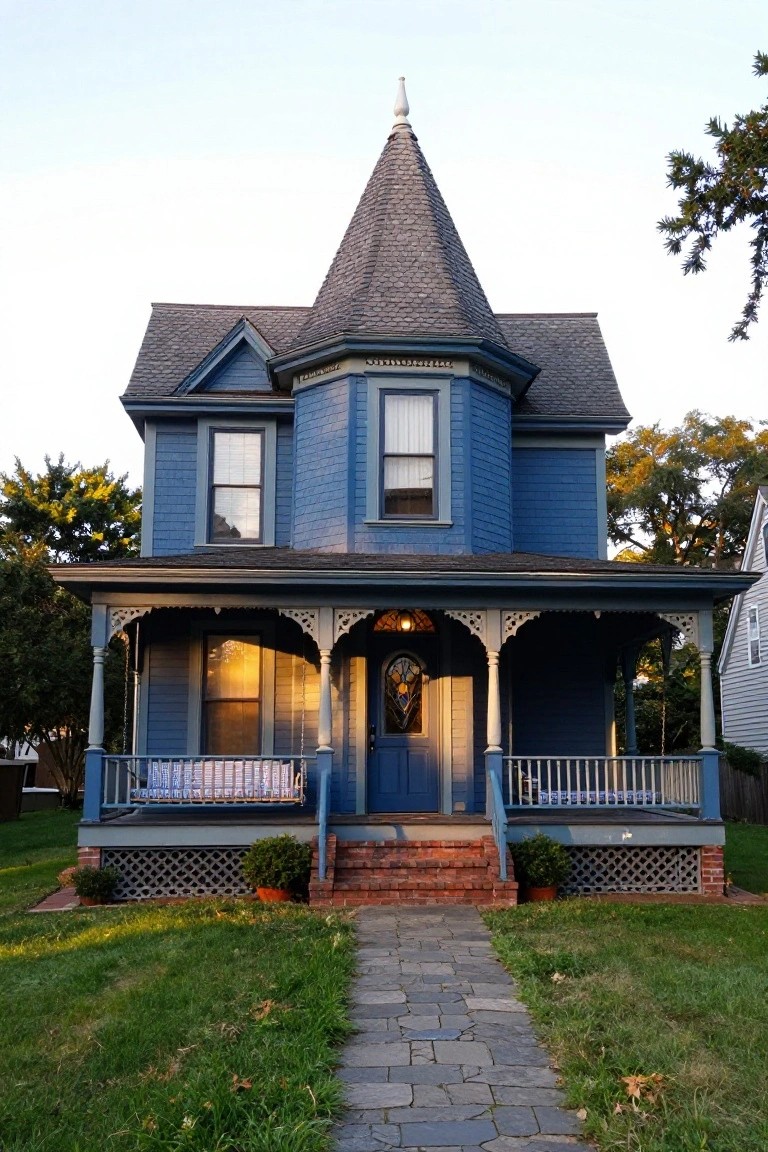
A tall octagonal turret like this one takes a blue Victorian house to the next level. The deep blue siding climbs up to the steep shingled peak, giving the whole facade that classic storybook shape. It pulls your eye upward and adds real character without trying too hard.
Paint a turret this color if you want to play up the architecture on an older home. It suits houses with gingerbread trim and porches best, since the blue makes those details stand out. Keep the foundation brick simple, like here, and it stays grounded. Works in any yard with a bit of grass and trees.
Gabled Balcony with Roses
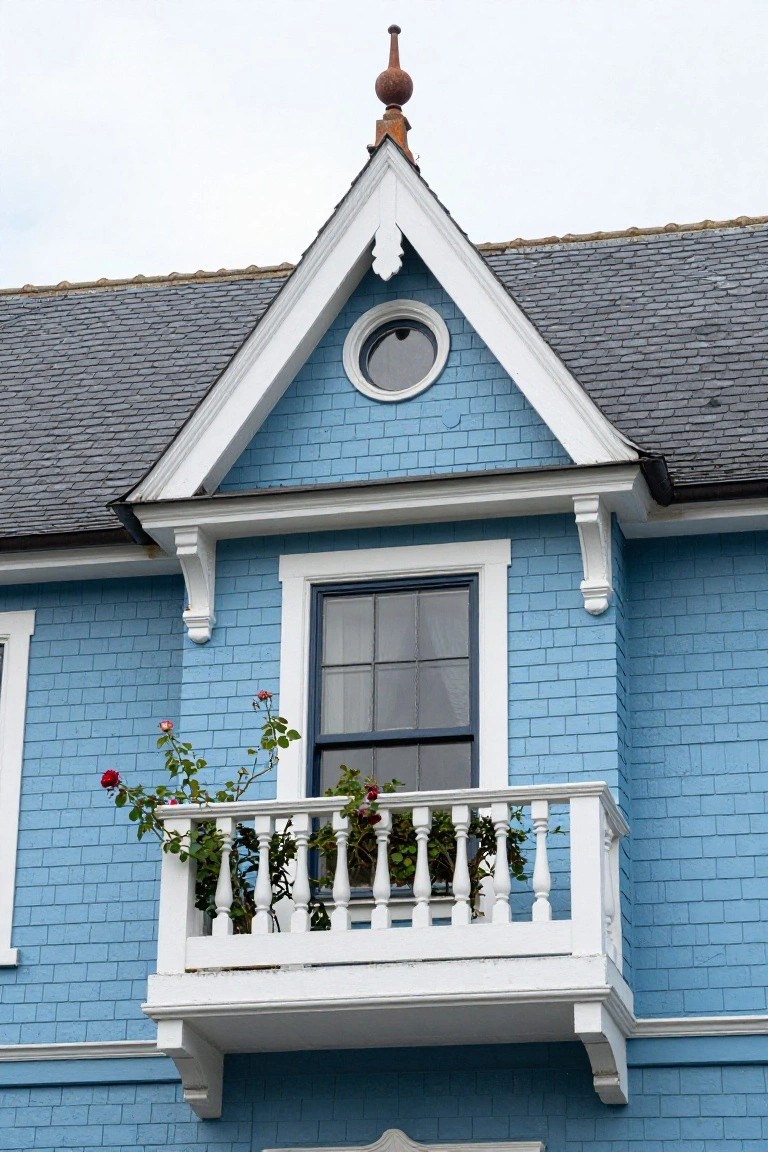
A gabled balcony like this one gives a Victorian blue house real personality up high. The white railing and brackets pop clean against the blue shingles, and those red roses climbing over the edge bring in some life without overdoing it. It’s a simple way to make the upper part of the house feel more interesting.
You can pull this off on any two-story Victorian-style home facing the street. Keep the trim bright white for contrast, and stick roses or similar vines in window boxes along the rail. Just make sure the plants won’t overwhelm the structure, and check your local rules if you’re adding a balcony. Works best where you want subtle curb appeal.
Light Blue Clapboard Siding on a Victorian Cottage
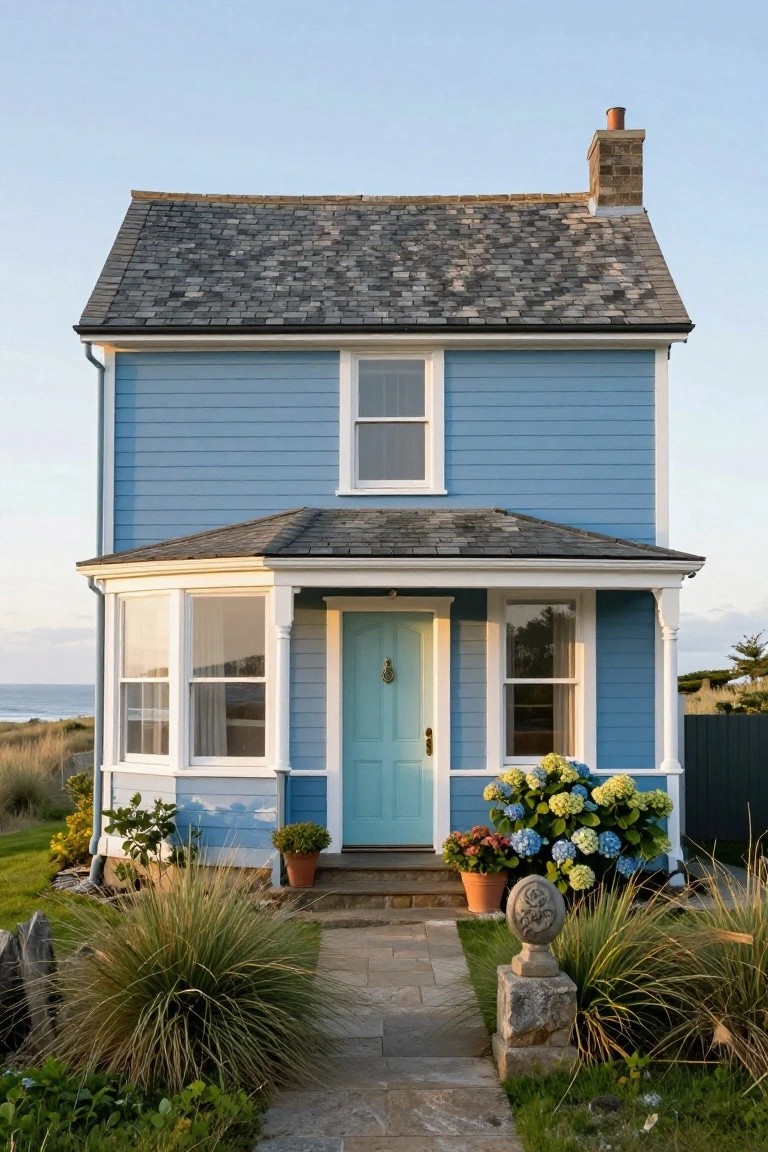
This setup uses light blue clapboard siding on a small Victorian house. It keeps things feeling fresh and approachable, especially with the white trim outlining windows and the porch. The dark slate roof pulls it together without overpowering, and a turquoise door adds just enough color at the entry.
It works best on compact homes near the coast or in mild climates where the blue won’t fade fast. Go for durable exterior paint, and plant low hydrangeas nearby to echo the shade. Skip it on larger houses, though. The scale might feel off.
Recommended Products

BUILT-IN ELECTRICAL BOX DESIGN – Integrated electrical box allows direct mounting of outdoor light fixtures without requiring a separate junction box.

The "iMBAPrice 8141-1 Vertical Siding Lamp Octagon Mounting Kit with Built-in Box for 1/2 Inch (0.5") Outdoor Vertical Siding LAP" appears to be a product designed for mounting outdoor lighting fixtures on vertical siding. Design: It is designed as an octagon-shaped mounting kit with a built-in box. This design is commonly used for outdoor lighting installations.

✅【Durable Materials】The Vapikirv vinyl siding mounting block is made from high-quality, UV-rated plastic. The vinyl siding light block is white, and the surface can be painted to match the color of your vinyl siding or lighting. You can DIY for yourself!
Lace Curtains in Front Door Glass
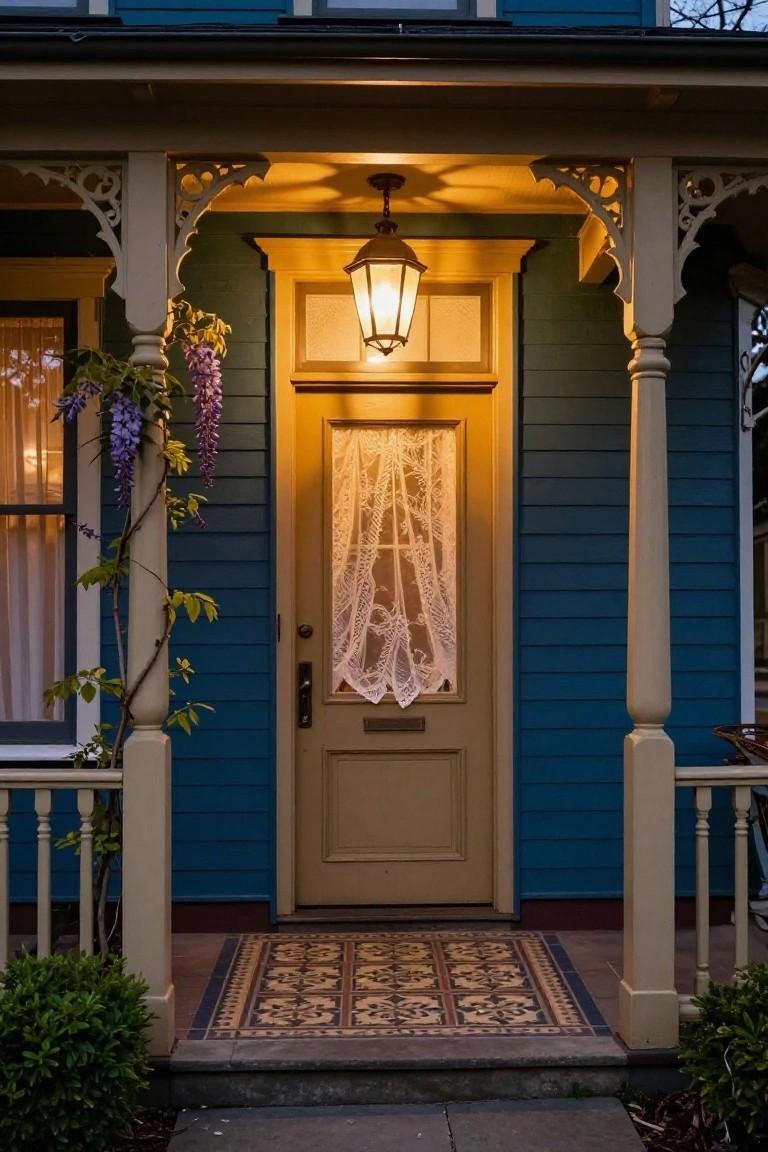
A simple lace curtain hung behind the glass panel of a front door can make a big difference at night. On this blue Victorian house, it diffuses the warm glow from inside and the porch lantern, turning the entry into something soft and welcoming. It keeps the look light while adding a touch of privacy, which fits right into that timeless porch style.
This works best on older homes with divided-light doors or transoms. Hang a sheer white or cream lace panel that lets light filter through but blurs the view. Pair it with a hanging lantern for evenings, and it suits porches with climbing vines like wisteria. Just make sure the curtain is easy to swap out seasonally.
Navy Front Door on Light Blue Siding
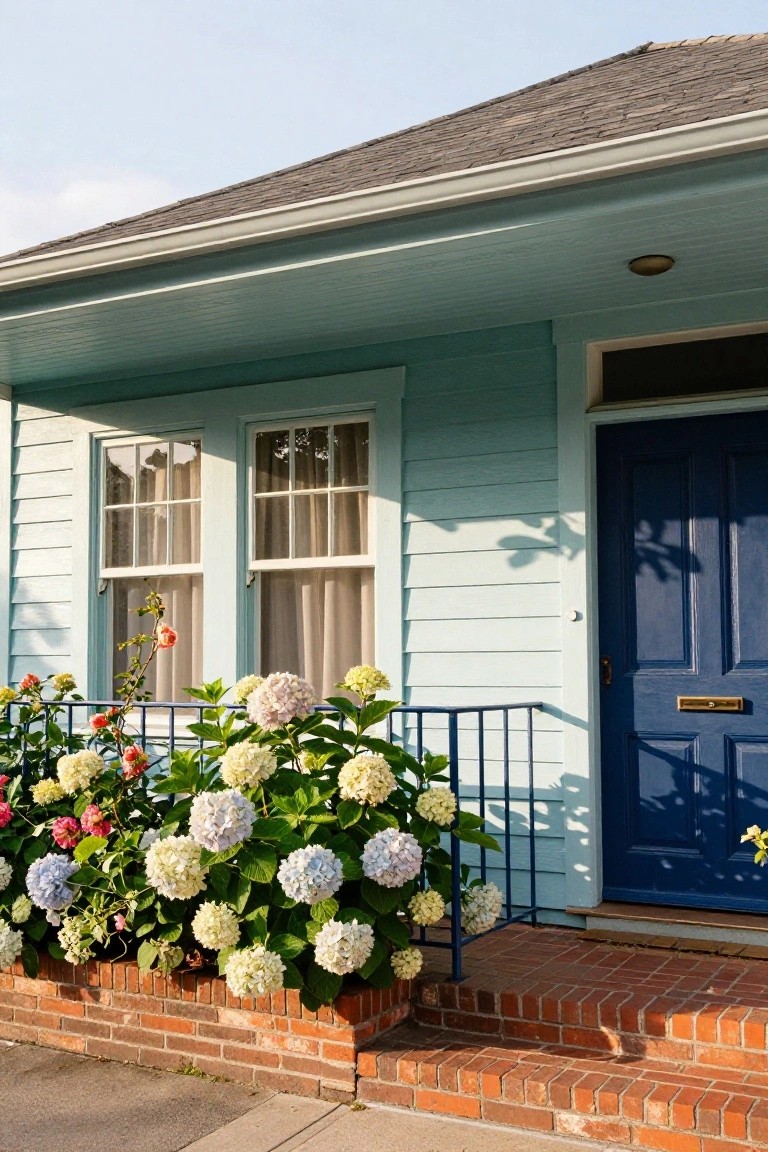
A deep navy front door stands out nicely against soft blue clapboard siding like this. It gives the entry a clear focal point without overpowering the house. The color contrast pulls your eye right to the door. And those white hydrangeas along the front add a soft frame that keeps things fresh.
This works best on Victorian or cottage-style homes where you want some punch up front. Go for matte navy paint to avoid glare. Pair it with brass hardware for a classic touch. Skip it if your house faces heavy traffic. The bold door can feel too strong there.
Petite Blue Victorian Facade
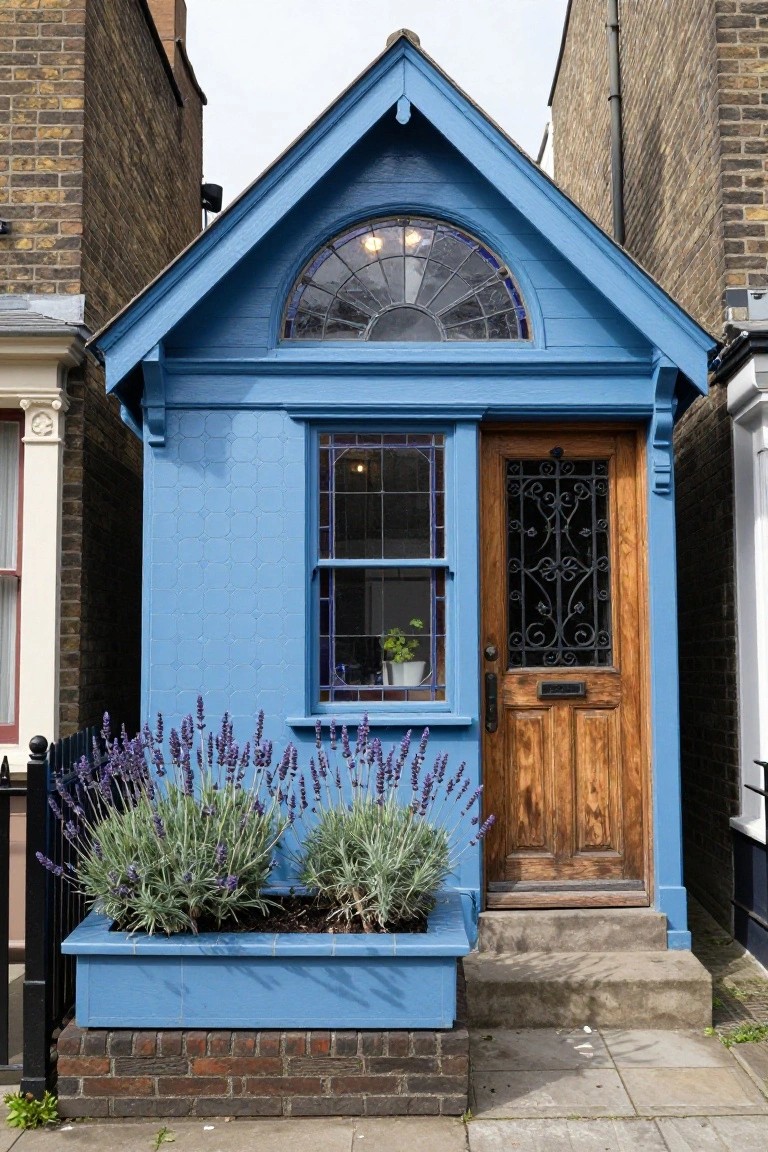
A narrow house like this one takes on new life with bold blue clapboard siding. It’s a simple refresh that makes the place stand out on a row of brick buildings. That arched stained glass window up top adds just the right historic touch without overdoing it.
This look suits tight urban spots or terraced Victorian homes. Go for a deep blue paint on wood siding, then contrast it with a natural wood door. Add low lavender planters out front for a bit of green. Keep the trim clean so the color does the talking.
Seating Under a Wisteria Pergola
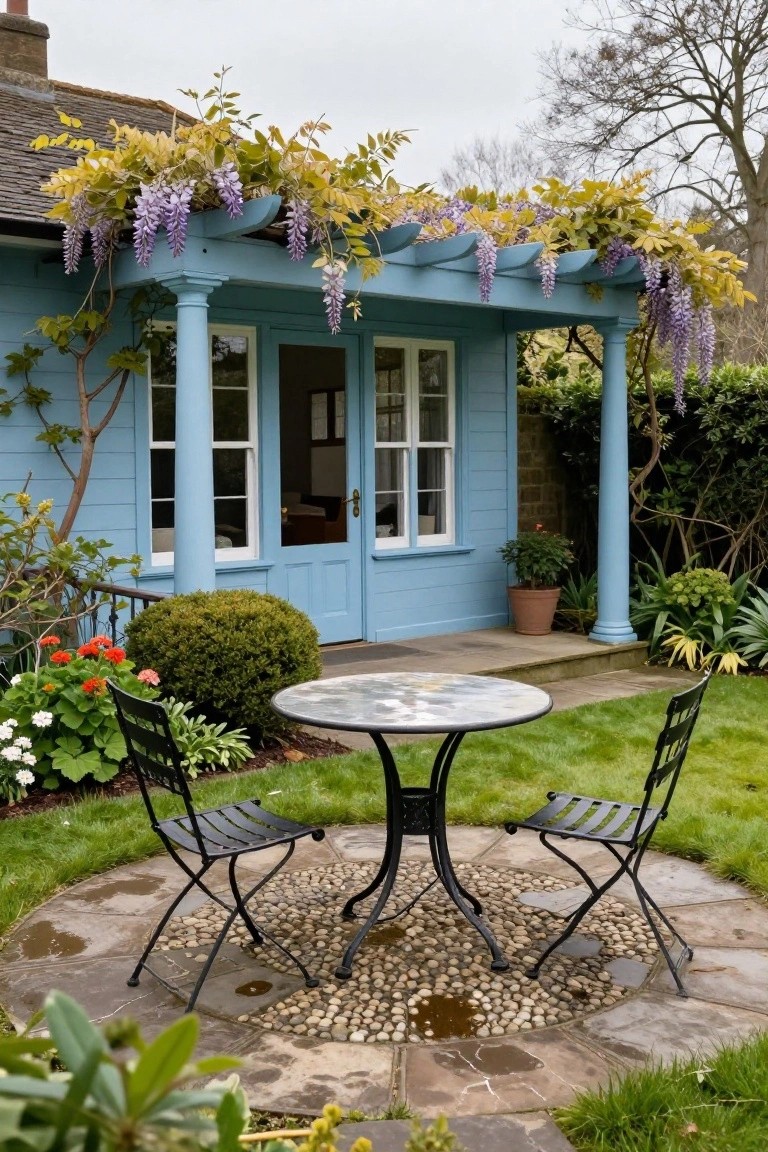
A simple round table with two metal chairs sits right under a pergola heavy with purple wisteria blooms. The setup makes a quiet spot for coffee or a light lunch, tucked against a blue garden shed. That vine cover filters the light just right on overcast days, and the pebble patio underneath drains well after rain.
This works best in a small side yard or next to a shed where you want some garden privacy without building walls. Go for sturdy black chairs and a glass-top table that won’t fade outside. It’s perfect for older homes with a bit of English garden feel. Just train the wisteria yearly so it doesn’t take over the structure.
Blue Front Door Curb Appeal
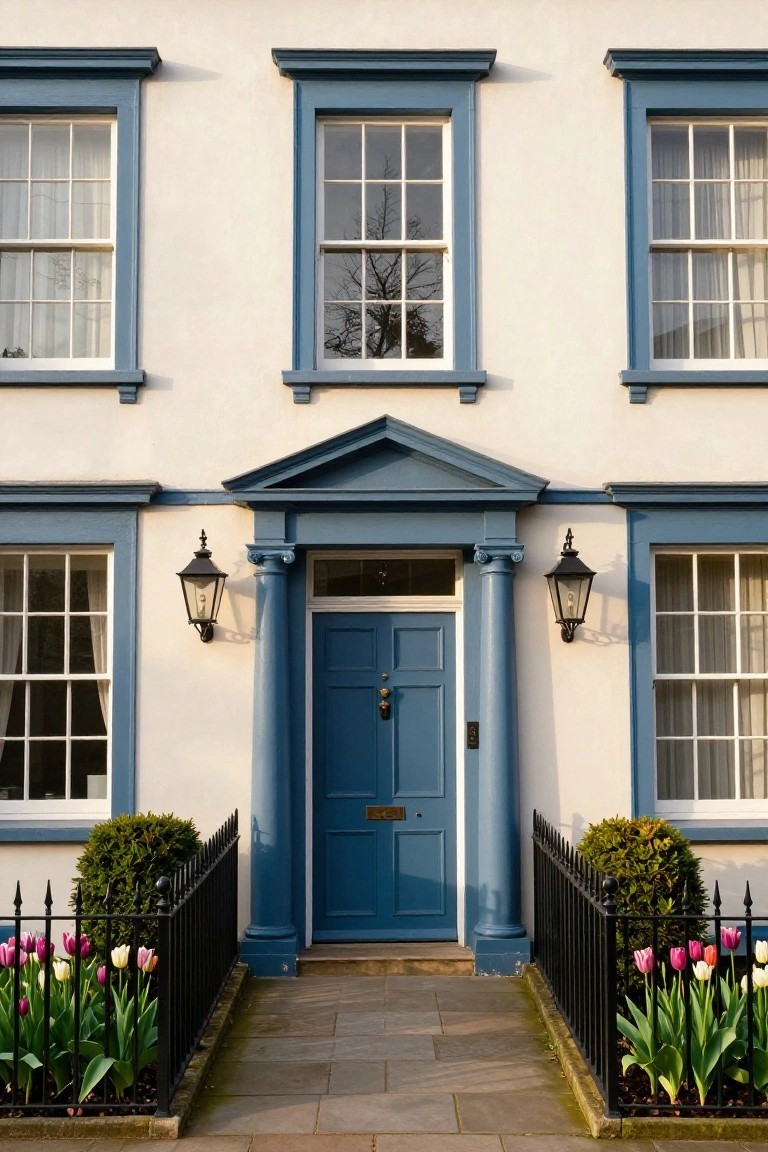
A blue front door like this one really pulls the whole facade together on a white Victorian house. The deep blue color stands out against the pale walls and matches the trim around the windows, giving the entry a crisp, welcoming feel. It’s that simple pop of color that makes the house look put-together without much effort, and the brass knocker adds just a touch of shine.
This works best on lighter walls where the blue can shine, especially with matching trim to keep things cohesive. Try it on a traditional two-story home facing the street. Pick a shade that’s not too bright, so it stays timeless, and pair it with lanterns on either side for evening light. Just make sure the door hardware matches the blue tone.
Recommended Products

ADVANCED SECURITY FEATURES: Ideal for front doors and exterior entrances where security and style are needed; includes industry-leading 1-inch deadbolt with hardened steel spinning pin, anti-drill plates and anti-pick pins to help protect against attacks

Handleset with Tulip Knob and single cylinder lock in Oil Bronze

HANDLESET AND INTERIOR LEVER: Use on exterior front doors for added security and style, combine with a Kwikset electronic or mechanical deadbolt (sold separately)
Navy Blue Siding with White Trim
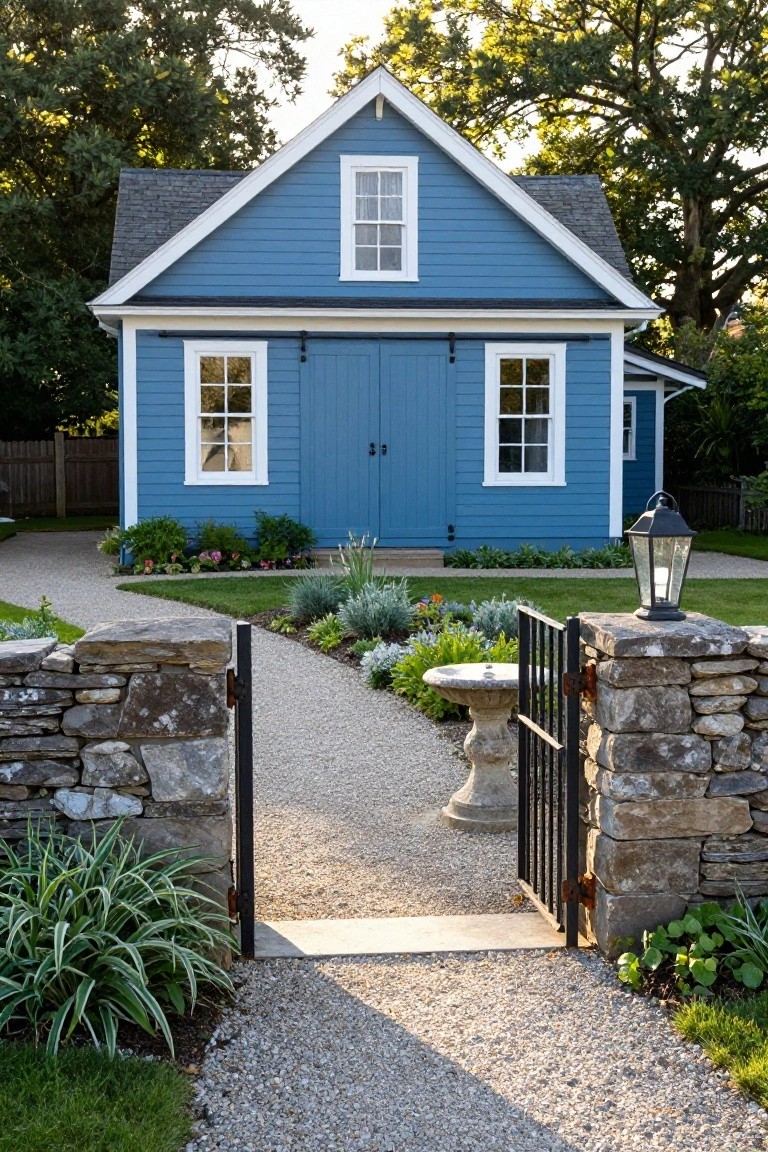
A deep navy blue siding like this gives a small house that classic Victorian feel without overwhelming the space. The white trim around the windows and gable edge keeps everything crisp and clean. It stands out against green lawns and trees, making the place look cared for and inviting right from the street.
This works best on compact structures like guest houses or sheds where you want a pop of color but not too much. Pair it with simple double doors in the same blue for easy access. Stick to gravel paths and stone walls nearby to keep the look grounded. Avoid busier colors nearby, or it might feel too bold.
Porch Swing on a Blue Veranda
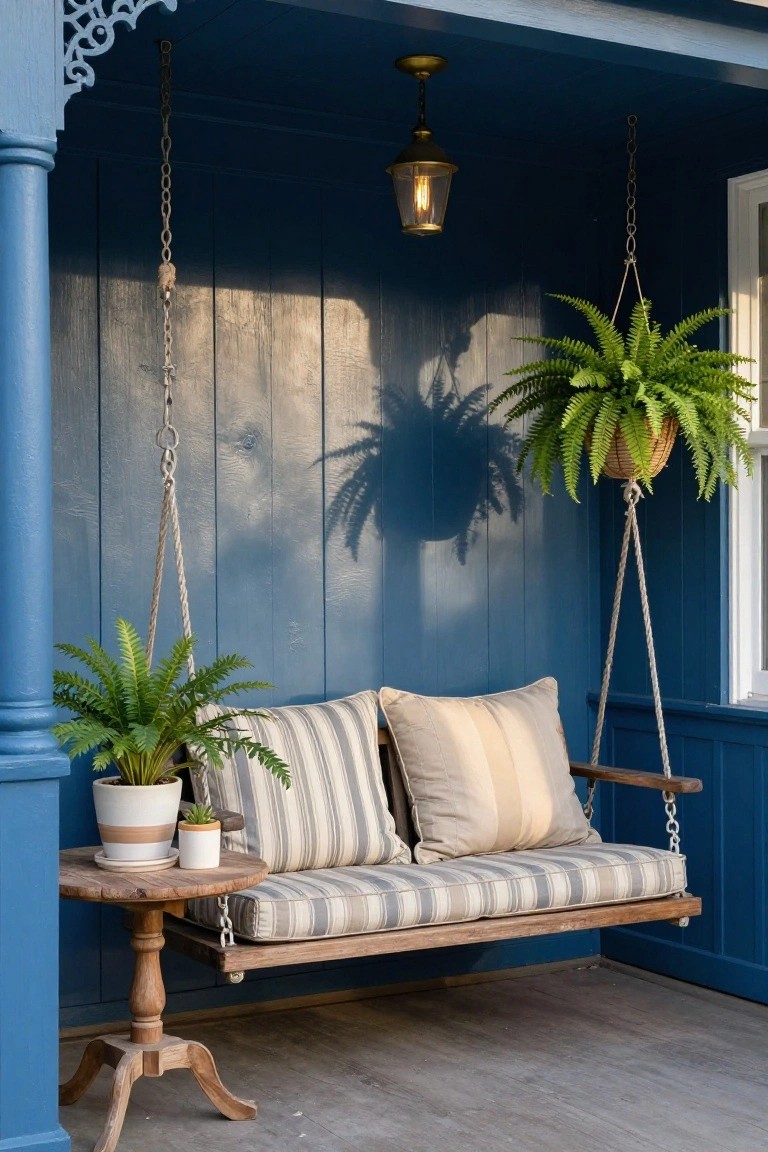
A simple wooden porch swing like this one fits right into a Victorian blue exterior. Hung from thick chains with striped cushions, it turns the covered porch into a spot for sitting out evenings. The deep blue walls set it off nicely, and a few hanging ferns add that easy green touch without much work.
Put one on a side porch or entry veranda where you want low-key seating. It suits older homes with painted clapboard, especially if the swing matches the wood trim. Just check those chains are sturdy, and pick cushions that hold up to weather. Keeps things practical and calm.
Blue Victorian with Bracketed Porch Entry
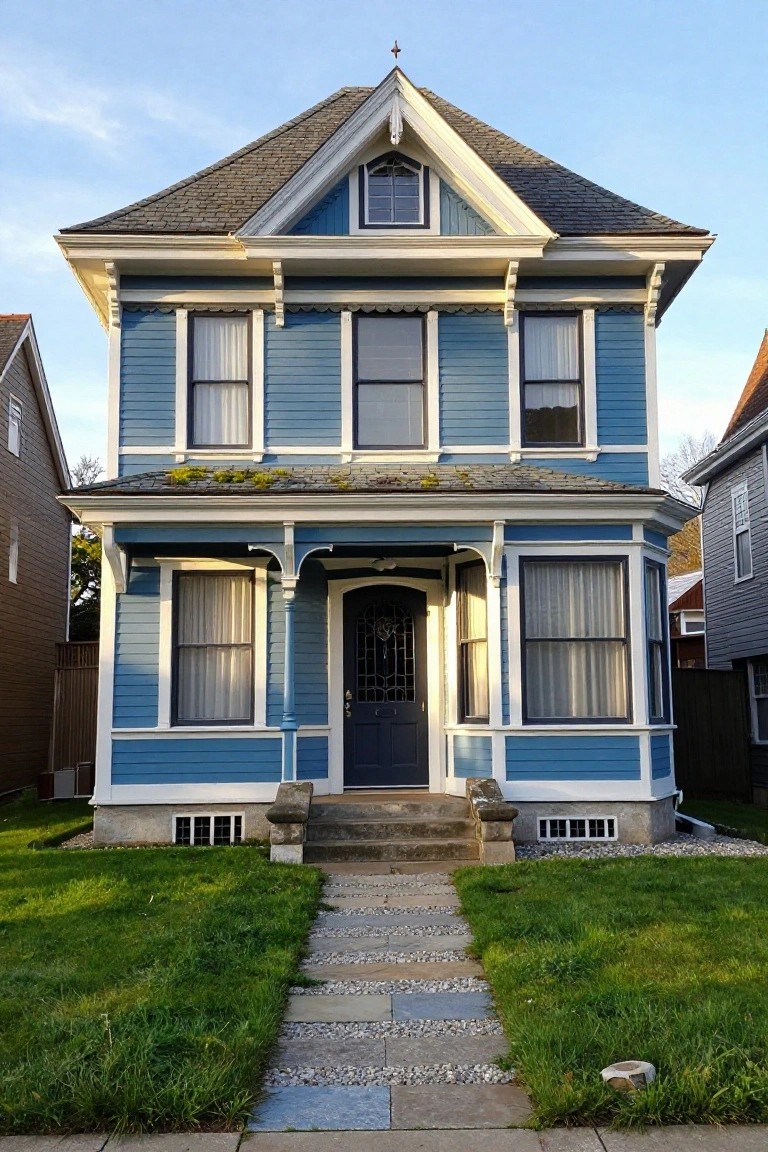
A bracketed porch like this one gives a blue Victorian house that old-school charm without overdoing it. The white trim stands out clean against the blue siding, and those carved brackets under the roofline add just enough detail to catch the eye from the street. The dark front door pulls it all together nicely.
This setup fits right on a standard city lot, where you want curb appeal that nods to history. Pair it with simple stone steps and a straight path through the grass, like here. Skip fancy landscaping at first, so the architecture does the talking. Works best if your home has some gingerbread trim already.
Stained Glass Windows on Blue Victorian Facades
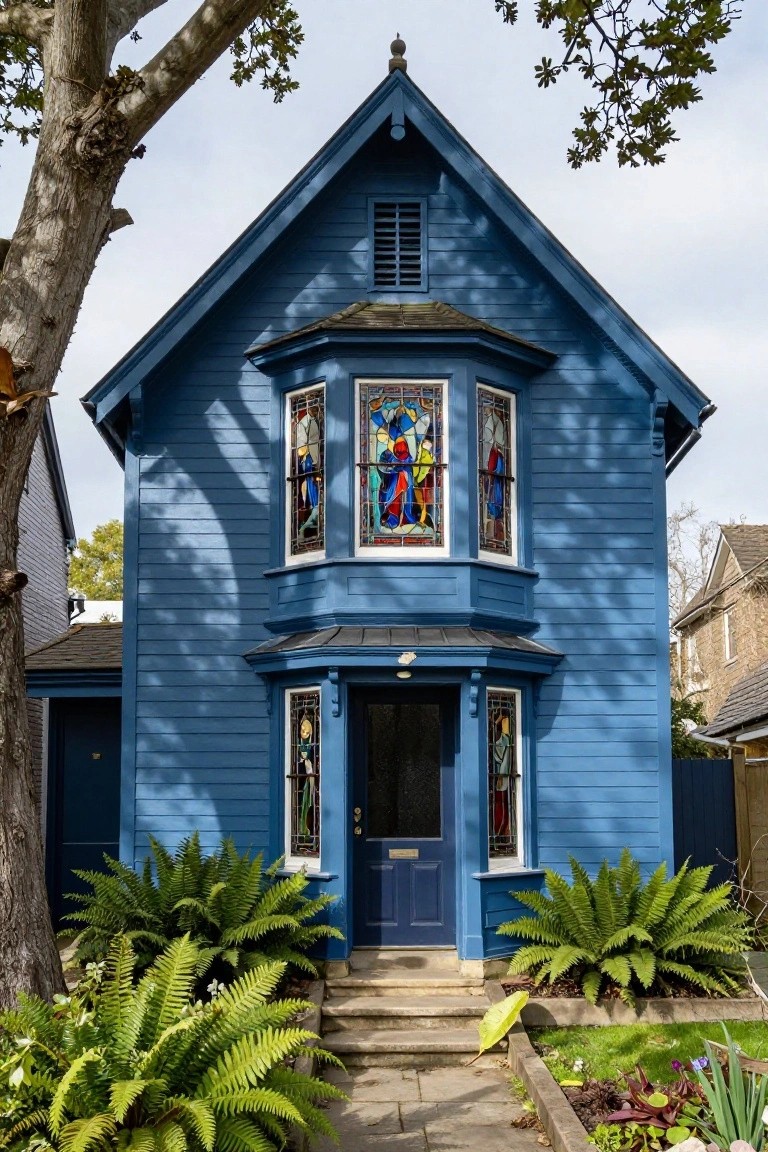
Stained glass windows give this deep blue Victorian house a pop of color that feels right at home. The rich blues and reds in the glass show up against the clapboard siding, especially in the bay window up top and the side lights by the door. It keeps the look classic but adds that handmade touch houses from back then often had.
You can pull this off on narrower townhouses or cottages with good window spots. Pair it with navy or slate blue paint for contrast that lasts. Skip it if your facade is super plain… might feel out of place without some trim details to frame it.
Navy Blue Double Doors Boost Curb Appeal
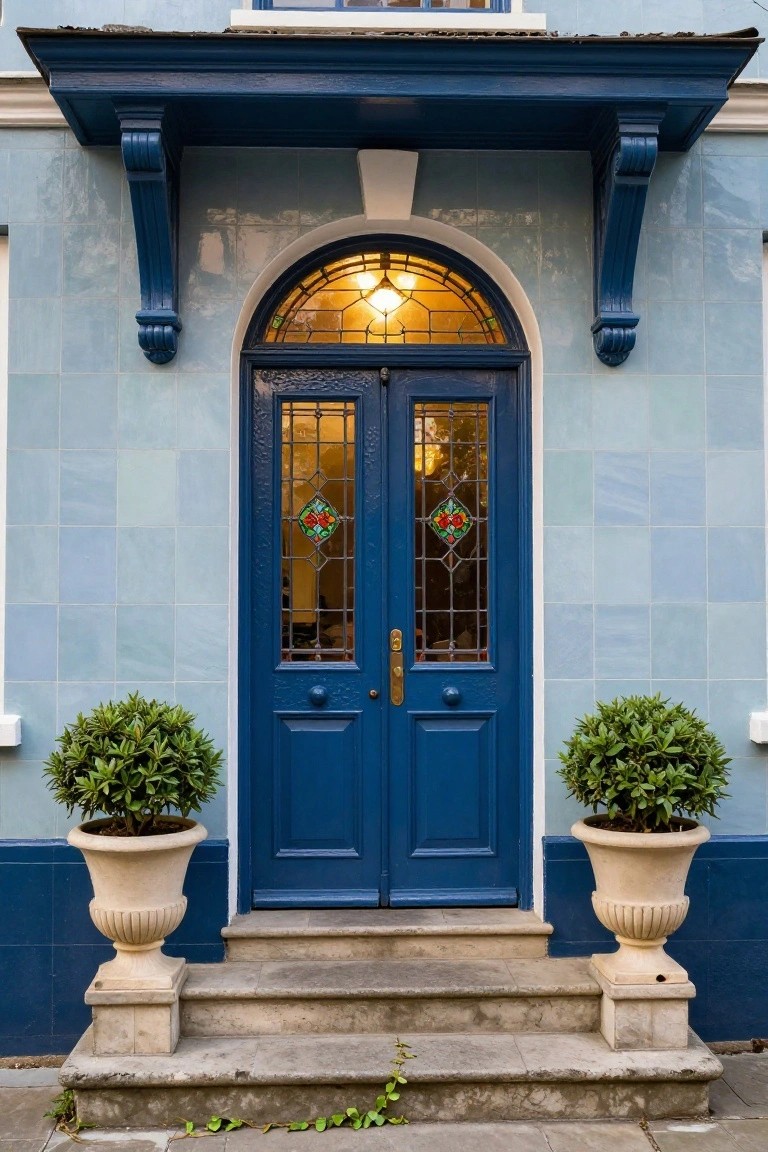
Deep blue double doors like these grab your attention right away on a Victorian house. Set into a lighter blue tiled facade, they create a nice color play that feels rich without being too much. The stained glass panels and arched transom window above pull in that classic era feel, making the entry look welcoming and substantial.
You can pull this off on most any front-facing home with good symmetry. Flank the doors with simple topiary plants in stone urns for balance… it keeps things tidy and adds life. Stick to matte paints so it ages well, and it suits urban rows or suburban lots equally.
Frequently Asked Questions
Q: How do I pick a blue shade that stays vibrant year after year?
A: Go for high-quality exterior paints with UV protection, like those labeled fade-resistant. Test a few samples on your siding first, since north-facing walls hold color better than sunny south ones. Pick one a touch darker than you think, as sunlight lightens it over time.
Q: What trim colors make blue siding pop on a Victorian?
A: Crisp white trim gives that classic contrast homeowners love. If you want subtle warmth, try soft cream instead. Paint the trim first to see how it plays off your blue before committing.
Q: Can I add modern windows to a blue Victorian without it looking off?
A: Swap in slim-profile black-framed windows for a fresh twist that nods to the era. Keep the grid patterns to echo original Victorian details. They blend right in and let more light pour through.
Q: How do I clean blue siding without scratching the finish?
A: Mix mild soap with water and use a soft brush on a cloudy day. Rinse gently from top down. Skip pressure washers, they strip the paint too fast.
